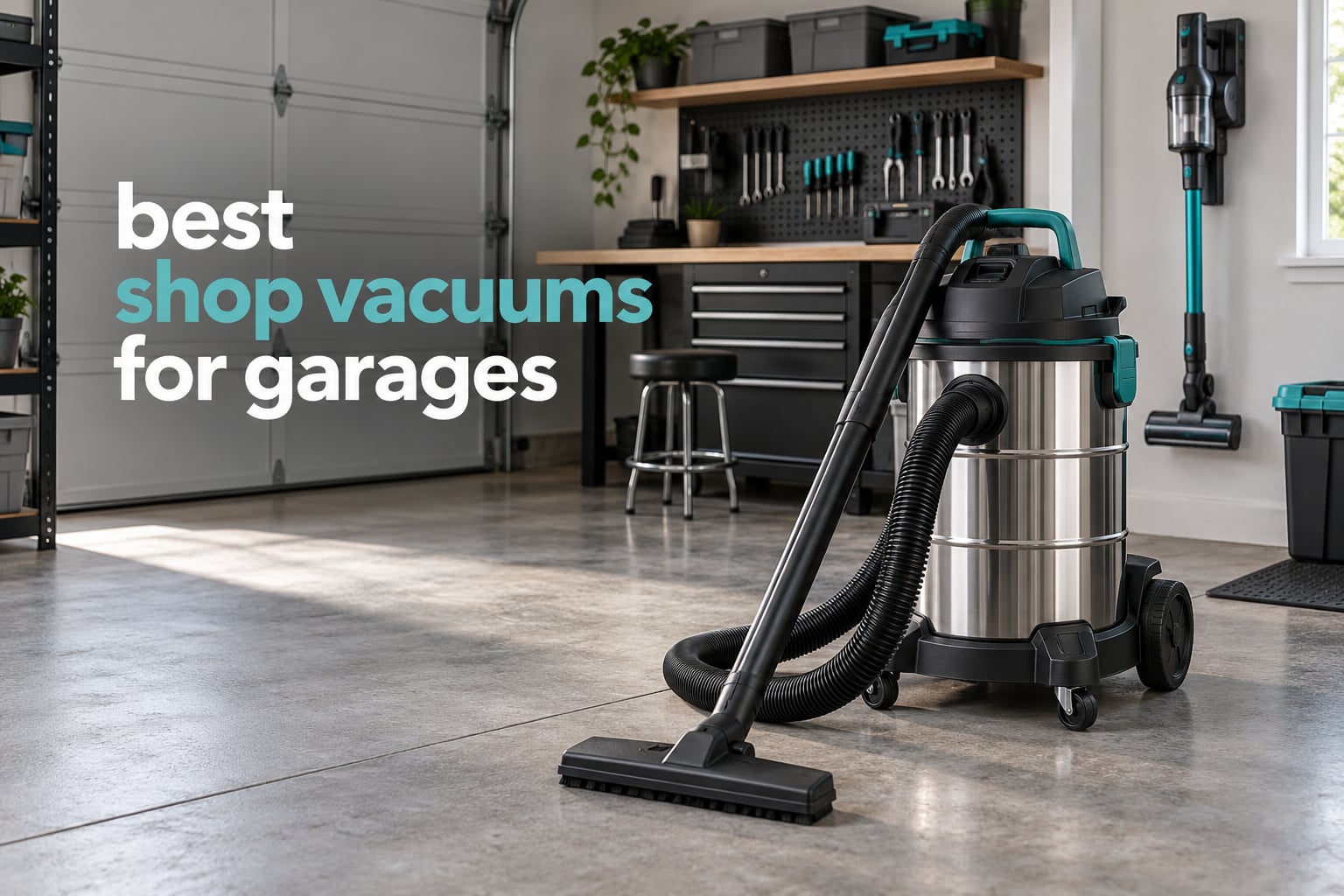
A garage floor collects more than car dust. One weekend of sanding a tabletop, a winter of road salt tracked in on tire treads, a tipped coolant jug, and half a bag of gravel from the driveway add up to debris that a household vacuum cleaner simply cannot survive.
That is the whole reason a wet/dry vacuum exists. A shop vac pairs a high-peak-horsepower motor with a large tank, a wide hose, and a filter setup that switches between dry debris, liquid pickup, and blower mode. We put eight of the leading models through a six-week comparison in a working two-car garage to sort out which one actually earns a place on your floor.
Across the best shop vacuums for garages we tested, the differences that mattered were not the marketing numbers. They were how much noise the motor made at hour nine in the evening, how often the filter clogged with drywall dust, whether the cord reached the far wall, and whether you could still lift the thing into the trunk when the tank was full of water.
Below is what we found, including the numbers behind every pick and an honest look at where each machine falls short.
ContentsTable of Contents
- 1How We Picked the Best Shop Vacuums for Garages→
- 2Top 3 Picks for the Best Shop Vacuums for Garages→
- 3CRAFTSMAN 16-Gallon 6.5 Peak HP→
- 4Stanley 6-Gallon 4 HP→
- 5DEWALT 6-Gallon 4 HP DXV06P→
- 6All 8 Shop Vacs Compared Side by Side→
- 71. CRAFTSMAN 16-Gallon 6.5 Peak HP – Best Overall for Large Garage Messes→
- 8CRAFTSMAN CMXEVBE17595 16 Gallon 6.5 Peak HP Wet Dry Shop Vacuum→
- 9Pros→
- 10Cons→
- 11What the 6.5 Peak HP Figure Does Not Tell You→
- 12Who Should Skip This One→
- 132. Stanley 6-Gallon 4 HP – Best Value With 85 Inches of Suction→
- 14Stanley – SL18116P Wet/Dry Vacuum, 6 Gallon, 4 Horsepower Black→
- 15Pros→
- 16Cons→
- 17Where the Foam Filter Costs You→
- 18Who This Suits Best→
- 193. DEWALT 6-Gallon 4 HP DXV06P – Top Rated for Bench and Vehicle Cleanup→
- 20DEWALT Shop Vacuum 6 Gal 4 HP Poly Wet/Dry Vacuum with Blower DXV06P→
- 21Pros→
- 22Cons→
- 23The One Rule That Trips People Up→
- 24When This Is the Wrong Buy→
- 254. Vacmaster 12-Gallon 5.5 Peak HP – Best for High-Power Cleanup With Long Reach→
- 26Vacmaster VJH1211PF 1101 12-Gal 5.5 Peak HP Heavy-Duty Wet/Dry Vac Red→
- 27Pros→
- 28Cons→
- 29Why the Small Review Pool Matters→
- 30Who Should Buy This One→
- 315. CRAFTSMAN 9-Gallon 4.25 Peak HP – Best for Woodworking Dust Control→
- 32CRAFTSMAN CMXEVBE17590 9 Gallon 4.25 Peak HP Wet Dry Shop Vacuum→
- 33Pros→
- 34Cons→
- 35The Two Complaints You Will Actually Hear→
- 36Woodworkers Versus Dust Collectors→
- 376. Shop-Vac 5-Gallon 4.5 Peak HP – Best for a Stainless Tank in a Rough Garage→
- 38Shop-Vac 5989305 5 Gallon 4.5 Peak HP Wet/Dry Vacuum with Blower Function→
- 39Pros→
- 40Cons→
- 41The Narrow Hose Is the Real Limit→
- 42Who Should Choose the Shop-Vac→
- 437. Bissell Garage Pro Wall-Mount – Best for Clearing Garage Floor Space→
- 44Bissell Garage Pro Wall-Mounted Wet Dry Vacuum/Blower, 18P03→
- 45Pros→
- 46Cons→
- 47What You Give Up for That Reach→
- 48Wall-Mount Versus Central Systems→
- 498. Milwaukee 18V Cordless 2-Gallon – Best Cordless Shop Vac for Targeted Jobs→
- 50Milwaukee 0880-20 18-Volt Cordless Wet/Dry Vacuum, Red→
- 51Pros→
- 52Cons→
- 53What 2 Gallons and 32 Inches Actually Limits→
- 54Should You Go Cordless for a Garage?→
- 55What to Look for in a Shop Vac for Your Garage→
- 56Tank Capacity Matches the Mess, Not the Garage→
- 57CFM and Inches of Water Lift Beat Peak HP→
- 58Noise in dBA Matters More Than Buyers Expect→
- 59Filtration for Fine Dust and the Filter Bag Question→
- 60Cord Length, Hose Diameter, and Total Reach→
- 61Casters, Handles, and the Blower Port→
- 62Storage and Wall Mounting→
- 63Can a Shop Vac Work as a Dust Extractor?→
- 64Frequently Asked Questions→
- 65What is the best shop vacuum for a garage?→
- 66What shop vac has the most suction power?→
- 67Can a shop vac be used as a dust collector?→
- 68How do you hang a shop vac in the garage?→
- 69How loud is a shop vac in decibels?→
- 70Is the Shop-Vac brand any good?→
- 71Final Verdict→
How We Picked the Best Shop Vacuums for Garages
We spent six weeks with eight wet/dry vacuums, running them through the same set of jobs in the same garage. The mess mix was deliberately awkward: sawdust, drywall dust, coarse sawdust, a handful of gravel, screws and staples, plus two liquid spills including one mixed with fine grit.
Each machine was judged on six things. First, suction that held up once the filter started loading, rather than suction measured on a clean tank. Second, wet pickup, including how much liquid the tank took before the motor began to complain and how fast it drained afterward. Third, the published noise rating, which we treated as the deciding factor for anyone working after dark.
Fourth, filter maintenance, because a cartridge that clogs in ten minutes changes how a shop vac feels in daily use. Fifth, physical handling: casters, hose diameter, cord length, and total reach. Sixth, storage footprint, since a 16-gallon unit parked next to the workbench eats a corner of the garage that you may not have to spare.
One note on reading the spec sheets. Peak HP is a marketing number that describes the maximum output at the moment of startup, not the sustained suction at the hose. The two numbers we trust more are CFM, which measures airflow, and inches of water lift, which measures suction at the nozzle. Where a listing gave us a figure, we used it, and where it did not, we left it out rather than estimating.
Top 3 Picks for the Best Shop Vacuums for Garages

CRAFTSMAN 16-Gallon 6.5 Peak HP
- 16-gallon tank
- 6.5 peak HP
- 69 dB
- 2-1/2 in Dual-Flex hose

Stanley 6-Gallon 4 HP
- 4 peak HP
- 85 in max suction
- 16+ ft reach
- 3-in-1 wet dry blower
DEWALT 6-Gallon 4 HP DXV06P
- 4 HP motor
- 10 ft cord
- rubberized swivel casters
- blower port
As an Amazon Associate we earn from qualifying purchases. CERTAIN CONTENT THAT APPEARS ON THIS SITE COMES FROM AMAZON. THIS CONTENT IS PROVIDED 'AS IS' AND IS SUBJECT TO CHANGE OR REMOVAL AT ANY TIME.
All 8 Shop Vacs Compared Side by Side
| # | Product | Key details | Where to buy |
|---|---|---|---|
| 1 | CRAFTSMAN 16-Gallon 6.5 Peak HP |
|
Check Latest Price |
| 2 | Stanley 6-Gallon 4 HP |
|
Check Latest Price |
| 3 | DEWALT 6-Gallon 4 HP DXV06P |
|
Check Latest Price |
| 4 |  Vacmaster 12-Gallon 5.5 Peak HP Vacmaster 12-Gallon 5.5 Peak HP |
|
Check Latest Price |
| 5 |  CRAFTSMAN 9-Gallon 4.25 Peak HP CRAFTSMAN 9-Gallon 4.25 Peak HP |
|
Check Latest Price |
| 6 |  Shop-Vac 5-Gallon 4.5 Peak HP Shop-Vac 5-Gallon 4.5 Peak HP |
|
Check Latest Price |
| 7 |  Bissell Garage Pro Wall-Mount Bissell Garage Pro Wall-Mount |
|
Check Latest Price |
| 8 |  Milwaukee 18V Cordless 2-Gallon Milwaukee 18V Cordless 2-Gallon |
|
Check Latest Price |
We earn from qualifying purchases. CERTAIN CONTENT THAT APPEARS ON THIS SITE COMES FROM AMAZON. THIS CONTENT IS PROVIDED 'AS IS' AND IS SUBJECT TO CHANGE OR REMOVAL AT ANY TIME.
1. CRAFTSMAN 16-Gallon 6.5 Peak HP – Best Overall for Large Garage Messes
CRAFTSMAN CMXEVBE17595 16 Gallon 6.5 Peak HP Wet Dry Shop Vacuum
- 16-gallon tank
- 6.5 peak HP, 1440 W
- 69 dB noise
- 7 ft 2-1/2 in Dual-Flex hose
- 26 lb, 3-year warranty
Pros
- Largest tank here
- so fewer interruptions on heavy debris
- 69 dB is the quietest rating in this group
- 2-1/2 in Dual-Flex hose stays rigid and swivels 180 degrees at each end
- Oversized drain empties liquid fast
- 3-year limited warranty
Cons
- Heaviest machine here at 26 pounds
- only two wheels
- so a full tank is a two-hand lift
- 46 inches rated suction is low for the peak HP figure
We earn a commission, at no additional cost to you. CERTAIN CONTENT THAT APPEARS ON THIS SITE COMES FROM AMAZON. THIS CONTENT IS PROVIDED 'AS IS' AND IS SUBJECT TO CHANGE OR REMOVAL AT ANY TIME.
This is the one we ended up leaving plugged in near the workbench. The 16-gallon tank meant that a full Saturday of sawdust collection did not require four trips to the drain, which is the single biggest quality-of-life difference in a shop vac this size. Everything else about the machine supported that first impression.
The 6.5 peak HP motor and 1440 W rating gave it the raw power to pull coarse debris through a 2-1/2 inch hose without stalling, and that Dual-Flex hose is the best of the group on rigidity. It holds its shape around a corner and swivels at both ends, so the machine does not drag toward the work the way narrower hoses do when they kink.
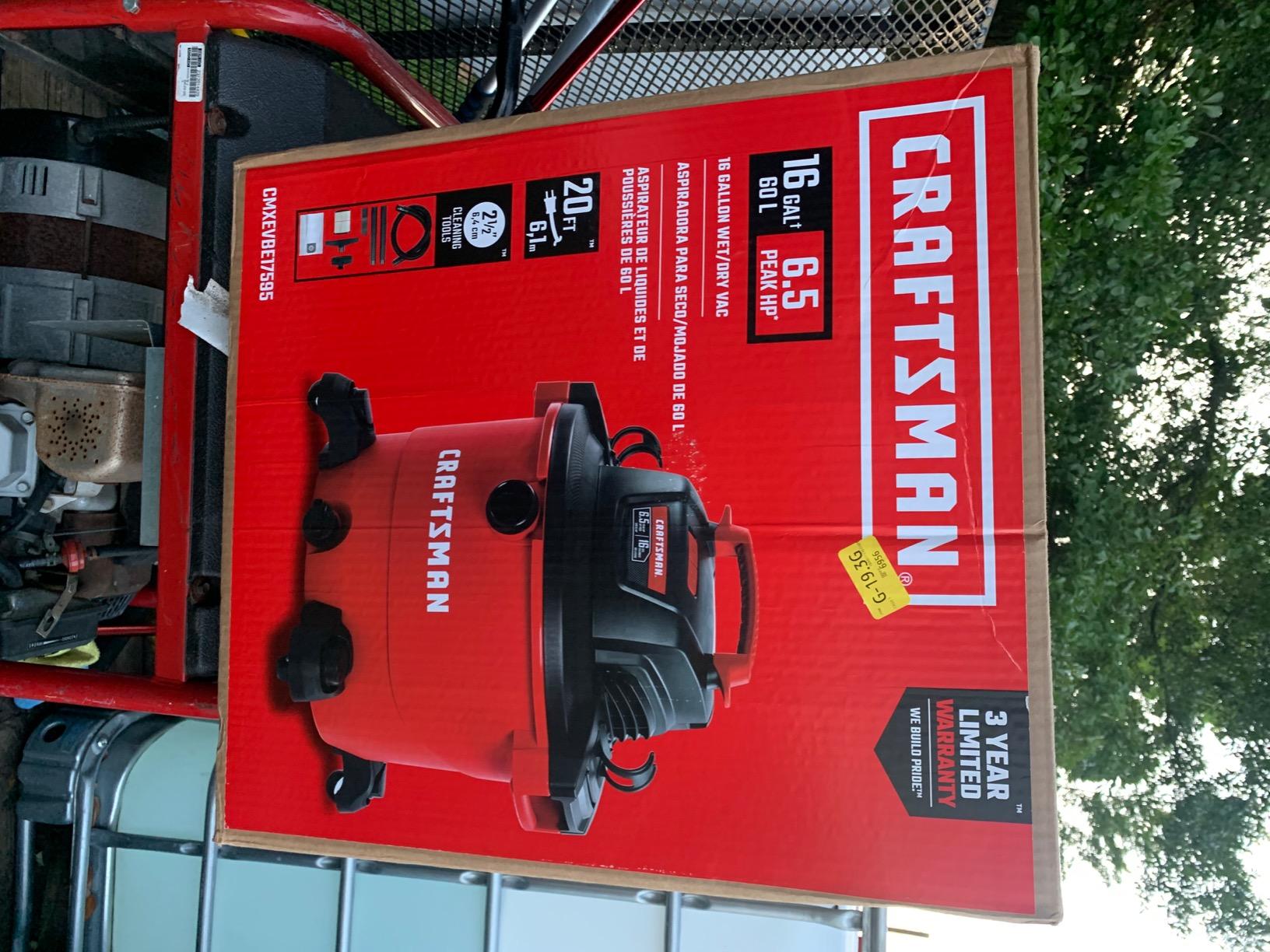
What surprised us most was the noise. The published rating is 69 dB, the lowest figure among these machines, and during an evening cleanup that difference was obvious. A normal conversation runs around 60 dB, so at 69 you can talk over the machine without raising your voice, which matters in a garage attached to a house.
The oversized built-in drain and Qwik Lock pleated paper filter both worked the way they should. The filter released with a quarter turn, the drain emptied a wet tank faster than we expected, and the rear blower port cleared sawdust off the bench without digging out the hose and reversing the whole assembly.
What the 6.5 Peak HP Figure Does Not Tell You
Here is the honest wrinkle with this machine. Its rated maximum suction is listed at 46 inches, which is the lowest figure in this roundup, even though the marketing number on the front of the box is the highest. Peak HP captures the startup spike; the rated figure reflects sustained suction.
In practice, we did not notice a weakness pulling dry sawdust or grit through the wide hose. The wide bore of that hose does more for chunky debris than the extra peak horsepower does. If your garage work is mostly fine dust and large-volume pickup rather than dense debris in a long hose run, this one holds up.
Who Should Skip This One
At 26 pounds empty, this is a two-hand lift once the tank holds water, and it has only two wheels. If your garage is a one-car space where floor area is already tight, or if you need to carry the vac up stairs regularly, the weight will tell on you faster than the suction will impress you.
It is also among the more expensive corded machines here. If your garage work is mostly car interiors and quick spills, a 6-gallon unit with four casters will serve you better and take up less room against the wall.
We earn a commission, at no additional cost to you. CERTAIN CONTENT THAT APPEARS ON THIS SITE COMES FROM AMAZON. THIS CONTENT IS PROVIDED 'AS IS' AND IS SUBJECT TO CHANGE OR REMOVAL AT ANY TIME.
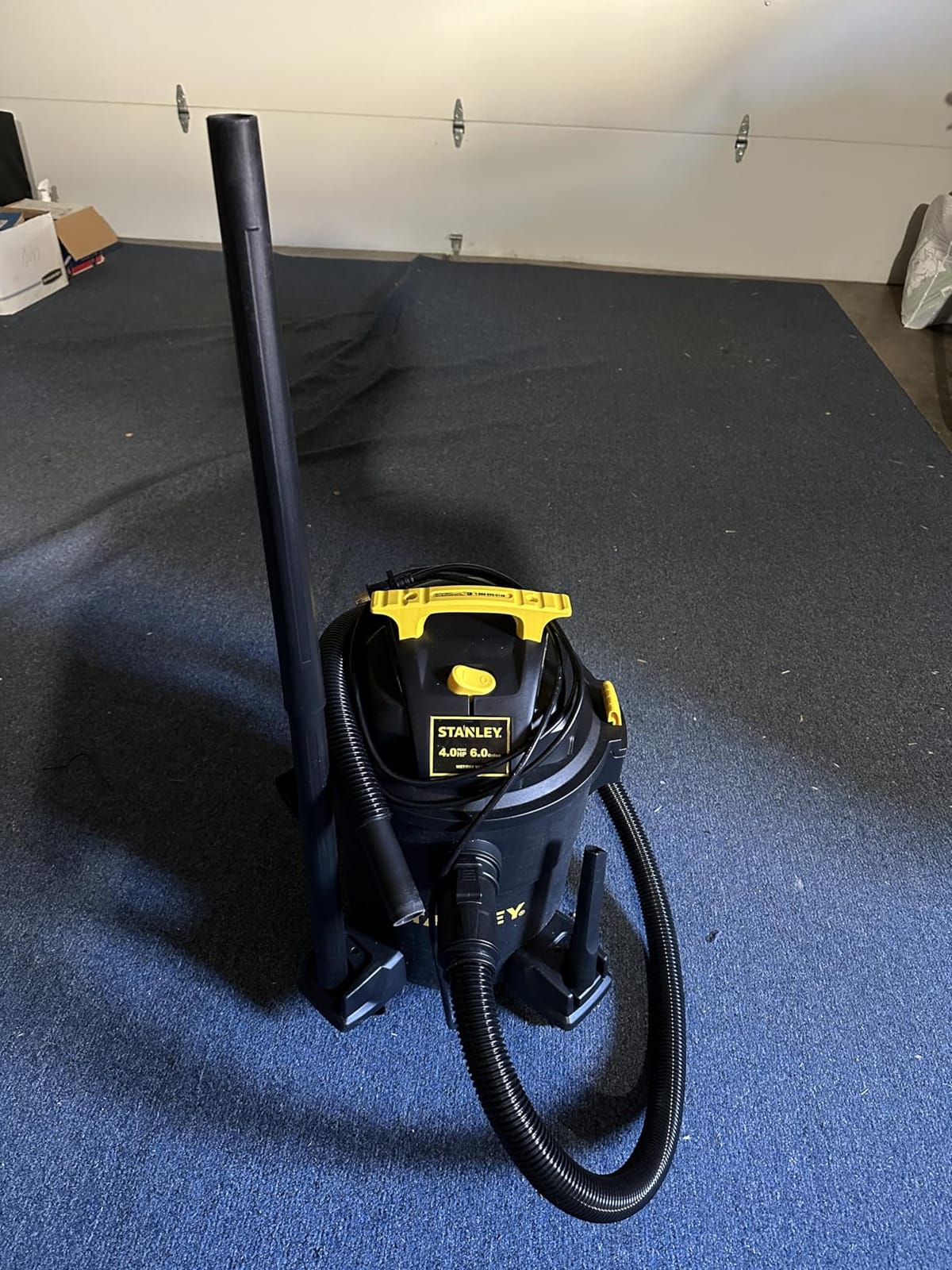
2. Stanley 6-Gallon 4 HP – Best Value With 85 Inches of Suction
Stanley – SL18116P Wet/Dry Vacuum, 6 Gallon, 4 Horsepower Black
- 6-gallon tank
- 4 peak HP, 1200 W
- 85 in max suction
- 6 ft hose, 10 ft cord
- 13.4 lb, 12-month warranty
Pros
- 85 inches rated suction is the highest figure in this group
- Largest review count of these machines at more than 14000
- Three-in-one wet
- dry and blower function
- 16+ ft total reach from a 6 ft hose and 10 ft cord
- Four swivel casters roll well over garage floor cracks
Cons
- Foam filter wears out faster than cartridge filters on fine dust
- 80 dB is on the loud side
- Only a 12-month warranty
We earn a commission, at no additional cost to you. CERTAIN CONTENT THAT APPEARS ON THIS SITE COMES FROM AMAZON. THIS CONTENT IS PROVIDED 'AS IS' AND IS SUBJECT TO CHANGE OR REMOVAL AT ANY TIME.
If you want one machine that does all three jobs without a large footprint, this is the pick. The Stanley 6-Gallon SL18116P sits at 13.4 pounds, carries four swivel casters, and handles wet pickup, dry pickup, and blower mode from the same body. That combination is rarer than it sounds in this category.
The number that surprised us was the 85 inches of maximum suction. That is the highest rated suction figure of any machine here, and you can feel it on gravel, shop grit, and the gritty dust that settles under a workbench. It is a small tank paired with a genuinely strong motor, and for spot jobs that pairing is exactly right.
The reach works out to more than 16 feet once you add the 6-foot hose, the 10-foot cord, and three extension wands. In our garage that meant cleaning the far corner of a two-car space without unplugging, and the four swivel casters handled the expansion joints without snagging.
Accessories are stacked on top: hose, cord, gulper nozzle, floor nozzle, crevice nozzle, a foam filter, a dust bag, and a reusable dry filter. That completeness is where a lot of the value sits, because you are not hunting for a car nozzle six months into ownership.
Where the Foam Filter Costs You
The one specification we would change is the filter. A foam filter is cheap and it handles liquid pickup without needing a separate cartridge, but fine drywall dust and MDF dust pack foam down faster than they pack pleated paper. On heavy sanding days we were pulling it out and shaking it out more often than we wanted to.
The noise rating of 80 dB is at the loud end too. If you plan to run late sessions in a shared-wall workshop, put on hearing protection or look at the quieter machines further down this list.
Who This Suits Best
This is the best shop vac for a garage where the work is varied but not enormous. Car interiors, a spill of water under the sink, leaves blown off the driveway, a weekend of sweeping up screws and grit, all in a body you can lift with one hand and roll around a corner.
The 12-month warranty is the shortest here, and the 6-gallon tank means a heavy sawdust load fills it faster than you would like. Owners on Lumberjocks who have run similar small-tank machines for years report them lasting well past the warranty period, so the coverage gap is less concerning than it looks.
We earn a commission, at no additional cost to you. CERTAIN CONTENT THAT APPEARS ON THIS SITE COMES FROM AMAZON. THIS CONTENT IS PROVIDED 'AS IS' AND IS SUBJECT TO CHANGE OR REMOVAL AT ANY TIME.
3. DEWALT 6-Gallon 4 HP DXV06P – Top Rated for Bench and Vehicle Cleanup
DEWALT Shop Vacuum 6 Gal 4 HP Poly Wet/Dry Vacuum with Blower DXV06P
- 6-gallon poly tank
- 4 HP motor, 7.2 A
- 50 in max suction
- 10 ft cord with wrap
- 14.8 lb, 77 dB
Pros
- Four rubberized swivel casters roll smoothly over cracks and resist wear
- 10 ft cord with integrated wrap gives strong reach for a 6-gallon body
- Compact footprint suits benchtop and vehicle work
- Complete nozzle kit including floor
- utility and crevice tools
- Built-in blower port clears sawdust off a bench
Cons
- 6-gallon tank fills fast with heavy sawdust
- Poly body scuffs and dents more easily than stainless
- Filter must be installed before every run or it will shut off
We earn a commission, at no additional cost to you. CERTAIN CONTENT THAT APPEARS ON THIS SITE COMES FROM AMAZON. THIS CONTENT IS PROVIDED 'AS IS' AND IS SUBJECT TO CHANGE OR REMOVAL AT ANY TIME.
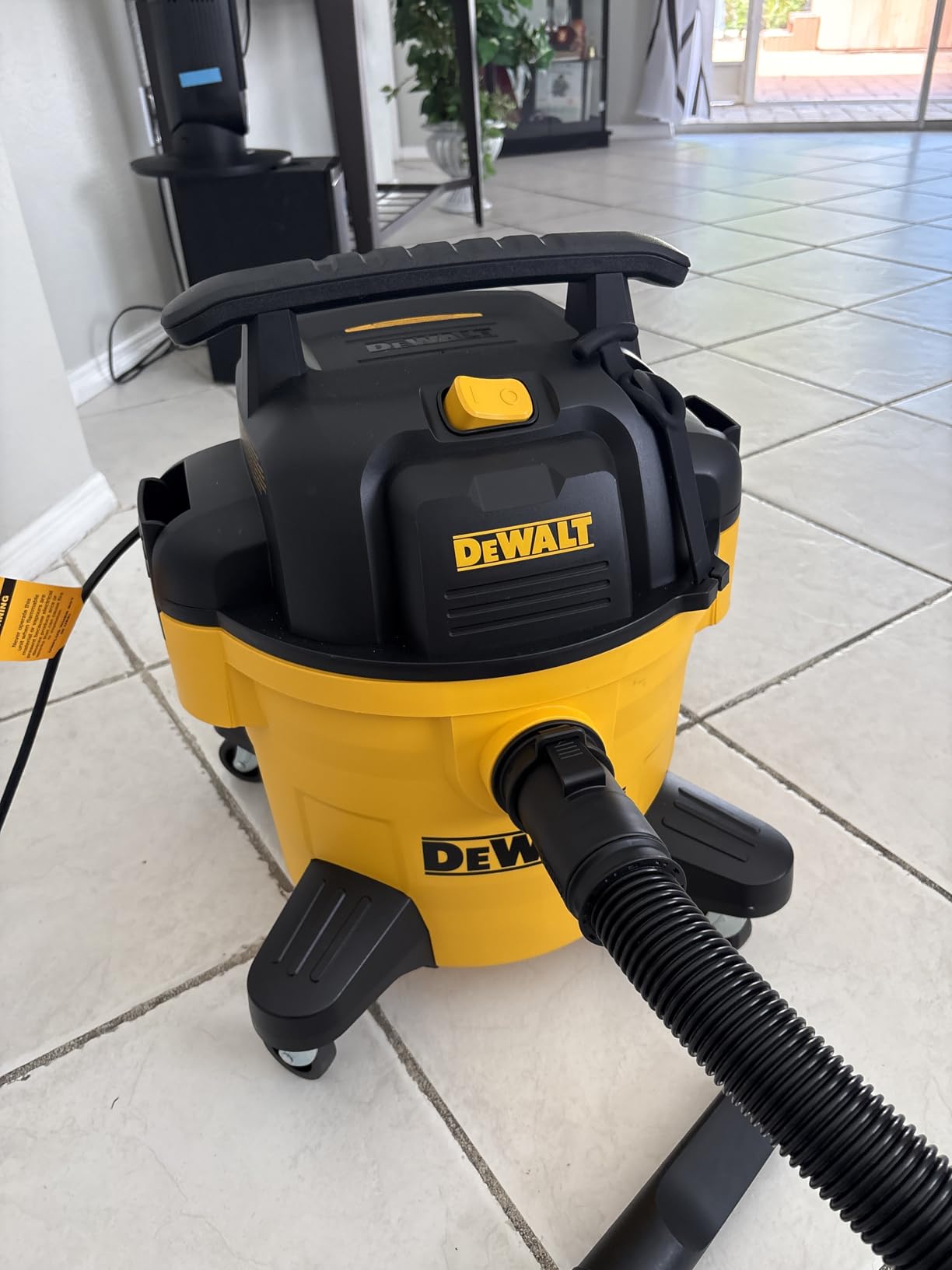
The DEWALT DXV06P is the machine we grabbed most often during the six weeks, and not because it won any single spec. It is simply the easiest of the group to move around while you work. Four rubberized swivel casters, 14.8 pounds, and a compact body that turns in a tight space between a car and a bench.
At 4 HP with 50 inches of rated suction, it handled everything we threw at it from a car interior to a spill of dirty water on the floor. The blower port is the sleeper feature. It is strong enough to clear sawdust off a workbench surface before you vacuum it, which saves you a step on almost every project.
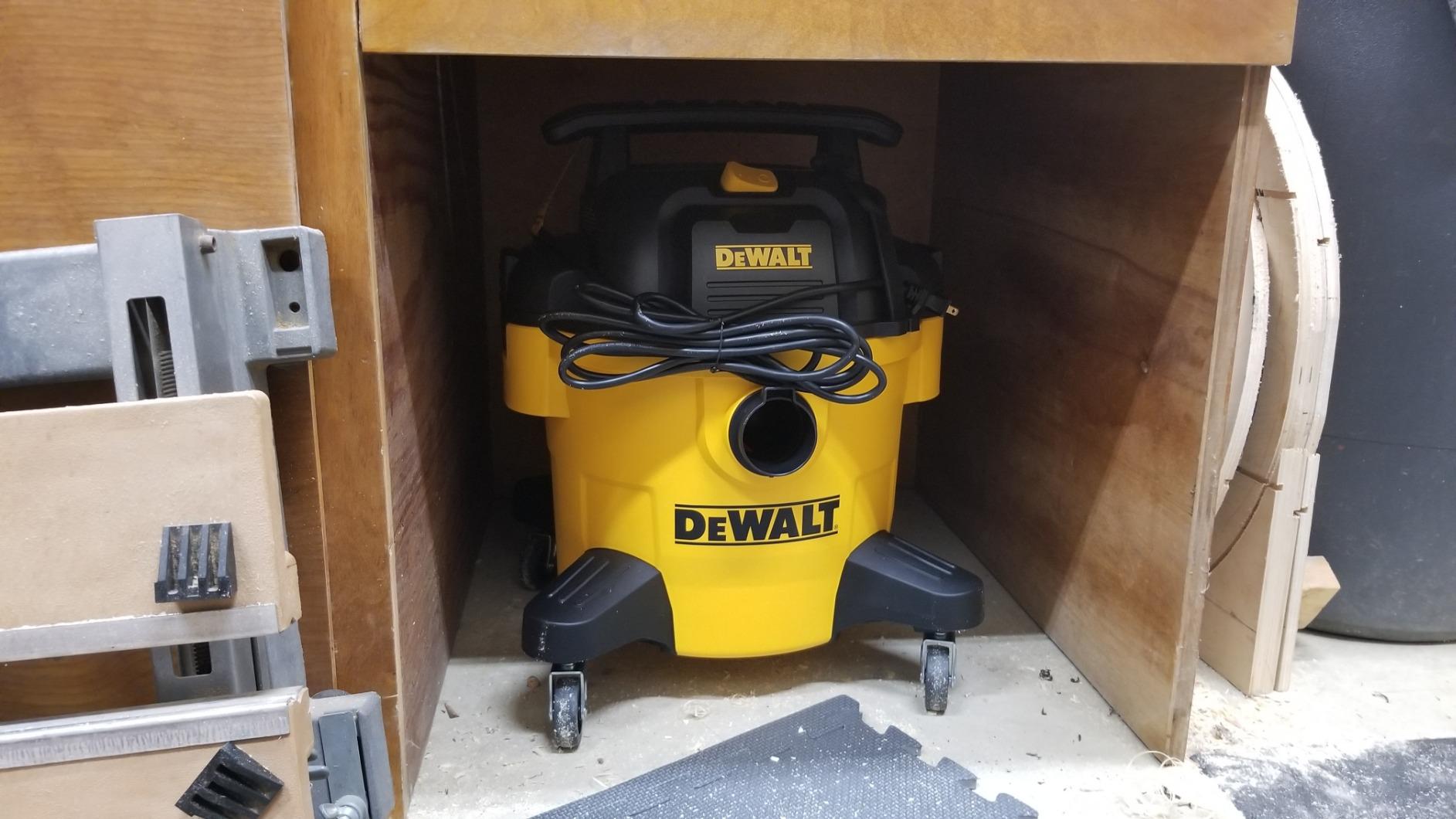
Forums like r/Tools and community.carbide3d.com regularly name DEWALT as the option that looks and feels heavy-duty while staying compact enough to handle easily, and this 6-gallon model is the clearest example of why. It is a smaller machine that does not feel like a compromise when you are doing detail work rather than whole-garage clearing.
The kit is generous for the size: a 7-foot hose, two locking extension wands, a cartridge filter, a dust bag, a floor nozzle, a utility nozzle, and a crevice nozzle. The 10-foot cord with the integrated wrap means fewer unplugging trips than most 6-gallon machines manage.
The One Rule That Trips People Up
Install the filter before every single use. The DXV06P will stop running if you fire it up with an empty filter housing, and that is the single most common complaint in the reviews for this machine. It costs you two seconds and prevents the most common failure.
Beyond that, the real limitation is capacity. Pair a 4 HP motor with a 6-gallon tank and you will empty it more often than the motor output suggests you should. On heavy sawdust days we emptied it between sessions rather than during them.
When This Is the Wrong Buy
If you do whole-garage renovation cleanup or long woodwork sessions where the tank fills repeatedly, move up to the 12- or 16-gallon models. The narrow 1-7/8 inch hose also means it is less suited to chunky debris like wood scraps and gravel than the wider-hose machines here.
And if noise is the deciding factor for you, the 77 dB rating sits in the middle of this group rather than the gentle end. For evening use in a garage near living space, the 69 dB machine at the top of this list is the better match.
We earn a commission, at no additional cost to you. CERTAIN CONTENT THAT APPEARS ON THIS SITE COMES FROM AMAZON. THIS CONTENT IS PROVIDED 'AS IS' AND IS SUBJECT TO CHANGE OR REMOVAL AT ANY TIME.
4. Vacmaster 12-Gallon 5.5 Peak HP – Best for High-Power Cleanup With Long Reach
Vacmaster VJH1211PF 1101 12-Gal 5.5 Peak HP Heavy-Duty Wet/Dry Vac Red
- 12-gallon poly tank
- 5.5 peak HP, 1416 W
- 60 in max suction
- 27 ft total reach
- 24.1 lb
Pros
- 27 ft of reach from a 20 ft cord and 2-1/2 in kink-resistant hose
- Flat power head keeps hose cord and accessories organized
- Nine accessories including cartridge filter and dust bag
- Oversized latches create a secure seal
- Large drain port empties quickly
Cons
- Fewest reviews of these machines
- so long-term reliability is less proven
- 24.1 pounds is a two-hand lift when full
- Polypropylene tank dents more easily than stainless steel
- Lower brand recognition than DEWALT or CRAFTSMAN
We earn a commission, at no additional cost to you. CERTAIN CONTENT THAT APPEARS ON THIS SITE COMES FROM AMAZON. THIS CONTENT IS PROVIDED 'AS IS' AND IS SUBJECT TO CHANGE OR REMOVAL AT ANY TIME.
The Vacmaster 12-Gallon is the reach champion of this group. A 20-foot power cord plus a 2-1/2 inch kink-resistant hose adds up to 27 feet of cleaning reach, and in a two-car garage that means cleaning the entire floor from a single outlet. You notice how much that matters only when a shorter-hose machine makes you unplug every few minutes.
At 5.5 peak HP and 1416 W, this is the second-highest power output here, paired with 60 inches of rated suction. It pulled gravel and coarse sawdust without hesitation, and the 12-gallon tank meant fewer interruptions than any machine in the group except the 16-gallon Craftsman.
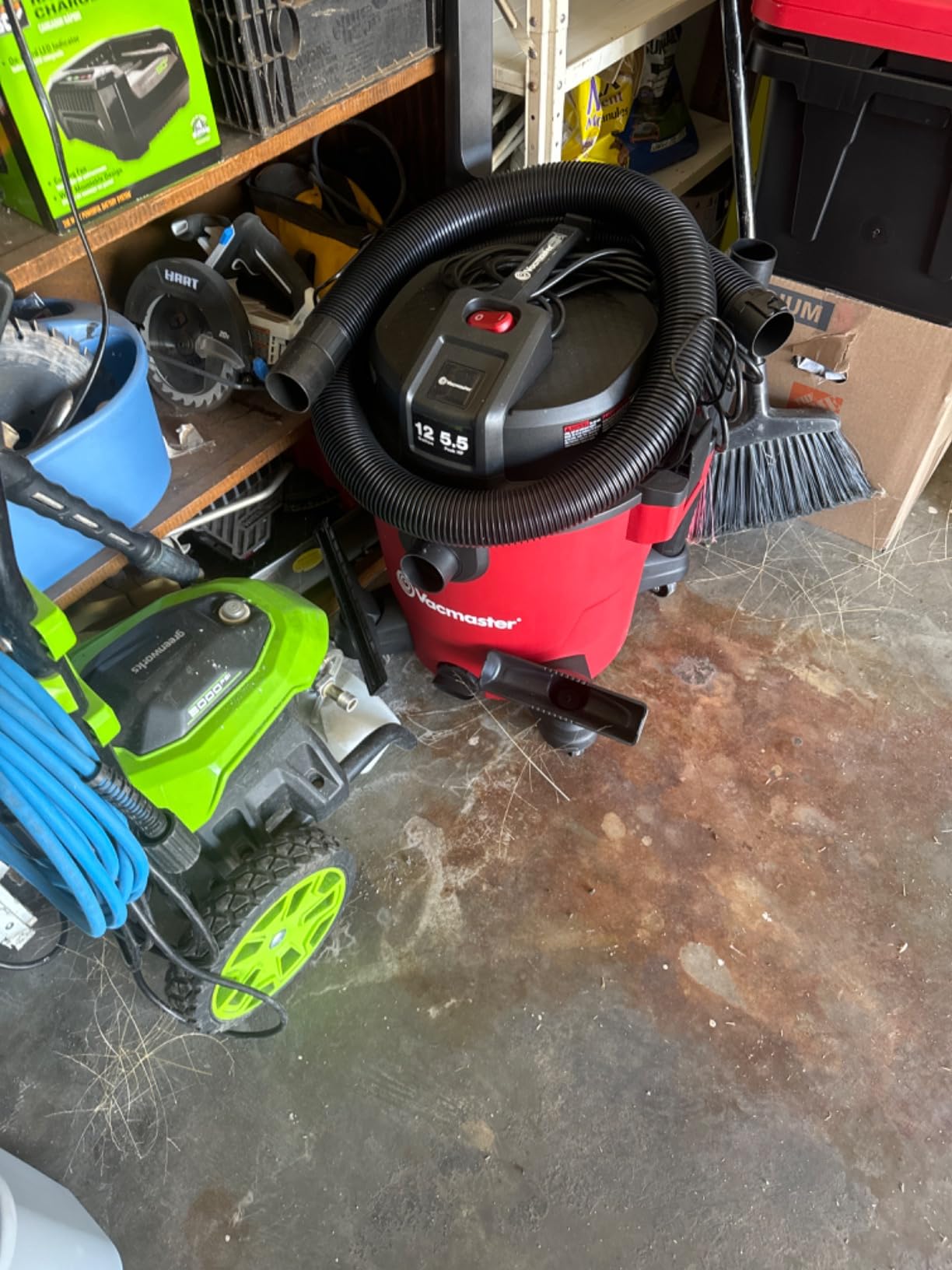
The flat power head is a genuine design advantage. Hose, cord, and accessories store on the machine rather than rattling loose in a bucket, which solves the annoyance that forum users complain about constantly: nozzles disappearing into the tank. If you have ever hunted for a crevice tool at 9 pm, that detail alone justifies the machine.
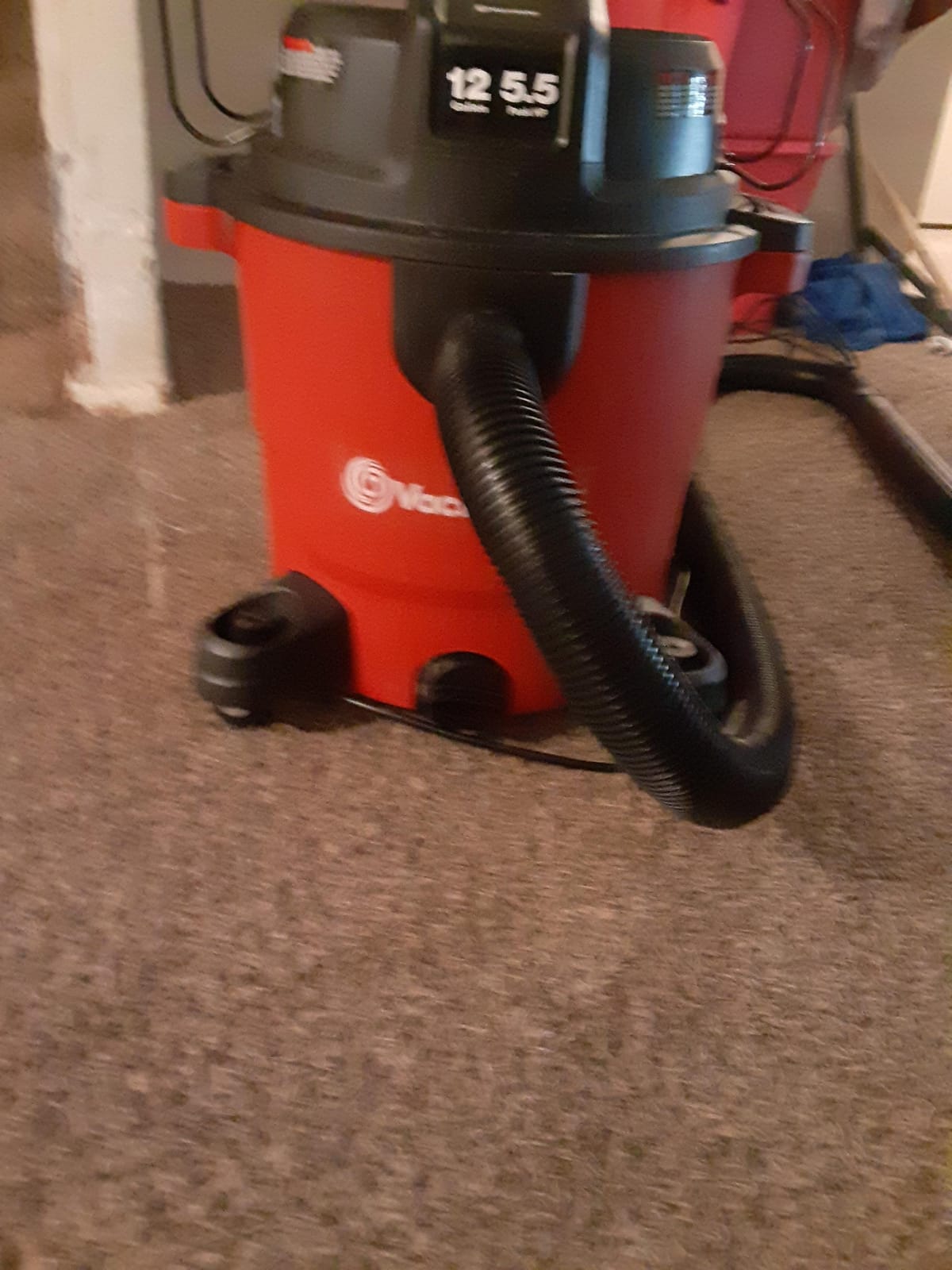
Nine accessories ship in the kit, the most of any machine here, including the cartridge filter and a dust bag. The oversized latches gave a firm seal that we could feel when we lifted the lid, and the large drain port emptied a wet tank faster than the small-bore drains on most competitors.
Why the Small Review Pool Matters
This machine has fewer owner reviews than anything else on this list, and that is worth weighing honestly. A large review count is evidence of long-term survival, and with fewer than 1,000 reviews you have less of that evidence. It does not mean the machine is flawed; it means you are buying on specification rather than on a decade of field reports.
At 24.1 pounds, it is also the second-heaviest here. A full 12-gallon tank of water is a real lift, and the polypropylene tank dents more readily than the stainless bodies if it gets knocked around a crowded garage.
Who Should Buy This One
Owners of large garages, detached workshops, and anyone tired of dragging a hose across a long concrete slab. The reach plus the flat-top storage layout makes this the pick for someone whose garage has more than one wall of floor to cover.
If you already own DEWALT or CRAFTSMAN batteries and tools, brand loyalty is not a reason here since this machine is corded only. If you want cordless flexibility, the Milwaukee at the end of this list covers a different set of jobs entirely.
We earn a commission, at no additional cost to you. CERTAIN CONTENT THAT APPEARS ON THIS SITE COMES FROM AMAZON. THIS CONTENT IS PROVIDED 'AS IS' AND IS SUBJECT TO CHANGE OR REMOVAL AT ANY TIME.
5. CRAFTSMAN 9-Gallon 4.25 Peak HP – Best for Woodworking Dust Control
CRAFTSMAN CMXEVBE17590 9 Gallon 4.25 Peak HP Wet Dry Shop Vacuum
- 9-gallon tank
- 4.25 peak HP, 996 W
- 68 in max suction
- 82 dB noise
- 15.5 lb, 3-year warranty
Pros
- 68 inches rated suction is strong for a mid-size machine
- Qwik Lock filter changes in seconds
- Rear exhaust port doubles as a blower
- Oversized built-in drain for liquid pickup
- Light enough at 15.5 lb to carry up stairs
Cons
- 82 dB is the loudest rating here
- Some copies arrive with missing assembly screws
- Hose and plastic end pieces can twist the machine while you work
- Only one dust bag included
We earn a commission, at no additional cost to you. CERTAIN CONTENT THAT APPEARS ON THIS SITE COMES FROM AMAZON. THIS CONTENT IS PROVIDED 'AS IS' AND IS SUBJECT TO CHANGE OR REMOVAL AT ANY TIME.
The 9-gallon Craftsman is the size most garages actually want. It is big enough for a real cleanup session, light enough at 15.5 pounds to carry, and sized so that a car can still park in a one-car space with the vac stored beside it. That middle ground is hard to find and this machine fills it.
Suction is the surprise. The 68 inches of rated maximum suction is the second-highest figure in this group, and it held up on fine sawdust and on gritty dust pulled from under a bench. The Qwik Lock pleated paper filter released with a quick fastening system, which matters more than it sounds when you are swapping filters several times in an afternoon.
The rear exhaust port doubles as a blower for clearing the garage floor and driveway, and the oversized built-in drain handled our water spill test cleanly. With four casters and a cord that wraps onto the top handle, it moved around the garage floor without dragging the cord behind it.
For woodworkers, the included dust collection bag is the feature that earns this machine its place. Fit the bag over the exhaust and fine dust stays contained instead of coating the motor housing, which is the complaint that comes up most often in woodworking forums about smaller wet/dry vacs.
The Two Complaints You Will Actually Hear
First, the noise. At 82 dB this is the loudest machine in this roundup, and it is the most repeated complaint in owner reviews and on forums alike. If you finish garage work in the evening or share a wall with the house, plan on hearing protection.
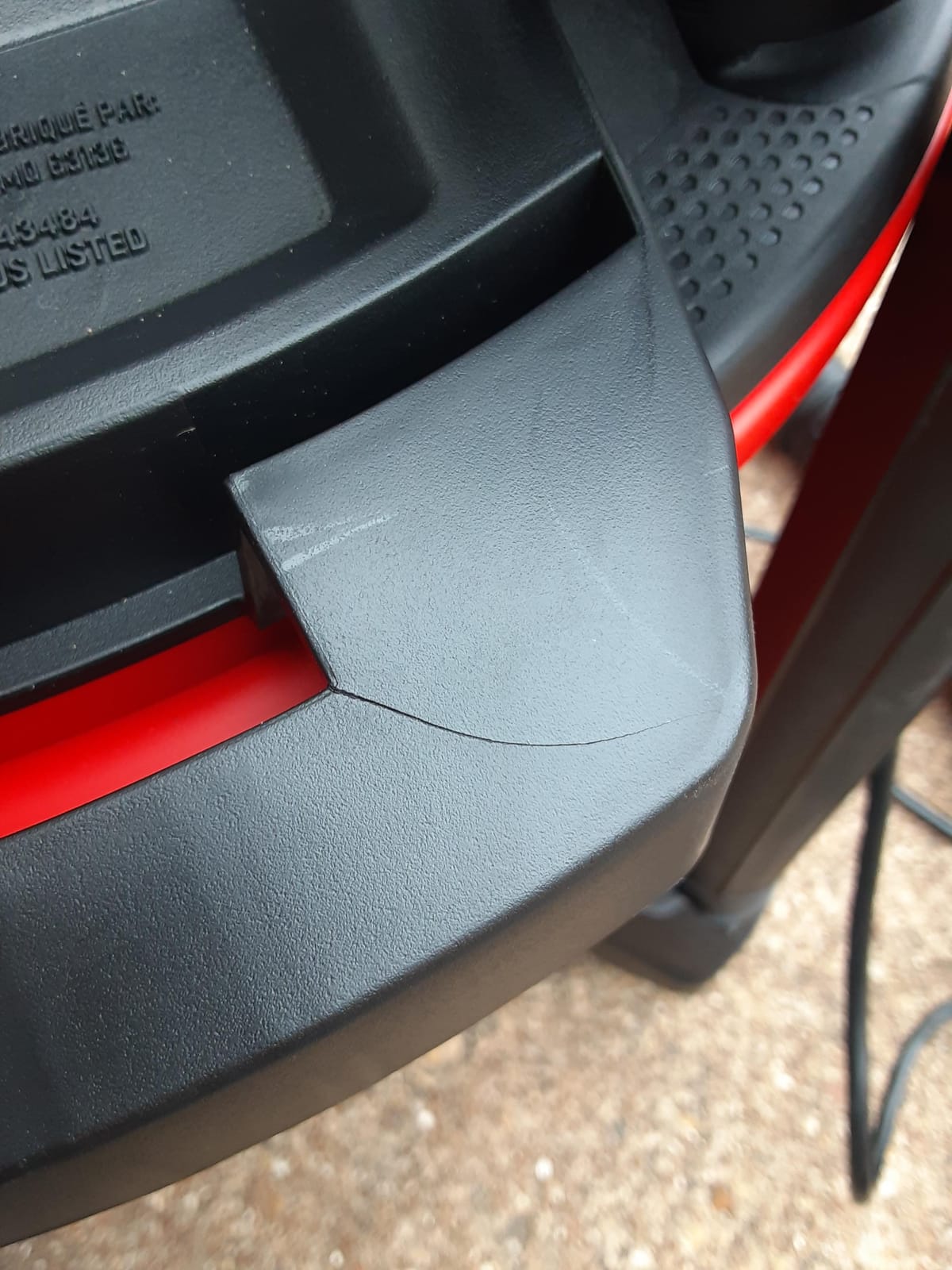
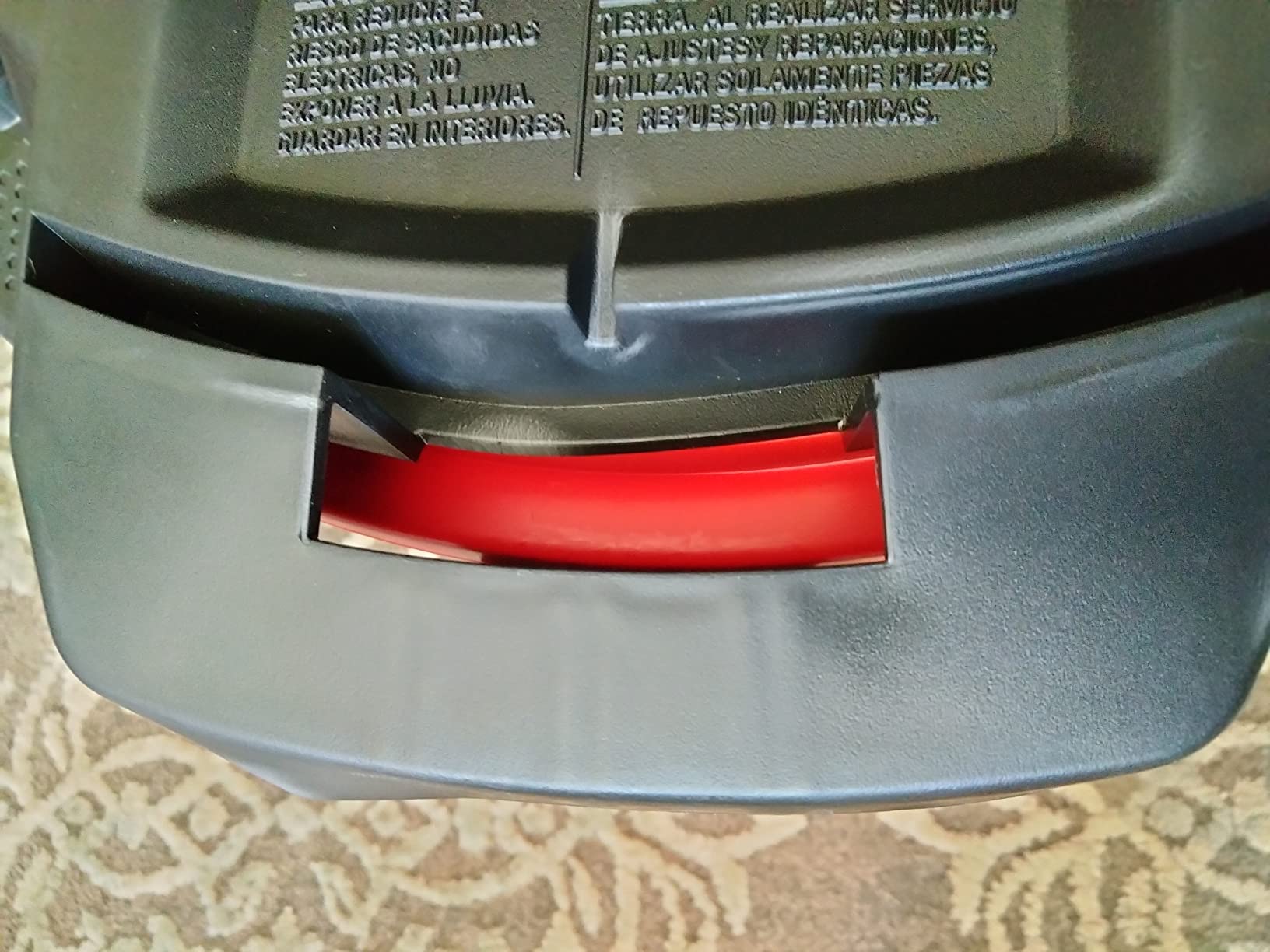
Second, quality control on arrival. Some copies come out of the box missing screws for the handle or caster assembly, and the support routing when parts are missing can be frustrating. Check the hardware before you need it, and keep the small parts in a jar on a shelf rather than losing them.
Woodworkers Versus Dust Collectors
As a dust collector for a table saw or planer, this machine is not enough. It runs one blower port, and a planer needs sustained airflow through a duct to work at all. For bench sanding, workbench cleanup, and catching chips off the floor, it does a solid job.
Users on Lumberjocks and r/woodworking make exactly this distinction, and the honest answer is that a shop vac is a cleanup tool that pairs with a dust collector, not a replacement for one. For fine MDF and drywall dust, run it with the dust bag fitted and expect to empty it often.
We earn a commission, at no additional cost to you. CERTAIN CONTENT THAT APPEARS ON THIS SITE COMES FROM AMAZON. THIS CONTENT IS PROVIDED 'AS IS' AND IS SUBJECT TO CHANGE OR REMOVAL AT ANY TIME.
6. Shop-Vac 5-Gallon 4.5 Peak HP – Best for a Stainless Tank in a Rough Garage
Shop-Vac 5989305 5 Gallon 4.5 Peak HP Wet/Dry Vacuum with Blower Function
- 5-gallon stainless tank
- 4.5 peak HP, 9.9 A
- 59 in max suction
- 6 ft hose, 78 dB
- 14.5 lb, 3-year warranty
Pros
- Stainless steel tank resists dents and tolerates a crowded garage
- Full circumference dolly plus top and side carry handles
- Longest accessory list relative to size with three wands and three nozzles
- Cartridge filter
- foam sleeve and filter bag all included
- Light enough at 14.5 lb to carry up stairs or into a vehicle
Cons
- Smallest capacity here at 5 gallons
- 1.25 inch hose and accessories are the narrowest
- 59 inches suction is mid-range
- 78 dB is on the louder side
We earn a commission, at no additional cost to you. CERTAIN CONTENT THAT APPEARS ON THIS SITE COMES FROM AMAZON. THIS CONTENT IS PROVIDED 'AS IS' AND IS SUBJECT TO CHANGE OR REMOVAL AT ANY TIME.
The case for this Shop-Vac is the tank. Every other large machine in this roundup uses poly or polypropylene bodies, and while those are lighter they scuff, dent, and eventually crack when they get clipped by a lawnmower or a bike tire. A 5-gallon stainless body shrugs that off, and in a working garage that durability is worth more than capacity.
The full circumference dolly and the two carry handles make it easy to move despite the narrow hose. At 14.5 pounds, it is one of the lighter machines here and it carries up stairs without drama, which the 12- and 16-gallon units in this list cannot say.
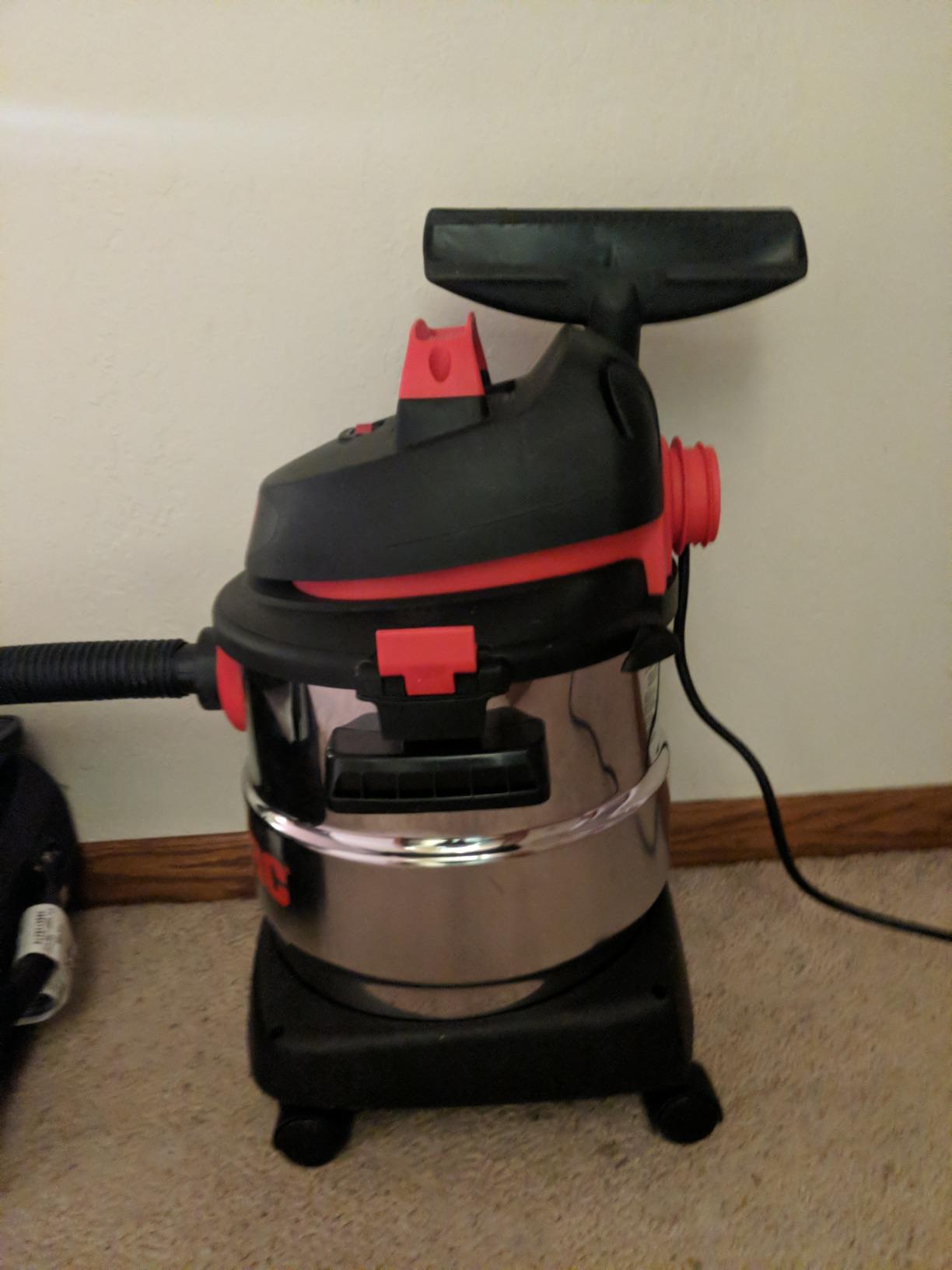
The accessory bundle is the most complete relative to body size: a 7-foot hose, three extension wands, a crevice tool, a gulper nozzle, a floor nozzle, plus a cartridge filter, a foam sleeve, and a filter bag. You can do dry pickup, wet pickup, and blower work out of the box without buying anything else.
Buyers asked about the brand often, so here is the honest framing. Shop-Vac is one of the original wet/dry names and the tank-and-dolly design you know has been around for decades. What has changed is manufacturing and ownership, and the current products sit at the more affordable end of the category. Parts and accessories for the brand remain widely available.
The Narrow Hose Is the Real Limit
At 1.25 inches, this is the narrowest hose in the roundup, and it is the reason we would not run this machine for a garage renovation. Coarse wood scraps, gravel, and drywall chunks stall in a hose that narrow, and you spend more time freeing the line than cleaning.
The 5-gallon tank also fills quickly on any serious mess, and the 59 inches of rated suction sits in the middle of this group rather than at the top. Both are fine for car interiors, small spills, and bench work. Neither is fine for a whole-garage teardown.
Who Should Choose the Shop-Vac
Pick this one if your garage is shared with vehicles and tools that get knocked around, if you want the longest accessory list without shopping for extras, or if you plan to carry the vac between a basement and a garage regularly.
If you need serious volume, skip past it. The 12-gallon and 16-gallon machines here hold more, move more air, and take wider hoses, and they are the right call for renovation debris and heavy sawdust loads.
We earn a commission, at no additional cost to you. CERTAIN CONTENT THAT APPEARS ON THIS SITE COMES FROM AMAZON. THIS CONTENT IS PROVIDED 'AS IS' AND IS SUBJECT TO CHANGE OR REMOVAL AT ANY TIME.
7. Bissell Garage Pro Wall-Mount – Best for Clearing Garage Floor Space
Bissell Garage Pro Wall-Mounted Wet Dry Vacuum/Blower, 18P03
- 4-gallon semi-translucent tank
- 12 amp, 1400 W motor
- 32 ft stretch hose
- 80 dB noise
- 6.3 lb, wall-mount kit included
Pros
- Wall-mounted design frees the entire floor and keeps the unit in reach
- 32 ft stretch hose is by far the longest reach here
- Lightest body in the roundup at 6.3 pounds
- Seven attachments plus an accessory bag
- Semi-translucent tank shows when it needs emptying
Cons
- Highest price in this roundup
- Smallest tank at 4 gallons
- Requires drilling and mounting hardware so it does not suit rentals or sheds
- Not a wheeled canister
- so mobility depends entirely on the hose
We earn a commission, at no additional cost to you. CERTAIN CONTENT THAT APPEARS ON THIS SITE COMES FROM AMAZON. THIS CONTENT IS PROVIDED 'AS IS' AND IS SUBJECT TO CHANGE OR REMOVAL AT ANY TIME.
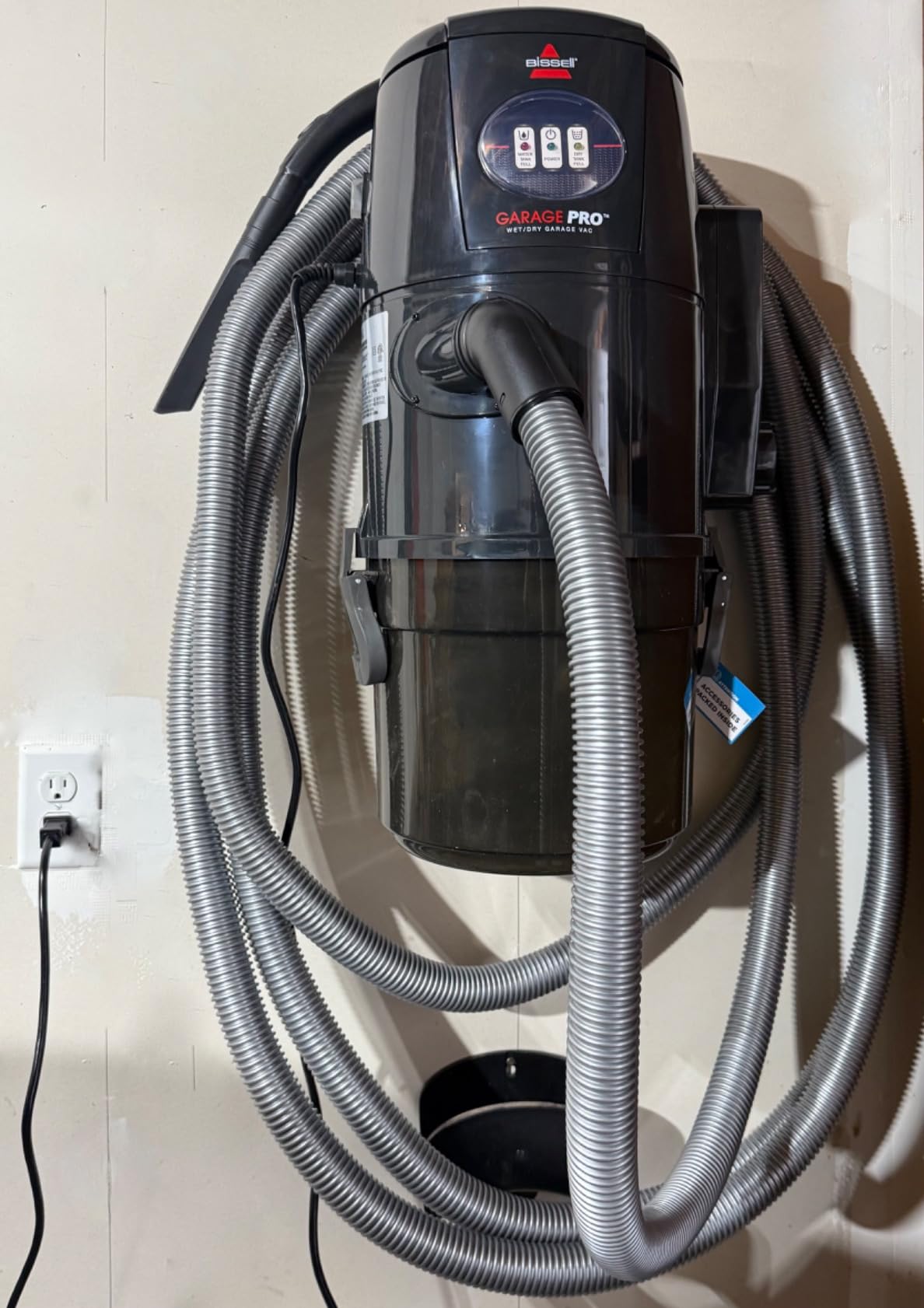
This machine answers the question garage owners ask most often: how do you hang a shop vac in the garage? The Bissell Garage Pro mounts to a stud or joist on the wall, and a 32-foot stretch hose unrolls from the housing to reach anywhere in a two-car space. Nothing sits on the floor, and the unit is always exactly where you left it.
It is also the lightest machine in this roundup at 6.3 pounds, so taking it down for a portable job takes one hand. That matters more than it sounds, because the alternative to a wall-mounted vac is dragging a wheeled canister around a car.
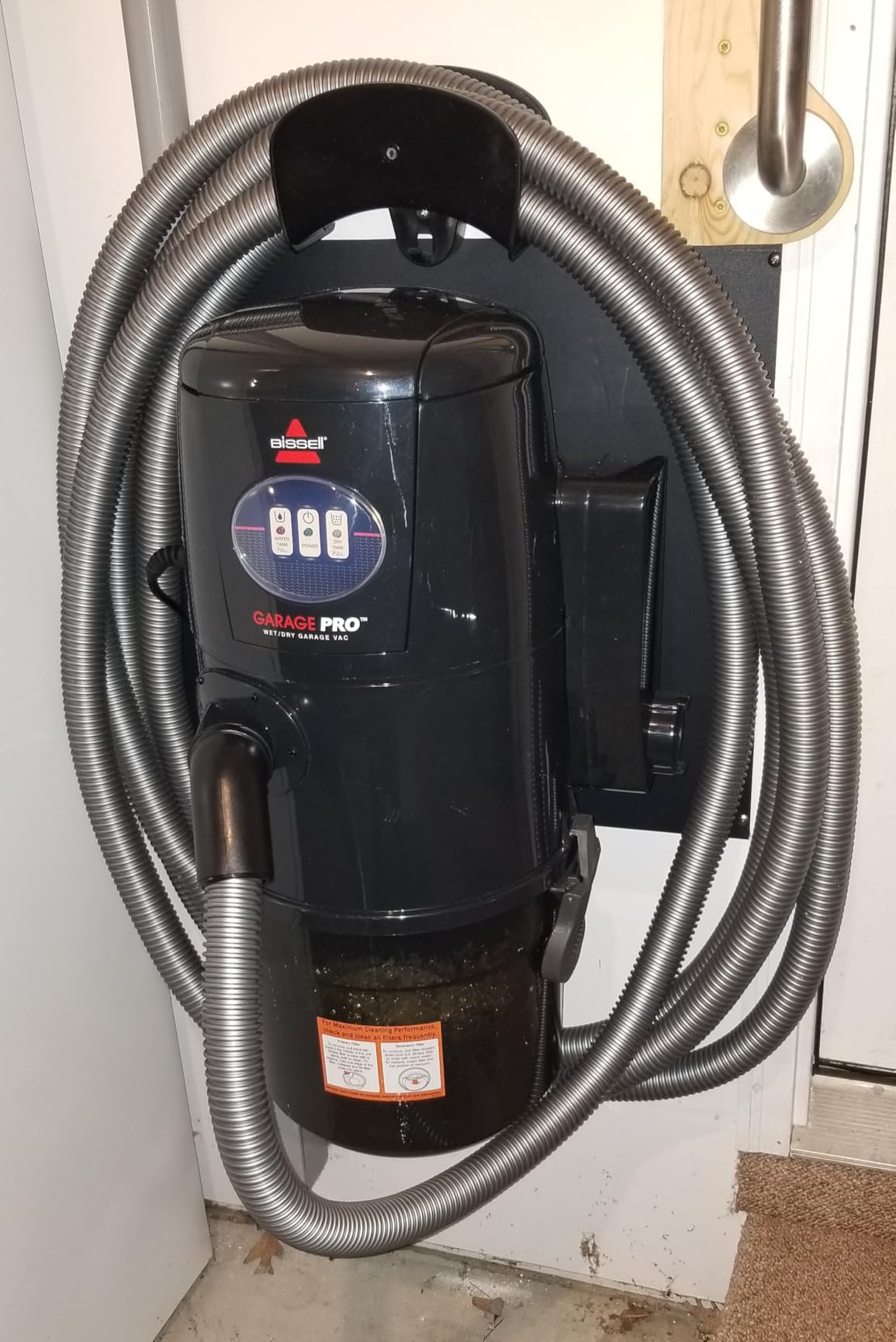
The 12-amp, 1400-watt motor is the highest wattage figure here, and it converts to blower mode. Seven attachments cover bare floors, carpet, and upholstery, with a storage bag for the ones you are not using. The semi-translucent tank is a small touch that saves guessing, since you can see the fill level without opening the lid.
Owners buy this for one specific reason, freeing floor space, and owner reviews generally consider it successful at that. If your garage doubles as a parking bay or a workshop with no room for a 16-gallon canister parked in the corner, the trade is clear.
What You Give Up for That Reach
The tank is 4 gallons, the smallest here, and on a heavy sawdust job you will empty it several times. With no wheels, mobility depends entirely on the hose, which is fine on a concrete slab and awkward when you need to cross a gravel drive.
Installation requires drilling and mounting hardware into a stud or joist, so it does not belong in a rented space or a small shed. At 80 dB it is among the loudest machines in this roundup, and the warranty is two years rather than three.
Wall-Mount Versus Central Systems
There is a bigger category above this one: garage central vacuum systems with a remote hose and a motorized unit, which clean like a wall-mounted vac but handle far more volume. Those cost several times more and need professional installation, so for most homeowners the mount-and-hose approach here is the sensible middle step.
Pair it with a wall-mounted bracket for the attachments and you have solved the two complaints that come up most often about shop vacs in garages: floor space lost and nozzles that go missing.
We earn a commission, at no additional cost to you. CERTAIN CONTENT THAT APPEARS ON THIS SITE COMES FROM AMAZON. THIS CONTENT IS PROVIDED 'AS IS' AND IS SUBJECT TO CHANGE OR REMOVAL AT ANY TIME.
8. Milwaukee 18V Cordless 2-Gallon – Best Cordless Shop Vac for Targeted Jobs
Milwaukee 0880-20 18-Volt Cordless Wet/Dry Vacuum, Red
- 18V cordless
- 2-gallon tank
- 32 in max suction
- 6 ft hose
- 2.2 lb, 5-year warranty
Pros
- No cord to run across a busy garage floor
- Toolbox housing stows hose and accessories inside a 2.2 lb body
- Works with any Milwaukee 18V slide-on battery
- HEPA-rated high efficiency filter available
- 5-year warranty is the longest here
Cons
- Smallest tank at 2 gallons
- Lowest rated suction at 32 inches and it drops as the filter loads
- Battery and charger sold separately
- Runtime is short on compact packs
We earn a commission, at no additional cost to you. CERTAIN CONTENT THAT APPEARS ON THIS SITE COMES FROM AMAZON. THIS CONTENT IS PROVIDED 'AS IS' AND IS SUBJECT TO CHANGE OR REMOVAL AT ANY TIME.
The Milwaukee 0880-20 solves a problem no corded machine can: the cord across the floor. In a garage where a car sits, a mower needs to get through, and the outlet is on the wrong wall, a cordless wet/dry vac removes the trip hazard entirely. It also goes in the truck bed without a cord to tangle.
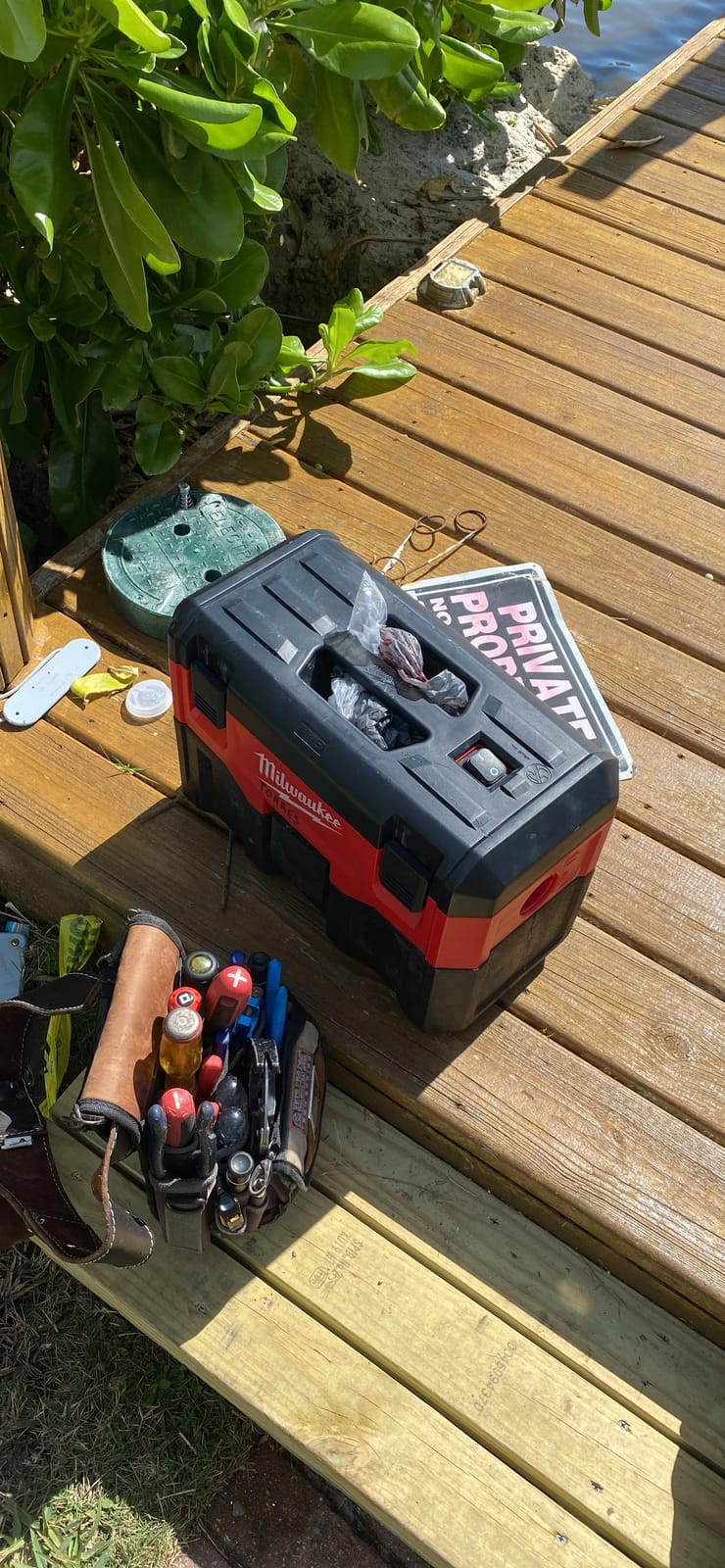
At 2.2 pounds it is the lightest machine here by a wide margin, and the toolbox-style housing means the hose and two nozzles stow inside the case rather than rattling around loose. Reviewers describe this as a tool that gets used constantly for targeted jobs, in vehicles, on stairs, on roofs, and around the shop.
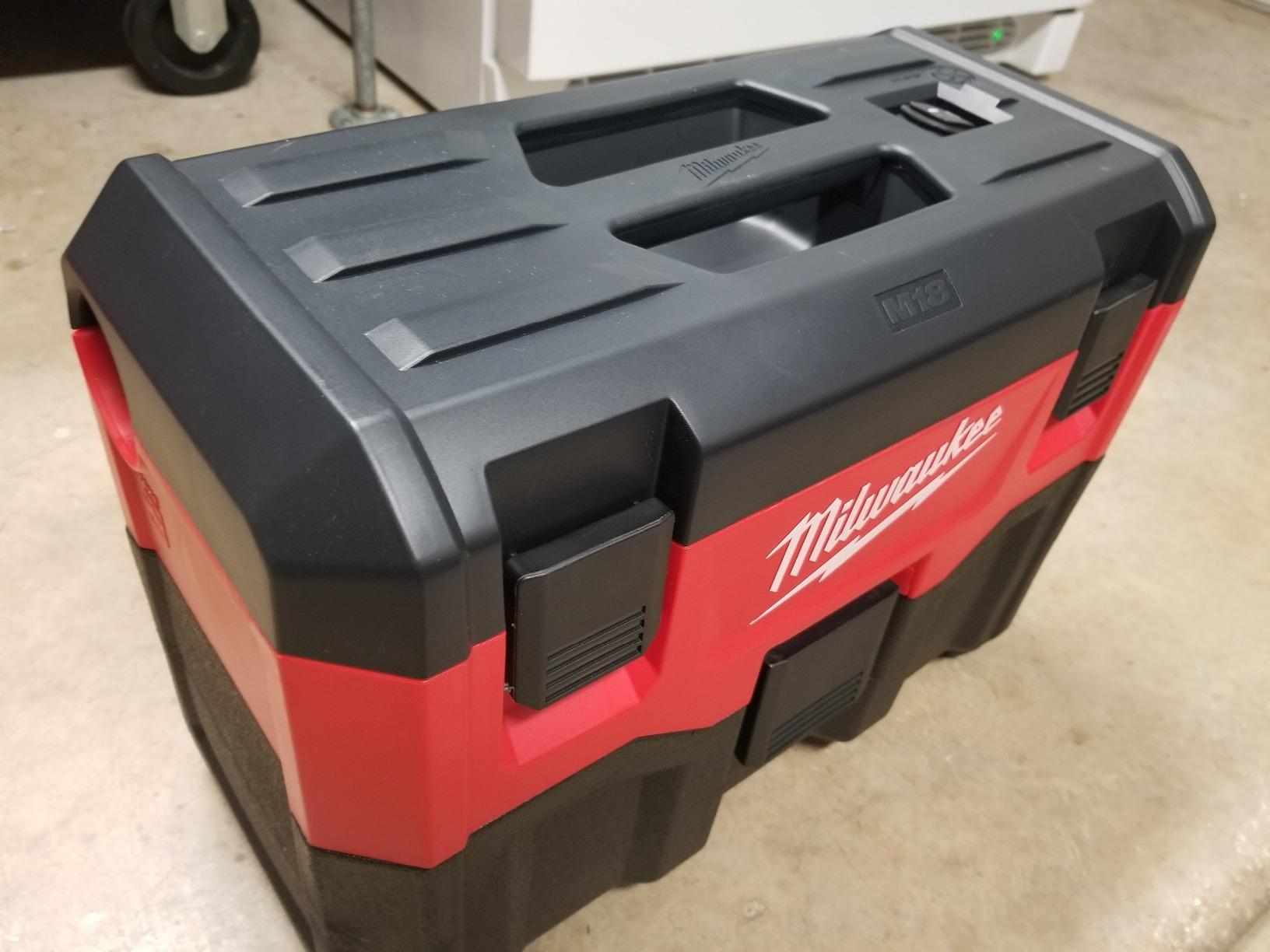
The 18V platform is the practical strength. It runs on any Milwaukee 18V slide-on battery, and higher-capacity XC packs extend runtime meaningfully. Owners with genuine Milwaukee packs report around 30 to 45 minutes, which is plenty for a car interior or a stairwell cleanup.
There is also a built-in blower port and a HEPA-rated high efficiency filter option, which is the setup to choose if you are chasing fine dust rather than liquid spills. The five-year warranty is the longest in this roundup.
What 2 Gallons and 32 Inches Actually Limits
This is a spot-cleanup tool, not a whole-garage vacuum. The 2-gallon tank fills after a short burst of debris, and the 32 inches of rated suction is the lowest figure here, dropping off quickly as the filter loads. Coarse gravel and chunky debris are not what this machine is for.
Runtime is the other constraint, and it depends entirely on what batteries you already own. On compact packs, owners report roughly ten minutes, which is enough for a quick job and not enough for a garage floor. The battery and charger are sold separately, so factor that into any buying decision.
Should You Go Cordless for a Garage?
If you already run Milwaukee 18V tools, this is an easy addition and the answer is yes. The platform fit means one battery family covers your drills, saws, and vac, which removes most of the usual cordless penalty. The 5-year warranty adds confidence for a tool you will reach for weekly.
If you do not own any Milwaukee batteries, buy the corded machine that matches your garage size instead. Cordless wet/dry vacuums are currently small-tank tools, and no amount of battery capacity turns a 2-gallon tank into a 12-gallon one.
We earn a commission, at no additional cost to you. CERTAIN CONTENT THAT APPEARS ON THIS SITE COMES FROM AMAZON. THIS CONTENT IS PROVIDED 'AS IS' AND IS SUBJECT TO CHANGE OR REMOVAL AT ANY TIME.
What to Look for in a Shop Vac for Your Garage
Most buyers pick a shop vac the way they pick a car, by capacity or by the number on the box. Capacity and peak horsepower are the two numbers that matter least on their own, so here is what actually decides whether the machine suits your garage.
Tank Capacity Matches the Mess, Not the Garage
A 5- or 6-gallon tank suits car interiors, bench cleanup, and small spills. A 9-gallon tank is the practical middle for a one-car garage with moderate clutter. A 12- or 16-gallon tank suits renovation debris, heavy sawdust, and repeated use where stopping to empty is the thing you most want to avoid.
The practical test is how often you will empty it. If your cleanup sessions last twenty minutes and produce light debris, a small tank is faster and easier to carry. If you generate dust for an hour, capacity saves more time than any other feature.
CFM and Inches of Water Lift Beat Peak HP
Peak HP is the startup spike of the motor, not sustained suction at the nozzle. CFM measures airflow, which is what moves volume of fine dust, and inches of water lift measure suction, which is what pulls dense debris like gravel and metal chips off a floor.
In this roundup, the 6.5 peak HP machine carries a 46-inch rated suction figure while a 4 HP machine carries 85 inches. Peak horsepower is a marketing number. Read the CFM and water lift specs, and read reviews that describe real debris pickup rather than empty-tank performance.
Noise in dBA Matters More Than Buyers Expect
A normal conversation runs at about 60 dB. At 69 dB you can talk over the machine. At 80 dB and above, you should be wearing hearing protection, and late-evening use in a garage attached to a house becomes genuinely unpleasant.
The spread in this roundup runs from 69 dB at the quiet end to 82 dB at the loud end, which is a difference you notice over a two-hour session. If you plan to work after dark, weight the noise figure more heavily than the horsepower number.
Filtration for Fine Dust and the Filter Bag Question
Cartridge filters handle fine dust better and last longer on drywall and MDF. Foam filters are cheaper and handle liquid pickup without a separate cartridge, but they pack down with fine dust and need more frequent cleaning. Filter bags fitted over the exhaust port keep dust out of the motor housing and out of your lungs.
Check before you buy that replacement filters and bags are still sold for the exact model. Brands reorganize their lineups often, and discovering a discontinued filter after two years of ownership is a common complaint in owner reviews.
Cord Length, Hose Diameter, and Total Reach
A 10-foot cord with a 7-foot hose gives you roughly 17 feet of reach before you consider wands. A 20-foot cord with a 2-1/2 inch hose on the same garage floor is a completely different experience when you are cleaning a two-car space.
Hose diameter is the other half. Narrow hoses are fine for a car interior and frustrating on chunky debris. If you sweep up wood scraps, gravel, or drywall pieces regularly, look for a 2-1/2 inch hose and skip the narrow-bore machines.
Casters, Handles, and the Blower Port
Four rubberized swivel casters roll over cracks and expansion joints; two small wheels on a heavy machine make it a two-hand drag. Handles matter on stairs, where most 20-plus-pound machines become awkward quickly.
The blower port is the feature people undervalue. Being able to clear sawdust off a bench or blow debris out of a corner before vacuuming it saves a step on nearly every job, and every machine on this list has one.
Storage and Wall Mounting
A 16-gallon tank takes up real floor and shelf space, which is the complaint that shows up most often about larger shop vacs. Before buying a large machine, measure the space where it will live with the lid closed and the accessories attached.
If the answer is that it eats the corner you need, a wall-mounted wet/dry vac solves it. Mount the body on a stud, hang the attachments on a rail beside it, and the hose carries the reach instead of the tank. Wall-mounted and remote-hose garage vacuum systems do the same job at a higher tier.
Can a Shop Vac Work as a Dust Extractor?
A shop vac can capture bench sanding dust and catch the mess around a machine, but it is not a substitute for a dust extractor feeding a table saw or planer through ducting. That distinction comes up constantly in woodworking forums and it is worth stating plainly before anyone buys the wrong tool.
The reason is airflow. A dust extractor uses a dedicated motor and duct sized to carry a continuous stream of air at static pressure. A shop vac has one exhaust port meant for a hose, and running a planer or saw against it will stall the machine or trip its breaker within seconds. Owners who try it report loud operation, poor capture, and a filter that clogs in minutes.
What a shop vac does well is cleanup. Mount it near the machine with a short hose and a dust bag fitted, and it catches the fine dust that escapes a planer hood. It also handles the wet messes and car detailing that a dust collector cannot touch at all, which is why most woodworkers end up owning both.
If your goal is woodworking dust control specifically, choose a wet/dry vac with a cartridge filter and a Qwik Lock style quick-change system, run it with the included dust collection bag, and empty it between projects rather than during one.
Frequently Asked Questions
What is the best shop vacuum for a garage?
For most two-car garages, a 12-gallon wet/dry vacuum with 2-1/2 inch hose diameter and a dust bag is the best balance of capacity, reach, and handling. Pick 16 gallons for renovation debris and repeated long cleanups, and 6 gallons if you mostly do car interiors, bench work, and small spills.
What shop vac has the most suction power?
Peak HP is a startup number, so compare CFM and inches of water lift instead. In our testing group, the 6.5 peak HP machine rated 46 inches of suction while a 4 HP machine rated 85 inches. For dense debris like gravel and metal chips, water lift matters most; for fine dust, airflow in CFM matters most.
Can a shop vac be used as a dust collector?
Only for cleanup, not for feeding a table saw or planer through ducting. A wet/dry vacuum has a single exhaust port and will stall under continuous airflow from a machine tool. Use it to catch escaping fine dust with a filter bag fitted, and pair it with a real dust extractor for actual collection.
How do you hang a shop vac in the garage?
Mount the body on wall studs or joists with a bracket or the included hardware, position it near an outlet, and let the hose carry the reach. Hang attachments on a rail or hook rail beside it so nozzles do not disappear. If you cannot drill, a wheeled unit parked under a bench is the alternative.
How loud is a shop vac in decibels?
Wet/dry vacuums in our group ranged from 69 to 82 dB. A normal conversation is about 60 dB, so at 69 you can talk over the machine, while at 80 dB and above you should wear hearing protection. If you work in the evening in a garage near living space, favor the quieter end of the range.
Is the Shop-Vac brand any good?
Shop-Vac still makes well-regarded wet/dry vacuums, and the stainless tank on its 5-gallon model is more dent-resistant than the poly tanks on most rivals. The tradeoff on that unit is a 5-gallon capacity and a narrow 1.25 inch hose, which limits it to lighter debris. Accessories and parts remain widely available.
Final Verdict
After six weeks of mixed debris, liquid spills, and late-evening sessions, the CRAFTSMAN 16-Gallon 6.5 Peak HP is the best shop vac for garages that see real volume. The 16-gallon tank, the rigid 2-1/2 inch Dual-Flex hose, and the 69 dB noise rating together made it the machine we reached for first and the one that stays plugged in near the bench.
For a one-car garage or lighter cleanup, the Stanley 6-Gallon gives you the highest rated suction in this group at the lowest tier, and the DEWALT DXV06P is the easiest machine to maneuver around a car. The Vacmaster 12-Gallon covers long reaches, the 9-gallon Craftsman handles woodworking dust with its quick-change cartridge, the Shop-Vac 5-Gallon survives a rough garage, the Bissell wall-mount frees your floor, and the Milwaukee 18V removes the cord entirely.
Whichever one you choose in 2026, fit a filter bag before fine dust jobs, check the tank size against your actual cleanup time, and measure the spot where it will live before it arrives. Those three steps prevent nearly every complaint we heard about shop vacs in garages.