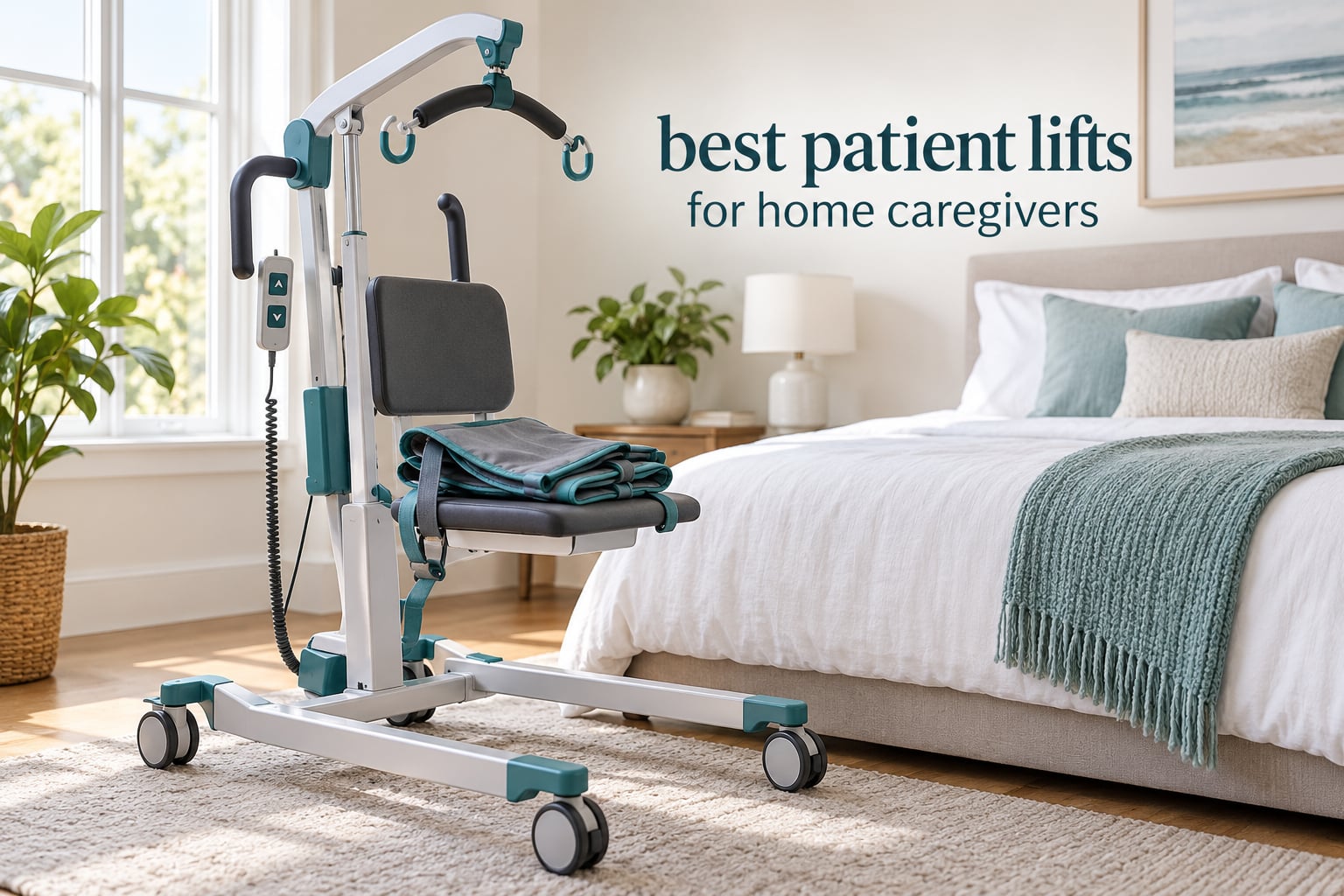
The best patient lifts for home caregivers come down to one question nobody asks early enough: can the person bear any of their own weight? If they can push up through their legs, even with help, a sit-to-stand lift does the job with far less lifting force and less risk than a full-body Hoyer. If they cannot, you need a full-body lift with a sling, because nothing else will hold them safely off the floor.
I have spent the last several weeks reading spec sheets, warranty terms and owner reviews across every category of lift you can actually buy for home use, from manual stand-assist frames to 500-pound electric floor units. This lineup covers all ten of them, grouped by the decision that matters first rather than by price or brand rank. It also answers the question families ask most often in caregiver forums: can one person operate a lift alone, or is this really a two-person job?
One note before we start. This is equipment selection guidance, not medical advice, and nothing here substitutes for an assessment by a physical or occupational therapist who has met the person you are lifting. OSHA and NIOSH both publish safe patient handling programs built on the principle that manual lifting of a person should not happen at all. Confirm the lift type, the sling type and the weight with a clinician before you order.
ContentsTable of Contents
- 1Top 3 Patient Lifts for Home Caregivers→
- 2Lumex LF1600 Stand Assist→
- 3Invacare 9805P Hydraulic→
- 4ArjoHuntleigh Sara Stedy→
- 510 Best Patient Lifts for Home Caregivers in 2026→
- 61. Lumex LF1600 Stand Assist Sit to Stand Lift for Weight Bearing Users→
- 7Lumex LF1600 Stand Assist, Sit to Stand Patient Lift for Elderly Seniors, Chair Transfer & Standing Support Aid→
- 8Pros→
- 9Cons→
- 10Who this lift is built for→
- 11Where it falls short→
- 122. Vive Mobility Sit to Stand Transfer Stand Assist Lift→
- 13Vive Mobility Sit to Stand Patient Lift for Handicapped – Stand Assist Lift→
- 14Pros→
- 15Cons→
- 16Who should buy this one→
- 17What to check before you commit→
- 183. Invacare 9805P Hydraulic Full Body Patient Lift for Floor Recovery→
- 19Invacare Hydraulic Patient Lift, Lightweight Transfer Lift Chair with 450 lb Weight Capacity, Bent Mast for Safer Transfers, 6-Point Padded Swivel Bar, Floor-to-Bed Height Range for Fall Recovery→
- 20Pros→
- 21Cons→
- 22What makes this the value pick→
- 23Where it asks something of you→
- 244. Invacare GHS350 Hydraulic Sit to Stand Lift with Low Base Clearance→
- 25Invacare Sit to Stand Lift for elderly, Hydraulic Stand Assist Lift Aid for Patient, Lift Assist Transfer Device for Elderly Seniors, Adults & Disabled, FSA & HSA eligible→
- 26Pros→
- 27Cons→
- 28Where this lift makes sense→
- 29What to weigh up first→
- 305. SuperHandy Electric Floor Lift That Reaches Down to 1.2 Inches→
- 31SuperHandy Electric Floor Lift for Elderly, 400 lb Capacity→
- 32Pros→
- 33Cons→
- 34Why a dedicated floor lift earns its place→
- 35What it cannot do→
- 366. ArjoHuntleigh Sara Stedy Fully Assembled Stand Assist Aid→
- 37ArjoHuntleigh Sara Stedy Sit to Stand Manual Patient Lift Aid | Fully Assembled Elderly Assistance Products | Holds up to 400 Pounds | Intended for Users 4’11” – 6’6″→
- 38Pros→
- 39Cons→
- 40Why reviewers rate it highest→
- 41What stops this from being the default choice→
- 427. Hi-Fortune Foldable Electric Patient Lift With U-Sling Included→
- 43Hi-Fortune Patient Lift Electric Foldable Hydraulic Body Transfer for Home Use Seniors Free-Assembly Heavy-Duty, Battery-Powered with Low Base, 400lb Weight Capacity with U-Sling, White (Pack of 1)→
- 44Pros→
- 45Cons→
- 46Who this configuration suits→
- 47What to plan around→
- 488. ProHeal Hydraulic Full Body Lift With 6-Point Inline Spreader Bar→
- 49ProHeal Hydraulic Patient Lift – Manual Full Body Lifter for Handicapped, Senior and Immobile Patients – 6 Point Spreader, Chains Included, 450 lbs Capacity→
- 50Pros→
- 51Cons→
- 52Where hydraulic makes the most sense→
- 53What to inspect on arrival→
- 549. Joerns Hoyer Advance E340 Portable Electric Floor Lift→
- 55Joerns Hoyer Advance Electric Portable Patient Lift – Foldable Lightweight 70 lbs, 340 lb Capacity, Battery Powered for Home Care, Nursing & Professional Use- E340→
- 56Pros→
- 57Cons→
- 58Who it works for→
- 59What to weigh up first→
- 6010. ProHeal Electric Full Body Lift With 500 Pound Capacity→
- 61ProHeal Electric Lift – Safe and Easy Full Body Patient Transfer Lifter for Home Use and Facilities – Floor, Low Bed and Chair Lifting, 500 Pound Weight Capacity, 6 Point Spreader Bar→
- 62Pros→
- 63Cons→
- 64Who needs this level of capacity→
- 65What makes it harder to live with→
- 66How to Choose a Patient Lift: The Buying Guide→
- 67Can they bear weight? That single question picks the lift type→
- 68Electric, hydraulic or manual: which power source fits the household?→
- 69The rating chain: the lowest component governs the whole system→
- 70Will it fit? Measure before you order, not after→
- 71Choosing the right patient lift sling→
- 72Can one caregiver operate a patient lift alone?→
- 73What patient lifts cost and whether insurance covers them→
- 74Five mistakes families repeat→
- 75What to avoid doing with a mechanical lift→
- 76Frequently Asked Questions→
- 77Does Medicare pay for patient lifts?→
- 78How much does a patient lift typically cost?→
- 79What are the best patient lifts for elderly patients?→
- 80What are some good patient lift slings for home use?→
- 81Can one person operate a patient lift alone?→
- 82How to Decide in Three Questions→
Top 3 Patient Lifts for Home Caregivers
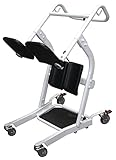
Lumex LF1600 Stand Assist
- Holds up to 400 lbs
- Fits users 5 ft 1 in to 6 ft 6 in
- Padded knee pads and seat
- 61 lb steel frame

Invacare 9805P Hydraulic
- 450 lb capacity
- Base narrows to 22 inch for doorways
- 20 to 64 inch lift range
- 3-year frame warranty
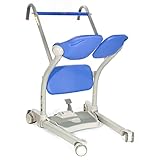
ArjoHuntleigh Sara Stedy
- Holds up to 400 lbs
- Arrives fully assembled
- Aluminium frame
- Doubles as a transport aid
As an Amazon Associate we earn from qualifying purchases. CERTAIN CONTENT THAT APPEARS ON THIS SITE COMES FROM AMAZON. THIS CONTENT IS PROVIDED 'AS IS' AND IS SUBJECT TO CHANGE OR REMOVAL AT ANY TIME.
10 Best Patient Lifts for Home Caregivers in 2026
Every unit below is real equipment with published specifications, not a concept or a generic listing. We have grouped them by category so you can stop reading the moment you find your situation.
| # | Product | Key details | Where to buy |
|---|---|---|---|
| 1 | Lumex LF1600 Stand Assist Sit to Stand Lift |
|
Check Latest Price |
| 2 |  Vive Mobility Sit to Stand Transfer Stand Assist Vive Mobility Sit to Stand Transfer Stand Assist |
|
Check Latest Price |
| 3 | Invacare 9805P Hydraulic Full Body Patient Lift |
|
Check Latest Price |
| 4 |  Invacare GHS350 Hydraulic Sit to Stand Lift Invacare GHS350 Hydraulic Sit to Stand Lift |
|
Check Latest Price |
| 5 | 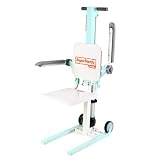 SuperHandy Electric Floor Lift SuperHandy Electric Floor Lift |
|
Check Latest Price |
| 6 | ArjoHuntleigh Sara Stedy Stand Assist Aid |
|
Check Latest Price |
| 7 |  Hi-Fortune Foldable Electric Patient Lift Hi-Fortune Foldable Electric Patient Lift |
|
Check Latest Price |
| 8 | 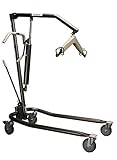 ProHeal Hydraulic Full Body Patient Lift ProHeal Hydraulic Full Body Patient Lift |
|
Check Latest Price |
| 9 |  Joerns Hoyer Advance E340 Portable Electric Lift Joerns Hoyer Advance E340 Portable Electric Lift |
|
Check Latest Price |
| 10 | 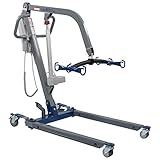 ProHeal Electric Full Body Lift 500 lb ProHeal Electric Full Body Lift 500 lb |
|
Check Latest Price |
We earn from qualifying purchases. CERTAIN CONTENT THAT APPEARS ON THIS SITE COMES FROM AMAZON. THIS CONTENT IS PROVIDED 'AS IS' AND IS SUBJECT TO CHANGE OR REMOVAL AT ANY TIME.
The quickest way to narrow this list is to read the weight-bearing requirement in each row. Four of these units assume the person can stand up with assistance; the rest suspend the whole body in a sling and work even when the person cannot move their legs.
1. Lumex LF1600 Stand Assist Sit to Stand Lift for Weight Bearing Users
Lumex LF1600 Stand Assist, Sit to Stand Patient Lift for Elderly Seniors, Chair Transfer & Standing Support Aid
- 400 lb capacity
- Users 5 ft 1 in to 6 ft 6 in
- 61 lb steel frame
- Padded knee pads and seat
Pros
- Highest review count of any lift in this roundup at 1050 ratings
- 4.6 stars with only 3 percent one-star ratings
- Narrow steel frame moves through most home doorways
- Reduces caregiver strain during transfers
- Supports users across a 17 inch height range
Cons
- Requires the patient to bear weight and actively participate
- Steel frame is heavy at 61 lb
- Bulkier than aluminium stand-assist units
We earn a commission, at no additional cost to you. CERTAIN CONTENT THAT APPEARS ON THIS SITE COMES FROM AMAZON. THIS CONTENT IS PROVIDED 'AS IS' AND IS SUBJECT TO CHANGE OR REMOVAL AT ANY TIME.
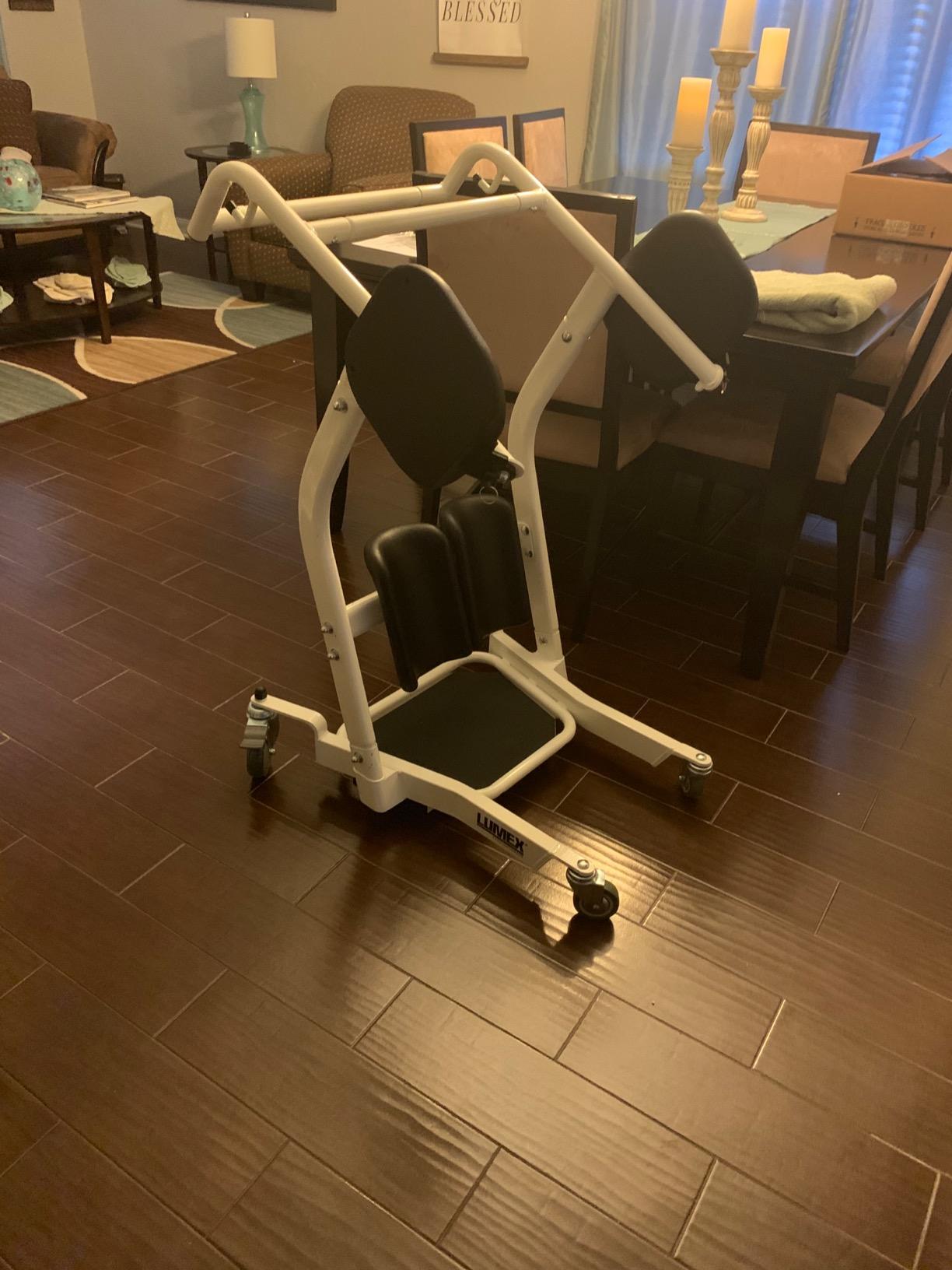
This is the one I recommend first to families who are new to this. It has more than a thousand ratings behind it and a 4.6 star average, and the review pattern is unusually consistent: people describe the same three things, the padded knee pads, the ergonomic handbars and the padded seat. That consistency across a large sample is worth more to me than any spec on a sheet.
Graham-Field built the frame from heavy-duty steel, which is why it weighs 61 pounds and why it feels planted rather than flimsy when a 300-pound person stands up in it. The rated range is 400 pounds and the height window is 5 foot 1 inch to 6 foot 6 inch, which covers most adults and a good number of teenagers recovering from surgery.
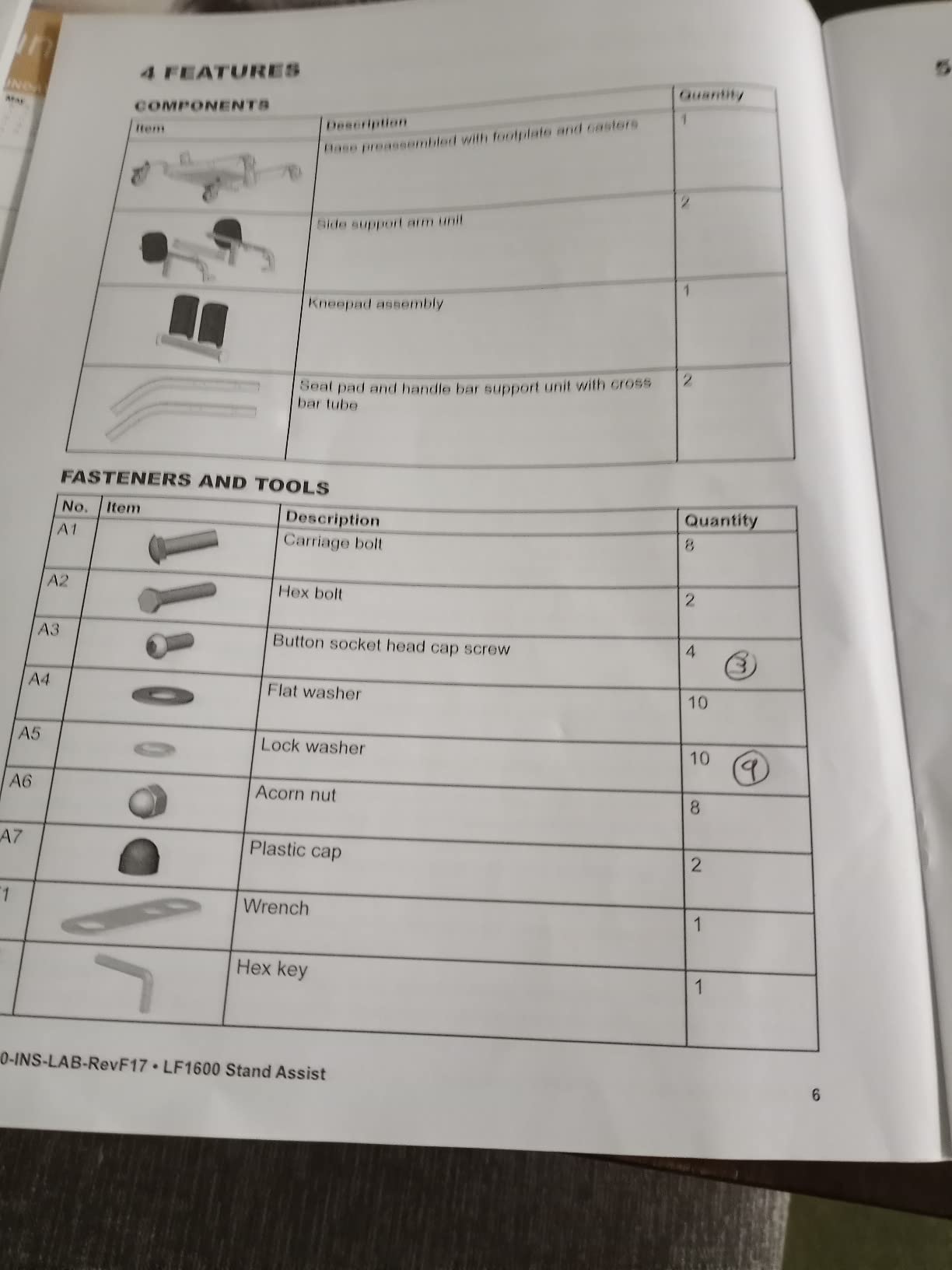
What I like most is how much less physical work the caregiver puts in. With a full-body lift, the caregiver’s job is to steer the base and hold the control. With a stand-assist frame, the person does the pushing up, and the caregiver mainly guards the knee pad and handbars. For a family member with early arthritis or recovering hip surgery, that difference compounds daily.
The limitation is real, though. This is not a lifting device for someone who cannot stand. If sitting balance is poor or the person has lost lower-body strength entirely, a full-body sling lift is the correct tool, and no amount of adjusting this frame will change that.
Who this lift is built for
A person who can push through their legs, hold the handbars and follow a simple instruction like sit down, stand up. It suits post-operative recovery where walking is not possible yet but standing is achievable, and it suits long-term stand-assist needs where sitting balance is still intact.
It is also the safest option for the caregiver, because the lift handles the heaviest part of the movement while the person supplies the upward force. Caregivers consistently report less back strain once a stand-assist frame replaces manual lifting from the bed.
Where it falls short
Two things give me pause. The 61-pound steel frame is heavier than aluminium alternatives, so moving it between rooms takes effort, and it needs to fit through your doorways when you turn it sideways.
The second is the participation requirement. Reviewers describe people who panic, grip too tightly or let go mid-rise, which is a hard disqualifier for anyone with cognitive impairment. If that describes your situation, read the full-body section instead.
We earn a commission, at no additional cost to you. CERTAIN CONTENT THAT APPEARS ON THIS SITE COMES FROM AMAZON. THIS CONTENT IS PROVIDED 'AS IS' AND IS SUBJECT TO CHANGE OR REMOVAL AT ANY TIME.
2. Vive Mobility Sit to Stand Transfer Stand Assist Lift
Vive Mobility Sit to Stand Patient Lift for Handicapped – Stand Assist Lift
- 400 lb capacity
- 26 inch base width
- 60 lb frame
- Requires 60-70 percent weight bearing
Pros
- Lowest-cost powered stand assist unit in this lineup
- Foam grips plus cushioned shin rests and split seat pads
- Dual locking brakes hold the frame steady
- Swivel casters roll over carpet tile and hard flooring
- 2-year guarantee
Cons
- 26 inch base is wider than many doorways
- Only rated for users who can bear 60 to 70 percent of body weight
- One-star reviews account for 8 percent of ratings
We earn a commission, at no additional cost to you. CERTAIN CONTENT THAT APPEARS ON THIS SITE COMES FROM AMAZON. THIS CONTENT IS PROVIDED 'AS IS' AND IS SUBJECT TO CHANGE OR REMOVAL AT ANY TIME.
This is the entry point. Vive Mobility rates it at 4.3 stars across 567 reviews, and roughly two-thirds of those ratings are five star, so the goodwill is real. It is also the one most families can justify on a fixed budget without going into debt, which matters when a caregiver has reduced hours to help.
The spec that decides whether it works for you is the 60 to 70 percent weight-bearing requirement. The person must be able to support that share of their own body weight through their legs. That is a harder test than it sounds, and it is the single most important number to read before ordering any stand-assist lift in this article.
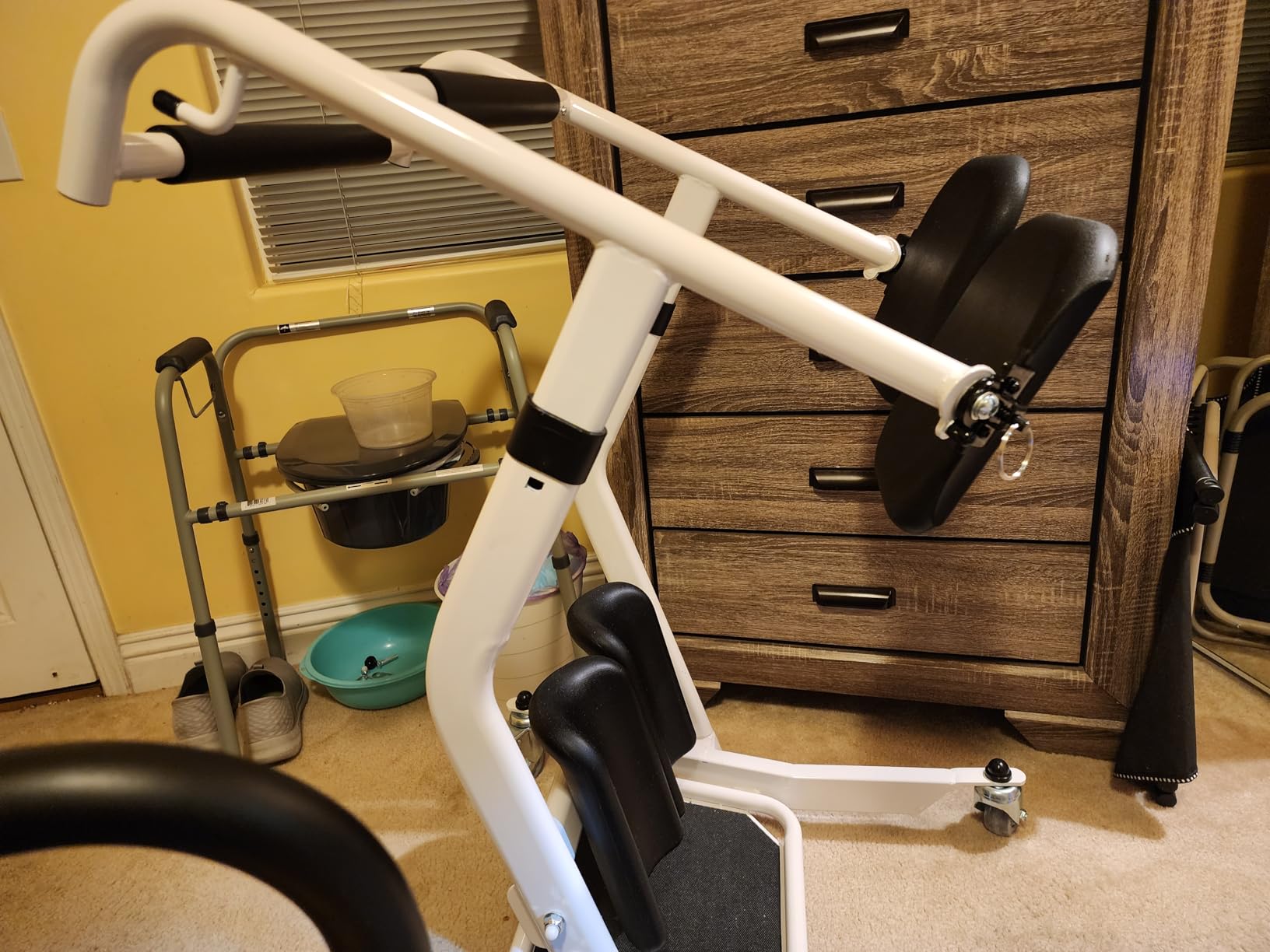
Where the design earns its keep is in the details. Foam-covered handrails, cushioned shin rests and split seat pads reduce the fatigue that builds over several transfers a day. The dual locking brakes hold the unit firmly in place while the person is rising or lowering, and the four swivel casters glide across carpet, tile and hard flooring without a fight.
Side support straps can be hooked onto the frame for anyone who needs lateral steadying, and the manufacturer backs the unit with a 2-year guarantee, which is longer than the 1-year frame coverage typical of economy equipment.
Who should buy this one
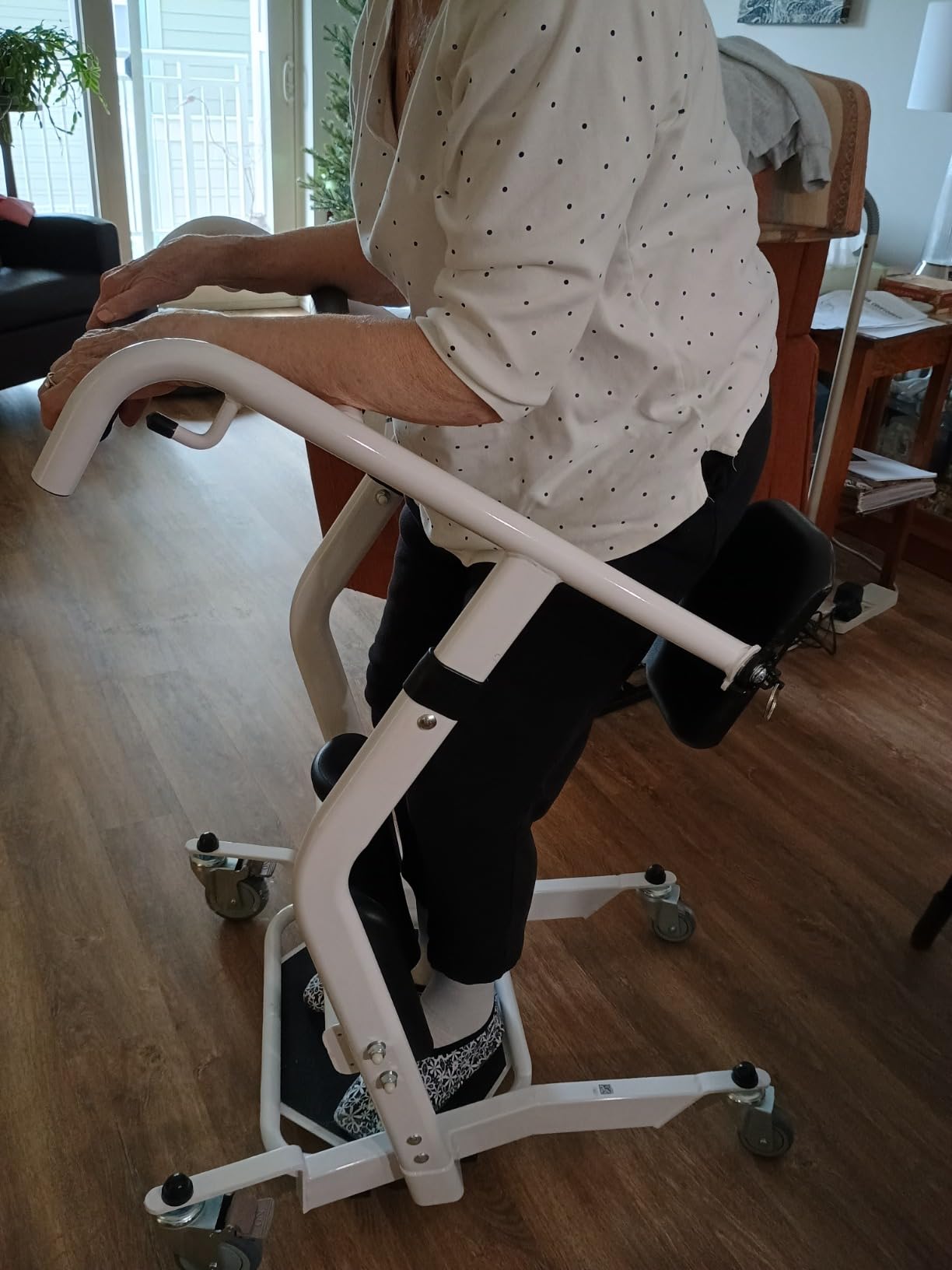
Buy it if the person can bear 60 to 70 percent of their weight, you want the least expensive credible entry into powered stand-assist lifting, and your doorways are at least as wide as the base. Two variants ship with a sling included, which matters if you also need supported seated transfers.
Caregivers rate it highly for anyone doing several transfers a day who wants the person’s own strength preserved rather than overridden. Standing loads the bones and muscles, which is exactly what you want after a hip or knee operation.
What to check before you commit
Measure your narrowest doorway first. The base is 26 inches at the widest point, and reviewers flag this as the recurring practical caution more than any other. If your hall is tight, either widen the route or choose a model with a narrower footprint.
The 8 percent one-star share also tells me some buyers found the height window or the fit wrong for their body. Check the dimensions against the person, and confirm a therapist agrees they meet the weight-bearing threshold before spending anything.
We earn a commission, at no additional cost to you. CERTAIN CONTENT THAT APPEARS ON THIS SITE COMES FROM AMAZON. THIS CONTENT IS PROVIDED 'AS IS' AND IS SUBJECT TO CHANGE OR REMOVAL AT ANY TIME.
3. Invacare 9805P Hydraulic Full Body Patient Lift for Floor Recovery
Invacare Hydraulic Patient Lift, Lightweight Transfer Lift Chair with 450 lb Weight Capacity, Bent Mast for Safer Transfers, 6-Point Padded Swivel Bar, Floor-to-Bed Height Range for Fall Recovery
- 450 lb capacity
- Base adjusts 22 to 62 inch
- 20 to 64 inch lift range
- 68 lb hydraulic frame
Pros
- Base narrows to 22 inches so it clears residential doorways
- Bent mast keeps the patient clear of the frame
- 20 to 64 inch range handles floor recovery after a fall
- Lightest manual hydraulic lift here at 68 lb
- 3-year limited frame warranty
Cons
- Hydraulic pump needs caregiver effort on every lift
- 68 lb frame is still a two-person move for repositioning
- Requires a six-point sling for full support
We earn a commission, at no additional cost to you. CERTAIN CONTENT THAT APPEARS ON THIS SITE COMES FROM AMAZON. THIS CONTENT IS PROVIDED 'AS IS' AND IS SUBJECT TO CHANGE OR REMOVAL AT ANY TIME.
If someone cannot bear weight, this is the lift I would put at the top of the hydraulic list. The 9805P holds 4.4 stars across 515 reviews, and it handles the two situations a home caregiver faces most: the daily bed-to-chair transfer and the moment a loved one ends up on the floor.
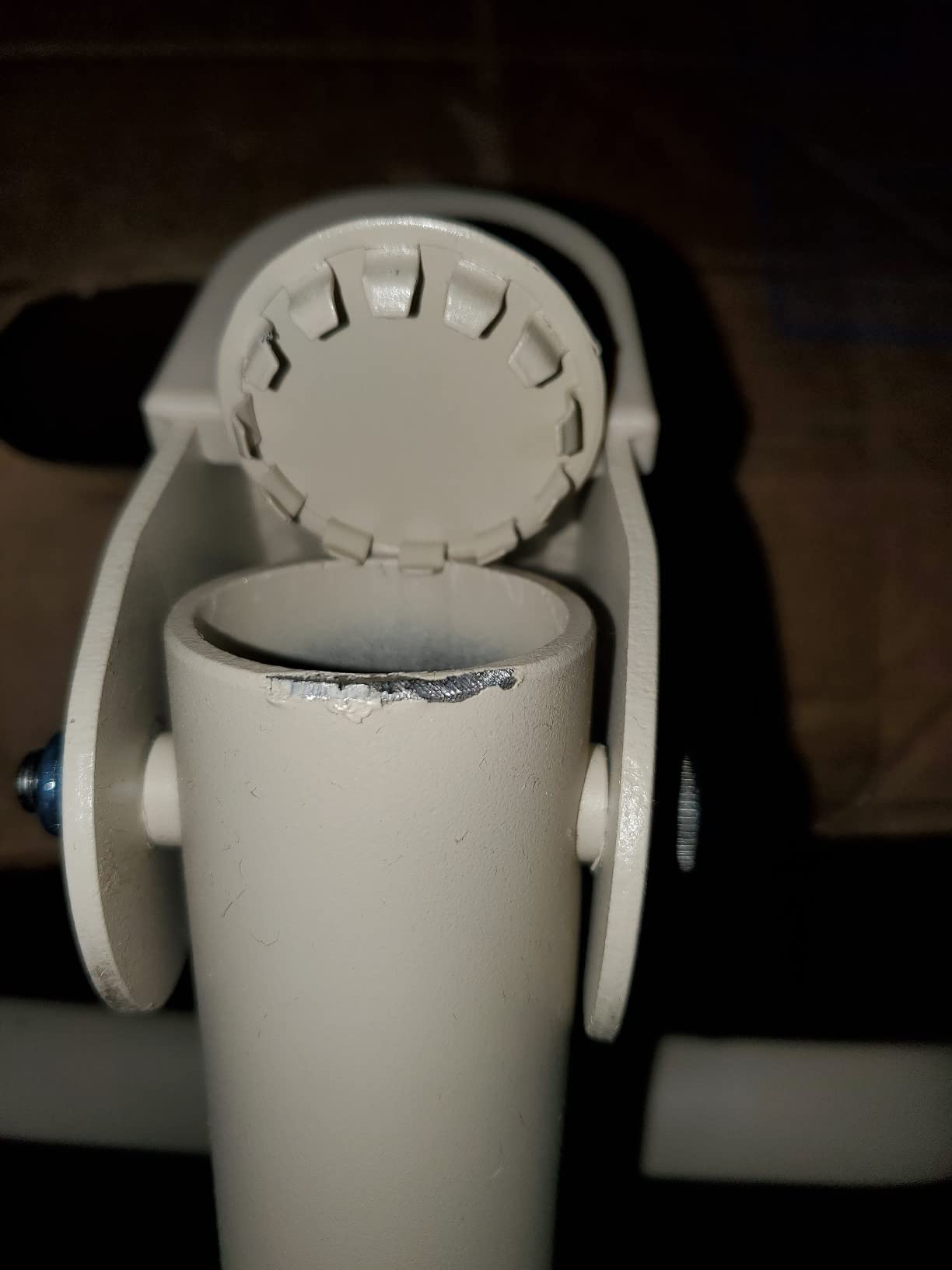
The bent mast is the design feature reviewers mention first. Instead of a straight vertical post, the mast angles forward, which gives the person a wider lift path and stops their knees or thighs from swinging into the frame. It sounds like a small thing until you try to position someone who cannot correct their own posture.
The base is the part I would measure against your home. A shifter handle adjusts it from a 22-inch doorway mode up to a 62-inch transfer stance, so you can roll it through a standard hall and then widen it once you are beside the bed. That range is what makes it work in a house that was never designed for medical equipment.
The lifting range runs from 20 inches to 64 inches off the floor, which is what lets you recover a person who has fallen instead of waiting for an ambulance. The 5-inch low-friction casters reduce the force needed to push it over carpet, and the rotating pump handle can be worked from either side of the machine.
What makes this the value pick
At 68 pounds it is the lightest manual hydraulic lift in this lineup, and it carries a 3-year limited frame warranty rather than the single year common on budget equipment. It also includes a padded 6-point swivel spreader bar, which supports the whole body including the head rather than letting the neck hang unsupported.
A six-point spreader matters more than most spec sheets admit. A two-point bar concentrates pressure under the thighs and armpits, which is uncomfortable and can damage skin with repeated use. The six-point layout distributes that load across the back, hips and thighs.
Where it asks something of you
Hydraulic means effort. Every lift cycle takes a full pump pull from the caregiver, and reviewers say this plainly. For a 250-pound person that is manageable; for someone near the 450-pound limit it is a genuine workout, and an electric lift becomes the better long-term choice.
You will also need to buy slings separately and check that they are compatible with a six-point bar and rated to the combined weight. Never guess a sling’s capacity, and never hang a person from a sling whose label you have not read on every lift.
We earn a commission, at no additional cost to you. CERTAIN CONTENT THAT APPEARS ON THIS SITE COMES FROM AMAZON. THIS CONTENT IS PROVIDED 'AS IS' AND IS SUBJECT TO CHANGE OR REMOVAL AT ANY TIME.
4. Invacare GHS350 Hydraulic Sit to Stand Lift with Low Base Clearance
Invacare Sit to Stand Lift for elderly, Hydraulic Stand Assist Lift Aid for Patient, Lift Assist Transfer Device for Elderly Seniors, Adults & Disabled, FSA & HSA eligible
- 4.5 inch base clearance
- Slings rated to 350 lb
- 88 lb frame
- Rotating pump handle
Pros
- 4.5 inch base clearance slides under most homecare beds
- Retractable non-slip footplate gives a stable base
- Adjustable contoured leg pad fits different body sizes
- FSA and HSA eligible
Cons
- Lowest average rating here at 4.0 stars
- 11 percent one-star share is the highest in the group
- 88 lb frame is the least maneuverable stand assist
- Non-locking casters can feel unstable to inexperienced caregivers
We earn a commission, at no additional cost to you. CERTAIN CONTENT THAT APPEARS ON THIS SITE COMES FROM AMAZON. THIS CONTENT IS PROVIDED 'AS IS' AND IS SUBJECT TO CHANGE OR REMOVAL AT ANY TIME.
This one solves a problem the others do not, which is bed clearance. The base sits 4.5 inches off the floor, low enough to slide under most homecare beds, and that figure is the reason it exists. If your bed frame has a low or enclosed undercarriage, this is the stand-assist lift most likely to fit.
The rotating pump handle is genuinely well thought out. You can stand at either side of the machine to pump, which matters in a bedroom where you may be working in a tight corner on one side of the bed. A locking caster service kit is available separately if you need to change that behaviour.
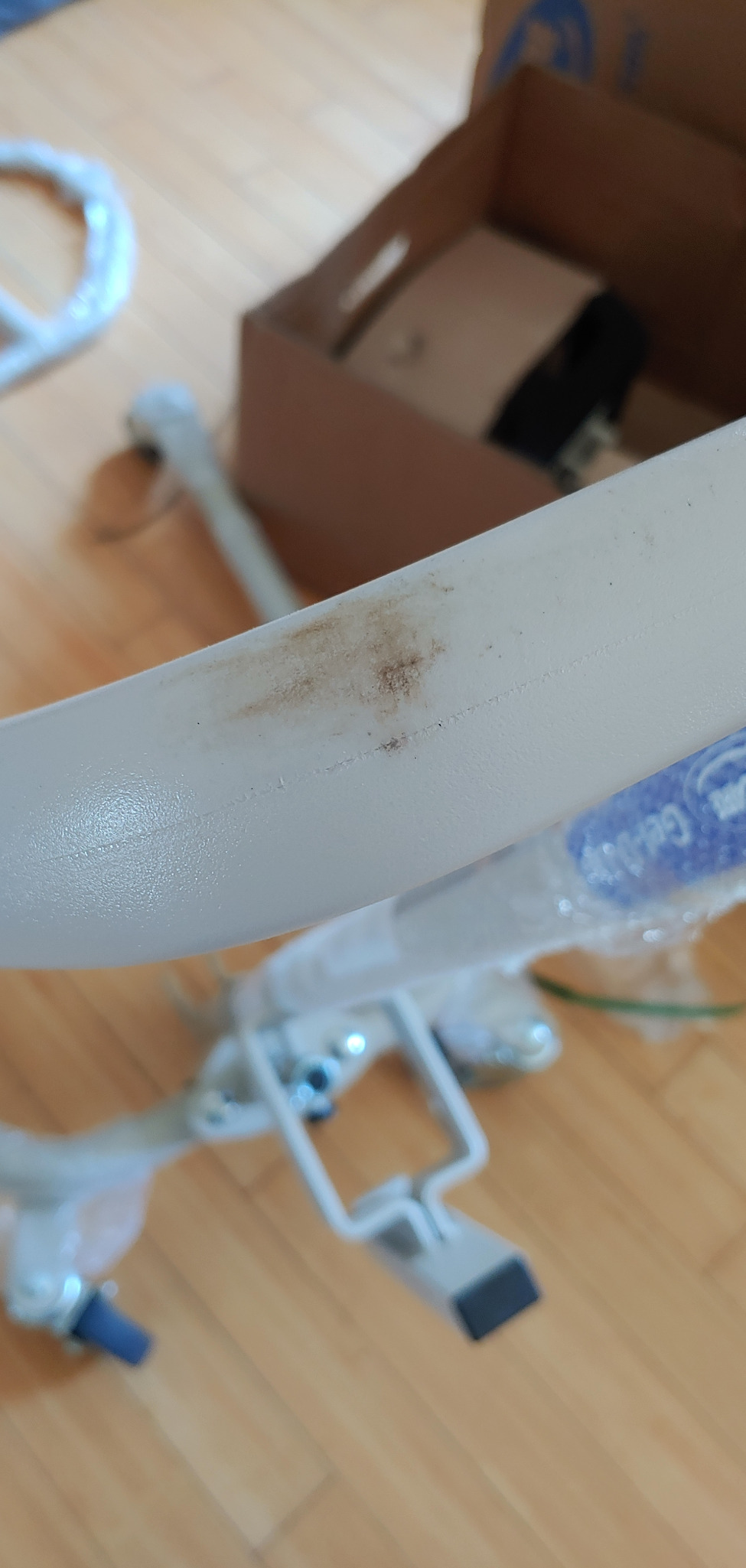
The retractable non-slip footplate gives the person something solid to push against during the rise, and the adjustable contoured leg pad accommodates a wider range of body sizes than a fixed pad. Invacare multi-function slings rated to 350 pounds pair with it, so the effective capacity is set by the sling rather than the frame.
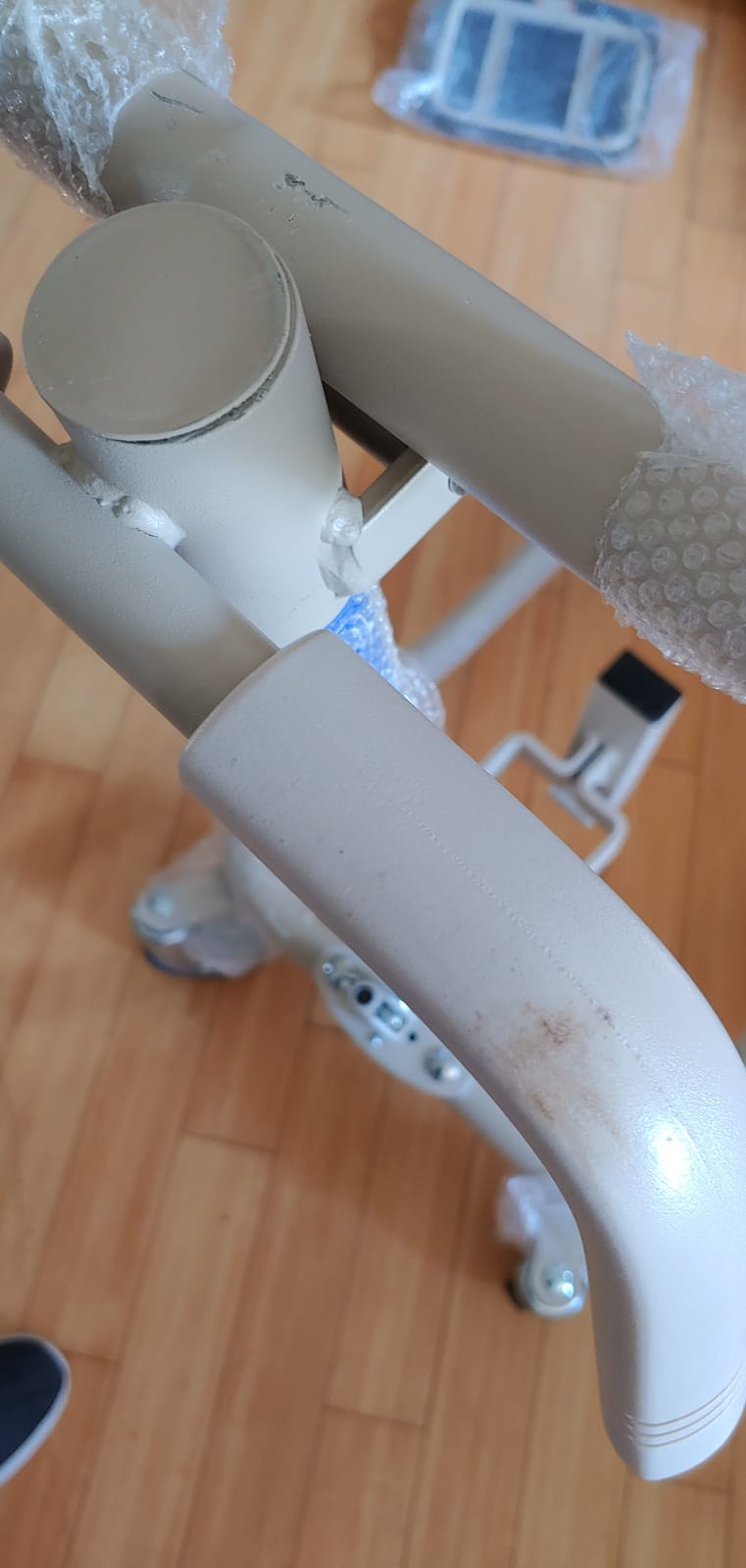
Its 4.0 star average from 267 reviews is the lowest in this lineup, and I would rather explain that than hide it. The distribution tells the story: 57 percent five star, but 11 percent one star, which is the highest negative share among these products. Weight and manoeuvrability are what those reviews are about.
Where this lift makes sense
Choose it when bed clearance is your binding constraint and you want a hydraulic rather than electric power source. The low profile also helps in bedrooms with low footboards, where the base of a taller unit would catch.
The non-locking casters are deliberate. They let the lift re-centre itself as the person’s weight shifts during a stand, which is a safety feature in trained hands. That is also exactly why inexperienced caregivers report it feeling unstable, so budget time for training.
What to weigh up first
At 88 pounds this is the heaviest stand-assist unit here, and reviewers describe it as the least maneuverable. If the lift has to move between rooms daily, that is a real cost in effort every single time.
The 350-pound sling limit also caps the effective capacity well below the weight some buyers assume they are getting. Check the sling label and the person’s current weight, and confirm with a therapist that a stand-assist device is appropriate rather than a full-body lift.
We earn a commission, at no additional cost to you. CERTAIN CONTENT THAT APPEARS ON THIS SITE COMES FROM AMAZON. THIS CONTENT IS PROVIDED 'AS IS' AND IS SUBJECT TO CHANGE OR REMOVAL AT ANY TIME.
5. SuperHandy Electric Floor Lift That Reaches Down to 1.2 Inches
SuperHandy Electric Floor Lift for Elderly, 400 lb Capacity
- 400 lb capacity
- Lifts from 1.2 inch to 21 inch
- Runs on battery or mains power
- 62 lb frame
Pros
- Lowest floor clearance of any lift here at 1.2 inch
- Handles battery and mains power for uninterrupted use
- Folds for storage and rolls on 5 inch silent casters
- Quiet 10 mm/s lift with a simple wired remote
- 78 percent of ratings are five star
Cons
- Lift range tops out at 21 inch so it cannot do bed transfers
- Heaviest frame in this lineup at roughly 62 lb
- Assembly is required before first use
We earn a commission, at no additional cost to you. CERTAIN CONTENT THAT APPEARS ON THIS SITE COMES FROM AMAZON. THIS CONTENT IS PROVIDED 'AS IS' AND IS SUBJECT TO CHANGE OR REMOVAL AT ANY TIME.
Almost every page in this category treats floor recovery as a feature of a full-body lift. This one is built for it. The lift arm starts 1.2 inches off the floor, which means you can get underneath a person who has fallen and raise them from almost flat, without dragging them across the carpet first.
It holds a 4.5 star average from 172 reviews, with 78 percent of ratings at five stars and only 3 percent at one star, so the enthusiasm is broad rather than concentrated in a small group of very positive reviews.
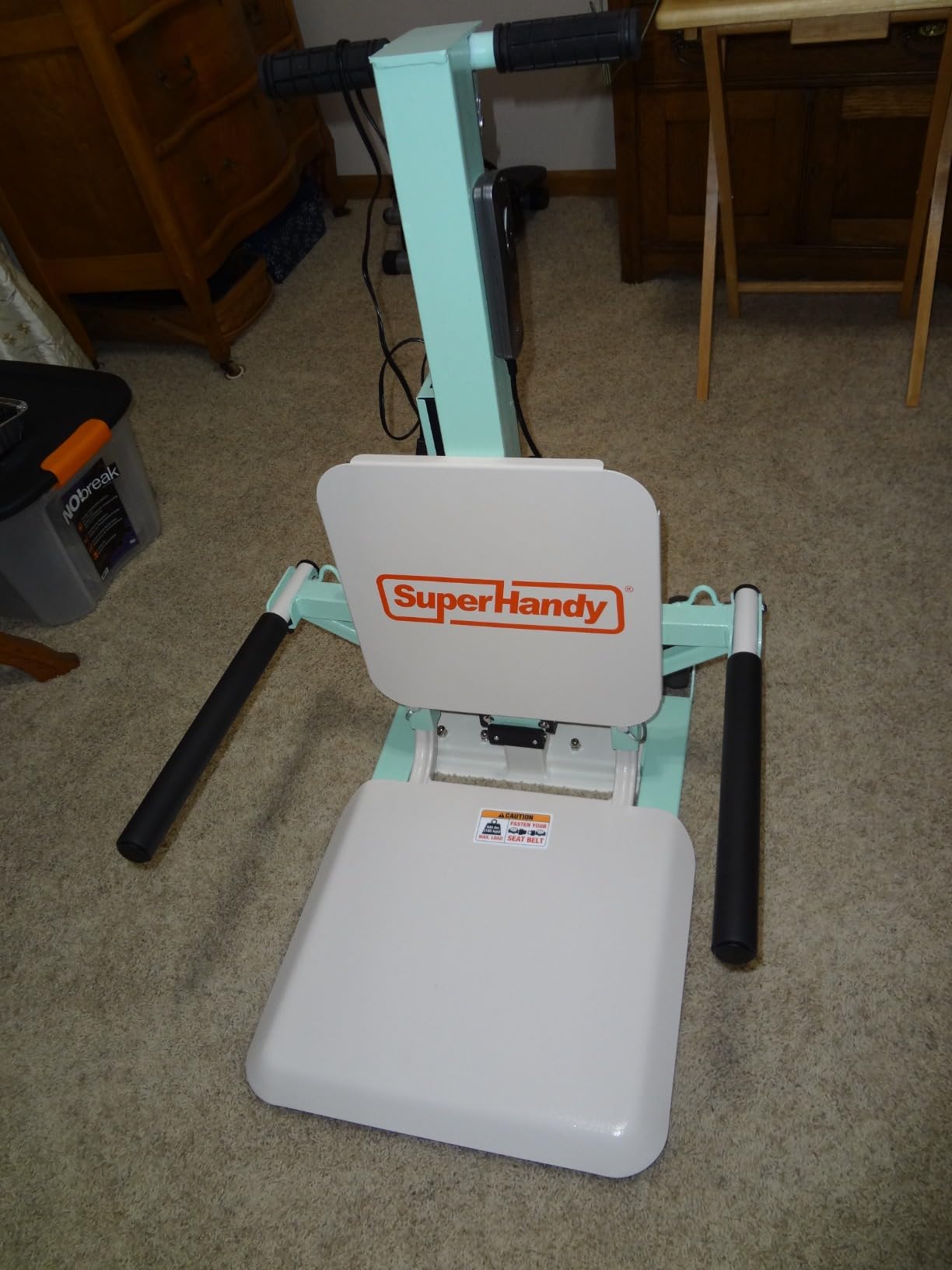
The dual power setup is the sleeper feature for home use. A rechargeable DC battery handles the places in a house with no outlet, and the mains option means you are not stranded if the battery runs flat mid-transfer. The LED recharge indicator and a magnetically attachable wired remote keep the controls simple.
The seat itself has foldable armrests, a sloped seating platform and a safety belt, and the frame rides on 5-inch silent caster wheels with a top carry handle. Lift speed is a quiet 10 mm per second, slow enough that nobody is startled.

Why a dedicated floor lift earns its place
Falls at home are common, and the usual response is calling for help and waiting. A lift that reaches 1.2 inches off the floor turns a two-hour wait into a matter of minutes, and it lets one caregiver do the work that would otherwise need two. That is the value here, and no stand-assist frame in this article can substitute for it.
It also folds for storage, which matters in a small home where the lift would otherwise occupy a hallway permanently. The charging indicator removes the anxiety of wondering whether it is ready next time.
What it cannot do
The lift range tops out at 21 inches off the floor, so this is not a bed-to-wheelchair transfer device and should never be used as one. If you need daily transfers out of bed, you need one of the full-body lifts, and this is a companion to that rather than a replacement.
Assembly is required before first use, so plan an hour and a second pair of hands for the 62-pound frame. Treat it as the emergency unit in your home, kept accessible and charged, not as the main transfer device.
We earn a commission, at no additional cost to you. CERTAIN CONTENT THAT APPEARS ON THIS SITE COMES FROM AMAZON. THIS CONTENT IS PROVIDED 'AS IS' AND IS SUBJECT TO CHANGE OR REMOVAL AT ANY TIME.
6. ArjoHuntleigh Sara Stedy Fully Assembled Stand Assist Aid
ArjoHuntleigh Sara Stedy Sit to Stand Manual Patient Lift Aid | Fully Assembled Elderly Assistance Products | Holds up to 400 Pounds | Intended for Users 4’11” – 6’6″
- 400 lb capacity
- Users 4 ft 11 in to 6 ft 6 in
- Arrive fully assembled
- 65 lb aluminium frame
Pros
- Highest rating in this lineup at 4.7 stars with 87 percent five star
- Arrives fully assembled so there is no setup step
- Doubles as a seated transport aid
- Aluminium frame is easy to clean for home care
- Compact version suits tighter rooms
Cons
- Most expensive unit in this roundup
- Difficult to manoeuvre on deep-pile carpet
- Regular size is bulky in narrow spaces
We earn a commission, at no additional cost to you. CERTAIN CONTENT THAT APPEARS ON THIS SITE COMES FROM AMAZON. THIS CONTENT IS PROVIDED 'AS IS' AND IS SUBJECT TO CHANGE OR REMOVAL AT ANY TIME.
This is the highest-rated product here at 4.7 stars from 149 reviews, with 87 percent five star and 3 percent one star. It is also the one reviewers describe most often in terms of caregiver relief, with owners talking about reduced back strain and being able to move a person between bed, wheelchair, commode and toilet on their own.
The arrival experience matters more than it sounds. The Sara Stedy comes fully assembled, so there is no build step, no missing hardware and no afternoon lost to instructions. For a family caregiver who is already exhausted, that removes a real barrier between the box and the first transfer.
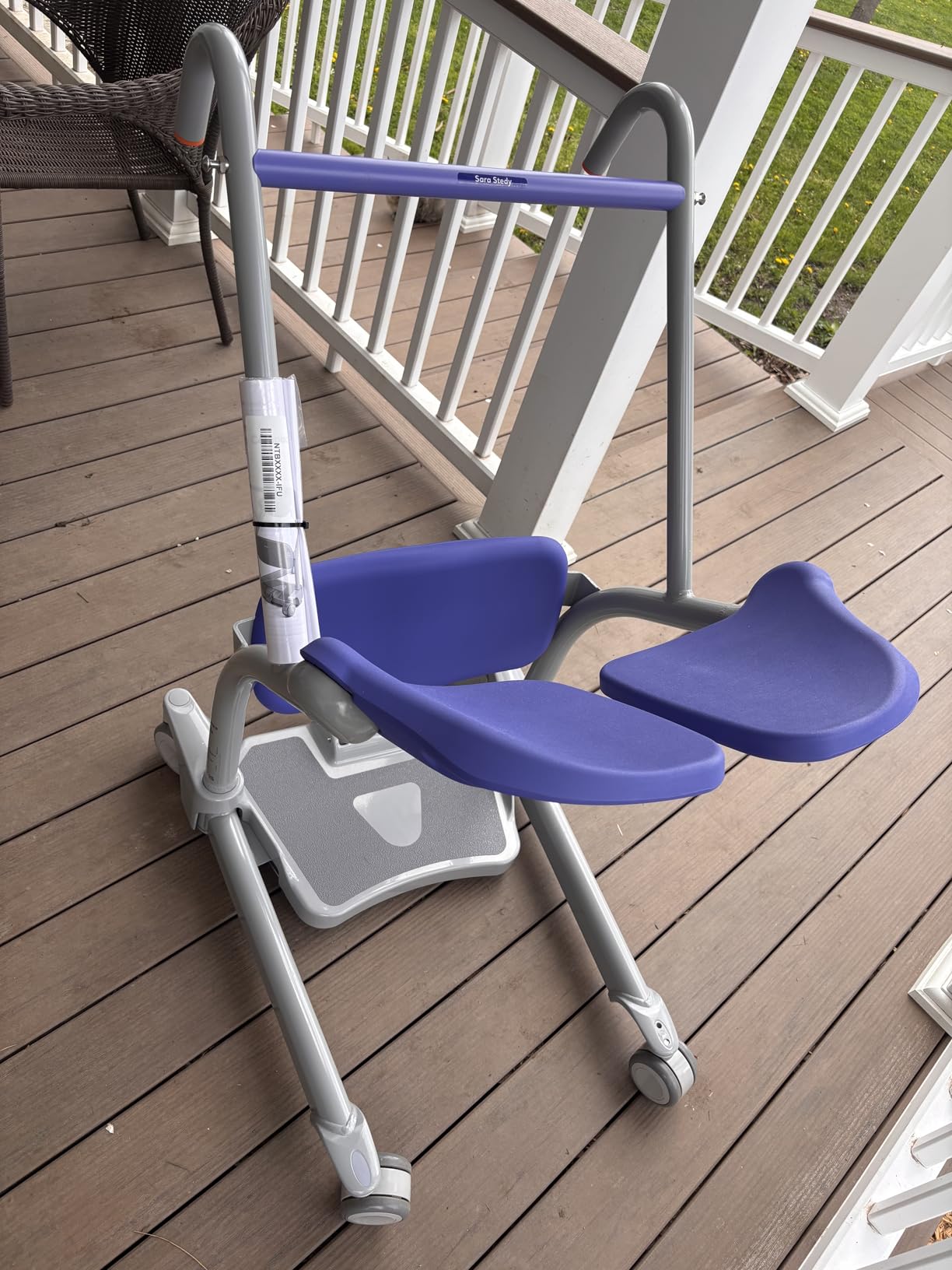
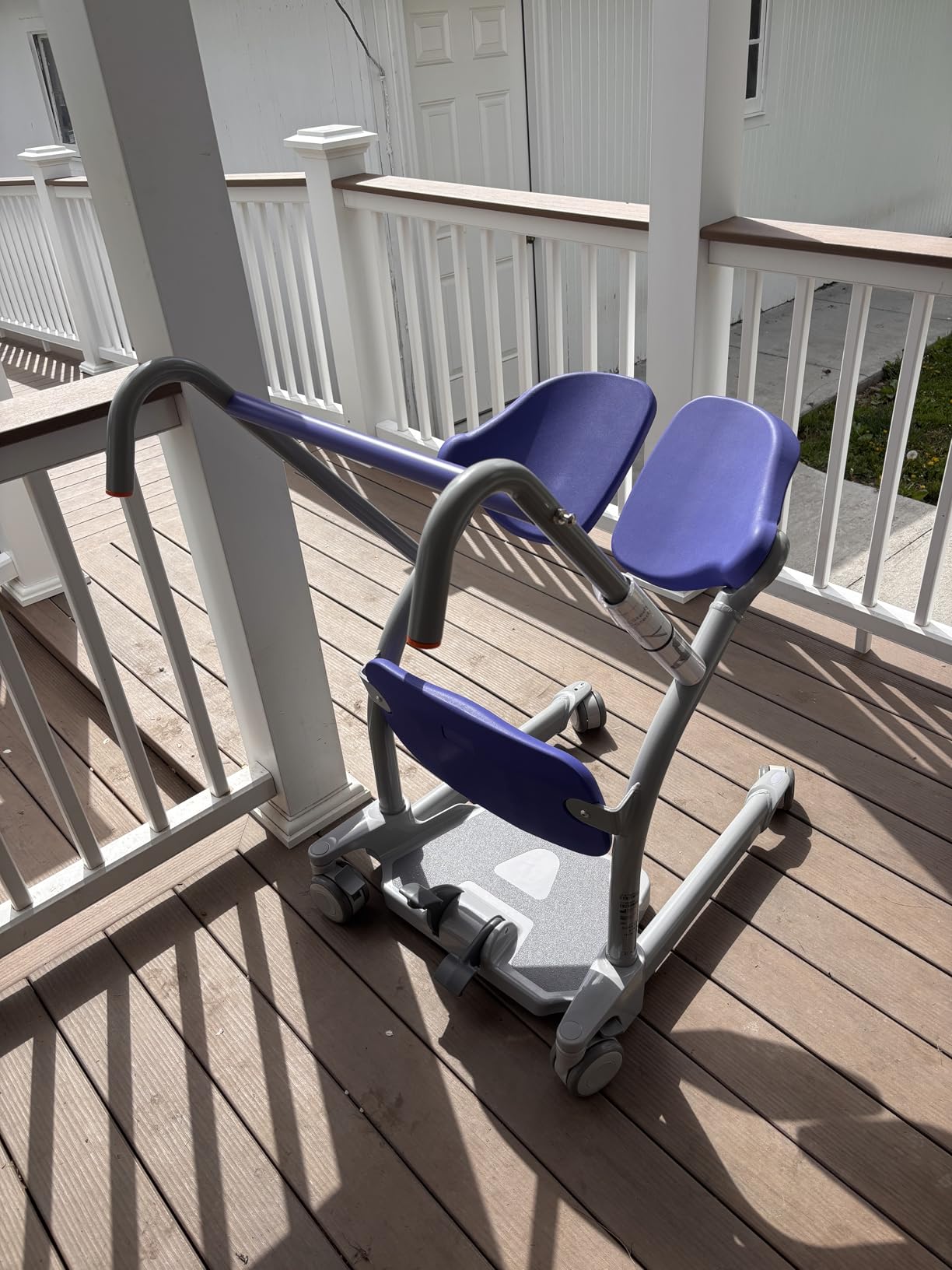
The frame is aluminium rather than steel, rated to 400 pounds, with a footplate, knee support and hand grips that position the user for a natural stand. The height range of 4 foot 11 inch to 6 foot 6 inch is the widest in this roundup, which makes it a better fit for shorter and taller users than most frames.
It also doubles as a compact seated transport device, which reduces the total number of transfers in a day. Fewer transfers means less exposure to the moment when a caregiver is mid-lift and something unexpected happens.
Why reviewers rate it highest
Aluminium frames are easier to wipe down and disinfect between uses, which matters in home care where the same equipment is used for bathing, toileting and general transfers. The Regular and Compact versions give you a choice based on room size rather than a single compromise.
Owners consistently report it working for one caregiver. That is not the same as being rated for single-caregiver use by the manufacturer, and I would still confirm that with a therapist before you plan around it, but it is the most commonly reported experience in the review data.
What stops this from being the default choice
Cost is the first obstacle. It is the most expensive unit in this lineup by a wide margin, and for many families that rules it out regardless of how well it performs. Check whether insurance or a medical savings account covers part of it before ruling it in or out.
The second is carpet. Reviewers report real difficulty manoeuvring it on deep-pile carpet, and the Regular size is bulky in narrow hallways. If your home is carpeted throughout, the Compact version or a hydraulic floor lift will serve you better day to day.
We earn a commission, at no additional cost to you. CERTAIN CONTENT THAT APPEARS ON THIS SITE COMES FROM AMAZON. THIS CONTENT IS PROVIDED 'AS IS' AND IS SUBJECT TO CHANGE OR REMOVAL AT ANY TIME.
7. Hi-Fortune Foldable Electric Patient Lift With U-Sling Included
Hi-Fortune Patient Lift Electric Foldable Hydraulic Body Transfer for Home Use Seniors Free-Assembly Heavy-Duty, Battery-Powered with Low Base, 400lb Weight Capacity with U-Sling, White (Pack of 1)
- 450 lb capacity
- Folds without tools
- Low base reaches floor
- U-sling included
Pros
- Folds tool-free for car transport and compact storage
- Low base fits under beds and reaches the floor
- Manual emergency lowering and anti-entrapment protection
- U-sling included and usable wet or dry
- Foot-operated adjustable legs
Cons
- Heaviest frame here at 104 lb so moving it takes two people
- Battery cannot run while charging
- Assembly is required despite the listing wording
We earn a commission, at no additional cost to you. CERTAIN CONTENT THAT APPEARS ON THIS SITE COMES FROM AMAZON. THIS CONTENT IS PROVIDED 'AS IS' AND IS SUBJECT TO CHANGE OR REMOVAL AT ANY TIME.
Storage is usually the reason families rule out a full-body lift, and this one answers it directly. It folds without tools, so it can go into a car boot or a closet when it is not in use. In a small apartment where the lift would otherwise live in the only walkway, that is the difference between using it daily and leaving it in the box.
It also ships with a free four-point spreader bar and a large polyester sling that can be used wet or dry. A sling that tolerates shower transfers removes a whole category of daily friction, because you are not waiting for one to dry before the next transfer.
Safety-wise it carries a manual emergency lowering device and an anti-entrapment feature that stops the boom if it meets resistance while lowering. Both matter when a powered device is doing the work of holding a person. The push-button hand controls and foot-operated leg adjustment let you widen the base without taking your hands off the controls.
Rated capacity is 450 pounds, and the low base reaches from the floor up to high surfaces, so it covers both recovery transfers and ordinary bed-to-chair moves. The swivel bar rotates 360 degrees, which makes positioning beside a bed or a chair much less fiddly.
Who this configuration suits
It suits a small home, a car journey or a second property, and any caregiver who wants a full-body lift that does not permanently occupy floor space. The fold is the single most requested feature in this category and this is one of the few units here that genuinely delivers it.
The included sling also means you can start using the lift on day one without a second purchase. That matters because a lift sitting unassembled in a box is a lift that never gets used, and that is the most common reason equipment fails to help.
What to plan around
At 104 pounds this is the heaviest frame in the roundup and moving it is a two-person job. The folding only helps if you have help to bring it back out.
The battery cannot be operated while it is charging, so plan charging around transfers rather than during them. And the warranty is the least generous here: 1 year on the frame and 6 months on the actuator, control box and hand control. Assembly is required despite wording in the listing that may suggest otherwise.
We earn a commission, at no additional cost to you. CERTAIN CONTENT THAT APPEARS ON THIS SITE COMES FROM AMAZON. THIS CONTENT IS PROVIDED 'AS IS' AND IS SUBJECT TO CHANGE OR REMOVAL AT ANY TIME.
8. ProHeal Hydraulic Full Body Lift With 6-Point Inline Spreader Bar
ProHeal Hydraulic Patient Lift – Manual Full Body Lifter for Handicapped, Senior and Immobile Patients – 6 Point Spreader, Chains Included, 450 lbs Capacity
- 450 lb capacity
- 1.75 inch steel tubing
- 5 inch casters
- 84 lb hydraulic frame
Pros
- Manual hydraulic design is lighter and cheaper than the electric version
- 1.75 inch steel tubing and 5 inch casters roll over hardwood rugs and floor transitions
- Inline spreader bar performs like an H-bar design
- Fits through narrow doorways with the base closed
- Works for bedbound patients and floor recovery
Cons
- One review reported missing lifting chains in the box
- Another reported a broken brake caster on arrival
- Needs caregiver strength on every pump stroke
- Takes more effort to push on carpet than on hard floors
We earn a commission, at no additional cost to you. CERTAIN CONTENT THAT APPEARS ON THIS SITE COMES FROM AMAZON. THIS CONTENT IS PROVIDED 'AS IS' AND IS SUBJECT TO CHANGE OR REMOVAL AT ANY TIME.
This is the straightforward hydraulic workhorse. It holds a 4.3 star average from 117 reviews, with 66 percent at five stars, and the reviews focus on hardware rather than styling: 1.75-inch steel tubing, 5-inch casters and an inline spreader bar that several owners say performs as well as the more common H-bar design.
The caster specification is the practical headline. They are rated for hardwood floors, rugs and slight floor transitions, which is the exact list of surfaces most homes have. The 450-pound capacity covers the large majority of people who need a full-body lift.
One detailed buyer compared it against the electric version of the same lift and reported saving roughly ten pounds of frame weight and a good deal less money, while keeping the same transfer capability. That is the whole argument for hydraulic: you pay for the mechanism that is not a battery.
The base closes narrow enough to pass through doorways, which is a recurring theme in reviews and one you should verify against your own measurements. The 6-point inline spreader bar comes with chains included, so the suspension system is complete out of the box.
Where hydraulic makes the most sense
Choose it when the person cannot bear weight, the budget is fixed, and the caregiver is physically able to handle a pump stroke per lift. There is no battery to charge and no electronics to fail, which is why some facilities still run hydraulic lifts for exactly this reason.
It also works for bedbound patients and for floor recovery, so it covers two of the three situations a home caregiver faces. If the transfer load is on the lighter side of the 450-pound range, the effort per cycle is manageable.
What to inspect on arrival
Two reviews in this data report fulfilment problems rather than performance problems: one buyer received a box with no lifting chains, and another received a brake caster already broken. Inspect the contents against the parts list on arrival, and confirm the brake function before anyone is lifted.
Be honest about the pumping effort. On carpet the frame needs more force to move than on hard flooring, and the pump takes caregiver strength on every cycle. For a heavier person, an electric lift pays for itself in strain reduction within months.
We earn a commission, at no additional cost to you. CERTAIN CONTENT THAT APPEARS ON THIS SITE COMES FROM AMAZON. THIS CONTENT IS PROVIDED 'AS IS' AND IS SUBJECT TO CHANGE OR REMOVAL AT ANY TIME.
9. Joerns Hoyer Advance E340 Portable Electric Floor Lift
Joerns Hoyer Advance Electric Portable Patient Lift – Foldable Lightweight 70 lbs, 340 lb Capacity, Battery Powered for Home Care, Nursing & Professional Use- E340
- 340 lb capacity
- 69.9 lb folding frame
- Floor to 66.5 inch range
- Aluminium frame to EN ISO 10535
Pros
- Only lift here combining true floor-level lifting with a tool-free fold
- 69.9 lb frame fits in most cars
- Swan-neck tapered legs slide close to beds and wheelchairs
- Floor to 66.5 inch range covers every transfer including car
- Foot-pedal base adjustment
- 87 percent five star
Cons
- Most expensive lift per pound of capacity
- 340 lb capacity is the lowest of the full-body units
- Compatible with most Hoyer slings but none included
We earn a commission, at no additional cost to you. CERTAIN CONTENT THAT APPEARS ON THIS SITE COMES FROM AMAZON. THIS CONTENT IS PROVIDED 'AS IS' AND IS SUBJECT TO CHANGE OR REMOVAL AT ANY TIME.
This is the Hoyer name on the list, and it earns it. The E340 holds 4.6 stars from 104 reviews with 87 percent at five stars and no ratings at all in the three-star band, which is a very unusual distribution and suggests a settled, well-understood product rather than one people are still working out.
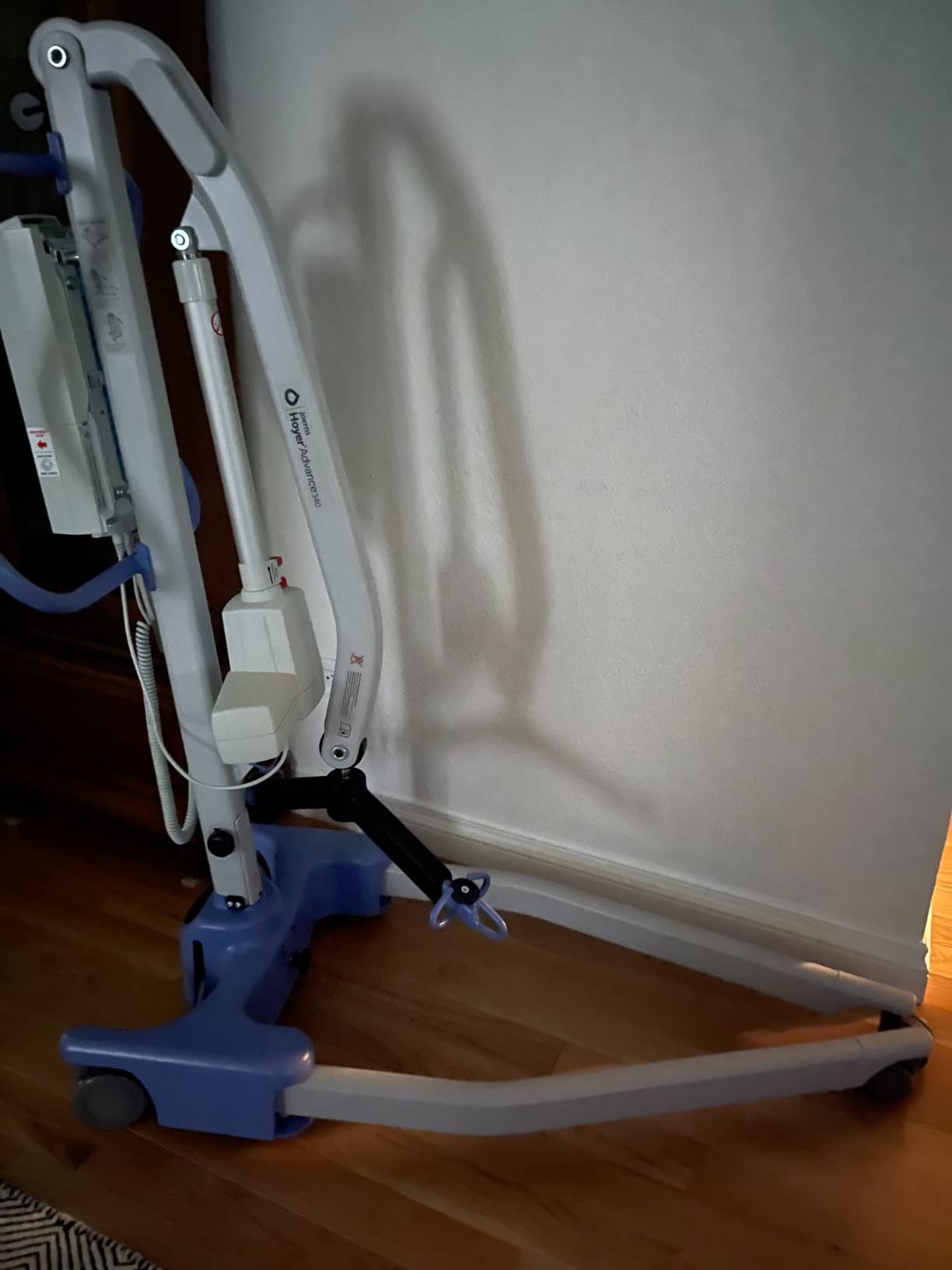
What separates it is the combination of floor-level lifting and a tool-free fold. The lift arm takes the person from the floor up to 66.5 inches, covering bed, wheelchair, commode, shower and car transfers, and the frame weighs 69.9 pounds and folds down to fit most cars.
The swan-neck tapered legs are the detail I would look for first in a real home. They narrow toward the front, so the base slides closer to a bed, a wheelchair or a sofa than a straight-legged frame can. In a bedroom where the bed sits 4 inches off the wall, that is the difference between a workable transfer and a fumbled one.
A foot pedal spreads and closes the base, so you can widen it hands-free while the person is seated in the lift. The aluminium frame is built to EN ISO 10535, the international standard for patient hoists, which is a meaningful mark for a device whose job is holding a person.
Who it works for
It suits any home where the transfer happens in several rooms, in any home with car-based appointments or appointments at other locations, and any setup where the lift needs to travel. It is also a sensible choice when a single caregiver does every transfer and the base adjustment has to happen without a free hand.
Because it lifts from the floor, it doubles as a fall-recovery device in a way the hydraulic units cannot match at low reach. That makes it a good second piece of equipment in a home with an older person at risk of falling.
What to weigh up first
Capacity is 340 pounds, the lowest of the full-body lifts here. That is well above most needs, but if the person is heavier you need one of the 450 or 500-pound units instead.
It also carries the highest cost per pound of capacity in this lineup, and slings are sold separately. That is not necessarily a downside: choosing your own sling type is a genuine advantage when you know whether the person needs full-body, toileting or head support. Plan the sling into your budget from day one rather than discovering the gap later.
We earn a commission, at no additional cost to you. CERTAIN CONTENT THAT APPEARS ON THIS SITE COMES FROM AMAZON. THIS CONTENT IS PROVIDED 'AS IS' AND IS SUBJECT TO CHANGE OR REMOVAL AT ANY TIME.
10. ProHeal Electric Full Body Lift With 500 Pound Capacity
ProHeal Electric Lift – Safe and Easy Full Body Patient Transfer Lifter for Home Use and Facilities – Floor, Low Bed and Chair Lifting, 500 Pound Weight Capacity, 6 Point Spreader Bar
- 500 lb capacity
- Fits under most beds
- Manual emergency lowering
- 108 lb electric frame
Pros
- Highest capacity in the roundup at 500 lb
- Reaches floor level for recovery and low bed transfers
- Touch-button raise and lower with hands-free foot-pedal base opening
- Clip-free sling hookups
- 3-year frame warranty with modular replaceable parts
Cons
- 108 lb frame is bulky and hard to manoeuvre solo
- Assembly realistically takes two people about an hour
- One report of cracked packaging and a control plug not making contact
We earn a commission, at no additional cost to you. CERTAIN CONTENT THAT APPEARS ON THIS SITE COMES FROM AMAZON. THIS CONTENT IS PROVIDED 'AS IS' AND IS SUBJECT TO CHANGE OR REMOVAL AT ANY TIME.
This is the heaviest-duty lift in the lineup at 500 pounds, and it holds a 4.6 star average from 64 reviews with 78 percent at five stars. If the person using it is close to or above the 400-pound mark, this is one of very few residential lifts with the headroom to keep working as their weight changes over time.
The foot-pedal operated base opening is the feature caregivers praise most. You can widen the base with your foot while the person is seated in the lift, which means you are not trying to hold a control, keep someone steady and adjust the frame at the same time.
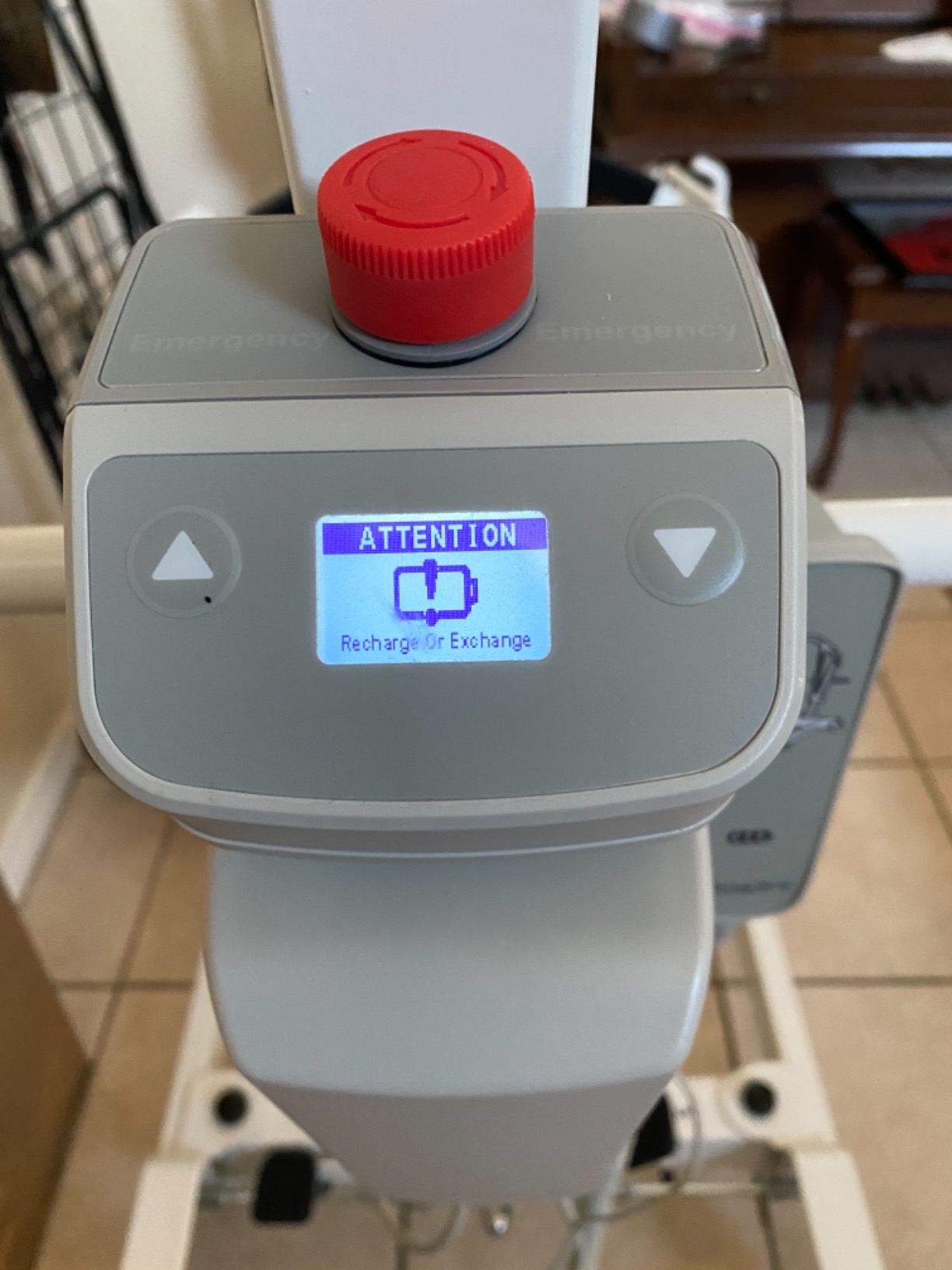
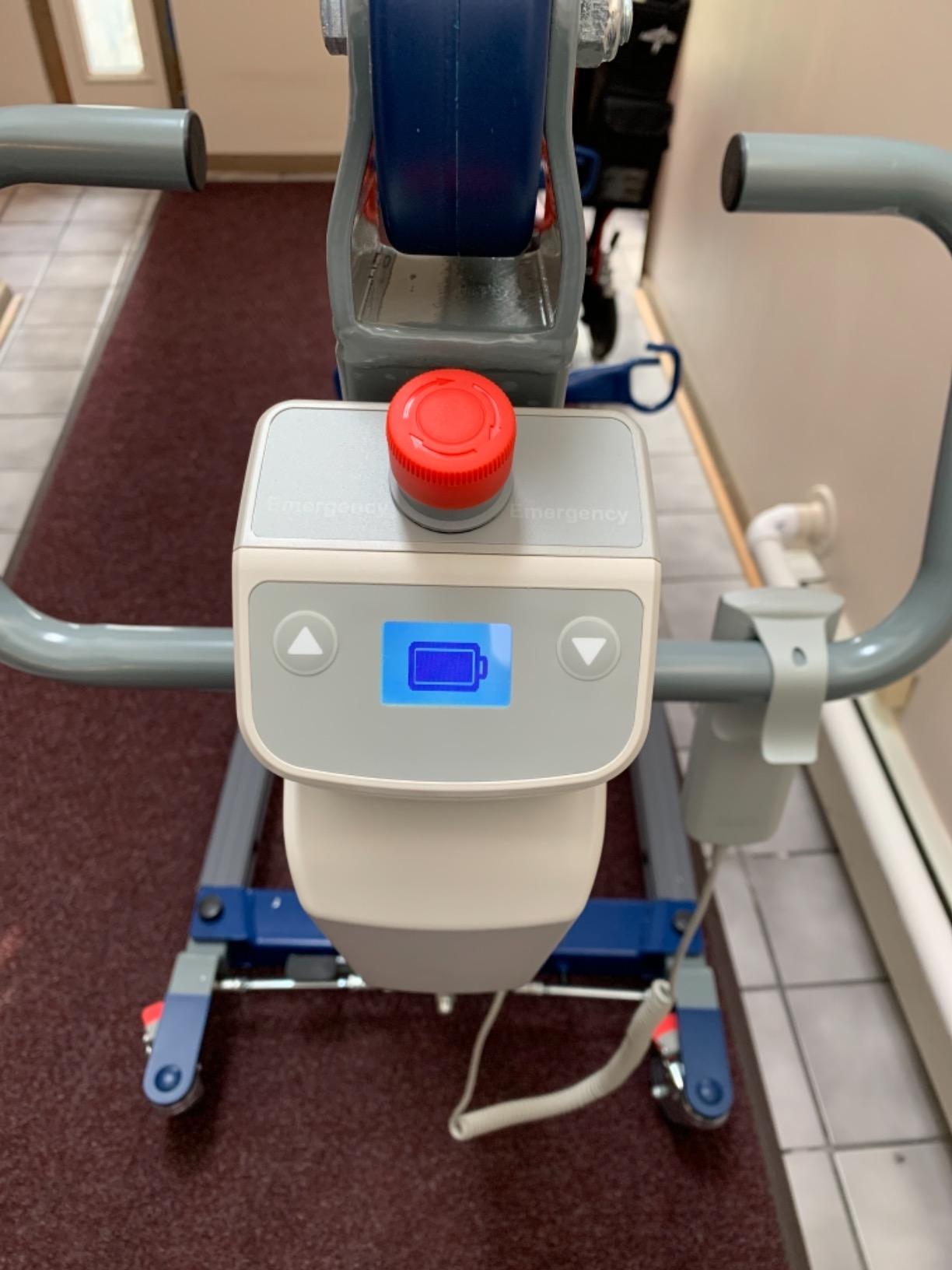
It fits under most beds in its lowest position and also reaches the floor, so one machine covers a low bed transfer and a fall recovery. Clip-free sling hookups remove a step that families often get wrong, and the 6-point spreader bar is compatible with ProHeal slings and with other brands.
For a device rated this heavily, the warranty terms matter more than usual. You get 3 years on the frame with a modular design and individually replaceable parts, so a failed actuator or control box does not write off the whole machine. A 600-pound version is also listed for users above this capacity.
Who needs this level of capacity
It suits larger adults, bariatric transfers and facilities or homes where one machine has to serve multiple people of different sizes. The higher safe working load also gives you margin, and equipment operated near its limit ages faster than equipment operated within it.
The hands-free base control and dual rear locking casters are genuinely useful when the person cannot contribute anything to the transfer. Everything about this machine is designed around the assumption that one person is doing the work.
What makes it harder to live with
At 108 pounds it is the second-heaviest frame here and reviewers describe it as large and cumbersome, with some users remaining hesitant to load a patient alone. If your home is compact, this is a lot of equipment in a room.
Assembly is realistically a two-person job of about an hour, even though some buyers managed it in 30 minutes. Inspect the unit on arrival; there is one report of cracked packaging and a control plug that did not make proper contact, and a loose plug is worth finding before you need the lift urgently.
We earn a commission, at no additional cost to you. CERTAIN CONTENT THAT APPEARS ON THIS SITE COMES FROM AMAZON. THIS CONTENT IS PROVIDED 'AS IS' AND IS SUBJECT TO CHANGE OR REMOVAL AT ANY TIME.
How to Choose a Patient Lift: The Buying Guide
Can they bear weight? That single question picks the lift type
If the person can push up through their legs, hold handbars and follow a simple instruction, choose a sit-to-stand lift. If they cannot do any of those, choose a full-body lift with a sling. Getting this wrong is expensive, so it is the one answer worth settling before comparing models. Caregivers in eldercare forums make the same point consistently: a stand-assist device needs decent sitting balance and upper-body control, otherwise a Hoyer-type lift is the correct choice.
A second, harder disqualifier for sit-to-stand lifts is cognitive impairment. Standing lifts require the person to keep a grip and to not panic mid-rise. If they let go unexpectedly, a full-body sling is safer for both of you.
Electric, hydraulic or manual: which power source fits the household?
Hydraulic pumps need effort on every lift and no charging, which makes them the simplest and cheapest long-term option for a lighter person and a strong caregiver. Electric lifts do the work for you, which matters when the person is heavy, when the caregiver is older or in poor health, or when transfers happen several times a day. Manual mechanical aids need neither, but they require the person to supply a large share of the force.
The trade-off is maintenance and interruption. Electric units need charging, and the battery cannot be used while charging on at least one model in this list, so plan charging around care rather than during it. Every powered unit here has a manual emergency lowering device; confirm how to operate it before the first transfer, not during an emergency.
The rating chain: the lowest component governs the whole system
A lift is a system, and the lowest rating anywhere in that system is the real limit. That is the rating chain, and it is the single most useful idea in this category. The sling is almost always the lowest-rated component, so a 450-pound lift with a 350-pound sling is a 350-pound lift.
Check four ratings before you order: the lift, the spreader bar, the sling and the person’s current weight. Add a margin for weight change over time rather than buying a lift that only just passes today. Never guess a sling’s capacity from its size or colour, and read the label on every sling before every lift.
Will it fit? Measure before you order, not after
Most home lift disappointments are dimensional, not mechanical. Measure four things: the under-bed clearance from the floor to the underside of the frame, your narrowest doorway including trim, the turning space beside the bed, and the base width at full spread against your doorways.
Under-bed clearance varies enormously between homecare beds and domestic frames. The units here quote figures from 4.5 inches upward, and a domestic bed with a low footboard will rule some of them out. Turning space matters more than people expect, because you must widen the base while the person is suspended.
Finally, plan a route from wherever the lift is stored to wherever it is used. A lift that lives in the garage cannot help at 2am.
Choosing the right patient lift sling
The sling does more work than the lift, and it is what the person actually feels. A full-body sling supports the whole body including the head, a U-sling is faster for routine transfers where head support is not needed, a toileting sling has an open base for bathroom access, and a high-back or head-support sling is for people with limited trunk control.
Check attachment style as well as size. Loop slings and clip slings are not interchangeable with every spreader bar, and the bar type matters: a two-point bar needs a different sling than a four-point or six-point cradle. Buy two slings from the start. One will be in the wash, and a single-sling household is the reason families report transfers getting delayed.
Can one caregiver operate a patient lift alone?
Read the manufacturer rating before you plan a single-caregiver routine. A lift rated for two caregivers is not a lift you should operate alone, no matter how experienced you become. That is the recurring warning in caregiver forums, where people describe being told not to follow what others do with a Hoyer lift and to follow their facility’s own policy instead.
The honest answer is that most manual hydraulic lifts rated 400 pounds or more are intended for two people, and the lighter hydraulic units are the ones rated for single use. Electric lifts rated for one caregiver are the safer choice for a family that will be alone. If you are the only person available, say so when you buy and let that decide the model.
What patient lifts cost and whether insurance covers them
Patient lifts fall under durable medical equipment in the United States, and Medicare Part B covers them only when a doctor documents a medical need and the equipment meets DME coverage rules. Typically that means coverage for an item on Medicare’s covered list, prescribed by a clinician, purchased through an approved supplier, with documentation of why no cheaper alternative meets the need. Confirm your specific situation with the supplier, because a household lift is often only partly covered and the gap becomes your cost.
Beyond the lift itself, budget for a second sling, replacement batteries on electric units and any service outside warranty. Compare that against renting, where the monthly figure is smaller but there is no ownership at the end and the sling is often included in the hire. Families on caregiver forums report being quoted rental costs far higher than they expected, so get the rental total for the full expected duration, not just the first month.
Five mistakes families repeat
- Buying after the fall. Most families arrive at this purchase after a near miss, which leaves no time to measure, match slings or arrange training. The equipment that helps is the one that is already in the room.
- Choosing before measuring. Doorways and bed clearance eliminate more candidates than weight capacity does.
- Trusting the lift’s capacity instead of the sling’s. The rating chain governs.
- Buying one sling. You need a second, and a toileting sling is a separate purchase from a full-body sling.
- Skipping training. A single session with an occupational therapist prevents the technique problems that cause the injuries the equipment was bought to avoid.
What to avoid doing with a mechanical lift
Never lift a person by hand, even briefly, because a lift is available. Never operate a two-caregiver-rated lift alone. Never guess a sling’s capacity or reuse a sling whose label is unreadable. Never raise until every connection is checked, and never move the base with the person suspended more than a few metres. Never leave someone suspended if power fails; locate and practise the manual emergency lowering on day one.
If a client in a care setting has a specific regulatory requirement around Hoyer use, check the rules that apply in your jurisdiction. For home use, the manufacturer’s instructions are the governing document.
One final safety point about the person rather than the machine: slow movements, spoken instructions and a count of one, two, three before every rise and every lower do more for cooperation than any equipment choice.
Frequently Asked Questions
Does Medicare pay for patient lifts?
Patient lifts qualify as durable medical equipment, so Medicare Part B may cover one when a doctor documents medical necessity, the model meets Medicare’s coverage requirements, and the lift is bought through an approved supplier. Coverage usually requires evidence that no lower-cost alternative meets the need, and the amount you pay out of pocket depends on your plan’s deductible and coinsurance. Confirm your specific case with the supplier and your plan before ordering, because a home use lift is often only partly covered.
How much does a patient lift typically cost?
Prices vary widely by category. Manual stand-assist frames and transfer aids sit at the low end, hydraulic full-body lifts fall in the middle, and portable electric and heavy-duty 500 pound units sit at the top. Add a second sling, replacement batteries and any out-of-warranty service to the purchase figure, and compare the full expected rental total against buying rather than comparing only the first month. Check the current listing for each model, since pricing in this category changes often.
What are the best patient lifts for elderly patients?
It depends on whether the person can bear weight. If they can push up through their legs and hold handbars, a sit-to-stand lift such as the Lumex LF1600 or the ArjoHuntleigh Sara Stedy is the right choice. If they cannot, a full-body sling lift is required, and the Invacare 9805P hydraulic or the Joerns Hoyer Advance E340 electric cover most situations. Confirm the choice with a physical or occupational therapist before buying.
What are some good patient lift slings for home use?
Match the sling to the task. A full-body sling supports the head and trunk, a U-sling is quicker for routine transfers when head support is not needed, a toileting sling has an open base for bathroom use, and a high-back or head-support sling suits limited trunk control. Confirm the attachment style, because loop and clip slings are not universally interchangeable with every spreader bar. Buy at least two so one is never the only one in use while the other is being washed.
Can one person operate a patient lift alone?
Only within the manufacturer’s rating. A lift rated for two caregivers should not be operated by one person, however experienced they become. Heavier hydraulic lifts are usually two-person units, while lighter hydraulic frames and most electric lifts are the ones rated for single-caregiver use. If you will be the only person available for transfers, say that at the point of purchase and let it decide the model. Caregivers consistently report that teaching and availability, rather than the machine itself, are the real constraint.
How to Decide in Three Questions
Ask a physical or occupational therapist whether the person can bear weight. That single answer splits this list of the best patient lifts for home caregivers in two: stand-assist frames on one side, full-body sling lifts on the other.
If you want one starting recommendation, take the Lumex LF1600 first. It carries the largest review base in this roundup and suits anyone who can push up through their legs, which makes it the safest default recommendation for a family starting from scratch. If weight bearing is not there, start with the Invacare 9805P hydraulic instead, and treat the ArjoHuntleigh Sara Stedy as the premium option when budget is not the constraint.
Ask who will actually be there. If transfers happen alone, an electric lift rated for a single caregiver removes the biggest risk in the room. If two people are always available, a hydraulic full-body lift is the simpler and less expensive choice.
Then measure the home before you spend anything. Under-bed clearance, narrowest doorway, turning space and a stored route for the machine will eliminate more models than price ever will. Whichever one survives those three questions, buy the slings in the same order, because the lift is only as useful as the sling in it.