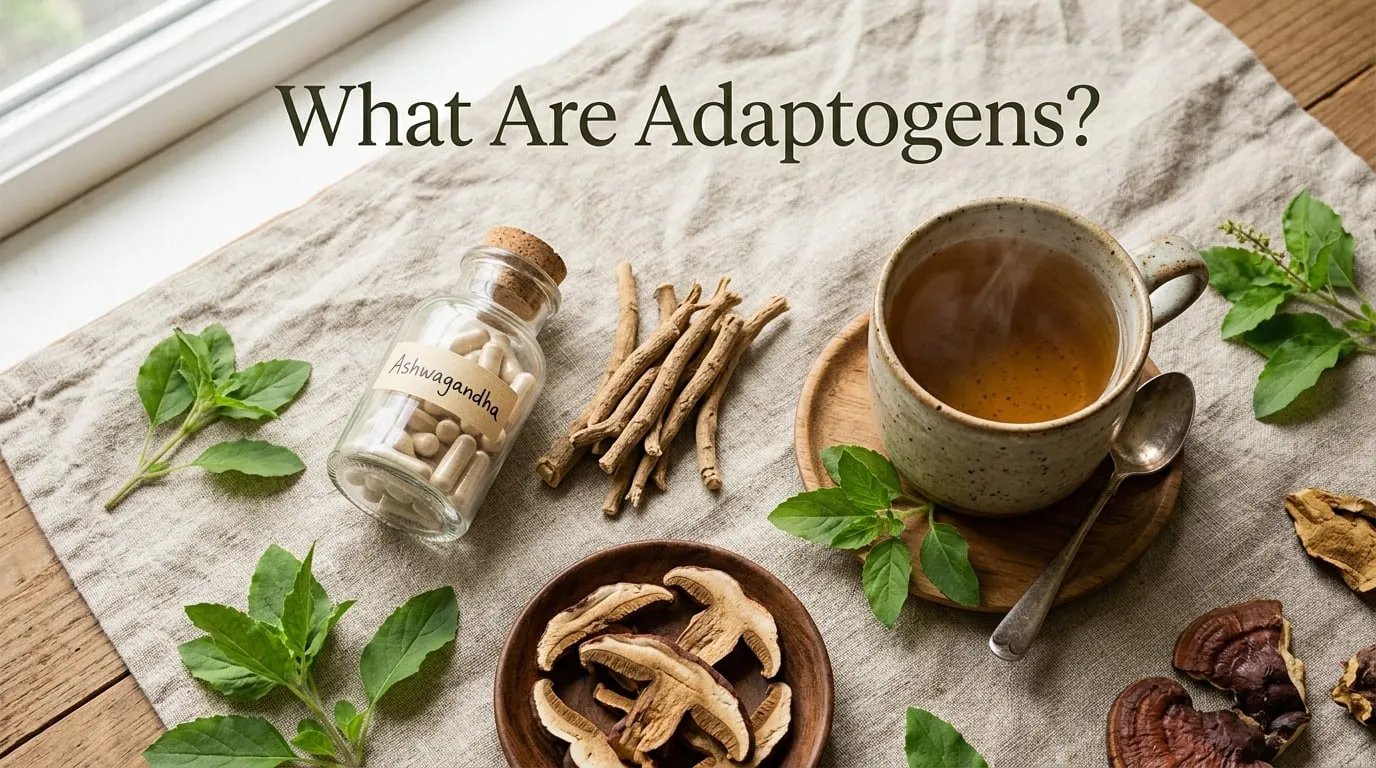
Adaptogens are plants and mushrooms that help your body resist physical, emotional, and environmental stress and return to balance (homeostasis). When consumed, they interact with your hypothalamic-pituitary-adrenal (HPA) axis to modulate stress hormones like cortisol, supporting recovery from burnout, fatigue, and anxiety without sedating or overstimulating you.
You have probably seen “adaptogen blends” in your coffee, mushroom powders at the grocery store, or ashwagandha gummies promoted by influencers. The category has exploded from ancient herbal medicine into a multi-billion dollar wellness industry. I have spent months researching the science behind these plants, talking with clinicians, and tracking real-world results to put together this guide.
Here is everything you actually need to know about what adaptogens are, how they work, which ones have the strongest research, and how to use them safely in 2026.
ContentsTable of Contents
- 1What Are Adaptogens?→
- 2The Three Criteria That Qualify a Substance as an Adaptogen→
- 3How Adaptogens Work: The HPA Axis and Cortisol→
- 4Adaptogens Modulate, Not Just Boost or Suppress→
- 5A Brief History of Adaptogens→
- 6Common Adaptogens and Their Benefits→
- 7How to Take Adaptogens→
- 8Capsules and Tablets→
- 9Powders→
- 10Tinctures and Liquid Extracts→
- 11Teas and Tonics→
- 12Adaptogen Drinks→
- 13How Long Until Adaptogens Work?→
- 14Adaptogens vs Nootropics: What’s the Difference?→
- 15Choosing Adaptogens by Goal→
- 16For Stress and Anxiety→
- 17For Sleep→
- 18For Energy Without Caffeine→
- 19For Focus and ADHD→
- 20For Immunity→
- 21Side Effects and Safety: Who Should Avoid Adaptogens→
- 22Who Should Not Take Adaptogens→
- 23Common Side Effects→
- 24Why Some Users Feel Worse on Adaptogens→
- 25Are Adaptogens Regulated by the FDA?→
- 26How to Choose a Quality Adaptogen→
- 27Frequently Asked Questions→
- 28Who should avoid adaptogens?→
- 29Do adaptogens give you a buzz?→
- 30What are the most powerful adaptogens?→
- 31What do adaptogens do to you?→
- 32Which adaptogen is best for ADHD?→
- 33Can you overdo adaptogens?→
- 34How long does it take for adaptogens to work?→
- 35Are adaptogens actually effective?→
- 36The Bottom Line→
What Are Adaptogens?
Adaptogens are a specific class of herbs, roots, and mushrooms that help your body adapt to stress and maintain equilibrium. The Cleveland Clinic defines them as “plants and mushrooms that help your body respond to stress, anxiety, fatigue and overall wellbeing.” UCLA Health describes them as “herbs, roots and other plant substances (like mushrooms) that help our bodies manage stress and restore balance after a stressful situation.”
In plain English: adaptogens are non-toxic plants that support your body’s stress-response system without pushing it in one direction. A stimulant wakes you up. A sedative calms you down. An adaptogen helps your body find its own middle ground.
The word itself was coined in 1947 by Soviet toxicologist Nikolai Lazarev, who was researching natural compounds that could increase resistance to physical and emotional stress. His student, Israel Brekhman, expanded the research in the 1960s and 1970s with studies on Soviet Olympic athletes, cosmonauts, and military personnel. The framework Brekhman and Dardymov published in 1969 still defines how adaptogens are classified today.
The Three Criteria That Qualify a Substance as an Adaptogen
Not every calming herb or energizing mushroom qualifies. For a plant to be classified as an adaptogen, it must meet three specific criteria established by Brekhman and Dardymov:
- It must be non-toxic at normal therapeutic doses and produce minimal side effects, even with long-term use.
- It must produce a nonspecific response in the body, meaning it helps you cope with a wide range of stressors (heat, cold, fatigue, emotional pressure, infection, trauma) rather than targeting one specific problem.
- It must have a normalizing influence on the body, helping return stressed systems to homeostasis whether they are over- or under-active.
That third point is what separates adaptogens from stimulants, sedatives, or single-target herbs. If a plant pushes your cortisol up when you are tired but also pushes it down when you are wired, it is behaving like an adaptogen. If it only does one of those things, it is something else.
How Adaptogens Work: The HPA Axis and Cortisol
Adaptogens work primarily through the HPA axis, which is short for the hypothalamic-pituitary-adrenal axis. This is your body’s central command center for the stress response, linking your brain, hormones, and adrenal glands. When you encounter a stressor, your hypothalamus signals your pituitary gland, which signals your adrenal glands to release cortisol and adrenaline. Once the threat passes, the system is supposed to wind itself back down.
Chronic stress keeps this system switched on. Cortisol stays elevated, sleep suffers, immune function drops, and you end up exhausted but wired. Adaptogens help by modulating, rather than simply suppressing or boosting, the HPA axis. Think of them as a thermostat adjuster. They help recalibrate the set point so your body can return to a more balanced state.
Different adaptogens act on slightly different pathways. Ashwagandha (Withania somnifera) has been shown in randomized trials to reduce cortisol levels and perceived stress scores. Rhodiola rosea appears to influence serotonin, norepinephrine, and dopamine, which is why users report sharper focus alongside reduced fatigue. Ginseng compounds called ginsenosids affect both the central nervous system and adrenal function. Reishi mushroom contains triterpenes and beta-glucans that modulate immune signaling. They all converge on the same goal: better stress tolerance and faster recovery.
Adaptogens Modulate, Not Just Boost or Suppress
One of the most important distinctions in adaptogen research is that these plants are amphoteric, meaning they can raise or lower a physiological marker depending on what your body needs. In a 2010 review published in Pharmaceuticals, researcher Alexander Panossian described this as the “stress-protective” activity of adaptogens, where they help the organism adapt to stress rather than simply override it. This is also why some users with already-low cortisol report feeling worse on certain adaptogens, while others with high cortisol feel dramatically better. The plant is responding to your current state, not forcing a single direction.
A Brief History of Adaptogens
The plants we now call adaptogens have been used for thousands of years in Ayurvedic medicine (traditional Indian healing) and Traditional Chinese Medicine. Ashwagandha is one of the most revered rasayanas (rejuvenators) in Ayurveda. Reishi has been called the “mushroom of immortality” in Chinese medical texts for at least 2,000 years. Ginseng, schisandra, eleuthero, and rhodiola all have deep roots in folk medicine across Asia and Eastern Europe.
What changed in the 20th century was the formal scientific study of these plants. Soviet researchers, hoping to find natural ways to enhance the performance of athletes, soldiers, and cosmonauts, began studying eleuthero, rhodiola, and other plants in the 1960s. The term “adaptogen” emerged from this research program. By the 1970s, eleuthero was officially approved for use by Soviet athletes, and rhodiola was studied for fatigue and cognitive performance.
Western medicine began paying serious attention in the 1990s and 2000s, as clinical trials on ashwagandha, rhodiola, and ginseng accumulated. Today, the National Center for Complementary and Integrative Health (NCCIH) lists adaptogens as one of the more studied categories of herbal supplements. The Mayo Clinic, Cleveland Clinic, and UCLA Health all publish patient-facing guides acknowledging their use.
Common Adaptogens and Their Benefits
There are dozens of plants that meet the three-criteria test, but a much smaller group has meaningful human research behind it. Here are the most commonly used and most studied adaptogens, with their primary traditional and research-supported uses.
| Adaptogen | Primary Benefit | Best Time of Day | Common Form |
|---|---|---|---|
| Ashwagandha | Stress, sleep, cortisol balance | Evening (for sleep) or morning | Capsule, powder, gummy |
| Asian Ginseng (Panax ginseng) | Energy, mental performance | Morning | Capsule, extract, tea |
| American Ginseng (Panax quinquefolius) | Calm focus, immune support | Morning or midday | Capsule, tea |
| Rhodiola Rosea | Fatigue, mental stamina | Morning | Capsule, tincture |
| Reishi Mushroom | Sleep, immune modulation | Evening | Powder, capsule, tea |
| Tulsi (Holy Basil) | Mood, blood sugar balance | Morning or midday | Tea, tincture, capsule |
| Schisandra | Endurance, liver support | Morning | Berry, tincture, capsule |
| Eleuthero (Siberian Ginseng) | Stamina, workout recovery | Morning | Capsule, tincture |
| Lion’s Mane Mushroom | Focus, nerve growth factor support | Morning or early afternoon | Powder, capsule, coffee blend |
| Cordyceps | Athletic performance, oxygen uptake | Morning (pre-workout) | Capsule, powder |
| Maca | Energy, libido, hormonal balance | Morning | Powder, capsule |
Each of these has a different evidence base. Ashwagandha and rhodiola have the most robust clinical trial data for stress and fatigue respectively. Ginseng has decades of research on cognitive performance and immune function. Reishi and lion’s mane have growing research on immune modulation and nerve growth factor. Cordyceps and maca have smaller but promising bodies of work, particularly around exercise performance and hormonal health.
How to Take Adaptogens
Adaptogens come in more forms than almost any other supplement category. The right one for you depends on your routine, your stomach, and how you want to fit them into your day.
Capsules and Tablets
Capsules are the most common form and the easiest to dose precisely. Most clinical trials use standardized extracts in capsule form, which makes it easier to match the research when you are buying a product. Look for extracts standardized to specific active compounds, such as ashwagandha standardized to withanolides or rhodiola standardized to rosavin and salidroside.
Powders
Powders are popular for smoothies, coffee, and golden-milk style drinks. They are more flexible than capsules but dosing is less precise. Adaptogen blends from brands like Four Sigmatic and mushroom coffee mixes often combine several powders together. Powders work well if you already have a morning smoothie or latte ritual.
Tinctures and Liquid Extracts
Tinctures are alcohol-based liquid extracts that absorb quickly. They are easy to adjust by dropper, and many people find them gentler on the stomach. Tinctures are particularly popular for rhodiola, eleuthero, and schisandra.
Teas and Tonics
Teas are the oldest delivery method and still widely used. Tulsi tea, reishi tea, and ginseng tea are widely available. The downside is that the dose in tea is typically lower than in a standardized extract, so teas are better for daily maintenance than for acute stress support.
Adaptogen Drinks
The “adaptogen drink” category has exploded. You will see functional sodas, mocktails, coffee blends, and hot cocoa mixes marketed with terms like “calming” or “focusing.” These are convenient and tasty, but dosing is often lower than in supplements and quality varies dramatically. Treat them as an introduction rather than a primary source.
How Long Until Adaptogens Work?
One of the most common questions people ask is how quickly they should expect to feel results. The honest answer is that adaptogens are not like caffeine or melatonin. They build their effect over time, and the timeline depends on which plant you are using and what you are trying to address.
| Adaptogen | Typical Time to Notice Effects | Best Supported Use |
|---|---|---|
| Ashwagandha | 2 to 4 weeks | Lower stress, better sleep |
| Rhodiola Rosea | 1 to 2 weeks | Reduced fatigue, sharper focus |
| Asian Ginseng | 2 to 3 weeks | Energy, cognitive performance |
| Reishi Mushroom | 2 to 4 weeks | Sleep quality, immune balance |
| Tulsi (Holy Basil) | 1 to 2 weeks | Mood, blood sugar balance |
| Lion’s Mane | 2 to 4 weeks | Focus, mental clarity |
| Schisandra | 2 to 4 weeks | Endurance, recovery |
| Cordyceps | 2 to 4 weeks | Exercise performance |
If you take an adaptogen for a week and feel nothing, that is normal. Most research studies measure outcomes at 4, 8, or 12 weeks, not 7 days. The exception is rhodiola, where some users report an almost immediate anti-fatigue effect on day one, though the full benefits still take a week or two.
If you take an adaptogen for 8 weeks and feel nothing, it may not be the right plant for your physiology. Genetic variability, baseline cortisol levels, and the specific stressor you are dealing with all influence response. Working with a healthcare provider who can guide dosing and selection is often the difference between an adaptogen that helps and one that does nothing.
Adaptogens vs Nootropics: What’s the Difference?
This is one of the most common points of confusion, and almost no mainstream article addresses it. Adaptogens and nootropics overlap in some places but are distinct categories.
| Category | Primary Goal | Example Compounds | Best For |
|---|---|---|---|
| Adaptogens | Whole-body stress resilience | Ashwagandha, rhodiola, reishi, tulsi | Burnout, fatigue, recovery, immune balance |
| Nootropics | Cognitive performance and brain health | Lion’s mane, Bacopa monnieri, L-theanine, racetams | Focus, memory, learning, mental clarity |
| Both (overlap) | Stress and cognition together | Lion’s mane, rhodiola, ginseng | Burnout-related brain fog, exam pressure |
Adaptogens target your body’s stress-response system first. The cognitive benefits (better focus, less brain fog) tend to follow when chronic stress is reduced. Nootropics target brain function directly, often through neurotransmitter modulation or nerve growth factor support. They work regardless of whether your problem is stress-related.
Lion’s mane and rhodiola sit in both camps. Lion’s mane supports nerve growth factor, which is a nootropic mechanism, while also reducing inflammation. Rhodiola reduces fatigue (adaptogen) while sharpening mental performance (nootropic). If you are dealing with burnout-related brain fog, the overlap zone is where to look. If your focus issues are not stress-related, a more targeted nootropic like Bacopa or L-theanine may serve you better.
Choosing Adaptogens by Goal
One of the biggest frustrations people express on forums and in clinician conversations is the lack of clear “which one for which problem” guidance. Here is a practical decision guide based on the research.
For Stress and Anxiety
Ashwagandha has the strongest evidence base for reducing perceived stress and cortisol levels, with multiple randomized trials showing improvements in anxiety scores. Rhodiola is a close second and works faster for some users. Tulsi (holy basil) is a gentler option that also helps with blood sugar balance and mood. If anxiety is severe or clinical, adaptogens are a complement to, not a replacement for, professional mental health care.
For Sleep
Reishi is the classic “evening adaptogen,” with research supporting its role in sleep quality and immune modulation. Ashwagandha also supports sleep, especially in people whose insomnia is stress-related. Avoid stimulating adaptogens like rhodiola, ginseng, and cordyceps close to bedtime.
For Energy Without Caffeine
Rhodiola is the go-to for replacing afternoon coffee. Users consistently report smoother energy without the caffeine crash. Asian ginseng is a stronger option for energy and mental performance but can be overstimulating for sensitive users. Maca is gentler and is often used for sustained daily energy and hormonal balance.
For Focus and ADHD
Lion’s mane is the most researched adaptogen for focus, thanks to its effects on nerve growth factor and brain cell regeneration. Rhodiola and Asian ginseng also help with mental performance under pressure. For ADHD specifically, the research is much thinner. Some adults report good results from rhodiola plus lion’s mane, but adaptogens should be discussed with a prescriber because some interact with stimulant medications.
For Immunity
Reishi, cordyceps, and ashwagandha all have immune-modulating properties. Reishi’s beta-glucans have been studied for immune balance rather than simple stimulation. Cordyceps has research supporting exercise-induced immune resilience. These are best used preventively, especially during high-stress periods when immune function tends to drop.
Side Effects and Safety: Who Should Avoid Adaptogens
Adaptogens are generally well-tolerated, but “natural” does not mean “safe for everyone.” Certain groups should approach adaptogens with caution or avoid them entirely without medical supervision.
Who Should Not Take Adaptogens
- Pregnant or breastfeeding individuals: Most adaptogens have not been studied for safety in pregnancy and may affect hormones. Ashwagandha in particular is traditionally avoided during pregnancy.
- People with autoimmune conditions: Immune-modulating adaptogens like reishi, cordyceps, and ashwagandha can theoretically overstimulate the immune system in conditions like lupus, rheumatoid arthritis, or multiple sclerosis.
- People on thyroid medication: Ashwagandha can increase thyroid hormone levels and may interact with levothyroxine and similar drugs.
- People on SSRIs or antidepressants: Rhodiola and St. John’s Wort-adjacent herbs can affect serotonin and risk serotonin syndrome when combined with SSRIs.
- People on blood pressure or diabetes medication: Several adaptogens, including ginseng and tulsi, can lower blood sugar or blood pressure and may amplify the effect of prescription drugs.
- People on immunosuppressants: Reishi and other immune-modulating adaptogens can work against drugs prescribed after organ transplant or for autoimmune disease.
Common Side Effects
Even outside those groups, side effects can occur. Ashwagandha can cause drowsiness, GI upset, or, paradoxically, increased anxiety in some users. Rhodiola can cause jitteriness, dry mouth, or insomnia if taken late in the day. Ginseng can cause headaches, digestive issues, or sleep disruption with prolonged high-dose use. Cleveland Clinic recommends using adaptogens for under six months at a time to reduce the risk of tolerance or unexpected side effects.
Why Some Users Feel Worse on Adaptogens
This is a common forum complaint and worth addressing directly. If you already have low cortisol (sometimes called “adrenal fatigue” in functional medicine, though the mainstream medical community debates this term), a stimulating adaptogen like rhodiola or ginseng can leave you feeling wired, anxious, or foggy. If you have high cortisol from chronic stress, a calming adaptogen like ashwagandha can sometimes make you feel flat or sedated. Matching the plant to your current stress state is the key. Working with a clinician who can test cortisol levels and adaptogen response is the most reliable path.
Are Adaptogens Regulated by the FDA?
Adaptogens are sold as dietary supplements in the United States, which means the FDA does not evaluate them for effectiveness before they hit shelves. The FDA also does not verify label claims, dosage accuracy, or purity. This is one of the most important things to understand before buying any adaptogen product.
This regulatory gap means quality varies widely. Independent testing has repeatedly found supplements that contain less of the active ingredient than labeled, more, or in some cases, none at all. Some products have been found to contain undeclared fillers, allergens, or even pharmaceutical contaminants.
How to Choose a Quality Adaptogen
To minimize risk, look for products that carry one of the following third-party certifications: USP (United States Pharmacopeia), NSF International, or ConsumerLab. These organizations independently test supplements for identity, potency, and contaminants. Companies that pay for third-party certification tend to be more transparent about sourcing, extraction methods, and standardization. If a product does not display any third-party seal and the brand cannot answer basic questions about where the herbs are grown, that is a red flag.
Frequently Asked Questions
Who should avoid adaptogens?
Pregnant or breastfeeding individuals, people with autoimmune conditions, and those on medications for thyroid, blood pressure, blood sugar, depression, or immune suppression should avoid most adaptogens or use them only under medical supervision. Ashwagandha, rhodiola, ginseng, and reishi all have specific drug interaction profiles that a prescriber should review before you start.
Do adaptogens give you a buzz?
No. Unlike caffeine, nicotine, or THC, adaptogens do not produce a noticeable buzz or high. Most users report a gradual improvement in stress tolerance, sleep quality, or energy over weeks rather than an acute feeling after taking them. Some stimulating adaptogens like rhodiola can produce a mild alertness boost within an hour, but it is far gentler than coffee.
What are the most powerful adaptogens?
Based on current clinical research, ashwagandha, rhodiola rosea, Asian ginseng, and reishi mushroom have the most robust evidence for stress, fatigue, cognitive performance, and immune support respectively. Schisandra, eleuthero, and tulsi also have meaningful research but fewer large human trials. The best adaptogen for you depends on your specific stress pattern, health status, and goals.
What do adaptogens do to you?
Adaptogens interact with your hypothalamic-pituitary-adrenal (HPA) axis to help regulate cortisol and other stress hormones. Over time, most users experience reduced perceived stress, better sleep, steadier energy, improved focus, and more resilience to physical and emotional strain. They are not sedatives or stimulants, so the effects tend to build gradually rather than produce an immediate feeling.
Which adaptogen is best for ADHD?
There is no strong clinical evidence for any single adaptogen as an ADHD treatment, and adaptogens should not replace prescribed medication. Some adults report that lion’s mane plus rhodiola or ginseng helps with focus and mental clarity, particularly when ADHD symptoms overlap with burnout. Always discuss adaptogen use with your prescriber, especially if you take stimulant medication, because some adaptogens interact with those drugs.
Can you overdo adaptogens?
Yes. More is not better with adaptogens. Higher-than-recommended doses do not produce stronger benefits and increase the risk of side effects like GI upset, jitteriness, insomnia, or hormonal disruption. Cleveland Clinic recommends using adaptogens for under six months continuously to avoid tolerance, and many clinicians recommend cycling on and off every two to three months.
How long does it take for adaptogens to work?
Most adaptogens take two to four weeks of daily use before you notice meaningful effects. Rhodiola is faster, with some users reporting reduced fatigue within a few days. Ashwagandha, reishi, and lion’s mane typically need four to eight weeks for full effects on stress, sleep, and focus. If you take an adaptogen consistently for eight weeks with no change, it is likely not the right one for your physiology.
Are adaptogens actually effective?
The strongest evidence supports ashwagandha for stress and cortisol reduction, rhodiola for fatigue, Asian ginseng for cognitive performance and immune function, and reishi for sleep quality and immune balance. Other adaptogens have promising but smaller evidence bases. Effects vary widely between individuals based on baseline cortisol, genetics, lifestyle, and product quality. Adaptogens work best as one piece of a broader stress-management plan that includes sleep, movement, and nutrition.
The Bottom Line
Adaptogens are a fascinating and increasingly well-researched category of plants and mushrooms that help your body manage stress more effectively. They are not magic, and they are not a substitute for sleep, exercise, nutrition, or professional medical care. But for adults dealing with chronic stress, burnout, low energy, or mild anxiety, the right adaptogen, taken consistently and at a quality dose, can be a meaningful tool.
If you are curious about trying adaptogens, start with one well-researched plant that matches your primary goal, give it at least four to six weeks, and buy from a brand that uses third-party testing. Talk to your doctor or a registered dietitian if you take any prescription medication, are pregnant or breastfeeding, or have an autoimmune or thyroid condition. The Cleveland Clinic, Mayo Clinic, and NCCIH all publish reliable patient-facing guides if you want to dig deeper into the research.
Used thoughtfully, adaptogens can help you recover from stress faster, sleep more deeply, and meet the demands of modern life with a little more resilience. Just remember: they are one layer of a healthy lifestyle, not a replacement for one.