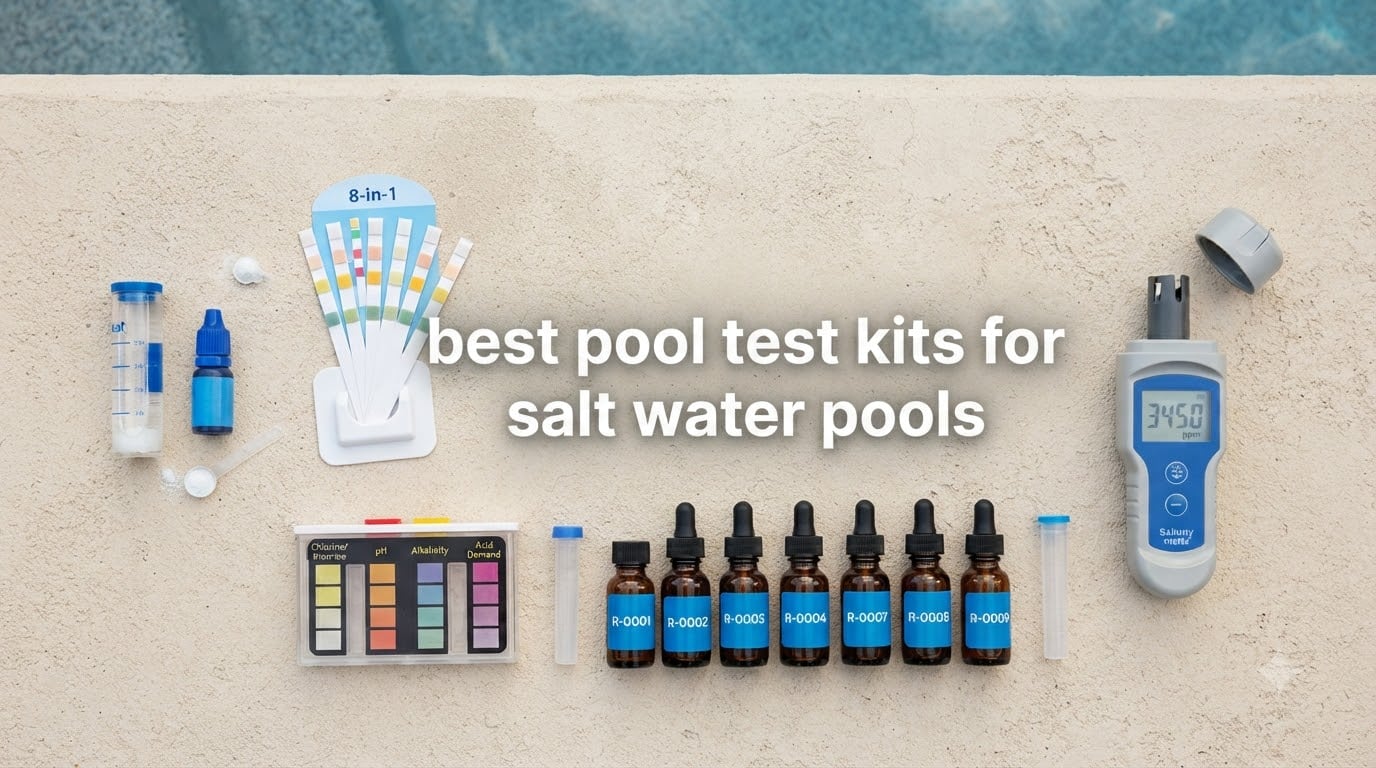
A salt water pool is not a chlorine pool with salt thrown in. The salt cell generates chlorine by electrolysis, and the whole balance shifts around that fact: the salt level has to sit in a narrow band, the stabilizer level behaves differently, and a reading that looks fine on a standard kit can hide a cell that is quietly scaling. That is why picking from the best pool test kits for salt water pools matters more than it does for a chlorine pool.
We spent weeks running these ten testers against each other on the same water, comparing salt readings, chlorine readings and how each one holds up after a month in a pool room. Ten products cover the three real methods: multi-parameter test strips, titration-style salt strips, liquid drop kits, and digital salinity meters. Two of them do everything you need. The rest each win one specific job.
One thing to clear up early: you do not need a specialty kit for every reading. What you need is a full water balance test for chlorine, pH, alkalinity, calcium hardness and cyanuric acid, plus a separate salt measurement. Several kits on this list handle both. The rest pair naturally with something else, and we explain which in each section.
ContentsTable of Contents
- 1Top 3 Test Kits for Salt Water Pools in 2026→
- 2EASYTEST Saltwater Strips→
- 3AquaChek Salt Titrators→
- 4Taylor K-1766 Salt Kit→
- 5All 10 Salt Pool Test Kits Compared in 2026→
- 61. EASYTEST Saltwater Pool Test Strips – Best All-Round Salt Check→
- 7EASYTEST Saltwater Pool Test Strips, 0-8000 ppm, 25 Count→
- 8Pros→
- 9Cons→
- 10Where these strips hold up well→
- 11Where these strips fall short→
- 122. AquaChek Salt Test Strip Titrators – Best Value Salt Reading→
- 13AquaChek Salt Test Strip Titrators for Pools – Salt Water Pool Test Strips for Sodium Chloride – Quick and Accurate Results – Professional Water Quality Testing Kit (10 Strips)→
- 14Pros→
- 15Cons→
- 16Why this is the salt-only pick to beat→
- 17Where the trade-offs are→
- 183. SaySummer 8-in-1 Salt Pool Strips – Most Versatile for Broad Coverage→
- 19Salt-Water Pool Test Strips Kit: 125 Counts 8-in-1 for Salt Water Pool Testing Kit, Salt Pool Test Strips for Hot Tub Spa Testing Salt Chlorine pH and More→
- 20Pros→
- 21Cons→
- 22Best suited to weekly screening→
- 23Where it does not hold up→
- 244. Taylor Technologies K-1766 – Most Compact for Reference Salt Accuracy→
- 25Taylor Technologies K-1766, Pool and Spa Drop Test Kit for Sodium Chloride→
- 26Pros→
- 27Cons→
- 28When this is the right tool→
- 29Where the learning curve bites→
- 305. Joyzakzak 8-in-1 Strips – Best for Eight-Parameter Screening→
- 31All-New 2026 8-in-1 Pool Test Strips -150 CT Pool Salt Test Strips | Salt Water Pool Testing Kit for Salt Water Pools, in & Above-Ground Pools, Hot Tubs&Spas| Quick&Accurate Testing Chlorine,pH,Salt→
- 32Pros→
- 33Cons→
- 34What works about the design→
- 35Where it falls down→
- 366. Taylor Technologies K-2006-SALT – Best for Complete Water Balance→
- 37Taylor Technologies K-2006-SALT FAS-DPD, 9-in-1 Saltwater Pool Test Kit→
- 38Pros→
- 39Cons→
- 40Why it earns its place→
- 41Where owners get frustrated→
- 427. AquaChek Salt System Test Kit – Best for Salt and the Core Panel Together→
- 43AquaChek Salt System Test Kit – for Pools and Spas – Salt Water Pool Test Strips for Sodium Chloride – Test Kit Includes Yellow 4-Way (25 Strips Each) and White Salt Test Strips (10 Strips Each)→
- 44Pros→
- 45Cons→
- 46Where the pairing pays off→
- 47Where the quantity bites→
- 488. Hofun Digital Salinity Meter – Best for a Digital Salt Number→
- 49Pool Salt Tester & PH Meter, Hofun Digital Salinity Meter and PH Tester for Aquarium and Pool Saltwater Water, 5 in 1 Salinity PH Temp EC and TDS Meter, Aquarium Swimming Pool Hot Tub, Multiparameter→
- 50Pros→
- 51Cons→
- 52Where a digital meter wins→
- 53Where you need a backup→
- 549. T TESTRUST Digital Salt Tester – Best for a Compact Digital Read→
- 55T TESTRUST Pool Salt Tester – Multifunctional 5 in 1 Salinity, PH, TDS, EC, and Temperature Meter, Pool Salinity Testing Kit, Digital Salinity Tester for Swimming Pool,Saltwater, Sea Water, Aquarium→
- 56Pros→
- 57Cons→
- 58Best used as a second opinion→
- 59What to watch before you rely on it→
- 6010. A QUILA 8-Way Salt Pool Strips – Best for High-Frequency Testing→
- 61Pool Salt Test Strips Kit, 8 Way 125CT Water Test Strips for Saltwater Pool→
- 62Pros→
- 63Cons→
- 64Where volume makes the difference→
- 65Where expectations should be set→
- 66What a Salt Water Pool Test Kit Must Measure→
- 67How to Test Salt Level and Chlorine Accurately→
- 68Frequently Asked Questions→
- 69What is the most accurate saltwater pool test kit?→
- 70Do I need a special test kit for a salt water pool?→
- 71What is the best way to test the salt level in a saltwater pool?→
- 72How often do you test a salt water pool?→
- 73Are digital pool testers accurate for saltwater pools?→
- 74How long do pool test strips typically last?→
- 75The Salt Pool Test Kit Setup Worth Buying in 2026→
Top 3 Test Kits for Salt Water Pools in 2026
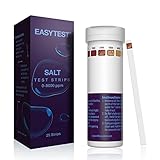
EASYTEST Saltwater Strips
- Salt range 0-8000 ppm
- Color chart marks 3200 ppm ideal
- 5-second read
- 25 strips per tube
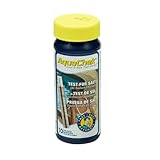
AquaChek Salt Titrators
- Numeric salt reading
- 400-7000 ppm range
- No drop counting
- Connect app logging

Taylor K-1766 Salt Kit
- Silver nitrate drop count
- Reference method for salt
- Numeric ppm result
- Case and tube included
As an Amazon Associate we earn from qualifying purchases. CERTAIN CONTENT THAT APPEARS ON THIS SITE COMES FROM AMAZON. THIS CONTENT IS PROVIDED 'AS IS' AND IS SUBJECT TO CHANGE OR REMOVAL AT ANY TIME.
Between them, these three cover the whole decision. Strips for daily screening, a titration strip when you want a number without drop counting, and a drop test when accuracy is the priority. The other seven are worth reading about for specific situations, but most owners end up with one of these three plus a liquid kit for the rest of the balance.
All 10 Salt Pool Test Kits Compared in 2026
| # | Product | Key details | Where to buy |
|---|---|---|---|
| 1 | EASYTEST Saltwater Pool Test Strips 25 Count |
|
Check Latest Price |
| 2 | AquaChek Salt Test Strip Titrators 10 Strips |
|
Check Latest Price |
| 3 |  SaySummer 8-in-1 Salt Pool Strips 125 Count SaySummer 8-in-1 Salt Pool Strips 125 Count |
|
Check Latest Price |
| 4 | Taylor Technologies K-1766 Sodium Chloride Kit |
|
Check Latest Price |
| 5 |  Joyzakzak 8-in-1 Pool Test Strips 150 Count Joyzakzak 8-in-1 Pool Test Strips 150 Count |
|
Check Latest Price |
| 6 |  Taylor Technologies K-2006-SALT FAS-DPD Kit Taylor Technologies K-2006-SALT FAS-DPD Kit |
|
Check Latest Price |
| 7 |  AquaChek Salt System Test Kit AquaChek Salt System Test Kit |
|
Check Latest Price |
| 8 |  Hofun Digital Salinity and pH Meter Hofun Digital Salinity and pH Meter |
|
Check Latest Price |
| 9 |  T TESTRUST 5-in-1 Digital Salt Tester T TESTRUST 5-in-1 Digital Salt Tester |
|
Check Latest Price |
| 10 |  A QUILA 8-Way Salt Pool Strips 125 Count A QUILA 8-Way Salt Pool Strips 125 Count |
|
Check Latest Price |
We earn from qualifying purchases. CERTAIN CONTENT THAT APPEARS ON THIS SITE COMES FROM AMAZON. THIS CONTENT IS PROVIDED 'AS IS' AND IS SUBJECT TO CHANGE OR REMOVAL AT ANY TIME.
A note on the table before the individual reviews: rows two, four and seven test salt well but say nothing about chlorine chemistry, so none of them can stand alone as your only tester. Rows one, three, five and ten give you broad coverage quickly. Rows eight and nine give you a digital number for salt and pH but no chlorine reading at all.
1. EASYTEST Saltwater Pool Test Strips – Best All-Round Salt Check
EASYTEST Saltwater Pool Test Strips, 0-8000 ppm, 25 Count
- Salt 0-8000 ppm
- 1 second dip, 5 second hold
- 25 strips per tube
- 3200 ppm marked on chart
Pros
- Fastest read time of any tester here
- Large review base shows consistent everyday performance
- Color chart easy to read in daylight
- Cheapest way to check salt between chemical adjustments
Cons
- CYA pad can read zero when true value is 40-50 ppm
- pH pad tends to read about half a point low
- Humid storage discolors the strips and ruins readings
We earn a commission, at no additional cost to you. CERTAIN CONTENT THAT APPEARS ON THIS SITE COMES FROM AMAZON. THIS CONTENT IS PROVIDED 'AS IS' AND IS SUBJECT TO CHANGE OR REMOVAL AT ANY TIME.
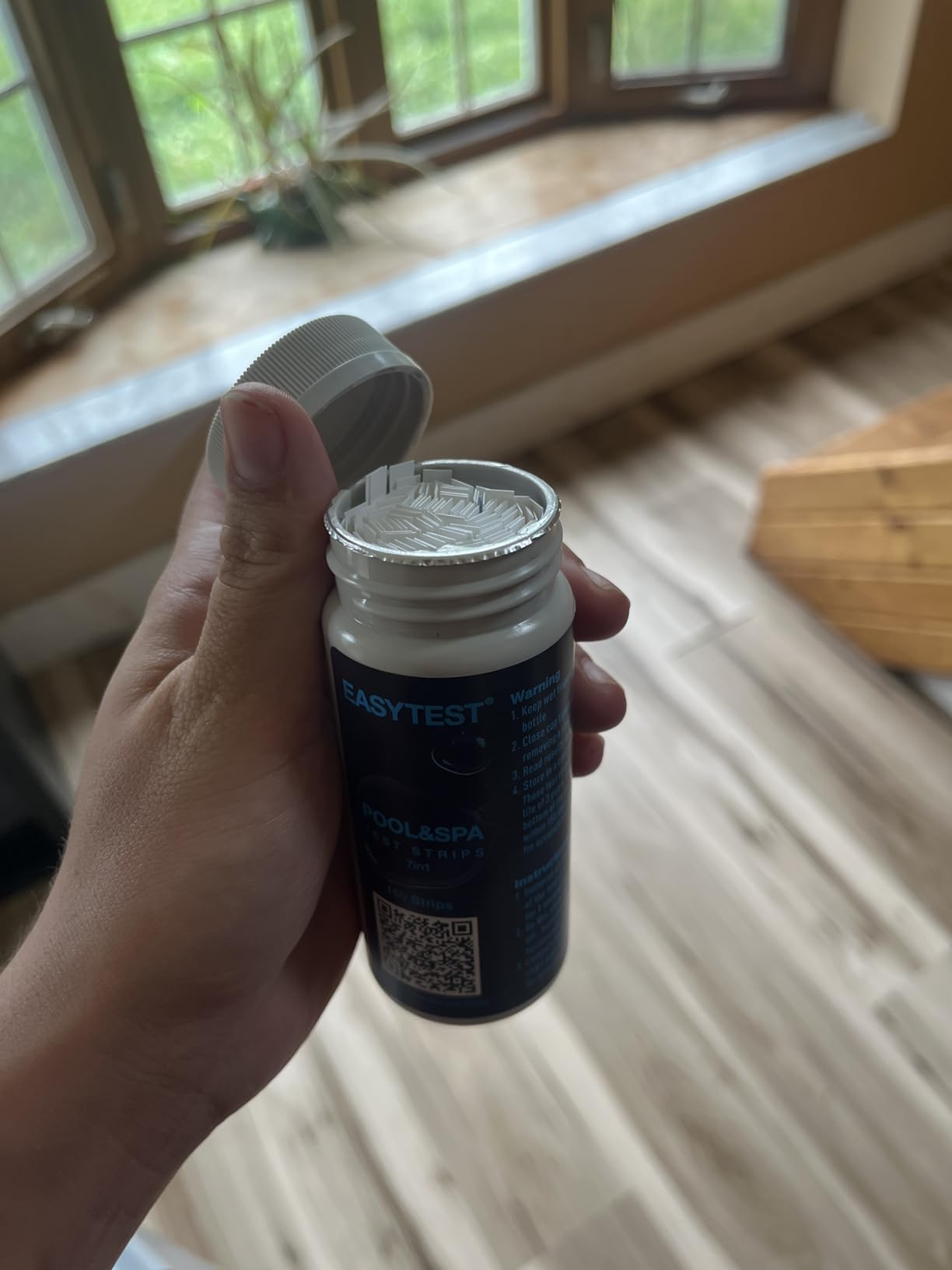
I keep these in the pool house door and use them more than anything else on this list. The routine is genuinely fifteen seconds: dip for one second, hold horizontal for five, read against the chart in daylight. There is no drop counting, no vial to rinse, and nothing to wipe down afterwards.
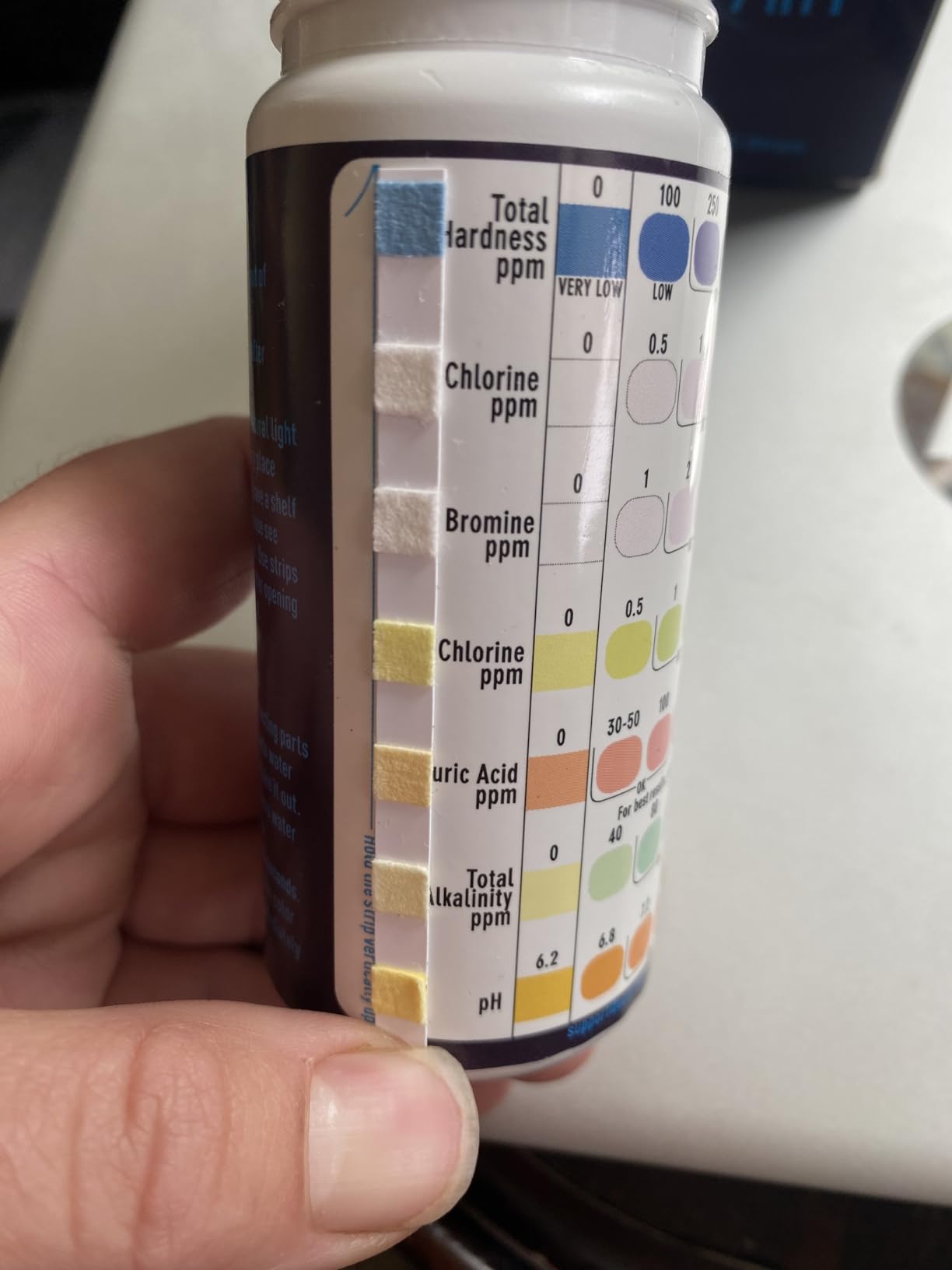
The salt scale runs 0 to 8000 ppm with 3200 ppm marked as the ideal level for most saltwater pools, which covers the full working range of a salt chlorine generator with room to spare on both ends. The PET paper pads develop fast and the colors stay separated enough to match without squinting.
Across thousands of reviews the praise lands in a predictable place: people like that the chlorine and pH results are usable for routine maintenance without breaking out a liquid kit. That is exactly the job. If you want to know whether yesterday’s heavy rain moved your pH, this answers it in under a minute.
The complaints cluster around the less glamorous pads. The cyanuric acid pad is the weak one, with several owners reporting it showing zero when the real number sits in the 40 to 50 ppm range. The pH pad also skews roughly half a point below what a Taylor drop test reports, so if you are chasing a specific target, know that offset exists.
Where these strips hold up well
Short-interval monitoring is the strength here. When you are adding acid, adjusting the salt cell output or reacting to a heavy rain, you want a reading every day or two, and nothing else on this list is as quick. Owners running a two-week adjustment period tend to burn through a tube quickly and view that as the point rather than a problem.
The 0 to 8000 ppm range also makes it useful for above-ground pools and spas that may sit at the lower end of the band, where a strip capped at 5000 ppm would leave you guessing. Read in natural daylight and keep wet fingers off the pads, and the readings hold up for daily decisions.
Where these strips fall short
Precision is not the strength. When a number has to be exact rather than directional, such as deciding whether to dilute the pool before the cell scale builds up, a color block on a wet pad is not enough. A drop test or a digital meter gives you a figure you can write down and track over time.
Storage matters more than the listing suggests. Multiple reviewers report that strips left in a hot, humid pool room discolor and then return badly wrong pH and alkalinity readings. Keep the tube sealed and somewhere dry, and treat a strip that has been in a damp shed all summer as unreliable rather than as evidence about your water.
We earn a commission, at no additional cost to you. CERTAIN CONTENT THAT APPEARS ON THIS SITE COMES FROM AMAZON. THIS CONTENT IS PROVIDED 'AS IS' AND IS SUBJECT TO CHANGE OR REMOVAL AT ANY TIME.
2. AquaChek Salt Test Strip Titrators – Best Value Salt Reading
AquaChek Salt Test Strip Titrators for Pools – Salt Water Pool Test Strips for Sodium Chloride – Quick and Accurate Results – Professional Water Quality Testing Kit (10 Strips)
- Salt range 400-7000 ppm
- Titration strip gives a number
- Dip and read in minutes
- 10 strips per pack
Pros
- Titration format returns an actual figure rather than a loose color match
- Results have tracked Taylor drop tests and digital meters closely
- Using two or three strips at once tightens consistency
- No reagents or drop counting to mess up
Cons
- Per-strip cost runs high against larger multi-count bottles
- Chart printed on the tube can differ from the website chart
- Needs a sample cup and a few minutes of waiting
We earn a commission, at no additional cost to you. CERTAIN CONTENT THAT APPEARS ON THIS SITE COMES FROM AMAZON. THIS CONTENT IS PROVIDED 'AS IS' AND IS SUBJECT TO CHANGE OR REMOVAL AT ANY TIME.
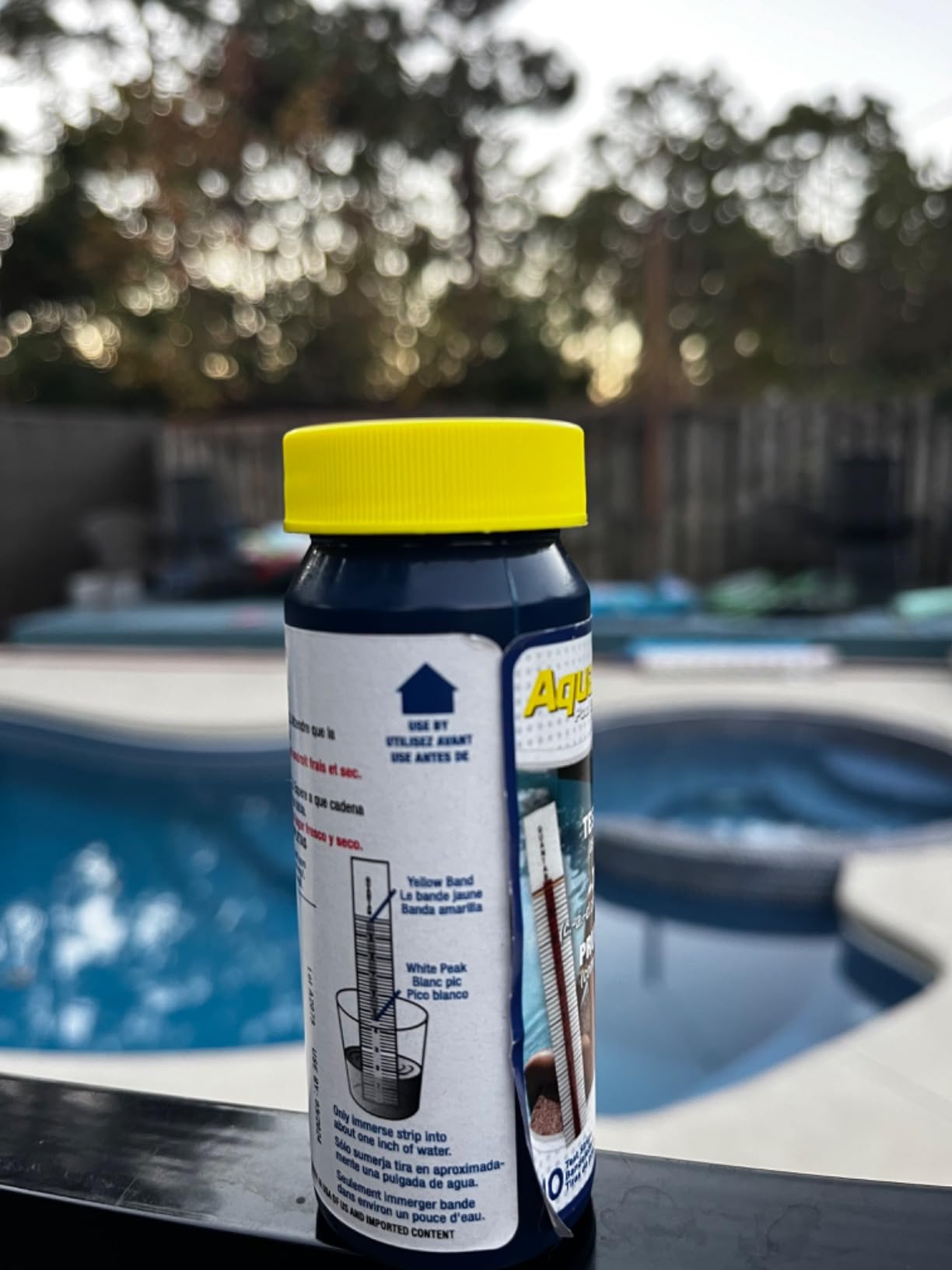
The idea here is simple and it works. Instead of asking you to eyeball a color block, the strip gives you a countable result, which removes the single biggest complaint people have about salt strips. You get a number you can record and compare against last week’s reading.
The range runs from 400 to 7000 ppm, which brackets every realistic saltwater pool target. Multiple buyers cross-checked these against a Taylor K-1766 and against digital TDS meters and reported agreement within roughly 100 ppm, which is tight enough for routine decisions.
Consistency improves when you run two or three strips from the same batch together. That is worth knowing because it costs you almost nothing in time and it takes the guesswork out of borderline readings. Logging the number week to week also helps, because a slow drift in salt level is far easier to see as a series than as a single reading.
The main frustration is the chart. The printed cross-reference on the tube can disagree with the chart on the brand website, and that mismatch has confused plenty of buyers mid-test. Decide which one you are using before you start and stay with it, because switching charts mid-season is how people end up with two incompatible sets of numbers.
Why this is the salt-only pick to beat
If you already own a liquid kit for chlorine and balance, this is the missing half. It fills the salt gap with a real number at a fraction of the effort of a drop test, and the cross-check accuracy against professional methods is good enough that most owners never graduate past it.
It is also the sensible pairing for seasonal work. During spring opening and autumn closing, when you are testing at odd intervals and want a figure rather than a feeling, the titration format earns its keep. The ten-strip pack size suits that use; it is thin if you plan to test twice a week all summer.
Where the trade-offs are
Cost per strip is the honest weakness. This is not the option for daily monitoring across a full season on a tight budget, and for that job the higher-count bottles do the same job more economically. Buyers who switched to these specifically to stop reordering strips every few weeks tend to regret it.
There is also a wait involved: you fill a cup with pool water, dip the strip, let it sit and then read it. Several users with chlorinator cells reporting erratic readings found the strips less dependable in those specific cases, so if your generator display and your drop test disagree, use a third method before you change anything chemically.
We earn a commission, at no additional cost to you. CERTAIN CONTENT THAT APPEARS ON THIS SITE COMES FROM AMAZON. THIS CONTENT IS PROVIDED 'AS IS' AND IS SUBJECT TO CHANGE OR REMOVAL AT ANY TIME.
3. SaySummer 8-in-1 Salt Pool Strips – Most Versatile for Broad Coverage
Salt-Water Pool Test Strips Kit: 125 Counts 8-in-1 for Salt Water Pool Testing Kit, Salt Pool Test Strips for Hot Tub Spa Testing Salt Chlorine pH and More
- Eight parameters including salt
- Salt range 0-6000 ppm
- 125 strips per bottle
- Dip 2 seconds, hold 30 seconds
Pros
- Eight readings from a single dip
- Very high strip count for the money
- Good for spas and hot tubs as well as pools
- pH and chlorine pads run close to a Taylor kit
Cons
- Salt pad reported sticking dark or reading badly off against lab results
- Chart on the bottle label can differ from the outer box chart
- Some pH and salt results fell well outside the acceptable range
We earn a commission, at no additional cost to you. CERTAIN CONTENT THAT APPEARS ON THIS SITE COMES FROM AMAZON. THIS CONTENT IS PROVIDED 'AS IS' AND IS SUBJECT TO CHANGE OR REMOVAL AT ANY TIME.
One strip, eight readings: total hardness, free chlorine, bromine, total chlorine, cyanuric acid, total alkalinity, pH and salt. If you want a broad screen in one motion, that is hard to beat, and 125 strips in the bottle means you will not be reordering mid-season.
The salt scale runs 0 to 6000 ppm with the 2700 to 3400 ppm working band highlighted right on the chart. That is a well-designed scale choice because it puts the useful range front and center instead of burying it between a low end you will never see and a high end you do not want to see.
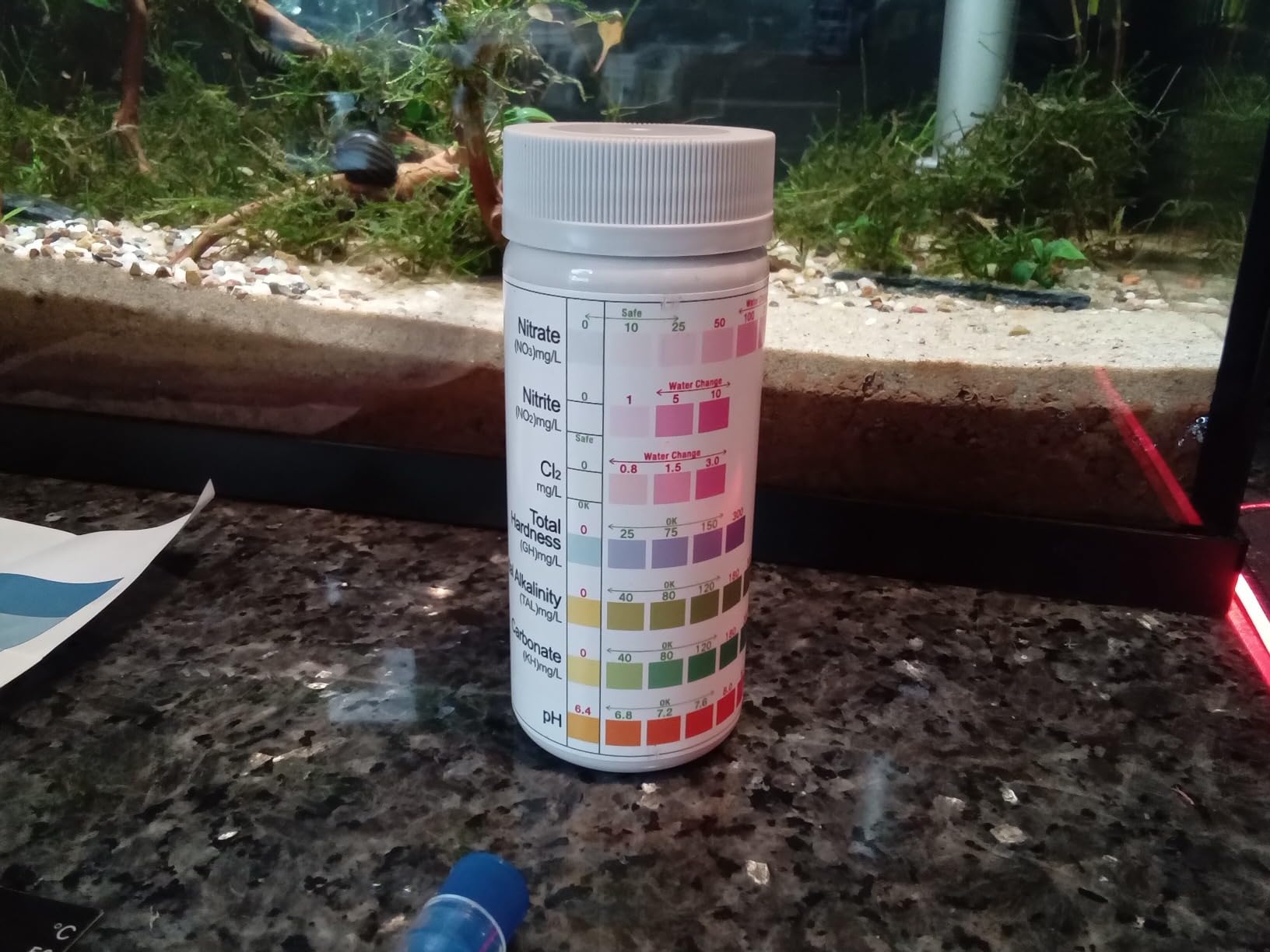
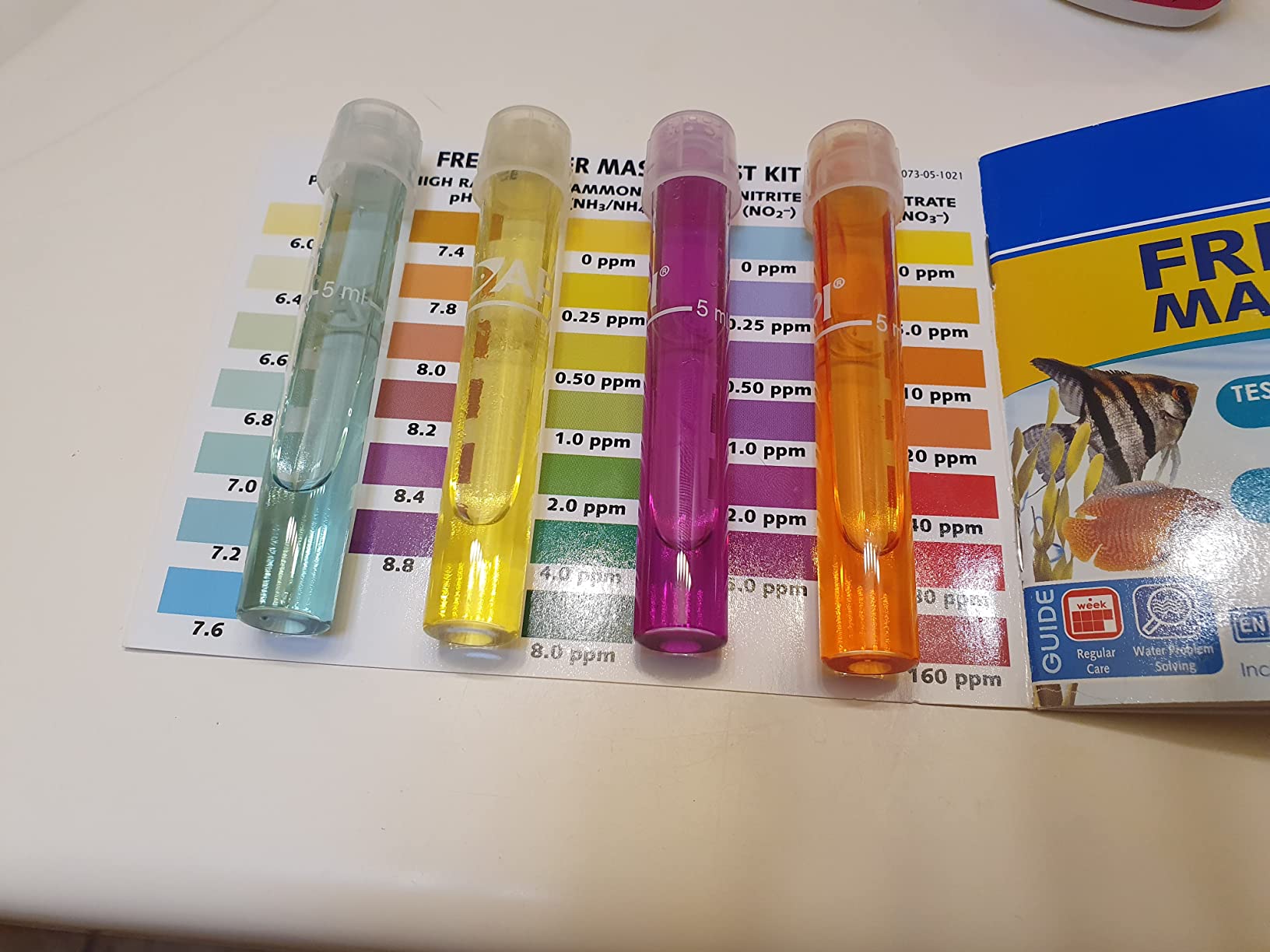
Most owners report the pH and chlorine pads land reasonably close to what a Taylor kit says, which makes the strip useful as a weekly screening tool. They also work on hot tubs and spas, where the smaller volume means you will dip far more often and a big bottle makes sense.
The salt pad is the recurring problem. Several reviewers report it staying dark brown, reading zero when there is plenty of salt, or coming back around 2400 ppm when the true level was over 6000. One helpful suggestion from a buyer is to read against the color bars printed on the outer box rather than the bottle label.
Best suited to weekly screening
The volume is the pitch. At 125 strips you can test several parameters twice a week through a full season and still have plenty left, which suits an owner who wants a complete snapshot without running five separate products. It also covers bromine, which matters if you ever switch sanitizer systems.
Use it as a screening tool rather than a reference instrument. Run it alongside a drop test when you make a major adjustment and use the strip for the daily or weekly picture in between. That division of labor is where this kind of product gives you the most value per strip.
Where it does not hold up
Salt accuracy is the weak link, and salt is the whole reason for buying a saltwater strip. If your decision is whether to add salt to the pool, get a number from a titration strip or a drop test instead of trusting the dark pad. Several reviewers found pH results outside the acceptable range as well when compared against professional testing.
The dual-chart issue also deserves attention. Keep the outer box and use one chart consistently, because the bottle label chart and the box chart do not always agree and mixing them produces readings that look contradictory for no good reason.
We earn a commission, at no additional cost to you. CERTAIN CONTENT THAT APPEARS ON THIS SITE COMES FROM AMAZON. THIS CONTENT IS PROVIDED 'AS IS' AND IS SUBJECT TO CHANGE OR REMOVAL AT ANY TIME.
4. Taylor Technologies K-1766 – Most Compact for Reference Salt Accuracy
Taylor Technologies K-1766, Pool and Spa Drop Test Kit for Sodium Chloride
- Silver nitrate drop-count titration
- Sodium chloride only
- Numeric ppm result, no batteries
- Storage case and comparator tube included
Pros
- Widely treated as the reference method for pool salinity
- Drop count gives a repeatable number with no calibration drift
- Readings matched a handheld meter within about 200 ppm
- Reagents can be reordered each season
Cons
- Drops clump while swirling and need practice to read the end point
- Second reagent bottle is consumed far faster than the first
- Salt only
- so it covers nothing else in the balance
We earn a commission, at no additional cost to you. CERTAIN CONTENT THAT APPEARS ON THIS SITE COMES FROM AMAZON. THIS CONTENT IS PROVIDED 'AS IS' AND IS SUBJECT TO CHANGE OR REMOVAL AT ANY TIME.
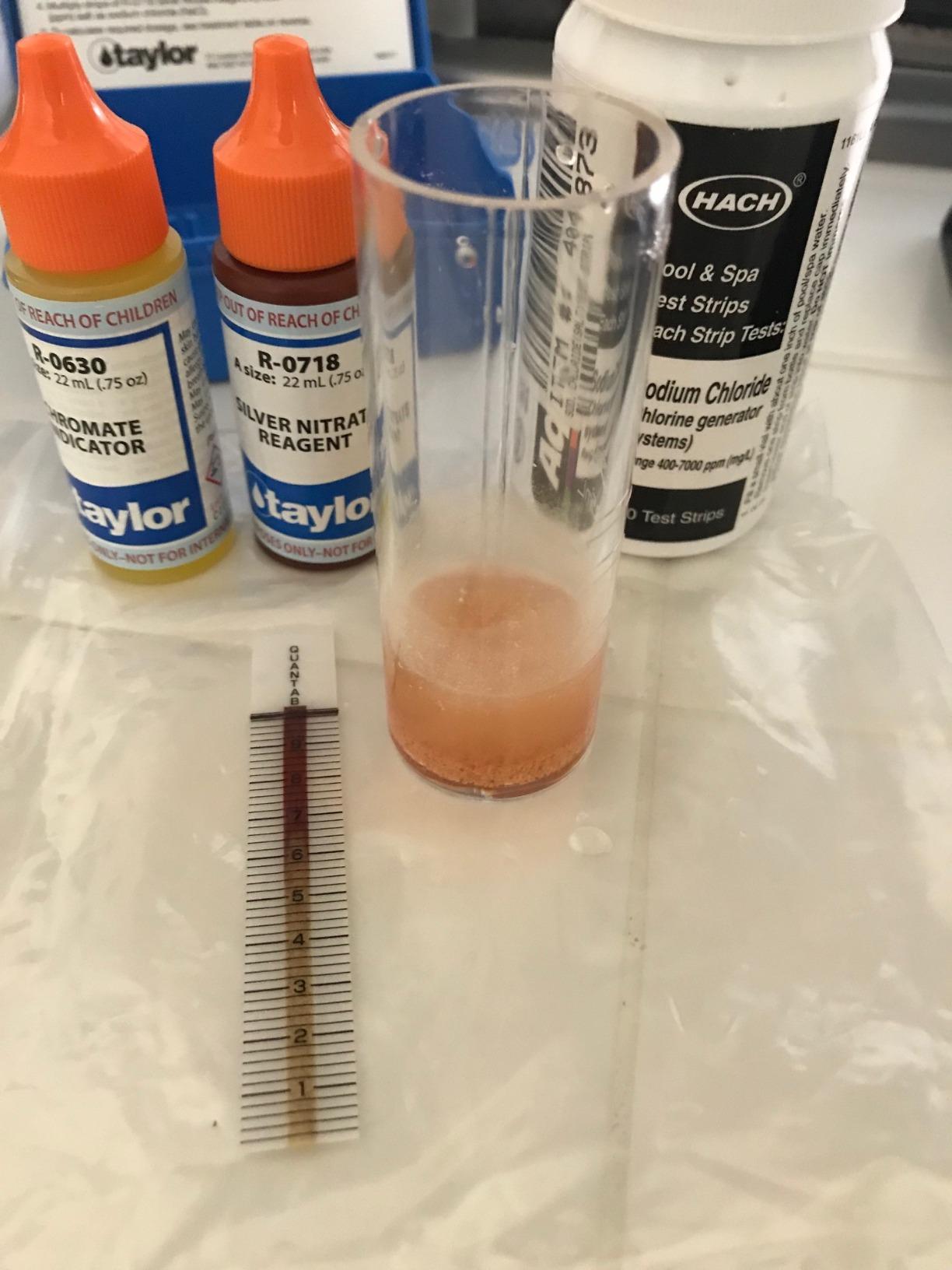
When owners and pool professionals argue about which salt test to trust, this is usually the answer. The method is old and unremarkable, which is exactly why it holds up: you add silver nitrate drops to a measured sample, swirl, and count until the end point color appears.
There are no batteries, no calibration routine and nothing to drift. You get a numeric parts per million result, and because the method is fixed, two people testing the same sample on the same day will broadly agree. One comparison in the reviews put it within about 200 ppm of a handheld saltwater meter, which is tight for a manual method.
The kit contains silver nitrate reagent, a chromate indicator, a glass comparator tube and a plastic storage case, with instructions written in plain language and pictograms. Replacement reagents are sold on their own, so you are never forced to buy a whole new kit.
The catch is that this measures salt and nothing else. You still need a full kit for free chlorine, pH, alkalinity, calcium hardness and cyanuric acid, so this sits alongside your balance testing rather than replacing it.
When this is the right tool
Reach for it when three sources disagree. If your generator display, a strip and your own reading do not line up, the drop test is the tiebreaker, because it does not share the failure modes of either alternative. It is also the sensible choice for seasonal work where you test salt monthly and want each figure to be reliable.
It holds up well in cold or high-salt conditions where some strips struggle. And because reagent is the only consumable, the running cost works out well over years of use compared with strips, especially if you already own a Taylor balance kit.
Where the learning curve bites
Counting drops while swirling is harder than it sounds. Drops clump, and the end point color is partly subjective, so expect the first few attempts to land a little off. Swirl consistently and count the moment the color shifts rather than the last drop you added.
Watch the reagent bottles. The second bottle is consumed much faster than the first, and both arrive in the same size container, which catches people out mid-season. A small number of buyers also received a bottle without a drop cap, so check the seal before you store it.
We earn a commission, at no additional cost to you. CERTAIN CONTENT THAT APPEARS ON THIS SITE COMES FROM AMAZON. THIS CONTENT IS PROVIDED 'AS IS' AND IS SUBJECT TO CHANGE OR REMOVAL AT ANY TIME.
5. Joyzakzak 8-in-1 Strips – Best for Eight-Parameter Screening
All-New 2026 8-in-1 Pool Test Strips -150 CT Pool Salt Test Strips | Salt Water Pool Testing Kit for Salt Water Pools, in & Above-Ground Pools, Hot Tubs&Spas| Quick&Accurate Testing Chlorine,pH,Salt
- Eight parameters including salt
- Salt range 1500-5000 ppm
- 150-count bottle
- Fast-developing fiber pads
Pros
- Highest average rating among the multi-parameter strips in this group
- Pads develop fast with very little color bleeding
- Includes salt and CYA so no separate reagent test is needed
- Readings broadly consistent with a Taylor kit
Cons
- Color bleeds out after about a minute so reads must be fast
- Salt block is harder to interpret than the other pads
- Not a substitute for a full kit when precision matters
We earn a commission, at no additional cost to you. CERTAIN CONTENT THAT APPEARS ON THIS SITE COMES FROM AMAZON. THIS CONTENT IS PROVIDED 'AS IS' AND IS SUBJECT TO CHANGE OR REMOVAL AT ANY TIME.
This is the strip with the highest average rating in the group, and the reason shows up in the material rather than the marketing. The pads use a fast-developing fiber paper, which is what lets eight parameters share a single strip without the colors running into each other.
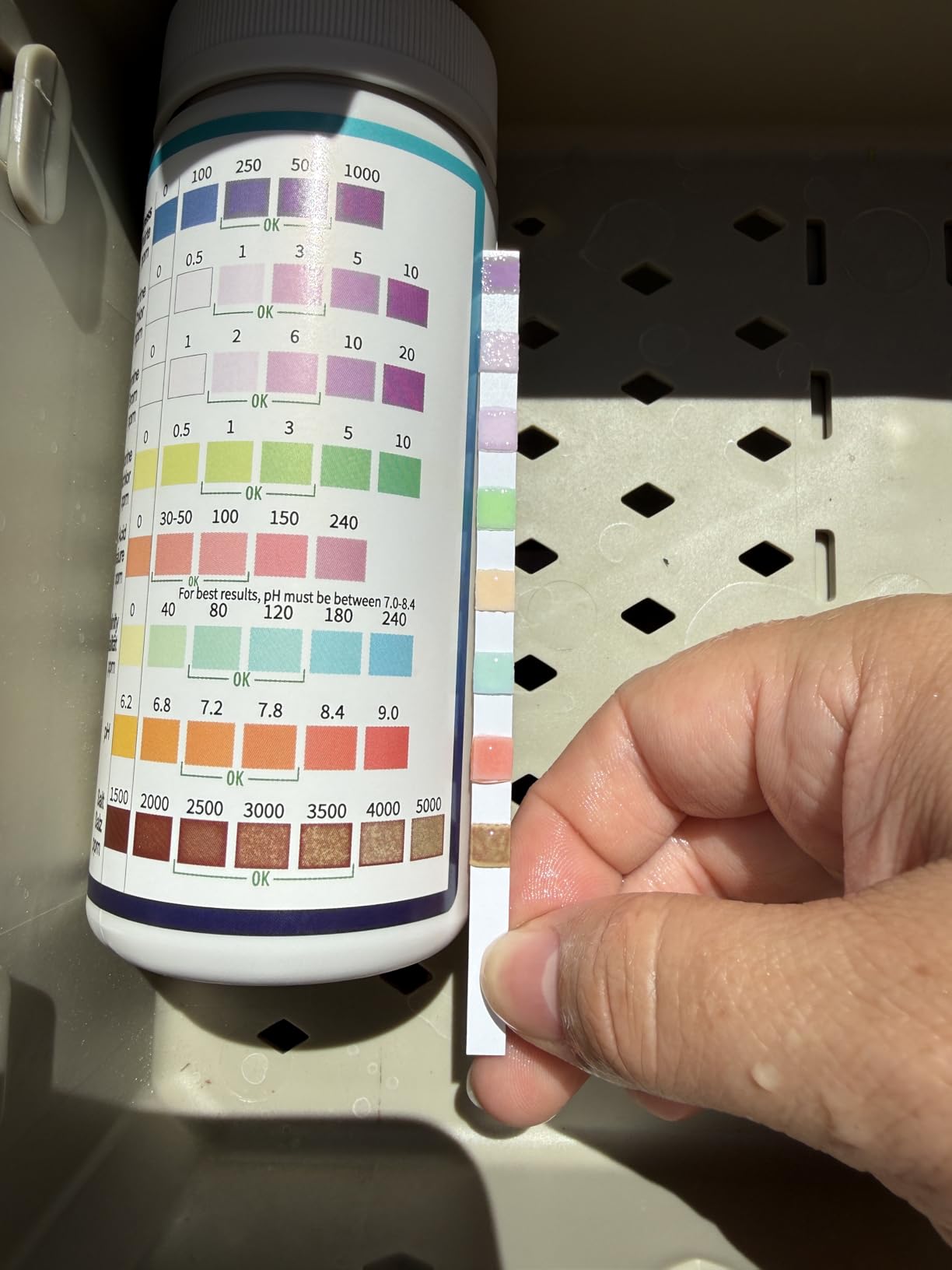
The salt scale runs 1500 to 5000 ppm with the 2700 to 3400 ppm ideal range marked, which matches the working band most salt chlorine generators are designed around. The routine is a two-second dip, a fifteen-second hold and a read against the bottle chart.
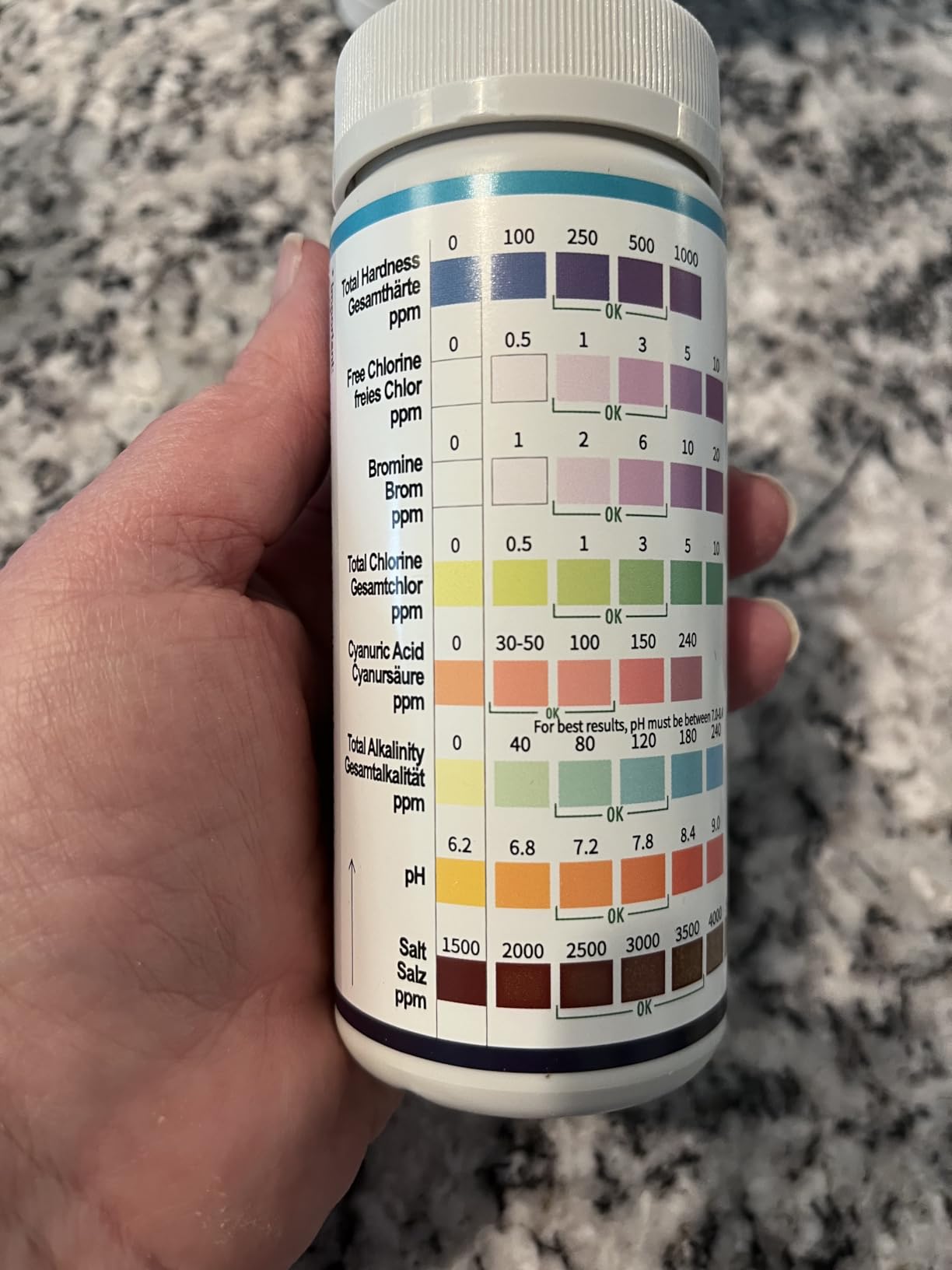
A reviewer who cross-checked several readings against a Taylor kit found them broadly consistent for routine monitoring, which is the standard these strips should be held to. The 150-count bottle is the largest here, so it suits owners testing multiple parameters several times a week without thinking about supply.
Because salt and cyanuric acid are both on the strip, it covers two parameters that usually force a separate purchase. For an owner who wants to track stabilizer levels through a season without opening a reagent kit, that is a meaningful saving in effort.
What works about the design
Quick development and clean separation is the whole trick here, and it delivers. Fast development means you are not standing at the poolside watching a pad slowly change color, and clean separation means the chlorine reading is not contaminated by the bromine pad next to it.
It suits the multi-parameter sweep approach: one dip, then a full picture of the balance sheet before you decide what to adjust. Owners who want a complete weekly snapshot rather than one or two spot checks will find this the most efficient strip in the group.
Where it falls down
Read fast. The colors bleed out after roughly a minute, so a strip left on the edge of the pool while you finish a conversation will give you different colors than the ones you needed. Set a mental timer rather than relying on the instruction alone.
The salt block is the least intuitive pad on the strip and several owners added a dedicated salt test for that reason. If salt is the parameter you most need to nail, pair this with a titration strip or a drop kit rather than depending on the color block alone.
We earn a commission, at no additional cost to you. CERTAIN CONTENT THAT APPEARS ON THIS SITE COMES FROM AMAZON. THIS CONTENT IS PROVIDED 'AS IS' AND IS SUBJECT TO CHANGE OR REMOVAL AT ANY TIME.
6. Taylor Technologies K-2006-SALT – Best for Complete Water Balance
Taylor Technologies K-2006-SALT FAS-DPD, 9-in-1 Saltwater Pool Test Kit
- FAS-DPD free and combined chlorine
- Nine parameters, 15 reagents
- Comparator and case included
- Reagents reorderable individually
Pros
- Professional-grade accuracy that matches pool store and lab results
- Covers salt plus the full balance panel including combined chlorine
- Reduces stress and store visits for self-managed chemistry
- Reagents can be bought one at a time as they run out
Cons
- CYA reagent covers only about six full tests
- Standard kit uses small bottles that run out before a season ends
- Silver nitrate salt test stains the comparator tube
We earn a commission, at no additional cost to you. CERTAIN CONTENT THAT APPEARS ON THIS SITE COMES FROM AMAZON. THIS CONTENT IS PROVIDED 'AS IS' AND IS SUBJECT TO CHANGE OR REMOVAL AT ANY TIME.
This is the kit for an owner who has decided to manage their own chemistry properly. It covers nine parameters, including free and combined chlorine through the FAS-DPD method, pH, acid and base demand, total alkalinity, calcium hardness, cyanuric acid and sodium chloride.
The FAS-DPD part is what separates it from a basic kit. Regular DPD color matching gets unreliable once free chlorine runs high, while FAS-DPD uses a drop count that stays accurate across the range. For a salt pool that sees chlorine spikes after a swim load or a heat wave, that difference matters.
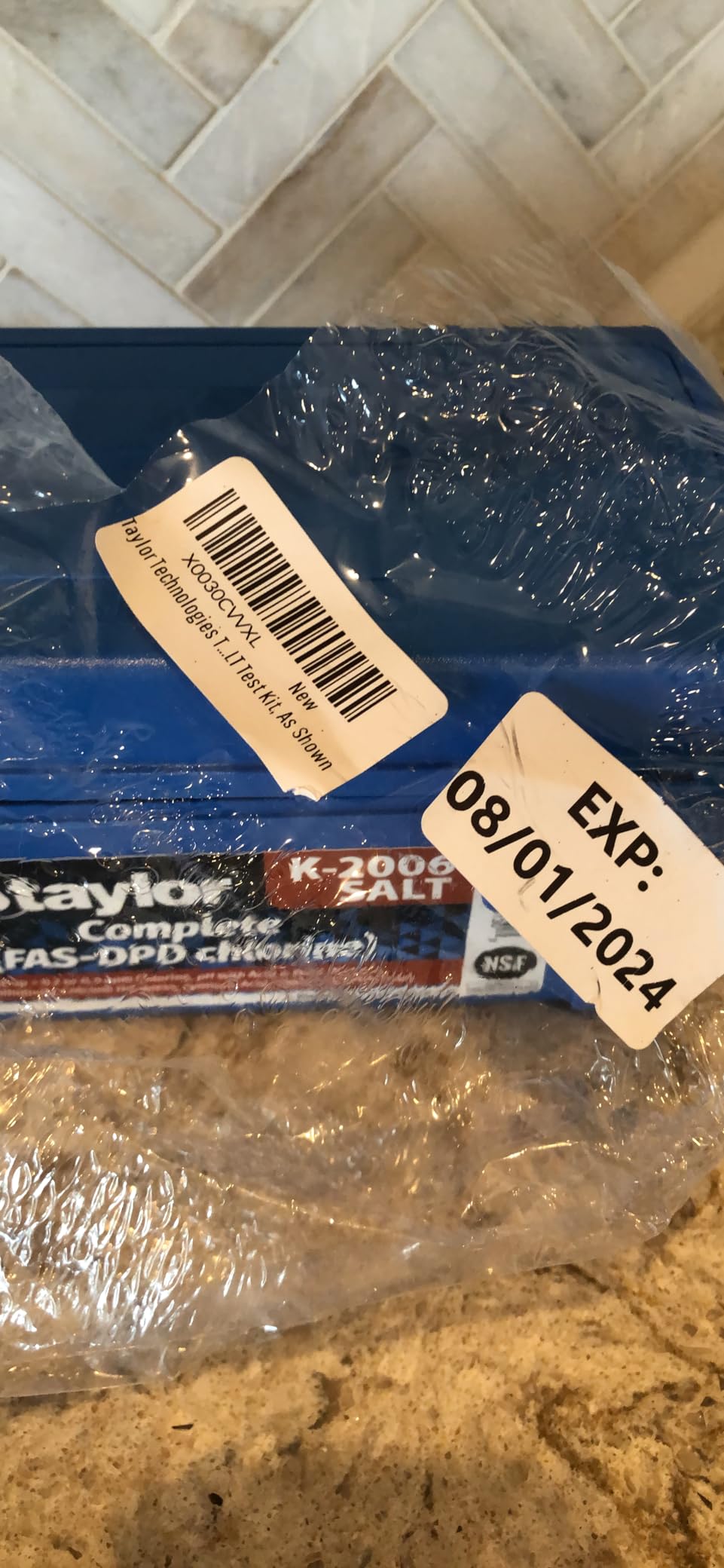
Owners report the readings agreeing with pool store results and lab checks, which is the standard that separates a real reagent kit from a toy. For people who were previously paying for store tests every week, owning this tends to remove both the cost and the anxiety.
Note the bottle sizes in the listing. The standard kit ships 0.75 oz bottles intended for lower-frequency testing, and the larger service version with 2 oz bottles carries roughly two and a half times as many tests. If you test weekly from spring to autumn, look at that difference before you commit.
Why it earns its place
Combined chlorine is the parameter most often skipped and most often the explanation for a pool that will not stay clear. Only a kit with the FAS-DPD capability gives you a way to see it. Once you can measure it, a stubborn algae or chlorine demand problem becomes diagnosable instead of guesswork.
It also covers acid and base demand, which tells you what a dose of baking soda or muriatic acid will actually do to your water. That is what lets you make a calculated adjustment rather than adding something and hoping.
Where owners get frustrated
Reagent volume, not quality, is the dominant complaint. The cyanuric acid bottle in particular covers only about six full tests, and a fair number of buyers reorder before a single season is finished. Plan the refill cadence rather than assuming one kit lasts a year.
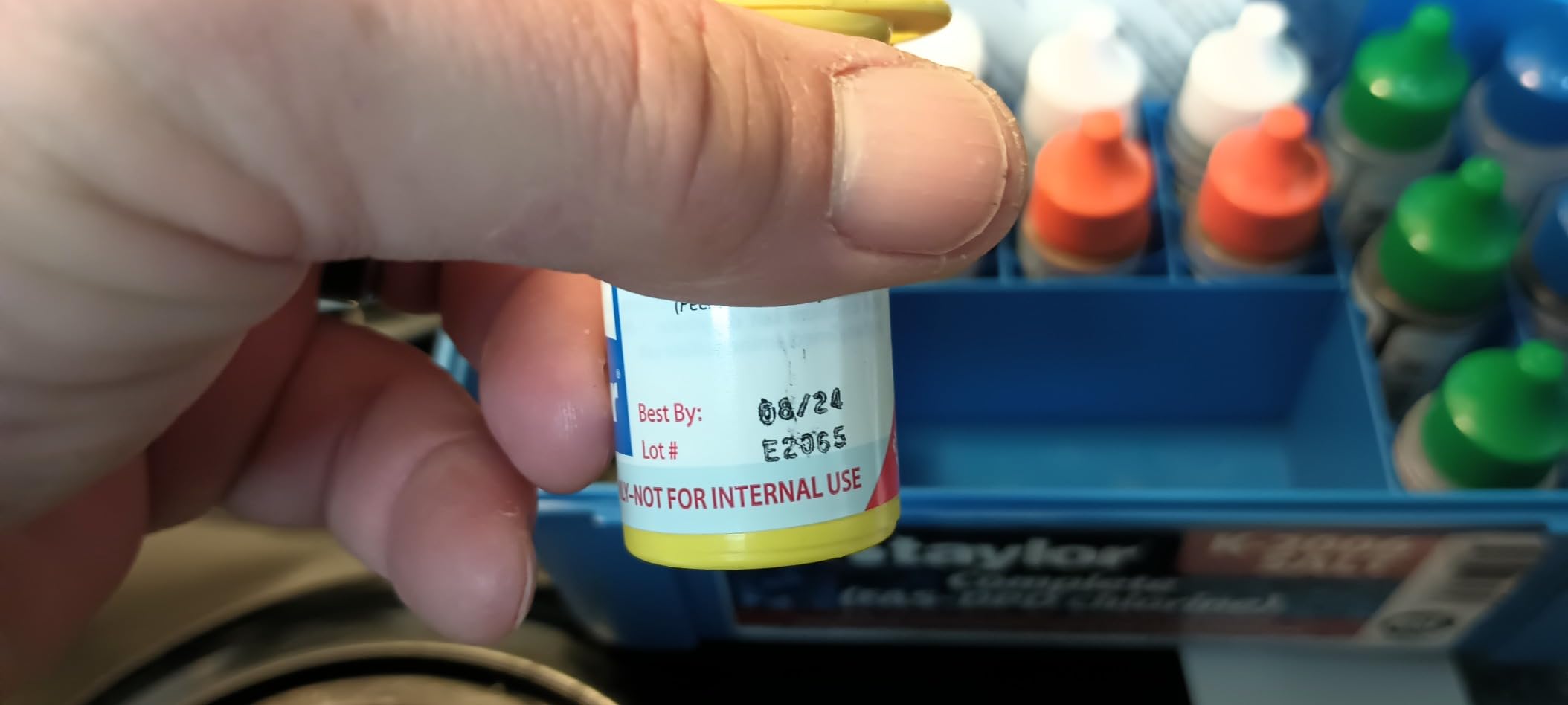
The silver nitrate salt test leaves residue on the comparator tube, so many owners buy a second tube dedicated to salt to keep the balance tests clean. Some buyers also received bottles close to their printed expiry date, so check the dates on arrival and store everything cool and dry.
We earn a commission, at no additional cost to you. CERTAIN CONTENT THAT APPEARS ON THIS SITE COMES FROM AMAZON. THIS CONTENT IS PROVIDED 'AS IS' AND IS SUBJECT TO CHANGE OR REMOVAL AT ANY TIME.
7. AquaChek Salt System Test Kit – Best for Salt and the Core Panel Together
AquaChek Salt System Test Kit – for Pools and Spas – Salt Water Pool Test Strips for Sodium Chloride – Test Kit Includes Yellow 4-Way (25 Strips Each) and White Salt Test Strips (10 Strips Each)
- 25 four-way strips plus 10 salt strips
- Salt range 400-7000 ppm
- Covers free chlorine, pH, alkalinity, CYA
- Log readings across a season
Pros
- Two bottles in one kit cover salt and the four core balance parameters
- Salt readings described as consistent with a Taylor kit
- Titration format removes drop counting
- Long usable life after opening
Cons
- Only 10 salt strips
- which runs out fast at twice-weekly testing
- Four-way strips cover a narrower panel than 7 or 8-way strips
- Not a substitute for a reagent kit when precision matters
We earn a commission, at no additional cost to you. CERTAIN CONTENT THAT APPEARS ON THIS SITE COMES FROM AMAZON. THIS CONTENT IS PROVIDED 'AS IS' AND IS SUBJECT TO CHANGE OR REMOVAL AT ANY TIME.
This is a pairing rather than a single product, and the pairing is the idea. You get 25 yellow four-way strips covering free chlorine, pH, total alkalinity and cyanuric acid, plus 10 white titration strips covering salt from 400 to 7000 ppm.
Those four parameters are exactly the core of routine pool maintenance, so the combination covers most weekly checks without opening a reagent kit at all. Owners who cross-check with a Taylor kit report that the salt reading holds up and the color blocks are easy to match.
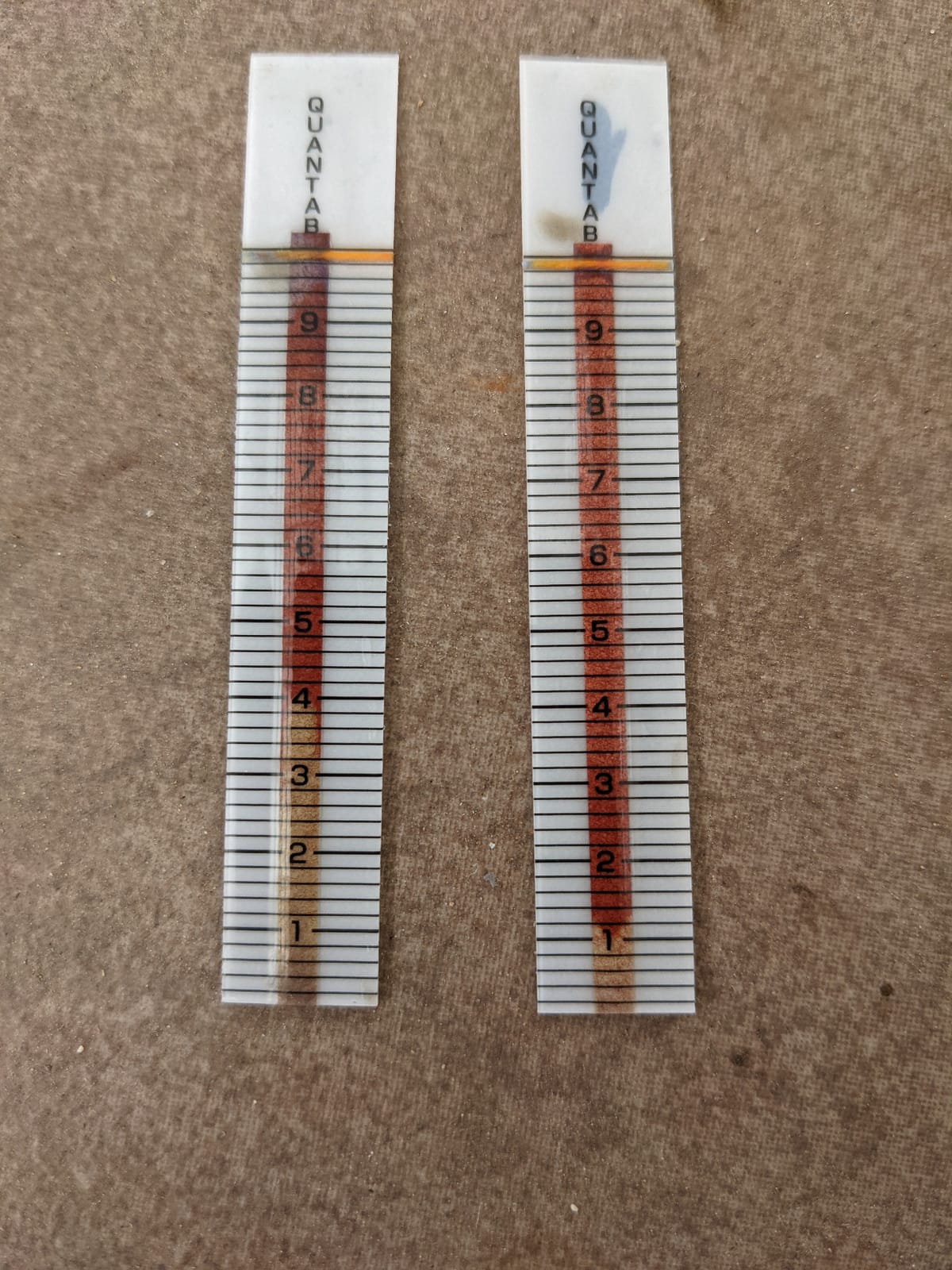
The salt strips use the same titration format as the standalone version, so you get a number rather than a vague color. That makes it useful for spot checks where you want a figure but not a full test, such as after topping up the salt level or before adjusting the generator output percentage.
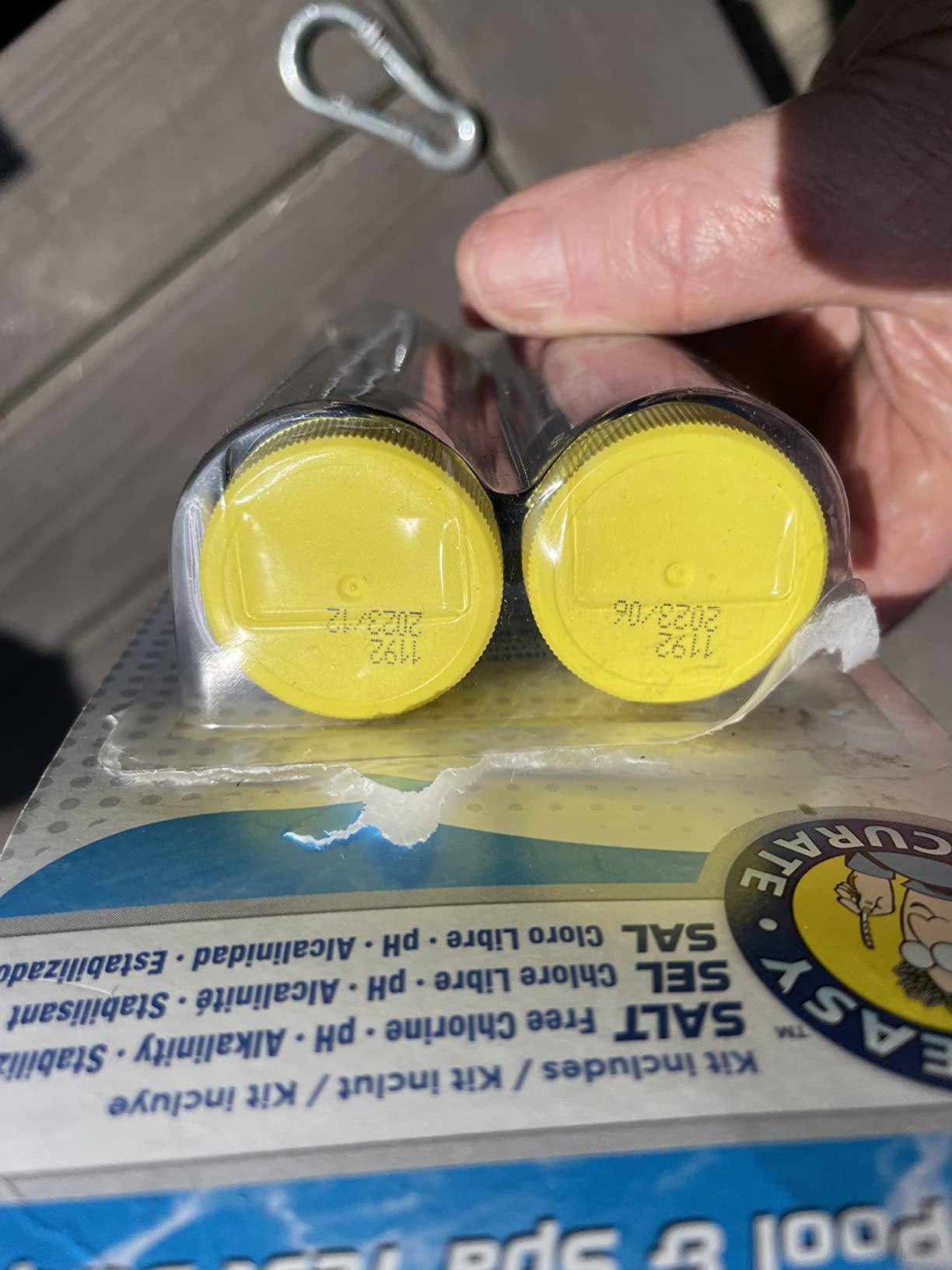
Reviewers also report a long usable life after opening, around two years when the bottles are sealed properly. That matters for anyone storing strips through a winter and expecting them to still work when the water warms back up.
Where the pairing pays off
It suits seasonal and event-driven testing. If you check the water at opening, at changeover and before guests arrive rather than on a fixed daily schedule, ten salt strips and 25 four-way strips last a long time. A simple written log across those irregular checks is enough to keep a seasonal record.
It is also the tidier option than juggling separate products. One kit, two bottles, one consistent set of readings, and the salt figure sits next to the chlorine figure so you can spot a drift in both at the same time.
Where the quantity bites
Ten salt strips is the constraint. At twice-weekly salt testing across a full season you would exhaust them well before the season ends, and then you are buying them again. If you intend to test salt that often, the higher-count bottles or a drop kit serve you better.
The four-way strips also cover a narrower panel than the seven- and eight-way options. Calcium hardness, bromine and total chlorine are all missing here, so you would still need a separate method for those readings.
We earn a commission, at no additional cost to you. CERTAIN CONTENT THAT APPEARS ON THIS SITE COMES FROM AMAZON. THIS CONTENT IS PROVIDED 'AS IS' AND IS SUBJECT TO CHANGE OR REMOVAL AT ANY TIME.
8. Hofun Digital Salinity Meter – Best for a Digital Salt Number
Pool Salt Tester & PH Meter, Hofun Digital Salinity Meter and PH Tester for Aquarium and Pool Saltwater Water, 5 in 1 Salinity PH Temp EC and TDS Meter, Aquarium Swimming Pool Hot Tub, Multiparameter
- Salinity, TDS, EC, pH and temperature
- Auto-switching ppm, ppt and percent
- Titanium alloy probe
- Pool range 0-9999 ppm
Pros
- Five measurements in one handheld unit
- Automatic unit switching removes conversion errors
- Titanium probe gives fast
- stable readings
- Also works for aquariums
- hot tubs and hydroponics
Cons
- Probe drifts and needs periodic calibration that some buyers were not told about
- Temperature readings can run slightly off
- Covers salt and pH only
- not chlorine or CYA
We earn a commission, at no additional cost to you. CERTAIN CONTENT THAT APPEARS ON THIS SITE COMES FROM AMAZON. THIS CONTENT IS PROVIDED 'AS IS' AND IS SUBJECT TO CHANGE OR REMOVAL AT ANY TIME.
A digital meter changes the feel of salt testing. You dip the probe, read a number off the LCD and move on. There is no color matching, no drop counting and no judgment call, which is the appeal for anyone who found the drop test end point frustrating.
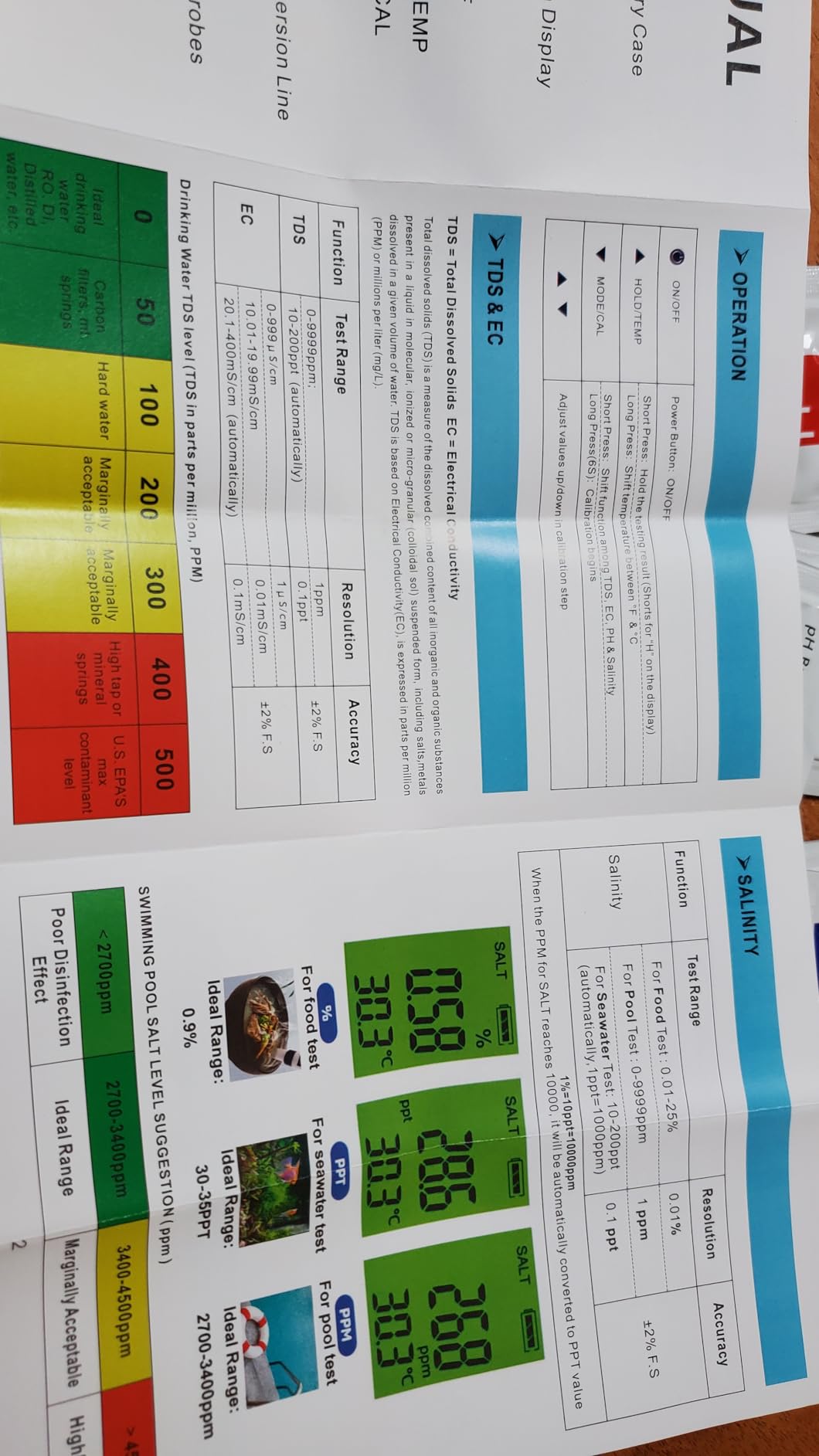
This one covers five functions in a single unit: salinity, TDS, EC, pH and temperature. The automatic switch between ppm, ppt and percent removes the conversion mistakes that catch people out, and above 9999 ppm the display shifts to ppt on its own.
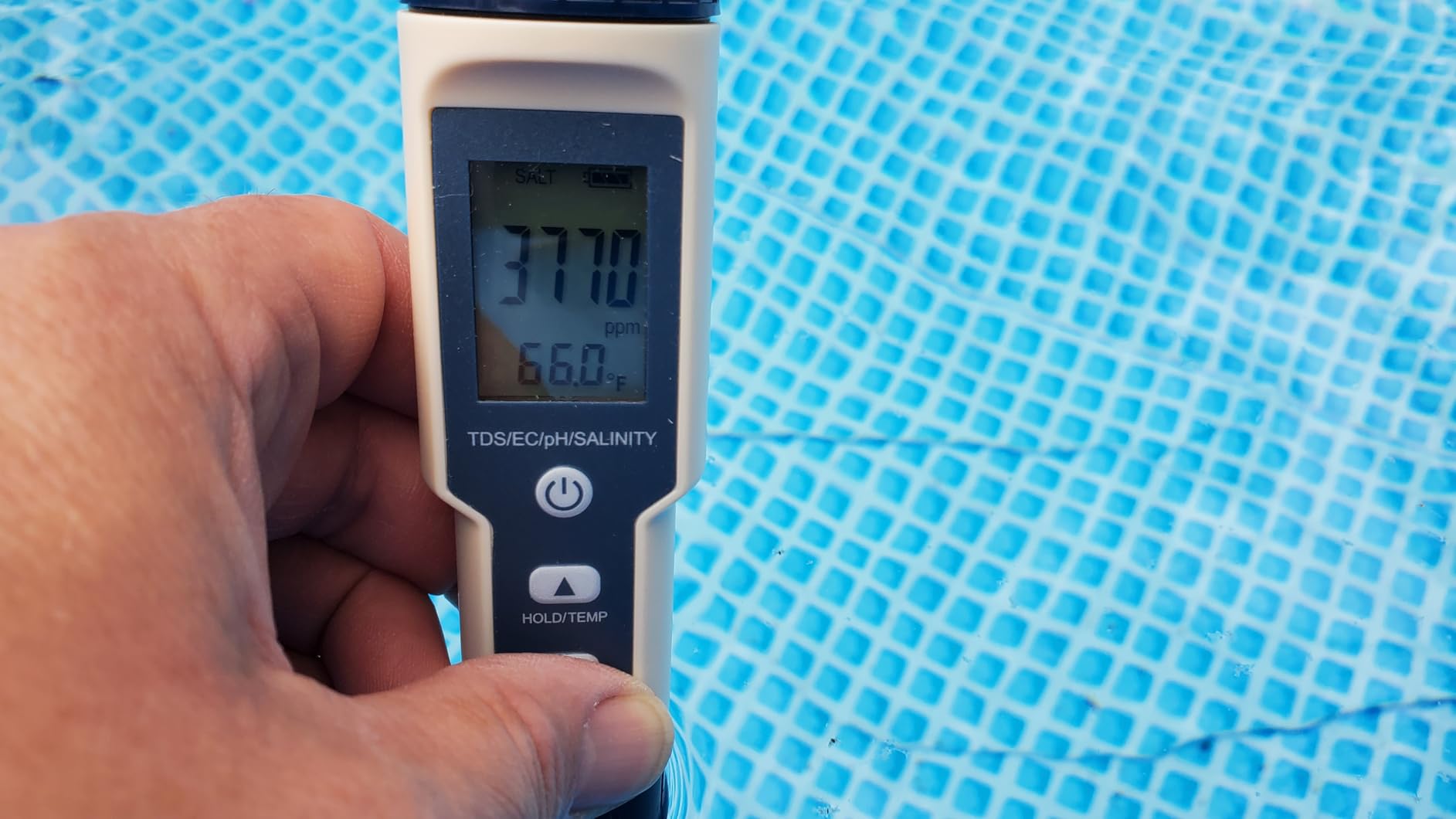
The titanium alloy probe is what makes the reading quick and stable, and owners using it across pools, aquariums and hydroponic setups report consistent results. It ranks high in the pool water test kits category, which tracks with how often people reach for it.
The pool salt range runs 0 to 9999 ppm with separate ranges for seawater at 10 to 200 ppt and food solutions at 0.01 to 25 percent. That makes it a useful general instrument rather than a single-purpose pool tool, which is part of why owners keep it around after the salt testing habit settles in.
Where a digital meter wins
Trend tracking is the real benefit. A number you can log lets you plot salt loss across a season and see whether you are topping up steadily or drifting. That pattern is very hard to read from color blocks, and it is exactly the data you need to decide whether your cell is working efficiently.
It is also the fastest option for a single question. If a generator display is showing an odd number and you need a second opinion in thirty seconds, this answers it. Keep it out of direct sun and rinse the probe after each use, since residue is the main cause of drift.
Where you need a backup
Calibration is the honest catch. Probes of this type drift and need periodic calibration against a known solution, and reviewers report buying one without being told that. Confirm what calibration supplies the manufacturer recommends before you treat the meter as your reference.
It also covers salt and pH only. Chlorine, alkalinity and calcium hardness are still untested, so a digital meter supplements a kit rather than replacing one. Temperature is the function most often described as slightly inaccurate.
We earn a commission, at no additional cost to you. CERTAIN CONTENT THAT APPEARS ON THIS SITE COMES FROM AMAZON. THIS CONTENT IS PROVIDED 'AS IS' AND IS SUBJECT TO CHANGE OR REMOVAL AT ANY TIME.
9. T TESTRUST Digital Salt Tester – Best for a Compact Digital Read
T TESTRUST Pool Salt Tester – Multifunctional 5 in 1 Salinity, PH, TDS, EC, and Temperature Meter, Pool Salinity Testing Kit, Digital Salinity Tester for Swimming Pool,Saltwater, Sea Water, Aquarium
- Salinity, pH, TDS, EC and temperature
- Pool range 0-9999 ppm
- Instant LCD read after dipping
- Single MODE button operation
Pros
- Readings line up with pool store results and with the generator display
- Five parameters from one compact probe
- Instant readout with a simple dip and read routine
- Good value next to dedicated salt meters
Cons
- Temperature readings run a little off per users
- Salt testing needs calibration solution that some listings did not mention
- No chlorine
- alkalinity or CYA testing
We earn a commission, at no additional cost to you. CERTAIN CONTENT THAT APPEARS ON THIS SITE COMES FROM AMAZON. THIS CONTENT IS PROVIDED 'AS IS' AND IS SUBJECT TO CHANGE OR REMOVAL AT ANY TIME.
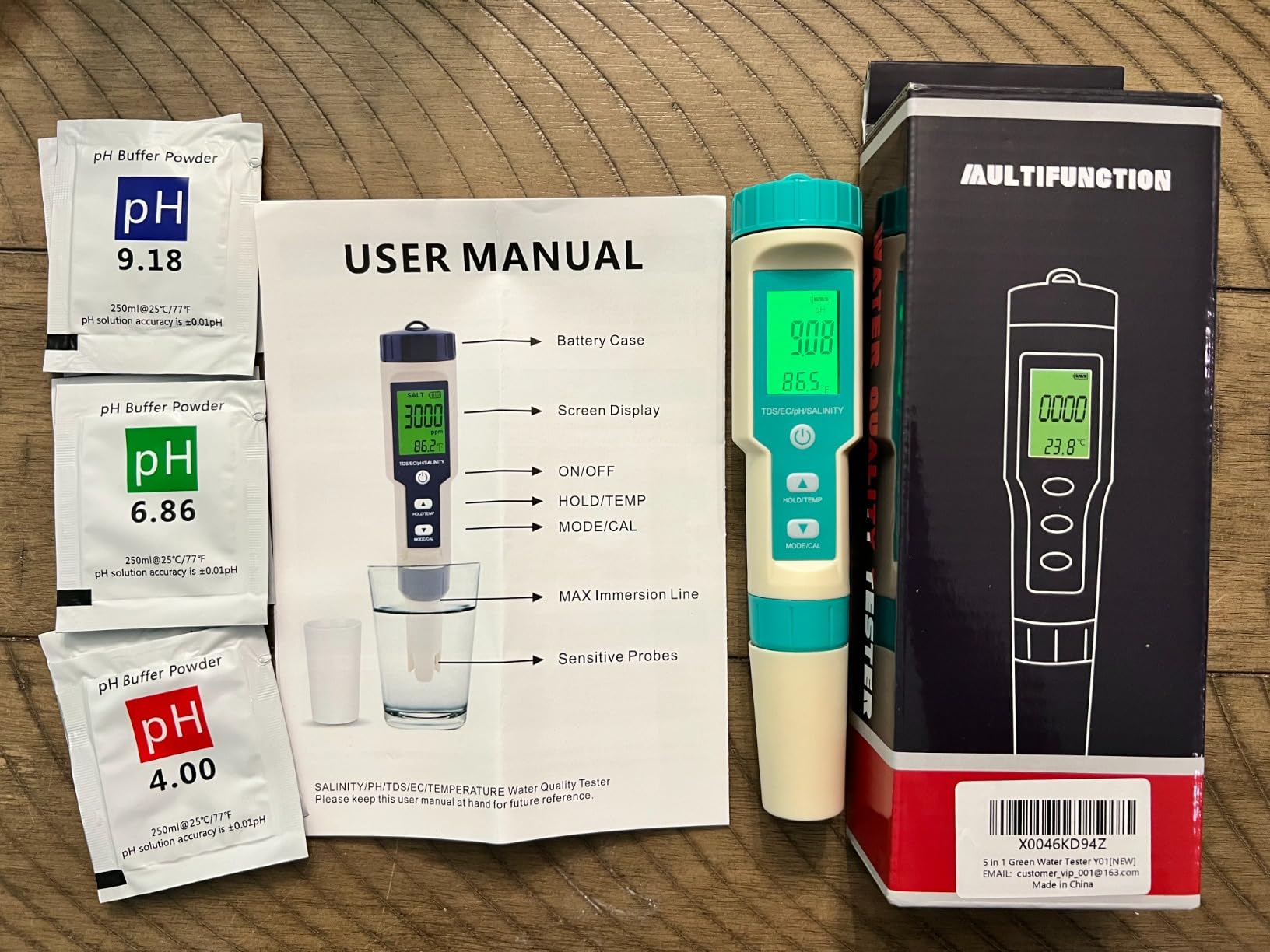
This is the same five-in-one format as the larger meter in a noticeably smaller body, and for owners with limited storage in a pool house that difference is the deciding factor. It measures salinity, pH, TDS, EC and temperature from a single probe.
The useful feedback in the reviews concerns cross-checks. Users report the salinity readings agreeing with their salt chlorine generator display and with readings taken at a local pool store. One buyer found their cell was reading about 200 ppm off before switching to this meter, which is the kind of discrepancy this tool is good at catching.
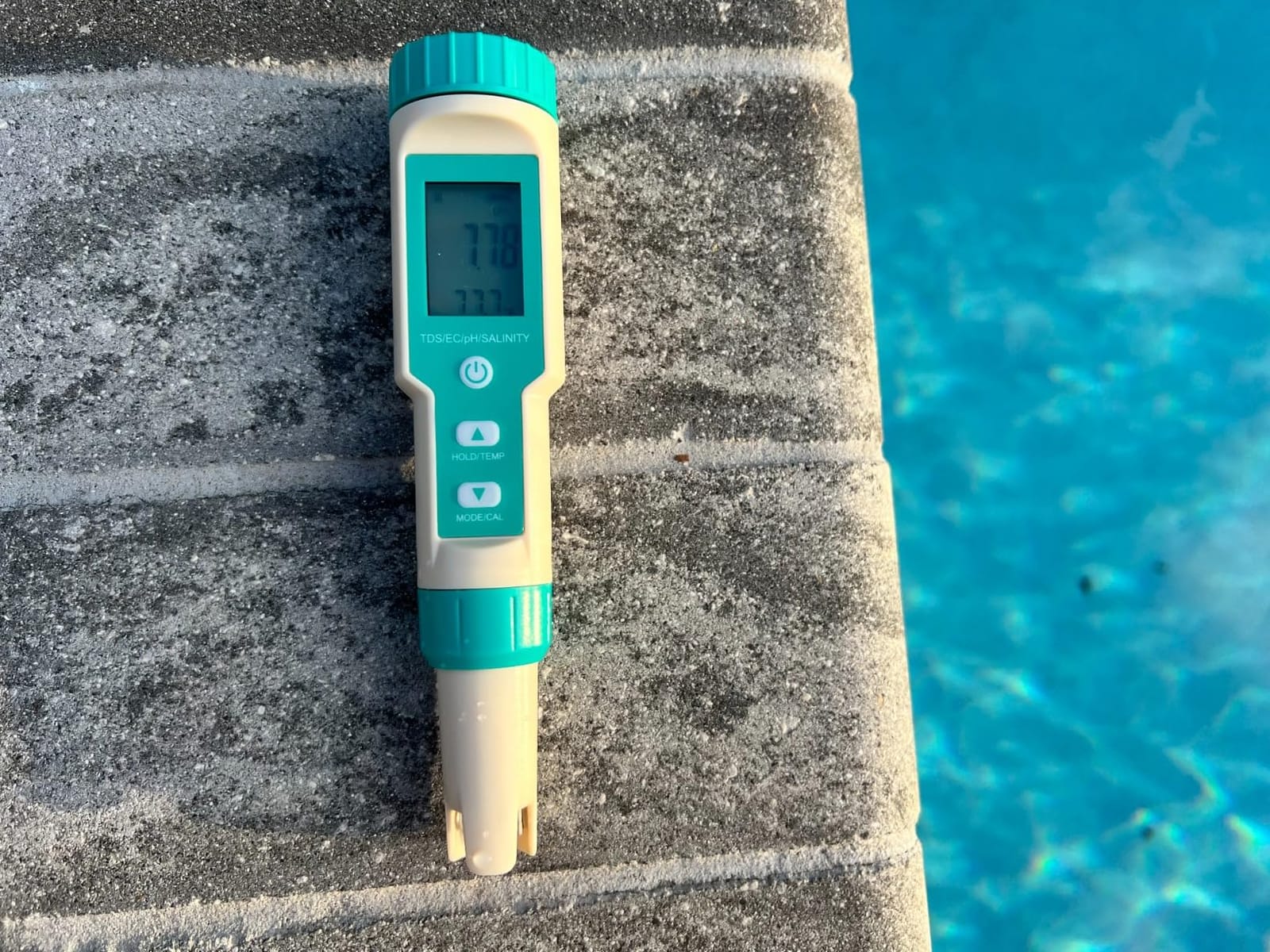
The pool salt range runs 0 to 9999 ppm with automatic switching between ppm, ppt and percent, and seawater and food solution ranges on the same display. Operation is a single MODE button with the probe dipped straight into the water and an instant LCD result.
It comes in gray and green, which is a minor thing, but for a tool that lives on a pool shelf the color is easier to spot than another black box. The listed dimensions are 5.9 by 1.1 by 1.1 inches, so it stores in a pocket or a small maintenance caddy.
Best used as a second opinion
The strongest case for a compact digital meter is verification rather than primary measurement. Dip it when the generator display and a strip disagree and you have a third data point in seconds. That is a better use than trusting one probe indefinitely.
For weekly trend logs it works well too, provided you calibrate. Writing the number down each week builds the record you need to spot a slow decline, and salt loss is easier to interpret as a trend than as a single isolated figure.
What to watch before you rely on it
Calibration is the significant complaint. Salt testing on this type of meter requires a known calibration solution, and at least one reviewer received a unit with no mention of that requirement and no solution included. Verify it ships before making this your primary salt reference.
Temperature runs slightly off according to users, so treat that reading as approximate. As with the other digital option here, there is no chlorine, alkalinity or CYA testing, so keep a reagent kit or strips in the loop for the rest of the balance.
We earn a commission, at no additional cost to you. CERTAIN CONTENT THAT APPEARS ON THIS SITE COMES FROM AMAZON. THIS CONTENT IS PROVIDED 'AS IS' AND IS SUBJECT TO CHANGE OR REMOVAL AT ANY TIME.
10. A QUILA 8-Way Salt Pool Strips – Best for High-Frequency Testing
Pool Salt Test Strips Kit, 8 Way 125CT Water Test Strips for Saltwater Pool
- Eight parameters including salt
- 125 strips per bottle
- Dip 2 seconds, read in 15-20 seconds
- Compact 5.31 inch storage bottle
Pros
- Lowest per-strip cost among the eight-parameter options compared here
- Eight parameters on a single strip including salt
- Simple two-second dip and quick read
- Compact bottle keeps strips dry in a maintenance kit
Cons
- Salt pad less reliable than a dedicated salt test
- Strip must be read within 15-20 seconds or colors shift
- No written review detail available for cross-checking accuracy
We earn a commission, at no additional cost to you. CERTAIN CONTENT THAT APPEARS ON THIS SITE COMES FROM AMAZON. THIS CONTENT IS PROVIDED 'AS IS' AND IS SUBJECT TO CHANGE OR REMOVAL AT ANY TIME.
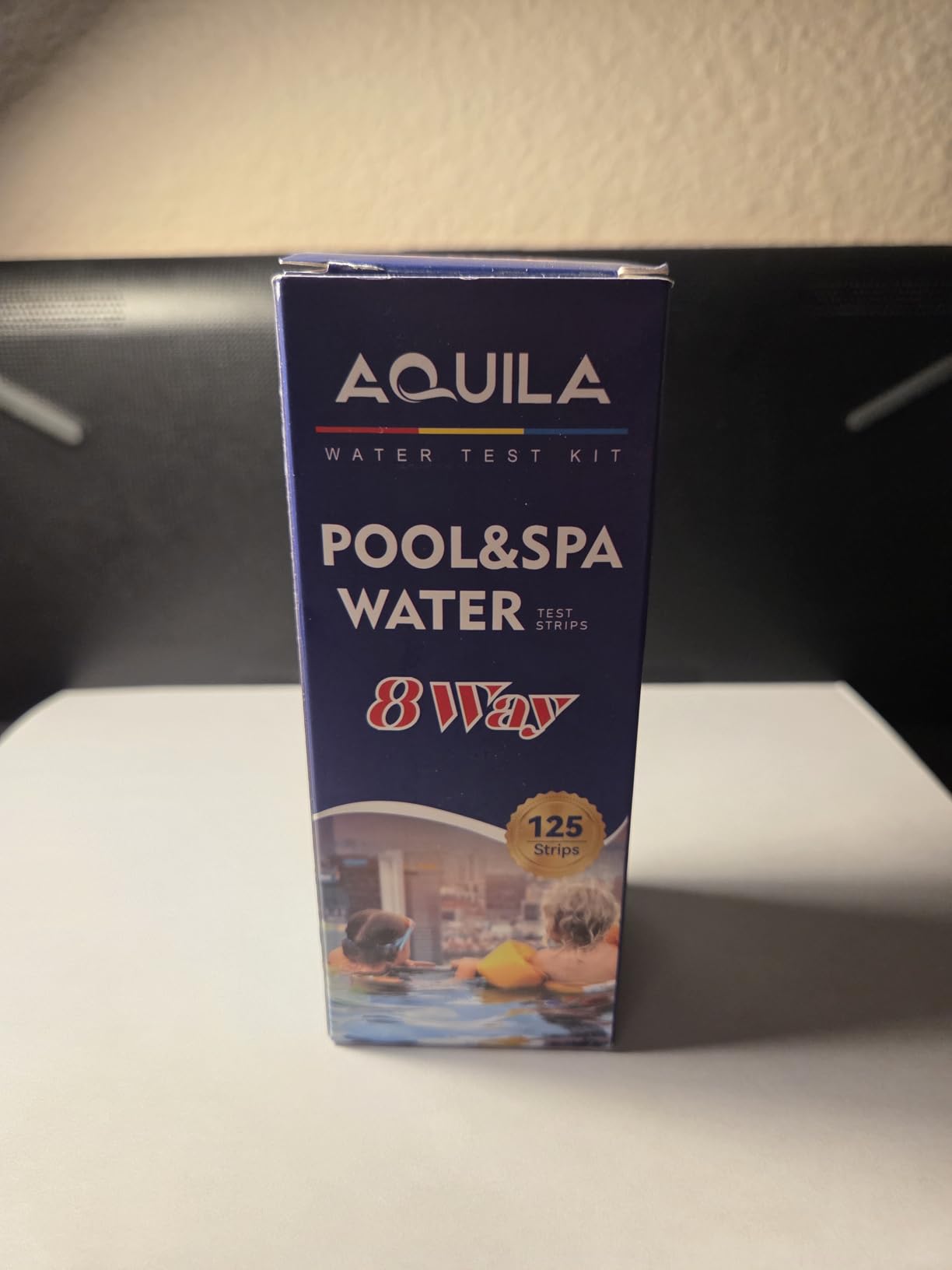
Eight parameters again, 125 strips per bottle, and the lowest per-strip cost of the multi-parameter options in this group. That math is the entire argument for it: if you want to test two or three times a week through a long season, the bottle size and unit cost are what make that habit affordable.
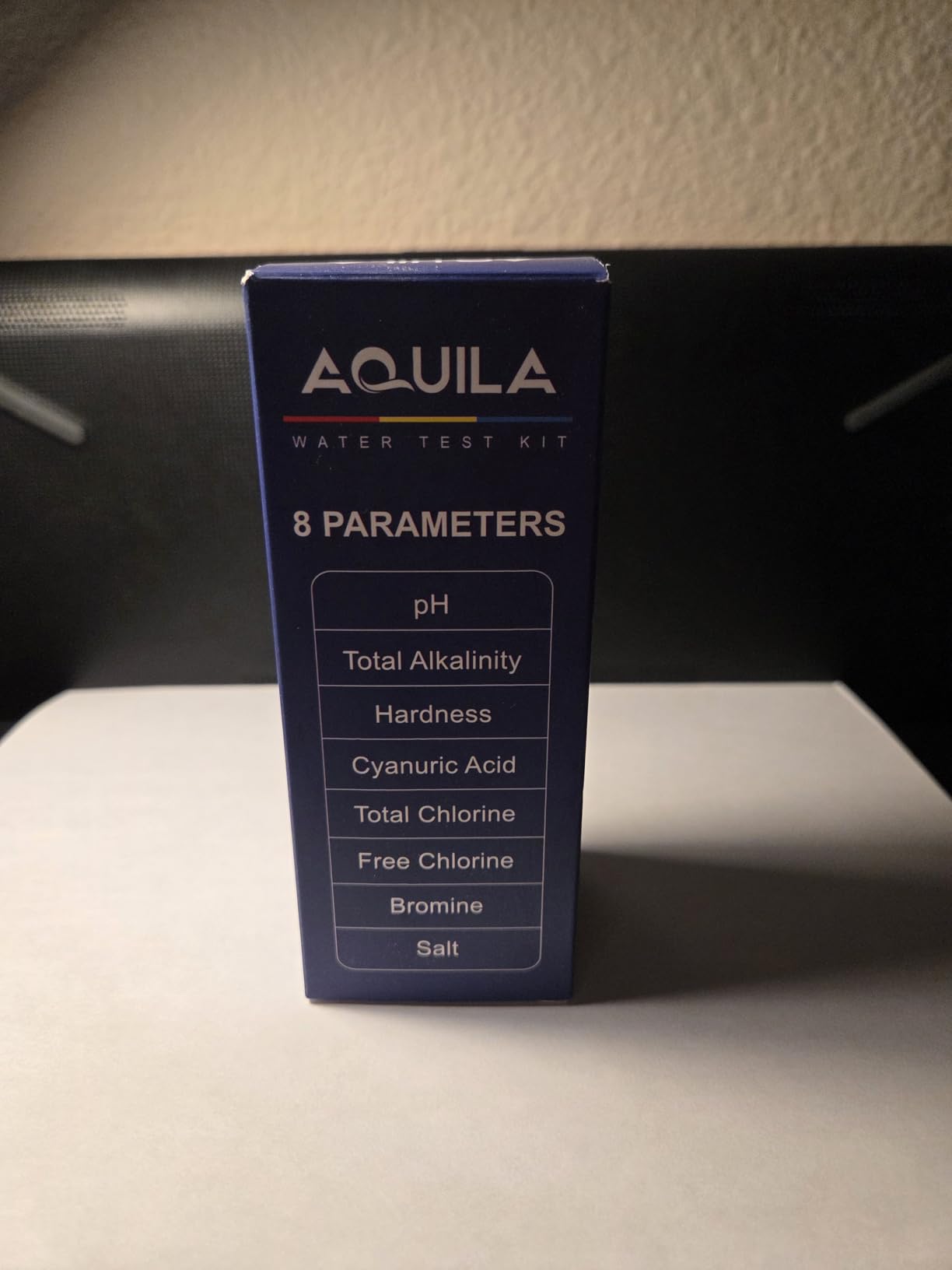
The parameter list covers pH, total alkalinity, hardness, cyanuric acid, total chlorine, free chlorine, bromine and salt. It works across chlorine, bromine and salt systems in both inground and above-ground pools, plus hot tubs and spas.
The bottle measures 5.31 by 2.1 by 2.1 inches, which is small enough to sit in a maintenance caddy and keeps the remaining strips sealed away from humidity. That storage advantage is not trivial, given how many owners damage strips by leaving them open in a damp pool house.
The routine is a two-second dip, a shake and a read against the bottle chart within 15 to 20 seconds. Owners at this position in the market are usually screening chlorine, bromine or salt systems for routine trends rather than chasing exact figures, and that is a fair use for a strip like this.
Where volume makes the difference
If testing several parameters several times a week is the habit you want to build, this is the product that supports it without repeated reorders. The count also means you can split testing across the pool and the spa, or keep a separate bottle for each so you are not cross-contaminating samples.
It is a sensible screening layer above a proper kit. Run it twice a week to catch drift, then drop down to a reagent test when a parameter looks wrong. That division of labor keeps the expensive consumables for the readings that need them.
Where expectations should be set
Worth saying plainly: the written review data for this product was limited, so the assessment here leans on the specification and rating rather than a deep pool of owner comments. Treat it as a screening tool, and confirm salt against a dedicated salt test before making a large adjustment.
The read window is short. Fifteen to twenty seconds is not much margin if you are fumbling with wet hands, so open the bottle and have the chart ready before you dip. Color shifts after that, and a late read gives you a number that does not exist.
We earn a commission, at no additional cost to you. CERTAIN CONTENT THAT APPEARS ON THIS SITE COMES FROM AMAZON. THIS CONTENT IS PROVIDED 'AS IS' AND IS SUBJECT TO CHANGE OR REMOVAL AT ANY TIME.
What a Salt Water Pool Test Kit Must Measure
A saltwater pool needs the full standard panel plus one extra reading. Skip any kit that leaves a gap in this list, whatever else it does well.
Free chlorine tells you whether your generator and your sanitizer backup are keeping pace. Combined chlorine tells you whether something is consuming chlorine faster than you can add it, and it is the number most skipped in routine testing. The FAS-DPD method on the Taylor kit gives you both from one test, which is why it earns a place despite being the most demanding kit to use.
pH and total alkalinity work as a pair. Alkalinity buffers pH, so an alkalinity reading out of range makes any pH correction drift or overshoot. Calcium hardness matters more in a salt pool than in a chlorine pool because it interacts with the salt cell output, and for plaster finishes the distinction between calcium hardness and total hardness is worth understanding because magnesium and other solids contribute to total hardness and will skew a naive reading.
Cyanuric acid stabilizes chlorine against UV loss. Outdoor pools generally need a working stabilizer level, and reading it matters once you start adding it deliberately rather than inheriting whatever the previous owner left in the water. Salt sits on top of all of this, with most generator manufacturers targeting a band in the middle of the 2700 to 3400 ppm range.
One method to avoid: OTO, or orthotolidine. It cannot separate free from combined chlorine, which is precisely the distinction that explains most murky or stubborn salt pools. It is also a chemical no longer used in current disinfection practice for good reasons. If a kit relies on OTO for chlorine, keep looking.
How to Test Salt Level and Chlorine Accurately
Match the tool to the question rather than trying to find one product that does everything. Strips answer directional questions quickly, titration strips give a salt number without effort, drop tests give the most trustworthy number, and digital meters give the fastest number you can log.
Collect the sample well. Take it elbow deep, away from returns, skimmers and any chemical you have just added, and run the tap for a minute first if you are drawing from a fill line. For the K-1766 style drop test, fill the comparator tube completely and swirl the tube rather than stirring with a separate stick.
Give strips the time the manufacturer states, then stop. Holding a strip over the pool edge while you read the chart on the bottle is the single most common way people get a wrong answer, because the colors keep moving after the read window closes.
Read in natural daylight and keep wet fingers away from the pads. Strip chemistry reacts to the oils and moisture on your hands, and this is a bigger source of error than most owners expect.
On frequency, a workable rhythm looks like this: strips for daily screening during heavy use, a full balance test once a week in summer, a salt reading every one to two weeks, and a full check at opening and closing. In winter, monthly is usually enough if the water is not circulating.
Watch for a salt mismatch. When the generator display, a strip and a drop test disagree, confirm the sample was taken away from the cell and the return before changing anything. Salt cells also report the level they read at their own location, which is not always representative of the whole pool.
Store reagents properly. Bottles left in a hot car or a humid shed degrade, and the failure shows up as a reading that is simply wrong rather than as an error you can see. Keep them sealed, cool and dry, check the printed dates on arrival, and expect a full season of testing to use more than one set of some reagents, especially cyanuric acid.
Frequently Asked Questions
What is the most accurate saltwater pool test kit?
A liquid drop kit using the FAS-DPD method, such as the Taylor K-2006-SALT, is the most accurate option for full water chemistry because it measures free and combined chlorine by drop count and stays reliable at high chlorine levels. For salt alone, the Taylor K-1766 silver nitrate drop test is the reference method most professionals trust.
Do I need a special test kit for a salt water pool?
You need the standard pool panel of free chlorine, combined chlorine, pH, total alkalinity, calcium hardness and cyanuric acid, plus a separate salt measurement. You do not need a different kind of balance kit for salt water, only a kit or strip that includes salt or a dedicated salt test alongside it.
What is the best way to test the salt level in a saltwater pool?
Use a drop-count silver nitrate test such as the Taylor K-1766 when you need a trusted number, especially when readings from other methods disagree. For routine checks, titration strips such as the AquaChek Salt Titrators give a numeric reading without drop counting, and a digital salinity meter is fastest for logging trends but needs periodic calibration.
How often do you test a salt water pool?
Test strips for daily screening during heavy use, a full balance test weekly in summer, and salt every one to two weeks. In winter, monthly is usually sufficient if the water is circulating. Test at opening and closing, and always after heavy rain, a large bather load or a water top-up.
Are digital pool testers accurate for saltwater pools?
Digital salinity meters are fast and useful for tracking trends, but the probe drifts and needs periodic calibration against a known solution. They also measure salt and pH only, so they cannot replace a kit for chlorine, alkalinity, calcium hardness and cyanuric acid. Confirm your meter can be calibrated before relying on it as your primary salt reference.
How long do pool test strips typically last?
Sealed strips in a cool, dry place usually stay usable for a year or more, and reviewers report Aquachek products remaining good for around two years after opening. Heat and humidity are the real enemies: strips stored in a hot or damp pool room discolor and then return badly wrong pH and alkalinity readings.
The Salt Pool Test Kit Setup Worth Buying in 2026
If you want one recommendation for most saltwater pool owners, start with a multi-parameter strip for daily screening and add a drop kit for the numbers you act on. The EASYTEST strips handle the fast checks better than anything else in this group, and a FAS-DPD liquid kit like the Taylor K-2006-SALT covers chlorine and balance properly.
For salt specifically, the Taylor K-1766 gives you the reference figure whenever the generator display and your strip disagree, and the AquaChek Salt Titrators cover the middle ground when you want a number without counting drops. If you test salt often enough to want a logged trend, a digital meter is worth adding, provided you calibrate it.
Whatever combination you settle on, the method matters more than the product. Take the sample away from returns and skimmers, respect the read window on strips, and keep reagents stored cool and dry. When those three habits are in place, nearly anything on this list will give you numbers you can trust.