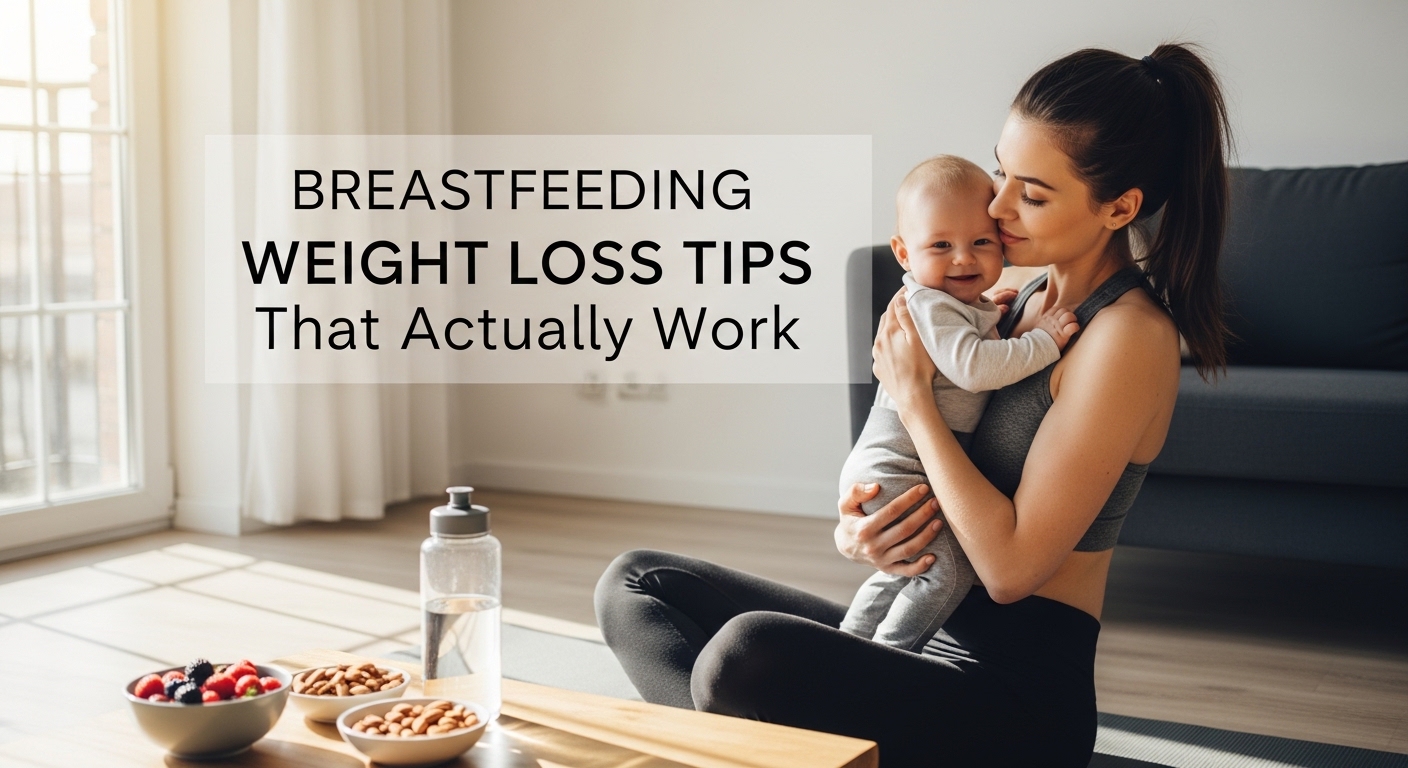
If you’re a new mom wondering how to lose weight while breastfeeding, you’re not alone. I’ve talked to hundreds of nursing mothers who feel caught between wanting to shed pregnancy pounds and worrying about their milk supply.
Here’s what you need to know: You can safely lose weight while breastfeeding by eating at least 1,800 calories daily, aiming to lose no more than 1 pound per week, and waiting until 6-8 weeks postpartum before actively trying to lose weight.
The good news? Breastfeeding naturally burns 500-700 extra calories per day, which may help with gradual weight loss without any special diet.
In this guide, I’ll share evidence-based strategies from medical sources like La Leche League International and the Academy of Nutrition and Dietetics, plus real insights from moms who’ve successfully lost weight while nursing.
ContentsTable of Contents
- 1Does Breastfeeding Help You Lose Weight?→
- 2How Many Calories Does Breastfeeding Burn?→
- 3When to Start Trying to Lose Weight After Birth→
- 4What About C-Section Recovery?→
- 5How Many Calories Do You Need While Breastfeeding?→
- 68 Safe Tips for Losing Weight While Breastfeeding→
- 71. Focus on Nutrient-Dense Foods→
- 82. Don’t Skip Meals→
- 93. Stay Hydrated→
- 104. Prioritize Protein→
- 115. Choose Healthy Snacks→
- 126. Start Gentle Exercise→
- 137. Get Rest When Possible→
- 148. Be Patient with Yourself→
- 15Exercise Guidelines for Breastfeeding Mothers→
- 16When to Start?→
- 17How Much Exercise?→
- 18Safe Exercises for New Moms→
- 19Tips for Exercising While Breastfeeding→
- 20Why Some Women Struggle to Lose Weight While Breastfeeding?→
- 21Hormonal Factors→
- 22Increased Hunger→
- 23Sleep Deprivation→
- 24Your Body May Be Holding On→
- 25What to Avoid When Trying to Lose Weight While Nursing?→
- 26Crash Diets and Severe Calorie Restriction→
- 27Very Low-Carb or Keto Diets→
- 28Intermittent Fasting→
- 29Weight Loss Supplements and Diet Pills→
- 30Weight Loss Medications→
- 31Liquid Diets or Meal Replacement Plans→
- 32When to Talk to Your Doctor?→
- 33Frequently Asked Questions→
- 34What is the fastest way to lose weight while breastfeeding?→
- 35How can I lose 20 pounds in 2 months while breastfeeding?→
- 36What is the 6 6 6 rule for breastfeeding?→
- 37Does Ozempic pass through breast milk?→
- 38What month do you lose the most weight while breastfeeding?→
- 39The Bottom Line→
Does Breastfeeding Help You Lose Weight?
Breastfeeding may help with postpartum weight loss, but it’s not the magic solution many new moms expect.
According to the Mayo Clinic, most women lose approximately 13 pounds shortly after delivery from the baby, placenta, and fluids. After that, breastfeeding can contribute to additional gradual weight loss for some women.
Here’s the reality: While breastfeeding burns significant calories, research shows results vary widely. Some mothers lose weight easily while nursing, while others find their bodies hold onto extra fat stores until they wean.
A study published in Preventive Medicine found that breastfeeding was associated with greater weight loss at 12 months postpartum, but the amount varied based on individual factors like diet, activity level, and genetics.
Pro Tip: Rather than expecting breastfeeding alone to help you lose weight, think of it as a helpful boost of 500-700 extra calories burned daily.
How Many Calories Does Breastfeeding Burn?
Breastfeeding burns approximately 500-700 calories per day, according to La Leche League International. This is roughly equivalent to a moderate workout session.
The exact number depends on several factors:
- Feeding frequency: More nursing sessions mean more calories burned
- Exclusive vs. partial breastfeeding: Exclusively breastfeeding burns more calories than combination feeding
- Baby’s age: Calorie demands may decrease as babies start eating solid foods
- Individual metabolism: Each mother’s body processes energy differently
The National Institute of Child Health and Human Development (NICHD) notes that breastfeeding mothers need an additional 450-500 calories daily to support milk production. This means your body is working hard, even when you’re sitting still.
When to Start Trying to Lose Weight After Birth
Most healthcare providers recommend waiting at least 6-8 weeks after delivery before actively trying to lose weight, according to La Leche League International.
Here’s why waiting matters:
- Your body needs recovery time: Pregnancy and childbirth are physically demanding. Your body needs time to heal.
- Milk supply establishment: The first weeks are crucial for establishing a strong milk supply. Restricting calories too early can interfere with this process.
- Hormonal fluctuations: Postpartum hormones are stabilizing during this time.
- Postpartum checkup: Wait until your 6-week checkup so your doctor can clear you for exercise and discuss your individual situation.
Many moms in online forums report that the first 10 pounds came off naturally in the initial months with just gentle walking and basic healthy eating. There’s no need to rush into an aggressive weight loss plan.
What About C-Section Recovery?
If you had a cesarean delivery, you may need to wait even longer, typically 8-12 weeks before starting exercise. Your incision needs time to heal, and your core muscles need to recover.
Always get clearance from your healthcare provider before beginning any exercise program after a C-section.
How Many Calories Do You Need While Breastfeeding?
You should eat at least 1,800 calories per day while breastfeeding, according to the Academy of Nutrition and Dietetics and La Leche League International.
Important: Never eat fewer than 1,800 calories daily while breastfeeding. Going below this level can reduce your milk supply, deplete your nutrient stores, and leave you exhausted.
Here’s how to think about calorie needs for safe weight loss while nursing:
| Activity Level | Daily Calories to Maintain Weight | Safe Weight Loss Target |
|---|---|---|
| Sedentary (little exercise) | 2,200-2,400 | 1,800-2,000 |
| Moderately Active | 2,400-2,600 | 2,000-2,200 |
| Active (regular exercise) | 2,600-2,800 | 2,200-2,400 |
The safe rate of weight loss while breastfeeding is about 1 pound per week or approximately 4 pounds per month. Losing weight faster than this may affect your milk supply and leave you feeling depleted.
8 Safe Tips for Losing Weight While Breastfeeding
Based on research from health authorities and real experiences from nursing mothers, here are the most effective strategies for safe postpartum weight loss.
1. Focus on Nutrient-Dense Foods
Choose foods that give you the most nutritional value per calorie. This means prioritizing whole foods over processed options.
Nutrient-dense foods for breastfeeding mothers include:
- Lean proteins: chicken, fish, eggs, legumes
- Whole grains: oatmeal, brown rice, whole wheat bread
- Fruits and vegetables: aim for a variety of colors
- Healthy fats: avocado, nuts, olive oil
- Dairy or calcium-rich alternatives
One mom on Reddit shared her success story: “I prioritized eating lots of protein, about 135 grams per day, and lots of vegetables from day one postpartum. I stopped buying processed or sugary food.” She credits this approach for her successful weight loss without affecting her milk supply.
2. Don’t Skip Meals
Skipping meals can backfire for breastfeeding mothers. When you go too long without eating, your blood sugar drops, you become irritable, and you’re more likely to overeat later.
Try to eat every 3-4 hours to keep your energy steady and your milk supply stable.
3. Stay Hydrated
Drink at least 8 glasses of water daily, and more if you’re active or in hot weather.
According to the InfantRisk Center, staying hydrated supports both milk production and weight loss. Thirst is sometimes confused with hunger, so drinking water before reaching for a snack may help with calorie control.
4. Prioritize Protein
Protein helps you feel full longer and supports muscle maintenance. Aim for 20-30 grams of protein at each meal.
Good protein sources include Greek yogurt, eggs, lean meats, fish, cottage cheese, and legumes.
5. Choose Healthy Snacks
Keep nutritious snacks within reach for those hungry moments between feedings. Good options include:
- Apple slices with nut butter
- Greek yogurt with berries
- Hard-boiled eggs
- Hummus with vegetables
- Trail mix with nuts and dried fruit
- Cheese and whole grain crackers
Preparing snacks in advance can help when you’re exhausted and tempted to grab something less nutritious.
6. Start Gentle Exercise
Once cleared by your healthcare provider (usually at 6 weeks postpartum), begin with gentle exercise like walking.
Many successful moms report that walking with their baby in a stroller was their primary exercise. It’s free, accessible, and you can do it with your baby.
7. Get Rest When Possible
I know this sounds almost laughable with a newborn, but rest matters for weight loss. Research published in the journal Nutrients found that sleep deprivation is linked to difficulty losing weight and even weight gain.
Try to rest when your baby sleeps, even if it’s just for 20 minutes. Ask for help from your partner, family, or friends so you can get breaks.
8. Be Patient with Yourself
Weight loss while breastfeeding takes time. Many moms find it takes 6-12 months or even longer to return to their pre-pregnancy weight.
One forum user shared this perspective: “It will be much easier to lose weight in 6 months or a year. Give yourself grace.” Your body just did something incredible. It deserves patience and kindness.
Exercise Guidelines for Breastfeeding Mothers
According to the Mayo Clinic, most women can begin gentle exercise about 6 weeks after a vaginal delivery. If you had a C-section, you may need to wait 8-12 weeks or longer.
When to Start?
Get clearance from your healthcare provider before starting any exercise program. At your postpartum checkup, ask specifically about exercise.
How Much Exercise?
The general recommendation is to work up to 150 minutes of moderate aerobic activity per week. This could look like:
- 30 minutes of walking, 5 days per week
- Three 50-minute workout sessions per week
- Multiple 10-15 minute walks throughout the day
Safe Exercises for New Moms
- Walking: Start with short walks and gradually increase distance
- Swimming: Low-impact and gentle on recovering bodies (wait until bleeding has stopped)
- Postpartum yoga: Helps with flexibility and stress relief
- Light strength training: Start with bodyweight exercises
- Pelvic floor exercises: Important for postpartum recovery
Tips for Exercising While Breastfeeding
Nurse or pump before exercise for comfort. Wear a supportive sports bra. Stay hydrated before, during, and after workouts.
Some mothers worry that exercise will affect their milk. Research suggests that moderate exercise does not negatively impact milk supply or composition.
Why Some Women Struggle to Lose Weight While Breastfeeding?
If you’re doing everything right and still not losing weight, you’re not alone, and it’s not your fault.
Several factors may make weight loss harder while breastfeeding:
Hormonal Factors
Prolactin, the hormone responsible for milk production, may make it harder for some women to lose weight. Additionally, high cortisol levels from sleep deprivation can promote fat storage, particularly around the midsection.
As one breastfeeding mother explained on Reddit: “Prolactin levels and high cortisol from sleep deprivation make it harder to tap into body fat reserves.”
Increased Hunger
Many breastfeeding mothers experience intense hunger. This is your body’s way of ensuring you have enough energy to produce milk. Fighting against this hunger with extreme restriction often backfires.
Sleep Deprivation
Research shows that lack of sleep is strongly linked to difficulty losing weight. With nighttime feedings, most new mothers are significantly sleep deprived.
Your Body May Be Holding On
Some women’s bodies simply hold onto extra fat stores while breastfeeding. This may be an evolutionary adaptation to ensure milk supply during times of scarcity. Many of these women find they lose weight more easily after weaning.
Remember: If you’re struggling to lose weight while breastfeeding, it doesn’t mean you’re doing anything wrong. Some bodies just work this way, and the weight often comes off more easily later.
What to Avoid When Trying to Lose Weight While Nursing?
Some weight loss approaches that work for other people can be harmful while breastfeeding. Here’s what to avoid:
Crash Diets and Severe Calorie Restriction
Never eat fewer than 1,800 calories daily while breastfeeding. Crash diets can reduce your milk supply, deplete your nutrient stores, and release toxins stored in fat cells into your milk.
Very Low-Carb or Keto Diets
According to La Leche League International, very low-carb diets while breastfeeding may cause a rare but serious condition called lactational ketoacidosis. If you want to reduce carbs, do so moderately and consult your healthcare provider.
Intermittent Fasting
Extended fasting periods are generally not recommended while breastfeeding. Going too long without eating can affect your milk supply and leave you feeling depleted. If you’re interested in time-restricted eating, talk to your doctor about safer approaches.
Weight Loss Supplements and Diet Pills
Most weight loss supplements are not tested for safety during breastfeeding. According to the InfantRisk Center, weight loss supplements are not recommended for nursing mothers. Many ingredients can pass into breast milk and potentially affect your baby.
Weight Loss Medications
GLP-1 medications like Ozempic, Wegovy, and Mounjaro are not recommended during breastfeeding. According to the InfantRisk Center, while injectable medications are less likely to enter breast milk than oral medications, the safety of these drugs during lactation has not been established.
Liquid Diets or Meal Replacement Plans
These typically don’t provide enough calories or nutrients for breastfeeding mothers. Stick to whole foods whenever possible.
When to Talk to Your Doctor?
Contact your healthcare provider if you experience:
- Rapid or unexplained weight loss (more than 2 pounds per week)
- Significant decrease in milk supply
- Extreme fatigue beyond normal new-mom tiredness
- Dizziness or fainting
- Signs of postpartum depression or anxiety
- Baby is not gaining weight appropriately
- You have a history of eating disorders
Also talk to your doctor before starting any new exercise program, especially after a C-section, and before taking any supplements or medications.
Frequently Asked Questions
What is the fastest way to lose weight while breastfeeding?
The safest and most sustainable approach is gradual weight loss of about 1 pound per week. Focus on eating nutrient-dense foods, staying hydrated, and adding gentle exercise like walking once cleared by your doctor. Crash diets or rapid weight loss can harm your milk supply and your health. Most experts recommend patience rather than speed.
How can I lose 20 pounds in 2 months while breastfeeding?
Losing 20 pounds in 2 months (about 2.5 pounds per week) is not considered safe while breastfeeding. The recommended safe rate is 1 pound per week or about 4 pounds per month. Losing weight too quickly can reduce your milk supply, deplete your nutrients, and release toxins into your milk. A more realistic timeline for losing 20 pounds while nursing would be 5-6 months.
What is the 6 6 6 rule for breastfeeding?
The 6 6 6 rule is a postpartum recovery guideline suggesting that new mothers spend the first 6 days in bed, the next 6 days on the bed (resting but sitting up more), and the following 6 weeks near the bed (gradually resuming light activities). This rule emphasizes rest and recovery rather than rushing back to normal activities, including exercise and active weight loss efforts.
Does Ozempic pass through breast milk?
The safety of Ozempic (semaglutide) and other GLP-1 medications during breastfeeding has not been established. According to the InfantRisk Center, while injectable medications are generally less likely to enter breast milk than oral medications, these drugs are not recommended during breastfeeding. If you’re considering weight loss medications, consult your healthcare provider and lactation consultant.
What month do you lose the most weight while breastfeeding?
Weight loss patterns vary by individual, but many women report the most significant weight loss between 3-6 months postpartum. The first few weeks often see rapid loss from fluid and delivery-related weight. After that, gradual loss of about 1-2 pounds per week is typical for those actively managing their weight. Some women don’t see significant weight loss until after weaning.
The Bottom Line
Losing weight while breastfeeding is absolutely possible when done safely and gradually. The key points to remember:
- Eat at least 1,800 calories daily to protect your milk supply
- Aim to lose no more than 1 pound per week
- Wait 6-8 weeks postpartum before actively trying to lose weight
- Focus on nutrient-dense foods rather than restriction
- Stay hydrated and prioritize rest when possible
- Avoid crash diets, extreme fasting, and weight loss supplements
- Be patient with yourself, as weight loss may take 6-12 months or longer
Your body just grew and nourished a human being. It deserves patience, nourishment, and care. If you focus on eating well and moving gently, the weight will come off in time.
Medical Disclaimer: This article is for informational purposes only and is not a substitute for professional medical advice, diagnosis, or treatment. Always consult your healthcare provider before starting any weight loss program, especially while breastfeeding. Every mother’s situation is different, and what works for one may not work for another. If you have concerns about your weight, milk supply, or postpartum health, please speak with your doctor or a registered dietitian.