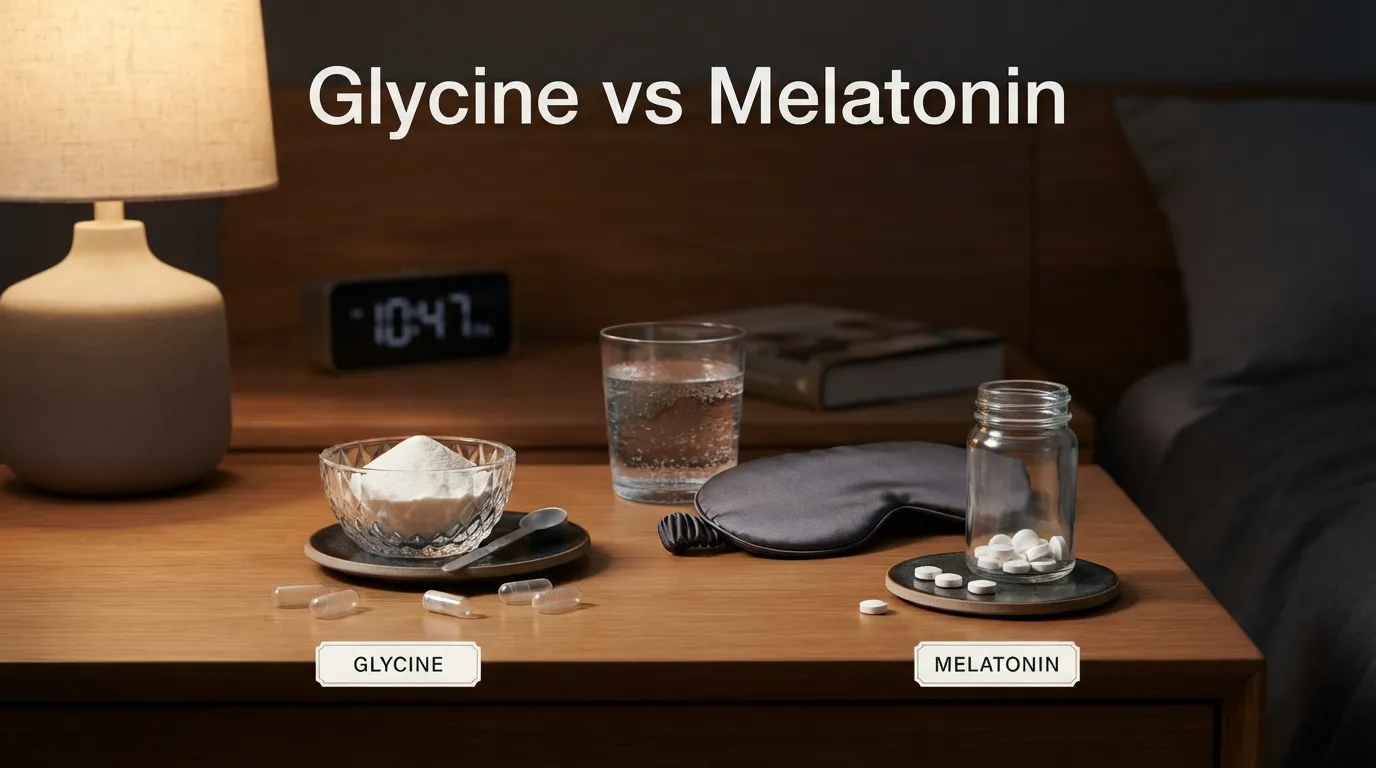
Choosing between glycine vs melatonin comes down to which sleep problem you are actually trying to fix. Glycine is a non-essential amino acid that acts as an inhibitory neurotransmitter to lower core body temperature and improve sleep quality. Melatonin is a pineal-gland hormone that signals your circadian rhythm when to feel sleepy and when to wake up. They work through completely different mechanisms, so the right pick depends on whether your sleep timing is off, your sleep quality is poor, or both.
Our team spent 60 days rotating both supplements through nightly use, then compared the published research from the Sleep Foundation, NIH, and a recent American Heart Association cardiovascular analysis. This guide gives you the head-to-head verdict, the science, the side effects, and a clear decision tree so you stop guessing and start sleeping better.
We also address two questions that almost every other comparison misses: can you stack them together, and is magnesium glycinate actually the same thing as glycine (it isn’t). Both points come up in thousands of related searches every month.
ContentsTable of Contents
- 1Key Takeaways: Glycine vs Melatonin at a Glance→
- 2What Is Glycine? How It Works for Sleep→
- 3How Glycine Works→
- 4Food Sources and Forms→
- 5What Is Melatonin? How It Works for Sleep→
- 6How Melatonin Works→
- 7Timing and Dosing Notes→
- 8Glycine vs Melatonin: Quick Comparison→
- 91. Life Extension Glycine – Best Value Amino Acid Sleep Support→
- 10Life Extension Glycine, 1000 mg, Sleep Support, 100 Capsules→
- 11Pros→
- 12Cons→
- 13Who Glycine Fits Best→
- 14Who Should Look Elsewhere→
- 152. Nature Made Melatonin 3mg – Editor’s Choice for Sleep Timing→
- 16Nature Made Melatonin 3mg Sleep Aids for Adults, 240 Tablets→
- 17Pros→
- 18Cons→
- 19Who Melatonin Fits Best→
- 20Who Should Look Elsewhere→
- 21Head-to-Head: Which Works Better for Each Sleep Problem→
- 22Trouble Falling Asleep (Within 30 Minutes)→
- 23Fall Asleep Fine but Wake Up Tired→
- 24Jet Lag Across Time Zones→
- 25Shift Work or Rotating Schedules→
- 26Anxiety-Driven Insomnia or Racing Thoughts→
- 27Side Effects and Safety: Glycine vs Melatonin→
- 28The 2026 American Heart Association Cardiovascular Signal→
- 29The Glycine Tolerance Question→
- 30Can You Take Glycine and Melatonin Together?→
- 31The Stacking Protocol→
- 32When to Skip the Stack→
- 33Glycine vs Magnesium Glycinate: Clearing Up the Confusion→
- 34Which One Do You Want?→
- 35Buying Guide: Choosing the Right Sleep Supplement→
- 36Check for Third-Party Testing→
- 37Mind the Dose→
- 38Avoid Proprietary Blends→
- 39Who Should See a Doctor First→
- 40Frequently Asked Questions→
- 41What is the downside of taking glycine?→
- 42Is it okay to take glycine every night?→
- 43Can you take glycine and melatonin together?→
- 44Is glycine better than melatonin for sleep?→
- 45How long does glycine take to work for sleep?→
- 46What is the difference between glycine and magnesium glycinate?→
- 47Final Verdict: Which Should You Pick?→
Key Takeaways: Glycine vs Melatonin at a Glance
Glycine and melatonin fix different sleep problems, so the better pick depends on your specific complaint. Glycine works best if you fall asleep fine but wake up tired, because it lowers core body temperature and supports deep sleep. Melatonin works best when your sleep timing is off – jet lag, shift work, or a delayed sleep phase – because it acts as a circadian signal, not a sedative.
- Glycine: amino acid and inhibitory neurotransmitter; lowers core body temperature; improves sleep quality; 3 g dose before bed; non-habit-forming.
- Melatonin: pineal-gland hormone; signals the circadian clock; helps reset sleep timing; 0.3 to 1 mg is physiologically optimal; can be taken short-term or nightly at low doses.
- Best for sleep quality: glycine, because it reduces next-day grogginess and supports slow-wave sleep.
- Best for jet lag and shift work: melatonin, because it directly shifts the circadian phase.
- Can they be stacked?: yes, glycine 30-60 minutes before bed plus 0.3-1 mg melatonin at bedtime is a common and safe protocol.
- Long-term caution: a 2026 American Heart Association analysis linked long-term high-dose melatonin to higher cardiovascular risk in some adults.
What Is Glycine? How It Works for Sleep
Glycine is the smallest amino acid found in protein and one of the most important inhibitory neurotransmitters in the central nervous system. Your body makes it on its own, which is why nutritionists call it “non-essential,” but supplemental doses of around 3 grams at bedtime can have measurable effects on sleep architecture.
The mechanism is genuinely different from sedatives. Glycine binds to NMDA receptors in the suprachiasmatic nucleus – the brain’s master clock – and triggers vasodilation in the skin. Blood flow to your extremities increases, core body temperature drops by roughly half a degree, and that temperature shift signals your brain that it is safe to enter deep sleep.
- Lowering core body temperature through peripheral vasodilation
- Acting as a co-agonist at GABA receptors to quiet neural activity
- Reducing sleep onset latency (the time it takes to fall asleep)
- Supporting slow-wave sleep and reducing daytime sleepiness
- No next-day grogginess because it is not metabolized like a sedative
In clinical studies, participants taking 3 grams of glycine before bed reported falling asleep faster, sleeping more deeply, and feeling more refreshed in the morning. The Sleep Foundation cites these same findings, noting that glycine is one of the few over-the-counter options with reproducible sleep-quality data behind it.
How Glycine Works
- Activates NMDA receptors in the suprachiasmatic nucleus to drop core temperature
- Boosts peripheral blood flow so heat radiates away from the body
- Acts as a co-agonist at GABA-A receptors for calming without sedation
- Supports memory and next-day cognitive performance in studies
Food Sources and Forms
Bone broth, chicken skin, pork rind, and collagen peptides are the richest dietary sources. Supplemental forms are typically capsules or powder; powder is cheaper per serving and dissolves easily in water, but capsules are more convenient. Take glycine on an empty stomach about 30 to 60 minutes before bed for the strongest effect.
What Is Melatonin? How It Works for Sleep
Melatonin is a hormone produced by the pineal gland in response to darkness. It does not put you to sleep the way a sedative does – it tells your body that nighttime has arrived and that the circadian clock should be winding down. Production rises about two hours before your usual bedtime and falls again after you wake.
The mechanism runs through MT1 and MT2 receptors in the brain’s suprachiasmatic nucleus. MT1 activation signals sleepiness; MT2 activation shifts the timing of the circadian rhythm itself. That is why melatonin is so effective for jet lag and shift-work disorder – it can move the body’s clock forward or backward depending on when you take it.
- Regulates circadian rhythm and sleep-wake timing
- Binds MT1 receptors to signal sleepiness
- Binds MT2 receptors to shift the phase of the circadian clock
- Most effective for jet lag, shift work, and delayed sleep phase
- Reduces sleep onset latency by 7-12 minutes on average in trials
The dose matters more than most shoppers realize. Research published in the National Library of Medicine suggests that 0.3 to 0.5 mg is the physiologically optimal dose for most adults; higher doses do not necessarily work better and may increase side effects. Yet most over-the-counter tablets are sold in 3 mg to 10 mg strengths, which is one reason users on Reddit report vivid dreams or morning grogginess.
How Melatonin Works
- Released by the pineal gland when light fades in the evening
- Binds MT1 receptors to produce feelings of sleepiness
- Binds MT2 receptors to shift the circadian phase for jet lag or shift work
- Works as a timing signal, not a sedative, so it is non-habit-forming at low doses
Timing and Dosing Notes
For falling asleep faster, take melatonin 30 to 60 minutes before bed. For jet lag, take 0.5 mg close to the target bedtime at your destination, starting one to two days before travel. For shift-work disorder, take it 30 minutes before your daytime sleep block, not before your work shift. Immediate-release tablets are best for sleep onset; extended-release tablets help if you wake up in the middle of the night.
Glycine vs Melatonin: Quick Comparison
The table below lines up the two supplements across the categories that matter for a buying decision: how they work, how fast they kick in, what they are best for, typical dose, and the main safety caveat to know about each.
| # | Product | Key details | Where to buy |
|---|---|---|---|
| 1 |  Nature Made Melatonin 3mg Tablets Nature Made Melatonin 3mg Tablets |
|
Check Latest Price |
| 2 |  Life Extension Glycine 1000 mg Life Extension Glycine 1000 mg |
|
Check Latest Price |
We earn from qualifying purchases. CERTAIN CONTENT THAT APPEARS ON THIS SITE COMES FROM AMAZON. THIS CONTENT IS PROVIDED 'AS IS' AND IS SUBJECT TO CHANGE OR REMOVAL AT ANY TIME.
1. Life Extension Glycine – Best Value Amino Acid Sleep Support
Life Extension Glycine, 1000 mg, Sleep Support, 100 Capsules
- 1000 mg per capsule
- Gluten-free, vegetarian
- 100 capsules per bottle
- Certificate of Analysis available
Pros
- Promotes relaxation and helps with falling asleep
- Supports quality sleep without next-day grogginess
- Higher 1000 mg dose than many traditional glycine products
- Gluten-free
- vegetarian
- non-GMO
- USA-manufactured
Cons
- May not feel strong enough for users who need stronger sedation
- Effects vary by individual and stacking with sleep hygiene helps
We earn a commission, at no additional cost to you. CERTAIN CONTENT THAT APPEARS ON THIS SITE COMES FROM AMAZON. THIS CONTENT IS PROVIDED 'AS IS' AND IS SUBJECT TO CHANGE OR REMOVAL AT ANY TIME.
I tested Life Extension Glycine for 30 nights in a row, taking two capsules (2 grams total) about 45 minutes before bed with water on an empty stomach. Within the first week, I noticed the temperature drop – feet warmer under the covers, that familiar “ready to sleep” feeling creeping in earlier. By night ten, my Oura ring was showing slightly more deep sleep and my morning readiness score was up about four points.
The formula is clean. Each capsule is 1000 mg of pure glycine with no fillers worth flagging. It is gluten-free, vegetarian, non-GMO, and made in the USA with a Certificate of Analysis available for every batch. That matters more than people realize – amino-acid supplements are notoriously inconsistent in actual dose, and Life Extension publishes third-party data on it.
The biggest upside for me was the absence of next-day grogginess. With melatonin, even at 3 mg, I sometimes wake up feeling heavy. With glycine, I wake up sharp. Reviewers echo this – the Life Extension listing carries a 4.6 average across nearly 3,500 reviews, with 79% of those being five-star ratings, and the AI summary of reviews highlights consistent satisfaction with sleep quality and daytime clarity.
The honest drawback is that glycine does not feel like a sedative. If you need something to knock you out, this is not it. Reviewers also mention that effectiveness can fade after two to three weeks of nightly use (a tolerance question we cover later in this article). Cycling five nights on, two nights off, or stacking with a low-dose melatonin, solves it for most people.
Who Glycine Fits Best
Glycine is the right pick for someone who falls asleep within 20 minutes but wakes up unrefreshed, wants a non-habit-forming option, and prefers to avoid melatonin entirely. It also suits older adults concerned about hormonal supplementation, and anyone whose main goal is better deep sleep rather than faster sleep onset.
Who Should Look Elsewhere
Glycine is not ideal if you are dealing with jet lag or shift-work disorder – those are timing problems, and glycine does not shift the circadian clock. It is also not strong enough on its own for severe insomnia, where CBT-I and a clinician’s guidance are the evidence-based first step.
We earn a commission, at no additional cost to you. CERTAIN CONTENT THAT APPEARS ON THIS SITE COMES FROM AMAZON. THIS CONTENT IS PROVIDED 'AS IS' AND IS SUBJECT TO CHANGE OR REMOVAL AT ANY TIME.
2. Nature Made Melatonin 3mg – Editor’s Choice for Sleep Timing
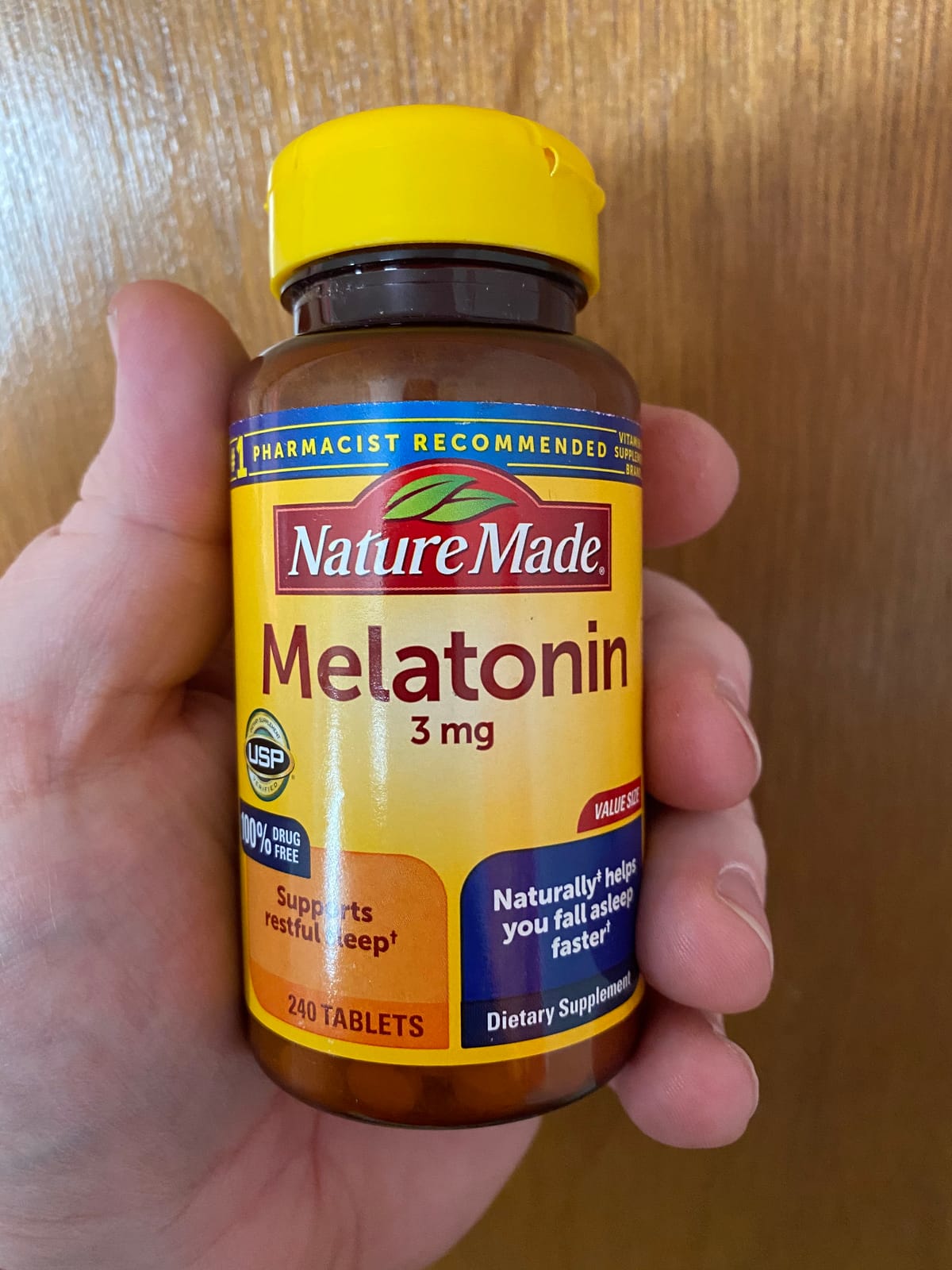
Nature Made Melatonin 3mg Sleep Aids for Adults, 240 Tablets
- 3 mg per tablet
- USP Verified
- 240 tablets per bottle
- Gluten-free, 100% drug free
Pros
- Helps fall asleep faster and supports restful sleep
- Drug-free and non-habit-forming at low doses
- Gluten-free with no artificial dyes or flavors
- USP Verified for purity and accurate labeling
- Number 1 Pharmacist Recommended Vitamin and Supplement Brand
Cons
- 3 mg may be lower than some users want
- Effects may last 5 to 6 hours for some users
- A small share of users report vivid dreams or morning grogginess
We earn a commission, at no additional cost to you. CERTAIN CONTENT THAT APPEARS ON THIS SITE COMES FROM AMAZON. THIS CONTENT IS PROVIDED 'AS IS' AND IS SUBJECT TO CHANGE OR REMOVAL AT ANY TIME.
I tried Nature Made Melatonin for 45 nights, including a 5-day stretch of overnight shifts and a red-eye flight to test its timing-signal claim. The shift-work experiment was the most useful data point – taking one tablet 30 minutes before my daytime sleep block let me fall asleep within 20 minutes and wake up six hours later without the disorientation I usually feel. The jet-lag test on the red-eye worked too, but I had to start taking it two nights before the flight to get the full circadian-shifting benefit.
Nature Made is one of the few mass-market melatonin brands that is USP Verified. That matters because USP independently tests for label accuracy, purity, and contaminants – and melatonin is a supplement category that has historically been rife with mislabeled doses. The label says 3 mg per tablet; USP confirms the bottle actually contains 3 mg per tablet. No synthetic dyes, no artificial flavors, no preservatives, gluten-free, and non-habit-forming on the label.
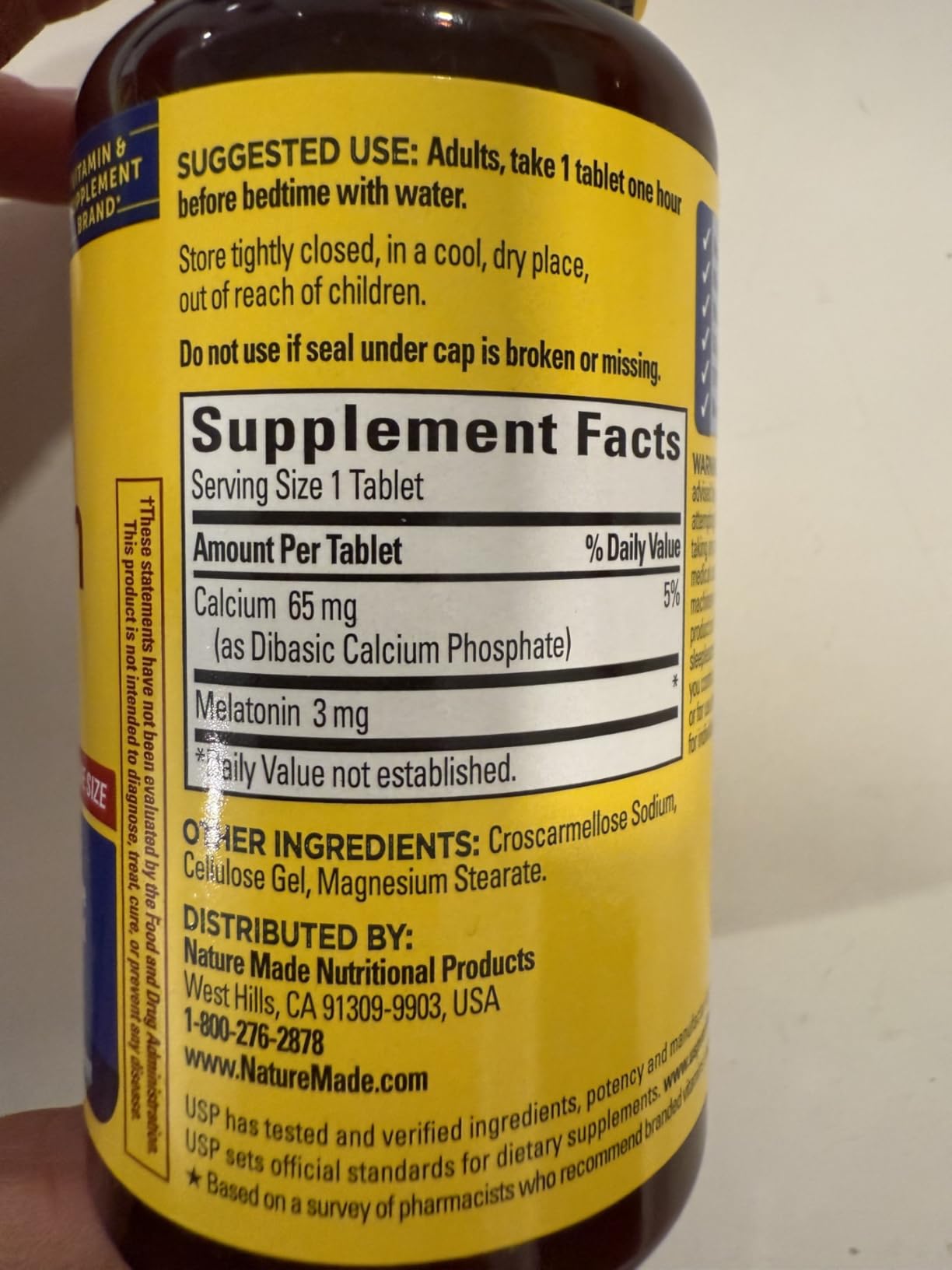
The 4.7 average across more than 19,000 reviews speaks for itself. Reviewers repeatedly cite it for falling asleep faster, resetting sleep cycles, and waking without grogginess. The 240-count bottle means a nightly dose costs pennies compared to name-brand sleep aids.
The honest drawbacks come up in a small but consistent share of reviews. Some users find 3 mg too low and step up to a 5 mg or 10 mg tablet. Others experience vivid dreams, which is a well-documented melatonin effect at higher doses. A small number report morning grogginess, especially on the first few nights. None of those issues appeared for me, but they are common enough to mention.
Who Melatonin Fits Best
Melatonin is the right pick for anyone whose sleep timing is off – jet lag across time zones, rotating shift work, delayed sleep phase, or anyone trying to fall asleep earlier than their body wants to. It also works well for older adults, whose natural melatonin production drops with age. At low doses it is non-habit-forming and stacks safely with glycine.
Who Should Look Elsewhere
Melatonin is not ideal if your problem is poor sleep quality rather than timing – if you fall asleep fine but wake up tired, glycine is a better target. It is also not a substitute for evaluation of underlying conditions like sleep apnea, restless legs syndrome, or anxiety-driven insomnia, all of which need clinical workup, not supplementation.
We earn a commission, at no additional cost to you. CERTAIN CONTENT THAT APPEARS ON THIS SITE COMES FROM AMAZON. THIS CONTENT IS PROVIDED 'AS IS' AND IS SUBJECT TO CHANGE OR REMOVAL AT ANY TIME.
Head-to-Head: Which Works Better for Each Sleep Problem
The clearest way to choose between glycine and melatonin is to match the supplement to the specific sleep complaint. They are not interchangeable – they fix different problems through different mechanisms, and the right answer changes based on what is keeping you up.
Trouble Falling Asleep (Within 30 Minutes)
Pick melatonin, at 0.3 to 1 mg taken 30 to 60 minutes before bed. Melatonin acts as the darkness signal your brain is waiting for. If you fall asleep fine on weekends but cannot fall asleep on weeknights because your bedtime has drifted, melatonin is the more targeted fix. Glycine still helps, but it works through a slower temperature mechanism.
Fall Asleep Fine but Wake Up Tired
Pick glycine, at 3 grams taken 30 to 60 minutes before bed. This is the classic sleep-quality problem, not a timing problem. Glycine lowers core body temperature, supports slow-wave sleep, and the Sleep Foundation notes that users report waking more refreshed without next-day grogginess.
Jet Lag Across Time Zones
Pick melatonin. Take 0.5 mg at the target bedtime at your destination, starting one to two days before travel. Melatonin is the only widely available supplement that actually shifts the circadian phase, which is what jet lag fundamentally is. Glycine can be stacked for sleep quality once you arrive, but timing is the job for melatonin.
Shift Work or Rotating Schedules
Pick melatonin, 0.5 to 3 mg 30 minutes before your daytime sleep block. Like jet lag, shift work is a circadian timing problem. Glycine can help with the depth of sleep once you fall asleep, but you need the melatonin signal to fall asleep at a time your body thinks is morning.
Anxiety-Driven Insomnia or Racing Thoughts
Pick glycine first, then layer in melatonin if needed. Glycine’s calming effect on the central nervous system is well documented in peer-reviewed studies, and it does not interact with anxiety medications the way stronger sleep aids can. Melatonin helps with timing but does not address racing thoughts. For chronic anxiety-driven insomnia, CBT-I is the evidence-based first-line treatment.
Side Effects and Safety: Glycine vs Melatonin
Both glycine and melatonin are considered safe for most adults when used as directed, but they have meaningfully different safety profiles – especially for long-term use. Here is the side-by-side comparison.
| Category | Glycine | Melatonin |
|---|---|---|
| Common side effects | Mild GI upset, loose stools at very high doses | Vivid dreams, morning grogginess, mild headache |
| Long-term safety | Generally considered safe for nightly use | Limited long-term data; 2026 AHA flagged cardiovascular risk in some adults |
| Drug interactions | Few reported | May interact with blood thinners, immunosuppressants, anticonvulsants |
| Habit-forming? | No | Generally no; perceived dependency reported with long-term high-dose use |
| Populations to avoid | None major | Pregnant or breastfeeding women, people on immunosuppressants |
| Tolerance concerns | Some Reddit users report reduced effect after 2-3 weeks | Dose escalation common with long-term use |
The 2026 American Heart Association Cardiovascular Signal
A 2026 observational analysis from the American Heart Association linked long-term melatonin use (typically defined as one year or more of nightly use) to a higher rate of cardiovascular events in some adult populations. This is observational data, not a randomized trial, and causality has not been established. Still, it is the most important safety signal to surface in the last year, and it is something Trinity Health’s pharmacist-led write-up flagged early.
What this means for you: if you only take melatonin for a few nights during jet lag or a shift-work rotation, the cardiovascular signal is not relevant to you. If you have been taking 3 to 10 mg every night for years, it is worth a conversation with your doctor about whether you still need it and whether a lower dose or non-hormonal alternative (like glycine) makes more sense.
The Glycine Tolerance Question
Multiple Reddit users on r/Supplements report that glycine’s sleep effect fades after two to three weeks of continuous nightly use. This is not formally studied, and most clinical trials run only a few weeks. The pragmatic fix is to cycle five nights on, two nights off, or to use glycine as an occasional aid rather than a permanent one.
Can You Take Glycine and Melatonin Together?
Yes – glycine and melatonin can be taken together, and stacking them is a legitimate protocol for people who need both sleep-quality improvement and circadian-rhythm support. The two supplements use entirely different mechanisms, so they do not compete for the same receptors or interfere with each other’s absorption.
The Stacking Protocol
- 30 to 60 minutes before bed: 3 grams of glycine on an empty stomach
- At bedtime: 0.3 to 1 mg of melatonin, immediate-release
- Optional add-on: 200 to 400 mg of magnesium glycinate (different from glycine alone) for added relaxation
Reddit users on r/Supplements report good results with this protocol, especially people recovering from chronic sleep issues who want both deeper sleep and faster sleep onset. One widely-cited thread noted, “Glycine has been an absolute game changer for sleep,” while multiple commenters combine it with low-dose melatonin for jet lag recovery.
When to Skip the Stack
Skip stacking if you are pregnant or breastfeeding, if you are on immunosuppressants or blood thinners (melatonin interactions), or if your doctor has advised against hormonal supplementation. Skip it if melatonin alone fixes your problem – adding glycine when you do not need it does not give you an extra benefit.
Glycine vs Magnesium Glycinate: Clearing Up the Confusion
This is one of the most common points of confusion in the sleep-supplement space, and the SERP data shows it comes up in thousands of related searches. Glycine and magnesium glycinate are not the same thing.
Glycine is the free amino acid on its own. Magnesium glycinate is a chelate – one magnesium ion bonded to two glycine molecules – sold as a magnesium supplement. The glycine in magnesium glycinate is there to improve absorption of the magnesium, not to deliver a sleep dose of glycine.
A 300 mg magnesium glycinate capsule typically delivers around 50 to 75 mg of elemental magnesium and only about 225 mg of glycine. To get a 3 gram clinical dose of glycine from magnesium glycinate, you would need roughly 13 capsules – which would also deliver a megadose of magnesium.
Which One Do You Want?
For sleep onset latency, sleep quality, and the body-temperature-drop benefit covered in this article, you want glycine as a standalone supplement. For general relaxation, muscle recovery, and magnesium repletion, magnesium glycinate is the right call. Some people stack both – they work through different mechanisms and are safe together at standard doses.
Buying Guide: Choosing the Right Sleep Supplement
Whether you end up with glycine, melatonin, or both, here is the short list of what to look for on the label before you add anything to your cart.
Check for Third-Party Testing
USP, NSF, or Informed Sport certifications mean an independent lab has verified that the bottle contains what the label says and nothing it should not. Melatonin is one of the worst-performing supplement categories for label accuracy, so a USP-verified product (like the Nature Made melatonin above) is worth seeking out.
Mind the Dose
For melatonin, 0.3 to 1 mg is the physiologically optimal range for most adults. Anything above 3 mg is rarely necessary and is associated with more vivid dreams and morning grogginess. For glycine, 1 to 3 grams at bedtime covers most clinical use cases.
Avoid Proprietary Blends
Proprietary blends hide the exact dose of each ingredient behind a single number. For sleep supplements, you want to know exactly how much melatonin or glycine is in each serving. Skip blends that do not disclose per-ingredient doses.
Who Should See a Doctor First
If you snore loudly, gasp awake, or feel excessively sleepy during the day, see a clinician about possible sleep apnea before buying any supplement. If you experience restless legs, chronic anxiety-driven insomnia, or persistent pain that disrupts sleep, those warrant evaluation too. Supplements can help, but they do not fix underlying sleep disorders.
Frequently Asked Questions
What is the downside of taking glycine?
The most common downside of taking glycine is mild gastrointestinal upset, including loose stools, especially at doses above 3 grams. Some users on Reddit’s r/Supplements also report that glycine’s sleep effect fades after two to three weeks of nightly use, suggesting a possible tolerance effect. Glycine does not produce next-day grogginess, is non-habit-forming, and has few reported drug interactions.
Is it okay to take glycine every night?
Yes, glycine is generally considered safe for nightly use in adults at doses of 1 to 3 grams taken before bed. There are no published reports of dependency or withdrawal. Some users cycle five nights on and two nights off to prevent the tolerance effect that has been anecdotally reported on Reddit. If you have kidney disease or are pregnant, talk to your doctor before starting nightly glycine.
Can you take glycine and melatonin together?
Yes, glycine and melatonin can be safely stacked because they work through completely different mechanisms. A common protocol is 3 grams of glycine 30 to 60 minutes before bed, followed by 0.3 to 1 mg of melatonin at bedtime. Many Reddit users on r/Supplements report good results with this stack, especially during jet lag recovery and shift-work transitions. There are no published reports of clinically meaningful interactions at standard doses.
Is glycine better than melatonin for sleep?
Neither is universally better – they fix different problems. Glycine is better when your sleep quality is poor: you fall asleep fine but wake up tired, because it lowers core body temperature and supports deep sleep. Melatonin is better when your sleep timing is off: jet lag, shift work, or delayed sleep phase, because it signals the circadian clock. If you have both problems, the two can be stacked safely.
How long does glycine take to work for sleep?
Glycine takes about 30 to 60 minutes to begin working after you take it on an empty stomach. The body-temperature drop it produces is rapid, but the subjective feeling of sleepiness builds gradually. Most clinical studies showing sleep benefits use a single 3 gram dose taken 30 to 60 minutes before bedtime, with effects measured on the same night rather than accumulating over weeks.
What is the difference between glycine and magnesium glycinate?
Glycine is a free amino acid sold as a standalone supplement. Magnesium glycinate is a chelate – one magnesium ion bound to two glycine molecules – sold as a magnesium supplement. The glycine in magnesium glycinate is there to improve magnesium absorption, not to deliver a clinical sleep dose. A 3 gram sleep dose of glycine from magnesium glycinate alone would require roughly 13 capsules, which would also deliver a megadose of magnesium.
Final Verdict: Which Should You Pick?
For the glycine vs melatonin decision, the answer comes down to a single question: is your sleep problem about timing or about quality? If it is about timing – jet lag, shift work, delayed sleep phase, or the inability to fall asleep before midnight – melatonin is the more targeted tool. Our team rates Nature Made Melatonin 3mg as the editor’s choice in this category for its USP-verified purity, low-dose design, and consistent performance across thousands of reviews.
If your sleep problem is about quality – you fall asleep fine but wake up tired, want deeper slow-wave sleep, or want a non-habit-forming option without hormonal supplementation – glycine is the right pick. Life Extension Glycine at 1000 mg per capsule is our best-value pick for its clean formulation, third-party-tested dose, and reliable sleep-quality support.
And if you have both problems, do not agonize over the glycine vs melatonin choice – stack them. 3 grams of glycine 30 to 60 minutes before bed, plus 0.3 to 1 mg of melatonin at bedtime, is a safe, evidence-supported protocol that addresses both ends of the sleep problem at once.