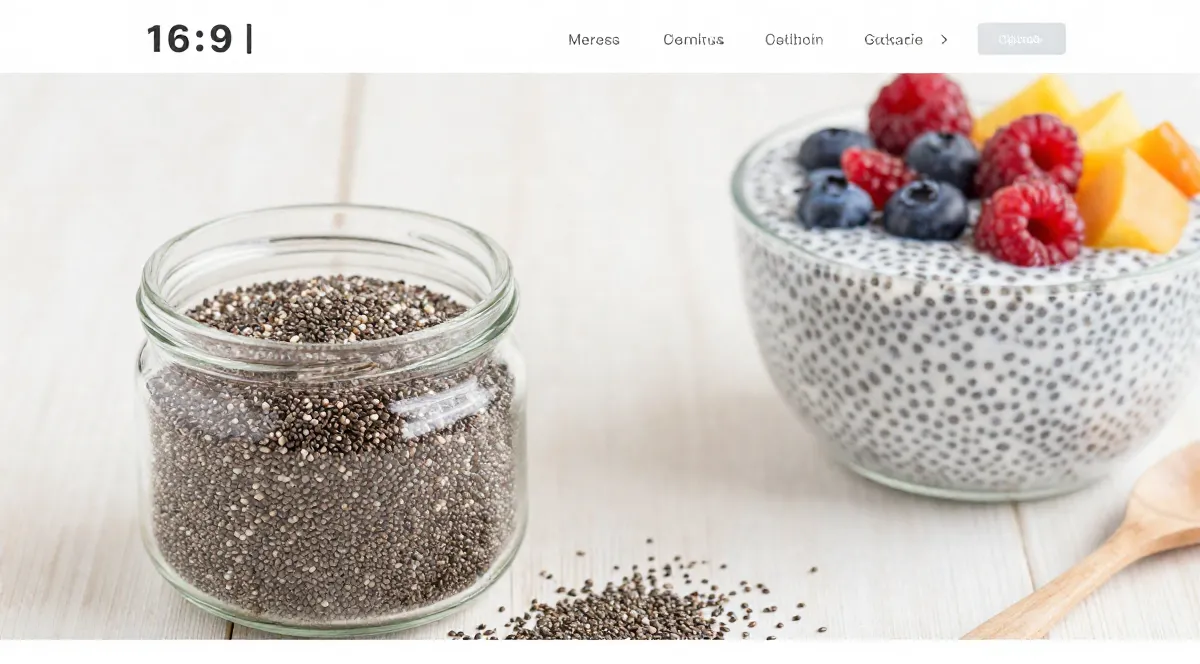
If you’ve been scrolling through wellness feeds, you’ve probably noticed chia seeds everywhere. In puddings, overnight oats, smoothies, even coffee. The tiny black-and-white specks look almost too small to matter, but the benefits of adding chia seeds to your daily routine are backed by decades of nutrition research, and our team dug through the latest studies and authoritative health sources to put together the clearest guide we could.
Chia seeds come from Salvia hispanica, a flowering plant native to Mexico and Guatemala. The Aztecs and Mayans ate them for energy, and modern nutritionists now call them a near-perfect functional food. One ounce (about 2 tablespoons) gives you roughly 35% of your daily fiber, a meaningful dose of plant-based omega-3s, and a hit of complete protein, all for around 138 calories.
This guide covers the eight most evidence-backed benefits, a chia vs flax vs hemp seed comparison no competitor publishes, seven practical ways to eat chia seeds, recommended daily servings, side effects to watch for, and answers to the eight questions people ask Google most about chia. Let’s get into it.
ContentsTable of Contents
- 1What Are Chia Seeds? A Quick Primer→
- 2Chia Seed Nutrition Breakdown (Per 1 oz / 28 g)→
- 31. Excellent Source of Fiber and Digestive Health→
- 42. Rich in Plant-Based Omega-3 (ALA) Fatty Acids→
- 53. Loaded With Antioxidants→
- 64. Supports Heart Health (Cholesterol & Blood Pressure)→
- 75. Builds Stronger Bones (Calcium, Phosphorus, Magnesium)→
- 86. Helps Regulate Blood Sugar Levels→
- 97. Aids Weight Management and Satiety→
- 108. Complete Plant-Based Protein With All 9 Essential Amino Acids→
- 11Chia vs Flax vs Hemp Seeds: How Do They Compare?→
- 12How to Add Chia Seeds to Your Diet (7 Practical Ways)→
- 131. Stir them into yogurt→
- 142. Sprinkle on oatmeal or overnight oats→
- 153. Blend into smoothies→
- 164. Make chia pudding→
- 175. Use as a vegan egg replacement→
- 186. Add to salads as a topping→
- 197. Make chia water→
- 20Recommended Daily Serving, Soaking & Storage→
- 21Side Effects, Cautions & Who Should Avoid Chia Seeds→
- 22Frequently Asked Questions→
- 23What happens if you eat chia seeds daily?→
- 24How much chia seeds should I eat daily?→
- 25What is the best way to consume chia seeds?→
- 26Will chia seeds reduce belly fat?→
- 27Do chia seeds actually have any benefits?→
- 28Do chia seeds work like Ozempic?→
- 29How long does it take to feel the benefits of chia seeds?→
- 30What happens if I eat chia seeds every day?→
- 31Final Thoughts: Should You Start Adding Chia Seeds?→
What Are Chia Seeds? A Quick Primer
Chia seeds are the edible seeds of Salvia hispanica, a member of the mint family that grows wild across Mexico and Guatemala. The word “chia” comes from the Mayan word for “strength,” and Aztec warriors reportedly carried the seeds on long marches because a small handful delivered steady energy without weighing them down.
Two varieties are sold today: black chia seeds (the most common, slightly stronger flavor) and white chia seeds (sometimes called ivory, often described as milder). Nutritionally they are nearly identical, so the choice comes down to price and appearance. A third option, “macha” or wild-harvested chia, comes from related Salvia species and is sold as a specialty product.
The seeds are tiny (about 1 to 2 millimeters), oval, and speckled. Dry, they feel hard and crunchy between your teeth. Soaked, they absorb 10 to 12 times their weight in water and develop a gel coating that gives chia pudding its tapioca-like texture. That gel is also the mechanism behind most of the benefits we’ll cover below.
Chia Seed Nutrition Breakdown (Per 1 oz / 28 g)
Here is the full nutrition profile for a standard 1 ounce (28 gram) serving of chia seeds, the portion most studies use and the amount that fits in roughly 2 level tablespoons. Values come from the USDA FoodData Central database and match the per-1 oz figures cited by Harvard Health, Cleveland Clinic, and Healthline.
| Nutrient | Amount per 1 oz (28 g) | % Daily Value (adult) |
|---|---|---|
| Calories | 138 kcal | 7% |
| Protein | 4.7 g | 9% |
| Total fat | 8.7 g | 11% |
| Alpha-linolenic acid (ALA, omega-3) | 5.0 g | — |
| Linoleic acid (omega-6) | 1.6 g | — |
| Total carbohydrates | 11.9 g | 4% |
| Dietary fiber | 9.8 g | 35% |
| Net carbs (digestible) | 2.1 g | — |
| Calcium | 179 mg | 14% |
| Phosphorus | 244 mg | 19% |
| Magnesium | 95 mg | 23% |
| Zinc | 1.1 mg | 10% |
| Iron | 2.2 mg | 12% |
| Manganese | 0.6 mg | 26% |
| Selenium | 15.6 mcg | 28% |
Three numbers jump out. The fiber content (9.8 g per ounce) is higher than almost any other whole food. The omega-3 ALA (5 g per ounce) is the richest plant source you can eat. And the calcium (179 mg) is roughly six times what’s in the same weight of whole milk. That combination is the engine behind every benefit in this guide.
1. Excellent Source of Fiber and Digestive Health
Boosts digestion: One ounce of chia seeds gives you about 9.8 g of fiber, around 35% of the daily recommended intake for adults, which is why adding chia seeds to your diet is one of the fastest ways to improve digestive regularity.
The fiber in chia seeds splits roughly 85% insoluble and 15% soluble. Insoluble fiber adds bulk to stool and speeds its passage through the colon, which is the most direct reason people notice better regularity within one to two weeks of daily use. Soluble fiber, in contrast, dissolves into a gel in the gut, feeds the beneficial bacteria that make up your gut microbiome, and produces short-chain fatty acids like butyrate that calm inflammation in the intestinal lining.
A 2024 review in Nutrients linked regular soluble fiber intake to improved constipation scores, better gut bacteria diversity, and reduced markers of inflammation. Chia seeds deliver both kinds of fiber in one ingredient, which is rare. Most high-fiber foods lean heavily toward one type.
Practical tip: jump in slowly. People who go from a low-fiber diet straight to a full ounce of chia often report bloating, gas, and cramps. Start with 1 teaspoon daily for the first week, then 1 tablespoon, then ramp to 2 tablespoons. Always drink a full glass of water with chia; the gel needs liquid to do its job safely.
2. Rich in Plant-Based Omega-3 (ALA) Fatty Acids
Top plant omega-3: Chia seeds contain more alpha-linolenic acid (ALA) per gram than any other common whole food, about 5 g per ounce, which makes them the single richest plant-based omega-3 source for vegans and anyone who doesn’t eat fatty fish.
ALA is the plant form of omega-3, a fatty acid your body uses partly for energy and partly to convert into the longer-chain EPA and DHA omega-3s found in fish oil. That conversion is inefficient (typically under 10%), so chia is not a perfect substitute for fish, but for people on plant-based diets it’s the most reliable omega-3 option available. Flax comes close; hemp seeds contain only trace amounts.
The omega-3 story matters because ALA has its own anti-inflammatory effects in the body. Observational studies have linked higher ALA intake with lower C-reactive protein (a marker of systemic inflammation), better arterial flexibility, and reduced risk of fatal coronary events. The Harvard School of Public Health lists chia alongside walnuts and flax as one of the best omega-3 plant foods.
If you eat fish two or three times per week, you already get plenty of EPA and DHA. If you don’t, or you’re vegan, chia becomes a strategic food rather than a curiosity.
3. Loaded With Antioxidants
Fights free radicals: Chia seeds carry a dense mix of polyphenols, including chlorogenic acid, caffeic acid, quercetin, kaempferol, and myricetin, that protect cells from oxidative damage and help calm chronic inflammation.
Antioxidants work by neutralizing free radicals, the unstable molecules produced by normal metabolism, intense exercise, UV exposure, and pollution. When free radicals outpace antioxidants, you get oxidative stress, a contributor to aging, atherosclerosis, and many chronic diseases. Chia seeds deliver several classes of protective compounds in one ingredient.
The polyphenol profile includes chlorogenic and caffeic acids (also found in coffee), plus quercetin, kaempferol, and myricetin (the same flavonoids you’ll see in berries and tea). Chia also provides tocopherols (a form of vitamin E), phytosterols, and carotenoids. In lab studies, chia seed extracts have shown free-radical-scavenging activity comparable to vitamin C on a gram-for-gram basis.
This benefit is partly preventive rather than something you’ll “feel” tomorrow. The cumulative effect of regular antioxidant intake is what researchers believe reduces long-term disease risk, rather than an immediate symptom change.
4. Supports Heart Health (Cholesterol & Blood Pressure)
Heart-protective: Regular chia intake has been linked to lower LDL (“bad”) cholesterol, lower triglycerides, modest reductions in systolic blood pressure, and a lower overall risk of cardiovascular events.
A frequently cited 2007 trial by Dr. Vladimir Vuksan and colleagues at the University of Toronto assigned 21 people with well-controlled type 2 diabetes to eat 37 g of chia daily for 12 weeks. Compared with placebo, the chia group showed significant drops in systolic blood pressure and a marker of inflammation called hs-CRP, with no major side effects.
Later studies have produced more mixed results, partly because dose, duration, and study population all vary. A 2021 meta-analysis in Nutrition Reviews found that chia seed supplementation reduced triglycerides and improved HDL (“good”) cholesterol, but effects on LDL and blood pressure were inconsistent across trials. The honest framing: chia is heart-supportive, not a replacement for cholesterol or blood pressure medication.
What seems clear is the mechanism. The soluble fiber in chia binds bile acids in the gut; the body then pulls cholesterol from the bloodstream to make more bile, lowering circulating LDL. The ALA and antioxidants reduce inflammation in the arterial wall. The combined effect is meaningful but moderate, on the order of a 5 to 10% improvement in lipid markers when chia replaces refined carbs in the diet.
5. Builds Stronger Bones (Calcium, Phosphorus, Magnesium)
Bone-friendly minerals: A single ounce of chia seeds delivers 179 mg of calcium, 244 mg of phosphorus, and 95 mg of magnesium, the three minerals most directly tied to bone mineral density.
Chia is one of the richest non-dairy, non-supplement calcium sources on the planet. By weight, it actually contains more calcium than milk, and unlike milk the calcium comes packaged with magnesium and phosphorus, the other two minerals your bones need to lock calcium into the bone matrix.
This matters most for vegans, people with lactose intolerance, and postmenopausal women at higher risk of osteoporosis. Calcium absorption from plant foods varies, but the form of calcium in chia (mainly calcium phosphate) is reasonably bioavailable. Studies in rats have shown that chia-enriched diets increase bone mineral density, though human data is still thin.
A 1 ounce serving won’t cover your full daily calcium target (most adults need 1000 to 1200 mg), but it can reliably contribute 15 to 20% of that need, on par with a glass of fortified orange juice and far more than most seeds or nuts.
6. Helps Regulate Blood Sugar Levels
Stabilizes blood sugar: The gel chia forms in your stomach slows the digestion of carbohydrates, blunting post-meal blood sugar spikes and improving long-term insulin sensitivity in people with or at risk for type 2 diabetes.
That gel mechanism shows up clearly in studies. A 2017 randomized trial in Plant Foods for Human Nutrition gave 15 type 2 diabetes patients either 40 g of chia or a wheat placebo daily for 12 weeks. The chia group showed a 22% drop in a blood sugar marker called HbA1c and a meaningful improvement in insulin sensitivity scores.
Visceral fat, the deep abdominal fat linked to insulin resistance, also decreased in some studies. Whether that’s a direct chia effect or a consequence of better satiety and lower overall calorie intake is still debated.
The practical takeaway: adding chia to a high-carb meal (think yogurt with breakfast, oatmeal, or even rice dishes) flattens the glucose curve afterward. It won’t replace medication for diagnosed diabetes, but for prediabetes and general metabolic health, the evidence is encouraging enough that the Mayo Clinic and Cleveland Clinic both recommend it.
7. Aids Weight Management and Satiety
Promotes fullness: The fiber and protein in chia expand in the stomach and slow gastric emptying, which leads to longer-lasting fullness and lower calorie intake later in the day, the mechanism behind most of the weight management benefits of adding chia seeds.
One study split 50 overweight adults into two groups. Both ate the same calories; one group drank a chia-infused beverage before each meal, the other a placebo. After 6 months, the chia group had lost significantly more weight and reported feeling less hungry between meals. The researchers credited the gel effect: chia absorbs liquid and physically fills space in the stomach.
This is also the mechanism behind the “chia seeds like Ozempic” trend on social media. Ozempic and similar GLP-1 drugs work partly by slowing gastric emptying and increasing satiety. Chia seeds have a much milder version of that effect, achieved through volume and fiber rather than hormones. It is a real, measurable effect, but it is orders of magnitude weaker than prescription medication.
If your goal is sustainable weight management, chia works best as part of a calorie-controlled diet rather than as a “miracle” food on its own. The 138 calories per ounce still count.
8. Complete Plant-Based Protein With All 9 Essential Amino Acids
Rare plant complete protein: Unlike most plant proteins, chia seeds contain all nine essential amino acids in meaningful amounts, about 4.7 g of protein per ounce with a complete amino acid profile.
This is uncommon in the plant world. Rice, beans, oats, and most nuts are missing one or more essential amino acids, which is why vegans are taught to combine foods. Chia is one of the few plant proteins that stands alone. It’s not as concentrated as soy, peas, or quinoa per calorie, but it is the most convenient: a topping you can sprinkle on anything without changing the texture much.
For athletes, the protein is modest per serving but adds up if you eat chia daily. A smoothie with 2 tablespoons of chia, a cup of soy milk, and a banana gives you roughly 15 g of complete protein for a quick breakfast. Endurance athletes on Reddit have reported steady pre-workout energy from chia water, though the studies on direct performance enhancement are limited.
For older adults worried about muscle loss with aging, the combination of leucine (an amino acid critical for muscle protein synthesis), calcium, and easy digestibility makes chia a smart add-on to a protein-focused diet.
Chia vs Flax vs Hemp Seeds: How Do They Compare?
If you’ve shopped for plant-based omega-3s, you’ve probably noticed three seeds lined up next to each other. They’re not interchangeable. Here’s how a 1 ounce (28 g) serving of chia, flax, and hemp seeds compares on the nutrients most people care about.
| Nutrient | Chia seeds | Flax seeds (whole) | Hemp seeds (hemp hearts) |
|---|---|---|---|
| Calories | 138 | 150 | 166 |
| Protein | 4.7 g | 5.1 g | 8.9 g |
| Fiber | 9.8 g | 8.0 g | 1.9 g |
| ALA omega-3 | 5.0 g | 6.4 g | 2.0 g |
| Calcium | 179 mg | 73 mg | 21 mg |
| Magnesium | 95 mg | 110 mg | 196 mg |
| Iron | 2.2 mg | 1.6 mg | 2.3 mg |
| Needs grinding for absorption? | No (gel forms whole) | Yes (whole seeds pass through) | No (already hulled) |
| Rancidity risk | Low (antioxidants protect fats) | High (goes rancid quickly) | Moderate |
The quick read: chia wins on fiber and calcium, flax wins on omega-3 ALA but needs to be ground for your body to absorb it, and hemp seeds win on protein and magnesium. If you can only buy one, chia is the most versatile because you don’t need a grinder and the gel works in recipes without extra steps.
If you’ve struggled with constipation, chia’s high fiber is the headline. If you’re chasing omega-3 specifically, ground flax edges out chia. If you’re building muscle on a plant-based diet, hemp seeds deliver nearly twice the protein per ounce.
How to Add Chia Seeds to Your Diet (7 Practical Ways)
One reason chia seeds have stuck around for thousands of years is that they’re almost flavor-neutral and disappear into recipes. Here are seven ways our team has used them, in roughly increasing order of preparation effort.
1. Stir them into yogurt
Two tablespoons of chia stirred into a cup of plain Greek or plant-based yogurt adds protein, fiber, and a subtle crunch without changing the flavor. Let it sit for 5 minutes to soften. Top with berries and a drizzle of honey or maple syrup.
2. Sprinkle on oatmeal or overnight oats
Add 1 tablespoon of chia to your morning oatmeal in the last 2 minutes of cooking, or mix it into overnight oats before refrigerating. The seeds soak up the liquid and thicken the bowl without becoming slimy if the ratio is right.
3. Blend into smoothies
Two tablespoons of chia blend invisibly into any fruit smoothie. They thicken the drink slightly and add 9 g of fiber without flavor impact. Pair with banana, frozen berries, spinach, and almond milk for a balanced breakfast.
4. Make chia pudding
The classic. Mix 3 tablespoons of chia with 1 cup of milk (dairy or plant), a splash of vanilla, and sweetener. Stir, refrigerate for at least 4 hours (overnight is better), and top with fruit and nuts. This is the most palatable way for most people to eat a full 2 tablespoon serving daily.
5. Use as a vegan egg replacement
Mix 1 tablespoon of chia seeds with 3 tablespoons of water, let it sit for 5 to 10 minutes until gelled, and use it in place of one egg in baking recipes like muffins, pancakes, and quick breads. The ratio is reliable and works in most baked goods, though it won’t whip like a real egg for meringues.
6. Add to salads as a topping
Toasted or raw, a teaspoon or two on a finished salad adds crunch and nutrients. If you soak them first in citrus juice, they take on a slightly caviar-like texture that works well as a garnish.
7. Make chia water
Stir 1 tablespoon into 12 to 16 ounces of water, let sit for 10 minutes, and drink. Trendy claims about “detoxing” or “curing bloating” are overstated. The honest benefit is the same as eating chia any other way: fiber, omega-3s, and a small satiety bump. Drink a full glass of plain water afterward to help the gel move through your stomach.
Recommended Daily Serving, Soaking & Storage
How much should you eat? Most registered dietitians we cross-referenced (including Cleveland Clinic’s RD team) recommend 1 to 2 tablespoons (about 10 to 20 g) per day for healthy adults. A standard serving of 2 tablespoons gives you the full nutrition profile in the table above without overwhelming your gut.
For specific goals: general health and digestion, 1 to 2 tablespoons is plenty. Weight management, 2 tablespoons before a meal as a satiety booster is supported by studies. Athletic use, 2 to 3 tablespoons around workouts is safe and adds omega-3 recovery benefits. Kids, half a tablespoon is a sensible starting point, and chia should always be served soaked or mixed into food for them because of the choking risk we cover in the next section.
Do you need to soak chia? Not strictly. Your body digests dry chia as long as you drink water with it. Soaking improves texture, distributes moisture more evenly through the gut, and makes the gel effect more pronounced. For most recipes (pudding, baked goods, smoothies, vegan egg replacement) soaking is essential. For yogurt and oatmeal toppings, dry works fine if you chase it with a glass of water.
Storage matters more than people realize. Chia is high in healthy fats that can oxidize. Keep it in a sealed container, in a cool, dark place. A pantry is fine for up to 2 years if the package is sealed. Once opened, transfer to an airtight jar and use within 6 months for best flavor. Refrigeration extends shelf life further. If your chia smells paint-like or bitter, it’s gone rancid, toss it.
Side Effects, Cautions & Who Should Avoid Chia Seeds
Chia seeds are safe for most people at recommended servings, but there are five cautions worth knowing before you make them a daily habit.
Bloating and gas. A sudden jump from a low-fiber diet to a full ounce of chia can cause bloating, cramping, and gas. Ramp up gradually over 2 to 3 weeks. Reddit users who jumped straight to 2 tablespoons and felt miserable almost always say the same thing: they didn’t ease in.
Choking hazard. Dry chia seeds swell on contact with liquid. If you swallow a tablespoon of dry seeds and immediately drink water, they can swell in your throat. Always pre-soak or mix chia into another wet food before eating. This is especially important for children and older adults with swallowing difficulties; Cleveland Clinic and Mayo both flag this explicitly.
Digestive discomfort at high doses. Above 3 tablespoons per day, some people report loose stools and abdominal cramping. There is no strong reason to eat more than 2 tablespoons unless directed by a registered dietitian.
Blood pressure and blood sugar interactions. Because chia can lower both blood pressure and blood sugar, people on medication for hypertension or diabetes should talk to their doctor before eating chia daily, especially at higher doses. Combining chia with those medications could push levels too low.
Allergy. Rare, but chia allergy is documented in case reports. People allergic to mustard or sesame may be at slightly higher risk. Start with a small amount the first time you try chia.
Bottom line: for the majority of healthy adults, 1 to 2 tablespoons of chia daily is safe, well-studied, and beneficial. The cautions above are easy to manage by starting slow, drinking water, and soaking when it makes sense.
Frequently Asked Questions
What happens if you eat chia seeds daily?
Eating 1 to 2 tablespoons of chia seeds daily is safe for most healthy adults. Over weeks, regular intake is associated with better digestive regularity, more stable blood sugar, modest improvements in cholesterol and blood pressure, and higher daily fiber and omega-3 intake. The most common side effects of daily use are bloating or gas, which usually resolve as your gut adjusts.
How much chia seeds should I eat daily?
Most registered dietitians recommend 1 to 2 tablespoons (about 10 to 20 g) per day for general health. That delivers roughly 35% of your daily fiber, 5 g of plant-based omega-3 ALA, and about 4.7 g of complete protein. Start with 1 teaspoon and work up over 1 to 2 weeks so your gut has time to adapt.
What is the best way to consume chia seeds?
The best way depends on your goal. For maximum nutrition with minimum effort, stir 2 tablespoons into yogurt, oatmeal, or a smoothie. For satiety and fullness, soak 2 tablespoons in water for 10 minutes and drink before a meal. For baked goods and vegan cooking, use the chia egg ratio: 1 tablespoon chia + 3 tablespoons water, rested 5 to 10 minutes, in place of one egg. Always drink a full glass of water with chia to help the gel move safely through your digestive system.
Will chia seeds reduce belly fat?
Chia seeds can support weight management, but they do not selectively burn belly fat. The fiber and protein in chia increase fullness, which often leads to eating fewer calories overall. Studies show modest weight loss (a few pounds over months) when chia replaces refined carbs. The visceral fat reduction seen in some trials appears to come from better satiety and improved insulin sensitivity, not from any direct fat-burning property.
Do chia seeds actually have any benefits?
Yes, the benefits of adding chia seeds are well documented in nutritional research. One ounce provides about 35% of your daily fiber, the richest plant-based omega-3 ALA of any common food, complete protein with all nine essential amino acids, and a dense mix of antioxidants like quercetin and chlorogenic acid. Studies link regular chia intake to better digestive regularity, lower LDL cholesterol, improved blood pressure, and steadier blood sugar. The effects are moderate, not miraculous, but real and repeatable.
Do chia seeds work like Ozempic?
Chia seeds and Ozempic share one mild mechanism: both slow how quickly food leaves your stomach, which increases fullness. Ozempic (semaglutide) does this through a powerful GLP-1 hormone pathway, producing significant appetite suppression and weight loss in clinical trials. Chia achieves a much milder version of the same effect through fiber and water absorption. The result is real fullness, but it is roughly 10 to 100 times weaker than prescription GLP-1 medication. Chia is a useful food; it is not a substitute for medical treatment.
How long does it take to feel the benefits of chia seeds?
Most people notice digestive benefits, like more regular bowel movements and less bloating, within 1 to 2 weeks of daily use. Improvements in satiety and appetite control often show up within the first few days because the gel effect is immediate. Blood sugar, cholesterol, and blood pressure changes take longer to appear in labs, typically 6 to 12 weeks of consistent daily intake. Antioxidant and bone-related benefits are cumulative over months and years rather than something you feel day to day.
What happens if I eat chia seeds every day?
Eating chia every day at 1 to 2 tablespoons is safe for most people and is how most of the research studies were conducted. Over time, daily intake tends to improve fiber status, plant-based omega-3 levels, and overall nutrient density of the diet. Some people notice softer stools in the first week; this usually resolves. The few risks to watch for are bloating if you jump in too fast, a choking hazard if you eat dry seeds without water, and possible interactions with blood pressure or diabetes medication at higher doses.
Final Thoughts: Should You Start Adding Chia Seeds?
After digging through the studies, the authoritative health sources, and the real-world experiences people share about the benefits of adding chia seeds, the conclusion is straightforward. Chia is one of the few foods that genuinely earns the “superfood” label: tiny, cheap, shelf-stable, nutritionally dense, and easy to fit into almost any diet.
Start with 1 teaspoon in your morning yogurt or smoothie for a few days. If your digestion feels fine, work up to 1 tablespoon, then 2. Drink water with every serving. Soak them when you’re using them as a vegan egg replacement or making pudding. Keep the bag sealed and cool. That’s the entire protocol, and it costs less than a few cents a day.
Whether your goal is better digestion, more fiber, plant-based omega-3s, steadier blood sugar, or just a more nutrient-dense diet, chia seeds in 2026 are a low-effort, evidence-backed place to start. Our team’s simple rule: if you can stir a tablespoon into a food you already eat, you can get most of the benefits of adding chia seeds without changing anything else.