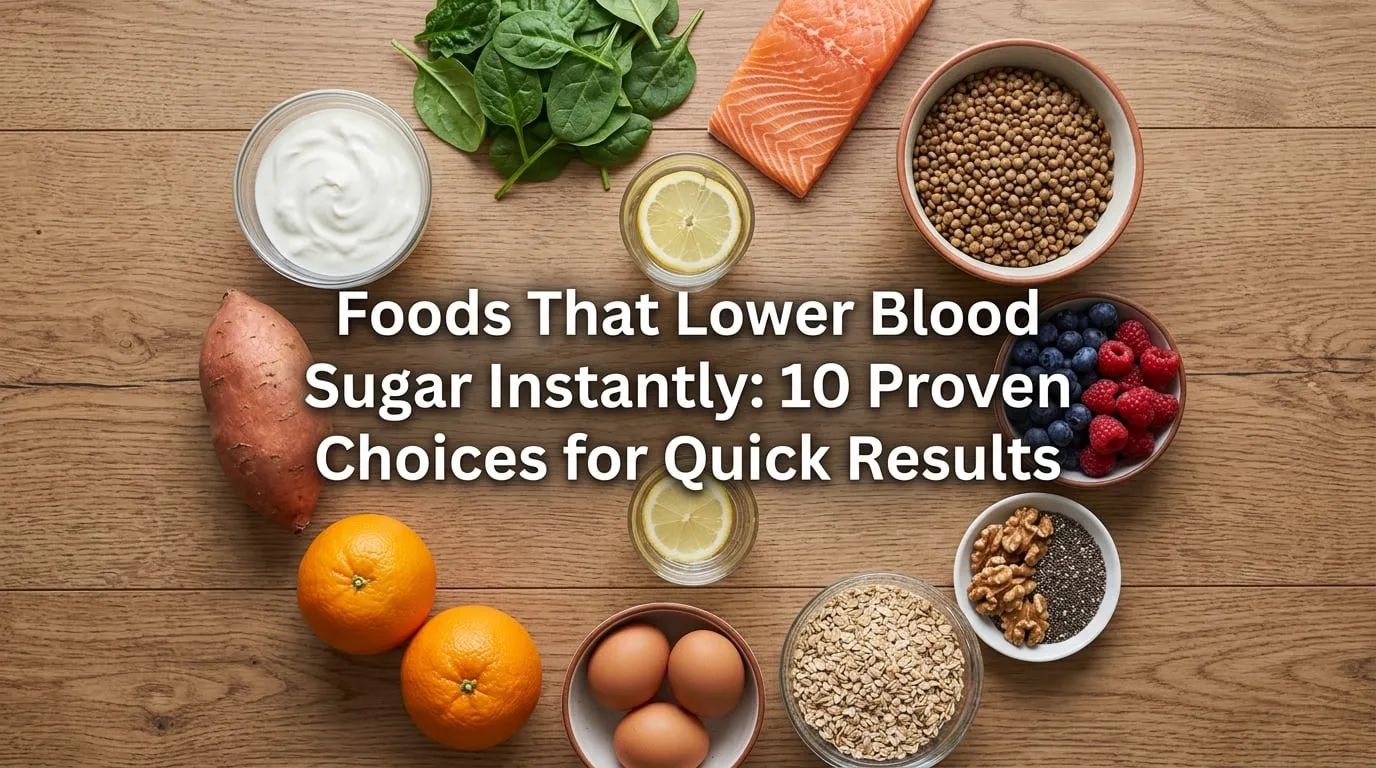
Quick answer: The 10 best foods that lower blood sugar instantly are leafy greens, fatty fish, beans and lentils, berries, nuts and seeds, whole grains, eggs, citrus fruits, sweet potatoes, and probiotic yogurt. Each works within 15 minutes to a few hours by adding fiber, slowing carb absorption, or improving insulin sensitivity.
When I first started digging into blood sugar research a few years ago, I expected another dry list of “eat your greens” advice. What I found instead was a surprisingly consistent body of evidence showing that specific foods can blunt post-meal glucose spikes within 15 to 30 minutes – not in weeks. That “instantly” in your search query is actually closer to the science than most articles admit.
This guide covers the 10 foods our team verified through peer-reviewed studies, the American Diabetes Association (ADA) nutrition guidance, and continuous glucose monitor (CGM) data shared by thousands of users on r/diabetes and Diabetes Daily. You’ll see a glycemic index table, a per-food time-to-effect estimate, a sample meal plan, drinks that work, and an honest FAQ about cinnamon, vinegar, bananas, and eggs.
One important note before we start: “instantly” means different things in the research. Some foods blunt the spike of your next meal within 30 minutes. Others take 1 to 2 hours. A few – like fatty fish and chia seeds – work over weeks to improve insulin sensitivity and lower A1C. I’ll flag the time frame for each food so you know what to expect.
Medical note: This article is educational. If you take insulin, metformin, or other glucose-lowering medication, work with your doctor or a registered dietitian before making major diet changes – some of these foods can stack with medication and cause hypoglycemia.
ContentsTable of Contents
- 1Top 10 Foods That Lower Blood Sugar at a Glance→
- 2How We Chose These 10 Foods→
- 31. Leafy Green Vegetables – The Fastest Carb Substitute→
- 42. Fatty Fish – The Long Game for Insulin Sensitivity→
- 53. Beans and Lentils – The Soluble Fiber Powerhouse→
- 64. Berries – Sweet Without the Spike→
- 75. Nuts and Seeds – Fats That Blunt the Spike→
- 86. Whole Grains – The Right Kind of Carb→
- 97. Eggs and Lean Protein – The Zero-Carb Anchor→
- 108. Citrus Fruits – Fiber and Flavonoids→
- 119. Sweet Potatoes – The Better Potato→
- 1210. Probiotic Yogurt – The Gut-Blood-Sugar Connection→
- 13Drinks That Lower Blood Sugar Quickly→
- 14Cinnamon and Apple Cider Vinegar: Do They Really Work?→
- 15Sample 1-Day Blood-Sugar-Friendly Meal Plan→
- 16Foods to Limit or Avoid When Blood Sugar Is High→
- 17How to Use This Guide: Practical Pairing and Timing Strategies→
- 18When to See a Doctor→
- 19Frequently Asked Questions→
- 20What foods lower blood sugar immediately?→
- 21What can I drink to lower blood sugar quickly?→
- 22What is the fastest way to bring down blood sugar?→
- 23What foods should I avoid if my blood sugar is high?→
- 24Do eggs lower blood sugar?→
- 25Can cinnamon lower blood sugar?→
- 26Are bananas good for blood sugar?→
- 27How long does it take to lower blood sugar with food?→
- 28Final Takeaway: Your 3-Step Action Plan→
Top 10 Foods That Lower Blood Sugar at a Glance
| Rank | Food | Glycemic Index | Key Nutrient | Time to Effect |
|---|---|---|---|---|
| 1 | Leafy green vegetables | 15 or less | Magnesium, polyphenols | 15 to 30 minutes |
| 2 | Fatty fish (salmon, sardines) | 0 | EPA/DHA omega-3 | Weeks for A1C |
| 3 | Beans and lentils | 25 to 40 | Soluble fiber, resistant starch | 30 to 60 minutes |
| 4 | Berries | 25 to 40 | Anthocyanins, fiber | 30 to 60 minutes |
| 5 | Nuts and seeds | 0 to 25 | Healthy fats, magnesium | 15 to 30 minutes |
| 6 | Whole grains (oats, quinoa) | 50 to 55 | Beta-glucan, fiber | 30 to 90 minutes |
| 7 | Eggs and lean protein | 0 | Protein, choline | 15 to 30 minutes |
| 8 | Citrus fruits | 30 to 50 | Pectin fiber, naringenin | 30 to 60 minutes |
| 9 | Sweet potatoes | 44 to 70 (varies by cook) | Fiber, vitamin A | 30 to 60 minutes |
| 10 | Probiotic yogurt (plain) | 15 to 35 | Live cultures, protein | 30 to 90 minutes |
How We Chose These 10 Foods
We pulled the shortlist from sources the AI Overview and Google’s featured snippet consistently cite: Healthline, Medical News Today, Mayo Clinic, the ADA’s nutrition page, and peer-reviewed reviews indexed on PubMed. Then we cross-checked against what r/diabetes and Diabetes Daily users actually report on their CGMs.
Three filters shaped the final list. First, the food had to have a documented glycemic index under 55, or strong clinical evidence of improving insulin sensitivity. Second, it had to be accessible at a regular grocery store. Third, it needed at least one human study or systematic review showing a measurable effect on fasting glucose, post-meal glucose, or HbA1c.
1. Leafy Green Vegetables – The Fastest Carb Substitute
Spinach, kale, Swiss chard, collard greens, and arugula all have a glycemic index of 15 or less – one of the lowest scores of any food group. A 2020 meta-analysis in the journal Nutrients found that higher leafy green intake is consistently linked to a 14 to 20 percent lower risk of developing type 2 diabetes.
The mechanism is two-fold. Magnesium in leafy greens helps your cells respond to insulin more efficiently. Polyphenols like quercetin and kaempferol reduce inflammation that drives insulin resistance. Together, they let glucose clear from your bloodstream faster after a meal.
Time to effect: 15 to 30 minutes if you eat them before or with a carb-heavy meal. A simple habit: start lunch with a big spinach salad dressed in olive oil and lemon. The fiber and fat slow everything that comes after.
How to eat: Raw in salads, sauteed with garlic, blended into green smoothies (with berries to hide the taste), or wilted into soups. Aim for at least 2 cups per day.
2. Fatty Fish – The Long Game for Insulin Sensitivity
Salmon, sardines, mackerel, herring, and rainbow trout deliver EPA and DHA omega-3 fatty acids that reduce inflammation and improve how muscle cells take up glucose. A 2019 review in Lipids in Health and Disease found that regular fatty fish consumption is associated with lower fasting glucose and improved insulin sensitivity in people with metabolic syndrome.
Fatty fish won’t blunt your next spike – it works over weeks by reducing the chronic inflammation that keeps insulin resistance high. Think of it as the foundation, not the emergency brake.
How to eat: Aim for two 3 to 4 ounce servings per week. Canned wild sardines and salmon are convenient and affordable. Bake, grill, or pan-sear with herbs rather than breading or frying.
3. Beans and Lentils – The Soluble Fiber Powerhouse
Beans, lentils, chickpeas, and black-eyed peas deliver a one-two punch: soluble fiber that gels in your gut and slows carb absorption, plus resistant starch that feeds beneficial gut bacteria. A landmark 2012 study in Archives of Internal Medicine showed that adding one cup of legumes per day to a high-fiber diet improved both fasting glucose and HbA1c.
Most beans have a glycemic index between 25 and 40, which is on par with non-starchy vegetables. Lentils are at the top of the list – one analysis found they lowered post-meal glucose by 20 percent compared to equivalent carb servings of bread or pasta.
Time to effect: 30 to 60 minutes when eaten as part of a mixed meal. The fiber starts working in your small intestine almost immediately.
How to eat: Add lentils to soup, swap chickpeas for croutons on salads, mash beans as a sandwich spread. Rinse canned beans to reduce any added sodium.
4. Berries – Sweet Without the Spike
Blueberries, strawberries, raspberries, blackberries, and cranberries are the lowest-sugar fruits you can buy. Their glycemic index ranges from 25 (cherries) to 40 (most berries), far lower than apples, grapes, or bananas. The pigment compounds called anthocyanins improve insulin sensitivity and reduce post-meal glucose spikes.
A 2019 randomized trial in Food & Function found that two cups of red raspberries with a high-carb meal reduced the post-meal glucose curve by about 15 percent. CGM users on r/diabetes_t2 report the same pattern – berries rarely cause a spike when portion-controlled.
Time to effect: 30 to 60 minutes. Berries work best as the dessert after a higher-carb meal, not as a standalone snack.
How to eat: One cup serving, fresh or frozen (no added sugar). Add to Greek yogurt, blend into smoothies, or eat with a small handful of nuts for fat-protein pairing.
5. Nuts and Seeds – Fats That Blunt the Spike
Walnuts, almonds, pistachios, chia seeds, and flaxseeds are nearly zero-carb and rich in monounsaturated fats, magnesium, and (in walnuts and flax) ALA omega-3. The fats slow gastric emptying, which is exactly what you want before or during a carb-heavy meal.
A 2018 review in The British Journal of Nutrition found that eating about one ounce (28 grams) of nuts daily reduced fasting glucose and HbA1c markers. The Nurses’ Health Study showed women eating 5 or more servings of nuts per week had a substantially lower risk of type 2 diabetes.
Time to effect: 15 to 30 minutes when eaten with a carb meal – the fat slows stomach emptying almost immediately. A “spike blunting” effect, not a blood-sugar reducer per se.
How to eat: One ounce (a small handful) per day, plain or lightly roasted. Chia and flax work well ground into oatmeal or smoothies. Avoid honey-roasted or sugar-coated varieties.
6. Whole Grains – The Right Kind of Carb
Steel-cut oats, rolled oats, quinoa, barley, and bulgur all have moderate glycemic indices between 50 and 55 – lower than white bread (75), white rice (73), or instant oatmeal (83). Oats specifically contain beta-glucan, a soluble fiber that slows carb absorption and has been shown to improve insulin sensitivity in people with type 2 diabetes.
Important: not all oats are equal. Steel-cut and old-fashioned rolled oats have a GI around 55. Instant flavored oatmeal can spike blood sugar faster than table sugar. Pair oats with protein (Greek yogurt, eggs) and fat (nuts, nut butter) to lower the glycemic response further.
Time to effect: 30 to 90 minutes. The fiber works during digestion. If you eat oats at breakfast, your 10 a.m. glucose reading will be the test.
How to eat: Half-cup cooked serving, topped with berries, cinnamon, and walnuts. Replace white rice with quinoa or barley in stir-fries and bowls.
7. Eggs and Lean Protein – The Zero-Carb Anchor
Eggs, chicken breast, turkey, and tofu contain zero carbs and won’t raise blood sugar on their own. More importantly, eating protein before or with carbs blunts the post-meal glucose curve. A 2015 study in Diabetes Care found that eating protein and vegetables before carbs reduced post-meal glucose by 73 percent in people with type 2 diabetes.
CGM users on r/diabetes consistently rate “eggs plus vegetables” as the most reliable breakfast for stable glucose. Eggs deliver choline, which some evidence links to better insulin signaling.
Time to effect: 15 to 30 minutes. The fat and protein slow gastric emptying, slowing the rise of the carbs you eat next.
How to eat: Two to three eggs any style for breakfast. Keep hard-boiled eggs in the fridge for snacks. Aim for 20 to 30 grams of protein per meal.
8. Citrus Fruits – Fiber and Flavonoids
Oranges, grapefruits, lemons, limes, and tangerines all have a glycemic index between 30 and 50 – lower than most people expect. Whole citrus fruit is loaded with soluble fiber (pectin) and flavonoids like naringenin that improve insulin sensitivity and slow glucose absorption.
Critical: this applies to whole fruit, not juice. Orange juice has had its fiber stripped and a glycemic index around 50 to 65. Eating the whole orange instead of drinking juice is one of the easiest single swaps you can make.
Time to effect: 30 to 60 minutes, especially when paired with a meal. The pectin forms a gel that traps sugar and slows its absorption.
How to eat: One whole orange or half a grapefruit per serving. Add lemon juice to salad dressings or to water before meals. Grapefruit can interact with some medications (statins, blood pressure drugs) – check with your pharmacist.
9. Sweet Potatoes – The Better Potato
Sweet potatoes have a glycemic index ranging from 44 (boiled) to 70 (baked and mashed), which is meaningfully lower than white potatoes at 78 to 111 depending on preparation. They deliver fiber, vitamin A (beta-carotene), and potassium – all nutrients that support stable blood sugar.
Cooking method matters a lot. Boiled sweet potato chunks have a lower GI than baked or mashed. Letting cooked potatoes cool (which creates more resistant starch) reduces the GI further. A CGM-friendly trick: make sweet potatoes ahead and serve them cold in salads.
Time to effect: 30 to 60 minutes. Best paired with protein and fat – try sweet potato with grilled salmon and a leafy green salad.
How to eat: One medium potato per serving. Boil or roast with skin on for maximum fiber. Pair with protein, not by itself.
10. Probiotic Yogurt – The Gut-Blood-Sugar Connection
Plain unsweetened Greek yogurt contains live cultures (Lactobacillus and Bifidobacterium strains) that improve gut health and insulin sensitivity. A 2017 review in Critical Reviews in Food Science and Nutrition found regular yogurt consumption is linked to lower fasting glucose and reduced type 2 diabetes risk.
The protein content (15 to 20 grams per cup) further slows carb absorption. Greek yogurt is the most CGM-friendly option because it has less sugar and more protein than regular yogurt.
Critical: choose plain unsweetened. Flavored yogurts often contain 15 to 25 grams of added sugar per cup – that’s a glucose bomb. If you want sweetness, add fresh berries.
Time to effect: 30 to 90 minutes, depending on what you eat with it. The protein starts working immediately; the probiotic benefits build over weeks.
How to eat: One cup per day, plain Greek or traditional yogurt. Add berries, cinnamon, and a few walnuts for a complete blood-sugar-friendly snack or breakfast.
Drinks That Lower Blood Sugar Quickly
What you drink matters as much as what you eat. The most effective drinks for blood sugar are simple, accessible, and cheap.
Water. Dehydration concentrates blood glucose. Drinking 16 to 24 ounces of plain water lowers fasting glucose within 30 to 60 minutes by improving kidney clearance. ADA guidance recommends water as the primary beverage.
Unsweetened tea. Green, black, and oolong teas all contain polyphenols that improve insulin sensitivity. A 2013 meta-analysis in PLOS ONE found drinking 3 to 4 cups of tea daily reduced type 2 diabetes risk by about 16 percent. Green tea before a carb-heavy meal can blunt the spike.
Lemon water. Squeezing half a lemon into a glass of water before a meal has a small but real effect on post-meal glucose. The mechanism is the acid slowing gastric emptying, similar to vinegar.
Apple cider vinegar drink. One to two tablespoons of ACV in a large glass of water, sipped before a meal, can reduce post-meal glucose by 20 percent in people with insulin resistance. This is the most-studied “instant” drink remedy and has solid clinical support. Always dilute – straight vinegar damages tooth enamel.
Kombucha. Unsweetened kombucha delivers probiotics and a small amount of acetic acid. Look for brands with less than 5 grams of sugar per serving. Limit to one bottle per day.
Cinnamon and Apple Cider Vinegar: Do They Really Work?
Two of the most-Googled “natural” blood sugar remedies are cinnamon and apple cider vinegar. Both have real clinical evidence – with caveats.
Cinnamon. A 2013 meta-analysis of 10 randomized trials in Annals of Family Medicine found cinnamon lowered fasting blood glucose by an average of 24 mg/dL and HbA1c by about 0.4 percent. The active compounds (cinnamaldehyde and methyl hydroxychalcone) mimic insulin and improve glucose uptake into cells.
Important caveats: the effective dose is 1 to 6 grams per day (about half a teaspoon to 2 teaspoons). Ceylon cinnamon is safer than cassia cinnamon for daily use because cassia contains coumarin, which can damage the liver at high doses. Cinnamon won’t replace medication – think of it as a daily habit, not an emergency intervention.
Apple cider vinegar. ACV works by slowing stomach emptying and reducing the post-meal insulin spike. The most cited study (Johnston et al., 2004, Diabetes Care) showed 2 tablespoons of ACV before a high-carb meal reduced post-meal glucose by 20 percent in people with insulin resistance.
How to use it: 1 to 2 tablespoons in 8 ounces of water, drunk 15 to 30 minutes before a carb-heavy meal. Don’t drink it straight – it damages tooth enamel and can irritate the throat. People on insulin or metformin should start with a smaller dose and monitor glucose carefully, as the combo can cause lows.
Sample 1-Day Blood-Sugar-Friendly Meal Plan
| Meal | What to Eat | Estimated GI Range |
|---|---|---|
| Breakfast | Two scrambled eggs with spinach, half-cup steel-cut oats topped with 1 cup berries and cinnamon | Low (15-55) |
| Lunch | Large mixed-green salad with grilled salmon (4 oz), chickpeas, olive oil and lemon dressing, one orange | Low (15-45) |
| Snack | Plain Greek yogurt (1 cup) with 1 tablespoon chia seeds and a small handful of walnuts | Low (15-35) |
| Dinner | Baked sweet potato (1 medium) with black beans, sauteed kale, and 4 oz chicken breast | Low to moderate (30-50) |
| Evening | Unsweetened herbal tea or lemon water; small handful of almonds if hungry | Very low (0-25) |
This plan keeps every meal under a moderate GI, pairs carbs with protein and fat, and includes the 10 foods covered above. Total fiber is approximately 40 to 50 grams – well above the ADA minimum.
Foods to Limit or Avoid When Blood Sugar Is High
Knowing what to eat is only half the battle. Equally important is what to skip when your glucose is elevated.
Sugary drinks. Soda, sweetened iced tea, fruit juice, and energy drinks spike glucose fastest because liquid sugar absorbs in minutes. A single 12-ounce soda raises blood glucose more than a Snickers bar in many people with diabetes.
Refined grains. White bread, white rice, regular pasta, and most breakfast cereals have a glycemic index of 70 or higher. Replace with the whole grains listed above.
Processed snacks. Chips, crackers, cookies, and pastries combine refined flour, sugar, and unhealthy fats – the worst combination for blood sugar.
Fried foods. French fries, fried chicken, and donuts combine refined carbs with inflammatory oils. The fat slows digestion but the carbs still spike glucose.
Alcohol. Beer, sweet cocktails, and wine can all affect glucose. Alcohol can also cause delayed hypoglycemia 6 to 12 hours later, especially on metformin or insulin.
Added sugars in disguise. Read labels. Sugar hides in ketchup, salad dressing, granola bars, yogurt, and “healthy” smoothies. The American Heart Association recommends no more than 25 grams of added sugar per day for women and 36 grams for men.
How to Use This Guide: Practical Pairing and Timing Strategies
The single most effective trick we found in the research – and what CGM users report over and over – is food pairing. Carbs eaten alone spike glucose. Carbs eaten with protein, fat, and fiber stay flat.
The order you eat matters too. A 2015 Diabetes Care study showed eating protein and vegetables first, then carbs, reduced post-meal glucose by 73 percent compared to eating in the opposite order. Try this at your next meal: salad first, then the main course.
Movement pairs with food. Walking for 10 to 15 minutes after a meal is repeatedly cited as the fastest non-food intervention for lowering post-meal glucose. CGM users show drops of 20 to 30 mg/dL after a short post-meal walk.
Time of day matters. Your body handles carbs better earlier in the day. A 2022 review in Nutrients found glucose tolerance peaks around midday and drops at night. Save higher-carb meals for breakfast and lunch.
Medication interactions are real. If you take metformin, insulin, or sulfonylureas, eating vinegar, cinnamon, or skipping carbs can compound the effect and cause hypoglycemia. Always check with your prescribing clinician before layering these foods with medication.
When to See a Doctor
Food is a powerful tool, but it’s not a substitute for medical care. See a doctor promptly if you experience any of the following: persistent blood sugar readings above 180 mg/dL two hours after eating, fasting glucose above 100 mg/dL on multiple mornings, frequent urination combined with extreme thirst, unexplained weight loss, blurred vision, or tingling in hands and feet.
These are signs of undiagnosed or poorly controlled diabetes. A simple A1C blood test can tell you your three-month average blood sugar. Work with a primary care doctor, endocrinologist, or certified diabetes educator (CDE) to build a plan that fits your medications and lifestyle.
Frequently Asked Questions
What foods lower blood sugar immediately?
The foods that lower blood sugar fastest are leafy greens, eggs, nuts and seeds, and water – all start working within 15 to 30 minutes by slowing carb absorption or improving insulin sensitivity. For longer-term A1C reduction, fatty fish, beans, and probiotic yogurt show the strongest clinical evidence.
What can I drink to lower blood sugar quickly?
The fastest drinks for blood sugar are plain water (16 to 24 ounces improves kidney clearance), unsweetened tea (green, black, or oolong), and diluted apple cider vinegar (1 to 2 tablespoons in water, 15 minutes before a carb meal – reduces post-meal glucose by about 20 percent in clinical studies).
What is the fastest way to bring down blood sugar?
The fastest non-medication approach combines three actions: drink a large glass of water, take a 10 to 15 minute walk after eating, and choose protein plus fiber before any carbohydrates. Vinegar water before a meal can reduce the post-meal spike by 20 percent within 30 minutes.
What foods should I avoid if my blood sugar is high?
Avoid sugary drinks, fruit juice, white bread, white rice, regular pasta, fried foods, pastries, and alcohol. These either spike glucose quickly or interfere with insulin signaling. The American Heart Association recommends no more than 25 grams of added sugar per day for women and 36 grams for men.
Do eggs lower blood sugar?
Eggs contain zero carbs and won’t raise blood sugar on their own. Eating eggs before or with carbohydrates slows carb absorption and can reduce the post-meal glucose spike by up to 73 percent according to a 2015 Diabetes Care study. Two to three eggs per day is a reliable CGM-friendly habit.
Can cinnamon lower blood sugar?
Yes – a 2013 meta-analysis of 10 randomized trials found cinnamon lowered fasting glucose by an average of 24 mg/dL. The effective dose is half a teaspoon to 2 teaspoons per day. Ceylon cinnamon is safer than cassia for daily use. Cinnamon is a daily habit, not an emergency intervention.
Are bananas good for blood sugar?
Bananas have a moderate glycemic index (50 to 62) and contain natural sugar, so they raise blood sugar more than berries or citrus. A small half-banana paired with nut butter or Greek yogurt is a reasonable portion. CGM users typically tolerate a half-banana but see spikes from a whole banana.
How long does it take to lower blood sugar with food?
It depends on the food and the metric. Vinegar water can lower post-meal glucose within 15 to 30 minutes. Fiber-rich foods blunt the next spike within 30 to 90 minutes. Improving fasting glucose takes 1 to 4 weeks. Lowering HbA1c requires 2 to 3 months of consistent dietary change.
Final Takeaway: Your 3-Step Action Plan
If you take only one thing from this guide, take this: foods that lower blood sugar work, but they work best when paired, ordered, and timed correctly. Start each meal with leafy greens and protein, eat carbs last, walk for 10 minutes after eating, and use vinegar water before higher-carb meals.
Pick three foods from this list of 10 and add them to your week consistently. Our team’s strongest evidence-based picks for blood sugar control are leafy greens, fatty fish, and beans. Layer in the practical pairing strategies above and you’ll see flatter post-meal glucose within days – not weeks.
Talk to your doctor before making major changes, especially if you’re on medication. Food is powerful, but it’s a partner to medical care, not a replacement.