Short version: for most people starting out, the best auto darkening welding helmets for beginners come down to three picks. The YESWELDER LYG-L600A is the one I recommend first because it pairs a true color 1/1/1/1 lens with a 16 ounce shell and more owner feedback than any other model in this guide. The YESWELDER LYG-M800H is the better buy if you want a much wider window and four arc sensors, and the TOOLIOM TL-M800D gives you the largest stated true color area at this price level.
I spent weeks reading owner feedback on all ten helmets below, comparing viewing areas, arc sensor counts, switching times and headgear complaints, then narrowed the field to the units that make sense for someone still learning bead placement. That matters because a first-year welder spends most of the time making short, hesitant tacks, and a slow or unreliable lens lets a damaging flash through on a tentative first strike.
Everything in this guide is measured against what a beginner actually needs rather than what a professional fabricator might want. You will see no premium-only features pushed for the sake of it, and every pick below sits in a range where replacement lenses and parts are easy to find. Prices change constantly, so use the check buttons to see current listings.
ContentsTable of Contents
- 1Top 3 Auto Darkening Welding Helmets for Beginners→
- 2YESWELDER LYG-L600A True Color→
- 3YESWELDER LYG-M800H Large View→
- 4TOOLIOM TL-M800D True Color→
- 5All 10 Auto Darkening Welding Helmets at a Glance in 2026→
- 61. YESWELDER LYG-L600A – Best Overall for Beginners→
- 7YESWELDER Auto Darkening Welding Helmet 1/1/1/1 True Color, LYG-L600A→
- 8Pros→
- 9Cons→
- 10What you notice in the first ten minutes→
- 11Where it falls short→
- 122. YESWELDER LYG-M800H – Best Value Large View Shell→
- 13YESWELDER Auto Darkening Welding Helmet, Large View, LYG-M800H→
- 14Pros→
- 15Cons→
- 16Why the wide window changes your first month→
- 17Where it falls short→
- 183. TOOLIOM TL-M800D – Largest Stated True Color Window→
- 19TOOLIOM True Color Auto Darkening Welding Helmet with Large View→
- 20Pros→
- 21Cons→
- 22What you gain from a big window on day one→
- 23Where it falls short→
- 244. TOOLIOM E600A-A – Best Solar Helmet with a Work Light→
- 25TOOLIOM Auto Darkening Solar Powered Welding Helmet for TIG MIG ARC with Light→
- 26Pros→
- 27Cons→
- 28When a built-in light actually earns its place→
- 29Where it falls short→
- 305. TRQWH KTS-JD03 – Best Starter Kit with Gloves→
- 31TRQWH Welding Hood Auto Darkening Welding Helmet with Light True Color→
- 32Pros→
- 33Cons→
- 34Why the delay range matters for a beginner→
- 35Where it falls short→
- 366. NDUUN Shade 4/9-13 – Simple Adjustable Starter→
- 37NDUUN Welding Helmet True Color Auto Darkening Hood with Adjustable Shade Range 4/9-13 for TIG MIG ARC Welder Mask→
- 38Pros→
- 39Cons→
- 40Is the slowest switching speed here a problem?→
- 41Where it falls short→
- 427. Sunstac SS-A800D – Most Versatile Process Coverage→
- 43Sunstac Auto-Darkening Welding Helmet 3.94 x 3.27″ View with Light→
- 44Pros→
- 45Cons→
- 46Why process coverage beats premium features for a beginner→
- 47Where it falls short→
- 488. SONNLER WH-0130 – Best Bundle of Spare Lenses→
- 49Welding Helmet Auto Darkening,SONNLER Large Viewing 3.94″ *3.66″1/1/1/1 True Color Welding Helmet, Solar/Battery Power Welding Hood With 4 Arc Sensor,Wide Shade 4~5/9-9/13 Welding Mask For TIG MIG ARC→
- 50Pros→
- 51Cons→
- 52Replacement lens cost is the cost beginners forget→
- 53Where it falls short→
- 549. Accoral AC-850BS – Budget True Color Pick→
- 55Accoral Auto-Darkening Welding Helmet, True Color, Shade 4/9-13→
- 56Pros→
- 57Cons→
- 58When the entry-level model is genuinely enough→
- 59Where it falls short→
- 6010. Hobart 770890 – Best Helmet to Buy Once→
- 61Hobart 770890 Auto-Darkening Welding Helmet, Large, Black→
- 62Pros→
- 63Cons→
- 64What the extra money actually buys→
- 65Where it falls short→
- 66How to Choose an Auto Darkening Welding Helmet→
- 67What optical clarity ratings like 1/1/1/1 mean→
- 68Arc sensors and the TIG low-amp warning→
- 69How fast the lens needs to switch→
- 70Shade range for your first welds→
- 71Solar assist versus battery power→
- 72Headgear, weight and neck strain→
- 73Fogging, venting and the raised position→
- 74Safety certifications and how to check quality→
- 75Passive fixed shade versus auto darkening→
- 76Which Auto Darkening Helmet Should You Get?→
- 77Frequently Asked Questions→
- 78What shade should a welding helmet have for beginners?→
- 79Do I need four arc sensors as a beginner?→
- 80Which welding helmet has the largest viewing area?→
- 81How fast should an auto darkening lens switch?→
- 82Are solar powered welding helmets reliable?→
- 83How do I check the quality of a welding helmet?→
- 84Final Verdict on the Best Auto Darkening Welding Helmets for Beginners→
Top 3 Auto Darkening Welding Helmets for Beginners

YESWELDER LYG-L600A True Color
- 1/1/1/1 true color lens
- 2 arc sensors
- Shade 3/7-13 plus grind
- 16 oz shell
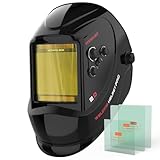
YESWELDER LYG-M800H Large View
- 3.93 x 3.66 inch view
- 4 arc sensors
- Shade 3/5-9/9-13
- Cheater lens ready
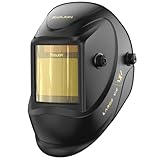
TOOLIOM TL-M800D True Color
- 12.9 sq inch window
- 1/1/1/1 optics
- 4 arc sensors
- Weld cut and grind modes
As an Amazon Associate we earn from qualifying purchases. CERTAIN CONTENT THAT APPEARS ON THIS SITE COMES FROM AMAZON. THIS CONTENT IS PROVIDED 'AS IS' AND IS SUBJECT TO CHANGE OR REMOVAL AT ANY TIME.
All 10 Auto Darkening Welding Helmets at a Glance in 2026
The table below is the fastest way to see how these ten differ. Viewing area, sensor count and switching speed are the three numbers that change how quickly a beginner improves, so read those first.
| # | Product | Key details | Where to buy |
|---|---|---|---|
| 1 | YESWELDER LYG-L600A True Color |
|
Check Latest Price |
| 2 | YESWELDER LYG-M800H Large View |
|
Check Latest Price |
| 3 | TOOLIOM TL-M800D True Color |
|
Check Latest Price |
| 4 |  TOOLIOM E600A-A Solar with LED TOOLIOM E600A-A Solar with LED |
|
Check Latest Price |
| 5 |  TRQWH KTS-JD03 Kit with Gloves TRQWH KTS-JD03 Kit with Gloves |
|
Check Latest Price |
| 6 |  NDUUN Shade 4/9-13 Starter NDUUN Shade 4/9-13 Starter |
|
Check Latest Price |
| 7 |  Sunstac SS-A800D Large View Sunstac SS-A800D Large View |
|
Check Latest Price |
| 8 | 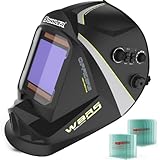 SONNLER WH-0130 Large View SONNLER WH-0130 Large View |
|
Check Latest Price |
| 9 |  Accoral AC-850BS True Color Accoral AC-850BS True Color |
|
Check Latest Price |
| 10 | 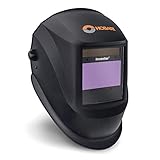 Hobart 770890 PureColor Widescreen Hobart 770890 PureColor Widescreen |
|
Check Latest Price |
We earn from qualifying purchases. CERTAIN CONTENT THAT APPEARS ON THIS SITE COMES FROM AMAZON. THIS CONTENT IS PROVIDED 'AS IS' AND IS SUBJECT TO CHANGE OR REMOVAL AT ANY TIME.
1. YESWELDER LYG-L600A – Best Overall for Beginners
YESWELDER Auto Darkening Welding Helmet 1/1/1/1 True Color, LYG-L600A
- 1/1/1/1 true color lens
- 3.64 x 1.67 inch view
- 2 arc sensors
- 1/30000s switching
- 16 oz
Pros
- True color 1/1/1/1 view of the joint before and after the arc
- Adjustable sensitivity and delay controls
- Light 16 oz shell that stays comfortable
- Comes with spare lenses
- extra battery and storage bag
- ANSI Z87.1 and CSA Z94.3 certified
Cons
- Compact viewing area next to panoramic shells
- Lighter-duty shell and headgear than professional units
- One buyer reported the coin cell arriving loose
We earn a commission, at no additional cost to you. CERTAIN CONTENT THAT APPEARS ON THIS SITE COMES FROM AMAZON. THIS CONTENT IS PROVIDED 'AS IS' AND IS SUBJECT TO CHANGE OR REMOVAL AT ANY TIME.
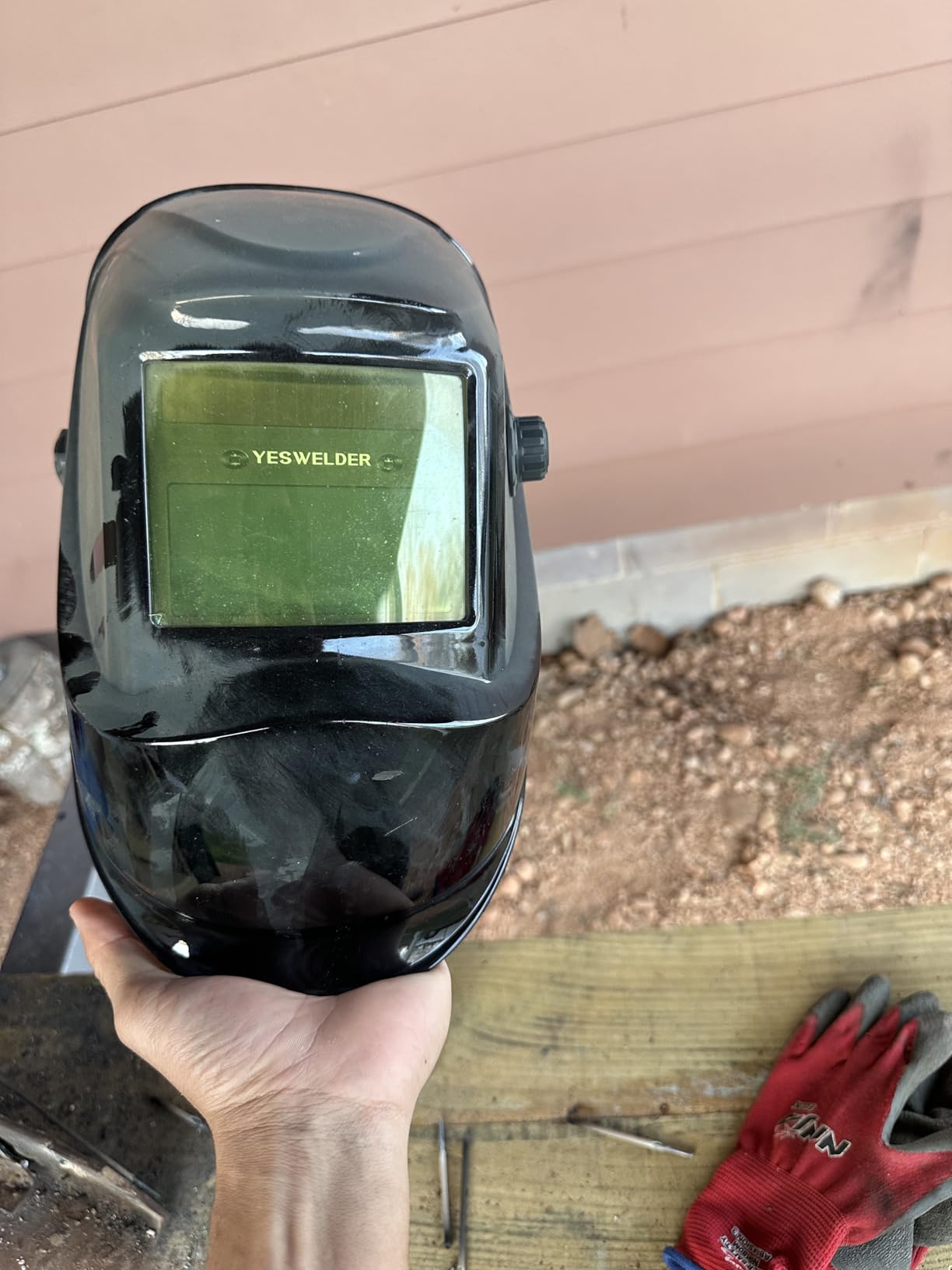
This is the helmet I hand to friends who ask me what to buy before their first shop class. The lens is a genuine true color 1/1/1/1 filter, which means you can line up your work with the helmet already down instead of flipping it, watching your bead in a washed-out green, then flipping it back up. That cycle is where a lot of beginner frustration comes from, and removing it changes how fast the skill sticks.
The shell weighs 16 ounces, which is the reason it sits at number one here. Owners doing long weekend sessions tell us the weight never becomes the thing they notice, and several say the pivot-style headgear takes adjustment in about a minute. Switching is quoted at one thirty-thousandth of a second with adjustable sensitivity and delay, so a hesitant first strike still darkens before the flash registers.
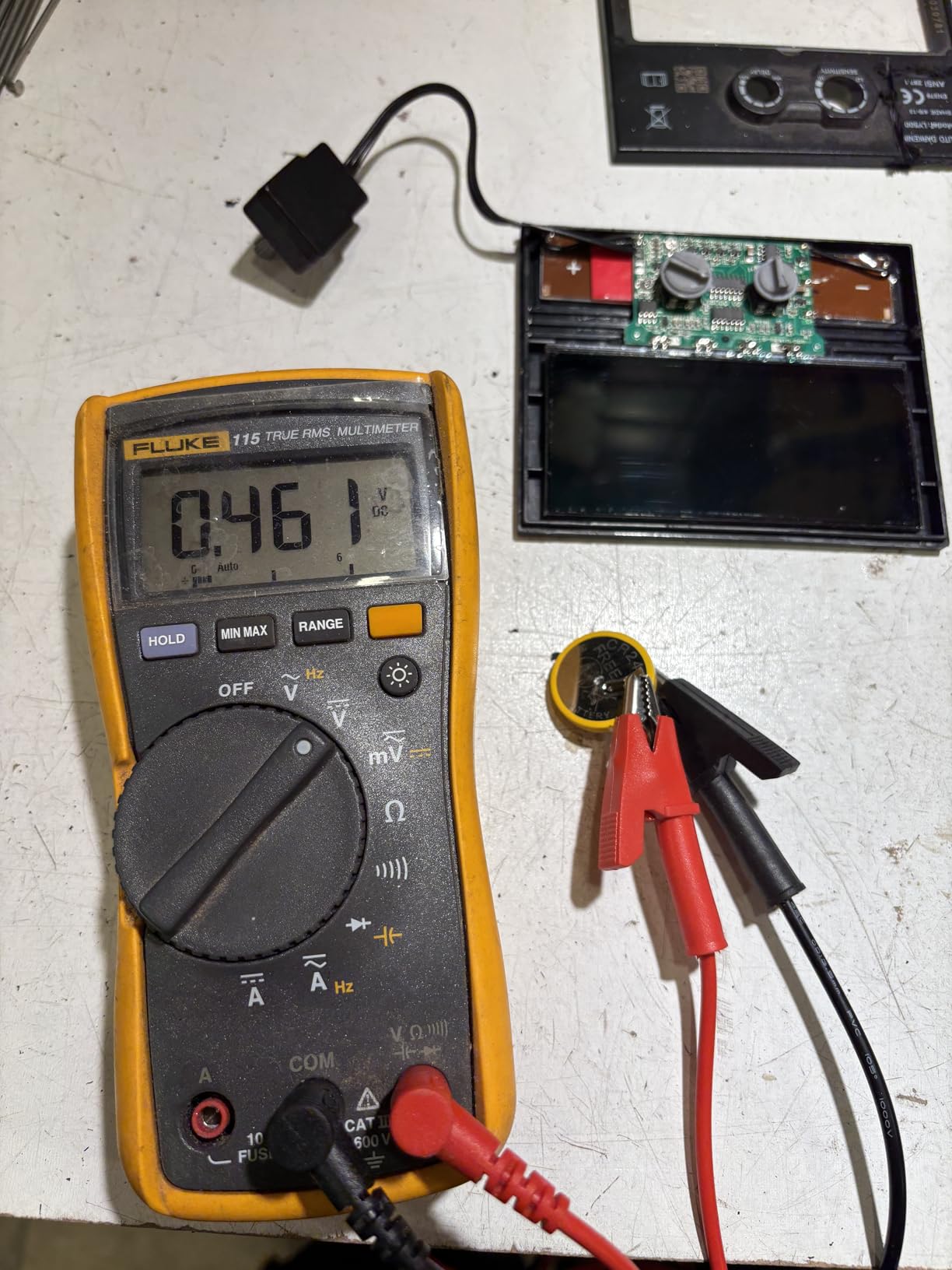
Shade coverage runs from 3 to 7-13 with a grind mode, which covers flux-cored MIG, stick and light grinding without swapping anything. The blue light blocking outer lens matters more than most spec sheets admit, because arc flash is rich in blue light and that filtering is what stops the end-of-session eye ache some beginners report after a first long day.
Two arc sensors is the one compromise. On MIG and stick they behave fine, and the vast majority of owner feedback is positive on detection. For low-amperage TIG they can struggle, so if TIG is the process you plan to learn first, look at the four-sensor models further down this page.
What you notice in the first ten minutes
You put it on, you look at the bench, and the view is neutral in color with no green cast. That clarity is the whole reason a true color filter exists, and it is the feature that separates this model from a fixed-shade helmet you would have to lift constantly.
The controls sit on the outside of the shell, so shade, sensitivity and delay can be changed with a gloved hand while the helmet is down. Knobs you can reach without removing the helmet save real time in a first session.
Where it falls short
The 3.64 by 1.67 inch window is small by modern standards. When you are learning bead placement you want to see the puddle, the joint and both hands at once, and a compact window keeps your peripheral view tight. The shell and harness are also lighter-duty than professional units, so treat it as a learner helmet with a few years of life in it rather than a shop workhorse.
We earn a commission, at no additional cost to you. CERTAIN CONTENT THAT APPEARS ON THIS SITE COMES FROM AMAZON. THIS CONTENT IS PROVIDED 'AS IS' AND IS SUBJECT TO CHANGE OR REMOVAL AT ANY TIME.
2. YESWELDER LYG-M800H – Best Value Large View Shell
YESWELDER Auto Darkening Welding Helmet, Large View, LYG-M800H
- 3.93 x 3.66 inch true color view
- 4 arc sensors
- 1/30000s response
- Shade 3/5-9/9-13
Pros
- Very wide 3.93 x 3.66 inch true color view of the joint
- All controls reachable with welding gloves on
- Four arc sensors for dependable low-amp detection
- Cheater lens compatible for prescription users
Cons
- Plastic shroud and side knobs feel thin and can strip
- Pivot tension needs tightening to stop the mask slipping
- Internal lens and battery are awkward to reach
We earn a commission, at no additional cost to you. CERTAIN CONTENT THAT APPEARS ON THIS SITE COMES FROM AMAZON. THIS CONTENT IS PROVIDED 'AS IS' AND IS SUBJECT TO CHANGE OR REMOVAL AT ANY TIME.
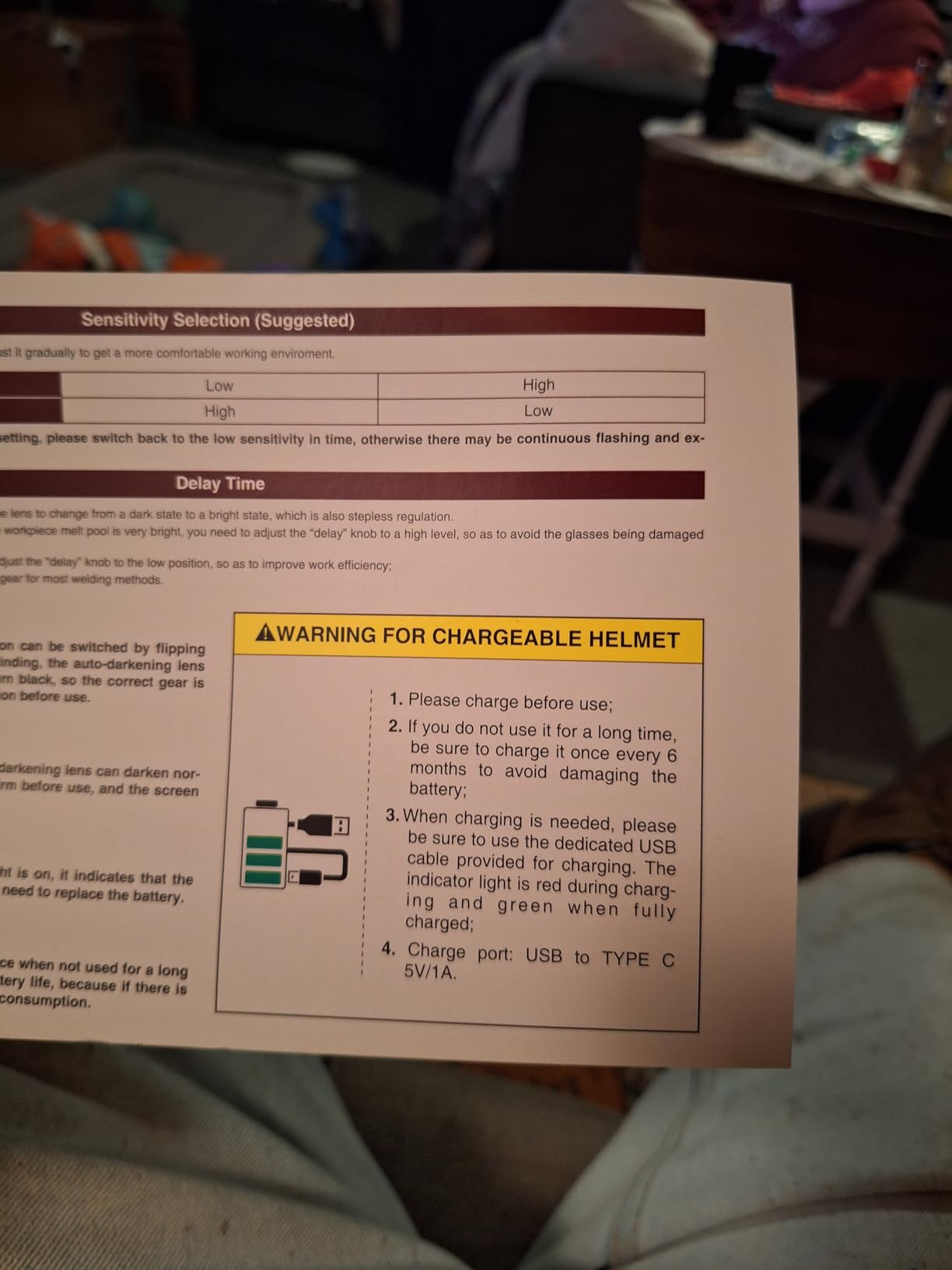
If your sticking point with a small window is that you cannot see your hands, this is the fix. The 3.93 by 3.66 inch true color area is more than twice the usable space of the model above, and several first-time welders in owner reviews say bead quality improved almost immediately because they could finally watch the puddle form.
Four arc sensors handle low-amperage work far more dependably than two, and switching is quoted at one thirty-thousandth of a second. Shade options cover weld, cut and grind from 3 through 5-9 and 9-13, so the same lens handles a flux-cored pass, a cut and a cleanup grind.
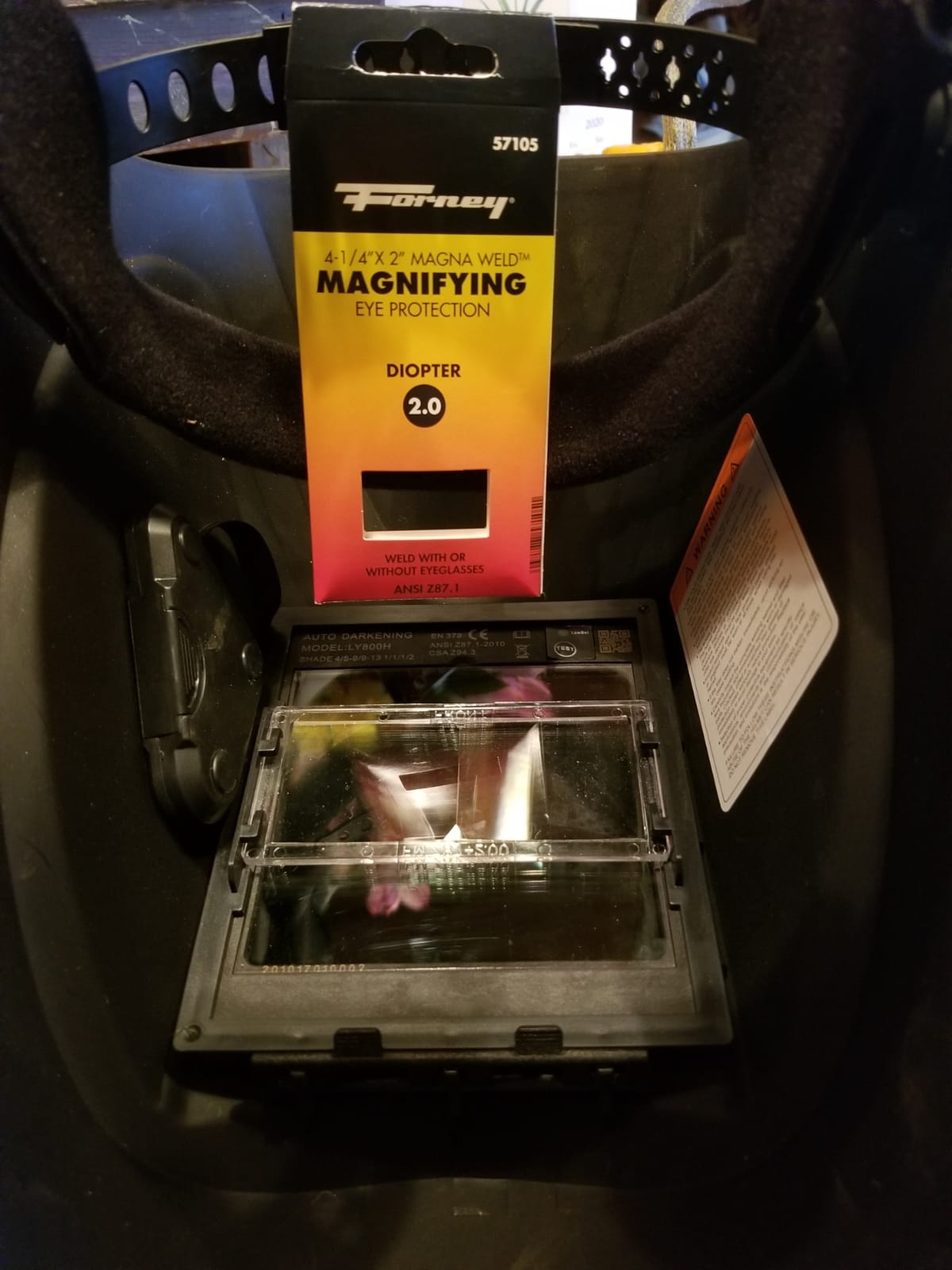
The shell is listed at about 1.32 pounds, which reviewers describe as light and comfortable over long sessions. External shade, delay and sensitivity controls mean you can retune the helmet between a garage and a brighter workshop without taking it off.
Cheater lens compatibility is worth noting if you wear glasses. An outer magnifier drops into the front frame and gives you the extra close-up detail that matters when you are checking whether a fillet weld is full.
Why the wide window changes your first month
A beginner spends most of a session making short runs and restarting. With a small window you are constantly tipping your head to find the joint, and that neck movement is tiring before it is productive. A wide panoramic view lets you hold a natural head position and keep the torch angle visible, which is the fastest route to a repeatable bead.
Four sensors also mean fewer failed first strikes, because a missed detection is the single most frustrating failure mode a new welder hits.
Where it falls short
The hardware is the weak point. Several owners describe the side tightening knobs and the shroud as thin, and a few report the pivot tension loosening until the mask slides forward. Internal lens removal and battery access are also awkward by design, so routine swapping takes more effort than it should. None of that stops you welding, but it is where the money was saved.
We earn a commission, at no additional cost to you. CERTAIN CONTENT THAT APPEARS ON THIS SITE COMES FROM AMAZON. THIS CONTENT IS PROVIDED 'AS IS' AND IS SUBJECT TO CHANGE OR REMOVAL AT ANY TIME.
3. TOOLIOM TL-M800D – Largest Stated True Color Window
TOOLIOM True Color Auto Darkening Welding Helmet with Large View
- 12.9 sq inch true color window
- 1/1/1/1 optics
- 4 arc sensors
- Weld, cut and grind modes
Pros
- Generous 12.9 sq inch viewing window with 1/1/1/1 clarity
- Separate weld
- cut and grind shade modes
- Delay and sensitivity adjustment for different rooms
- Complete kit with battery and three replacement lenses
Cons
- Strap-style closure instead of a ratchet adjuster
- Many shell variants share this listing family
We earn a commission, at no additional cost to you. CERTAIN CONTENT THAT APPEARS ON THIS SITE COMES FROM AMAZON. THIS CONTENT IS PROVIDED 'AS IS' AND IS SUBJECT TO CHANGE OR REMOVAL AT ANY TIME.
The 3.94 by 3.27 inch window is quoted as 12.9 square inches, which is the largest stated true color viewing area we found at this level of spending. Combined with a 1/1/1/1 optical classification and four arc sensors, it puts genuinely good optics in reach of a first-year welder who is still buying machines as often as helmets.
Shade modes are split into weld at 9-13, cut at 5-9 and grind at 3.0, which is a sensible layout for someone who will move between a flux-cored pass, a cutoff disc and a cleanup grind on the same afternoon. Delay and sensitivity both adjust, so the lens can be dialled for a dim garage or a bright doorway.
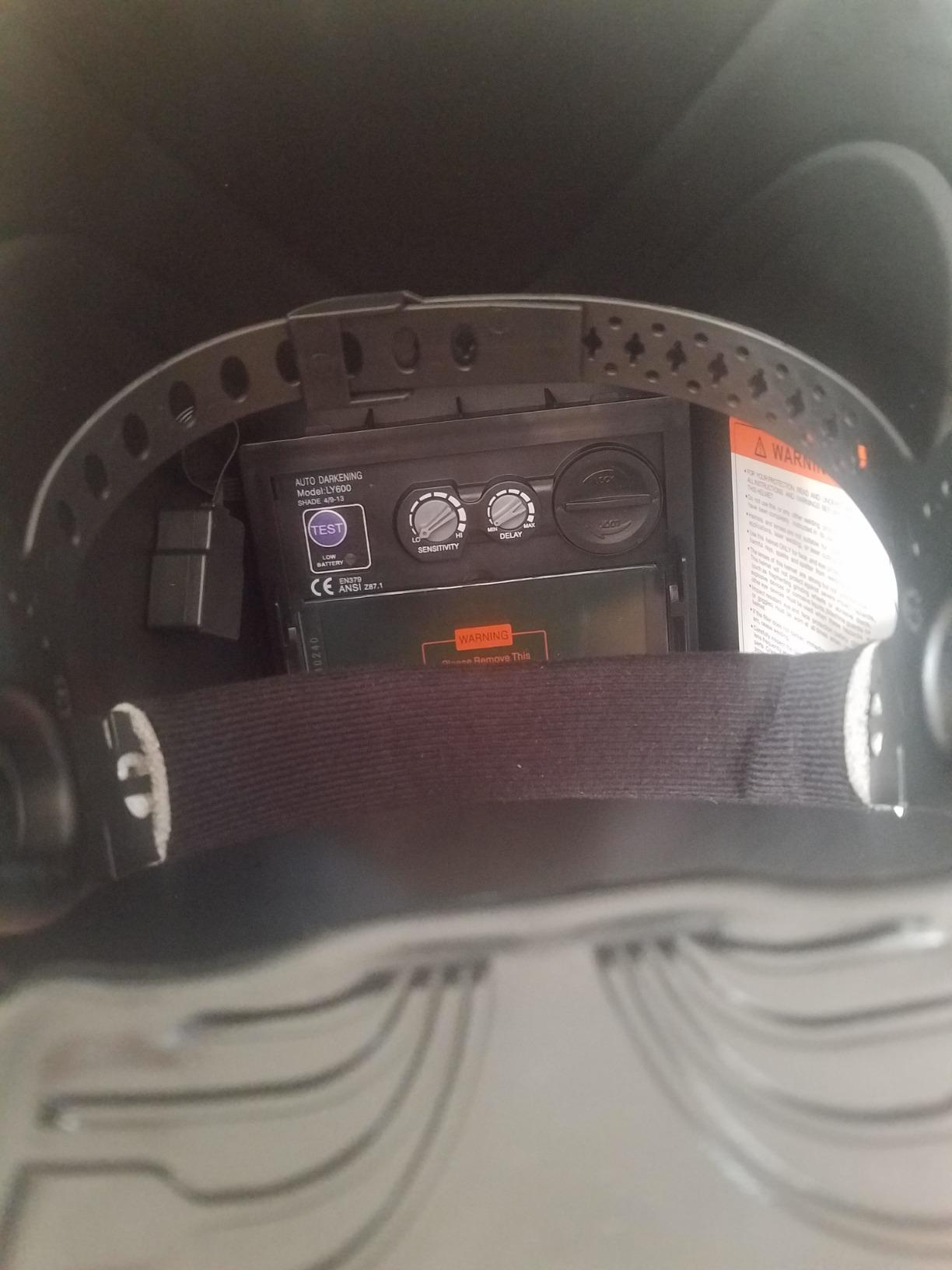
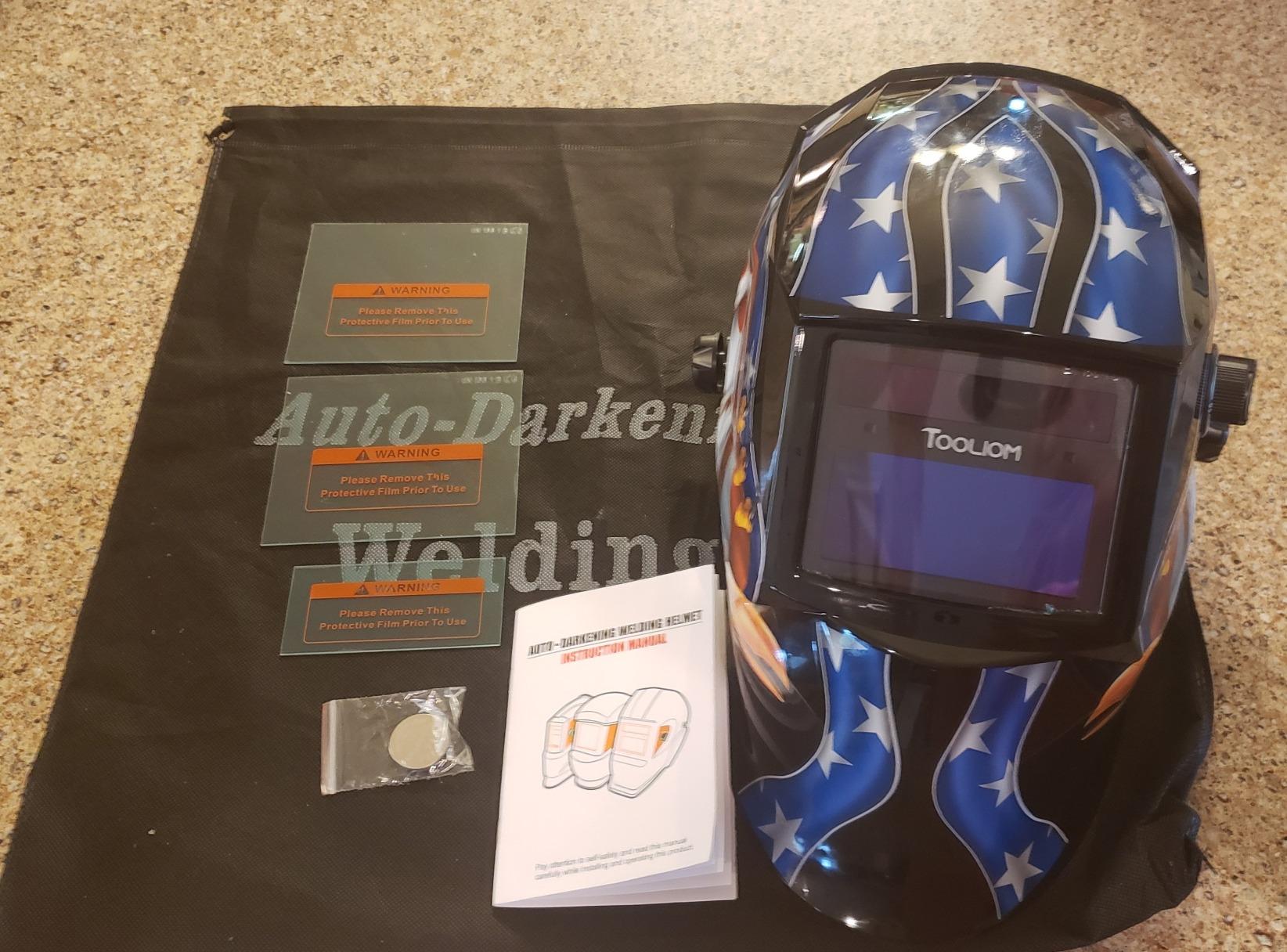
Owner feedback repeatedly highlights how complete the package is. You get the helmet, a replaceable battery, two replacement outer lenses and an inner lens, so the consumables that wear out in the first months are already in the box.
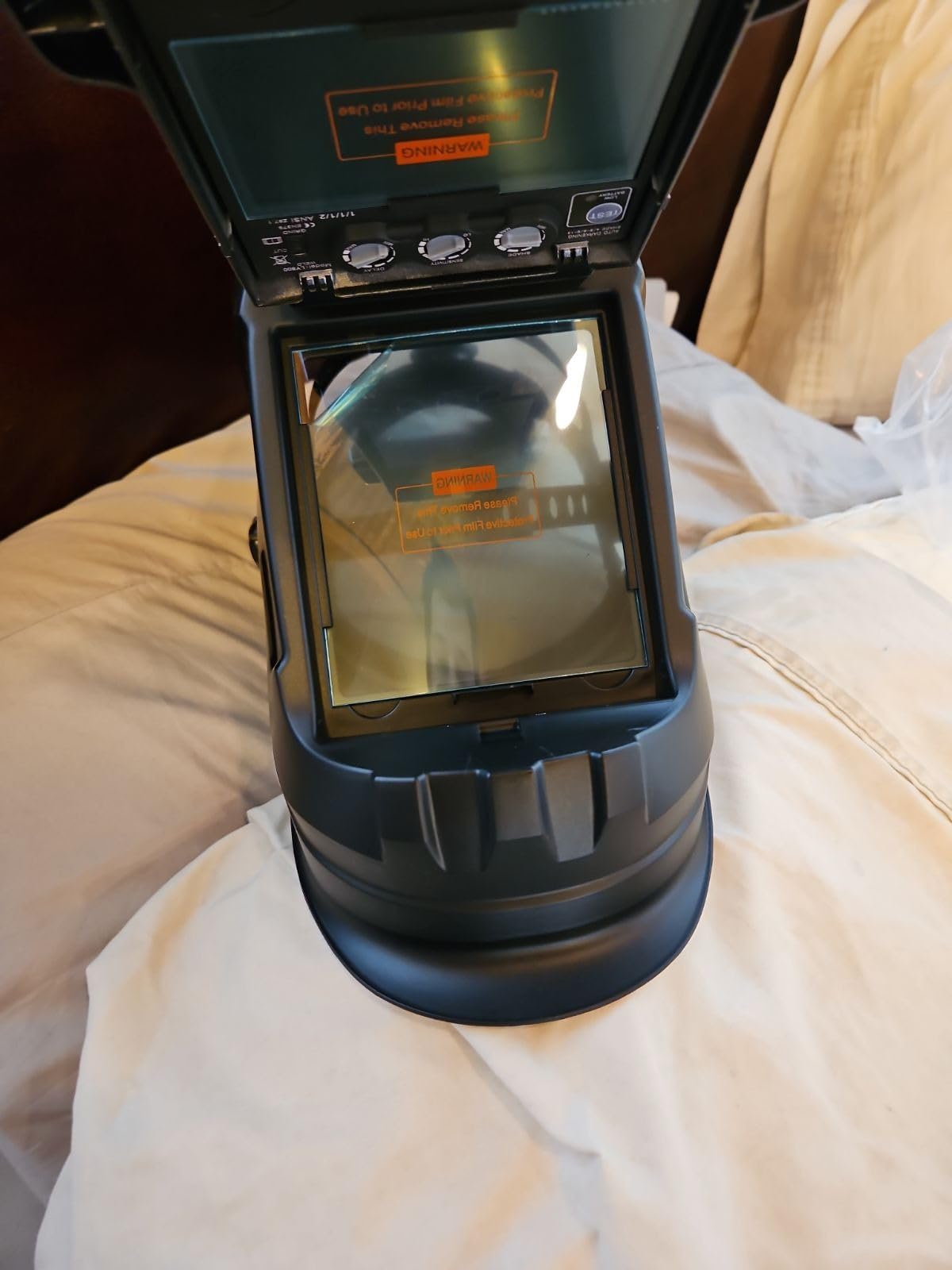
The M800D lens module underneath is the same family used in professional shells, which is a decent sign for longevity. Filters like this tend to survive long after the plastic shell around them starts to crack, and the module is the part you would want to keep.
What you gain from a big window on day one
More window means fewer head tilts, and fewer head tilts means you keep your shoulders square. Beginners who cannot see both sides of the joint tend to compensate with a bad torch angle, and a bad angle learned early is the hardest habit to break later.
It also makes it easier to teach yourself. With a wide view you can watch the puddle shape, the travel speed and the arc length all in one glance, which is the feedback loop that turns practice into skill.
Where it falls short
The strap-style closure is basic compared with a ratchet adjuster, so fit takes more trial and error than a turn-and-click system. Be aware too that this brand runs many shell variants on similar listings with different screen sizes and options, so read the specifications carefully and confirm the model number matches what you want before buying.
We earn a commission, at no additional cost to you. CERTAIN CONTENT THAT APPEARS ON THIS SITE COMES FROM AMAZON. THIS CONTENT IS PROVIDED 'AS IS' AND IS SUBJECT TO CHANGE OR REMOVAL AT ANY TIME.
4. TOOLIOM E600A-A – Best Solar Helmet with a Work Light
TOOLIOM Auto Darkening Solar Powered Welding Helmet for TIG MIG ARC with Light
- Rechargeable dual-beam LED
- 1/25000s switching
- 3.64 x 1.65 inch view
- Solar plus battery
Pros
- Built-in rechargeable light with spotlight and flood modes
- Very light at about 1.14 lb
- External grind switch usable with gloves
- Low battery indicator so you are never surprised
- Solar panel reduces manual charging
Cons
- Cheater lens slot is slightly undersized for standard magnifiers
- Unpadded head strap presses on the back of the head
- Rear band tension needs loosening to stay secure
We earn a commission, at no additional cost to you. CERTAIN CONTENT THAT APPEARS ON THIS SITE COMES FROM AMAZON. THIS CONTENT IS PROVIDED 'AS IS' AND IS SUBJECT TO CHANGE OR REMOVAL AT ANY TIME.
The swivel LED on the front of this helmet is the reason this model shows up here. It runs in two beam modes, spotlight and flood, on a swivel mount, and owners working in dim garages and under vehicles say it turns an awkward job into a workable one. A separate headlamp on a hat band never points where your head does not.
Switching is quoted at one twenty-five-thousandth of a second with external sensitivity and delay knobs, and the shade range runs DIN 3.5 to 9-13 with an external grind control. The view is a smaller 3.64 by 1.65 inch true color window at 1/1/1/1, so this is a light-and-flexibility pick rather than a wide-screen pick.
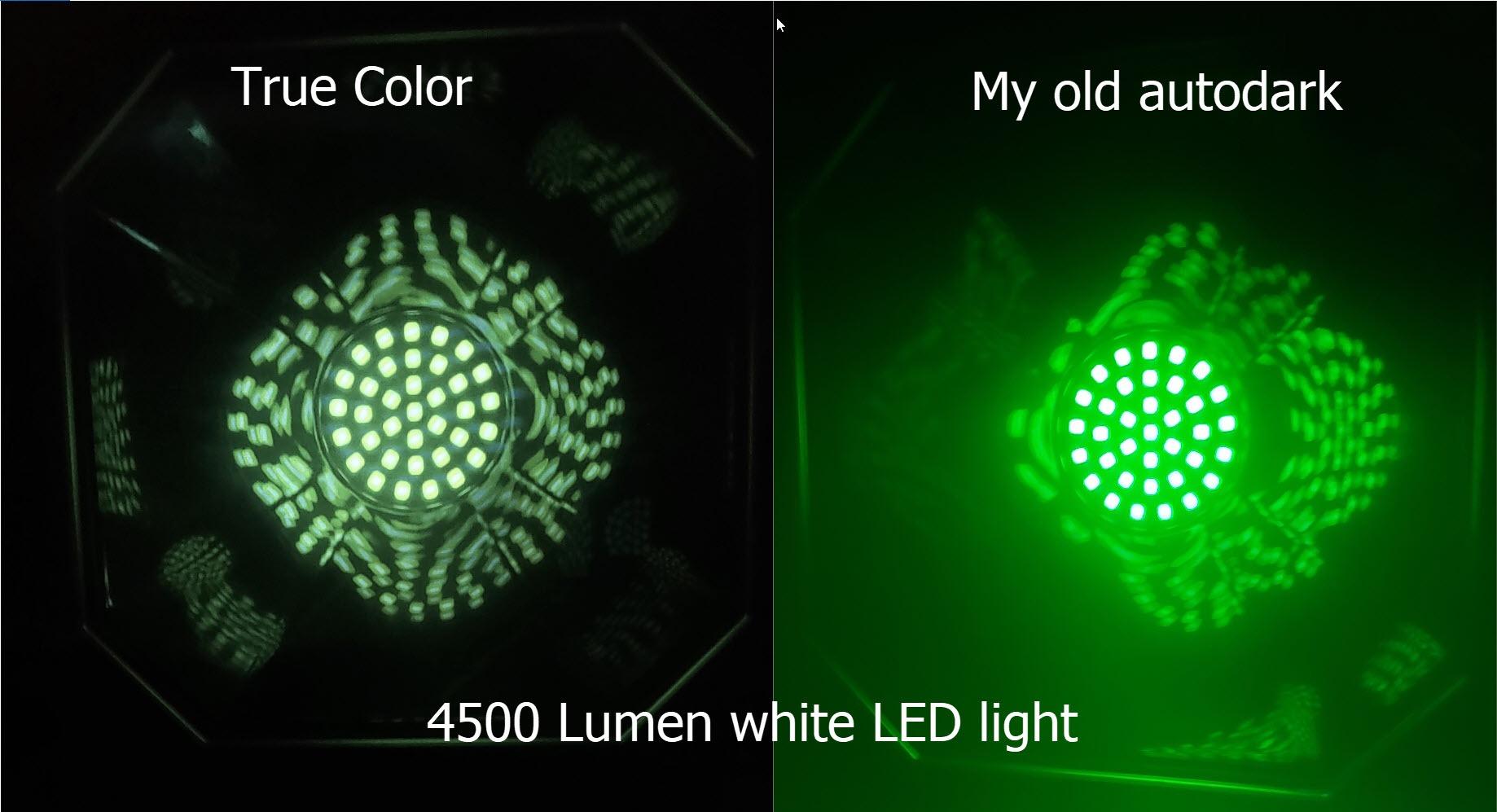
At roughly 1.14 pounds this is one of the lighter shells in the group, and reviewers specifically mention welding upside down under a car as a case where the low weight made the position bearable. A low battery indicator is a small touch that removes the guesswork from a long session.
Solar panel with a replaceable battery means the unit tops itself up in ambient light while still having a cell you can swap. Long-serving owners still mention buying it as a gift years after they bought one, which is a decent signal about how it holds up.
When a built-in light actually earns its place
Any time your work is under something. Under a car, inside a cabinet, on a dark side of a fabrication or anywhere the arc itself does not light the joint, an integrated lamp is a genuine productivity gain rather than a gimmick. A swivel head lets you aim it away from your own eyes, which a hat-mounted light cannot do.
It is also useful in the first months, when you are marking out and tacking in a garage before striking an arc at all.
Where it falls short
The cheater lens slot is a fraction too small for standard 4.25 inch magnifiers, so prescription users need a different model. The head strap is unpadded and reviewers report it pressing on the back of the head over long shifts, and the rear plastic band tension needs adjusting to stay secure. This is a light and feature pick, not a wide-window pick.
We earn a commission, at no additional cost to you. CERTAIN CONTENT THAT APPEARS ON THIS SITE COMES FROM AMAZON. THIS CONTENT IS PROVIDED 'AS IS' AND IS SUBJECT TO CHANGE OR REMOVAL AT ANY TIME.
5. TRQWH KTS-JD03 – Best Starter Kit with Gloves
TRQWH Welding Hood Auto Darkening Welding Helmet with Light True Color
- 1/1/1/2 true color lens
- 1/20000s switching
- USB rechargeable top LED
- Solar plus lithium power
Pros
- Top LED light makes dim shop and night repair work practical
- Includes a pair of welding gloves with the helmet
- Delay range of 0.2s to 1.0s and an external grind button
- Thickened sponge forehead pad for long days
Cons
- Head strap tends to loosen during use
- Shell plastic is brittle and can crack if knocked
- Work light battery fades sooner than the helmet battery
We earn a commission, at no additional cost to you. CERTAIN CONTENT THAT APPEARS ON THIS SITE COMES FROM AMAZON. THIS CONTENT IS PROVIDED 'AS IS' AND IS SUBJECT TO CHANGE OR REMOVAL AT ANY TIME.
This is the pick for anyone buying a first kit rather than upgrading an existing one. It arrives with welding gloves alongside the helmet, which removes the most obvious second purchase on day one. Popular with parents and students buying for teenagers or a first shop class.
Optics are rated 1/1/1/2, a step behind the 1/1/1/1 group in clarity but still a true color view, and the lens uses double liquid crystal layers with one twenty-thousandth of a second light-to-dark switching. The delay range of 0.2 to 1.0 second is wider than most budget units, which helps when you are doing slow positional work rather than fast passes.
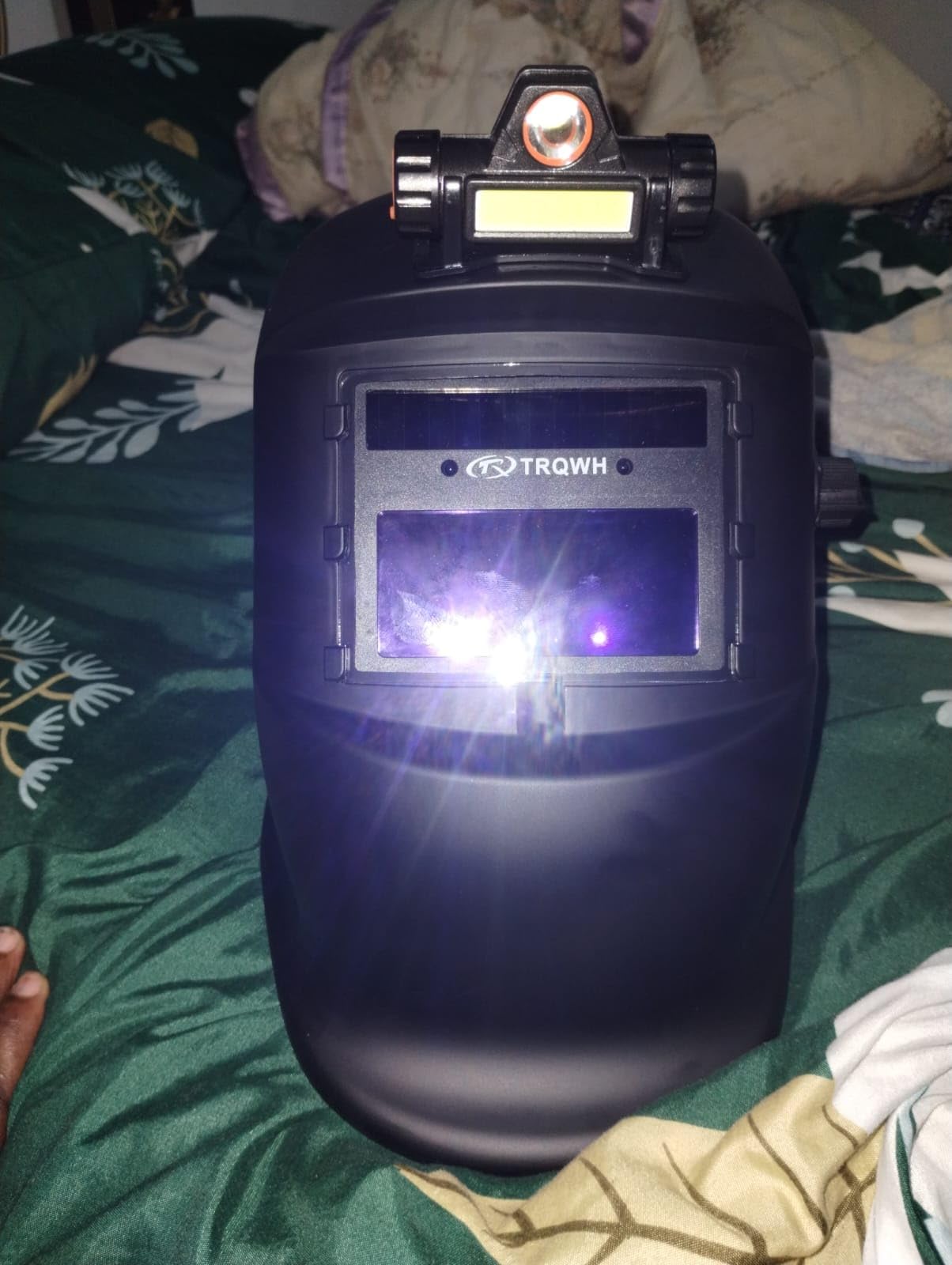
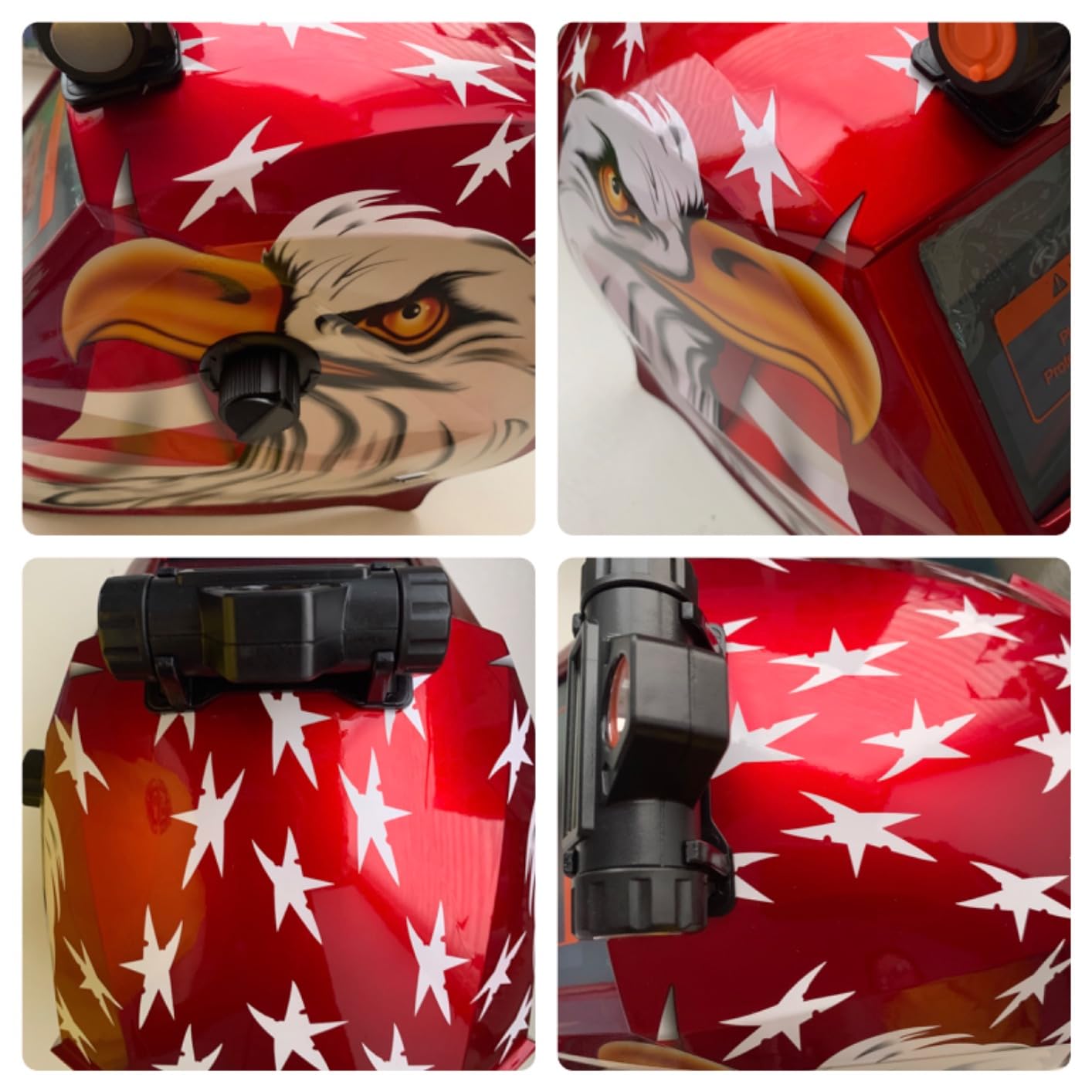
Dual power is a nice safety net. A solar panel supplements a replaceable lithium battery, so a dead cell does not end a project day the way a purely battery-powered filter can. The USB rechargeable top LED handles the dark-bench problem the same way the model above does.
It is also certified to ANSI Z87.1, EN 379 CE and CSA Z94.3, which is a broader certification set than most of the budget shells in this guide carry. That matters if you ever move from a garage to contract work.
Why the delay range matters for a beginner
Delay controls how long the lens stays dark after the arc stops. Too short and the view flashes bright between passes, which is tiring over an afternoon. Too long and you are waiting in the dark at the end of every run. A 0.2 to 1.0 second range gives you room to set it for slow bead work and then shorten it for grinding and fitting up.
For someone still learning, most of your time is spent on short runs with pauses, so a mid-range delay is usually the right starting point.
Where it falls short
The strap loosens during use, owners say, so expect to retighten it between sessions rather than once a month. The shell plastic is brittle and can crack if knocked off a bench, which is a real risk in a working shop. The work light battery fades sooner than the helmet power, and a few buyers note the optics take a little adjusting to.
We earn a commission, at no additional cost to you. CERTAIN CONTENT THAT APPEARS ON THIS SITE COMES FROM AMAZON. THIS CONTENT IS PROVIDED 'AS IS' AND IS SUBJECT TO CHANGE OR REMOVAL AT ANY TIME.
6. NDUUN Shade 4/9-13 – Simple Adjustable Starter
NDUUN Welding Helmet True Color Auto Darkening Hood with Adjustable Shade Range 4/9-13 for TIG MIG ARC Welder Mask
- Shade 4/9-13 dark state
- 2 arc sensors
- 3/10000s switching
- DIN4 light state
Pros
- Complete kit with storage bag
- glove and spare lens
- True color view clear enough to wear glasses under
- Adjustable headband with a light 1.2 lb shell
- Simple external controls that are quick to learn
Cons
- Thin plastic shell compared with professional helmets
- Small 3.62 x 1.65 inch viewing area
- Lens cover scratches and pits with repeated use
We earn a commission, at no additional cost to you. CERTAIN CONTENT THAT APPEARS ON THIS SITE COMES FROM AMAZON. THIS CONTENT IS PROVIDED 'AS IS' AND IS SUBJECT TO CHANGE OR REMOVAL AT ANY TIME.
Stick welding is where this one makes sense. A dark state of 9-13 covers 1/16 inch electrodes comfortably, and external sensitivity and delay controls let you tune the lens for the spitting, popping arc that flux-cored and stick produce. If your plan is a home stick machine and nothing else, the simpler feature set is a fair trade.
Switching is quoted at three ten-thousandths of a second, the slowest figure in this group, though at the amperages stick beginners use the difference is not something you will notice. The light state is DIN 4, so the view before you strike is bright and neutral rather than dim.
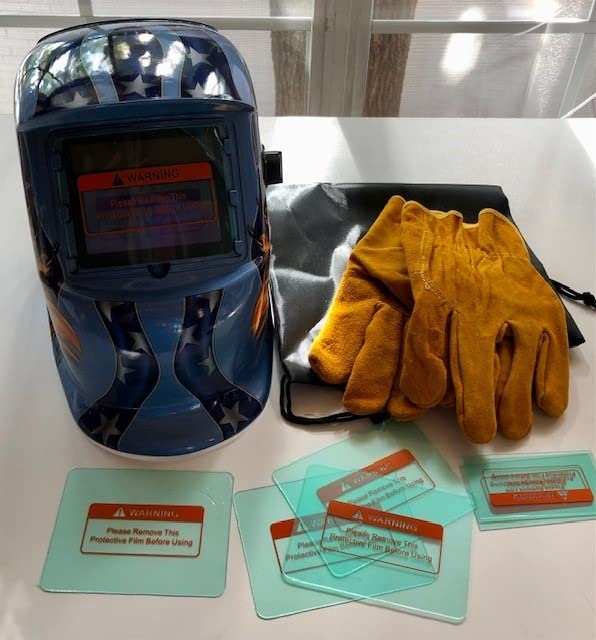
Owners like that the true color view is clear enough to wear prescription glasses underneath, which is a problem on helmets with a narrow frame. The 1.2 pound shell and adjustable headband keep it light on long practice days, and it arrives with a storage bag, a glove and a spare lens.
Solar panel charging with battery power means it recovers between sessions without you remembering a charger. For someone who welds a few hours on a weekend, that is a real convenience.
Is the slowest switching speed here a problem?
Not for beginner stick work. Reaction time only becomes obvious at very low amperage TIG, where the arc is faint enough that a sensor can miss it. At the amperages a first stick weld runs at, the arc is bright and any of these lenses will darken well before the flash reaches your eye.
The practical difference between three ten-thousandths and one thirty-thousandth of a second is far smaller than the difference between a two-sensor and a four-sensor array on the same machine.
Where it falls short
Build thinness is the recurring theme in owner feedback. The plastic shell is flimsier than professional shells, and the lens cover scratches and pits quickly with repeated spatter, which eventually costs you view clarity. The 3.62 by 1.65 inch window is also small, and some owners report shade adjustment takes a few attempts to dial in. It suits occasional garage work more than daily shop use.
We earn a commission, at no additional cost to you. CERTAIN CONTENT THAT APPEARS ON THIS SITE COMES FROM AMAZON. THIS CONTENT IS PROVIDED 'AS IS' AND IS SUBJECT TO CHANGE OR REMOVAL AT ANY TIME.
7. Sunstac SS-A800D – Most Versatile Process Coverage
Sunstac Auto-Darkening Welding Helmet 3.94 x 3.27″ View with Light
- 3.94 x 3.27 inch true color view
- 4 arc sensors
- 1/30000s darkening
- Shade 4/5-9/9-13
Pros
- Large viewing area with no over-darkening on report
- Rechargeable swivel work light with two brightness modes
- Internal padding and multiple fit adjustments
- Cheater lens compatible for prescription users
Cons
- Filter can take a moment to engage on the first strike
- Battery compartment is difficult to reach
- Side tension buttons feel delicate
- Deep headpiece can hit glasses on smaller heads
We earn a commission, at no additional cost to you. CERTAIN CONTENT THAT APPEARS ON THIS SITE COMES FROM AMAZON. THIS CONTENT IS PROVIDED 'AS IS' AND IS SUBJECT TO CHANGE OR REMOVAL AT ANY TIME.
This one covers more processes than anything else in the group at a similar level. The shade range runs 4 and 5-9 and 9-13, and the manufacturer lists stick, TIG, MIG, cut, MMA, plasma and grinding as supported. For a beginner who has not decided which process to specialise in yet, that breadth removes the argument for replacing the helmet later.
It also pairs four arc sensors with a quoted one thirty-thousandth of a second darkening time, so low-amperage TIG and stick both detect reliably. The 3.94 by 3.27 inch window is true color 1/1/1/1, and dual power covers both solar and lithium so the light does not depend on one system.
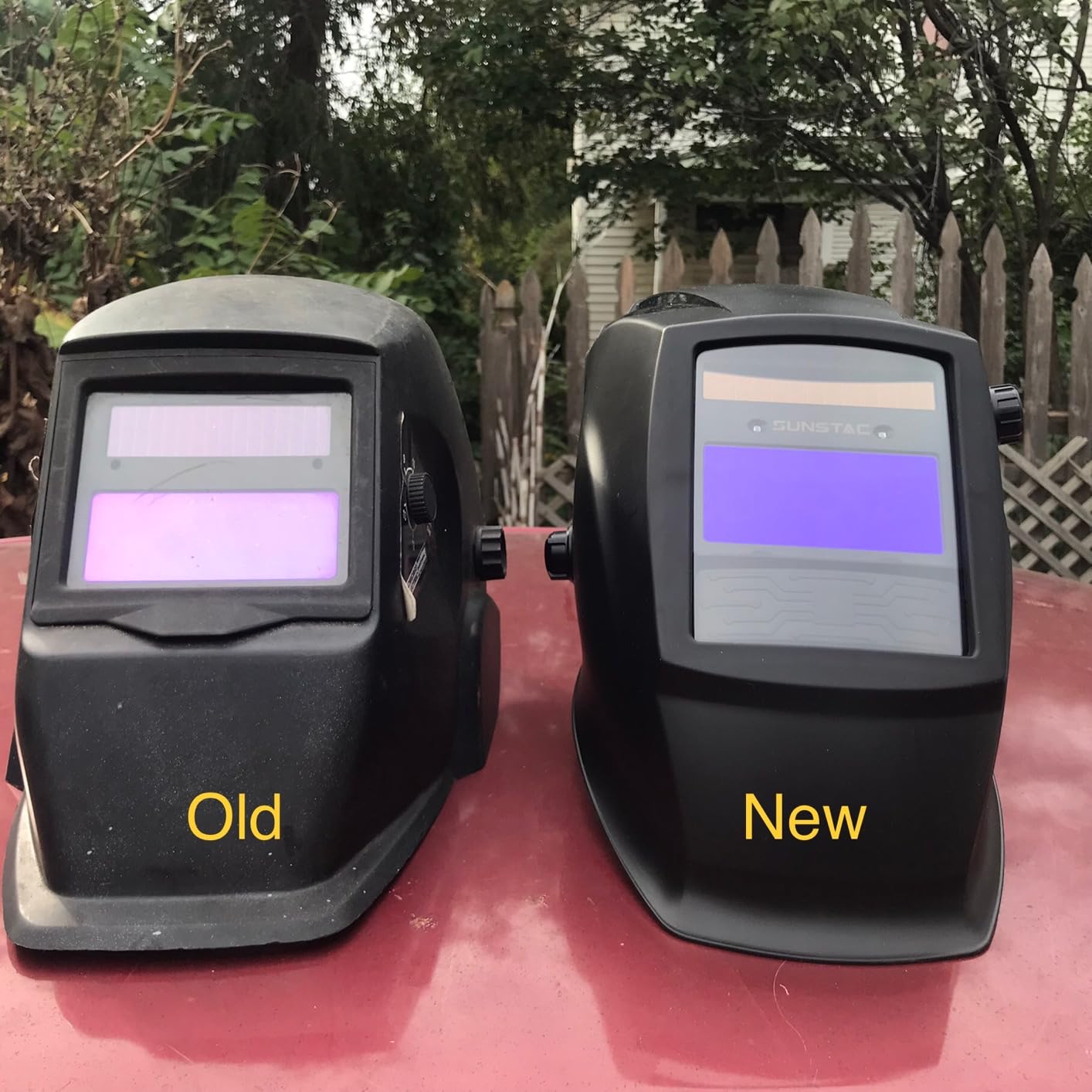
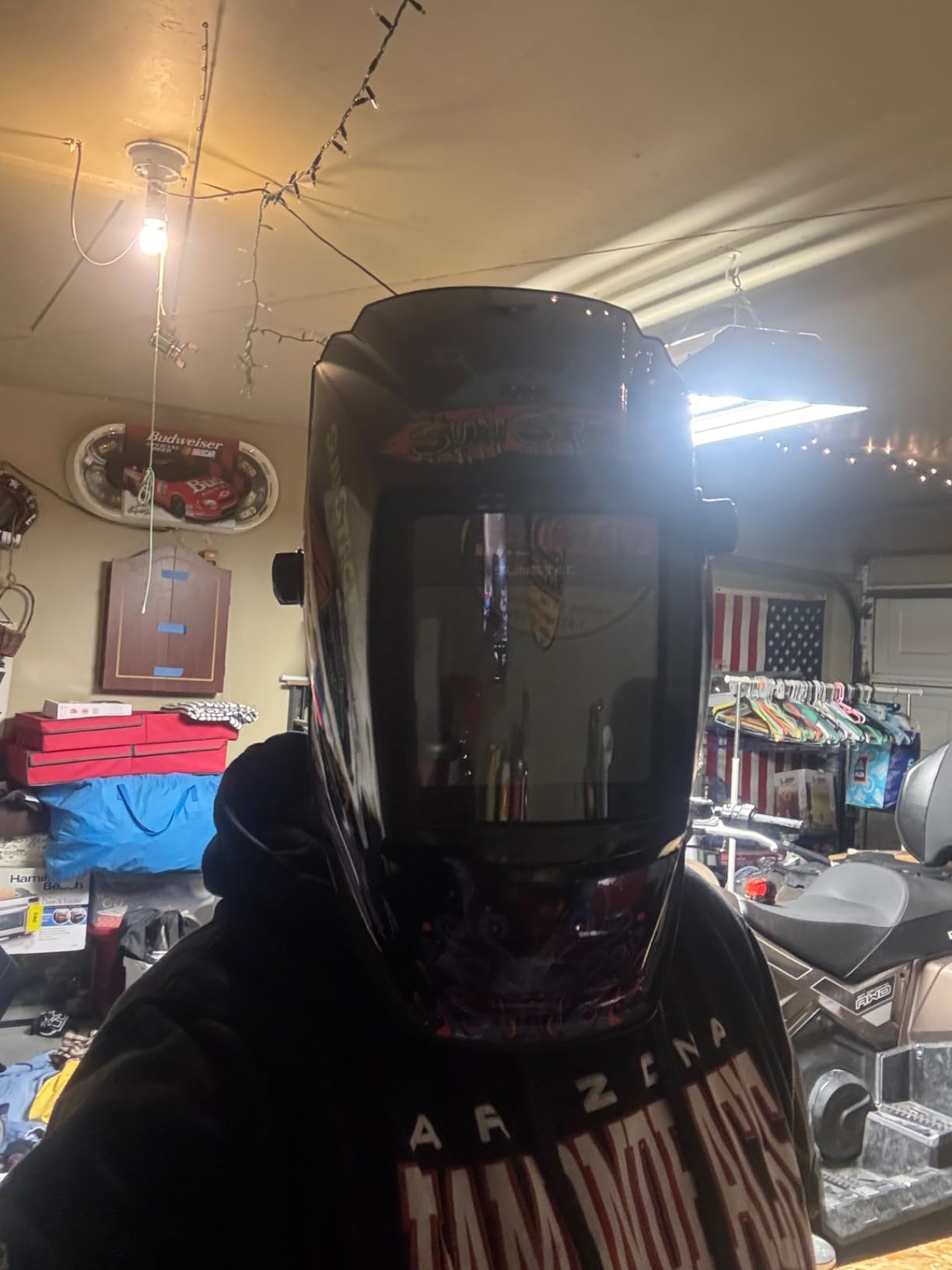
Several owners say they swapped out a more expensive branded helmet with this one, which tells you where it sits in the value conversation. The rechargeable auxiliary light has two beam modes on an adjustable swivel, and internal padding with multiple fit adjustments makes it workable for long sessions.
Cheater lens support is sold separately but fits the frame, so if you need magnification for close inspection work you have a path to it without changing helmets.
Why process coverage beats premium features for a beginner
Most beginners try two or three processes in their first year. Someone starts on MIG for speed, tries stick to understand filler metal control, and often gets talked into TIG for thinner material and better control. A helmet rated for all three means you are not buying again at the point where you are still deciding whether you enjoy the work.
Plasma cutting coverage is a quiet bonus, because cutting slag throws light that a shade range not rated for it will pass through.
Where it falls short
The filter can take a beat to engage, which looks like a fault the first time it happens and disappears once you understand it. The battery compartment is hard to reach and the side tension buttons feel delicate enough that owners worry about the mask flopping down. The deep headpiece can hit glasses on smaller heads, and the solar panel supplements rather than fully recharges the battery, so plan on checking the cell occasionally.
We earn a commission, at no additional cost to you. CERTAIN CONTENT THAT APPEARS ON THIS SITE COMES FROM AMAZON. THIS CONTENT IS PROVIDED 'AS IS' AND IS SUBJECT TO CHANGE OR REMOVAL AT ANY TIME.
8. SONNLER WH-0130 – Best Bundle of Spare Lenses
Welding Helmet Auto Darkening,SONNLER Large Viewing 3.94″ *3.66″1/1/1/1 True Color Welding Helmet, Solar/Battery Power Welding Hood With 4 Arc Sensor,Wide Shade 4~5/9-9/13 Welding Mask For TIG MIG ARC
- 3.94 x 3.66 inch true color view
- 4 arc sensors
- 1/25000s switching
- DIN 16 UV/IR protection
Pros
- Large 3.94 x 3.66 inch true color screen
- Four arc sensors detect low amperage reliably
- Ten replacement lenses and two batteries in the box
- Sponges line the headgear to absorb sweat
- One year warranty
Cons
- Basic shell with minimal adjustment range
- Lightweight shell in a large frame
- Less field testing than the better-known models
We earn a commission, at no additional cost to you. CERTAIN CONTENT THAT APPEARS ON THIS SITE COMES FROM AMAZON. THIS CONTENT IS PROVIDED 'AS IS' AND IS SUBJECT TO CHANGE OR REMOVAL AT ANY TIME.
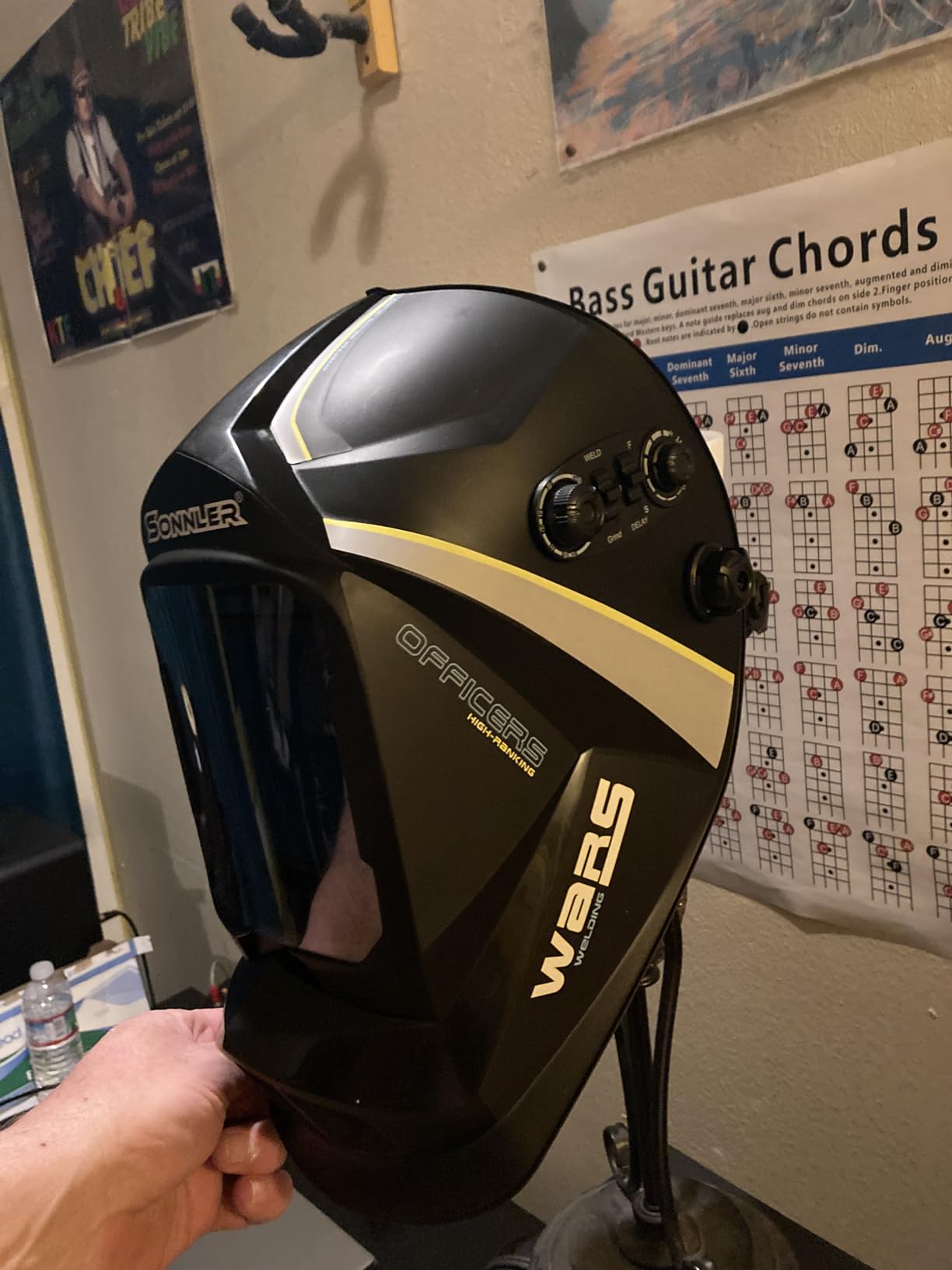
The consumables are the story here. You get six replacement outer shields, four replacement inner shields and two button batteries, plus a storage bag. Outer lenses are the part that pits from spatter and blocks your view after a few sessions, so having a stack of them removes the most common reason a new welder ends up with a scratched lens and no way to fix it.
Specs are respectable for the level. A 3.94 by 3.66 inch 1/1/1/1 true color window, four arc sensors, one twenty-five-thousandth of a second switching, and shade options at 4 and 5-9 and 9-13. Protection extends automatically to DIN 16 with continuous UV and IR filtering in both states.
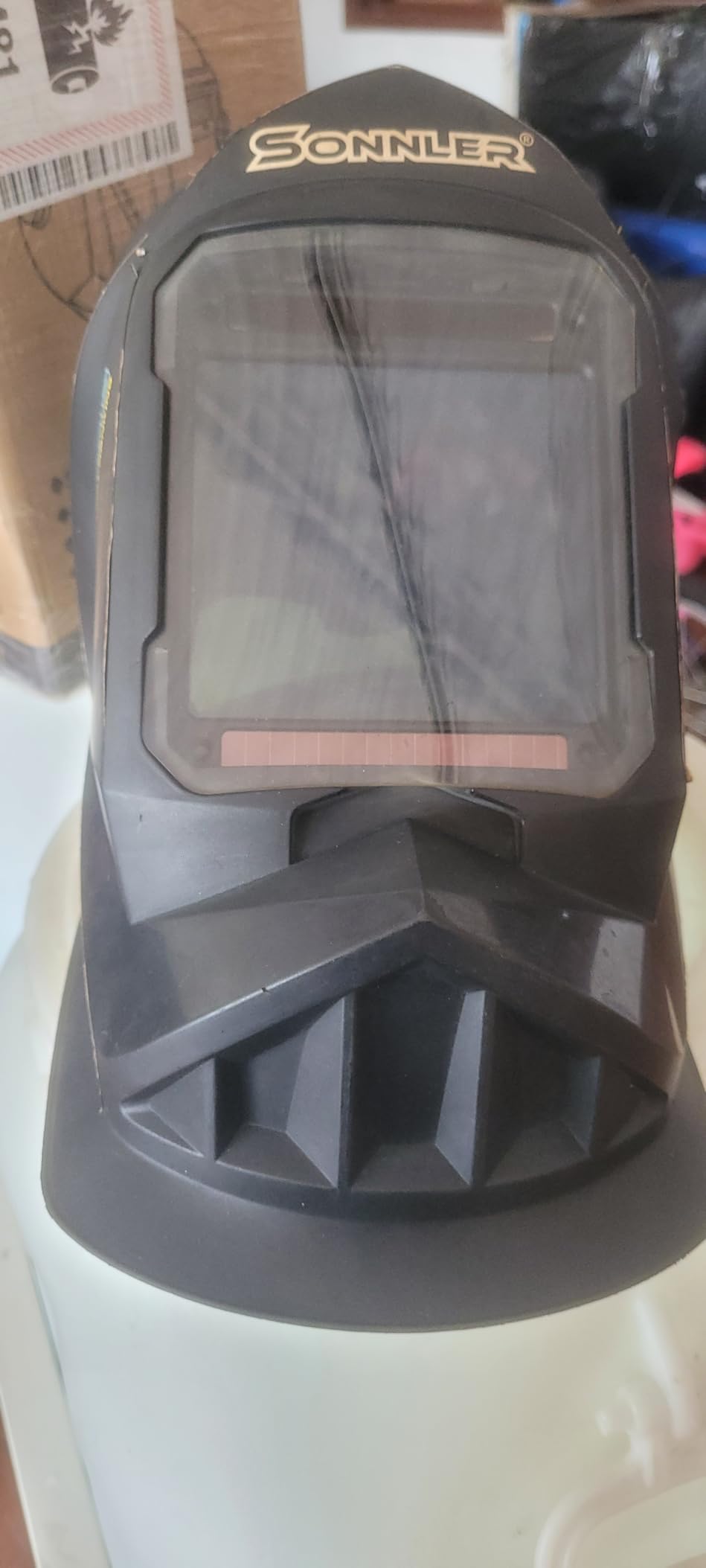
External delay and sensitivity knobs mean you can adjust the lens in gloves, and solar plus replaceable button battery power covers both long sessions and forgotten chargers. The sponge-lined, sweat-absorbent headgear stays put better than a bare strap, which matters once you start sweating halfway through a bead.
A one year warranty is longer than the 30 day period some budget listings carry, and it covers the electronics rather than just the lens. That is a meaningful difference on a product you expect to keep.
Replacement lens cost is the cost beginners forget
Every auto darkening filter has two consumables. The inner auto-darkening filter is the expensive one and usually lasts years, while the outer clear cover lens takes the spatter and gets scratched within months. Budget for a spare outer lens from the start, because a pitted outer lens is the most common cause of a helmet that suddenly looks blurry and gets blamed on the electronics.
Models with a stack of spares included effectively pre-pay a year of that cost, which is why this pick appeals to people learning on a strict budget.
Where it falls short
The shell is basic with minimal adjustment range, so fit is less refined than a ratchet or multi-point headgear. It is also the least field-tested model in this guide, with a lower sales rank and a wider spread of middling ratings than the better-known brands. Treat it as solid occasional-use equipment rather than a daily shop helmet.
We earn a commission, at no additional cost to you. CERTAIN CONTENT THAT APPEARS ON THIS SITE COMES FROM AMAZON. THIS CONTENT IS PROVIDED 'AS IS' AND IS SUBJECT TO CHANGE OR REMOVAL AT ANY TIME.
9. Accoral AC-850BS – Budget True Color Pick
Accoral Auto-Darkening Welding Helmet, True Color, Shade 4/9-13
- 3.64 x 1.67 inch true color view
- 2 arc sensors
- 1/25000s switching
- Solar plus lithium
Pros
- Entry-level true color with a 4.6 average rating from owners
- Large side buttons work with gloves on
- Very clear right up to the moment the arc strikes
- Includes a lithium battery with solar charging
Cons
- Headband adjustment loosens and needs retightening
- Shade and sensitivity take a few attempts to match your style
- Two sensors make low-amp TIG less reliable
- Small viewing area
We earn a commission, at no additional cost to you. CERTAIN CONTENT THAT APPEARS ON THIS SITE COMES FROM AMAZON. THIS CONTENT IS PROVIDED 'AS IS' AND IS SUBJECT TO CHANGE OR REMOVAL AT ANY TIME.
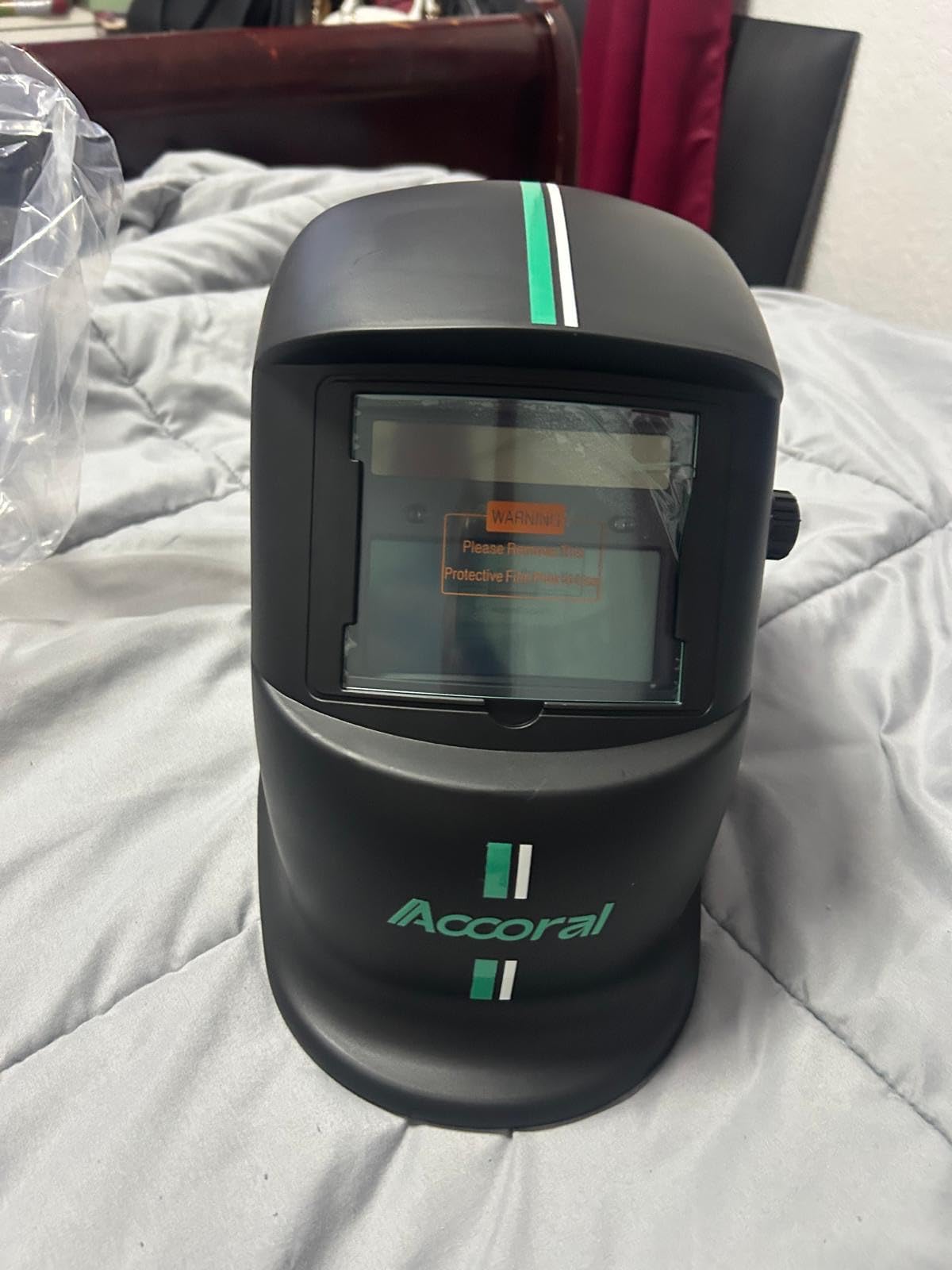
This is the floor-setter for true color in this roundup, and it carries the highest share of top ratings among the entry-level models in owner feedback. Buyers coming off a fixed-shade helmet often describe the change as transformative, because the shock of a darkening filter the first time is exactly what stops people buying one.
Controls are large side-panel buttons for shade, sensitivity and delay, which is the right call for a beginner working in gloves on a first project. Switching is quoted at one twenty-five-thousandth of a second, shade runs 4 and 9-13, and the pivoting headgear has adjustable tension.
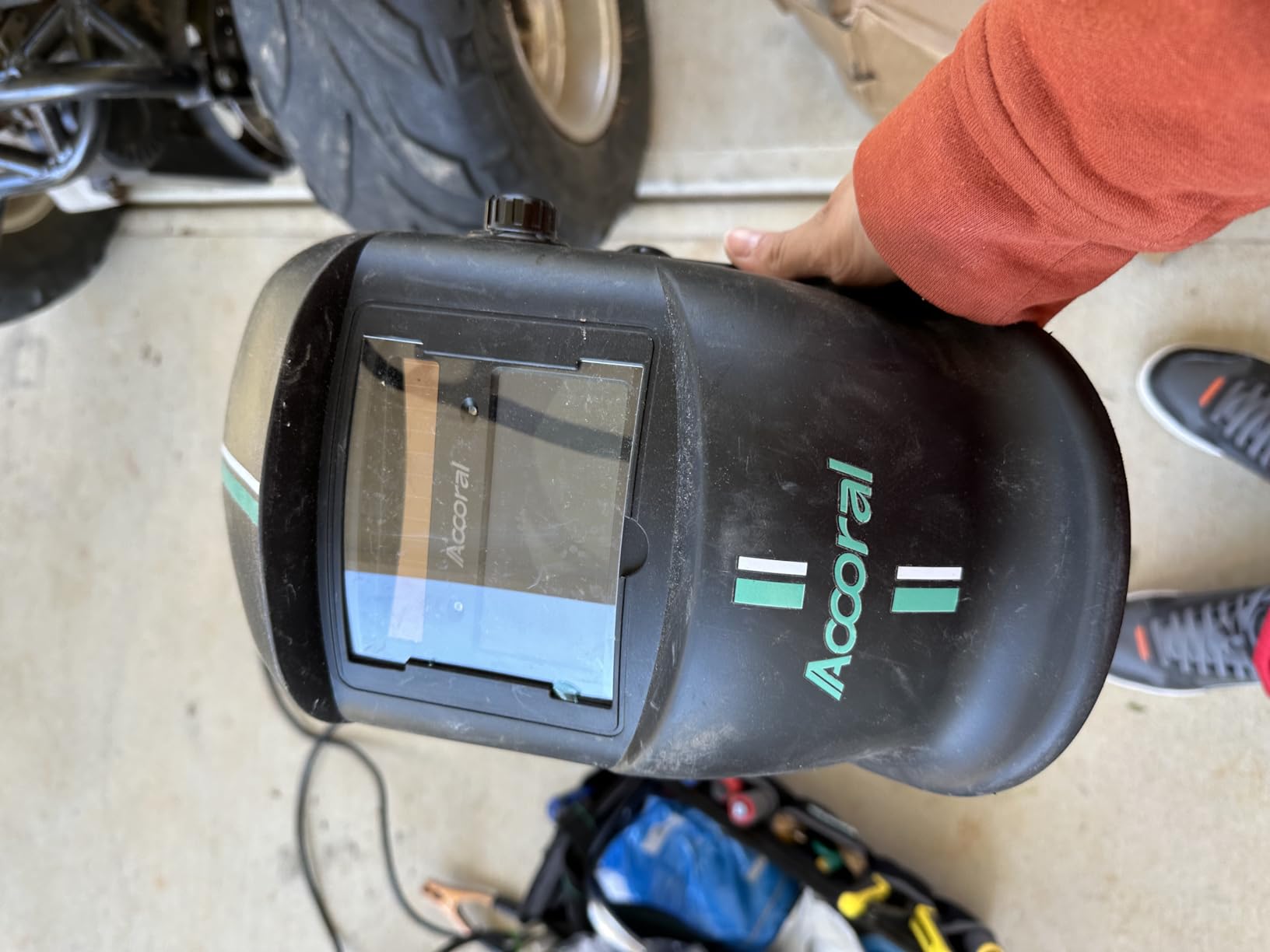
Solar panel plus a high-capacity lithium battery means a single charge carries through a long session, and the 1/1/1/1 lens stays clear until the arc strikes. At 1.9 pounds it is not the lightest shell here, but the weight is evenly distributed and reviewers do not single it out as tiring.
The honest limitation is that this is a small-window helmet. The 3.64 by 1.67 inch area gives you a usable look at the joint but not much context around it, so it works best for flat practice coupons and simple joints rather than detailed assembly work.
When the entry-level model is genuinely enough
If you are on flat mild steel with a MIG machine and you are practising bead placement on coupons, the extra viewing area of a premium shell does not buy you much. The things that matter for learning, namely a reliable darkening trigger and a clear view of the puddle, are all present here.
It also has a low replacement risk. If it does not suit, the money lost is small compared with a name-brand shell, which makes it a low-pressure first purchase.
Where it falls short
The headband adjustment loosens and needs retightening, which is the one complaint that comes up repeatedly. Two arc sensors mean low-amperage TIG can be unreliable, so pick a four-sensor model if TIG is your process. Shade and sensitivity settings take a few attempts to match your own style, and the viewing area is small.
We earn a commission, at no additional cost to you. CERTAIN CONTENT THAT APPEARS ON THIS SITE COMES FROM AMAZON. THIS CONTENT IS PROVIDED 'AS IS' AND IS SUBJECT TO CHANGE OR REMOVAL AT ANY TIME.
10. Hobart 770890 – Best Helmet to Buy Once
Hobart 770890 Auto-Darkening Welding Helmet, Large, Black
- 9.3 inch PureColor widescreen view
- 4 independent arc sensors
- Auto on and off at arc strike
- Two year warranty
Pros
- Highest average rating in this roundup at 4.7
- Very large 9.3 inch widescreen with accurate color
- Four independent sensors give dependable detection
- Simple analog knobs that are easy to set
- Backed by a two year manufacturer warranty
Cons
- Costs several times more than the entry-level models
- Analog dials instead of a digital readout or presets
- Only a protective lens kit included with the helmet
We earn a commission, at no additional cost to you. CERTAIN CONTENT THAT APPEARS ON THIS SITE COMES FROM AMAZON. THIS CONTENT IS PROVIDED 'AS IS' AND IS SUBJECT TO CHANGE OR REMOVAL AT ANY TIME.
If you would rather buy one helmet and stop thinking about it, this is the pick. It is the only name-brand welding manufacturer in the group, it carries the highest average owner rating here at 4.7, and the scoring is the most consistent across the whole review base. For a known brand, a two year manufacturer warranty and a protective lens kit included in the box are the details that reduce replacement anxiety.
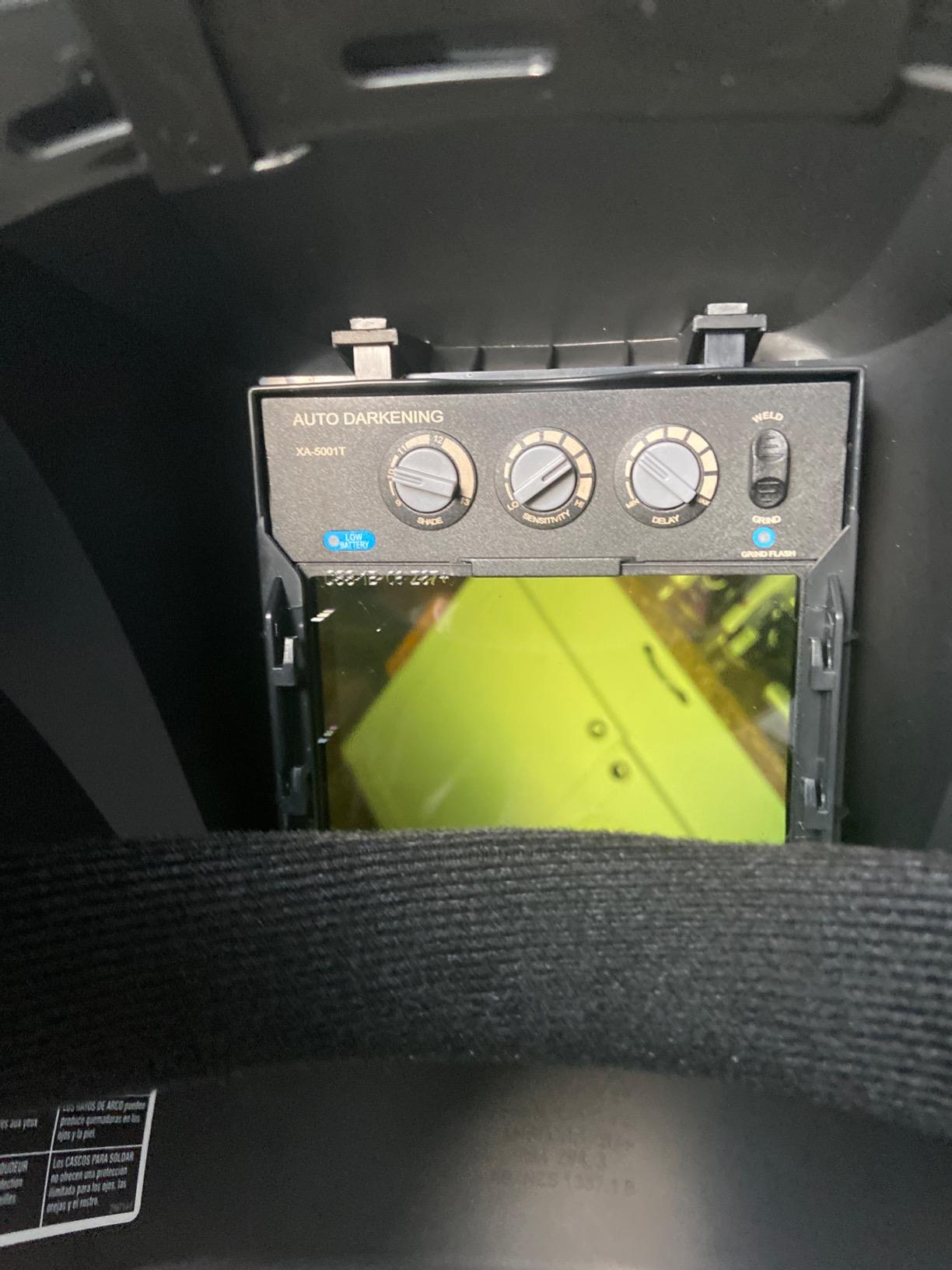
The 9.3 inch widescreen PureColor lens is the largest viewing area listed in this guide by a wide margin, and owners describe the color as accurate rather than green-tinted. Four independent arc sensors detect consistently, and the auto-on and auto-off power control triggers at arc strike, so there is no button hunting in poor light.
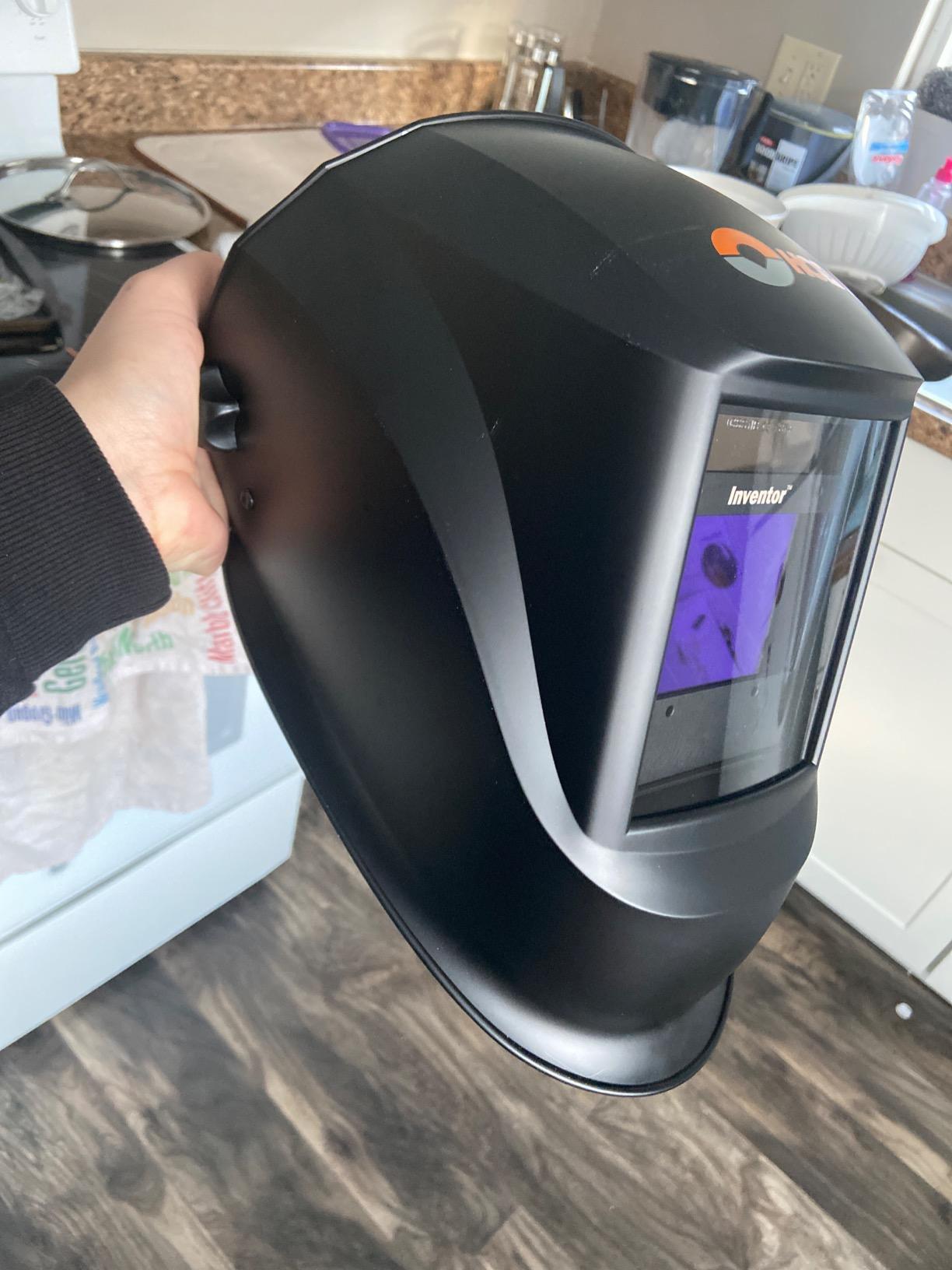
Controls are analog shade, sensitivity and delay knobs, which is a genuine advantage for a beginner. A beginner has no use for a digital menu with memory presets and mode cycling, and a dial you can turn to a number you can remember is easier to learn than anything else.
Weld to grind mode switching on the front means one helmet covers your cutting and cleanup as well as your welding, and the polyamide nylon shell is a step up in toughness from the thin plastic on the budget models. At 1.25 pounds it stays comfortable for a full session.
What the extra money actually buys
Three things, and they are real. A viewing area large enough to see the whole joint and both hands without moving your head, a lens module that stays optically clear for years rather than months, and a warranty that covers the electronics. Those matter most if you already know you will be welding for years rather than trying it once.
It also solves the parts problem. A known manufacturer means replacement lenses, headgear and filters are available for years after a purchase, which is not something you can say about every off-brand shell in this guide.
Where it falls short
It costs several times more than the entry-level models, and for a beginner who may try welding twice and stop, that is a lot of money for unused capability. There is no digital readout or preset memory, which some buyers see as a limitation even though it is a benefit for a first-timer. Only the protective lens kit is included, so a full kit means buying more before you start.
We earn a commission, at no additional cost to you. CERTAIN CONTENT THAT APPEARS ON THIS SITE COMES FROM AMAZON. THIS CONTENT IS PROVIDED 'AS IS' AND IS SUBJECT TO CHANGE OR REMOVAL AT ANY TIME.
How to Choose an Auto Darkening Welding Helmet
An auto darkening welding helmet uses photo sensors to detect the brightness of an arc, then switches a liquid crystal filter from a clear light state to a dark welding shade in milliseconds. That removes the flipping and the shade swapping that define a fixed-shade helmet, and it is the reason these have replaced passive models almost everywhere. Understanding that process is step one; the rest is knowing which numbers actually change your experience as a beginner.
What optical clarity ratings like 1/1/1/1 mean
Optical clarity is graded on a scale where 1 is the highest level and higher numbers indicate a drop in some attribute. The first number is optical clarity, the second is light transmission, the third is chromatic fidelity, and the fourth is auto darkening filter performance. A 1/1/1/1 rating is the best available classification, which is why it appears so often in this roundup.
A 1/1/1/2 rating is not a safety downgrade. It means the filter performs marginally below top grade in one attribute, typically the auto darkening filter performance figure, while the view you get through it remains clear and color-accurate. For a beginner the practical difference is subtle, which is why the fifth pick in this guide is an excellent helmet despite not carrying the top rating.
Arc sensors and the TIG low-amp warning
Arc sensors are the photo sensors that decide how quickly and how reliably the filter reacts. Two sensors work well for MIG and stick at typical household amperages, but they can fail to detect the faint, steady arc produced by low-amperage TIG. Four sensors are the safer choice if TIG is the process you plan to learn, and they cost very little to prefer.
This is the single most useful warning in this guide. A helmet that never darkens on your first tentative TIG strike is not a cheap mistake to learn from, because you get a full arc flash to the face. If you are unsure, buy four sensors.
How fast the lens needs to switch
Switching speeds in this group range from three ten-thousandths of a second up to one thirty-thousandth, and the difference rarely matters for beginner work. What matters far more is that the sensor array detects the arc at all, because a fast lens with two sensors will still miss a faint TIG arc.
Where speed does show up is when you are doing long sessions and rapid starts. Owners of premium lenses report noticeably less flicker and steadier behaviour on MIG starts, so a faster rating is a mild quality signal rather than a safety requirement.
Shade range for your first welds
Shade numbers describe how dark the filter gets, and higher numbers mean more protection. A beginner sticking with 1/16 inch electrodes is usually in the 9 to 13 range, and MIG on thin mild steel is comfortable in the same band. Wider ranges from DIN 4 upward give you a light state for working and a dark state for the arc, plus a grind setting at the light end.
If you plan to cut and grind with the same helmet, check that the range includes a low shade for those tasks. A helmet that only covers 9-13 is a welding-only tool and you will end up buying a second one for cleanup work.
Solar assist versus battery power
Solar powered does not mean the helmet needs no battery. In practice it means a small panel trickles charge into a cell while you work, and the cell powers the electronics and the filter. Purely battery-powered units last longer between charges but fail completely when the cell dies, which is a known problem in older or neglected helmets.
Dual power is the safest option, and most of the models here offer it. The practical failure mode to know about is a dying cell that will not hold a charge, which shows up as a lens that stays light or flickers on the first strike rather than as anything more dramatic.
Headgear, weight and neck strain
Shell weight matters more than most spec sheets admit, because a helmet that feels heavy on hour one feels unbearable by hour three. The lightest shells in this guide sit around 1 to 1.25 pounds, and owners doing full workshop weeks frequently cite weight as the reason they replace a helmet. Neck fatigue accumulates quietly over a session.
Fit matters as much as weight. Look for a ratchet or multi-point adjuster, a padded forehead band, and a headgear that holds the raised position when you walk around a shop. An unpadded strap pressing on the back of your head is a common complaint at this price level, and cheap knob hardware on side tension points is where budget shells break first.
Fogging, venting and the raised position
Fogging is a top complaint in owner discussions and it has a specific cause. Moist warm air leaks in around the lens gap and condenses on the inside of the filter, so a helmet with a closer seal and better venting stays clearer over a long session. This is worth paying attention to because a fogged filter is a scratched and ruined filter not long after.
Headgear that will not hold the raised position is a smaller issue but a daily annoyance. While you are moving around a garage with the helmet up rather than wearing it, a ratchet headband or a tight pivot that locks in place saves constant fiddling.
Safety certifications and how to check quality
Look for ANSI Z87.1 in the United States, CSA Z94.3 in Canada, and DIN EN 379 in Europe. Some budget shells carry only ANSI Z89.1, which is an eye protection standard rather than a welding filter standard, so check the number carefully. Several picks in this guide list more than one certification, which is a reasonable signal of a more serious product.
Worth checking before you buy: the seller is the brand or an authorised outlet rather than an unknown marketplace reseller, the warranty covers the electronics and not just the lens, and replacement outer lenses for the model are easy to source. Short warranty periods on budget listings are common and usually signal that spare parts will be hard to find later.
Passive fixed shade versus auto darkening
A passive fixed-shade helmet still protects your eyes perfectly well, and it is the cheapest legitimate starting option for an absolute beginner on a very tight budget who only wants to practise a few tacks. Its limits are real though: you either commit to the shade or you lift the helmet, and a shade 10 passive filter makes torch angle and puddle observation difficult.
My view is that auto darkening is worth it as soon as you are planning more than one session. The variable range lets you start light and darken only when the arc strikes, which is what makes observing your own work possible, and that observation is how a beginner improves.
Which Auto Darkening Helmet Should You Get?
If you are starting on MIG with a home machine and want the simplest reliable choice, pick the YESWELDER LYG-L600A. It is light, true color, certified, and the least risky purchase of the ten.
If you are the type who leans in close and wants to see everything, the YESWELDER LYG-M800H gives you a much wider window and four sensors for barely more, and it is the pick I would steer most people toward. For a dim garage with no overhead lighting, the TOOLIOM E600A-A puts a rechargeable light where your head is already looking.
If you are buying a first kit and want gloves in the same box, or you are buying for a teenager or a shop student, the TRQWH KTS-JD03 handles both. If you are starting on stick, the NDUUN gives you the shade range and the simple controls that process needs. If you have not chosen a process yet, the Sunstac SS-A800D covers stick, MIG, TIG, cut and plasma so you are not replacing the helmet in six months.
If you are replacing lenses constantly or welding on a strict budget, the SONNLER package with ten spare shields solves the consumable problem up front. If the budget is the hardest constraint and you are practising on coupons, the Accoral is the cheapest way to get true color, with the trade-offs of two sensors and a small window. And if you already know you will be welding for years, the Hobart 770890 is the one you buy once.
Frequently Asked Questions
What shade should a welding helmet have for beginners?
Beginners should start around shade 9 to 13 for MIG and stick on mild steel, which covers 1/16 inch electrodes and thin sheet. Look for a helmet with a wider range that includes a light state around DIN 4 so you can see your work before striking, plus a grind setting at the light end so the same helmet handles cleanup. Adjust the shade in small steps and let a few tacks tell you whether it is right.
Do I need four arc sensors as a beginner?
Four arc sensors are worth having if you plan to weld TIG, because two sensors can fail to detect the faint, steady arc produced at low amperage. A failed detection means a full arc flash to the face, which is not a cheap lesson. For MIG and stick at normal household amperages, two sensors work reliably, so a two-sensor model is an acceptable way to keep the cost down.
Which welding helmet has the largest viewing area?
Among the models in this roundup, the Hobart 770890 has the largest stated viewing area at a 9.3 inch widescreen with PureColor lens technology. Among the value models, the YESWELDER LYG-M800H and the SONNLER WH-0130 both carry a 3.94 by 3.66 inch window, while the TOOLIOM TL-M800D is quoted at 12.9 square inches. A wide window matters most while you are learning bead placement and torch angle.
How fast should an auto darkening lens switch?
Faster is better in theory, but for beginner work the difference between three ten-thousandths of a second and one thirty-thousandth of a second is not something you will notice at normal amperages. Arc sensor count matters far more, because a fast lens with two sensors will still miss a low-amperage TIG arc entirely. Prioritise reliable detection over a quoted switching speed when you are choosing.
Are solar powered welding helmets reliable?
Solar powered usually means a small panel trickles charge into a replaceable cell rather than the helmet needing no battery at all. That is a reliable arrangement for most users, and dual power helmets are the safest option because a dead cell does not end the session. The failure mode to know is a cell that no longer holds charge, which shows up as a lens that stays light or flickers on the first strike.
How do I check the quality of a welding helmet?
Check the certification first. In the United States look for ANSI Z87.1 rather than ANSI Z89.1, which covers general eye protection instead of welding filters, and add CSA Z94.3 or DIN EN 379 where relevant. Then confirm the seller is the brand itself or an authorised outlet, check the warranty covers the electronics and not just the lens, and verify replacement outer lenses for that model are easy to source.
Final Verdict on the Best Auto Darkening Welding Helmets for Beginners
After working through all ten, the best auto darkening welding helmets for beginners still come down to what process you are starting with and how long you expect to stick with welding. The YESWELDER LYG-L600A is the safest first purchase at 16 ounces with true color optics and the widest owner feedback base in the group. The YESWELDER LYG-M800H is the one I recommend to most beginners, because the wider window and four arc sensors pay off fastest while you are learning to read your own puddle.
The rest of the list exists for specific situations. A dark garage calls for the TOOLIOM E600A-A and its swivel light, a first kit calls for the TRQWH with gloves, an undecided process calls for the Sunstac, and a strict consumable budget calls for the SONNLER bundle. Whatever you choose, buy replacement outer lenses at the same time, set your delay mid-range, and give the sensitivity control a few tacks before you judge it.
Use the buttons above to check current listings and prices, and check the certification markings on the listing match the model you chose. Whichever helmet you pick, the habit that makes the biggest difference in your first year is the same: keep the helmet down and watch the work.