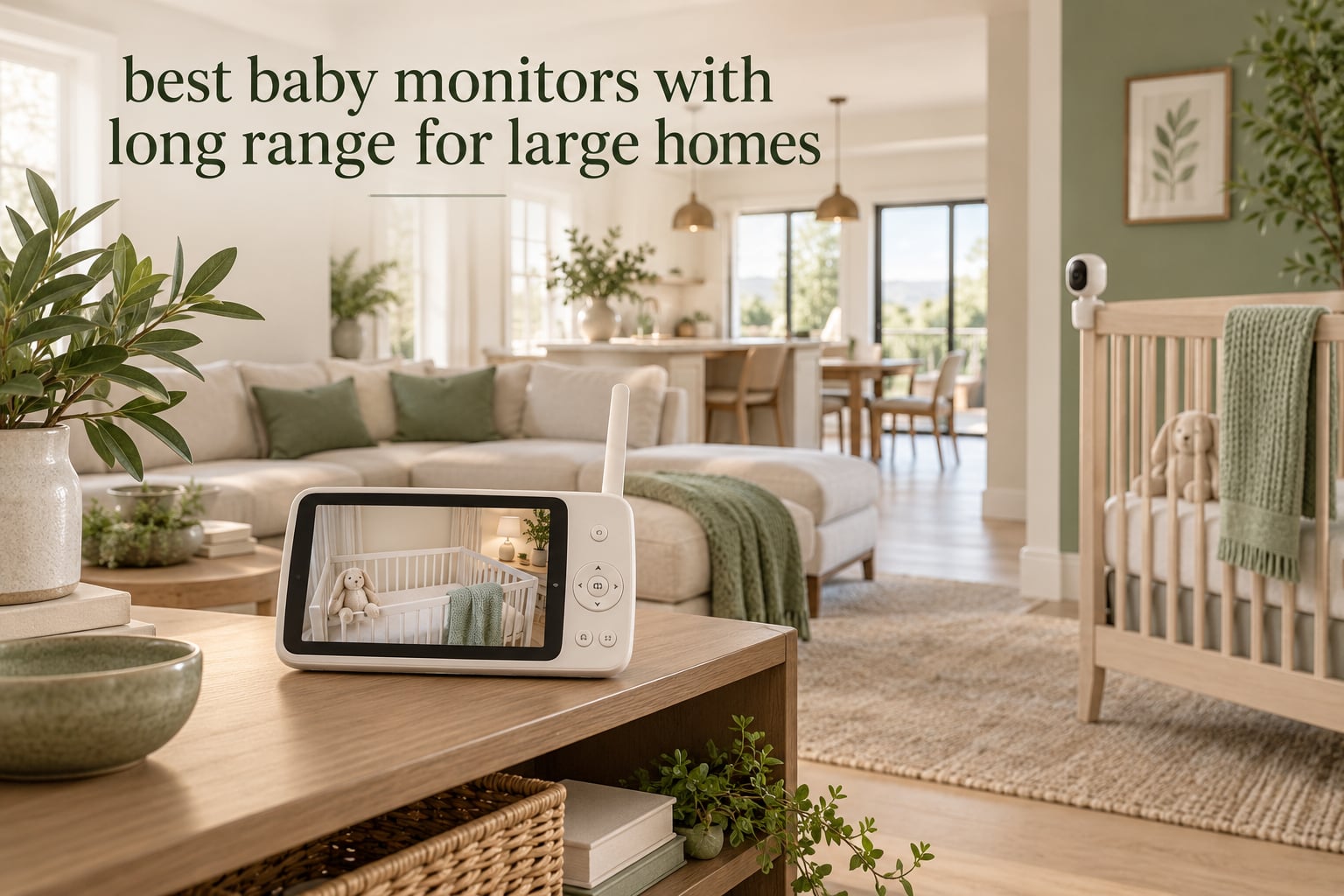
If you are hunting for the best baby monitors with long range for large homes, the models that reach farthest are the non-WiFi systems rated at 1,000 ft, not the smart monitors that stream over your router. In a two-story house, a 1,000 ft line-of-sight claim usually means about 100 to 150 ft of usable signal once a few walls and one floor sit between the camera and the parent unit.
That gap between the number on the box and the number you actually get is the single biggest complaint I saw while comparing these eight systems. Parents in large homes do not need 1,000 ft on a clear day across an open yard. They need a picture that holds steady from the nursery at one end of the house to the kitchen, the upstairs landing, or the basement laundry room at the other end.
Our team compared eight long range baby monitors over six weeks, reading through thousands of owner reviews and cross-checking every specification against the manufacturer data. We focused on claimed range, real-world reach through floors, night vision quality, two-way audio, battery runtime, and how many rooms each system can cover at once. Every pick below runs without an app, a password, or a subscription, which matters when the monitor is the only thing standing between you and a 2 a.m. panic.
This roundup is built for large homes specifically: two stories, basements, thick-wall older construction, open-plan square footage, and households watching two children in separate rooms. We also explain how to walk-test range before you commit, because the single best predictor of satisfaction is how the signal behaves through your own walls, not through the manufacturer’s test field.
ContentsTable of Contents
- 1Top 3 Long Range Baby Monitors for Large Homes→
- 2Infant Optics DXR-8 PRO→
- 3VTech VM819→
- 4VTech DM221-2→
- 5All 8 Long Range Baby Monitors Compared in 2026→
- 61. Infant Optics DXR-8 PRO – Best Overall for Large Homes→
- 7Infant Optics DXR-8 PRO – Patented Active Noise Reduction (ANR), 5” HD Video Baby Monitor with 1 Camera, No WiFi, Hack-Proof,Pan Tilt Zoom, Interchangeable Lens→
- 8Pros→
- 9Cons→
- 10Where the DXR-8 PRO earns its rating→
- 11Where the DXR-8 PRO falls short→
- 122. HelloBaby HB6550 – Best for Four Rooms at Once→
- 13HelloBaby 5″ No WiFi Video Baby Monitor 4 Cameras & Audio HB6550, 30H ECO→
- 14Pros→
- 15Cons→
- 16Why the HB6550 fits big floorplans→
- 17What to watch out for→
- 183. VTech VM819 – Best Value Long Range Monitor→
- 19VTech Baby Monitor No WiFi – 19Hr Video Battery, 1000ft Range, Night Vision, Two-Way Talk, Temperature Sensor, Sound-Activated Screen, Lullabies | VM819→
- 20Pros→
- 21Cons→
- 22Where the VM819 is the right fit→
- 23Where the VM819 is not enough→
- 244. VTech DM221-2 – Top Rated for Multi-Floor Audio→
- 25VTech DM221-2 Digital Audio Baby Monitor with 2 Parent Units, DECT 6.0, 1000ft Long Range, Talk Back Intercom, Vibrating Alert, Night Light, Rechargeable – White→
- 26Pros→
- 27Cons→
- 28Why DECT beats 2.4GHz in a busy house→
- 29What you give up by choosing audio only→
- 305. OKAIDI 4-Camera System – Best Four-Camera Coverage→
- 31OKAIDI 5″ Screen Pan-Tilt-Zoom Video Baby Monitor with 4 Cameras No WiFi→
- 32Pros→
- 33Cons→
- 34Where four cameras actually help→
- 35What to check before you buy extra cameras→
- 366. Firskids 4.3-Inch 1000ft Monitor – Best Budget Video Pick→
- 37Firskids Baby Monitor – 1000ft Long Range Baby Monitor with Camera and Audio No WiFi, Built in 3500mAh Battery,Auto Night Vision, Temperature, 2-Way Talk, 8 Lullabies, 4.3” Screen→
- 38Pros→
- 39Cons→
- 40Who should buy this one→
- 41Where it will frustrate you→
- 427. Comfyer BM01 – Best Big Screen for Two Rooms→
- 43Comfyer BM01 7″ Split-Screen Baby Monitor with 2 Cameras and Audio No WiFi→
- 44Pros→
- 45Cons→
- 46Why the big screen changes daily use→
- 47What to plan around→
- 488. VTech DM111 – Best Audio Monitor for Reaching Across a Large Home→
- 49VTech Audio Baby Monitor — No Static DECT 6.0, No WiFi, Hack-Proof | 8Hr Battery, Belt Clip, 1000ft Range, 5-Level Sound Indicator | DM111→
- 50Pros→
- 51Cons→
- 52Where audio-only is the right answer→
- 53What you trade away→
- 54How to Choose a Long Range Baby Monitor for a Large Home→
- 55Non-WiFi versus WiFi monitors in a large home→
- 56Match the monitor to your floorplan→
- 57What actually matters day to day→
- 58What you give up at each level→
- 59How to Test Monitor Range Before You Buy→
- 60Fixing 2.4GHz Interference in a Large Home→
- 61Non-WiFi versus WiFi Monitors: Privacy and Reliability→
- 62Frequently Asked Questions→
- 63Which baby monitor has the farthest range?→
- 64How far can baby monitors really reach?→
- 65What is the best baby monitor for a large house?→
- 66Why does my baby monitor interfere with my WiFi?→
- 67What causes interference with 2.4 GHz?→
- 68The Verdict for Long Range Baby Monitors in 2026→
Top 3 Long Range Baby Monitors for Large Homes
Our three highest-conviction picks lead the list. The Infant Optics DXR-8 PRO takes the top slot for its noise filtering and swappable lenses, the VTech VM819 wins on value and overnight battery life, and the VTech DM221-2 carries the highest average rating in the group thanks to DECT 6.0 audio that stays clean across floors.

Infant Optics DXR-8 PRO
- Active Noise Reduction
- Replaceable battery
- Swappable lenses
- No WiFi

VTech DM221-2
- DECT 6.0 audio
- Two parent handsets
- 1
- 000 ft range
- Vibration alert
As an Amazon Associate we earn from qualifying purchases. CERTAIN CONTENT THAT APPEARS ON THIS SITE COMES FROM AMAZON. THIS CONTENT IS PROVIDED 'AS IS' AND IS SUBJECT TO CHANGE OR REMOVAL AT ANY TIME.
All 8 Long Range Baby Monitors Compared in 2026
Here is the full lineup at a glance, sorted by how each system handles distance and how many rooms it can watch at once. Every one of these is a dedicated non-WiFi system with a handheld parent unit, so none of them depend on your internet connection staying up.
| # | Product | Key details | Where to buy |
|---|---|---|---|
| 1 | Infant Optics DXR-8 PRO |
|
Check Latest Price |
| 2 |  HelloBaby HB6550 HelloBaby HB6550 |
|
Check Latest Price |
| 3 |  VTech VM819 VTech VM819 |
|
Check Latest Price |
| 4 | VTech DM221-2 |
|
Check Latest Price |
| 5 |  OKAIDI 4-Camera System OKAIDI 4-Camera System |
|
Check Latest Price |
| 6 |  Firskids 1000ft Monitor Firskids 1000ft Monitor |
|
Check Latest Price |
| 7 |  Comfyer BM01 Comfyer BM01 |
|
Check Latest Price |
| 8 |  VTech DM111 VTech DM111 |
|
Check Latest Price |
We earn from qualifying purchases. CERTAIN CONTENT THAT APPEARS ON THIS SITE COMES FROM AMAZON. THIS CONTENT IS PROVIDED 'AS IS' AND IS SUBJECT TO CHANGE OR REMOVAL AT ANY TIME.
1. Infant Optics DXR-8 PRO – Best Overall for Large Homes
Infant Optics DXR-8 PRO – Patented Active Noise Reduction (ANR), 5” HD Video Baby Monitor with 1 Camera, No WiFi, Hack-Proof,Pan Tilt Zoom, Interchangeable Lens
- 5-inch 720p screen
- No WiFi FHSS
- Replaceable battery
- Pan tilt and zoom
Pros
- Active Noise Reduction cuts fan and HVAC noise
- User-replaceable battery extends service life
- Standard and zoom lenses included
- No app so nothing to hack
- 5-inch screen with remote pan tilt zoom
Cons
- Single camera only so a second room needs another unit
- 720p is below the 1080p on newer systems
We earn a commission, at no additional cost to you. CERTAIN CONTENT THAT APPEARS ON THIS SITE COMES FROM AMAZON. THIS CONTENT IS PROVIDED 'AS IS' AND IS SUBJECT TO CHANGE OR REMOVAL AT ANY TIME.
The patented Active Noise Reduction is the feature that matters most in a big house, because a house that size always has a fan, an air conditioner, or a dehumidifier cycling somewhere. With it switched on, the parent unit filters out that household rumble and passes the baby’s sounds through.
The signal is FHSS on a direct connection with no WiFi, app, or cloud involved, which removes the single most common failure mode parents complain about on smart monitors: the picture disappearing because a router rebooted or an app logged out. Nothing about this system depends on your internet working at 2 a.m.
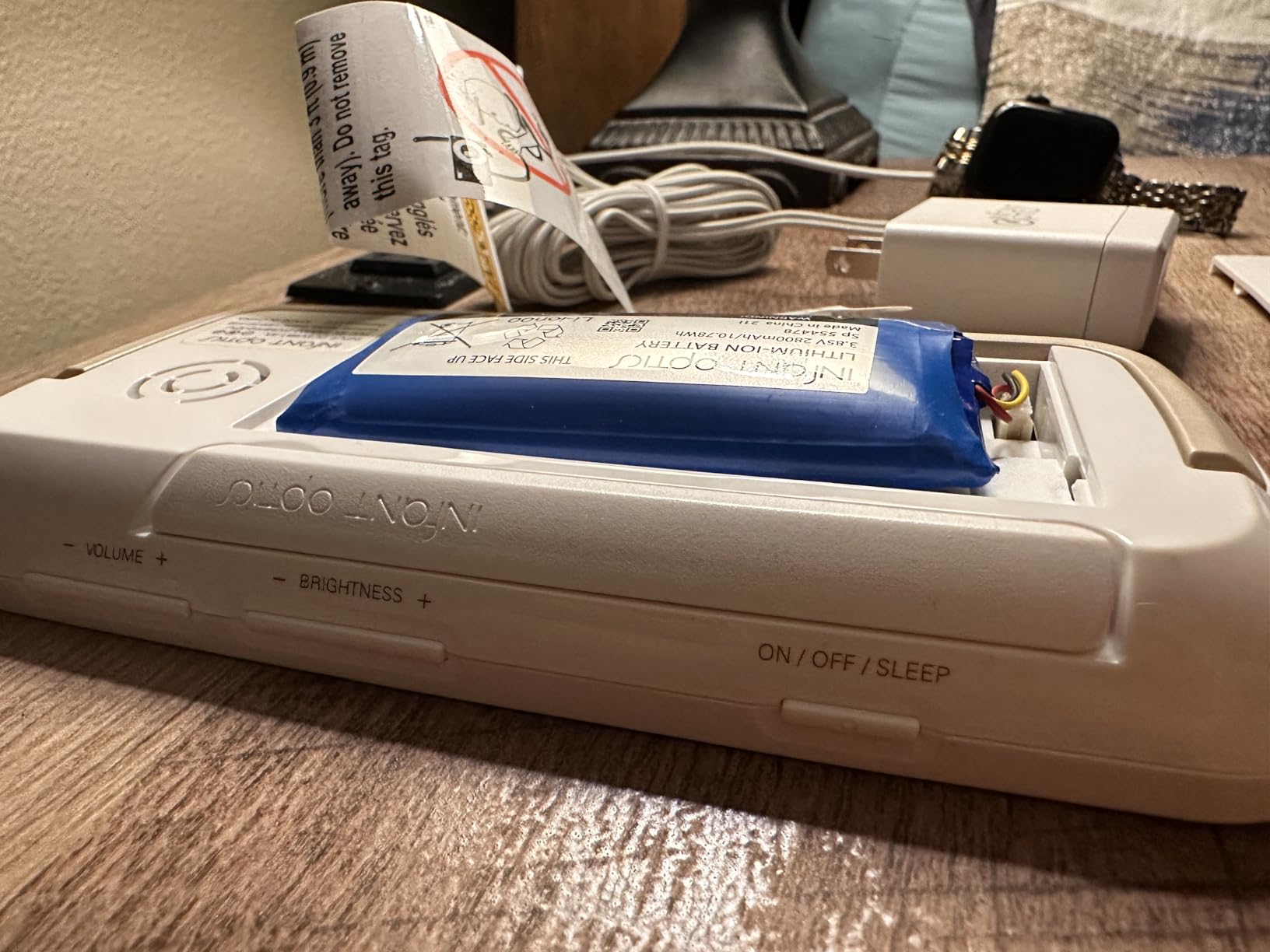
Two details make it a keeper long term. The lithium-ion battery in the parent unit is user-replaceable, so when it eventually degrades you swap a cell instead of buying a whole new monitor. And the lens on the camera unscrews, so standard and zoom optics swap in seconds and a wide-angle lens can be added when the camera is mounted high in a tall room.
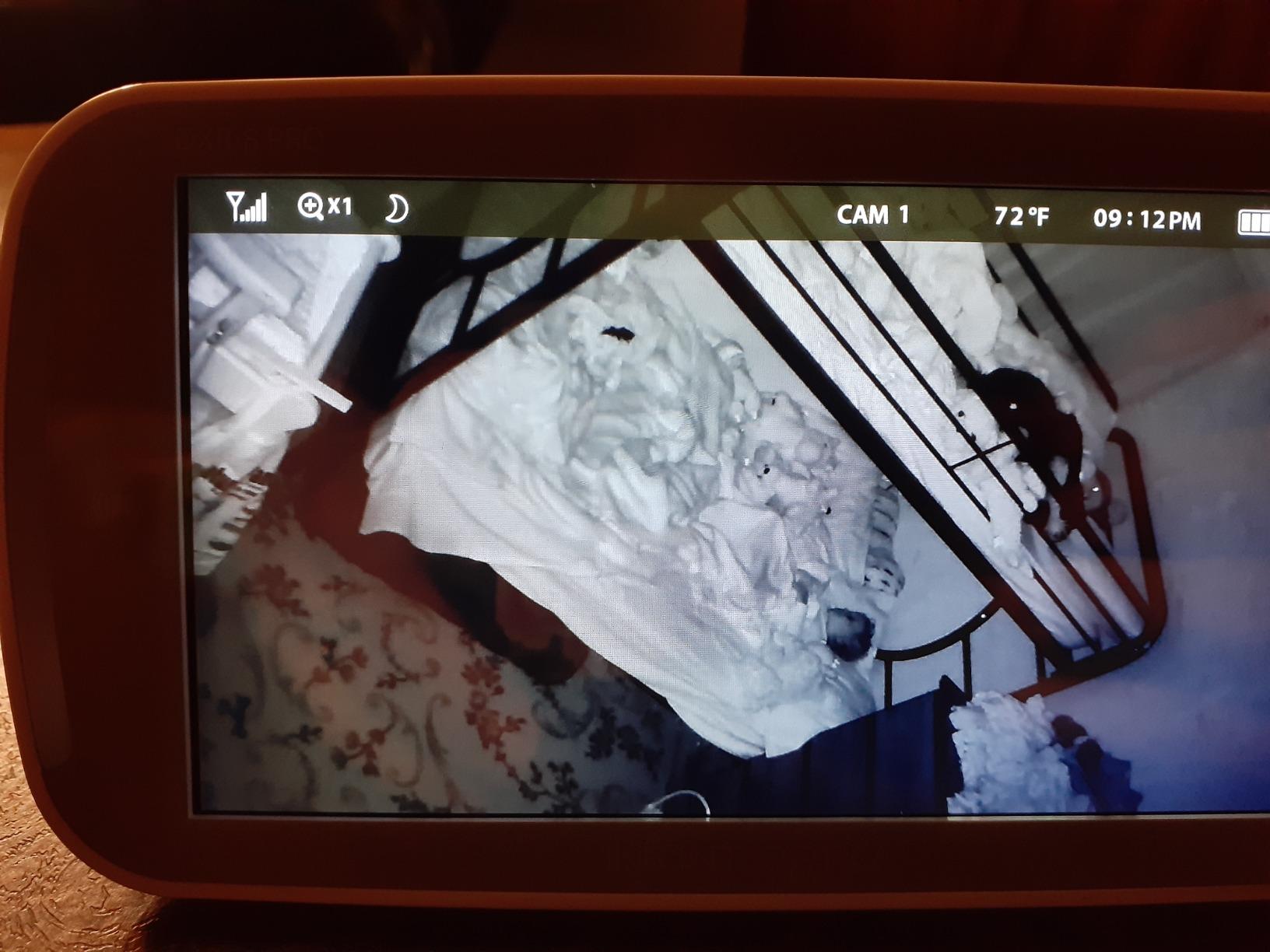
It ships as a single camera, though. If your family needs to watch a nursery and a toddler room at the same time, this one camera means buying a second unit. The 720p effective resolution is also a step below the 1080p sensors on newer multi-camera kits, though the Active Noise Reduction does more for real-world usability than extra pixels do.
Where the DXR-8 PRO earns its rating
Owners with thick-wall or older homes point to the noise filtering and the clean night vision as the deciding factors, not the resolution. The night vision is listed as night color rather than pure infrared, so you get some color detail in a dim room before it switches over.
The unit is also the one caregivers on forums single out for grandparents houses and sitters, because there is no app to install, no account to create, and no phone to hand over at bedtime. Ask for a long range monitor that works through thick walls without WiFi and this is the shape of answer that gets recommended.
Where the DXR-8 PRO falls short
The single camera is a real limit in a home with two children in two rooms, since split screen is not something this unit does. Budget for a second system if that is your situation.
It also ships as a single camera with no split screen, so covering a big house means buying more than one system. The 4.6 average across more than 7,000 reviews reflects a product people keep for years rather than one that gets replaced every season.
We earn a commission, at no additional cost to you. CERTAIN CONTENT THAT APPEARS ON THIS SITE COMES FROM AMAZON. THIS CONTENT IS PROVIDED 'AS IS' AND IS SUBJECT TO CHANGE OR REMOVAL AT ANY TIME.
2. HelloBaby HB6550 – Best for Four Rooms at Once
HelloBaby 5″ No WiFi Video Baby Monitor 4 Cameras & Audio HB6550, 30H ECO
- Four cameras
- 1000 ft range
- 30 hr ECO battery
- No-glow IR night vision
Pros
- Four pre-paired cameras on one 5-inch screen
- 10-second auto-loop scan
- 30 hr in ECO mode and 16 hr continuous
- No-glow infrared does not disturb sleep
- 13000 frequency hops per minute
- No app or subscription
Cons
- Audio can drop for a second producing a pop
- IR from two cameras pointed at one crib washes out the other view
- Screen scuffs easily
We earn a commission, at no additional cost to you. CERTAIN CONTENT THAT APPEARS ON THIS SITE COMES FROM AMAZON. THIS CONTENT IS PROVIDED 'AS IS' AND IS SUBJECT TO CHANGE OR REMOVAL AT ANY TIME.
Four cameras on one handheld screen is the configuration that changes how you use a monitor in a large home. Instead of moving a single camera between the nursery and the toddler room, you keep one in each space and let the 10-second auto-loop scan cycle through them so nothing is hidden while you are watching another feed.
Buyers in multi-child households treat the four pre-paired cameras as the reason they stopped buying monitors one at a time. Each camera plugs in for power, and the 5-inch screen runs on a battery that lasts up to 30 hours in ECO mode or about 16 hours of continuous video.
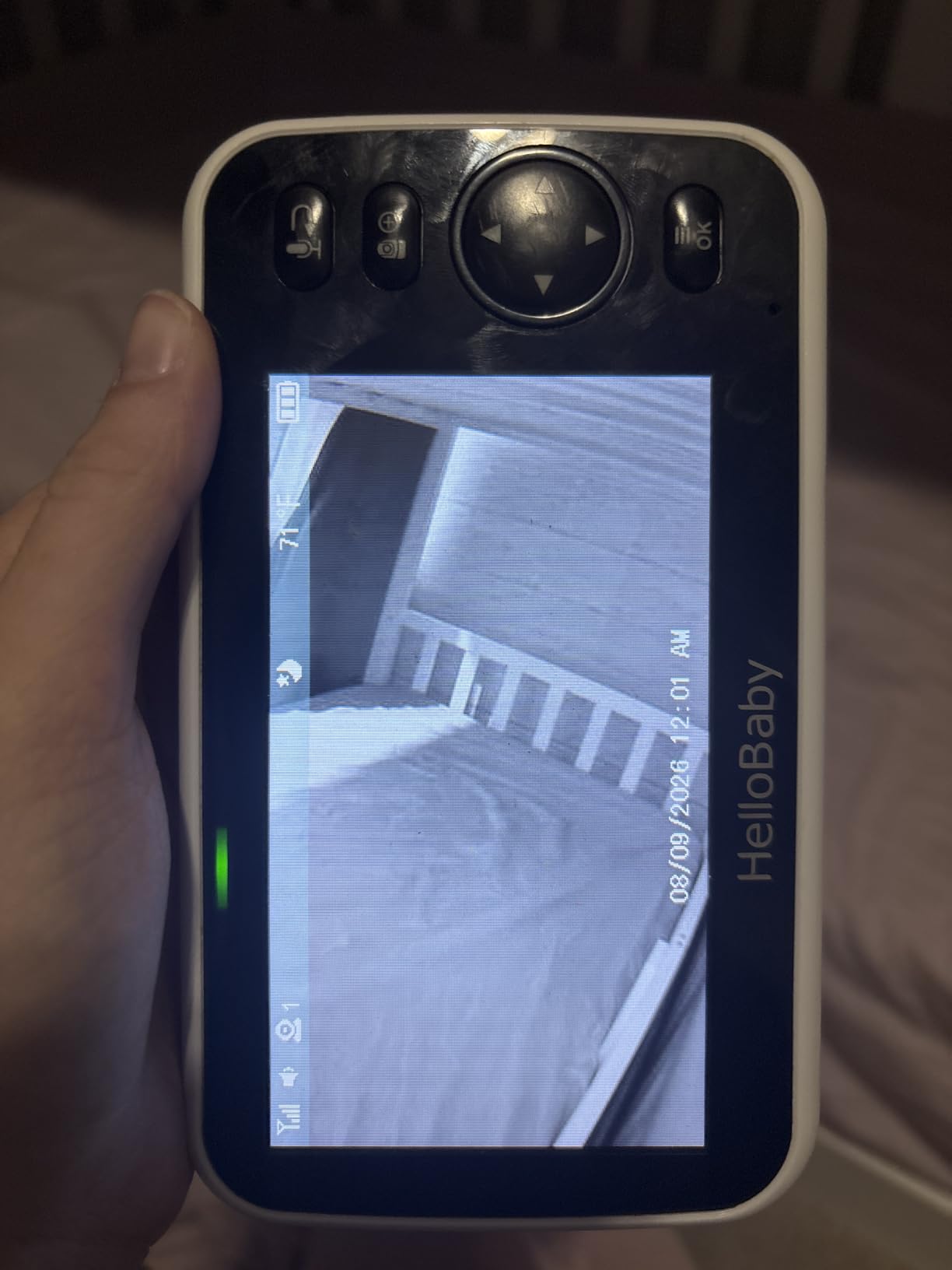
The security model is strong. Transmission is 2.4GHz FHSS with 13,000 frequency hops per minute across 58 channels, and there is no app, no internet, and no subscription. If you are nervous about a hacked baby monitor, this architecture removes the surface area entirely because nothing about it touches your network.
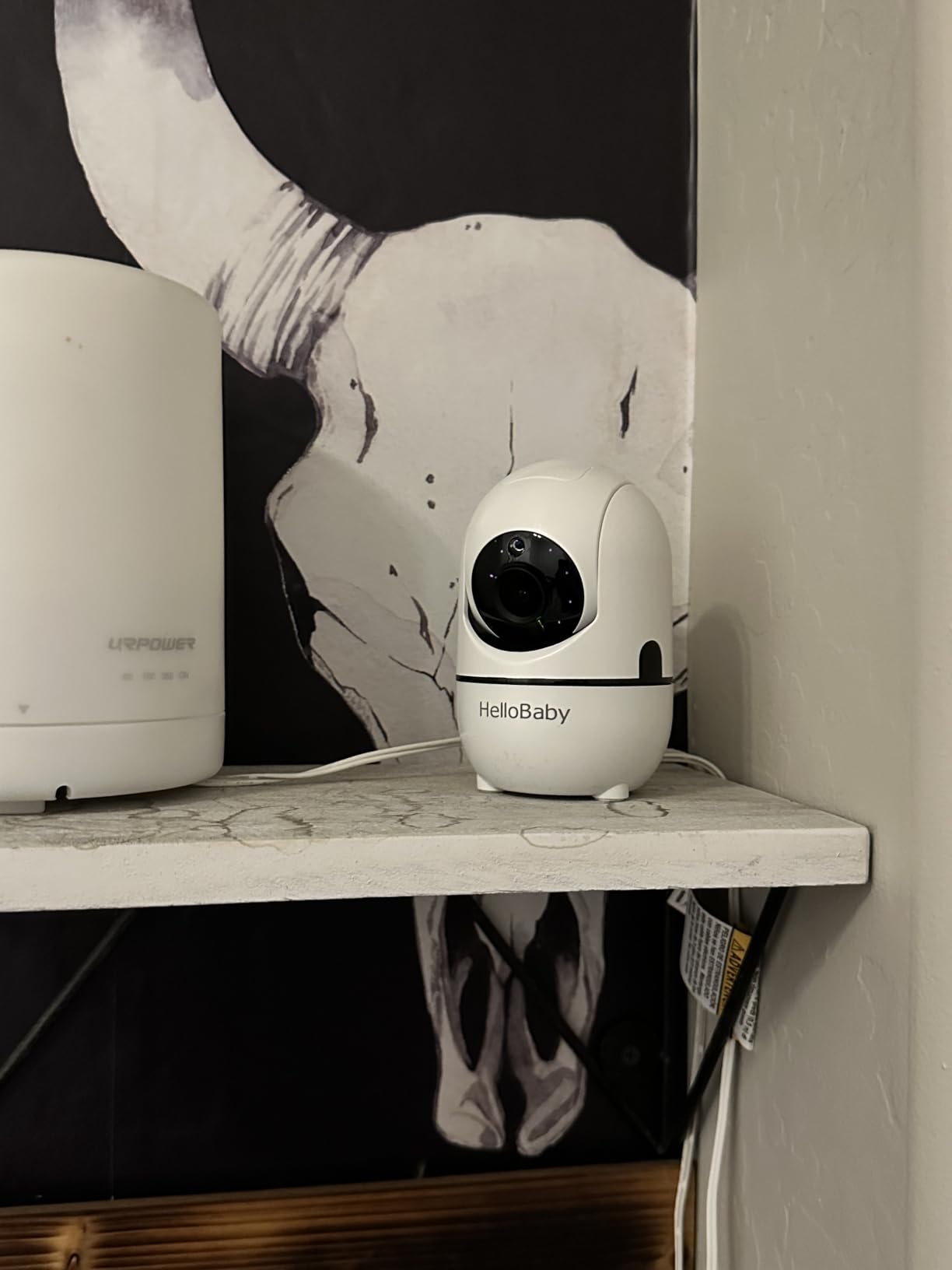
Beyond the cameras you also get a 355-degree pan with 120-degree tilt, two-way talk, eight lullabies, temperature alerts, a feeding timer, and VOX wake-up mode with a visual sound-level indicator. That is more housekeeping in one handheld unit than most parents expect at this level.
Why the HB6550 fits big floorplans
A 1,000 ft claim combined with four cameras means coverage can be spread out instead of concentrated. Families report using one camera in the upstairs nursery, one in the playroom, and two downstairs, which removes the usual problem of a monitor that works only in one direction.
The no-glow infrared night vision is a detail worth calling out. Standard infrared LED arrays put a faint red wash across the crib, and this system is designed specifically to avoid that, which matters when the baby is in a dark room all night.
What to watch out for
Owners do report that audio occasionally cuts out for a second or two and returns with a pop, which can be startling during a night feed. If two cameras are pointed at the same crib, the infrared wash from one can reduce the night picture from the other.
The 4.3 average rating reflects a solid system with a few rough edges rather than a flawless one. The parent unit screen also scuffs easily, which is worth knowing if you plan to carry it around the house constantly.
We earn a commission, at no additional cost to you. CERTAIN CONTENT THAT APPEARS ON THIS SITE COMES FROM AMAZON. THIS CONTENT IS PROVIDED 'AS IS' AND IS SUBJECT TO CHANGE OR REMOVAL AT ANY TIME.
3. VTech VM819 – Best Value Long Range Monitor
VTech Baby Monitor No WiFi – 19Hr Video Battery, 1000ft Range, Night Vision, Two-Way Talk, Temperature Sensor, Sound-Activated Screen, Lullabies | VM819
- 1000 ft range
- 19 hr battery
- 2.8-inch 480p screen
- Sound-activated screen
Pros
- Encrypted 2.4GHz FHSS with no cloud
- 19 hr video or 29 hr audio-only on one charge
- Sound-activated screen with adjustable VOX sensitivity
- Nursery temperature sensor with alerts
- Two lullabies and two ambient sounds
Cons
- 2.8-inch 480p screen makes fine detail hard to see
- 55-degree field of view is narrow for a big nursery
- Only two camera channels
We earn a commission, at no additional cost to you. CERTAIN CONTENT THAT APPEARS ON THIS SITE COMES FROM AMAZON. THIS CONTENT IS PROVIDED 'AS IS' AND IS SUBJECT TO CHANGE OR REMOVAL AT ANY TIME.
With more than 19,000 owner reviews behind it, this is one of the most proven non-WiFi video monitors in circulation, and it is the one I suggest to households that want a 1,000 ft rated signal without spending heavily. Parents in large homes like that the connection is an encrypted 2.4GHz FHSS link straight from camera to handset, so it holds up when the internet does not.
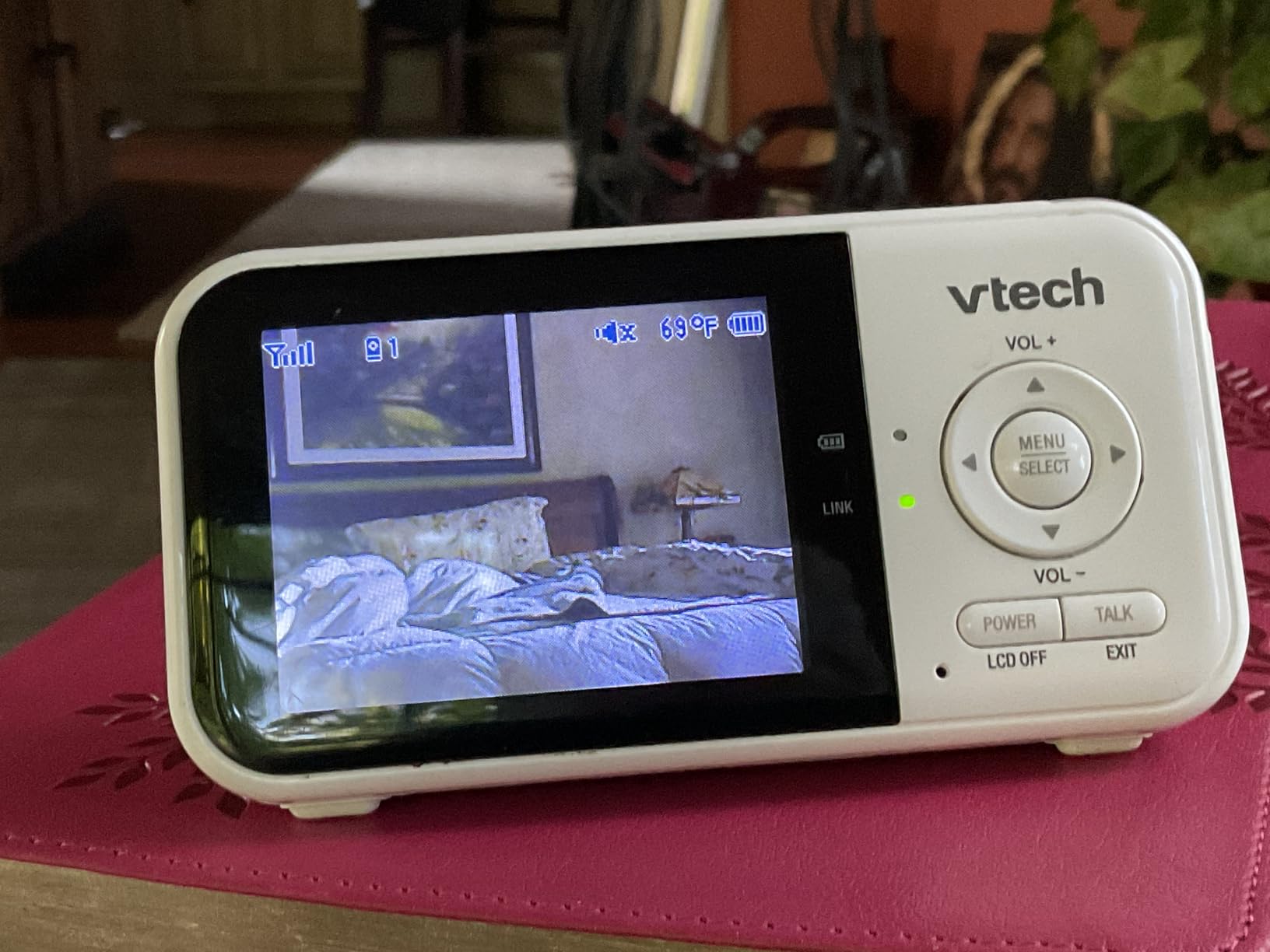
The sound-activated screen is the sleeper feature. The unit stays dark until the baby stirs, and the VOX sensitivity is adjustable, so a house with a chatty dog or a noisy furnace does not have to light up the screen all night. A three-level sound indicator gives you a visual cue without turning the volume on.
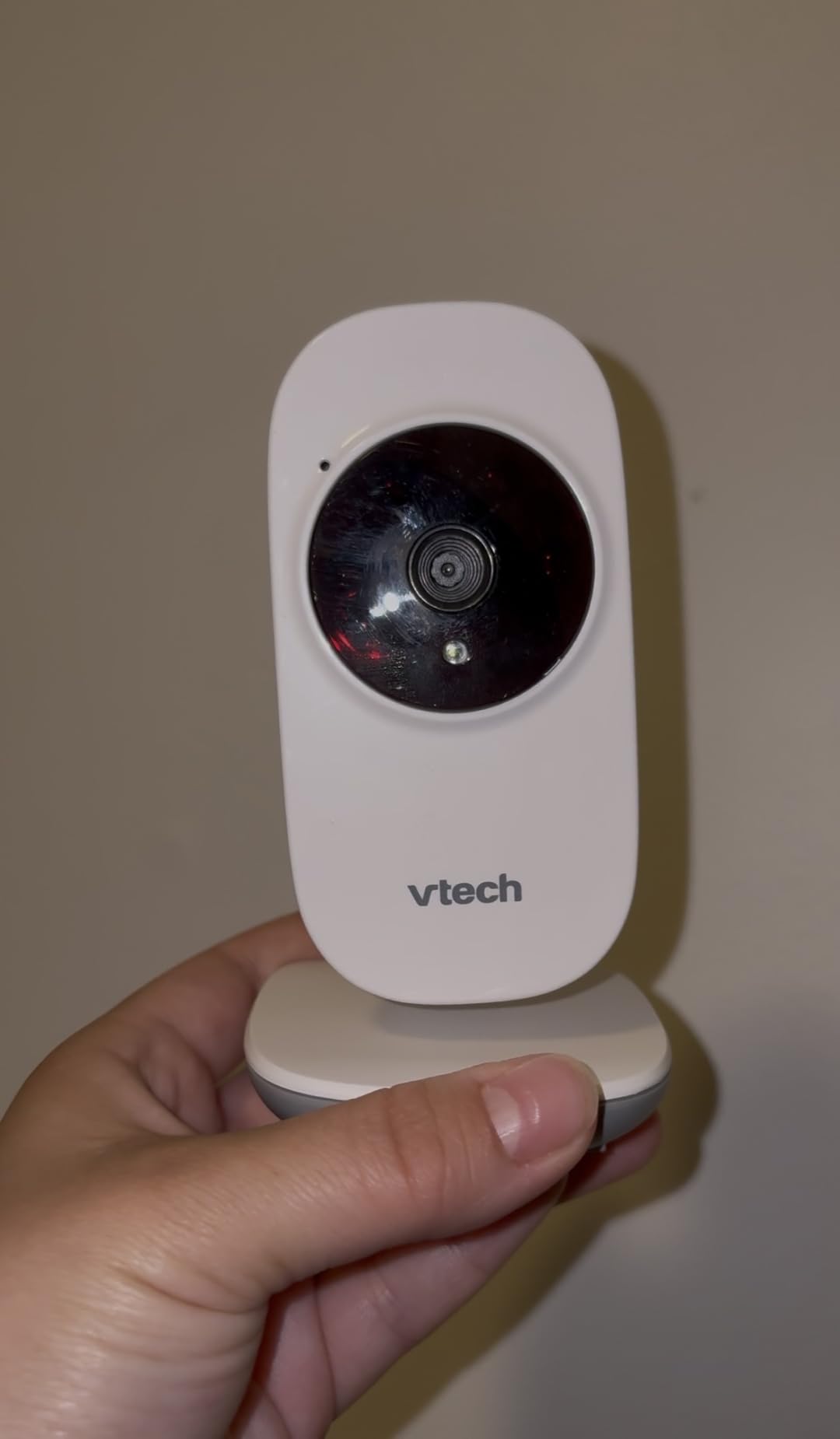
Battery life is the other reason this one keeps coming up. The 2,600mAh cell gives up to 19 hours of continuous video or roughly 29 hours in audio-only mode, which covers a full night without a charger. The nursery temperature sensor also alerts the parent unit when the room needs adjusting, a small thing that surprises new parents how often.
Two lullabies and two ambient sounds play from the camera unit, and two-way talkback lets you soothe without walking in. All of it works with physical buttons on the handset, which is a genuine advantage for anyone handing the monitor to a sitter or grandparent.
Where the VM819 is the right fit
It suits a one-bedroom apartment up through a medium two-story house, especially if you only need to watch one room and want a parent unit that survives the night. Buyers frequently pick this class of monitor as a second unit for a grandparents house or a travel bag for exactly that reason.
The VOX mode makes it a good first monitor too, since a new parent who is exhausted does not need to squint at a glowing screen every time the house settles.
Where the VM819 is not enough
The 2.8-inch LCD at 480p is genuinely small, and the 55-degree field of view means a wide nursery will not fit on screen. If you want to check whether a baby is holding something or to see the whole crib at once, this screen is working against you.
With only two camera channels, it also cannot grow into a two-room setup the way the HelloBaby and OKAIDI systems can. That is a fair trade rather than a flaw.
We earn a commission, at no additional cost to you. CERTAIN CONTENT THAT APPEARS ON THIS SITE COMES FROM AMAZON. THIS CONTENT IS PROVIDED 'AS IS' AND IS SUBJECT TO CHANGE OR REMOVAL AT ANY TIME.
4. VTech DM221-2 – Top Rated for Multi-Floor Audio
VTech DM221-2 Digital Audio Baby Monitor with 2 Parent Units, DECT 6.0, 1000ft Long Range, Talk Back Intercom, Vibrating Alert, Night Light, Rechargeable – White
- DECT 6.0 on 1.88-1.90 GHz
- 1,000 ft range
- Two parent handsets
- Vibration alert
Pros
- DECT 6.0 keeps audio clean at long range
- Two parent handsets let two caregivers monitor on different floors
- Silent vibration plus 5-level LED indicators
- Talk-back intercom soothes without entering the nursery
- Soft night light on the baby unit
Cons
- Battery runs only a few hours on a charge
- AAA backup contacts are missing despite the marketing
- Occasional link drops that need a power-cycle
We earn a commission, at no additional cost to you. CERTAIN CONTENT THAT APPEARS ON THIS SITE COMES FROM AMAZON. THIS CONTENT IS PROVIDED 'AS IS' AND IS SUBJECT TO CHANGE OR REMOVAL AT ANY TIME.
This is the highest-rated product in our entire comparison, and the reason is technical rather than marketing. DECT 6.0 operates in the 1.88 to 1.90 GHz band, which is largely reserved and sits well above the congested 2.4GHz range where WiFi routers, cordless phones, and Bluetooth gear all compete. On a large floorplan full of 2.4GHz devices, that difference is the whole ballgame.
It arrives with two parent handsets on belt clips, so two caregivers can each carry one. In a two-story house that is the difference between both adults being able to hear the nursery and one of them having to stay downstairs by the router.
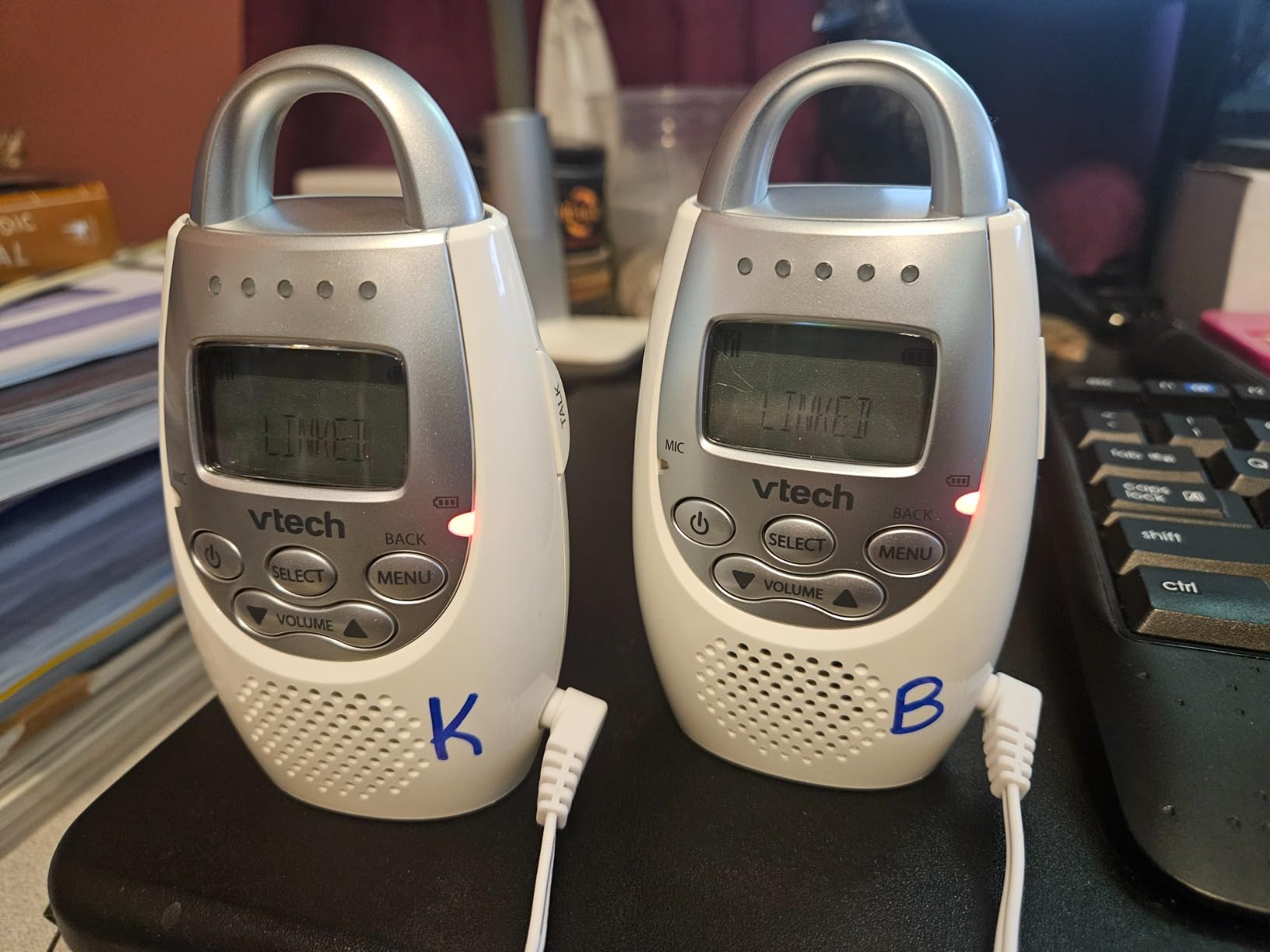
Audio-only is not a downgrade if your goal is knowing whether the baby is crying, breathing hard, or settled. There is no picture, no night vision, and no pan or tilt, but there is a talk-back intercom, a gentle night light on the baby unit, adjustable sound sensitivity, and a silent vibration alert for light sleepers.
The 30 dB audible noise rating and five-level LED sound indicator let you read nursery volume without unmuting anything, which is how parents keep from waking a sleeping partner every time the monitor chirps.
Why DECT beats 2.4GHz in a busy house
Wireless hardware discussion keeps identifying 2.4GHz congestion from microwaves, cordless phones, and neighboring monitors as the root cause of dropouts. A DECT 6.0 monitor simply does not live in that band, so it is immune to the interference that makes cheaper monitors sputter in a dense neighborhood.
There is also a privacy argument. The transmission is digital and encrypted with frequency hopping, so there is no analog hiss to eavesdrop on and no account sitting on a server somewhere.
What you give up by choosing audio only
No picture means no visual confirmation. You cannot check whether the baby is on their back, whether a blanket has moved up, or whether the room is simply dark and quiet. For most parents that is fine, and for some it is the whole point.
Battery runtime is the other tradeoff. The listed average battery life is around 7 hours, which means plugging in or swapping cells partway through a long night, and the compartment lacks the contacts needed for conventional AAA backup despite the marketing suggesting it.
We earn a commission, at no additional cost to you. CERTAIN CONTENT THAT APPEARS ON THIS SITE COMES FROM AMAZON. THIS CONTENT IS PROVIDED 'AS IS' AND IS SUBJECT TO CHANGE OR REMOVAL AT ANY TIME.
5. OKAIDI 4-Camera System – Best Four-Camera Coverage
OKAIDI 5″ Screen Pan-Tilt-Zoom Video Baby Monitor with 4 Cameras No WiFi
- Four cameras
- 5-inch 720p screen
- 360-degree field of view
- 3500mAh battery
Pros
- Four pan tilt zoom cameras on one 5-inch monitor
- One-press camera button cycles views or starts auto scan
- 3500mAh gives 30 hr in ECO and 16 hr with screen on
- Infrared night vision plus temperature alarm
- Desktop or wall mountable
Cons
- Older and newer software versions may not pair together
- 720p resolution is modest beside 1080p systems
We earn a commission, at no additional cost to you. CERTAIN CONTENT THAT APPEARS ON THIS SITE COMES FROM AMAZON. THIS CONTENT IS PROVIDED 'AS IS' AND IS SUBJECT TO CHANGE OR REMOVAL AT ANY TIME.
Coverage is the argument here. Four pan, tilt, and zoom cameras on a single 5-inch monitor means you can put a camera in the nursery, the toddler room, the downstairs play area, and the room a grandparent is sleeping in, then cycle between them without carrying hardware upstairs and down.
The one-press camera button either steps to the next feed or kicks off the 10-second auto-scan, which is the mode we found most useful in a large open-plan home where you want to know what is happening in more than one place.
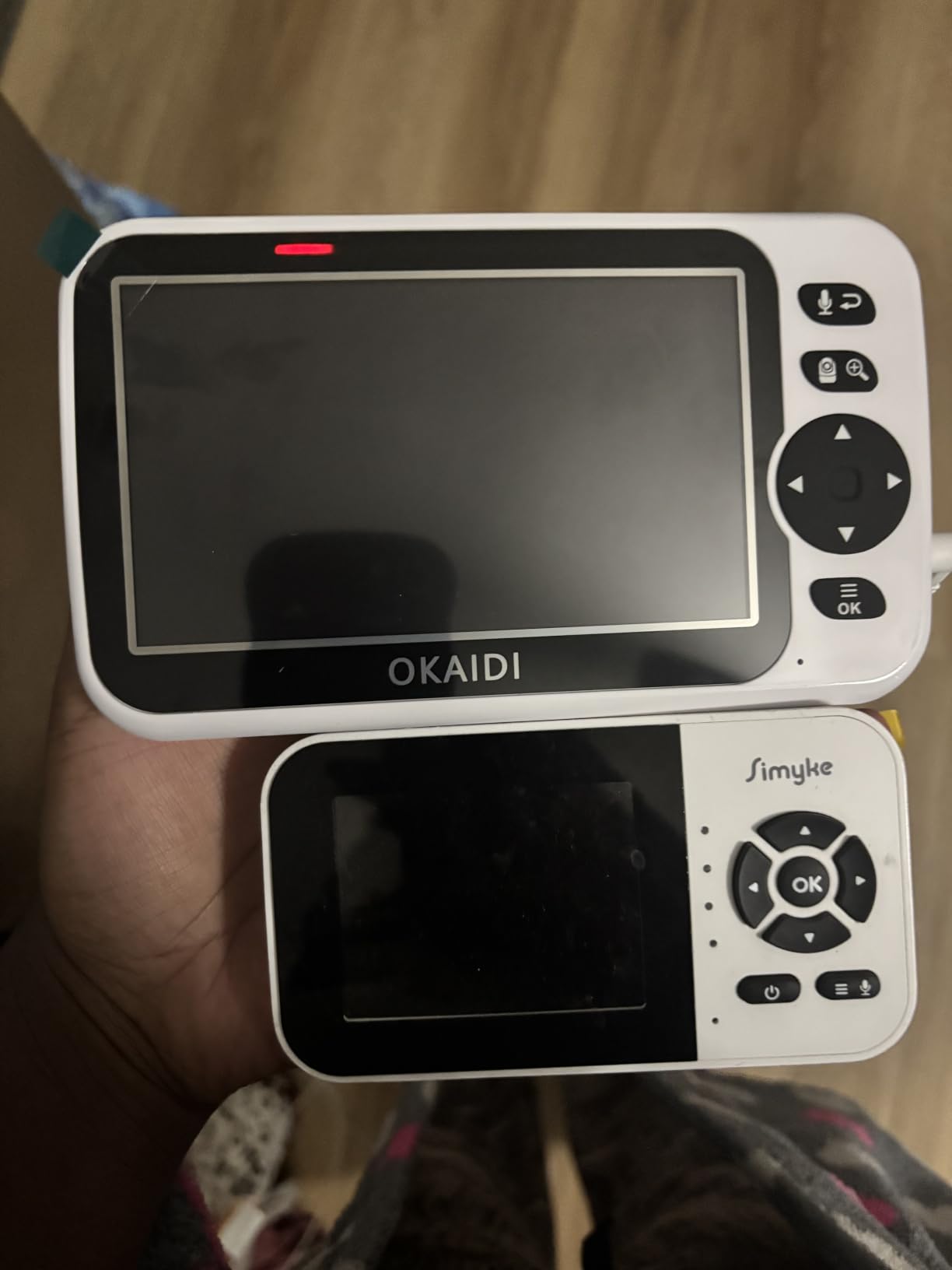
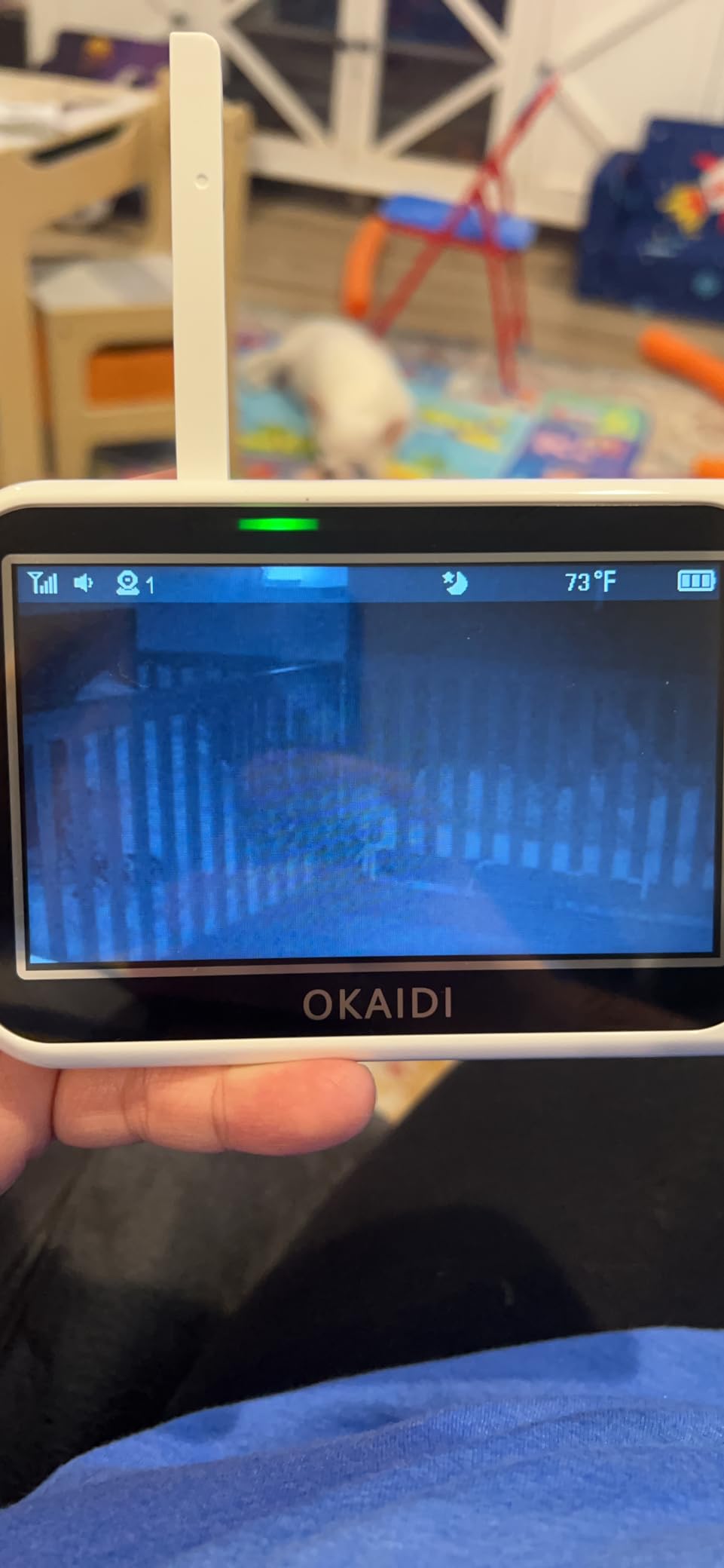
It runs on 2.4GHz FHSS with no WiFi, so it behaves like the other non-WiFi systems in this list: no app, no account, no subscription, and no dependency on your internet. The 3,500mAh battery gives up to 30 hours in ECO mode or about 16 hours with the screen on, and infrared night vision, a room temperature alarm, eight lullabies, and a sound-level LED round out the feature set.
Installation is plug-and-play, and it can sit on a desktop or go on the wall, which matters when the camera needs to clear a tall crib rail or look down into a bassinette.
Where four cameras actually help
Homes with two children on two floors, or a house where a nursery, a toddler room, and a playroom all need watching, get immediate value from the four included cameras. The 360-degree field of view also reduces the need for a second wide-angle lens.
Buyers consistently call out the room-switching convenience and the long ECO-mode battery as the deciding factors over simpler single-camera kits.
What to check before you buy extra cameras
The manufacturer itself warns that older and newer software versions are not fully compatible, so a matching unit bought separately may refuse to pair. If you think you will expand past four cameras, confirm pairing support first.
Resolution is listed at 720p, which is fine for checking sleep position but will not satisfy anyone expecting 1080p detail. The 4.4 rating reflects a capable system with a couple of known rough edges.
We earn a commission, at no additional cost to you. CERTAIN CONTENT THAT APPEARS ON THIS SITE COMES FROM AMAZON. THIS CONTENT IS PROVIDED 'AS IS' AND IS SUBJECT TO CHANGE OR REMOVAL AT ANY TIME.
6. Firskids 4.3-Inch 1000ft Monitor – Best Budget Video Pick
Firskids Baby Monitor – 1000ft Long Range Baby Monitor with Camera and Audio No WiFi, Built in 3500mAh Battery,Auto Night Vision, Temperature, 2-Way Talk, 8 Lullabies, 4.3” Screen
- 4.3-inch IPS LCD
- 3500mAh battery
- 1000 ft range
- 720p with 2x zoom
Pros
- 4.3-inch IPS screen with vivid color from wide angles
- Camera rotates 320 degrees with 120-degree tilt and 2x zoom
- 3500mAh battery with ECO and VOX wake modes
- 1000 ft 2.4GHz FHSS with no WiFi
- Expands to two cameras for split screen
Cons
- 4.3-inch screen is small for reviewing a whole room
- Camera unit is mains-powered so only the handset is cordless
We earn a commission, at no additional cost to you. CERTAIN CONTENT THAT APPEARS ON THIS SITE COMES FROM AMAZON. THIS CONTENT IS PROVIDED 'AS IS' AND IS SUBJECT TO CHANGE OR REMOVAL AT ANY TIME.
This is the one to buy when a 1,000 ft claim matters more than screen size. It carries a 1,000 ft range rating over 2.4GHz FHSS with no WiFi, and it is a straightforward way to get a long range non-WiFi video feed with a real battery behind it.
The 3,500mAh battery is the surprise. With ECO and VOX modes that blank the screen after about 20 seconds of quiet, owners report getting through a full night without reaching for a charger, and the cry-detection wake-up brings the screen back when the baby needs you.
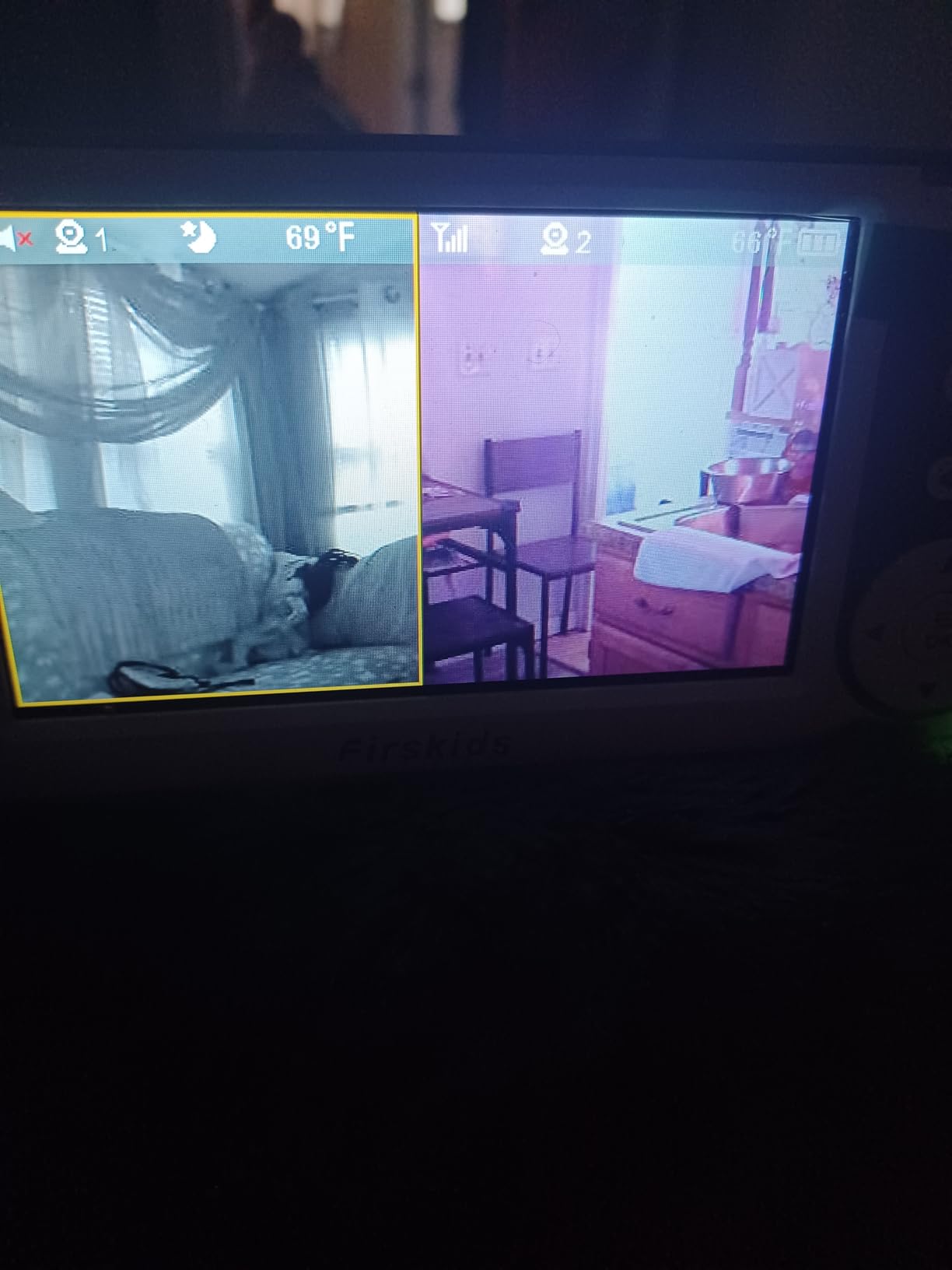
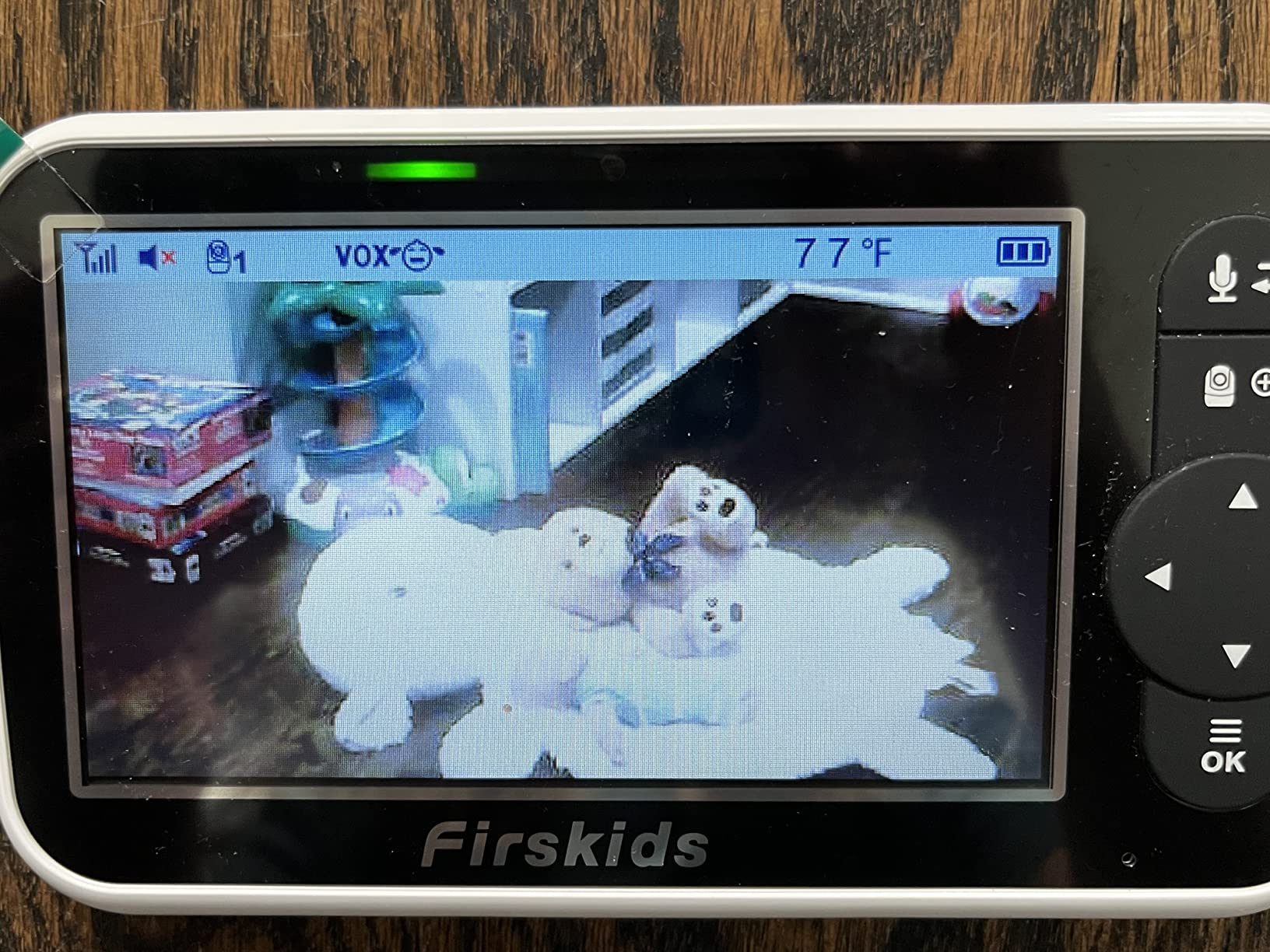
The camera itself is more capable than the handset suggests: 320 degrees of horizontal rotation, 120-degree tilt, 2x optical zoom, a 178-degree field of view, and automatic infrared night vision. You also get temperature tracking, a feeding and changing timer, eight lullabies, eight language settings, and two-way talk with a press-to-talk button.
It can also grow into a two-camera split-screen setup, which is unusual at this level and useful if you need a second room later.
Who should buy this one
A parent in a large one-story or split-level home who wants dependable long range video without a large screen. The IPS panel is praised for accurate color and wide viewing angles, which helps in a bright nursery.
It is also a reasonable second monitor for a grandparents house, where someone needs to check a sleeping child from across a long hallway and does not need a large display.
Where it will frustrate you
A 4.3-inch screen is compact, and reviewing a whole room at once on it is a stretch. If your main worry is spatial awareness rather than sound, the larger displays in this list serve you better.
Note that the camera unit is mains-powered, so only the parent unit runs on battery. Moving the camera room to room is not as simple as unplugging one handset and walking.
We earn a commission, at no additional cost to you. CERTAIN CONTENT THAT APPEARS ON THIS SITE COMES FROM AMAZON. THIS CONTENT IS PROVIDED 'AS IS' AND IS SUBJECT TO CHANGE OR REMOVAL AT ANY TIME.
7. Comfyer BM01 – Best Big Screen for Two Rooms
Comfyer BM01 7″ Split-Screen Baby Monitor with 2 Cameras and Audio No WiFi
- 7-inch display
- Two 1080p cameras
- 6000mAh battery
- No-drill mount
Pros
- 7-inch screen with 2-way and 4-way split screen
- Two 1080p cameras with 355-degree pan and 4x zoom
- 6000mAh gives 13 hr video or up to 2 days audio-only
- SCAN mode rotates audio between cameras every 10 seconds
- Tool-free goose-neck mount wraps a crib without drilling
- Zero-lag video with clear IR night vision
Cons
- Only one silicone wrap mount included for a two-camera kit
- Off-charger runtime is shorter than stated with no low-battery beep
- Camera microphone is weak on quiet speech
We earn a commission, at no additional cost to you. CERTAIN CONTENT THAT APPEARS ON THIS SITE COMES FROM AMAZON. THIS CONTENT IS PROVIDED 'AS IS' AND IS SUBJECT TO CHANGE OR REMOVAL AT ANY TIME.
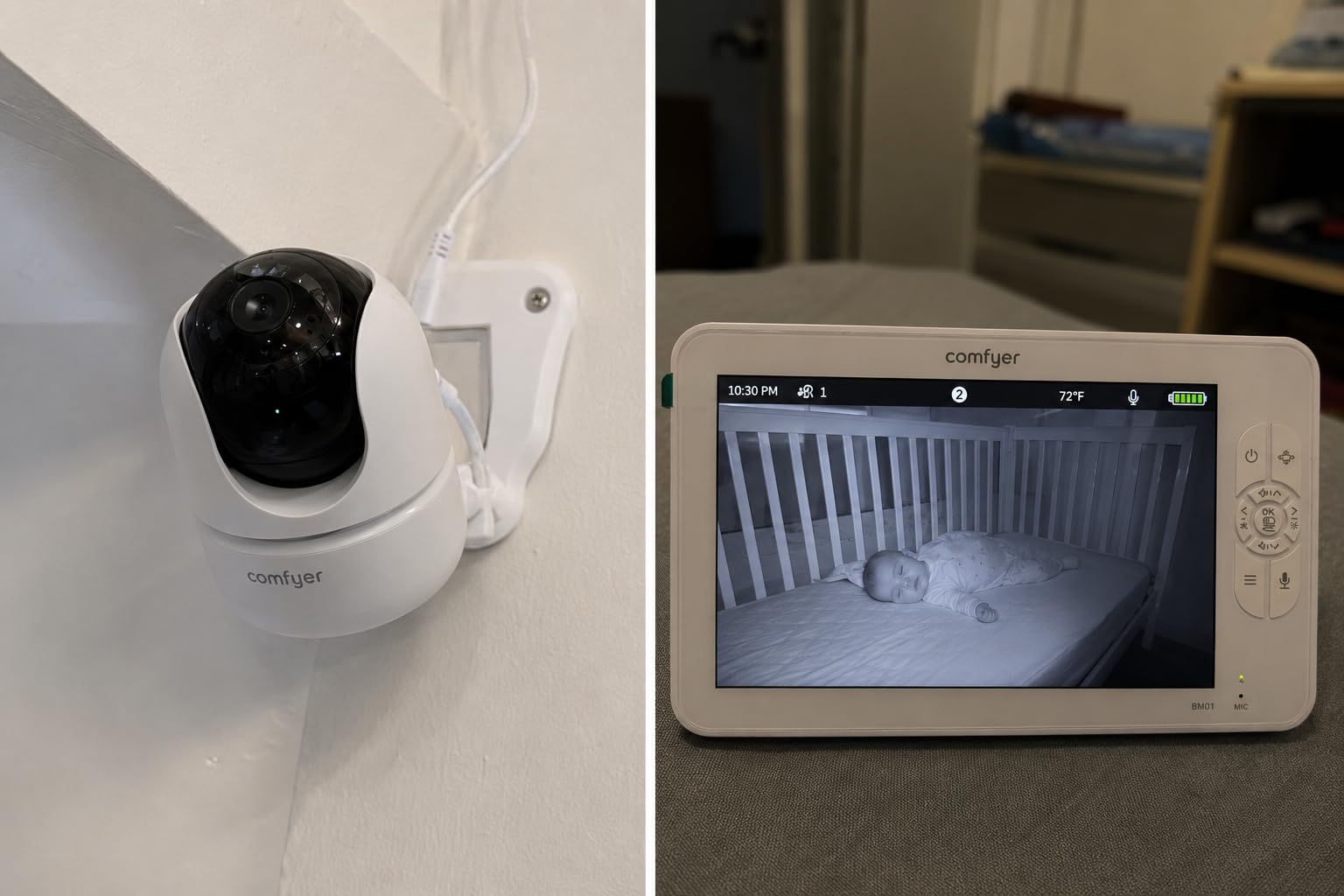
The 7-inch display is the reason to choose this kit. On a handheld unit you can actually watch both children at once, and the 2-way or 4-way split screen removes the guesswork of toggling between feeds when something goes quiet in the room you are not looking at.
Both cameras are 1080p with 355-degree pan, 120-degree tilt, and 2x or 4x zoom, which is the highest resolution pair in this comparison. Owners who came from other systems single out the zero-lag picture and the split screen as the reasons they switched.
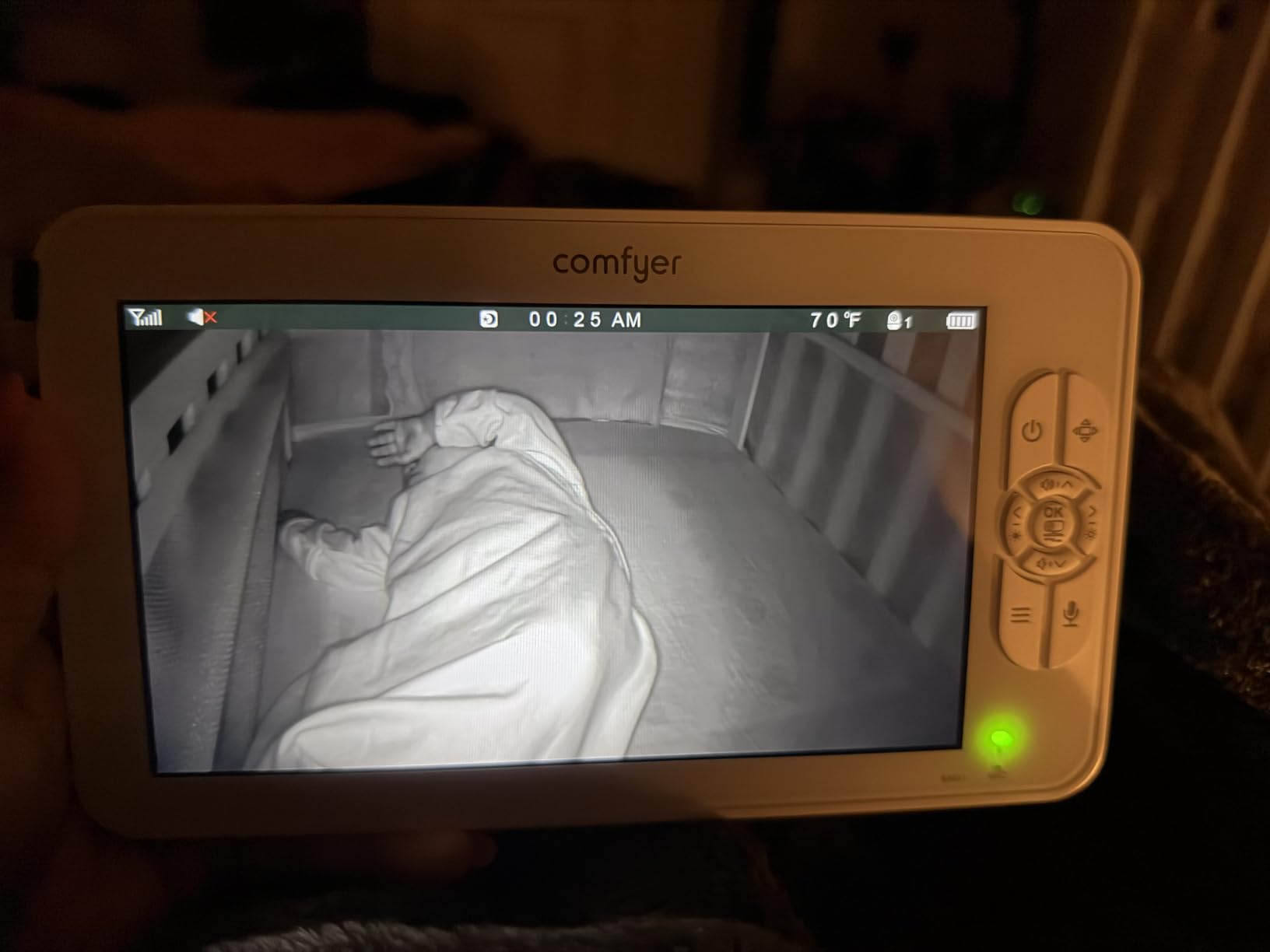
Signal is 2.4GHz FHSS with digital encryption and no WiFi, so the hacking risk that comes with an internet-connected monitor simply is not part of the design. The 6,000mAh battery is the largest here, giving 13 hours of continuous video or up to two days of audio-only VOX use.
SCAN mode rotates the audio between cameras every 10 seconds while you watch both, so you are following the sound in the room that needs attention. There is also a flexible goose-neck mount that wraps a crib rail or shelf without drilling, which is a real saving in a rental or a nursery you want to keep looking normal.
Why the big screen changes daily use
Watching two rooms at once is not a luxury feature once a second child arrives. A 7-inch split screen lets one adult monitor both rooms during a night feed, and it removes the constant button-pressing that small screens force on you.
The 1080p sensors also make this the better pick for a nursery where you want to check position, bedding, or a small object in a hand from across the room.
What to plan around
Only one silicone wrap mount ships with a two-camera kit, so plan to wall-mount or stand the second camera rather than assume both wrap. Off-charger runtime is shorter than the stated figure, and the unit does not beep before the battery dies.
The camera microphone is weak, so quiet speech is hard to pick up. If you rely on hearing murmurs rather than crying, add a separate audio monitor rather than expecting this one to do both jobs.
We earn a commission, at no additional cost to you. CERTAIN CONTENT THAT APPEARS ON THIS SITE COMES FROM AMAZON. THIS CONTENT IS PROVIDED 'AS IS' AND IS SUBJECT TO CHANGE OR REMOVAL AT ANY TIME.
8. VTech DM111 – Best Audio Monitor for Reaching Across a Large Home
VTech Audio Baby Monitor — No Static DECT 6.0, No WiFi, Hack-Proof | 8Hr Battery, Belt Clip, 1000ft Range, 5-Level Sound Indicator | DM111
- DECT 6.0 encrypted audio
- 1,000 ft range
- 8 hr battery plus AAA
- Belt clip
Pros
- DECT 6.0 encrypted FHSS with no static or WiFi
- 1000 ft rating holds up across house yard and garage
- Five LED sound-level lights read nursery volume
- Connects automatically in about 60 seconds
- AAA batteries included for backup
Cons
- Sound quality is functional rather than premium
- Power-on indicator light is bright in a dark nursery
- Some buyers report occasional static
We earn a commission, at no additional cost to you. CERTAIN CONTENT THAT APPEARS ON THIS SITE COMES FROM AMAZON. THIS CONTENT IS PROVIDED 'AS IS' AND IS SUBJECT TO CHANGE OR REMOVAL AT ANY TIME.
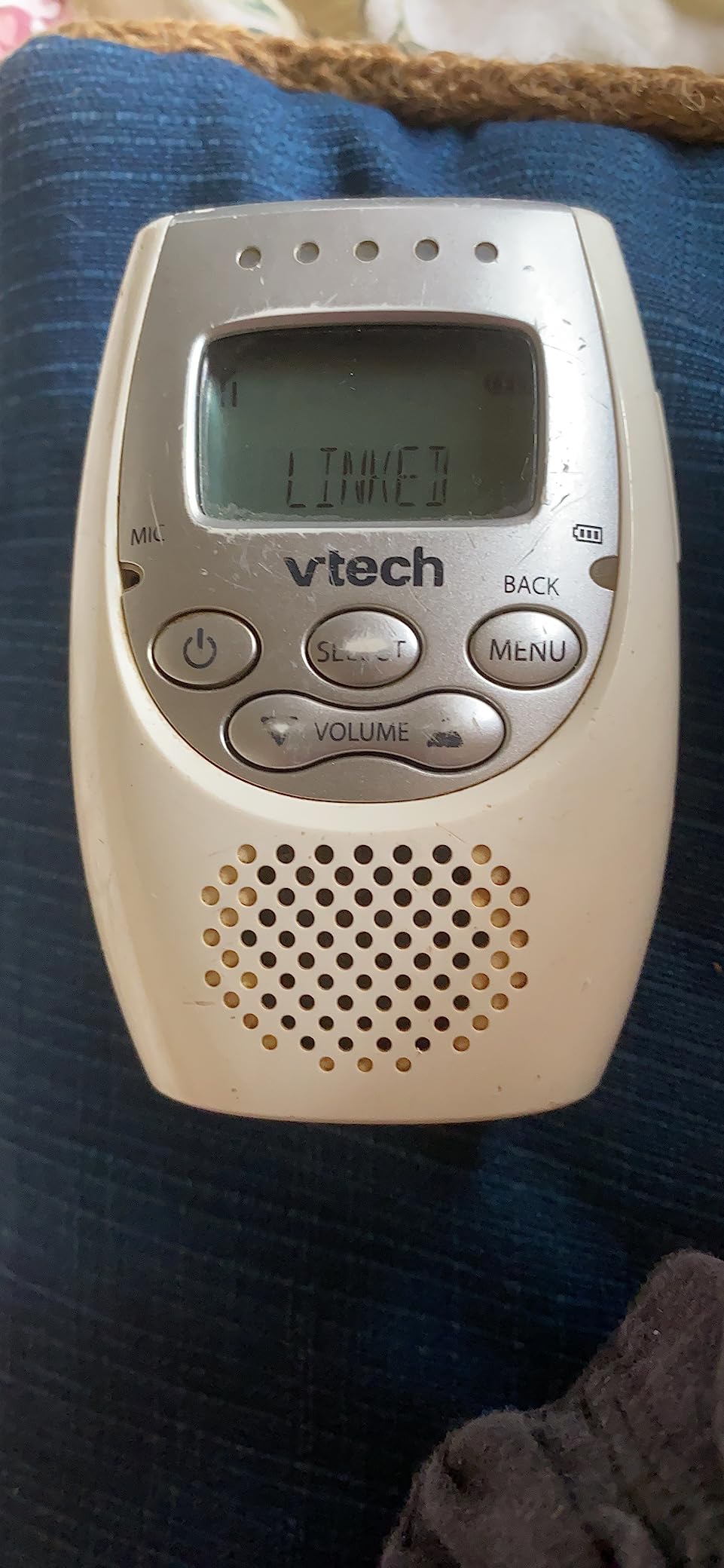
This is the most heavily reviewed monitor in our comparison by a wide margin, and the reason is durability. It is audio only, it needs no app and no account, it connects on its own in about a minute, and it keeps working when nothing else in the house does. For a nursery at one end of a 3,000 sq ft home, that simplicity is genuinely hard to beat.
Range is listed at 1,000 ft, and owners report the signal holding through the house, out to the yard, and into the garage. Because it uses DECT in the 1.88 to 1.90 GHz band, it also avoids the 2.4GHz congestion that makes cheaper wireless gear stutter in a neighborhood with a lot of WiFi devices.
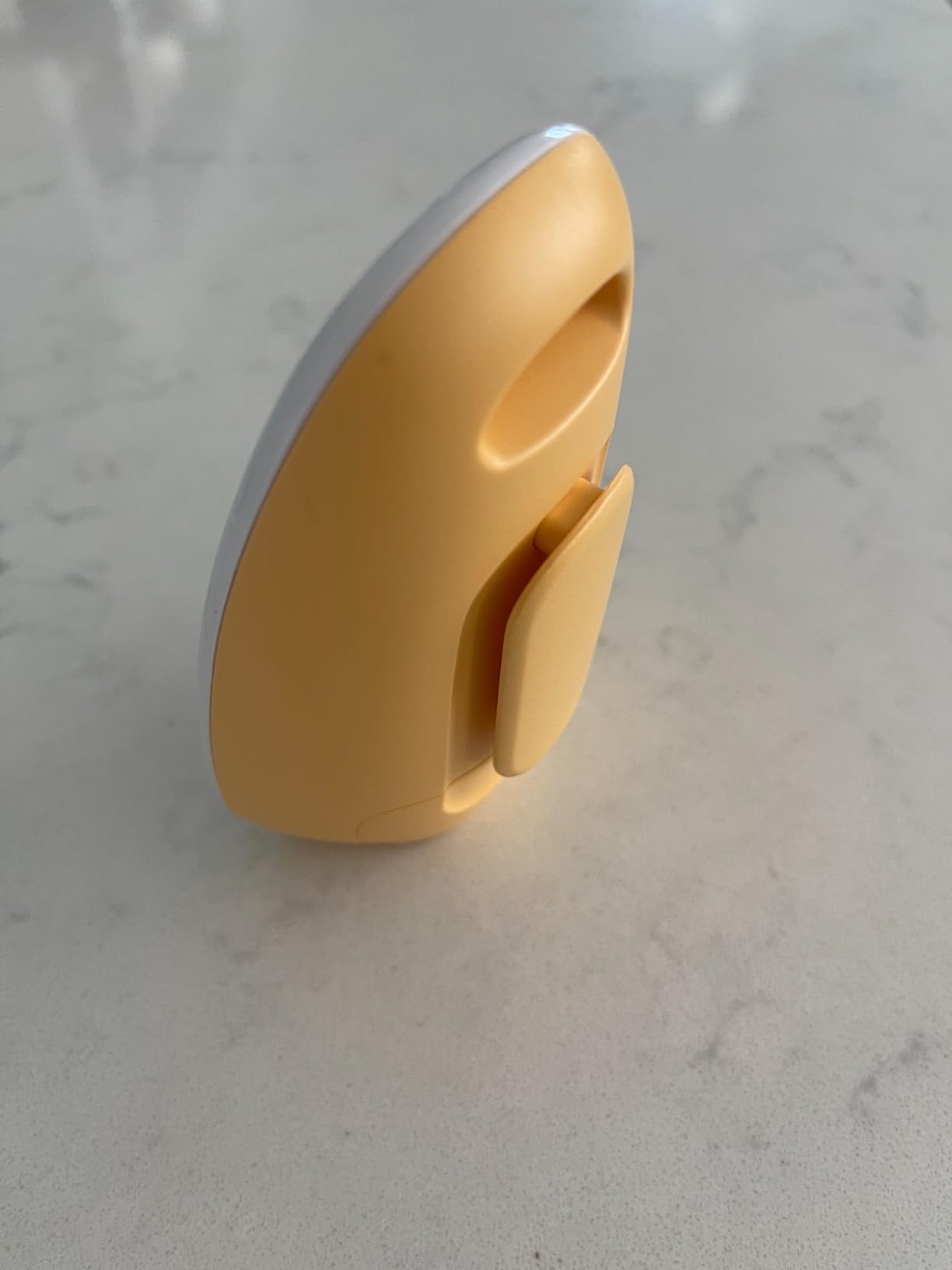
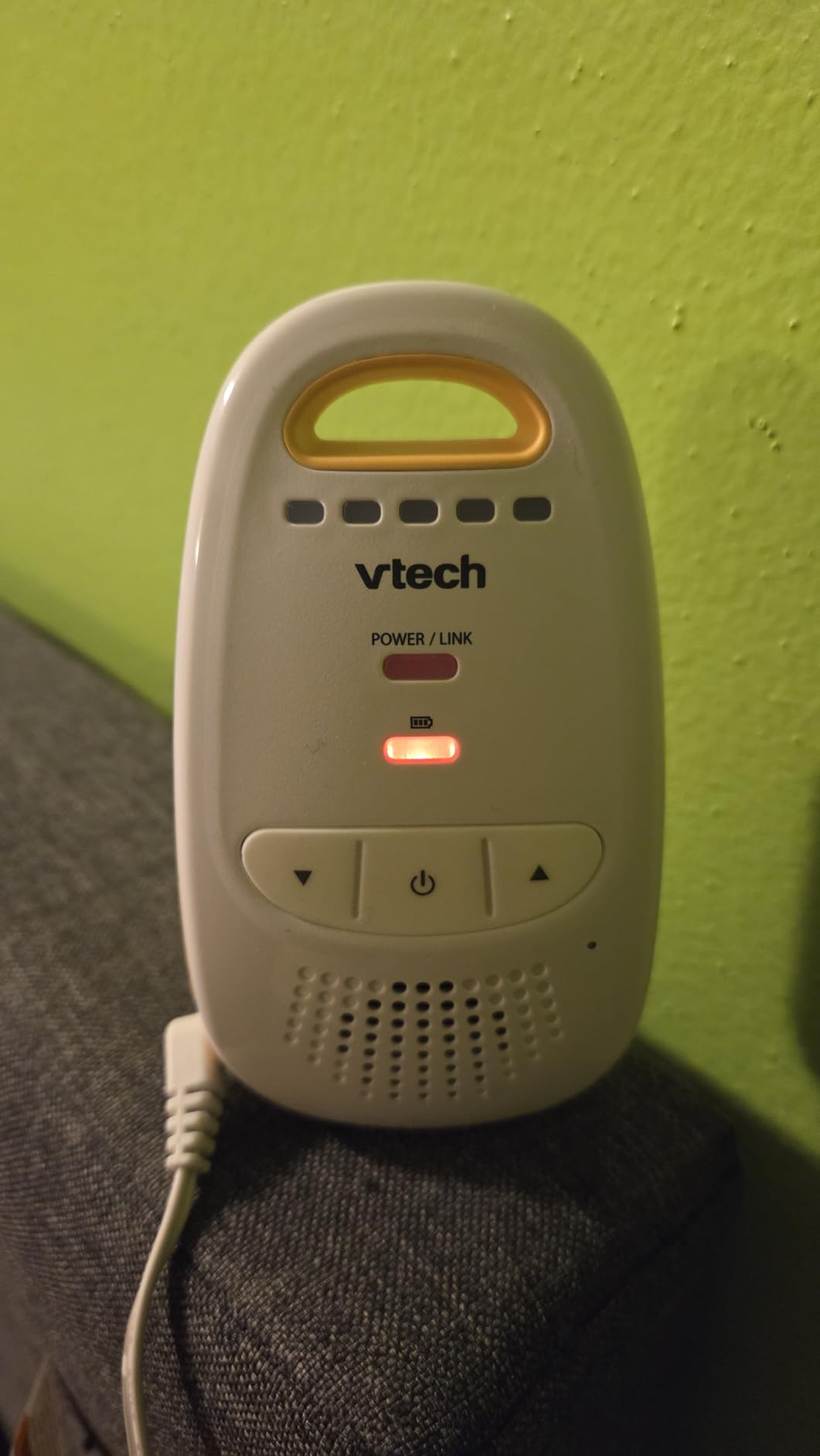
The five-LED sound-level indicator is the feature parents mention most. It lets you read how loud the nursery is without unmuting the handset or waking your partner, and the belt clip keeps the unit hands-free while you move between rooms doing chores.
Out-of-range and low-battery alerts are the only prompts the system gives, and no app, account, or pairing screen is involved. It powers up and links in roughly a minute, which is why it works as a grab-and-go monitor for sleepovers and a second house.
Where audio-only is the right answer
If what you need is to know whether the baby is crying, stirring, or settled from anywhere in the house, an audio monitor does that job without any of the complexity of a video system. It is also the natural choice for a grandparents house, a travel bag, or a second nursery.
The 8-hour battery plus AAA backup means it can sit through a night even if the charger is in another room, and the 1-year limited warranty is a reasonable baseline.
What you trade away
There is no picture, so no night vision, no pan and tilt, and no way to visually confirm sleep position. Parents who want that reassurance should look at one of the video systems instead.
Owners also note that sound quality is functional rather than premium in some units, the power-on light is bright enough to be noticeable in a dark nursery, and a minority of buyers report intermittent static.
We earn a commission, at no additional cost to you. CERTAIN CONTENT THAT APPEARS ON THIS SITE COMES FROM AMAZON. THIS CONTENT IS PROVIDED 'AS IS' AND IS SUBJECT TO CHANGE OR REMOVAL AT ANY TIME.
How to Choose a Long Range Baby Monitor for a Large Home
The word range on a baby monitor box means line-of-sight distance in an open field. The moment a wall, a closed door, or a floor goes between the camera and the parent unit, that number stops being useful. This is the gap that drives most returns, and it is why we rank these monitors on signal behavior rather than on the printed figure.
For a two-story home, expect a monitor rated at 1,000 ft to deliver roughly 100 to 150 ft of usable range through multiple floors and interior walls. Through a single interior wall, a 1,000 ft system typically holds up in the 300 to 400 ft range. Older construction with brick, plaster, or foil-backed insulation cuts that further.
Non-WiFi versus WiFi monitors in a large home
A non-WiFi monitor sends video or audio directly from the nursery camera to a handheld parent unit on its own encrypted frequency. Nothing touches your router, so it keeps working through an internet outage, it cannot be accessed by anyone on your WiFi, and there is no subscription attached to the hardware.
A WiFi monitor streams over your home network, which extends reach to anywhere you have coverage and unlocks sleep tracking and phone alerts. The trade is that the picture now depends on router placement, 2.4GHz congestion, and the app staying logged in. In a large home with the router at one end of the floorplan, a WiFi monitor in a basement nursery is the more fragile choice.
Match the monitor to your floorplan
For a one-story apartment or a small house, any of these systems works and the simplest model is the sensible buy. A two-story home with a nursery upstairs is the sweet spot for a 1,000 ft non-WiFi video system, and a 5-inch screen is plenty.
Three stories, a basement nursery, or a long hallway layout pushes you toward more antennas, DECT 6.0 on the 1.9GHz band, or a WiFi system with mesh coverage behind the camera. Open-plan 3,000 sq ft homes with two children are the case for a multi-camera kit, where camera count matters more than any single range number.
What actually matters day to day
Night vision quality decides whether you can read the room at 3 a.m. Two-way talk is what lets you settle a baby without walking the length of the house. Battery runtime decides whether the screen is on when you need it, and for that, 16 hours or more of continuous video is the threshold worth paying for.
Screen size is a comfort feature rather than a safety feature, but a 7-inch split screen is a genuine upgrade once a second child joins. Camera count matters if you are watching two rooms, and VOX wake-up mode matters if you do not want a glowing screen every time the house settles.
What you give up at each level
Entry audio monitors give up the picture entirely but buy you DECT 6.0 reliability. Mid-range video adds a 4.3 to 5-inch screen at 480p to 720p. Premium multi-camera kits add more cameras, larger screens, and 1080p sensors, and you stop getting a simple way to cover a single room.
How to Test Monitor Range Before You Buy
You cannot measure your own walls from a spec sheet, but you can test a monitor in a few minutes before committing. Ask the seller for the return window first, and buy a model that ships with a rechargeable parent unit so you can power it up immediately.
Set the camera in the nursery position you intend to use, not on a desk in the same room. Most disappointing range results come from testing with the camera in the hallway.
Walk to the farthest point in your home, the far end of the basement, the upstairs landing, and out to the driveway. Note where the picture starts breaking up, where audio cuts out, and whether the out-of-range alert fires before you lose the feed.
Run the test at night with the house in its real state: microwave running, WiFi streaming on the 2.4GHz band, cordless phone in use. Interference that never appears in a quiet daytime test can ruin a night feed at 2 a.m.
Check the worst-case battery state as well, because a monitor that holds signal on a full charge and drops it at 20 percent is not solving your problem.
Fixing 2.4GHz Interference in a Large Home
Most static, buzzing, and dropouts on wireless monitors trace back to the 2.4GHz band, which is crowded by design. Microwaves, cordless phones, Bluetooth devices, game consoles, baby monitors from neighbors, and your own WiFi routers all transmit there.
Move your router away from the nursery and away from appliances that emit on 2.4GHz. If your WiFi offers both 2.4 and 5GHz, push more of your own devices onto 5GHz to leave the 2.4GHz band less crowded for the monitor.
Change your WiFi router channel rather than leaving it on the crowded default. Channels 1, 6, and 11 are the non-overlapping choices on 2.4GHz, and moving off a congested one often removes static that no amount of repositioning will fix.
In a large home, place mesh nodes so there is strong 5GHz coverage in the nursery rather than relying on one router at the far end of the floorplan. Signal strength in the room that matters is what determines whether a WiFi monitor holds up.
If interference persists and you are on a 2.4GHz FHSS system, moving to DECT 6.0 removes you from that band entirely. That is the quiet advantage the VTech DM111 and DM221-2 hold over cheaper 2.4GHz units in dense homes.
Non-WiFi versus WiFi Monitors: Privacy and Reliability
Every monitor in this roundup is non-WiFi, and that is a deliberate choice for large homes rather than a lack of options. A dedicated parent unit has no IP address, no account, and no server connection, so the familiar category of hacked baby monitors found on publicly accessible home networks does not apply.
Reliability follows the same logic. When the ISP reboots, the router updates, or a phone logs out of an app, a WiFi monitor can leave you with no picture at all. A non-WiFi monitor has no such dependency.
What you give up is app-based convenience: phone notifications away from home, cloud clip storage, breathing and sleep tracking, and firmware updates. For a parent who needs to hear the nursery from the kitchen, those trade-offs are usually the right way round.
Frequently Asked Questions
Which baby monitor has the farthest range?
Most long range baby monitors are rated at 1,000 ft, including the VTech DM111, the VTech DM221-2, the VTech VM819, the HelloBaby HB6550, and the Firskids 1000ft model. That figure is line-of-sight in an open field. Through one interior wall expect roughly 300 to 400 ft, and through multiple floors and walls expect about 100 to 150 ft.
How far can baby monitors really reach?
A 1,000 ft rating is measured line-of-sight. One interior wall typically cuts usable range to about 300 to 400 ft, and two floors plus several walls can leave 100 to 150 ft of dependable signal. Older homes with brick, plaster, or foil-backed insulation lose more. Test in your own home before buying.
What is the best baby monitor for a large house?
For a two-story home the Infant Optics DXR-8 PRO is the strongest all-round pick, and the VTech VM819 covers a single room at a lower spend. For three stories, a basement nursery, or two children in two rooms, the HelloBaby HB6550 or the Comfyer BM01 with multiple cameras fit the floorplan better than a single-camera unit.
Why does my baby monitor interfere with my WiFi?
Both often use the 2.4GHz band, so a monitor and a router can crowd each other. Move the router away from the nursery, shift more of your own devices onto 5GHz, change the router to a non-overlapping 2.4GHz channel such as 1, 6, or 11, and keep the monitor camera clear of microwaves and cordless phones.
What causes interference with 2.4 GHz?
The usual sources are microwaves, cordless phones, Bluetooth devices, game consoles, and nearby monitors or routers using the same band. Walls and floors add to it. A monitor using DECT 6.0 in the 1.88 to 1.90 GHz range sits outside the 2.4GHz band and is largely immune to this type of interference.
The Verdict for Long Range Baby Monitors in 2026
The Infant Optics DXR-8 PRO is our overall pick for the best baby monitors with long range for large homes, because its Active Noise Reduction, swappable lenses, and user-replaceable battery make it the system that keeps working after a year of nightly use. It also needs no app, no password, and no subscription.
Watch a single room on a budget and the VTech VM819 is the sensible choice. Watch two children in separate rooms and the HelloBaby HB6550 or the Comfyer BM01 cover the floorplan properly, while the VTech DM221-2 and DM111 give you the cleanest long range audio on the 1.9GHz DECT band.
Whichever you pick, walk-test it in your own home at night before you commit. That five minutes of testing has saved more parents a second purchase than any spec on any box.