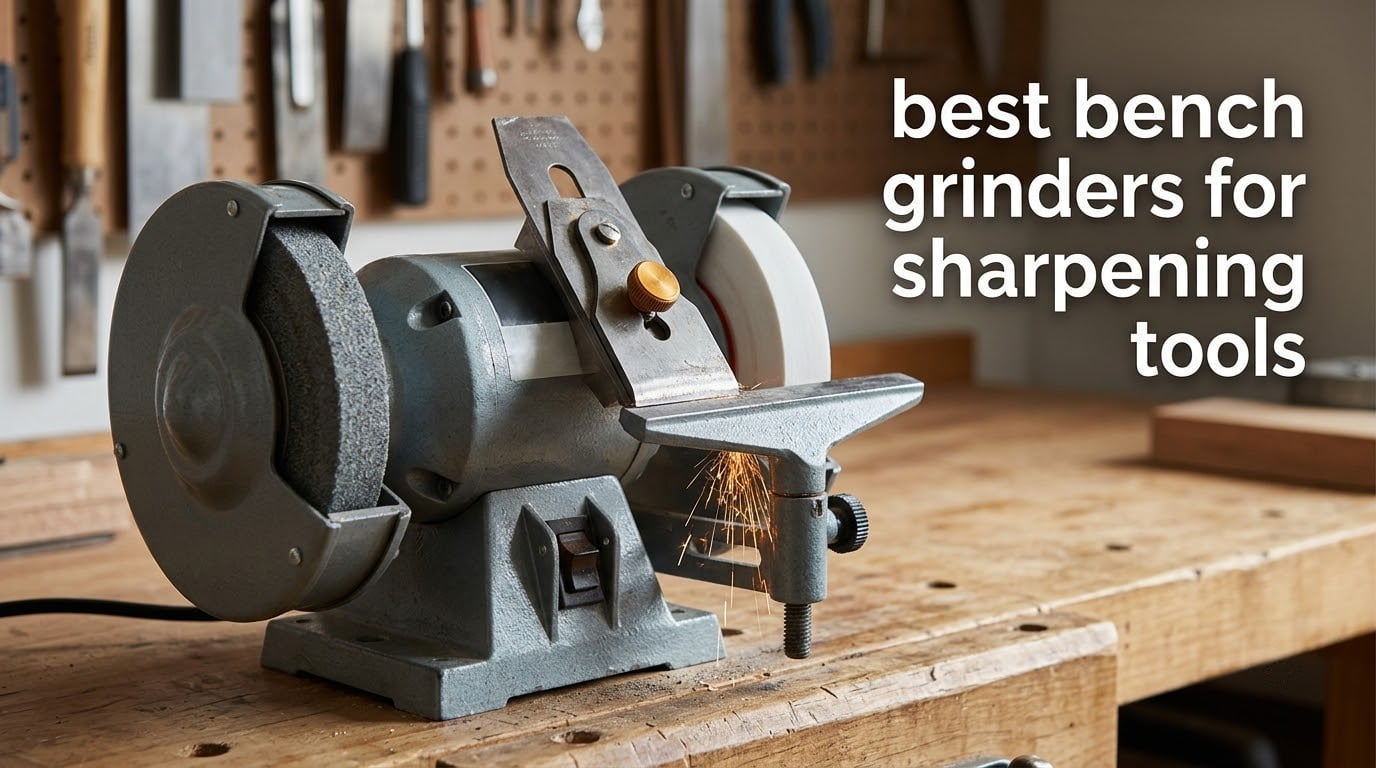
A bench grinder will put an edge on a dull chisel in about a minute, but the wrong one will do it at 3600 RPM and leave a blue edge you cannot grind out. That single variable, wheel speed, decides whether the best bench grinders for sharpening tools sharpen your hand tools or cooks them.
Here is the short version. The DEWALT DW758 is our editor’s choice for most people because of its 0.75 HP induction motor and machined aluminum tool rests. Sharpening high-speed-steel hand tools specifically, the RIKON 80-805 at 1750 RPM is the more careful choice, and the BUCKTOOL 6-Inch is the budget pick that still runs slow. Every one of these picks below was judged on what actually matters for sharpening rather than on how much metal it can chew through.
We spent weeks going through owner reviews across eight grinders, cross-checking motor speed, wheel diameter, arbor size, tool rest adjustability and the complaints that show up again and again. We also weighed what forums get wrong about this topic, since the most common piece of advice out there skips straight to brand names when the real decision is made by wheel speed and wheel type. This guide for 2026 covers all eight machines, plus the accessory questions that decide whether your edges come out consistent.
If you want a grinding wheel for general metalwork and sharpening is a side task, keep reading. If your chisel, plane iron or turning gouge is the reason the machine is going on the bench, jump to the speed section first, because that is where most of the money gets spent well or badly.
ContentsTable of Contents
- 1Top 3 Bench Grinders for Sharpening Tools in 2026→
- 2DEWALT DW758 Bench Grinder→
- 3RIKON 80-805 Slow Speed Grinder→
- 4BUCKTOOL 6-Inch Low Speed Grinder→
- 5All 8 Bench Grinders Compared for Sharpening (2026)→
- 6Why Wheel Speed Matters More Than Horsepower for Sharpening→
- 71. DEWALT DW758 8-Inch Bench Grinder – Most Power and the Best Tool Rests→
- 8DEWALT DW758 8-Inch Bench Grinder→
- 9Pros→
- 10Cons→
- 11What you get and what you need to add→
- 12Who should look elsewhere→
- 132. RIKON 80-805 8-Inch Slow Speed Bench Grinder – Best for HSS Hand Tools→
- 14RIKON 80-805 Professional 8-Inch Low Speed Bench Grinder, 1/2 HP, 1750 RPM→
- 15Pros→
- 16Cons→
- 17Why the wheel choice and the dressing tool matter so much here→
- 18Who should look elsewhere→
- 193. WEN BG4282 4.8-Amp 8-Inch Bench Grinder – Best for High-Speed Restoration→
- 20WEN BG4282 4.8-Amp 8-Inch Single Speed Bench Grinder with LED Work Lights, 14 x 10 x 11.75 inches, Black and Orange→
- 21Pros→
- 22Cons→
- 23The tool rest is the reason it is not a sharpening pick→
- 24Who should look elsewhere→
- 254. BUCKTOOL 6-Inch 1/3 HP Low Speed Bench Grinder – Best Budget Sharpening Setup→
- 26BUCKTOOL 6″ 1/3HP Low Speed Bench Grinder,High Precision Wobble Free Wheels→
- 27Pros→
- 28Cons→
- 29What 6 inch wheels cost you and what they do not→
- 30Who should look elsewhere→
- 315. Woodskil 6-Inch 1/2 HP High Speed Bench Grinder – Best Rigid Steel Base→
- 32Woodskil 6″ 1/2HP High Speed Bench Grinder for sharpening,CSA Listed→
- 33Pros→
- 34Cons→
- 35Where this machine sits for edge work→
- 36Who should look elsewhere→
- 376. WEN BG4286 8-Inch Slow Speed Bench Grinder – Best Finishing Wheel in a Slow-Speed Case→
- 38WEN BG4286 3-Amp 8-Inch Slow Speed Bench Grinder, Orange,black→
- 39Pros→
- 40Cons→
- 41The weight and the power problem→
- 42Who should look elsewhere→
- 437. Genesis GBG600L 6-Inch Bench Grinder – Best Task Lighting on a Budget→
- 44Genesis GBG600L 6″ Bench Grinder with Dual, Flexible Lights and Eye Shield , Gray→
- 45Pros→
- 46Cons→
- 47What the 1/2 inch shaft does to your wheel choices→
- 48Who should look elsewhere→
- 498. VEVOR 8-Inch Grinder and Belt Sander Combo – Best Two-in-One Sharpening Bench→
- 50VEVOR 8″ Bench Grinder & 2″ x 28″ Belt Sander Combo, 350W Professional Grinding Sanding Machine with LED Work Light & Protective Eye Shield for Metalworking, Woodworking, Knife Sharpening→
- 51Pros→
- 52Cons→
- 53Why finish on the belt rather than the wheel→
- 54Who should look elsewhere→
- 55How to Choose a Bench Grinder for Sharpening (2026)→
- 56Wheel speed: pick 1750 RPM for hand tools→
- 57Wheel types: white ALOX, grey ALOX, CBN and silicon carbide→
- 58Wheel dressing and truing: the step nobody skips→
- 59Sharpening jigs and fixtures worth budgeting for→
- 60Bench grinder vs Tormek-style sharpener→
- 61Disadvantages to know before you buy→
- 62Frequently Asked Questions→
- 63What is a bench grinder’s main disadvantage?→
- 64What is the best grinder to use for sharpening tools?→
- 65Can you use a bench grinder to sharpen an axe?→
- 66What attachment can I use on my bench grinder to sharpen drill bits?→
- 67How do I stop a bench grinder from burning the tool?→
- 68The Best Bench Grinder for Sharpening Tools in 2026→
Top 3 Bench Grinders for Sharpening Tools in 2026

DEWALT DW758 Bench Grinder
- 0.75 HP induction motor
- 3600 RPM
- Cast iron base
- 12.5 inch wheel spacing
RIKON 80-805 Slow Speed Grinder
- 1750 RPM slow speed
- 60 and 120 grit white ALOX wheels
- Diamond wheel sharpener
- 5 year warranty

BUCKTOOL 6-Inch Low Speed Grinder
- 1750 RPM
- 60 grit brown ALOX and 80 grit white ALOX
- Wobble free wheels
- Tool-free work rest
As an Amazon Associate we earn from qualifying purchases. CERTAIN CONTENT THAT APPEARS ON THIS SITE COMES FROM AMAZON. THIS CONTENT IS PROVIDED 'AS IS' AND IS SUBJECT TO CHANGE OR REMOVAL AT ANY TIME.
All 8 Bench Grinders Compared for Sharpening (2026)
| # | Product | Key details | Where to buy |
|---|---|---|---|
| 1 | DEWALT DW758 8-Inch Bench Grinder |
|
Check Latest Price |
| 2 | RIKON 80-805 8-Inch Slow Speed Bench Grinder |
|
Check Latest Price |
| 3 |  WEN BG4282 4.8-Amp 8-Inch Bench Grinder WEN BG4282 4.8-Amp 8-Inch Bench Grinder |
|
Check Latest Price |
| 4 | BUCKTOOL 6-Inch 1/3 HP Low Speed Bench Grinder |
|
Check Latest Price |
| 5 |  Woodskil 6-Inch 1/2 HP High Speed Bench Grinder Woodskil 6-Inch 1/2 HP High Speed Bench Grinder |
|
Check Latest Price |
| 6 |  WEN BG4286 3-Amp 8-Inch Slow Speed Bench Grinder WEN BG4286 3-Amp 8-Inch Slow Speed Bench Grinder |
|
Check Latest Price |
| 7 |  Genesis GBG600L 6-Inch Bench Grinder Genesis GBG600L 6-Inch Bench Grinder |
|
Check Latest Price |
| 8 |  VEVOR 8-Inch Grinder and Belt Sander Combo VEVOR 8-Inch Grinder and Belt Sander Combo |
|
Check Latest Price |
We earn from qualifying purchases. CERTAIN CONTENT THAT APPEARS ON THIS SITE COMES FROM AMAZON. THIS CONTENT IS PROVIDED 'AS IS' AND IS SUBJECT TO CHANGE OR REMOVAL AT ANY TIME.
Why Wheel Speed Matters More Than Horsepower for Sharpening
Sharpening is not grinding. Grinding means removing metal fast and ignoring the heat. Sharpening means removing a predictable amount of metal along a bevel you set in advance, and the heat you generate along the way is the part that damages the tool.
Heat has to go somewhere. Push a hardened steel edge into a wheel spinning at 3600 RPM and it has nowhere to go except into the steel itself. The steel turns blue, then straw, then grey. Those colours are the temper changing. Once that happens the hardness falls across the first fraction of a millimetre behind the edge, and no amount of honing brings it back. You have effectively softened your chisel to get a sharp edge, and you did it without noticing.
High-speed-steel hand tools are the ones that suffer most, because a lot of chisels and plane irons are hardened to around 60 Rockwell and their temper was set by heat treatment. Sharpening forum regulars keep repeating the same line: run slow, dress often, and take light passes. Several describe a wheel that turns true, runs cool and lets you work progressively rather than fighting the tool.
Three speed classes show up in these eight machines, and the difference between them is not subtle.
Low speed at roughly 1750 RPM is the sharpening class. The RIKON 80-805, the BUCKTOOL and the WEN BG4286 all live here. They give you roughly half the surface speed of a standard machine, which means less heat per pass and far more time to watch what the bevel is doing.
Standard high speed around 3450 to 3600 RPM is the general metalworking class. The DEWALT DW758, the WEN BG4282, the Woodskil and the Genesis all run here. They cut quickly and they will happily take the temper off a knife edge if you are careless.
Variable speed is what you want if you can find it, and none of the eight here has it. A dial that lets you drop to sharpening speed when you want a controlled edge and run up to removal speed for weld cleanup is the ideal arrangement, and it is worth widening your search if that is your priority.
Here is how we would rank them for sharpening work alone, which is the only ranking that matters on this page. Low speed first for any high-speed-steel hand tool. Variable speed second for versatility across mixed work. High speed third, fine for shaping, deburring and metal cleanup as long as you keep a hone in the loop. A slower wheel does not replace a honing stone, but it makes the honing step quick because it leaves you with a straight, even grind to refine.
1. DEWALT DW758 8-Inch Bench Grinder – Most Power and the Best Tool Rests
DEWALT DW758 8-Inch Bench Grinder
- 0.75 HP induction motor
- 3600 RPM
- 8 inch wheels
- 12-1/2 inch wheel spacing
- Cast iron base
Pros
- 0.75 HP motor holds speed under load
- Precision-machined aluminum tool rests position accurately
- Cast iron base and motor housing
- 12-1/2 inch clearance suits longer tools
- Rear exhaust ports in the wheel guards
Cons
- Factory wheels can arrive out of balance on some machines
- Included consumable wheels are widely criticised
- Assembly instructions use tiny print
- Thin sheet metal guards can strip threads
We earn a commission, at no additional cost to you. CERTAIN CONTENT THAT APPEARS ON THIS SITE COMES FROM AMAZON. THIS CONTENT IS PROVIDED 'AS IS' AND IS SUBJECT TO CHANGE OR REMOVAL AT ANY TIME.
This is the machine I put on the bench when I want the work done without fuss. The 0.75 HP induction motor is the strongest in this group and it holds speed when you load the edge properly, which means the grind stays consistent instead of slowing and burning. It also has a 12-1/2 inch gap between the wheels, and that matters more than people expect when you are working a long plane iron or a full-size gouge.
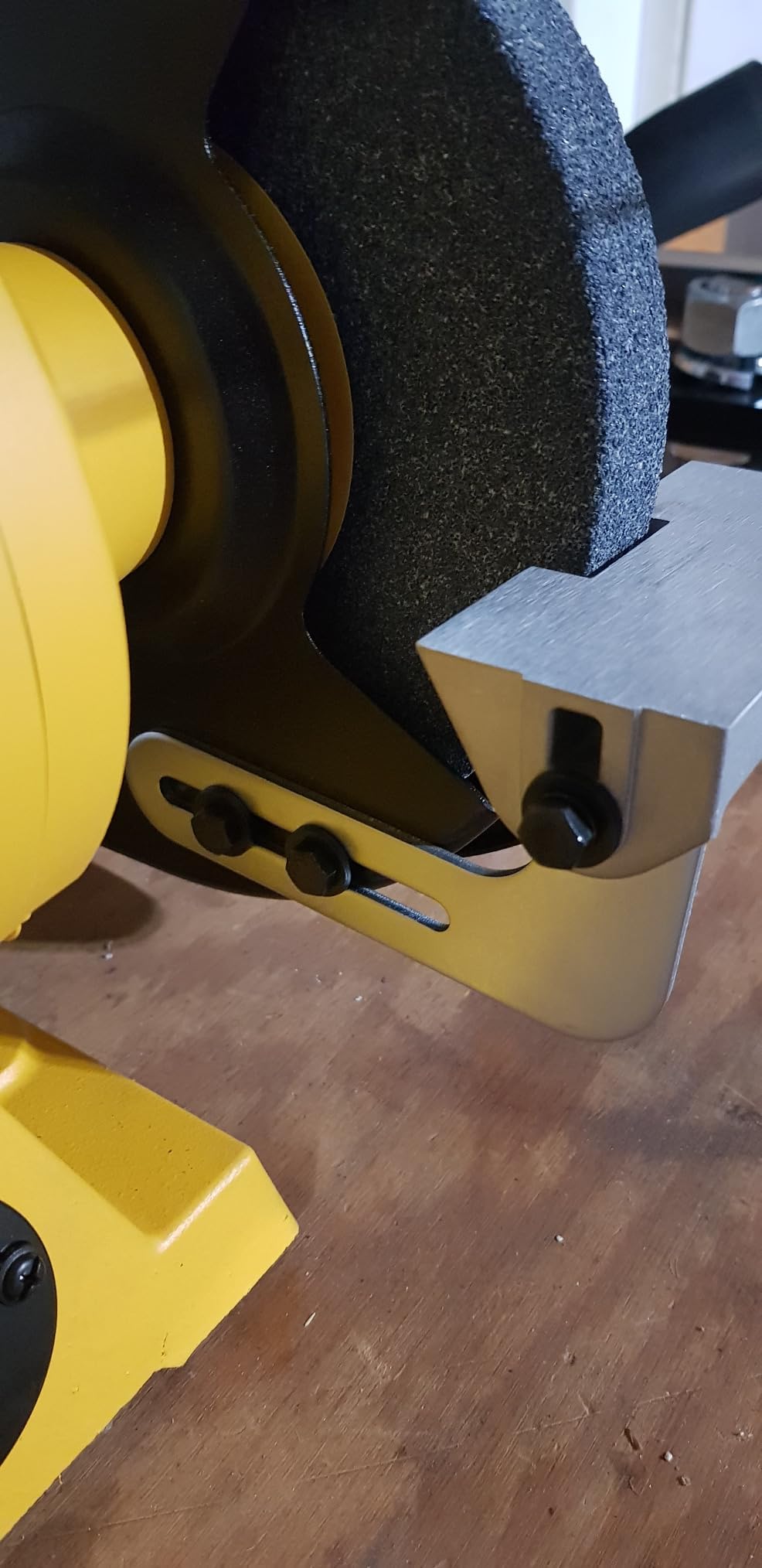
The tool rests are the detail that separates it from the rest. They are precision-machined aluminum rather than a cast tab, so the angle holds where you set it and the surface stays flat across its width. On a grinder like this, a rigid rest is what lets you sweep a consistent bevel by eye, and it is the first thing I check on any bench grinder used for sharpening.
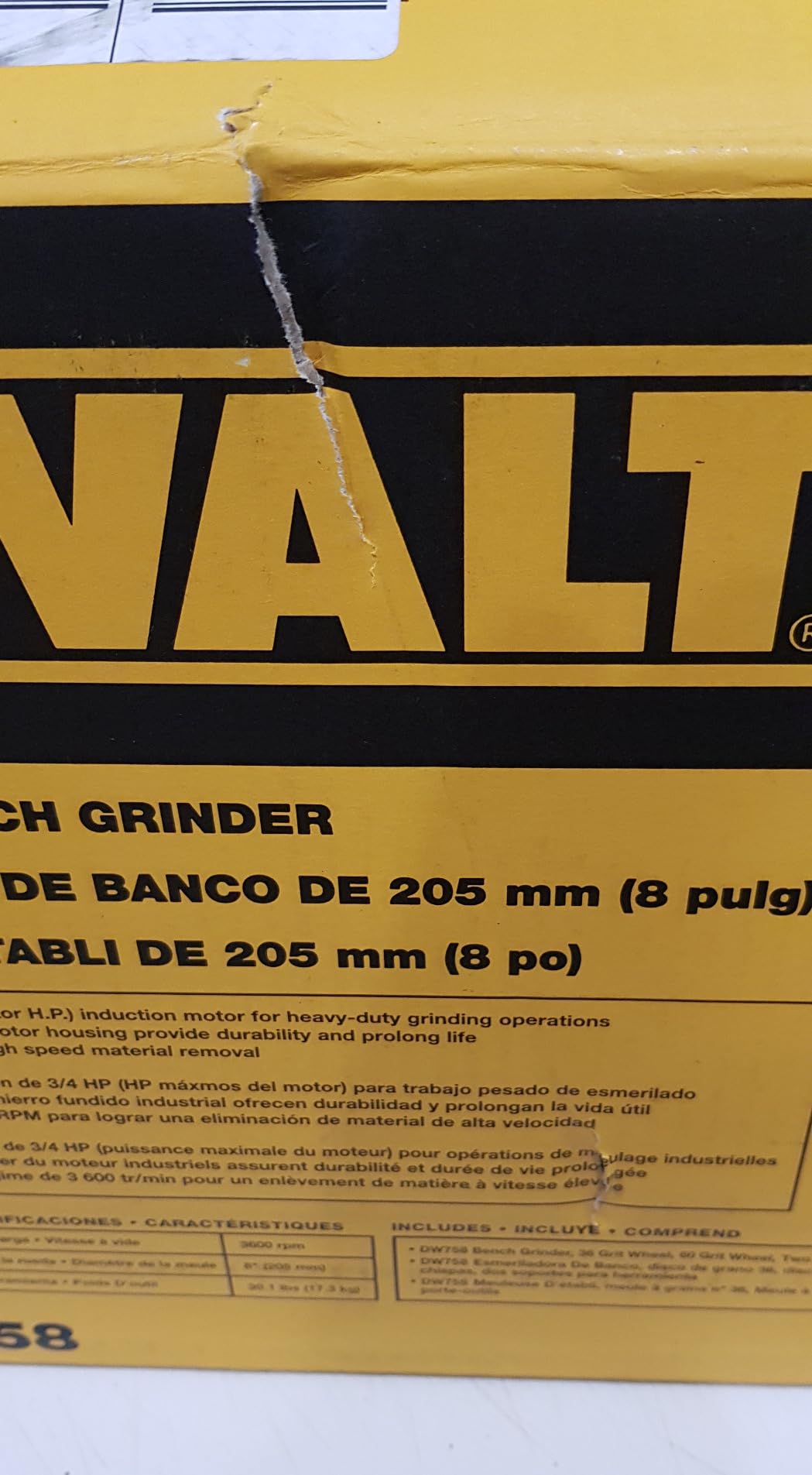
The 3600 RPM speed is the honest compromise here. This is not a low-speed machine, and anyone selling it as a sharpening specialist is overselling. At that speed, approach a hardened edge with the wheel dressed sharp, take short passes, and keep a water quench tray close. Used that way it is superb. Used carelessly on a thin knife it will blue the edge quickly, and no amount of careful handling fully removes that risk.
The dominant complaint in the reviews is factory wheel quality, and it comes up often enough to plan around. Reviewers frequently report machines arriving with wheels out of balance, causing vibration and the machine walking across the bench, and the included consumable wheels are criticised across the board. Several buyers recommend budgeting for aftermarket wheels on day one, which is sensible advice given how much a bad wheel undermines the machined rest and heavy motor.
What you get and what you need to add
Out of the box you get a 60 grit wheel and a 36 grit wheel, eye shields, spark deflectors and both tool rests. The 36 grit wheel is for shaping and the 60 grit is your working wheel. For hand tool sharpening, the 60 grit is where you will spend nearly all your time, and you can dress it frequently without worrying much about wasting it.
The assembly instructions are a genuine weak point. Owners describe tiny print and poorly labelled parts, and a few mention tool rest and mounting hardware edges arriving with burrs that need deburring before you touch a chisel to them. Budget a short setup session with a file and a set of feeler gauges to set the rest gap and square it to the wheel face.
Who should look elsewhere
Skip this one if your only grinding is sharpening high-speed-steel hand tools and you have no plans to do general metalwork. At 3600 RPM you will manage, but you are working against the machine instead of with it, and there is no speed control to dial back when a bevel starts running hot.
It is also the wrong choice if you are buying on a tight budget and expect to never replace a wheel. The motor and chassis are excellent and the wheels are the weak point, so budget owners who grind constantly end up replacing consumables sooner anyway. If that is your situation, the low-speed machines below come with wheels that suit sharpening better from day one.
We earn a commission, at no additional cost to you. CERTAIN CONTENT THAT APPEARS ON THIS SITE COMES FROM AMAZON. THIS CONTENT IS PROVIDED 'AS IS' AND IS SUBJECT TO CHANGE OR REMOVAL AT ANY TIME.
2. RIKON 80-805 8-Inch Slow Speed Bench Grinder – Best for HSS Hand Tools
RIKON 80-805 Professional 8-Inch Low Speed Bench Grinder, 1/2 HP, 1750 RPM
- 0.5 HP motor at 1750 RPM
- 60 and 120 grit white aluminum oxide wheels
- Diamond wheel sharpener included
- 5 year warranty
Pros
- 1750 RPM is well matched to sharpening
- Cast iron base with anti-vibration rubber feet
- Includes both 60 and 120 grit white aluminum oxide
- Built-in diamond wheel sharpener and drill bit groove
- Five year manufacturer warranty
Cons
- Heavier than most 8 inch competitors
- Reviewers report CBN wheels improve results further
- Costs more than 6 inch budget options
We earn a commission, at no additional cost to you. CERTAIN CONTENT THAT APPEARS ON THIS SITE COMES FROM AMAZON. THIS CONTENT IS PROVIDED 'AS IS' AND IS SUBJECT TO CHANGE OR REMOVAL AT ANY TIME.
This is the machine the whole category is measured against for sharpening. Everything else in this guide is either faster, cheaper or larger, and the RIKON is the one where the design decisions were made by people who cared about what happens to the steel rather than what happens to the workpiece.
At 1750 RPM you can hold a bevel and watch it. The grinder comes with 1 inch by 8 inch 60 grit and 120 grit white aluminum oxide wheels, and that pairing matters, because white aluminum oxide is the grit most people land on for hardened steel. The 120 grit wheel gives you a finer starting grind that needs less honing, which saves you time when you are touching up an edge rather than reshaping a bevel.
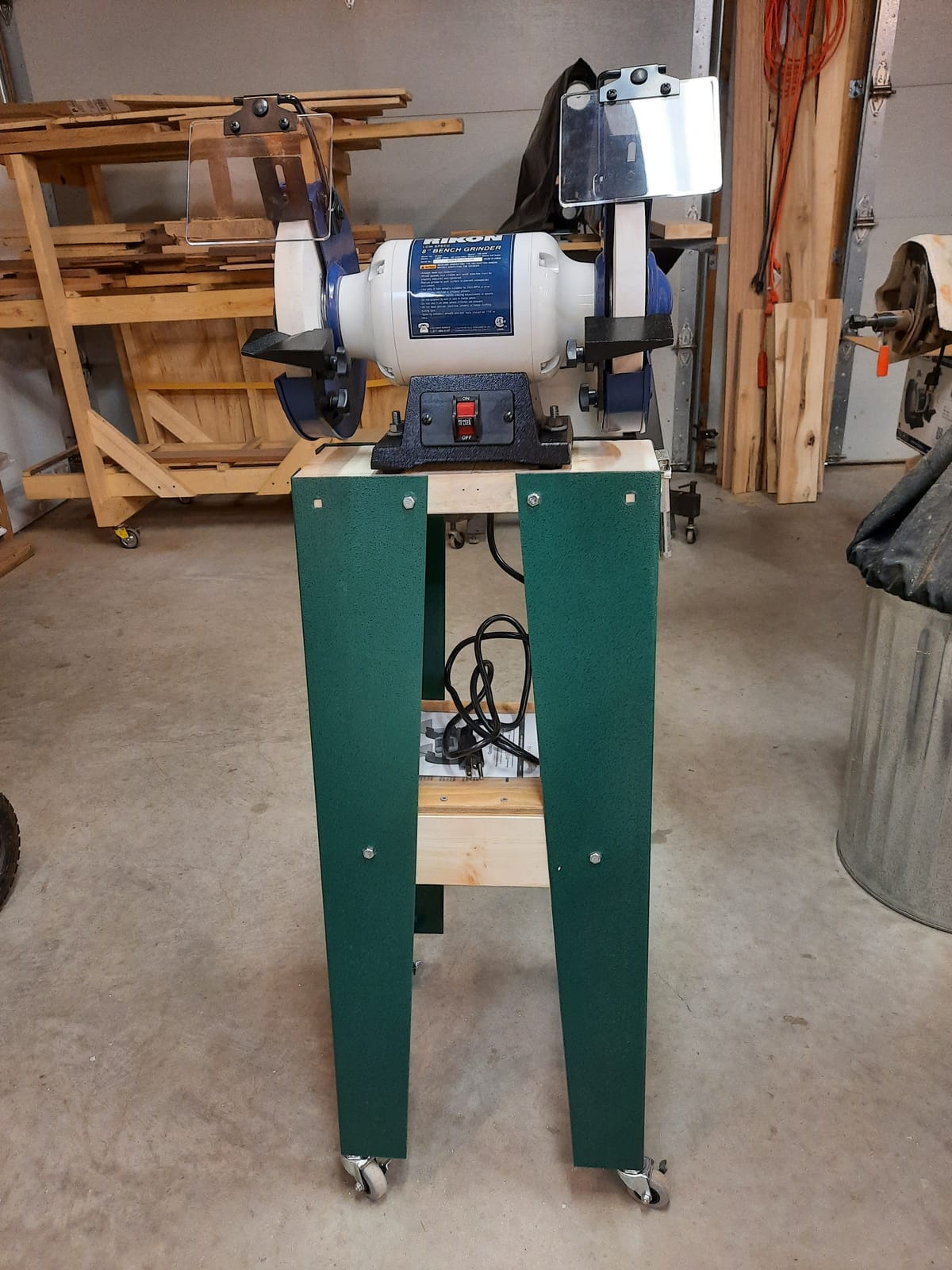
The base is cast iron on anti-vibration rubber feet. That combination is worth more than it sounds, because a grinder that moves under load changes the bevel angle mid pass. A 16.65 kg machine sitting still is one of the reasons this unit produces consistent results, and owners single out the steadiness as much as the speed.
Two accessories are built in that you would otherwise buy. The diamond wheel sharpener is a dressing diamond mounted on the machine, so dressing the wheel does not mean hunting for a tool and does not mean running a hand stone against a spinning wheel. There is also an integrated groove in the tool rest for drill bits, which is a small thing that gets used constantly once you have it.
Why the wheel choice and the dressing tool matter so much here
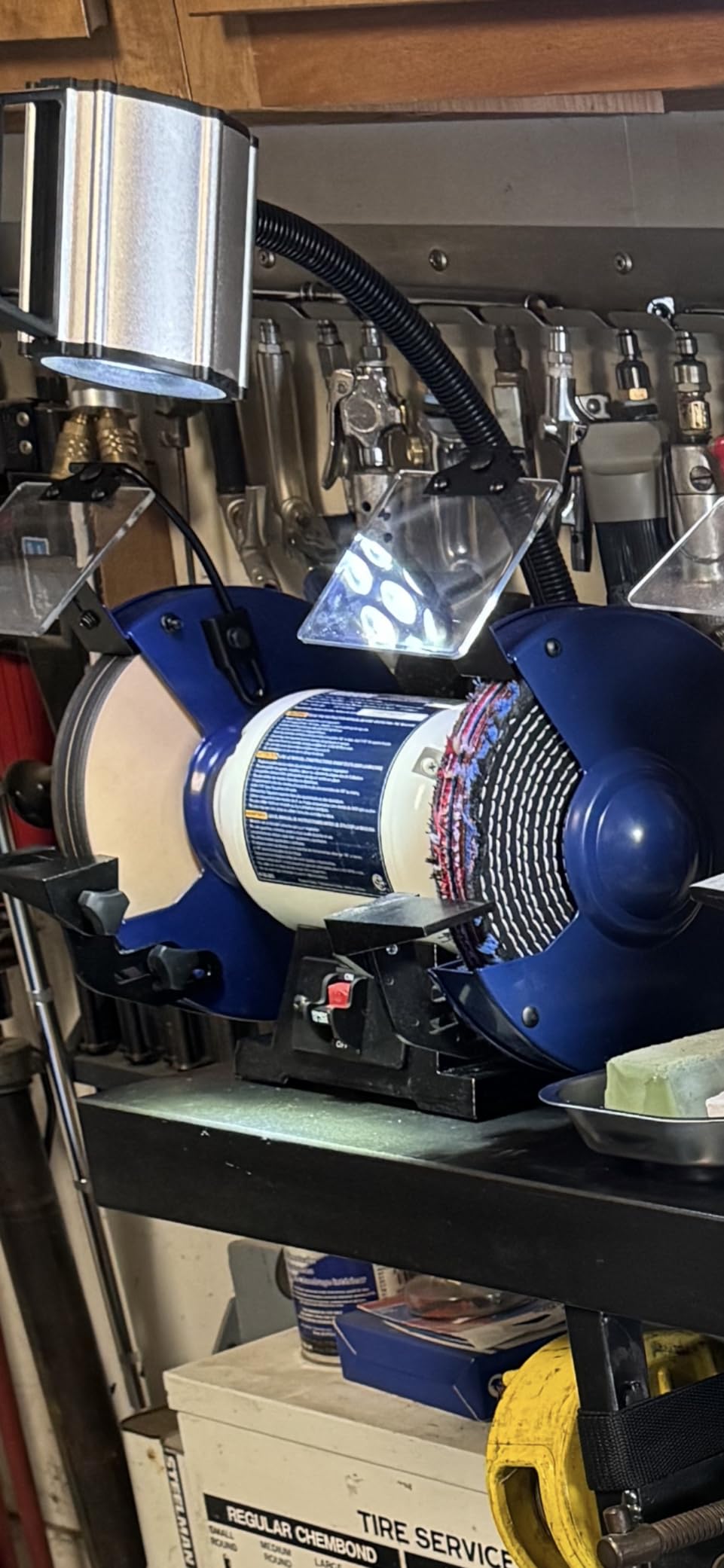
A dull wheel needs more force to cut, and more force means more heat and more steel pulled out of the edge before you even get to the angle. The included diamond sharpener exists to solve exactly that, and reviewers describe using it regularly as the difference between a clean grind and a scorched one. Dress, then work, then dress again, and the wheel behaves like a new one every time.
Several owners go further and fit cubic boron nitride wheels, reporting an even smoother result. That is a reasonable upgrade path for anyone who sharpens a lot, since a quality CBN wheel holds its shape, stays flat with fewer dressings and cuts cooler than aluminum oxide. It also costs more and needs more frequent truing, so treat it as a second step rather than a first one.
Who should look elsewhere
This is not a budget purchase, and it is not the lightest 8 inch machine in the group. If your bench height or mobility matters, the weight is the first thing you will notice when you try to move it. Owners moving it around a small shop report the wheel and guard components feel heavier than comparable machines.
It is also the wrong tool if you want a general purpose metalwork grinder. There is no high-speed mode, so weld cleanup, grinding down thick bar and shaping heavy parts will take longer than on the high-speed units here. For pure sharpening it is hard to argue with, but if sharpening is one job among five, look at a machine with more speed range instead.
We earn a commission, at no additional cost to you. CERTAIN CONTENT THAT APPEARS ON THIS SITE COMES FROM AMAZON. THIS CONTENT IS PROVIDED 'AS IS' AND IS SUBJECT TO CHANGE OR REMOVAL AT ANY TIME.
3. WEN BG4282 4.8-Amp 8-Inch Bench Grinder – Best for High-Speed Restoration
WEN BG4282 4.8-Amp 8-Inch Single Speed Bench Grinder with LED Work Lights, 14 x 10 x 11.75 inches, Black and Orange
- 4.8 amp motor
- 8 by 1 inch wheels at 3450 RPM
- 60 grit and 36 grit wheels
- Quenching tray
Pros
- Strong 4.8 amp motor holds grinding speed under load
- Runs smoothly and quietly for its price class
- LED lights on the eye guards illuminate the workpiece
- Onboard quenching tray cools workpieces
- Well balanced out of the box
Cons
- Cast tool rests are not parallel to the wheels
- Rest notches will not hold a fine 25 degree bevel
- LED lights are dim and need batteries
- Wheels can run hot in long knife sessions
We earn a commission, at no additional cost to you. CERTAIN CONTENT THAT APPEARS ON THIS SITE COMES FROM AMAZON. THIS CONTENT IS PROVIDED 'AS IS' AND IS SUBJECT TO CHANGE OR REMOVAL AT ANY TIME.
Put this one on the list for restoring dull, pitted and neglected tools rather than for maintaining good ones. A 4.8 amp motor at 3450 RPM has the appetite for taking a mower blade, a wrench or a rusty file down to shape quickly, and reviewers consistently report it holding speed under load instead of bogging down.
It is also well balanced out of the box, which is more than several machines here manage, and it reaches full speed in under ten seconds. That combination means you spend your time grinding rather than waiting for the machine to settle, and it is why this unit appeals to people restoring a whole box of hand tools at once.
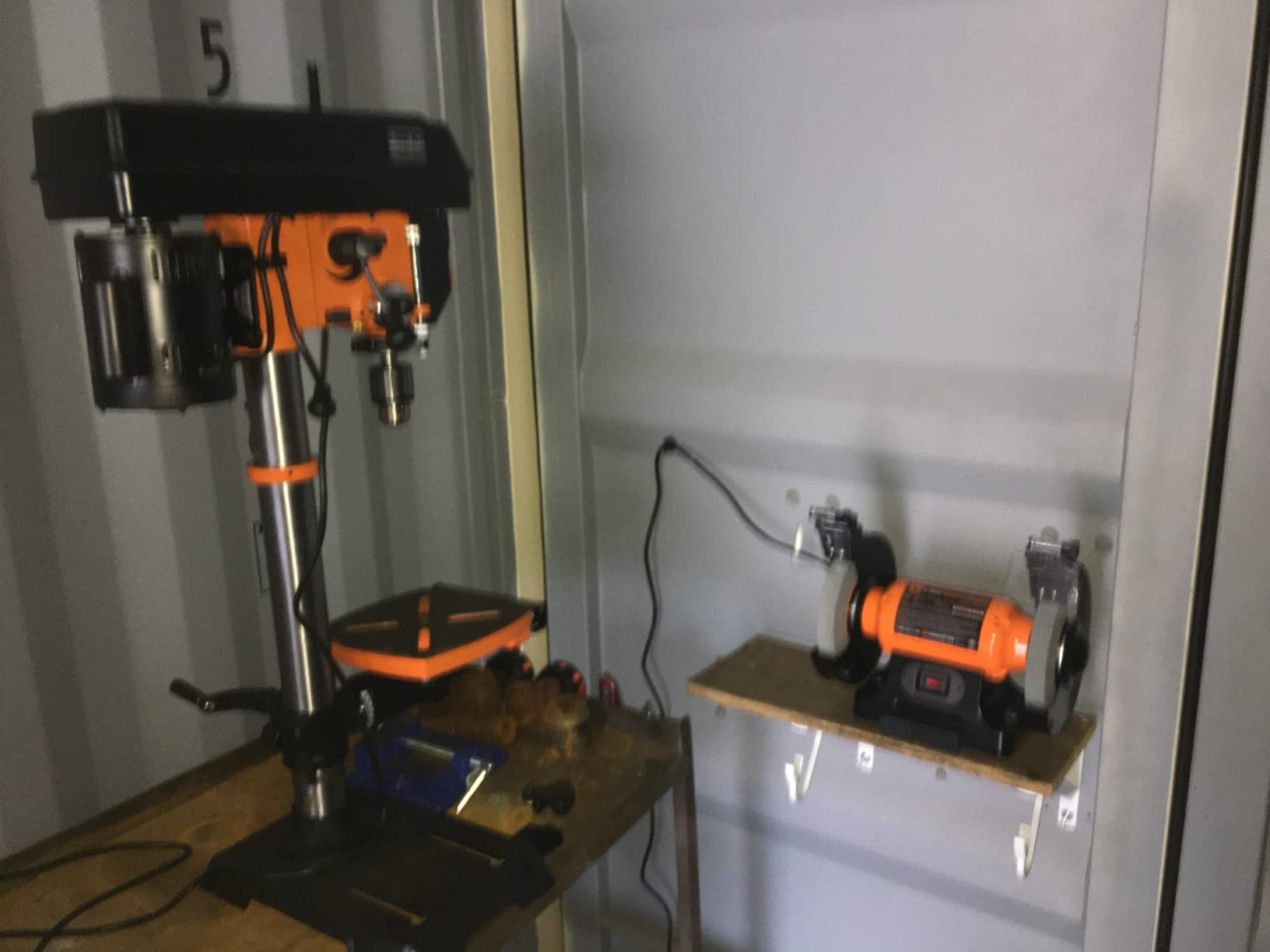
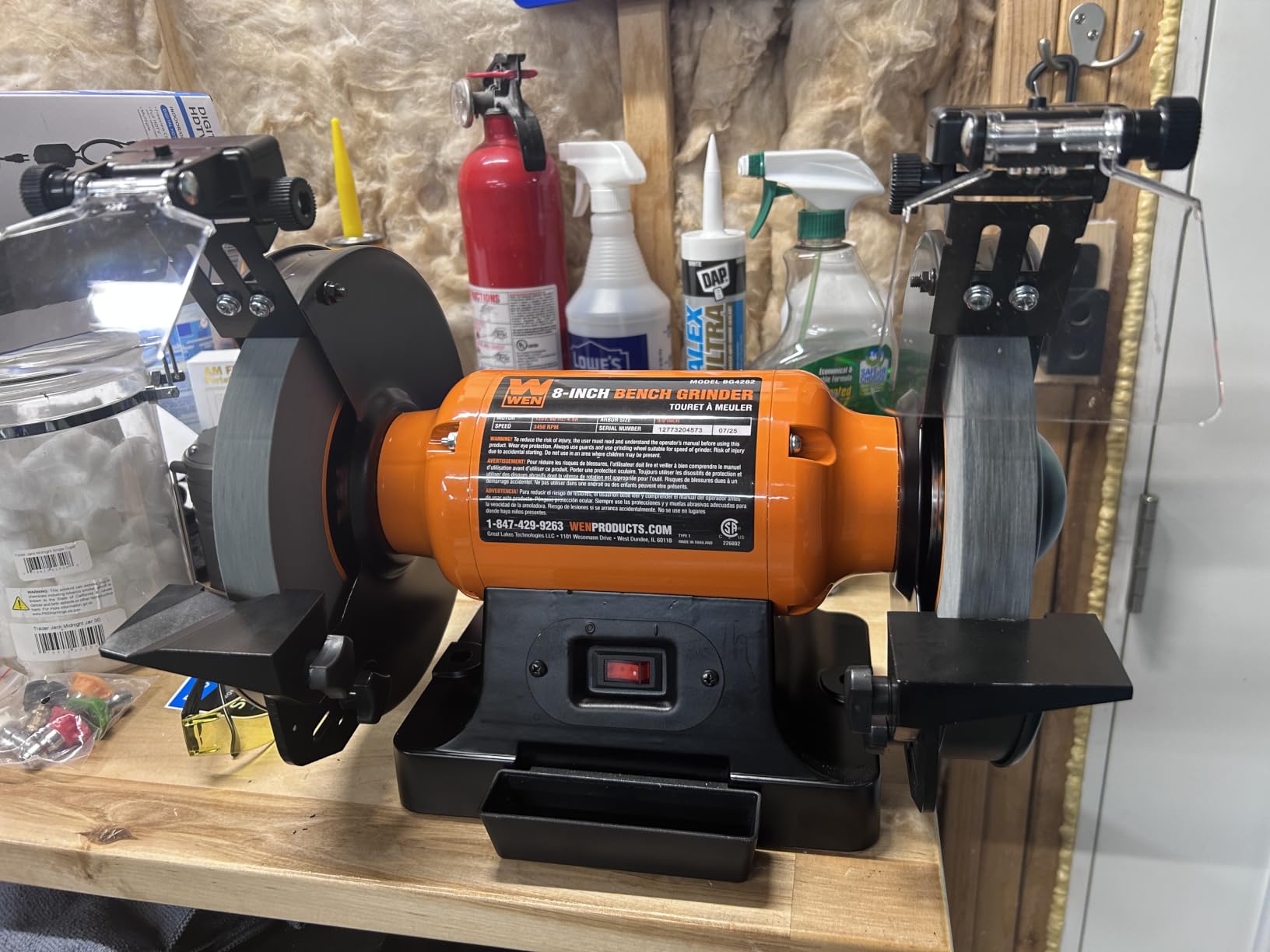
Two built-in features are genuinely useful. The quenching tray sits on the base so you can cool a workpiece without hunting for a bucket, and the adjustable eye guards carry integrated LED lights that throw light onto the work area. When you are checking whether a bevel is flat, seeing it properly is worth more than any spec on the box.
It comes with a 60 grit and a 36 grit wheel, which is the right pairing for restoration work. The 36 grit takes the material off fast, and the 60 grit handles everything that follows. For hand tool sharpening the 60 grit does most of the work, and you would finish on a honing stone afterward.
The tool rest is the reason it is not a sharpening pick
The cast tool rests are the reason this lands below the low-speed machines on this list rather than higher. Owners point out that they are cast and not parallel to the wheels, so they cannot be bent to a finer angle, and the rest notches will not hold a precise 25 degree bevel for chisels and plane irons. That is a direct hit on the sharpening case, because a consistent bevel is the entire point.
If you own a proper sharpening jig that clamps to the rest and holds the angle for you, this criticism matters much less. If you plan to freehand, you will spend the first hour fighting the fixture. Everything else about the machine is solid, so this is a narrow but real limitation.
Who should look elsewhere
Skip it if your main interest is fine edge work at precise angles and you have no jig. The speed will generate heat on a delicate knife edge during long sessions, and several owners report exactly that, which is the expected behaviour of a 3450 RPM machine with a coarse wheel.
The clear eye shield pieces can only be replaced with the original parts, and the LED lights are dim and battery powered, which is disappointing on a machine that otherwise leans into visibility. If you need serious lighting for sharpening, the Genesis below takes that job further, though at the cost of an even faster wheel.
We earn a commission, at no additional cost to you. CERTAIN CONTENT THAT APPEARS ON THIS SITE COMES FROM AMAZON. THIS CONTENT IS PROVIDED 'AS IS' AND IS SUBJECT TO CHANGE OR REMOVAL AT ANY TIME.
4. BUCKTOOL 6-Inch 1/3 HP Low Speed Bench Grinder – Best Budget Sharpening Setup
BUCKTOOL 6″ 1/3HP Low Speed Bench Grinder,High Precision Wobble Free Wheels
- 1/3 HP motor at 1750 RPM
- 60 grit brown and 80 grit white aluminum oxide wheels
- Tool-free adjustable work rest
- 2 year warranty
Pros
- 1750 RPM gives controlled low-heat sharpening
- Wheels are well balanced and run wobble free
- Tool-free adjustable work rest speeds setup
- Cast aluminum base with rubber feet cuts vibration
- Eye shields and spark arrestor included
Cons
- 1/3 HP motor has little headroom for heavy material removal
- Two eye shields feel redundant on a 6 inch machine
- Small wheels need changing more often on big jobs
We earn a commission, at no additional cost to you. CERTAIN CONTENT THAT APPEARS ON THIS SITE COMES FROM AMAZON. THIS CONTENT IS PROVIDED 'AS IS' AND IS SUBJECT TO CHANGE OR REMOVAL AT ANY TIME.
This is the pick if you want slow-speed sharpening behaviour without the spend. At 1750 RPM with a 1/3 HP motor it behaves like a low-speed grinder for edge work, and owners rate it highly for chisels, plane irons, axes and knife edges, which is a pretty direct list of what this page is about.
The wheel pairing is the smartest thing about it. The 60 grit brown aluminum oxide and 80 grit white aluminum oxide combination gives you a coarser material removal option and a finer refining option, and having both out of the box saves you a purchase and a mounting job. The 80 grit white wheel in particular is a sensible starting point for hardened steel.
Wheel balance is where the 4.7 rating comes from. Owners repeatedly describe the wheels as well balanced and running wobble free, and that is the single most underrated feature on any bench grinder. A wheel that runs true gives you an even grind without needing aggressive dressing after every few passes, and it is why this machine punches above its class for sharpening.
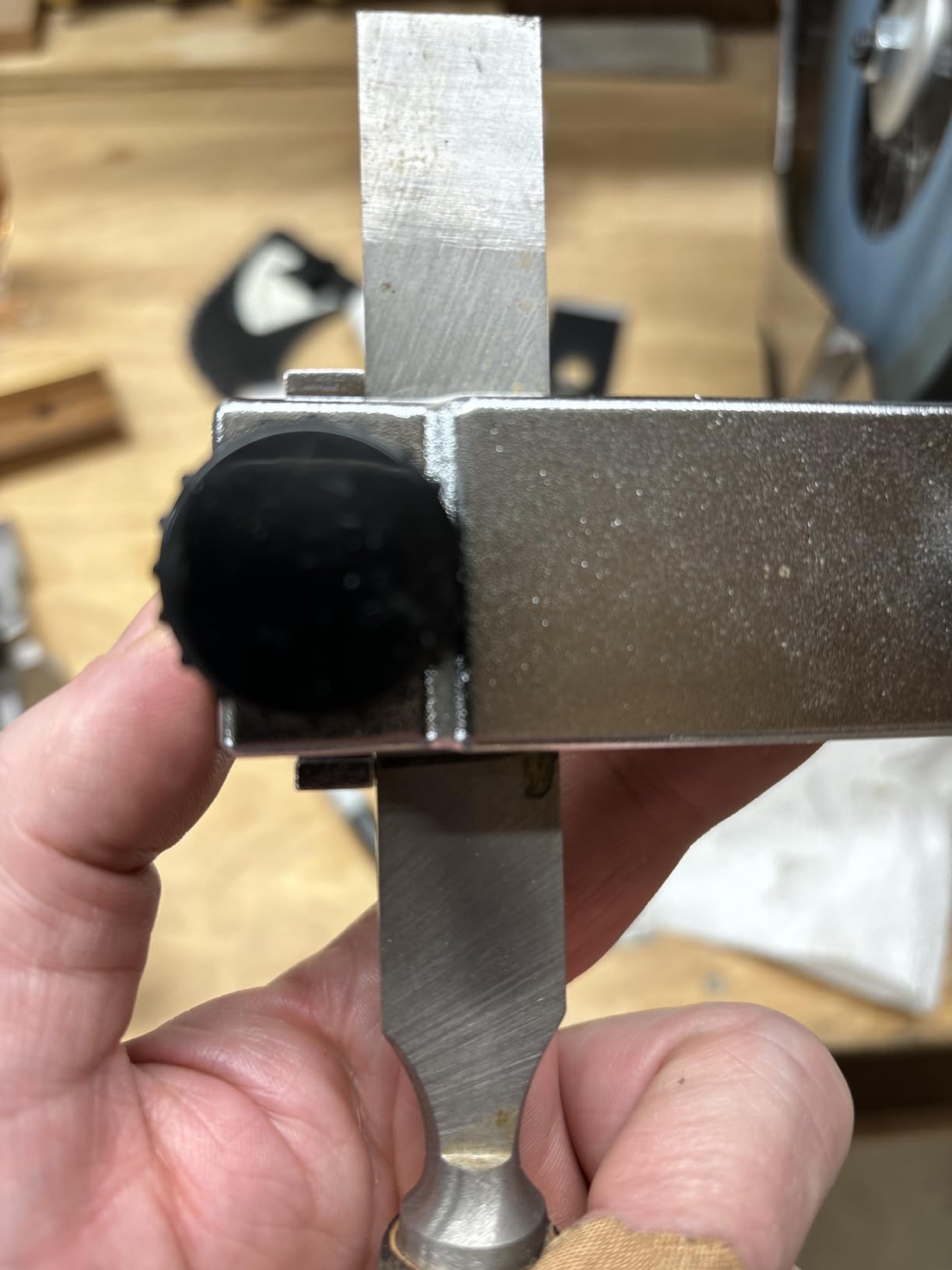
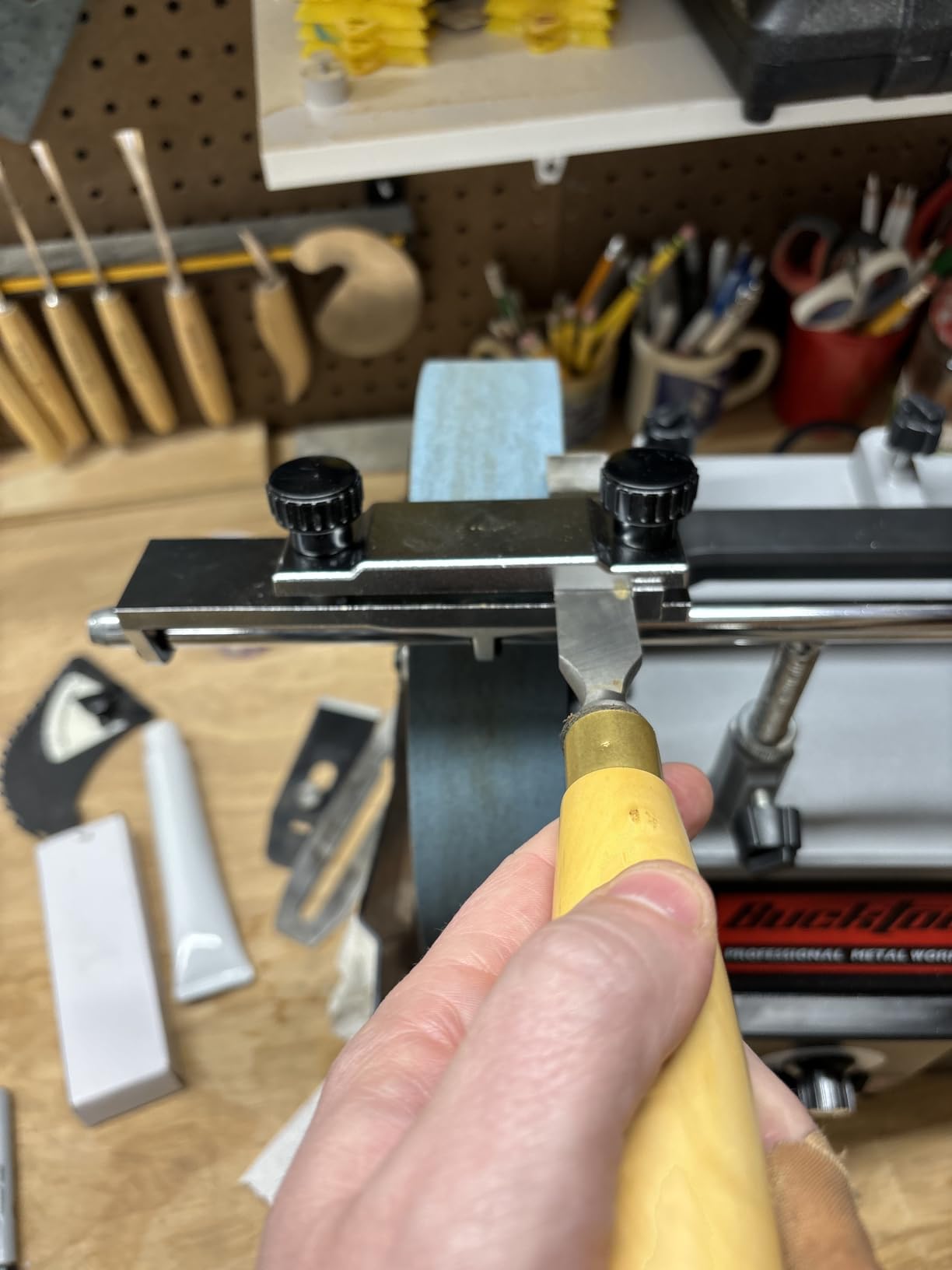
The tool-free adjustable work rest is another practical win. You can change the angle or the gap without hunting for a hex key, which makes it far more likely that you will actually set it up properly once and leave it alone. The cast aluminum base with rubber feet keeps it steady on a small bench, which matters in a hobby shop where space is limited.
What 6 inch wheels cost you and what they do not
Six inch wheels cost you surface area. A smaller wheel wears faster, so you will replace consumables more often, and it has less working face for heavy work. On sharpening, where you are taking fine passes across a small bevel, that limitation mostly stays out of your way, and the headroom you give up is the part that matters more.
A 1/3 HP motor has noticeably less headroom than a 3/4 HP unit, so heavy work will slow it down. If your sharpening load is chisels, irons, gouges and knives, that is fine. If you also grind bar, pins and welds, this is not the machine.
Who should look elsewhere
Do not buy this if you need one machine for sharpening and general metalwork. You will spend the first year apologising to the motor. Two eye shields on a machine this compact also feel like one too many, which is a harmless quirk rather than a real problem.
It is also the machine where wheel dressing tools matter most, because smaller wheels lose their flat faster. Budget for a diamond dresser before you buy the wheels. Without one, you are shaping your edges on a curved surface and wondering why the bevel keeps coming out uneven.
We earn a commission, at no additional cost to you. CERTAIN CONTENT THAT APPEARS ON THIS SITE COMES FROM AMAZON. THIS CONTENT IS PROVIDED 'AS IS' AND IS SUBJECT TO CHANGE OR REMOVAL AT ANY TIME.
5. Woodskil 6-Inch 1/2 HP High Speed Bench Grinder – Best Rigid Steel Base
Woodskil 6″ 1/2HP High Speed Bench Grinder for sharpening,CSA Listed
- 0.5 HP motor at 3450 RPM
- 36 grit and 60 grit aluminum oxide wheels
- Pre-drilled steel base
- CSA certified
Pros
- 0.5 HP motor handles rough shaping and fine polishing
- 36 grit and 60 grit wheels cover rough and finishing work
- Pre-drilled heavy-duty steel base runs wobble free
- CSA certified with eye shield and spark arrestor
- Compact at 7.71 kg and easy to reposition
Cons
- 3450 RPM generates more heat than low-speed grinders
- Small wheel diameter limits heavy material removal
- Documentation and assembly guidance are minimal
We earn a commission, at no additional cost to you. CERTAIN CONTENT THAT APPEARS ON THIS SITE COMES FROM AMAZON. THIS CONTENT IS PROVIDED 'AS IS' AND IS SUBJECT TO CHANGE OR REMOVAL AT ANY TIME.
At 7.71 kg it is the lightest machine in the group by a wide margin, so if your sharpening station lives in a corner and has to come out for chisel work, that is worth more than horsepower. It runs at 3450 RPM with a 0.5 HP motor drawing 2.8 amps, which is enough to shape and finish small parts.
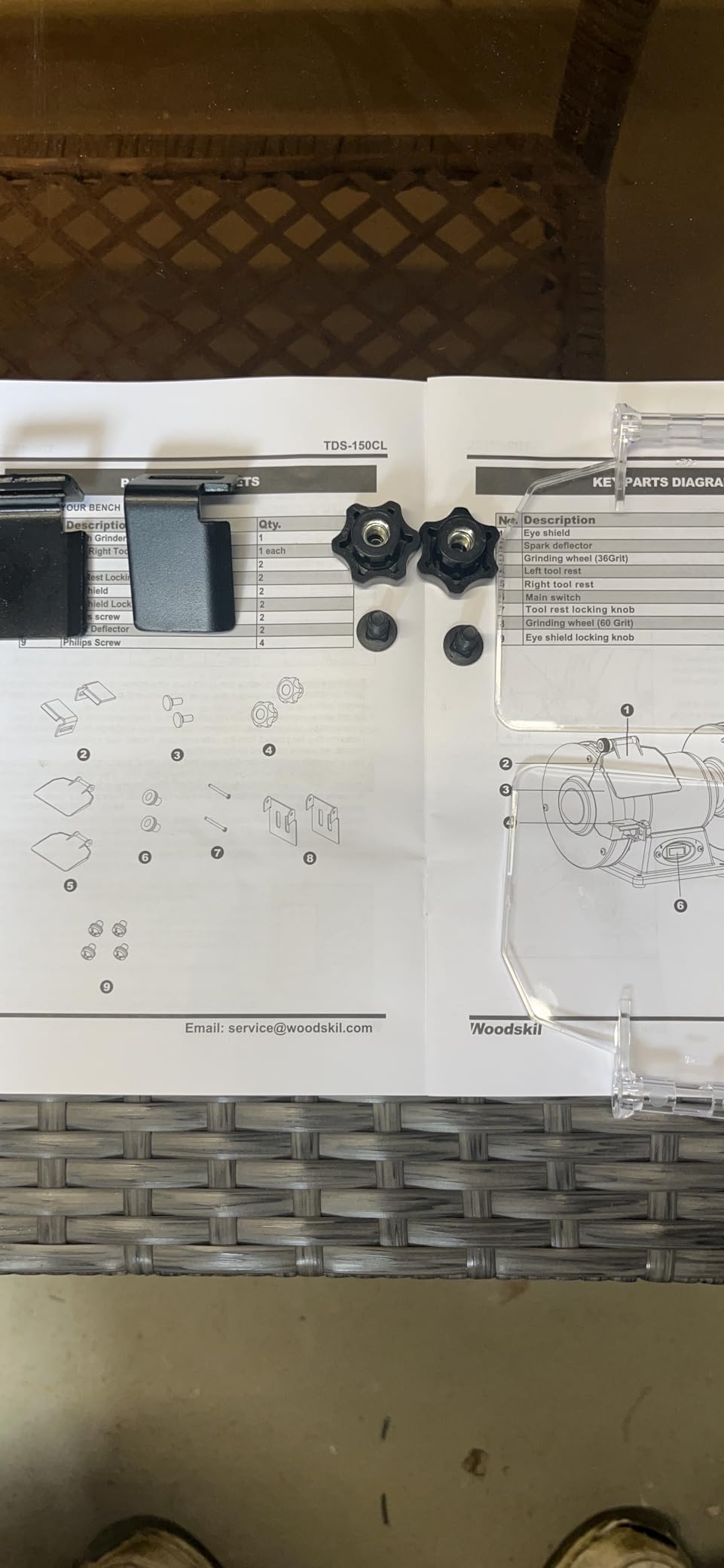
The base is the story here. It is a pre-drilled heavy-duty steel base, and owners call out that it eliminates wobble outright. Pre-drilled mounting holes also mean you can bolt it down permanently in a few minutes, which converts a portable machine into a fixed one when you decide it deserves the space.
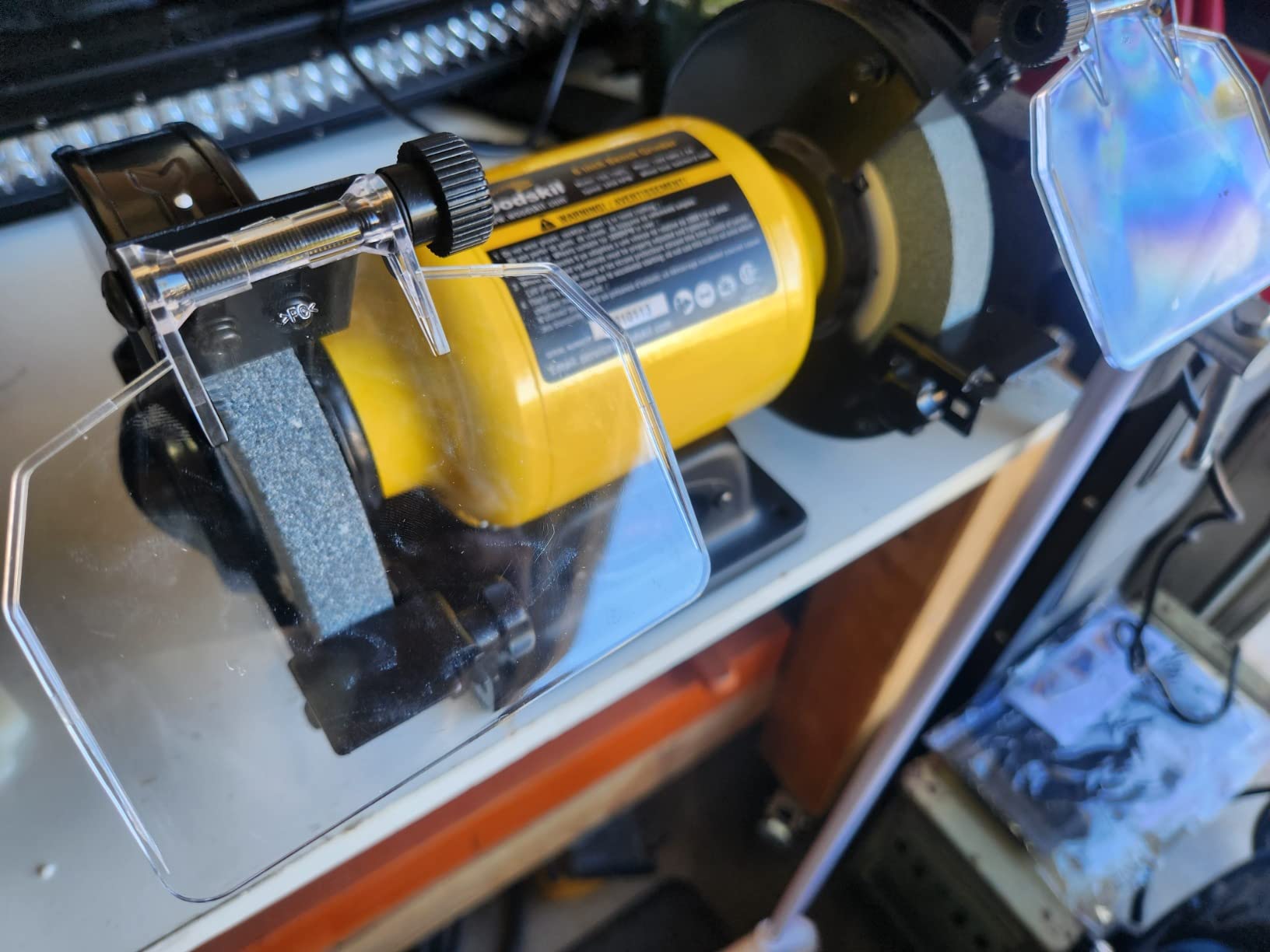
It comes with 36 grit and 60 grit aluminum oxide wheels, which covers rough shaping and finer work, and it carries CSA certification with a transparent eye shield and a spark arrestor. The certification is not a marketing line on this model, it is a real spec, and for anyone buying a machine to sit in a home workshop that matters.
You also get a 2-year limited warranty, which is a reasonable commitment for a machine at this level. Our caveat is the documentation, which owners describe as minimal. Budget extra time for assembly and expect to work out the guard and rest adjustment yourself from the parts rather than the manual.
Where this machine sits for edge work
The 3450 RPM speed is the recurring caution in the reviews, and it is the same caution that applies to every high-speed machine here. Heat management on delicate knife edges is the thing to watch. Light passes, frequent dressing and a hone afterward keep you safe, but you are working with the grain of the machine rather than with it.
The 60 grit wheel is the one you will use for sharpening, and it is a standard aluminum oxide wheel, so it behaves predictably once dressed. Dress it often and the grind stays flat and cool enough to work with.
Who should look elsewhere
Skip it if you are sharpening high-speed-steel hand tools as your primary activity. You can do it, but you are paying for speed you do not need and fighting heat you could have avoided. The low-speed machines handle the same jobs with less risk to the steel.
The small wheel diameter is a limit for heavy material removal, and minimal documentation makes first setup a longer job than it should be. If you want the same light weight and a slow speed, the BUCKTOOL above is the direct comparison, and it is the better sharpening choice even though it weighs more.
We earn a commission, at no additional cost to you. CERTAIN CONTENT THAT APPEARS ON THIS SITE COMES FROM AMAZON. THIS CONTENT IS PROVIDED 'AS IS' AND IS SUBJECT TO CHANGE OR REMOVAL AT ANY TIME.
6. WEN BG4286 8-Inch Slow Speed Bench Grinder – Best Finishing Wheel in a Slow-Speed Case
WEN BG4286 3-Amp 8-Inch Slow Speed Bench Grinder, Orange,black
- 3 amp soft start motor
- 8 by 1 inch wheels at 1750 RPM
- 60 grit general and 120 grit finish wheel
- Pre-drilled base
Pros
- 1750 RPM delivers precision with minimal workpiece heat
- Soft start reduces startup vibration
- 120 grit finish wheel is a real sharpening bonus
- Pre-drilled holes make bench mounting easy
- Quiet enough for a home workshop
Cons
- 250 watt motor is limited for heavy material removal
- Weighs 34.1 pounds
- which is heavy for 8 inch
- Wheels take about two minutes to spin down
We earn a commission, at no additional cost to you. CERTAIN CONTENT THAT APPEARS ON THIS SITE COMES FROM AMAZON. THIS CONTENT IS PROVIDED 'AS IS' AND IS SUBJECT TO CHANGE OR REMOVAL AT ANY TIME.
The 120 grit wheel is the reason this machine is worth a second look. Most low-speed grinders come with a 60 grit and require a separate purchase for something finer, and this one includes a general purpose 60 grit plus a 120 grit fine finish wheel. For sharpening, that fine wheel gets you closer to the final edge before you leave the machine, which means less time on the stone.
It runs at 1750 RPM on a soft start 3 amp motor, and the low speed is what keeps heat off the workpiece. Reviewers treat it as a solid choice for tools, knives, chisels and bits, largely because you can take a pass, look at the bevel and take another pass without racing the machine.
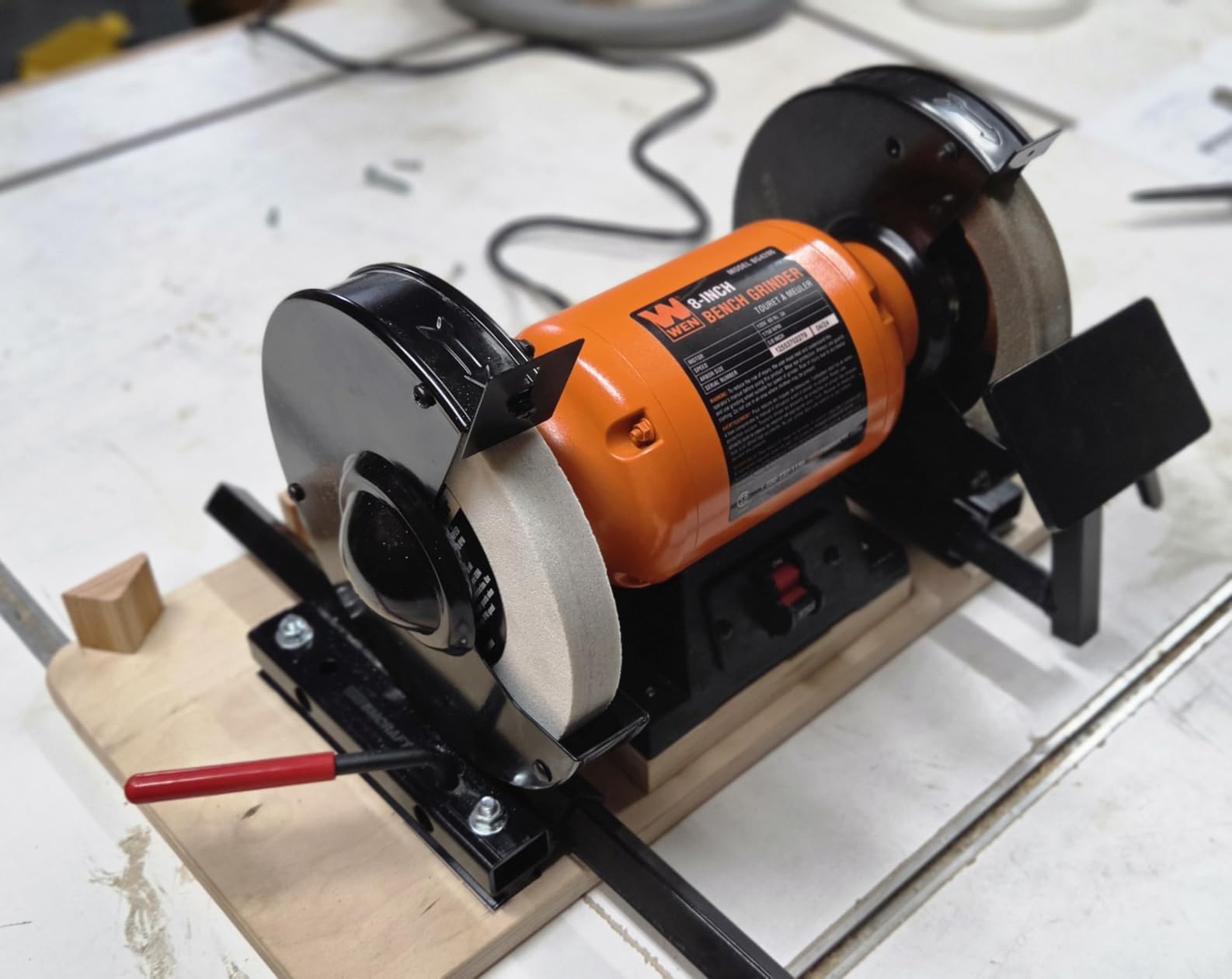
The soft start reduces startup vibration, which sounds minor and is not. A conventional bench grinder jolts when it spins up, and that jolt can walk the machine or knock your rest out of position. A soft start also makes this a quieter machine overall, which owners with home workshops appreciate.
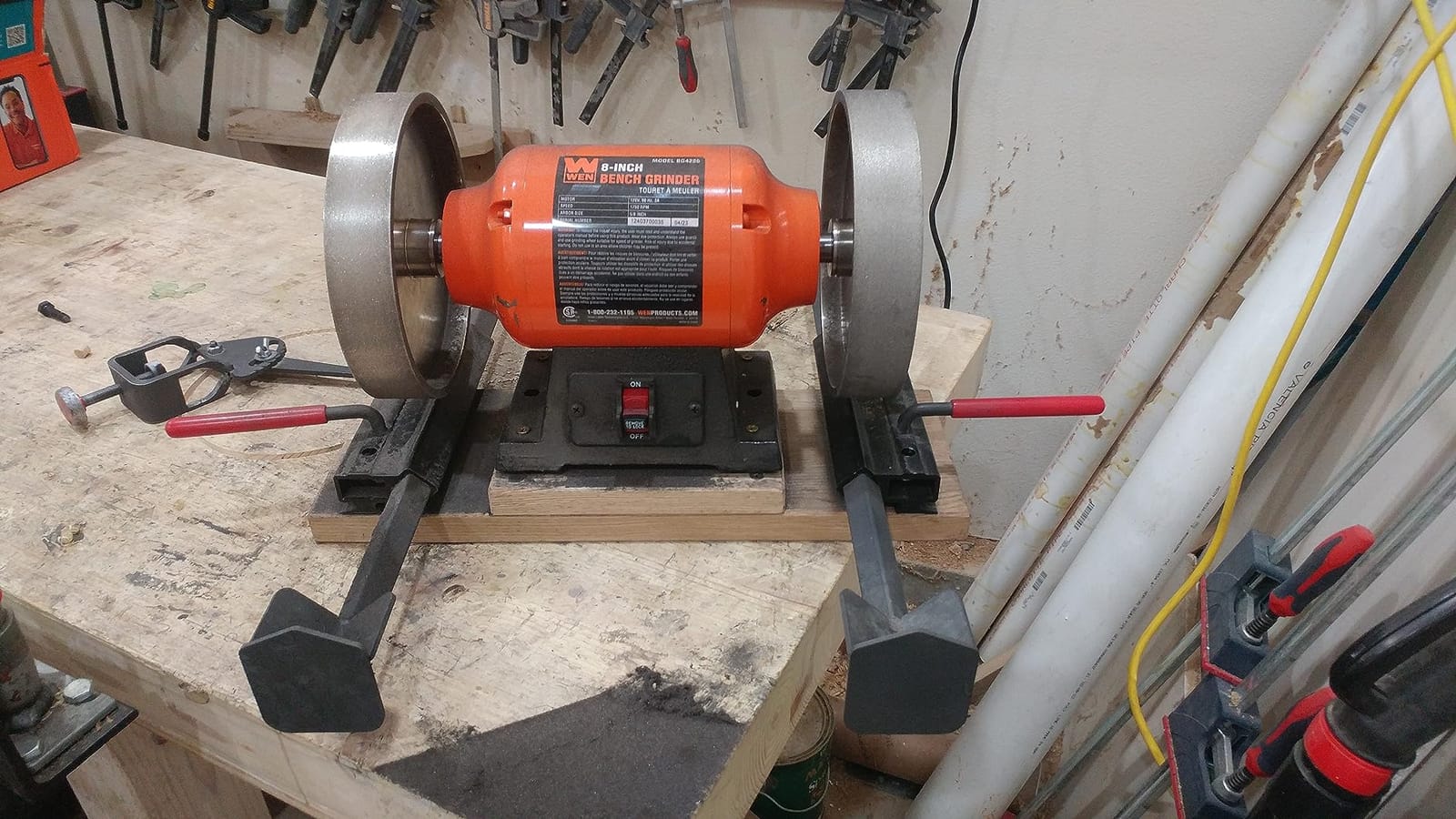
The base has pre-drilled mounting holes, so bolting it down takes minutes and you never have to chase it across the bench. That matters more on a low-speed machine than you would think, because the whole advantage is control, and control is hard if the grinder moves when you touch the switch.
The weight and the power problem
At 34.1 pounds this is a heavy 8 inch machine, and reviewers notice it during setup. It is stable and it does not wander, but if you plan to move it between locations it is a two-person lift. Plan its home before you unbox it.
The 250 watt motor is the real constraint. It has limited power for heavy material removal, so treat this as a sharpening machine rather than a general grinder. When you push against it on something substantial it will slow down, and a slowed wheel on hardened steel is where heat starts to build.
Who should look elsewhere
Buy elsewhere if you need to grind down bar or shape metal. This machine does that badly on purpose, trading power for the slow, cool behaviour that sharpening needs. It also takes roughly two minutes for the wheels to spin down after shutdown, so plan your work sessions around that.
If you want low speed with more motor in reserve, the RIKON at the top of the sharpening list runs at the same 1750 RPM with a 0.5 HP motor and a longer warranty. That is the machine to buy when sharpening is a regular job rather than an occasional one.
We earn a commission, at no additional cost to you. CERTAIN CONTENT THAT APPEARS ON THIS SITE COMES FROM AMAZON. THIS CONTENT IS PROVIDED 'AS IS' AND IS SUBJECT TO CHANGE OR REMOVAL AT ANY TIME.
7. Genesis GBG600L 6-Inch Bench Grinder – Best Task Lighting on a Budget
Genesis GBG600L 6″ Bench Grinder with Dual, Flexible Lights and Eye Shield , Gray
- 0.5 HP induction motor
- 3550 RPM no-load speed
- 6 inch wheels on a 1/2 inch shaft
- Two gooseneck lights
Pros
- Quiet 0.5 HP induction motor runs smoothly
- Twin flexible gooseneck lights light both sides
- Integrated eye shield included
- Compact 6 inch wheels suit small benches
- 2 year warranty at an entry price point
Cons
- 4.2 stars is the second lowest in this group
- 1/2 inch shaft limits wheel choice
- 3550 RPM no-load speed generates more heat
- Gooseneck lights are flexible but not especially bright
We earn a commission, at no additional cost to you. CERTAIN CONTENT THAT APPEARS ON THIS SITE COMES FROM AMAZON. THIS CONTENT IS PROVIDED 'AS IS' AND IS SUBJECT TO CHANGE OR REMOVAL AT ANY TIME.
The lighting is what separates this from every other budget machine here. Two flexible gooseneck lamps mount independently and can be aimed at each side of the work area, which is the arrangement you want when you are trying to judge whether a bevel is flat across the full width of a chisel. Illumination is not a luxury when you are checking a grind.
The 0.5 HP induction motor is quiet and smooth, and induction motors are generally the more refined choice here compared with universal motors. Quiet matters in a home shop where you will be working in the evening, and smooth running means a more consistent grind.
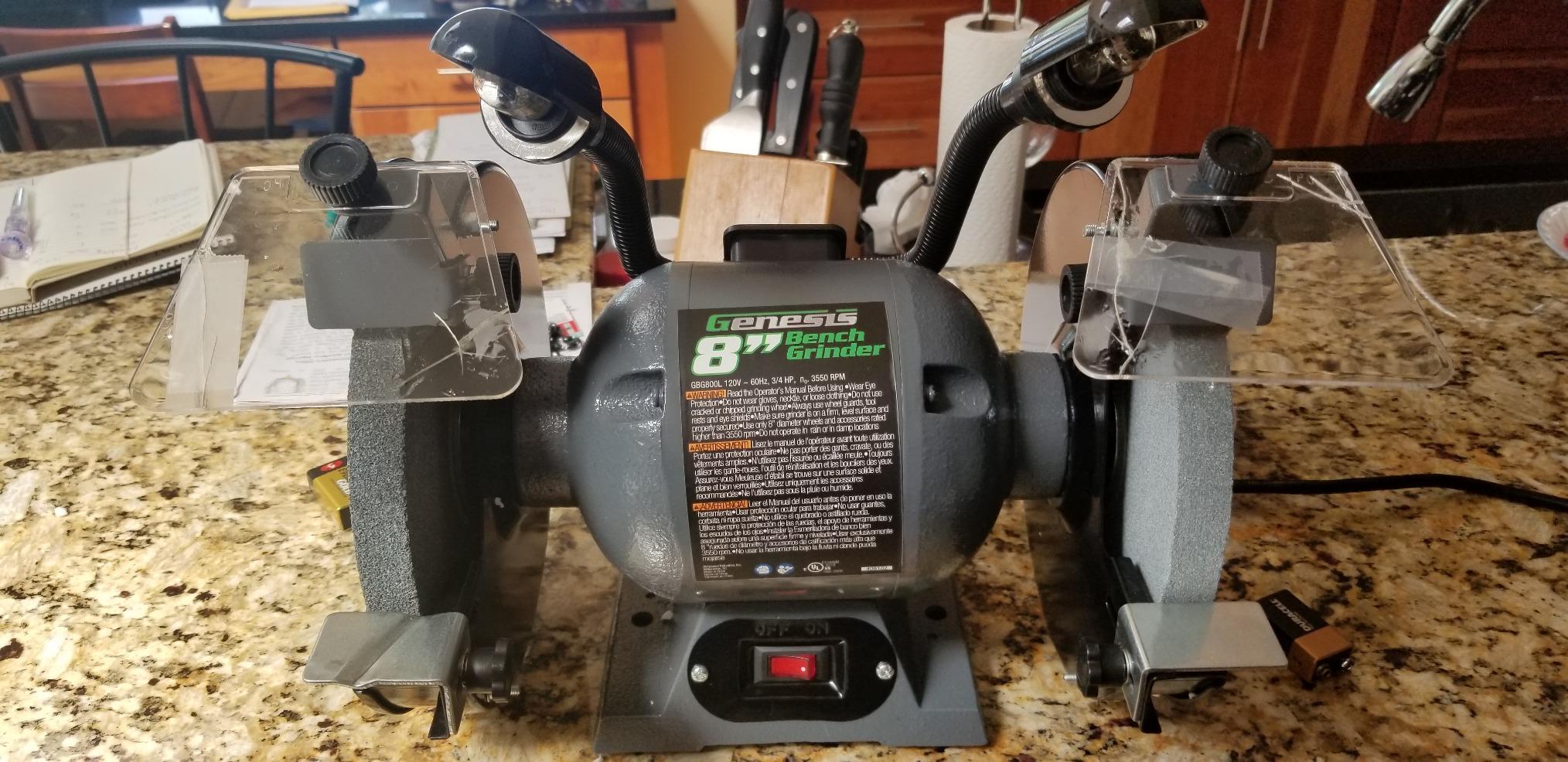
An integrated eye shield is fitted rather than supplied loose, and the wheels are 6 inch by 4/5 inch on a 1/2 inch shaft. Compact wheels suit a small bench, so this is a realistic option for a garage or an apartment workshop where an 8 inch machine will not fit.
The 4.2 rating reflects genuine reservations, and we would rather name them than skip past them. The gooseneck lights are flexible but not especially bright, the shaft size narrows your wheel options, and the 3550 RPM no-load speed puts it firmly in the fast group.
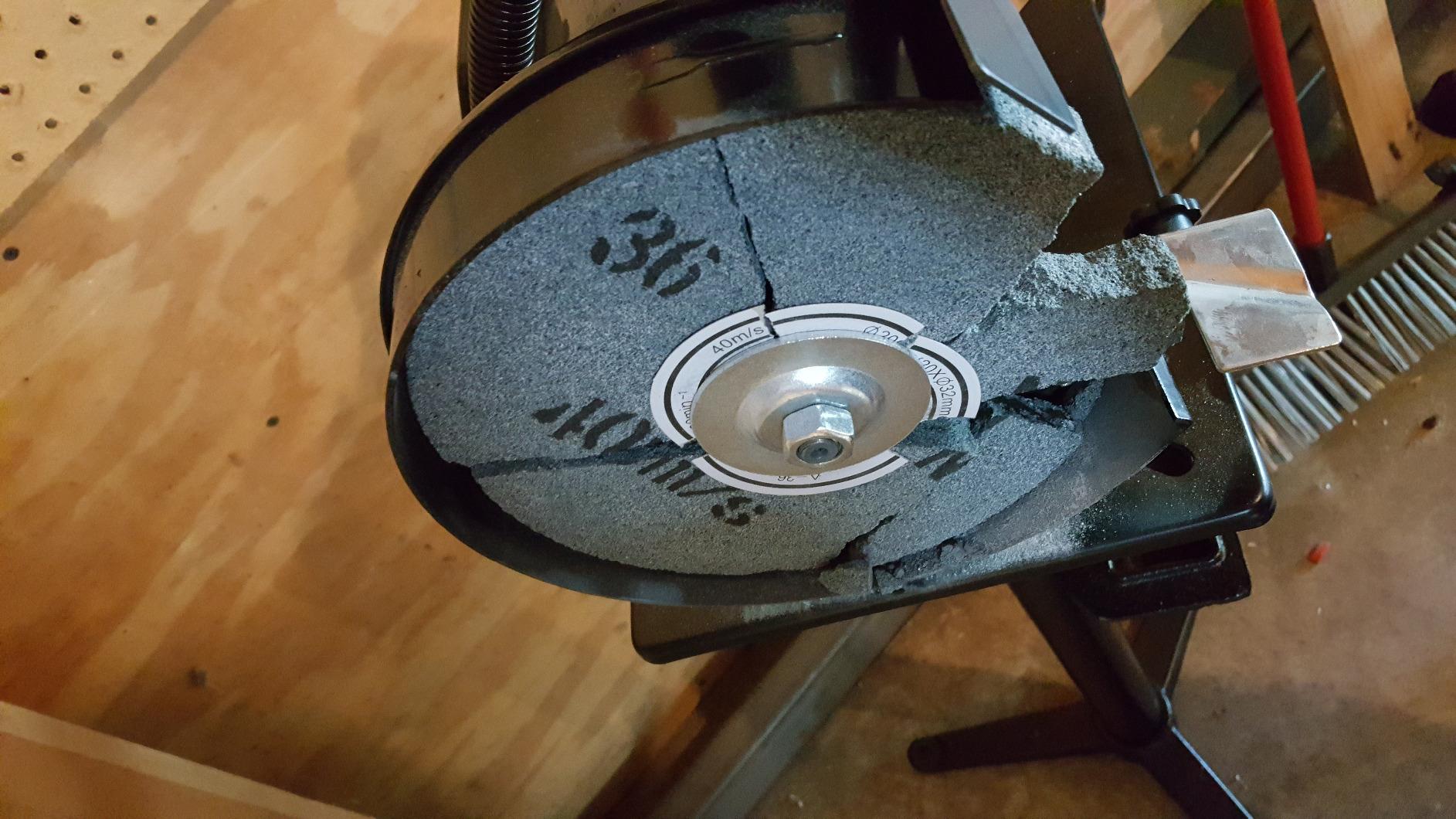
What the 1/2 inch shaft does to your wheel choices
Arbor size is easy to overlook until you go shopping for wheels. A 1/2 inch shaft takes a narrower range of grinding wheels than the wider arbors used on larger machines, so the selection of CBN and fine aluminum oxide wheels you can fit is smaller. If you plan to upgrade to cubic boron nitride later, check the shaft first.
At 3550 RPM no-load speed, this machine produces more heat and sparks on delicate edges than any low-speed unit here. That is the deal you make for the lighting. Keep a hone in the workflow and treat it as a general machine with a useful sharpening mode rather than a sharpening specialist.
Who should look elsewhere
Skip it if your edges are delicate knife edges that you care about, because the speed works against you there. It is also among the least well rated machines in this group, which usually reflects consistency rather than a broken feature, but consistency is what sharpening is about.
It is a good choice for a small bench where you need to see the work more than you need to control the heat. For serious hand tool sharpening in a tight space, the BUCKTOOL is a smaller-footprint low-speed alternative with better wheel options.
We earn a commission, at no additional cost to you. CERTAIN CONTENT THAT APPEARS ON THIS SITE COMES FROM AMAZON. THIS CONTENT IS PROVIDED 'AS IS' AND IS SUBJECT TO CHANGE OR REMOVAL AT ANY TIME.
8. VEVOR 8-Inch Grinder and Belt Sander Combo – Best Two-in-One Sharpening Bench
VEVOR 8″ Bench Grinder & 2″ x 28″ Belt Sander Combo, 350W Professional Grinding Sanding Machine with LED Work Light & Protective Eye Shield for Metalworking, Woodworking, Knife Sharpening
- 350W motor
- 8 inch wheel at 3450 RPM
- 2 by 28 inch belt at 1500 RPM
- Belt arm adjusts 0 to 90 degrees
Pros
- Grinding wheel and 2 by 28 inch belt in one bench-top machine
- Belt arm adjusts from 0 to 90 degrees for any orientation
- Heavy-duty steel body with non-slip rubber feet
- LED work light and eye shield included
- Handles coarse grinding and fine finishing in one setup
Cons
- Lowest rating in this group at 4.1 stars
- 350W motor is modest for heavy metal work
- Fine finishing belongs on the belt rather than the wheel
- Takes more bench space than a single-purpose grinder
We earn a commission, at no additional cost to you. CERTAIN CONTENT THAT APPEARS ON THIS SITE COMES FROM AMAZON. THIS CONTENT IS PROVIDED 'AS IS' AND IS SUBJECT TO CHANGE OR REMOVAL AT ANY TIME.
A belt changes the sharpening conversation. On a belt grinder the abrasive is a moving loop rather than a rotating wheel, so it behaves more like a file and less like a disc, and a lot of people find it far easier to control. The finishing, the deburring and the fine shaping work all happen more comfortably here than on the wheel.
This machine pairs an 8 inch grinding wheel running at 3450 RPM with a 2 inch by 28 inch belt running at 1500 RPM, so you have both speeds available in one body. The belt arm adjusts from 0 to 90 degrees, which lets you set the work horizontally or vertically depending on the tool and the piece you are holding.
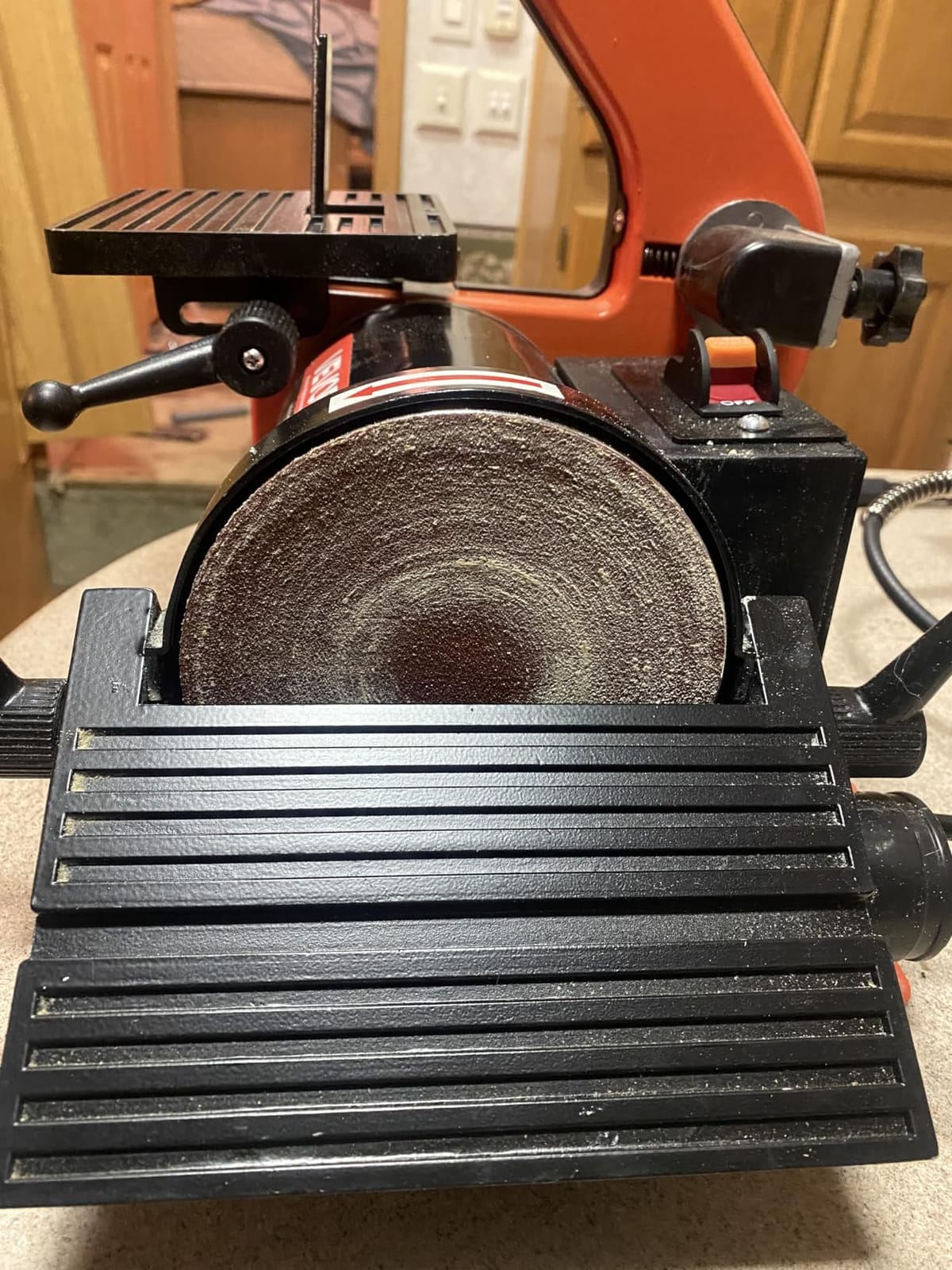
The heavy-duty steel body and base minimise wobbling and the non-slip rubber feet absorb vibration, which matters on a combo machine carrying two driven elements. An LED work light and a transparent eye shield are included in the box along with both worktable assemblies and a hex wrench.
At 4.1 stars this is the lowest rated machine in the group, and that is worth taking seriously. The 350W motor is modest, and for anyone who has ground heavy metal before, the gap between 350 watts and a 0.75 HP motor is obvious as soon as you load the wheel.
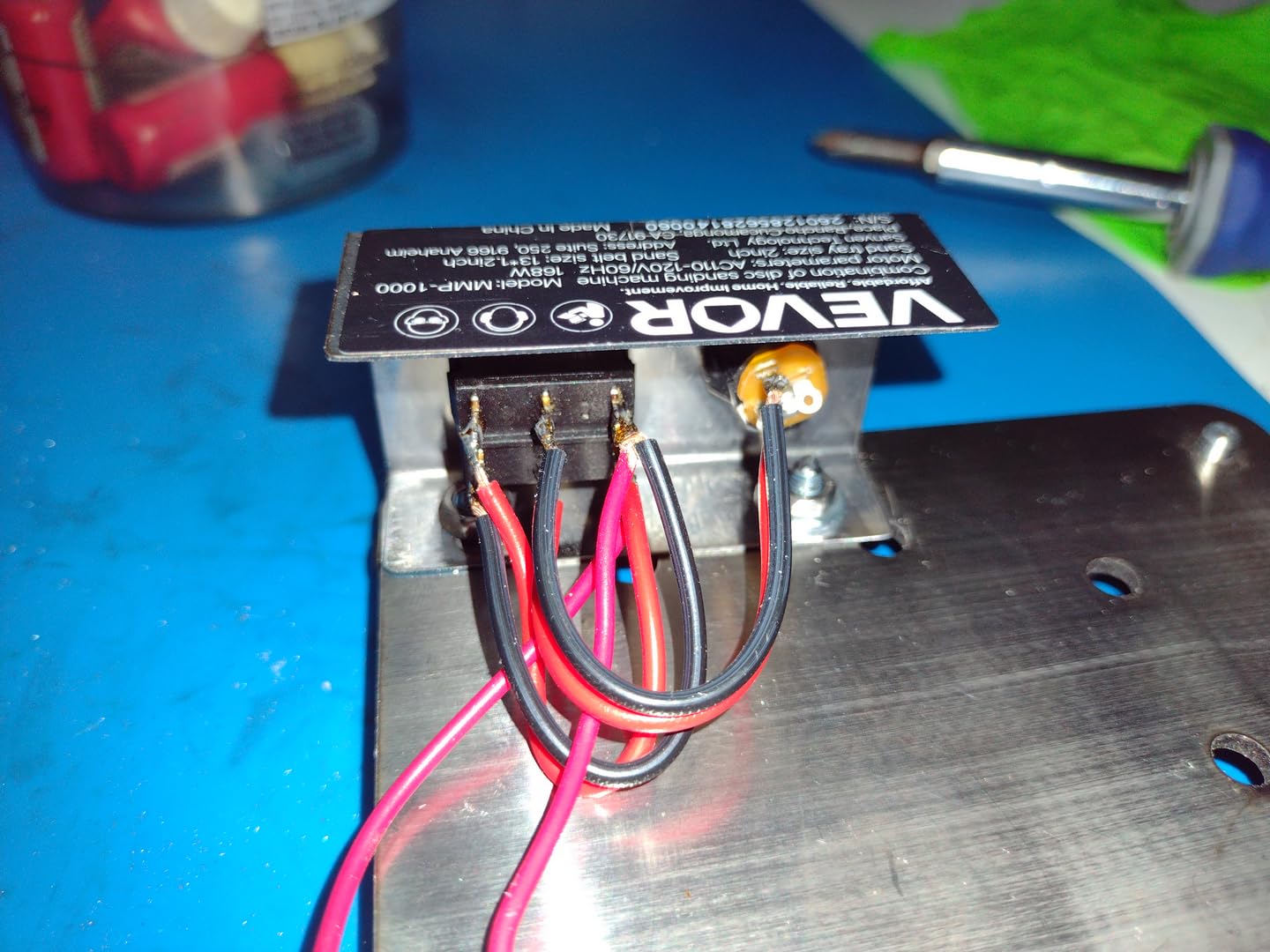
Why finish on the belt rather than the wheel
Fine sharpening finishes belong on the belt, and the reviews say so directly. The wheel at 3450 RPM is a coarse tool for shaping and material removal, while the belt at 1500 RPM gives you a controlled, predictable contact surface. Treating the wheel as the finishing step is the most common mistake new owners make with this format.
The adjustable belt arm is the underrated feature. Locking the belt horizontal lets you work a chisel flat and steady, while a vertical setting suits edge work on a knife you are holding in your hand. Being able to change the orientation in seconds removes the friction that sends people back to hand honing.
Who should look elsewhere
Skip it if your bench is tight, because a combo machine takes more space than a single-purpose grinder, and if you need serious removal power the motor will not keep up. It is also one where the wheel dressing habit matters most, since a loaded wheel at 3450 RPM will heat steel fast.
Buy it if you already know you want a belt grinder and want the wheel alongside it, or if your work is sharpening and deburring rather than heavy fabrication. For pure low-speed hand tool sharpening, the machines earlier in this list will get you a better edge with less risk to the temper.
We earn a commission, at no additional cost to you. CERTAIN CONTENT THAT APPEARS ON THIS SITE COMES FROM AMAZON. THIS CONTENT IS PROVIDED 'AS IS' AND IS SUBJECT TO CHANGE OR REMOVAL AT ANY TIME.
How to Choose a Bench Grinder for Sharpening (2026)
Horsepower, wheel size and brand name get most of the attention in grinder marketing, and for sharpening they are well down the list. Here is what actually decides whether your edges come out right.
Wheel speed: pick 1750 RPM for hand tools
Start here and ignore everything else until you have settled the speed question. Low speed at roughly 1750 RPM gives you time to see what the bevel is doing and keeps heat out of the steel. Standard high speed around 3450 to 3600 RPM cuts faster and forgives nothing. Variable speed, which none of these eight offers, is the ideal middle ground if your search can be widened.
If your tools are high-speed-steel, and most chisels, plane irons and turning tools are, the speed decision is effectively the purchase decision. If your tools are drill bits, hardware and general metalwork, speed matters much less and a bigger motor matters more.
Wheel types: white ALOX, grey ALOX, CBN and silicon carbide
White aluminum oxide is the default choice for hardened steel and the best general purpose abrasive for hand tools. It is friable, meaning it breaks down as it wears and exposes fresh sharp grit, which keeps the cut cool and clean. Several grinders in this list come with white aluminum oxide wheels.
Grey aluminum oxide is tougher and more aggressive. It holds its shape better and cuts faster, which makes it useful for material removal, but it produces more heat on a thin edge than white does. It is a reasonable first wheel, then you move up.
Cubic boron nitride is the upgrade most sharpening-focused owners end up buying. Forum users describe it as turning true, running cool, working aggressively and lasting a long time, and that is accurate to the experience. The cost is a higher purchase price and more frequent truing, since a CBN wheel needs dressing to stay sharp and flat.
Silicon carbide is a very hard, very sharp abrasive that is intended for non-ferrous materials and for touching up carbide tooling. On hardened steel it cuts fast and produces more heat than aluminum oxide, so it is not the wheel you want for chisels and plane irons.
Grit is the other half of the decision. Somewhere between 60 and 80 grit is the sweet spot for hand tool sharpening. Coarser grits leave deep scratches that take longer to hone out, and finer grits glaze over too quickly. The 60 grit wheels on most of these machines are in range.
Wheel dressing and truing: the step nobody skips
Wearing a wheel goes out of flat, and a wheel that is not flat does not grind a flat bevel. It produces facets and dips, so the contact point moves around as you work, and the result is an inconsistent edge that you will chase for an hour. This is the single most common complaint in sharpening discussions, and it is also the easiest to fix.
What you need is a dressing tool, and there are two kinds. A diamond dresser is a small industrial diamond on a holder that you run across the spinning wheel to remove worn material and restore flatness and sharpness. A hand stone held against the wheel works for a light touch-up but is slower and harder to control.
The forum test for a quality grinder is worth knowing. Look at the turned ledge where the wheel mounts against the flange. A sizable turned ledge lets the diamond reach the edge of the wheel and clean it properly, while a tiny lip leaves the outer rim glassy and rounded, and no amount of dressing will fix it. Several users describe exactly this as the marker that separates a good machine from a cheap one.
Our advice is to dress before the first pass of every session, and then every few passes when you are doing serious removal work. If your bevel keeps developing waves, stop and dress. It is faster than fixing the edge afterwards.
Sharpening jigs and fixtures worth budgeting for
A jig is the highest value accessory you can add to any of these machines. The tool rest sets a rough angle and a jig sets the exact one, which is the difference between a bevel you can repeat and one you cannot.
For chisels and plane irons, a fixed-angle jig that holds the tool at a set bevel for 25 and 30 degrees is the standard choice, and fixed-angle jigs get consistent support from users because they take the judgement out of the process. For turning tools, a skewing rest with a positive drive pin holds the tool against the rest so the bevel stays constant all the way to the tip.
For drill bits, three options exist. A dedicated drill bit jig with an angle guide clamps to the tool rest, a universal angle-adjustable jig handles several tool shapes, or you grind freehand on a 60 to 80 grit wheel using a jig or rest as a steadying guide. The dedicated jig is the only one that repeats reliably, and it transforms bit sharpening from a five minute job into a thirty second job.
A fixed-angle jig that clamps to the tool rest also solves the cast tool rest problem on the WEN BG4282, since the jig holds the angle instead of the rest. If you own that machine and plan to do fine bevel work, a jig is not optional.
Bench grinder vs Tormek-style sharpener
This is the question that comes up constantly for people whose only goal is sharpening, and the honest answer is that a Tormek-style slow sharpener will keep an edge on chisels and plane irons beautifully with far less risk. It is a safer, slower, more controlled machine for one job.
Where the bench grinder wins is versatility. A grinder with a dressing tool, a couple of wheel grits and a jig will also handle knives, axes, drill bits, chisels, plane irons, turning tools, hardware, welds, rust and burrs. It becomes a shop tool rather than a sharpening appliance, and it is the only one of the two that can strip rust and reshape a ruined tool before you sharpen it.
Some owners who started with a slow-speed bench grinder eventually moved to a Tormek for all-around sharpening and considered that machine better for the task. That is a defensible outcome if sharpening is genuinely all you do. If you want to remove rust, reshape a mower blade and then sharpen a chisel, the bench grinder is the better buy and the one you will not outgrow.
Disadvantages to know before you buy
The main disadvantage of a bench grinder for sharpening is that it is fast and blunt. It is built to remove metal, and the wheel is a coarse abrasive by design, so it cannot produce a truly fine edge on its own. Everything it leaves behind needs honing on a stone, and skipping that step is the most common way people damage a good edge.
The second disadvantage is heat. High-speed grinders push heat into the steel, blue the edge and soften the temper. No wheel type fully solves this at 3600 RPM, which is why speed is the first question to ask.
The third is safety. Unguarded abrasive wheels at speed throw sparks and fragments, and you should never hold a blade freehand against a spinning wheel to save time. Set the tool on the rest or in a jig, wear eye protection even with the shield in place, keep your fingers clear, and let the wheel come to a complete stop before you adjust anything. Never grind a blade still mounted in a handle.
Frequently Asked Questions
What is a bench grinder’s main disadvantage?
The main disadvantage for sharpening is that a bench grinder is built to remove metal quickly, not to produce a fine edge. The wheel leaves a coarse grind that always needs honing afterward, and at high speeds it pushes heat into the steel, which can turn an edge blue and soften the temper behind it. A low speed grinder reduces the heat problem but not the coarse grind.
What is the best grinder to use for sharpening tools?
Choose by speed class. A low-speed grinder around 1750 RPM is best for high-speed-steel hand tools because it limits heat and lets you watch the bevel. Variable speed is the most versatile choice for mixed work. High-speed grinders around 3450 to 3600 RPM are best for general metalwork and deburring, but they need light passes and frequent wheel dressing to protect an edge.
Can you use a bench grinder to sharpen an axe?
Yes. Use a coarse 36 to 60 grit wheel, set a tool rest or jig to hold roughly a 20 to 30 degree angle, and take light passes rather than grinding hard. Cool the head frequently, and follow with hand honing to finish the edge. Keep the bit away from the handle, because heat travelling down the tang can loosen it.
What attachment can I use on my bench grinder to sharpen drill bits?
A drill bit sharpening jig with an angle guide that clamps to the tool rest is the best option, and it is the highest value accessory for any bench grinder. A universal angle-adjustable jig handles several tool shapes. As a third option, a 60 to 80 grit wheel used freehand against a steady jig or rest works, but the dedicated jig repeats far more accurately.
How do I stop a bench grinder from burning the tool?
Dress the wheel before you start so it cuts freely, drop to a low speed around 1750 RPM if your machine allows it, take light short passes, and keep a quench tray within reach to cool the workpiece. Never grind hard against the wheel, and finish every session on a honing stone to bring the edge back to true.
The Best Bench Grinder for Sharpening Tools in 2026
The DEWALT DW758 is our editor’s choice for the best bench grinders for sharpening tools because of its 0.75 HP motor, its machined aluminum tool rests and the wide space between the wheels, and you should plan to replace the factory wheels early. If your priority is protecting high-speed-steel hand tools, the RIKON 80-805 at 1750 RPM is the more careful buy, and it comes with a diamond wheel sharpener already mounted.
For the smallest budget, the BUCKTOOL 6-inch gives you slow-speed sharpening, balanced wheels and both a brown and a white aluminum oxide wheel in the box. Whatever you choose, buy a diamond dresser and a sharpening jig at the same time, because those two accessories do more for your edges than any spec on the grinder itself. Then dress the wheel, work light, cool often, and hone to finish.