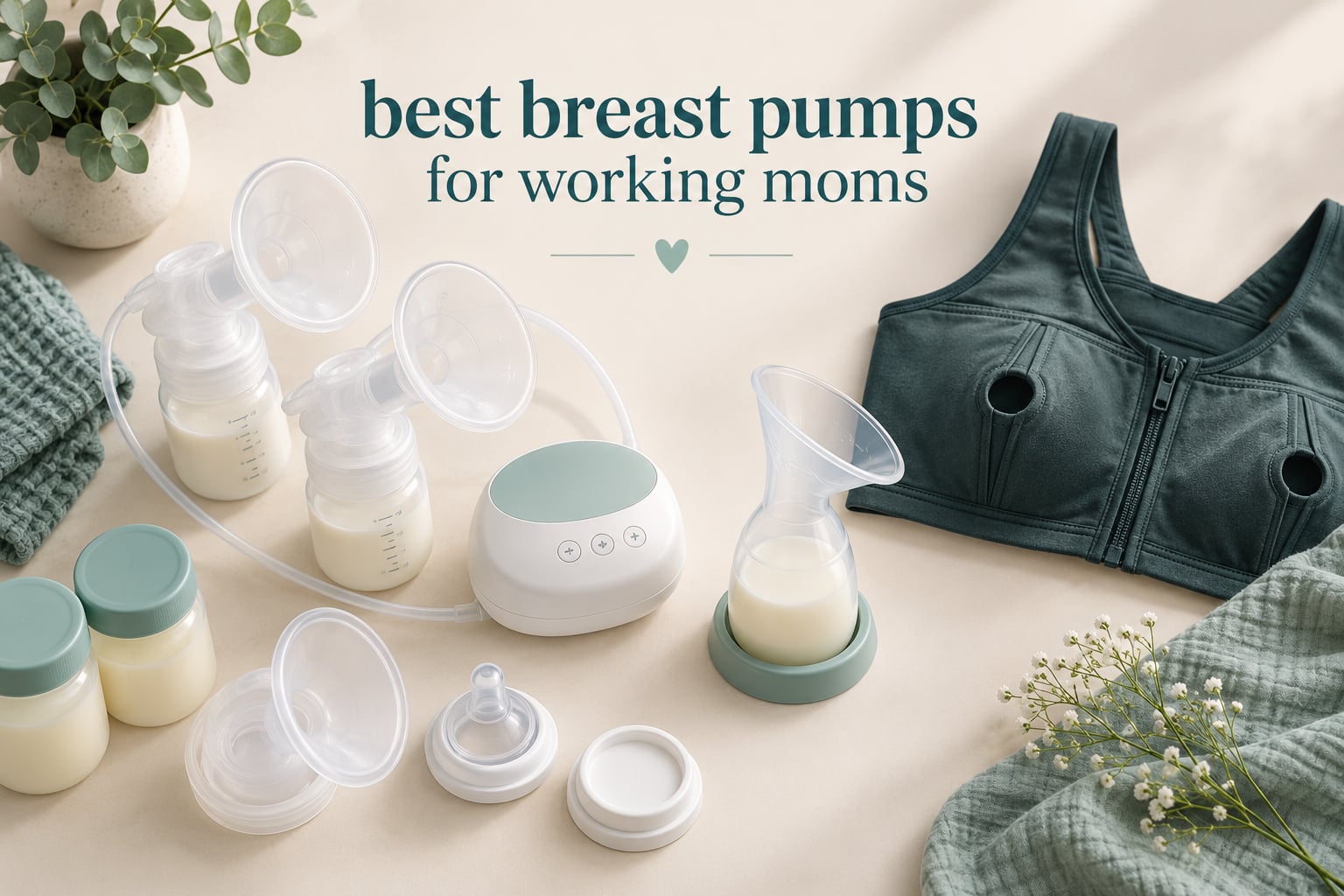
Choosing the right pump decides whether your milk supply survives your work schedule. Most days you get two or three pumping breaks in an eight to ten hour window, and the pump you picked on a sleep-deprived shopping night has to empty you well, run quietly, and not make you rearrange your bra in a shared room. The best breast pumps for working moms in 2026 fall into three groups: in-bra wearables that let you work through a session, traditional double electrics that empty harder, and manual pumps that live in your work bag forever.
We spent weeks reading thousands of customer reviews across twelve models and comparing the specs that actually show up in a workday: suction range in mmHg, measured noise, battery runtime per charge, cup weight in the bra, and how many parts you have to wash in a lactation room sink. What stood out is that no single pump wins every category. A wearable will not empty you like a hospital-grade double electric, and a hospital-grade double electric will not fit under a blouse at a desk.
We also pulled patterns from pumping communities like r/ExclusivelyPumping, r/workingmoms and the What to Expect forums, because moms describe leaks, noise, and bra fit in ways spec sheets never do. One recurring theme runs through all of it: flange fit matters more than brand, and body shape changes which wearable works. We call that out for every pump below so you are not choosing against your own anatomy.
If you want the fast answer, start with the Elvie Double Wearable, the Medela Harmony, and the haakaa. If you are exclusively pumping eight ounces a day out of a Spectra, keep reading because the wearables on this list will not match that output.
ContentsTable of Contents
- 1Top 3 Picks: The Best Breast Pumps for Working Moms→
- 2Elvie Double Wearable→
- 3Medela Harmony Manual→
- 4haakaa Manual Pump→
- 5All 12 Pumps Compared Side by Side in 2026→
- 61. Elvie Double Wearable Pump – A Quiet In-Bra Pump That Disappears Under a Blouse→
- 7Elvie – Double, Wearable Breast Pump w/App – The Smallest & Quietest – Portable – Hands Free & Discreet – Automated with Four Personalized Settings→
- 8Pros→
- 9Cons→
- 10Who the Elvie fits best→
- 11Where the Elvie falls short→
- 122. Medela Harmony Manual Pump – The Backup That Lives in Your Work Bag→
- 13Medela Harmony Manual Breast Pump, On-the-Go, More Milk Output→
- 14Pros→
- 15Cons→
- 16Why keep a manual in your work bag→
- 17When a manual pump is not enough→
- 183. haakaa Manual Pump – The Silent Let-Down Catcher for Nursing on One Side→
- 19haakaa Manual Breast Pump for Breastfeeding 4oz/100ml→
- 20Pros→
- 21Cons→
- 22Where a silicone catcher earns its place→
- 23What to watch for→
- 244. NCVI 8782 Double Electric Pump – Quiet Tube-and-Bottle Power on a Budget→
- 25NCVI Electric Breast Pump 8782, Portable Hospital-Grade Double Pump→
- 26Pros→
- 27Cons→
- 28Who should buy this one→
- 29Where it does not fit→
- 305. Spectra S1 Plus – The Output Choice for Exclusive Pumpers→
- 31Spectra Baby S1 Plus Electric Breast Milk Pump for Baby Feeding→
- 32Pros→
- 33Cons→
- 34Why exclusive pumpers choose it→
- 35Where it frustrates working moms→
- 366. eufy Heated Wearable S1 Pro – Warmth Plus a Five-Day Charging Case→
- 37eufy Heated Wearable Breast Pump S1 Pro, Charging Case, Hands-Free→
- 38Pros→
- 39Cons→
- 40Who appreciates heating and the case→
- 41Where it disappoints→
- 427. MomMed S21 Wearable – The Feature-Loaded Starter Wearable→
- 43MomMed Wearable Breast Pump (Model S21) – Double Electric Hands-Free Breast Pump, Leak-Proof Design, 3 Modes (Stimulation, Expression, Auto) & 12 Vacuum Levels, Portable and Quiet→
- 44Pros→
- 45Cons→
- 46Where it makes sense→
- 47Where the design frustrates people→
- 488. Momcozy M5 Smart – A Light 232g Wearable With Full App Control→
- 49Momcozy M5 Smart APP Controlled Wearable Breast Pump, 2-Pack Cozy Red→
- 50Pros→
- 51Cons→
- 52Best case for the M5→
- 53Limits worth knowing→
- 549. Willow Go – The Purest In-Bra Design With No External Hardware→
- 55Willow Go Wearable Breast Pump, Hands Free Double Electric Breast Pump, Wireless In-Bra Design with 15 level Hospital Grade Suction, includes 24mm & 21mm Flanges & 5oz Reusable Containers, App enabled→
- 56Pros→
- 57Cons→
- 58Why the Willow Go still earns a place→
- 59What to watch→
- 6010. Paruu P16 Wearable – A Wide 49.5 to 309 mmHg Range at 240g→
- 61Paruu Hands Free Breast Pump P16, Wearable Breast Pump Electirc Portable with 4 Modes & 12 Levels, Max 309mmHg Strong Suction 19/21/24mm Flange Inserts Wearable Breastfeeding Pump, 2 Pack(Nude→
- 62Pros→
- 63Cons→
- 64Who the P16 suits→
- 65Where it struggles→
- 6611. Medela Sonata Smart Pump – The Quiet Hospital-Grade Primary for Home Sessions→
- 67Medela Sonata Smart Electric Breast Pump | Hospital Grade | 1Ct→
- 68Pros→
- 69Cons→
- 70Best role for the Sonata→
- 71Where it is the wrong choice→
- 7212. Momcozy V1 Pro – The All-Day Battery Wearable at 300 mmHg→
- 73Momcozy V1 Pro Wearable Breast Pump, Hospital-Grade Pocket Primary Pump→
- 74Pros→
- 75Cons→
- 76Why working moms keep coming back to it→
- 77Things to sort out first→
- 78How to Choose a Breast Pump for Work: 5 Criteria That Decide It→
- 791. Noise level and why decibels matter→
- 802. Battery life for a full workday→
- 813. Wearability versus output→
- 824. Suction strength in mmHg→
- 835. Insurance coverage and total cost of ownership→
- 84Flange sizing: the fit step that changes everything→
- 85Matching pump type to your workplace scenario→
- 86The two-pump strategy and when to order→
- 87Frequently Asked Questions→
- 88What is the best breast pump for working mothers?→
- 89What is the 3-3-3 rule for pumping breast milk?→
- 90Which breast pump is suitable for wearing while working?→
- 91Can I go 4 hours without pumping at night?→
- 92How often should working moms pump?→
- 93Do I need a wearable breast pump to pump at work?→
- 94Our Final Verdict for Working Moms in 2026→
Top 3 Picks: The Best Breast Pumps for Working Moms

Elvie Double Wearable
- Smallest quietest in-bra pump
- App control with volume tracking
- 21000 piezo oscillations per second

Medela Harmony Manual
- Two-phase expression technology
- PersonalFit Flex shield
- 0.58 oz weight

haakaa Manual Pump
- One-piece boilable silicone
- Completely silent
- 4 oz capacity
As an Amazon Associate we earn from qualifying purchases. CERTAIN CONTENT THAT APPEARS ON THIS SITE COMES FROM AMAZON. THIS CONTENT IS PROVIDED 'AS IS' AND IS SUBJECT TO CHANGE OR REMOVAL AT ANY TIME.
All 12 Pumps Compared Side by Side in 2026
| # | Product | Key details | Where to buy |
|---|---|---|---|
| 1 | Elvie Double Wearable Pump |
|
Check Latest Price |
| 2 | Medela Harmony Manual Pump |
|
Check Latest Price |
| 3 | haakaa Manual Breast Pump |
|
Check Latest Price |
| 4 | 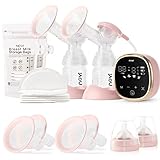 NCVI 8782 Double Electric Pump NCVI 8782 Double Electric Pump |
|
Check Latest Price |
| 5 |  Spectra S1 Plus Spectra S1 Plus |
|
Check Latest Price |
| 6 |  eufy Heated Wearable S1 Pro eufy Heated Wearable S1 Pro |
|
Check Latest Price |
| 7 |  MomMed S21 Wearable Pump MomMed S21 Wearable Pump |
|
Check Latest Price |
| 8 |  Momcozy M5 Smart Wearable Momcozy M5 Smart Wearable |
|
Check Latest Price |
| 9 | 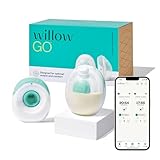 Willow Go Wearable Pump Willow Go Wearable Pump |
|
Check Latest Price |
| 10 | 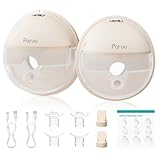 Paruu P16 Wearable Pump Paruu P16 Wearable Pump |
|
Check Latest Price |
| 11 |  Medela Sonata Smart Pump Medela Sonata Smart Pump |
|
Check Latest Price |
| 12 |  Momcozy V1 Pro Wearable Momcozy V1 Pro Wearable |
|
Check Latest Price |
We earn from qualifying purchases. CERTAIN CONTENT THAT APPEARS ON THIS SITE COMES FROM AMAZON. THIS CONTENT IS PROVIDED 'AS IS' AND IS SUBJECT TO CHANGE OR REMOVAL AT ANY TIME.
1. Elvie Double Wearable Pump – A Quiet In-Bra Pump That Disappears Under a Blouse
Elvie – Double, Wearable Breast Pump w/App – The Smallest & Quietest – Portable – Hands Free & Discreet – Automated with Four Personalized Settings
- 14.82 oz in-bra unit
- 21000 piezo oscillations per second
- App-controlled with volume tracking
- About 5 sessions per charge
Pros
- Small in-bra unit at 14.82 oz
- App shows output in real time
- Fewer parts to wash than a traditional pump
- Comfortable fit with several flange sizes included
Cons
- Weaker output than a hospital-grade double electric
- Leaks if you lean forward mid-session
- App sync and full-detection can be unreliable
We earn a commission, at no additional cost to you. CERTAIN CONTENT THAT APPEARS ON THIS SITE COMES FROM AMAZON. THIS CONTENT IS PROVIDED 'AS IS' AND IS SUBJECT TO CHANGE OR REMOVAL AT ANY TIME.
I have carried the Elvie through two work configurations and it is the pump I notice least. It sits in the bra with no tubes, no external motor and no cord, which means a 25 minute session can happen during a slow meeting without anyone knowing. At 14.82 ounces the whole unit carries almost no weight in a bra, and that matters more than any spec once you are four months postpartum and your ribs ache from bending over a table pump.
Quiet is the word moms use most. The piezo motor pulses so fast that at normal talking volume it disappears, and reviewers in r/workingmoms describe it as the pump that lets them take calls without unplugging. The infrared sensors switch between stimulation and expression on their own, so you are not adjusting settings mid-session while holding a spreadsheet on your other hand.
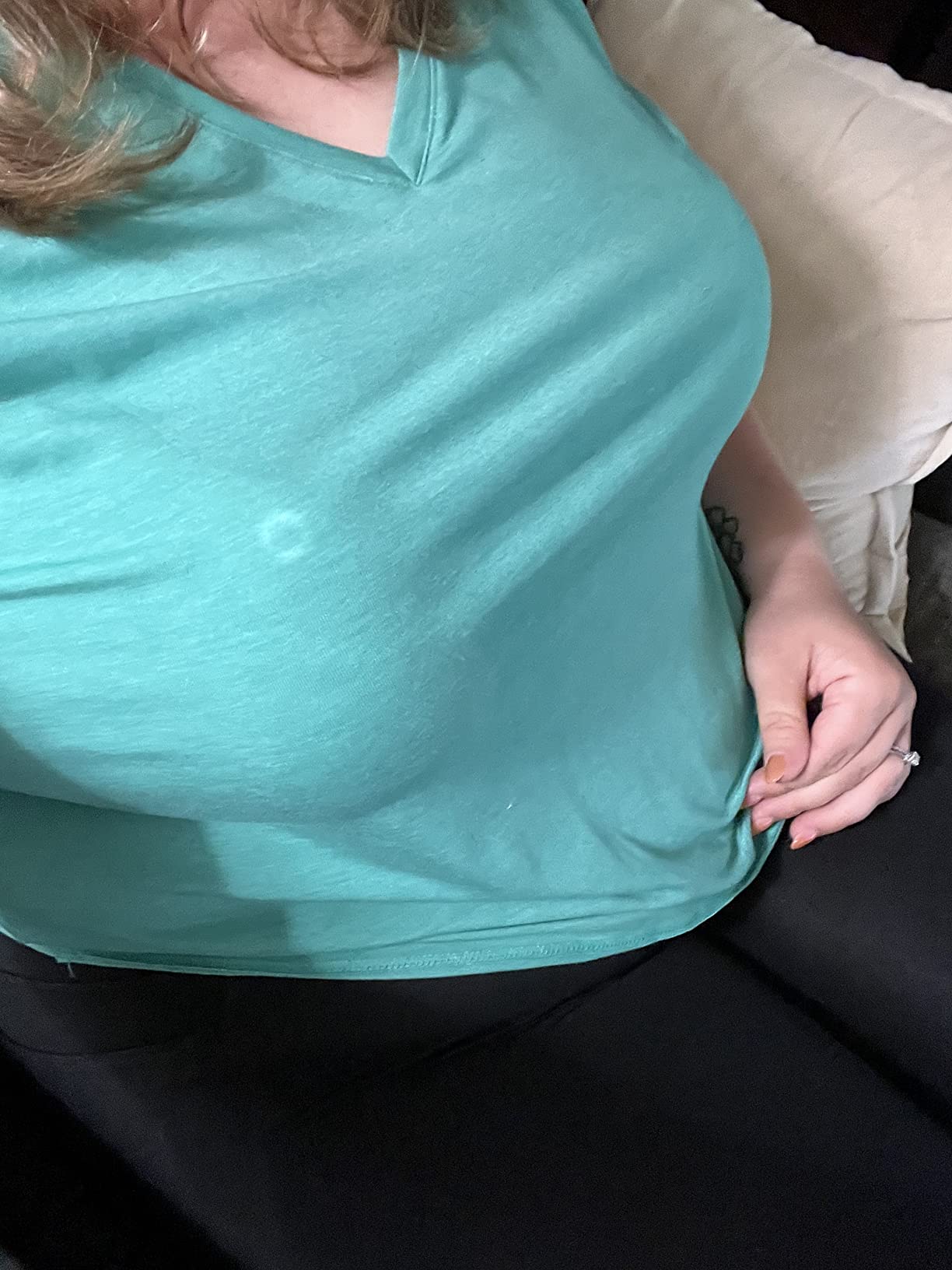
The app is more than a gimmick. It shows milk volume in real time, tracks session length across both sides, and lets you save your rhythm as a preset so day three feels the same as day one. Two settings of your own pattern can be stored, which matters when you are switching between an express session and a quick workday top-up.
Being honest about the limits: this is not a primary hospital-grade pump. Owners on r/ExclusivelyPumping repeatedly note that a Spectra empties them more completely, and the output gap shows up if you need high volumes. Bending forward can pause a session or cause a small leak, and the full-bottle detection is not always accurate, so check the cup yourself before you sit down to transfer.
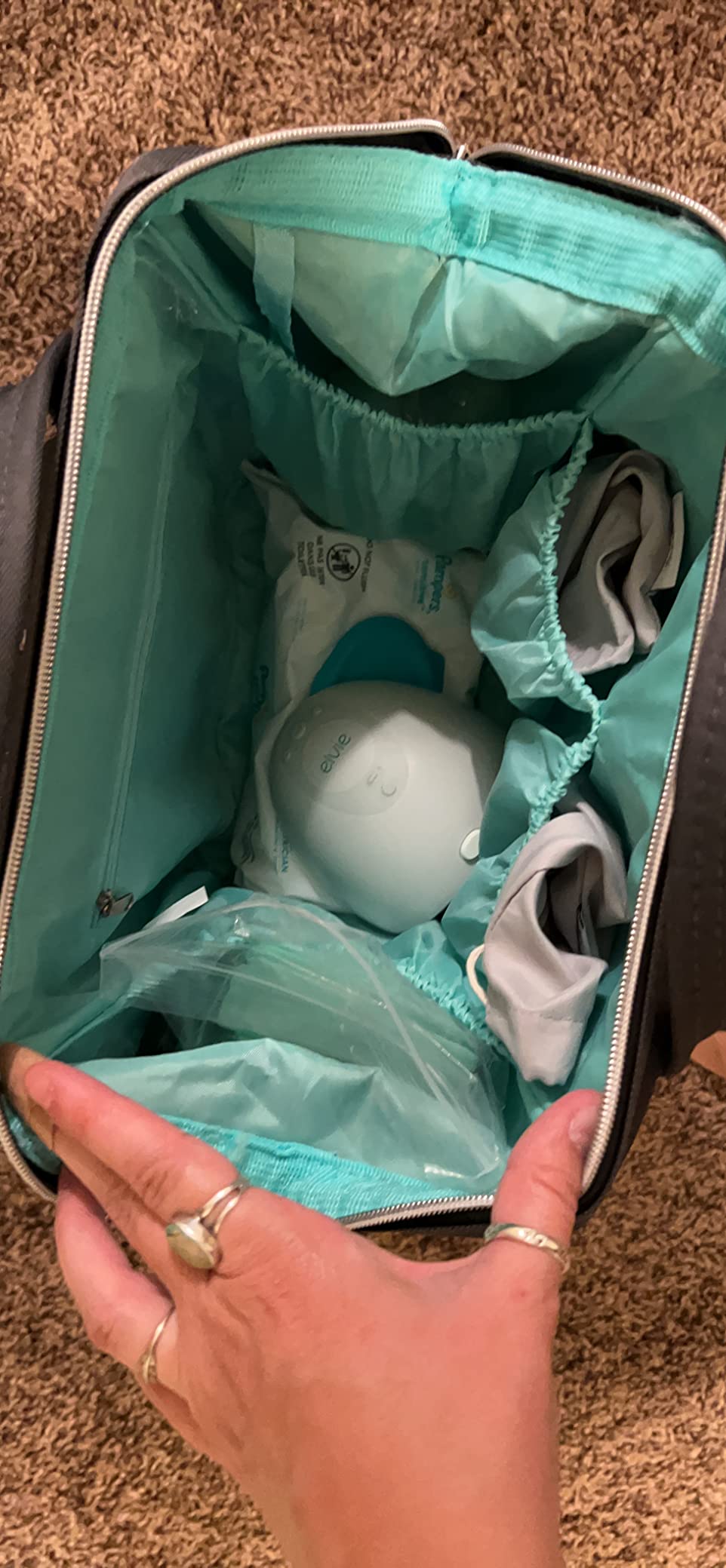
Who the Elvie fits best
If your workday includes client calls, open-plan desks or a hybrid schedule where you are sometimes in a car and sometimes in a lactation room, the Elvie solves a problem no other pump on this list does. You can start a session anywhere, at any point in the day, without planning around an outlet or a private sink.
It also suits moms who are supplementing rather than exclusively pumping. One session a day on a commute or during a lunch walk is exactly the use case its small cups and long battery are built for.
Where the Elvie falls short
If you are exclusively pumping and building a freezer stash, this is the wrong primary tool. You will spend longer per session and get less per session, and the cups need manual transfer afterward. Moms pumping five ounces or more per side tend to be disappointed by it within a month.
Body shape matters more here than on a tube-and-bottle pump. The cup is small, so a bustier chest may find it sits forward of the nipple or needs a supportive bra to hold position. If you are between flange sizes, order carefully and check the included sizes before you rely on it daily.
We earn a commission, at no additional cost to you. CERTAIN CONTENT THAT APPEARS ON THIS SITE COMES FROM AMAZON. THIS CONTENT IS PROVIDED 'AS IS' AND IS SUBJECT TO CHANGE OR REMOVAL AT ANY TIME.
2. Medela Harmony Manual Pump – The Backup That Lives in Your Work Bag
Medela Harmony Manual Breast Pump, On-the-Go, More Milk Output
- 0.58 oz body
- 360-degree rotating shield
- Two-phase expression mode
- Expresses into a 5 oz bottle
Pros
- You control the pace so let-down is reliable
- Very few parts and fast to wash
- Fits in a laptop sleeve
- Quieter than any electric pump
- Medela parts are easy to find
Cons
- Hand fatigue during long sessions
- Not a hands-free pump
- Collection bottle dents and markings wear off
- Single breast only
We earn a commission, at no additional cost to you. CERTAIN CONTENT THAT APPEARS ON THIS SITE COMES FROM AMAZON. THIS CONTENT IS PROVIDED 'AS IS' AND IS SUBJECT TO CHANGE OR REMOVAL AT ANY TIME.
The Medela Harmony is the pump I recommend to every working mom regardless of what else she buys. It weighs 0.58 ounces and it will always work because it has no battery, no motor and no app to fail. It lives in the side pocket of your tote for the rest of your pumping career.
What surprises people is how well the manual rhythm performs. Because you set the pace and the pressure with your own hand, many owners report expressing faster than their electric pumps, particularly for the first let-down after a few hours away from baby. Medela’s 2-Phase Expression handle switches between a fast stimulation rhythm and a slower expression rhythm with one squeeze of your fingers.
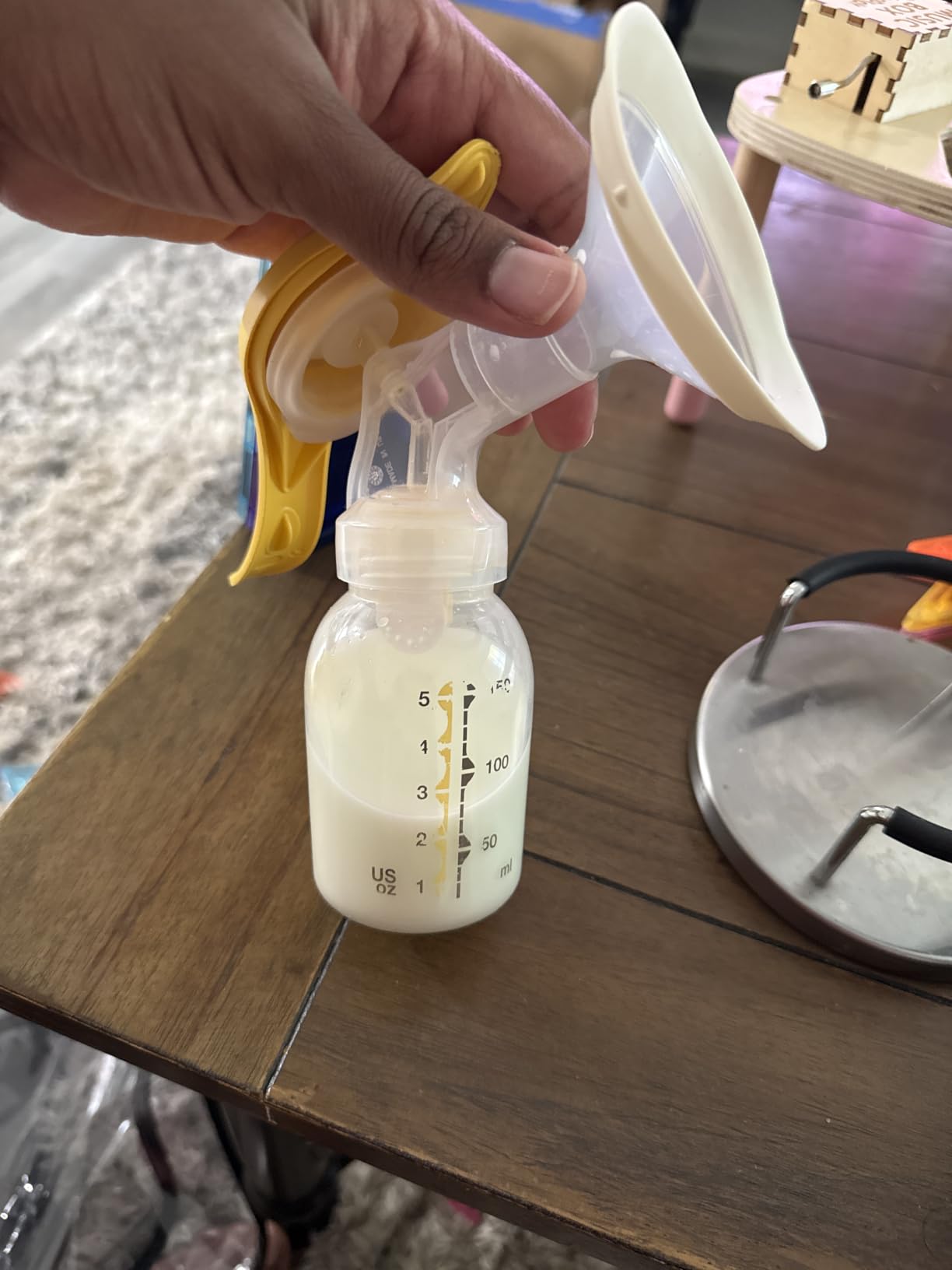
The PersonalFit Flex shield is the part that makes it usable. It rotates through 360 degrees so you can angle it to your anatomy without twisting your wrist, and the soft rim spreads pressure instead of concentrating it in one narrow ring. For moms who get pain with a narrow flange, that flexibility is often the first thing that finally works.
Cleaning takes under a minute. The shield, membrane, valve and bottle all go in the dishwasher, and everything else you wipe down. In a shared lactation room with a three-minute break, that simplicity is worth more than any feature list.
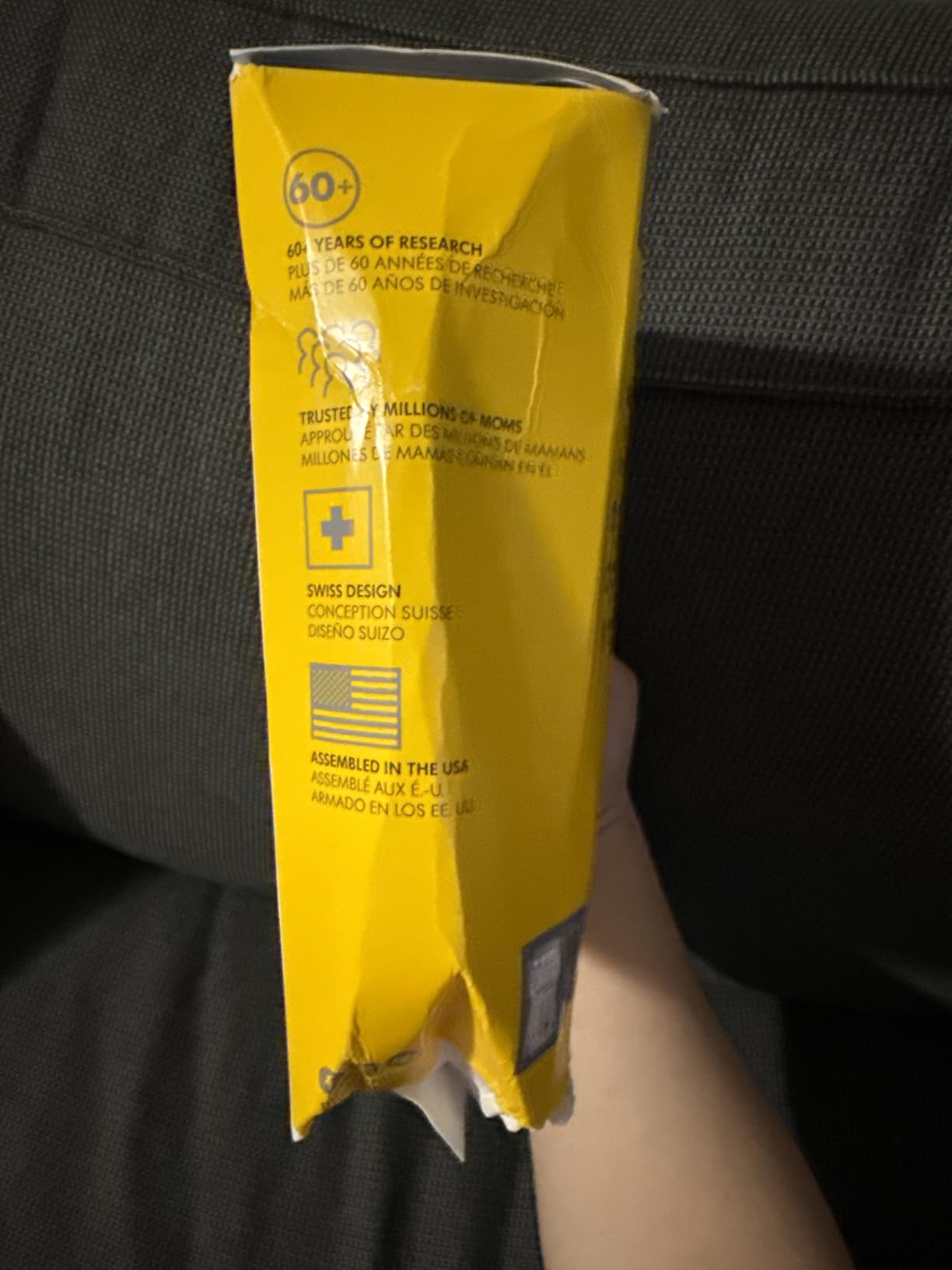
Why keep a manual in your work bag
Every setup fails eventually: a dead battery, a cracked bottle, a lactation room with no outlet, a hotel room on a work trip. A manual pump is the one piece of equipment that has no failure mode. Several reviewers describe it as the pump that saved their whole pumping plan after an electrical unit failed mid-week.
It is also the right partner for an insurance-covered primary. If your covered pump uses Medela bottles, the Harmony expresses straight into the same 5 oz bottle, so your parts and storage stay interchangeable and nothing goes to waste.
When a manual pump is not enough
It pumps one breast at a time, so double pumping time doubles, and your hand will tire on a full session after twenty minutes. If you are exclusively pumping or building supply, a manual pump is a supplement rather than your main pump.
The 5 oz collection bottle is the weak point. Owners report it dents in a work bag and that the measurement lines wear off after repeated washing, so measure into a marked bottle or a different container if volume tracking matters to you.
We earn a commission, at no additional cost to you. CERTAIN CONTENT THAT APPEARS ON THIS SITE COMES FROM AMAZON. THIS CONTENT IS PROVIDED 'AS IS' AND IS SUBJECT TO CHANGE OR REMOVAL AT ANY TIME.
3. haakaa Manual Pump – The Silent Let-Down Catcher for Nursing on One Side
haakaa Manual Breast Pump for Breastfeeding 4oz/100ml
- 4 oz silicone one-piece body
- Boilable for sterilization
- Silent suction operation
- One size fits all
Pros
- One-piece boilable design makes sterilizing simple
- Catches let-down while nursing on the other side
- Completely silent
- No assembly and no breakable parts
- Holds about 4 oz in a small bag
Cons
- Needs an established milk supply
- Small 4 oz capacity
- Suction strength is not precisely adjustable
- Not a primary pump
We earn a commission, at no additional cost to you. CERTAIN CONTENT THAT APPEARS ON THIS SITE COMES FROM AMAZON. THIS CONTENT IS PROVIDED 'AS IS' AND IS SUBJECT TO CHANGE OR REMOVAL AT ANY TIME.
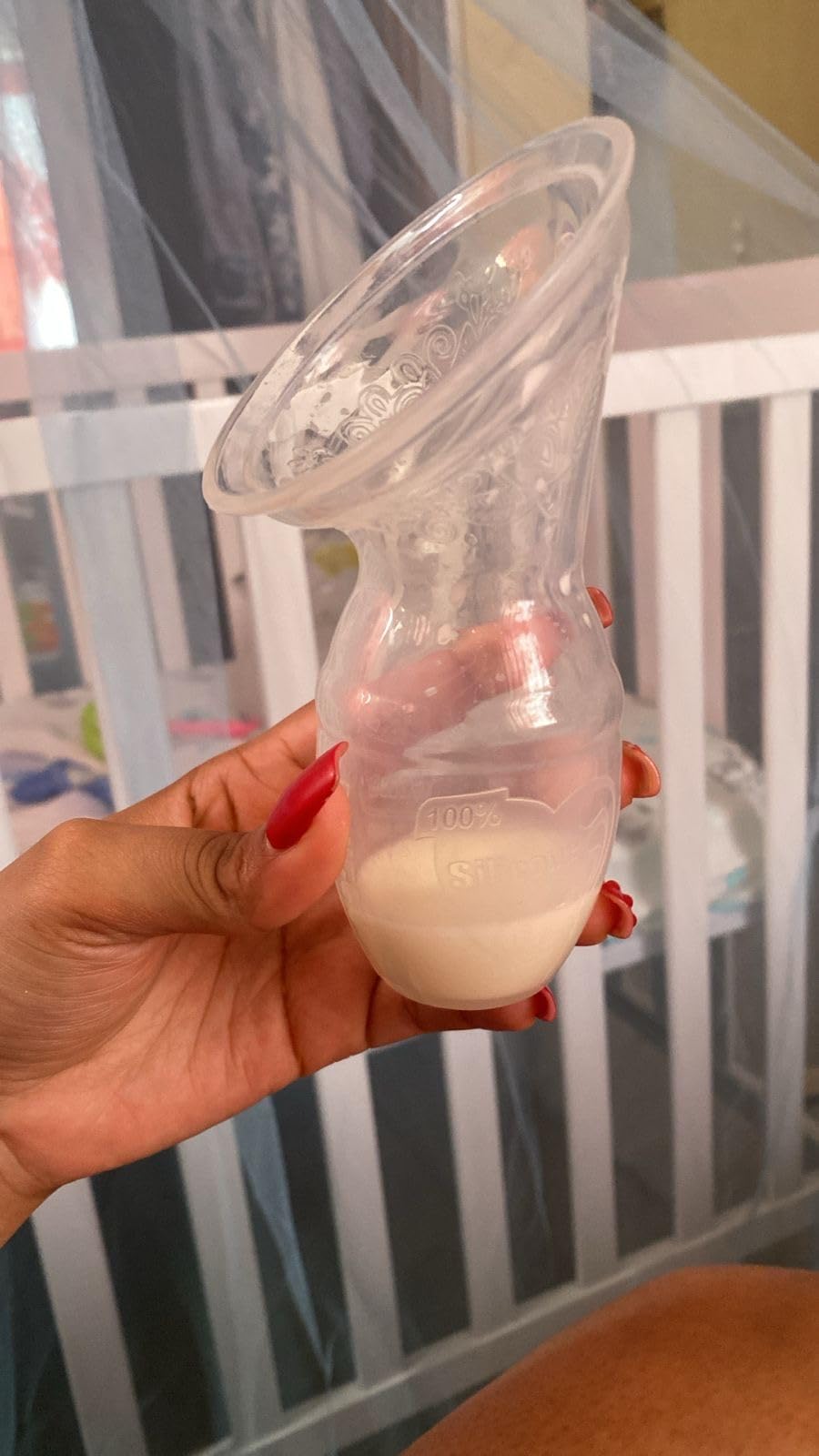
With the largest review base on this list, the haakaa is also the most misunderstood. It is not trying to replace an electric pump. Its job is to sit on the breast you are not nursing from and collect the milk your body is already pushing out, so you recover the milk you would otherwise leak onto a shirt.
For a working mom the version that matters is the hands-free one. Slip it into a pumping bra on the non-feeding side, latch it on before you sit down, and nurse the baby with the other side. It makes zero noise because there is no motor, only your own hand compressing the silicone body every few seconds to release the vacuum.
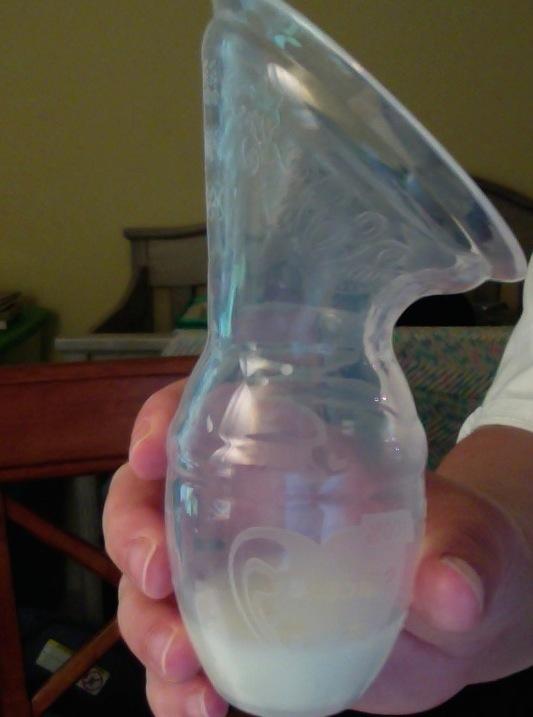
Cleaning is the reason it has survived years of daily use in so many homes. It is a single piece of food-grade silicone with no joints, no seams and no creases where bacteria can sit, and it goes in a pot of boiling water or a steam sterilizer. There is nothing to lose, nothing to replace and no way to assemble it wrong.
The tradeoff is honest. You need an established supply to activate a let-down reflex, and the 4 oz capacity fills quickly during a strong let-down. If you are early postpartum or still building supply, you will not get much from it.
Where a silicone catcher earns its place
The strongest case is at home during evening nursing sessions and on long car rides where you cannot stop to express. It converts what would be a leaking let-down into a bottle in the fridge. Reviewers often pair it with the Medela Harmony as a complete manual setup.
It is also a good first purchase for a mom who is undecided about pumping at all. Low commitment, zero learning curve, and a clear signal of whether your body responds well to manual expression before you invest in an electric unit.
What to watch for
Because the whole body is one size, it does not fit everyone equally. Some breast shapes and sizes report that it never seals properly or that it slides off. Test it early, and if it will not hold a seal, do not force it daily.
Suction intensity is adjusted by how hard you compress the body before reseating it, which is not fine-grained control. Some users with sensitive nipples find it strong and painful during an early let-down. Start with gentle compression and build up.
We earn a commission, at no additional cost to you. CERTAIN CONTENT THAT APPEARS ON THIS SITE COMES FROM AMAZON. THIS CONTENT IS PROVIDED 'AS IS' AND IS SUBJECT TO CHANGE OR REMOVAL AT ANY TIME.
4. NCVI 8782 Double Electric Pump – Quiet Tube-and-Bottle Power on a Budget
NCVI Electric Breast Pump 8782, Portable Hospital-Grade Double Pump
- 2.65 lb unit
- 2200mAh battery for about 3 sessions
- 40 dB operation
- 4 modes and 9 suction levels
Pros
- Rated at 40 dB for quiet operation
- Works with a power bank or car adapter
- Anti-backflow silicone diaphragm
- Food-grade silicone parts
- Three years of extended support
Cons
- Not wearable so it needs tubes and bottles
- About 3 sessions per charge
- Display is small and hard to read
- Output trails premium hospital-grade pumps
We earn a commission, at no additional cost to you. CERTAIN CONTENT THAT APPEARS ON THIS SITE COMES FROM AMAZON. THIS CONTENT IS PROVIDED 'AS IS' AND IS SUBJECT TO CHANGE OR REMOVAL AT ANY TIME.
The NCVI 8782 exists because many first-time buyers assume double electric pumping has to mean a premium hospital-grade machine. That assumption is wrong. This is a tube-and-bottle double pump with a rechargeable battery, and for a mom pumping in a private room at work it does the core job for a fraction of what the premium models cost.
Its 40 dB noise rating is among the quietest measured figures in this group. In a lactation room with a closing door, that number is barely relevant, but if you are pumping in a car or a hotel room at the end of a travel day, it is the difference between a private moment and an announcement.
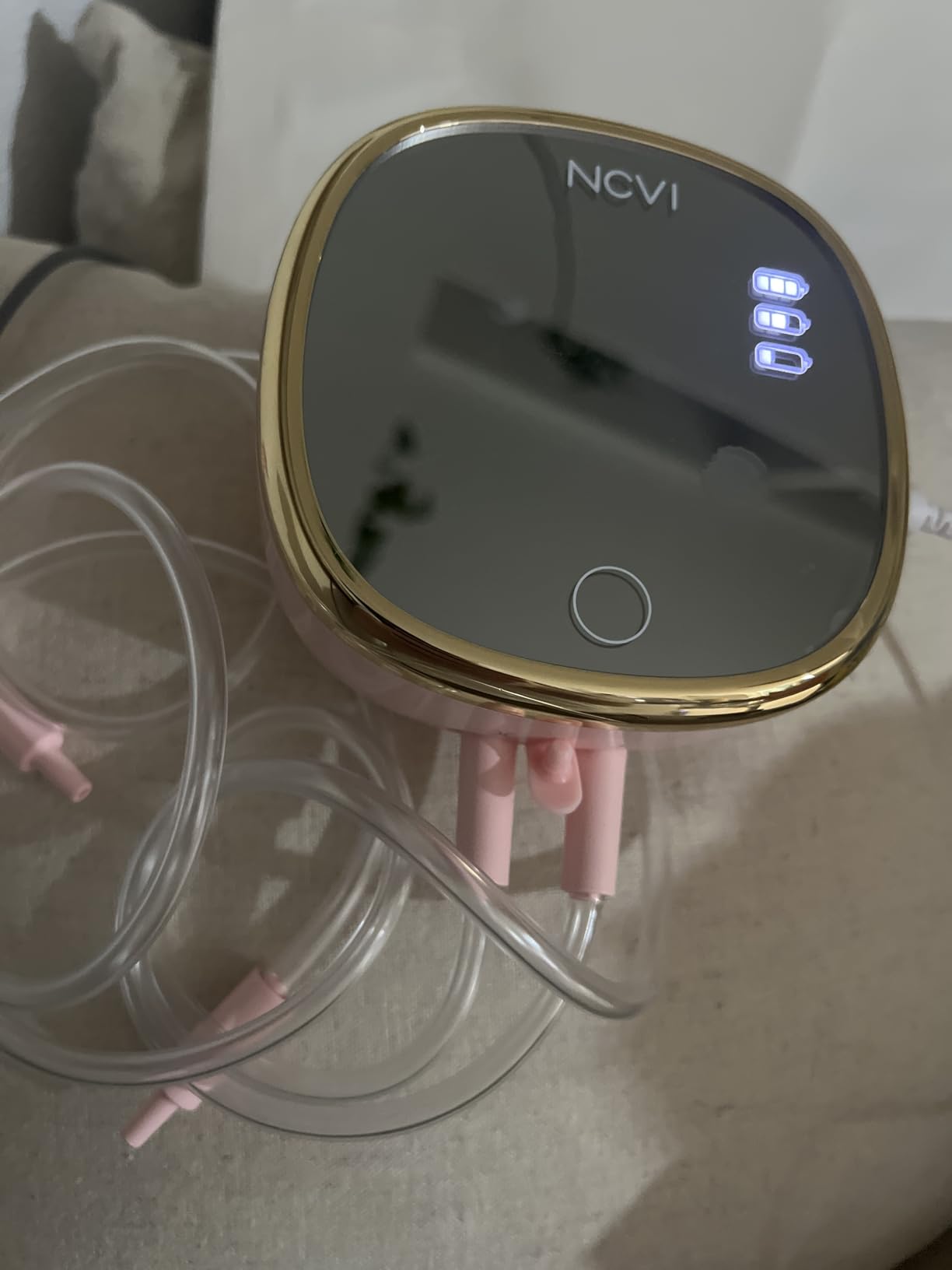
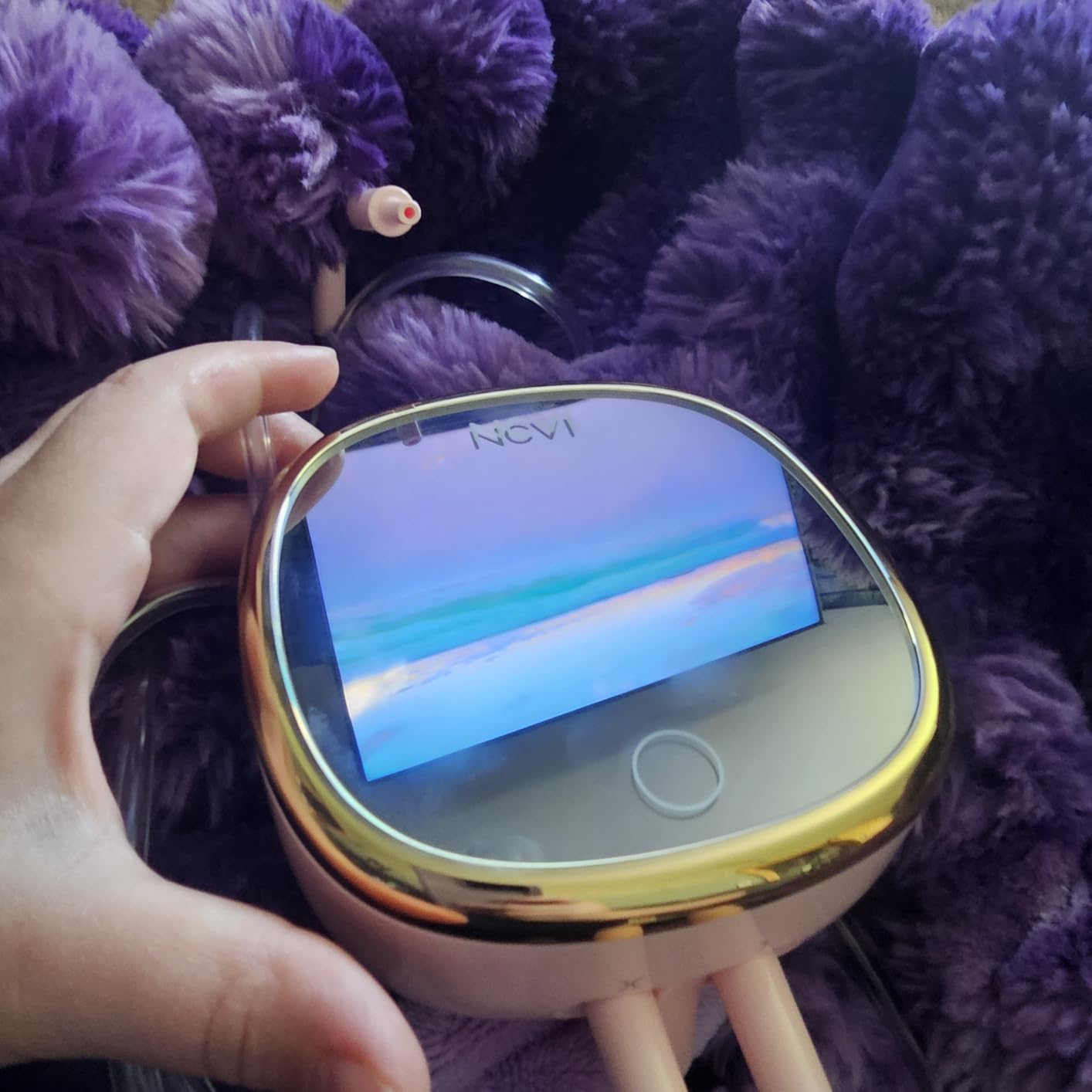
The 2200mAh battery gives roughly three sessions per charge and charges by wall plug, computer, car adapter or power bank. That flexibility matters for shift work and for anyone whose office has no outlet near the pumping room. Suction runs through four modes and nine levels, with a silicone diaphragm preventing backflow into the tubes.
Assembly and cleaning are straightforward, with food-grade BPA-free silicone pieces that rinse under a tap or go in a dishwasher bag. The company also lists three years of extended support, which matters more than it sounds when you are troubleshooting a duckbill valve at nine months postpartum.
Who should buy this one
Buy the 8782 if you have a dedicated pumping space, if you are exclusively pumping on a moderate supply, or if cost is the deciding factor. It is also a workable second unit for a relative who helps with pumping, or a backup for someone on shift who cannot get to an outlet.
It pairs well with the Medela Harmony. If you already collect into Medela bottles, you can express manually at a meeting and finish the session with electric at your desk.
Where it does not fit
It is not wearable, so it cannot be worn in a bra during a video call or a commute. With 2.65 pounds and tubes running to two bottles, setup and teardown will not compress into a short break.
Output is the other limit. Owners comparing it against premium hospital-grade pumps describe it as good but not equivalent, particularly when a session has to fully empty a breast to maintain supply. It also runs about three sessions per charge, so a long workday means a midday charge.
We earn a commission, at no additional cost to you. CERTAIN CONTENT THAT APPEARS ON THIS SITE COMES FROM AMAZON. THIS CONTENT IS PROVIDED 'AS IS' AND IS SUBJECT TO CHANGE OR REMOVAL AT ANY TIME.
5. Spectra S1 Plus – The Output Choice for Exclusive Pumpers
Spectra Baby S1 Plus Electric Breast Milk Pump for Baby Feeding
- Hospital-grade suction
- Built-in rechargeable battery
- Closed system with backflow protector
- Single or double pumping
Pros
- Strong output with the highest review average here
- Closed system protects the motor from milk
- Battery built in so no outlet is needed
- Works as a single or double pump
- Trusted by lactation consultants and hospitals
Cons
- Not wearable so it needs tubes and bottles
- Bulkier than a wearable in a bag
- More parts to wash
- Least discreet in a shared space
- Battery runtime is short by modern standards
We earn a commission, at no additional cost to you. CERTAIN CONTENT THAT APPEARS ON THIS SITE COMES FROM AMAZON. THIS CONTENT IS PROVIDED 'AS IS' AND IS SUBJECT TO CHANGE OR REMOVAL AT ANY TIME.
If you are exclusively pumping, the Spectra S1 Plus is the pump most lactation professionals point to first, and the ratings support the reputation. At 4.6 stars across more than 7k reviews, it is the reliable output option in this lineup, and several owners describe using it across two babies.
The suction is the whole story. It sits in the hospital-grade range and mimics the rhythm of a baby nursing rather than pulling constantly, which is why users report fewer sore nipples and less time per session. On r/ExclusivelyPumping, Spectra owners pumping five ounces or more per side consistently say nothing else they tried matched it.
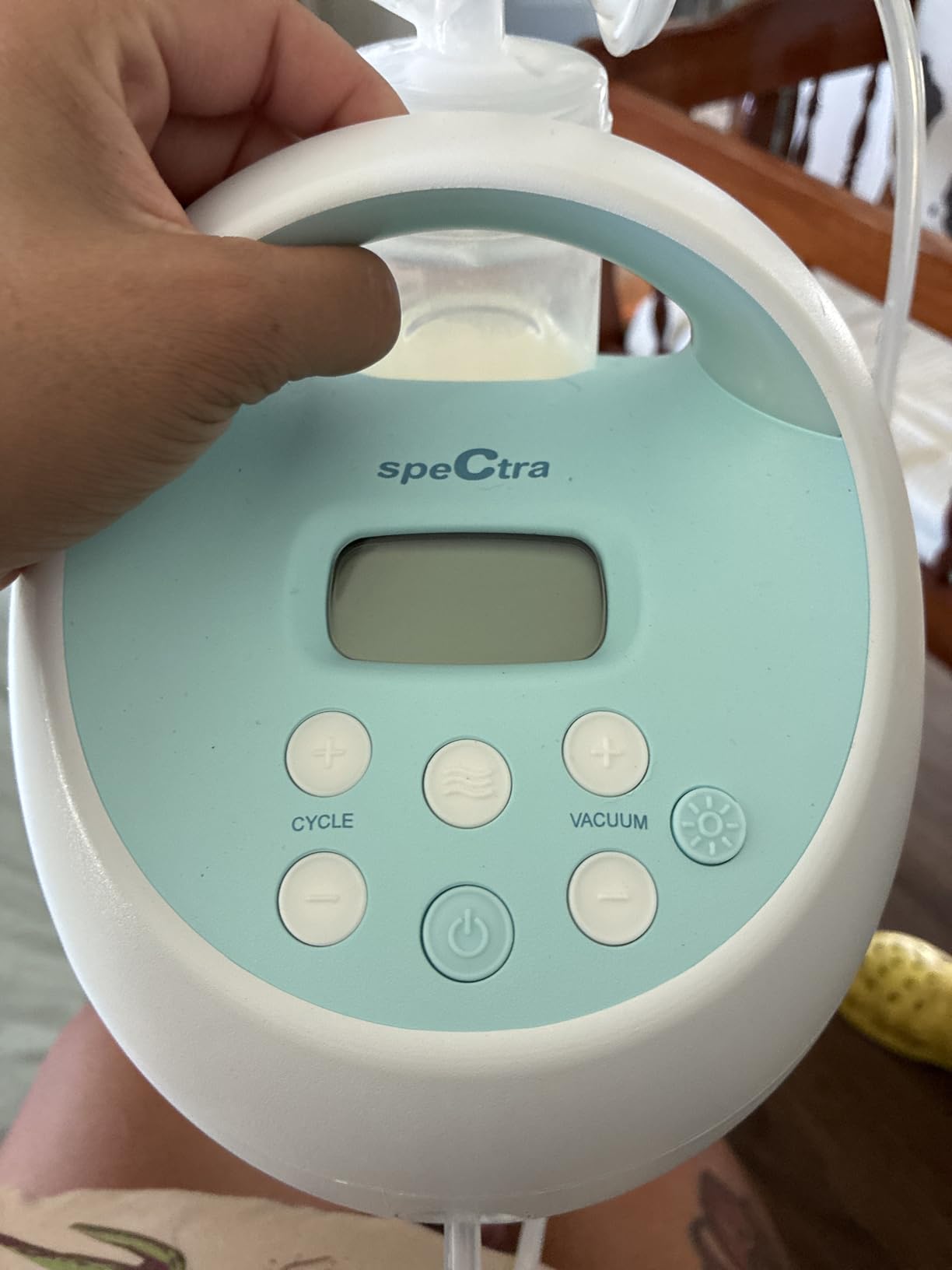
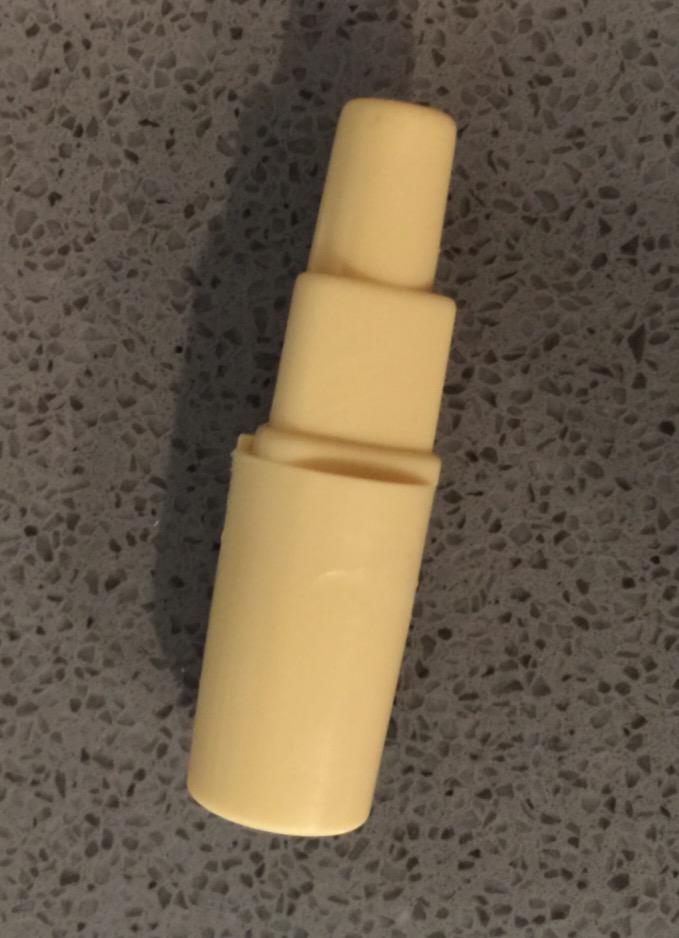
The closed system is a real practical benefit. A physical backflow protector creates a barrier so milk cannot travel into the tubing or the motor, which means the parts stay sanitary and the pump lasts. The built-in rechargeable battery and built-in bottle compartment make it a genuine portable pump rather than a desktop unit with a car cord.
It runs single or double. Pumping one breast while nursing or holding the baby is a real workflow advantage for moms of young infants, and double mode halves session time when you have both sides ready.
Why exclusive pumpers choose it
Output is the deciding factor. If you need to remove several ounces per side to protect supply or build a freezer stash, a wearable adds time and takes away volume. Several reviewers report moving from a wearable back to the Spectra and watching their daily total climb back up.
The battery matters more than people expect. A full workday of pumping without finding an outlet is possible on the built-in battery, and the bottle compartment means you carry milk and pump in one bag instead of two.
Where it frustrates working moms
It is among the least discreet options here. Tubes, bottles and a motor unit mean roughly eight to twelve minutes of setup and teardown, so a 20-minute break becomes a 10-minute session. If your workplace has no lockable, non-bathroom pumping space, this pump becomes a poor fit for the office specifically.
There are more parts to wash, and the battery runtime is short next to newer wearables built for eight or nine sessions per charge. Many owners keep it at home for the main sessions and use a wearable at work for that reason.
We earn a commission, at no additional cost to you. CERTAIN CONTENT THAT APPEARS ON THIS SITE COMES FROM AMAZON. THIS CONTENT IS PROVIDED 'AS IS' AND IS SUBJECT TO CHANGE OR REMOVAL AT ANY TIME.
6. eufy Heated Wearable S1 Pro – Warmth Plus a Five-Day Charging Case
eufy Heated Wearable Breast Pump S1 Pro, Charging Case, Hands-Free
- HeatFlow warming technology
- Wireless case holds about 5 days of power
- Up to 300 mmHg suction
- 46 dB operation
Pros
- Warmth makes sessions noticeably more comfortable
- Charging case removes daily charging anxiety
- Strong 300 mmHg suction for a wearable
- Only four parts to assemble and wash
- Flange inserts in 17mm 19mm and 21mm included
Cons
- Heat drains the battery faster
- App sync between two pumps is unreliable
- Cup measurement markings are inaccurate
- Replacement parts are costly
We earn a commission, at no additional cost to you. CERTAIN CONTENT THAT APPEARS ON THIS SITE COMES FROM AMAZON. THIS CONTENT IS PROVIDED 'AS IS' AND IS SUBJECT TO CHANGE OR REMOVAL AT ANY TIME.
The eufy S1 Pro is the one pump here where warmth is built into the flange itself, and reviewers consistently describe it as the feature they did not know they needed. Warm flanges reduce the soreness that builds across repeated workday sessions, and several users report that warming also helped their output come faster.
The charging case is the second reason working moms pick this one. It holds about five days of power, so you top up both pumps overnight in a case instead of finding a cable at lunch. For anyone who has missed a session because the pump was flat at 3 pm, that solves a real failure mode.
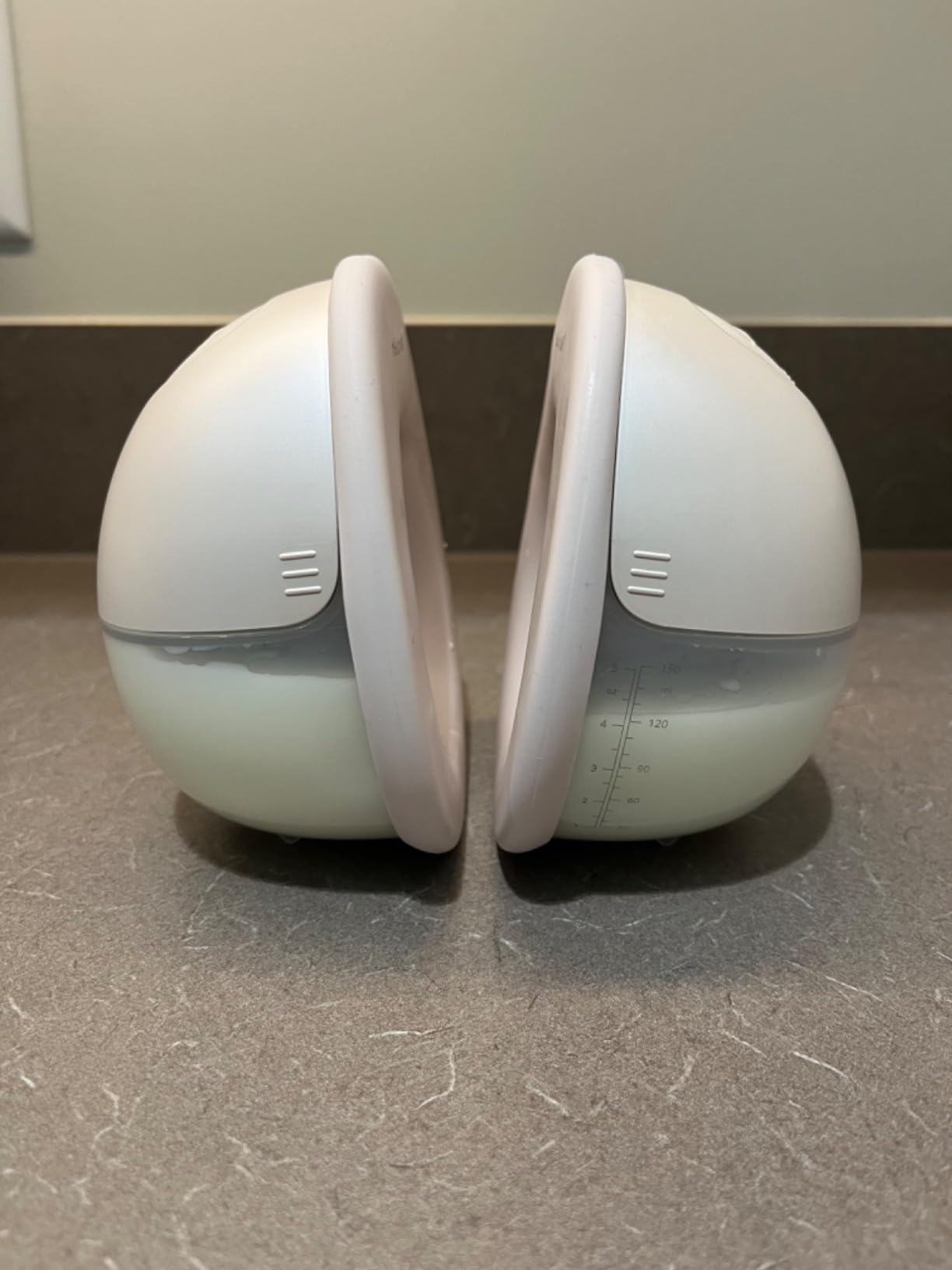
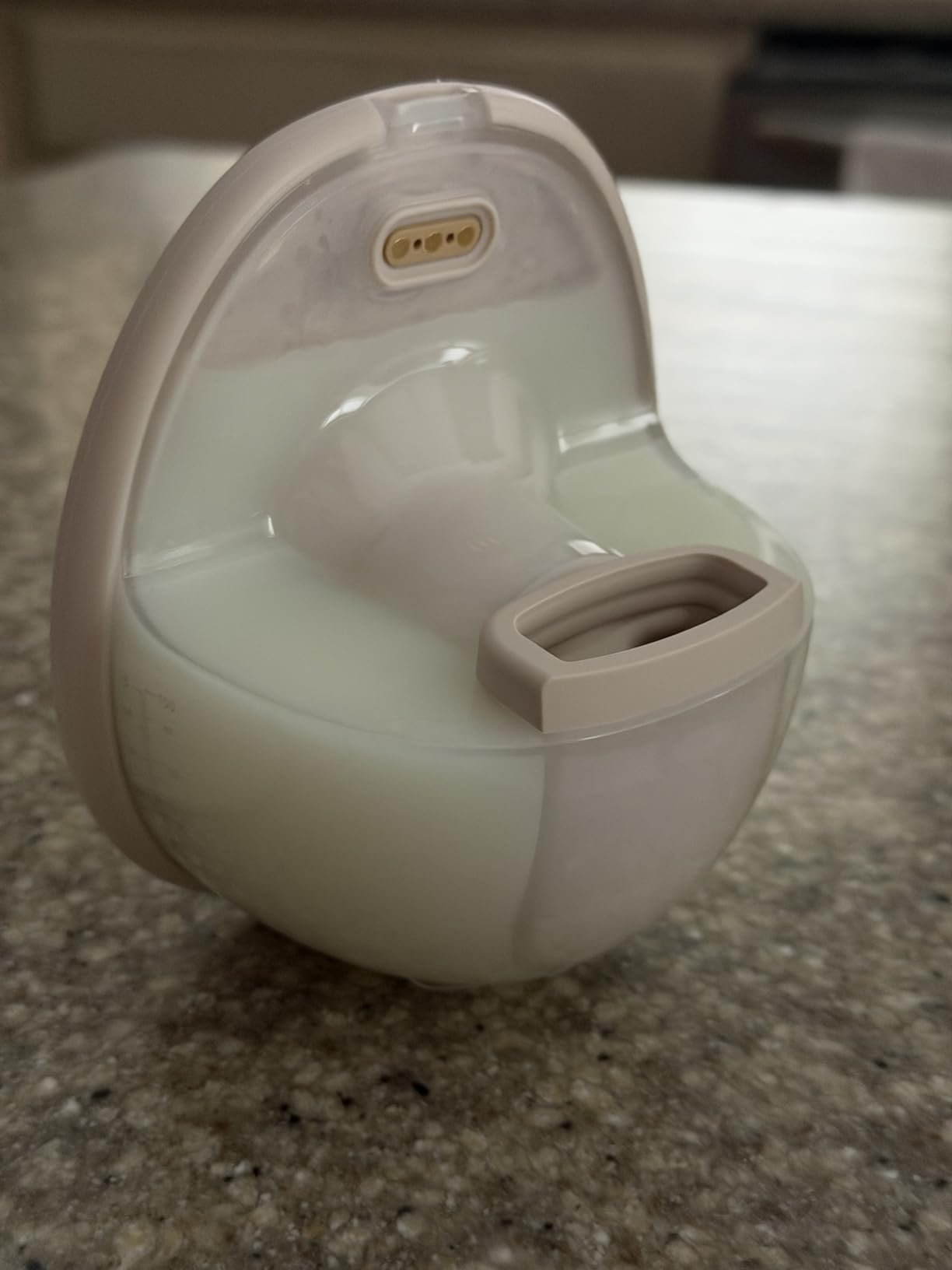
Suction is specified up to 300 mmHg, which is unusually high for a wearable and closes the gap with tube pumps on paper. Operation is measured at 46 dB, quiet enough for a private room or a car. The app offers four presets plus custom rhythms you can save, and you can start or stop either side independently.
Assembly is genuinely simple. Four parts per side, and the 17mm, 19mm and 21mm flange inserts come in the box, so you can adjust fit immediately instead of ordering parts separately.
Who appreciates heating and the case
Travel-heavy schedules and on-call work benefit most. Nurse and travel assignments, field staff and anyone who pumps in a car or a hotel gets the case benefit without planning outlets. The heat also makes it a comfortable choice for moms with early nipple sensitivity or low blood flow.
If you already know you like app-based control and want a wearable with more suction than most, the 300 mmHg ceiling here is worth testing.
Where it disappoints
Turning the heat on cuts battery life noticeably, so the five-day case figure assumes moderate use. Reviewers also report the app failing to sync between two pumps, which is annoying when you want your history in one place.
The collection cups have inaccurate measurement markings, so do not use them to track output. Leakage when pouring is reported if you tip the cup, and replacement parts cost more than most rivals. Its 4.1 rating reflects that the hardware is strong but the app and accessories are uneven.
We earn a commission, at no additional cost to you. CERTAIN CONTENT THAT APPEARS ON THIS SITE COMES FROM AMAZON. THIS CONTENT IS PROVIDED 'AS IS' AND IS SUBJECT TO CHANGE OR REMOVAL AT ANY TIME.
7. MomMed S21 Wearable – The Feature-Loaded Starter Wearable
MomMed Wearable Breast Pump (Model S21) – Double Electric Hands-Free Breast Pump, Leak-Proof Design, 3 Modes (Stimulation, Expression, Auto) & 12 Vacuum Levels, Portable and Quiet
- 3 modes and 12 vacuum levels
- Under 45 dB operation
- Leak-resistant backflow membrane
- Accessory kit with spare valves and inserts
Pros
- Three modes with twelve levels of control
- Quiet under 45 dB
- Generous accessory kit in the box
- Entry-level price for a double wearable
- Battery covers most of a workday
Cons
- Motor can stick and resist removal
- Top-heavy profile tips over
- Leaks around the flange edge
- Sharp edges on some parts during cleaning
- Warranty service draws complaints
We earn a commission, at no additional cost to you. CERTAIN CONTENT THAT APPEARS ON THIS SITE COMES FROM AMAZON. THIS CONTENT IS PROVIDED 'AS IS' AND IS SUBJECT TO CHANGE OR REMOVAL AT ANY TIME.
The MomMed S21 is what we would buy first if someone is curious about wearables but hesitant to spend heavily on a first attempt. You get a double in-bra pump with three modes, twelve vacuum levels and an accessory kit that normally costs extra, which makes it easy to change flange sizes and replace parts without a second order.
The 24mm shields plus six inserts in 17mm, 19mm and 21mm are the quiet hero of the package. Fit problems are the number one reason wearables fail for people, and having the whole range in the box means you can find your size on day one instead of waiting a week.
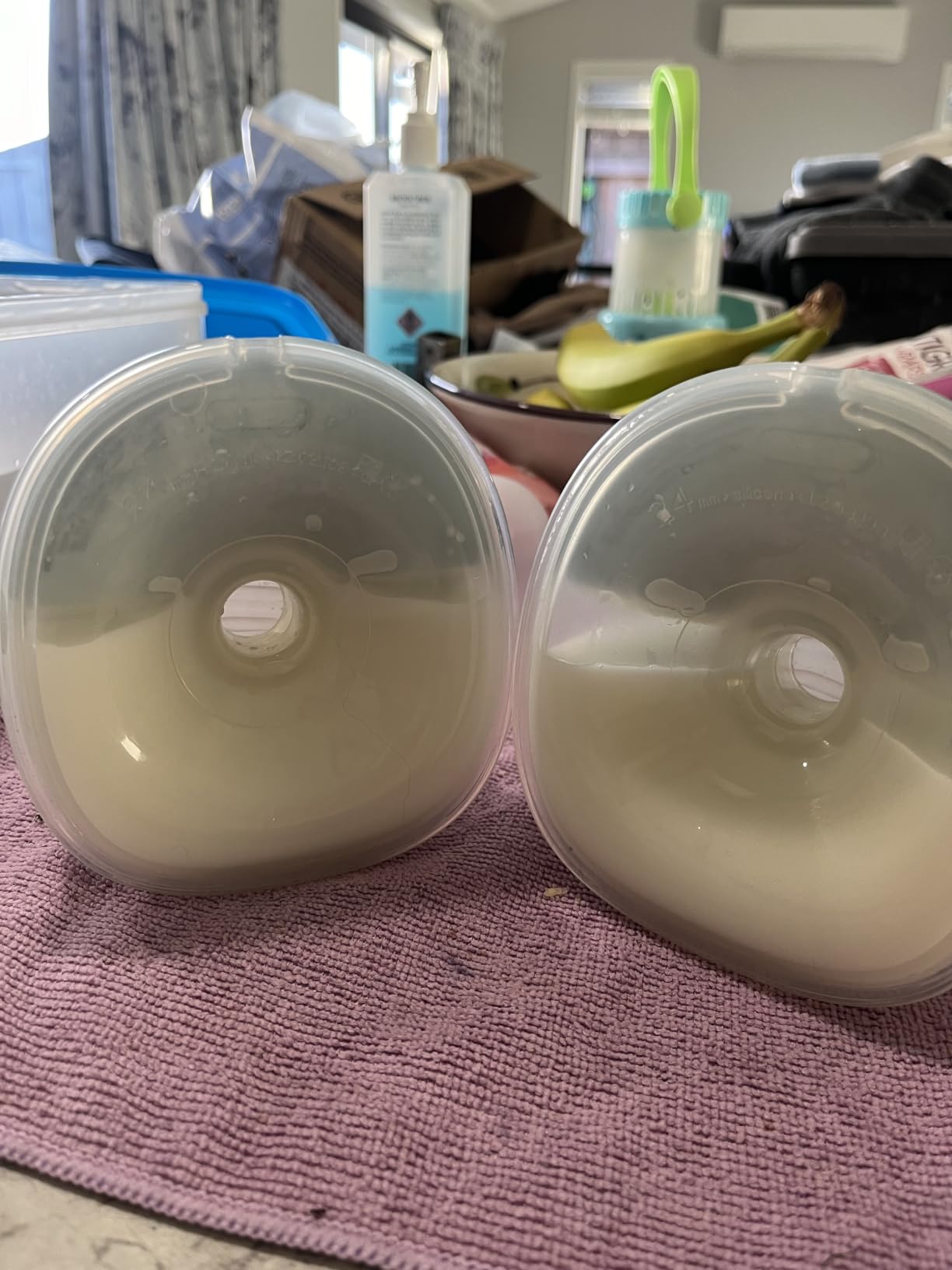
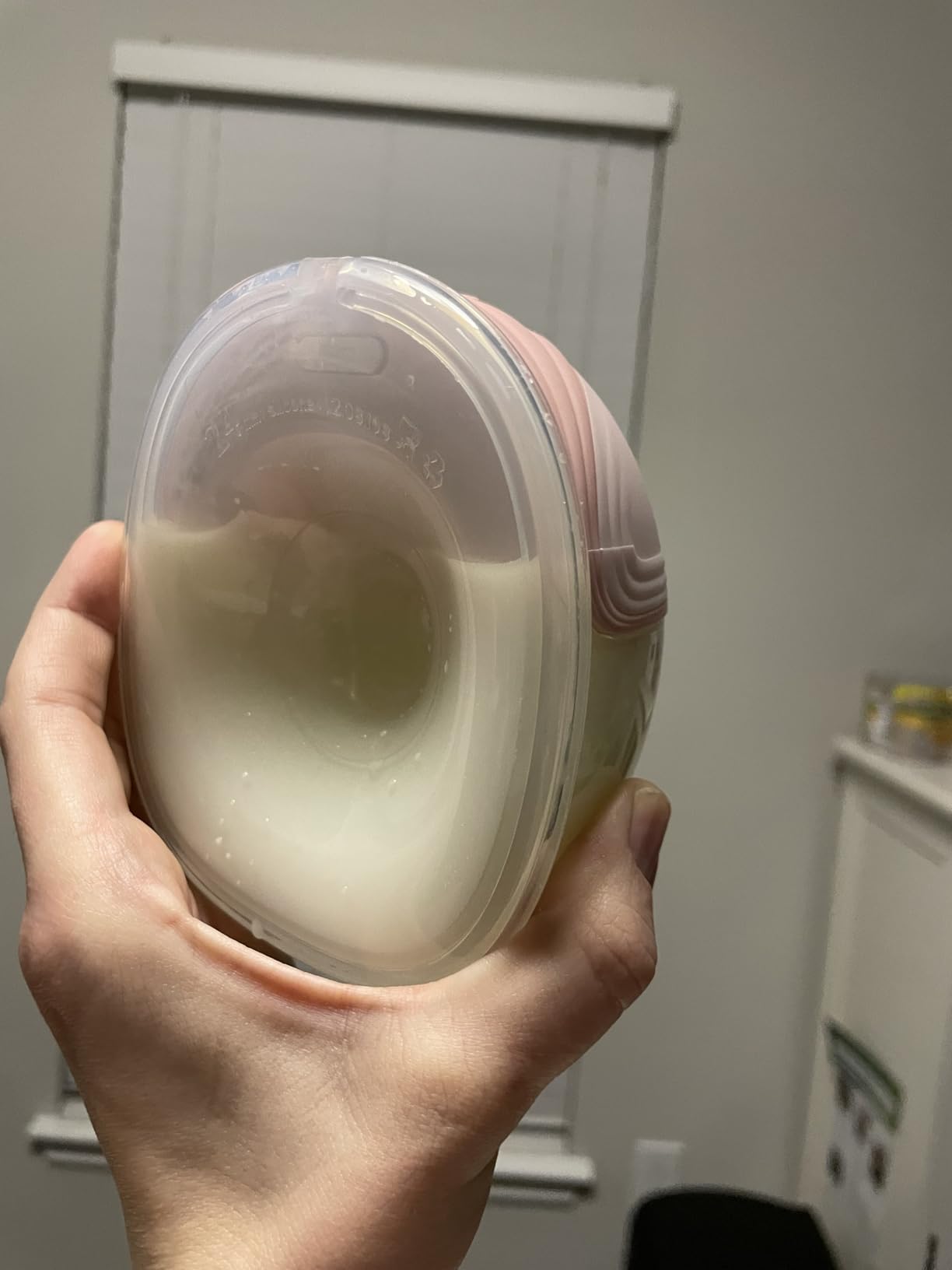
Output is the pleasant surprise. Owners report output holding up closer to pricier wearables than the price suggests, with enough suction for a solid session without the feeling of an aggressive pull. The LED screen with physical buttons means you can change level with a thumb through a shirt, without an app or a phone unlock.
Battery runs about four to five sessions per charge, which covers a normal two or three session workday with headroom. Operation is specified under 45 dB.
Where it makes sense
Buy it as a first wearable, as a travel unit, or as a trial pair before committing to a premium in-bra pump. The included nipple ruler and range of inserts also make it the easiest pump here to gift, since sizing mistakes are the most common source of returns.
For a mom pumping two or three sessions a day on a moderate supply, the suction range is adequate and the low noise keeps it usable in a car or a shared space.
Where the design frustrates people
The recurring complaints are mechanical. Owners report the motor unit sticking in place and being hard to remove for cleaning, and the top-heavy profile tipping in a bra. Some report leaking around the flange sides and nipple opening, which is usually a seal or sizing issue but happens more often here.
There is no battery level display during a session, the memory function restarts on your last mode which can be an uncomfortable surprise, and several reviewers mention sharp edges on some parts during washing. Warranty service also draws criticism, so check the terms before buying.
We earn a commission, at no additional cost to you. CERTAIN CONTENT THAT APPEARS ON THIS SITE COMES FROM AMAZON. THIS CONTENT IS PROVIDED 'AS IS' AND IS SUBJECT TO CHANGE OR REMOVAL AT ANY TIME.
8. Momcozy M5 Smart – A Light 232g Wearable With Full App Control
Momcozy M5 Smart APP Controlled Wearable Breast Pump, 2-Pack Cozy Red
- 232g per side
- Smart app control with tracking
- Baby Mouth suction structure
- Three modes and 9 levels
Pros
- Light 232g body
- App control and session tracking are excellent
- Comfortable Baby Mouth suction shape
- Four flange sizes included
- Hard carrying case in the box
Cons
- Bulkier than it looks and needs a supportive bra
- Battery runtime varies and can be short
- Heat is barely noticeable on some units
- Leaking after repeated cleaning
We earn a commission, at no additional cost to you. CERTAIN CONTENT THAT APPEARS ON THIS SITE COMES FROM AMAZON. THIS CONTENT IS PROVIDED 'AS IS' AND IS SUBJECT TO CHANGE OR REMOVAL AT ANY TIME.
At 232 grams per cup, the Momcozy M5 is roughly two thirds the size of a typical wearable, and that is the number that decides it for small-chested users. Community complaints about wearables being extremely top heavy almost disappear here because there is far less weight sitting forward of the chest.
The Baby Mouth suction structure is a contoured nipple channel designed to mimic a natural latch rather than pulling flat. Reviewers describe it as one of the more comfortable shapes at low settings, which matters if you run three sessions a day and want the lowest level that still empties well.
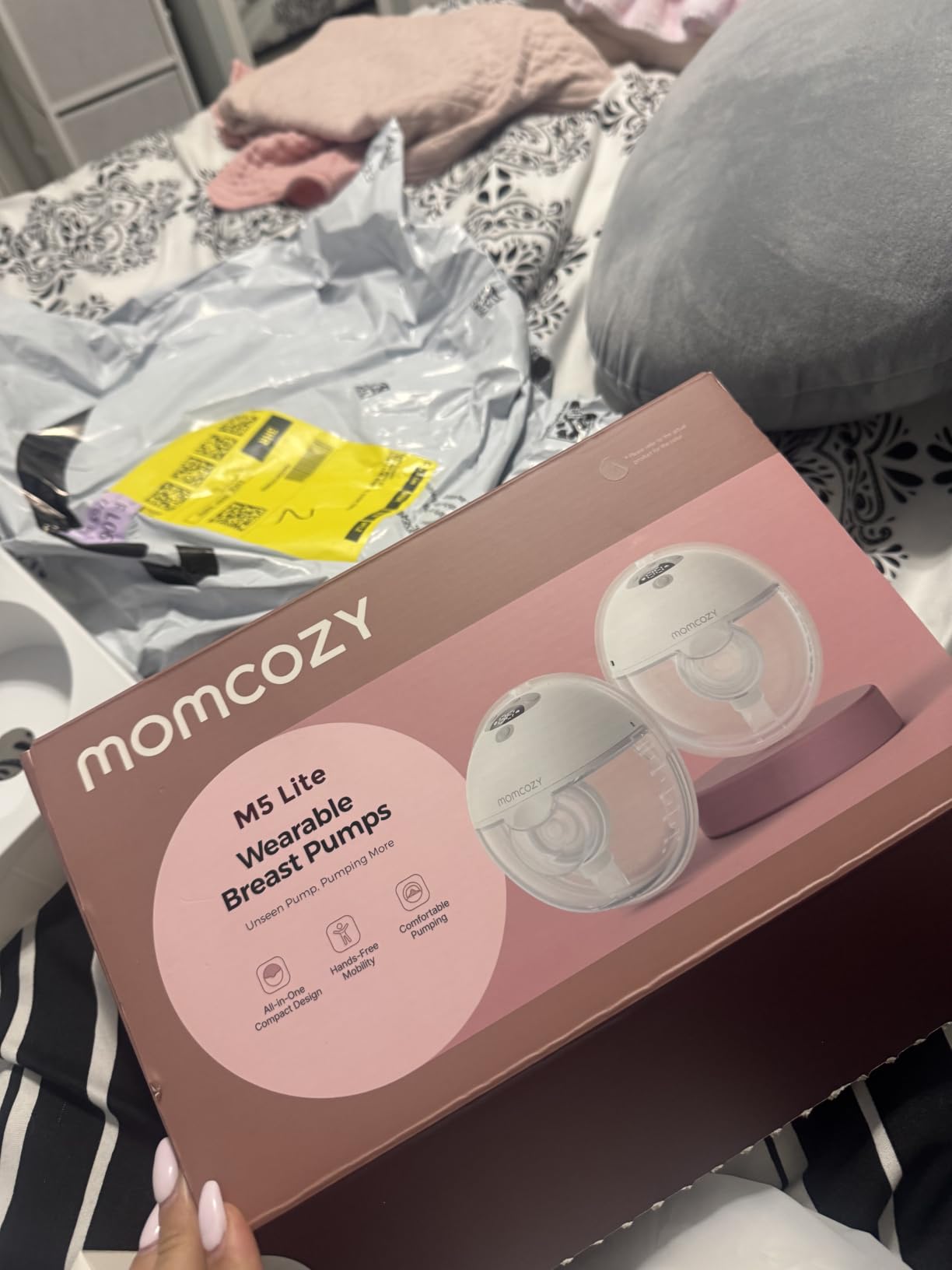
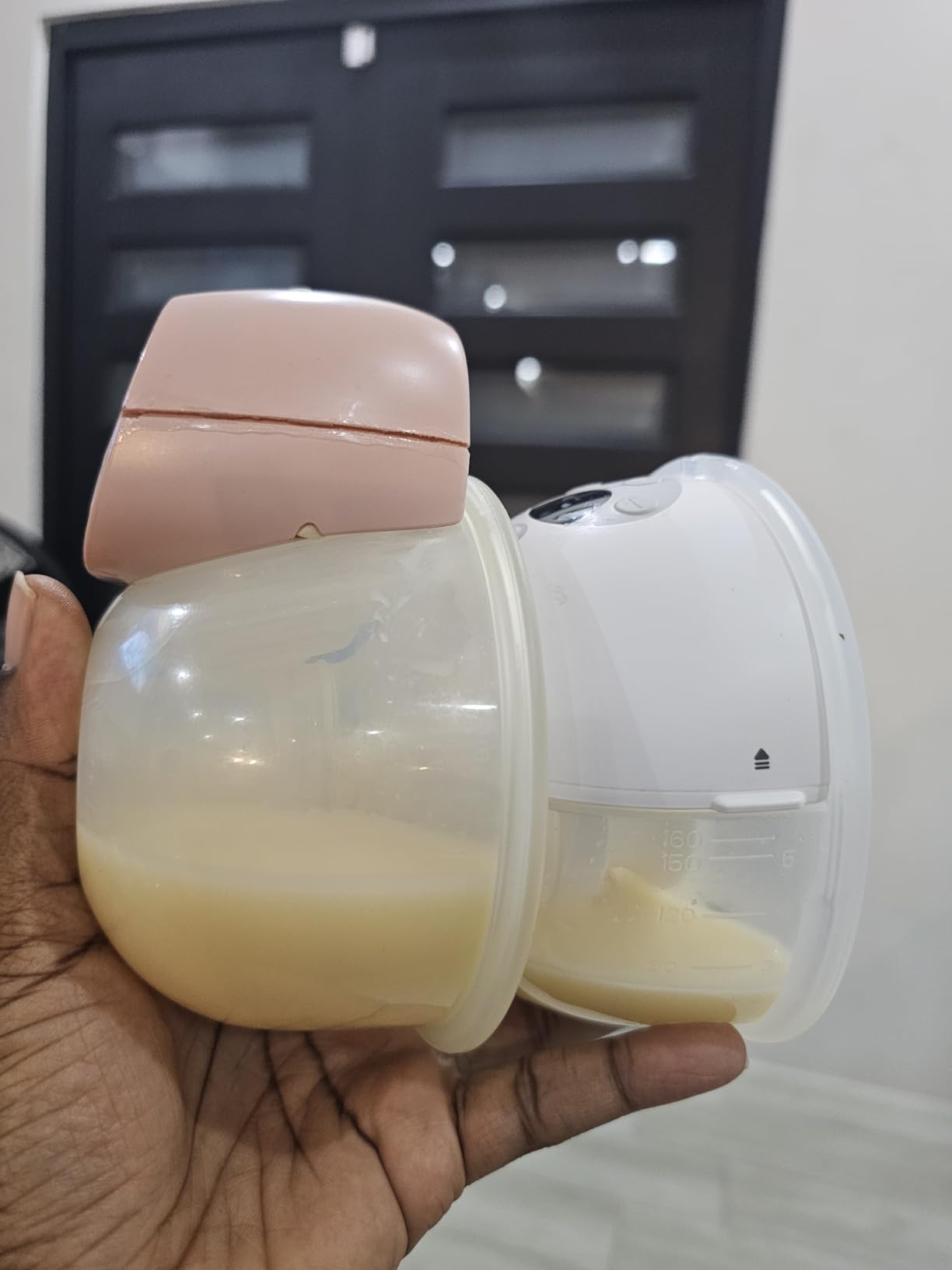
The app is the reason to pick this over a cheaper wearable. You control modes and levels from your phone, and it tracks session length and output over time so you can see whether a week of longer breaks is helping. Three modes cover stimulation, expression and a mixed rhythm across nine levels.
Four flange sizes come in the box, and the hard carrying case protects the cups in a work tote. It ranks as the number one best seller in electric breast pumps, which means replacement parts and community troubleshooting are easy to find.
Best case for the M5
This is the pump for a mom who likes data and wants to understand her supply. Session history and rhythm presets let you test whether a different rhythm produces more, which is genuinely useful during the first month back at work when your schedule is still shifting.
It is also a discreet choice for a smaller chest. Under a loose knit top in a private room, the 232g profile sits flatter than the cups on most rivals.
Limits worth knowing
The consensus complaint is that it is bulkier in the bra than the weight number suggests, and it needs a supportive bra to hold position for a full session. A soft bralette is not enough for a workday pump.
Battery runtime varies more than the listing suggests, with some owners reporting two or three sessions rather than five. The heating and massage features on the wellness variant are hit or miss, with heat barely noticeable on some units, and leaking appears after repeated washing. You also disassemble into three pieces for fridge storage.
We earn a commission, at no additional cost to you. CERTAIN CONTENT THAT APPEARS ON THIS SITE COMES FROM AMAZON. THIS CONTENT IS PROVIDED 'AS IS' AND IS SUBJECT TO CHANGE OR REMOVAL AT ANY TIME.
9. Willow Go – The Purest In-Bra Design With No External Hardware
Willow Go Wearable Breast Pump, Hands Free Double Electric Breast Pump, Wireless In-Bra Design with 15 level Hospital Grade Suction, includes 24mm & 21mm Flanges & 5oz Reusable Containers, App enabled
- No tubes or external motor
- 15 suction levels
- About 3 sessions per charge
- 24mm and 21mm flanges plus 5oz containers
Pros
- Absolutely nothing external in your bra
- 15 levels of strong suction
- 5oz reusable containers are dishwasher safe
- FSA and HSA eligible
- A trusted brand with a large user base
Cons
- Battery only covers about 3 sessions
- Warranty depends on where you buy it
- Audible at close range
- Larger than newer wearables
- Suction can feel strong even on low levels
We earn a commission, at no additional cost to you. CERTAIN CONTENT THAT APPEARS ON THIS SITE COMES FROM AMAZON. THIS CONTENT IS PROVIDED 'AS IS' AND IS SUBJECT TO CHANGE OR REMOVAL AT ANY TIME.
The Willow Go was one of the first pumps to get the in-bra design genuinely right. There is no motor clipped to your waistband, no tube crossing your shirt and no bottle hanging below your bra line. That purity of design is why it still makes sense even though newer pumps are lighter.
Fifteen suction levels put it in the range moms compare to hospital-grade pumps, and owners report their daily total stayed unchanged when they moved from a traditional pump to this one. The 5oz reusable containers are dishwasher safe and remove the need for disposable bottles on a commute.
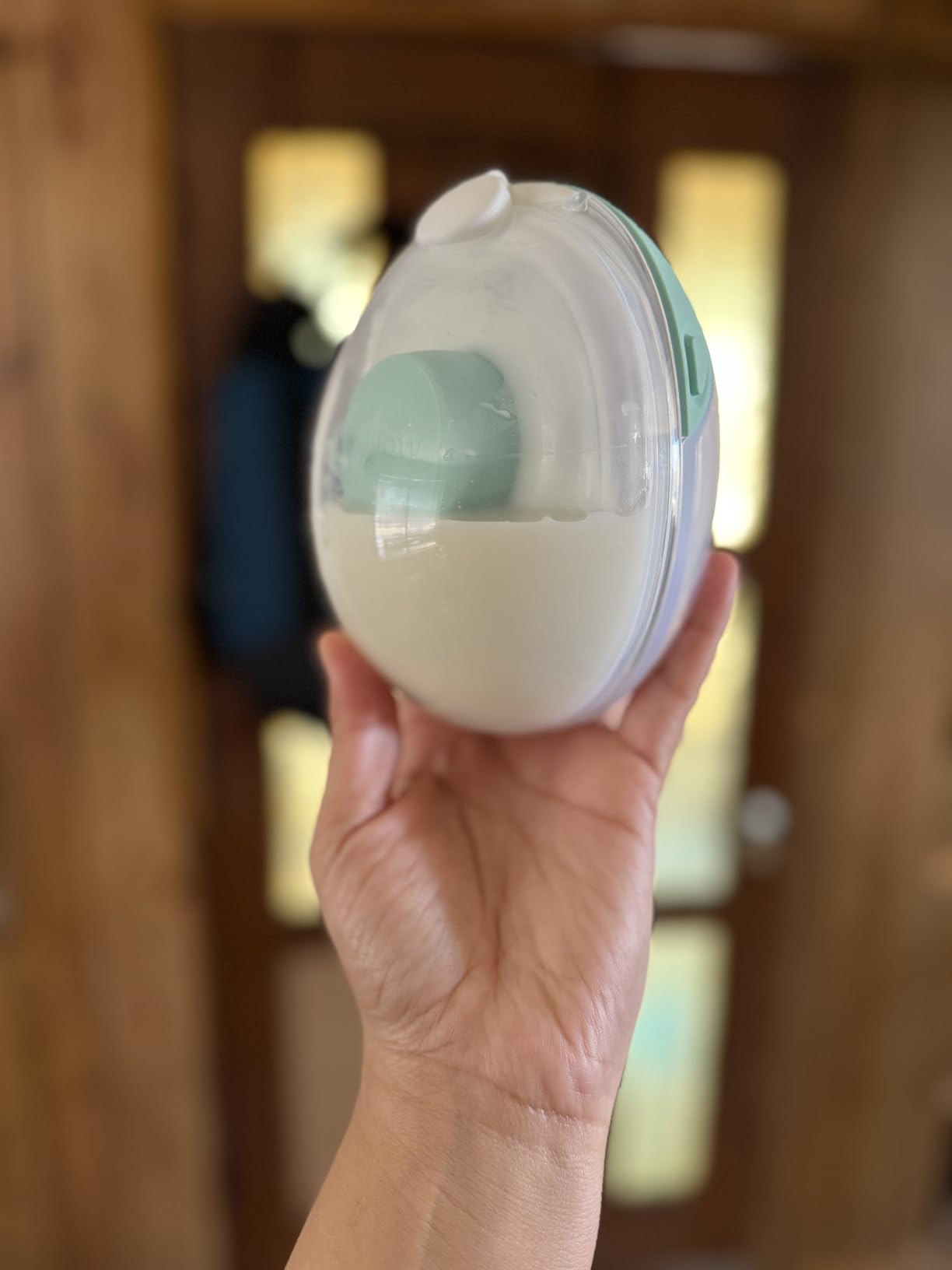
The app handles control and output tracking, and the pump comes with 24mm and 21mm flanges plus the reusable containers. It is FSA and HSA eligible, which matters if you are using pre-tax health spending money.
Comfort across a full workday is the other strong point. Because nothing hangs off your body, there is no pull from tubing and no weight hanging on your strap, and several reviewers wear it for a complete workday comfortably.
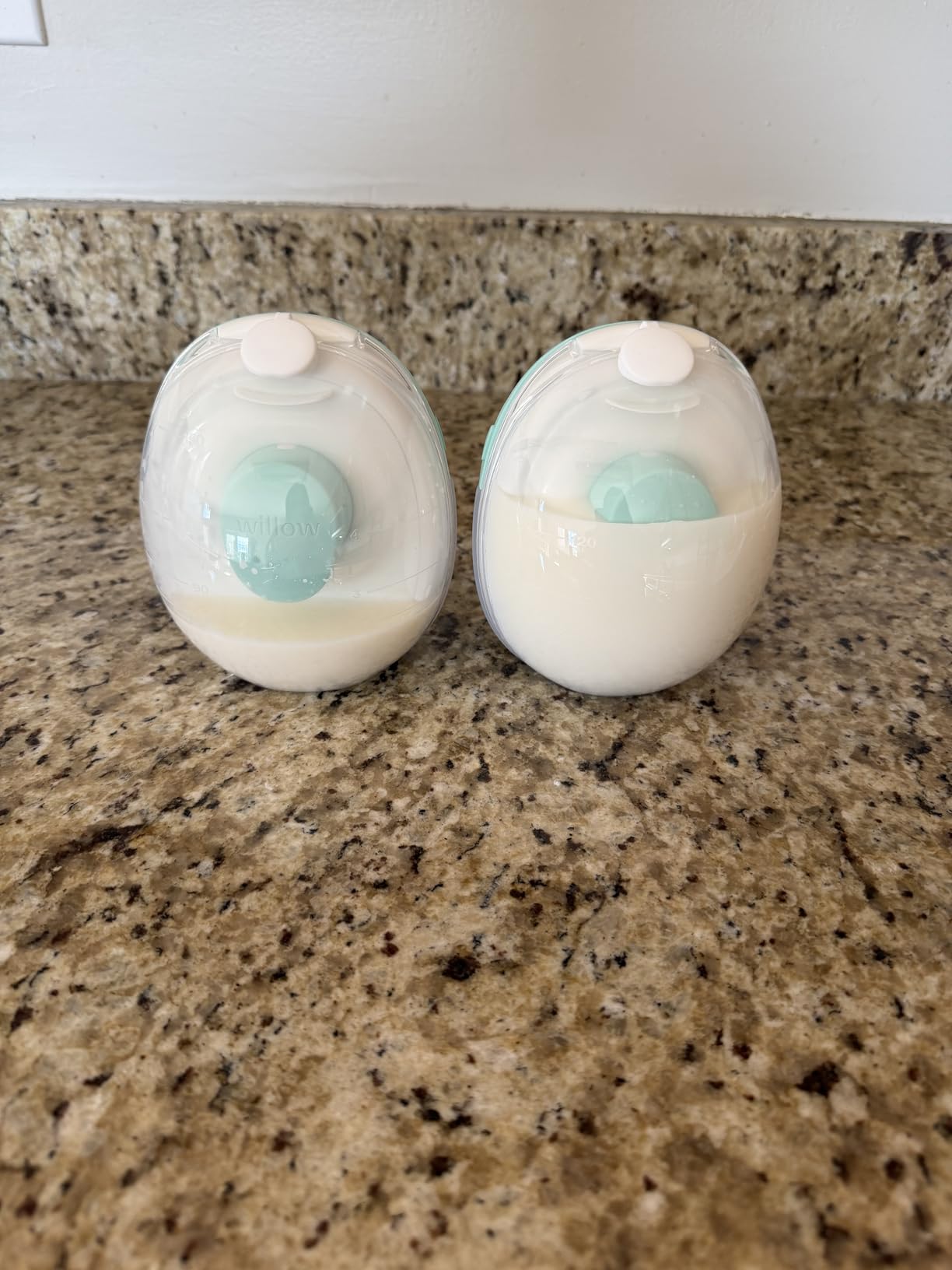
Why the Willow Go still earns a place
If the idea of a tube across your shirt is a dealbreaker, this is the answer. It also works well as the second wearable in a two-pump setup, since it can run from the same app as another unit for shared tracking.
The reusable containers are a quiet cost saver over months of commuting sessions, and the dishwasher-safe design means cleanup is one basket at the end of the day.
What to watch
Battery covers about three sessions per charge, which means a charging routine mid-week for a three-session workday. Several reviewers also report app connectivity issues, which breaks the tracking benefit.
The unit is heavier than newer wearables and larger in profile, so it shows under a fitted top. It is audible at close range, and the suction can feel strong even on the lowest levels, which can be uncomfortable with sensitive nipples. High producers may also overflow the 5 oz containers, and warranty coverage depends on the seller, so buy from the brand directly if that matters to you.
We earn a commission, at no additional cost to you. CERTAIN CONTENT THAT APPEARS ON THIS SITE COMES FROM AMAZON. THIS CONTENT IS PROVIDED 'AS IS' AND IS SUBJECT TO CHANGE OR REMOVAL AT ANY TIME.
10. Paruu P16 Wearable – A Wide 49.5 to 309 mmHg Range at 240g
Paruu Hands Free Breast Pump P16, Wearable Breast Pump Electirc Portable with 4 Modes & 12 Levels, Max 309mmHg Strong Suction 19/21/24mm Flange Inserts Wearable Breastfeeding Pump, 2 Pack(Nude
- 49.5 to 309 mmHg range
- 4 modes and 12 levels
- 240g wearable unit
- LED display with 30-minute shutoff
Pros
- Very wide 49.5 to 309 mmHg suction range
- Only four washable parts
- LED shows mode level and session time
- Three flange inserts plus a measurement card
Cons
- Audibly noticeable in a quiet room
- Visually bulky under clothing
- No pause function mid-session
- Irregular shapes are hard to wash fully
- Older-style USB charging
We earn a commission, at no additional cost to you. CERTAIN CONTENT THAT APPEARS ON THIS SITE COMES FROM AMAZON. THIS CONTENT IS PROVIDED 'AS IS' AND IS SUBJECT TO CHANGE OR REMOVAL AT ANY TIME.
The Paruu P16 answers the question wearables get asked most: can an in-bra pump reach a genuinely strong suction level? Its 49.5 to 309 mmHg range across four modes and twelve levels puts it on paper with premium in-bra pumps, and reviewers report output comparable to much more expensive units.
Cleaning is the feature we did not expect to care about and now do. It assembles from five parts and only four need washing, with a sealed flange-to-collector connection designed to resist leaks. In a lactation room with a short break, four pieces is a real difference.
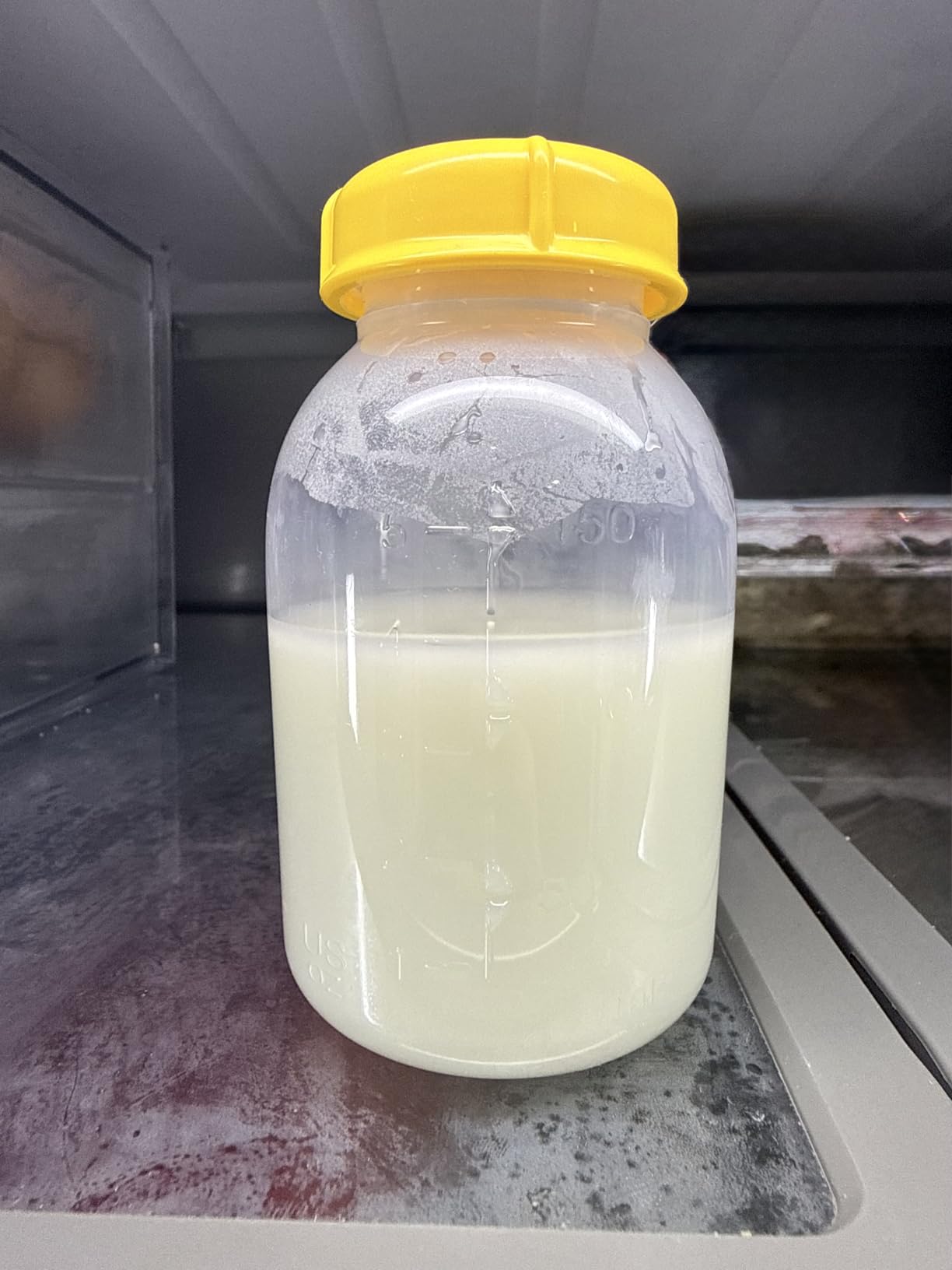
The LED display shows working time, current mode and suction level at a glance, which is more information than most wearables here give you. A 30-minute automatic shutoff is a sensible safety default if you fall asleep after a night feed.
Three flange inserts at 19mm, 21mm and 24mm come with a nipple measurement card, so you can size yourself at home before your first session instead of guessing.
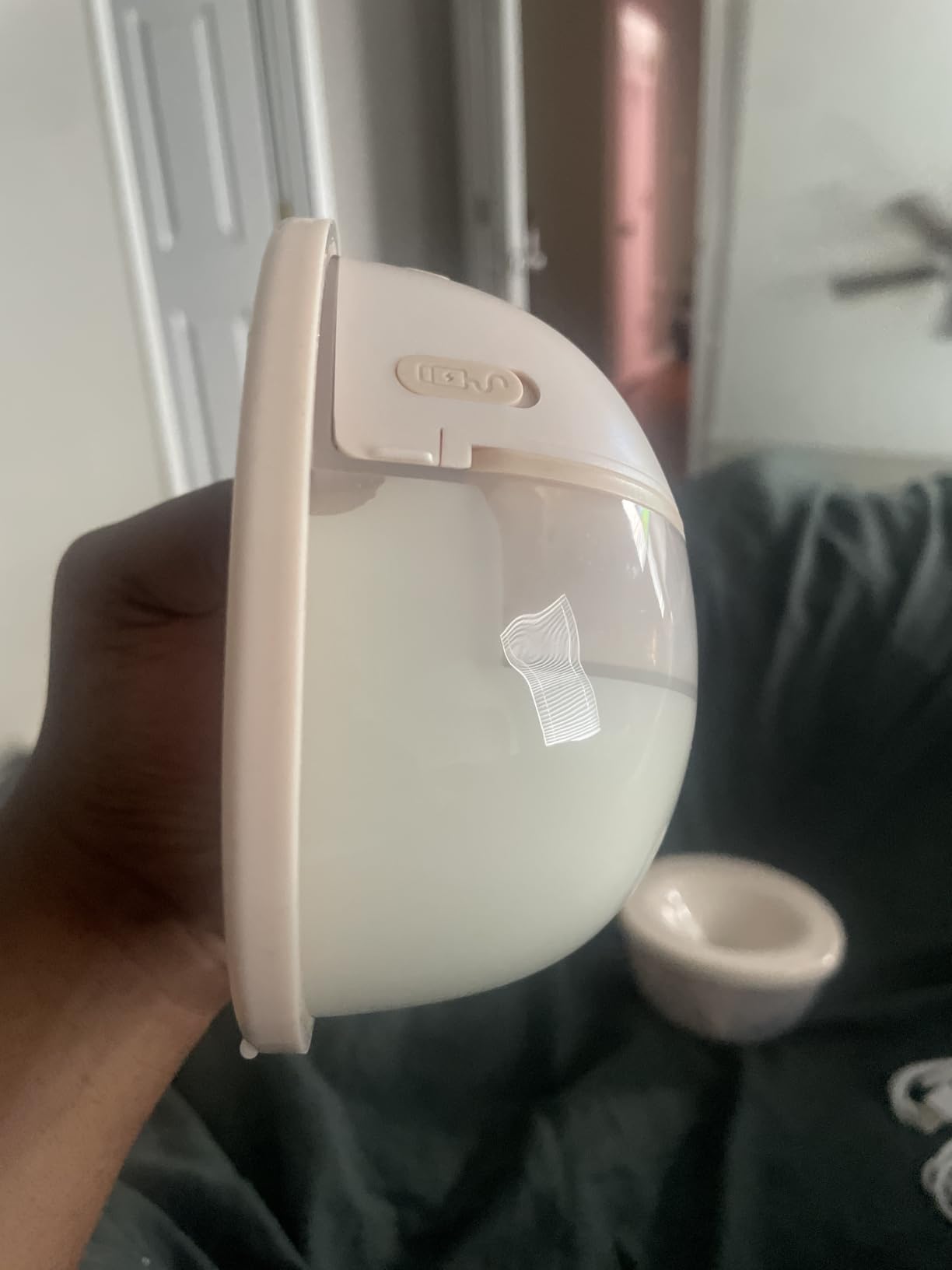
Who the P16 suits
Moms who want strong, adjustable suction without a hospital-grade unit, and who need something light in the bra, are the best match. The 240g unit is lighter than most wearables here and sits closer to the body than the bulkier cups.
Long-term owners report the motor holding up across many months of daily pumping, with only consumable duckbills and diaphragms needing replacement, which is a good sign for anyone planning to pump for a year or more.
Where it struggles
Noise is the honest weakness. Reviewers describe it as audibly noticeable in a quiet living room, so if discretion matters more than suction strength, look at the NCVI 8782 at 40 dB or the MomMed S21 under 45 dB instead.
It is also visually bulky under clothing, has no pause function so you can over-collect or spill before you stop, and the irregularly shaped parts are reported as hard to wash thoroughly. Battery runtime reportedly declines after about a month of regular use, and charging uses an older-style USB port rather than USB-C.
We earn a commission, at no additional cost to you. CERTAIN CONTENT THAT APPEARS ON THIS SITE COMES FROM AMAZON. THIS CONTENT IS PROVIDED 'AS IS' AND IS SUBJECT TO CHANGE OR REMOVAL AT ANY TIME.
11. Medela Sonata Smart Pump – The Quiet Hospital-Grade Primary for Home Sessions
Medela Sonata Smart Electric Breast Pump | Hospital Grade | 1Ct
- Hospital-strength responsive vacuum
- Weighs under 2.5 lbs
- About 1.5 hours of battery
- Closed system with overflow protection
Pros
- 4.4 average rating weighted toward five stars
- Quiet enough to pump at night
- Hospital-strength vacuum with consistent output
- Under 2.5 lbs with a built-in handle
- Closed system stops milk backing into tubing
Cons
- Battery runtime is only about 1.5 hours
- Breast shield sizes are sold separately
- Hard to justify for office-only use
- Not a wearable and not for commuting
We earn a commission, at no additional cost to you. CERTAIN CONTENT THAT APPEARS ON THIS SITE COMES FROM AMAZON. THIS CONTENT IS PROVIDED 'AS IS' AND IS SUBJECT TO CHANGE OR REMOVAL AT ANY TIME.
The Medela Sonata is a desktop-strength primary pump that you can still carry between rooms. At just under 2.5 pounds with an integrated handle, it is the kind of unit you move to the couch, then back to the desk, without asking anyone for help, which matters with a newborn asleep in the next room.
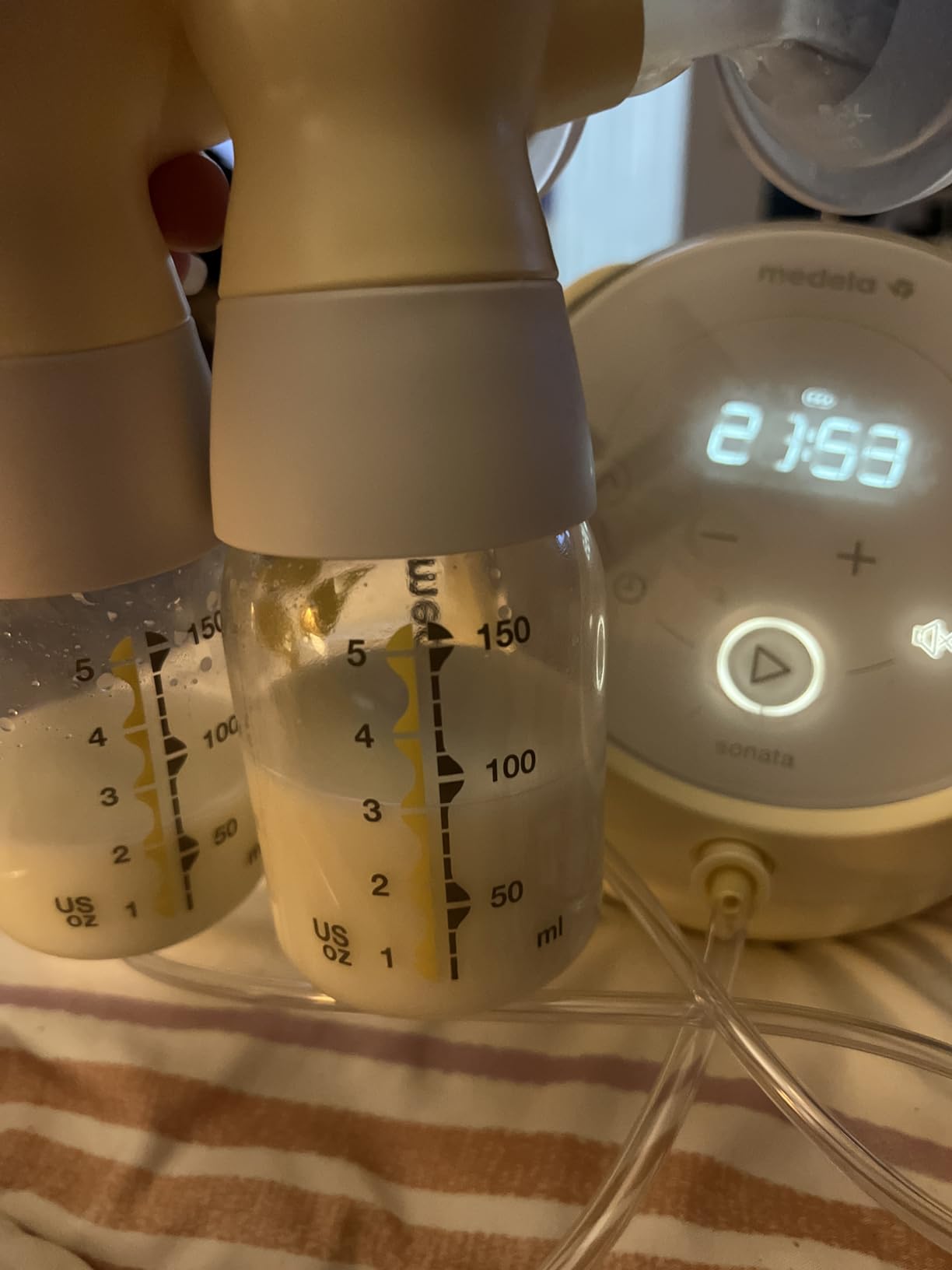
Its responsive suction technology ramps the vacuum up gradually rather than pulling at a fixed strength, and that is why owners report high output with less discomfort than constant-pull pumps. Around three quarters of its reviews sit at five stars, one of the most concentrated positive ratings in this lineup.
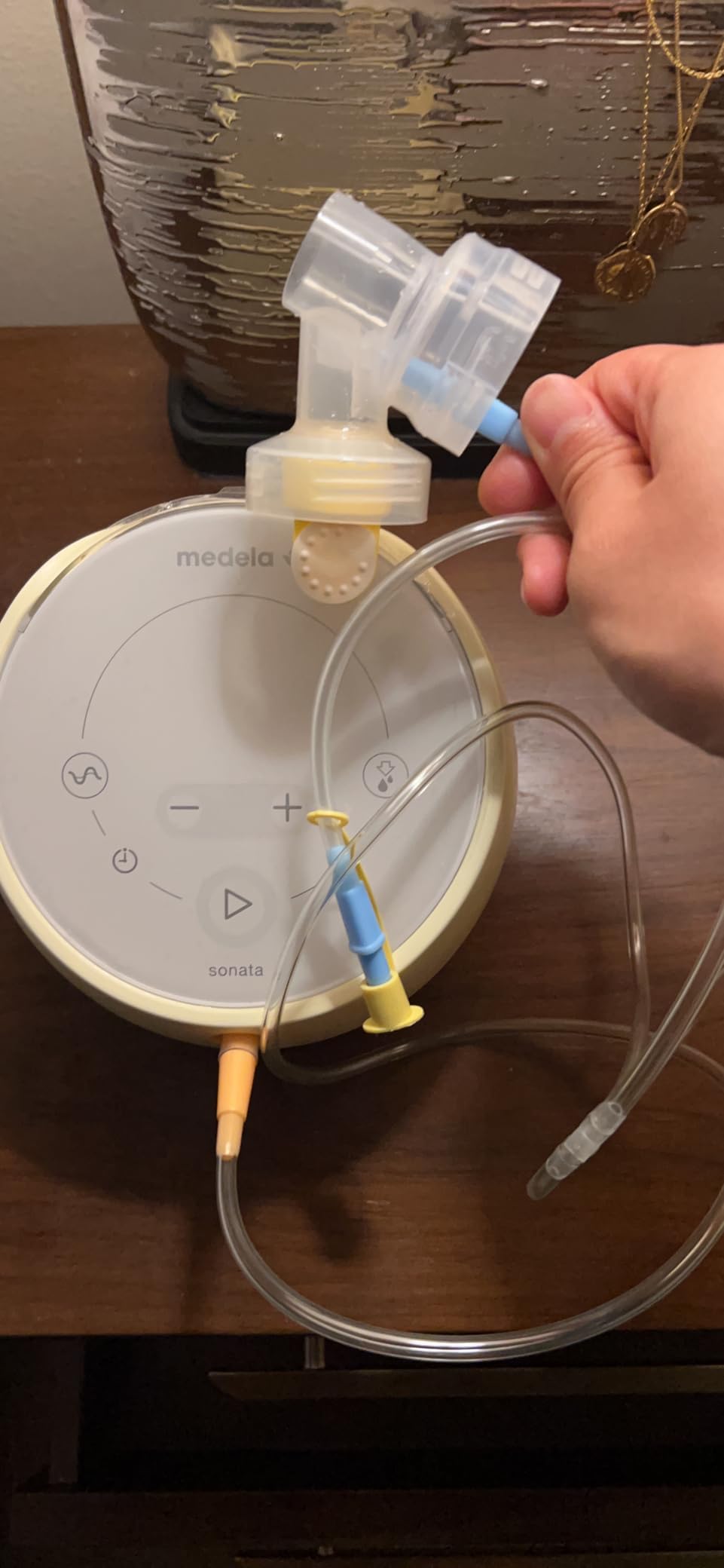
The closed system with overflow protection is the detail that keeps milk out of the tubing and out of the motor. For a primary pump you use several times a day, that is a durability story as much as a hygiene one, and it is why Medela pumps tend to outlast cheaper units.
The whisper-quiet motor makes it a good choice for early morning or night sessions while other people are sleeping, and the roughly 1.5 hours of rechargeable battery covers a couple of sessions without a cord.
Best role for the Sonata
Use it as the home primary and pair it with a wearable for work. Sessions at home are long enough to take advantage of strong hospital-strength suction, while your office sessions only need to be discreet and fast. That pairing came up repeatedly among working moms.
It suits night pumping households where noise would wake a sleeping baby or a sleeping partner, and moms who are working from home but still pumping several times a day.
Where it is the wrong choice
The battery is short at roughly 1.5 hours, which is fine at home with an outlet nearby and a problem anywhere without one. It is also not portable in the wearable sense: you cannot put it in a bra or in a car seat during a commute.
Breast shield sizes are sold separately, so confirm your size before ordering, and note that package contents can vary, with a backpack currently included in place of the pictured tote. It costs more than most consumer electrics, which is difficult to justify for office use.
We earn a commission, at no additional cost to you. CERTAIN CONTENT THAT APPEARS ON THIS SITE COMES FROM AMAZON. THIS CONTENT IS PROVIDED 'AS IS' AND IS SUBJECT TO CHANGE OR REMOVAL AT ANY TIME.
12. Momcozy V1 Pro – The All-Day Battery Wearable at 300 mmHg
Momcozy V1 Pro Wearable Breast Pump, Hospital-Grade Pocket Primary Pump
- Up to 300 mmHg with 15 levels
- 2300mAh battery for 8 to 9 sessions
- 120g collectors
- 48 dB operation
Pros
- Battery covers a full workday of sessions
- 300 mmHg suction in an in-bra unit
- Only three milk-contact parts to clean
- Transparent cups show output at a glance
- 120g collectors reduce on-breast fatigue
Cons
- Flange insert size must be right or output drops
- Replacement valves and inserts cost extra
- Collectors still add visible bulk
- Many bundle variants can lead to incomplete orders
We earn a commission, at no additional cost to you. CERTAIN CONTENT THAT APPEARS ON THIS SITE COMES FROM AMAZON. THIS CONTENT IS PROVIDED 'AS IS' AND IS SUBJECT TO CHANGE OR REMOVAL AT ANY TIME.
The Momcozy V1 Pro is the wearable built around a workday rather than a session. Its 2300mAh battery is listed for eight to nine pumping sessions per charge, which means a three-session day does not need a charger, and even a nurse doing six sessions a weeknight can get through the week.
It positions as a primary pump rather than a wearable backup, and the numbers support that framing: up to 300 mmHg across three rhythms and fifteen levels. That is enough headroom to work down to a comfortable level and still move milk efficiently.
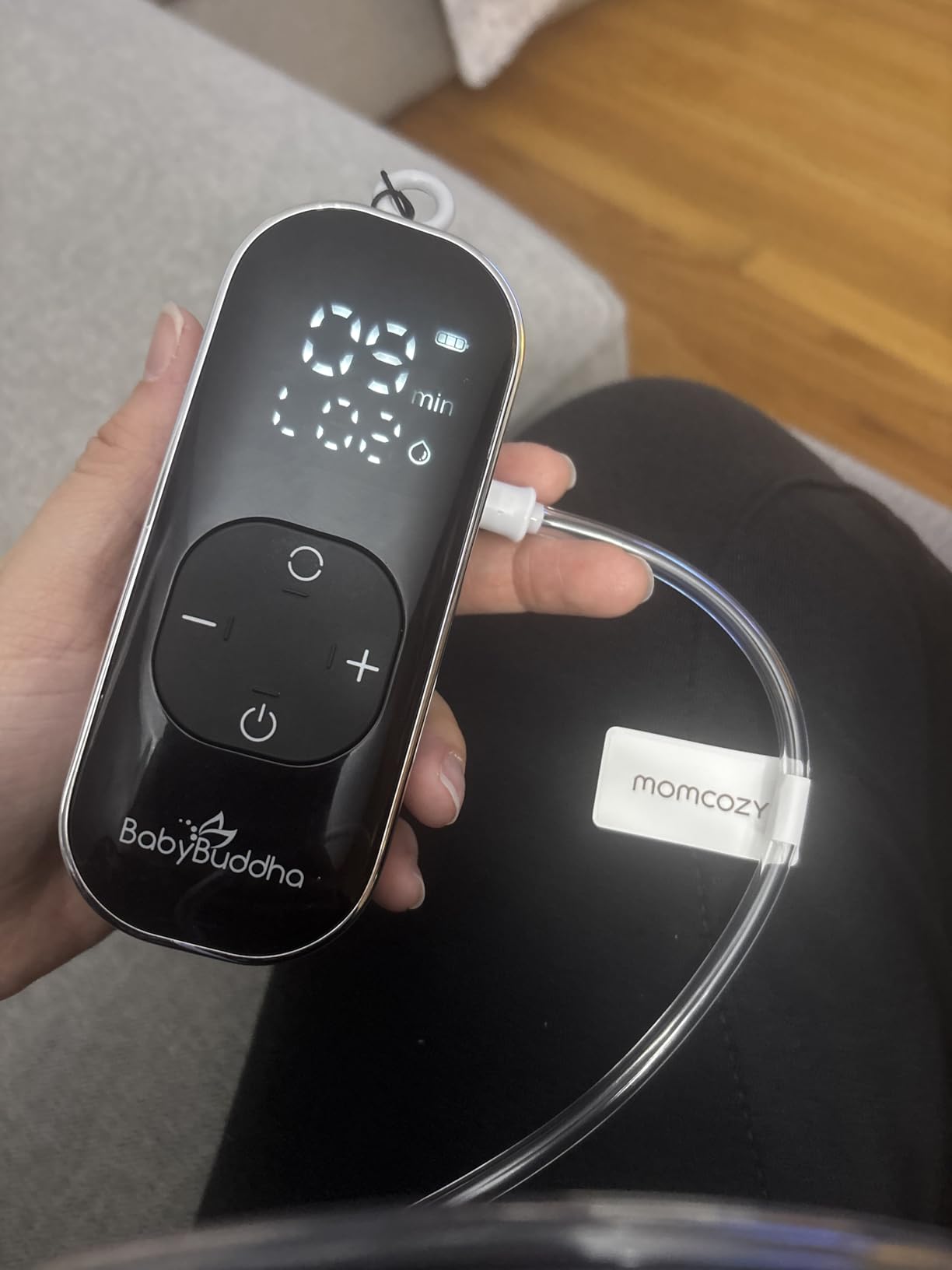
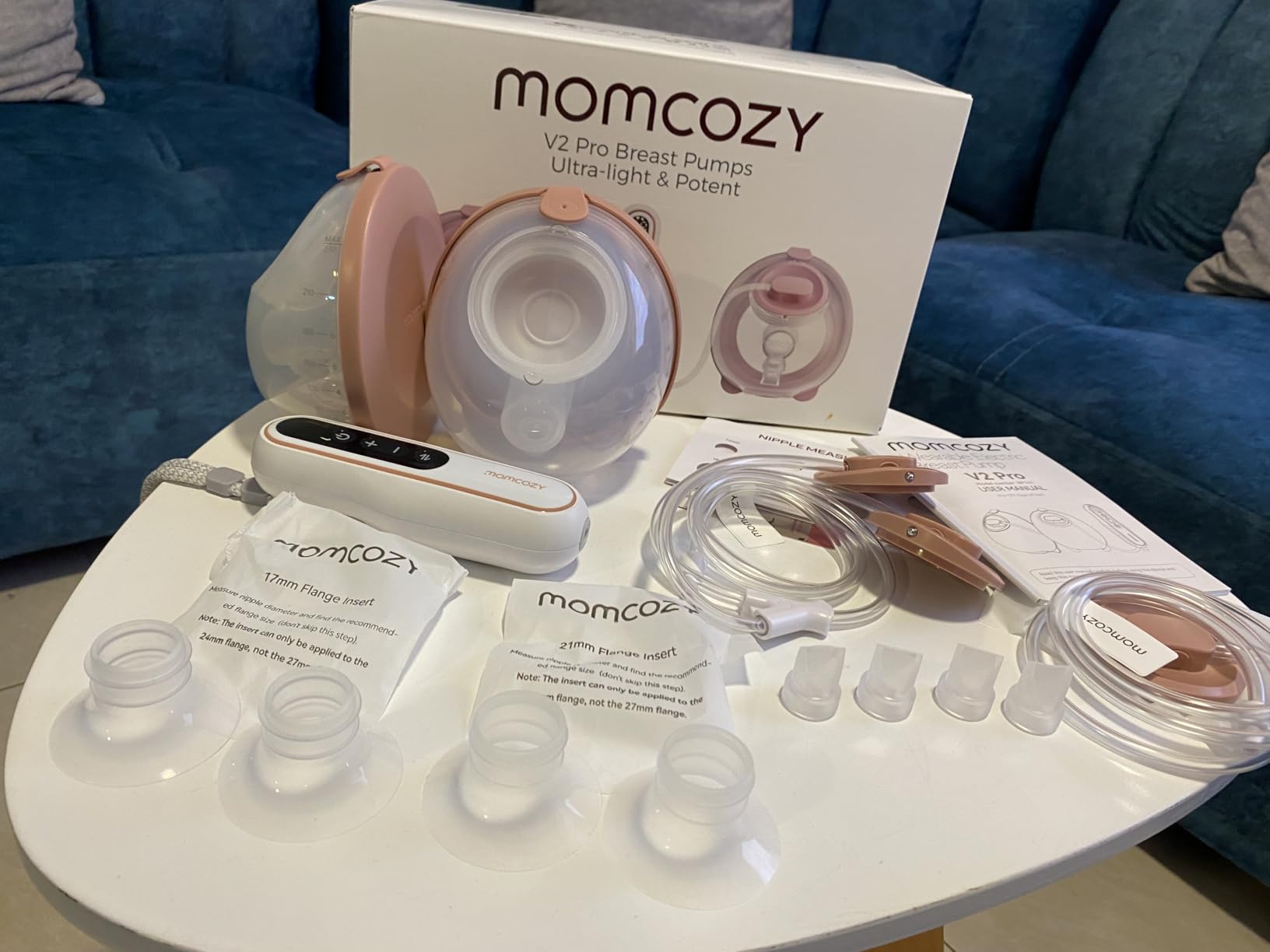
Cleaning is the quiet winner here. Only three milk-contact parts need washing, fewer than any other pump we looked at, and the transparent cups with clear volume markings let you check output without guessing. The 102-degree angled tunnel and soft silicone DoubleFit flange are described as more comfortable than a straight tunnel, particularly at higher levels.
At 120 grams per collector, the on-breast load is light, and the motor unit separates from the cups so you can slip the motor in a pocket or a bag pocket when you strip down to pump and transfer.
Why working moms keep coming back to it
Battery life is the headline. Owners specifically call out going a full workday away from an outlet, and for anyone without a private pumping room that also means no outlet, it removes a daily task from your schedule.
48 dB operation is quiet enough for a car or a shared space, and the all-day runtime makes this a strong in-bra pick for combined pumping, travel and long shifts.
Things to sort out first
Flange insert size has to be correct. If it is wrong, both output and comfort drop, and the inserts are sold separately, which adds to the cost of ownership over a year of daily use.
The collectors still add visible bulk under clothing even at 120 grams. And with a long list of bundle variants, it is easy to order an incomplete configuration, so check exactly which inserts, valves and tubing are in the box before you rely on it for a full week.
We earn a commission, at no additional cost to you. CERTAIN CONTENT THAT APPEARS ON THIS SITE COMES FROM AMAZON. THIS CONTENT IS PROVIDED 'AS IS' AND IS SUBJECT TO CHANGE OR REMOVAL AT ANY TIME.
How to Choose a Breast Pump for Work: 5 Criteria That Decide It
A pump that works at home can fail at work, and the reasons are almost always one of five things. Rank these before you read another product page, because a beautiful pump that fails one of them will cost you a session, and a session you miss is a session your supply notices.
1. Noise level and why decibels matter
Under 45 dB is the practical threshold for pumping anywhere other than a closed private room. Below that, a pump disappears into office background noise. Between 45 and 55 dB it is audible in a car and in a quiet room but survivable in a shared space. Above that you will choose a lactation room every time.
Only some brands publish a noise figure, so treat the number as a guide rather than a promise. Among the pumps here with published figures, the NCVI 8782 sits at 40 dB, the MomMed S21 under 45 dB, the eufy S1 Pro at 46 dB and the Momcozy V1 Pro at 48 dB. The manual pumps make no mechanical noise at all, which is a real advantage in a silent room.
2. Battery life for a full workday
Count your sessions first, then demand one and a half times that number of sessions per charge. A three-session day wants a battery rated for five sessions. A twelve-hour shift with six sessions wants a wearable rated for eight or nine, which narrows the field sharply toward the Momcozy V1 Pro.
Also check how it charges. Charging from a power bank or a car adapter (as the NCVI 8782 does) matters more than raw capacity if your pumping room has no outlet, and a wireless charging case (as on the eufy S1 Pro) removes the daily charging task entirely.
3. Wearability versus output
This is the trade-off nobody gets to avoid. A wearable that fits in a bra will not empty you as completely as a tube-and-bottle hospital-grade pump, and community consensus on r/ExclusivelyPumping is consistent about that gap. Decide which matters more for your specific day.
If your workplace has a lockable, non-bathroom pumping space with a sink, choose output and buy the Spectra S1 Plus or the NCVI 8782. If your space is a stall, a car seat or a supply closet with no door, choose wearability and pick the Elvie, Momcozy M5 or Momcozy V1 Pro.
4. Suction strength in mmHg
Suction is measured in millimetres of mercury, and the number on the box tells you the maximum, not the useful range. What matters is whether the pump has gentle low settings for stimulation and whether it reaches the higher end when you need a hard expression session.
Published ranges in this group run from about 300 mmHg on the eufy S1 Pro and Momcozy V1 Pro, to a 309 mmHg ceiling on the Paruu P16 with a 49.5 mmHg floor, to the Willow Go’s 15 discrete levels. Prefer pumps that give you many low, finely graduated steps, because the level you can tolerate comfortably is usually well below the maximum.
5. Insurance coverage and total cost of ownership
In the United States, a breast pump and supplies are covered under many ACA-compliant health plans for a pregnant person or a person who has given birth, and pumps are often also eligible against an FSA or HSA. The Willow Go is listed as FSA and HSA eligible. Coverage varies by plan, so call the number on your health plan card and ask specifically which models are covered and whether a prescription is required.
Then price the parts, not just the pump. Duckbill valves, diaphragms, membranes and flange inserts are consumables that need replacing every few months, and replacement parts are a real ongoing cost. A pump whose inserts are easy and inexpensive to buy is cheaper over a year than one with cheap parts you cannot get.
Flange sizing: the fit step that changes everything
Flange fit is cited more often than any feature in pumping communities, and we would put it above brand. A flange that is too small works you hard for little milk and leaves the areola blanched. A flange that is too large means the nipple does not fill the tunnel, so let-down never triggers properly.
Measure your nipple diameter at rest with a ruler or a coin, not stretched, and add roughly a few millimetres to get your starting insert size. Many pumps now include a measurement card or ruler in the box, which is why the Paruu P16, the Momcozy M5 and the MomMed S21 are good first purchases: you can size yourself on day one.
If you can, buy one year of inserts in your size and one size down. Nipple diameter changes in the first months, and a size down is also what you use for the gentler stimulation sessions at the start of a pump.
Matching pump type to your workplace scenario
In an open office or a shared workspace, wearability decides it. Choose a wearable that is quiet and low profile, keep sessions short, and use a pumping bra with a good supportive band so you can sit upright rather than bending forward.
In a private office or a home setup with a door, output decides it. A traditional double electric with a built-in battery, such as the Spectra S1 Plus, is worth the extra setup time.
For hybrid and field work with travel days, battery and charging flexibility decide it. The Momcozy V1 Pro runs eight or nine sessions per charge and the eufy S1 Pro carries a five-day case, so neither depends on finding an outlet.
For commuting, the constraint is cup size and leakage, not suction. The Elvie is the smallest in-bra unit here, and the Paruu P16 is light but visibly bulky, so test both in a bra before buying for car use. Always secure bottles before starting and drive only when parked.
The two-pump strategy and when to order
Most working moms end up with two pumps, and the community consensus is that wearables work best as a supplement rather than as a main pump. The most common pairing is a hospital-grade primary at home plus a wearable at work: a Spectra S1 Plus with an Elvie, or a Medela Sonata at home with a Momcozy V1 Pro for the office.
A manual backup completes the kit at very low cost. A Medela Harmony in your tote covers a dead battery, a cracked bottle or a power cut, and it doubles as a travel pump. Matching its bottle to your primary pump keeps parts interchangeable.
On timing, most competitors say nothing useful, so here is our rule: order your primary before your return date with at least three weeks of margin, because you want time to test flange fit and retrain your supply on the new rhythm. Order the wearable second, once you know your required output. And order a milk storage bag plus a spare parts kit in the same order, because running out of duckbill valves at week nine is a common and avoidable problem.
Frequently Asked Questions
What is the best breast pump for working mothers?
The best breast pump for working mothers depends on the workplace. In a private room with a sink, a hospital-grade double electric such as the Spectra S1 Plus empties most completely. In a shared space or on the move, a wearable such as the Elvie or the Momcozy V1 Pro wins because it is quiet, hands-free and cordless. Many moms keep both and use the wearable for short breaks.
What is the 3-3-3 rule for pumping breast milk?
The 3-3-3 rule is a scheduling guideline many working moms use to protect supply: aim for roughly three pumping breaks across the workday, spaced about three hours apart. The point is consistency, so your body keeps the same removal rhythm it had on leave. Treat it as a starting rhythm rather than a medical rule and adjust it with a lactation consultant if your output changes.
Which breast pump is suitable for wearing while working?
In-bra wearables are the pumps designed to be worn while working. The Elvie is the smallest and quietest at 14.82 ounces per side, the Momcozy M5 is the lightest at 232g, and the Momcozy V1 Pro has the longest battery at eight to nine sessions per charge. All three run under 50 dB and need no tubes or external motor.
Can I go 4 hours without pumping at night?
Many working moms do, especially once their supply is established, but the risk is that a longer gap can drop your volume and leave you uncomfortably full. If you must go four hours, pump right before bed and as soon as you wake, and keep a manual pump such as the Medela Harmony by the bed. Talk to a lactation consultant if your supply starts falling, since frequency matters more than volume.
How often should working moms pump?
Most working moms pump two or three times across an eight to ten hour workday, roughly every three to four hours, which is usually enough to maintain supply while away from baby. On a long shift or a travel day, aim for four or more sessions and choose a pump with eight or nine sessions of battery. Consistency of timing matters as much as the total number of sessions.
Do I need a wearable breast pump to pump at work?
You only need one if your workplace lacks a lockable, non-bathroom pumping space, or if you pump during a commute or in a car. If you have a private room with a sink, a traditional double electric such as the Spectra S1 Plus or the NCVI 8782 will empty you more completely. Many moms use the traditional pump at home and a wearable at work.
Our Final Verdict for Working Moms in 2026
The Elvie Double Wearable Pump is our editor’s choice for 2026 because it solves the problem that actually ends pumping plans at work: nowhere to go. It is quiet, it fits in a bra, and it needs no outlet, sink or privacy to run a session. Pair it with the Spectra S1 Plus at home if output is the priority, and add the Medela Harmony to your work bag for the days something breaks.
If your workplace gives you a private room, reverse that order and let the Spectra carry your output. If noise and discretion decide your purchase, look at the NCVI 8782 at 40 dB for a tube-and-bottle option, the Momcozy M5 at 232g for the lightest wearable, or the Momcozy V1 Pro if you need eight or nine sessions between charges.
Whatever you choose, get the flange size right, order three weeks before your return date, and buy a spare parts kit in the same order. Those two steps prevent more missed sessions than any feature on any pump.