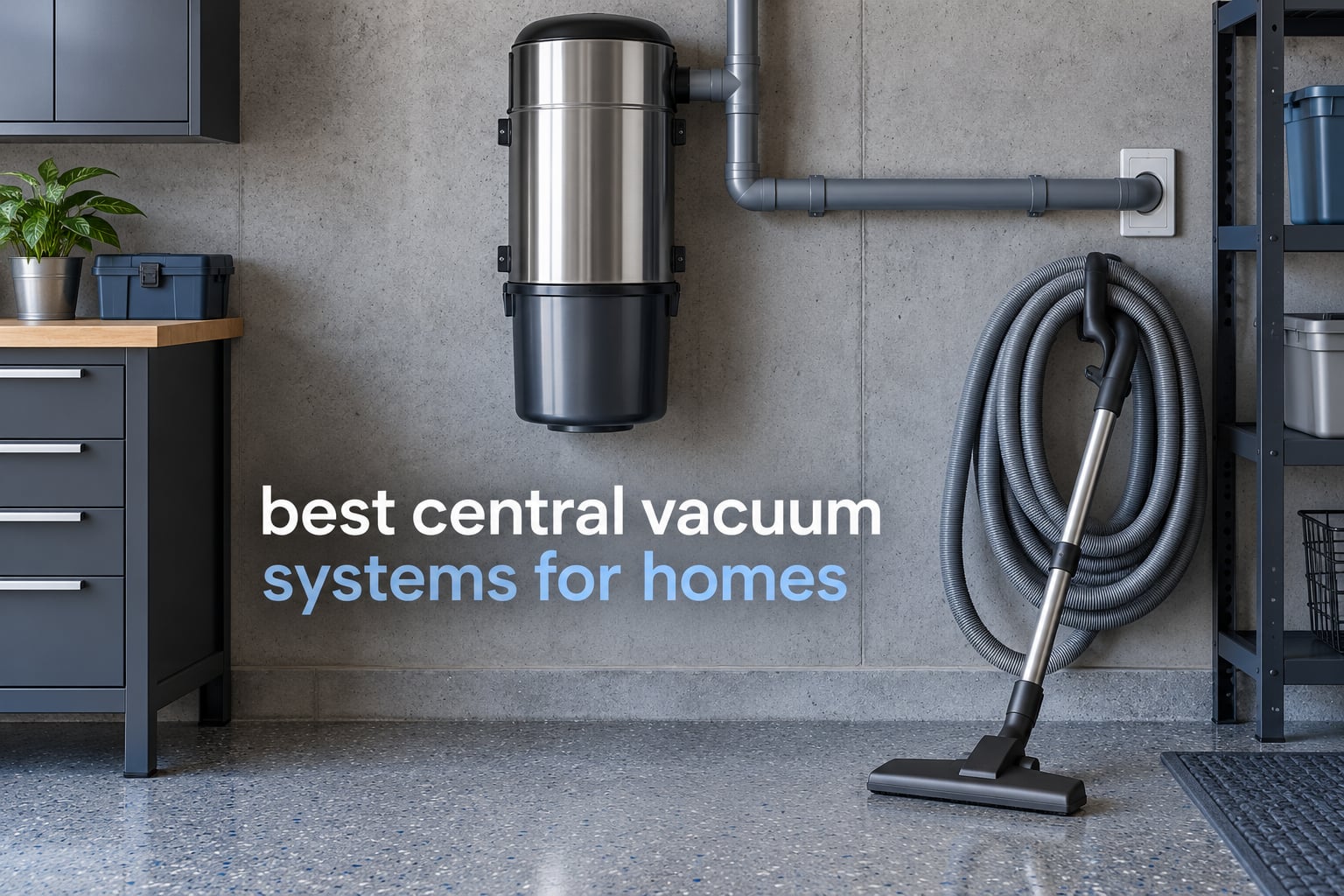
A central vacuum system is a stationary power unit piped through your walls, with low wall inlets in every room and a canister that sits in a garage, basement or utility closet. You plug a hose into an inlet and the suction travels through hidden 2-inch PVC to the motor, which spins debris into a canister or bag and pushes filtered air out an exhaust vent. That is the whole idea, and it is the reason a properly installed system beats any portable vacuum you can carry up the stairs.
What actually separates a good central vacuum from a disappointing one is a single spec: air watts, measured at the hose, not motor wattage. A big motor number on the box tells you how hard the fan is being pushed. Air watts tell you how much suction arrives where your hand is holding the wand. Dealers routinely quote the first number, which is why so many buyers end up with a system that feels weaker than the cheap upright it replaced.
Our team compared eight central vacuum systems for homes, weighing the published specs against buyer feedback on suction, noise, filter upkeep and installation. We ranked them by motor type, airflow at the hose, canister construction, warranty length and how the unit held up in real installs rather than on a showroom wall.
Two things before you read on. First, if you live in a single-floor space under roughly 1,200 square feet with mostly hard floors, a good cordless vacuum will serve you better and cost far less. Second, the best central vacuum systems for homes are almost never the cheapest unit on the shelf; the pipe, inlets, powerhead and labor cost several times the canister price. We will get into all of that in the buying guide.
ContentsTable of Contents
- 1Top 3 Central Vacuum Picks for Homes in 2026→
- 2OVO 700 Airwatts Central Vacuum→
- 3OVO 630 Airwatts Central Vacuum→
- 4Prolux CV12000 Central Vacuum→
- 5Best Central Vacuum Systems for Homes in 2026: Quick Overview→
- 61. OVO 700 Airwatts Central Vacuum: Best Overall for Most Homes→
- 7OVO 700 Airwatts Heavy Duty Powerful Central Vacuum System, Hybrid Filtration (with or Without Disposable Bags) 35L or 9.25Gal Bottom Load Dust Bin→
- 8Pros→
- 9Cons→
- 10Is the OVO 700 the right fit for a two-story home?→
- 11Who should skip the OVO 700?→
- 122. HP Products 9880 Dirt Devil: Best Compact Built-In for Tight Spaces→
- 13HP Products 9880 Dirt Devil Central Vacuum System→
- 14Pros→
- 15Cons→
- 16Is the 9880 powerful enough for carpet and pet hair?→
- 17Who should skip the HP Products 9880?→
- 183. OVO 630 Airwatts Central Vacuum: Best Value for Mid-Size Homes→
- 19OVO Large and Powerful Central Vacuum System, 630 Airwatts Hybrid Filtration (with or Without Disposable Bags), Covers up to 7500 sq.ft, 6,6 Gal / 25L Bottom Load Rolled Steel Canister→
- 20Pros→
- 21Cons→
- 22Does the OVO 630 handle a 3,000 square foot home?→
- 23Who should skip the OVO 630?→
- 244. Prolux CV12000: Best Two-Stage Upgrade for Existing Pipe→
- 25Prolux CV12000 Central Vacuum – 25 Year Service Promise, No Suction Loss Design, Made in North America, 2-Stage Bypass Motor, Large Capacity Powerful System→
- 26Pros→
- 27Cons→
- 28Is the Prolux CV12000 right for upgrading an existing system?→
- 29Who should skip the Prolux CV12000?→
- 305. VacuMaid P125p Cyclonic Power Unit: Best for Allergy Households→
- 31VacuMaid P125p Cyclonic Central Vacuum Power Unit→
- 32Pros→
- 33Cons→
- 34Why do allergy households gravitate to cyclonic separation?→
- 35Who should skip the VacuMaid P125p?→
- 366. Imperium CV300: Quietest Running with the Smallest Footprint→
- 37Imperium CV300 Central Vacuum Power Unit→
- 38Pros→
- 39Cons→
- 40Is 58 dB genuinely quiet enough for a bedroom floor?→
- 41Who should skip the Imperium CV300?→
- 427. InterVac GarageVac: Best for Garage, Workshop and Utility Space→
- 43Wall Mounted Garage Vacuum System – InterVac GarageVac Built-in Central Vacuum for Workshop, RV, Boat, Utility Room, Compact Wall Mount Cleaner, Made in USA→
- 44Pros→
- 45Cons→
- 46Should a garage vacuum be a separate system from the main house?→
- 47Who should skip the InterVac GarageVac?→
- 488. Broan-NuTone PP6501 650 Air Watts: Only If You Already Own NuTone Pipe→
- 49Broan-NuTone Residential Central Vacuum System Power Unit, 650 Air Watts→
- 50Pros→
- 51Cons→
- 52Are NuTone central vacuums still worth buying in 2026?→
- 53What should I check before ordering the PP6501?→
- 54How to Choose a Central Vacuum System for Your Home→
- 55Air watts, motor watts and water lift each measure something different→
- 56Tangential bypass versus thru-flow motors→
- 57Bagged, bagless, cyclonic and HEPA filtration→
- 58Sizing air watts to square footage and pipe length→
- 59Noise depends on placement more than decibels→
- 60When a central vacuum is not worth it→
- 61Who actually makes these brands→
- 62Installation and what a central vacuum really costs→
- 63Frequently Asked Questions→
- 64Which central vacuum system is the best quality?→
- 65What is the best central vacuum system for a whole home?→
- 66Are NuTone central vacuums good?→
- 67What are Electrolux vacuums called now?→
- 68Is a central vacuum worth it?→
- 69The Best Central Vacuum Systems for Homes, Matched to Your Situation→
Top 3 Central Vacuum Picks for Homes in 2026
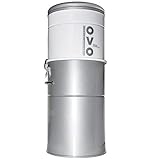
Our three strongest options cover most situations. The OVO 700 leads on raw suction and canister capacity, the OVO 630 delivers most of that performance at a lower tier, and the Prolux CV12000 is the one to buy when you already have pipe in the walls and want a two-stage bypass motor with a long service promise.
OVO 700 Airwatts Central Vacuum
- 700 airwatts and 140.2 CFM
- 2-stage 5.7 inch motor
- Hybrid bagged or bagless filtration
- 35 liter bottom-load canister

OVO 630 Airwatts Central Vacuum
- 630 airwatts and 127.1 CFM
- 130 inch water lift
- Rolled steel 6.6 gallon canister
- Hybrid filtration with washable filter

Prolux CV12000 Central Vacuum
- 2-stage tangential bypass motor
- 142 CFM and 116 inch water lift
- Dual intake ports for existing pipe
- 25 year body service promise
As an Amazon Associate we earn from qualifying purchases. CERTAIN CONTENT THAT APPEARS ON THIS SITE COMES FROM AMAZON. THIS CONTENT IS PROVIDED 'AS IS' AND IS SUBJECT TO CHANGE OR REMOVAL AT ANY TIME.
Best Central Vacuum Systems for Homes in 2026: Quick Overview
Every system below is a power unit, which means it is only one part of a complete install. You will still need 2-inch pipe, at least one inlet per 600 to 800 square feet of floor, a hose and, on carpet, an electric powerhead. Use the table to line up the canister with the rest of your install.
| # | Product | Key details | Where to buy |
|---|---|---|---|
| 1 | OVO 700 Airwatts Central Vacuum |
|
Check Latest Price |
| 2 | 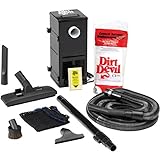 HP Products 9880 Dirt Devil HP Products 9880 Dirt Devil |
|
Check Latest Price |
| 3 | OVO 630 Airwatts Central Vacuum |
|
Check Latest Price |
| 4 | Prolux CV12000 Central Vacuum |
|
Check Latest Price |
| 5 |  VacuMaid P125p Cyclonic Power Unit VacuMaid P125p Cyclonic Power Unit |
|
Check Latest Price |
| 6 |  Imperium CV300 Power Unit Imperium CV300 Power Unit |
|
Check Latest Price |
| 7 |  InterVac GarageVac Wall Mount InterVac GarageVac Wall Mount |
|
Check Latest Price |
| 8 |  Broan-NuTone PP6501 Power Unit Broan-NuTone PP6501 Power Unit |
|
Check Latest Price |
We earn from qualifying purchases. CERTAIN CONTENT THAT APPEARS ON THIS SITE COMES FROM AMAZON. THIS CONTENT IS PROVIDED 'AS IS' AND IS SUBJECT TO CHANGE OR REMOVAL AT ANY TIME.
1. OVO 700 Airwatts Central Vacuum: Best Overall for Most Homes
OVO 700 Airwatts Heavy Duty Powerful Central Vacuum System, Hybrid Filtration (with or Without Disposable Bags) 35L or 9.25Gal Bottom Load Dust Bin
- 700 airwatts
- 140.2 CFM airflow
- 5.7 inch 2-stage motor
- 35 liter / 9.25 gallon bottom-load canister
- 62 dB
Pros
- 700 airwatts rated up to 9000 sq ft and 8 inlets
- Hybrid bagged or bagless with washable filter included
- Soft start and stop technology adds roughly 20 percent motor life
- Integrated muffler and noise-blocking foam
- Large 35 liter bottom-load canister
Cons
- Some listings quote a narrower 5000 sq ft ceiling
- Bagged running recommended so consumables add up
- Far inlets still need extra reach on very long runs
We earn a commission, at no additional cost to you. CERTAIN CONTENT THAT APPEARS ON THIS SITE COMES FROM AMAZON. THIS CONTENT IS PROVIDED 'AS IS' AND IS SUBJECT TO CHANGE OR REMOVAL AT ANY TIME.
This is the canister we would put in a 3,000 to 5,000 square foot home with two floors and mixed flooring. The published figure is 700 airwatts with 140.2 CFM airflow from a 5.7 inch two-stage motor, and that combination held up consistently in owner reports across a large review base rather than a handful of impressions.
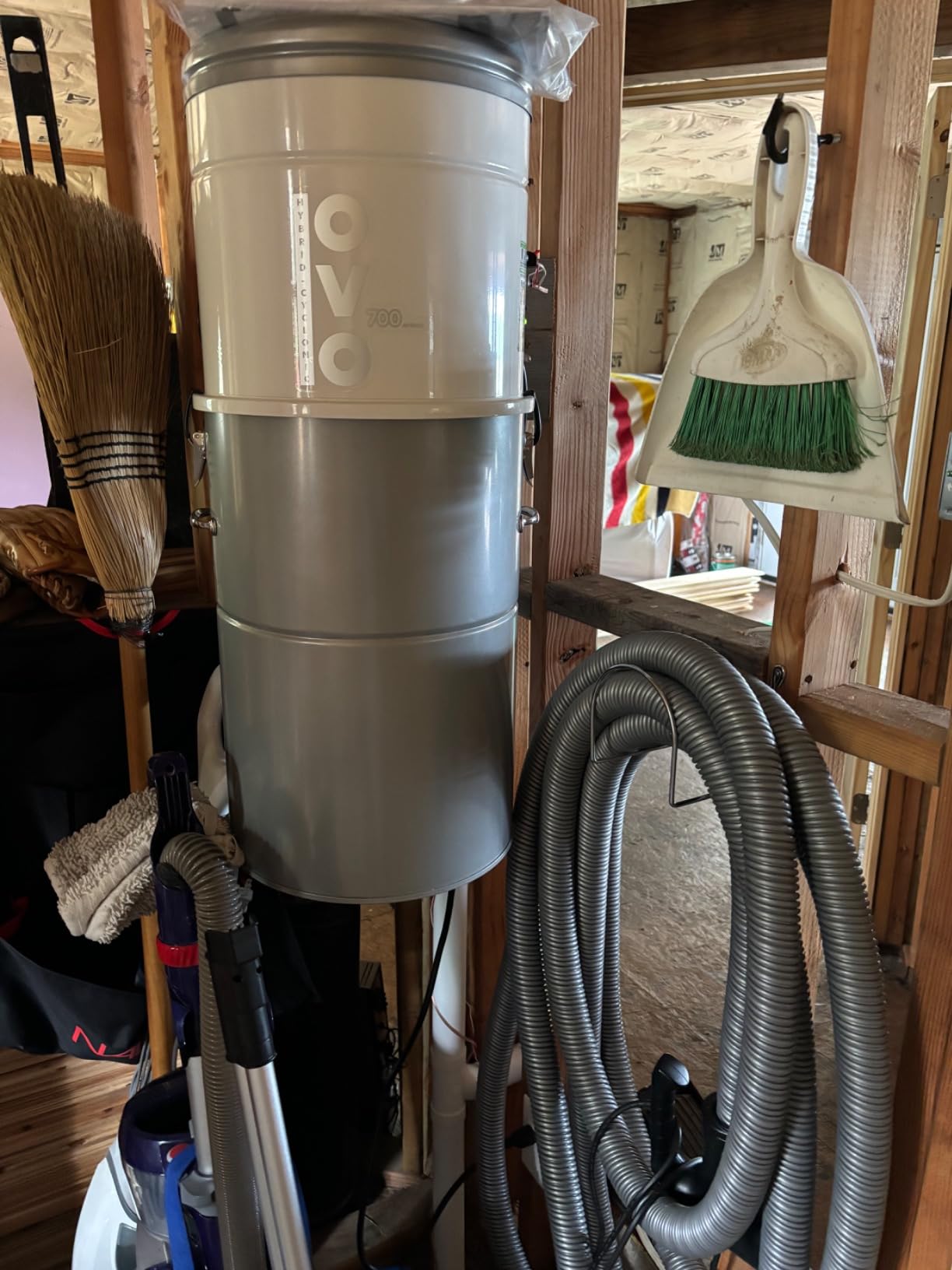
The canister is the part that surprises people. At 35 liters, roughly 9.25 gallons, it is a bottom-load design, so you roll the container out, lift it off and empty it without wrestling a lid over your head in a dim garage. That is a small design decision that matters more than any spec once the unit is installed.
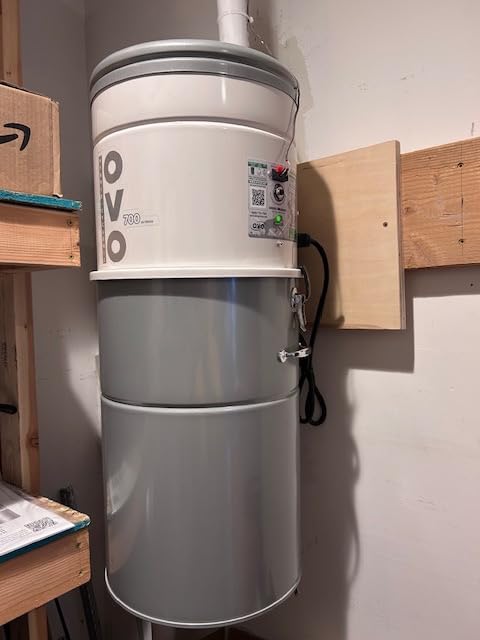
Filtration is hybrid, which means you choose. Run it bagged and the machine handles fine dust well; run it bagless with the included machine washable filter and you stop buying bags. Owners who went bagless report wanting a larger spare filter, so keep the supplied one clean rather than stretching it.
Two power levels and soft start/stop technology are the details that separate this from cheaper builds. Soft start is claimed to add about 20 percent to motor life expectancy, which over a 20-year ownership window is the difference between one motor and two. The integrated muffler and noise-blocking foam hold the rated level to 62 dB.
The honest weakness is coverage consistency. Some listings for this model quote a narrower ceiling of around 5,000 square feet, well below the 9,000 square feet in the marketing, and a minority of buyers report suction softening at the most distant inlet in a sprawling layout. Treat the headline figure as a maximum and size your pipe runs accordingly.
Is the OVO 700 the right fit for a two-story home?
Yes, if your furthest inlet is within a normal pipe run. The 700 airwatt figure and 140.2 CFM give you real headroom at distance, which is where most budget units fall apart. Two floors with 6 to 8 inlets sits comfortably inside what owners report as the strong zone.
It is also the safest choice for pet households with carpet, since hybrid bagged mode traps grit before it reaches the motor. Budget for bags if you run that mode, and check your longest run from the canister to the farthest inlet before drywall closes.
Who should skip the OVO 700?
Skip it if your home is small. This canister is engineered for large layouts and its price reflects that; a single-floor space under 1,200 square feet will not draw enough value from it. It is also overkill as a second unit for a garage or workshop.
Anyone who wants a permanently silent motor should look elsewhere, since the 62 dB rating sits above the quietest bodies in this roundup. And buyers who want app monitoring or a hose display should note that this model has neither.
We earn a commission, at no additional cost to you. CERTAIN CONTENT THAT APPEARS ON THIS SITE COMES FROM AMAZON. THIS CONTENT IS PROVIDED 'AS IS' AND IS SUBJECT TO CHANGE OR REMOVAL AT ANY TIME.
2. HP Products 9880 Dirt Devil: Best Compact Built-In for Tight Spaces
HP Products 9880 Dirt Devil Central Vacuum System
- 100 CFM flow rate
- 7 ft to 35 ft expandable hose
- 1 gallon capacity
- Built-in compact body
- HEPA filter, rug and floor tool included
Pros
- Highest average rating among the systems we compared
- Strong suction for a compact built-in
- Expandable hose reaches 35 ft without extra parts
- Full tool kit covers floors and upholstery
- Compact body that fits tight utility spaces
Cons
- 1 gallon canister means frequent emptying
- Support beyond a short contact window is thin
- Confirm a catch bag is seated before every run
We earn a commission, at no additional cost to you. CERTAIN CONTENT THAT APPEARS ON THIS SITE COMES FROM AMAZON. THIS CONTENT IS PROVIDED 'AS IS' AND IS SUBJECT TO CHANGE OR REMOVAL AT ANY TIME.
The 9880 is the odd one out in this roundup, and that is exactly why it earns a place. It is not a whole-home power unit competing on air watts. It is a compact built-in canister that mounts in a small space, pulls from a single inlet or hose, and delivers 100 CFM of flow rate with a bagless design.
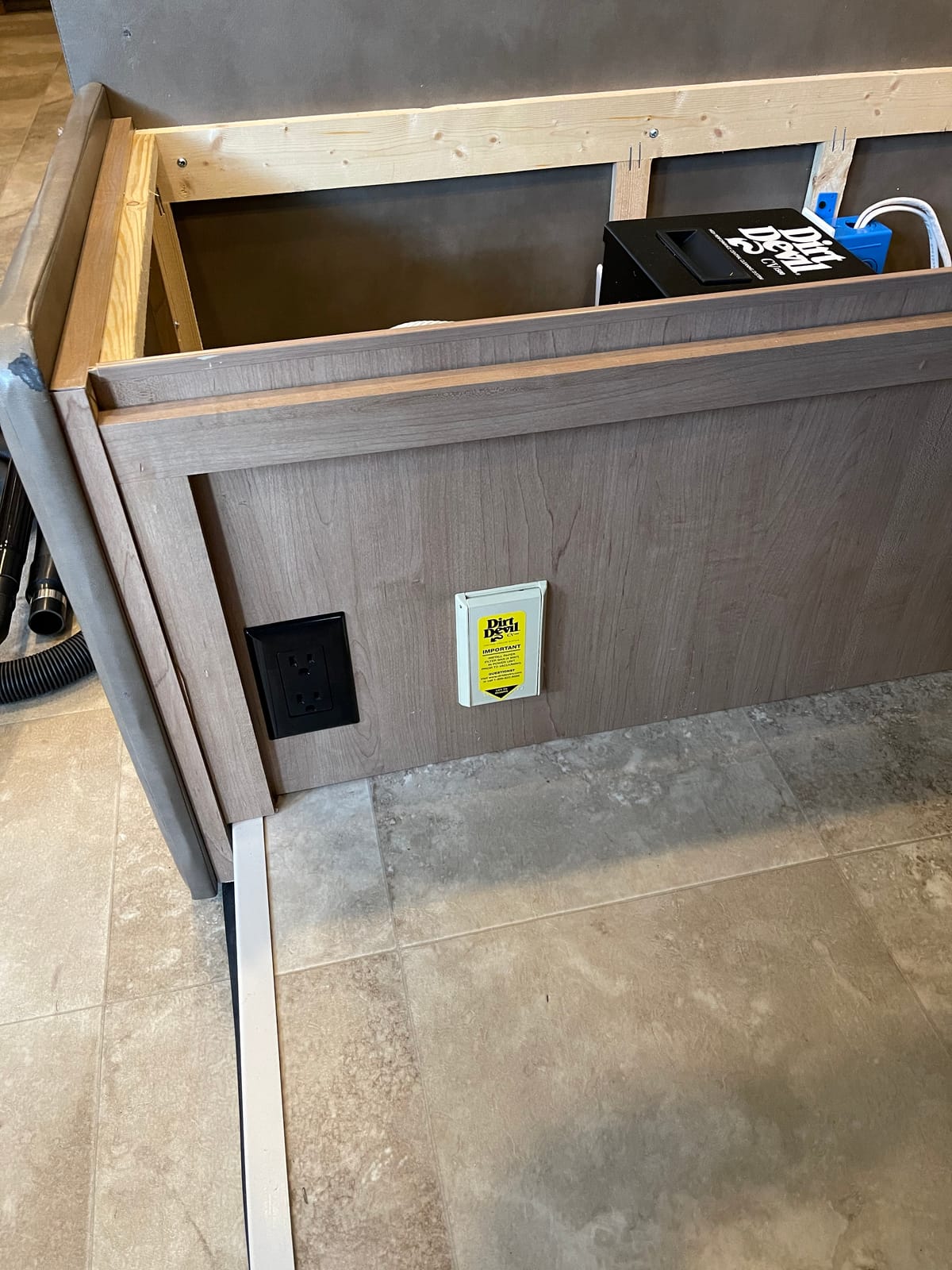
Reviewers describe it consistently as the most powerful compact built-in they have used, with enough suction for embedded pet hair and heavy carpet debris. Installation is repeatedly reported as a 30 to 45 minute job with basic tools, which is a genuine advantage when you are working inside a finished RV, motorhome or fifth wheel rather than a new build.
The expandable hose is the sleeper feature. It runs from 7 feet to 35 feet, so one hose covers a garage bay, a workshop bench, a boat hull or a small apartment without buying a second accessory. A 10 inch rug and floor tool, upholstery tool, dusting brush, crevice tools and a mesh bag all come in the box.
At 21 pounds and 21.5 by 14 by 11.13 inches, it is also among the most compact bodies in this group. If your motor housing space is limited, that dimension matters more than any wattage figure on the spec sheet.
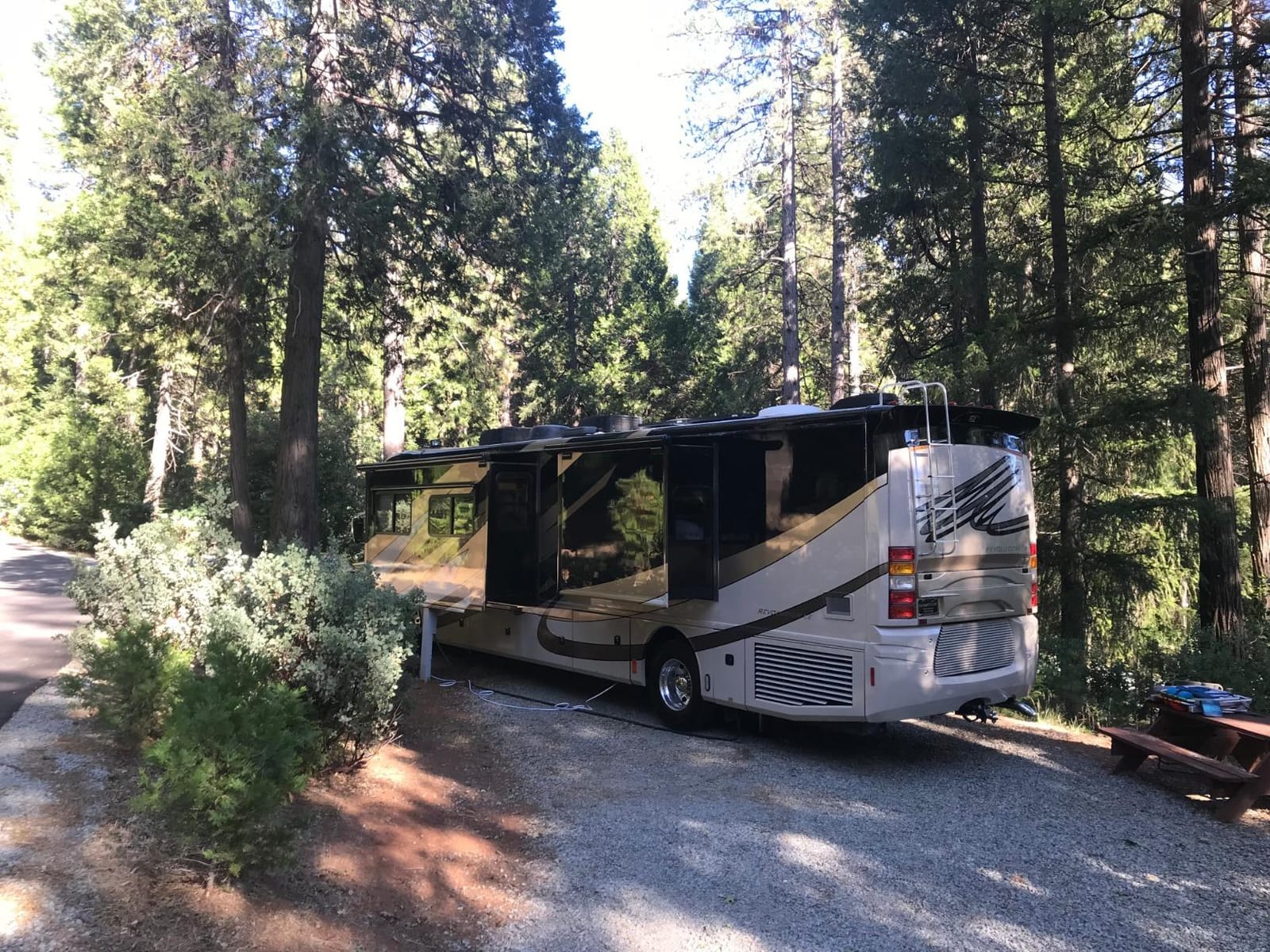
Two caveats. The 1 gallon capacity is among the smallest in the roundup, so you will empty it more often than a 6 or 9 gallon canister. And despite bagless design language, owners advise confirming the catch bag is properly seated before each run, because debris reaching the motor is the reported failure mode when it is not.
Is the 9880 powerful enough for carpet and pet hair?
For a secondary space, yes. Owners cleaning motorhome carpet and workshop floors report it pulling embedded debris without multiple passes. It does not replace a powered brush head on thick pile, so plan on a separate carpet tool for deep carpet work.
If your main concern is a garage or utility room that also stores a boat or a fifth wheel, the 35 foot hose reach means one wall inlet covers the whole area. That is where this unit is genuinely hard to beat.
Who should skip the HP Products 9880?
Skip it for a main living space. There is no air-watt rating to compare, no multi-stage motor and no capacity for whole-home inlet runs. Anyone covering more than about 1,200 square feet across two floors will outgrow it quickly.
Support is also thinner than the larger brands, so if you want a long service promise and a named service depot, this is not the unit for you.
We earn a commission, at no additional cost to you. CERTAIN CONTENT THAT APPEARS ON THIS SITE COMES FROM AMAZON. THIS CONTENT IS PROVIDED 'AS IS' AND IS SUBJECT TO CHANGE OR REMOVAL AT ANY TIME.
3. OVO 630 Airwatts Central Vacuum: Best Value for Mid-Size Homes
OVO Large and Powerful Central Vacuum System, 630 Airwatts Hybrid Filtration (with or Without Disposable Bags), Covers up to 7500 sq.ft, 6,6 Gal / 25L Bottom Load Rolled Steel Canister
- 630 airwatts
- 127.1 CFM airflow
- 130 inch water lift
- 6.6 gallon rolled steel canister
- LED status indicator
Pros
- 630 airwatts with 130 inch water lift in a lower tier
- Rolled steel canister is more durable than plastic
- Hybrid bagged or bagless with washable filter
- LED status indicator shows system condition
- Integrated muffler keeps running quiet
Cons
- Among the lowest average ratings in our set with a wide spread of opinions
- Coverage figures in the feature list are narrower than the title claim
- Suction softens on longer inlet runs for some buyers
- Bagged mode adds ongoing consumable cost
We earn a commission, at no additional cost to you. CERTAIN CONTENT THAT APPEARS ON THIS SITE COMES FROM AMAZON. THIS CONTENT IS PROVIDED 'AS IS' AND IS SUBJECT TO CHANGE OR REMOVAL AT ANY TIME.
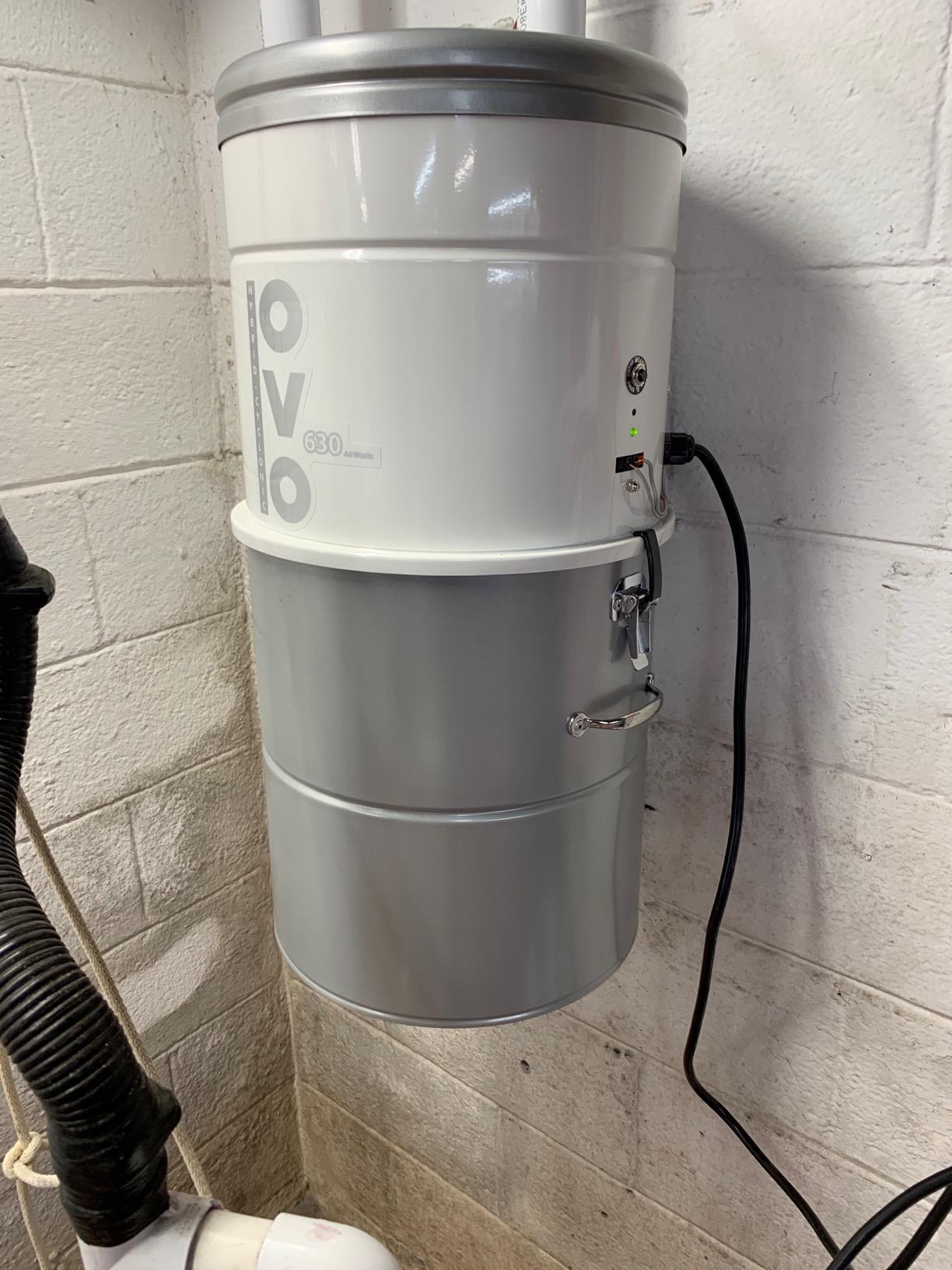
The OVO 630 delivers the same architecture as the 700 at a lower power level: a two-stage motor, hybrid filtration and a bottom-load canister. For a home of roughly 2,000 to 3,500 square feet, it is the value pick in this roundup and the one we would actually install.
The numbers are solid for the tier. You get 630 airwatts, 127.1 CFM and 130 inches of water lift, which is the figure that matters most on long pipe runs where airflow thins out. The rolled steel bottom-load canister at 6.6 gallons is a step up in durability from the plastic bodies used in cheaper builds.
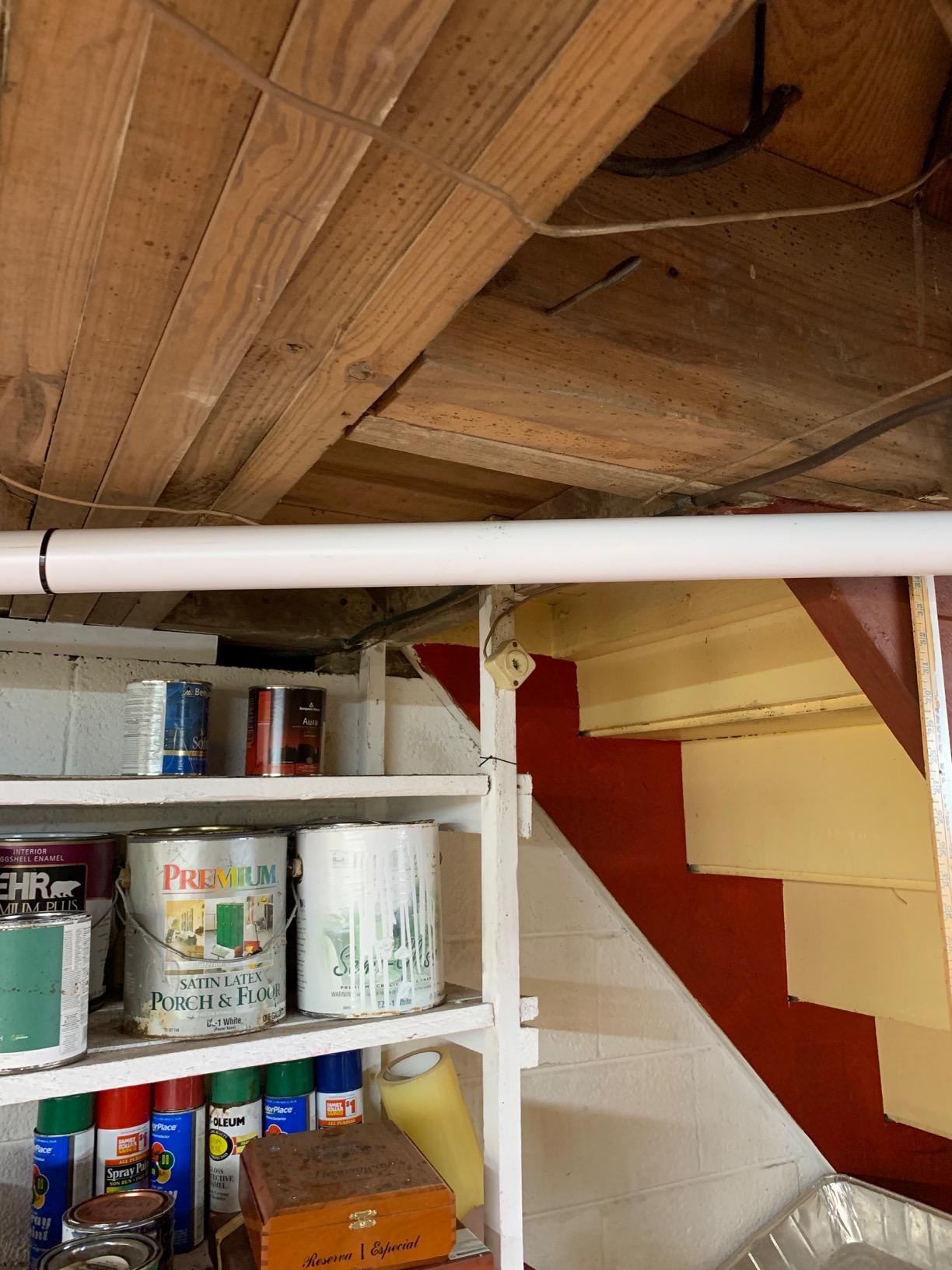
It is the most polarised unit we reviewed. About 62 percent of reviews are five stars, but a full 15 percent are one star, and that split is what pulls the average down. The praise centers on airflow for the money, the steel canister and the LED status indicator that tells you when the system needs attention.
The complaints center on distance. Some buyers report suction dropping off on longer inlet runs, and the coverage figures in the feature list are notably more conservative than the square footage in the product title. Buyers who treat it as a mid-size system for homes up to about 5,000 square feet report good results.
Set expectations properly and that is a fair trade. If your pipe runs are short and your floor plan is straightforward, the 630 has more than enough suction for everyday cleaning. If you have a sprawling layout with a long basement-to-attic run, the extra air watts of the 700 are money well spent.
Does the OVO 630 handle a 3,000 square foot home?
Yes, comfortably, with inlets placed normally at one per 600 to 800 square feet per floor. The 127.1 CFM figure gives steady pickup on carpet and hard floors alike, and the steel canister shrugs off the knocks that crack plastic tubs.
The 130 inch water lift is the spec to lean on if your home has a basement level or an attic run. Water lift holds up better than raw airflow as pipe length increases, so it protects you on the farthest inlet.
Who should skip the OVO 630?
Skip it if you are installing in a very open plan with long distances between inlets, or if noise is your top priority, since it carries the same muffler package but sits at a different acoustic profile than the Imperium. Buyers who want a single crisp rating rather than a spread of experiences should look at the Prolux instead.
If you plan to run bagless only, note that the manufacturer recommends bagged operation for best results, which puts a recurring consumable cost back into the math.
We earn a commission, at no additional cost to you. CERTAIN CONTENT THAT APPEARS ON THIS SITE COMES FROM AMAZON. THIS CONTENT IS PROVIDED 'AS IS' AND IS SUBJECT TO CHANGE OR REMOVAL AT ANY TIME.
4. Prolux CV12000: Best Two-Stage Upgrade for Existing Pipe
Prolux CV12000 Central Vacuum – 25 Year Service Promise, No Suction Loss Design, Made in North America, 2-Stage Bypass Motor, Large Capacity Powerful System
- 2-stage tangential bypass motor
- 142 CFM and 116 inch water lift
- 8 outlets or 8000 sq ft rated
- Dual intake ports
- 25 year body promise
Pros
- Tangential bypass motor keeps dirty air away from the motor
- Dual intake ports fit most existing US central lines
- 142 CFM holds up across 8 inlets
- 25 year body and 10 year motor service promise
- Made in North America with responsive support
Cons
- On-unit hose port removed in this design
- Warranty service requires returning the canister to the maker
- Motor intake grill can clog if the bag is misseated
- Small parts such as a coupling may arrive missing
We earn a commission, at no additional cost to you. CERTAIN CONTENT THAT APPEARS ON THIS SITE COMES FROM AMAZON. THIS CONTENT IS PROVIDED 'AS IS' AND IS SUBJECT TO CHANGE OR REMOVAL AT ANY TIME.
The CV12000 is the most interesting box in this roundup from an engineering standpoint. It uses a two-stage tangential bypass motor, which means filtered air, not dirty air, passes through the fan. That design is why bypass units outlast thru-flow motors at the same published air-watt number, and why owner communities treat motor type as the reliability predictor rather than wattage.
The practical headline is the dual intake ports. One port on each side of the canister means it will drop onto most existing in-wall central vacuum lines in North America without re-plumbing. Buyers describe swapping out 15 to 40 year old units in minutes, and one reviewer noted immediately stronger, quieter performance after the change.
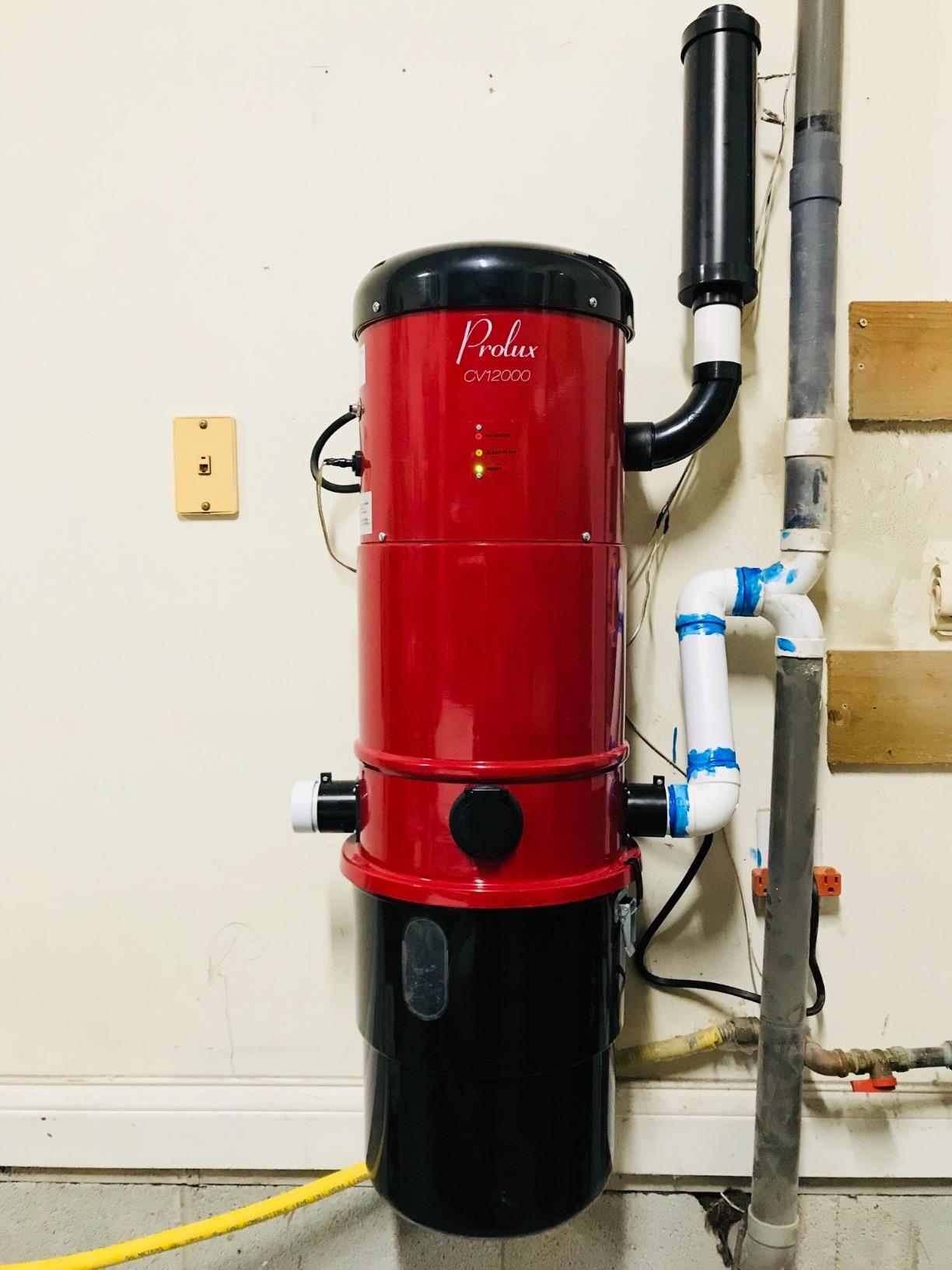
Output figures are strong: 142 CFM airflow, 116 inches of water lift and a rating for up to 8 outlets or 8,000 square feet. Capacity is 6.8 gallons bagged or 3.75 gallon bagless, and the wall bracket, a spare bag and a muffler are included in the box.
Noise is rated at 70 dB, which is not the quietest figure here, but at that level in a garage or basement it is transmission through the structure that decides whether you notice it, not the decibel number on the label.
Two design choices cost something. The current version removed the on-unit hose port, which several buyers call a step backwards since there is no convenient machine-side connection anymore. Warranty service also requires returning the canister to the manufacturer, though Prolux support is repeatedly praised for providing prepaid return labels when a fault is diagnosed.
Is the Prolux CV12000 right for upgrading an existing system?
Yes, and it is the clearest upgrade path here. The dual intake ports and included wall bracket were designed for exactly this job, and no repiping is required on standard North American lines. Verify your pipe diameter and inlet style before ordering if your home has an older system.
It also suits owners who run two hoses on two floors at once, since bypass motor cooling holds up under sustained use better than smaller thru-flow motors in comparable bodies.
Who should skip the Prolux CV12000?
Skip it if you are starting from bare studs and want a hose connection at the machine for wet or utility pickups, since the on-unit port is gone. Buyers who want the quietest possible running noise will find the Imperium quieter.
It is also not the right pick for pure allergy filtration, because its filtration is dust-resistant rather than a certified HEPA stack. And anyone averse to returning a 22 pound canister for warranty work should weigh that before buying.
We earn a commission, at no additional cost to you. CERTAIN CONTENT THAT APPEARS ON THIS SITE COMES FROM AMAZON. THIS CONTENT IS PROVIDED 'AS IS' AND IS SUBJECT TO CHANGE OR REMOVAL AT ANY TIME.
5. VacuMaid P125p Cyclonic Power Unit: Best for Allergy Households
VacuMaid P125p Cyclonic Central Vacuum Power Unit
- 525 max airwatts
- 116 CFM airflow
- 125 inch sealed suction
- Ametek Lamb 7.2 inch bypass motor
- 6.75 gallon cyclonic canister
Pros
- Cyclonic separation keeps the motor cleaner than bagged designs
- Plastic can liner allows mess-free debris disposal
- Made in the USA by a family manufacturer dating to 1956
- Includes replacement parts for an older installed system
- Rated for homes up to 9000 sq ft
Cons
- Loudest system here at 76 dB
- Smallest review base in our set
- Heaviest canister in the group at 40 pounds
- Highest tier price of the group
We earn a commission, at no additional cost to you. CERTAIN CONTENT THAT APPEARS ON THIS SITE COMES FROM AMAZON. THIS CONTENT IS PROVIDED 'AS IS' AND IS SUBJECT TO CHANGE OR REMOVAL AT ANY TIME.
Filtration is the whole argument for this unit. Cyclonic separation spins debris out of the airstream into the canister rather than relying on a bag or cartridge to catch it, which means the fine dust that triggers allergy and respiratory symptoms never reaches the motor or gets recirculated into the living space.
The motor is an Ametek Lamb 7.2 inch tangential bypass, which is the same motor family used in professional equipment. Output is 525 max airwatts with 116 CFM airflow and 125 inches of sealed vacuum, rated for homes up to 9,000 square feet. The 6.75 gallon canister has an optional plastic liner so you can drop the debris bag straight into a bin.
It is made in the USA by Lindsay Manufacturing, a fourth-generation family business dating to 1956, and the box includes replacement parts to swap out an older installed system. For owners replacing a vintage canister, that kit removes the most annoying part of an upgrade.
Why do allergy households gravitate to cyclonic separation?
Because nothing has to be replaced to keep capturing fine dust, and there is no bag permeability question. A bagged system captures what the bag captures and leaks the rest back into the room, which matters most for asthma and dust mite sensitivity.
Paired with an outdoor exhaust vent, this is the configuration that actually moves captured particulate out of the house. Without venting outdoors, even a cyclonic unit only relocates dust from the floor to a canister in your garage.
Who should skip the VacuMaid P125p?
Skip it if noise is a deciding factor. At 76 dB it is the loudest canister here, and owners of bypass motors know that a 7.2 inch fan does not run quietly. Placement in a detached garage or far corner of a basement matters more than any upgrade you could buy.
The evidence base is also thin. With the smallest review count in this group, you are buying on manufacturer reputation and filtration design rather than on a broad body of owner reports, which is a fair trade only if the cyclonic performance is your priority.
We earn a commission, at no additional cost to you. CERTAIN CONTENT THAT APPEARS ON THIS SITE COMES FROM AMAZON. THIS CONTENT IS PROVIDED 'AS IS' AND IS SUBJECT TO CHANGE OR REMOVAL AT ANY TIME.
6. Imperium CV300: Quietest Running with the Smallest Footprint
Imperium CV300 Central Vacuum Power Unit
- 740 airwatts
- 58 dB noise level
- All steel body
- 6.25 gallon bagged capacity
- Utility inlet for machine-side hose use
Pros
- Quietest canister we compared at 58 dB
- 740 airwatts in a roughly half-size body
- Top-access bag changing simplifies upkeep
- All steel construction rather than plastic
- Utility inlet included for hose use at the machine
Cons
- Some arrivals reported dead or untested
- Bagged design carries an ongoing consumable cost
- Smaller review base than the leading models
We earn a commission, at no additional cost to you. CERTAIN CONTENT THAT APPEARS ON THIS SITE COMES FROM AMAZON. THIS CONTENT IS PROVIDED 'AS IS' AND IS SUBJECT TO CHANGE OR REMOVAL AT ANY TIME.
If your power unit has to sit near living space, the Imperium CV300 is the one to look at. Its rated 58 dB is the lowest figure in this roundup, and that number matters more than buyers expect when the canister is mounted in a closet off a hallway rather than in a detached garage.
The engineering is unusual: 740 airwatts from a body listed at 25-3/4 inches tall by 12-7/8 deep, roughly half the size of typical units in this class. All steel construction, 6.25 gallon bagged capacity, and it is made in the USA with a 10 year motor warranty.
Owners replacing a vintage Nutone or Beam unit describe it as quieter, more powerful and smaller than what they had, and several call it the best of several central vacuums they have owned. Installation is reported at around 25 minutes with basic tools, and the top-access bag changing makes routine maintenance far less annoying than a bottom-load tub in a dark garage.
Is 58 dB genuinely quiet enough for a bedroom floor?
For most homes, yes. Below roughly 60 dB the motor becomes a background hum rather than an event, At that level the structure carries more sound than the motor itself. Mounting the unit in a garage, basement or utility closet with a solid barrier between it and the living floor solves most of it.
The utility inlet included in the box is an underrated addition. It lets you attach a hose directly at the machine for workshop spills or utility cleanups without running a hose to a wall inlet first.
Who should skip the Imperium CV300?
Skip it if you want bagless or cyclonic filtration, because this is a bagged design and you will be buying consumables for the life of the machine. It is also not the pick for households with fine-dust allergies who want particles removed from the airstream rather than captured in a bag.
Quality control on arrival is the reported weak point. A small number of buyers received units that did not run out of the box and appeared untested, so inspect the canister on arrival and confirm it powers up before your install day.
We earn a commission, at no additional cost to you. CERTAIN CONTENT THAT APPEARS ON THIS SITE COMES FROM AMAZON. THIS CONTENT IS PROVIDED 'AS IS' AND IS SUBJECT TO CHANGE OR REMOVAL AT ANY TIME.
7. InterVac GarageVac: Best for Garage, Workshop and Utility Space
Wall Mounted Garage Vacuum System – InterVac GarageVac Built-in Central Vacuum for Workshop, RV, Boat, Utility Room, Compact Wall Mount Cleaner, Made in USA
- 35 foot stretch hose included
- 4 inch deep wall-mount body
- HEPA filtration
- 110 inch maximum suction
- 1500 watt / 11 amp motor
Pros
- Compact 4 inch deep footprint frees floor and bench space
- 35 foot stretch hose covers a garage or vehicle alone
- HEPA filtration suits workshop dust
- Built for permanent installation with quick access cleaning
- Floor and bench attachments included
Cons
- Not a whole-home system by design
- 1 gallon canister is among the smallest here
- Not sized for multi-floor inlet runs
We earn a commission, at no additional cost to you. CERTAIN CONTENT THAT APPEARS ON THIS SITE COMES FROM AMAZON. THIS CONTENT IS PROVIDED 'AS IS' AND IS SUBJECT TO CHANGE OR REMOVAL AT ANY TIME.
This is the honest answer for anyone whose vacuum needs are about the garage. At 9.5 by 4 by 29.56 inches, the GarageVac mounts flat against a wall and takes up almost no depth, which is why owners install it on workshop walls, in utility rooms, RVs, boats, cabins and tiny homes rather than ducting it into a living space.
The 35 foot stretch hose is the reason it works. One hose reaches a whole two-car garage, a boat hull on a trailer or a workbench run without buying extensions. Attachments for floors, benches and vehicles come in the box, and the 1500 watt, 11 amp motor delivers 110 inches of maximum suction.
HEPA filtration is a genuine bonus in a workshop context, where fine sawdust and concrete dust are the real hazard. It is made in the USA and the manufacturer describes the components as rated for daily use, which fits the role.
Should a garage vacuum be a separate system from the main house?
Yes, and this is the ideal pairing for many homes. A secondary space like a garage collects grit, sawdust and pet bedding debris that would wear a fine-filtered whole-home canister quickly. A dedicated wall-mounted unit keeps that mess out of your living system entirely.
The stretch hose means you can wall-mount it near a door or a bay opening, then pull it wherever the work is happening that day. For boat and vehicle detailing, that reach matters more than canister capacity.
Who should skip the InterVac GarageVac?
Skip it for main living space, and this is the important caveat. With 1 gallon of capacity and no air-watt rating, it is not a whole-home unit and is not meant to be compared against the OVO or Prolux canisters on any whole-home basis.
If your goal is one system for the entire property, a light-duty 11 amp motor and a 1 gallon canister will disappoint you within months. Use it for the workshop, garage or vehicle work and let a real canister handle the living floors.
We earn a commission, at no additional cost to you. CERTAIN CONTENT THAT APPEARS ON THIS SITE COMES FROM AMAZON. THIS CONTENT IS PROVIDED 'AS IS' AND IS SUBJECT TO CHANGE OR REMOVAL AT ANY TIME.
8. Broan-NuTone PP6501 650 Air Watts: Only If You Already Own NuTone Pipe
Broan-NuTone Residential Central Vacuum System Power Unit, 650 Air Watts
- 650 airwatts
- Bagged or bagless with HEPA filtration
- 64 dB noise level
- Compact modern body
- Requires proprietary 2 inch OD pipe
Pros
- Much quieter than the older VX475 units it replaces
- Predominantly metal construction rather than all plastic
- Suction and low noise are the most praised attributes
- Straightforward swap on an existing NuTone line
Cons
- Lowest average rating in our set with a large one-star share
- Reports of motor overheating and shutdowns
- Used or damaged arrivals with bent or missing brackets
- Proprietary 2 inch OD pipe rather than standard schedule 40 PVC
- Modest 8 year parts and 5 year labor warranty
We earn a commission, at no additional cost to you. CERTAIN CONTENT THAT APPEARS ON THIS SITE COMES FROM AMAZON. THIS CONTENT IS PROVIDED 'AS IS' AND IS SUBJECT TO CHANGE OR REMOVAL AT ANY TIME.
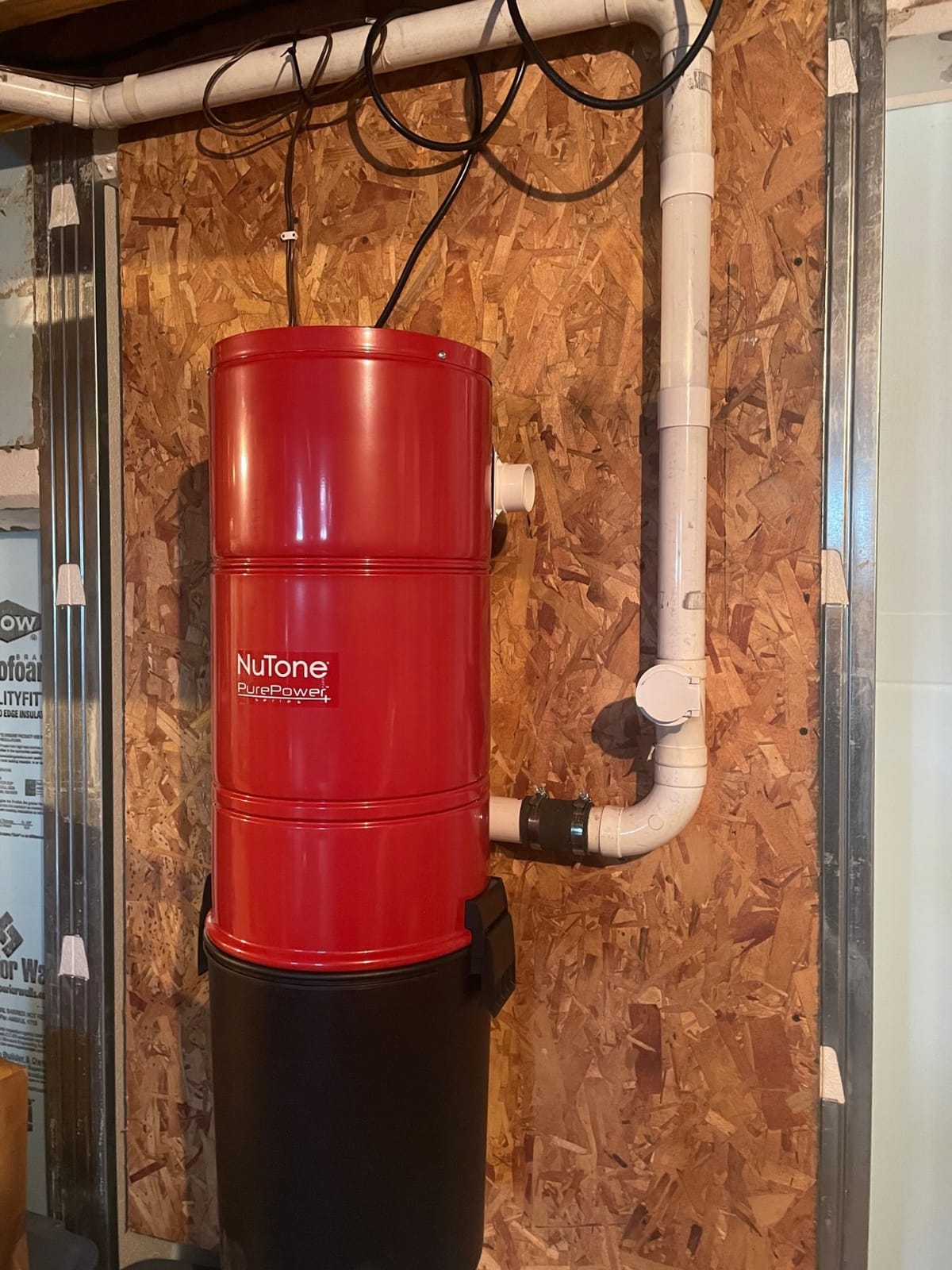
We are including this unit because so many existing homes have NuTone pipe in the walls, and that changes the math entirely. If your system was installed years ago, this may be the only canister that fits without repiping.
That constraint is the whole story. NuTone uses 2 inch outside diameter pipe, which is not standard schedule 40 PVC. For a retrofit it is a genuine benefit. For a new installation in bare studs it is a cost and a compatibility headache that most buyers should walk away from.
Where it does well, the improvement is real. Owners replacing older NuTone units consistently praise the drop in noise and the move to metal-dominant construction, and the 64 dB rating sits respectably. Suction power and low noise are the two most commonly praised attributes. Bagged or bagless operation with HEPA filtration is supported.
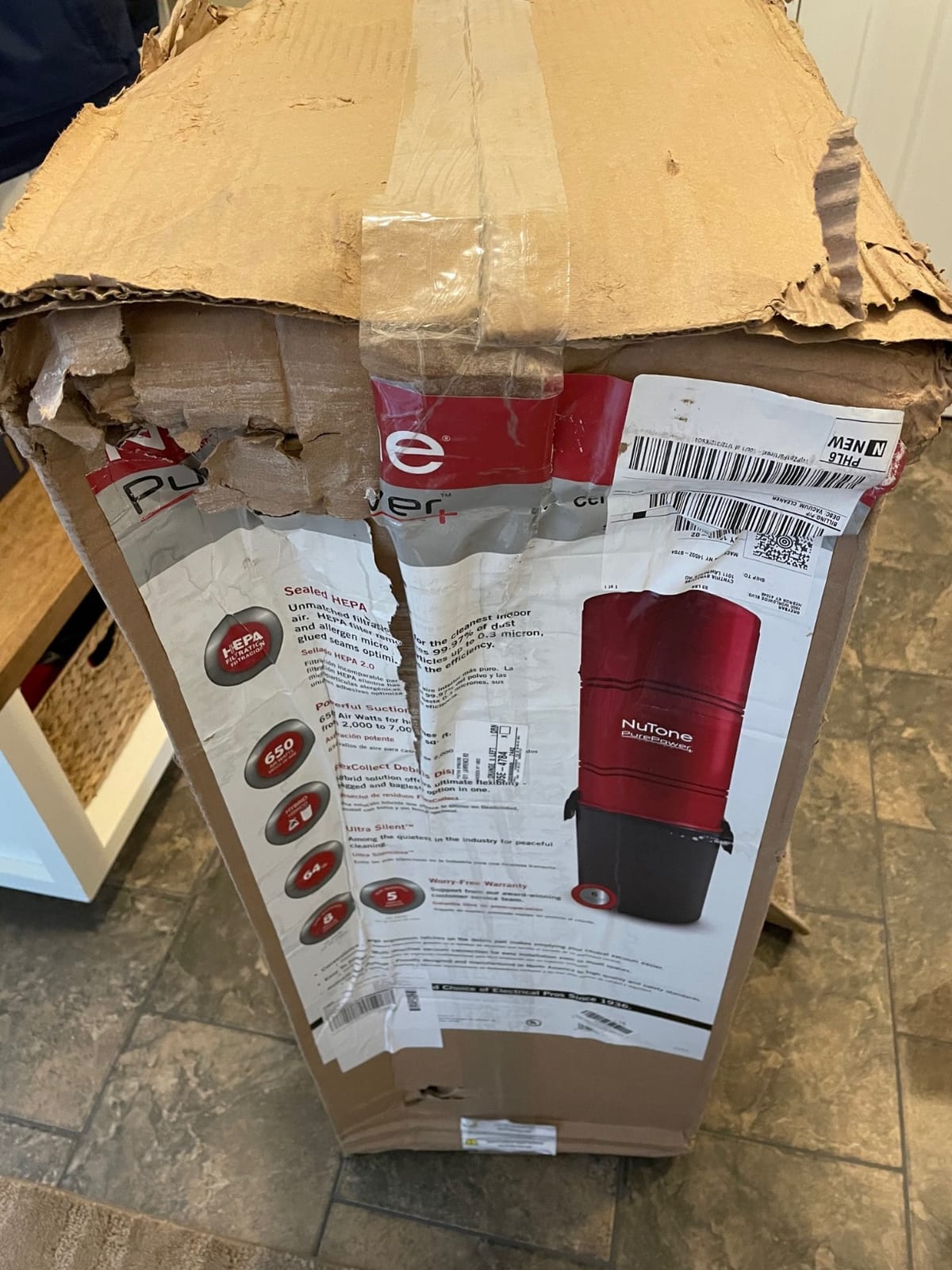
The reasons for caution are documented and consistent. It carries the lowest average rating in our set, with roughly 30 percent one-star reviews, and a substantial group reports the motor overheating and shutting down, requiring a one to two hour wait before reuse. Delivery problems show up too, including used units, bent mounting brackets and a bracket arriving missing.
Service is another friction point. The warranty is 8 years parts and 5 years labor, which is modest for a premium-priced canister, and at least one buyer reported manufacturer phone support that would not connect.
Are NuTone central vacuums still worth buying in 2026?
For an existing NuTone installation, often yes. The unit is well built, the noise reduction over older models is real, and matching your existing pipe removes the largest cost in a retrofit. Owners report a simple swap and immediate improvement over a 20 year old canister.
For a new installation, no. NuTone is no longer developing new central vacuum product, and the proprietary pipe means you are locking into a fitting standard that nobody else adopted.
What should I check before ordering the PP6501?
Measure your pipe first. If it is not NuTone 2 inch outside diameter, this unit is not for you. Ask sellers to confirm the mounting bracket is included with the canister, since a missing or bent bracket is the most repeated complaint in reviews.
Also plan for the delivery. Inspect the unit on arrival and test it before your installer starts, because a motor that overheats and shuts down needs addressing early rather than after drywall closes around the inlet.
We earn a commission, at no additional cost to you. CERTAIN CONTENT THAT APPEARS ON THIS SITE COMES FROM AMAZON. THIS CONTENT IS PROVIDED 'AS IS' AND IS SUBJECT TO CHANGE OR REMOVAL AT ANY TIME.
How to Choose a Central Vacuum System for Your Home
The spec that decides most purchases is air watts, measured at the hose. It tells you the suction available where you are actually cleaning, which is the only place it matters. Motor wattage, input watts and amperage describe how hard the motor is being driven, not what arrives at the wand.
Air watts, motor watts and water lift each measure something different
Air watts is the standard comparison number in this category, measured at the hose under standardized conditions. Water lift, in inches of sealed suction, describes how much suction pressure the unit can hold and it holds up better than raw airflow as pipe runs get longer. CFM measures airflow volume, which tells you how much air moves rather than how hard it pulls.
Motor watts and amperage are electrical draw. A 1500 watt label tells you the receptacle and circuit requirements, nothing about cleaning performance. When a dealer quotes you motor wattage instead of air watts, ask for air watts before you agree to anything.
Tangential bypass versus thru-flow motors
A tangential bypass motor draws air in at the front, routes it through the fan at a tangent and pulls it across the motor path second, so filtered air passes through the turbine rather than dirty air. A thru-flow motor pulls dirty air straight through the fan. Bypass motors cool better, tolerate longer run times and last longer at the same published air-watt number.
This distinction shows up in real installs. On a two-story home, a bypass unit holds suction on the upper floor where a thru-flow motor of the same rating noticeably softens. If two units share an air-watt figure, the bypass design is the tiebreaker.
Bagged, bagless, cyclonic and HEPA filtration
Bagged systems capture fine dust reliably and cost less per year to buy, but bags are a recurring expense and the bag itself is a filter. Bagless systems use a washable or replaceable filter and keep the operating cost at zero, at the cost of a filter that needs rinsing on a schedule.
Cyclonic systems spin debris out of the airstream into a canister, so nothing has to be replaced for the unit to keep capturing fine dust, which is why they suit allergy households. HEPA filtration refers to the final filter stage on systems that use one. Certified HEPA captures 99.97 percent of particles at 0.3 microns, while HEPA-style bags and filters are a marketing term with no test standard behind it.
Whichever you pick, vent the exhaust outdoors. That is what makes the allergy benefit real rather than theoretical, because it is the difference between capturing dust and moving it into your garage.
Sizing air watts to square footage and pipe length
Use one inlet per 600 to 800 square feet per floor, positioned so a 30 foot hose reaches every room. Bigger homes and long pipe runs need more air watts, because suction drops with every foot of pipe and every tight elbow. Airflow thins more than water lift does, so long runs favour units with higher water lift figures.
Sweep elbows beat tight 90s wherever the routing allows. A single extra elbow can cost more airflow than several feet of straight pipe, and the difference between a well-planned run and a lazy one is often the whole difference between a satisfying system and a disappointing one.
Give the power unit a dedicated 120V receptacle on its own circuit. Sharing a circuit with other appliances is a common cause of the random shutdown complaints we see.
Noise depends on placement more than decibels
Rated noise in this roundup runs from 58 dB on the Imperium CV300 up to 76 dB on the VacuMaid P125p. Those are motor sound figures measured close to the unit, and the number that decides whether you notice it is how the sound reaches you through the structure.
A 70 dB bypass motor in a detached garage can be quieter in your living room than a 58 dB unit mounted in a closet off the hallway. Mount on a concrete surface, avoid bedrooms and closets that share a wall with sleeping spaces, and run the exhaust vent away from windows and doors.
When a central vacuum is not worth it
It is rarely worth it in a single-floor home under about 1,200 square feet with mostly hard floors. There is no pipe to run, no stairs to solve and a good cordless vacuum will handle the floors for a fraction of the installed cost.
It is not feasible in a rental, and condos are usually impractical because of how the plumbing core has to be routed. It also makes limited sense if your household cleans only one room regularly and most of your home is bare flooring.
Where it clearly wins is homes above roughly 1,500 square feet with stairs, carpet or pets, and households with asthma or allergies where getting dust out of the air is the goal rather than moving it from rug to canister.
Who actually makes these brands
Brand badges in this category are less independent than shoppers assume. Electrolux exited the central vacuum market in 2018, and the Beam badge moved from Electrolux to Nuera Air, which shut down in 2024, and then to Trovac Industries. NuTone power-unit canisters are now produced by Drainvac in Quebec, and NuTone is no longer developing new central vacuum product.
That history explains a practical reality: parts support depends on the manufacturer, not the badge on the canister. Before buying, ask who answers the phone in year ten and where the nearest service depot sits. For legacy systems, the Ametek Lamb motor part number is the universal key that identifies compatible replacements across many brands.
Installation and what a central vacuum really costs
The canister is a small line in an install. A realistic installed system includes the power unit, 2-inch PVC tubing run to each inlet, inlet valves, a hose, an electric powerhead for carpet, a dedicated receptacle and labor. Accessory kits for powerheads and hoses are frequently the largest single line item after labor, and they are worth buying properly on carpet-heavy homes.
Owners on home improvement forums generally report that a competent installer can run the piping far faster than a homeowner cutting into finished walls, and the consensus across those threads is that most central vacuums are reliable as long as the unit is kept properly cleaned. Filter changes, canister emptying and bag swaps are the whole maintenance routine.
If your system feels weaker than the upright it replaced, work through the likely causes in order: too many tight elbows, a clogged filter, undersized pipe and then hidden leaks in the walls. A leak in in-wall piping is the quiet failure, because it steals a large share of your suction with no visible symptom at all.
Frequently Asked Questions
Which central vacuum system is the best quality?
Quality in this category comes from motor type and build rather than the biggest number on the box. A tangential bypass motor, where filtered rather than dirty air passes through the fan, outlives a thru-flow motor at the same published air-watt rating. Among the systems we compared, the Prolux CV12000 pairs a two-stage tangential bypass motor with a 25 year body service promise, while the OVO 700 leads on airflow with 700 airwatts and 140.2 CFM, and the HP Products 9880 has the highest average rating from compact built-in buyers.
What is the best central vacuum system for a whole home?
For most whole homes the default is a 600 to 700 air watt unit with a bypass motor. Match air watts to your square footage and to the longest pipe run from the canister to the farthest inlet, because suction falls with every foot of pipe. A 600 AW bypass unit handles a typical multi-level home; larger layouts and long basement or attic runs justify stepping up to 700 airwatts or a higher water lift figure.
Are NuTone central vacuums good?
NuTone residential power units are well built, and the current models are noticeably quieter than the older VX475 units they replace, with metal-dominant construction rather than all plastic. They are a strong choice when your home already has NuTone pipe, because that proprietary 2 inch outside diameter sizing is difficult to match with standard schedule 40 PVC. They are a weak choice for new installations because no new NuTone central vacuum product is in development.
What are Electrolux vacuums called now?
Electrolux exited the central vacuum market in 2018. The Beam badge moved from Electrolux to Nuera Air, which shut down in 2024, and then to Trovac Industries. For household vacuum cleaners sold through the dealer network, the business was rebranded as Aerus in 2003. If you own an older Electrolux central vacuum, the Ametek Lamb motor part number on the canister is the key for identifying compatible replacement parts.
Is a central vacuum worth it?
A central vacuum earns its cost in homes above roughly 1,500 square feet with stairs, carpet or pets, and it matters most for allergy and asthma households that want captured dust vented outdoors rather than recirculated. It is rarely worth it in a single-floor home under about 1,200 square feet with mostly hard floors, where a good cordless vacuum costs far less and takes up no wall space. It is not feasible in rentals and usually impractical in condos.
The Best Central Vacuum Systems for Homes, Matched to Your Situation
For most households with two floors, carpet or pets, the OVO 700 is the best central vacuum system for homes we tested, at 700 airwatts, a two-stage motor and a 35 liter canister that you roll out rather than lift. If your budget sits lower and your floor plan is straightforward, the OVO 630 gives you most of that performance with a rolled steel canister and a hybrid filter setup.
If you already have pipe in the walls, the Prolux CV12000 is the smarter purchase, because the dual intake ports and two-stage tangential bypass motor make it a clean swap with a 25 year body service promise behind it. Allergy households should look at the VacuMaid P125p for cyclonic separation, and anyone whose canister must sit near living space will find the Imperium CV300 the quietest at 58 dB.
The one spec to insist on before you pay anyone is air watts measured at the hose, plus confirmation of a tangential bypass motor. Everything else, including brand loyalty and canister size, matters far less once those two are right and your pipe runs are clean.