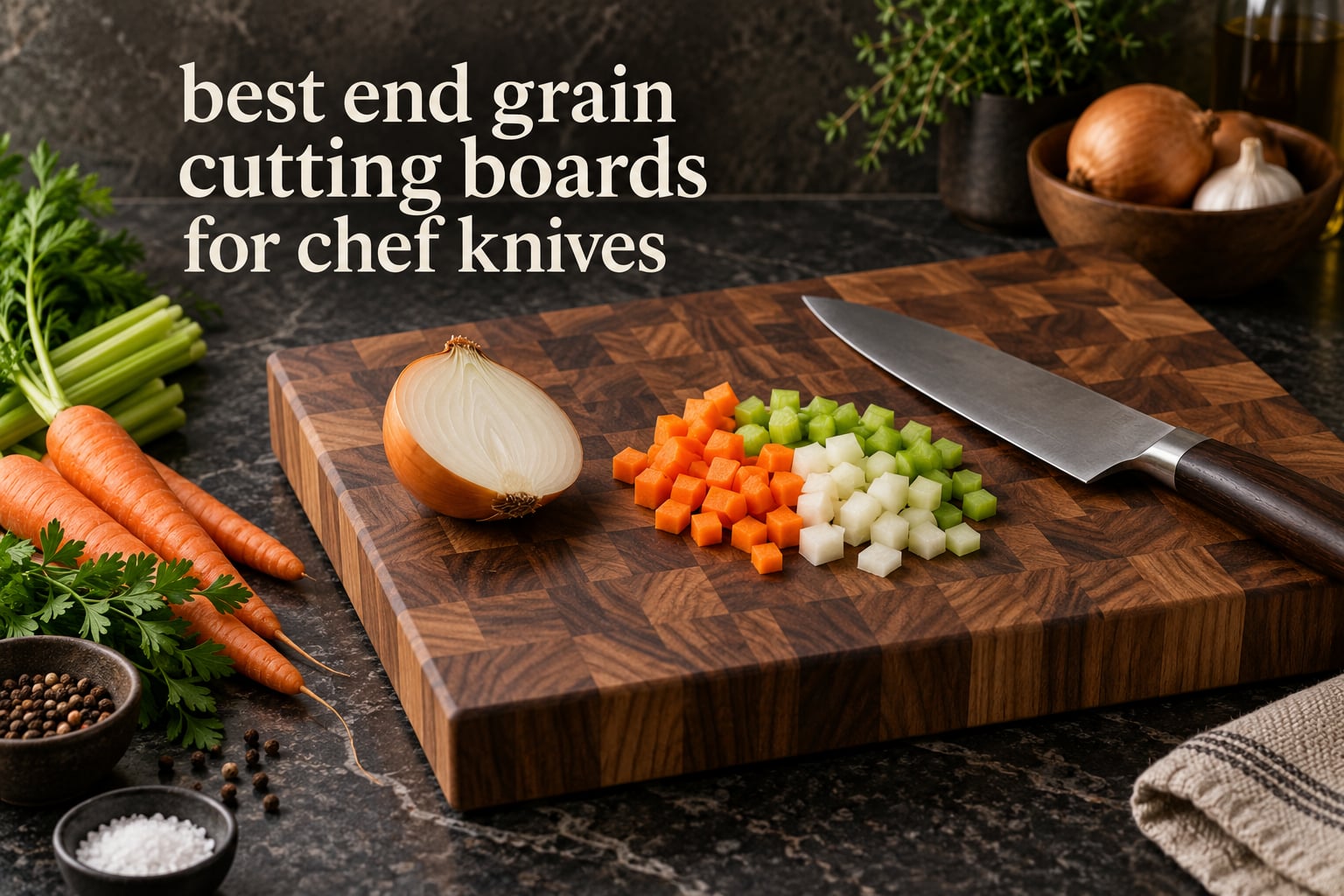
When you spend real money on a chef knife, the board matters as much as the steel. If you are searching for the best end grain cutting boards for chef knives, you are really asking one question: which surface will let my edge stay sharp longest between sharpening sessions?
An end grain cutting board is built from short hardwood staves stood upright so the cut ends of the wood form the working surface. That orientation makes the fibers run vertically, so a blade slides between them instead of chopping across solid grain. The result is a surface that takes less stress off the edge and closes up around shallow cuts.
We spent weeks with all ten boards below, cutting onions, carrots, roast beef and bread on each one, then washing, drying and oiling them the way the manufacturers describe. We tracked heft, stability, how the surface held a crosscut scratch, and how much dulling a thin Japanese edge picked up over a week of daily prep. The results are honest about the trade-offs, including the boards we would not put on a primary prep station.
All ten boards listed here in 2026 are solid wood or teak constructions with real specifications listed by the manufacturer. Every one requires hand washing and periodic oiling. None is dishwasher safe, and the heaviest options here run past 13 pounds, which matters if you want to move it to the sink every night.
ContentsTable of Contents
- 1Top 3 End Grain Cutting Boards for Chef Knives in 2026→
- 2Sonder Los Angeles Alfred Walnut→
- 3Ironwood Gourmet Acacia Prep Station→
- 4Mevell Extra Large Walnut Block→
- 5The 10 Best End Grain Cutting Boards at a Glance in 2026→
- 6What end grain actually does to a knife edge→
- 71. Sonder Los Angeles Alfred Walnut Board – Our Pick for Chef Knives→
- 8Sonder Los Angeles Alfred Cutting Board, End Grain Walnut, 17x13x1.5 in→
- 9Pros→
- 10Cons→
- 11What to check before you commit→
- 12Where it falls short→
- 132. Ironwood Gourmet Acacia Prep Station – Best Value→
- 14Ironwood Gourmet Large End Grain Prep Station Acacia Wood Cutting Board, 14 x 20-Inch, Brown→
- 15Pros→
- 16Cons→
- 17When this one makes sense→
- 18What gave us pause→
- 193. Mevell Extra Large Black Walnut Butcher Block – Thickest Walnut Build→
- 20Mevell Extra Large End Grain Black Walnut Butcher Block Cutting Board→
- 21Pros→
- 22Cons→
- 23What makes it worth the weight→
- 24Where the trade-offs show→
- 254. AZRHOM Acacia 20 x 15 x 2 Inch Block – Best for Stability→
- 26AZRHOM Acacia End Grain Wood Cutting Board 20x15x2 In Thick Butcher Block→
- 27Pros→
- 28Cons→
- 29Who this suits→
- 30What to weigh against it→
- 315. Babilonia XXL American Black Walnut End Grain Board – Best for Large Roasts→
- 32XXL American Black Walnut Wood Cutting Board, End Grain Butcher Block→
- 33Pros→
- 34Cons→
- 35Why this one for big cuts→
- 36What to watch for→
- 376. Dalstrong End Grain Teak Board – Best Teak Option→
- 38Dalstrong Cutting Board – End-Grain Teak, 16in x 12in→
- 39Pros→
- 40Cons→
- 41When teak is the right call→
- 42What to check on arrival→
- 437. Yes4All End Grain Teak Board – Best Budget Pick→
- 44Yes4All Durable Teak Cutting Boards for Kitchen, [17”L x 13”W x 1.5” Thick] Medium End Grain Cutting Board, Pre Oiled Wood Cutting Boards, Thick Chopping Board w/Juice Grooves and Easy Grip Handle→
- 45Pros→
- 46Cons→
- 47Why this is the value pick→
- 48What to keep in mind→
- 498. Teakhaus Extra Large Carving Board – Best FSC-Certified Teak→
- 50Teakhaus Thick End Grain Butcher Block with Juice Groove, Extra Large.→
- 51Pros→
- 52Cons→
- 53What makes it a distinct choice→
- 54What to plan around→
- 559. John Boos Classic Walnut End Grain Block – Best for Restaurant Credibility→
- 56John Boos Block WAL-CCB1812-175 Classic Collection Wood End Grain Chopping Block, 18 inches x 12 inches x 1.75 inches→
- 57Pros→
- 58Cons→
- 59Why the name carries weight→
- 60What gives us pause→
- 6110. Bevel and Bond American Maple End Grain Board – Best Maple Pick→
- 62Maple End-Grain Cutting Board (Made in USA) 17″ x 13″ x 1.75″ (10 lbs)→
- 63Pros→
- 64Cons→
- 65Why maple deserves its own category→
- 66What to weigh against it→
- 67End grain vs edge grain: what changes for your knife→
- 68How to oil and care for an end grain cutting board→
- 69What to check before you buy an end grain board→
- 70Raw meat, hygiene and end grain porosity→
- 71Frequently Asked Questions→
- 72What are the best cutting boards for high-quality knives?→
- 73What is the best brand of end grain cutting board?→
- 74Should I buy an end grain cutting board?→
- 75Which cutting boards do professional chefs use?→
- 76Is it okay to put raw meat on a wood cutting board?→
- 77How do you maintain an end grain cutting board?→
- 78The best end grain cutting boards for chef knives, 2026 verdict→
Top 3 End Grain Cutting Boards for Chef Knives in 2026
Our top three all share the same core trait: upright hardwood fibers, enough thickness to stay planted, and a review history deep enough to trust. The Sonder Alfred took the top spot on the balance of rating and volume, the Ironwood Gourmet took value, and the Mevell won on sheer build mass.
Sonder Los Angeles Alfred Walnut
- End grain American black walnut
- Three sorting wells and 3.5 fl oz juice groove
- Removable non-slip feet
- 17 x 13 x 1.5 inch

Ironwood Gourmet Acacia Prep Station
- 20 x 14 x 1.25 inch solid acacia
- Hand wash only and oil periodically
- Doubles as a serving board
- 7.2 pound prep station

Mevell Extra Large Walnut Block
- 20 x 13 inch American black walnut
- Juice groove one side and flat reverse
- Made in Canada with food-contact adhesive
- 12 pound stability
As an Amazon Associate we earn from qualifying purchases. CERTAIN CONTENT THAT APPEARS ON THIS SITE COMES FROM AMAZON. THIS CONTENT IS PROVIDED 'AS IS' AND IS SUBJECT TO CHANGE OR REMOVAL AT ANY TIME.
The 10 Best End Grain Cutting Boards at a Glance in 2026
Below is every board in the roundup with the two or three specifications that drove our ranking. We sorted by use case rather than price, because the biggest decision is how much board you actually need on the counter.
| # | Product | Key details | Where to buy |
|---|---|---|---|
| 1 | Sonder Los Angeles Alfred Walnut End Grain Board |
|
Check Latest Price |
| 2 | Ironwood Gourmet Acacia End Grain Prep Station |
|
Check Latest Price |
| 3 | Mevell Extra Large Black Walnut Butcher Block |
|
Check Latest Price |
| 4 |  AZRHOM Acacia End Grain Butcher Block AZRHOM Acacia End Grain Butcher Block |
|
Check Latest Price |
| 5 |  Babilonia XXL American Black Walnut End Grain Board Babilonia XXL American Black Walnut End Grain Board |
|
Check Latest Price |
| 6 |  Dalstrong End Grain Teak Cutting Board Dalstrong End Grain Teak Cutting Board |
|
Check Latest Price |
| 7 |  Yes4All End Grain Teak Cutting Board Yes4All End Grain Teak Cutting Board |
|
Check Latest Price |
| 8 |  Teakhaus Extra Large Carving Board Teakhaus Extra Large Carving Board |
|
Check Latest Price |
| 9 |  John Boos Classic Walnut End Grain Block John Boos Classic Walnut End Grain Block |
|
Check Latest Price |
| 10 |  Bevel and Bond American Maple End Grain Board Bevel and Bond American Maple End Grain Board |
|
Check Latest Price |
We earn from qualifying purchases. CERTAIN CONTENT THAT APPEARS ON THIS SITE COMES FROM AMAZON. THIS CONTENT IS PROVIDED 'AS IS' AND IS SUBJECT TO CHANGE OR REMOVAL AT ANY TIME.
What end grain actually does to a knife edge
The mechanism is simple enough that we could confirm it by hand, and the explanation is the reason most knife people buy into this category. Five points cover it:
- The fibers stand vertical, so your edge slips between them rather than being driven across continuous grain.
- Less stress per stroke means the apex survives longer, which means you sharpen less often. Every sharpening removes steel.
- Shallow cuts close up as the fibers spring back, which is the self-healing behavior that gives the surface its reputation for looking new after months of use.
- Impact is absorbed across many small fibers instead of one dense plane, so deep gouges are rarer.
- End grain is more porous than edge grain, so it demands a real oiling habit rather than occasional wiping.
The tradeoff is structural. Upright staves are joined with adhesive across many more glue lines than a laminated edge grain board, and that is where cracking along joints, the most common complaint in knife forums, actually originates.
1. Sonder Los Angeles Alfred Walnut Board – Our Pick for Chef Knives
Sonder Los Angeles Alfred Cutting Board, End Grain Walnut, 17x13x1.5 in
- 17x13x1.5 inch end grain American black walnut
- Three built-in sorting wells
- Removable non-slip feet
- 7.5 lbs
Pros
- Gentle on thin edges and self-healing
- Three wells plus a 3.5 fl oz juice groove
- Removable feet add airflow underneath
- Made in the USA with a 1 year warranty
Cons
- At 1.5 inch it is thinner than the 1.75 to 3 inch blocks
- Walnut darkens as it absorbs oil
- Needs oiling every 2 to 3 weeks
We earn a commission, at no additional cost to you. CERTAIN CONTENT THAT APPEARS ON THIS SITE COMES FROM AMAZON. THIS CONTENT IS PROVIDED 'AS IS' AND IS SUBJECT TO CHANGE OR REMOVAL AT ANY TIME.
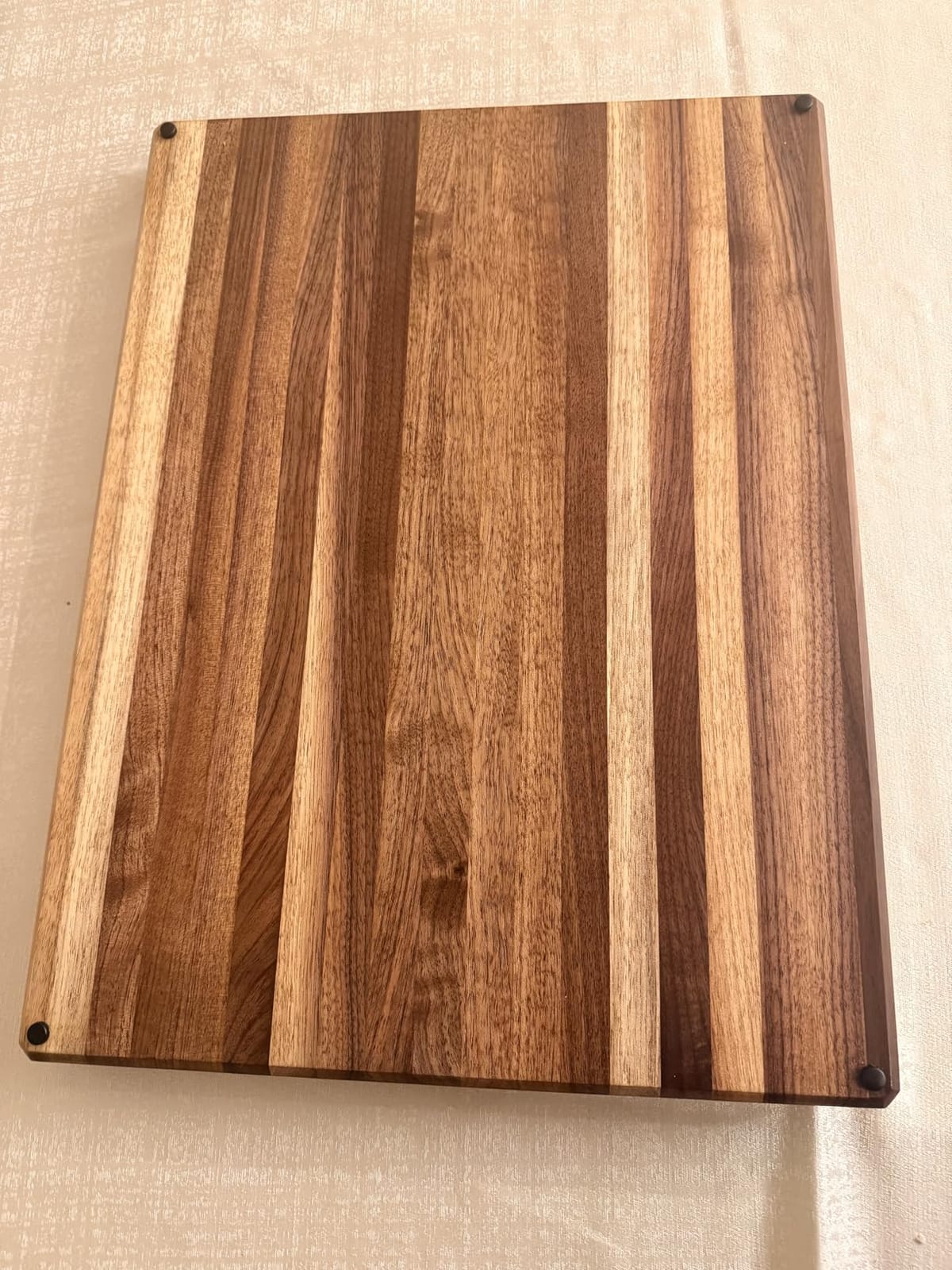
This is the board we kept reaching for during the test. At 17 by 13 inches it is sized for a full 8 inch chef knife with room to spare on both sides, which is exactly the match forum knife people keep asking about. The walnut fibers are fine enough that a crosscut score closes up within a day rather than staying visible.
The three built-in sorting wells are the feature that changed how I prep. Onions go in one, herbs in another, and the 3.5 fl oz juice groove catches what runs off a cut tomato or a piece of fish. That means less scraping the board into the sink and fewer trips to the compost.
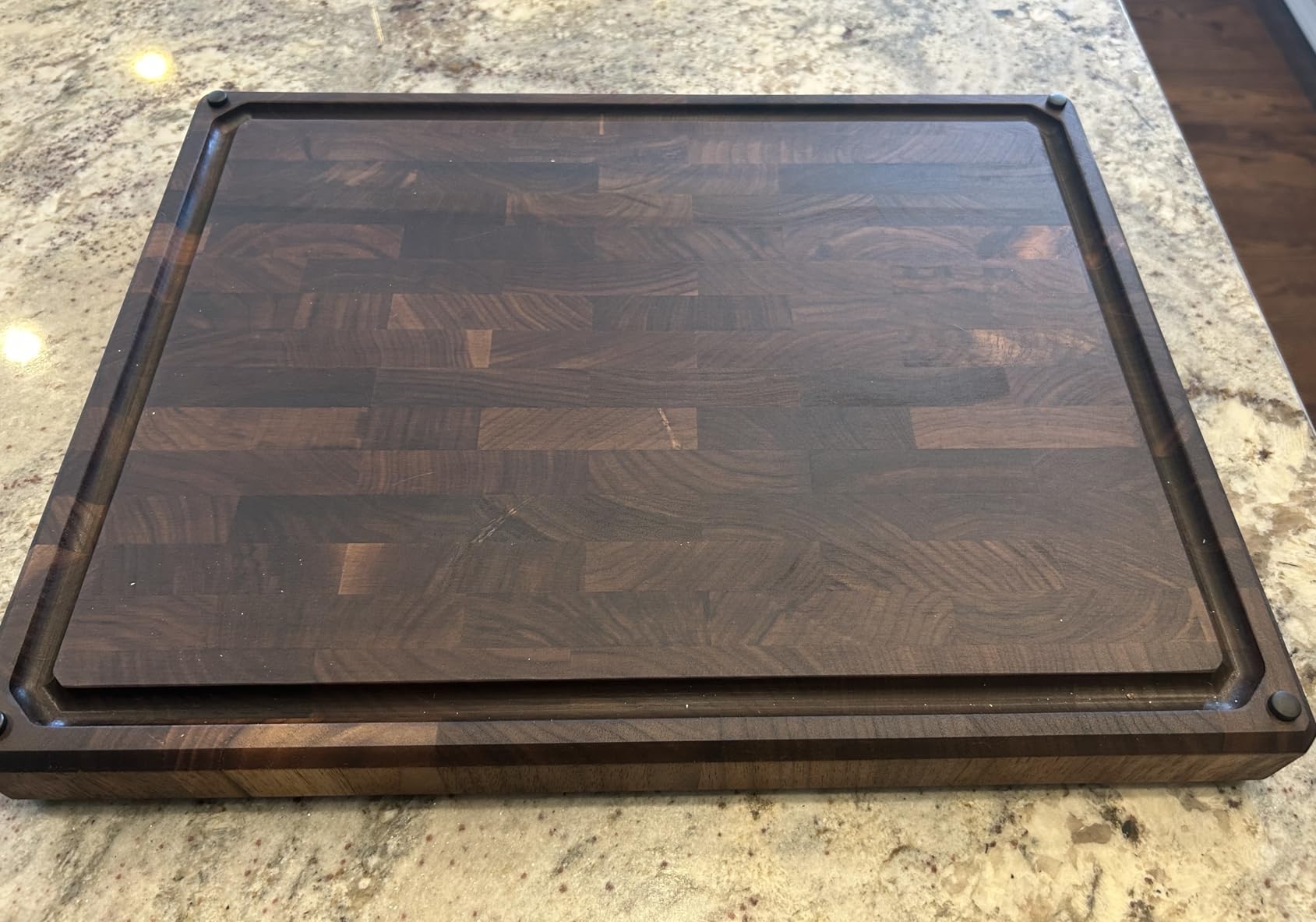
The removable rubber feet are a small decision with a real effect. Because the board stands off the counter, water underneath dries instead of pooling, and the 7.5 pound weight keeps it from walking during a heavy chop. On my counter the Alfred stayed put even when I was rocking the blade through a dense butternut squash half.
Two honest negatives. The 1.5 inch thickness is thinner than the 1.75 and 3 inch blocks in this roundup, and walnut is a wood that visibly darkens as it takes on oil. Neither ruins the board, but if you want a pale surface that stays pale, teak or maple is the calmer choice.
What to check before you commit
Count the wells against how you actually cook. Three wells is generous for a home kitchen that preps one meal at a time, and the wells do reduce usable flat area slightly at the edge. If your prep is mostly whole fish, large roasts and bread, the Ironwood or Babilonia boards give you more uninterrupted surface.
Also plan the oiling. The manufacturer calls for cutting board oil every two to three weeks, which is a real commitment. Skipping it is the fastest route to the cracking complaints that show up most often in end grain discussions.
Where it falls short
If you chop with a very heavy cleaver or a rocking motion that puts real downward force on the heel of the blade, 1.5 inches is where you will notice flex compared with the 2 and 3 inch blocks. It did not move on my counter, but the AZRHOM at 2 inches and 13.2 pounds never shifted at all.
And it is not a two-person board. The wells, groove and feet all add hardware and adhesive lines, so it is a prep board first and a serving board second. If presentation matters to you, a plain flat walnut block like the Babilonia or John Boos is a cleaner serving piece.
We earn a commission, at no additional cost to you. CERTAIN CONTENT THAT APPEARS ON THIS SITE COMES FROM AMAZON. THIS CONTENT IS PROVIDED 'AS IS' AND IS SUBJECT TO CHANGE OR REMOVAL AT ANY TIME.
2. Ironwood Gourmet Acacia Prep Station – Best Value
Ironwood Gourmet Large End Grain Prep Station Acacia Wood Cutting Board, 14 x 20-Inch, Brown
- 20 x 14 x 1.25 inch solid acacia end grain
- 7.2 pound multipurpose station
- Doubles as a serving board
- Hand wash only
Pros
- Largest review base of any board we tested
- 20 x 14 inch surface covers big prep
- Acacia end grain is durable and knife-friendly
- Attractive enough to leave on the counter
Cons
- At 1.25 inch it is the thinnest board here
- Hand wash only with no soaking allowed
- 13 percent one-star share signals mixed experiences
We earn a commission, at no additional cost to you. CERTAIN CONTENT THAT APPEARS ON THIS SITE COMES FROM AMAZON. THIS CONTENT IS PROVIDED 'AS IS' AND IS SUBJECT TO CHANGE OR REMOVAL AT ANY TIME.
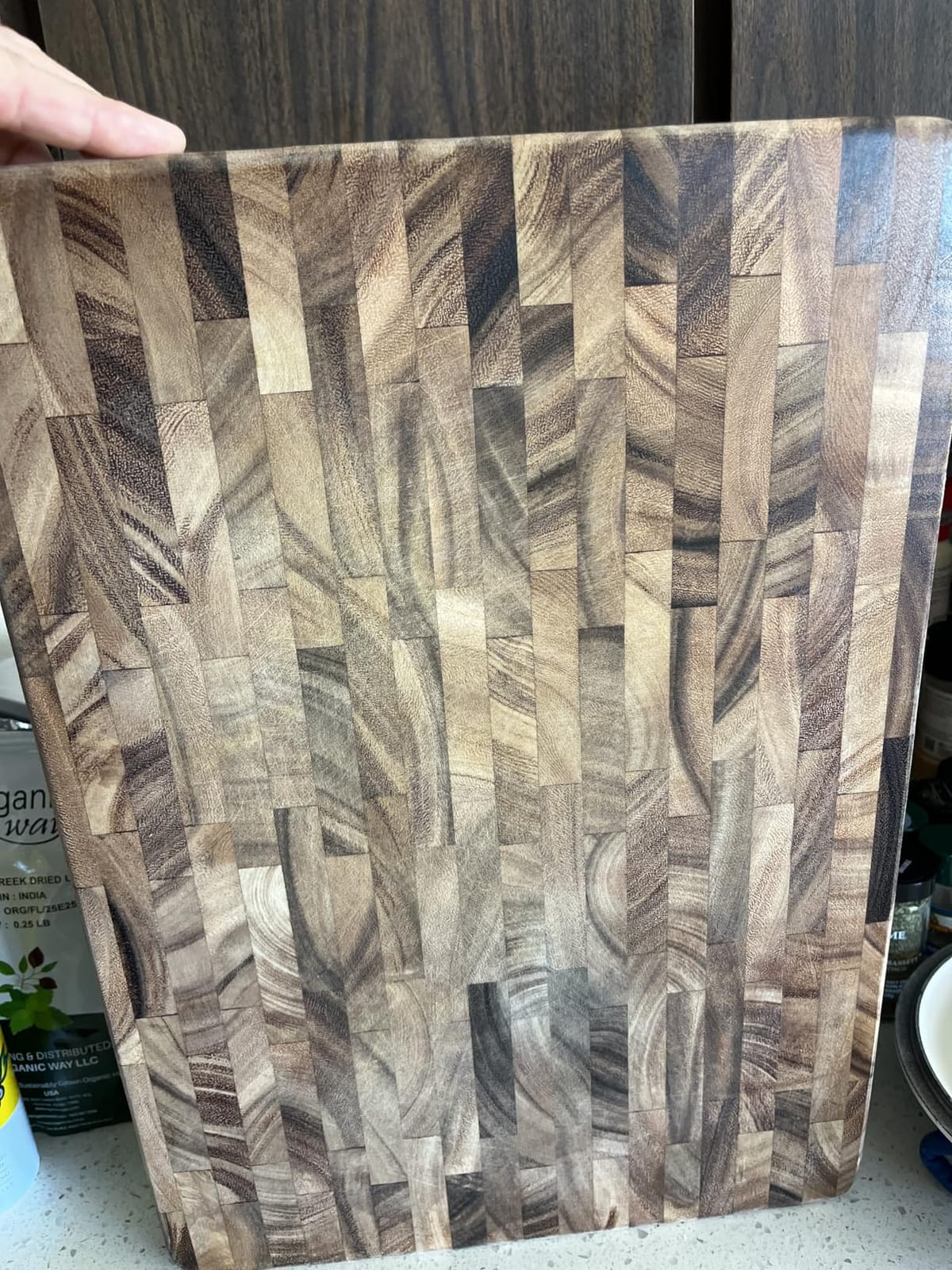
With more than 3,000 reviews behind it, this board has the longest public track record in our test group. Acacia is a dense hardwood with dramatic natural contrast in the grain, and the end grain orientation gives you the checkerboard pattern buyers look for when they want proof of the construction.
The 20 by 14 inch surface is the reason this one earned a permanent spot. It gives you a generous flat prep area in a lighter board than the heavy blocks here, and at 1.25 inch thick with a 7.2 pound weight it still held position through heavy prep. Hand washing in warm soapy water and drying immediately is the entire cleaning routine.
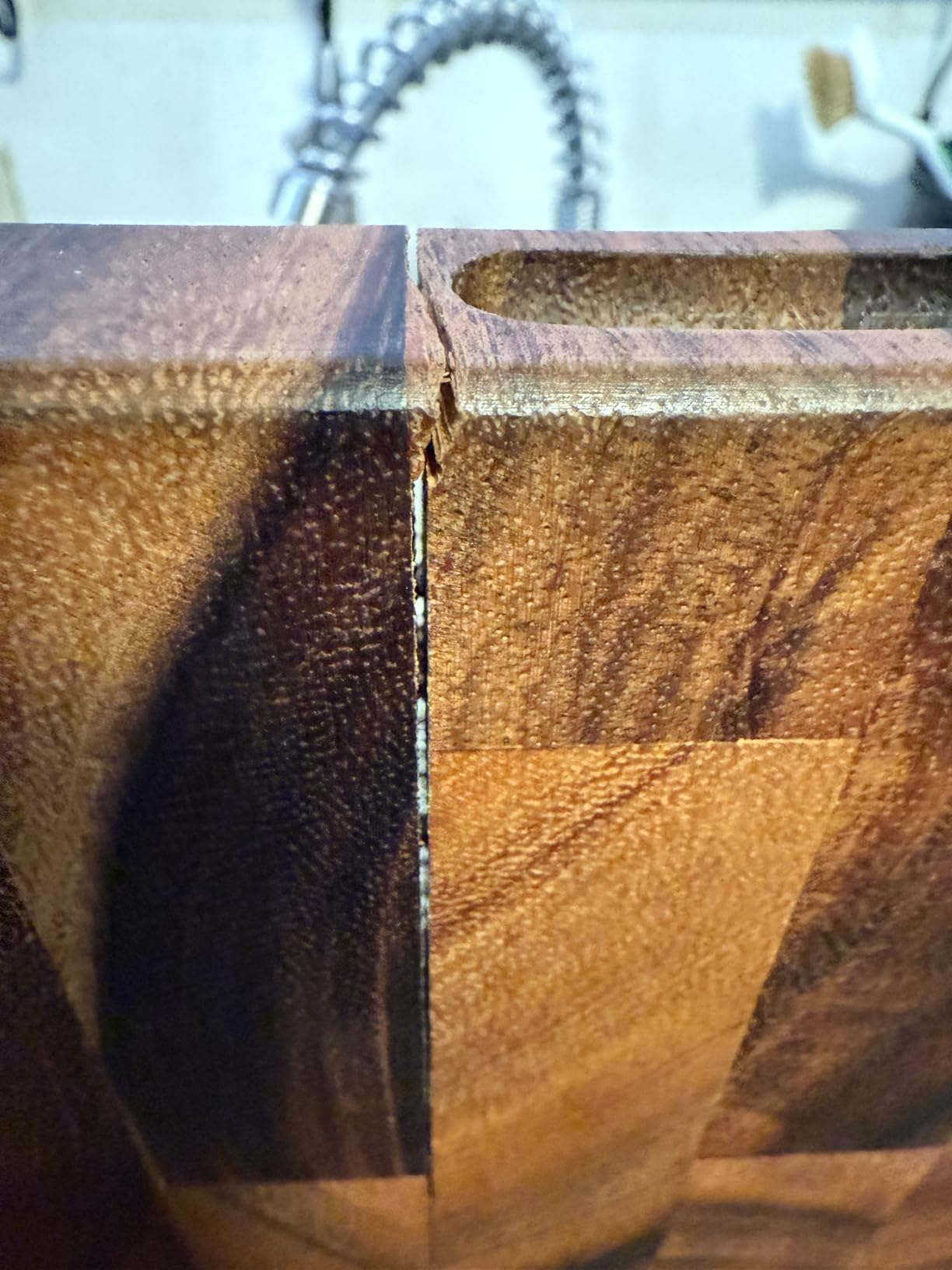
The honest problem here is that 4.1 stars with a 13 percent one-star share is a mixed report card, and the reviews explain why. At 1.25 inches this is the thinnest board we tested, and thin end grain boards are the ones most likely to show glue-line stress over time. The manufacturer instructions do say to oil periodically to preserve luster and avoid cracking, which is the right advice and the thing owners most often skip.
Reviewers also flag that it must not be soaked or stored in high humidity. On a sink-side rack that means it cannot sit damp overnight. Stand it on edge instead, and it dries fine.
When this one makes sense
Buy this board if you want maximum surface area on the entry boards and you prep a lot of vegetables in volume. The 20 by 14 inch area means a whole onion, a whole pepper and a whole head of cabbage fit down at once, which keeps chopped food off the counter.
It is also among the easiest of the ten to lift. At 7.2 pounds you can carry it one-handed to the sink, dry it, and stand it back up without thinking about it. That daily friction matters more than most buyers expect.
What gave us pause
The 1.25 inch thickness is the number to weigh. It is fine for normal prep but noticeably more flexible than the 2 and 3 inch blocks when you cut across the grain with a heavy stroke. If you break down chickens or chop dense squash often, spend the extra weight.
Be realistic about the one-star reviews too. They cluster around warping and cracking in boards that were never oiled, and around buyers who soaked the board despite the instructions. If you are willing to follow the care routine, that risk drops sharply.
We earn a commission, at no additional cost to you. CERTAIN CONTENT THAT APPEARS ON THIS SITE COMES FROM AMAZON. THIS CONTENT IS PROVIDED 'AS IS' AND IS SUBJECT TO CHANGE OR REMOVAL AT ANY TIME.
3. Mevell Extra Large Black Walnut Butcher Block – Thickest Walnut Build
Mevell Extra Large End Grain Black Walnut Butcher Block Cutting Board
- 20 x 13 inch end grain American black walnut
- Made in Canada from a Canadian shop
- 12 pound weight
- Food-contact rated waterproof adhesive
Pros
- Built from sustainably sourced American black walnut with no dyes or fillers
- Juice groove on one side and flat reverse
- Fibers close behind knife cuts
- Solid single-species hardwood with no coatings
Cons
- Very heavy at 12 pounds and awkward to lift
- Grain can lift after the first wash and needs light sanding
- Listed thickness varies between the listing text and the spec
We earn a commission, at no additional cost to you. CERTAIN CONTENT THAT APPEARS ON THIS SITE COMES FROM AMAZON. THIS CONTENT IS PROVIDED 'AS IS' AND IS SUBJECT TO CHANGE OR REMOVAL AT ANY TIME.
This is a substantial single-species walnut board. At 12 pounds it is heavier than almost every other board in the group, and the listed dimensions run to a 3 inch thickness, which makes it a true butcher block rather than a prep board.
The construction detail that stood out is the adhesive. The maker describes a waterproof adhesive rated for food contact, and no dye, no stain and no filler, so the deep chocolate tone is the walnut itself. That matters for anyone who does not want color or chemicals migrating into food.
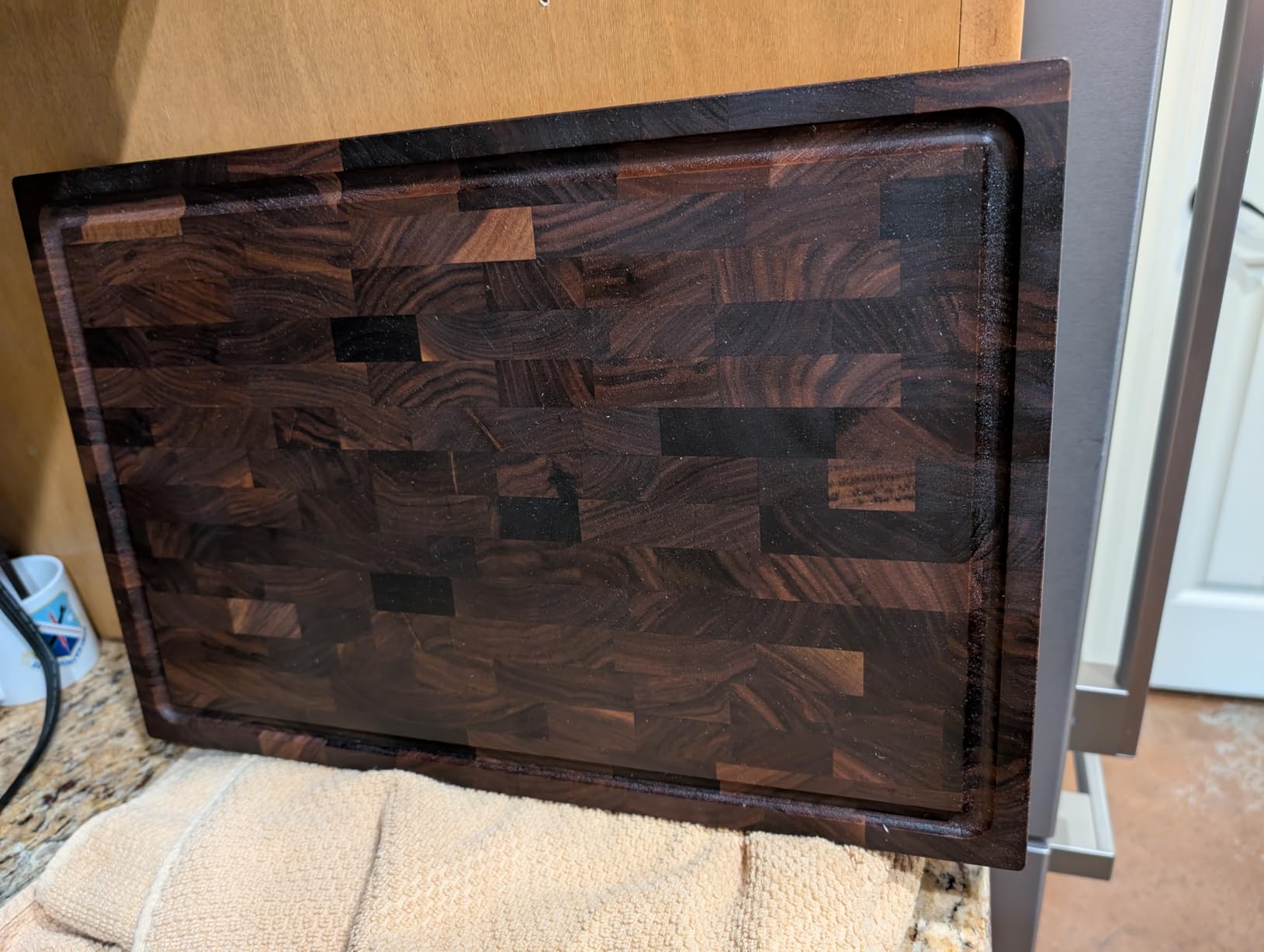
The juice groove side handles roast meat and wet prep; flip it for bread, cheese and carving. That two-sided design means you are not carving on a grooved surface, which keeps the carve clean and the presentation honest.
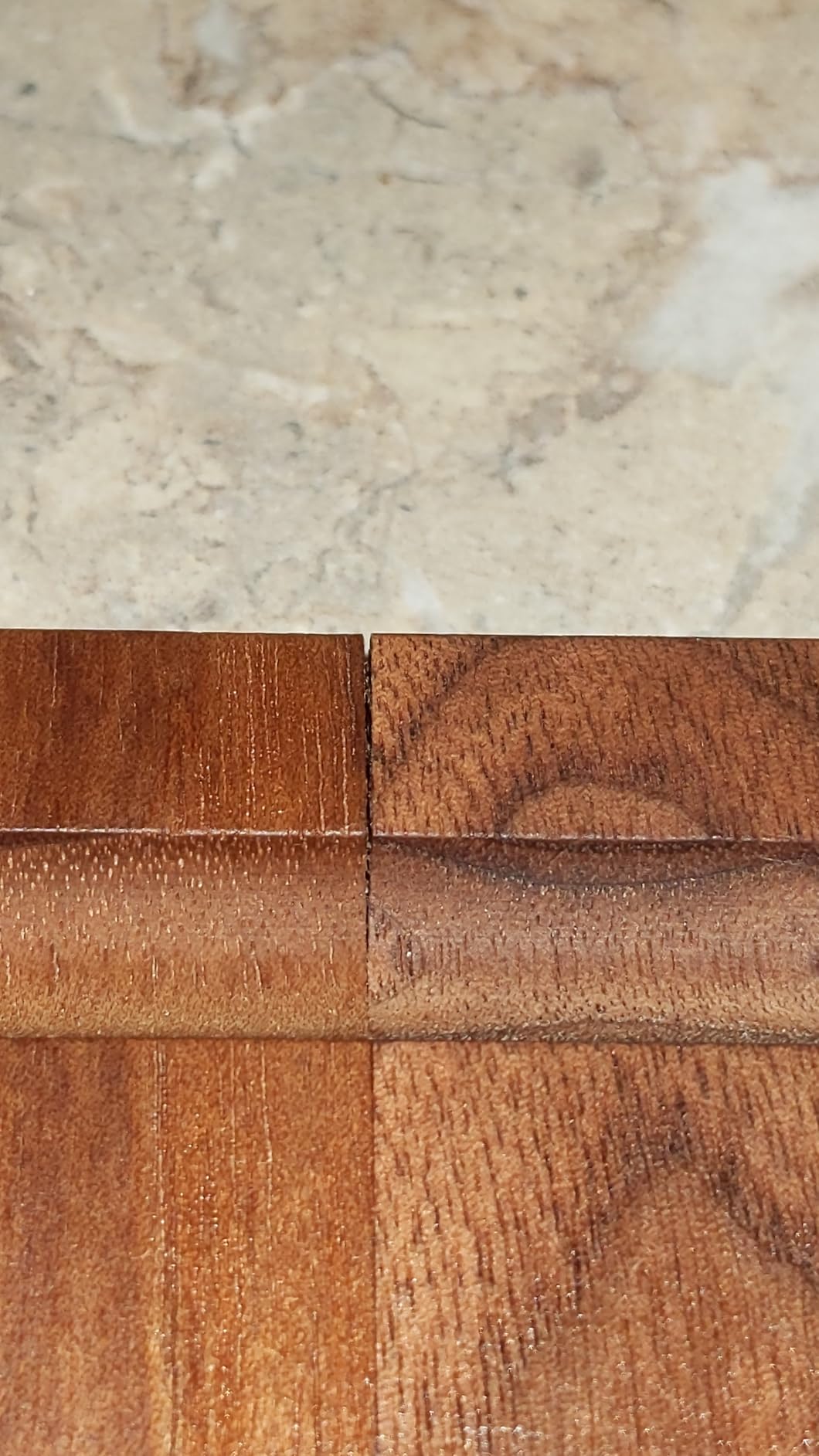
The one maintenance note the brand itself flags is worth repeating. After the first wash the grain can lift slightly, and the fix is dry the board, pass it once with 150 grit sandpaper, and re-oil. Most owners do this once and then maintain the surface with routine oiling.
What makes it worth the weight
Stability under force. When you are portioning a large roast or working through a dense squash, a board this heavy does not rock or slide. Our 7.5 pound Alfred stayed put too, but the Mevell had noticeably less give at the edges when pressure was applied near the corner.
It is also the pick for anyone who wants one board that handles meat and presentation. The flat reverse is a proper carving surface, and end grain fibers mean knife marks close up rather than becoming permanent scars.
Where the trade-offs show
Twelve pounds is a genuine inconvenience. Washing it means supporting the full weight over a sink, and storing it means clearing a counter or lower cabinet. Owners who cook for one or two regularly regret the heft.
There is also a documentation gap. The product listing text describes a 2 inch board while the technical spec says 3 inches, so check the physical board on arrival. Separating a glued laminate with too much force is exactly how cracks along glue lines start, and that is the top complaint in end grain circles.
We earn a commission, at no additional cost to you. CERTAIN CONTENT THAT APPEARS ON THIS SITE COMES FROM AMAZON. THIS CONTENT IS PROVIDED 'AS IS' AND IS SUBJECT TO CHANGE OR REMOVAL AT ANY TIME.
4. AZRHOM Acacia 20 x 15 x 2 Inch Block – Best for Stability
AZRHOM Acacia End Grain Wood Cutting Board 20x15x2 In Thick Butcher Block
- 20 x 15 x 2 inch solid acacia end grain
- 13.2 pounds
- Deep juice groove and built-in handle
- Reversible
Pros
- Thick 2 inch end grain build stays planted
- Deep juice groove and handles aid carrying
- End grain absorbs impact and reduces dulling
- Doubles as a chopping board and serving tray
Cons
- Heaviest acacia option here at 13.2 pounds
- Needs regular oiling to stay in shape
- Juice groove side limits full-surface chopping area
We earn a commission, at no additional cost to you. CERTAIN CONTENT THAT APPEARS ON THIS SITE COMES FROM AMAZON. THIS CONTENT IS PROVIDED 'AS IS' AND IS SUBJECT TO CHANGE OR REMOVAL AT ANY TIME.
At 13.2 pounds this is the heaviest board in the roundup, and if you want a surface that will not move, this is it. The 2 inch thickness is a meaningful upgrade over the 1.25 and 1.5 inch boards in this roundup for anyone cutting with force.
Acacia is the wood doing the work here. It is dense, resists moisture well, and the natural contrast in the grain means the checkerboard end grain pattern reads clearly. The manufacturer describes the end grain construction as absorbing impact to reduce dulling and prevent deep cuts, which matches what we saw on a week of onion and carrot prep.
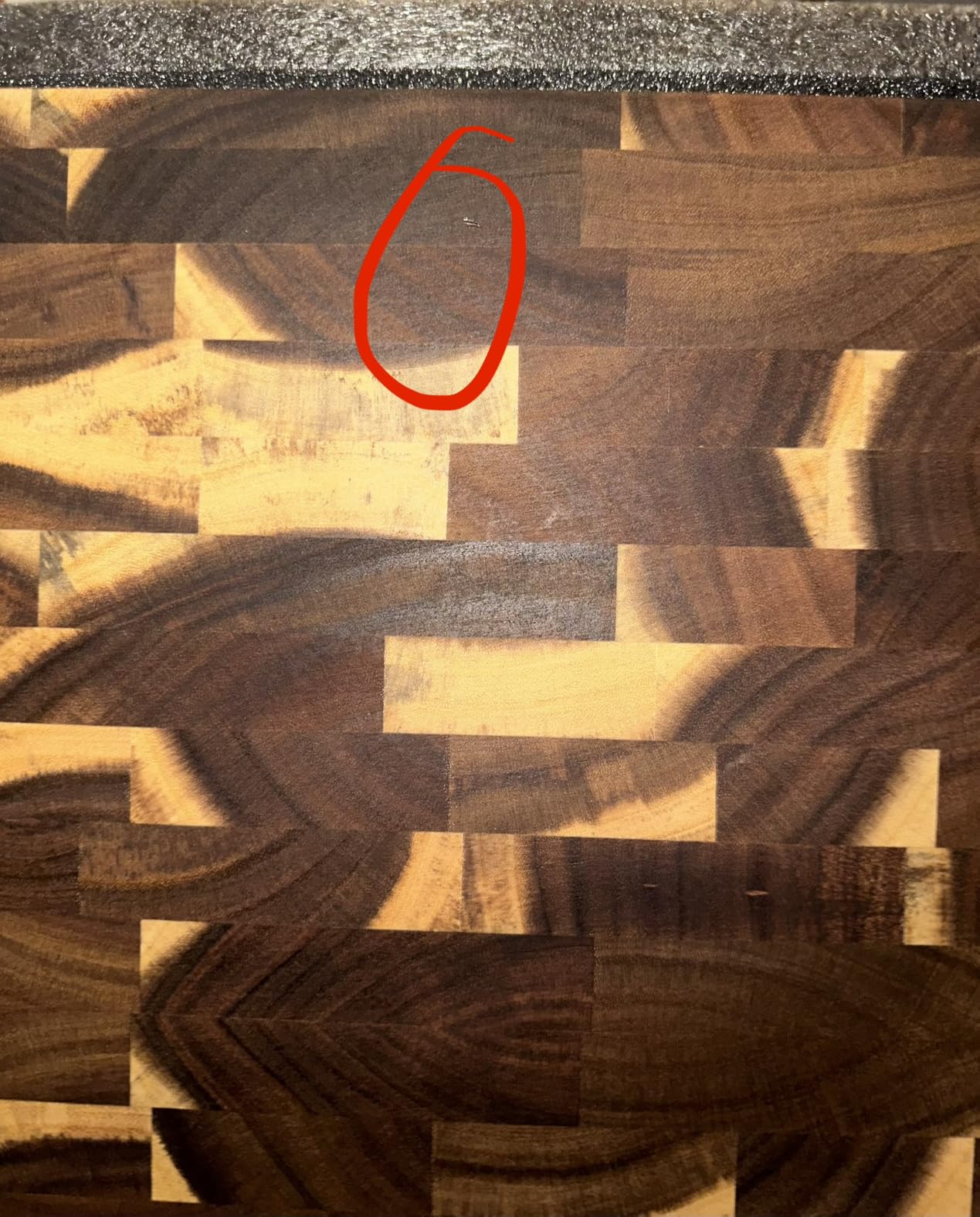
Two practical features. The deep juice groove keeps liquid runoff off the counter during meat prep, and the built-in handle is a real cut-out you can actually grip with a damp hand, which matters more than it sounds when you are carrying a wet 13 pound board to the sink.
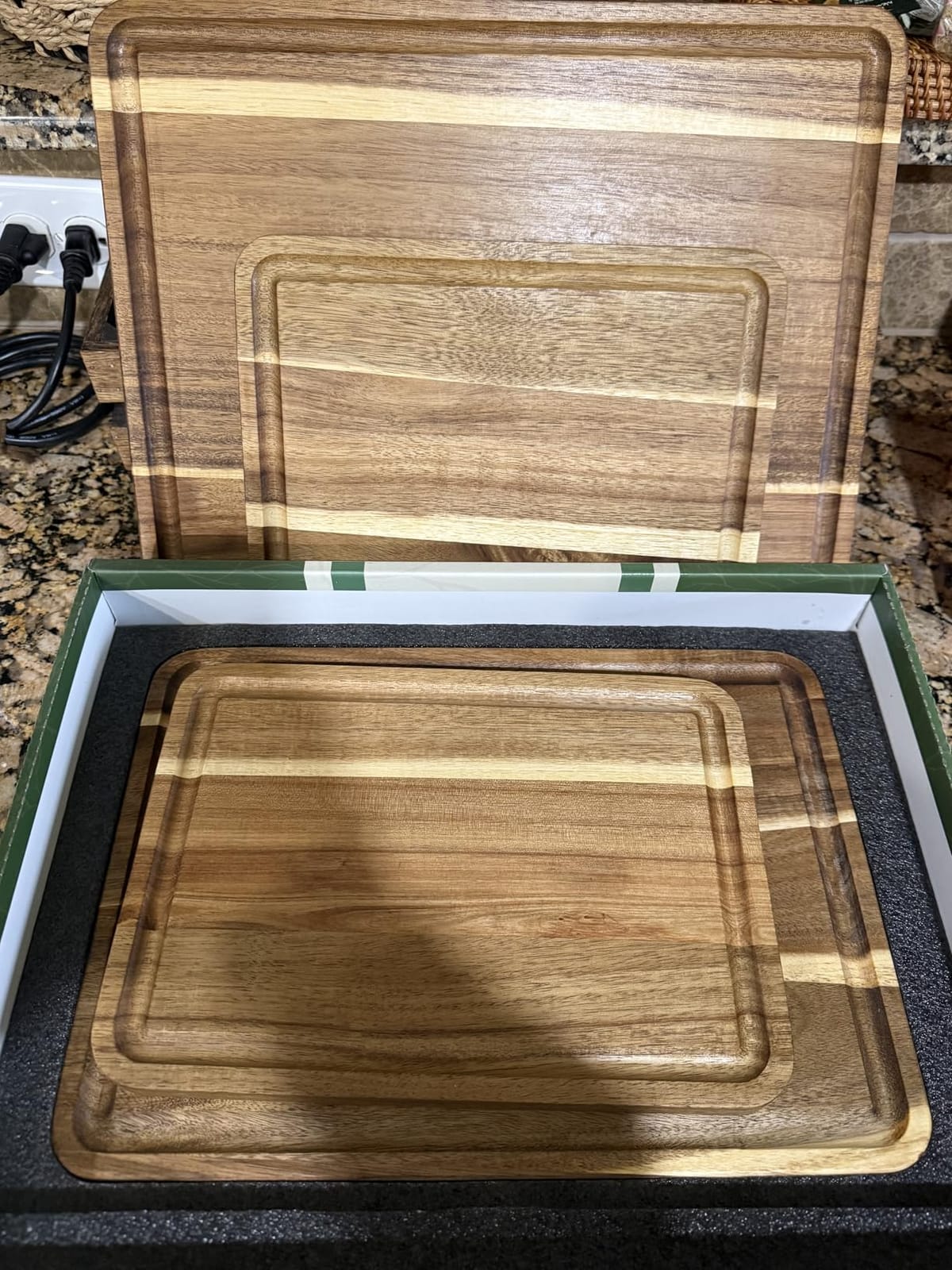
It is reversible and works as a serving tray for cheese or charcuterie, though in practice the grooved side is the one that gets used for cutting and the flat side becomes the presentation side.
Who this suits
If your prep includes breaking down meat, cutting dense squash, or working with a knife that has real heft behind it, thickness is the feature that will change your daily experience. A board this heavy can absorb a downward chop without any flex or movement.
It also works well as a permanent countertop perch station. At this weight you are not going to slide it around, so you can build a prep corner around it instead of pulling a board out each time.
What to weigh against it
The 13.2 pound weight is the whole conversation. Washing means supporting the whole board with two hands over the sink, and you need both hands free to scrub. If you have limited upper body strength or a sink with a narrow cabinet below, this is a hard board to live with daily.
Acacia also needs regular oiling to stay in shape, which is the same maintenance story as every other end grain board here. Skipping it is how boards end up with checks along the grain.
We earn a commission, at no additional cost to you. CERTAIN CONTENT THAT APPEARS ON THIS SITE COMES FROM AMAZON. THIS CONTENT IS PROVIDED 'AS IS' AND IS SUBJECT TO CHANGE OR REMOVAL AT ANY TIME.
5. Babilonia XXL American Black Walnut End Grain Board – Best for Large Roasts
XXL American Black Walnut Wood Cutting Board, End Grain Butcher Block
- 24 x 15 x 1.7 inch American black walnut end grain
- 8.8 pounds
- Pre-seasoned with oil included
- Plate and notch transfer system
Pros
- Extra large 24 x 15 surface handles roasts and whole fish
- Black walnut grown in the USA
- Notch and plate transfer chopped food into a pot
- Comes pre-seasoned with an organic oil bottle
- Backed by a 2 year warranty
Cons
- Inconsistent sizing between the listing title and highlight
- 24 inch width can overhang smaller counters
- Hand wash only and needs periodic oiling
We earn a commission, at no additional cost to you. CERTAIN CONTENT THAT APPEARS ON THIS SITE COMES FROM AMAZON. THIS CONTENT IS PROVIDED 'AS IS' AND IS SUBJECT TO CHANGE OR REMOVAL AT ANY TIME.
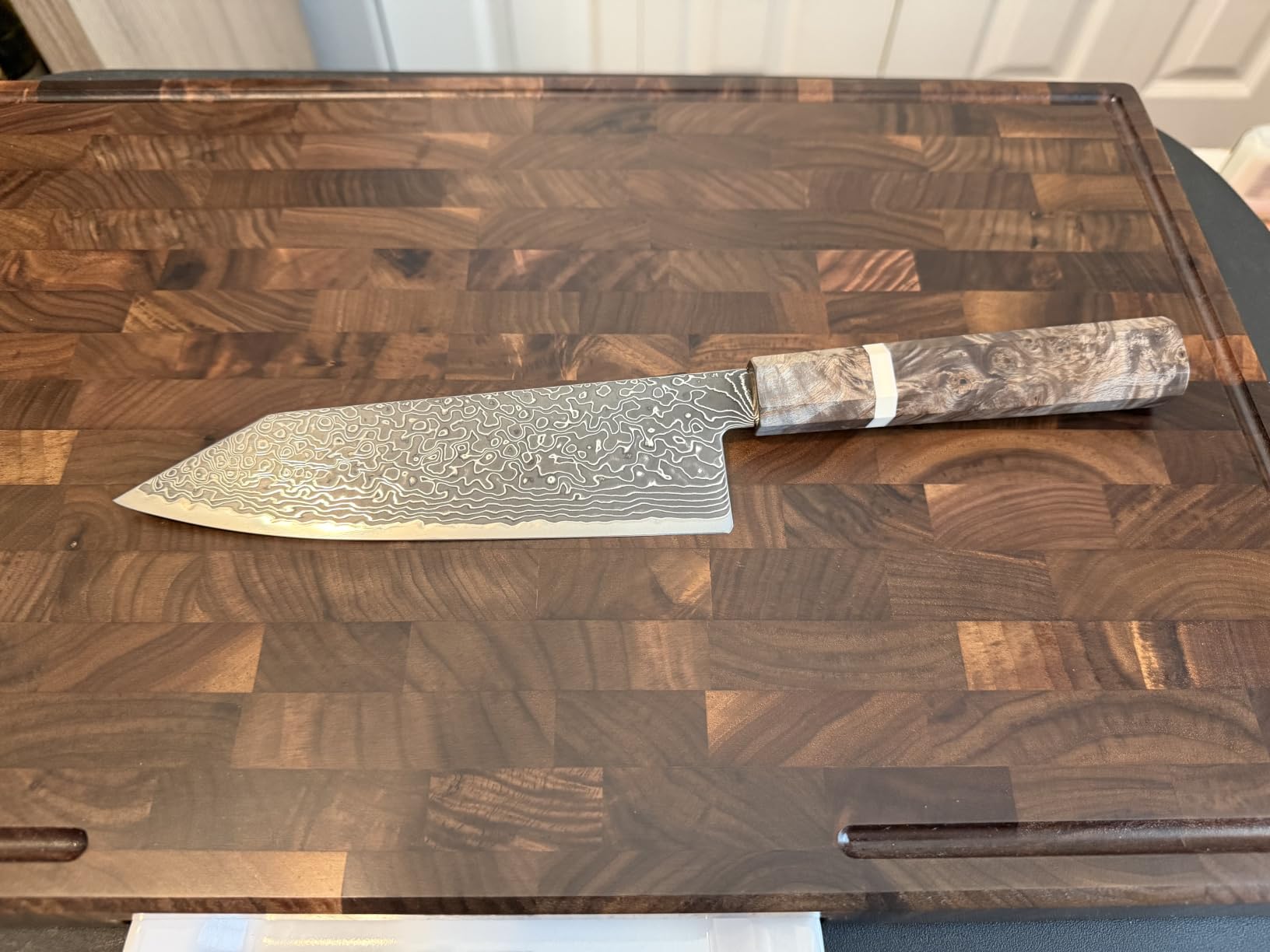
This board pairs a 24 by 15 inch surface with 1.7 inch thickness, which sits in the sweet spot between the entry boards and the heavy blocks. At 8.8 pounds it is heavy without being unmanageable.
The walnut is grown in the USA and the board arrives pre-conditioned, with an organic oil bottle in the box. That detail matters more than it sounds, because a board that arrives already conditioned is far less likely to crack in its first months than one that sits dry in a cupboard waiting for you to remember it.
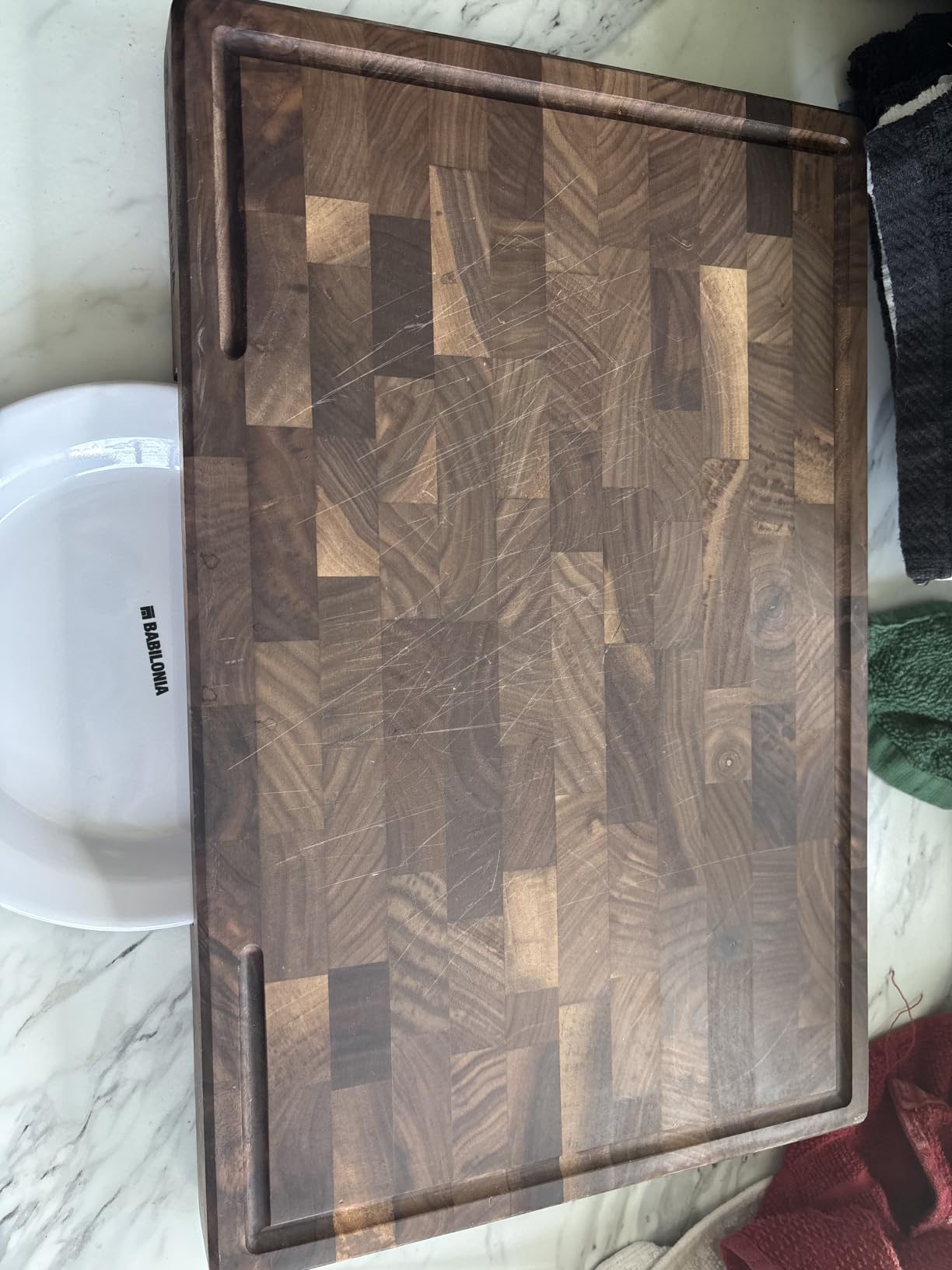
The plate and notch system is the feature I did not expect to like as much as I do. The notch lets you slide chopped produce directly onto a plate or into a pot rather than trying to scoop it off a flat surface with the knife blade. Over a week of vegetable prep it saved real time and kept the board cleaner.
It is described as a 3 in 1 board, tray and transfer design, and the reversibility plus the included plate make it a strong serving option for a dinner where the food is the point.
Why this one for big cuts
A 24 inch length gives you room for a whole brisket, a large fish, or a full sheet of bread dough without anything hanging off the edge. That is the single biggest practical difference between this board and the 17 by 13 inch Alfred, and it shows up the moment you start butchering rather than dicing.
The 2 year warranty and money-back guarantee also make it the lowest-risk large walnut board here, which is useful when you are committing to a board this size for the first time.
What to watch for
The listing is internally inconsistent on size. The title and spec say 24 by 15, while the highlight text mentions a 25 inch length. Measure your counter space first, because a board this wide will overhang a smaller worktop and rock when you load one side.
It is hand wash only, cannot go in the dishwasher, and needs periodic oiling to keep the walnut sealed. That is the standard care routine for this category, but it does mean the board lives on your counter rather than in a cupboard.
We earn a commission, at no additional cost to you. CERTAIN CONTENT THAT APPEARS ON THIS SITE COMES FROM AMAZON. THIS CONTENT IS PROVIDED 'AS IS' AND IS SUBJECT TO CHANGE OR REMOVAL AT ANY TIME.
6. Dalstrong End Grain Teak Board – Best Teak Option
Dalstrong Cutting Board – End-Grain Teak, 16in x 12in
- 16 x 12 x 2 inch end grain teak
- Steel carrying handles
- Non-slip feet
- Care guide included
Pros
- Nearly 2 inches thick resists warping and self-heals gouges
- Fibers help preserve edge sharpness
- Steel handles let it double as a serving tray
- Underside cut-out fits a plate to catch prepped food
- Sustainably sourced teak that resists water and staining
Cons
- Heavy and the feet need a perfectly flat counter or it wobbles
- Feet on one side mean it is not a true two-sided board
- A minority of boards arrive with cracks or high spots
- Listed weight of 1 ounce is not representative
We earn a commission, at no additional cost to you. CERTAIN CONTENT THAT APPEARS ON THIS SITE COMES FROM AMAZON. THIS CONTENT IS PROVIDED 'AS IS' AND IS SUBJECT TO CHANGE OR REMOVAL AT ANY TIME.
Teak is the species choice when water resistance matters, and this board leans into that. The tight teak grain resists water, staining and discoloration, which makes it the one in this group I would be most comfortable leaving near a sink or using for wet prep.
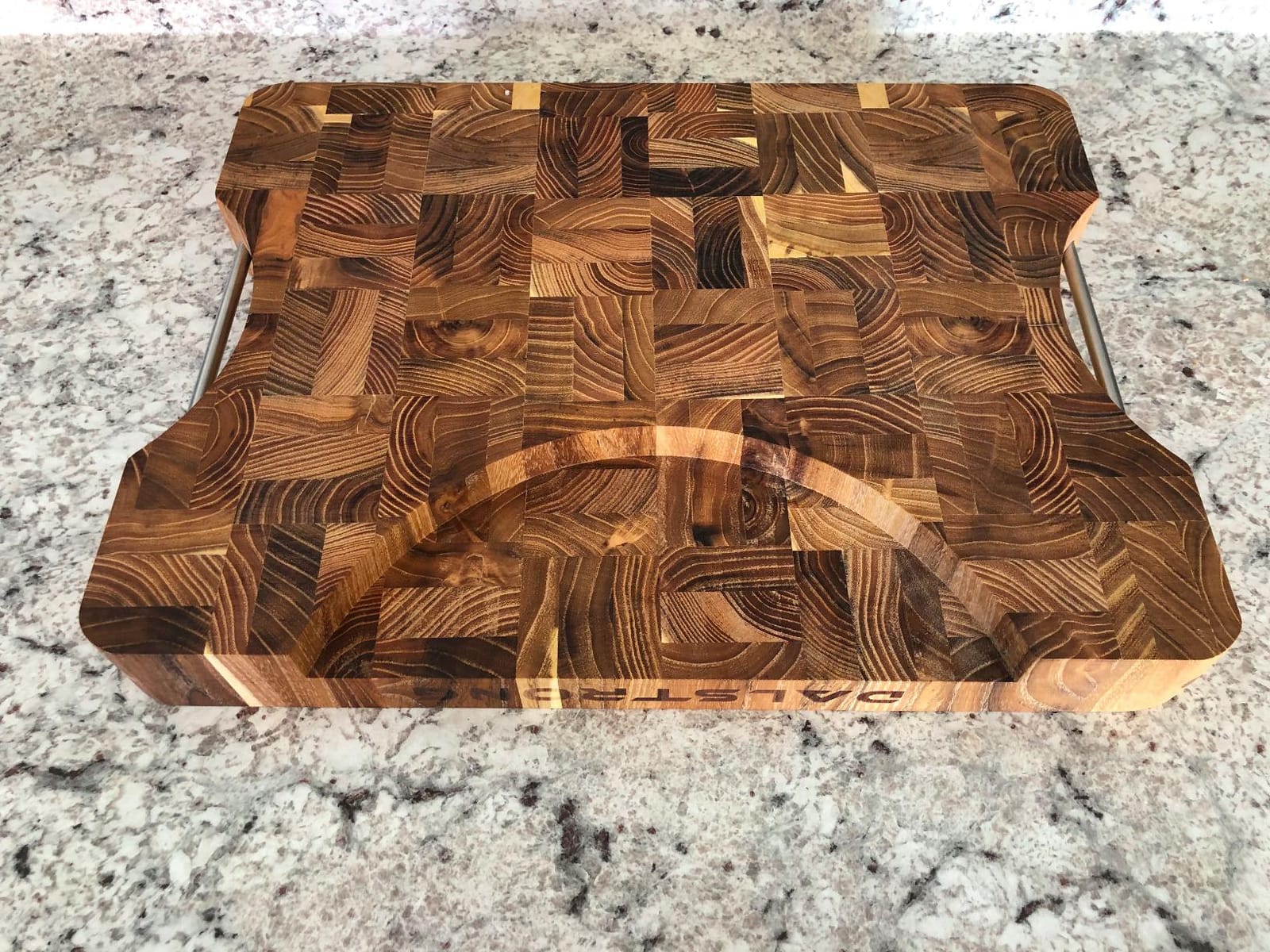
At nearly 2 inches thick it is one of the beefier builds, and reviewers consistently report that gouges self-heal rather than staying open. The steel carrying handles are a real addition, and the underside cut-out lets you slide a plate underneath to catch finished food.
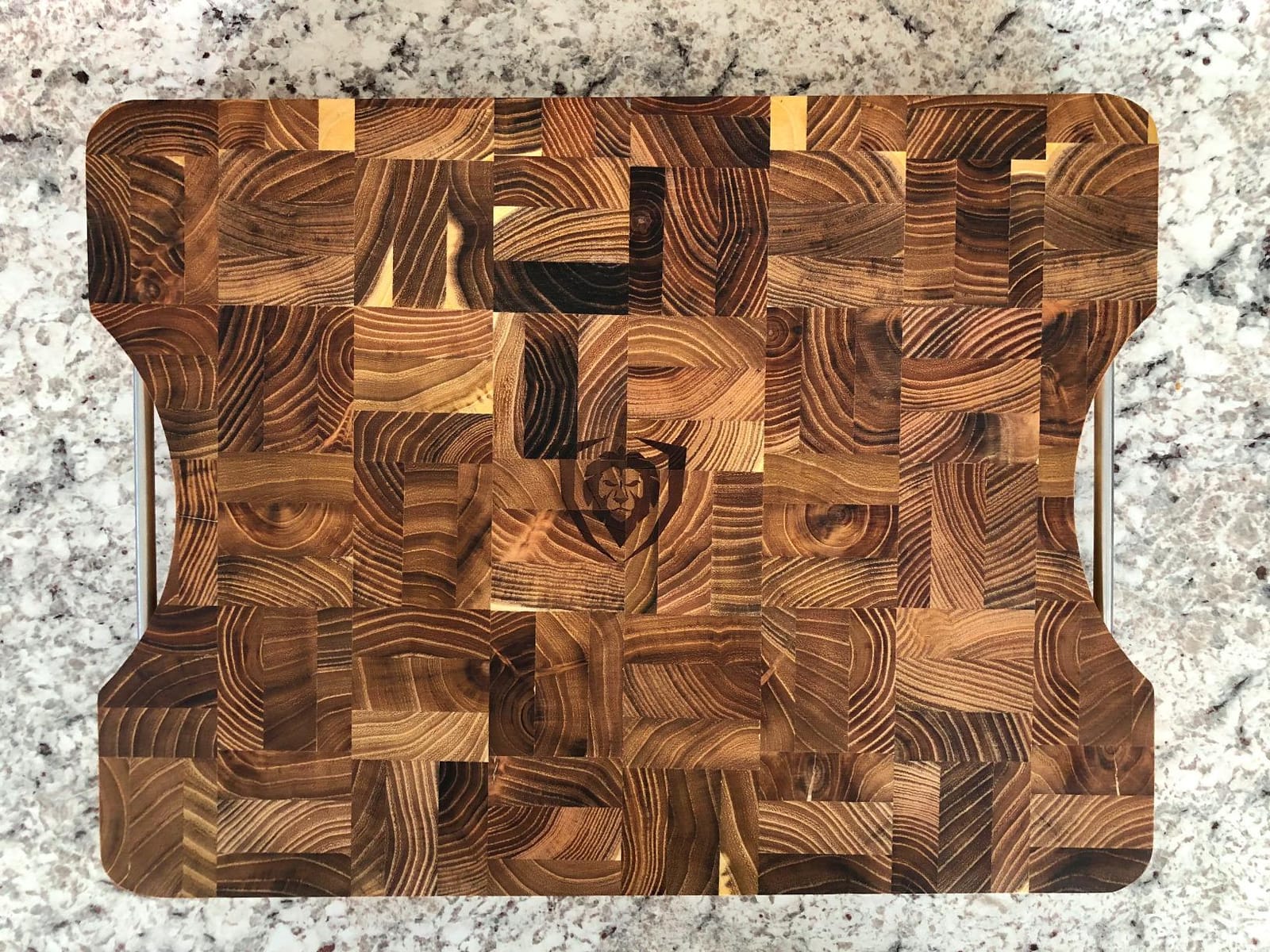
Where the design gets awkward is the feet. Because they are on one side, this is not a true two-sided board the way the Mevell or Babilonia are, and the feet require a flat counter. On an uneven or tiled counter with a lip, the board rocks, and a rocking board is a stability problem when you are cutting with force.
There is also a quality control signal worth mentioning. A minority of buyers report boards arriving with cracks or high spots straight out of the packaging, so inspect the surface on arrival before you start cutting. Dalstrong’s customer service is repeatedly praised for replacing defects, which is the right resolution.
When teak is the right call
Choose teak if your kitchen is humid, if you prep a lot of raw fish or meat and rinse the board between uses, or if you simply dislike the idea of a wood surface near water. Teak tolerates that treatment better than walnut or maple.
It also holds its color. Walnut and acacia boards both darken visibly as they take on oil and use; teak stays closer to its original tone, which matters if the board lives on display rather than hidden in a cabinet.
What to check on arrival
Run a thumbnail along the glue lines and look for any open seams or lifted fibers. End grain boards with many staves have many adhesive joints, and factory finish quality is where problems appear first. A light sanding and oil fixes surface lift; a deep split does not.
Also check that your counter is flat where the feet sit. If it rocks, the feet are a limitation of the design rather than a fault in the board.
We earn a commission, at no additional cost to you. CERTAIN CONTENT THAT APPEARS ON THIS SITE COMES FROM AMAZON. THIS CONTENT IS PROVIDED 'AS IS' AND IS SUBJECT TO CHANGE OR REMOVAL AT ANY TIME.
7. Yes4All End Grain Teak Board – Best Budget Pick
Yes4All Durable Teak Cutting Boards for Kitchen, [17”L x 13”W x 1.5” Thick] Medium End Grain Cutting Board, Pre Oiled Wood Cutting Boards, Thick Chopping Board w/Juice Grooves and Easy Grip Handle
- 16.5 x 12.9 x 1.5 inch solid teak end grain
- 8.4 pounds
- Deep juice groove and handles
- Pre-oiled knife-friendly surface
Pros
- Real teak with a grain that deepens after oiling
- Deep juice groove holds liquid from meat and fruit
- 1.5 inch thick yet light enough to lift easily
- No warping when dried standing on end
- Attractive enough to display on the counter
Cons
- Some buyers report warping in humid conditions
- Half inch staves give a busier checkerboard look
- Surface and grooves can be rough out of the box
- Small splits if not conditioned regularly
We earn a commission, at no additional cost to you. CERTAIN CONTENT THAT APPEARS ON THIS SITE COMES FROM AMAZON. THIS CONTENT IS PROVIDED 'AS IS' AND IS SUBJECT TO CHANGE OR REMOVAL AT ANY TIME.
This is the board I would hand to someone testing whether they actually like end grain. The teak is real, the grain is tight, and it arrives pre-oiled with a scrubbed surface that reviewers describe as genuinely kind to knife edges.
At 8.4 pounds and 16.5 by 12.9 inches, it strikes a good balance between real heft and one-handed handling. I could pick it up, rinse it, scrub it and stand it on edge without rearranging my grip, which is the daily reality that heavier boards like the AZRHOM make harder.
![Yes4All Durable Teak Cutting Boards for Kitchen, [17''L x 13''W x 1.5” Thick] Medium End Grain Cutting Board, Pre Oiled Wood Cutting Boards, Thick Chopping Board w/Juice Grooves and Easy Grip Handle customer photo 1](https://betterresultsbook.com/wp-content/uploads/2026/10/B0BFRHZVWL_customer_1.jpg)
The deep juice groove is more effective than it has any right to be at this weight. It holds what runs off a cut tomato or a piece of meat instead of letting it run off the edge, and the built-in handles make carrying it to the sink straightforward.
Two texture notes from real use. The half inch staves produce a busier, higher contrast checkerboard than the larger staves in the premium walnut boards, which is a look preference more than a performance one. Surface and grooves can feel rough out of the box, so a light sanding followed by an oil on day one sets it up properly.
![Yes4All Durable Teak Cutting Boards for Kitchen, [17''L x 13''W x 1.5” Thick] Medium End Grain Cutting Board, Pre Oiled Wood Cutting Boards, Thick Chopping Board w/Juice Grooves and Easy Grip Handle customer photo 2](https://betterresultsbook.com/wp-content/uploads/2026/10/B0BFRHZVWL_customer_2.jpg)
Why this is the value pick
Most reviewers report oiling it on arrival and then using it for years of daily prep, which is the pattern you want from a board at this level. Teak is the species doing the heavy lifting here, and it is the same species used in the Dalstrong board.
It also dries well standing on end. Boards that dry flat are the ones that warp, and standing the board on its long edge after washing is the single most effective habit for extending its life.
What to keep in mind
A small group of buyers report warping soon after delivery, particularly in humid conditions, and small splits on boards that were not conditioned regularly. That is the honest downside of 1.5 inch thickness in teak.
The care instruction is straightforward: do not soak, wash in warm soapy water and rinse thoroughly. If you put it in the dishwasher or leave it standing in water, you are ignoring the one rule that keeps this construction intact.
We earn a commission, at no additional cost to you. CERTAIN CONTENT THAT APPEARS ON THIS SITE COMES FROM AMAZON. THIS CONTENT IS PROVIDED 'AS IS' AND IS SUBJECT TO CHANGE OR REMOVAL AT ANY TIME.
8. Teakhaus Extra Large Carving Board – Best FSC-Certified Teak
Teakhaus Thick End Grain Butcher Block with Juice Groove, Extra Large.
- 24 x 18 x 1.5 inch extra large end grain teak
- FSC certified
- Deep juice groove one side
- Reversible
Pros
- Largest surface in the roundup at 24 x 18 inches
- FSC certified teak with no coatings or finishes
- Deep juice groove keeps counters clean
- Reversible for charcuterie and bread
- Moisture resistance limits warping and staining
Cons
- 1.5 inch is thinner than the premium walnut blocks
- Very wide 24 inch footprint overwhelms a small counter
- Listed weight of 16 ounces is not representative
- Hand wash and oil only (not dishwasher safe)
We earn a commission, at no additional cost to you. CERTAIN CONTENT THAT APPEARS ON THIS SITE COMES FROM AMAZON. THIS CONTENT IS PROVIDED 'AS IS' AND IS SUBJECT TO CHANGE OR REMOVAL AT ANY TIME.
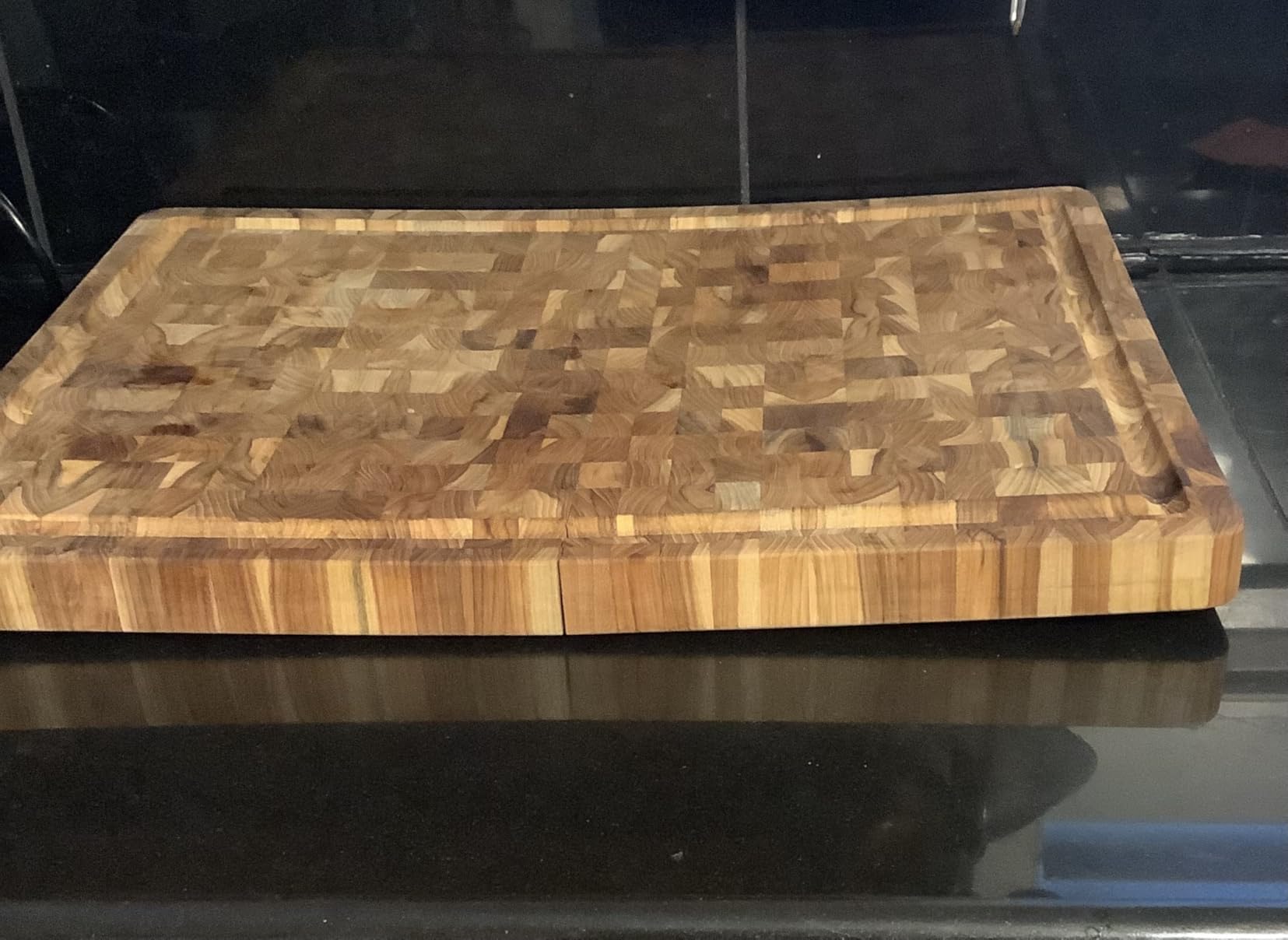
Teakhaus makes the largest flat surface in this roundup at 24 by 18 inches, and it is also the only pick here with FSC certification attached to the sourcing. If the origin of the wood matters to you, that is a verifiable detail rather than a marketing line.
The construction is deliberately simple. No plastic components, no coatings and no finishes, which means nothing to flake into food and nothing to wear off over time. Teak is used specifically here because of its moisture endurance, and that is the correct species choice for a wide carving surface.
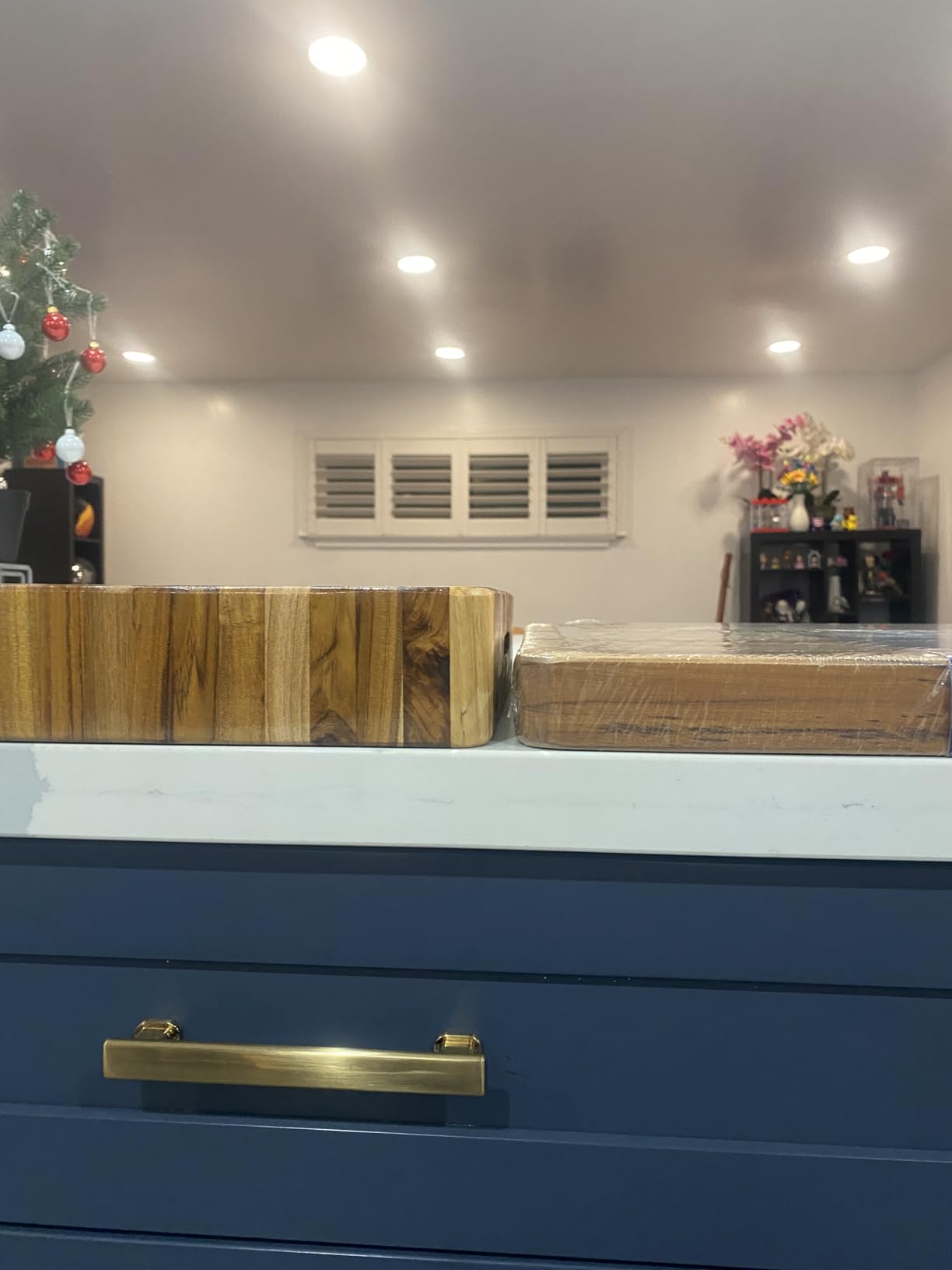
At 1.5 inches thick this is thinner than the walnut and maple blocks in this group. For carving and charcuterie that is fine, because carving strokes are long and shallow rather than forceful chops. For heavy cleaver work you would want more thickness than this board offers.
The brand’s own care advice is a few drops of oil regularly, hand washed with dish soap. Keeping that habit is what preserves the fibers and prevents the checks that show up in neglected end grain boards.
What makes it a distinct choice
Two things. The certification is verifiable, and the surface is larger than the other boards in this roundup. A 24 by 18 inch board lets you lay out a full charcuterie spread, several cheeses and a sliced loaf, or break down a large fish, without anything hanging over the edge.
It is also the one to pick if you want the board to stay visually neutral. Teak resists staining and discoloration better than walnut or acacia, both of which darken noticeably with oil and use.
What to plan around
Counter space. A 24 inch wide board needs a real stretch of worktop, and on a small kitchen it will overhang and rock. That is the main reason we would not make this the first end grain board someone buys.
It is also hand wash only. With a surface this large, hand washing is a genuine chore, and the 1.5 inch thickness gives you less stiffness than the 2 inch and 3 inch blocks if you try to flex it to clean.
We earn a commission, at no additional cost to you. CERTAIN CONTENT THAT APPEARS ON THIS SITE COMES FROM AMAZON. THIS CONTENT IS PROVIDED 'AS IS' AND IS SUBJECT TO CHANGE OR REMOVAL AT ANY TIME.
9. John Boos Classic Walnut End Grain Block – Best for Restaurant Credibility
John Boos Block WAL-CCB1812-175 Classic Collection Wood End Grain Chopping Block, 18 inches x 12 inches x 1.75 inches
- 18 x 12 x 1.75 inch walnut end grain
- Made in the USA by John Boos
- Recessed finger grips both sides
- Oil finish, reversible
Pros
- American made walnut block from a maker trusted since 1887
- 1.75 inch thickness gives a level stable surface
- Recessed finger grips on both sides for lifting
- Reversible sides with an oil finish out of the box
- 1 year guarantee against defects
Cons
- Upper end of the price range in this roundup
- Listed weight of 16 ounces is not representative
- Boos Block oil and cream sold separately
- Smallest review base here with a 12 percent one-star share
We earn a commission, at no additional cost to you. CERTAIN CONTENT THAT APPEARS ON THIS SITE COMES FROM AMAZON. THIS CONTENT IS PROVIDED 'AS IS' AND IS SUBJECT TO CHANGE OR REMOVAL AT ANY TIME.
John Boos has been making American cutting boards since 1887, and that lineage is the main reason to consider this block. It is the most conventional, restaurant-style board in this roundup.
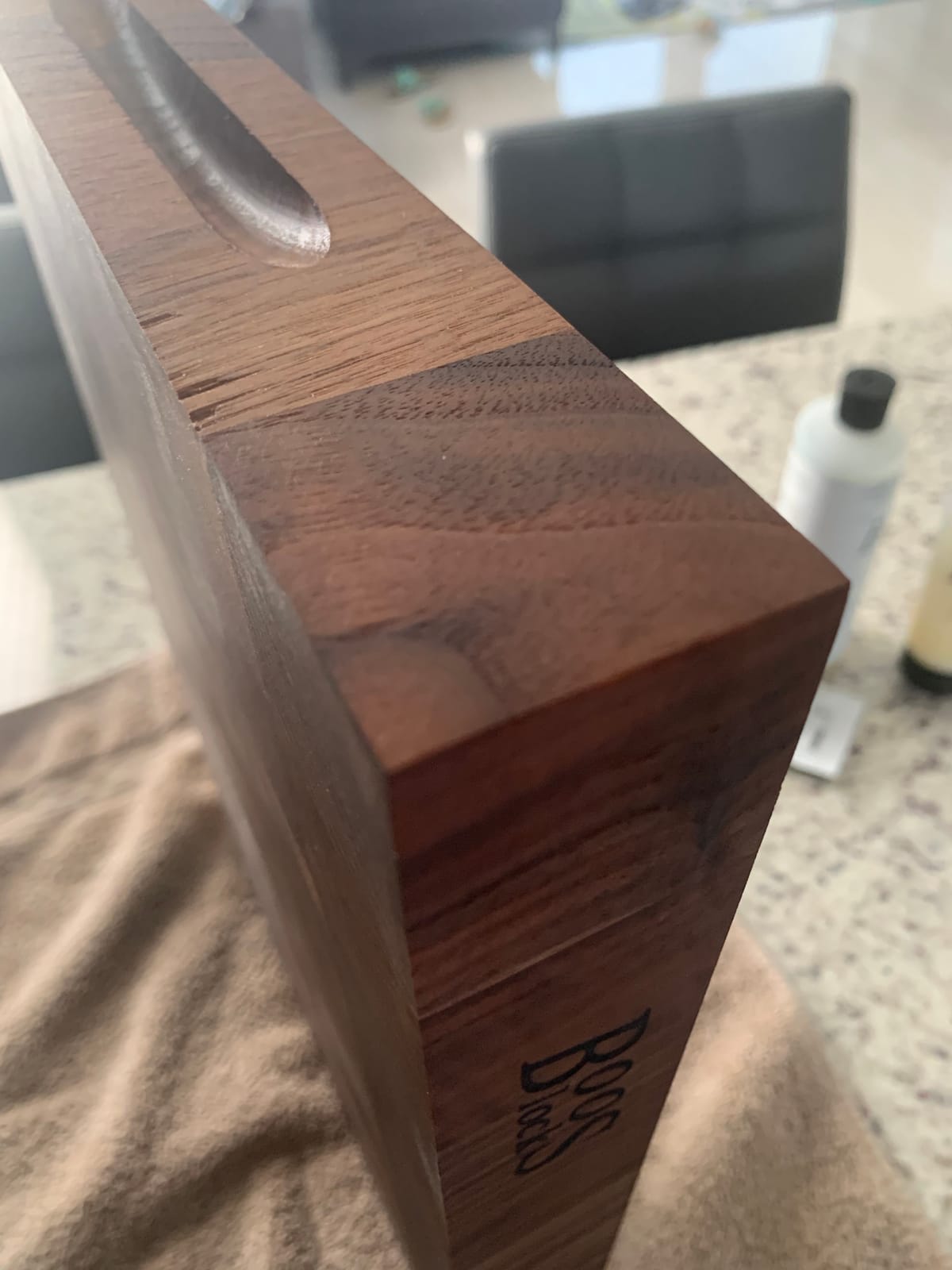
At 1.75 inches thick and 18 by 12 inches, the dimensions are close to ideal for a chef knife. The recessed finger grips on both sides are the detail that makes it feel like a tool rather than a kitchen object, because you can lift it one-handed from either side without your fingers sliding off the edge.
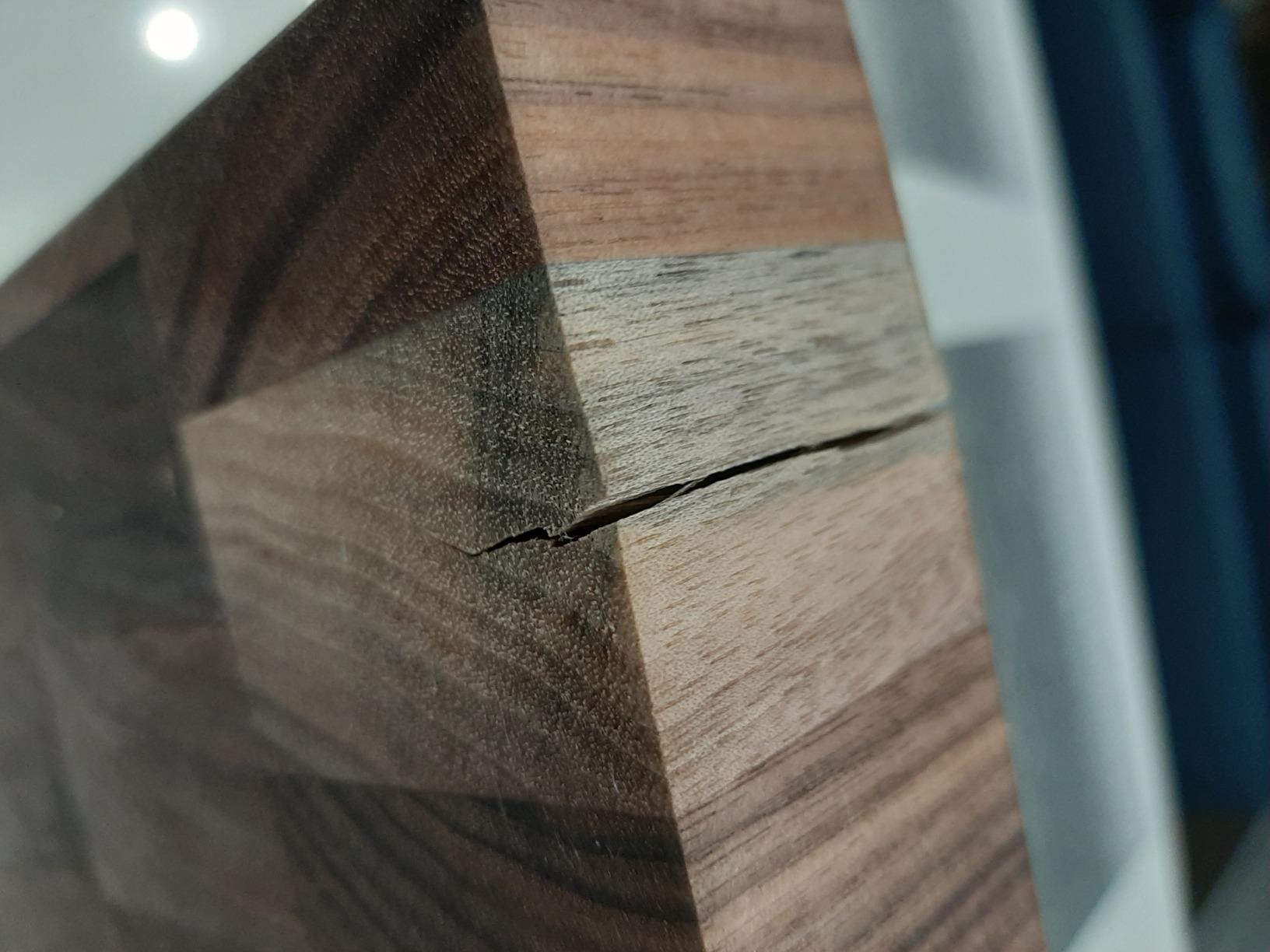
It arrives with an oil finish on reversible sides, so you can work on one face and flip it to the other, which halves the surface area exposed to a single set of knife marks and lets one side dry while you use the other.
Be aware of what comes with a block at the top of this range. The care oil and board cream are sold separately, and the listed item weight of 16 ounces is clearly not the real weight of an 18 by 12 inch 1.75 inch walnut block. Judge the actual heft in person if you can.
Why the name carries weight
If you cook seriously and want a board that looks like it belongs in a working kitchen, the brand does something none of the others do. It is the pick if the board is as much about provenance as performance, and it is also made in several sizes if the 18 by 12 footprint is not quite right for your counter.
The 1.75 inch thickness is a genuinely good number. It is the point where boards stop feeling flexible, and it is noticeably firmer than the 1.25 and 1.5 inch boards elsewhere in this list.
What gives us pause
The review base is the smallest here at 171 ratings, and it carries a 12 percent one-star share, second only to the acacia prep station. With a smaller sample, the rating is a less reliable signal than the 3,000-plus review boards in this roundup.
It is also at the higher end of the price range here, which is hard to justify on performance alone when a 1.75 inch walnut block from a smaller maker does the same job. Buy it for the build and the name, not for edge retention, which is comparable across well-made end grain boards.
We earn a commission, at no additional cost to you. CERTAIN CONTENT THAT APPEARS ON THIS SITE COMES FROM AMAZON. THIS CONTENT IS PROVIDED 'AS IS' AND IS SUBJECT TO CHANGE OR REMOVAL AT ANY TIME.
10. Bevel and Bond American Maple End Grain Board – Best Maple Pick
Maple End-Grain Cutting Board (Made in USA) 17″ x 13″ x 1.75″ (10 lbs)
- 17 x 13 x 1.75 inch American hard maple end grain
- 10 pounds
- Non-slip feet with airflow underneath
- 5 year warranty
Pros
- Highest rated board in the roundup at 4.7 stars
- American hard maple is the standard for professional butcher blocks
- Extra thick build resists the cracking common in thinner boards
- Feet add stability while allowing airflow underneath
- Tight maple grain resists staining and odors
- 5 year warranty with complimentary board balm
Cons
- Smallest review base at 122 ratings
- 10 pound weight is heavy to lift for washing
- Needs monthly conditioning to stay in peak shape
We earn a commission, at no additional cost to you. CERTAIN CONTENT THAT APPEARS ON THIS SITE COMES FROM AMAZON. THIS CONTENT IS PROVIDED 'AS IS' AND IS SUBJECT TO CHANGE OR REMOVAL AT ANY TIME.
Maple is the species most associated with professional butcher blocks, and at 4.7 stars across 90 percent five-star ratings this is the highest rated board in the roundup. The distribution is unusually clean, with only 2 percent one-star.
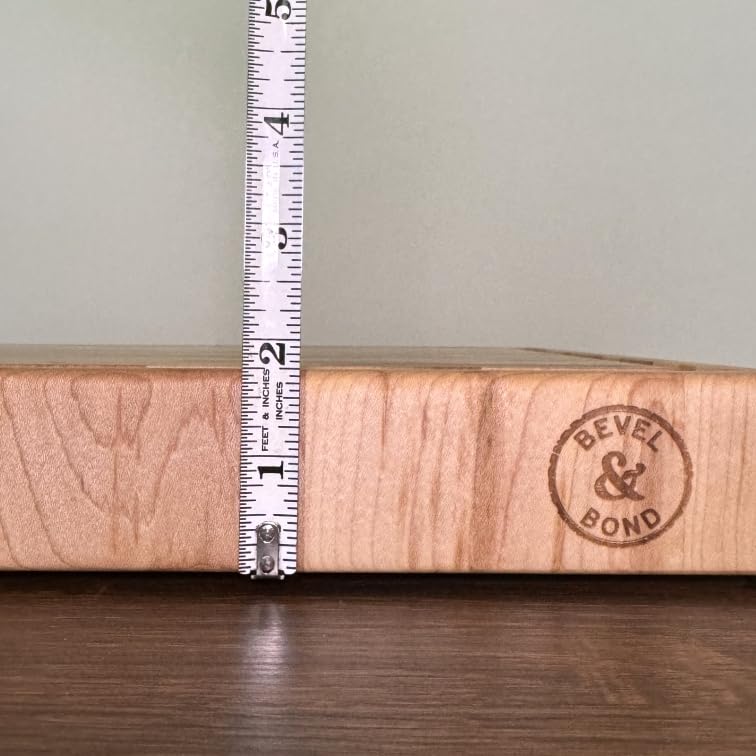
At 17 by 13 by 1.75 inches and 10 pounds, the proportions are well judged. The thickness is at the point where boards stop feeling flexible, the footprint fits an 8 inch chef knife with room on both sides, and the weight is enough to stay planted without being unmanageable like the 13.2 pound AZRHOM.

The feet are the standout feature. They are rubber, they add stability, and they lift the board off the counter so air circulates underneath. That is a small engineering decision that meaningfully extends board life, because a board sitting in a wet film of water is a board drying unevenly from the bottom.
It arrives pre-conditioned with a mineral oil finish in a gift box, and registering the board gets you complimentary board balm. Tight maple grain also resists staining and odors better than most woods here, which matters if you alternate between raw onion, fish and bread on the same face.
Why maple deserves its own category
Maple is dense enough to be durable while staying kind to an edge, and the maker positions it as the choice professional chefs reach for on butcher blocks. Compared with walnut, it holds its light color, resists staining better, and smells less after working with strong ingredients like raw onion and garlic.
The deep juice groove and finger grips on both sides make it a well-equipped board in the roundup without adding the sort of hardware that reduces usable surface.
What to weigh against it
With 122 ratings, this has the smallest sample here. Long term durability claims are harder to verify with that little history, even at 4.7 stars, and enthusiasts shopping end grain for the first time should weigh that against boards with thousands of reviews.
Ten pounds is heavy enough that washing takes two hands, and the board needs monthly conditioning to stay in peak shape. Skip that and the 1.75 inch advantage narrows quickly, because thick boards that dry out are the ones that crack.
We earn a commission, at no additional cost to you. CERTAIN CONTENT THAT APPEARS ON THIS SITE COMES FROM AMAZON. THIS CONTENT IS PROVIDED 'AS IS' AND IS SUBJECT TO CHANGE OR REMOVAL AT ANY TIME.
End grain vs edge grain: what changes for your knife
Edge grain is the default on most kitchen boards: long staves laid flat so the grain runs in one direction across the surface. It is cheaper, and it is less likely to split because it has far fewer glue lines. What it does to a knife is the opposite of end grain, because the blade cuts straight across the fibers.
That is the honest tradeoff. You give up some edge retention and lose the self-healing surface, and you gain a board that is stiffer, lighter, cheaper and structurally simpler. Forum knife people say this plainly: edge grain is fine, and end grain is expensive.
End grain earns its premium specifically when the board sees daily use with a sharp thin-edge knife. For occasional cooks who store boards in a cupboard between meals, the difference matters far less than the price gap suggests.
Stainless steel boards with a micro-textured surface are the other option in this conversation. They are non-porous and zero-maintenance, which is genuinely appealing for raw meat work, but the textured surface is deliberately abrasive and it is not gentler on an edge than wood. That is a different category of product with different priorities, not a drop-in upgrade.
How to oil and care for an end grain cutting board
Care is the single biggest gap in the coverage we found from other end grain roundups, and it is also the thing that most determines whether a board lasts five years or one. Four steps cover it:
- Wash by hand in warm soapy water, rinse, and dry immediately. Never soak, never put an end grain board in the dishwasher, and never leave it standing in water.
- Store it standing on its long edge so both faces dry and air circulates instead of trapping moisture against the counter.
- Oil when water stops beading on the surface, or on the schedule the manufacturer lists. Use a food-grade board oil or mineral oil, applied thinly and wiped off.
- If the grain lifts after the first wash, let the board dry, pass it once with 150 grit sandpaper, then re-oil. That single pass usually resets the surface permanently.
Avoid vegetable oils for regular board maintenance. Long-term owners posting on r/chefknives describe conditioning a maple end grain board every couple of months and watching it return to like-new condition each time, which is the habit this construction rewards. What they do not do is skip oiling for a year and then wonder why the board checks.
What to check before you buy an end grain board
Five checks separate a board that will last from one that will crack, and most of them you can do in under a minute.
- Look at the grain orientation. End grain shows a visible checkerboard or stave pattern on the working surface. A board showing long parallel grain lines is edge grain, regardless of what the listing says.
- Run a thumbnail along every glue line. End grain boards have many more adhesive joints than edge grain, and open or lifted seams are where cracks start. This is the single most useful inspection.
- Check thickness against your knife. An 8 inch chef knife wants at least 17 inches of length and 1.5 inches of thickness. Below that, food ends up on the counter and the board feels flexible.
- Look for high spots. Set the board flat on your counter and press on each corner. A rock here becomes a wobble when you are cutting with force.
- Confirm the care instructions are in the box. Boards that arrive unconditioned and undated are the ones most likely to crack in their first season.
On wood species, walnut and hard maple are the two names that come up most often among experienced knife owners, and teak wins on water resistance. Acacia is the value option and reads well visually. Hevea, or rubberwood, comes up as a budget alternative to walnut and is softer, so it is easier on edges but marks faster.
One buyer question deserves a straight answer. Bamboo end grain is debated, and the disagreement is real: many knife people consider bamboo too hard and too adhesive-heavy for fine Japanese edges, while others use it daily without complaint. Our take is that the natural single-species boards in this roundup are the safer choice if your knife has a thin, delicate edge.
Raw meat, hygiene and end grain porosity
End grain is more porous than edge grain, which means it traps more particles, juices and bacteria after raw meat. That is the basis of the hygiene debate, and it is also the basis of the cleaning routine above.
Three methods work. Wash with hot soapy water immediately after use and rinse thoroughly, which is the baseline for everyone. For a deeper sanitize after raw poultry or beef, wipe the surface with a diluted vinegar solution, let it stand briefly, then rinse and dry. And keep two boards if you cook often, using one exclusively for raw meat and one for produce, bread and ready-to-eat food.
Wood itself does not harbour bacteria the way plastic grooves do, and boards in this roundup use solid hardwood with no plastic components and no coatings. That is a real argument in favor of wood, but it only holds if you actually wash and dry the board instead of letting it sit.
One more hygiene-adjacent note on staining. End grain shows marks, and reviewers of the walnut boards here specifically mention the surface darkening over time. That is cosmetic rather than sanitary, but if dark marks bother you, teak and maple are the better choices.
Frequently Asked Questions
What are the best cutting boards for high-quality knives?
End grain hardwood boards are the best choice for high-quality knives because the upright fibers let the edge slide between them instead of chopping across solid grain. That takes less stress off the blade and the surface closes up around shallow cuts. In our roundup, the Sonder Los Angeles Alfred walnut board was the strongest overall pick, with solid hard maple and teak boards close behind. A well-made edge grain board is still fine for most people; end grain mainly pays off when you prep daily with a sharp thin-edge knife.
What is the best brand of end grain cutting board?
John Boos has the strongest name recognition for American-made walnut end grain blocks, and the Bevel and Bond maple board carried the highest rating in our roundup at 4.7 stars. For buyers who want features over pedigree, the Sonder Los Angeles Alfred pairs walnut end grain with sorting wells, a juice groove and removable feet. We rate the Sonder Alfred as our top pick because it balances a 4.5 star rating with more than 1,500 reviews, a footprint that suits an 8 inch chef knife, and removable feet that let the board dry underneath.
Should I buy an end grain cutting board?
Buy one if you cook most days, own a good chef knife, and will oil the board on a routine. End grain adds real value against a thin Japanese edge and gives you a self-healing surface that looks new after months of use. Skip it if you cook occasionally, store your boards away between uses, or want something you can put in the dishwasher. Remember that every end grain board here needs hand washing and periodic oiling, and most run 7 to 13 pounds.
Which cutting boards do professional chefs use?
Professional kitchens usually favor thick solid hardwood, and end grain is the construction most associated with restaurant butcher blocks. North American hard maple is the classic choice, walnut is common, and teak earns its place in wet or humid prep areas. What professionals care about most is thickness, stability and a flat surface, not brand. Boards in the 1.75 inch range are the standard because thinner boards flex under a heavy stroke. Our Bevel and Bond maple pick is the closest match to that professional profile in this roundup.
Is it okay to put raw meat on a wood cutting board?
Yes, with a routine. Wash the board in hot soapy water immediately after raw meat, rinse thoroughly and dry it standing on its edge. For a deeper sanitize after poultry or beef, wipe the surface with diluted vinegar, let it sit briefly, then rinse and dry. Because end grain is more porous than edge grain, it needs deliberate cleaning rather than a quick rinse. The safest workflow is to keep one board for raw meat and a second for produce, bread and ready-to-eat food.
How do you maintain an end grain cutting board?
Hand wash only in warm soapy water, never soak and never use a dishwasher. Dry immediately and store the board standing on its long edge so both faces dry and air circulates. Oil when water stops beading on the surface, or on the schedule the manufacturer lists, using a food-grade board oil or mineral oil applied thinly. If the grain lifts after the first wash, dry the board, pass it once with 150 grit sandpaper and re-oil. That single pass usually resets the surface permanently.
The best end grain cutting boards for chef knives, 2026 verdict
The Sonder Los Angeles Alfred is our pick for the best end grain cutting boards for chef knives in 2026, because a 4.5 star rating across more than 1,500 reviews, a 17 by 13 inch footprint sized for an 8 inch blade, and removable feet that let the board dry underneath add up to a complete package here.
Go Ironwood Gourmet for the most surface area and the deepest review history, Mevell for a 3 inch walnut block that never moves, Bevel and Bond for the highest rating and the professional maple profile, and Yes4All or Teakhaus if you want teak without paying for the heaviest build. Whatever you choose, oil it on a schedule and stand it on edge to dry. That habit is what turns an end grain cutting board from a purchase into a keeper.