
Gas is the only pool heater type that ignores outdoor air temperature. A heat pump loses capacity as the air drops and effectively stops working near 50 to 60F, and a solar cover produces nothing after sunset. A gas pool heater fires a burner against a heat exchanger and keeps pushing 100,000 to 400,000 BTU of heat into the water whether the thermometer reads 70F or 20F, which is why the best gas pool heaters for cold climates come from a short list of models with serious heat exchangers and wind-rated combustion chambers.
We spent weeks comparing seven residential gas pool heaters for this guide, focusing only on the ones that hold up when the season turns. Our criteria were simple: enough BTU to matter for a real in-ground pool, a heat exchanger material that survives the water you actually run, controls you can program without a service call, and a manufacturer whose parts and service network still exists in a place like northern Minnesota or Maine. Every model below is either natural gas or propane. No electric tanks, no solar mats, no heat pumps pretending they can heat a pool in January.
The numbers frame the whole decision. A gas heater typically adds 1 to 3 degrees F per hour, sized roughly at 100,000 BTU for every 10,000 gallons of water. That is a fast recovery that lets you warm a pool for a single cold Saturday rather than a two-week project. It is also why gas heaters carry a running cost that owners feel, and why the single most common regret we found in pool owner discussions was running one through a long cold weekend and watching the fuel bill arrive.
What separates the models in this roundup is not raw output alone. It is the exchanger material, the cabinet design in wind, whether the unit carries Low-NOx certification, and how the manufacturer behaves when a part fails. We weighted review volume heavily for that reason. A heater with a strong rating across a few dozen reviews tells you much less than the same rating across nearly two hundred.
ContentsTable of Contents
- 1Top 3 Gas Pool Heaters for Cold-Weather Pools in 2026→
- 2Hayward H-Series 250K BTU→
- 3Raypak 266K BTU Digital→
- 4Raypak 406K BTU Cupro-Nickel→
- 5Best Gas Pool Heaters for Cold Climates in 2026 at a Glance→
- 61. Hayward H-Series 250,000 BTU Natural Gas Pool Heater→
- 7Hayward H-Series Natural Gas Pool Heater for Inground Pools 250,000 BTU→
- 8Pros→
- 9Cons→
- 10Where This Heater Fits Best→
- 11Where It Falls Short→
- 122. Raypak 266,000 BTU Digital Natural Gas Pool Heater→
- 13Raypak 266,000 BTU Digital Electronic Ignition Natural Gas Pool Heater→
- 14Pros→
- 15Cons→
- 16Where This Heater Fits Best→
- 17Where It Falls Short→
- 183. Raypak 105,000 BTU Natural Gas Heater for Above Ground Pools→
- 19Raypak PR106AENC 105,000 BTU Natural Gas Pool Heater for Above Ground Pool and Spa Elevations 0–4,999 ft (014779)→
- 20Pros→
- 21Cons→
- 22Where This Heater Fits Best→
- 23Where It Falls Short→
- 244. Raypak 406,000 BTU Digital Heater with Cupro-Nickel Exchanger→
- 25Raypak 406,000 Btu Digital Natural Gas Pool Heater with Cupro Nickel→
- 26Pros→
- 27Cons→
- 28Where This Heater Fits Best→
- 29Where It Falls Short→
- 305. Raypak 406,000 BTU Propane Digital Pool Heater→
- 31Raypak 406,000 BTU Digital Electronic Ignition Propane Pool Heater→
- 32Pros→
- 33Cons→
- 34Where This Heater Fits Best→
- 35Where It Falls Short→
- 366. Raypak 336,000 BTU Natural Gas Heater with Backlit LCD→
- 37Raypak 009218 PR336AENC49 336000 BTU Natural Gas Pool Heater→
- 38Pros→
- 39Cons→
- 40Where This Heater Fits Best→
- 41Where It Falls Short→
- 427. Pentair MasterTemp 400,000 BTU Propane High Performance Heater→
- 43Pentair 460737 MasterTemp High Performance Eco-Friendly Pool Heater, Propane Gas, 400,000 BTU→
- 44Pros→
- 45Cons→
- 46Where This Heater Fits Best→
- 47Where It Falls Short→
- 48How to Size BTU and Choose a Heater for a Cold Climate→
- 49Match BTU to Pool Volume→
- 50Choose Between Natural Gas and Propane→
- 51Copper, Cupro-Nickel or ASME Exchanger→
- 52Forced Draft Versus Draft Hood→
- 53How Cold Is Too Cold to Run a Gas Pool Heater→
- 54Winterizing a Gas Pool Heater Without Ruining It→
- 55Gas Versus Heat Pump Once the Air Drops Below 50F→
- 56Running Costs and the Cover Offset→
- 57Frequently Asked Questions→
- 58Which gas pool heater is the most reliable?→
- 59Are Hayward or Raypak pool heaters better?→
- 60How many BTU do I need to heat a 10,000 gallon pool?→
- 61What are the downsides of a gas pool heater?→
- 62How cold is too cold to run a gas pool heater?→
- 63Conclusion→
Top 3 Gas Pool Heaters for Cold-Weather Pools in 2026
These three cover most cold-climate installs. The Hayward H-Series 250,000 BTU is the pick for a standard in-ground pool, the Raypak 266,000 BTU digital is the value option for owners with a gas fitter already lined up, and the Raypak 406,000 BTU with a cupro-nickel exchanger is the only one here built for a saltwater system.

Hayward H-Series 250K BTU
- 250000 BTU natural gas
- Digital LED panel with self-diagnostics
- Low-NOx certified
- Fuel and electrical connections on either side

Raypak 266K BTU Digital
- 266000 BTU natural gas
- Intermittent spark ignition
- All-copper fin-tube exchanger
- Polymer headers resist rust stains

Raypak 406K BTU Cupro-Nickel
- 406000 BTU natural gas
- Cupro-nickel exchanger for salt systems
- Pagoda wind-resistant design
- Digital microprocessor thermostat
As an Amazon Associate we earn from qualifying purchases. CERTAIN CONTENT THAT APPEARS ON THIS SITE COMES FROM AMAZON. THIS CONTENT IS PROVIDED 'AS IS' AND IS SUBJECT TO CHANGE OR REMOVAL AT ANY TIME.
A note on the badges. The EDITOR’S CHOICE goes to the heater with the strongest combination of rating and review count in this group, which is also the model with the deepest service footprint. The BEST VALUE tag means the lowest total cost of ownership we found, not the lowest sticker, since installation and fuel consumption matter more than the purchase figure. The PREMIUM PICK tag is functional: if your pool runs a salt chlorine generator, a copper exchanger is a decision you will regret.
Best Gas Pool Heaters for Cold Climates in 2026 at a Glance
Every heater in the table below is a residential gas model sized for cold-climate operation. Read across the output column first, then match it to your pool volume.
| # | Product | Key details | Where to buy |
|---|---|---|---|
| 1 | Hayward H-Series 250,000 BTU Natural Gas |
|
Check Latest Price |
| 2 | Raypak 266,000 BTU Digital Natural Gas |
|
Check Latest Price |
| 3 |  Raypak PR106AENC 105,000 BTU Natural Gas Raypak PR106AENC 105,000 BTU Natural Gas |
|
Check Latest Price |
| 4 | Raypak 406,000 BTU Digital Cupro-Nickel |
|
Check Latest Price |
| 5 | Raypak 406,000 BTU Propane Digital |
|
Check Latest Price |
| 6 |  Raypak 336,000 BTU Natural Gas LCD Raypak 336,000 BTU Natural Gas LCD |
|
Check Latest Price |
| 7 |  Pentair MasterTemp 400,000 BTU Propane Pentair MasterTemp 400,000 BTU Propane |
|
Check Latest Price |
We earn from qualifying purchases. CERTAIN CONTENT THAT APPEARS ON THIS SITE COMES FROM AMAZON. THIS CONTENT IS PROVIDED 'AS IS' AND IS SUBJECT TO CHANGE OR REMOVAL AT ANY TIME.
1. Hayward H-Series 250,000 BTU Natural Gas Pool Heater
Hayward H-Series Natural Gas Pool Heater for Inground Pools 250,000 BTU
- 250,000 BTU
- Natural gas
- Digital LED panel with self-diagnostics
- Low-NOx certified
- 171 pounds
Pros
- Digital LED display with self-diagnostic capability
- Low-NOx emissions certified for cold-region codes
- Gas and electrical connections on either side
- Built-in 3/4 inch gas connection
- Handles in-ground pools and spas up to 750 sq ft
Cons
- Weighs 171 pounds so moving it takes two people
- Sensor problems appear in some early reviews
- Self-installation can complicate warranty coverage
We earn a commission, at no additional cost to you. CERTAIN CONTENT THAT APPEARS ON THIS SITE COMES FROM AMAZON. THIS CONTENT IS PROVIDED 'AS IS' AND IS SUBJECT TO CHANGE OR REMOVAL AT ANY TIME.
This is the heater we kept coming back to. The H-Series carries 250,000 BTU of natural gas output, which lines up with the standard sizing rule of roughly 100,000 BTU per 10,000 gallons and puts it squarely in the range for a mid-size in-ground pool. Owners running pools in the 15,000 to 20,000 gallon range report a recovery rate that matches the published 1 to 3 degrees F per hour expectation, which means a pool sitting at 68F can be workable in a few hours on a cold day.
What separates it from the Raypak models is the control panel and the parts reality. The digital LED display shows water temperature and runs self-diagnostics, so a failed sensor or a failed call for heat shows up as a code instead of an unexplained cold morning. Hayward is also one of the three names that dominate both pool owner discussion and dealer shelves, which means a technician is rarely more than a reasonable drive away.
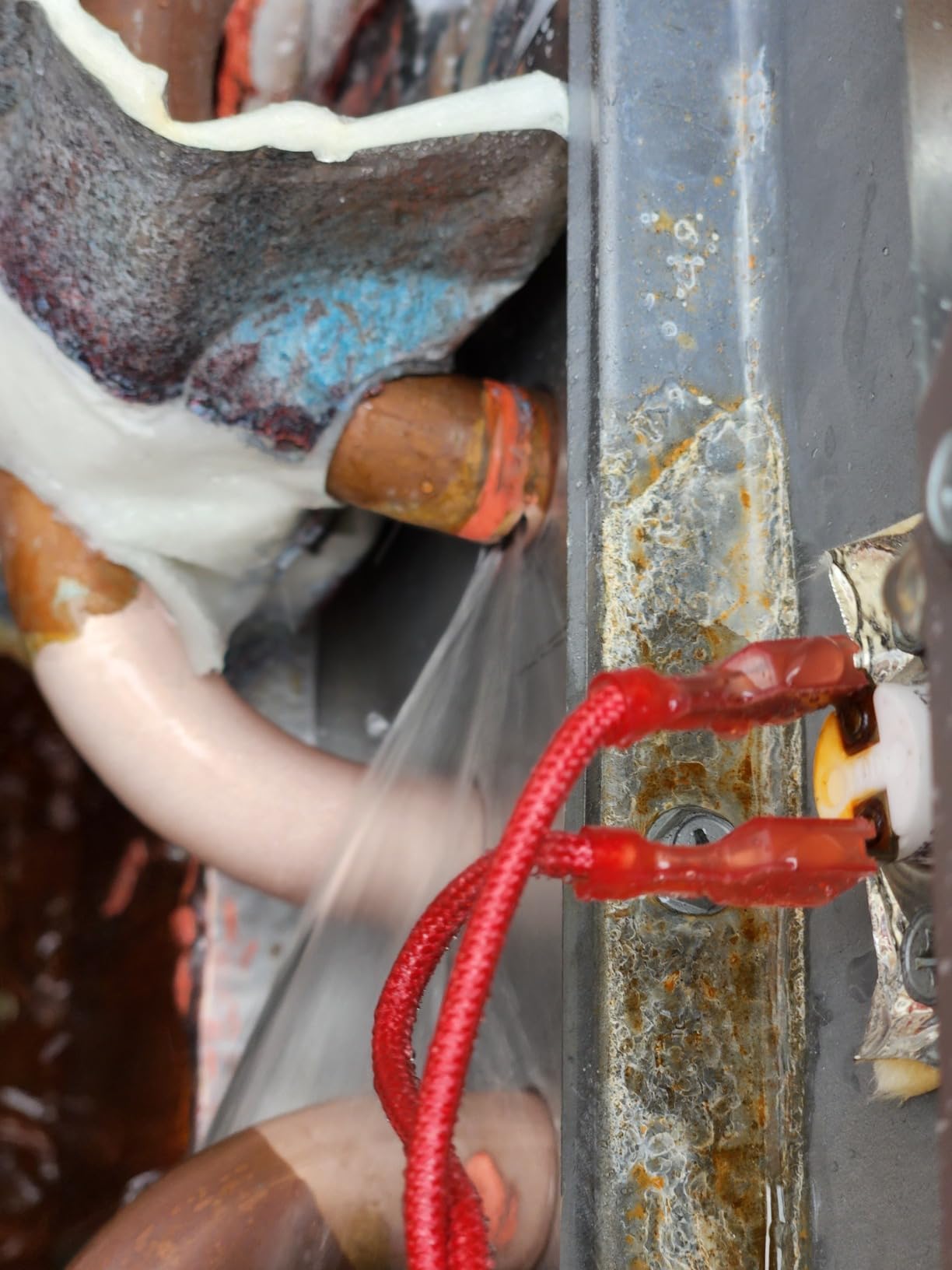
Two details matter more in a cold climate than anywhere else. The unit is certified for low-NOx emissions, which is not a nicety in states and counties that regulate combustion appliances, and the fuel and electrical connections can be made on either side, so a tight equipment pad layout does not force you into a longer gas run. The built-in 3/4 inch gas connection also shortens the fuel line work compared with units that need a separate assembly.
The cold-climate caveat is scale. This is a 250,000 BTU appliance, and in a deep freeze it will run for a long time at full fire. That is exactly what you bought, but it is also why the pool cover conversation comes up so often in owner threads. Heat retention changes the fuel bill far more than any efficiency percentage printed on the plate.
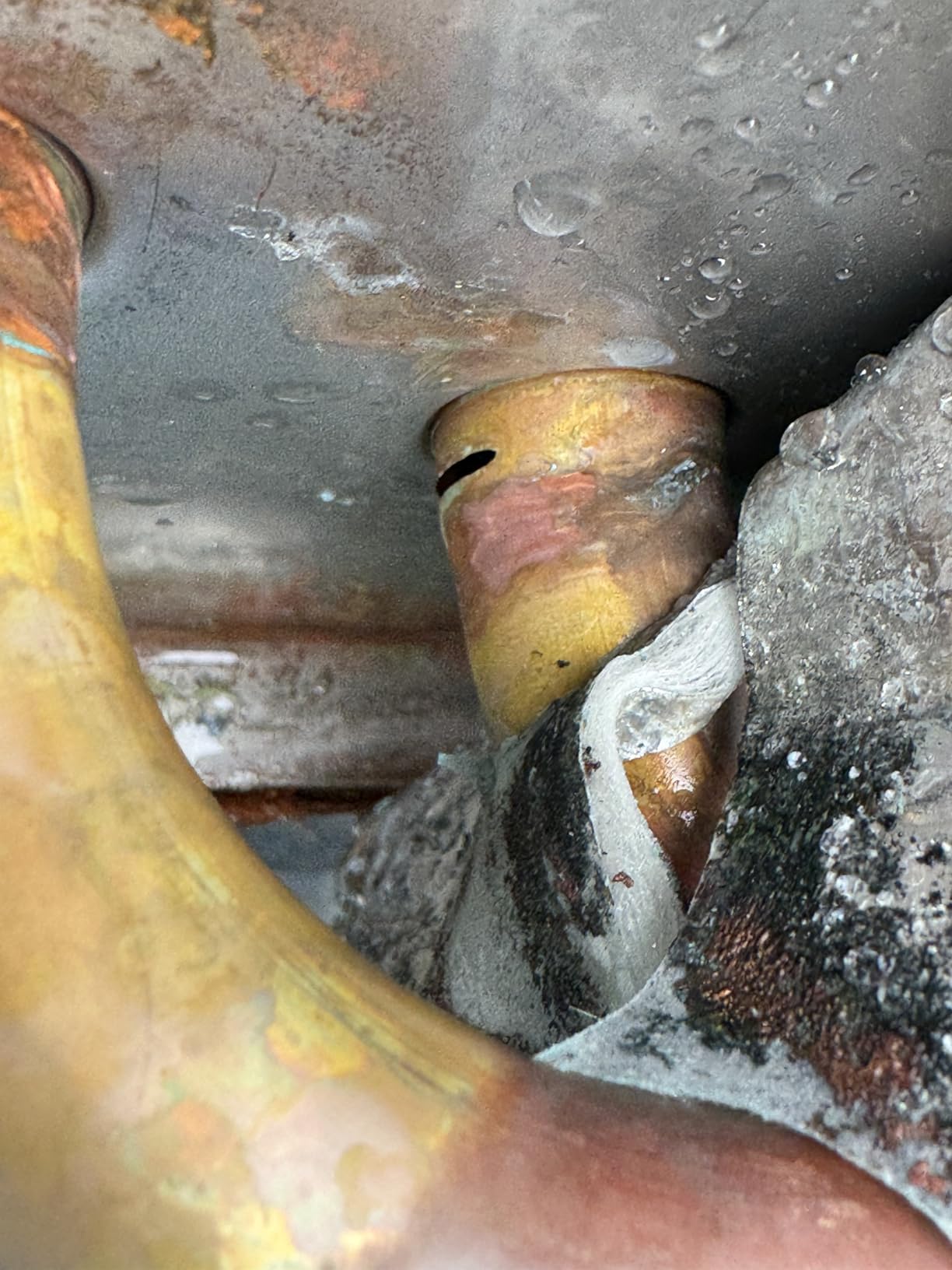
Where This Heater Fits Best
Choose the H-Series 250K if you have an in-ground pool roughly 15,000 to 20,000 gallons, a natural gas line at the equipment pad, and a service technician within driving distance. It is the safest general-purpose pick on this list for a temperate northern climate where winters are cold but not relentlessly so.
It also suits pools that double as spas. The manufacturer rates it for pools and spas up to 750 square feet, and the digital panel handles a higher setpoint without the guesswork a mechanical dial gives you.
Where It Falls Short
It is a 171 pound cabinet, so a solo install through a tight equipment pad is a bad afternoon. More important, a portion of the 1-star reviews concentrate on sensor issues and warranty friction, and warranty coverage is the first thing that suffers when the gas and electrical work is not done by a licensed installer.
If your pool is larger than about 22,000 gallons and you want to heat it for regular winter use, this unit will not close the gap quickly enough. Step up to a 336,000 or 406,000 BTU model instead.
We earn a commission, at no additional cost to you. CERTAIN CONTENT THAT APPEARS ON THIS SITE COMES FROM AMAZON. THIS CONTENT IS PROVIDED 'AS IS' AND IS SUBJECT TO CHANGE OR REMOVAL AT ANY TIME.
2. Raypak 266,000 BTU Digital Natural Gas Pool Heater
Raypak 266,000 BTU Digital Electronic Ignition Natural Gas Pool Heater
- 266,000 BTU
- Natural gas
- Intermittent spark ignition
- All-copper fin-tube exchanger
- 210 pounds
Pros
- Intermittent spark ignition with no standing pilot
- All-copper fin-tube exchanger from extruded copper
- Polymer headers that prevent rust staining
- Quiet operation reported in cold weather
Cons
- Weighs 210 pounds
- Temperature sensor failures within 1 to 2 years reported
- Self-installation can complicate warranty claims
We earn a commission, at no additional cost to you. CERTAIN CONTENT THAT APPEARS ON THIS SITE COMES FROM AMAZON. THIS CONTENT IS PROVIDED 'AS IS' AND IS SUBJECT TO CHANGE OR REMOVAL AT ANY TIME.
The Raypak 266,000 BTU is the model we would buy with our own money. It is 16,000 BTU above the Hayward and lands in the same sizing band, but the ignition and control arrangement is older in concept and simpler to service. There is no standing pilot burning fuel all winter; the intermittent spark pilot only lights when there is a call for heat, which on a cold-climate pool is a meaningful saving over a season of shoulder months.
Two build details make it a good cold-region choice. The polymer headers will not rust and stain the water the way bare steel headers can, and the all-copper fin-tube exchanger is extruded from a single piece, which removes the fin joints where leaks often start. The cabinet material also does not hold residual heat after shutdown, so it can be installed without the metal heat sink some manufacturers require.
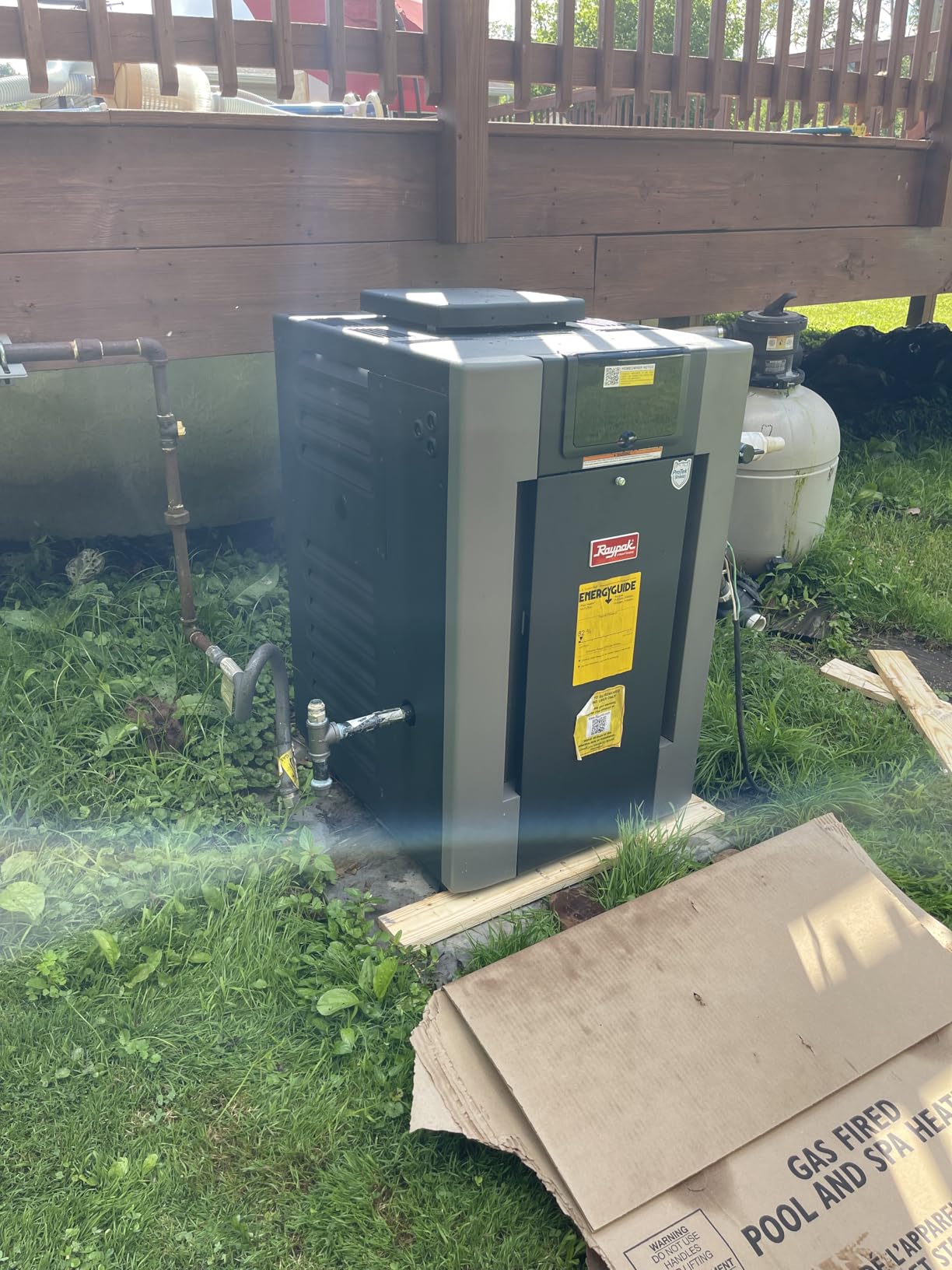
The owner feedback pattern is worth reading carefully. Across 170 reviews, the praise concentrates on straightforward installation, quiet operation, and solid heating performance. The complaints concentrate on temperature sensors failing somewhere between year one and year two, plus a recurring theme about warranty response, particularly when the buyer self-installed. Neither of those is a reason to skip the model, but both are reasons to budget for a service visit and to have the gas line inspected before the first cold snap rather than in it.
For a DIY-capable owner, the parts situation is a genuine advantage. Raypak components are widely carried by pool supply dealers, so a failed sensor or a switch is a normal part run rather than a special order. That keeps a cold-weather downtime measured in days instead of weeks.
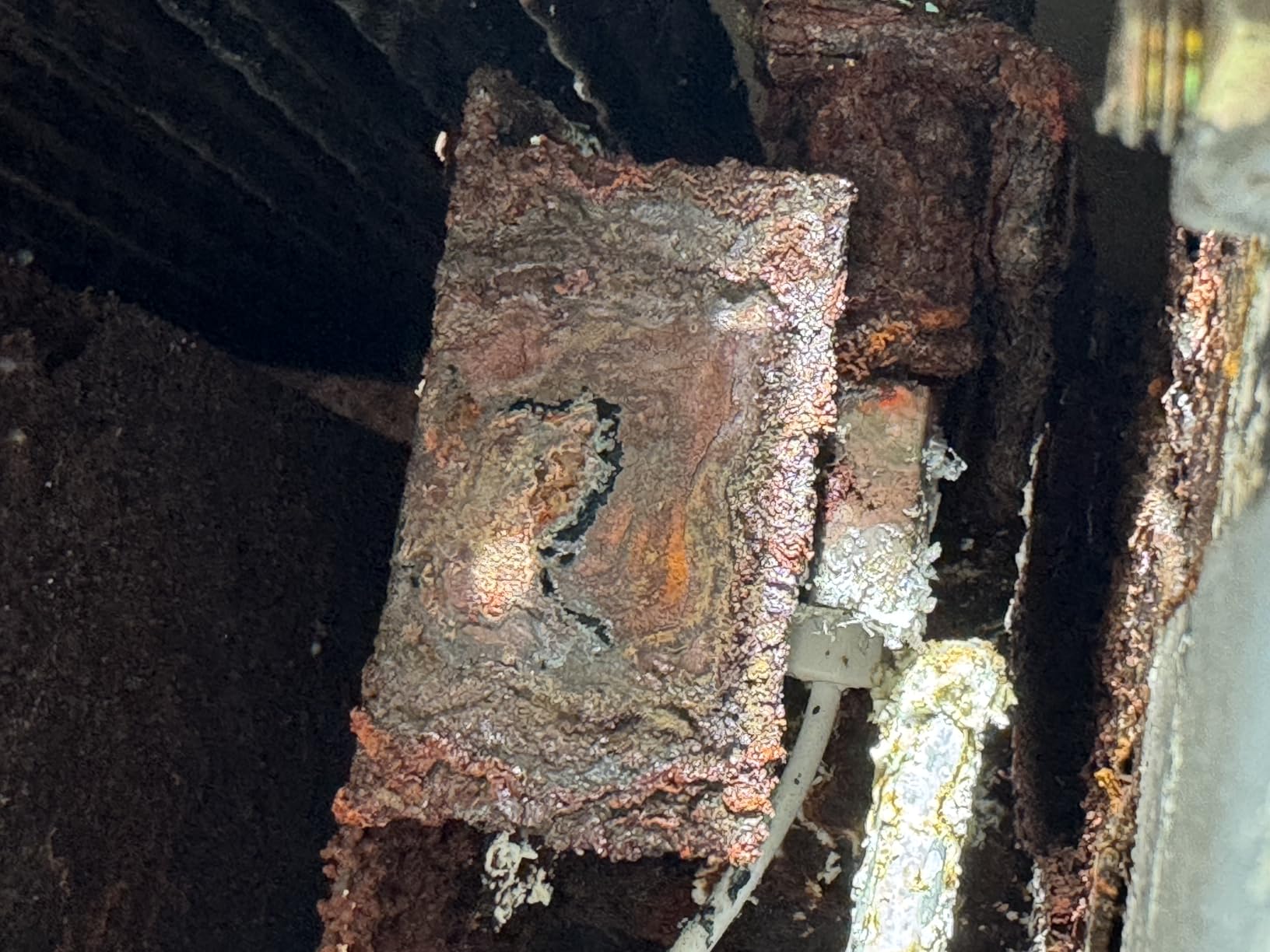
Where This Heater Fits Best
This is the pick for a 17,000 to 22,000 gallon in-ground pool with a natural gas line where the owner is comfortable doing the mechanical work or can hire a gas fitter directly. The economics work well because the output is generous relative to the class.
It is also a good match for a pool that runs a solar blanket through shoulder months, since the burner cycles on a real call for heat rather than idling against a standing pilot.
Where It Falls Short
Copper exchangers are the reason many saltwater owners pass on Raypak models entirely, and this one is all-copper. If a salt chlorine generator is on your equipment list, the cupro-nickel model in position four is the correct choice.
The sensor failure pattern is real enough to plan for. If you are installing this in a two-story mechanical room where a technician cannot reach it without a ladder, a failed part becomes a bigger afternoon than it should be.
We earn a commission, at no additional cost to you. CERTAIN CONTENT THAT APPEARS ON THIS SITE COMES FROM AMAZON. THIS CONTENT IS PROVIDED 'AS IS' AND IS SUBJECT TO CHANGE OR REMOVAL AT ANY TIME.
3. Raypak 105,000 BTU Natural Gas Heater for Above Ground Pools
Raypak PR106AENC 105,000 BTU Natural Gas Pool Heater for Above Ground Pool and Spa Elevations 0–4,999 ft (014779)
- 105,000 BTU
- Natural gas
- Fanless wind-proof design
- 78.8 pounds
- 0 to 4,999 feet
Pros
- Weighs only 78.8 pounds
- Works at elevations up to 4999 feet
- Fanless design unaffected by wind and snow
- Polymer headers prevent rust staining
Cons
- 105K BTU suits small pools and spas only
- Leaks and internal rust reported in the first year
- Ignitor failures and slow warranty response
We earn a commission, at no additional cost to you. CERTAIN CONTENT THAT APPEARS ON THIS SITE COMES FROM AMAZON. THIS CONTENT IS PROVIDED 'AS IS' AND IS SUBJECT TO CHANGE OR REMOVAL AT ANY TIME.
Most gas pool heaters for cold climates are built like shipboard machinery because in-ground pools in cold regions are large. This one is not, and for a small above ground pool that is the entire point. At 78.8 pounds and 30 by 27 by 16 inches, two people can set it on a pad in an afternoon without a crane, and the 105,000 BTU output matches the sizing rule for a pool of roughly 10,000 gallons or a spa.
The cold-climate argument here is the fanless combustion design. Raypak states the unit delivers uninterrupted performance regardless of falling leaves, wind, airborne debris, rain, downdrafts, updrafts, sleet, and snow, because there is no fan to lose pressure or to fail. A blower-driven heater in an exposed northern location eventually has a bad day with ice, and this design does not have that failure mode at all.
The single-piece extruded copper fin-tube exchanger and the polymer headers continue the corrosion theme from the larger Raypak models, and the same combination stops the rust staining that shows up on the bottom of an above ground liner. The rated elevation ceiling of 4,999 feet covers the majority of populated cold regions, though a few high mountain markets fall outside it.
The reviews are more divided than the 4.0 average suggests. Owners like the quiet operation and the fact that it replaces an older 055-series unit without plumbing gymnastics. Others report leaking, internal rusting, and ignitor trouble inside the first year, along with a manufacturer response that pointed at water chemistry rather than the part. That combination is why we would put this unit on a covered, filtered loop with a zoned bypass valve if your water chemistry runs active.
One more practical note. Above ground pools have far less thermal mass and far more surface area relative to volume than an in-ground shell, so a 105,000 BTU burner will recover heat quickly and then keep burning to hold temperature. A cover is not optional in this application.
Where This Heater Fits Best
It suits an above ground pool of about 10,000 gallons or less, a small in-ground pool, or a spa, in a location where a heavy 200 pound cabinet is not practical. The light weight and compact footprint make it the most forgiving install in this roundup.
It also works well as a shoulder-season extender on a modest pool where the goal is comfortable water on a few autumn weekends rather than a heated winter swim.
Where It Falls Short
Do not size this heater to a large in-ground pool. A 20,000 gallon pool at 105,000 BTU would run nearly continuously and never reach your setpoint on a cold day, which is the exact undersized-heater complaint that shows up most often in owner threads.
The early-life complaint pattern is heavier here than on the larger models. If you buy it, buy it with the expectation of servicing the ignitor and watching the cabinet closely in its first two seasons.
We earn a commission, at no additional cost to you. CERTAIN CONTENT THAT APPEARS ON THIS SITE COMES FROM AMAZON. THIS CONTENT IS PROVIDED 'AS IS' AND IS SUBJECT TO CHANGE OR REMOVAL AT ANY TIME.
4. Raypak 406,000 BTU Digital Heater with Cupro-Nickel Exchanger
Raypak 406,000 Btu Digital Natural Gas Pool Heater with Cupro Nickel
- 406,000 BTU
- Natural gas
- Cupro-nickel exchanger
- Pagoda wind design
- 44 x 34 x 31 inches
Pros
- 406000 BTU of output for fast recovery
- Cupro-nickel exchanger suits saltwater systems
- Pagoda design resists harsh weather
- Digital microprocessor-controlled thermostat
Cons
- Largest cabinet in the group at 44 x 34 x 31 inches
- Early LCD panel failures reported
- Third-party seller warranty support is uneven
We earn a commission, at no additional cost to you. CERTAIN CONTENT THAT APPEARS ON THIS SITE COMES FROM AMAZON. THIS CONTENT IS PROVIDED 'AS IS' AND IS SUBJECT TO CHANGE OR REMOVAL AT ANY TIME.
At 406,000 BTU this is the largest capacity heater in the roundup, and it is the one to buy if your pool runs 25,000 gallons or more and you want winter water rather than shoulder-season water. The published sizing logic is straightforward: roughly 400,000 BTU for a 25,000 to 30,000 gallon pool, which is exactly where a 250,000 BTU unit starts running out of runway.
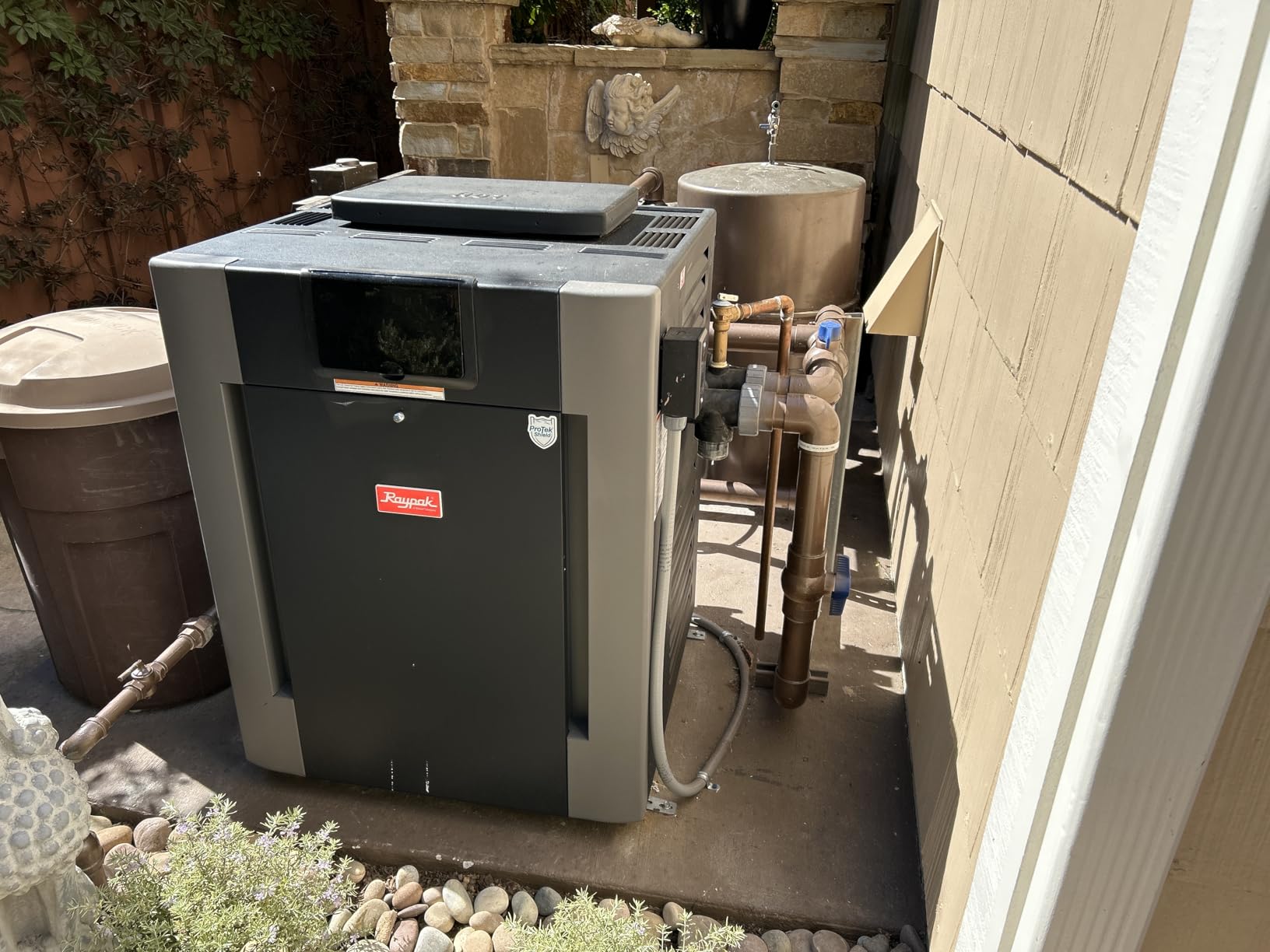
The exchanger is the reason this model matters for cold climates specifically. Cupro-nickel resists the salt chlorine chemistry that eats bare copper, and owners running a salt cell treat exchanger material as a dealbreaker rather than a preference. If your pool is a standard chlorine pool, this is still a strong buy, but you are paying for corrosion resistance you may not need.
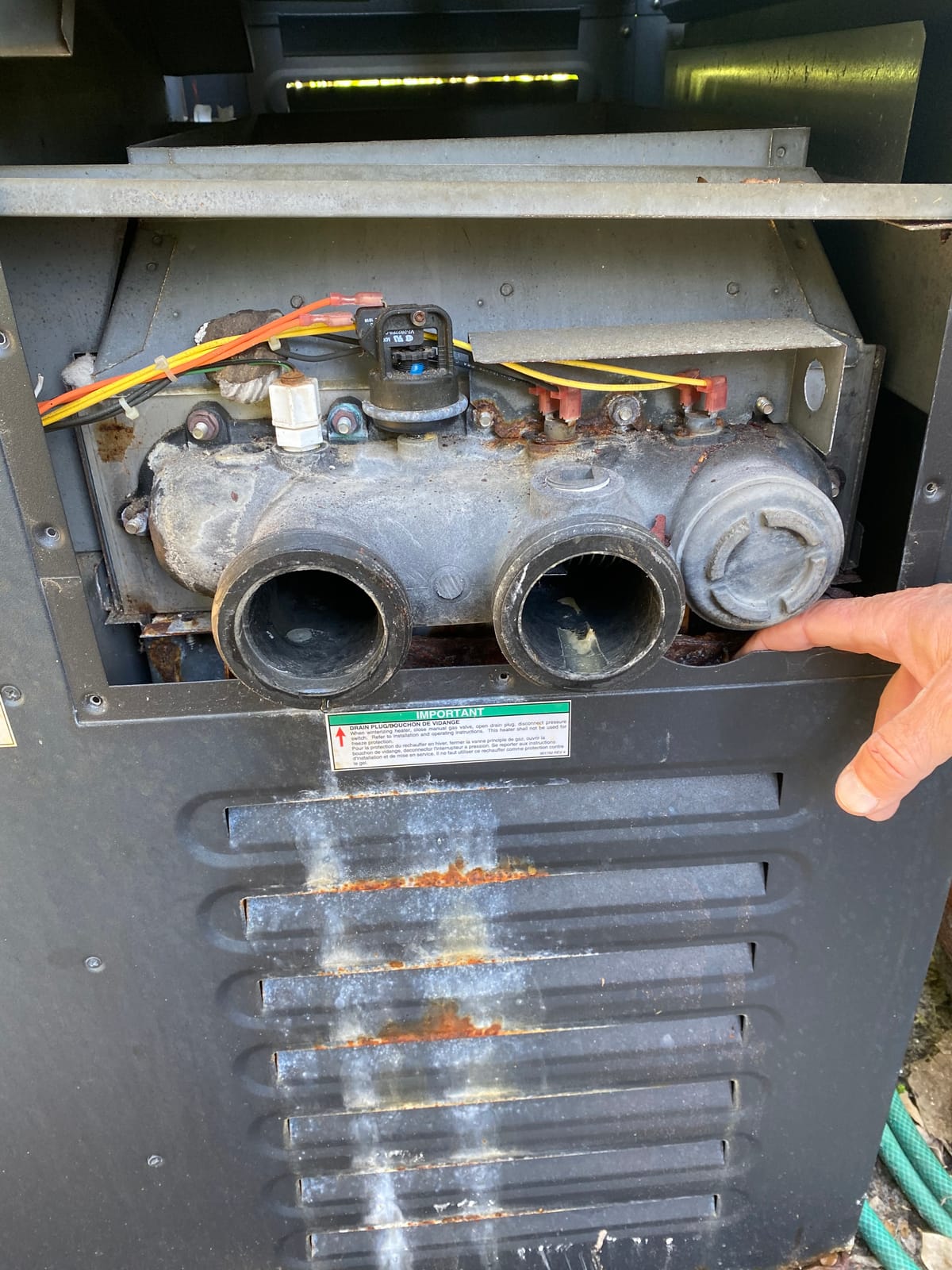
The pagoda combustion design is the other cold-region feature. It keeps the burner chamber stable in wind and blowing debris, which is the same protection the fanless design gives the smaller Raypak. Owner reports of heating speed line up with the fastest end of the gas range, including one report of raising pool temperature several degrees in under two hours on a large pool.
The 4.4 average across 46 reviews is the second-highest rating in this group, though the sample is small. The complaint pattern centers on early LCD panel issues that resolved themselves and on warranty handling when the unit came through a marketplace seller rather than a dealer, which is a service-chain problem more than a product problem.
Where This Heater Fits Best
Pick this one for a 25,000 to 30,000 gallon in-ground pool, especially if that pool has a salt chlorine generator or you expect to add one. It is also the right unit for a pool and spa combination where you want real high-temperature output rather than a warm soak.
If you live somewhere with genuinely brutal winters and a goal of swimming through January, maximum output is the feature that matters, and this has it.
Where It Falls Short
At 44 by 34 by 31 inches this is the largest cabinet here, so plan the equipment pad before the unit arrives. It also needs a properly sized gas line and a real gas technician, not a weekend project.
For a pool under about 18,000 gallons, this is far more heat than you need and the higher fuel draw per hour will work against you. The 250,000 BTU Hayward is the sensible size for that job.
We earn a commission, at no additional cost to you. CERTAIN CONTENT THAT APPEARS ON THIS SITE COMES FROM AMAZON. THIS CONTENT IS PROVIDED 'AS IS' AND IS SUBJECT TO CHANGE OR REMOVAL AT ANY TIME.
5. Raypak 406,000 BTU Propane Digital Pool Heater
Raypak 406,000 BTU Digital Electronic Ignition Propane Pool Heater
- 406,000 BTU
- Propane
- Digital electronic ignition
- PolyTuf coated cabinet
- 349 pounds
Pros
- Propane fuel for homes with no gas line
- 406000 BTU of output for large pools
- PolyTuf powder coating resists corrosion
- Stainless steel tube sheet adds durability
Cons
- Weighs 349 pounds
- Early leaks reported on some units
- Warranty support reported as uneven
We earn a commission, at no additional cost to you. CERTAIN CONTENT THAT APPEARS ON THIS SITE COMES FROM AMAZON. THIS CONTENT IS PROVIDED 'AS IS' AND IS SUBJECT TO CHANGE OR REMOVAL AT ANY TIME.
Plenty of rural and vacation properties have no natural gas line, and this is the propane answer at full capacity. The performance difference owners sometimes assume exists is not real: a propane burner delivering 406,000 BTU delivers the same heat as a natural gas burner delivering 406,000 BTU. The difference is fuel logistics, not heating power.
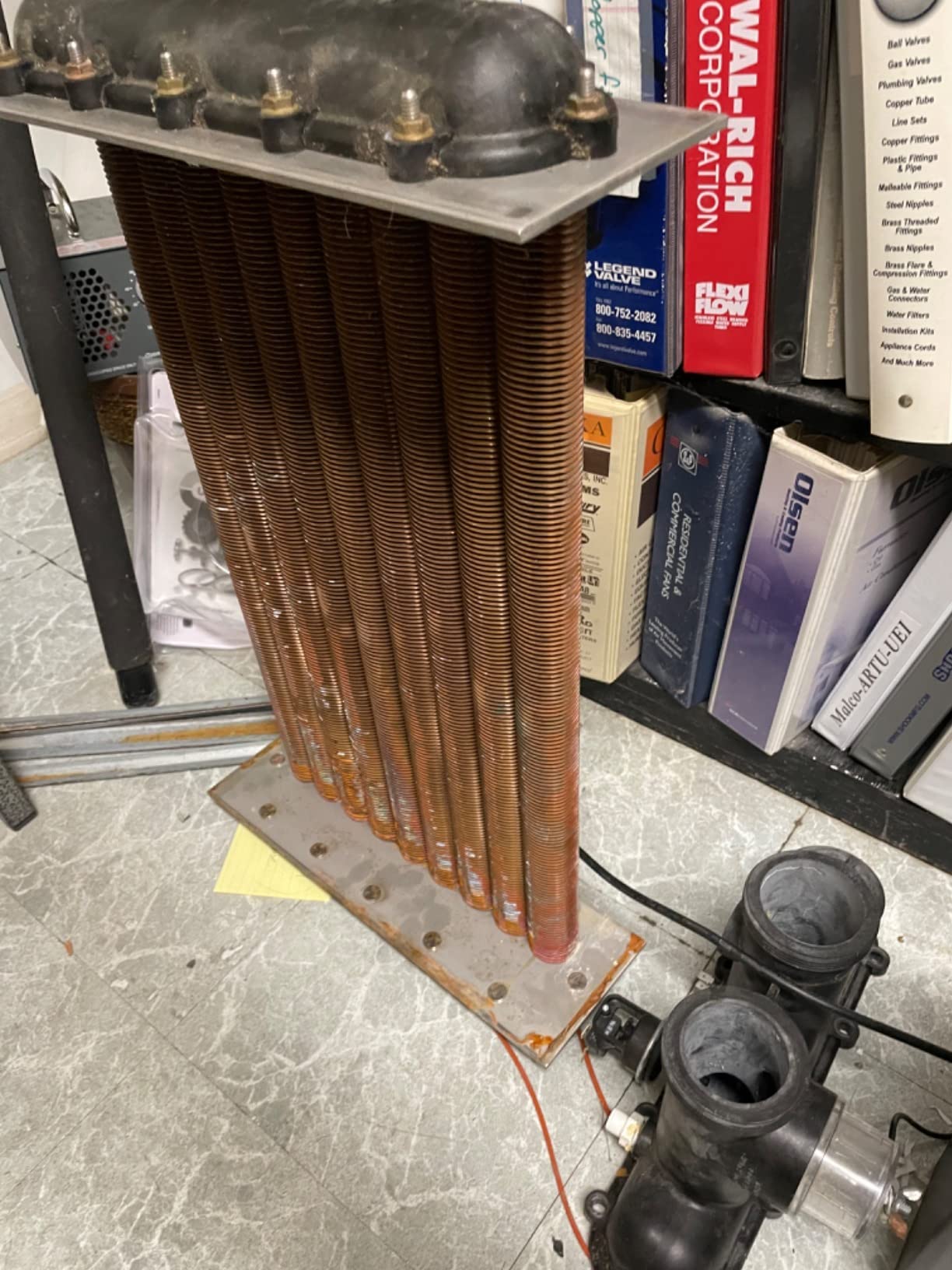
The build is aimed at durability. The cabinet carries a PolyTuf powder coating over non-corrosive steel, the internals are described as rust resistant, and the heat exchanger pairs polymer headers with an all-copper fin-tube assembly mounted to a stainless steel tube sheet. A stainless tube sheet is a meaningful upgrade in a climate where the unit sits outdoors through several freeze-thaw cycles a year.
The digital electronic ignition and microprocessor thermostat let you set a target and leave it, which matters most in shoulder months when you want the pool at 80F by a Saturday morning without babysitting a dial. The burner tray and fire tile assembly are the kind of detail that shows up as build quality when you open the cabinet for the annual service.
At 349 pounds, this is the heaviest unit in the roundup and the logistics are not minor. Owners replacing an older propane heater report it working as a direct replacement when the existing plumbing connections already matched, which is the best-case scenario. Have the gas company install and set the regulator, as one reviewer recommended, because an incorrect regulator is the most common propane install error.
Where This Heater Fits Best
It fits a large pool at a property with no natural gas service, and it fits pools where propane tanks are already part of the setup. For a cabin, a vacation home, or a rural lot, it removes the single biggest obstacle to gas pool heating.
It also suits owners who want the stainless tube sheet and powder-coated cabinet for a unit that will sit outside year-round in a freeze-thaw climate.
Where It Falls Short
Propane is more expensive per hour of burn than piped natural gas, and at 406,000 BTU that difference is large enough to notice across a winter. If a gas line is realistic to install, install it.
Warranty handling through third-party sellers is the other weak spot in the feedback, and the nearest dealer in one case was more than 65 miles away. Buy from a channel where a local technician can service what you install.
We earn a commission, at no additional cost to you. CERTAIN CONTENT THAT APPEARS ON THIS SITE COMES FROM AMAZON. THIS CONTENT IS PROVIDED 'AS IS' AND IS SUBJECT TO CHANGE OR REMOVAL AT ANY TIME.
6. Raypak 336,000 BTU Natural Gas Heater with Backlit LCD
Raypak 009218 PR336AENC49 336000 BTU Natural Gas Pool Heater
- 336,000 BTU
- Natural gas
- Integral fin copper exchanger
- Backlit LCD
- 230 pounds
Pros
- 4.7 average rating across its review base
- Integral fin copper exchanger tube
- Self-diagnostic microprocessor controlled ignition
- Backlit LCD readable in the dark
Cons
- Weighs 230 pounds
- Only 24 reviews so the sample is small
- One report of exchanger failure within a year
We earn a commission, at no additional cost to you. CERTAIN CONTENT THAT APPEARS ON THIS SITE COMES FROM AMAZON. THIS CONTENT IS PROVIDED 'AS IS' AND IS SUBJECT TO CHANGE OR REMOVAL AT ANY TIME.
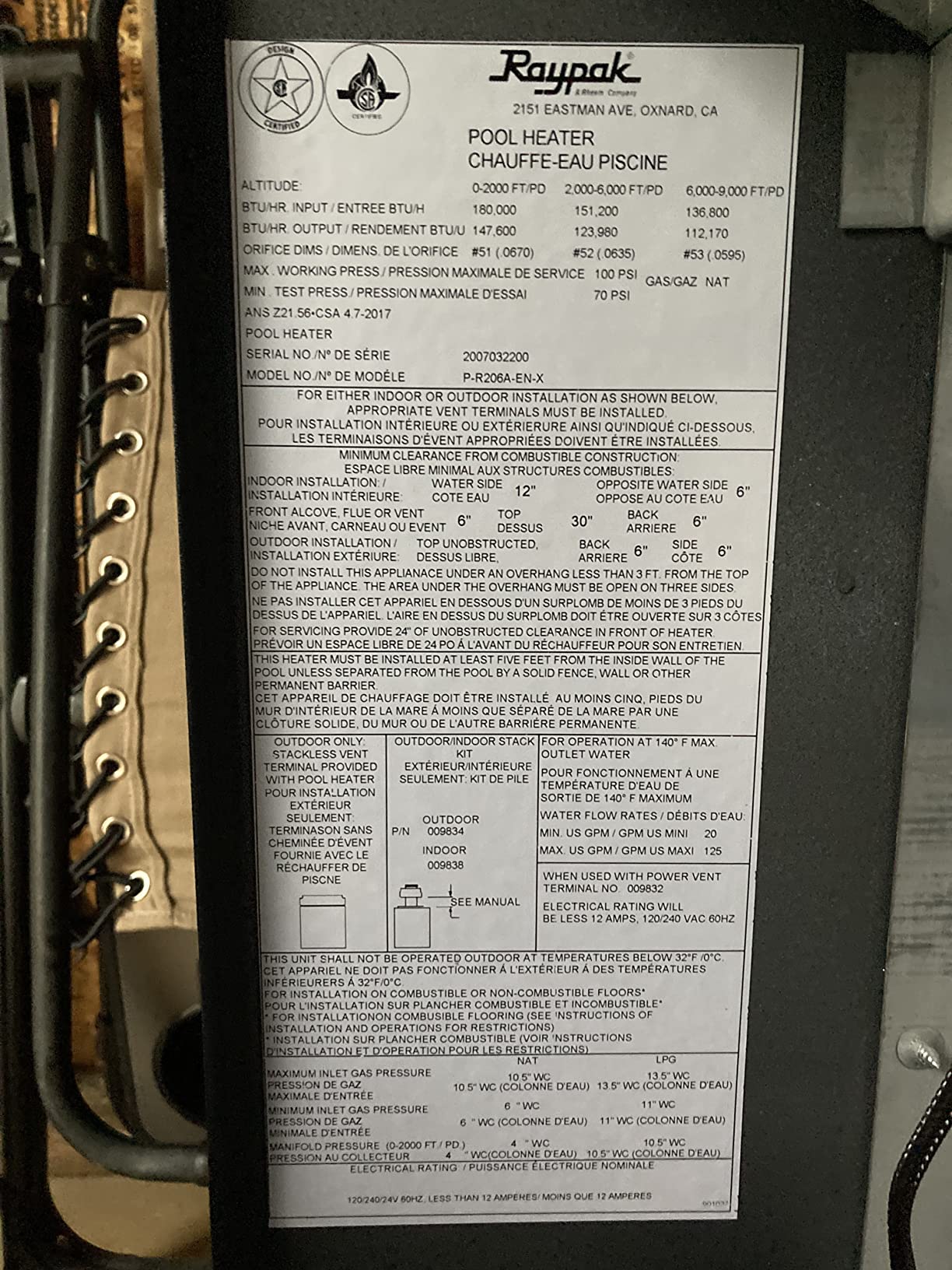
This is the highest-rated heater in the group, pulling a 4.7 average, and it lands in the capacity sweet spot for a 25,000 gallon pool. The 336,000 BTU output is a step below the 406,000 models, which means slightly lower fuel draw per hour while still having enough reserve to pull a large cold pool into range without burning continuously.
The integral fin copper exchanger tube is a different construction approach from the fin-tube designs on the smaller models, and the corrosion-free polymer headers keep rust stains off the pool surface. The self-diagnostic microprocessor ignition reports faults instead of failing silently, which in a cold region is worth real money because the alternative is discovering a dead heater in an ice storm.
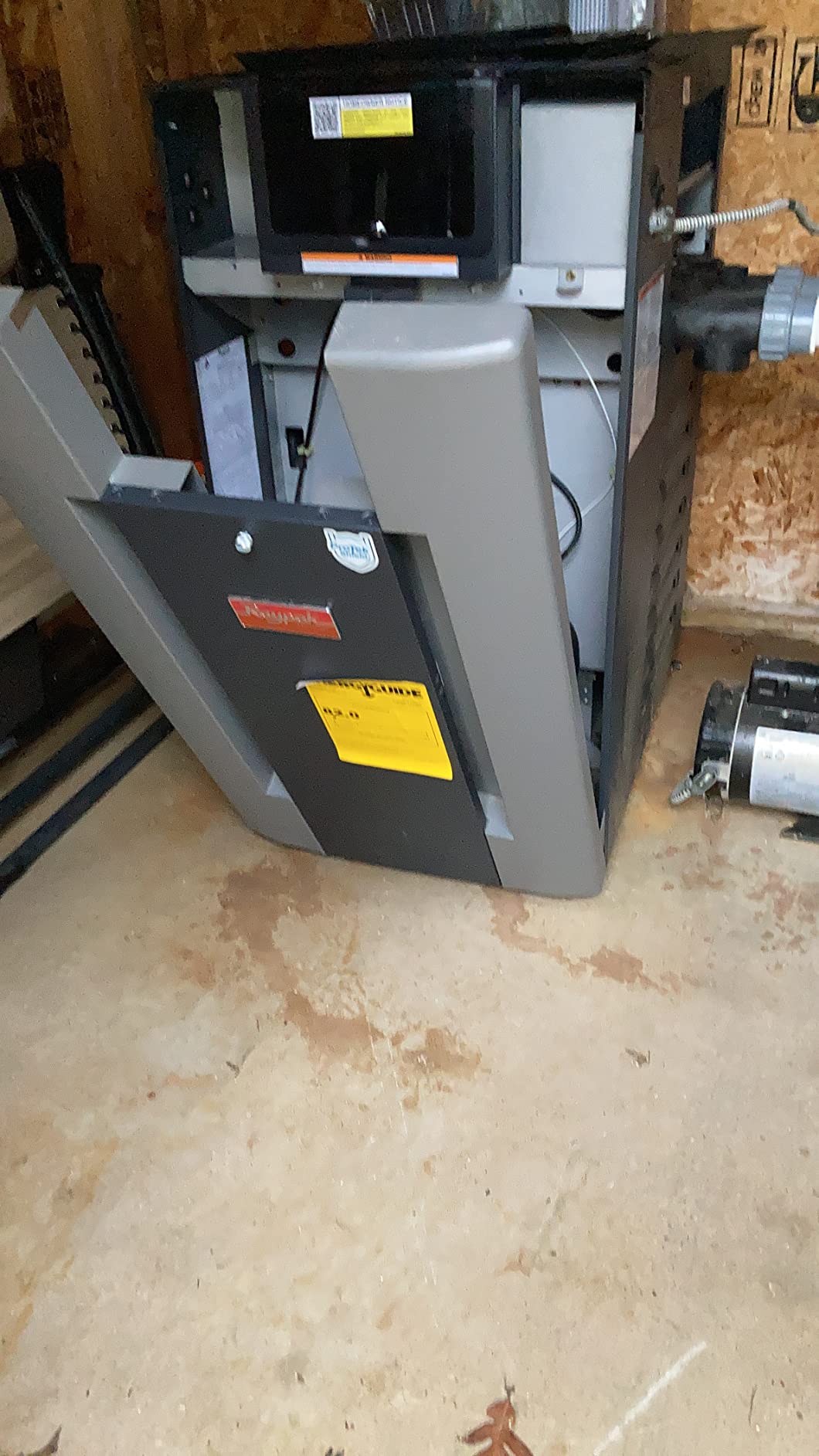
The backlit LCD is a small thing that matters more than it sounds. Checking a pool heater in January often means checking it in the dark, and owners describe this unit as commercial-grade construction at a residential level of complexity. Several reviewers specifically mention heating a 25,000 gallon pool quickly.
We want to be straight about the evidence base here. Twenty-four reviews is a thin sample, and a 4.7 average on a thin sample can move a long way with a handful of new reviews. One 1-star review in the set reports a heat exchanger failure inside a year, which is a serious component to fail early, though the remaining feedback is strongly positive on long-term operation.
If you are risk-averse, the practical move is to read the current review section on the day you buy rather than trusting the average. Installation still needs a licensed gas fitter to keep any manufacturer warranty intact.
Where This Heater Fits Best
It suits a 22,000 to 28,000 gallon in-ground pool on natural gas where you want high output without stepping up to the full 406,000 BTU class. The self-diagnostic ignition and backlit display make it a good fit for an unheated equipment area or a detached pool house.
It is also the choice if you plan a salt system and want strong output but do not need the cupro-nickel upgrade, provided your water chemistry stays balanced.
Where It Falls Short
The review volume is the honest drawback. Every other model here carries at least 43 reviews, and three of them carry more than 160, so you have less data to average out a bad unit or a good one.
For pools above about 30,000 gallons, or for above ground applications, this cabinet is the wrong shape. Move to a 406,000 BTU model or a compact unit respectively.
We earn a commission, at no additional cost to you. CERTAIN CONTENT THAT APPEARS ON THIS SITE COMES FROM AMAZON. THIS CONTENT IS PROVIDED 'AS IS' AND IS SUBJECT TO CHANGE OR REMOVAL AT ANY TIME.
7. Pentair MasterTemp 400,000 BTU Propane High Performance Heater
Pentair 460737 MasterTemp High Performance Eco-Friendly Pool Heater, Propane Gas, 400,000 BTU
- 400,000 BTU
- Propane
- Low NOx certified
- 36 x 25 x 30 inches
- 65 pounds
Pros
- Weighs only 65 pounds
- Compact 36 x 25 x 30 inch body
- Low NOx emissions certified
- Manual gas shut-off for safe servicing
Cons
- Lowest rating in the group at 3.2
- Reliability complaints in about 30 percent of 1-star reviews
- Propane runs a higher cost per hour than natural gas
We earn a commission, at no additional cost to you. CERTAIN CONTENT THAT APPEARS ON THIS SITE COMES FROM AMAZON. THIS CONTENT IS PROVIDED 'AS IS' AND IS SUBJECT TO CHANGE OR REMOVAL AT ANY TIME.
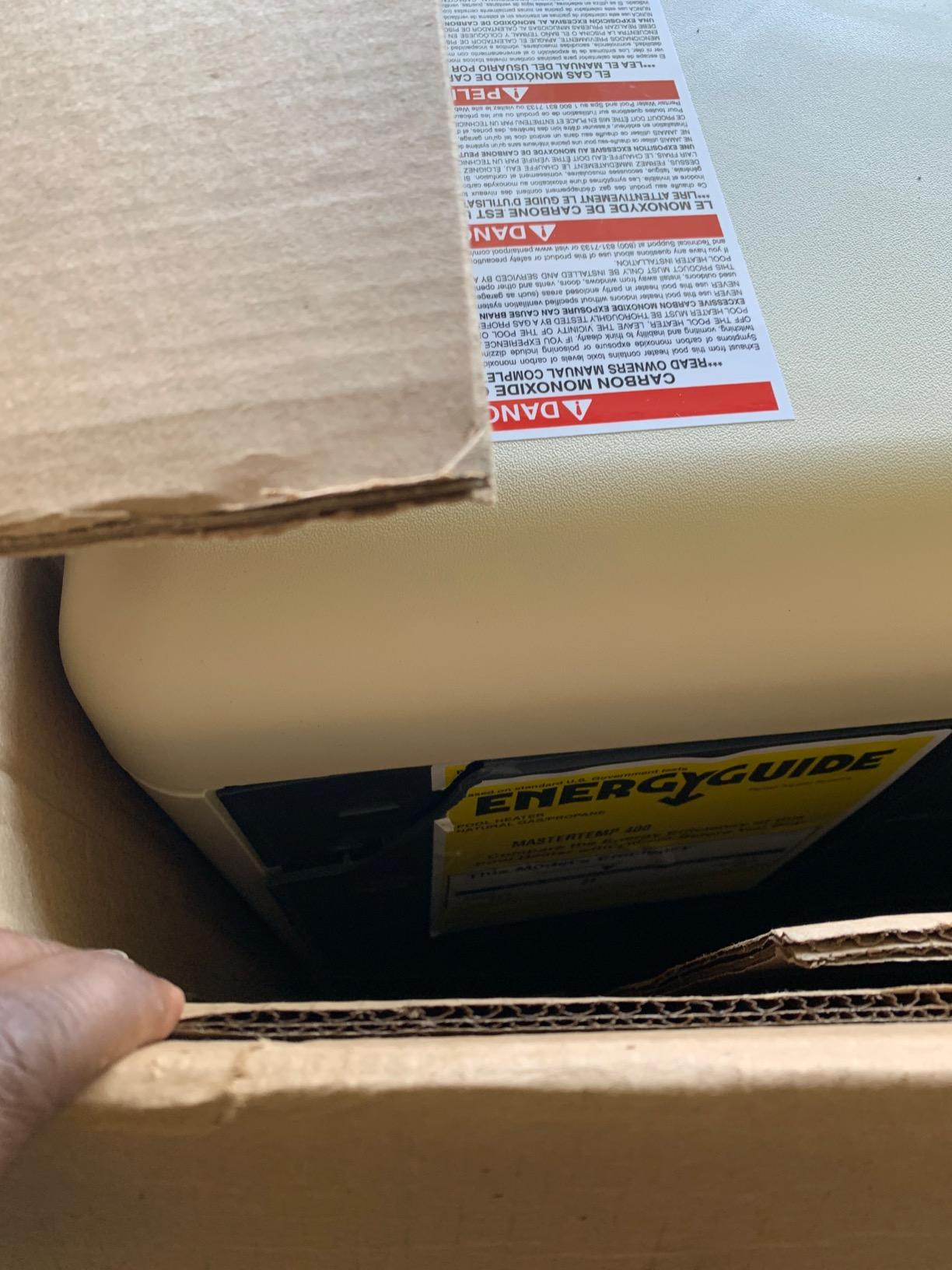
We are including this one because the physical design solves a real cold-climate installation problem, and leaving it out would not be honest. At 65 pounds and 36 by 25 by 30 inches, the MasterTemp is dramatically lighter and smaller than every other heater in this roundup, several of which weigh 230 to 349 pounds. If your equipment pad is tight or your heater has to be reached through a narrow side yard, that difference is decisive.
It is Low NOx certified, which matters in jurisdictions with combustion appliance regulations, and it carries a manual gas shut-off so the unit can be isolated safely before any service call. The manufacturer describes the efficiency as best in class, and the burn rate is high enough to heat fast once it lights.
The problem is the reliability record. It carries the lowest rating in this group at 3.2 across 69 reviews, and about 30 percent of the 1-star reviews concentrate on failures rather than installation mistakes. We would not put this heater in front of a customer who wants to swim in February and forget about it.
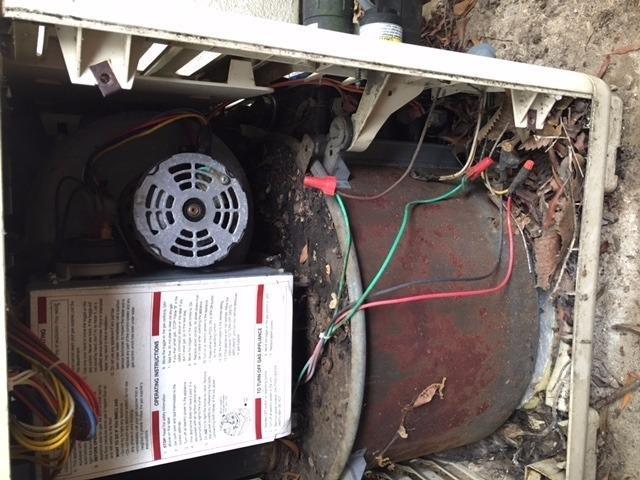
There is a plausible read on the weight figure in the listing. A 400,000 BTU propane heater weighing 65 pounds is light for that output class, and some of the negative reviews may describe service experiences rather than the unit itself. We cannot verify that from the data we have, so we are reporting the pattern rather than explaining it away.
If you buy it, the practical mitigations are straightforward. Have the propane hookup and regulator done by the gas company, keep the manual shut-off accessible, and plan an annual service visit before the first freeze. Pentair is a major brand with real dealer coverage, so parts and technicians exist even if this specific rating history does not inspire confidence.
Where This Heater Fits Best
It fits a large pool on propane at a property where weight and footprint are the binding constraints, such as a rooftop installation, a tight side yard, or a pool house with a low ceiling clearance. It is also a reasonable match for seasonal use where the heater runs a few dozen hours a season rather than continuously.
For anyone in a region with strict Low-NOx requirements and no space for a 200 pound cabinet, this is genuinely the only option in the group.
Where It Falls Short
The 3.2 average is the clearest signal here, and roughly three in ten 1-star reviews describing reliability problems is not a rounding error. If reliability is your first priority, the 336,000 BTU or the Hayward is the better buy even though both are far heavier.
Propane at 400,000 BTU also runs a higher hourly fuel cost, and combined with the reliability uncertainty that is a lot of downside for a compact body.
We earn a commission, at no additional cost to you. CERTAIN CONTENT THAT APPEARS ON THIS SITE COMES FROM AMAZON. THIS CONTENT IS PROVIDED 'AS IS' AND IS SUBJECT TO CHANGE OR REMOVAL AT ANY TIME.
How to Size BTU and Choose a Heater for a Cold Climate
Sizing is the step that decides whether you are happy with your heater or quietly resentful of it. The industry rule is about 100,000 BTU for every 10,000 gallons, and in a cold climate you should add a 10 to 15 percent uplift on top of that, because you are fighting heat loss to the air rather than merely topping off a warm pool. An undersized heater does not fail. It just runs continuously, never reaches setpoint, and burns fuel at a rate that makes the monthly statement unpleasant.
Match BTU to Pool Volume
Measure volume before you shop, and do not estimate from square footage alone. Depth varies wildly across a typical in-ground pool, and a shallow end and a deep end can change the number by several thousand gallons. Once you have gallons, apply the ratio: a 10,000 gallon pool needs roughly 100,000 BTU, a 20,000 gallon pool needs roughly 200,000 BTU, and a 30,000 gallon pool needs 300,000 BTU or more.
Add the cold-climate uplift. In a place with freezing winters, target 10 to 15 percent above the baseline figure, which is why our overall pick sits at 250,000 BTU rather than exactly 200,000 for a typical mid-size in-ground pool. Round up rather than down when you are between models, and remember that spa spillover and a solar blanket on the roof change the picture in opposite directions.
Choose Between Natural Gas and Propane
The two fuels deliver identical heat per BTU. What differs is infrastructure, cost per hour, and delivery logistics. Piped natural gas is typically cheaper per hour of burn and never runs out, which makes it the default for a year-round cold-climate pool. Propane is the answer when no gas line exists, and it works identically once connected, provided the regulator is set correctly by the gas company.
Owners frequently assume propane is the weaker fuel, and that assumption is wrong. The capacity of the burner is what determines heating speed, not the fuel type. What propane costs you is the standing delivery contract, the tank exchange rhythm, and the higher cost per hour at full fire.
Copper, Cupro-Nickel or ASME Exchanger
The exchanger is the part that dies, so it is the part to think about first. Bare copper is the standard and cheapest option, and it works well in a standard chlorine pool with balanced chemistry. Cupro-nickel is a copper-nickel alloy that resists salt and aggressive chemical attack, and pool owners running a salt chlorine generator treat it as a requirement rather than an upgrade. ASME-rated construction refers to the code standard the vessel is built and certified to.
Whatever the material, water chemistry decides how long it lasts. Unbalanced sanitizer, low pH, and high calcium hardness all attack the exchanger from the inside. A zoned bypass valve that lets you isolate the heater when the pool chemistry is off is the single best protection you can buy for the component you cannot easily afford to replace.
Forced Draft Versus Draft Hood
Forced draft units use a blower to push combustion air into the burner chamber, which removes outside weather as a variable and makes combustion more consistent in wind. Draft hood designs rely on natural draft, and the fanless Raypak 105,000 BTU in this roundup is one of them, built specifically so that wind, rain, snow, and debris cannot disrupt it.
Neither approach is wrong in a cold climate. What matters is that the cabinet design is matched to exposure, and that Low-NOx certification matches local code. Check your county or city requirement before ordering, because retrofitting a compliant burner later is far more work than choosing correctly now.
How Cold Is Too Cold to Run a Gas Pool Heater
A gas heater will fire at any ambient temperature the equipment is rated for, so the physical answer is that cold is not the limit. The practical limit is different, and it is about condensation rather than combustion. Pool owners consistently flag the same rule: do not set the heater below about 68F. When the water inside the unit is colder than the surrounding air, moisture condenses inside the cabinet and on the heat exchanger, and over a season that moisture becomes corrosion and electrical problems.
This produces a practical operating rule for cold climates. Raise the setpoint to at least 68F, and treat 68F as a hold temperature rather than a target. A heater running at 68F in 25F air is doing a modest job with a much lower burner duty cycle than one running at 80F, because you are replacing losses rather than chasing a swimming temperature.
It also explains why an undersized heater is worse in winter than the sizing math suggests. An undersized unit never reaches setpoint, so it never drops to a maintenance cycle, and it runs at full fire through the entire cold stretch.
Winterizing a Gas Pool Heater Without Ruining It
Gas heaters do not belong in freezing water, and winterizing them is a specific procedure rather than a general pool shutdown. Drain the water lines and the heat exchanger completely, and do it before the first hard freeze rather than in the middle of one. Disconnect and remove the pressure switches, which are rated for indoor use and will fail if water and ice reach them.
Never wrap a heater in a sealed tarp. The enclosure traps moisture against a warm-season-soaked cabinet, and it blocks the airflow a draft-hood design needs to clear combustion gases. If you want protection, use a ventilated cover that leaves the base open, or a fitted rain shield that does not touch the cabinet surfaces.
Rodent damage is the failure mode owners underestimate. Small animals nest in heaters that sit quiet for months, and they chew wiring that will fail the next time the burner is called for. A quick visual inspection of the burner tray and wiring compartment each spring catches this before the season starts.
Industry guidance puts first repair somewhere in the five to seven year range and total service life at eight to twelve years, with water chemistry and skipped annual service the most common accelerants. That is a wide spread, and the variables that move you toward the low end are fixable.
Gas Versus Heat Pump Once the Air Drops Below 50F
Below roughly 50F, a heat pump is no longer a heating appliance. Pool owner discussions are consistent on this point: heat pumps lose capacity as ambient temperature falls and effectively stall in the range where you most want them. A gas heater does not have this behavior. Its output is a function of the burner, not the air, which is the entire argument for buying one in a cold climate.
The right answer for many owners is not either-or. A heat pump handles spring through fall at a fraction of the fuel cost, and the gas unit covers the shoulder months and the cold snaps. A dual-system setup gives you low running cost for most of the year and guaranteed heat when the temperature collapses, at the cost of two appliances and a more complex equipment pad.
The reverse consideration is whether you only use the pool for a handful of weeks. Owners converting from gas to heat pumps to cut running costs often describe it as the right trade when the pool is only used in summer. The gas case gets much stronger the moment swimming moves to October, November, or March.
Running Costs and the Cover Offset
Nobody publishes an honest cold-weather operating cost for a pool heater, which is why the topic generates more forum anxiety than any other part of this purchase. A propane heater at full fire runs about 1.2 to 1.4 gallons per hour, and a natural gas heater of the same output burns roughly 4 therms per hour. Multiply that by your pool volume and setpoint and you can build the monthly number yourself, which is the only way to make it fit your own rates.
The most common regret in owner threads is running a heater for a month straight over a long stretch of bad weather and then seeing the fuel bill. The fix is not a different heater. It is a cover, which owners across every forum consistently credit with cutting both heat loss and gas consumption, and with the difference being large enough to change the economics of the whole decision.
Second fix: set the thermostat honestly. Every degree of setpoint is real fuel. If your goal is comfortable shoulder-season swimming, target the low 70s rather than 80s and let the cover do the rest. Third: use a zoned bypass so the heater only runs when the water chemistry is safe, which protects the component that determines whether you have a repair bill in year three or year ten.
Frequently Asked Questions
Which gas pool heater is the most reliable?
Reliability in this group tracks review volume and service access more than brand name. The Hayward H-Series 250,000 BTU natural gas heater earned a 4.0 average across 195 reviews, the largest sample here, and Hayward is one of the three brands with dependable local service. The Raypak 336,000 BTU model carries the highest rating at 4.7 but on only 24 reviews, so there is far less data behind it. Expect 5 to 7 years to first repair and 8 to 12 years of total service life when water chemistry is balanced and the unit is serviced annually.
Are Hayward or Raypak pool heaters better?
It depends on the model, not the brand. Hayward’s H-Series leads on control panel diagnostics and on the breadth of dealer service, while Raypak’s larger models pair polymer headers and copper fin-tube exchangers that resist rust staining, and Raypak offers a cupro-nickel option for saltwater pools. Hayward’s lineup in this roundup tops out at 250,000 BTU, and Raypak covers 105,000 BTU for above ground pools up to 406,000 BTU for large in-ground pools. For a saltwater pool, choose Raypak cupro-nickel. For diagnostics and service reach, choose Hayward.
How many BTU do I need to heat a 10,000 gallon pool?
The standard rule is 100,000 BTU for every 10,000 gallons, so a 10,000 gallon pool needs about 100,000 BTU. In a cold climate, add a 10 to 15 percent uplift to cover heat loss, which pushes the practical target to roughly 115,000 BTU. A 105,000 BTU natural gas model covers a pool of that size well, and larger in-ground pools should scale up proportionally: about 250,000 BTU for a 20,000 gallon pool and about 400,000 BTU for a 30,000 gallon pool.
What are the downsides of a gas pool heater?
The main downsides are fuel cost, installation requirements, and the combustion footprint. Gas units burn continuously in cold weather, and owners regularly report the fuel bill being the biggest surprise of the purchase. Every gas heater requires professional gas and electrical work to keep the warranty intact, and outdoor combustion appliances create carbon monoxide and venting considerations that electric equipment does not. Low-NOx models address local emissions codes. There is also a maintenance cycle that electric heaters do not require.
How cold is too cold to run a gas pool heater?
A gas heater itself will fire in freezing air because its output does not depend on ambient temperature. The practical limit is condensation. If the pool water inside the heater is colder than the surrounding air, moisture forms inside the cabinet and on the heat exchanger, and repeated cycles lead to corrosion. Pool owners generally advise against setting a heater below about 68F. Treat 68F as a hold temperature so the burner cycles to replace losses instead of running at full fire through the whole cold season.
Conclusion
Gas remains the right technology for anyone heating a pool where the air drops below 50F, because a burner does not care what the thermometer reads. Pick the Hayward H-Series 250,000 BTU as the best gas pool heater for cold climates if you have a standard in-ground pool and a natural gas line, because the diagnostic control panel and the 195-review history give it the strongest reliability case here. Move to the Raypak 406,000 BTU cupro-nickel model for a saltwater pool above 25,000 gallons, to the 105,000 BTU fanless unit for a small above ground pool, and to the propane variants only when there is no gas line to work with.
Whatever you choose, size the output to the gallons, buy Low-NOx certified, plan for professional gas installation, keep a cover on the pool, and never set the thermostat below about 68F. Those five decisions do more for a cold-climate pool heater than any efficiency number on the spec sheet. Use the buttons in each section to check current availability and dealer coverage in your area before you commit.