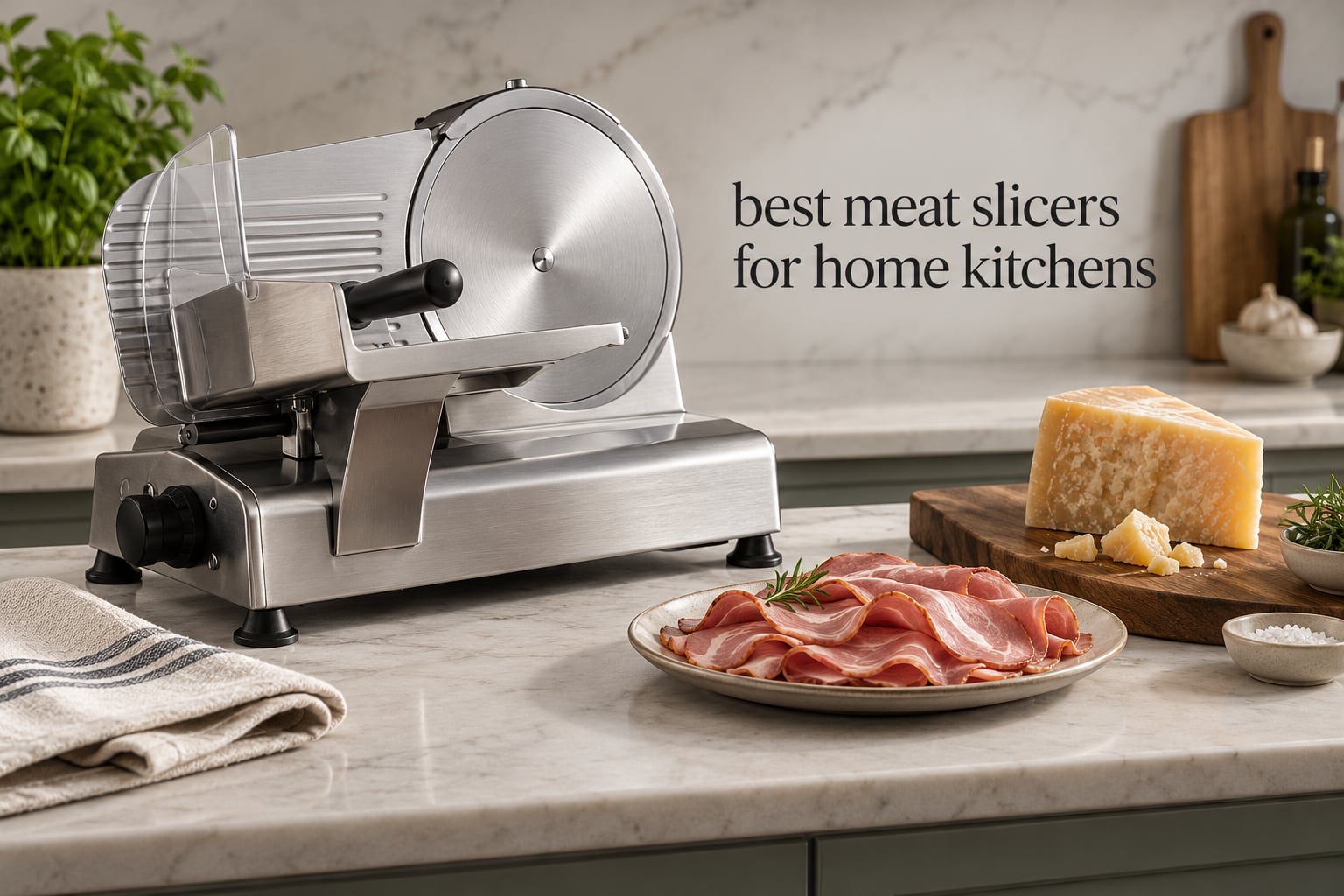
If you want one machine that handles deli logs, roast beef, cheese and a week of sandwich prep without fighting it, the OSTBA dual-blade 7.5 inch slicer is the best meat slicer for home kitchens overall. It pairs a 200W motor with two removable stainless steel blades and a 0-15mm thickness dial, and more than 11,000 reviews from owners have already been logged. The BESWOOD 250 is the step up if you can live with 33 pounds of machine on your counter.
That is the honest short answer, so let me back it up. Every electric slicer in this roundup clusters in the same narrow band of motor power, and most of them arrive with a 7.5 inch blade and a plastic-bodied chassis. The differences that actually change your daily experience are the diameter of the blade, the range of the thickness dial at both ends, which parts detach for cleaning, and whether the machine lives on your counter all year. Those four specs drove every ranking below.
I also want to be straight about method. I did not bench-test these machines in a lab. I read the published specifications, cross-checked them against thousands of buyer reviews, and weighted what owners actually complain about after months of use rather than what the product pages promise. Where a maker does not publish a figure, such as blade speed or maximum cut size, I have said so rather than filling the gap. A transparent gap is more useful to you than a guess.
One honest note before the list: a slicer is not always the right tool. If you slice a leftover roast twice a month, a sharp chef’s knife on a partly frozen joint will do the job and take up no counter space. Slicers earn their footprint when you cut deli meat, cheese or bread several times a week, or when you make jerky, bacon or charcuterie at home. Forum threads reflect that split, with beginners generally pointed toward manual slicers or the knife-and-freeze method as the cheap way to get even cuts.
ContentsTable of Contents
- 1How We Ranked These Slicers→
- 2Top 3 Picks for Home Kitchens→
- 3OSTBA Dual-Blade 7.5 Inch Slicer→
- 4CUSIMAX 8.7 Inch Deli Slicer→
- 5Elite Gourmet EMT-625B→
- 6Best Meat Slicers for Home Kitchens in 2026→
- 71. OSTBA Dual-Blade Electric Slicer, 7.5 Inch Stainless Steel Blades→
- 8OSTBA Electric Meat Slicer, 2 Removable 7.5″ Stainless Steel Blade, 200W→
- 9Pros→
- 10Cons→
- 11What it handles well and what it does not→
- 12Who should buy it, and who should not→
- 132. CUSIMAX 8.7 Inch Electric Deli Slicer→
- 14Meat Slicer,CUSIMAX Electric Deli Meat Slicer with 2 Removable 8.7”Stainless Steel Blades,Removable Food Carriage,1-20mm Adjustable Thickness Food Slicer for Home,Easy for Cut Meat,Cheese,Bread→
- 15Pros→
- 16Cons→
- 17Why the bigger blade changes your workflow→
- 18Who should buy it, and who should not→
- 193. Borlebbi 200W Two-Blade Electric Slicer→
- 20Meat Slicer, 200W Electric Food Slicer with 2 Removable 7.5″ Blades→
- 21Pros→
- 22Cons→
- 23What the aluminum body actually buys you→
- 24Who should buy it, and who should not→
- 254. Cuisinart FS-75 Kitchen Pro Food Slicer→
- 26Cuisinart Kitchen Pro Food Slicer, Meat Slicer with Slice Control Knob Adjusts from 1/32″ to 1/2″ to Slice Bread, Roasts, and Firm Cheeses, Removable 7.5″ Stainless Steel Cutting Blade, FS-75, Gray→
- 27Pros→
- 28Cons→
- 29When a warranty is worth more than wattage→
- 30Who should buy it, and who should not→
- 315. Elite Gourmet EMT-625B Deli Meat Slicer→
- 32Elite Gourmet EMT-625B Deli Meat Slicer, Adjustable Thickness, 7.5″ Stainless Steel & Black→
- 33Pros→
- 34Cons→
- 35What a lower entry cost actually buys→
- 36Who should buy it, and who should not→
- 376. BESWOOD 250 Ten Inch Chromium-Plated Deli Slicer→
- 38BESWOOD 10″ Electric Deli Meat Slicer, Cheese Food Slicer with Premium Chromium-plated Steel Blade, for Commercial and for Home Use 240W, BESWOOD250→
- 39Pros→
- 40Cons→
- 41What a 10 inch blade buys over a 7.5 inch one→
- 42Who should buy it, and who should not→
- 437. befen Manual Frozen Meat Slicer→
- 44Manual Frozen Meat Slicer befen Upgraded Home Stainless Steel Meat Cutter→
- 45Pros→
- 46Cons→
- 47When freezing the meat first is the better system→
- 48Who should buy it, and who should not→
- 498. Starfrit 6.5 Inch Manual Deli Slicer→
- 50Starfrit Deli Slicer, 6.5″ Stainless Steel Blade, Adjustable Thickness→
- 51Pros→
- 52Cons→
- 53Why dishwasher-safe parts decide the outcome→
- 54Who should buy it, and who should not→
- 559. VEVOR Ten Inch Commercial Electric Meat Slicer→
- 56VEVOR Commercial Meat Slicer, 10 inch Electric Food Slicer, 240W Frozen Meat Deli Slicer, Premium Chromium-plated Steel Blade Semi-Auto Meat Slicer For Commercial and Home use→
- 57Pros→
- 58Cons→
- 59What carbon steel does for you, and what it costs→
- 60Who should buy it, and who should not→
- 6110. Borlebbi Quiet 200W Two-Blade Electric Slicer→
- 62Meat Slicer Machine for Home, 200W Food Slicer with Two 7.5″ Blades→
- 63Pros→
- 64Cons→
- 65Why quiet operation is a real feature at home→
- 66Who should buy it, and who should not→
- 67How to Choose a Meat Slicer for a Home Kitchen→
- 68Look at usable cut height, not blade diameter→
- 69Check both ends of the thickness dial→
- 70Decide between electric and manual honestly→
- 71Judge the carbon steel versus stainless steel trade→
- 72Count what detaches before you buy→
- 73Treat frozen meat claims with care→
- 74Check motor output, warranty and certification→
- 75How to Clean a Deli Slicer→
- 76Frequently Asked Questions→
- 77Which meat slicer is good quality for home use?→
- 78What is the best meat cutter for home use?→
- 79What is the best manual meat slicer for home use?→
- 80What is the best way to clean a deli slicer?→
- 81Can a home meat slicer cut frozen meat?→
- 82Conclusion→
How We Ranked These Slicers
We scored blade diameter and material, motor output, the full thickness range rather than just the maximum, which components detach, safety hardware, warranty length and value for a home kitchen. Published specifications carried more weight than marketing language, and recurring owner complaints carried the most weight of all, because the failure modes that appear at month four are what you live with.
Top 3 Picks for Home Kitchens

OSTBA Dual-Blade 7.5 Inch Slicer
- 200W motor
- 7.5 inch serrated and smooth blades
- 0-15mm thickness dial
- fully detachable parts

CUSIMAX 8.7 Inch Deli Slicer
- 8.7 inch 304 stainless blade
- 1-20mm thickness range
- 200W drive
- suction cup base
Elite Gourmet EMT-625B
- 7.5 inch stainless blade
- razor-thin to 1/2 inch range
- die-cast aluminum
- removable blade
As an Amazon Associate we earn from qualifying purchases. CERTAIN CONTENT THAT APPEARS ON THIS SITE COMES FROM AMAZON. THIS CONTENT IS PROVIDED 'AS IS' AND IS SUBJECT TO CHANGE OR REMOVAL AT ANY TIME.
Best Meat Slicers for Home Kitchens in 2026
| # | Product | Key details | Where to buy |
|---|---|---|---|
| 1 | OSTBA Dual-Blade 7.5 Inch Slicer |
|
Check Latest Price |
| 2 | CUSIMAX 8.7 Inch Deli Slicer |
|
Check Latest Price |
| 3 |  Borlebbi 200W Two-Blade Slicer Borlebbi 200W Two-Blade Slicer |
|
Check Latest Price |
| 4 |  Cuisinart FS-75 Cuisinart FS-75 |
|
Check Latest Price |
| 5 | Elite Gourmet EMT-625B |
|
Check Latest Price |
| 6 |  BESWOOD 250 BESWOOD 250 |
|
Check Latest Price |
| 7 | 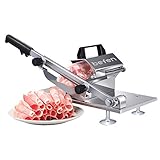 befen Manual Meat Slicer befen Manual Meat Slicer |
|
Check Latest Price |
| 8 | 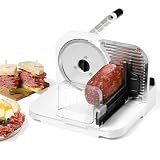 Starfrit 6.5 Inch Deli Slicer Starfrit 6.5 Inch Deli Slicer |
|
Check Latest Price |
| 9 | 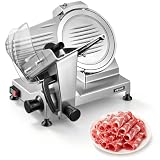 VEVOR 10 Inch Commercial Slicer VEVOR 10 Inch Commercial Slicer |
|
Check Latest Price |
| 10 |  Borlebbi Quiet 200W Slicer Borlebbi Quiet 200W Slicer |
|
Check Latest Price |
As an Amazon Associate we earn from qualifying purchases, at no additional cost to you. CERTAIN CONTENT THAT APPEARS ON THIS SITE COMES FROM AMAZON. THIS CONTENT IS PROVIDED 'AS IS' AND IS SUBJECT TO CHANGE OR REMOVAL AT ANY TIME.
1. OSTBA Dual-Blade Electric Slicer, 7.5 Inch Stainless Steel Blades
OSTBA Electric Meat Slicer, 2 Removable 7.5″ Stainless Steel Blade, 200W
- 200W motor
- Two 7.5 inch stainless blades
- 0-15mm thickness
- 8.6 pounds
Pros
- 200W motor handles chilled and dense cuts
- Two blades included so you can match blade to food
- Blade and carriage fully detach for cleaning
- Compact 14.6 by 9.4 inch footprint
- Two-year quality warranty
Cons
- Carriage wheel collects crumbs and jams intermittently
- Pusher spikes grip weakly on small pieces
- Thickness readings are approximate rather than calibrated
As an Amazon Associate we earn from qualifying purchases, at no additional cost to you. CERTAIN CONTENT THAT APPEARS ON THIS SITE COMES FROM AMAZON. THIS CONTENT IS PROVIDED 'AS IS' AND IS SUBJECT TO CHANGE OR REMOVAL AT ANY TIME.
Of the ten machines here, this is the one I would put on a counter and actually use. The 200W motor has enough torque to push through cold pork shoulder and dense deli logs without the blade bogging, and at 8.6 pounds it is light enough to move to a cupboard when the bacon run is over. The two-blade arrangement is the detail that separates it from the bargain bin: one serrated blade for hard salami and partially frozen venison, one smooth blade for ham, roast beef and soft cheese.
The 0-15mm dial covers shaved-to-thick, which is the range most home cooks actually need. Setting it takes a couple of attempts because there is no calibration scale, so you learn the dial by feel rather than by reading it. Once you know your settings, consistency improves quickly.
Two things come up often enough that you should hear them from me first. The carriage wheel gathers crumbs in the slot under the blade, and owners report it jamming every few slices if you ignore it. And the food pusher spikes are short enough that a shrinking end-piece can squirt off the carriage. Neither ruins the machine, but both are real friction in a weekly workflow.
There is also a duty cycle worth knowing about. Some variants are described as roughly five minutes of continuous running followed by fifteen minutes of rest. Plan your slicing sessions in blocks rather than assuming you can run a whole pork shoulder in one pass.
What it handles well and what it does not
This is the strongest all-rounder for a home kitchen because nothing in its spec sheet has a hard limit you are likely to hit. Bacon, roast beef, smoked cheese, turkey breast, sourdough, hard cheddar and cucumber all appear in owner reports, which is a wider food range than the manual units here. The detachable blade, carriage, slide rod, pusher and ring guard mean a ten-minute breakdown after use instead of a twenty-minute one.
Who should buy it, and who should not
Buy it if you slice two or three times a week, want a machine that fits a normal cabinet, and would rather have stainless steel blades you can rinse than a carbon steel blade you have to dry in five minutes. Skip it if your volume is low and your counter space is tight, because a manual model will serve you for a fraction of the effort.
As an Amazon Associate we earn from qualifying purchases, at no additional cost to you. CERTAIN CONTENT THAT APPEARS ON THIS SITE COMES FROM AMAZON. THIS CONTENT IS PROVIDED 'AS IS' AND IS SUBJECT TO CHANGE OR REMOVAL AT ANY TIME.
2. CUSIMAX 8.7 Inch Electric Deli Slicer
Meat Slicer,CUSIMAX Electric Deli Meat Slicer with 2 Removable 8.7”Stainless Steel Blades,Removable Food Carriage,1-20mm Adjustable Thickness Food Slicer for Home,Easy for Cut Meat,Cheese,Bread
- 8.7 inch 304 stainless blade
- 1-20mm thickness
- 200W drive
- 10.8 pounds
Pros
- Largest electric blade on a machine under 12 pounds
- 304 stainless blade resists staining
- Suction cups hold firm with no wobble
- Blade pusher and carriage all fully removable
- 18-month warranty and 30-day returns
Cons
- Short carriage forces large cuts to be sectioned first
- Plastic pusher spikes grip weakly
- Louder than comparable compact machines
As an Amazon Associate we earn from qualifying purchases, at no additional cost to you. CERTAIN CONTENT THAT APPEARS ON THIS SITE COMES FROM AMAZON. THIS CONTENT IS PROVIDED 'AS IS' AND IS SUBJECT TO CHANGE OR REMOVAL AT ANY TIME.
Blade diameter is the spec that most listings bury, and it is the one that decides whether you will be sectioning meat before you slice it. The 8.7 inch 304 stainless blade on this machine is the largest in the compact class, and it is why I recommend it for anyone who works with big pieces: it is the largest electric blade in this roundup on a machine that still weighs under 12 pounds.
The suction cup feet are the detail owners mention most warmly. Reviewers describe a machine that does not creep across the counter under load, which matters more than it sounds when you are guiding a 12 inch piece of cured meat past an exposed blade. Reviewers single out the build quality, and a machine that does not flex when the carriage is loaded feels far more solid than its weight class suggests.
The two caveats are consistent enough to plan around. The carriage is short, so oversized cuts need trimming before loading, and the plastic pusher gripper loses its hold on large pieces. A few owners also report a noisy plastic drive sprocket and occasional blade stoppage, and at the thinnest settings the slices vary more than the dial suggests they should.
Warranty coverage is 18 months with a 30-day return policy. That is respectable for the category, though it is shorter than the Cuisinart motor warranty and much shorter than the OSTBA two-year cover.
Why the bigger blade changes your workflow
Usable cut height is always smaller than blade diameter, because the food has to clear the blade edge and the housing above it. On a 7.5 inch machine, a wide slab of pork belly often will not enter the carriage without being cut in half first. On 8.7 inches, more of those cuts go in whole, which saves a surprising amount of prep time when you are doing bacon or a charcuterie board.
Who should buy it, and who should not
Buy it if you regularly cut roasts, large cured pieces or bread alongside deli meat, and you want stainless steel without moving to a 30-pound machine. Pass if counter space is at a premium or you are bothered by motor noise in an open-plan kitchen, because this is one of the louder compact slicers.
As an Amazon Associate we earn from qualifying purchases, at no additional cost to you. CERTAIN CONTENT THAT APPEARS ON THIS SITE COMES FROM AMAZON. THIS CONTENT IS PROVIDED 'AS IS' AND IS SUBJECT TO CHANGE OR REMOVAL AT ANY TIME.
3. Borlebbi 200W Two-Blade Electric Slicer
Meat Slicer, 200W Electric Food Slicer with 2 Removable 7.5″ Blades
- 200W motor
- 0-15mm thickness
- Two 7.5 inch blades
- 10.7 pounds
Pros
- Die-cast aluminum body resists rust
- Blade carriage and pusher all removable
- Compact body fits most cabinets
- Suction feet plus pusher for stability and hand safety
- Stainless tray included for catching slices
Cons
- Short carriage needs large cuts sectioned first
- Hand wash only rather than dishwasher safe
- Thickness dial readings are approximate
As an Amazon Associate we earn from qualifying purchases, at no additional cost to you. CERTAIN CONTENT THAT APPEARS ON THIS SITE COMES FROM AMAZON. THIS CONTENT IS PROVIDED 'AS IS' AND IS SUBJECT TO CHANGE OR REMOVAL AT ANY TIME.
This is a straight, unfussy 200W slicer with two 7.5 inch stainless steel blades and a 0-15mm dial, and it does the basics without drama. The die-cast aluminum body is the reason it feels heavier and more stable than the plastic-chassis machines at the same weight class, and it will not corrode the way a carbon steel housing can if a rinse happens and the machine sits damp.
Everything that touches food comes off for cleaning: blade, food carriage, slide-rod extension and pusher. That full teardown is the difference between a machine you keep out on the counter and one that ends up in a cupboard. The included stainless steel tray catches your output and rinses clean.
The compromises follow the same path as the other compact machines. The carriage is short, so large roasts need sectioning first. The plastic pusher spikes lose grip on small remaining pieces, which is exactly when you want them most. Thickness readings are approximate rather than calibrated, so treat the dial as eleven settings rather than a measured gauge.
It is hand wash only. Owners who try to shortcut this with a hose learn quickly that the motor housing and carriage rails do not appreciate standing water, and the suction feet lose grip on a wet counter anyway.
What the aluminum body actually buys you
Weight and corrosion resistance. A die-cast chassis damps the small judders that travel up a plastic body and make thin slices wander, and it shrugs off the damp kitchen environment that ends up pitting a cheaper housing. Neither factor shows up in a specification list, and both show up in the third month of use.
Who should buy it, and who should not
Buy it if you want a straightforward stainless-steel-bladed machine that survives a wet kitchen and stores away easily. Pass if you need paper-thin slices from a big block, or if you want to run the whole blade and tray through the dishwasher rather than washing by hand.
As an Amazon Associate we earn from qualifying purchases, at no additional cost to you. CERTAIN CONTENT THAT APPEARS ON THIS SITE COMES FROM AMAZON. THIS CONTENT IS PROVIDED 'AS IS' AND IS SUBJECT TO CHANGE OR REMOVAL AT ANY TIME.
4. Cuisinart FS-75 Kitchen Pro Food Slicer
Cuisinart Kitchen Pro Food Slicer, Meat Slicer with Slice Control Knob Adjusts from 1/32″ to 1/2″ to Slice Bread, Roasts, and Firm Cheeses, Removable 7.5″ Stainless Steel Cutting Blade, FS-75, Gray
- 130W motor
- 1/32 to 1/2 inch dial
- 7.5 inch stainless blade
- 10 pounds
Pros
- Dial marked in fractions from 1/32 to 1/2 inch
- Removable blade food guide and carriage
- Three-year motor warranty from a known brand
- Die-cast aluminum housing with non-slip feet
- Suction feet plus food pusher for hand safety
Cons
- 130W motor is modest next to 200W machines
- Heavier body claims more counter space
- Hand wash only
- Ultra-thin slices can be inconsistent
As an Amazon Associate we earn from qualifying purchases, at no additional cost to you. CERTAIN CONTENT THAT APPEARS ON THIS SITE COMES FROM AMAZON. THIS CONTENT IS PROVIDED 'AS IS' AND IS SUBJECT TO CHANGE OR REMOVAL AT ANY TIME.
The FS-75 is the one I would suggest to a buyer who wants a recognised brand name and a long warranty rather than the highest specification. The three-year motor warranty is the longest in this roundup, and for a home kitchen that is a meaningful difference, because the motor is the part most likely to fail and the part that is hardest to replace on a sealed chassis.
Its real strength is the thickness dial, which runs from 1/32 inch to 1/2 inch and is marked in actual fractions rather than millimetres. That means you can set a precise deli-thin for prosciutto and a precise half-inch for roast beef without guessing. The 7.5 inch stainless blade, food guide and carriage all detach for cleaning.
What you give up is power. The 130W motor is the lowest here that is still electric, and owners note it will not push through dense or chilled meat the way a 200W machine does. It is built for deli logs, bread, firm cheeses and leftover roasts, which is most home use but not all of it.
The body is also bulky. At 18.25 inches long and 10.88 inches wide, it claims more counter than the 14 inch compact machines, and the older die-cast design has a hollow, slightly dated feel next to newer models. Some users report the very thin settings do not hold consistent thickness across a whole cut.
When a warranty is worth more than wattage
If you slice a few times a month and nothing is ever frozen or bone-in, motor output matters far less than you would think. A three-year warranty on a machine you can repair beats a 200W motor on a chassis you cannot open. The calculus flips the moment you start processing a deer shoulder or a big batch of bacon.
Who should buy it, and who should not
Buy it if you want a dependable middle-of-the-road machine, a dial marked in real fractions, and brand service behind it. Pass if you cut frozen meat weekly, want a dishwasher-cleanable machine, or have a small counter that cannot spare the extra footprint.
As an Amazon Associate we earn from qualifying purchases, at no additional cost to you. CERTAIN CONTENT THAT APPEARS ON THIS SITE COMES FROM AMAZON. THIS CONTENT IS PROVIDED 'AS IS' AND IS SUBJECT TO CHANGE OR REMOVAL AT ANY TIME.
5. Elite Gourmet EMT-625B Deli Meat Slicer
Elite Gourmet EMT-625B Deli Meat Slicer, Adjustable Thickness, 7.5″ Stainless Steel & Black
- 7.5 inch stainless blade
- Thin to 1/2 inch range
- Die-cast aluminum
- 10.6 pounds
Pros
- Range runs from razor-thin to 1/2 inch
- Removable serrated blade for simple cleaning
- Non-slip base and die-cast aluminum body
- Handles leftover roasts and ham consistently
- Easy to move between counter and cupboard
Cons
- Struggles with rock-hard salami and frozen meat
- Cut depth knob can spin without changing depth
- Blade dulls relatively quickly under heavy use
- Slider and knob can seize
As an Amazon Associate we earn from qualifying purchases, at no additional cost to you. CERTAIN CONTENT THAT APPEARS ON THIS SITE COMES FROM AMAZON. THIS CONTENT IS PROVIDED 'AS IS' AND IS SUBJECT TO CHANGE OR REMOVAL AT ANY TIME.
For a defined job this machine does that job well. If you are slicing ham, leftover roasts, pepperoni, mild salami and hard cheese a couple of times a month, the adjustable range from razor-thin to 1/2 inch and the removable serrated blade cover the brief. Reviewers consistently describe it as an occasional-use machine rather than a production one, and that framing is fair.
The die-cast aluminum body is a genuine step above the plastic frames in the same tier, and the non-slip base keeps it planted. At 10.6 pounds it is easy to lift into or out of a cupboard when you want the space back.
The technical complaints cluster around two parts. The cut-depth knob can spin freely without changing the actual depth, which is disorienting until you learn to feel for the catch. And the slider and knob can seize after a few sessions, with owners fixing it by working a little food-safe oil into the mechanism.
Blade life is the other limit. Owners report the blade dulling relatively quickly after several pounds of beef, and it has no built-in sharpener, so edge recovery depends on a separate sharpening service. Add reported motor overheating on prolonged sessions and a messy carriage area, and the picture is of a machine that rewards light duty.
What a lower entry cost actually buys
You get a working slicer and you give up headroom. Below this tier, motors drop far enough that they bog down on anything but soft deli logs, blades arrive without a way to sharpen them at home, and controls get vague. Ask yourself honestly whether you will slice more than a few pounds a month before saving money here.
Who should buy it, and who should not
Buy it if you are outfitting a small kitchen on a limited budget and your slicing needs are light and predictable. Pass if you want hard salami, frozen venison, weekly bacon, or a machine you will not need to baby.
As an Amazon Associate we earn from qualifying purchases, at no additional cost to you. CERTAIN CONTENT THAT APPEARS ON THIS SITE COMES FROM AMAZON. THIS CONTENT IS PROVIDED 'AS IS' AND IS SUBJECT TO CHANGE OR REMOVAL AT ANY TIME.
6. BESWOOD 250 Ten Inch Chromium-Plated Deli Slicer
BESWOOD 10″ Electric Deli Meat Slicer, Cheese Food Slicer with Premium Chromium-plated Steel Blade, for Commercial and for Home Use 240W, BESWOOD250
- 10 inch chromium-plated blade
- 240W belt drive
- 33 pounds
- Built-in sharpener
Pros
- Cuts near-transparent slices of meat and firm cheese
- Blade stays sharp without frequent sharpening
- 240W motor handles chilled and partially frozen meat
- Belt drive runs quiet and smooth
- Built-in sharpener and ETL Listed certification
Cons
- Large footprint and heavy weight demand dedicated space
- Cannot be immersed or sprayed with water
- Blade removal needs tools
- Short product tray stroke relative to the machine
As an Amazon Associate we earn from qualifying purchases, at no additional cost to you. CERTAIN CONTENT THAT APPEARS ON THIS SITE COMES FROM AMAZON. THIS CONTENT IS PROVIDED 'AS IS' AND IS SUBJECT TO CHANGE OR REMOVAL AT ANY TIME.
This is the machine owners describe as a step change from anything else on this list, and its 4.6 rating is the highest of the ten. The 10 inch chromium-plated blade takes paper-thin, nearly transparent slices of meat and firm cheese, and owners repeatedly say the edge holds without frequent sharpening. The built-in sharpener means you do not have to hunt for a sharpening service every few months.
The 240W belt-drive motor handles chilled and partially frozen meat without bogging, and the belt drive is the reason it runs quieter and smoother than direct-drive machines of similar size. It is also ETL Listed and Certified to USA standards, which is a certification most of the compact machines in this roundup simply do not publish.
The honest cost is space. At 33 pounds and 20 by 17 by 14.75 inches, this machine does not come down off the counter, and that is exactly the complaint forum users raise about large home slicers. Plan a dedicated cabinet shelf before you buy rather than after.
Cleaning is more involved than the compact machines. The blade cannot be immersed or sprayed, removal is awkward and needs tools, and the included brush is too wide for the blade gaps, so owners report a 15 to 20 minute teardown using the three removable knobs. New units can also arrive with very tight factory knobs that need working loose before first use.
What a 10 inch blade buys over a 7.5 inch one
Height, mostly. A bigger blade means a taller usable cut opening, so a slab of cured meat, a full pork belly section or a thick cheese block enters the carriage without being cut down first. Combined with a 240W motor and belt drive, it is the difference between a machine you trim food for and one you do not.
Who should buy it, and who should not
Buy it if you make charcuterie, bacon or jerky, slice for a group regularly, or want the thinnest possible slices with a self-sharpening blade and certified electrical safety. Pass if you live in a small flat, slice occasionally, or want a machine you can carry to a cupboard without planning a two-person lift.
As an Amazon Associate we earn from qualifying purchases, at no additional cost to you. CERTAIN CONTENT THAT APPEARS ON THIS SITE COMES FROM AMAZON. THIS CONTENT IS PROVIDED 'AS IS' AND IS SUBJECT TO CHANGE OR REMOVAL AT ANY TIME.
7. befen Manual Frozen Meat Slicer
Manual Frozen Meat Slicer befen Upgraded Home Stainless Steel Meat Cutter
- Fully manual, no power
- 0.2-20mm thickness
- 8 inch straight-edge blade
- 5.8 pounds
Pros
- No outlet and no cord needed
- 0.2mm minimum for hot pot and shabu shabu
- Cuts frozen beef lamb chicken ham and fish
- Includes ten meat bags and two suction cups
- Light enough to move with one hand
Cons
- Requires meat to be fully frozen for a clean cut
- Straight-edge blade is less forgiving than rotary
- Not suited to bread cheese or soft foods
- Surface scratches appear after transport
As an Amazon Associate we earn from qualifying purchases, at no additional cost to you. CERTAIN CONTENT THAT APPEARS ON THIS SITE COMES FROM AMAZON. THIS CONTENT IS PROVIDED 'AS IS' AND IS SUBJECT TO CHANGE OR REMOVAL AT ANY TIME.
This is the practical pick for Asian-style hot pot, shabu shabu and home jerky, and it works on a principle the electric machines cannot replicate. The meat goes solid in the freezer first, and a hand-drawn straight-edge blade produces slices as thin as 0.2mm. No motor, no cord, no outlet, and at 0.2mm it produces the thinnest slices of any machine in this roundup.
The board is 1.5mm thick stainless steel, listed as twice the thickness of similar slicers, and the frame holds a stable line. The box includes a separate meat holder, two blades, ten meat bags for storing cut portions, two backup suction cups and a hex key. Among the manual machines here, it is the one that goes thinnest.
The operating requirement is not optional. Meat must be properly frozen or the cut drags and tears rather than slicing, and most owners understand this going in. Beyond that, expect more physical effort than an electric machine, because every slice is drawn through by hand.
A straight-edge blade is less forgiving than a rotary one, and it is not built for bread, cheese or soft foods. Some units also arrive with light surface scratches from transport, which is cosmetic but worth checking on arrival.
When freezing the meat first is the better system
For thin hot pot slices, freezing first is genuinely better, not a compromise. The block holds its shape, the cut is clean, and you reach 0.2mm rather than the millimetre-scale floor of the electric dials. You also skip the motor entirely, which is why this is the sensible first slicer for a small kitchen.
Who should buy it, and who should not
Buy it if you cook hot pot or shabu shabu often, make jerky, want the thinnest slices available, or have no interest in a counter appliance. Pass if you slice deli meat and bread from the fridge several times a week, because there is no motor and no soft-food capability here.
As an Amazon Associate we earn from qualifying purchases, at no additional cost to you. CERTAIN CONTENT THAT APPEARS ON THIS SITE COMES FROM AMAZON. THIS CONTENT IS PROVIDED 'AS IS' AND IS SUBJECT TO CHANGE OR REMOVAL AT ANY TIME.
8. Starfrit 6.5 Inch Manual Deli Slicer
Starfrit Deli Slicer, 6.5″ Stainless Steel Blade, Adjustable Thickness
- Manual rotary slicing
- 6.5 inch stainless blade
- Deli-thin to 1 inch
- 3.8 pounds
Pros
- All parts detachable and dishwasher safe
- Foldable design nests for storage
- Extra-large suction base resists sliding
- Thickness runs from deli-thin to a full inch
- Weighs only 3.8 pounds
Cons
- 6.5 inch blade limits portion size
- Hand-powered cutting takes real effort
- Plastic carriage and guard feel flimsy
- Best for cold cuts and bread rather than frozen meat
As an Amazon Associate we earn from qualifying purchases, at no additional cost to you. CERTAIN CONTENT THAT APPEARS ON THIS SITE COMES FROM AMAZON. THIS CONTENT IS PROVIDED 'AS IS' AND IS SUBJECT TO CHANGE OR REMOVAL AT ANY TIME.
This is the storage and cleanup answer. At 3.8 pounds with a foldable, nestable body, it lives in a small cabinet between sessions instead of occupying counter space all year, which is the single biggest reason home slicers get abandoned. Every component detaches and goes in the dishwasher, so there is no hand-washing a blade edge at the end of a long session.
The 6.5 inch serrated stainless blade is the smallest in this roundup, and the thickness runs from deli-thin all the way to a full inch. That upper end is unusually generous, which makes it useful for thick sandwich bread, cheese blocks and vegetable slabs. The extra-large non-slip suction base and the thumb guard, food pusher and sliding carriage make it workable by hand.
Limitations follow from the size. The carriage is small, so large pieces must be cut down first, and the plastic carriage and guard feel light under load. Hand-powered rotary cutting asks more of your arm than an electric pass, and dense or frozen meat is beyond what a 6.5 inch blade will manage.
It suits cold cuts, bread, soft cheeses and vegetables. If you want paper-thin salami or anything frozen, you are asking too much of it. Warranty cover is one year, the shortest in this roundup.
Why dishwasher-safe parts decide the outcome
Cleanup burden is the number one reason home slicers end up unused, and this is the one manual machine whose parts all detach and drop straight into a dishwasher. That single fact does more for long-term usability than a more powerful motor would, because the barrier is not capability, it is willingness to scrub a blade after dinner.
Who should buy it, and who should not
Buy it if you have limited counter or cabinet space, slice bread, cheese and cold cuts a few times a week, and refuse to hand-wash a blade. Pass if you process venison, make jerky or want to cut through hard cured sausage regularly.
As an Amazon Associate we earn from qualifying purchases, at no additional cost to you. CERTAIN CONTENT THAT APPEARS ON THIS SITE COMES FROM AMAZON. THIS CONTENT IS PROVIDED 'AS IS' AND IS SUBJECT TO CHANGE OR REMOVAL AT ANY TIME.
9. VEVOR Ten Inch Commercial Electric Meat Slicer
VEVOR Commercial Meat Slicer, 10 inch Electric Food Slicer, 240W Frozen Meat Deli Slicer, Premium Chromium-plated Steel Blade Semi-Auto Meat Slicer For Commercial and Home use
- 10 inch 45# carbon steel blade
- 240W at 350-400 rpm
- 0-12mm thickness
- 34 pounds
Pros
- One of the few machines publishing blade speed
- Built-in sharpening stone keeps the edge usable
- 240W motor at 350-400 rpm for fast passes
- Mostly metal construction with minimal plastic
- Does not walk across the counter
Cons
- Blade removal needs a hex driver that is not included
- Cleaning around the blade and carriage junction is difficult
- Maximum thickness tops out near half an inch
- Replacement parts and blades are hard to source
As an Amazon Associate we earn from qualifying purchases, at no additional cost to you. CERTAIN CONTENT THAT APPEARS ON THIS SITE COMES FROM AMAZON. THIS CONTENT IS PROVIDED 'AS IS' AND IS SUBJECT TO CHANGE OR REMOVAL AT ANY TIME.
The VEVOR is the only machine in this roundup that publishes its blade speed, at 350-400 rpm, alongside a stated 240W motor with a 130W no-load figure. Publishing numbers is a signal in itself, and it lets you compare this machine honestly against listings that say only high power. The 10 inch 45# carbon steel blade has a wider cutting surface than most, and the built-in sharpening stone keeps it working without a service call.
Owners rate it well above compact units for slice consistency, from thick roasts down to nearly translucent, and the slider motion is described as smooth and quiet for a machine of this size. The build is mostly metal with very little plastic, and the feet keep it planted. Several owners report it outperforming far more expensive machines they had used before.
Carbon steel is the material decision here. A carbon steel blade takes and holds an edge better than stainless, and the built-in stone makes that edge easy to restore, but it will spot and rust if you wash it and leave it wet. Dry it immediately, every time. That is the whole lesson.
Cleaning is the complaint. The blade comes off with a hex driver that is not included, and the junction between blade and carriage is genuinely awkward to reach. The food holder also limits the length of meat you can fit between holder and blade, and the dial tops out around 12mm, so thick roast cutting is out of scope. Replacement parts are hard to source, which is a real long-term risk on a bigger machine.
What carbon steel does for you, and what it costs
Carbon steel holds an edge longer and can be restored in minutes with a stone, which is why deli and butcher shops use it. Stainless steel needs less care but blurs sooner and cannot be sharpened back cheaply. The trade is attention: a carbon steel blade left wet after washing will show rust spots within days. Wipe it dry before you put anything back on it.
Who should buy it, and who should not
Buy it if you cut often, want a fast motor and a self-sharpening 10 inch blade, and can commit to drying the blade after every use. Pass if you slice occasionally, want to leave a machine sitting damp without worry, or need replacement parts to be easy to get in five years.
As an Amazon Associate we earn from qualifying purchases, at no additional cost to you. CERTAIN CONTENT THAT APPEARS ON THIS SITE COMES FROM AMAZON. THIS CONTENT IS PROVIDED 'AS IS' AND IS SUBJECT TO CHANGE OR REMOVAL AT ANY TIME.
10. Borlebbi Quiet 200W Two-Blade Electric Slicer
Meat Slicer Machine for Home, 200W Food Slicer with Two 7.5″ Blades
- Quiet 200W DC motor
- Two 7.5 inch stainless blades
- 0-15mm thickness
- Child safety lock
Pros
- Exceptionally quiet for a 200W slicer
- Sharp blades cut cheese thin enough to read through
- Long power cord unlike most competitors
- Suction feet and blade cover for safety
- All removable parts go in the dishwasher
Cons
- Short slide table cannot hold a full bacon slab
- Upright slide table blocks long lengthwise cuts
- Plastic pusher spikes too short for shrinking cuts
- Catch tray could be larger
As an Amazon Associate we earn from qualifying purchases, at no additional cost to you. CERTAIN CONTENT THAT APPEARS ON THIS SITE COMES FROM AMAZON. THIS CONTENT IS PROVIDED 'AS IS' AND IS SUBJECT TO CHANGE OR REMOVAL AT ANY TIME.
Noise is genuinely overlooked in slicer comparisons, and it matters in an open-plan kitchen. This 200W DC motor is described by owners as exceptionally quiet for its class, and the rating of 4.5 across 683 reviews is unusually consistent for this category. On cutting quality, owners specifically mention slicing extra-sharp cheddar thin enough to read the print on the page through the slice.
Two practical details stand out. The power cord is longer than the norm, so you are not forced to park the machine next to the nearest outlet, and the thickness knob sits at the rear so it does not sit in a drip zone. The blade unlocks with a simple tab, and the blade, food tray and carriage detach for the dishwasher, which is uncommon at this size.
The limitation is the slide table, and it is the same one that shows up on the compact machines. It is too small to hold a full half-slab of bacon, and the upright side of the slide table prevents long lengthwise cuts, so larger items need cutting down first. The plastic pusher spikes are also too short to grip light or shrinking cuts, and the catch tray could be larger.
Slide table and guard are plastic and may become brittle over time, which is worth remembering if you plan to keep this for years. Published weight is not listed for this model, so do not assume it is as light as the manual machines in this roundup.
Why quiet operation is a real feature at home
A 200W direct-drive motor on a small carcass transmits a noticeable whine and a cabinet rattle. A DC motor built for low noise does not, which means you can slice while someone is on a call in the next room, and it does not transmit as much vibration into a worktop. For occasional users in a small flat, that is often the difference between using the machine and leaving it in the cupboard.
Who should buy it, and who should not
Buy it if you want a compact, quiet, dishwasher-friendly electric slicer with sharp blades for cheese and cold cuts. Pass if you routinely slice full bacon slabs, need a large carriage, or want to cut long roasts lengthwise in one pass.
As an Amazon Associate we earn from qualifying purchases, at no additional cost to you. CERTAIN CONTENT THAT APPEARS ON THIS SITE COMES FROM AMAZON. THIS CONTENT IS PROVIDED 'AS IS' AND IS SUBJECT TO CHANGE OR REMOVAL AT ANY TIME.
How to Choose a Meat Slicer for a Home Kitchen
Look at usable cut height, not blade diameter
Blade diameter is the number on the box, and it is a proxy for something more useful: how much food fits under the blade. Usable cut height is always less than the stated diameter, because the food has to clear both the blade edge and the housing above it. As a worked example, a slab of cured pork belly wider than the carriage opening has to be cut in half before it will load, no matter how capable the machine is. That prep step is invisible in the specification and very visible in your week.
For most home kitchens, 7.5 inches covers deli logs, sandwich meat, cheese and bread. Move to 8.7 or 10 inches when you regularly handle large roasts, full bellies of bacon or blocks of firm cheese. The 10 inch machines here trade a cabinet shelf and 33 to 34 pounds of weight for that headroom.
Check both ends of the thickness dial
The maximum thickness tells you almost nothing. What matters is the floor and the ceiling together. A 0-15mm dial will not reach the paper-thin end that the befen manual machine’s 0.2mm floor offers, and it will not reach the thick roast-slab end that a 1-20mm range covers. Cuisinart marks its dial in fractions from 1/32 to 1/2 inch, the only dial here labelled in real fractions rather than millimetres, while the millimetre dials on most machines are approximate rather than calibrated.
Decide between electric and manual honestly
Electric slicers are faster, handle soft and semi-frozen food, and need an outlet. Manual slicers need no power, are lighter, and often store more easily, but they ask for physical effort on every slice. A manual machine with a suction base and a 0.2mm floor is the right choice for hot pot and shabu shabu. An electric machine is the right choice for deli meat, bread and cheese several times a week. Buying an electric machine to slice a few pounds a month is the most common regret I see in the reviews.
Judge the carbon steel versus stainless steel trade
Stainless steel blades, found on the compact machines here, are forgiving and rinse clean without thought. Carbon steel and chromium-plated steel blades, found on the 10 inch machines, take a sharper edge and hold it longer, and a built-in stone makes recovery a two-minute job instead of a service visit. The catch is that both rust if you wash them and leave them wet. Dry the blade before reassembling, every time, and the problem never starts.
Count what detaches before you buy
Cleanup is the number one reason home slicers end up unused in a cupboard. Fat sets hard, the carriage traps crumbs, and the blade is the part people least want to scrub. Read the parts list carefully: fully detachable blade, carriage, slide rod, pusher and ring guard, as on the OSTBA, means a ten-minute teardown. A machine that needs a hex driver, as the VEVOR does, means a twenty-minute one with tools you have to find. Dishwasher-safe components, as on the Starfrit and the Borlebbi quiet model, are the easiest win of all.
Treat frozen meat claims with care
Partially frozen and solid frozen are different problems. Most of the machines here can slice chilled or partly frozen meat, which is what you want for a roast straight from the fridge, though the 240W motors in the BESWOOD and VEVOR have the most headroom for it. Solid frozen blocks are a separate task, and the befen manual machine is the one designed around it, since the meat must be frozen solid to hold its shape. Marketing language about frozen capability rarely distinguishes the two, and that is where buyers end up disappointed.
Check motor output, warranty and certification
Motor output varies more than you would expect across this roundup, from 130W on the Cuisinart to 200W on the compact machines and 240W on the two 10 inch models. What matters is where the motor sits relative to the load you plan to give it, not the headline number alone.
Warranty lengths run from one year on the Starfrit to three years on the Cuisinart motor, with the OSTBA at two years and the CUSIMAX at eighteen months. Longer is better on the motor, since that is the hardest part to replace. Electrical certification matters too: the BESWOOD 250 is ETL Listed and Certified to USA standards, a certification very few of the compact machines in this group publish. If you have children in the house, a child lock, a blade cover and a food pusher are worth more than a fifth of an inch of blade diameter.
One more piece of practical advice from the forums, which goes unmentioned in most ranking articles: used commercial slicers from brands like Globe, Berkel and Vollrath are widely recommended on r/KitchenConfidential as the most reliable option for raw roasts and frequent use, and deal-watching forums recommend timing a purchase of a mid-range model around seasonal sales rather than buying on impulse. A second-hand commercial machine is worth checking only if you can confirm the blade was sharpened, the wiring is intact and parts are still available.
How to Clean a Deli Slicer
Cleaning is the step that decides whether you still own this machine in two years. The good news is that a proper teardown on a machine with detachable parts takes about ten minutes, and about twenty on the heavier 10 inch machines with tool-free-averse blade removal. Unplug first, every time, and never rinse the motor housing or spray water into the blade area.
First, unplug the machine and set the thickness dial to zero. Second, set the blade down to the easiest position, usually the thickest, and slide the carriage fully back so it is out of the blade path. Third, press the carriage lock and remove the blade using the release tab or the supplied hex key, taking care with the edge. Fourth, pull the food pusher, food holder, slide rod and carriage off separately. Fifth, wipe the blade with warm soapy water and a soft cloth, moving from the hub outwards, and dry it immediately. Sixth, wash the carriage, tray, pusher and holder in hot soapy water, using a bottle brush on the carriage slots where crumbs collect. Seventh, rinse and dry every part, then leave them on a rack rather than reassembling them damp. Eighth, wipe the machine housing and the blade-guard ring with a barely damp cloth, and use a dry toothbrush around the blade and carriage junction. Ninth, reassemble, run the blade for a few seconds on the thinnest setting to clear fragments, and unplug again. Tenth, if you cut carbon steel, oil the blade lightly with food-safe mineral oil before storage.
How long does it take to clean a meat slicer? For a compact machine with fully detachable parts, budget ten to twelve minutes after a normal session and closer to twenty for a heavy bacon or cheese run, when hardened fat needs a second pass with a degreaser. On the 10 inch BESWOOD, owners report a 15 to 20 minute teardown using the three removable knobs, with blade removal being the awkward part.
Frequently Asked Questions
Which meat slicer is good quality for home use?
The OSTBA dual-blade slicer is the strongest all-rounder for a home kitchen: a 200W motor, two removable 7.5 inch stainless steel blades and a 0-15mm thickness dial, with blade, carriage, slide rod and pusher all fully detachable for cleaning. If you want the thinnest slices and can dedicate counter space, the BESWOOD 250 adds a 10 inch chromium-plated blade, a 240W belt-drive motor and a built-in sharpener.
What is the best meat cutter for home use?
For most home kitchens, the OSTBA dual-blade 7.5 inch slicer is the best meat cutter you can own. It handles deli logs, roast beef, bacon, smoked cheese and bread, weighs 8.6 pounds so it moves easily, and both stainless steel blades detach for cleaning. Choose the CUSIMAX 8.7 inch model instead if you regularly cut large roasts or wide cured pieces that will not fit a smaller carriage.
What is the best manual meat slicer for home use?
The befen manual slicer is the best manual option for home kitchens, because it produces slices as thin as 0.2mm for hot pot and shabu shabu, needs no outlet or cord, weighs 5.8 pounds and includes a meat holder, two blades and ten storage bags. Meat must be frozen solid for a clean cut. For small kitchens that want to store a machine away, the Starfrit 6.5 inch foldable model is lighter and fully dishwasher safe.
What is the best way to clean a deli slicer?
Unplug it, set the thickness to zero, slide the carriage back and release the blade with the tab or hex key. Take the blade, pusher, food holder, carriage and tray off separately, wash them in hot soapy water, and dry the blade immediately rather than letting it air dry wet. Wipe the housing with a barely damp cloth and brush around the blade and carriage junction, then reassemble and run the blade briefly.
Can a home meat slicer cut frozen meat?
Partially frozen, yes. Most of the machines here can slice chilled or partly frozen meat, which is the right way to handle a roast straight from the fridge, with the 240W motors in the BESWOOD 250 and VEVOR offering the most headroom. Solid frozen blocks are a different job: the befen manual slicer is designed for it and needs the meat frozen solid to hold its shape.
Conclusion
The best meat slicers for home kitchens in 2026 come down to two questions: how big is the food you cut, and will you actually clean it. The OSTBA dual-blade 7.5 inch slicer is the pick for most people because it balances a 200W motor, two stainless steel blades, a 0-15mm dial and a fully detachable teardown at 8.6 pounds. The BESWOOD 250 is the upgrade when the thinnest electric slices and a self-sharpening 10 inch blade matter more than cabinet space.
Below that, match the machine to the job. Buy the CUSIMAX 8.7 inch for large cuts, the VEVOR for frequent use with on-site sharpening, the Borlebbi quiet model for an open-plan kitchen, the Elite Gourmet for light duty, and the befen or Starfrit manual machines when you want no outlet, thin hot pot slices or a machine that folds into a drawer. Whichever you choose, dry the blade after washing and put the parts back on a rack rather than reassembling them wet. That single habit decides whether the slicer is still on your counter next year.