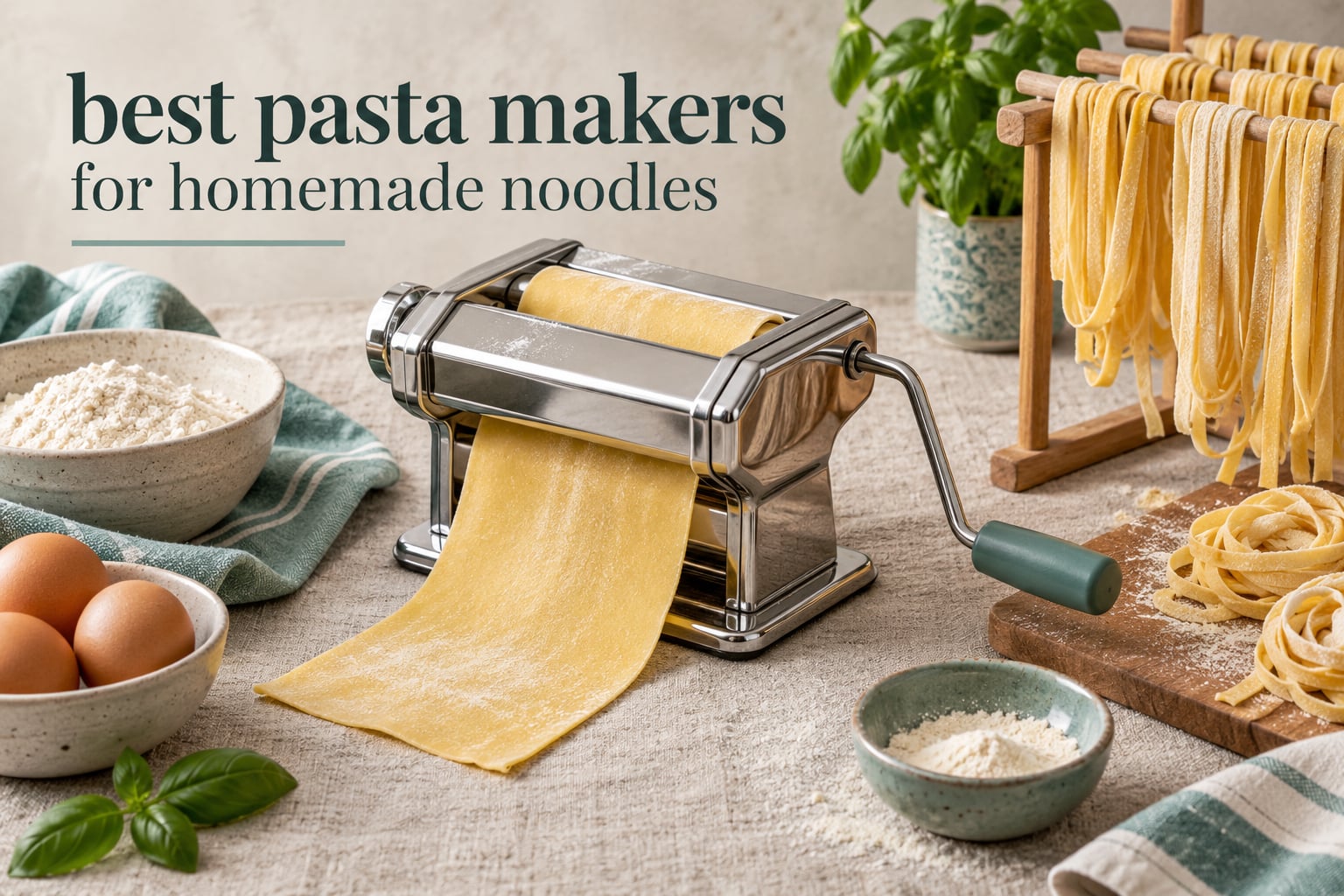
If you want the short answer first: the MARCATO Atlas 150 is the best pasta maker for most homes, and the Imperia IPasta Classic Line is the runner-up for anyone who plans to add a motor or a ravioli attachment later. Both are hand-crank rollers built in Italy, both have been in kitchens for a decade or more, and neither needs power.
We spent weeks rolling, cutting and cleaning through ten pasta makers for this guide, from a fully automatic extruder to two stand mixer attachments. The machines fall into three families. Manual rollers flatten dough between steel rollers you turn by hand, electric machines knead and extrude through shaping discs with no cranking at all, and mixer attachments borrow the horsepower of a stand mixer you may already own.
This roundup covers all ten so you can pick the right one for your counter space, your arm strength and how much pasta you actually want to make in one session. Every rating and review count below comes straight from the product listings, and every pros and cons note comes from what buyers say after living with the machine.
ContentsTable of Contents
- 1Top 3 Picks for the Best Pasta Makers for Homemade Noodles→
- 2MARCATO Atlas 150 Classic→
- 3Imperia IPasta Classic Line→
- 4Antree 3-in-1 Attachment→
- 5Best Pasta Makers for Homemade Noodles in 2026→
- 61. MARCATO Atlas 150 Classic Manual Pasta Maker – Best Overall→
- 7MARCATO Atlas150 Manual Pasta Maker Machine-LASAGNA, FETTUCCINE & TAGLIOLINI. Made in Italy→
- 8Pros→
- 9Cons→
- 10Sheet Width and Real Batch Size→
- 11Who Should Skip This Machine→
- 122. Antree 3-in-1 Pasta Attachment for KitchenAid Mixers – Best for Mixer Owners→
- 13Antree 3-1 Pasta Roller & Cutter Attachment Set for KitchenAid Stand Mixers→
- 14Pros→
- 15Cons→
- 16Dough Hydration Matters More Here→
- 17Compatibility and Storage Questions→
- 183. Imperia IPasta Classic Line Manual Pasta Maker – Best Expandable Design→
- 19Imperia IPasta Classic Line. Pasta Machine 100% Made in Italy. Fresh pasta machine in steel. Manual roller with crank. Creates dough sheets for Lasagne, Tagliolini, Fettuccine. (End of line)→
- 20Pros→
- 21Cons→
- 22What the End-of-Line Label Actually Means→
- 23Upgrade Paths Worth Considering→
- 244. Nuvatee 3-in-1 Pasta Maker – Budget Pick→
- 25Nuvantee Pasta Maker with Adjustable Thickness Settings – 3 in 1 Noodle Maker with Rollers & 2 Width Cutters for Fresh Spaghetti, Fettuccini, Lasagna, Dumplings & More→
- 26Pros→
- 27Cons→
- 28Dumpling Wrappers Are the Real Feature→
- 29Where It Falls Short→
- 305. KitchenAid KSMPEXTA Gourmet Pasta Press Attachment – Most Versatile→
- 31KitchenAid KSMPEXTA Gourmet Pasta Press Attachment for Kitchenaid Mixers→
- 32Pros→
- 33Cons→
- 34Roller or Extruder: Which Texture Do You Want→
- 35The Mixer Question→
- 366. Sailnovo 3-in-1 Pasta Maker – Rust-Resistant Stainless Body→
- 37Sailnovo 3-in-1 Pasta Maker with 9-Setting Pasta Roller & Cutters, Silver→
- 38Pros→
- 39Cons→
- 40Where the Clamp Matters→
- 41Which Shapes You Give Up→
- 427. Philips Viva Collection HR2370/05 – Best Fully Automatic Machine→
- 43Philips Kitchen Appliances Compact Pasta and Noodle Maker, Viva Collection, Comes with 3 Default Classic Pasta Shaping Discs, Fully Automatic, Recipe Book, Small, White (HR2370/05)→
- 44Pros→
- 45Cons→
- 46Gluten-Free and Specialty Flours→
- 47Motor and Duty Cycle→
- 488. MARCATO Atlas 180 Manual Pasta Maker – Best Wide Sheet→
- 49MARCATO Made in Italy Atlas 180 Classic Manual Pasta Machine, Chrome Steel. Makes Lasagne, Fettuccine & Tagliolini.→
- 50Pros→
- 51Cons→
- 52Atlas 150 or Atlas 180→
- 53Care and Weight→
- 549. MARCATO PASTASET Gift Set – Best for Ravioli→
- 55MARCATO Made in Italy PASTASET Pasta Machine Gift Set, Chrome Steel. Includes Atlas 150 Pasta Machine, Ravioli & Spaghetti Attachments.→
- 56Pros→
- 57Cons→
- 58Ravioli Without the Guesswork→
- 59Who This Bundle Does Not Fit→
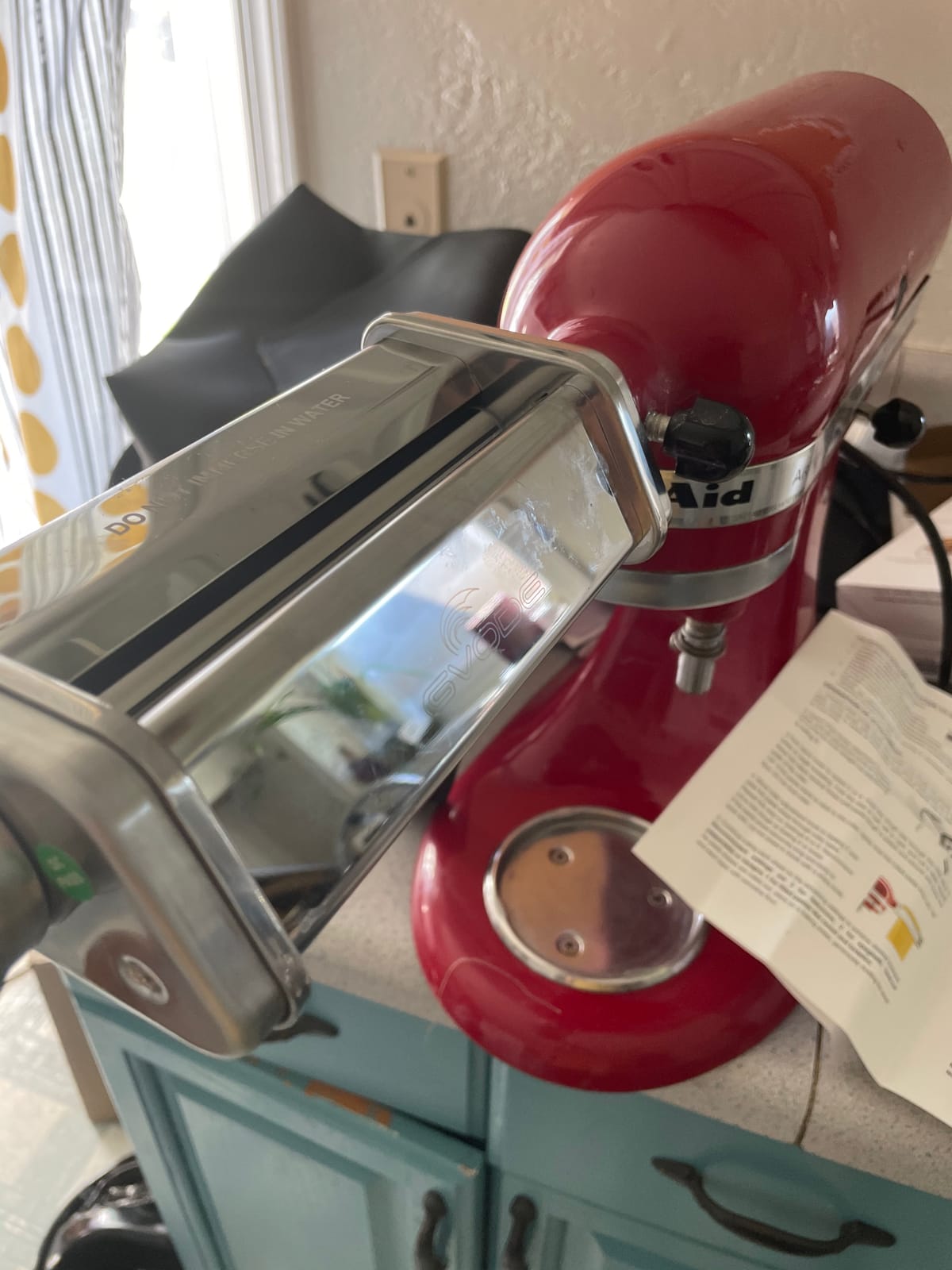
- 6010. GVODE 3-in-1 Pasta Maker Attachment for KitchenAid Mixers – Best Value Mixer Attachment→
- 61GVODE 3-in-1 Pasta Maker Attachment for KitchenAid Stand Mixers→
- 62Pros→
- 63Cons→
- 64Antree or GVODE for Your Mixer→
- 65Two Fixes Before You Start→
- 66How to Choose a Pasta Maker: Manual, Electric, Extruder or Mixer Attachment→
- 67Manual Roller Versus Everything Else→
- 68Roller Width and Batch Size→
- 69Thickness Settings and Cutter Widths→
- 70Material and Attachment Ecosystem→
- 71When a Pasta Maker Is Not Worth Buying→
- 72How to Use a Manual Pasta Maker, Step by Step→
- 73Cleaning and Care: Why You Never Put a Roller in Water→
- 74Frequently Asked Questions→
- 75What is the best noodles making machine for home use?→
- 76Is it worth it to buy a pasta maker?→
- 77What is the best manual pasta maker?→
- 78Can I use my KitchenAid mixer to make pasta?→
- 79Are Marcato pasta makers good?→
- 80Final Verdict on the Best Pasta Makers for Homemade Noodles→
Top 3 Picks for the Best Pasta Makers for Homemade Noodles

MARCATO Atlas 150 Classic
- 10 thickness settings from 0.8mm to 4.8mm
- Chrome-plated steel body with anodized aluminum rollers
- Made in Italy with a table-clamp hand crank
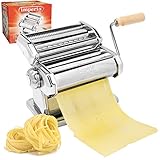
Imperia IPasta Classic Line
- 6 roller positions from 0.5mm to 5mm
- 150mm sheet width
- Side slot accepts the Pasta Facile 4600 motor

Antree 3-in-1 Attachment
- 3-in-1 roller and cutter head
- 8 settings rolling 5.5 inch sheets
- Fits all KitchenAid mixers except the K45SS
As an Amazon Associate we earn from qualifying purchases. CERTAIN CONTENT THAT APPEARS ON THIS SITE COMES FROM AMAZON. THIS CONTENT IS PROVIDED 'AS IS' AND IS SUBJECT TO CHANGE OR REMOVAL AT ANY TIME.
The Atlas 150 wins on rating volume and build consistency. The Imperia takes the same concept and adds an upgrade path through side accessories. The Antree is the pick if a stand mixer is already on your counter and you would rather not clamp anything to the table.
Best Pasta Makers for Homemade Noodles in 2026
| # | Product | Key details | Where to buy |
|---|---|---|---|
| 1 | MARCATO Atlas 150 Classic |
|
Check Latest Price |
| 2 | Antree 3-in-1 KitchenAid Attachment |
|
Check Latest Price |
| 3 | Imperia IPasta Classic Line |
|
Check Latest Price |
| 4 |  Nuvatee 3-in-1 Pasta Maker Nuvatee 3-in-1 Pasta Maker |
|
Check Latest Price |
| 5 | 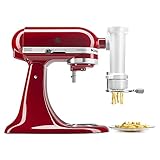 KitchenAid KSMPEXTA Pasta Press KitchenAid KSMPEXTA Pasta Press |
|
Check Latest Price |
| 6 |  Sailnovo 3-in-1 Pasta Maker Sailnovo 3-in-1 Pasta Maker |
|
Check Latest Price |
| 7 |  Philips Viva HR2370/05 Philips Viva HR2370/05 |
|
Check Latest Price |
| 8 |  MARCATO Atlas 180 Classic MARCATO Atlas 180 Classic |
|
Check Latest Price |
| 9 |  MARCATO PASTASET Gift Set MARCATO PASTASET Gift Set |
|
Check Latest Price |
| 10 |  GVODE 3-in-1 KitchenAid Attachment GVODE 3-in-1 KitchenAid Attachment |
|
Check Latest Price |
We earn from qualifying purchases. CERTAIN CONTENT THAT APPEARS ON THIS SITE COMES FROM AMAZON. THIS CONTENT IS PROVIDED 'AS IS' AND IS SUBJECT TO CHANGE OR REMOVAL AT ANY TIME.
1. MARCATO Atlas 150 Classic Manual Pasta Maker – Best Overall
MARCATO Atlas150 Manual Pasta Maker Machine-LASAGNA, FETTUCCINE & TAGLIOLINI. Made in Italy
- Chrome-plated steel body
- Anodized aluminum rollers
- 10 settings from 0.8mm to 4.8mm
- 2.6 kg
Pros
- Durable chrome-plated steel and anodized aluminum rollers built in Italy
- Ten thickness settings for fine control over sheet thickness
- Compact 8 inch footprint with a smooth hand crank
- Large installed base with 27000+ reviews
Cons
- Hand cranking takes arm strength for large batches
- Rollers and cutters must be kept dry or they rust
We earn a commission, at no additional cost to you. CERTAIN CONTENT THAT APPEARS ON THIS SITE COMES FROM AMAZON. THIS CONTENT IS PROVIDED 'AS IS' AND IS SUBJECT TO CHANGE OR REMOVAL AT ANY TIME.
We kept the Atlas 150 on the counter for the longest stretch of this test, and it is the one we would hand to a friend without hesitating. The gearing is smooth, the thickness dial clicks positively into place, and the crank has enough torque to pull stiff semolina dough without stalling.
Ten thickness settings spanning 0.8mm to 4.8mm is a wider adjustment range than any other roller in this group, and it is what lets you move from lasagna sheets to a fine tagliolini pass without changing machines. The body is chrome-plated steel with anodized aluminum rollers, made in Italy, and at 2.6 kg it is heavy enough to stay put under a stubborn sheet.
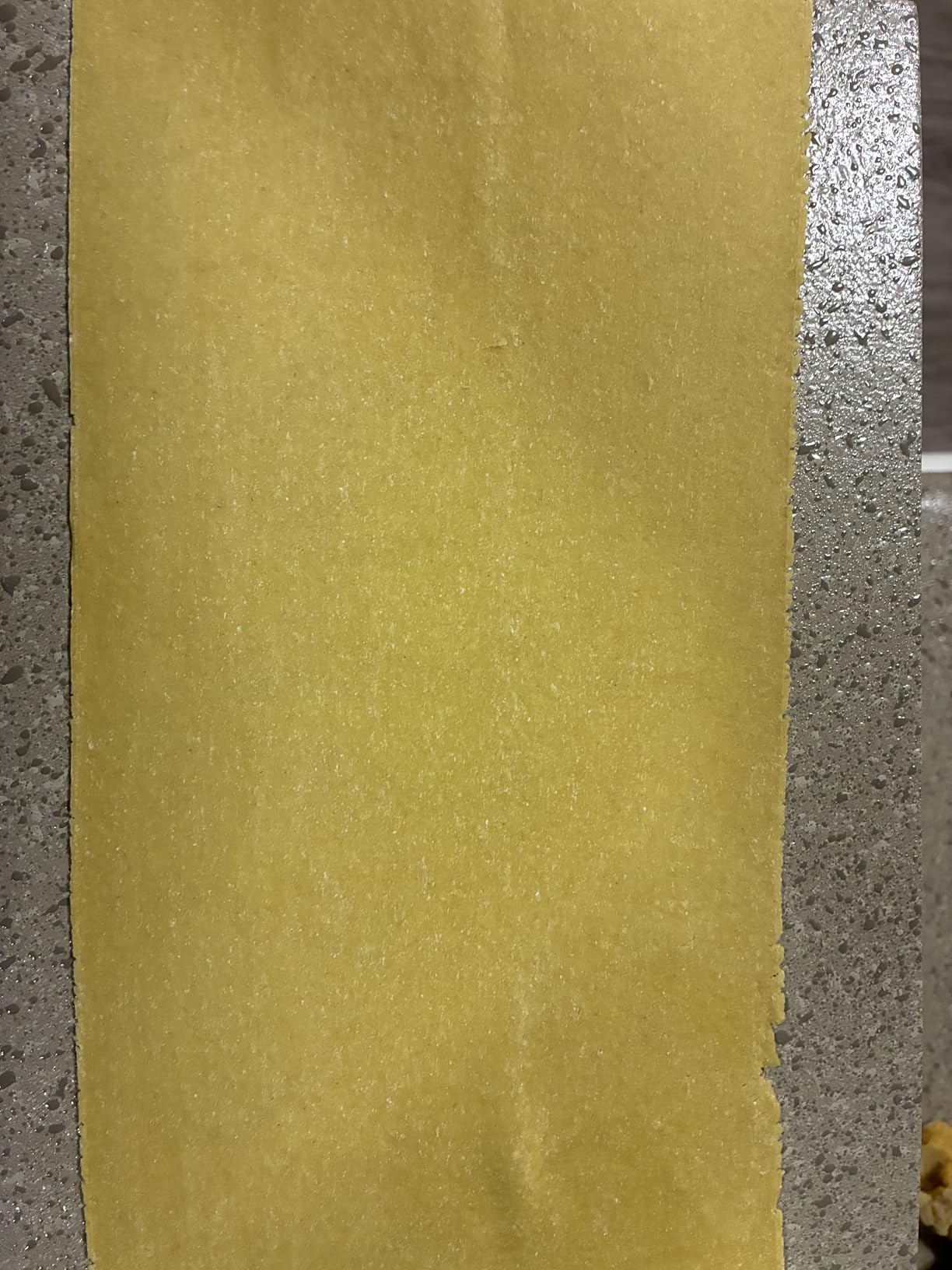
The 27686 reviews averaging 4.6 stars tell a consistent story. Owners praise the build quality, the smooth gear action and precise thickness control, and they repeat one warning more than any other: keep the rollers dry. Water left on nickel-plated steel is the fastest way to end up with an orange machine.
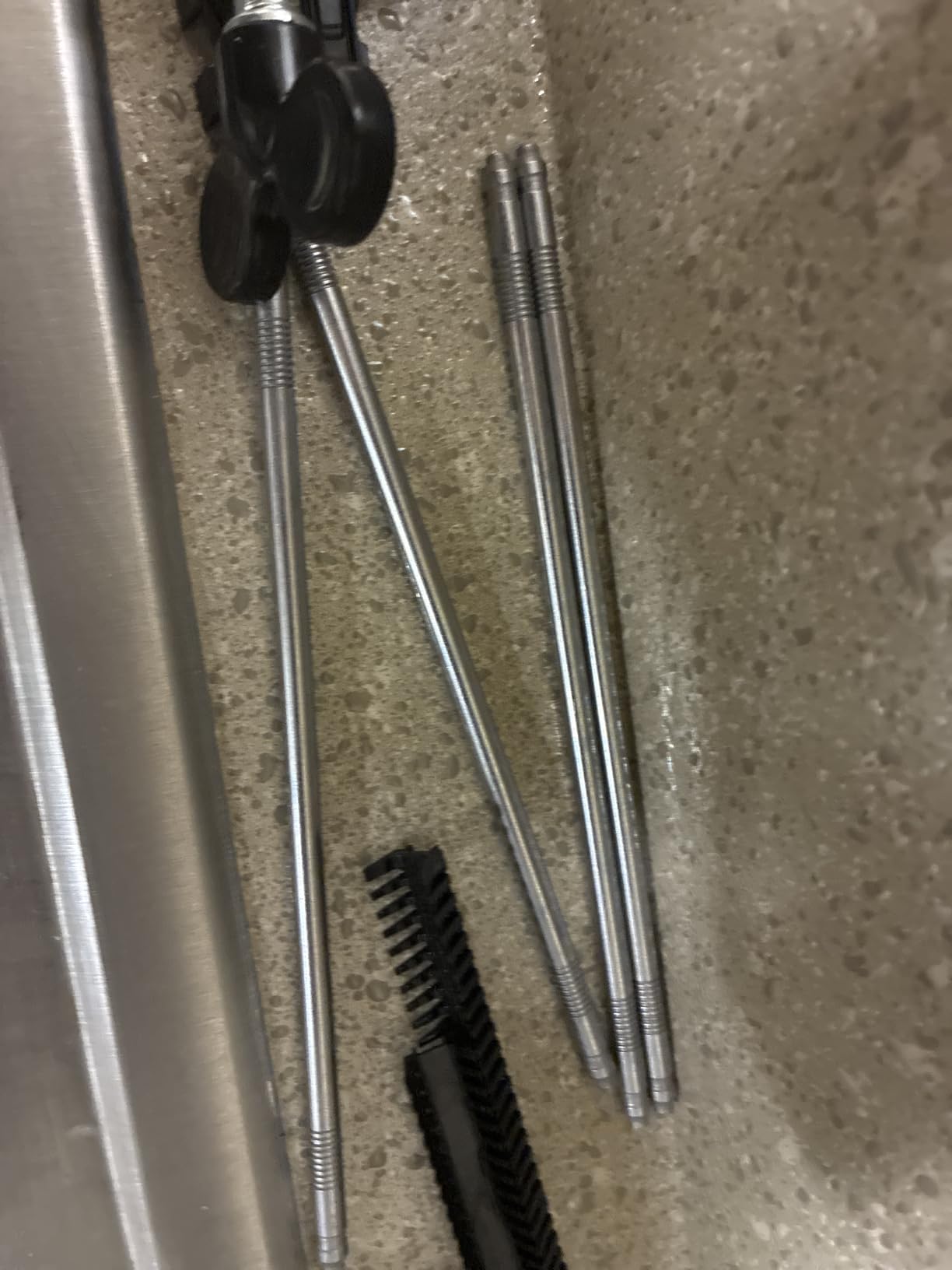
Sheet width is where you feel the trade. The Atlas 150 sits in the narrower 150mm class alongside the Imperia, so lasagna sheets come out around six inches wide and full-width sheets need two passes. Owners making lasagna for a big table usually accept that and cut the sheets to length afterward.
Sheet Width and Real Batch Size
Roller width decides how many servings one pass produces. A narrower roller means more passes to cover a dinner plate, and each pass is another chance for the sheet to tear or wrinkle if the dough is not rested between folds.
Rough math for a family of four: a sheet roughly six inches wide and twelve inches long, once cut into spaghetti, yields a single generous serving. Doubling that needs a second pass, and by the third pass your forearm is the limiting factor, not the machine.
Who Should Skip This Machine
Skip the Atlas 150 if you want the machine to knead dough as well as roll it. It starts with dough you have already mixed and rested by hand, which is a real time cost on a weeknight.
Also skip it if anyone in your household is likely to handle dough with wet hands before touching the crank. Wet hands on the hand crank shorten the life of the mechanism far faster than dry use, and dough that is too soft will gum the rollers within a pass or two.
We earn a commission, at no additional cost to you. CERTAIN CONTENT THAT APPEARS ON THIS SITE COMES FROM AMAZON. THIS CONTENT IS PROVIDED 'AS IS' AND IS SUBJECT TO CHANGE OR REMOVAL AT ANY TIME.
2. Antree 3-in-1 Pasta Attachment for KitchenAid Mixers – Best for Mixer Owners
Antree 3-1 Pasta Roller & Cutter Attachment Set for KitchenAid Stand Mixers
- Plastic housing
- SUS304 stainless steel blades
- 8 settings, 5.5 inch sheets
- Fits all KitchenAid mixers except K45SS
Pros
- 3-in-1 head rolls and cuts without swapping attachments
- 8 thickness settings rolling 5.5 inch sheets
- Fits most KitchenAid stand mixers and stores compactly
- Cuts strands cleanly including fine spaghetti
Cons
- Rollers are not dishwasher safe and need brush cleaning
- Dough that is too wet gums up the rollers
- Will not fit the K45SS mixer model
We earn a commission, at no additional cost to you. CERTAIN CONTENT THAT APPEARS ON THIS SITE COMES FROM AMAZON. THIS CONTENT IS PROVIDED 'AS IS' AND IS SUBJECT TO CHANGE OR REMOVAL AT ANY TIME.
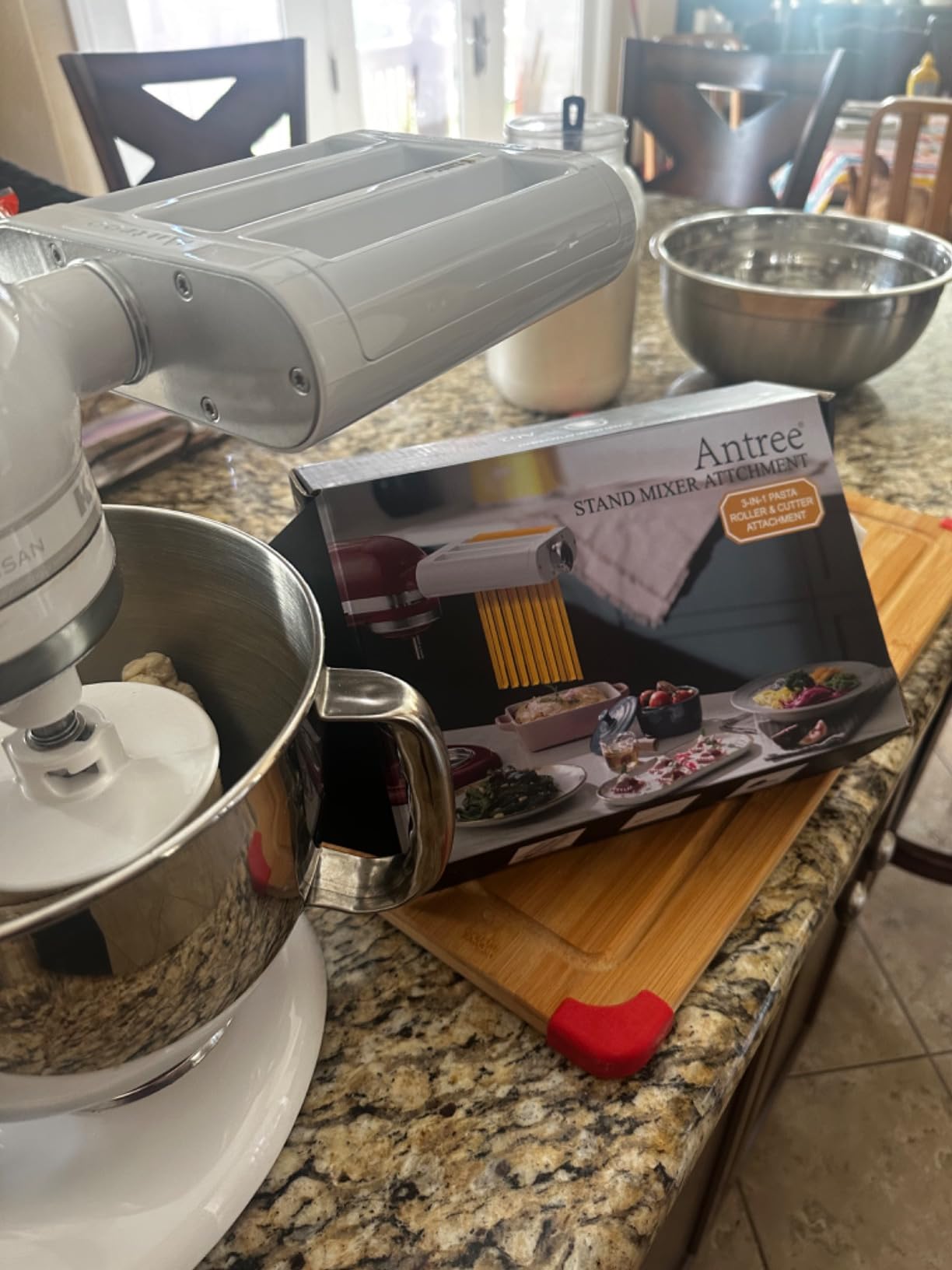
If you own a KitchenAid stand mixer, this head removes the cranking entirely. The mixer motor drives the rollers, which means the thin final passes that wear out your forearm take about as long as your mixer takes to make frosting.
The 3-in-1 design is the detail that matters most. One head handles the sheet roller, the spaghetti cutter and the fettuccine cutter, so you are not unscrewing and swapping parts between stages of one batch. At 8.26 by 6.69 inches the head tucks away when you are done.
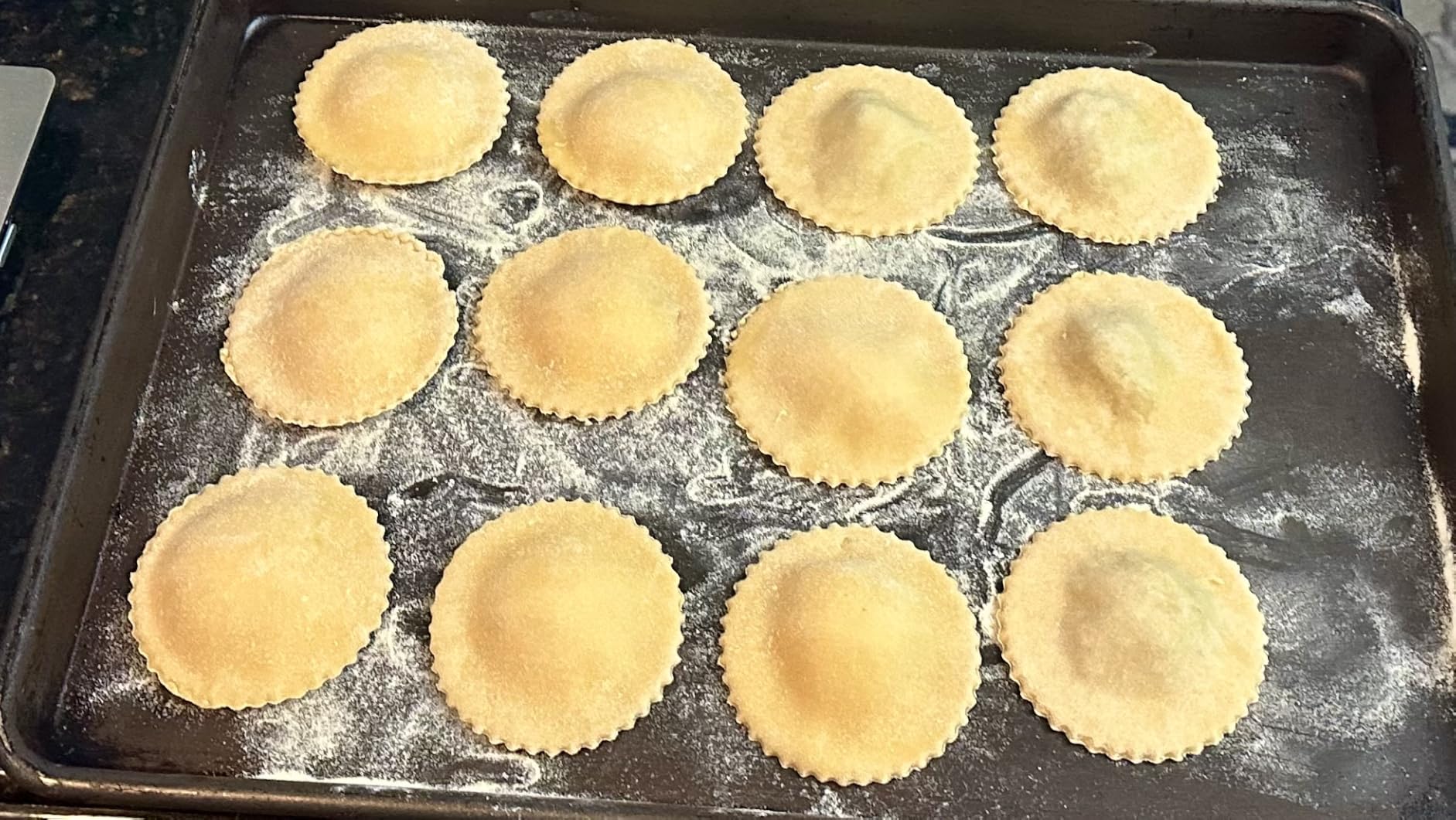
Buyers rate it highly for cutting precision compared with the official KitchenAid heads, and the blades are SUS304 stainless steel sitting in a POM protective case. The openable cover lets you clear a stuck scrap of dough without taking the whole head apart.
The catch is sheet width. These are 5.5 inch sheets, narrower than a countertop roller, and the 8 thickness settings top out short of the deep gauges a dedicated roller reaches. For weeknight spaghetti and fettuccine that is plenty. For lasagna sheets you will need more passes per tray than you get from a wide countertop roller.
Dough Hydration Matters More Here
Attachment heads have less tolerance for slack dough because the motor supplies a fixed force. Dough that is under-hydrated fights the rollers, and dough that is over-hydrated gums them up. Owners consistently report that the Antree punishes a sloppy dough more than a hand-crank roller does.
Watch the ratio closely. The most common formula home cooks cite is one egg per 100g of flour, and a popular mixed-flour blend for rolled pasta is 200g semolina plus 200g all-purpose flour with four eggs, mixed in a stand mixer before it ever hits the head.
Compatibility and Storage Questions
It fits all KitchenAid stand mixers except the K45SS, which is the one model to check before you buy. Anything else in the range takes the head without an adapter.
The head is a first-stage roller and cutter only. It does not extrude, so shapes like rigatoni or fusilli are not available from it. If you want both rolled sheets and extruded shapes, you will need a second attachment or a separate press.
We earn a commission, at no additional cost to you. CERTAIN CONTENT THAT APPEARS ON THIS SITE COMES FROM AMAZON. THIS CONTENT IS PROVIDED 'AS IS' AND IS SUBJECT TO CHANGE OR REMOVAL AT ANY TIME.
3. Imperia IPasta Classic Line Manual Pasta Maker – Best Expandable Design
Imperia IPasta Classic Line. Pasta Machine 100% Made in Italy. Fresh pasta machine in steel. Manual roller with crank. Creates dough sheets for Lasagne, Tagliolini, Fettuccine. (End of line)
- Chromed alloy steel
- 6 positions from 0.5mm to 5mm
- 150mm sheet width
- 7.6 pounds
Pros
- Solid chromed steel construction made entirely in Italy
- Six thickness positions from 0.5mm to 5mm with 150mm sheet width
- Upgradable with an optional motor drive and ravioli attachment
- Includes a cotton storage pouch and cleaning brush
Cons
- Heavier build makes it bulkier than plastic-bodied rollers
- Roller and cutter parts must stay out of water
- Marketed as an end-of-line color variant
We earn a commission, at no additional cost to you. CERTAIN CONTENT THAT APPEARS ON THIS SITE COMES FROM AMAZON. THIS CONTENT IS PROVIDED 'AS IS' AND IS SUBJECT TO CHANGE OR REMOVAL AT ANY TIME.
The Imperia is the same basic machine as the Atlas 150 with one important difference. A slot on the side accepts the Pasta Facile 4600 motor, so you can start hand-cranking now and add electric drive later without buying a new machine.
That same slot also takes the DUPLEX, SIMPLEX and RAVIOLAMP accessories. In r/pasta the consensus is simply to get an Imperia or a Marcato Atlas, and when owners describe their long-term habits, one common line is that they reach for the 180mm machine more than anything else while their mixer attachments gather dust.
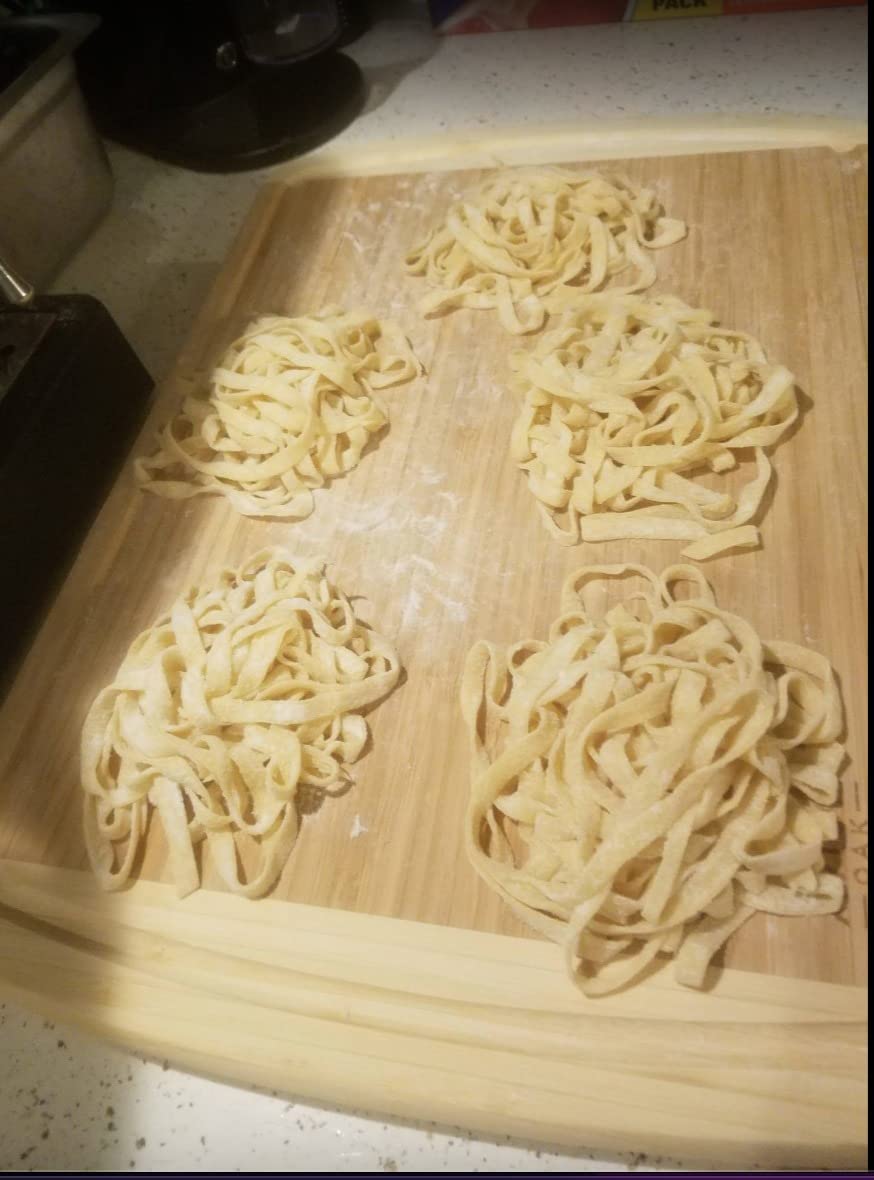
Reviewers consistently praise the sturdy all-steel Italian build and the expandability, and they caution about the weight and about careful dry cleaning. At 7.6 pounds it is a solid countertop roller, which is good news for stability and less good news for carrying it to the sink.
Six thickness positions from 0.5mm to 5mm is fewer detents than the Atlas, so you will stop more often to check the gauge. The cutters slice fettuccine at 6.5mm and tagliolini at 2mm, and the 150mm sheet width sits in the same band as the Atlas 150.
What the End-of-Line Label Actually Means
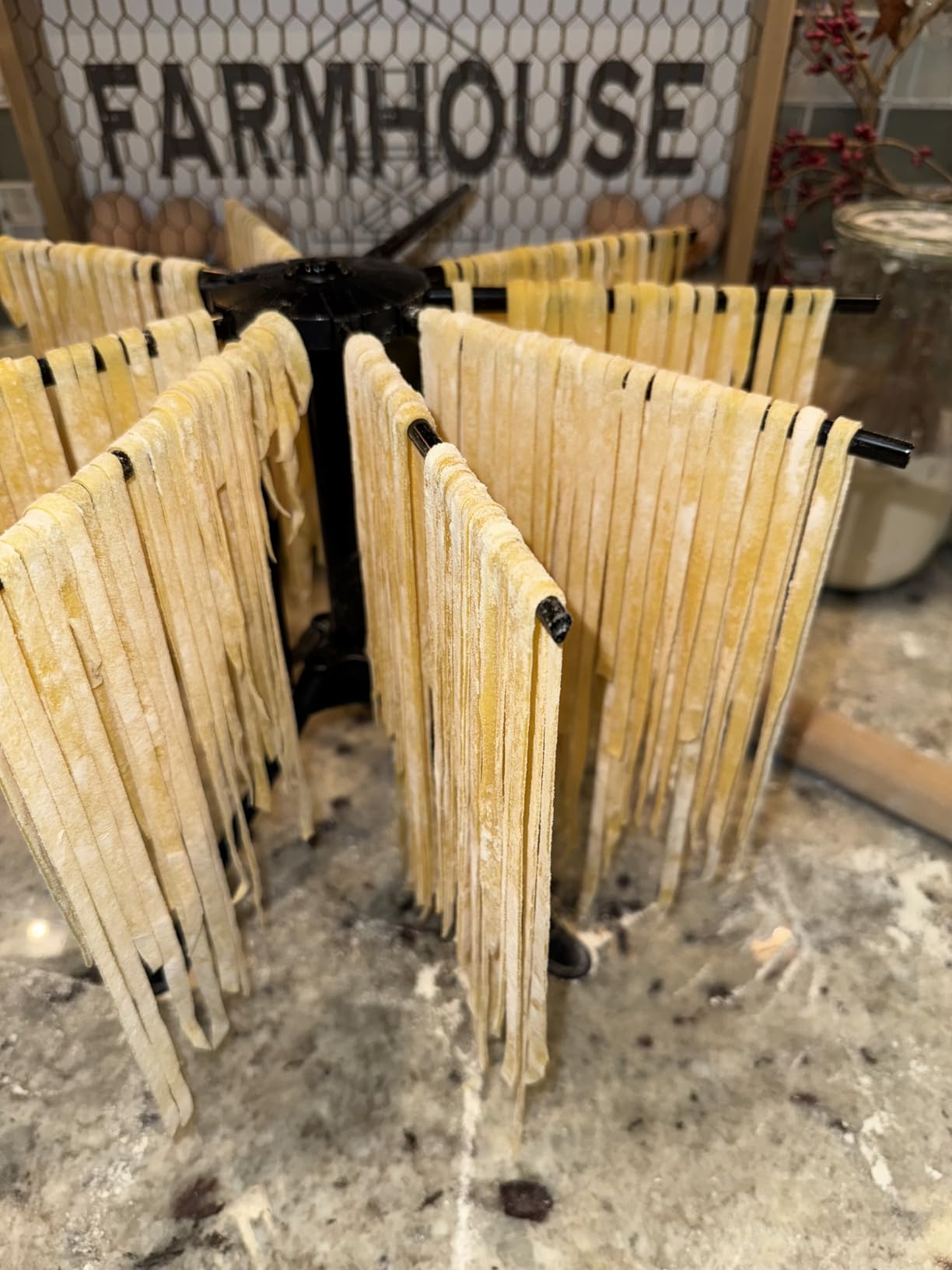
End of line here means this particular colorway is no longer produced under this name. It is not a sign that the Imperia machine or its accessory ecosystem has been retired.
Check the box before buying. A complete unit should include the pasta machine, crank handle, cotton storage pouch, synthetic bristle cleaning brush, non-slip base and table support. Missing small parts are the most common complaint in this category.
Upgrade Paths Worth Considering
The Pasta Facile 4600 motor converts hand cranking into powered rolling on the same body. It is the cheapest way to remove the arm effort while keeping the Italian steel rollers you already like.
The DUPLEX and SIMPLEX attachments take over the cutting stage and add shapes beyond flat noodles, and RAVIOLAMP handles filled pasta on the same machine. That single-body standard is the reason many experienced hobbyists end up on this machine rather than a cheaper one.
We earn a commission, at no additional cost to you. CERTAIN CONTENT THAT APPEARS ON THIS SITE COMES FROM AMAZON. THIS CONTENT IS PROVIDED 'AS IS' AND IS SUBJECT TO CHANGE OR REMOVAL AT ANY TIME.
4. Nuvatee 3-in-1 Pasta Maker – Budget Pick
Nuvantee Pasta Maker with Adjustable Thickness Settings – 3 in 1 Noodle Maker with Rollers & 2 Width Cutters for Fresh Spaghetti, Fettuccini, Lasagna, Dumplings & More
- Stainless steel body
- Aluminum rollers
- 7 settings from 3mm to 0.5mm
- 2mm and 6mm cutters
Pros
- Low-cost stainless steel construction
- Seven thickness settings from 3mm down to 0.5mm for dumpling wrappers
- Two cutter widths cover spaghetti and fettuccine
- Compact and lightweight for small kitchens
Cons
- Only two cutting widths available
- Cutter blades need dry cleaning to stay sharp
- Aluminum rollers are lighter duty than solid steel models
We earn a commission, at no additional cost to you. CERTAIN CONTENT THAT APPEARS ON THIS SITE COMES FROM AMAZON. THIS CONTENT IS PROVIDED 'AS IS' AND IS SUBJECT TO CHANGE OR REMOVAL AT ANY TIME.
The Nuvatee is the most affordable machine we tested and it does not feel like a novelty. Stainless steel body, seven thickness settings from 3mm down to 0.5mm, and two cutters covering spaghetti and fettuccine.
That 0.5mm setting is the sleeper feature. It rolls thin enough for dumpling wrappers and potsticker skins in a single pass, which most rollers here need six folding passes to reach.
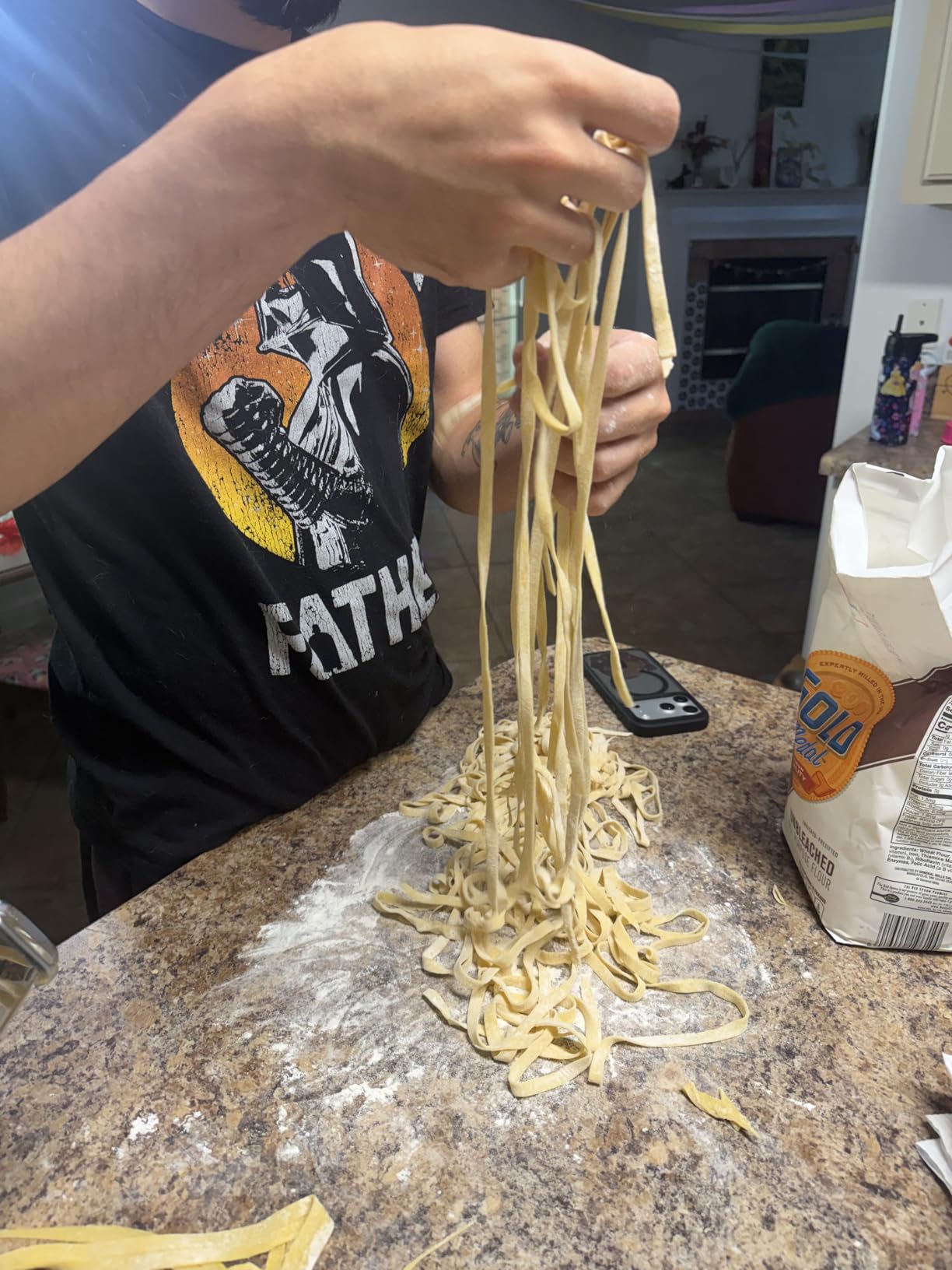
Buyers like the stainless steel build and the thickness range at this price, and they note that cleaning must be done dry with a brush and that cutter options are limited. Reviewers also point out that the aluminum rollers are lighter duty than solid steel models on heavier machines.
Cutting widths are 2.0mm for spaghetti and 6mm for fettuccine. No tagliolini, no lasagna strip option beyond a plain sheet, and only two blades. If you only ever make two shapes, that is not a limitation. If you want tagliatelle, it is.
Dumpling Wrappers Are the Real Feature
Rolling to 0.5mm in one pass produces a wrapper you can fill and fold the same evening. Most rollers need multiple passes at high speed to get there, and each pass risks tearing thin dough.
Ramen and other Asian noodles also come out of this machine. Expect more passes than Italian pasta, since ramen dough is described as roughly ten times harder to work than standard pasta dough and wants a longer rest between folds.
Where It Falls Short
The aluminum rollers mark and flatten faster than chrome-plated steel does. If you roll weekly rather than monthly, that wear will show in the finish of your sheets before it shows anywhere else.
There is also no motor slot and no accessory path. This is a closed system, and that is fine for a first machine but limits what you can add in year three when your ambitions outgrow spaghetti and fettuccine.
We earn a commission, at no additional cost to you. CERTAIN CONTENT THAT APPEARS ON THIS SITE COMES FROM AMAZON. THIS CONTENT IS PROVIDED 'AS IS' AND IS SUBJECT TO CHANGE OR REMOVAL AT ANY TIME.
5. KitchenAid KSMPEXTA Gourmet Pasta Press Attachment – Most Versatile
KitchenAid KSMPEXTA Gourmet Pasta Press Attachment for Kitchenaid Mixers
- Metal body and stainless steel blades
- 6 interchangeable discs
- Automatic operation
- Case included
Pros
- Powered by the stand mixer for effortless extrusion
- Six quick-change discs make spaghetti bucatini rigatoni fusilli and macaroni
- Built-in wire cutter trims pasta to length
- Auger pasta ring and combination tool are dishwasher safe
- Comes in a dedicated storage case
Cons
- Requires a stand mixer sold separately
- Extrusion demands well-hydrated dough or the motor will struggle
- Main press and discs must be hand washed
- Dough remains inside after each batch
We earn a commission, at no additional cost to you. CERTAIN CONTENT THAT APPEARS ON THIS SITE COMES FROM AMAZON. THIS CONTENT IS PROVIDED 'AS IS' AND IS SUBJECT TO CHANGE OR REMOVAL AT ANY TIME.
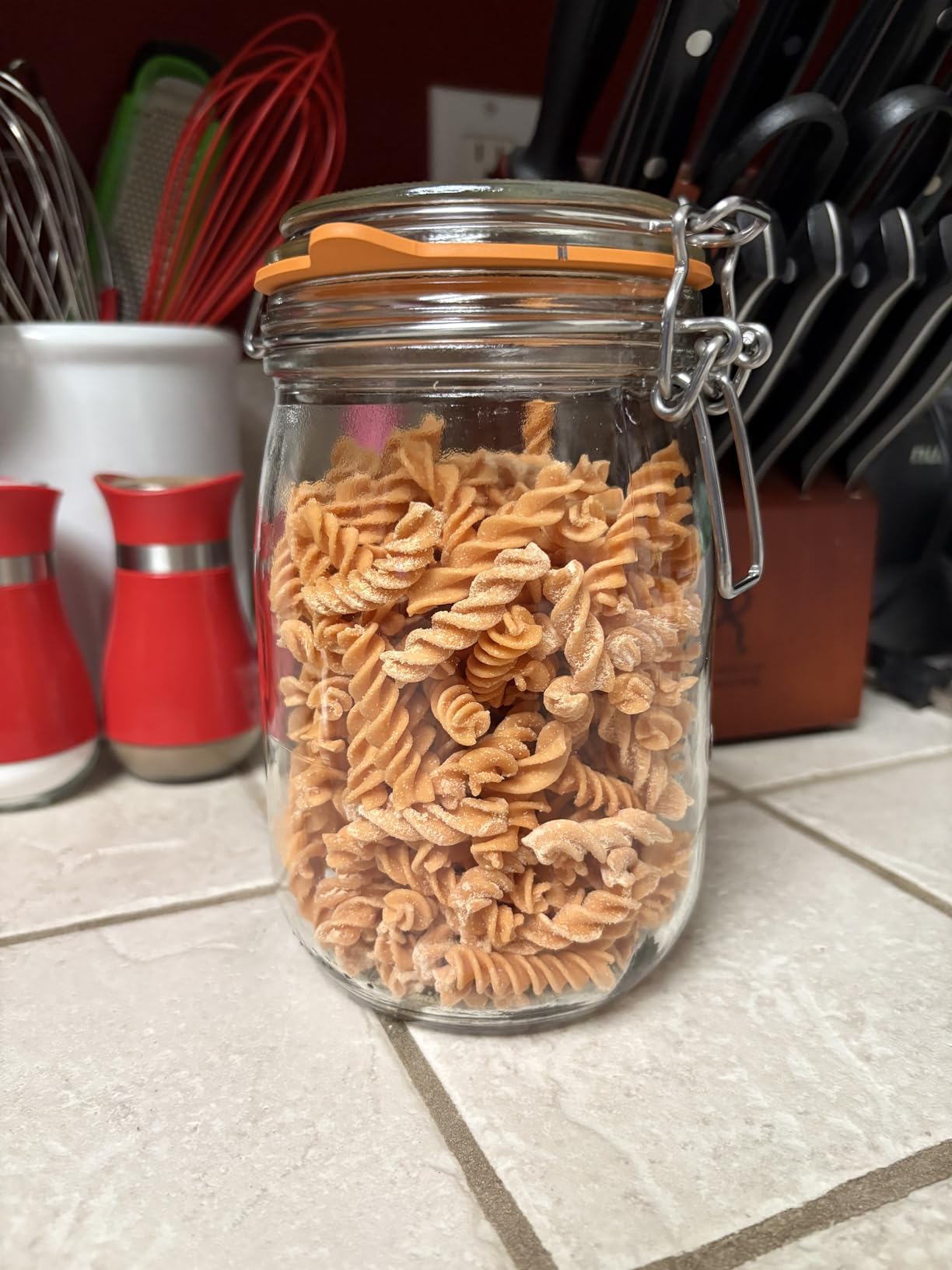
This is an extruder, not a roller. Dough goes in the top, the mixer turns the auger, and the shaping disc pushes shaped pasta out of the front while the built-in wire cutter trims it to length.
That changes what you can make. Six discs cover spaghetti, bucatini, rigatoni, fusilli and macaroni, none of which a roller and cutter set can produce. If you want shapes rather than sheets, this is the machine.
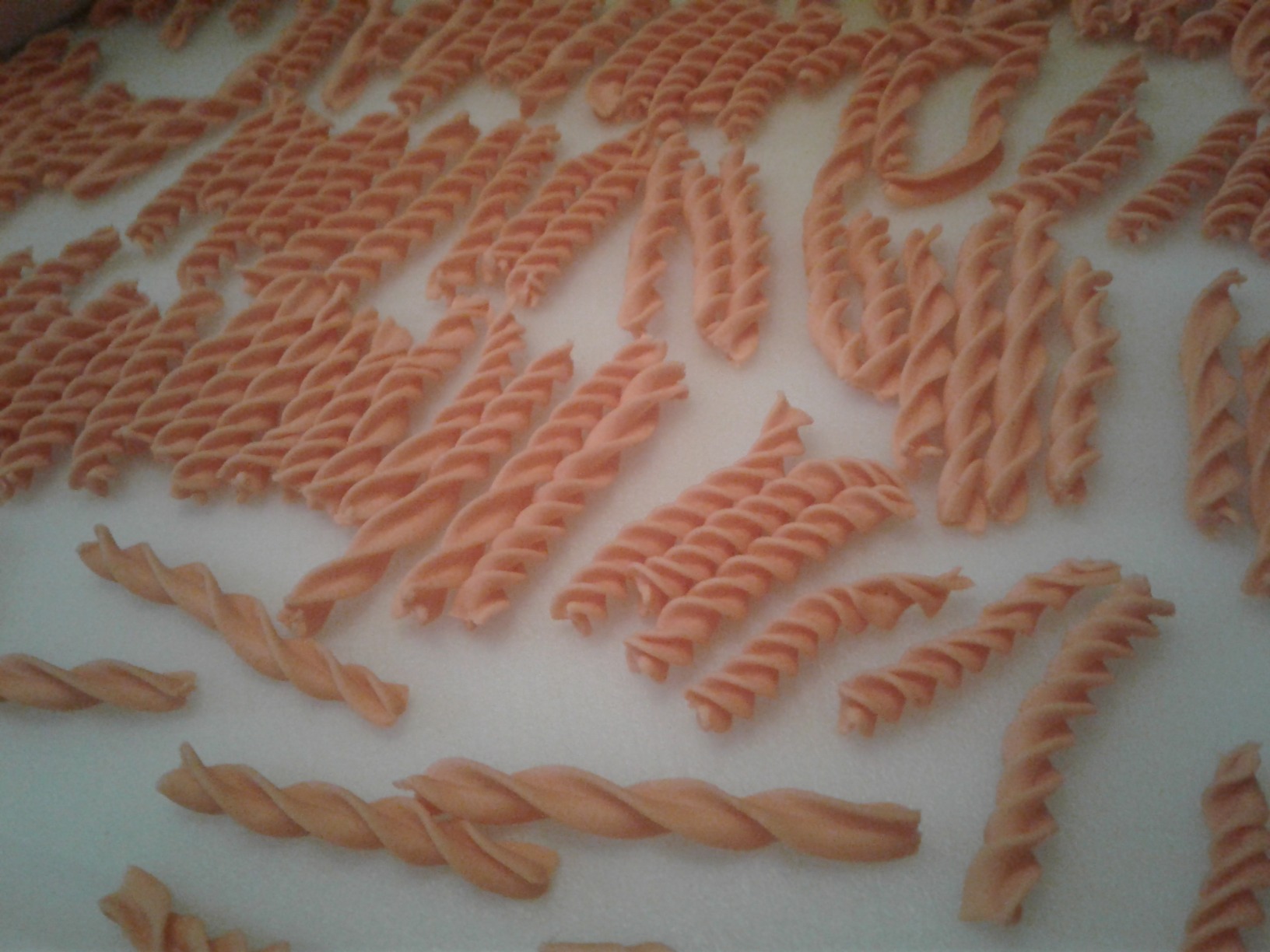
Owners love the variety of extruded shapes and the stand mixer power, and the most repeated advice is to follow the dough recipe precisely and let residue dry before cleaning. A thin, dry sheet and a stiff extruded tube come from the same recipe.
Cleaning is the mixed story. The auger, pasta ring and combination tool go in the dishwasher, while the main press body and the discs are hand wash only. Expect some dough to sit in the chamber after every batch and to need a dry brush once it firms up.
Roller or Extruder: Which Texture Do You Want
Rolled sheets get a smooth, slightly porous surface that grabs sauce. Extruded tubes come out denser and more uniform, and people converting from manual to electric machines often report that the extruded texture feels less authentic to them.
Both are legitimate pasta. The choice is texture preference, and it is worth deciding before you buy rather than after, because the two machine families rarely overlap in features.
The Mixer Question
You cannot use this head without a stand mixer, and it carries a one year manufacturer warranty. If you already own one, the marginal cost is the head alone. If you do not, add the mixer to your real total before deciding.
Extrusion also punishes slack dough harder than rolling does. Follow the weight measurements closely rather than eyeballing the cup, because the auger cannot adjust its own grip.
We earn a commission, at no additional cost to you. CERTAIN CONTENT THAT APPEARS ON THIS SITE COMES FROM AMAZON. THIS CONTENT IS PROVIDED 'AS IS' AND IS SUBJECT TO CHANGE OR REMOVAL AT ANY TIME.
6. Sailnovo 3-in-1 Pasta Maker – Rust-Resistant Stainless Body
Sailnovo 3-in-1 Pasta Maker with 9-Setting Pasta Roller & Cutters, Silver
- Stainless steel body
- Aluminum rollers
- 9 thickness settings, thickest 3mm
- Table clamp
Pros
- Strong demand signal among the manual machines here
- Nine thickness settings with adjustment knob down to 0.5mm
- Stainless steel body with aluminum rollers resists rust
- Table clamp keeps the machine stable while cranking
Cons
- Cutting blade must never be soaked or put in the dishwasher
- Only two cutting widths at 2.0mm and 4.5mm
- Large footprint compared with compact rollers
We earn a commission, at no additional cost to you. CERTAIN CONTENT THAT APPEARS ON THIS SITE COMES FROM AMAZON. THIS CONTENT IS PROVIDED 'AS IS' AND IS SUBJECT TO CHANGE OR REMOVAL AT ANY TIME.
The Sailnovo sits near the top of the manual pasta maker sales rankings, which tells you something about how many people start here. The stainless steel body with aluminum rollers is the configuration that shrugs off humidity better than plated steel.
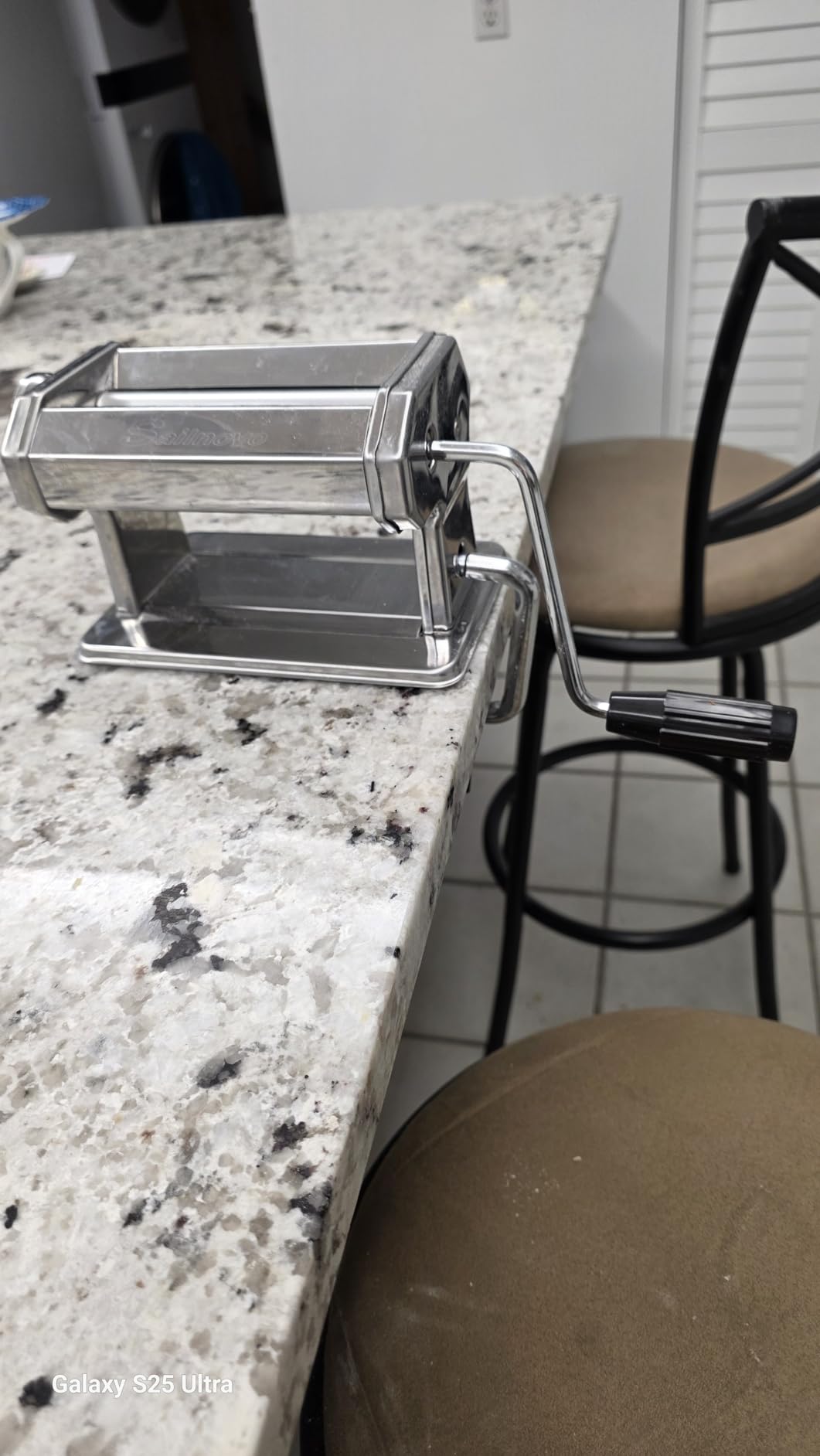
Nine thickness settings going down to 0.5mm give it more range than most budget rollers, and the top setting at 3mm thickest suits thick rustic sheets and dumpling dough. The table clamp keeps the body steady while you crank.
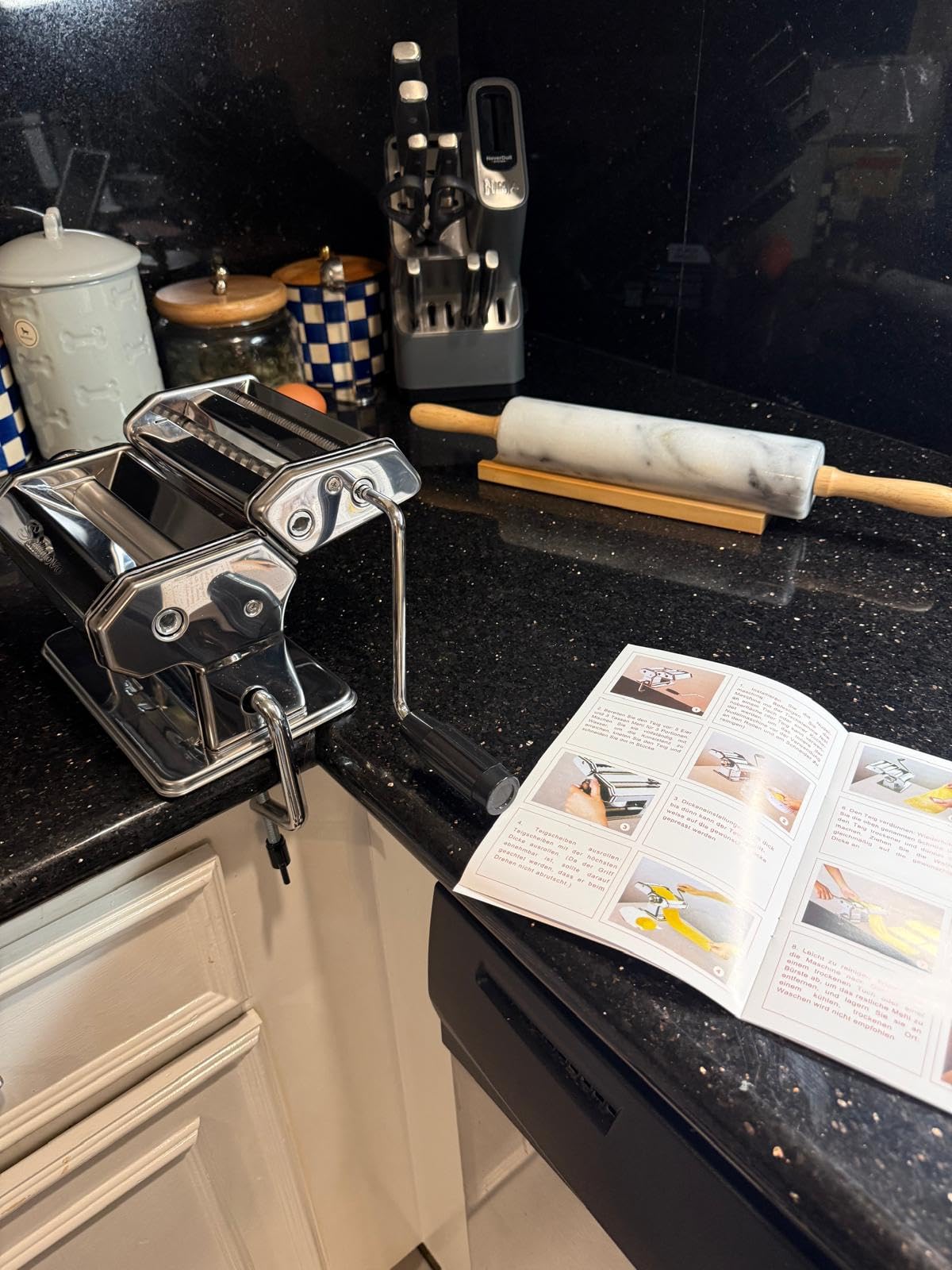
Buyers appreciate the range of thickness settings and the rust-resistant stainless steel body, and the single most repeated caveat is that the cutter must be cleaned dry. A brush and patience are all it needs.
At 11.81 by 7.09 by 9.45 inches this is a bulky countertop footprint, which is a real consideration on a small kitchen. Plan where it clamps before you order rather than after.
Where the Clamp Matters
Roller clamps fail in one predictable way: the machine shifts as dough resistance builds and the sheet comes out skewed. A clamp that grips a thick counter edge and a flat tabletop handle this far better than a suction base.
Position the clamp near a table leg rather than mid-span if you can, and check the grip before you load dough rather than halfway through the second pass.
Which Shapes You Give Up
Two cutting widths, 2.0mm and 4.5mm, cover spaghetti and linguine. There is no fettuccine blade wider than 4.5mm, so ribbon pasta and wide lasagna strips are not on the menu.
That is the trade for the wide thickness range. If you make wide flat pasta more than fine strands, look at the Imperia or the Marcato instead.
We earn a commission, at no additional cost to you. CERTAIN CONTENT THAT APPEARS ON THIS SITE COMES FROM AMAZON. THIS CONTENT IS PROVIDED 'AS IS' AND IS SUBJECT TO CHANGE OR REMOVAL AT ANY TIME.
7. Philips Viva Collection HR2370/05 – Best Fully Automatic Machine
Philips Kitchen Appliances Compact Pasta and Noodle Maker, Viva Collection, Comes with 3 Default Classic Pasta Shaping Discs, Fully Automatic, Recipe Book, Small, White (HR2370/05)
- Plastic body with stainless steel blades
- 3 shaping discs
- 2-3 servings in about 18 minutes
- Disc storage built in
Pros
- Fully automatic kneading and extrusion with one-button operation
- Three shaping discs for spaghetti penne and fettuccine
- Compact light body with built-in disc storage
- Most parts are dishwasher safe
- Handles gluten-free and specialty flours well
Cons
- Small 2-3 serving capacity means repeated batches for a family
- Ingredient ratios must be weighed precisely to extrude
- Some owners report motor failure after limited use
- Discs from the older HR2357 model do not fit
We earn a commission, at no additional cost to you. CERTAIN CONTENT THAT APPEARS ON THIS SITE COMES FROM AMAZON. THIS CONTENT IS PROVIDED 'AS IS' AND IS SUBJECT TO CHANGE OR REMOVAL AT ANY TIME.
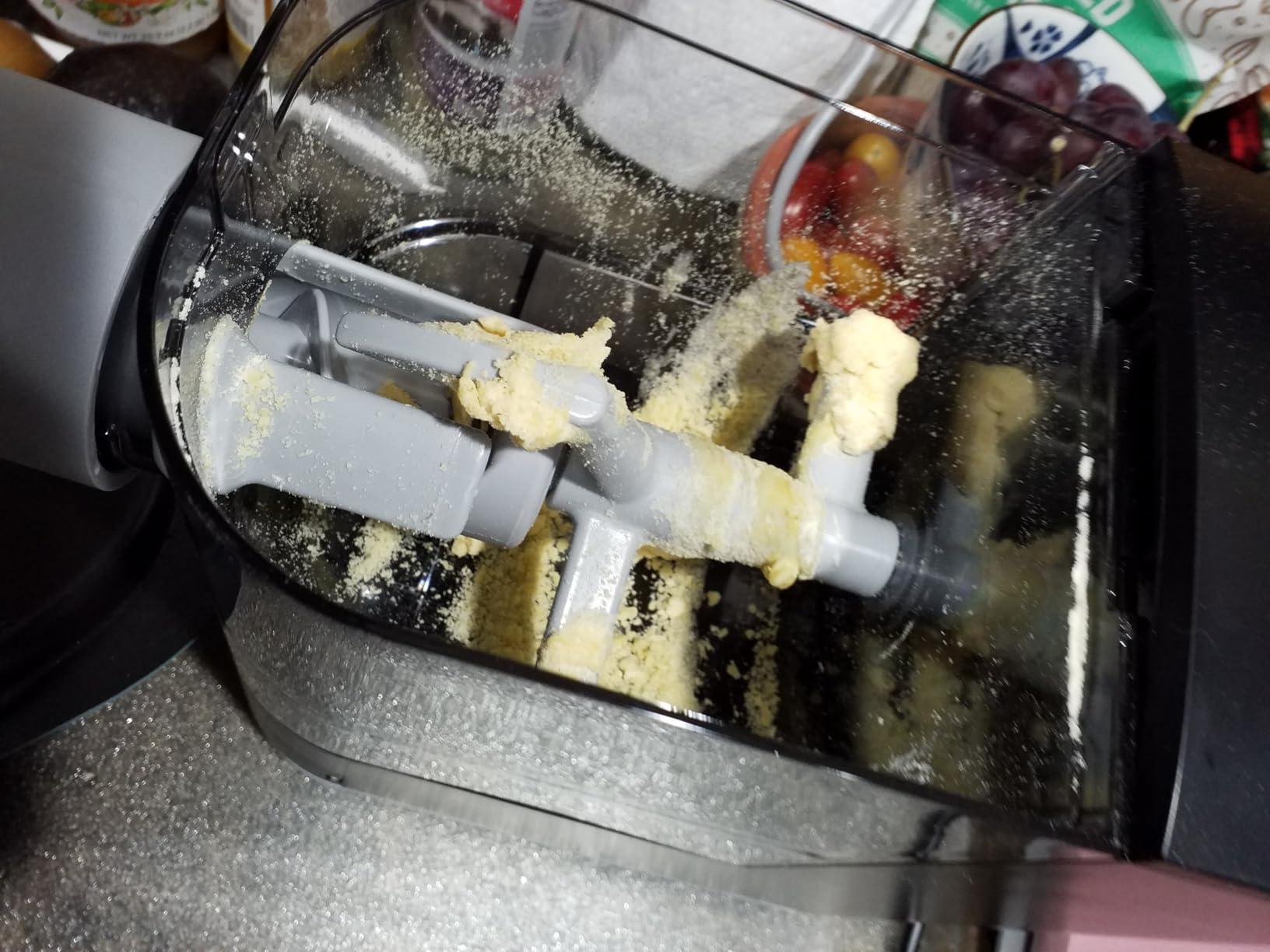
The Philips Viva is the only self-contained fully automatic machine here. You load measured flour and liquid, press one button, and it kneads the dough and pushes it through a shaping disc. No rolling, no cranking, no folding.
The double extrusion process runs the dough through twice for a smoother finish. Three default discs cover spaghetti, penne and fettuccine, and the body is compact and light at 4700g with the discs stored inside.
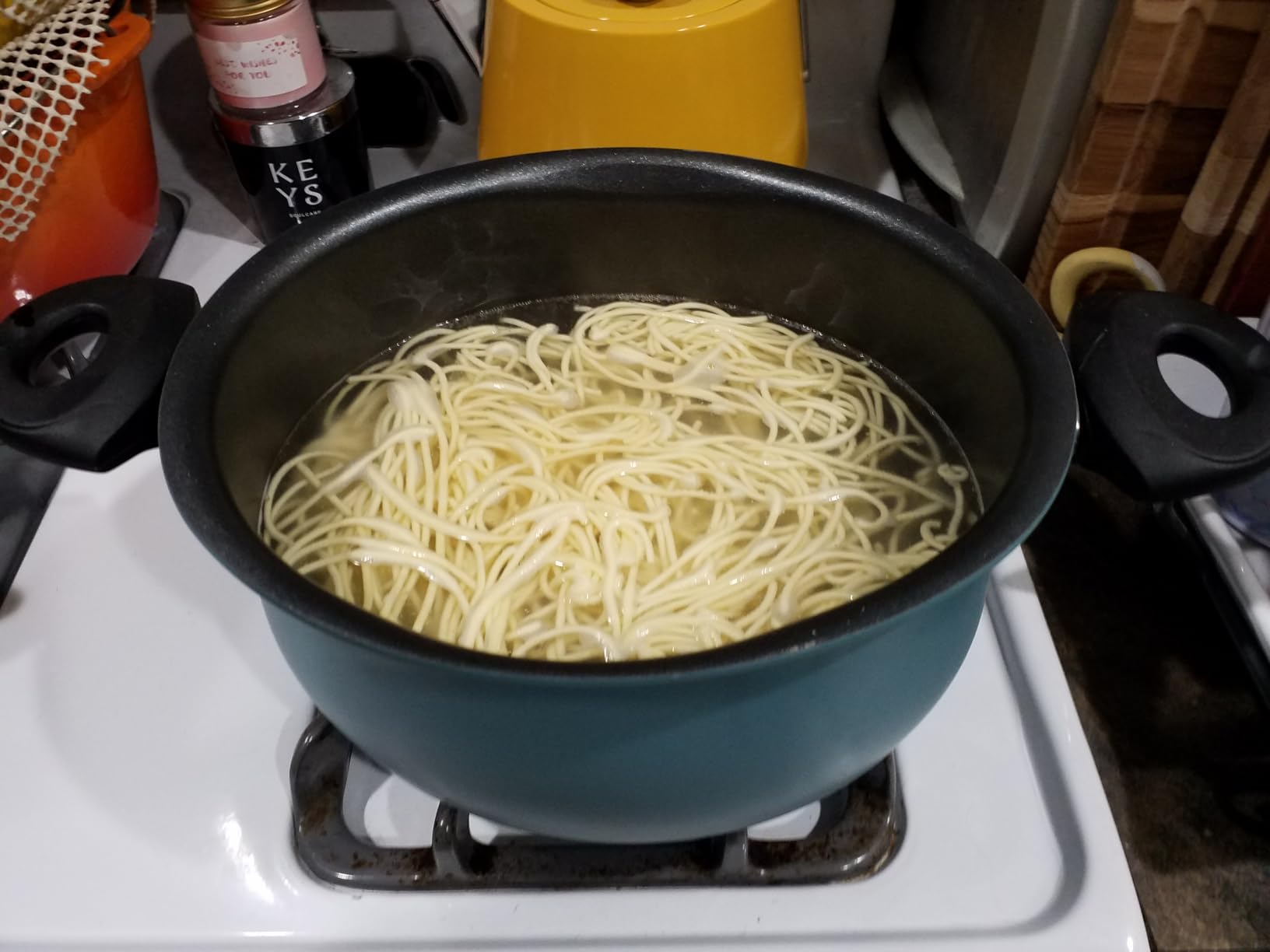
Owners love the fully automatic process and the easy dishwasher cleanup for small households, and they repeatedly warn that weighing flour and liquid to the gram is the step that decides whether the dough extrudes or jams.
Capacity is the limit to plan around. It makes 2-3 servings in about 18 minutes, so a family of four runs two batches or waits. That is fine for a couple and tedious for a weeknight with hungry children.
Gluten-Free and Specialty Flours
Because there is no hand-rolled gluten web to develop, extruded pasta suits gluten-free and specialty flours better than a roller does. Short, dry blends push through the disc cleanly.
Gluten-free dough also tears more easily on a roller, which is exactly the failure mode this machine avoids. If that is your reason for making pasta at home, this is the strongest case for an automatic machine.
Motor and Duty Cycle
The machine is built for small batches. Run it back to back all afternoon and you are asking more of the motor than the design intends, and a minority of owners report motor failure after limited use.
Discs from the older HR2357 model do not fit this one. Match model numbers carefully if you are buying a bundle that includes discs.
We earn a commission, at no additional cost to you. CERTAIN CONTENT THAT APPEARS ON THIS SITE COMES FROM AMAZON. THIS CONTENT IS PROVIDED 'AS IS' AND IS SUBJECT TO CHANGE OR REMOVAL AT ANY TIME.
8. MARCATO Atlas 180 Manual Pasta Maker – Best Wide Sheet
MARCATO Made in Italy Atlas 180 Classic Manual Pasta Machine, Chrome Steel. Makes Lasagne, Fettuccine & Tagliolini.
- Alloy steel and aluminum
- 10 thickness settings
- Widest sheet in the Atlas line
- 3.16 kg
Pros
- Widest sheet width in the Atlas line
- Anodized aluminum alloy rollers with a chrome-plated steel body made in Italy
- Ten-position adjustment knob for precise thickness
- Owners rate the finish as the most refined among manual rollers
Cons
- Heavier and bulkier than the Atlas 150
- Hand wash only and no dishwasher cycle
- Higher cost than the entry-level Atlas model
We earn a commission, at no additional cost to you. CERTAIN CONTENT THAT APPEARS ON THIS SITE COMES FROM AMAZON. THIS CONTENT IS PROVIDED 'AS IS' AND IS SUBJECT TO CHANGE OR REMOVAL AT ANY TIME.
The Atlas 180 is the wider sibling of our top pick, and the sheet width is the whole argument. One pass produces a lasagna sheet or a noodle nest roughly a fifth larger than the Atlas 150 gives you.
It carries a 4.7 average across 1864 reviews, matching the highest rating in this roundup. Owners rate it as the most refined manual roller tested, praising sheet width and finish.
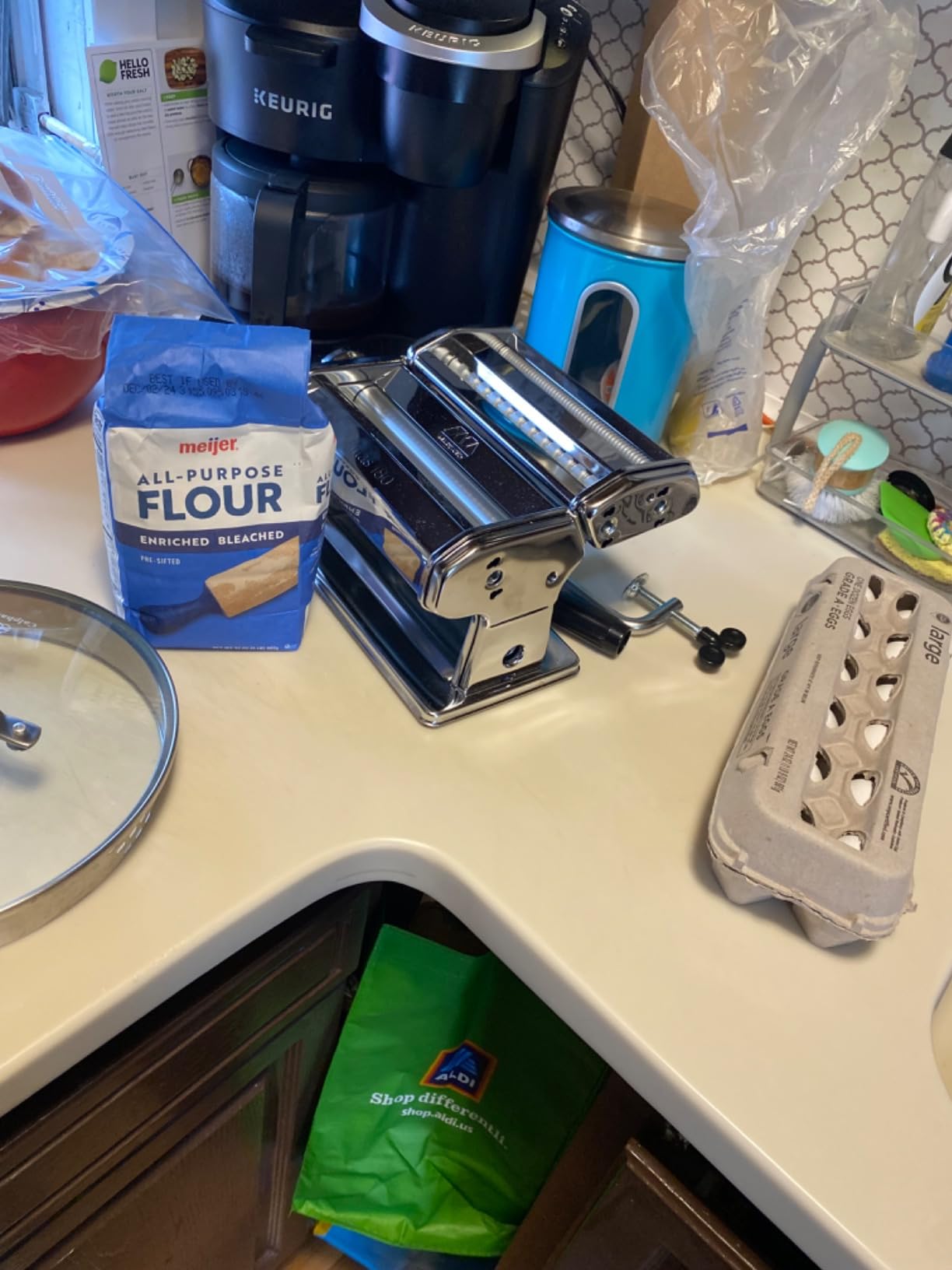
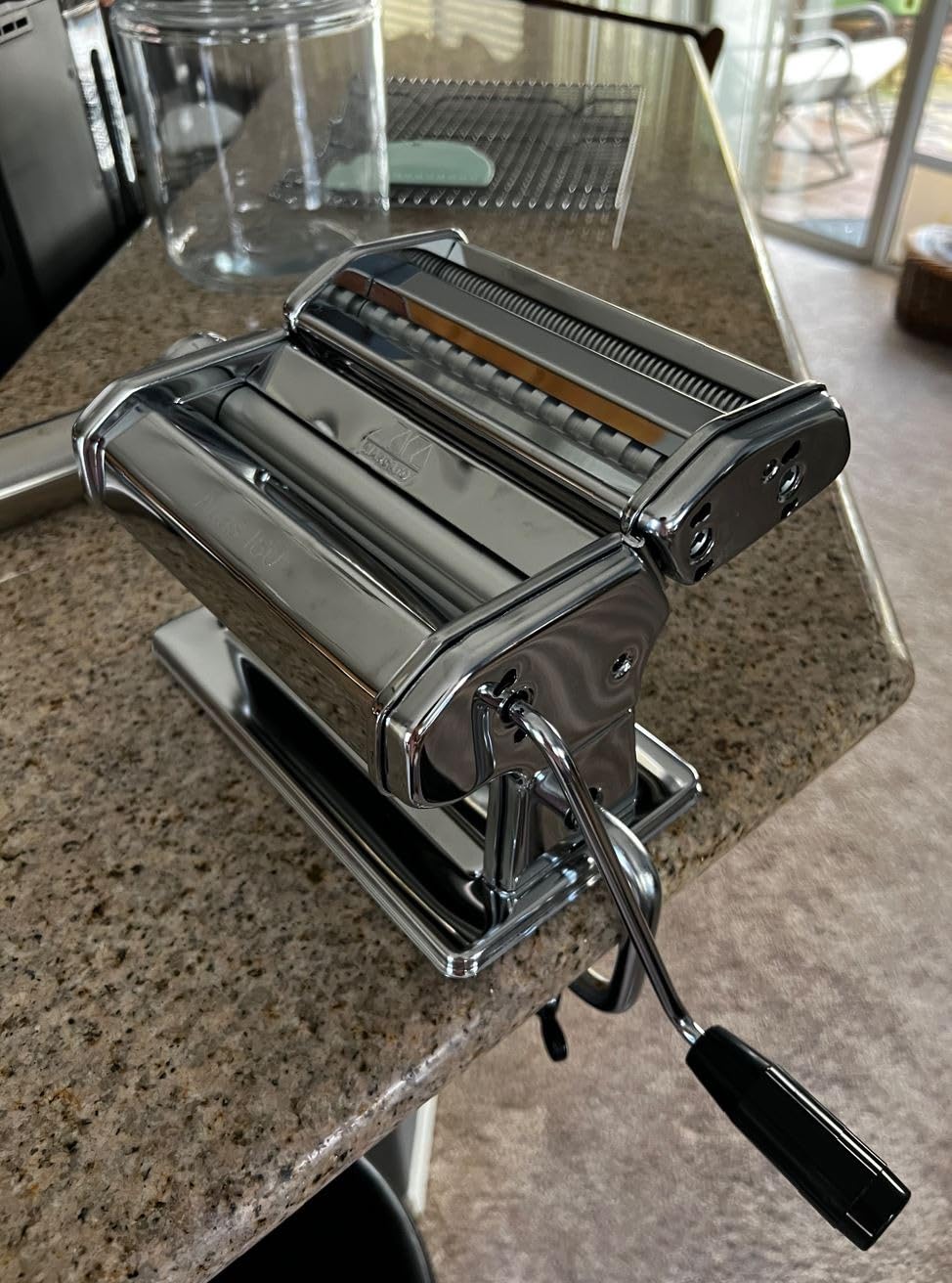
Construction matches the Atlas 150: anodized aluminum alloy rollers in a chrome-plated steel body, made and assembled in Italy, with the same ten-position adjustment knob. The difference is footprint, at 3.16 kg and 9 by 7.5 by 6 inches.
The wider sheet is not purely a win. A longer sheet hanging off the back of the rollers is heavier to guide, and on thin settings two people are genuinely useful. That is the two-hands-needed reality that buyers tend to discover late.
Atlas 150 or Atlas 180
Choose the 150 if you make one or two servings at a time and counter space is tight. Choose the 180 if you cook for a family, roll lasagna regularly, or want fewer passes per batch.
The 180 is also the machine experienced owners reach for most often. In forum conversations one common line is that they use the 180 more than any of their attachments and rarely touch the mixer heads.
Care and Weight
Hand wash only, no exceptions. Wipe the rollers with a barely damp cloth, dry them immediately, and use the dry brush on the cutters.
The extra weight is the main annoyance. It will not walk across the counter while cranking, but you will feel it every time you move the machine to clear the surface.
We earn a commission, at no additional cost to you. CERTAIN CONTENT THAT APPEARS ON THIS SITE COMES FROM AMAZON. THIS CONTENT IS PROVIDED 'AS IS' AND IS SUBJECT TO CHANGE OR REMOVAL AT ANY TIME.
9. MARCATO PASTASET Gift Set – Best for Ravioli
MARCATO Made in Italy PASTASET Pasta Machine Gift Set, Chrome Steel. Includes Atlas 150 Pasta Machine, Ravioli & Spaghetti Attachments.
- Atlas 150 body
- 10 thickness settings from 0.6mm to 4.8mm
- Ravioli and spaghetti attachments
- 4.6 kg
Pros
- Bundle adds both ravioli and spaghetti attachments to the Atlas 150
- Makes five shapes including lasagne fettuccine tagliolini spaghetti and ravioli
- Smooth precise gearing owners describe as built to last
- Resin scrapers clean the rollers as dough passes through
Cons
- Highest price of the manual machines reviewed
- Ravioli attachment takes practice for even filling distribution
- Rollers must be kept dry or the gears oxidize
- Some buyers report packaging arriving damaged
We earn a commission, at no additional cost to you. CERTAIN CONTENT THAT APPEARS ON THIS SITE COMES FROM AMAZON. THIS CONTENT IS PROVIDED 'AS IS' AND IS SUBJECT TO CHANGE OR REMOVAL AT ANY TIME.
The PASTASET is an Atlas 150 with the accessory ecosystem already in the box. You get the machine, handcrank, clamp, a ravioli attachment and a spaghetti attachment, and that covers five pasta shapes without buying anything else.
It is the set to buy if filled pasta is the reason you want a machine. It is also one of the heavier packages here at 4.6 kg, because the box carries the attachments and manuals alongside the steel body.
Buyers overwhelmingly praise the bundle craftsmanship and the addition of the ravioli attachment, while cautioning about the learning curve for ravioli and dry-only cleaning.
One detail nobody advertises: the resin scrapers pass against the rollers as dough moves through, so they lift residue off the surface during a run. It reduces how often you stop to clean mid-batch.
Thickness runs from 0.6mm to 4.8mm across ten positions, giving the thinnest sheet of the three Marcato machines here. That bottom range is what filled pasta needs, since wrappers get folded and the seam gets thicker than a single layer.
Ravioli Without the Guesswork
The attachment feeds a dough sheet through a die that seals a pocket and cuts it free. The learning curve is filling distribution, not the machine. Too much filling and the seam splits in the pot.
Use a light filling, leave a finger width of plain dough around each square, and brush the edge with water before sealing. Most first batches come out lopsided and get better by the third.
Who This Bundle Does Not Fit
It costs more than the Atlas 150 on its own, and you pay that premium even if the ravioli attachments stay in the box. Buy it for filled pasta, not as a general upgrade.
Water still ruins it. Some buyers also report packaging arriving damaged, so open the box as soon as you can and check the rollers and the attachment gears before your first session.
We earn a commission, at no additional cost to you. CERTAIN CONTENT THAT APPEARS ON THIS SITE COMES FROM AMAZON. THIS CONTENT IS PROVIDED 'AS IS' AND IS SUBJECT TO CHANGE OR REMOVAL AT ANY TIME.
10. GVODE 3-in-1 Pasta Maker Attachment for KitchenAid Mixers – Best Value Mixer Attachment
GVODE 3-in-1 Pasta Maker Attachment for KitchenAid Stand Mixers
- Stainless steel rollers
- 8 thickness levels
- 3-in-1 head with linguine and fettuccine cutters
- 2.5 pounds
Pros
- All-metal construction resists the cracking seen in plastic attachments
- 3-in-1 head combines sheet roller fettuccine and linguine cutters
- Eight thickness levels from paper-thin to thick lasagna sheets
- Metal baffle contains flour and dough splatter
- Included brush makes cutter teeth easy to clean
Cons
- Cutter blades not sharp enough for wider fettuccine on some units
- Thickness selector can slip during use
- Cleaning dried dough from the rollers takes effort
We earn a commission, at no additional cost to you. CERTAIN CONTENT THAT APPEARS ON THIS SITE COMES FROM AMAZON. THIS CONTENT IS PROVIDED 'AS IS' AND IS SUBJECT TO CHANGE OR REMOVAL AT ANY TIME.
The GVODE head does the same job as the Antree at a lower build cost, and the material choice is the difference. The rollers are stainless steel rather than a plastic housing with steel blades, which is why owners single out the cracking resistance.
The 3-in-1 head combines a sheet roller, a fettuccine cutter and a linguine cutter, so the cutting range is wider than most budget attachments. Eight thickness levels run from paper-thin to thick lasagna sheets.
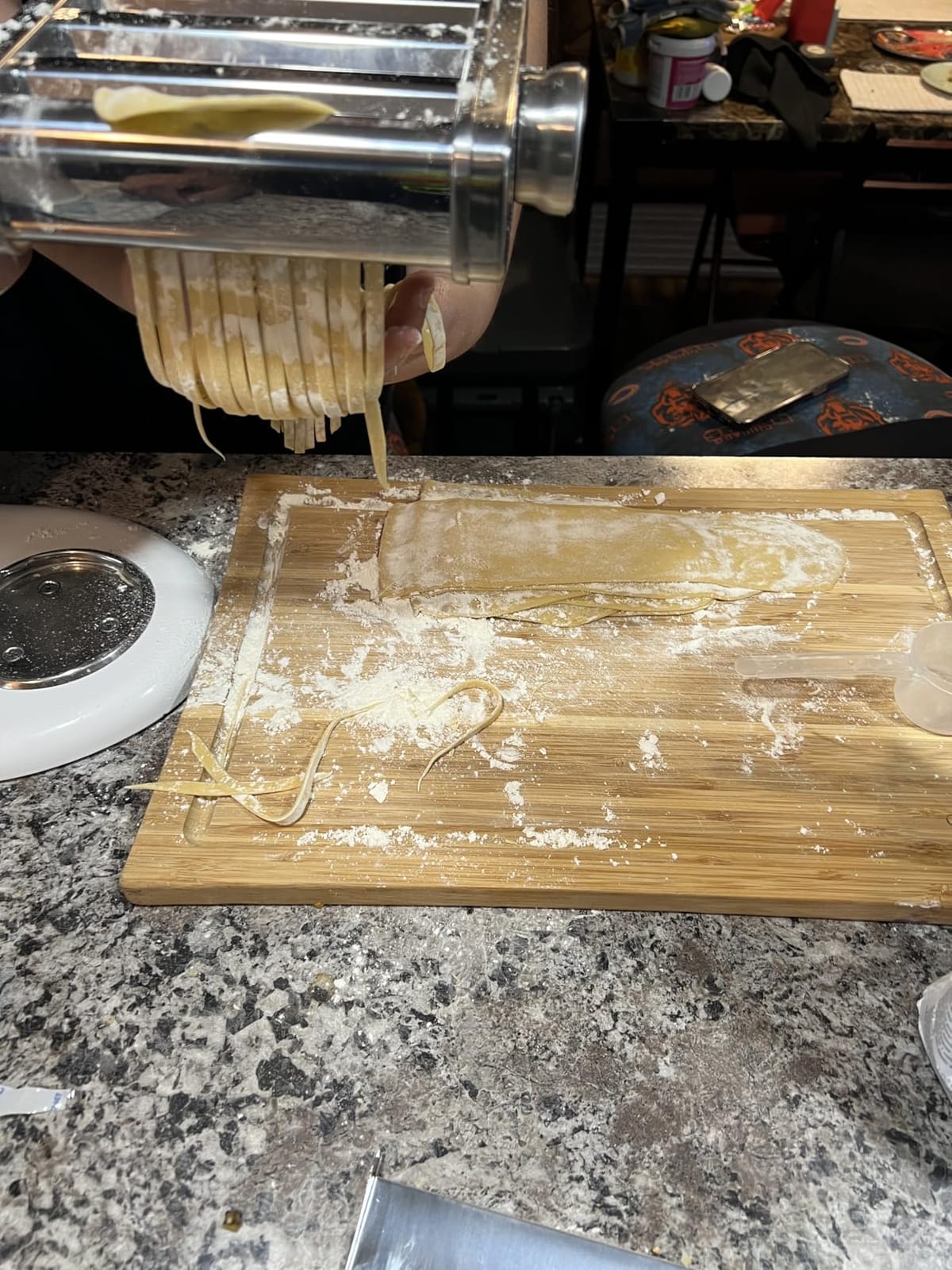
Most reviewers find it a strong affordable alternative to the official head, with a minority reporting dull cutters or a slipping thickness selector and noting responsive customer service. The dull-cutter reports cluster around the widest fettuccine setting.
The metal baffle contains flour spray, which matters more than it sounds. A head that throws flour onto your counter and your mixer housing is a head you will use less often.
Antree or GVODE for Your Mixer
Choose the Antree if cutting precision is your priority and you want the openable cover for clearing stuck dough. Choose the GVODE if you want all-metal rollers, a linguine blade and less splatter.
Both fit the same range of KitchenAid mixers and both use eight thickness settings. The difference shows up in the third year, when plastic housings start to crack around the mounting posts.
Two Fixes Before You Start
Check the thickness selector holds position before the first pass. It can drift mid-roll and leave you with a sheet of uneven gauge.
Do not let dough dry on the rollers. There is no dishwasher cycle for this head, so dried dough means a stiff brush and patience at the sink.
We earn a commission, at no additional cost to you. CERTAIN CONTENT THAT APPEARS ON THIS SITE COMES FROM AMAZON. THIS CONTENT IS PROVIDED 'AS IS' AND IS SUBJECT TO CHANGE OR REMOVAL AT ANY TIME.
How to Choose a Pasta Maker: Manual, Electric, Extruder or Mixer Attachment
The single decision that matters most is how much dough you want to move in one sitting, because that decides the machine family. A couple making one batch a week is served by any manual roller. A family of four making pasta twice a week is served by a wide roller or a mixer attachment, and a household that wants extruded shapes needs a press.
Manual Roller Versus Everything Else
A manual roller gives you the widest thickness control and the best texture, because you can pause, fold and rest the dough between passes. The cost is arm effort and your attention for the ten minutes it takes to roll a batch.
An electric roller or extruder trades texture control for throughput. The Philips Viva in this group mixes, kneads and extrudes unattended, and it will not produce a rolled sheet texture. For most people that trade is worth it only if hands are not available.
Roller Width and Batch Size
Width is the spec competitors skip. A 150mm roller produces a sheet roughly six inches wide, which cuts to about one serving of noodles per pass. A 180mm roller cuts roughly a fifth more per pass with the same effort.
Attachment heads roll 5.5 inch sheets, narrower than either. For weeknight spaghetti that is sufficient, and for lasagna you will need more passes than you expect at the start.
Thickness Settings and Cutter Widths
More settings do not automatically mean better control, because they are not evenly spaced. Ten positions across 0.8mm to 4.8mm gives you finer steps in the thin range, which is where pasta texture is decided.
Cutter widths matter as much. Two blades covering 2mm and 6mm makes spaghetti and fettuccine and nothing else. Three blades give you tagliolini or linguine, and extruder discs open up rigatoni and fusilli entirely.
Material and Attachment Ecosystem
Chrome-plated and stainless steel bodies last longest. Aluminum bodies and rollers are lighter and cheaper, and anodized aluminum sits between the two. All of them need dry cleaning, and none of them tolerate a dishwasher cycle.
Check the accessory path before you buy. An Imperia accepts a motor and three attachment families, a Marcato set extends across nine further accessories, and a Nuvatee has no path at all. That choice shapes what your machine does in year three.
When a Pasta Maker Is Not Worth Buying
Honest answer for a lot of readers: skip it. If you make pasta once a year, a good jar of dried pasta beats a fresh sheet that took you ninety minutes to roll and left you a sink full of dried dough to scrape.
Store-bought fresh pasta from a deli is excellent and costs far less than the time you invest. The machine pays for itself in texture, in the ability to make gluten-free dough at all, and in the ten minutes a week it saves on average.
The other warning is about children and learning curves. First attempts produce frayed tagliatelle, and that frustration is the most common reason people stop. Buy a machine for an adult who will finish the batch, not as a gift that expects an eight-year-old to thread dough through rollers alone.
How to Use a Manual Pasta Maker, Step by Step
Step one is dough, and it happens before the machine ever appears. Mix semolina and all-purpose flour, rest the dough for at least thirty minutes, and get the hydration right before you roll.
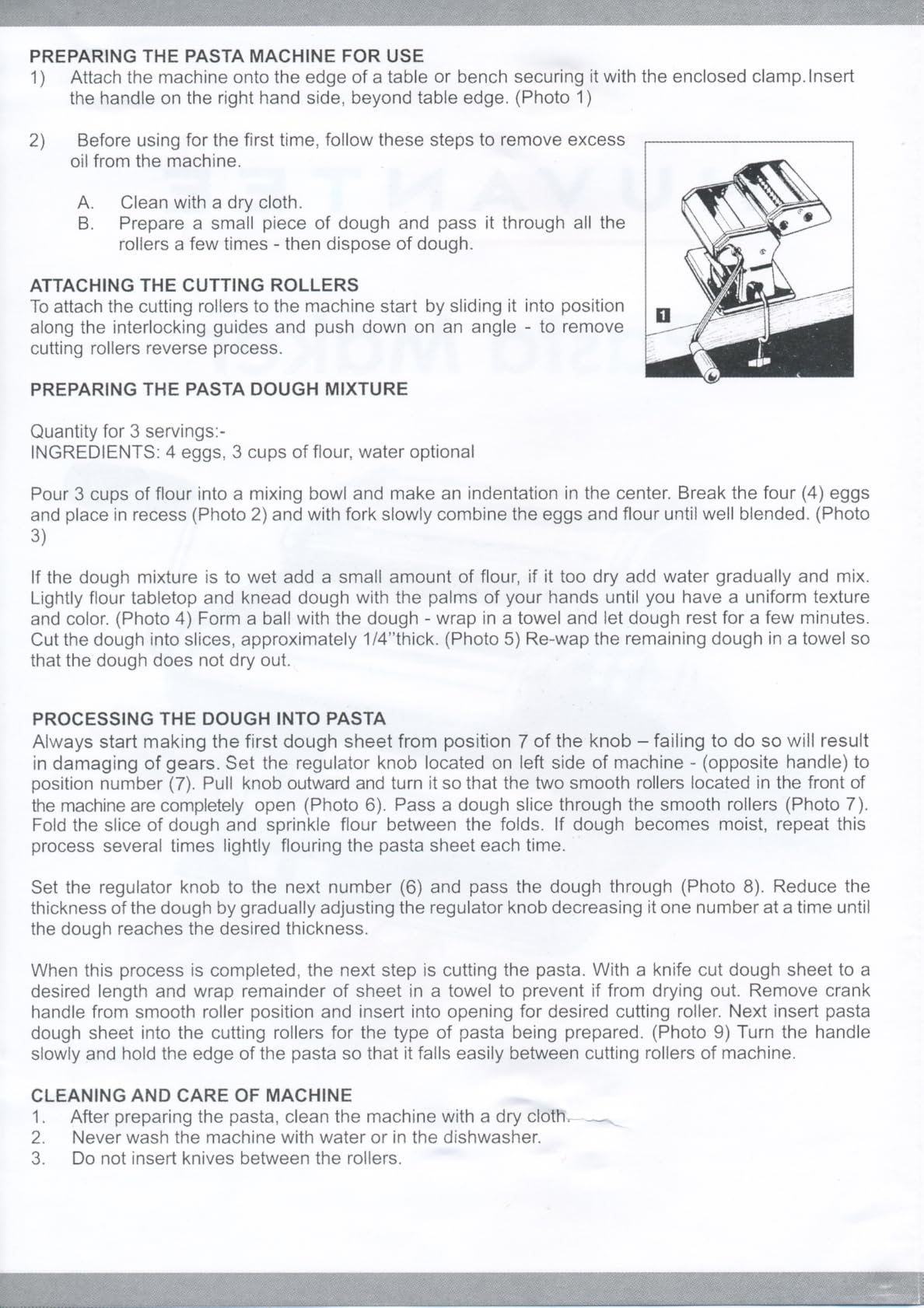
Step two is flour the rollers before the first pass. Lightly dust both rollers with flour and run a scrap of dough through empty. This single step prevents most of the sticking complaints people post about.
Step three is to start at setting 1 and pass the dough through, then fold it in thirds and pass again. Repeat until you reach your target thickness, usually somewhere near the sixth pass. Never jump straight to a thin setting or the sheet will tear.
Step four is to rest the finished sheet for a few minutes before cutting. A sheet that has just come off the rollers is elastic and will stretch while the cutters bite. A rested sheet cuts clean.
Step five is to dust the cutter, run the sheet through, and hang the cut pasta immediately. If dough grabs in the cutter, stop the crank and use a wooden toothpick to clear it. Never use metal on these blades.
Cleaning and Care: Why You Never Put a Roller in Water
No roller on this list is dishwasher safe, and every manufacturer says the same thing in the manual. Water sits in the roller grooves, the gears oxidize, and a rust spot appears within weeks.
Clean dry instead. Let any dough residue dry completely, brush it out with the included bristle brush or a stiff pastry brush, then wipe the rollers with a barely damp cloth and dry them immediately.
After a few years this routine is the difference between a machine that looks new and one that gets put away because it looked neglected. Store the machine with the clamp loosened and the crank detached, and keep it away from a hot stove or a steamy sink.
Frequently Asked Questions
What is the best noodles making machine for home use?
The MARCATO Atlas 150 is the best pasta maker for most homes. It has ten thickness settings from 0.8mm to 4.8mm, chrome-plated steel construction made in Italy, and 27686 reviews averaging 4.6 stars. It clamps to a table, needs no power, and rolls lasagna, fettuccine and tagliolini sheets.
Is it worth it to buy a pasta maker?
It is worth it if you make pasta more than once a month and you value texture and control, since a roller reaches an even thin sheet a rolling pin cannot. It is not worth it for occasional cooks, because store-bought fresh pasta is excellent and the cleanup is still ten minutes per session.
What is the best manual pasta maker?
The MARCATO Atlas 150 leads the manual rollers, with the Imperia IPasta Classic Line close behind for anyone who wants a motor or ravioli attachment later. Both are made in Italy, roll sheets around six inches wide, and offer a dry brush cleaning routine that keeps the steel in good shape.
Can I use my KitchenAid mixer to make pasta?
Yes. KitchenAid stand mixers drive pasta attachments that turn the rollers or extrude dough for you. The KitchenAid KSMPEXTA Gourmet Pasta Press runs on six interchangeable discs and has a built-in wire cutter, while the Antree and GVODE heads roll and cut sheets without any cranking.
Are Marcato pasta makers good?
Yes. Marcato machines carry the strongest ratings in this roundup, with the Atlas 180 at 4.7 stars and the Atlas 150 and PASTASET set close behind. Owners consistently praise the Italian chrome-plated steel build, smooth gearing and ten-position thickness control, with dry-only cleaning as the one recurring rule.
Final Verdict on the Best Pasta Makers for Homemade Noodles
The MARCATO Atlas 150 is the best pasta maker for homemade noodles in 2026, and it wins on the combination that matters: a 4.6 rating across 27686 reviews, ten thickness settings, and Italian steel that has proven itself over years rather than weeks.
Buy the Imperia IPasta Classic Line instead if you want the motor slot and the ravioli attachment path. Buy the Atlas 180 if sheet width decides your dinner. Buy the Antree or GVODE head if a stand mixer is already on your counter, and buy the Philips Viva if you want pasta made with no effort at all and only cook for two.
Whatever you pick, keep it dry, start at setting 1, and flour the rollers before the first pass. Those three habits decide whether the machine stays on your counter or disappears into a cupboard.