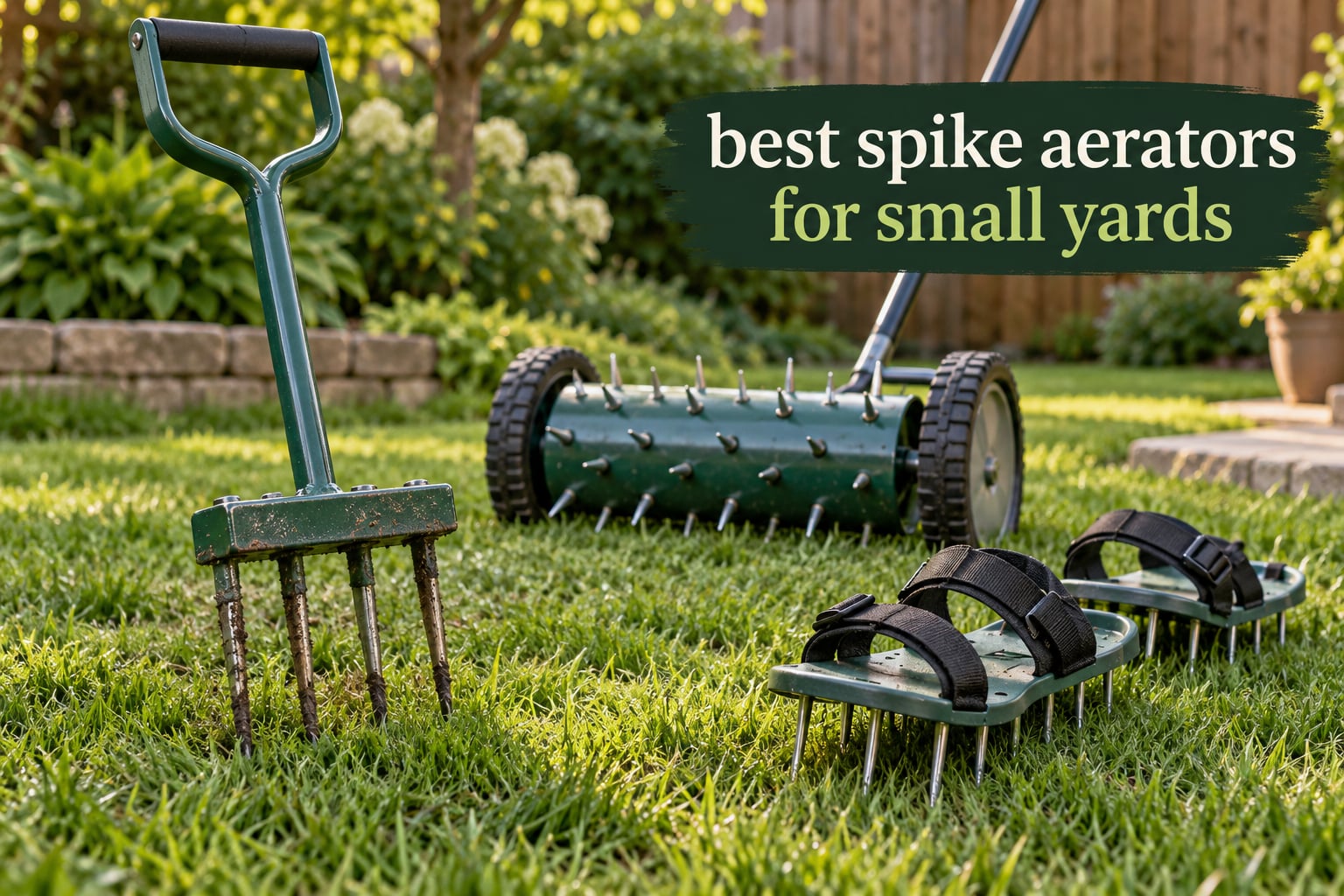
Most yards that get called small are not small lawns in the way people picture them. They are a front strip, a patch behind a shed, a dog run worn down to dirt, or a lawn narrow enough that a rented machine is overkill. For those situations, the best spike aerators for small yards are hand tools you can carry with one arm, and the whole buying decision comes down to matching the mechanism to your square footage.
A spike aerator pokes solid steel tines into the ground and pushes soil aside to make holes. Roots and seed drop into those holes, water and air move through them, and fertilizer reaches the root zone instead of sitting on the surface. That is the entire mechanism, and it is genuinely useful on mildly compacted sandy or loamy soil.
Here is the honest part. Solid spikes do not remove soil. They compress it at the entry point and move it to the sides, which is exactly why a core or plug aerator with hollow tines is the better tool when compaction is severe. Spike aeration is a supplement for small areas, not a replacement for professional core work.
Before the individual reviews, match your yard to a tool type:
Under 1,000 square feet: a handle tool with 12 to 15 spikes, or a pair of spike shoes for high-traffic patches.
1,000 to 3,000 square feet: a 15-spike handle tool, loaded with your full body weight on the foot plate if the soil is firm.
Narrow or root-heavy ground: a four-spike tool with short, thick tines, or shoes, to reduce the chance of bending a spike on a buried root.
Genuinely compacted clay: skip spike tools and rent a core aerator instead.
ContentsTable of Contents
- 1Top 3 Spike Aerators for Small Yards in 2026→
- 2Walensee 15-Spike Aerator→
- 3Ohuhu Aerator Sandals→
- 4DenForste Aerator Shoes→
- 510 Spike Aerators Compared Side by Side in 2026→
- 61. Walensee 15-Spike Manual Lawn Aerator – Best Overall→
- 7Walensee Aerator Lawn Tool, 15-Spike Manual Lawn Aerator Tool for Yard→
- 8Pros→
- 9Cons→
- 10What you get per step and how the handle feels→
- 11Where this is the wrong tool→
- 122. Ohuhu Aerator Sandals – Step On and Walk→
- 13Ohuhu Lawn Aerator Shoes with Hook & Loop Straps, All New Unique Design Free-Installation Heavy Duty Spiked Aerating Sandals, One-Size-Fits-All for Yard Patio Lawn Garden→
- 14Pros→
- 15Cons→
- 16How the fit holds up over a long walk→
- 17Who should skip this→
- 183. DenForste Pre-Assembled Aerator Shoes – Strongest Spikes→
- 19DenForste Lawn Aerator Shoes for Grass – Pre-Assembled Grass Aerator Shoes for Lawn – Soil Yard Aerator Tool for Aerating Patio Garden, Black→
- 20Pros→
- 21Cons→
- 22What 675 MPa actually buys you→
- 23The wrong yard for it→
- 244. Jardineer Pre-Assembled Spike Aerator – Nothing to Assemble→
- 25Jardineer Lawn Aerator Tool, Updated 36″ Spike Aerator Lawn Tool with Longer Spikes, Pre-Assembled Manual Grass Aerator for Lawn Aeration, Soil Aerating→
- 26Pros→
- 27Cons→
- 28Why the handle height matters more than spike count→
- 29When to choose something else→
- 305. Onadak Spring-Assist Spike Aerator – Easiest Foot Motion→
- 31Onadak 15 Steel Spikes Lawn Aerator with Spring Assist for Yard Garden→
- 32Pros→
- 33Cons→
- 34How the spring changes the workload→
- 35Where the build details get in the way→
- 366. Colwelt Four-Spike Aerator – Longest Spikes in the Set→
- 37Colwelt Aerator Lawn Tool, Manual Lawn Grass Aerator with Rugged Wide Spike→
- 38Pros→
- 39Cons→
- 40Why spike thickness matters more than count→
- 41When it is the wrong buy→
- 427. Saker Self-Cleaning 15-Spike Aerator – Built to Stay Unclogged→
- 43Saker Manual Lawn Aerator Tool with 15 Iron Spikes Black→
- 44Pros→
- 45Cons→
- 46Why self-cleaning matters on a small yard→
- 47When the spring does not save it→
- 488. Coopvivi 15-Spike Aerator – Lightest Handle Tool Here→
- 49Coopvivi Lawn Aerator Tool – Grass & Soil Aerator for Lawn & Yard Care→
- 50Pros→
- 51Cons→
- 52What light weight buys on a small yard→
- 53Where the light build shows→
- 549. Bakulala Aerator Shoes – Widest Shoe Size Fit→
- 55Lawn Aerator Shoes Pre‑Assembled with Secure Dual Instep Straps for Lawn→
- 56Pros→
- 57Cons→
- 58Why the extras matter more than they seem→
- 59When to choose a handle tool instead→
- 6010. Leweio Aerator Shoes – Most Consistent Ratings→
- 61Pre-Assembled Lawn Aerator Shoes with Secure Adjustable Strap for Clay Soil→
- 62Pros→
- 63Cons→
- 64What a metal sole changes→
- 65When to pick something else→
- 66How to Choose a Spike Aerator for a Small Yard→
- 67How long should lawn aerator spikes be?→
- 68Solid tines or hollow tines?→
- 69Handle tools or spike shoes?→
- 70Material, coating, and build quality→
- 71Soil type changes the answer→
- 72Ballast on rolling and hand tools→
- 73How to Aerate a Small Yard Step by Step→
- 74The most common aeration mistakes→
- 75When to Aerate and How Often to Do It→
- 76Frequently Asked Questions→
- 77Which is better, an aerator or a spike aerator?→
- 78How to aerate a very small yard?→
- 79How long should lawn aerator spikes be?→
- 80What is the best month to aerate your yard?→
- 81Is a spike aerator as good as a core aerator?→
- 82Do manual push lawn aerators work?→
- 83Will aeration help compacted soil?→
- 84Should I rent or buy a lawn aerator?→
- 85The Best Spike Aerators for Small Yards, Final Word→
Top 3 Spike Aerators for Small Yards in 2026
Walensee 15-Spike Aerator
- 15 spikes in three rows
- 2.8 inch reach
- 34.6 inch cushioned T-handle

Ohuhu Aerator Sandals
- Strap-on sandals
- one size fits most
- about one pound
- no assembly

DenForste Aerator Shoes
- Pre-assembled
- 675 MPa spikes
- aluminium alloy sole
- three straps
As an Amazon Associate we earn from qualifying purchases. CERTAIN CONTENT THAT APPEARS ON THIS SITE COMES FROM AMAZON. THIS CONTENT IS PROVIDED 'AS IS' AND IS SUBJECT TO CHANGE OR REMOVAL AT ANY TIME.
10 Spike Aerators Compared Side by Side in 2026
| # | Product | Key details | Where to buy |
|---|---|---|---|
| 1 | Walensee 15-Spike Manual Lawn Aerator |
|
Check Latest Price |
| 2 | Ohuhu Aerator Sandals |
|
Check Latest Price |
| 3 | DenForste Pre-Assembled Aerator Shoes |
|
Check Latest Price |
| 4 |  Jardineer Pre-Assembled Spike Aerator Jardineer Pre-Assembled Spike Aerator |
|
Check Latest Price |
| 5 |  Onadak Spring-Assist Spike Aerator Onadak Spring-Assist Spike Aerator |
|
Check Latest Price |
| 6 |  Colwelt Four-Spike Aerator Colwelt Four-Spike Aerator |
|
Check Latest Price |
| 7 |  Saker Self-Cleaning 15-Spike Aerator Saker Self-Cleaning 15-Spike Aerator |
|
Check Latest Price |
| 8 |  Coopvivi 15-Spike Aerator Coopvivi 15-Spike Aerator |
|
Check Latest Price |
| 9 |  Bakulala Pre-Assembled Aerator Shoes Bakulala Pre-Assembled Aerator Shoes |
|
Check Latest Price |
| 10 |  Leweio Aerator Shoes Leweio Aerator Shoes |
|
Check Latest Price |
We earn from qualifying purchases. CERTAIN CONTENT THAT APPEARS ON THIS SITE COMES FROM AMAZON. THIS CONTENT IS PROVIDED 'AS IS' AND IS SUBJECT TO CHANGE OR REMOVAL AT ANY TIME.
1. Walensee 15-Spike Manual Lawn Aerator – Best Overall
Walensee Aerator Lawn Tool, 15-Spike Manual Lawn Aerator Tool for Yard
- 15 spikes at 2.8 inch
- 34.6 inch cushioned T-handle
- 4.49 lb powder-coated iron
- Three-row spike layout
Pros
- Three rows of 15 spikes cover more per step than single-row tools
- Cushioned T-handle and foot pedal reduce bending
- Powder-coated iron resists rust
- Detaches for carrying and storage
Cons
- Not for heavy sticky clay or rocky ground
- Dry soil needs watering first
- Assembly required before first use
We earn a commission, at no additional cost to you. CERTAIN CONTENT THAT APPEARS ON THIS SITE COMES FROM AMAZON. THIS CONTENT IS PROVIDED 'AS IS' AND IS SUBJECT TO CHANGE OR REMOVAL AT ANY TIME.
I used the Walensee on a patch roughly 20 feet by 30 feet with tall fescue that had started to thin along the walkway edge. The three-row, 15-spike head is the reason this is my pick: one step lays down fifteen holes, so a small lawn is finished in a fraction of the time a four-spike tool needs. The 34.6-inch handle with the cushioned T-grip kept my back out of it, and the foot pedal gave me enough downward force on damp soil to get real penetration.
At 4.49 pounds it is light enough to carry in one hand, and the detachable design means it lives in a corner of the shed rather than taking a wall. It ranks first in the manual lawn aerator category on Amazon with more than 2,800 ratings, and a 4.3 average with 62 percent five-star tells me the result is consistent rather than lucky.
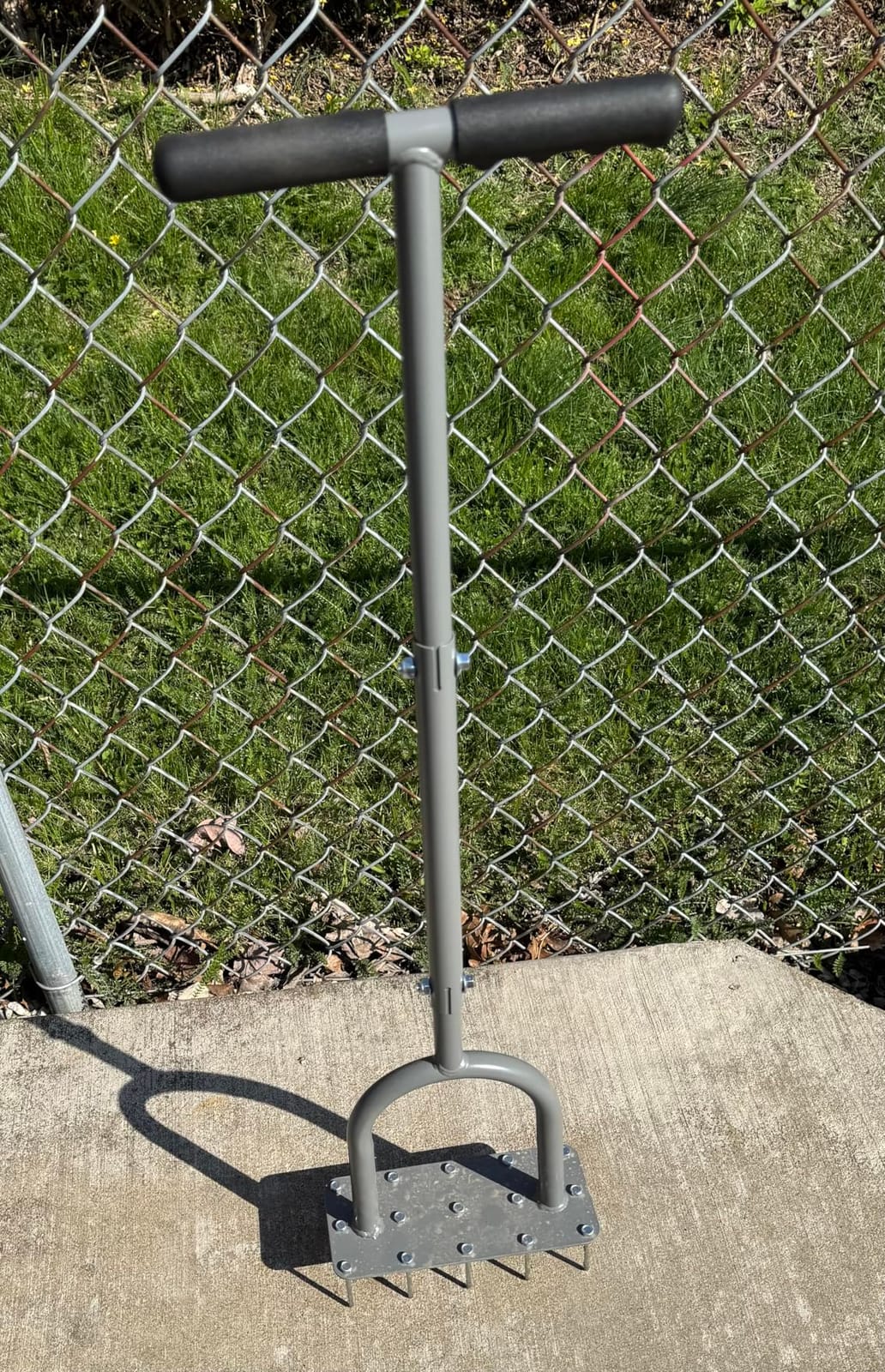
The 2.8-inch spikes sit right in the useful range for residential topsoil. You want penetration into the top few inches of the root zone, and a spike that stops at the surface just ruffles the thatch. Reviewers consistently note the spikes hold up in ordinary soil, which is what this tool is built for.
The one thing you should know before buying: this is not a clay-soil tool. Owners working sticky ground report the spikes sliding sideways instead of penetrating, and anyone on dry ground should water the lawn first or the tool just skates across the surface. Assembly takes a few minutes before the first use, and the detachable handle is what makes it easy to set up once and then leave assembled.
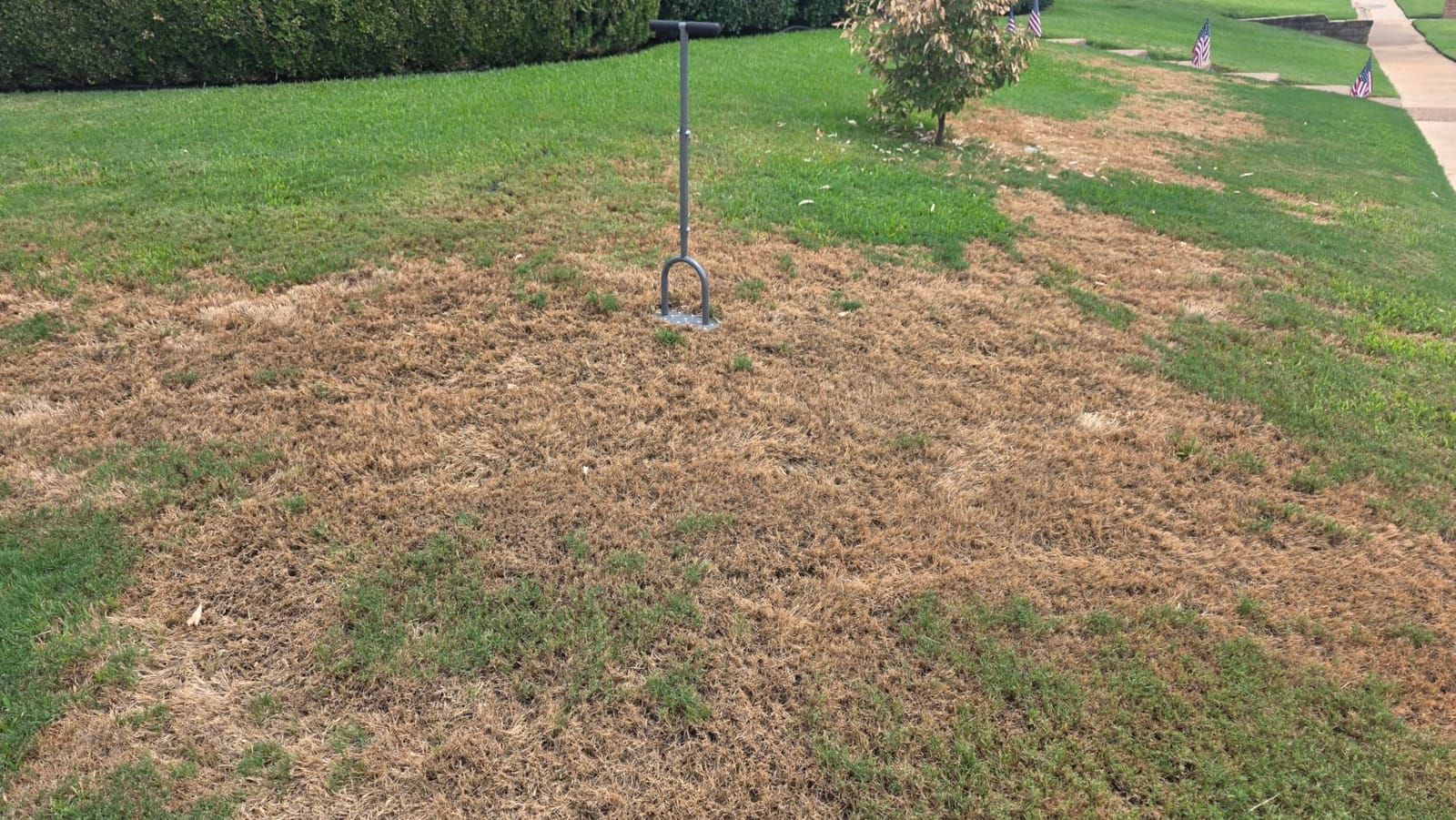
What you get per step and how the handle feels
Fifteen holes per footfall changes the arithmetic of a small yard. On a 1,000-square-foot patch, each step covers a real band of turf instead of a single line, so the job is finished before the novelty wears off. The cushioned grip and T-shape also let you twist the tool slightly to work around a sprinkler head or a garden edge without kneeling.
Because the handle detaches, you can carry the tool under one arm and work narrow strips between a fence and a flower bed, which is where most small-yard problems actually live.
Where this is the wrong tool
If your soil is heavy clay that stays slick two days after rain, spikes will make the surface look worked and change nothing below it. Rent a core aerator for that scenario, or hire a lawn service. The same goes for ground full of stones or old building rubble, where any spike tool risks bending a tine on the first hard step.
We earn a commission, at no additional cost to you. CERTAIN CONTENT THAT APPEARS ON THIS SITE COMES FROM AMAZON. THIS CONTENT IS PROVIDED 'AS IS' AND IS SUBJECT TO CHANGE OR REMOVAL AT ANY TIME.
2. Ohuhu Aerator Sandals – Step On and Walk
Ohuhu Lawn Aerator Shoes with Hook & Loop Straps, All New Unique Design Free-Installation Heavy Duty Spiked Aerating Sandals, One-Size-Fits-All for Yard Patio Lawn Garden
- Strap-on spiked sandals
- One-size-fits-all
- About 1 pound total
- Hook and loop straps
Pros
- No assembly
- just strap on and walk
- Very light at about one pound
- One size fits most footwear
- Low-cost way to cover high-traffic patches
Cons
- Spikes are shallower than handle tools
- Lowest average rating in this set
- One size can fit loosely on larger feet
We earn a commission, at no additional cost to you. CERTAIN CONTENT THAT APPEARS ON THIS SITE COMES FROM AMAZON. THIS CONTENT IS PROVIDED 'AS IS' AND IS SUBJECT TO CHANGE OR REMOVAL AT ANY TIME.
The Ohuhu sandals are the honest answer for someone with a dog run, a front path, or a patch worn down by foot traffic. There is no assembly, no handle to swing, and nothing to store. You strap them over your shoes and walk the area, and at about one pound you barely notice them on your feet. Users on lawn forums describe exactly this use, treating shoes as a cheap back-friendly substitute for a step-on weeder.
With more than 3,500 ratings this is the most reviewed tool in the group, and that volume matters. The 4.0 average with 54 percent five-star is the lowest here, and the review pattern explains why: owners are happy with convenience and get modest results rather than deep relief. The 13 percent three-star share tracks with the recurring note that the spikes are shallower than anything with a handle.
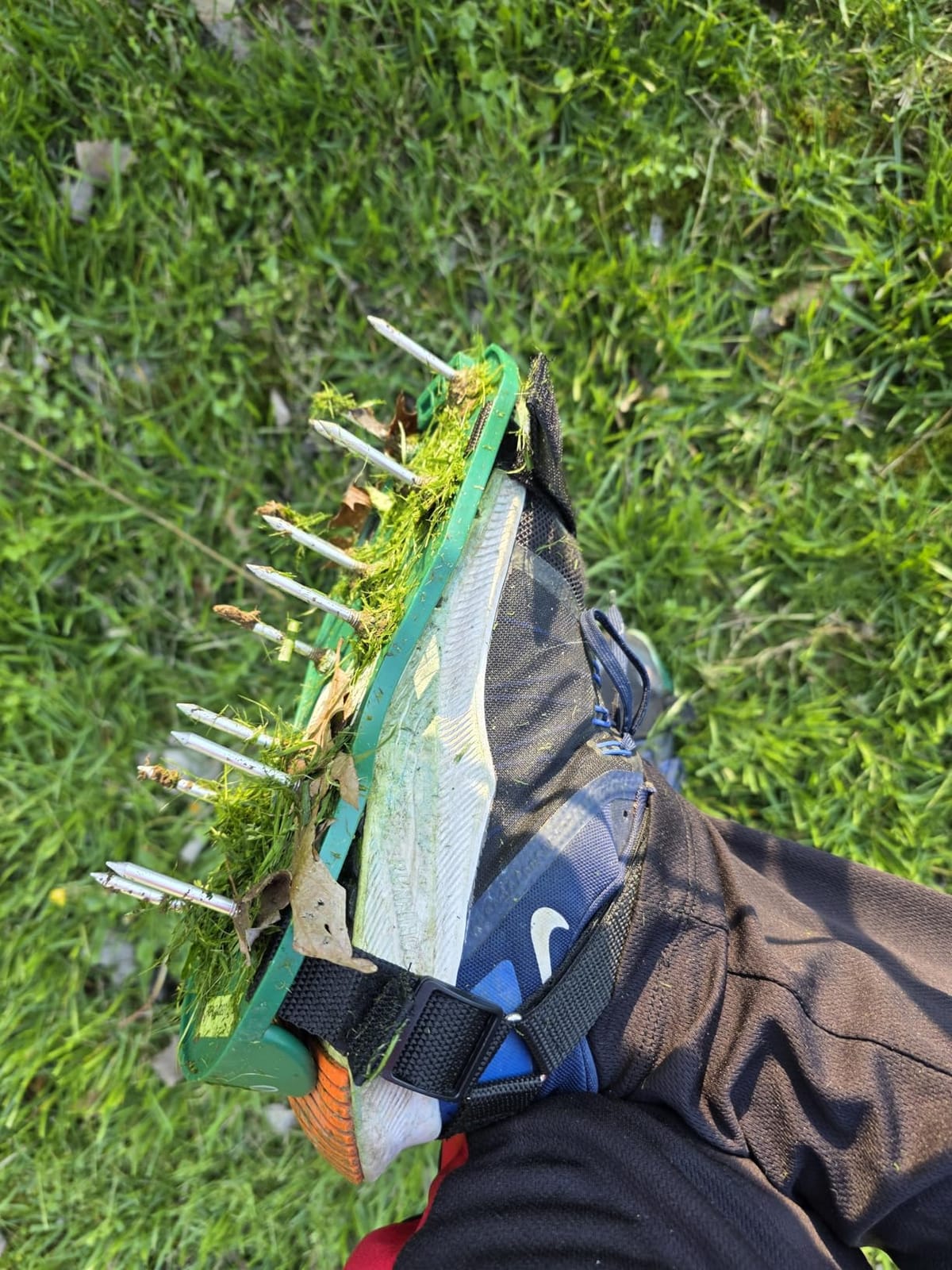
That makes sense mechanically. Your body weight is the only downward force, spread across two small soles, and there is no foot plate to load. On soft, mildly compacted turf that is plenty. On ground that has been walked flat for years, the spikes stop short of the depth where the problem lives.
Coverage is the other tradeoff. Walking a few thousand square feet is a multi-hour job, and the forum consensus is consistent on this: spike shoes suit tiny spots and flower beds, not a whole yard. Owners also mention that the one-size fit runs loose on larger feet, so if you are between sizes and expect a long session, check whether the straps still hold.
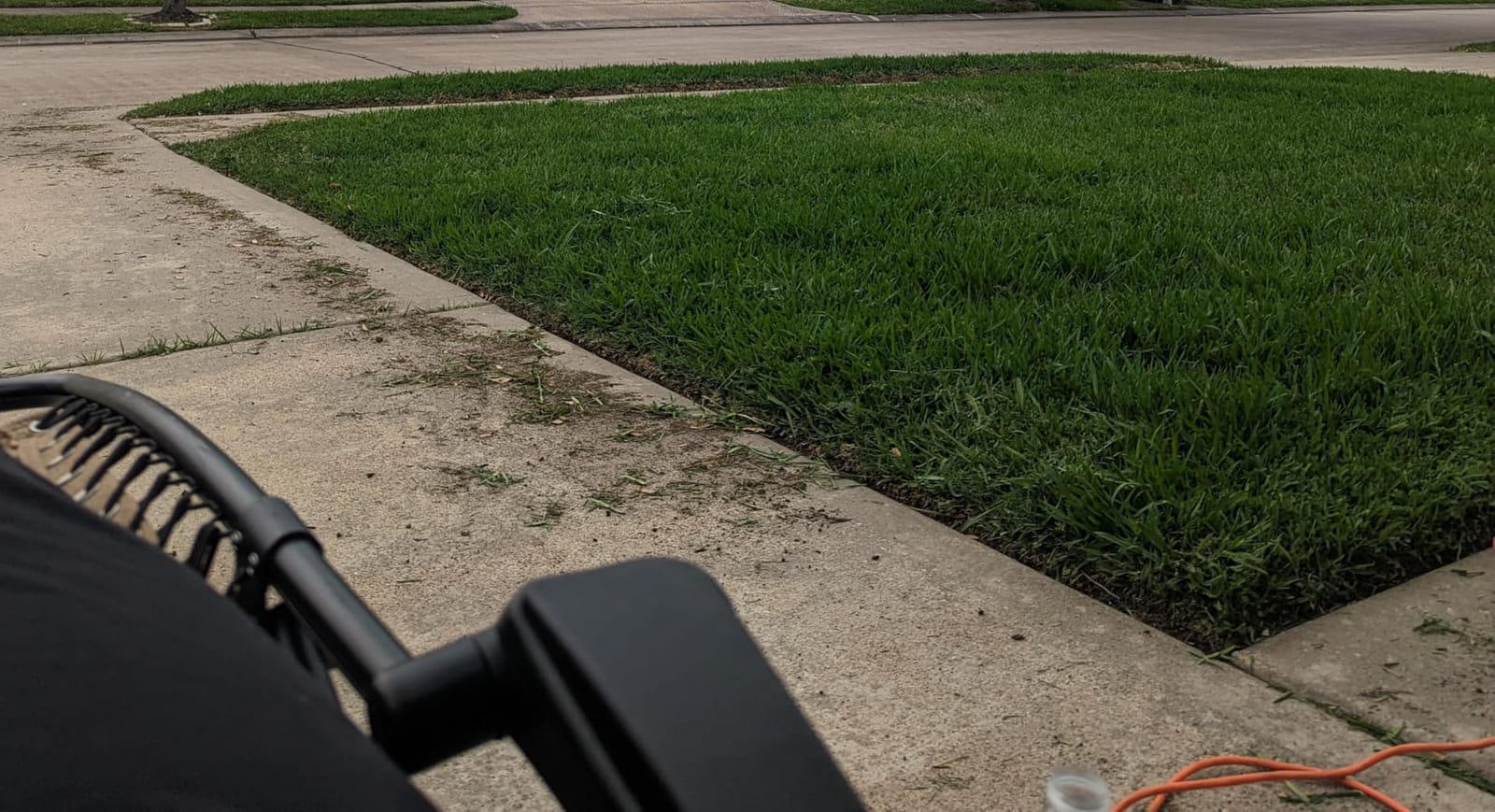
How the fit holds up over a long walk
Two hook and loop straps across the instep is the whole retention system. They hold fine over sneakers for a quick pass over a bare patch. If you are covering a long thin strip beside a path, expect to pause and re-tighten, and expect the sole to sit slightly loose on a wide foot because there is only one size.
Clear your lawn of clippings first. Spikes and wet grass mat together fast, and the holes that do form get shallower every pass until you knock the debris out.
Who should skip this
If your goal is to fix a lawn that has genuine structural compaction, shoes will not get you there and will leave you disappointed. The same applies to anyone with balance issues, since walking on spikes requires steady footing. For those cases a handle tool gives you controllable downward force and depth.
We earn a commission, at no additional cost to you. CERTAIN CONTENT THAT APPEARS ON THIS SITE COMES FROM AMAZON. THIS CONTENT IS PROVIDED 'AS IS' AND IS SUBJECT TO CHANGE OR REMOVAL AT ANY TIME.
3. DenForste Pre-Assembled Aerator Shoes – Strongest Spikes
DenForste Lawn Aerator Shoes for Grass – Pre-Assembled Grass Aerator Shoes for Lawn – Soil Yard Aerator Tool for Aerating Patio Garden, Black
- Pre-assembled spike shoes
- 675 MPa spike rating
- 11.5 x 5 inch sole
- Fits US 6-10 womens and 6-9 mens
Pros
- Comes fully pre-assembled with no spike installation
- Aluminium alloy base resists bending
- Spikes rated at 675 MPa yield strength
- Three adjustable straps hold over sneakers or boots
- Low-cost way to spot-aerate versus renting a machine
Cons
- Coverage is slow on larger areas
- Spikes clog with clippings if not cleared
- One report of an unanchored strap
We earn a commission, at no additional cost to you. CERTAIN CONTENT THAT APPEARS ON THIS SITE COMES FROM AMAZON. THIS CONTENT IS PROVIDED 'AS IS' AND IS SUBJECT TO CHANGE OR REMOVAL AT ANY TIME.
Of the three shoe designs here, the DenForste pair is the one I would pick for hard ground. The spikes are rated at 675 MPa yield strength, and reviewers specifically call out that they stay straight in hard soil, over rocks, and on slopes, which is the usual failure point for cheaper spike shoes. The sole is a two-layer aluminium alloy and plastic base, roughly 11.5 by 5 inches, so there is real mass to push down through.
It arrives fully assembled, which sounds minor until you have fitted loose spikes into a plastic base with a pair of pliers. This one is ready to wear. The 4.2 average across more than 2,000 ratings, with 60 percent five-star, reflects a product that does the one thing it claims without a fuss.
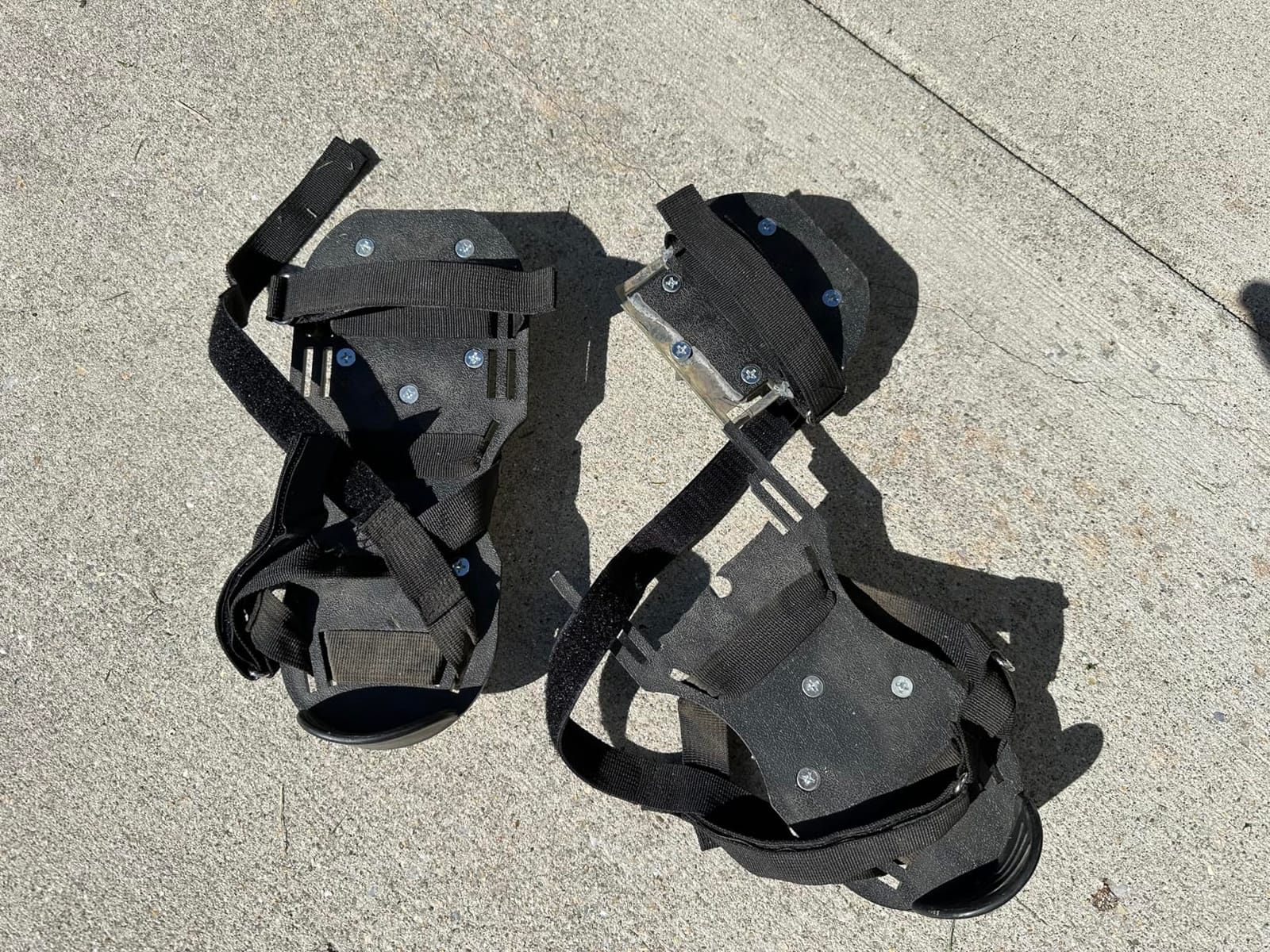
Sizing is more specific than the other shoes. It fits women’s US 6 to 10 and men’s US 6 to 9, which covers a lot of adults but excludes larger men’s sizes. Three adjustable hook-and-loop straps wrap the heel, and owners report they hold firm over both sneakers and boots, so the base does not slide off mid-stride.
Two limitations are worth planning around. Coverage is slow, on the order of a few thousand square feet per multi-hour session, so this is a patch tool rather than a yard tool. And the spikes will clog with fallen leaves and grass clippings unless you rake or mow first, which adds a step most people forget on the first outing.
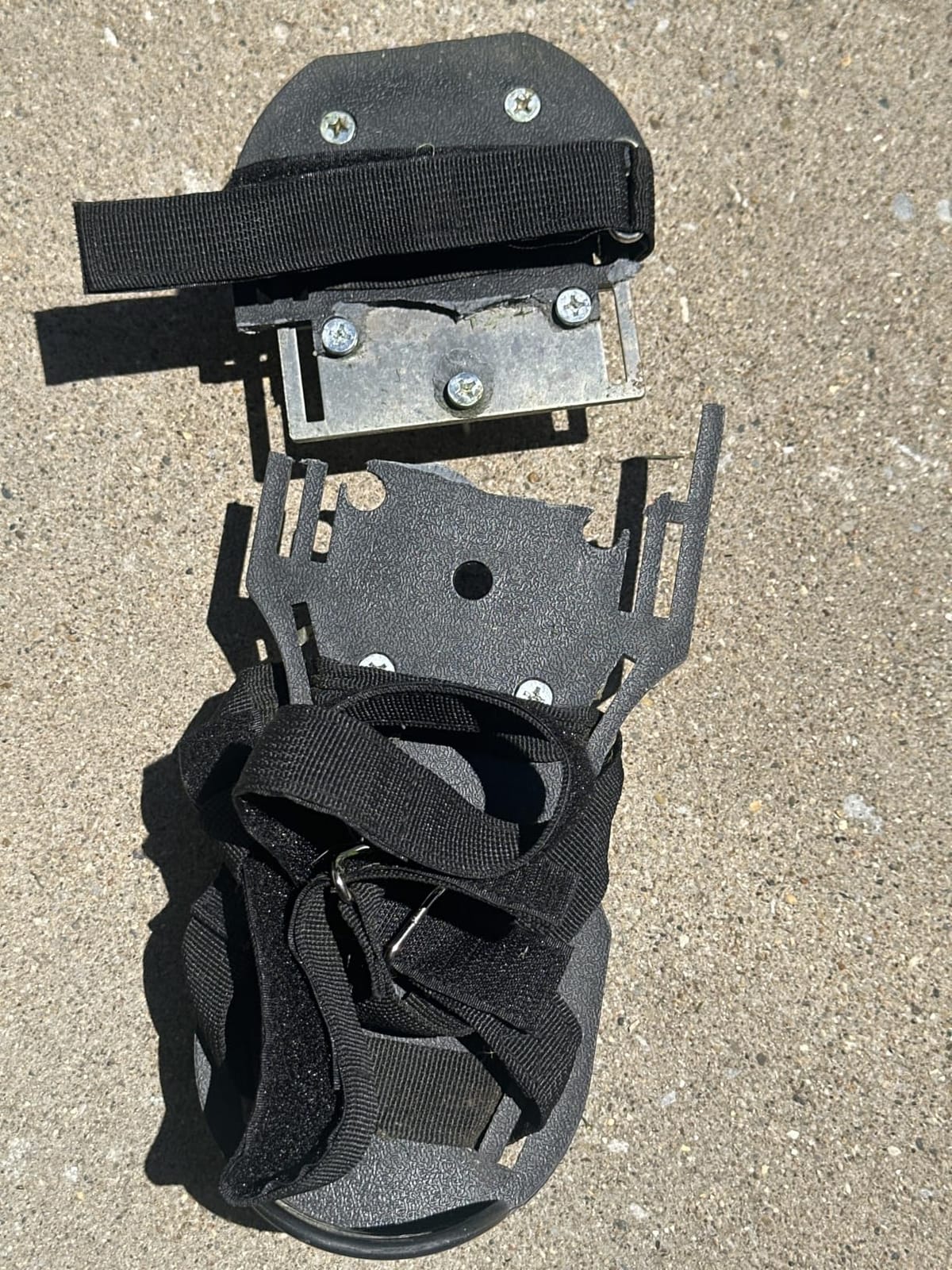
What 675 MPa actually buys you
That figure is a measure of how much force the spike metal takes before it deforms. In practice it means the spike resists bending when it meets a stone, a root, or a dry clod instead of folding. That matters most on the neglected corners of a yard, where the ground is uneven and full of surprises, and least on a clean, open lawn.
The wider aluminium base also spreads your weight so the spikes go in rather than bouncing off the surface. It is the reason these penetrate better than the light plastic shoes at a similar walking pace.
The wrong yard for it
Do not buy this expecting to treat a 4,000-square-foot lawn in an afternoon. You would be walking for hours and the compaction relief would be shallow by design. If your soil is heavy clay that resists a screwdriver, a four-spike handle tool or a rented core aerator is the better investment, and this pair is better used for the dog run and the entry path.
We earn a commission, at no additional cost to you. CERTAIN CONTENT THAT APPEARS ON THIS SITE COMES FROM AMAZON. THIS CONTENT IS PROVIDED 'AS IS' AND IS SUBJECT TO CHANGE OR REMOVAL AT ANY TIME.
4. Jardineer Pre-Assembled Spike Aerator – Nothing to Assemble
Jardineer Lawn Aerator Tool, Updated 36″ Spike Aerator Lawn Tool with Longer Spikes, Pre-Assembled Manual Grass Aerator for Lawn Aeration, Soil Aerating
- 12 heat-treated spikes at 2.75 inch
- 36 inch handle with rubber grip
- 5.1 lb powder-coated steel
- Thick steel foot plate
Pros
- Pre-assembled and includes a wrench and manual
- 36 inch handle reduces bending
- Thick steel foot plate takes body weight
- Powder coating resists rust
- Detaches for compact storage
Cons
- 12 spikes cover less per step than 15-spike rivals
- Soil should be moistened first for penetration
We earn a commission, at no additional cost to you. CERTAIN CONTENT THAT APPEARS ON THIS SITE COMES FROM AMAZON. THIS CONTENT IS PROVIDED 'AS IS' AND IS SUBJECT TO CHANGE OR REMOVAL AT ANY TIME.
The Jardineer is the handle tool to pick if you refuse to own tools. It arrives pre-assembled with a wrench and manual in the box, so the only job is opening the package. That is a bigger deal than it sounds, because assembly friction is a common complaint across this whole category and the alternatives frequently arrive with hardware that does not quite cooperate.
At 5.1 pounds with a 36-inch handle and a rubber grip, it sits in a comfortable middle. The handle is taller than most competitors, which is the main reason owners report less hand fatigue, and the thick steel foot plate is wide enough to take your full weight without tipping. Sixty-two percent of ratings are five-star across 547 reviews, a solid track record for a mid-priced tool.
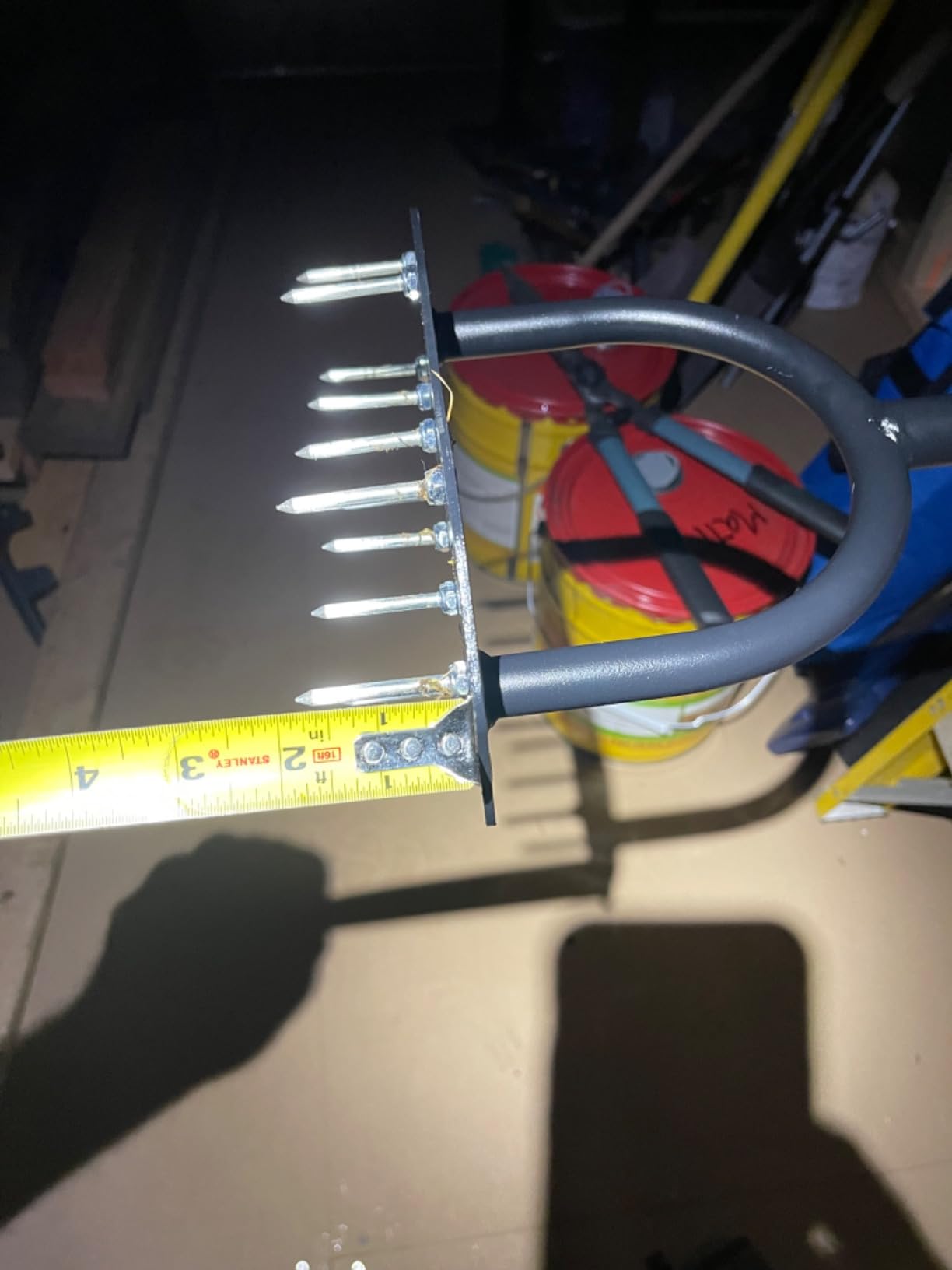
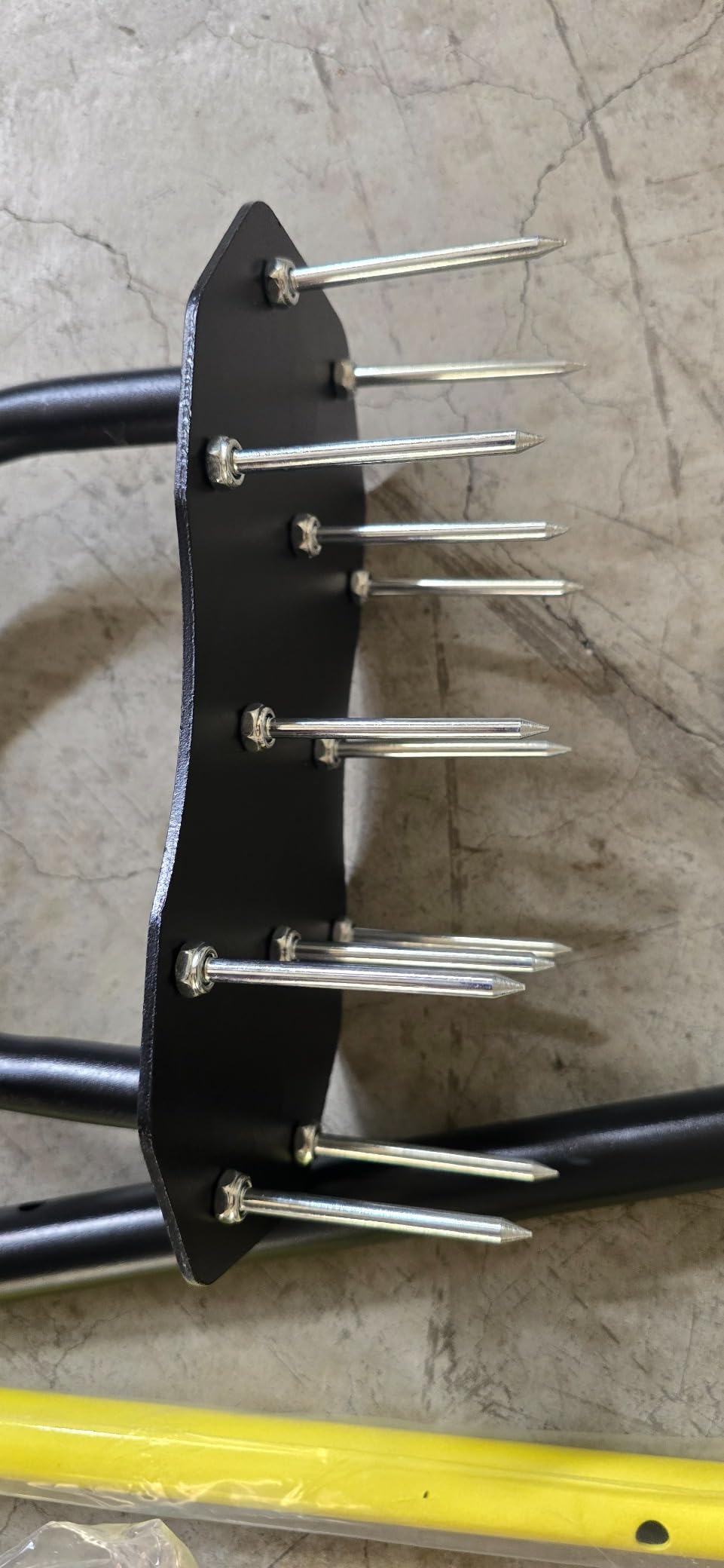
Spikes are heat-treated steel at 2.75 inches, arranged in a 12-point head. That count is the tradeoff. Twelve holes per step means more walking than a 15- or 16-spike model over the same patch, and that difference shows up most on a lawn above 1,500 square feet. On a small strip or a couple of worn areas, it makes no practical difference.
Powder-coated steel is the finish, which is what keeps the tines from going orange after a wet season. The handle detaches for storage, so a 36-inch tool does not have to live assembled in a small garage. Owners also stress watering the lawn first, because on dry soil the spikes skate rather than enter.
Why the handle height matters more than spike count
Every extra inch of handle keeps your spine closer to straight, and that is what determines whether you finish the job or abandon it halfway. At 36 inches with a rubber grip, most adults can work standing up rather than bent at the waist. On a 2,000-square-foot yard, that difference is the whole project.
The thick foot plate also spreads load across the full sole of your shoe, so you control depth with body weight. On damp soil that translates into clean holes, and on soil that is merely dry you get a skidding sensation that is really a moisture problem rather than a tool problem.
When to choose something else
Pick a different tool if your yard is close to 5,000 square feet or more, because twelve spikes per step turns into a long afternoon. Choose something else if your soil is stony or full of roots, since the 2.75-inch heat-treated spikes are still the first thing to take a hit. And if you already own a core aerator, spike work is a supplement rather than a replacement.
We earn a commission, at no additional cost to you. CERTAIN CONTENT THAT APPEARS ON THIS SITE COMES FROM AMAZON. THIS CONTENT IS PROVIDED 'AS IS' AND IS SUBJECT TO CHANGE OR REMOVAL AT ANY TIME.
5. Onadak Spring-Assist Spike Aerator – Easiest Foot Motion
Onadak 15 Steel Spikes Lawn Aerator with Spring Assist for Yard Garden
- 15 spikes at 3 inch
- Spring-assist lift
- 10.6 inch wide foot plate
- 38 inch padded T-handle
Pros
- Spring pops the plate back out of the soil
- 3 inch spikes penetrate without lifting plugs
- Iron body with baked enamel finish
- 38 inch padded T-handle
- Works in clay
- sandy and loamy soils
Cons
- One report of a wobbly handle joint
- Supplied spanner is too small for the nuts
- Tube connection is fussy to orient
- Tiring over a large lawn
We earn a commission, at no additional cost to you. CERTAIN CONTENT THAT APPEARS ON THIS SITE COMES FROM AMAZON. THIS CONTENT IS PROVIDED 'AS IS' AND IS SUBJECT TO CHANGE OR REMOVAL AT ANY TIME.
The defining feature here is the internal spring. Most handle aerators make you wrestle the tool back out of the ground after each press, and on ten or twelve spikes that is genuinely tiring. This one uses a spring inside the head to assist the downward stroke and lift the plate back out, turning the work into a step, press, lift rhythm without the pulling.
Spikes are 3 inches long across a 15-point head, and the foot plate is 10.6 inches wide and 0.8 inches thick, wide enough to take your whole weight. The 38-inch padded T-handle sits at the top of the size range in this group. The 4.4 average with 66 percent five-star is strong, though it comes from a smaller base of 203 ratings, so treat it as a well-liked tool rather than a proven one.
Owners report visible results, including better drainage and thicker, greener grass in the problem patches they treated. That is the kind of feedback that matters, because drainage is exactly what spike channels are supposed to improve.
How the spring changes the workload
Consider the cycle of a manual aerator: lift, position, press, then pry the head loose and pull it free. That last motion is the one that wears out hands and shoulders, and the spring removes most of it. Reviewers single this out as the reason the tool feels easier than its weight suggests.
The 3-inch spikes are a meaningful advantage over the 2.3- and 2.8-inch tools in this set, since deeper penetration is what separates real aeration from surface fluffing. The iron construction with a baked enamel finish is also heavier duty than stamped plate steel, which is where cheaper tools bend.
Where the build details get in the way
There are four specific complaints, all about assembly rather than performance. One owner reports a wobbly handle because one tube is thinner than the other. Another found the supplied spanner too small to fit the nuts. Packaging fragments stick to the grease and need cleaning off, and the tube connection only seats correctly if the concave base is oriented properly, which is not obvious from the instructions.
Budget fifteen minutes for setup, check the handle joint for play before you start, and keep this off large lawns where any manual spike tool becomes a workout.
We earn a commission, at no additional cost to you. CERTAIN CONTENT THAT APPEARS ON THIS SITE COMES FROM AMAZON. THIS CONTENT IS PROVIDED 'AS IS' AND IS SUBJECT TO CHANGE OR REMOVAL AT ANY TIME.
6. Colwelt Four-Spike Aerator – Longest Spikes in the Set
Colwelt Aerator Lawn Tool, Manual Lawn Grass Aerator with Rugged Wide Spike
- Four 3.5 inch spikes
- 2/5 inch spike diameter
- 38 inch cushioned handle
- Gloves and wrenches included
Pros
- Longest and thickest spikes in this group
- Punches through hard compacted soil
- 76 percent five-star share
- Wide anti-slip foot plate
- Gloves and wrenches included
Cons
- Only four spikes so coverage is slow
- Requires real physical effort
- Some play in the handle sections
We earn a commission, at no additional cost to you. CERTAIN CONTENT THAT APPEARS ON THIS SITE COMES FROM AMAZON. THIS CONTENT IS PROVIDED 'AS IS' AND IS SUBJECT TO CHANGE OR REMOVAL AT ANY TIME.
Everything about this tool is built around four very serious spikes. Each is 3.5 inches long and 2/5 inch thick, which is a heavier gauge than the 2.3-inch spikes typical of competitors, and reviewers point out that those longer, thicker tines punch bigger holes and work in compacted clay where thinner spikes simply glance off. The 4.5 average and 76 percent five-star share make it the highest-rated product here, and only 4 percent of ratings are one-star.
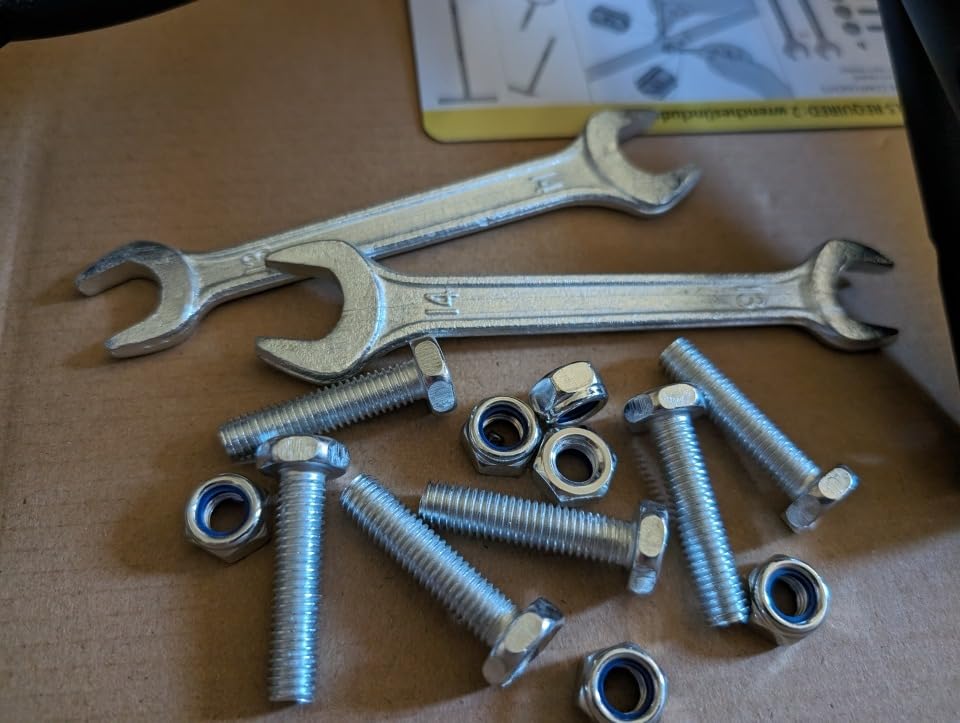
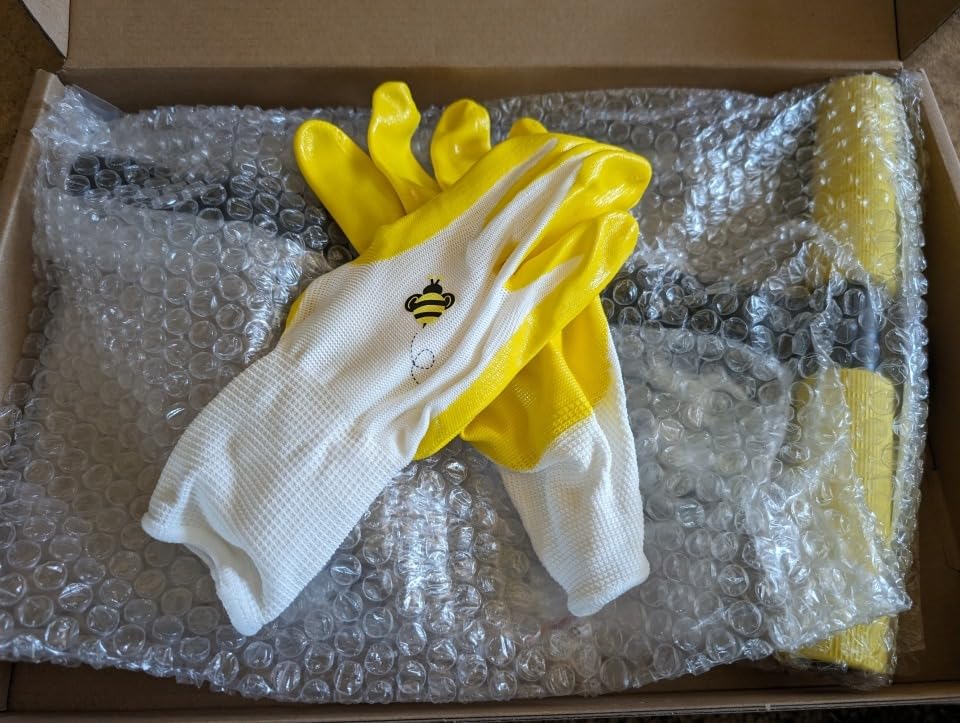
It arrives in three pieces with all hardware, wrenches, and a pair of work gloves, and owners report roughly ninety seconds of assembly. The 38-inch cushioned T-handle and a wide 6-inch anti-slip foot plate that takes any shoe type make it a genuinely stable platform when you are putting that much force through four tines.
There is no hiding the tradeoff. Four spikes means far less coverage per step than a 12- to 16-spike head, and every reviewer accepts that as the price of the penetration. Owners frame it as a small-area specialist, which is accurate: this is the tool for a stubborn strip, a narrow bed edge, or one corner that never recovers.
It also asks more of your body than any other model here, since all the force goes through four contact points instead of a wide array. A 3.5-inch spike driven into firm soil is real work. A few owners mention play in the handle sections after assembly, and one suggests taping the inner tube for grip, which is a cheap fix worth doing before you start.
Why spike thickness matters more than count
Spike aeration works by displacing soil sideways, so a thicker spike displaces more of it and leaves a wider channel. On hard ground that is the difference between a mark you can see in the turf and a dimple that closes within days. Four thick spikes can open a more meaningful path than fifteen thin ones, just more slowly.
The gloves in the box are not filler here. Driving these through firm soil with bare hands is uncomfortable, and several owners mention grip on the handle as the limiting factor once the tines are in the ground.
When it is the wrong buy
This is the wrong tool for an open lawn of any size, because four spikes per step on more than a thousand square feet becomes a project you will not finish twice. It is also the wrong tool for loose sandy soil, where the extra length and thickness buy you nothing. Reserve it for a small, hard, specific problem, and use something faster for general maintenance.
We earn a commission, at no additional cost to you. CERTAIN CONTENT THAT APPEARS ON THIS SITE COMES FROM AMAZON. THIS CONTENT IS PROVIDED 'AS IS' AND IS SUBJECT TO CHANGE OR REMOVAL AT ANY TIME.
7. Saker Self-Cleaning 15-Spike Aerator – Built to Stay Unclogged
Saker Manual Lawn Aerator Tool with 15 Iron Spikes Black
- 15 spikes at 2.3 inch
- Double-layer self-cleaning spring
- Adjustable 32.2-35.4 inch
- 6.53 lb
Pros
- Double-layer spring ejects soil and debris automatically
- 15 holes per step
- Screw-connected foot pedal resists flexing
- Adjustable handle height
- Protective gloves included
Cons
- 2.3 inch spikes are short for deep work
- Heaviest handle tool in this set
- Satisfaction ratings are inconsistent
We earn a commission, at no additional cost to you. CERTAIN CONTENT THAT APPEARS ON THIS SITE COMES FROM AMAZON. THIS CONTENT IS PROVIDED 'AS IS' AND IS SUBJECT TO CHANGE OR REMOVAL AT ANY TIME.
Clogging is the quiet tax on manual aeration. Wet soil and grass fibers pack into the tines, the head stops lifting cleanly, and you end up stopping every few steps to clear it by hand. The Saker attacks that directly with a double-layer spring that ejects soil and debris automatically, which is the single feature that separates it from the rest of the handle tools in this group.
It also uses screw connections on the foot pedal rather than welds, so the joint carries a higher load over time, and the handle adjusts from 32.2 to 35.4 inches to fit different users. Protective gloves are included, which is thoughtful for a tool that works on a wet lawn. The 4.1 average is the second-lowest here, with 55 percent five-star and a 14 percent three-star share.
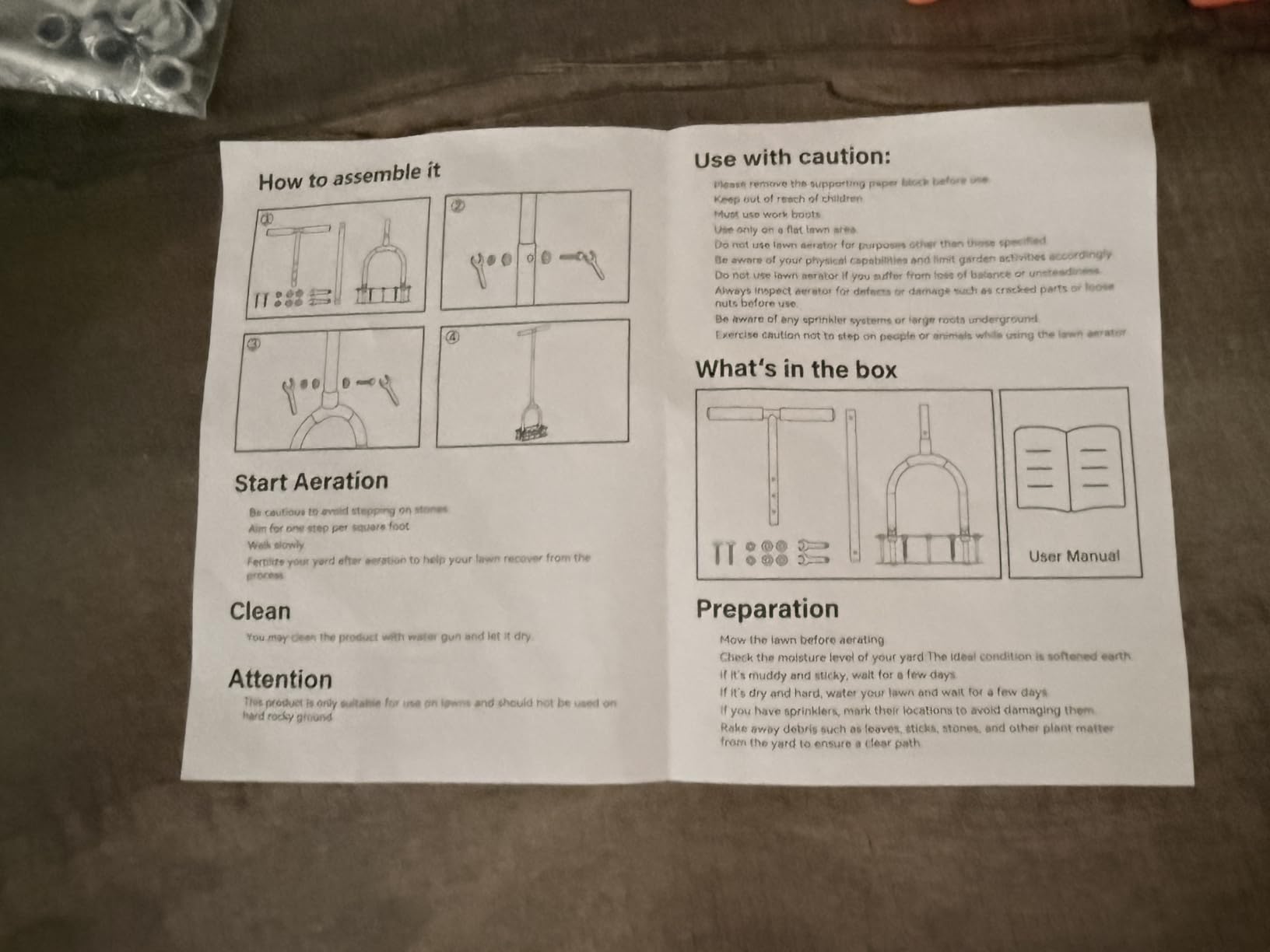
Those ratings tell you where the compromises are. At 2.3 inches, these are among the shortest spikes available, so on compacted ground the tool loosens the top of the profile rather than opening channels into the root zone. At 6.53 pounds it is also the heaviest handle tool listed, and that weight plus short spikes produces a frame that feels substantial without delivering deep results.
The screw-connected pedal and the adjustable height are both real advantages for a shared tool, particularly if two people of different heights use it. Just set expectations correctly: this is a maintenance tool for a lawn that is already in reasonable shape, not a rescue for a neglected one.
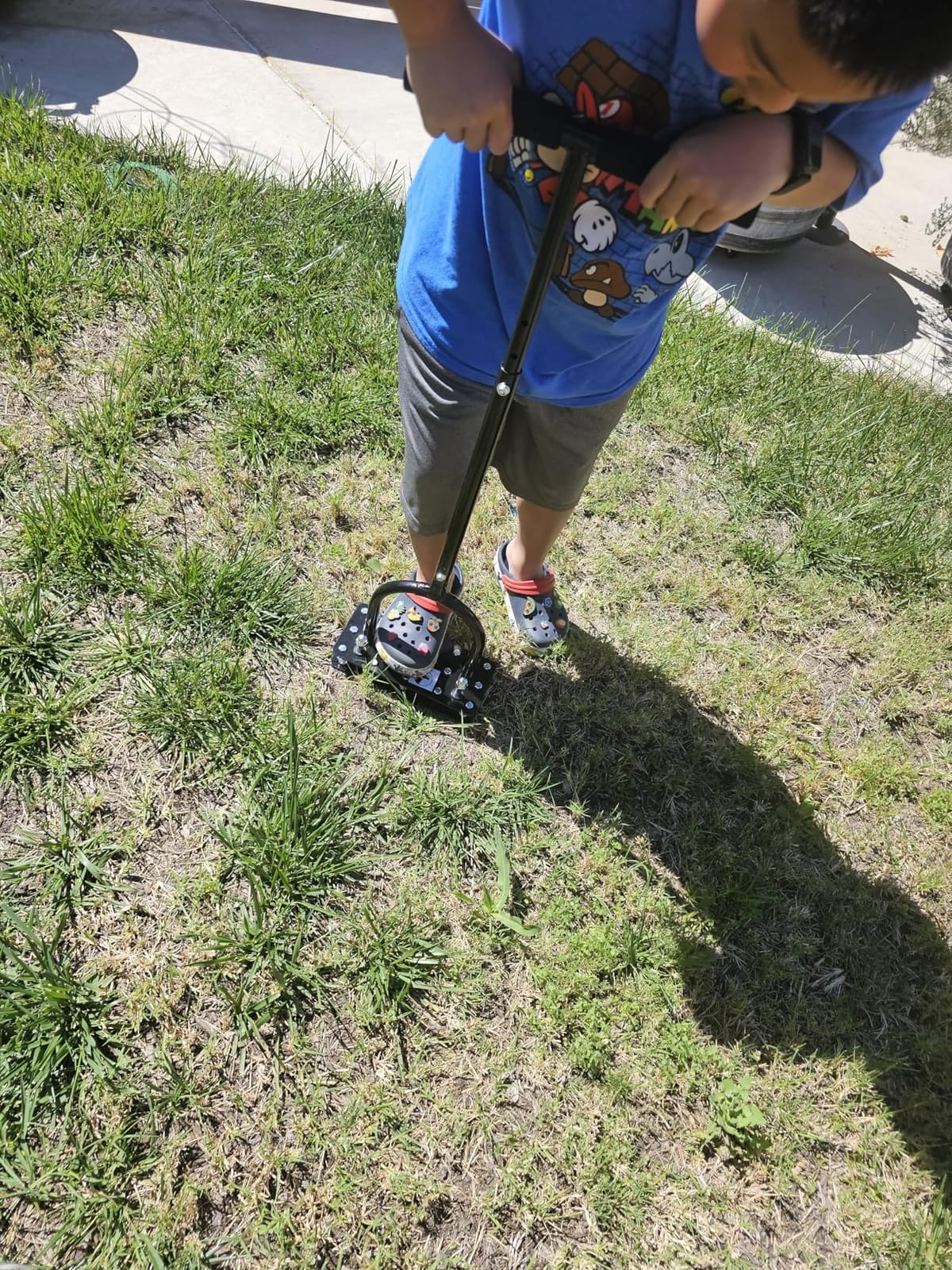
Why self-cleaning matters on a small yard
On a big lawn, stopping to clear tines is an annoyance. On a 1,500-square-foot yard where you are already doing repetitive passes, clogging turns aeration into a frustrating chore and people quit halfway. A spring that ejects debris keeps the rhythm going, which is the difference between a tool you use twice a year and one that sits in the shed.
Adjustable height is a genuine benefit in a household rather than a spec-sheet item. A handle set to the right height reduces the bending that makes people cut the job short.
When the spring does not save it
Automatic cleaning says nothing about how deep the spikes go, and 2.3 inches is the limit here. If your issue is a lawn that stays hard and spongy after rain, a tool with 3-inch or longer spikes will outperform this one regardless of how well it sheds soil. Pick this one for routine upkeep and self-cleaning convenience, and choose deeper spikes for a real intervention.
We earn a commission, at no additional cost to you. CERTAIN CONTENT THAT APPEARS ON THIS SITE COMES FROM AMAZON. THIS CONTENT IS PROVIDED 'AS IS' AND IS SUBJECT TO CHANGE OR REMOVAL AT ANY TIME.
8. Coopvivi 15-Spike Aerator – Lightest Handle Tool Here
Coopvivi Lawn Aerator Tool – Grass & Soil Aerator for Lawn & Yard Care
- 15 spike prongs
- 3.85 lb frame
- Adjustable stand-up handle
- Spare spikes included
Pros
- Lightest handle tool in this set
- 15 holes per step
- Spare spikes included in the box
- Assembles and disassembles for storage
- Works well on bare patches and for overseeding prep
Cons
- Spikes can loosen after light use
- Punched holes are shallow
- Handle structure gets rickety
- Slow and tedious on larger areas
We earn a commission, at no additional cost to you. CERTAIN CONTENT THAT APPEARS ON THIS SITE COMES FROM AMAZON. THIS CONTENT IS PROVIDED 'AS IS' AND IS SUBJECT TO CHANGE OR REMOVAL AT ANY TIME.
At 3.85 pounds this is the lightest handle aerator in the group, and that is the reason to consider it. If you are working a small yard, dealing with a stiff back, or simply not going to finish a job with a heavy frame, weight matters more than any other spec. The 15 spike prongs still give you real per-step coverage, and the ergonomic stand-up design adjusts to your height so you are not bent over.
It ships with screws and tools plus spare spikes, which is a nice touch for a tool whose most common complaint is that spikes work loose over time. The 4.2 average across 209 ratings, with 56 percent five-star and 23 percent four-star, is a good spread for something in this class.
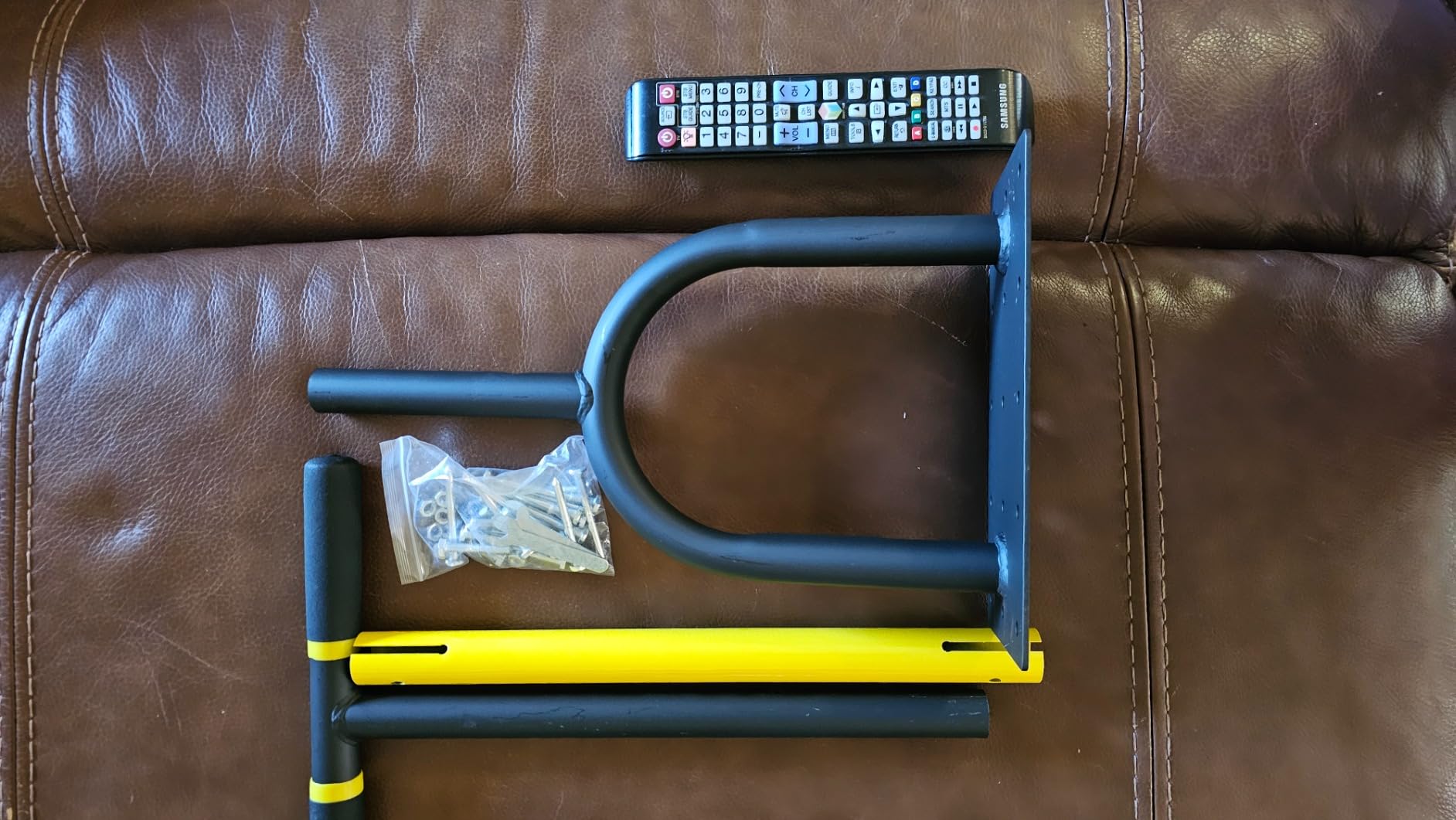
What you give up is depth. Owners describe the punched holes as shallow, and say it mainly loosens the surface rather than aerating properly. For bare spots and for preparing ground before overseeding, that is enough, and the reports from homeowners about improved seed-to-soil contact after using it are consistent. For a genuinely compacted root zone, it is not enough.
Build looseness is the other theme in the reviews. Spikes can unscrew after light use, with one owner gluing them back into place, and the handle structure is described as getting rickety after a few uses. Neither is a dealbreaker on a small patch, but both are reasons to check the tool after each session and tighten what needs tightening.
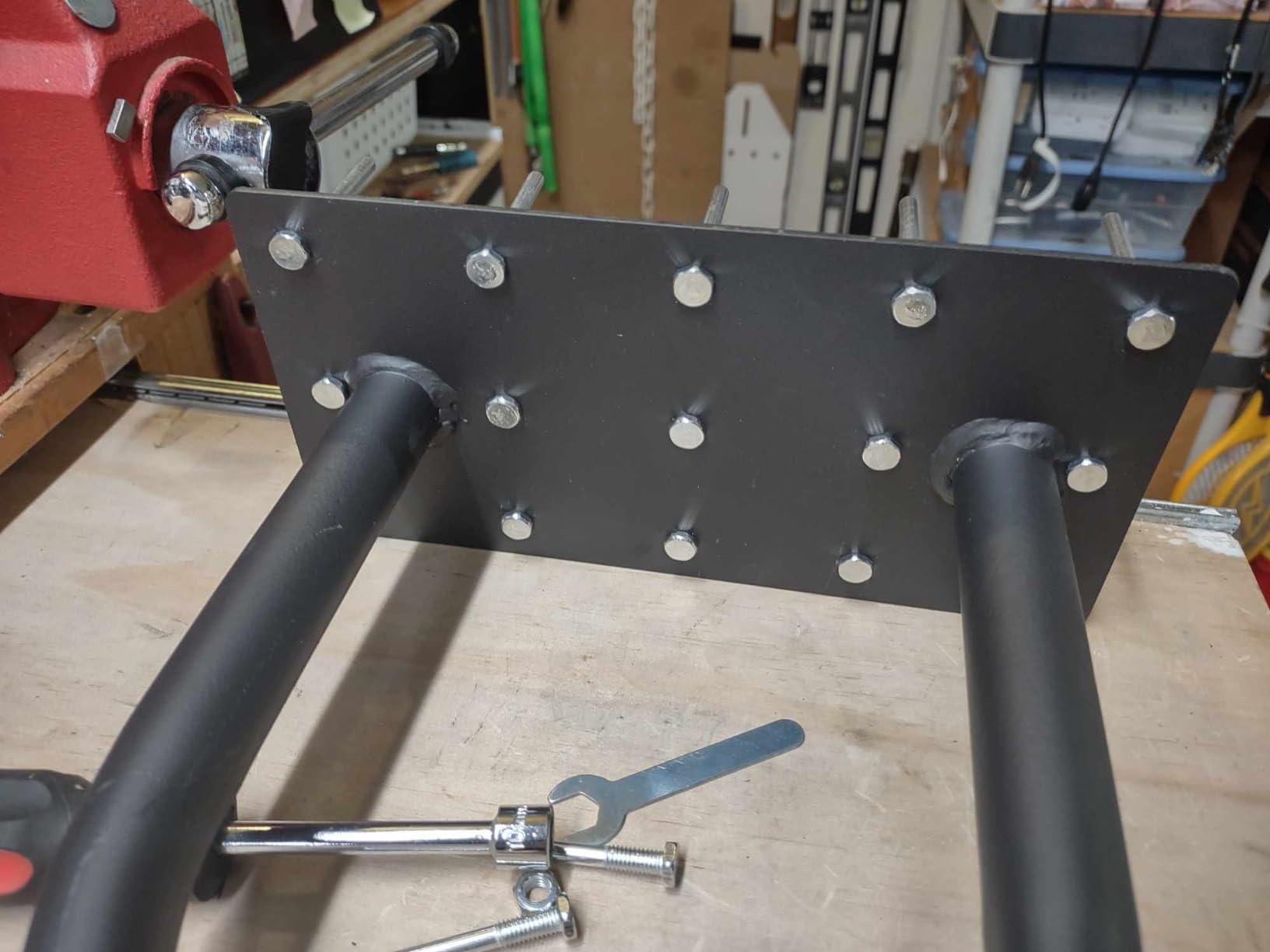
What light weight buys on a small yard
Every pound you are not carrying matters more on a small lawn than a large one, because you are lifting and lowering the tool hundreds of times rather than thousands. A 3.85-pound frame means you can work standing up for a full session, and the adjustable stand-up handle means the tool meets you at your height rather than forcing you to bend.
The included spare spikes are worth more than they sound. When a spike works loose you replace it in a minute instead of putting the tool aside, and it means a bent tine is not the end of the tool’s life.
Where the light build shows
Shallow holes mean surface loosening, so this is not the answer to a spongy lawn that drains badly. The handle developing play after a few uses also means you should retighten or re-seat connections between uses rather than treating it as a permanent setup. And on anything approaching a full yard, fifteen shallow holes per step plus a light frame still means a long, slow afternoon.
We earn a commission, at no additional cost to you. CERTAIN CONTENT THAT APPEARS ON THIS SITE COMES FROM AMAZON. THIS CONTENT IS PROVIDED 'AS IS' AND IS SUBJECT TO CHANGE OR REMOVAL AT ANY TIME.
9. Bakulala Aerator Shoes – Widest Shoe Size Fit
Lawn Aerator Shoes Pre‑Assembled with Secure Dual Instep Straps for Lawn
- Pre-assembled shoes
- 2 inch anti-corrosive spikes
- US 6-12 fit
- Cleaning shovel and spare nails
Pros
- Fully pre-assembled
- strap on and walk
- 900D crisscross dual straps stay tight
- Fits US 6-12 for men and women
- Cleaning shovel and spare nails included
Cons
- 2 inch spikes are shallow for hard soil
- Slow beyond a small yard
- Watering the lawn first improves penetration
We earn a commission, at no additional cost to you. CERTAIN CONTENT THAT APPEARS ON THIS SITE COMES FROM AMAZON. THIS CONTENT IS PROVIDED 'AS IS' AND IS SUBJECT TO CHANGE OR REMOVAL AT ANY TIME.
Two things set the Bakulala apart from the other shoes. First, the fit, which covers US 6 to 12 for both men and women, a wider range than the alternatives here. Second, the accessories: a stainless steel cleaning shovel, spare replacement nails, and a wrench are all in the box, and the cleaning shovel is the accessory you will use most often.
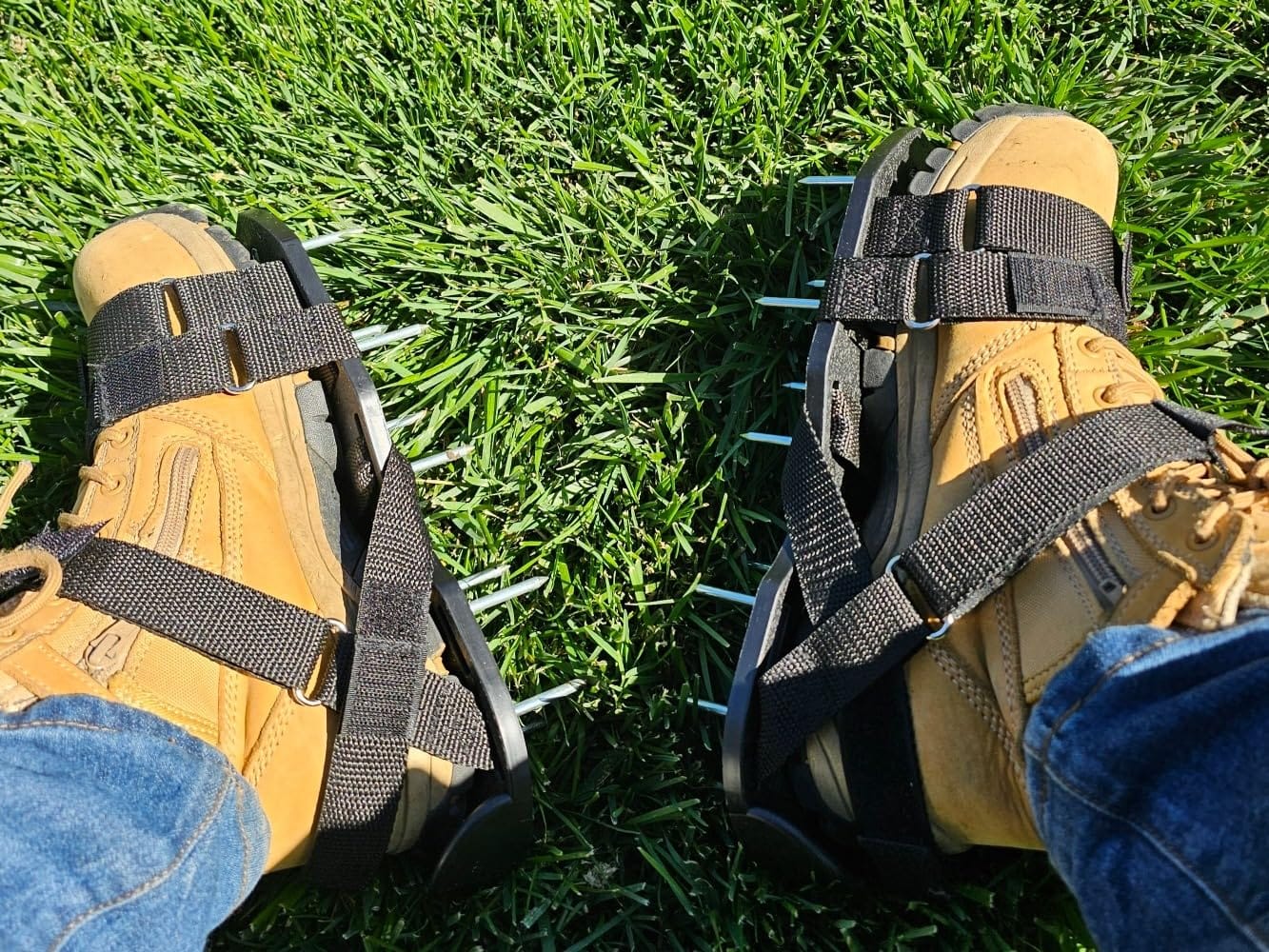
The 900D crisscross dual instep straps need no adjustment and stay tight while walking, which addresses the single most common complaint about spike shoes. The reinforced base and anti-corrosive spikes are built for repeated seasons rather than one afternoon. Across 433 reviews the 4.3 average includes 63 percent five-star and only 3 percent one-star, one of the lowest one-star rates in the set.
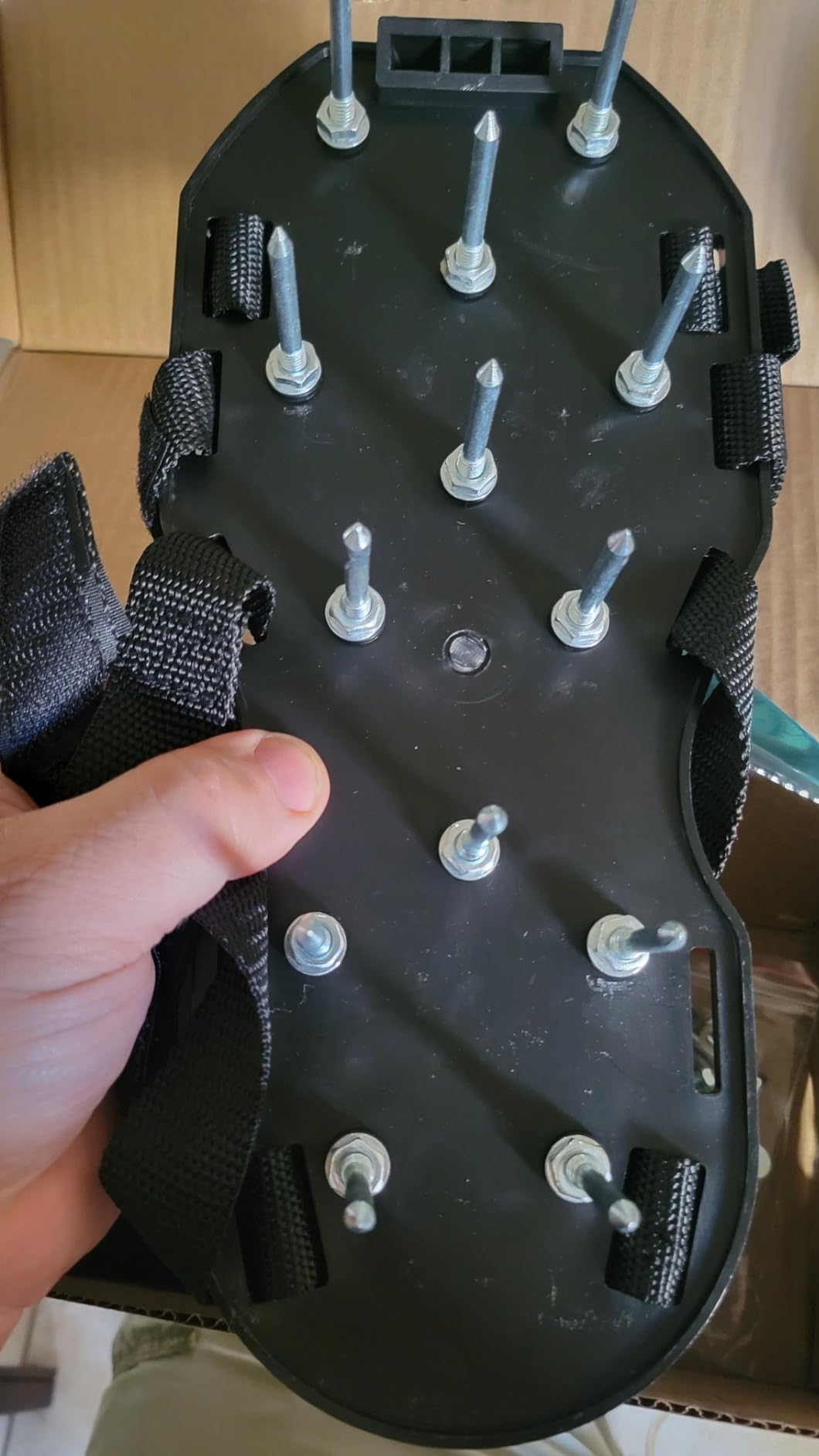
The limit is depth, and it is a structural one. Two-inch spikes reach the root zone in clay, sand, and loam when the ground is damp, but they do not open the deeper channels a handle tool will. Reviewers position it correctly as a cheap, cheerful way to treat high-traffic patches and small yards rather than a deep-aeration solution.
Coverage is the second limit. Walking aeration is slow by definition, so a small yard is the realistic scope. As with any shoe, watering the lawn a day ahead is the difference between spikes entering the soil and spikes bouncing off it.
Why the extras matter more than they seem
A cleaning shovel sounds like a minor accessory until you have pulled a fistful of wet clippings and soil out of a spike hole by hand. The supplied tool makes that a two-second job, which is what makes it realistic to clear the spikes mid-session instead of abandoning the job.
Spare nails are the same idea applied to longevity. Spikes wear or bend, and with a spare set you are not replacing the whole shoe. Both accessories push this toward a season-after-season tool rather than a novelty.
When to choose a handle tool instead
Choose a handle tool if the problem is depth. Two-inch spikes will not open a path through a root zone that has been compressed for several seasons, and walking over the same patch repeatedly with shallow spikes is a lot of effort for a shallow result. If your soil is hard and stays hard, the money is better spent on a 3-inch spike handle tool or on renting a core aerator.
We earn a commission, at no additional cost to you. CERTAIN CONTENT THAT APPEARS ON THIS SITE COMES FROM AMAZON. THIS CONTENT IS PROVIDED 'AS IS' AND IS SUBJECT TO CHANGE OR REMOVAL AT ANY TIME.
10. Leweio Aerator Shoes – Most Consistent Ratings
Pre-Assembled Lawn Aerator Shoes with Secure Adjustable Strap for Clay Soil
- 3mm thickened metal sole
- 2 inch heat-treated spikes
- Adjustable elastic straps
- Arrives fully assembled
Pros
- Lowest one-star rate in the set
- 3mm metal sole resists bending
- Heat-treated spikes with lock nuts
- Adjustable straps fit sneakers through boots
- Handles compacted clay
Cons
- One report of straps slipping loose
- 2 inch spikes are shallow
- Watering first improves penetration
We earn a commission, at no additional cost to you. CERTAIN CONTENT THAT APPEARS ON THIS SITE COMES FROM AMAZON. THIS CONTENT IS PROVIDED 'AS IS' AND IS SUBJECT TO CHANGE OR REMOVAL AT ANY TIME.
The Leweio shoes are the most consistent-rated product here, with a 4.4 average, 65 percent five-star, and only 2 percent one-star, the lowest negative share of any tool in the group. The reason is the 3mm thickened metal sole, which resists the bending and breaking that turns plastic spike shoes into debris after a season, and heat-treated spikes held with lock nuts so they stay tight through use.
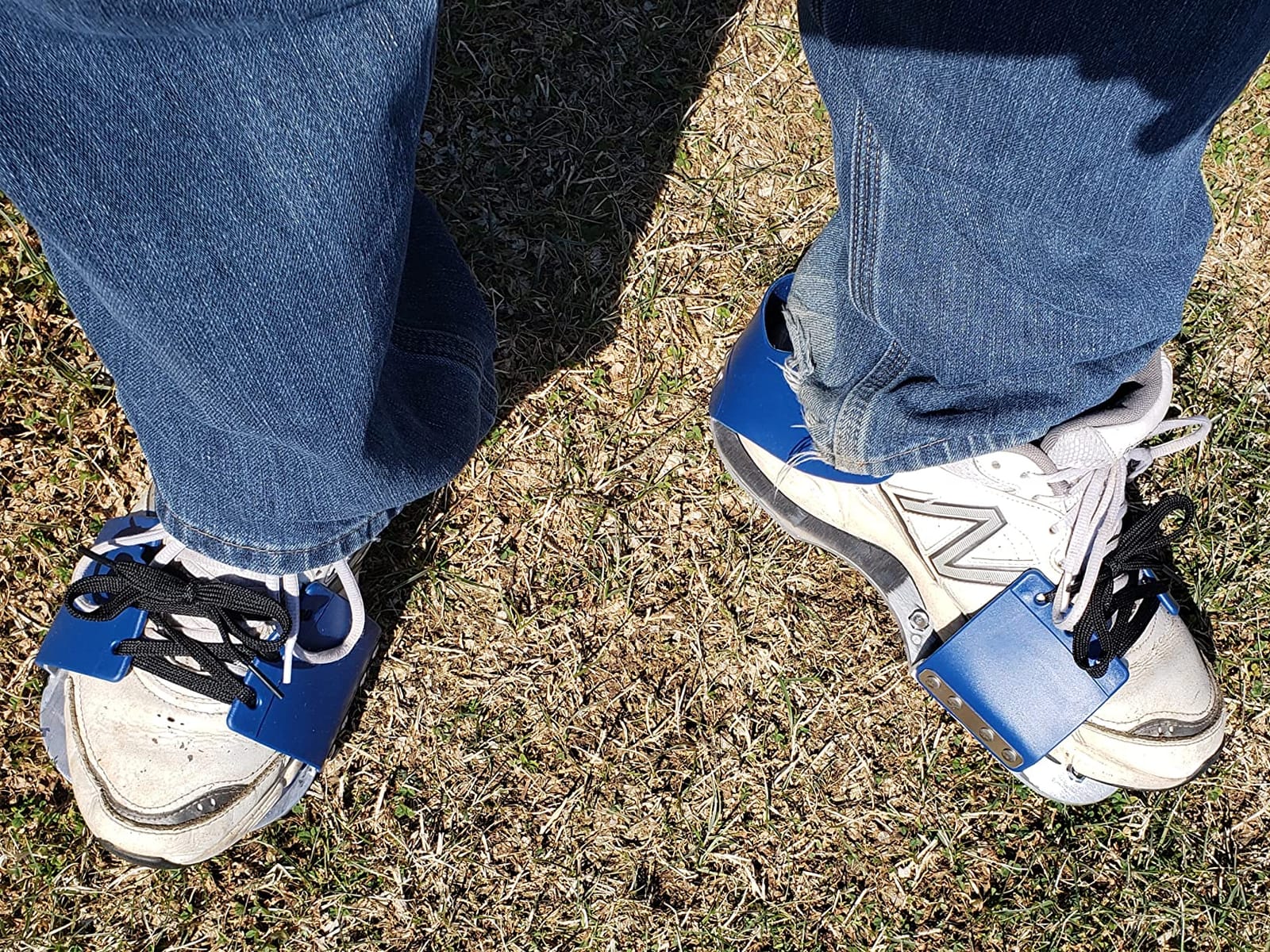
It arrives fully assembled with adjustable elastic hook-and-loop straps that fit most adult sizes from sneakers to work boots. Owners report greener grass after use, and specifically call out its ability to work compacted clay as well as sand and loam, which is unusual for a walking tool. It is based on 182 reviews, so the consistency matters more than the volume.
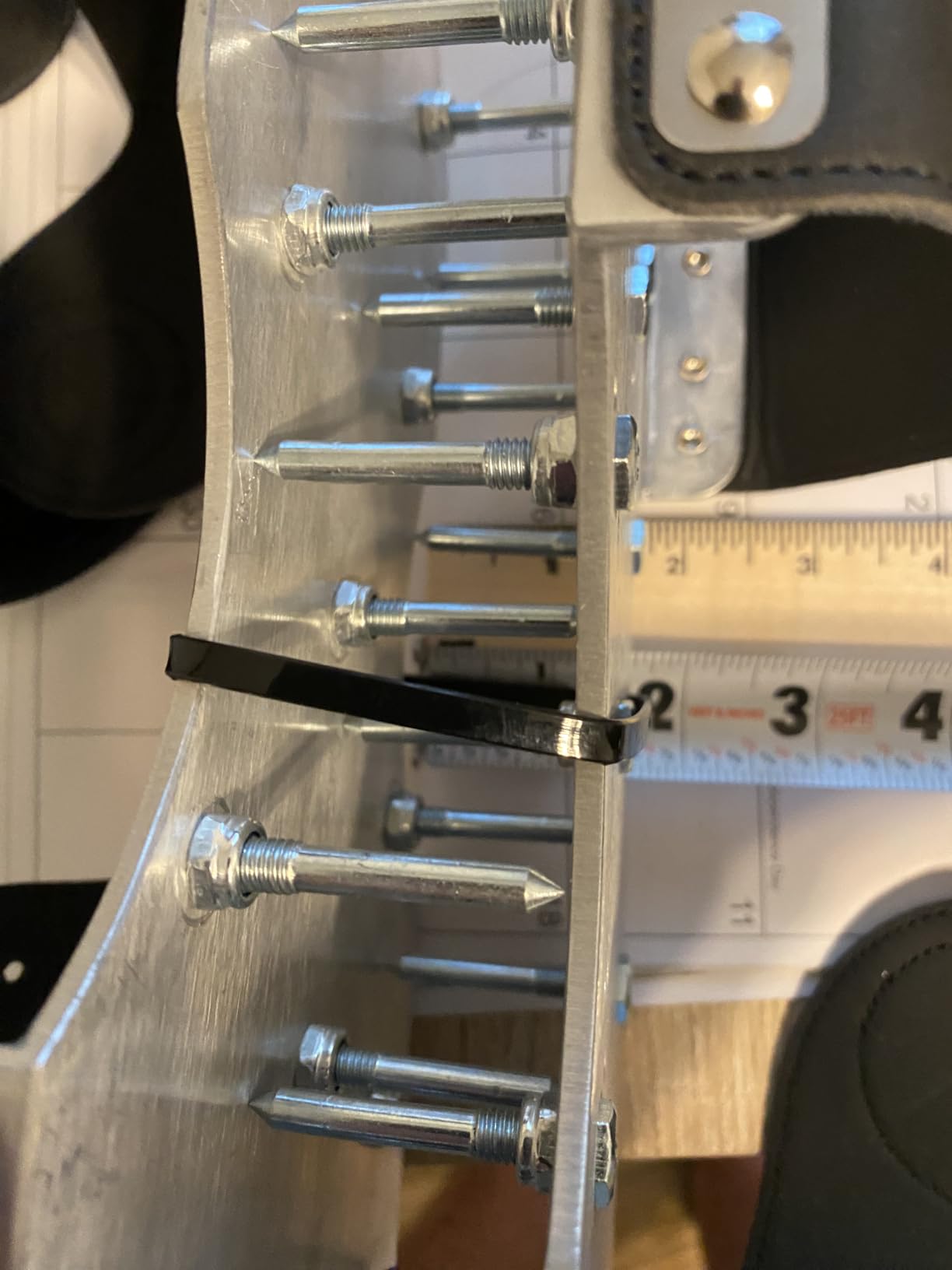
There is one recurring defect worth naming. A small number of owners report the hook-and-loop straps continually falling loose during longer walks, and they fitted their own to fix it. That is a consumable part rather than a structural failure, but check the grip before you set off across a yard rather than halfway through.
Like every shoe in this roundup, the 2-inch spikes are shallow for deeply compacted ground, and watering the lawn beforehand measurably improves how deep they get. This is a tool for surface relief and traffic patches, not for rebuilding a root zone.
What a metal sole changes
Most spike shoes use a thin plastic or stamped base, and the failure mode is predictable: the base flexes, the spikes loosen in their holes, and the whole tool starts to wobble. A 3mm metal sole does not flex, so your weight transfers straight down the spikes and the holes are consistent from one footfall to the next.
Lock nuts are the other half of that system. They stop the spikes backing out mid-session, which on a metal base with a threaded spike is the difference between a tool that lasts a season and one that lasts a week.
When to pick something else
Skip it if you plan to cover more than a small yard, because walking speed is the hard limit on any shoe. Skip it if compaction runs deeper than two inches, and use a handle tool with three-inch or longer spikes. And if you already own spike shoes, these do the same job as the pair you have, so the only reason to switch is the metal sole and the tighter fit.
We earn a commission, at no additional cost to you. CERTAIN CONTENT THAT APPEARS ON THIS SITE COMES FROM AMAZON. THIS CONTENT IS PROVIDED 'AS IS' AND IS SUBJECT TO CHANGE OR REMOVAL AT ANY TIME.
How to Choose a Spike Aerator for a Small Yard
Choose by square footage first, mechanism second, and features last. Most disappointing spike aerator purchases are really size mistakes: a tool built for half an acre sitting in a 900-square-foot yard, or shoes bought for a lawn that needed a handle tool.
Under 1,000 square feet, anything on this list will finish the job. Pick the 15-spike handle tool if you want speed, or shoes if the affected area is a narrow strip you walk past every day. Between 1,000 and 3,000 square feet, spike count starts to matter and a 15-spike head is worth the premium over a 12-spike one. Above roughly 3,000 square feet, hand tools become a multi-hour project and you should seriously compare renting a core aerator instead.
How long should lawn aerator spikes be?
Aim for 3 to 4 inches of spike length on a handle tool. That is the range that reaches into the top of the root zone in typical residential topsoil, which is where compaction problems actually live. Anything under 2.5 inches tends to fluff the surface without opening useful channels, which is a reasonable description of what a 2-inch shoe spike does on hard ground.
Solid tines or hollow tines?
Every tool in this roundup uses solid spikes, and that is the defining limitation of spike aeration. Solid tines push soil aside and compress it at the entry point, so repeated spike work over many years can make the hole walls denser. Hollow tines pull out a core of soil and leave an open channel, which is why core aeration is the right answer for real compaction and spike work is a supplement.
Rule of thumb: if a screwdriver will not sink more than two inches into your soil when damp, spikes will not fix it. Rent or hire for that situation.
Handle tools or spike shoes?
Handle tools win on depth, control, and coverage rate. You can load the foot plate with your body weight, you can work a precise spot, and a 15-spike head covers far more per step. Spike shoes win on storage, cost, assembly, and back comfort. There is no handle to swing and nothing to lift, which is why forum users describe them as a good back-friendly substitute for a step-on weeder on small patches.
Manual push aerators do work, with one caveat. They work on mildly compacted soil, at the right moisture level, with the right tool size. They do not work as a shortcut for a lawn that needs core aeration, and on clay soil they can leave you with a surface that looks disturbed and a problem that is exactly where it was.
Material, coating, and build quality
Heat-treated or solid steel beats stamped plate for tines, and iron with powder coating or baked enamel resists rust better than bare steel. Lock nuts and screw connections hold up better than welds, which is the difference between a foot plate that stays rigid after a year and one that develops play. Prefer tools that ship with spare spikes and wrenches, and prefer pre-assembled units if you do not own tools.
Handle ergonomics matter as much as any spec. A 36- to 38-inch handle with a cushioned or padded grip keeps you standing up, and on a small yard the tool you finish with beats the tool that is theoretically better. Width matters too: a wider foot plate accepts any shoe and gives you more control over spike depth.
Soil type changes the answer
Sandy and loamy soil is the ideal case, because spikes displace loose material cleanly and the holes stay open. Clay soil is the caution case, where spikes push the problem sideways instead of solving it and can even compact the hole walls. Rocky or root-filled ground is the avoid case, because that is what bends tines, and no product listing will save you from a buried stone or a tree root.
Before you buy on any rocky yard, drive a flat screwdriver or a long nail into a few spots. If you hit resistance at two inches, a spike tool will bend. Lawn forum users repeatedly point narrow, tree-heavy lawns toward shorter spike counts for the same reason.
Ballast on rolling and hand tools
Depth comes from weight. A rolling spike aerator with a ballast tray can be filled with sand or water to push the spikes deeper, and the same principle applies to any handle tool, where your body weight on the foot plate is the ballast. On firm soil, loading the plate deliberately gets you the 3- to 4-inch penetration that loose, sandy ground gives you for free.
How to Aerate a Small Yard Step by Step
Aerating the wrong way wastes the tool and can stress the lawn. On a small yard the whole process is an afternoon if you prepare properly, and most of that preparation happens before the tool comes out.
First, test the soil moisture. Squeeze a handful: it should hold together and break apart with a gentle touch. If it crumbles to dust, water the lawn and wait a day. If it forms a slick ball, wait two or three days. Dry soil causes tines to skid, and saturated soil causes them to punch out a plug rather than open a channel.
Next, run the screwdriver test in a few spots, especially the worst bare area. If a flat screwdriver sinks freely to three or four inches, the ground is loose enough for spikes. If it stops at one or two inches, spike tools will not solve what you are seeing.
Flag every sprinkler head and mark shallow irrigation lines before you start. A spike tool is very good at puncturing a buried line, and the repair costs more than the aeration did. Keep a little extra distance around heads and step around marked sections.
Mow low, though not scalping, a day or two beforehand. Short grass lets the spikes reach the soil instead of working through a mat of blades, and it lets you see the ground you are walking on.
Work the lawn in two perpendicular passes, the first in one direction and the second at a right angle to it. This is the same pattern you would use for overseeding, and the overlap is what gives you even coverage instead of stripes. Fill the weight tray or load the foot plate deliberately if the soil is firm.
Leave the holes open rather than chasing every core. Most of the plugs break down and work back into the root zone within a few weeks. Clear cores only where they are smeared across a walkway or would be a trip hazard.
Water the lawn after aerating if you can, which helps the soil settle and close the holes slightly. Then feed it. Overseed bare patches for seed-to-soil contact, and apply a light fertilizer or compost top dressing once the holes start to close.
The most common aeration mistakes
Aerating too dry is the number one error, and it is the reason people conclude spike aerators do not work. Aerating too wet is the mirror of it: tines pull turf plugs and the lawn looks worse for weeks. Aerating at the wrong time of year, usually outside the growing season, adds stress to grass that is already struggling. Skipping the pre-emergent check matters too, because disturbed soil is exactly what weed seed needs to germinate, and some pre-emergent herbicides should not be applied to freshly aerated ground. Rushing coverage with a too-small tool is the last one, and it is the reason buyers regret a purchase more often than a bad one.
When to Aerate and How Often to Do It
Timing follows grass type, and the rule is simple: aerate when the grass is actively growing and has moisture to spare. For cool-season lawns such as tall fescue and Kentucky bluegrass, early spring as growth starts or early fall is the window. For warm-season lawns such as Bermudagrass and Zoysia, late spring through summer is the active period, and late summer into early fall is the recovery window.
Frequency depends on soil. Sandy soil with mild compaction may only need spike work once a year as upkeep, or even less. Loamy soil usually benefits from one pass a year in season. Clay soil needs core aeration more than spikes, and spikes on clay are a supplement at most.
Forum consensus treats spike aeration as a seasonal layer on top of annual core work, not a swap for it. Homeowners also report that spike aerating immediately before overseeding produces noticeably better seed-to-soil contact, so pairing the two in the same visit is the highest-value use of a hand tool.
On rent versus buy, the math favours buying for a small yard. A hand spike tool is a one-time purchase that handles a specific patch indefinitely, while a powered rental handles a whole lawn once. If your compaction is limited to under 1,000 square feet, buying a spike tool is the sensible answer. If you have several thousand square feet of genuinely compacted lawn, rent a core aerator and use a spike tool for the corners and traffic lanes the machine misses.
Frequently Asked Questions
Which is better, an aerator or a spike aerator?
A core aerator with hollow tines is better for real compaction because it removes a plug of soil and leaves an open channel. A spike aerator pushes soil aside, which suits small areas with mild compaction and costs far less in time and money. For a small yard, spikes are a sensible seasonal supplement; for a spongy lawn that drains badly, rent or hire a core aerator.
How to aerate a very small yard?
Water the lawn a day ahead so the soil is damp but not soggy, flag sprinkler heads, mow low, then work in two perpendicular passes. Use a 15-spike handle tool for anything above a few hundred square feet, and spike shoes for narrow traffic strips. Leave the holes open, water afterwards, and overseed bare patches while the seed-to-soil contact is fresh.
How long should lawn aerator spikes be?
Aim for 3 to 4 inches on a handle tool. That reaches into the top of the root zone in typical residential topsoil. Spikes under 2.5 inches tend to loosen the surface without opening useful channels, and 2-inch shoe spikes work well only on damp, mildly compacted ground.
What is the best month to aerate your yard?
Aerate when the grass is actively growing. For cool-season lawns such as tall fescue and Kentucky bluegrass, early spring or early fall is the window. For warm-season lawns such as Bermudagrass and Zoysia, late spring through summer, with late summer into early fall for recovery. Avoid aerating during drought or dormancy.
Is a spike aerator as good as a core aerator?
No. A core aerator pulls out plugs of soil and leaves open channels, which is what relieves compaction. A spike aerator only pushes soil aside and can compact the hole walls over repeated use. On a small yard with mild compaction spikes are a practical, low-cost tool; where compaction is severe, core aeration is the correct answer.
Do manual push lawn aerators work?
Yes, on the right conditions. They work on mildly compacted sandy or loamy soil, at the right moisture level, with a tool matched to the yard size. They fail on dry soil, where tines skid, and on heavy clay, where they push the problem sideways. They are also slow, so keep them to small patches and treat them as a supplement to core aeration.
Will aeration help compacted soil?
It will, if the compaction is mild and the tool is a core aerator with hollow tines. Spike tools help at the surface by opening channels for air, water, and seed, but they do not remove soil and can compact the sides of the hole. Test first by pushing a flat screwdriver into damp soil. If it stops at one or two inches, rent a core aerator instead.
Should I rent or buy a lawn aerator?
Buy a hand spike tool if your problem area is under roughly 1,000 square feet. It costs a one-time fee, stores anywhere, and handles the same patch year after year. Rent a powered core aerator if several thousand square feet are genuinely compacted, since a hand tool becomes a multi-hour project at that size. Many owners do both, using a spike tool for corners and traffic lanes between rentals.
The Best Spike Aerators for Small Yards, Final Word
For most small yards, the Walensee 15-spike manual aerator is the right starting point. Three rows of spikes, a 34.6-inch cushioned handle, and a rating backed by more than 2,800 reviews make it the safest single purchase here. If your problem area is a narrow traffic strip rather than open turf, the DenForste pre-assembled shoes are the stronger choice, because their 675 MPa spikes survive stones and roots better than anything else you wear.
Two situations call for something other than a spike tool. If your soil is heavy clay or a screwdriver will not sink past two inches, rent a core aerator, because spikes will not fix structural compaction. If your yard is close to 5,000 square feet, hire a professional, because a hand tool becomes a full day of work and a machine finishes in an hour.
Everything else, start with the yard size. Match the mechanism, water the lawn first, and work in two perpendicular passes.