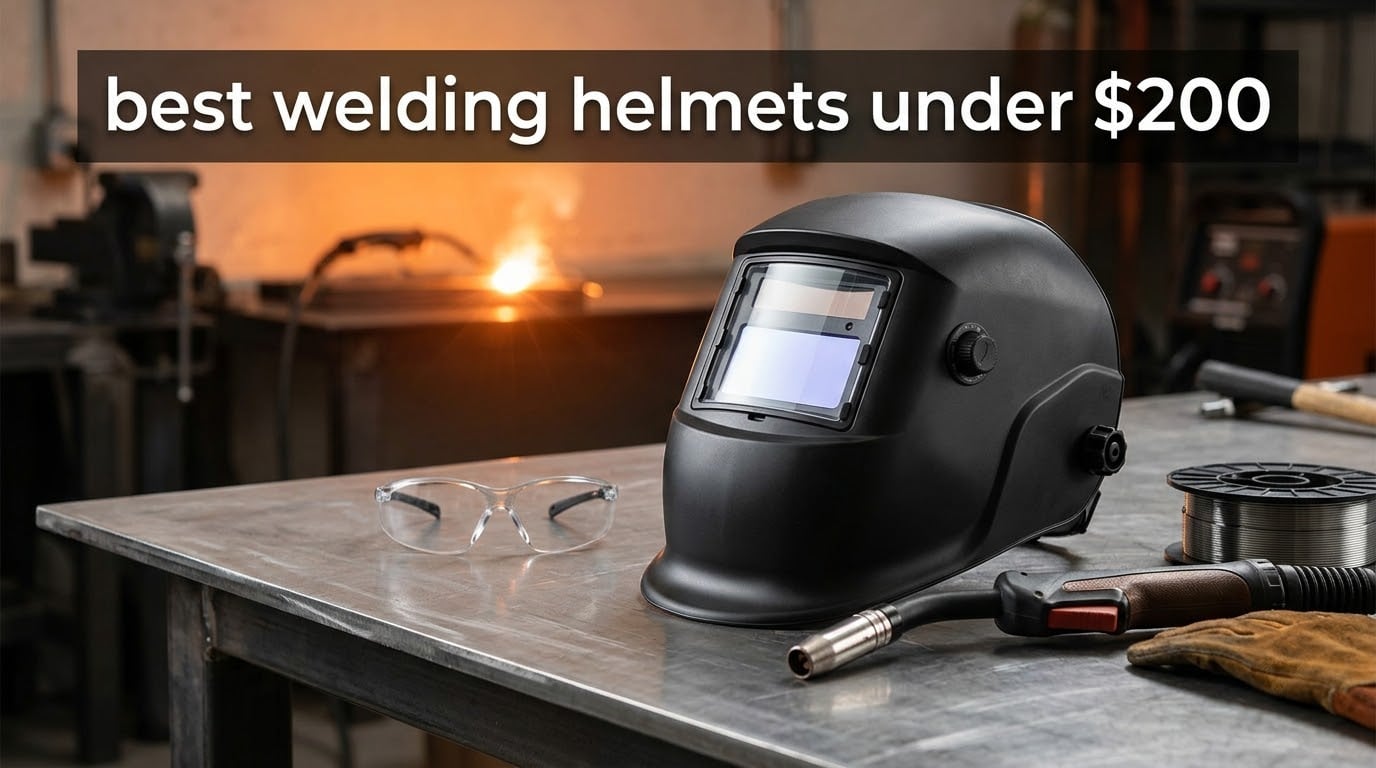
The best welding helmet under 200 dollars is the YESWELDER LYG-L600A, a true color auto-darkening model rated 1/1/1/1 that sits at the top of Amazon’s welding helmet chart with more reviews than anything else in this roundup. Every helmet below clears the sub-200-dollar ceiling as of writing, though that ceiling moves constantly and the buttons here are the only reliable way to check today’s number.
I have welded in and around budget auto-darkening helmets for years, mostly MIG and stick on farm repair and shop fabrication work, and I put this list together the way I would build my own shortlist: optical clarity first, arc sensors second, then weight and headgear, then warranty. The two questions that decide the outcome are your process and where you weld. A hood that is excellent on a flat bench can be a liability overhead.
Two brand-name hoods made the list on the strength of warranty and parts support rather than feature count, and that matters more than most spec sheets admit. What you give up at this budget is headgear durability and electromagnetic X-Mode sensing, not eye protection. A welding helmet is PPE, so match the shade to your process and amperage, and confirm ANSI Z87.1 plus CSA Z94.3 on whatever you buy.
ContentsTable of Contents
- 1Top 3 Auto-Darkening Picks for the Sub-200 Bracket in 2026→
- 2YESWELDER LYG-L600A→
- 3ARCCAPTAIN HSH-S800→
- 4YESWELDER LYG-M800H→
- 5All 8 Picks at a Glance in 2026→
- 61. YESWELDER LYG-L600A: Best Overall True Color Auto-Darkening Helmet→
- 7YESWELDER Auto Darkening Welding Helmet 1/1/1/1 True Color, LYG-L600A→
- 8Pros→
- 9Cons→
- 10Who this helmet suits→
- 11Who should skip it→
- 122. ARCCAPTAIN HSH-S800: Budget Pick Helmet With Four Arc Sensors→
- 13ARCCAPTAIN Welding Helmet Auto Darkening, 1/25000s Response, Shade 4/9-13→
- 14Pros→
- 15Cons→
- 16Who this helmet suits→
- 17Who should skip it→
- 183. YESWELDER LYG-M800H: Best Large Viewing Area for Puddle Tracking→
- 19YESWELDER Auto Darkening Welding Helmet, Large View, LYG-M800H→
- 20Pros→
- 21Cons→
- 22Who this helmet suits→
- 23Who should skip it→
- 244. TRQWH KTS-JD03: Best Helmet With a Built-In LED Work Light→
- 25TRQWH Welding Hood Auto Darkening Welding Helmet with Light True Color→
- 26Pros→
- 27Cons→
- 28Who this helmet suits→
- 29Who should skip it→
- 305. Sunstac SS-A800D: Best for Plasma Cutting and Multi-Process Work→
- 31Sunstac Auto-Darkening Welding Helmet 3.94 x 3.27″ View with Light→
- 32Pros→
- 33Cons→
- 34Who this helmet suits→
- 35Who should skip it→
- 366. TOOLIOM TL-31800H: Best for MIG and TIG Work With a Wide View→
- 37TOOLIOM Auto-Darkening True Color Welding Helmet with 3.94 x 3.66 View→
- 38Pros→
- 39Cons→
- 40Who this helmet suits→
- 41Who should skip it→
- 427. Hobart 770890: Best Brand-Name Helmet With a Widescreen View→
- 43Hobart 770890 Auto-Darkening Welding Helmet, Large, Black→
- 44Pros→
- 45Cons→
- 46Who this helmet suits→
- 47Who should skip it→
- 488. Miller Classic Series ClearLight: Best Warranty and Low-Amp Capability→
- 49Miller Classic Series Welding Helmet, ClearLight™, Shade 8-13, Black→
- 50Pros→
- 51Cons→
- 52Who this helmet suits→
- 53Who should skip it→
- 54How to Choose an Auto-Darkening Welding Helmet in the Sub-200 Bracket→
- 55Optical clarity: what 1/1/1/1 actually means→
- 56Arc sensors: two versus four→
- 57Switching speed→
- 58Shade range and grind mode→
- 59Viewing area and weight→
- 60Power source and battery access→
- 61Safety certification: ANSI Z87.1, EN 379 and CSA Z94.3→
- 62Fit and headgear→
- 63What Can Go Wrong With Budget Auto-Darkening Helmets→
- 64Frequently Asked Questions→
- 65Which welding helmet has the largest viewing area?→
- 66What is the best auto-darkening welding helmet?→
- 67Which welding helmet is better, Arccaptain or Yeswelder?→
- 68Which welding lens is darker, 10 or 14?→
- 69What shade do most welders use?→
- 70How many arc sensors do I need in a welding helmet?→
- 71Why won’t my auto-darkening welding helmet darken?→
- 72Is a 200-dollar welding helmet good enough?→
- 73Do I need true color 1/1/1/1 optics?→
- 74Where can I find a cheap welding helmet?→
- 75Final Verdict: Which Welding Helmet Under 200 Should You Buy?→
Top 3 Auto-Darkening Picks for the Sub-200 Bracket in 2026

YESWELDER LYG-L600A
- 1/1/1/1 true color lens
- 2 arc sensors switching in 1/30000 second
- 16 ounce shell
- Solar plus CR2450 battery

ARCCAPTAIN HSH-S800
- 4 arc sensors
- 1/25000 second switching
- 3.86 x 1.69 inch 1/1/1/1 view
- 180-day warranty
YESWELDER LYG-M800H
- 3.93 x 3.66 inch viewing area
- 4 arc sensors
- 1/30000 second response
- 1/1/1/1 true color optics
As an Amazon Associate we earn from qualifying purchases. CERTAIN CONTENT THAT APPEARS ON THIS SITE COMES FROM AMAZON. THIS CONTENT IS PROVIDED 'AS IS' AND IS SUBJECT TO CHANGE OR REMOVAL AT ANY TIME.
All 8 Picks at a Glance in 2026
All eight options below sit at or under the 200-dollar ceiling at the time of publishing, and every one carries an auto-darkening lens rather than a fixed passive shade. Prices shift week to week on this category, so treat the ratings and specs as the stable part of the comparison and check the current price yourself.
| # | Product | Key details | Where to buy |
|---|---|---|---|
| 1 | YESWELDER LYG-L600A |
|
Check Latest Price |
| 2 | ARCCAPTAIN HSH-S800 |
|
Check Latest Price |
| 3 | YESWELDER LYG-M800H |
|
Check Latest Price |
| 4 |  TRQWH KTS-JD03 TRQWH KTS-JD03 |
|
Check Latest Price |
| 5 |  Sunstac SS-A800D Sunstac SS-A800D |
|
Check Latest Price |
| 6 |  TOOLIOM TL-31800H TOOLIOM TL-31800H |
|
Check Latest Price |
| 7 |  Hobart 770890 Hobart 770890 |
|
Check Latest Price |
| 8 |  Miller Classic Series ClearLight Miller Classic Series ClearLight |
|
Check Latest Price |
We earn from qualifying purchases. CERTAIN CONTENT THAT APPEARS ON THIS SITE COMES FROM AMAZON. THIS CONTENT IS PROVIDED 'AS IS' AND IS SUBJECT TO CHANGE OR REMOVAL AT ANY TIME.
1. YESWELDER LYG-L600A: Best Overall True Color Auto-Darkening Helmet
YESWELDER Auto Darkening Welding Helmet 1/1/1/1 True Color, LYG-L600A
- 16 oz
- 2 arc sensors
- 1/30000 sec
- 3.64 x 1.67 inch view
Pros
- True color 1/1/1/1 view reads the puddle clearly
- Fast 1/30000 second darkening with delay and sensitivity control
- Comfortable adjustable headgear for long sessions
- Spare inner and outer lenses plus an extra battery in the box
- Meets ANSI Z87.1 and CSA Z94.3
Cons
- Smallest viewing area in this roundup
- Shell and headgear feel light-duty next to professional hoods
- Button battery can arrive dead from packaging
We earn a commission, at no additional cost to you. CERTAIN CONTENT THAT APPEARS ON THIS SITE COMES FROM AMAZON. THIS CONTENT IS PROVIDED 'AS IS' AND IS SUBJECT TO CHANGE OR REMOVAL AT ANY TIME.
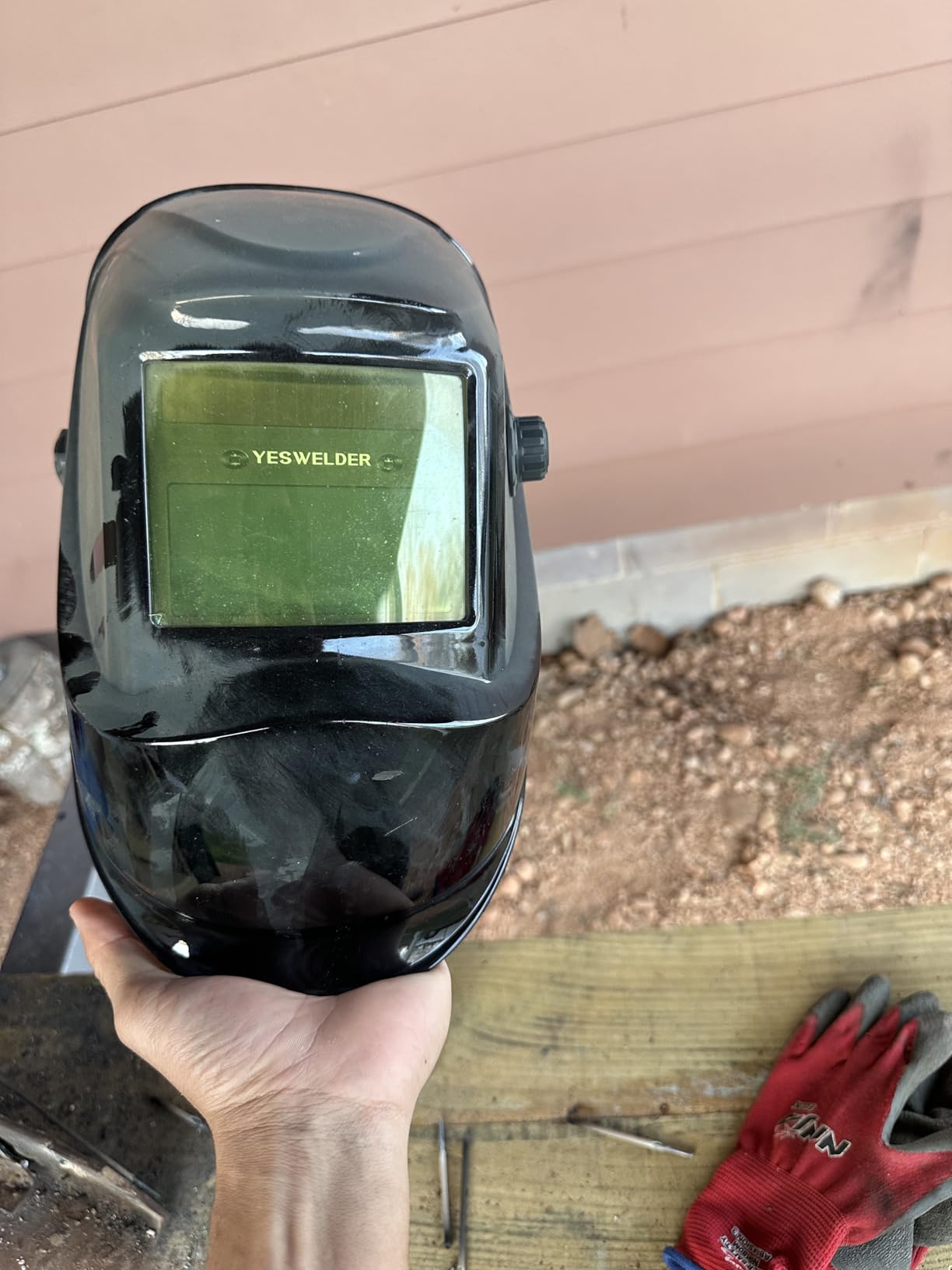
The LYG-L600A wins this roundup because the numbers behind it are the hardest in the group to argue with. It carries a 1/1/1/1 optical rating with a true color lens, and it has been reviewed well over thirteen thousand times, which makes it the most field-tested auto-darkening welding helmet inside this price band by a wide margin.
Two arc sensors is the one spec that costs it a recommendation for overhead work, and I will not pretend otherwise. On flat-bench MIG and stick work it behaves like a far more expensive hood, and it is the helmet I hand to beginners who want to see what they are doing.
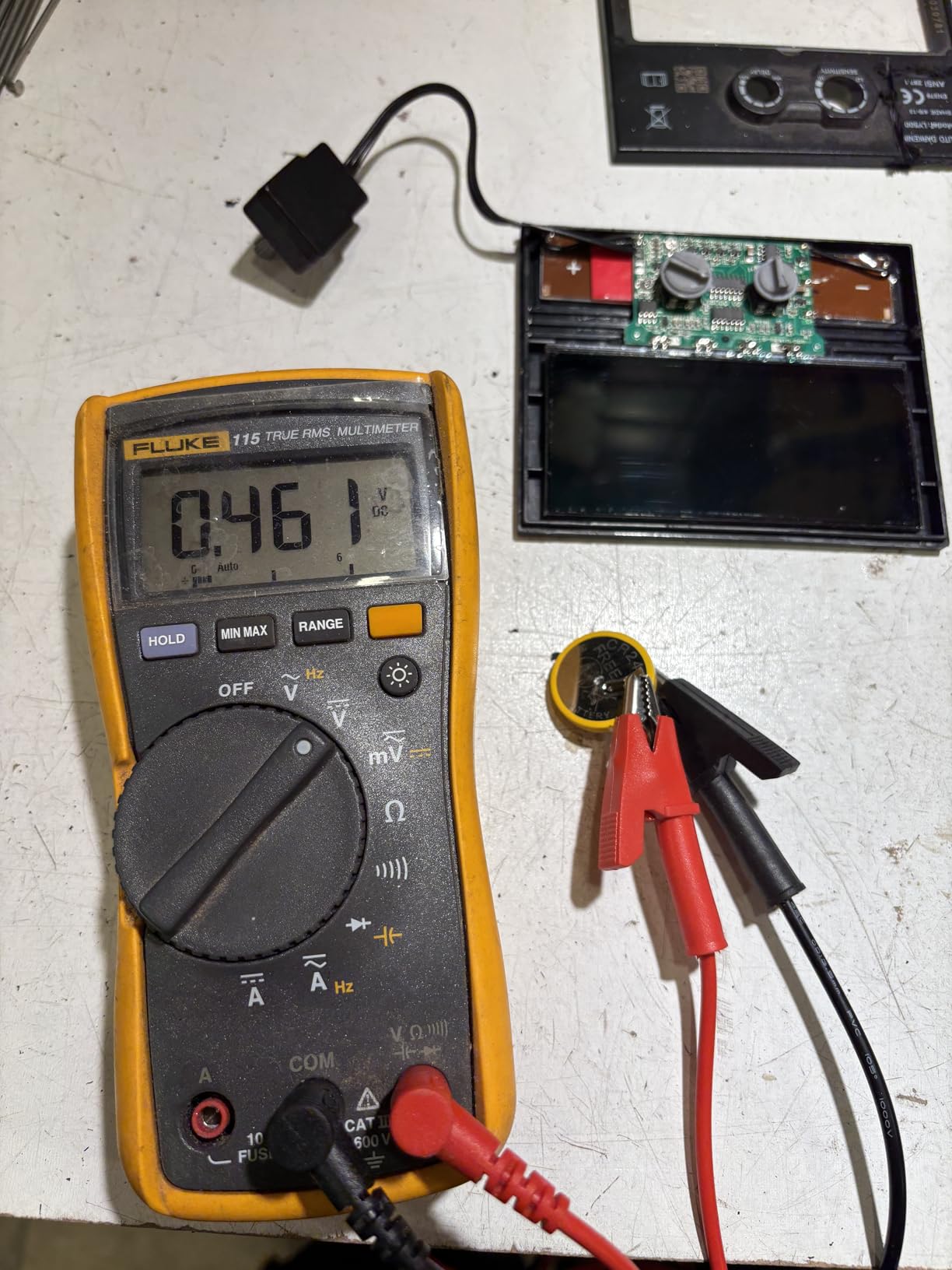
Switching is quoted at 1/30000 of a second, with both sensitivity and delay adjustable from the shell. The light state is shade 3 and the dark range runs 7-13 across TIG, MIG, arc and grind, which covers nearly every process a hobby welder touches, and the outer lens blocks high-energy blue light.
At 16 ounces it is the lightest helmet in this roundup, and that is not a marketing detail. It is why the shell stays comfortable through a long evening of tack-ups, cleanup grinding and a second round of layout before you call it a night.
Who this helmet suits
It suits first-time welders, weekend hobbyists and anyone learning to read a puddle, because a true color view at this optical rating shortens the learning curve and cuts rework. Owners consistently single out clarity, fast darkening and comfort as the reasons they keep it.
It also works well for farm and field repair, shop maintenance and light fabrication, and the box includes a spare inner lens, two outer lenses and a storage bag, so you are not waiting on parts after the first chip.
Who should skip it
Skip it for overhead welding, pipe work and tight-space fabrication. With two sensors the lens can clear mid-bead on an off-angle arc, and welders on r/Welding repeatedly point to two-sensor hoods as the wrong pick once you start working out of position.
Skip it as well if you need a wide viewing window for tight joints, and if you want a documented multi-year warranty with long-term parts support, in which case the Miller and the Hobart later in this list are the better buys.
We earn a commission, at no additional cost to you. CERTAIN CONTENT THAT APPEARS ON THIS SITE COMES FROM AMAZON. THIS CONTENT IS PROVIDED 'AS IS' AND IS SUBJECT TO CHANGE OR REMOVAL AT ANY TIME.
2. ARCCAPTAIN HSH-S800: Budget Pick Helmet With Four Arc Sensors
ARCCAPTAIN Welding Helmet Auto Darkening, 1/25000s Response, Shade 4/9-13
- 4 arc sensors
- 1/25000 sec
- 3.86 x 1.69 inch view
- 180-day warranty
Pros
- Four arc sensors catch off-angle and overhead arcs
- 1/1/1/1 true color lens with a blue-tinted look
- Grind mode reachable without lifting the helmet
- Padded adjustable headband at roughly one pound
- Three replacement lenses and a lithium battery included
Cons
- A few owners report slow response on the first arc of a weld
- Shell feels inexpensive despite working well
- Occasional reports of filter degradation after about a year
We earn a commission, at no additional cost to you. CERTAIN CONTENT THAT APPEARS ON THIS SITE COMES FROM AMAZON. THIS CONTENT IS PROVIDED 'AS IS' AND IS SUBJECT TO CHANGE OR REMOVAL AT ANY TIME.
Four arc sensors is the headline here, and it is the single most useful upgrade you can buy in this bracket. The HSH-S800 carries 1/25000 second switching, shade 4 in the light state and 9-13 across the dark range, plus automatic DIN 16 UV and IR protection through a 12-in-1 filter.
The lens is the other reason people buy this one. Reviewers describe it as a clear, slightly blue-tinted true color view rather than the green wash you get from the cheapest passive and budget auto-darkening lenses, and that difference is what makes slag, undercut and porosity readable at all.
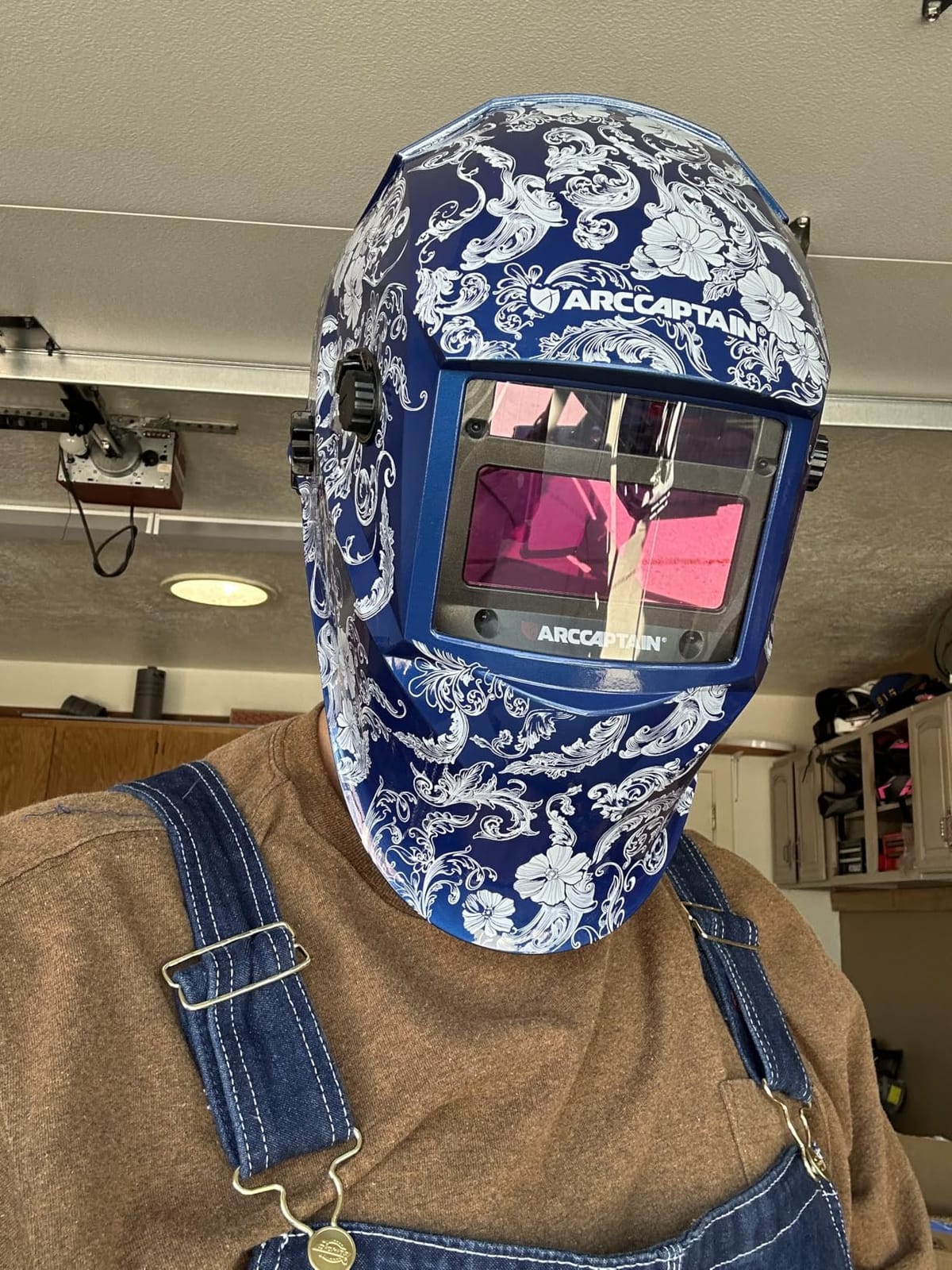
Power comes from a solar panel backed by a replaceable CR2450 lithium battery, and the shell is nylon with a padded adjustable headband that weighs roughly one pound. Three replacement lenses come in the box, and the warranty runs 180 days, which is longer than most of the import brands in this price range manage.
It is certified to ANSI Z87.1, EN 379 CE and CSA Z94.3, which covers a US hobbyist and most European standard requirements at the same time. Grind mode sits on an external control, so you can switch without tipping the helmet up and losing your place.
Who this helmet suits
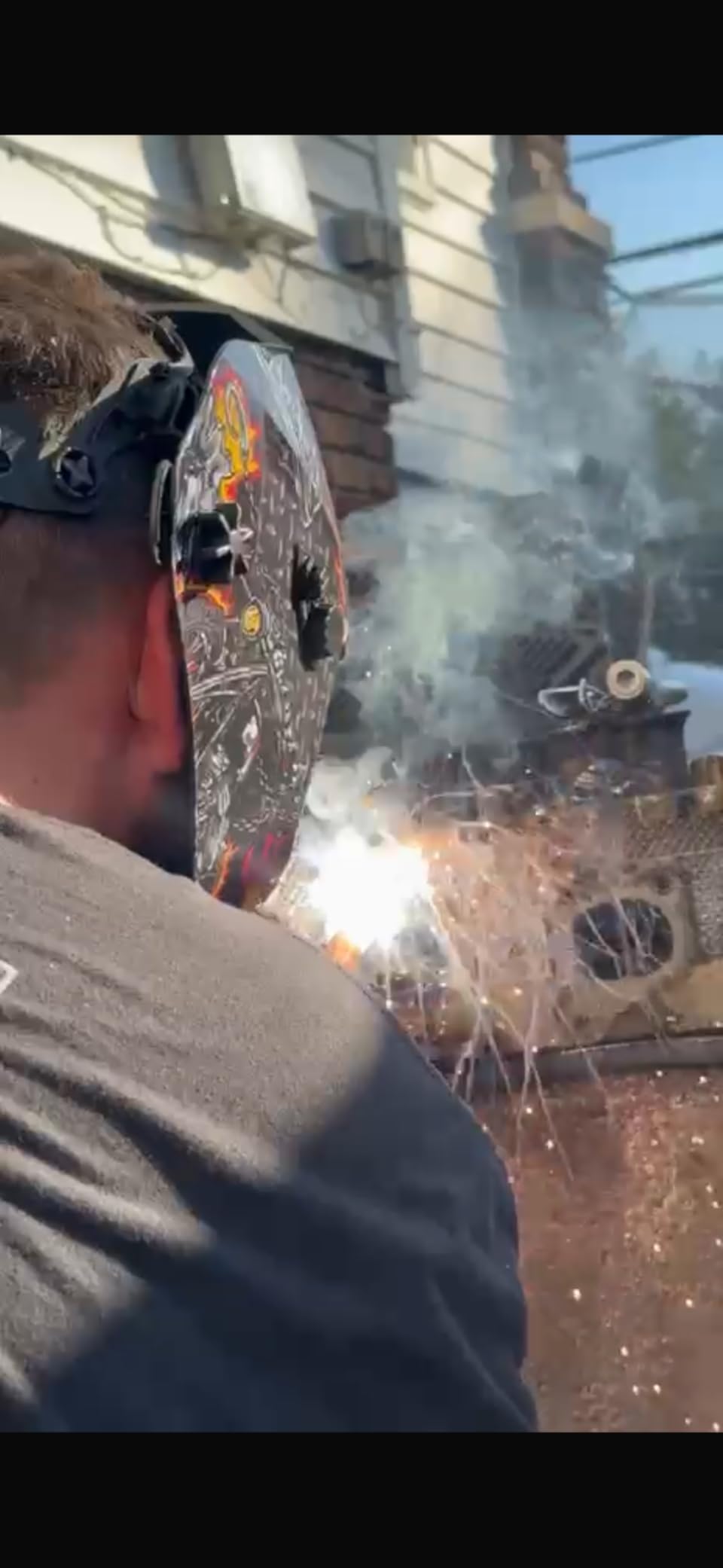
It suits anyone who wants four sensors and a warranty without moving up a tier, and it is a strong choice for beginners because the extra sensors make the lens behave predictably while you are still learning torch angle and travel speed. The light one-pound weight also suits welders who already wear glasses.
Students and shop trainees benefit from the external grind and sensitivity controls, which are reachable in gloves and easy to explain in a classroom setting. For anyone who grinds as often as they weld, the one-touch grind mode removes a step from every changeover.
Who should skip it
Skip it if you need the widest possible viewing window for very tight work, because 3.86 by 1.69 inches is a modest window. Skip it if you work at 5 amps or below on DC TIG, since the light state of shade 4 is darker than what very low amperage wants.
Also weigh the 180-day warranty against your own timeline. If you weld every day, a shorter warranty is a calculated risk, and the long-warranty hoods further down this list transfer that risk to the manufacturer.
We earn a commission, at no additional cost to you. CERTAIN CONTENT THAT APPEARS ON THIS SITE COMES FROM AMAZON. THIS CONTENT IS PROVIDED 'AS IS' AND IS SUBJECT TO CHANGE OR REMOVAL AT ANY TIME.
3. YESWELDER LYG-M800H: Best Large Viewing Area for Puddle Tracking
YESWELDER Auto Darkening Welding Helmet, Large View, LYG-M800H
- 3.93 x 3.66 inch view
- 4 arc sensors
- 1/30000 sec
- 1/1/1/1 optics
Pros
- Very large viewing area makes positioning and puddle tracking easier
- 1/1/1/1 true color optics with clean electronics
- All controls sit on the outside and work with gloves on
- Cheater lens compatible for close-up work
- Reinforced hinge and strengthened connection points
Cons
- Thin plastic shell with fragile side tension knobs next to professional hoods
- Inner lens and battery are awkward to reach for service
- Headgear can creep forward if tension is not set right
We earn a commission, at no additional cost to you. CERTAIN CONTENT THAT APPEARS ON THIS SITE COMES FROM AMAZON. THIS CONTENT IS PROVIDED 'AS IS' AND IS SUBJECT TO CHANGE OR REMOVAL AT ANY TIME.
The M800H is the helmet I recommend when the job involves a lot of positioning work. Its 3.93 by 3.66 inch viewing area is one of the two widest in this roundup, and combined with 1/1/1/1 true color optics it makes tracking a puddle across a joint noticeably easier than a narrow window allows.
It also has four arc sensors and 1/30000 second response, so the darkening behaviour is in the same class as the best in this list. Shade runs 3 in the light state, 5-9 for welding, and 9-13 for cutting and grinding, with cheater lens compatibility for close-up inspection work.
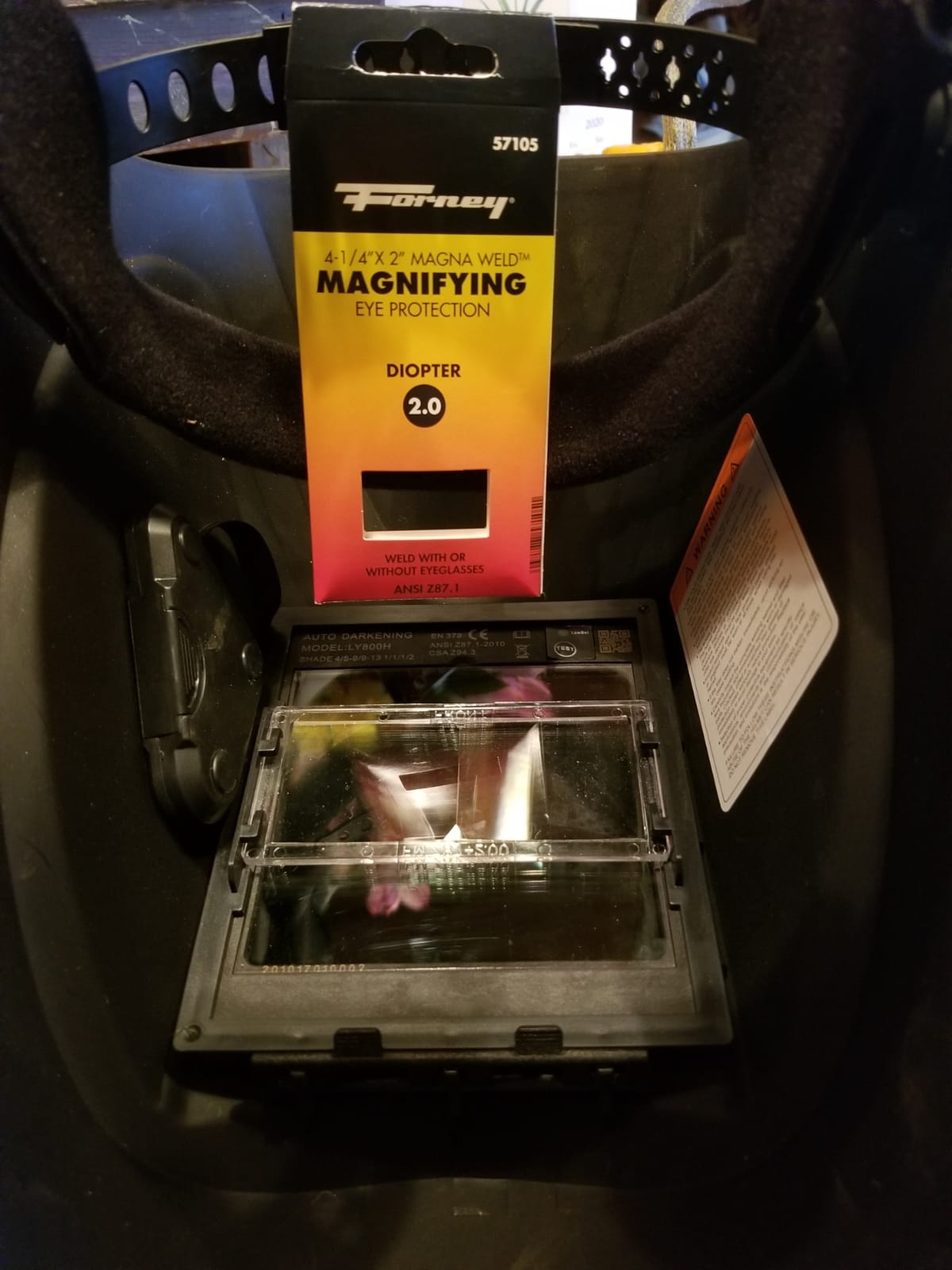
Two details matter more than they sound. Every control sits on the outside of the shell, so shade, sensitivity and delay are adjustable while wearing welding gloves. And the closing type is a ratchet rather than a strap, which spreads the load across the back of the head instead of relying on a single band.
Its rating of 4.4 is the lowest in this group, and the reason shows up in the reviews: owners love the view and the electronics, and they repeatedly flag the thin plastic shell, the fragile side tension knobs and a headband that can creep forward. The inner lens and the battery are also awkward to reach.
Who this helmet suits
It suits fabricators, pipe fitters and anyone who spends time out of position, since four sensors and a large window reduce the number of times the lens clears on an angled arc. It is also a good teaching helmet, because a beginner can see the joint and the puddle at the same time.
Cheater lens compatibility makes it a fit for anyone doing close visual inspection after a weld, and the outside-mounted controls suit cold shop work where bare fingers stop working quickly.
Who should skip it
Skip it if you drop helmets for a living or work overhead, because the shell and adjustment hardware are the weak point and replacements are not easy to source. Skip it if you weigh helmet durability above view size, in which case the Hobart carries a stiffer polyamide nylon shell and a two-year warranty.
Budget for the fact that the inner lens and battery are awkward to service. If you are comfortable with a slightly higher rating instead of a slightly bigger window, the L600A and the ARCCAPTAIN are sturdier-feeling buys.
We earn a commission, at no additional cost to you. CERTAIN CONTENT THAT APPEARS ON THIS SITE COMES FROM AMAZON. THIS CONTENT IS PROVIDED 'AS IS' AND IS SUBJECT TO CHANGE OR REMOVAL AT ANY TIME.
4. TRQWH KTS-JD03: Best Helmet With a Built-In LED Work Light
TRQWH Welding Hood Auto Darkening Welding Helmet with Light True Color
- 1/1/1/2 optics
- USB rechargeable LED
- 1/20000 sec
- DIN 4 light state
Pros
- LED work light makes dim shop and night repair work possible
- External delay and sensitivity knobs plus one-touch grind mode
- Double liquid crystal layer with optical coating
- Resists 99 percent of harmful light
- Solar plus replaceable lithium battery power
Cons
- Head strap loosens during longer sessions
- Plastic shell is brittle and can crack if bumped
- LED battery life is modest
We earn a commission, at no additional cost to you. CERTAIN CONTENT THAT APPEARS ON THIS SITE COMES FROM AMAZON. THIS CONTENT IS PROVIDED 'AS IS' AND IS SUBJECT TO CHANGE OR REMOVAL AT ANY TIME.
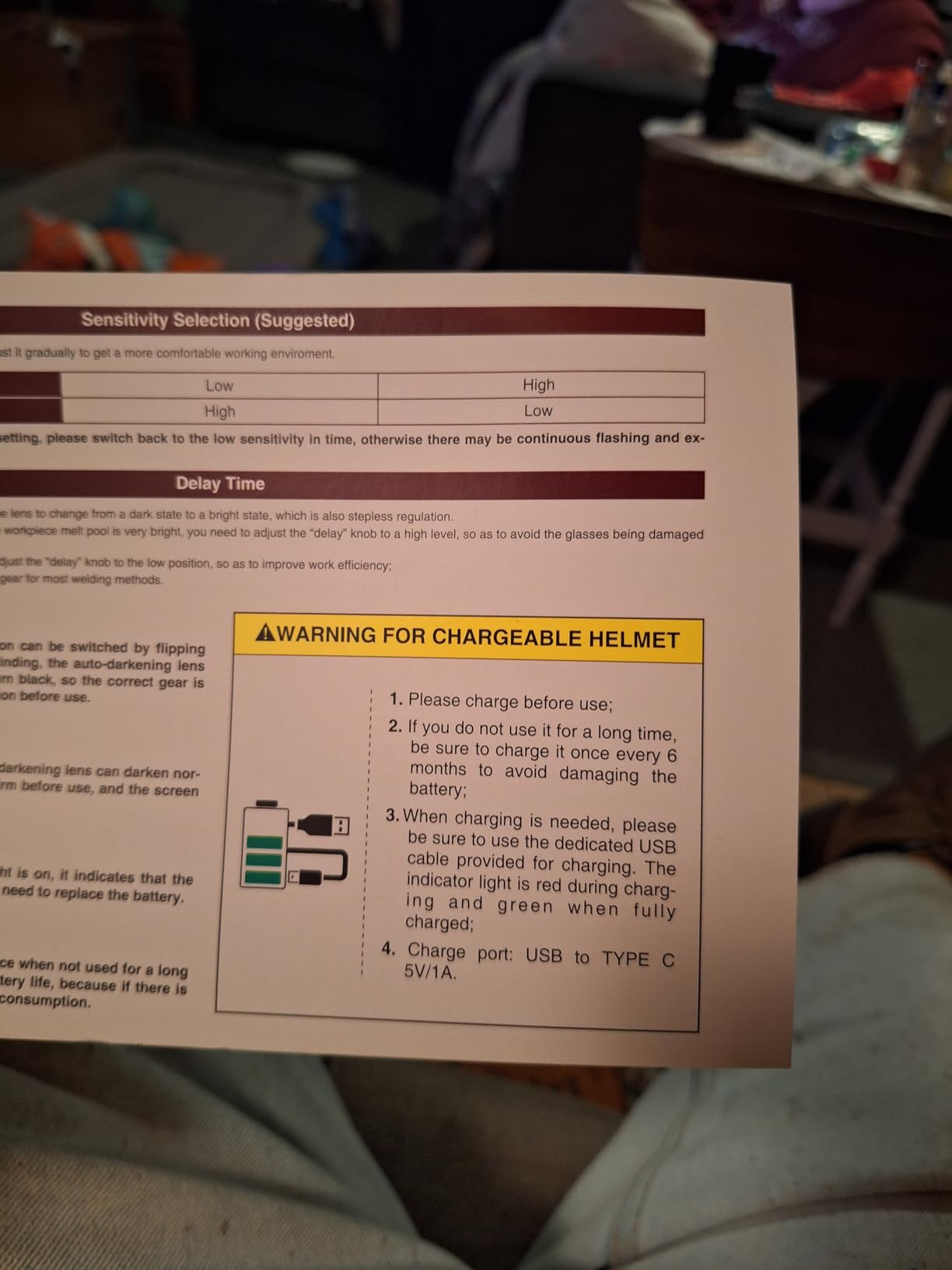
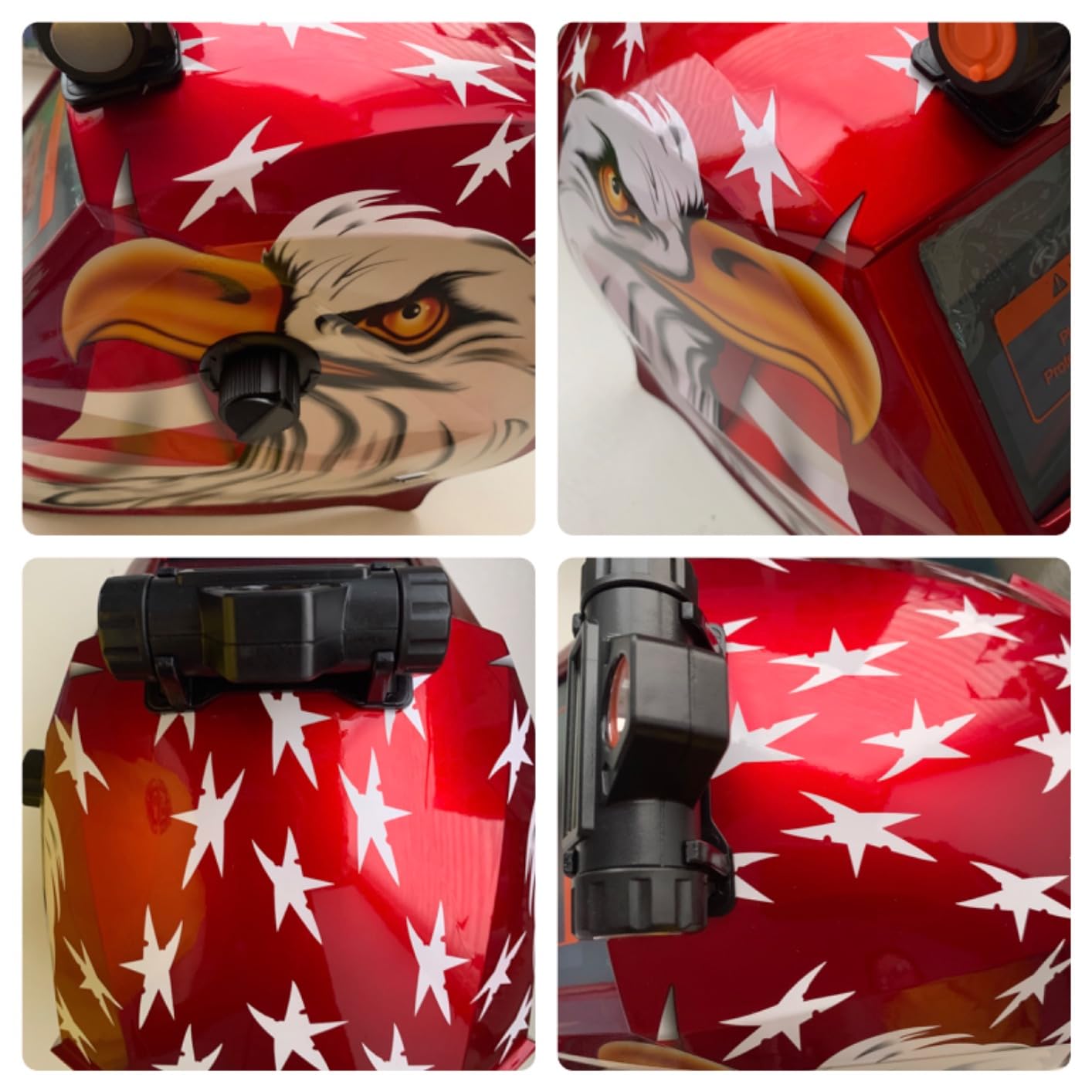
The reason to look at the KTS-JD03 is the light. The top-mounted LED work light is USB rechargeable and bright enough to make out layout, wire ends and joint prep in a dark garage or during night repair work, which none of the other picks in this roundup offers.
Optically it sits slightly behind the leaders, rated 1/1/1/2 rather than 1/1/1/1, where that final number is haze. In plain terms the view is a touch hazier at an angle, and for most MIG and stick work you will not notice the difference in practice.
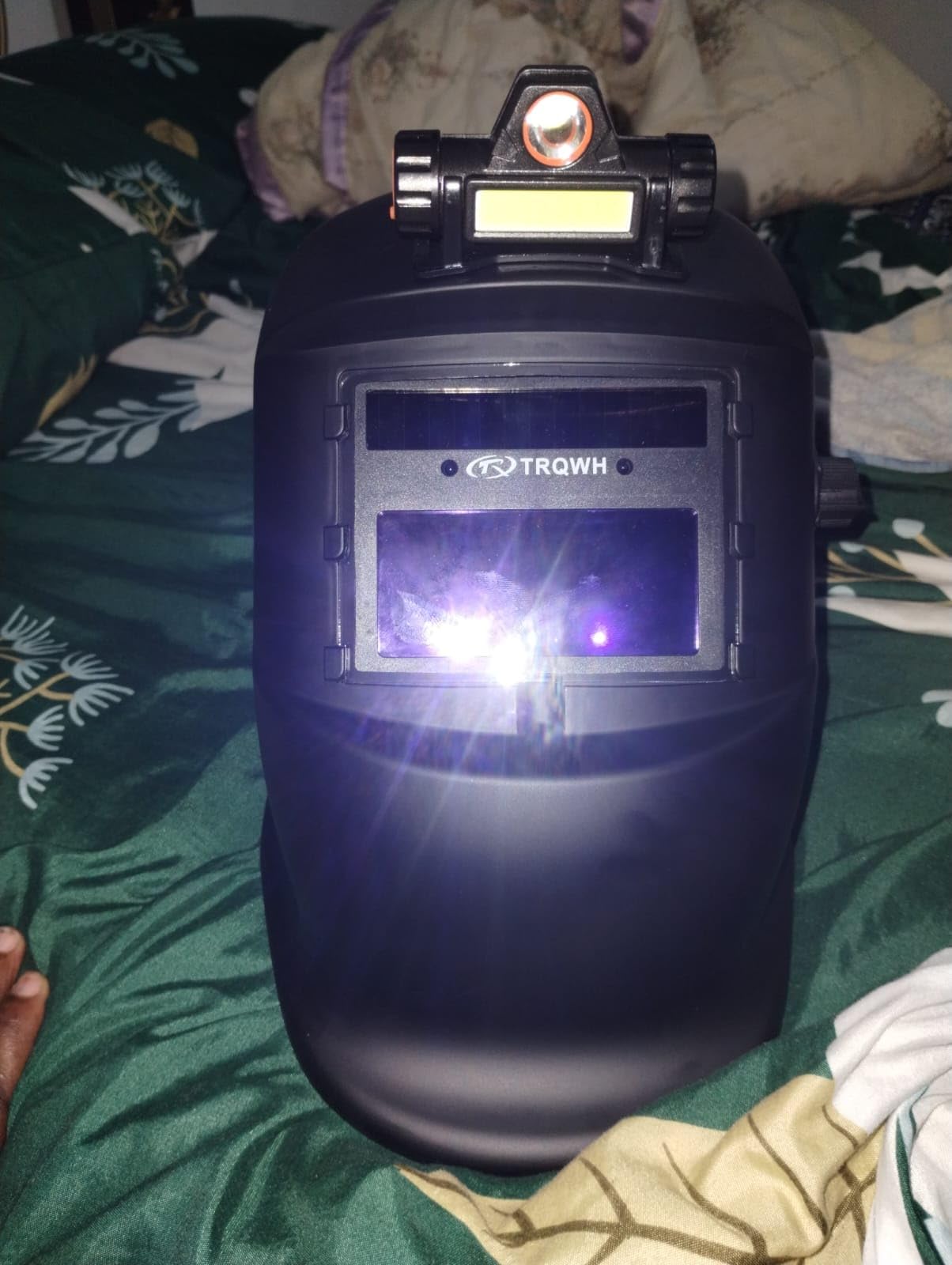
Darkening is quoted at 1/20000 second using double liquid crystal layers with an optical coating, which is slower than the 1/30000 and 1/25000 second figures on the YESWELDER and ARCCAPTAIN models but still fast enough for normal work. The light state is DIN 4, and delay runs from 0.2 to 1.0 second.
It meets ANSI Z87.1, EN 379 CE and CSA Z94.3, and it is rated to resist 99 percent of harmful light. Power is solar with a replaceable lithium battery backup, and the manufacturer is Wuhan Tuoerqi Photoelectric Technology, which is the kind of detail worth knowing when you need a spare cartridge in three years.
Who this helmet suits
It suits anyone welding in low light, whether that is a dim workshop, a garage with one fluorescent tube, or field repairs after dark. Owners report it stays comfortable over multi-hour use and has room for a respirator, which matters in enclosed spaces.
The polycarbonate shell also survives drops without damage, according to reviewers, and the external grind button plus the forehead sponge pad make it a reasonable first helmet for a student or a new apprentice.
Who should skip it
Skip it if you need the sharpest possible view of a hot puddle, because 1/1/1/2 haze is a step back from 1/1/1/1 and the difference is real on stainless and on thin wire. Skip it if your sessions run long, since the head strap tends to loosen and the shell is brittle when bumped.
And note the 30-day warranty, the shortest of any pick here. That is a real limitation on a helmet you may wear daily, and it is the main reason this sits fourth rather than higher.
We earn a commission, at no additional cost to you. CERTAIN CONTENT THAT APPEARS ON THIS SITE COMES FROM AMAZON. THIS CONTENT IS PROVIDED 'AS IS' AND IS SUBJECT TO CHANGE OR REMOVAL AT ANY TIME.
5. Sunstac SS-A800D: Best for Plasma Cutting and Multi-Process Work
Sunstac Auto-Darkening Welding Helmet 3.94 x 3.27″ View with Light
- 3.94 x 3.27 inch view
- 4 arc sensors
- Shade 4/5-9/9-13
- 1/30000 sec
Pros
- Works with stick TIG MIG CUT MMA and plasma plus grinding
- Large view with no darkening lag or over-darkening
- Rechargeable work light with two brightness modes and a swivel angle
- Well padded and fully adjustable headband
- 1/1/1/1 true color with 1/30000 second darkening
Cons
- Head strap and side tension buttons feel delicate
- Solar panel only supplements the battery and the cell is buried in the shell
- Deep headpiece can press against glasses on smaller heads
We earn a commission, at no additional cost to you. CERTAIN CONTENT THAT APPEARS ON THIS SITE COMES FROM AMAZON. THIS CONTENT IS PROVIDED 'AS IS' AND IS SUBJECT TO CHANGE OR REMOVAL AT ANY TIME.
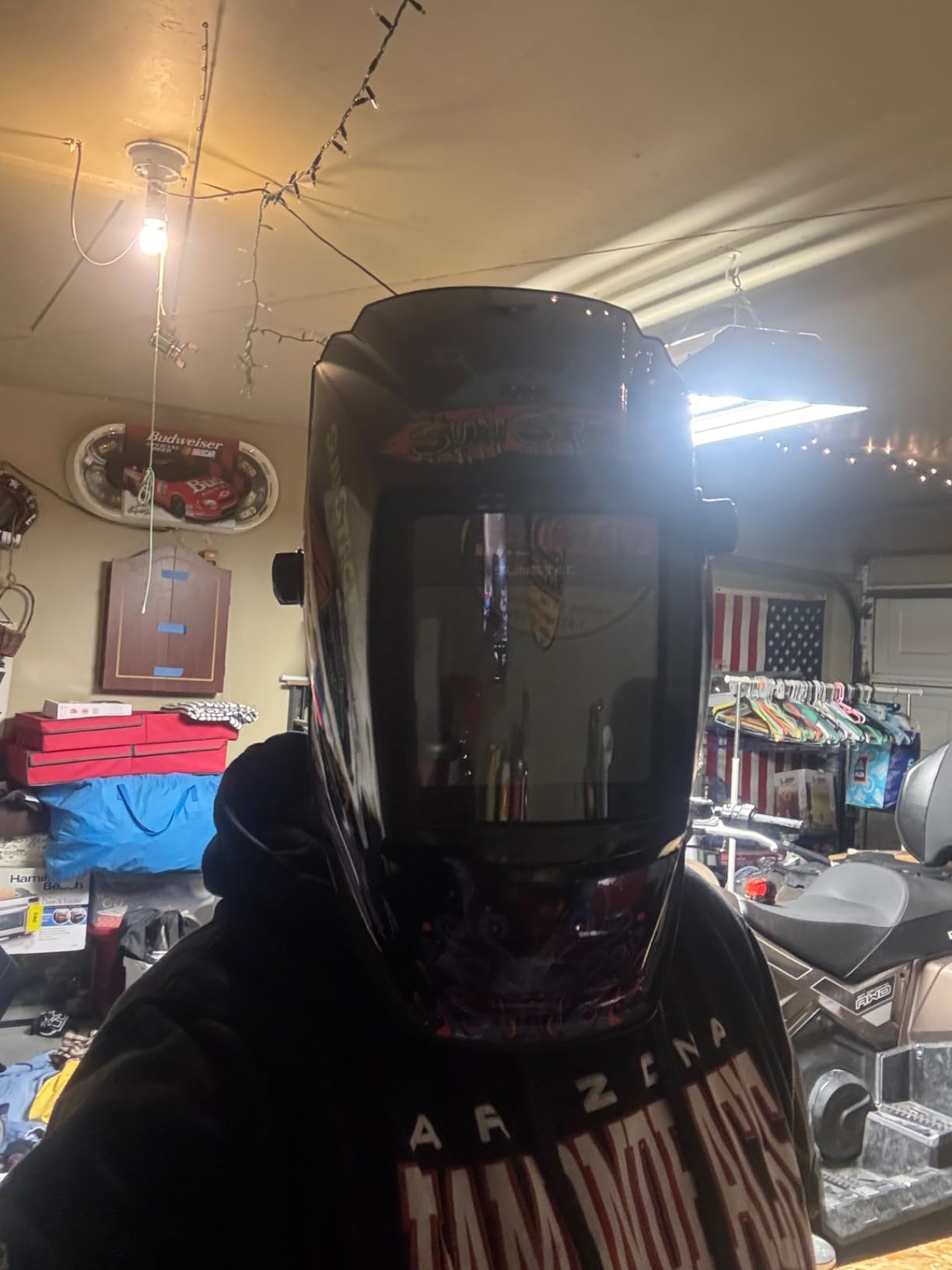
The SS-A800D is the pick to shortlist if plasma cutting is part of your work. It lists stick, TIG, MIG, cut, MMA and plasma alongside a grinding mode, and the shade range of 4 in the light state with 5-9 and 9-13 across the dark state covers the jump from welding to cutting better than most shells in this bracket.
Four arc sensors and 1/30000 second auto-darkening put it in the same speed class as the leaders, and reviewers single out the 3.94 by 3.27 inch screen for showing no darkening lag and no over-darkening. The optics are rated 1/1/1/1 true color with UV, IR and arc protection.
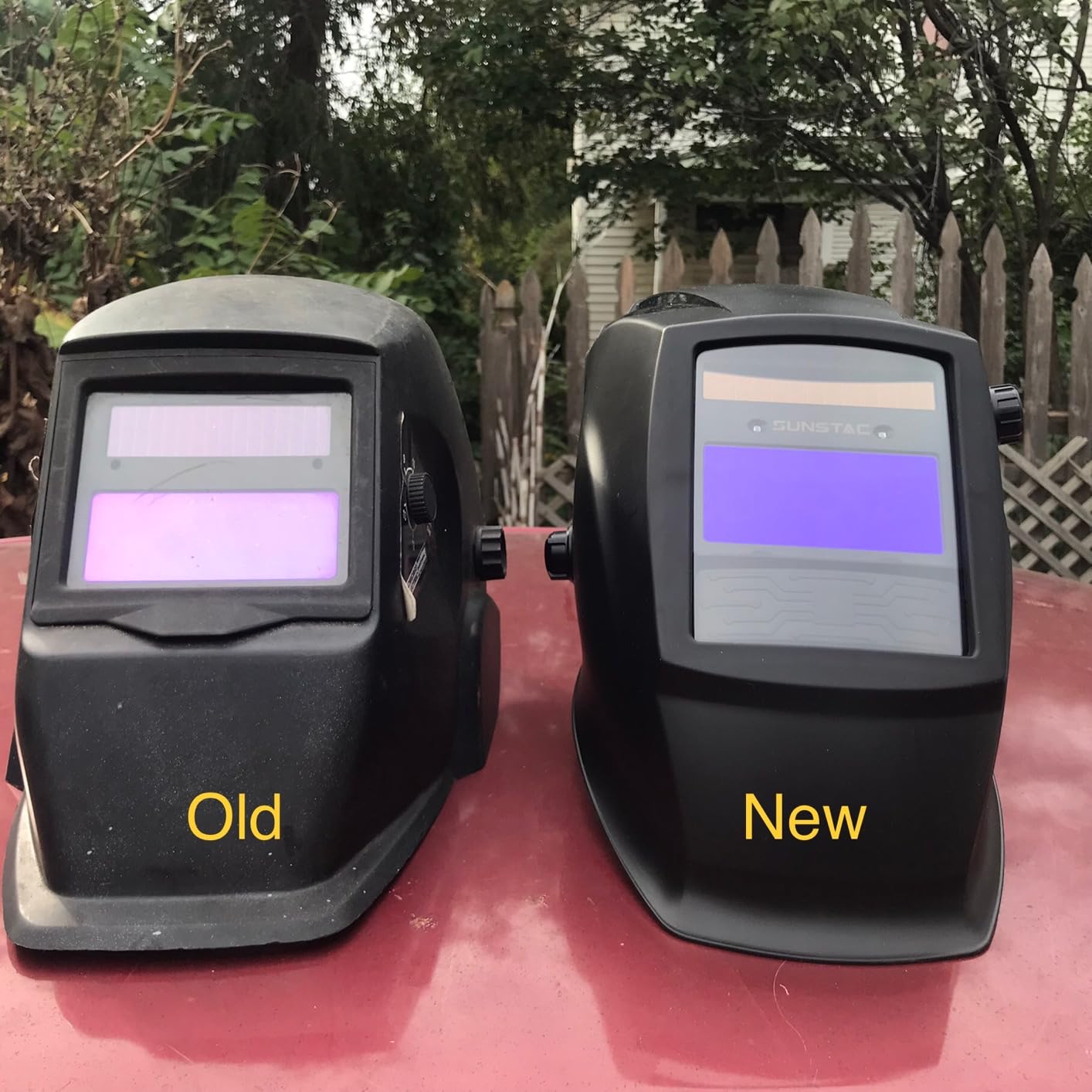
It carries a rechargeable high-brightness work light with two brightness modes and an adjustable swivel angle, which is more adjustable than the fixed light on the TRQWH. Cheater lens compatibility is there too, sold separately, for close-up inspection work.
Power is dual, lithium battery or solar, and the headband is heavily padded with multiple adjustment points. Several reviewers compare it favourably against older, more expensive helmets, which is a fair summary of where this price bracket now sits in the market.
Who this helmet suits
It suits shop welders who cut as well as weld, since plasma support and a wide shade spread are rare in this bracket. It also suits anyone who wants a work light they can aim, because the swivel head on the LED is genuinely useful for pipe work and out-of-position fabrication.
For long sessions the padded, fully adjustable headband earns its keep, and buyers note it is light and balanced enough to wear for a full shift without neck ache.
Who should skip it
Skip it if you have a small head or wear glasses inside the helmet, because the deep headpiece is reported to press against the frames. Skip it if you need to service the battery yourself, since it is buried in the shell and difficult to reach.
Be aware that the solar panel supplements the battery rather than recharging it, so treat the lithium cell as the real power source. If a documented warranty matters to you, this pick is not the one to shortlist.
We earn a commission, at no additional cost to you. CERTAIN CONTENT THAT APPEARS ON THIS SITE COMES FROM AMAZON. THIS CONTENT IS PROVIDED 'AS IS' AND IS SUBJECT TO CHANGE OR REMOVAL AT ANY TIME.
6. TOOLIOM TL-31800H: Best for MIG and TIG Work With a Wide View
TOOLIOM Auto-Darkening True Color Welding Helmet with 3.94 x 3.66 View
- 3.94 x 3.66 inch (14.4 sq in) view
- 4 arc sensors
- 1/30000 sec
- 1/1/1/1
Pros
- 14.4 sq in viewing area with four arc sensors
- 1/1/1/1 true color optical class
- Ultra fast 1/30000 second auto-darkening
- Breathable sweat-absorbing headgear with multiple joints
- Spare lenses and a replaceable battery included
Cons
- Plastic shell feels basic against professional hoods
- Adjustment hardware can feel loose over time
We earn a commission, at no additional cost to you. CERTAIN CONTENT THAT APPEARS ON THIS SITE COMES FROM AMAZON. THIS CONTENT IS PROVIDED 'AS IS' AND IS SUBJECT TO CHANGE OR REMOVAL AT ANY TIME.
The TL-31800H pairs the largest stated viewing area in this roundup, 3.94 by 3.66 inches which works out to 14.4 square inches, with four arc sensors and 1/30000 second switching. For MIG and TIG work that combination is close to ideal, because you get width for puddle control and speed for clean starts.
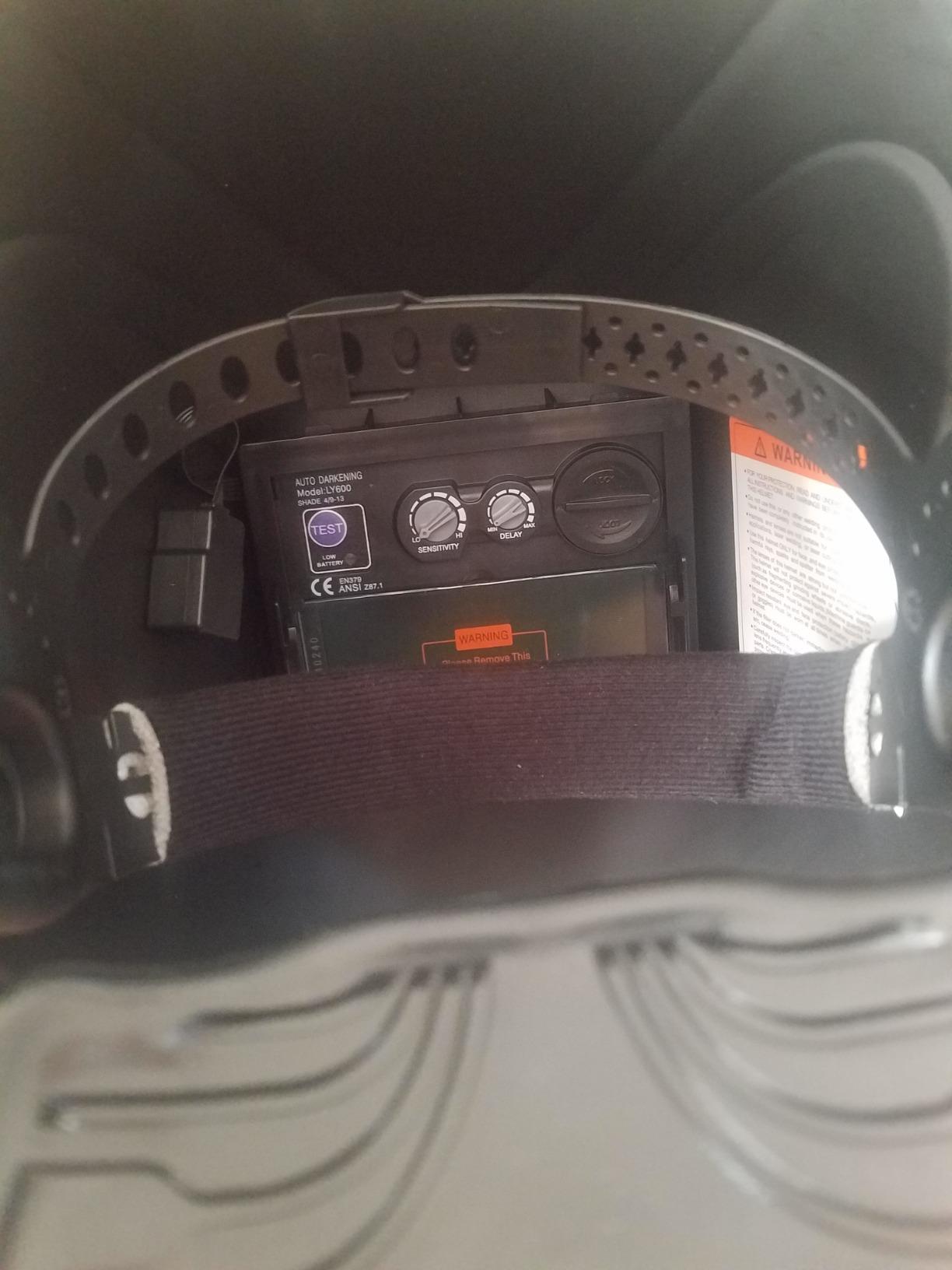
Optics are rated 1/1/1/1 optical class true color with a DIN 3 light state, and the dark state runs 5-9 for welding and 9-13 for cutting and grinding. Sensitivity, delay and shade are all adjustable, and there are explicit weld, cut and grind modes rather than one generic setting.
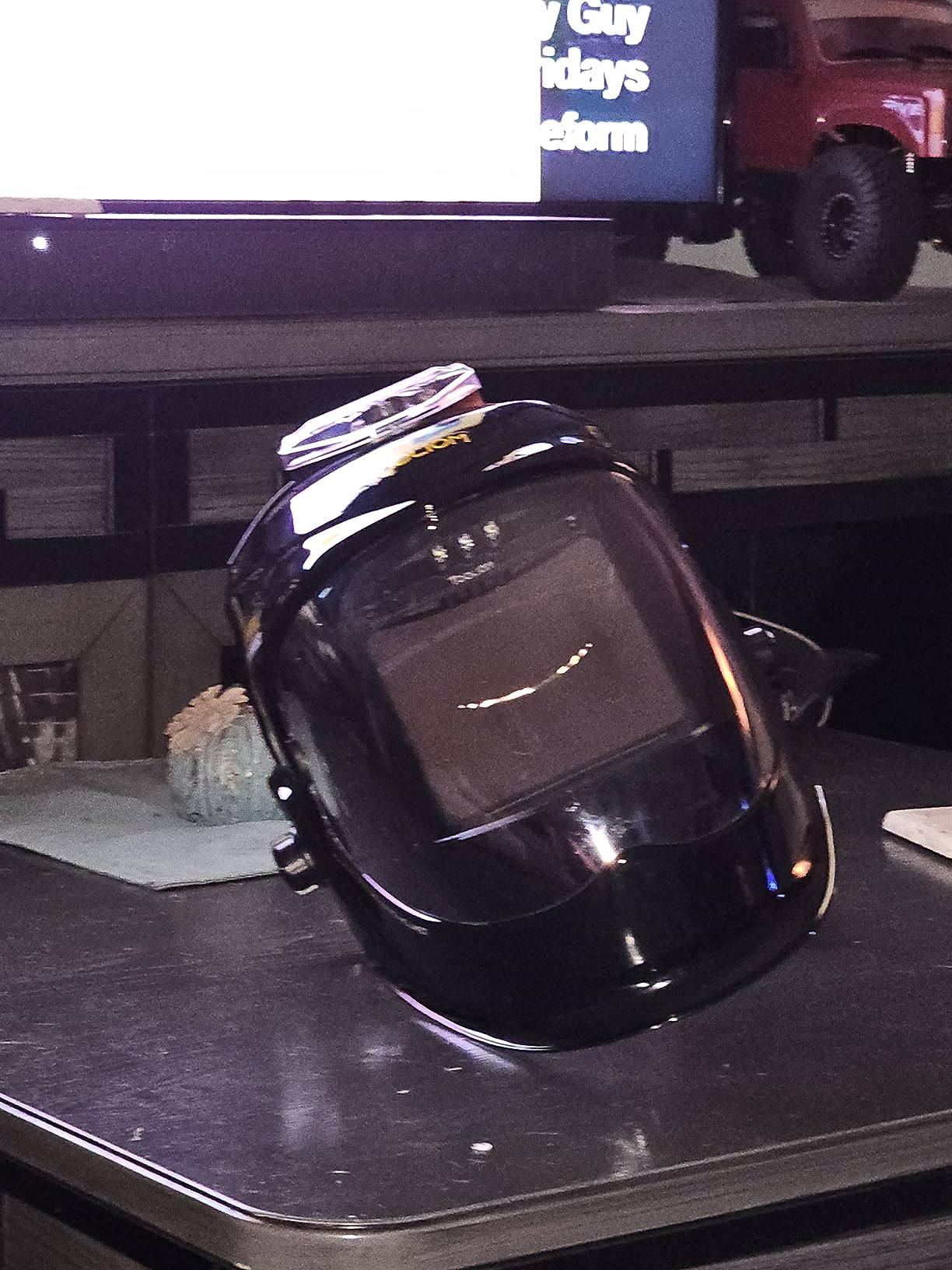
Power is a replaceable lithium battery backed by solar, and the headgear is a butterfly-style breathable, sweat-absorbing adjustable design with multiple joints, which helps with the fogging problem that shows up in full shell designs on long summer welds. The buckle closure is a simple positive lock.
The box includes the helmet, two outer protective lenses, one inner lens, one replaceable battery and a manual, so consumables are covered on day one. Criticism is limited and mostly about the shell: owners say the plastic feels basic, and adjustment hardware can loosen over time.
Who this helmet suits
It suits TIG and MIG welders who want a wide window and fast recovery from the light state, and it is a good first helmet for a student because the modes map directly onto classroom process names. The DIN 3 light state is comfortable for indoor shop work where the hood can stay down between welds.
It also suits anyone who grinds and cuts regularly, since 9-13 dark shades and a dedicated grind mode are both present, and the spare lenses in the box mean a chipped outer lens is not a trip to the store.
Who should skip it
Skip it if you work overhead every day, because the shell and hardware will not survive a drop the way a nylon professional hood does. Skip it if you need a warranty longer than a single year, since none is listed for this model.
Note the certification marking is ANSI Z89.1 rather than the Z87.1 seen on most of the other picks here. If you are buying for US work, check the label on the box you receive rather than trusting the listing.
We earn a commission, at no additional cost to you. CERTAIN CONTENT THAT APPEARS ON THIS SITE COMES FROM AMAZON. THIS CONTENT IS PROVIDED 'AS IS' AND IS SUBJECT TO CHANGE OR REMOVAL AT ANY TIME.
7. Hobart 770890: Best Brand-Name Helmet With a Widescreen View
Hobart 770890 Auto-Darkening Welding Helmet, Large, Black
- 9.3 inch PureColor view
- 4 arc sensors
- 1.25 lb
- Two-year warranty
Pros
- Large widescreen PureColor view for accurate colour reading
- Auto-on power triggers at the strike of an arc
- Four independent arc sensors for dependable detection
- Simple analog knobs and one-touch weld to grind switching
- Two-year manufacturer warranty and a lens kit included
Cons
- Fixed shade range rather than the wide adjustable ranges of budget models
- No integrated work light
We earn a commission, at no additional cost to you. CERTAIN CONTENT THAT APPEARS ON THIS SITE COMES FROM AMAZON. THIS CONTENT IS PROVIDED 'AS IS' AND IS SUBJECT TO CHANGE OR REMOVAL AT ANY TIME.
The Hobart 770890 is the only pick in this roundup from a major welding manufacturer, and it comes with something none of the imports can offer: a two-year limited manufacturer warranty, a real service network, and replaceable parts you can still buy after the helmet is out of warranty. The shell is polyamide nylon and it weighs 1.25 pounds.
The PureColor lens technology gives a 9.3 inch widescreen viewing area, which is a different shape from the tall windows on the budget models. Four independent arc sensors handle detection, and auto-on power control triggers the lens at the strike of an arc so you do not have to think about switching it on.
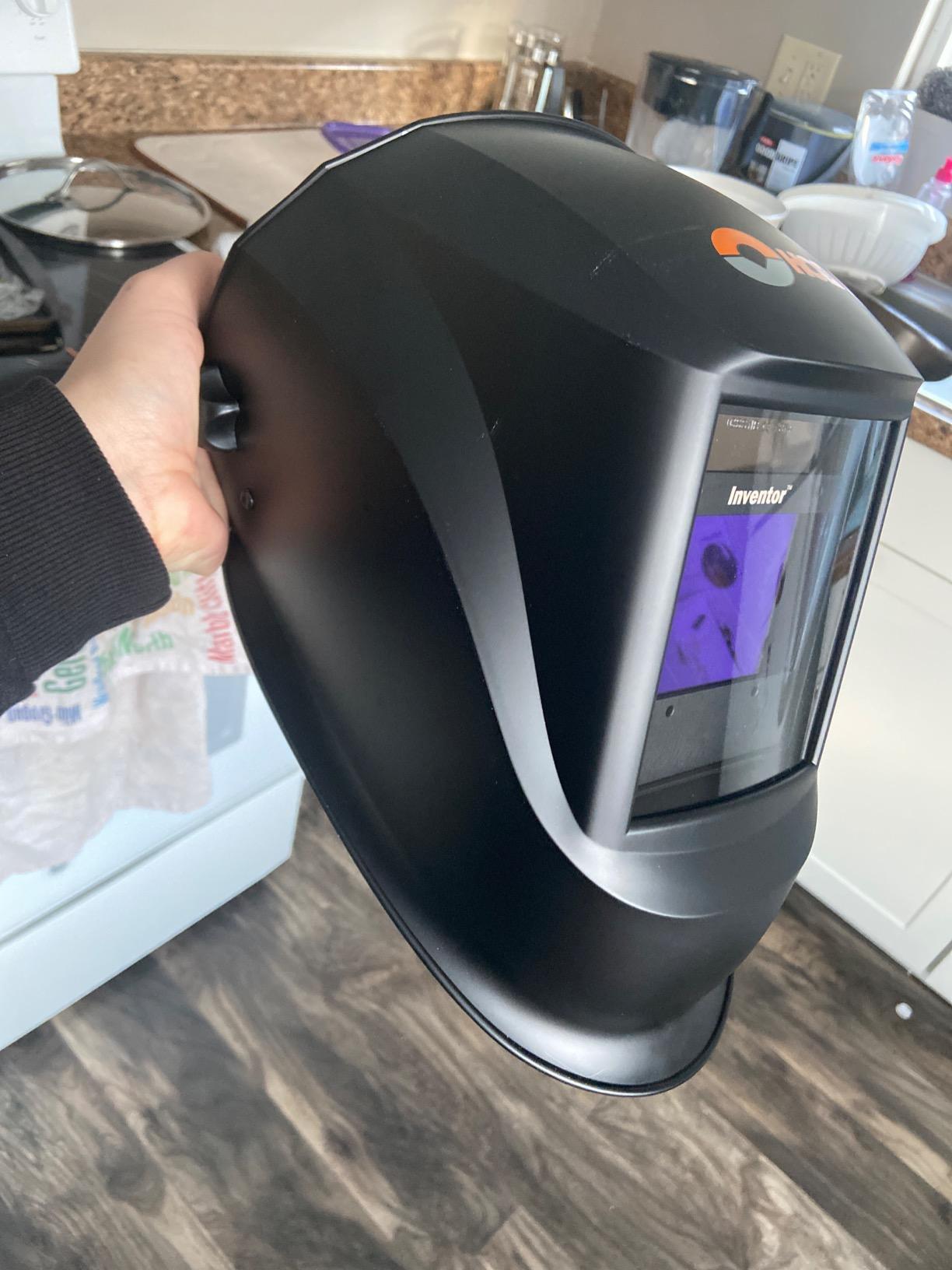
Controls are analog, which is a genuine advantage for some people: a shade knob, a sensitivity knob and a delay knob that you can adjust with gloves on and identify by touch. Weld to grind switching happens without removing the helmet, and a protective lens kit is included in the box.
Its 4.7 rating is tied for the highest here, with a strong share of five-star reviews reflecting a durable, professional-grade hood. The two real limitations are a fixed shade range rather than the wide adjustable spans of the budget models, and no integrated work light.
Who this helmet suits
It suits welders who will keep the same helmet for years and who have been disappointed by a cartridge dying in an import model. On r/Welding the recurring advice is to start with a budget auto-darkening hood while you learn, and the same threads regularly name Hobart, Lincoln and 3M as the brands worth moving up to.
It also suits anyone who welds in a hot shop, because a nylon shell and a two-year warranty tolerate abuse better than the thin plastic on the cheaper picks. Digital or analog, the controls are simple enough to hand to a new apprentice.
Who should skip it
Skip it if your work is mostly grinding in the dark, since there is no work light and you would be relying on shop lighting. Skip it if you need one continuous adjustable shade span across many processes, because the range is fixed rather than continuously variable.
If you are on a very tight budget and weld occasionally, one of the import models here gives you a wider feature list for far less. The Hobart case is durability and support, not spec volume.
We earn a commission, at no additional cost to you. CERTAIN CONTENT THAT APPEARS ON THIS SITE COMES FROM AMAZON. THIS CONTENT IS PROVIDED 'AS IS' AND IS SUBJECT TO CHANGE OR REMOVAL AT ANY TIME.
8. Miller Classic Series ClearLight: Best Warranty and Low-Amp Capability
Miller Classic Series Welding Helmet, ClearLight™, Shade 8-13, Black
- ClearLight optics
- 6 sq inch view
- 2 arc sensors
- 1/23000 sec
Pros
- Three-year warranty with three years of spare part availability
- ClearLight high-definition optics
- Works at five amps or below for low-amp TIG
- 3.0 light state lets the hood stay down between welds
- Digital shade delay and sensitivity controls with ratchet headgear
Cons
- Only two arc sensors
- Shade range starts at 8-13 so low-shade work needs care
- 6 sq inch view is smaller than the panoramic models
We earn a commission, at no additional cost to you. CERTAIN CONTENT THAT APPEARS ON THIS SITE COMES FROM AMAZON. THIS CONTENT IS PROVIDED 'AS IS' AND IS SUBJECT TO CHANGE OR REMOVAL AT ANY TIME.
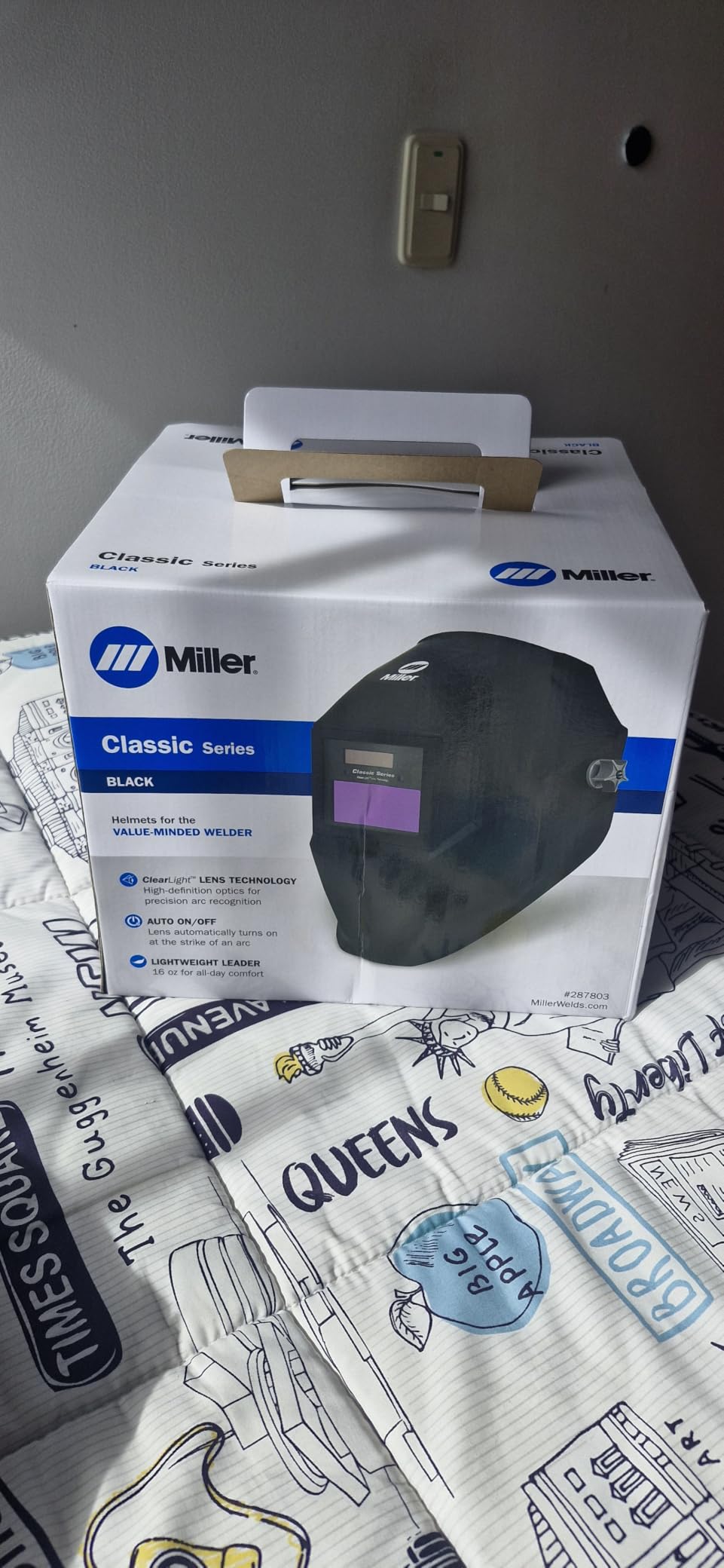
The Miller Classic Series is the longest-warranty pick here, with a three-year warranty and three years of spare part availability listed for the unit. That is the single most reliable signal in this category, because it means a broken headband in year two is a warranty claim rather than a funeral.
ClearLight lens technology gives high-definition optics through a 6 square inch viewing area, and the two arc sensors switch in 1/23000 second, which is the slowest figure in this roundup but still far quicker than the human eye needs. Ratchet headgear keeps the fit stable through the day.
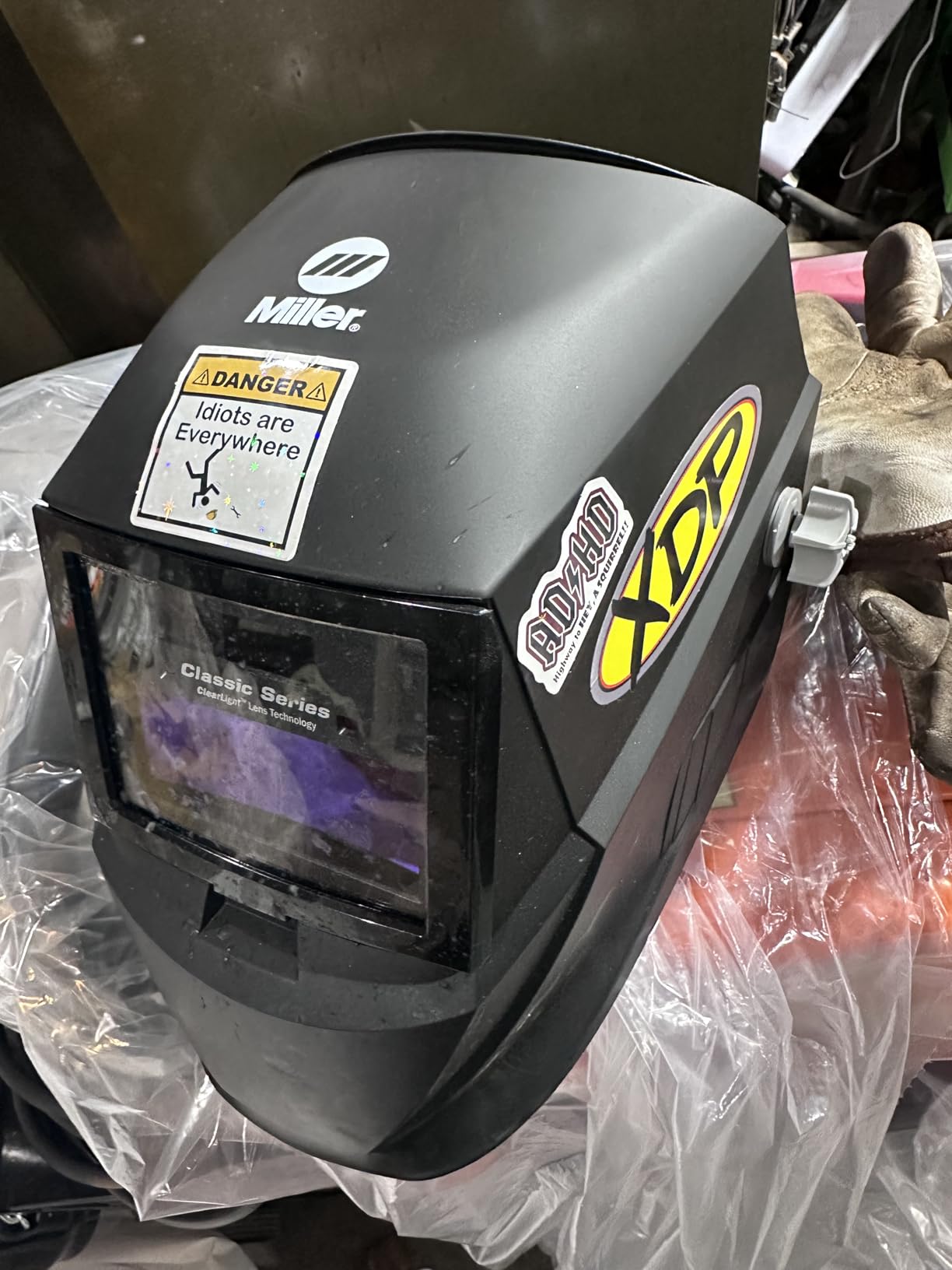
The 3.0 light state is the feature I would point at first. It is light enough to see a fit-up and mark your work with the hood still down between welds, which saves a lot of flipping on a job with a lot of short tacks, and the Miller is rated as suitable for welding at five amps or below.
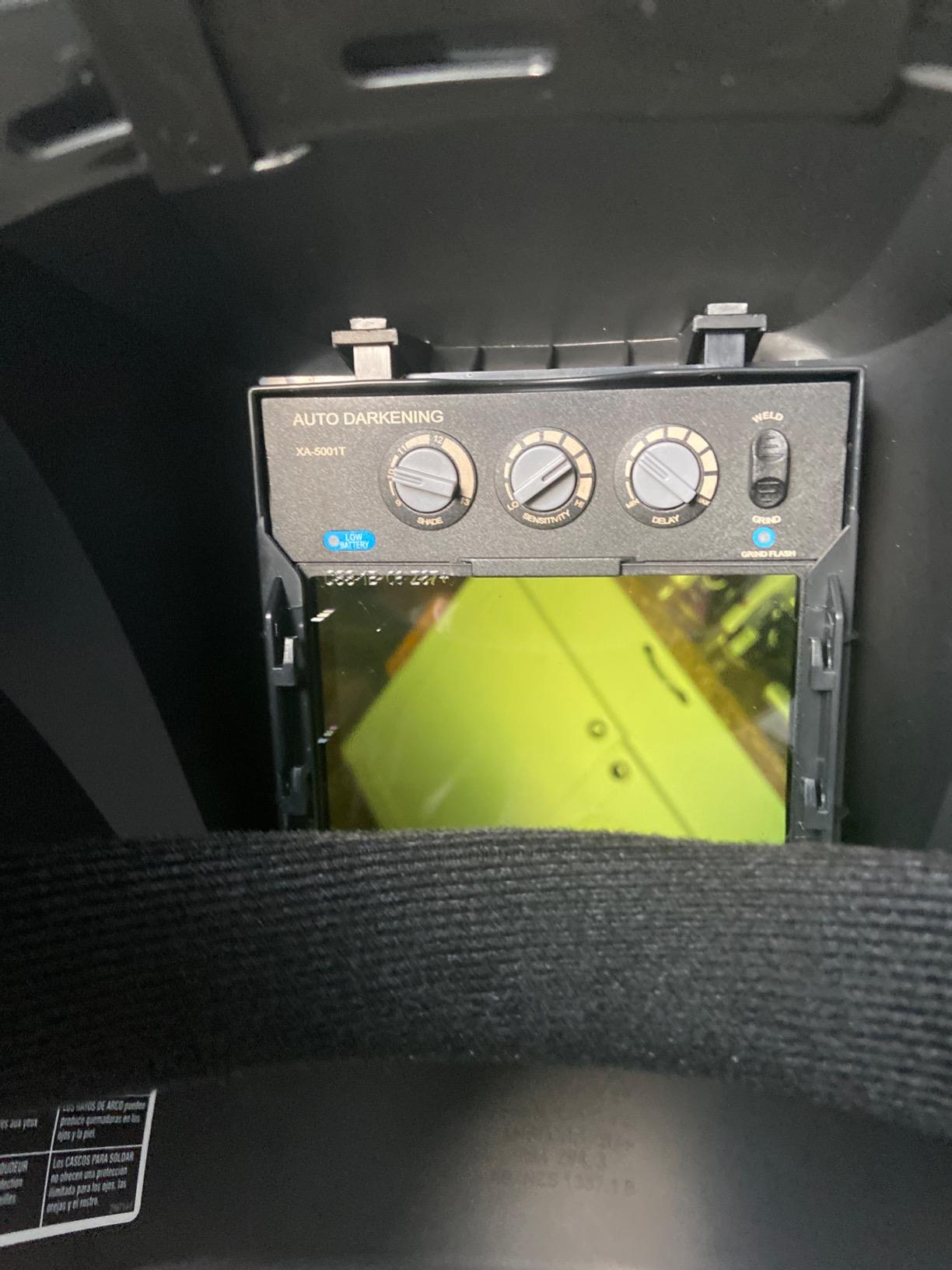
Shade coverage runs weld 8-13, cut 5-8 and grind 3, with digital controls for shade, delay and sensitivity. It meets ANSI Z87.1+, CSA and CE standards, and the 989 gram weight is in the same range as the Hobart and the heavier budget models.
Who this helmet suits
It suits anyone doing low-amp TIG, thin-gauge work or small repair jobs at the low end of the range, because the five-amp capability and the 3.0 light state are exactly what delicate work needs. The digital controls are also the most precise in this roundup, which helps when you are dialling in a shade for a specific joint.
It suits anyone planning to weld for years with one helmet. The three-year warranty and parts availability make it the most sensible long-term buy in the sub-200-dollar bracket, even though it is not the best on any single spec.
Who should skip it
Skip it for overhead welding and pipe work, because two sensors is the weakest detection setup in this roundup and out-of-position arcs are exactly the case sensors struggle with. Skip it if you need a large viewing window, since 6 square inches is small next to the panoramic models.
Also skip it if you need a weld shade below 8 on light work, because the range starts at 8-13. The 5-8 range is for cutting, not for welding thin material in a bright room.
We earn a commission, at no additional cost to you. CERTAIN CONTENT THAT APPEARS ON THIS SITE COMES FROM AMAZON. THIS CONTENT IS PROVIDED 'AS IS' AND IS SUBJECT TO CHANGE OR REMOVAL AT ANY TIME.
How to Choose an Auto-Darkening Welding Helmet in the Sub-200 Bracket
Every auto-darkening welding helmet works the same way: arc sensors detect the flash of a struck arc, the liquid crystal filter darkens almost instantly, and it clears when you stop. The differences that matter at this budget are optical clarity, sensor count, switching speed, viewing area, headgear quality and warranty. Here is the order I would weigh them in.
Optical clarity: what 1/1/1/1 actually means
The four numbers are spherical aberration, refractive astigmatism, prismatic deviation and haze, each rated 1 for best. So 1/1/1/1 is the top grade and 1/1/1/2 is still very good, with the difference showing mainly as haze at an angle. A standard green lens makes it harder to tell molten puddle from slag, which is the single most cited frustration among welders moving up from cheap gear, and true color lenses shorten the learning curve.
Arc sensors: two versus four
Two sensors are fine for flat-bench MIG and stick work. Four are what you want for overhead welding, out-of-position work, pipe work and tight spaces, because they catch arcs that start at an angle or off to the side. This is the biggest usability upgrade available in this bracket, and most of the complaints we found about two-sensor hoods come from people who bought them and then started welding out of position.
Switching speed
Speeds in this group run from 1/20000 to 1/30000 of a second, with the Miller Classic at 1/23000. A lower fraction means faster, and anything at or below 1/25000 second is well past the point where a welder perceives a flash. Do not let a slower figure sell you down, because these differences matter far less than sensor count and lens quality.
Shade range and grind mode
For most MIG and stick work at 100 to 200 amps, shade 10 is the right starting point. Shade 11 suits 200 to 350 amps, shade 8 to 9 suits low-amp TIG under roughly 30 amps, and shade 12 to 13 is for heavy pipe and stick work above about 350 amps. Shade 14 is substantially darker than shade 10 and belongs at the top of that range. Check that the helmet covers the shade your process needs, and check that it has a grind mode, because you will use it more than you expect.
Viewing area and weight
Viewing area and weight trade directly against each other. The widest windows in this roundup run around 3.93 by 3.66 inches, while the narrowest is 3.64 by 1.67 inches, and the weight spread runs from 16 ounces to about 2.2 pounds. If you weld overhead or do pipe work, take the bigger window. If you wear a helmet for hours on flat work, take the lighter one.
Power source and battery access
Solar panels with a CR2450 or lithium coin cell backup are standard here. Solar is genuinely good as a primary source but should not be your only one, because a cell can die with no warning mid-job. The question worth asking is whether the cell is reachable, because on sealed import cartridges a dead cell can mean replacing the whole filter rather than a battery.
Safety certification: ANSI Z87.1, EN 379 and CSA Z94.3
ANSI Z87.1 is the US eye and face protection standard, EN 379 is the European welding filter standard, and CSA Z94.3 is the Canadian equivalent. A US hobbyist should see ANSI Z87.1 and CSA Z94.3 on the label, and most of the picks here carry all three. If a listing shows only one of them, that is worth checking on the box before you rely on it.
Fit and headgear
Headgear is the most common source of complaints in this category, and it is the thing most likely to fail first. Ratchet headgear spreads load better than a strap, pivoting headgear lets you get the shell closer to your face, and a deep shell can press against glasses on smaller heads. Set the tension once, check it does not creep forward after an hour, and budget for the fact that replacement headgear for import brands is hard to find.
What Can Go Wrong With Budget Auto-Darkening Helmets
None of these are reasons to avoid a budget helmet. They are the failure modes that show up in owner reports, listed roughly in order of how often they come up, so you can buy with your eyes open.
First, false triggers. Cheap cartridges can read fluorescent or LED shop lighting as an arc, darkening randomly and draining the battery while you are simply walking past a bench light. The fix is a sensitivity adjustment, and helmets with an external control handle this better.
Second, delayed darkening on off-angle arcs with two-sensor helmets. The lens clears mid-bead and you get flashed. This is the failure that pushes people toward a four-sensor model, and it is why I flagged the Miller and the L600A for overhead work.
Third, headgear failure. Plastic ratchet bands loosen or crack after a couple of years of daily use, and replacement headgear is genuinely hard to source for import brands. On r/Welding, owners of budget brands also report auto-darkening cartridges dying at roughly 14 to 18 months of regular use, with sensors that stop detecting or a filter that goes dark and stays there.
Fourth, dead or uneven pixels after a drop or after storage in a hot shop. There is no user fix for that, and it is another argument for keeping the helmet in a padded bag between jobs, which several of these models include.
Fifth, a battery that dies with no warning because the coin cell is sealed inside the cartridge. Check at purchase whether the cell is user-replaceable, and keep a spare of the right type on hand if it is.
Frequently Asked Questions
Which welding helmet has the largest viewing area?
Among the picks in this roundup, the TOOLIOM TL-31800H has the largest stated viewing area at 3.94 by 3.66 inches, which works out to 14.4 square inches, closely followed by the YESWELDER LYG-M800H at 3.93 by 3.66 inches. The Hobart 770890 is different in shape rather than size, with a 9.3 inch widescreen PureColor window. Wider windows help most on pipe, overhead and out-of-position work.
What is the best auto-darkening welding helmet?
The best auto-darkening welding helmet under 200 dollars in this roundup is the YESWELDER LYG-L600A, which combines a 1/1/1/1 true color lens, 1/30000 second switching, a 16 ounce weight and a review base large enough to trust. If you need four arc sensors instead, the ARCCAPTAIN HSH-S800 is the alternative, and if you need a multi-year warranty, look at the Hobart or the Miller.
Which welding helmet is better, Arccaptain or Yeswelder?
Both brands hit 1/1/1/1 optics with four arc sensors at budget prices, so choose on the specifics. YESWELDER offers more variants and a much larger review base, including the LYG-M800H with a 3.93 by 3.66 inch view. ARCCAPTAIN gives you four sensors and a 180-day warranty on the HSH-S800. Buy on viewing size and warranty rather than on the brand name.
Which welding lens is darker, 10 or 14?
Shade 14 is substantially darker than shade 10, and it belongs on very high amperage work such as heavy pipe and stick above roughly 350 amps. Shade 10 is the standard choice for MIG and stick work at 100 to 200 amps. If your machine will not go above about 200 amps, a helmet covering up to shade 13 is more than you need.
What shade do most welders use?
Most welders use shade 10 for MIG and stick work at 100 to 200 amps, which is the most common setting in any shop. Shade 11 covers 200 to 350 amps, shade 8 to 9 suits low-amp TIG under roughly 30 amps, and shade 12 to 13 is for heavy pipe and stick work above about 350 amps. Where you weld matters as much as the process, since outdoor sun usually needs a darker shade.
How many arc sensors do I need in a welding helmet?
Two sensors are enough for flat-bench MIG and stick welding. Four sensors are what you want for overhead welding, out-of-position work, pipe work and tight spaces, because they detect arcs that start at an angle or off to the side. Moving from two to four sensors is the biggest usability upgrade available in the sub-200-dollar bracket.
Why won’t my auto-darkening welding helmet darken?
The usual causes, in order, are a depleted CR2450 coin cell, sensitivity set too low for the process, a sensor blocked by your arm or the workpiece, and finally a failed cartridge after a year or two of regular use. Check the battery and turn sensitivity up first, and test outside before you write the helmet off. If a budget cartridge has failed, sealed designs may need a full filter replacement rather than a battery change.
Is a 200-dollar welding helmet good enough?
Yes, for hobby MIG, stick and entry-level TIG work the sub-200-dollar tier is genuinely capable, and most owners would not notice the difference day to day. What you give up is headgear durability, electromagnetic X-Mode sensing for very low-amp work, and a multi-year warranty. If you are welding every day for a living, the warranty is the thing worth spending above this bracket on.
Do I need true color 1/1/1/1 optics?
It helps more than most buyers expect. The four numbers in an optical clarity rating cover spherical aberration, refractive astigmatism, prismatic deviation and haze, and a standard green filter makes it harder to tell a molten weld puddle from slag, undercut and porosity. True color speeds up learning and cuts rework. If a helmet is rated 1/1/1/2, that is still good, with the difference mainly in haze at an angle.
Where can I find a cheap welding helmet?
Harbor Freight, Amazon, Tractor Supply and specialist distributors such as Welders Supply all carry helmets in this price band, and specialist distributors are where you are most likely to find a brand name with a real warranty. Prices move constantly and listing pages rotate, so recheck the current number before you buy, and do not treat a strike-through MSRP figure as a real price.
Final Verdict: Which Welding Helmet Under 200 Should You Buy?
Buy the YESWELDER LYG-L600A for true color optics, a 16 ounce weight and the largest review base in the category if you are welding on a bench and learning to read a puddle. Add the ARCCAPTAIN HSH-S800 to the shortlist if four arc sensors and a 180-day warranty matter more to you, and the YESWELDER LYG-M800H if view size is the priority. For daily professional use, take the warranty rather than the feature list: the Hobart 770890 for a two-year term, or the Miller Classic Series ClearLight for three years plus low-amp capability.
All of these are the best welding helmets under 200 dollars in 2026 for the money, and the ceiling on this bracket moves, so check the current price before you commit. Match the shade to your process and amperage, and treat any helmet that fails to darken as a failure of protection, not an inconvenience.