GLP-1 Patches vs Injection: What Actually Works in 2026
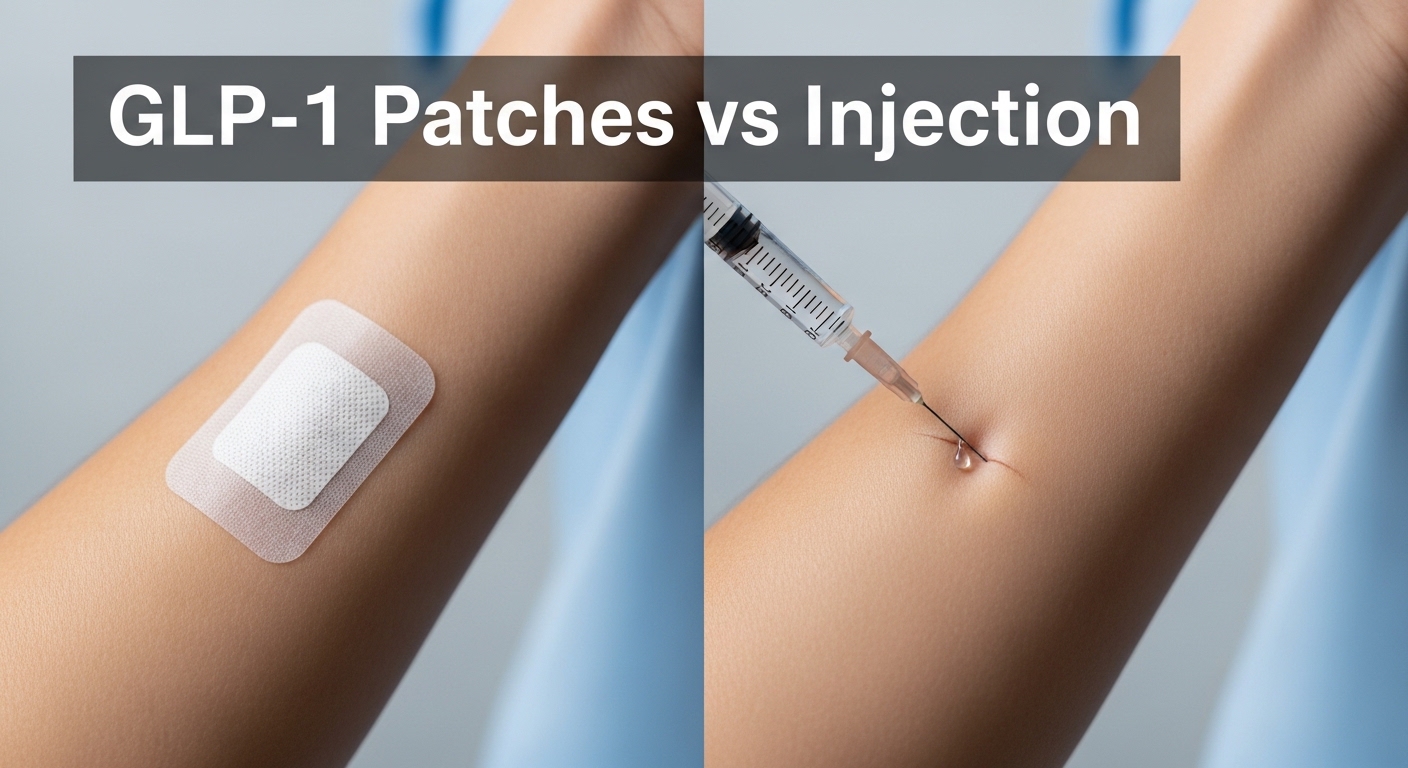
If you’ve been searching for a needle-free alternative to GLP-1 injections, you’ve probably come across “GLP-1 patches” marketed as an easier weight loss solution. I spent weeks researching this topic, and what I found may surprise you.
Here’s the bottom line: Commercial GLP-1 patches do NOT contain actual GLP-1 medication. They’re herbal supplements containing ingredients like berberine, not the semaglutide or tirzepatide found in FDA-approved injections like Ozempic, Wegovy, and Mounjaro.
The confusion is understandable. These products use “GLP-1” in their marketing, leading many people to believe they’re getting a patch version of prescription medications. They’re not.
In this guide, I’ll break down exactly what commercial GLP-1 patches contain, how they compare to actual FDA-approved GLP-1 injections, and what the future holds for real transdermal GLP-1 delivery technology that’s currently in development.
GLP-1 Patches vs Injections: Quick Comparison
Before diving into the details, here’s what you need to know about the key differences between GLP-1 injections and commercial patches in 2026:
| Factor | GLP-1 Injections (Ozempic, Wegovy, etc.) | Commercial “GLP-1 Patches” |
|---|---|---|
| Contains Actual GLP-1 | Yes – synthetic GLP-1 receptor agonists | No – herbal supplements only |
| FDA Approved | Yes | No – unregulated supplements |
| Clinical Evidence | Extensive trials showing 15-25% weight loss | No clinical trials for patch delivery |
| Prescription Required | Yes | No – sold over the counter |
| Typical Cost | $900-$1,350/month without insurance | $15-$50/month |
| Active Ingredients | Semaglutide, tirzepatide, or liraglutide | Berberine, green tea, cinnamon, herbs |
| Proven Effectiveness | Strong clinical evidence | No evidence for transdermal delivery |
Important: The price difference reflects a fundamental difference in what you’re getting. GLP-1 injections contain proven prescription medications. Commercial patches contain herbal supplements with no clinical evidence they work when delivered through the skin.
What Are GLP-1 Medications?
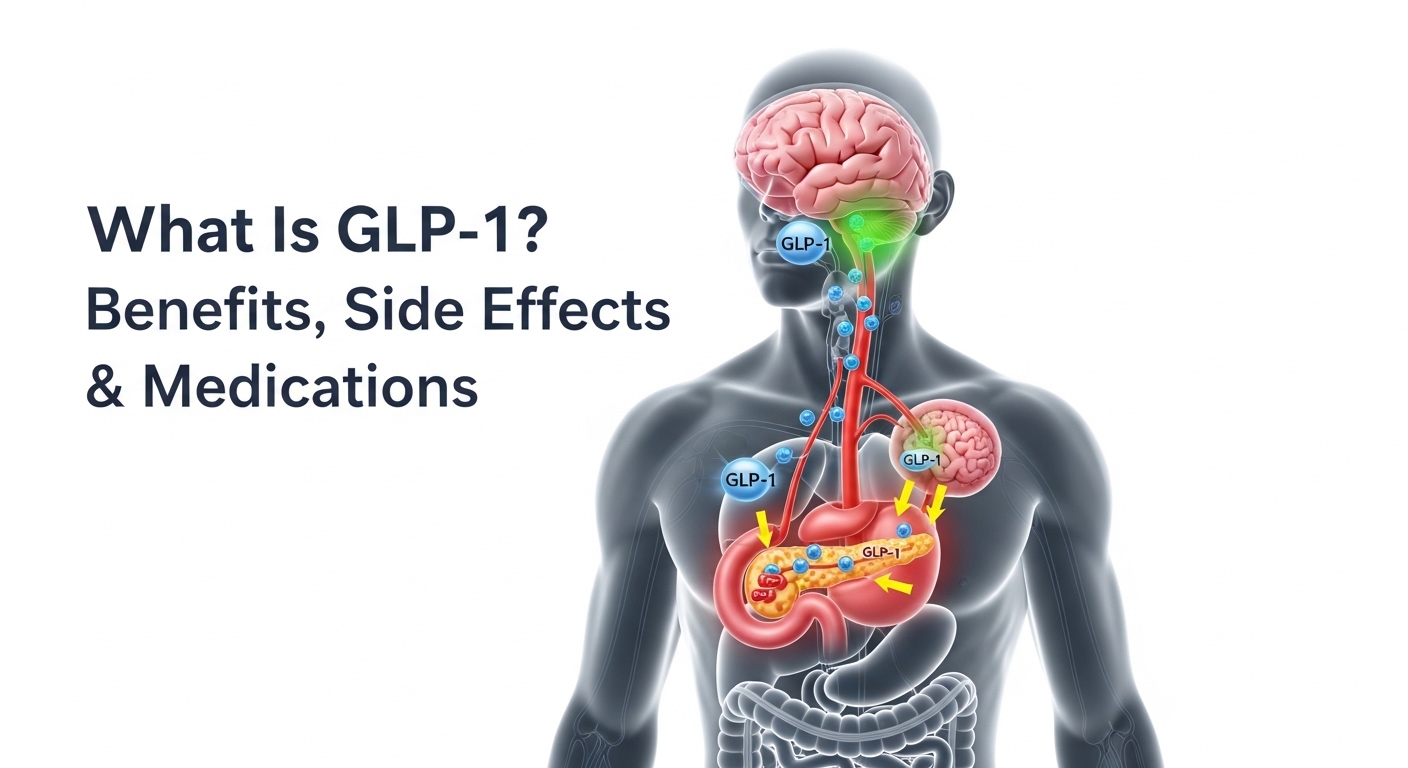
GLP-1 (glucagon-like peptide-1) receptor agonists are prescription medications that mimic a natural hormone in your body. They work by slowing digestion, reducing appetite, and helping regulate blood sugar levels.
These medications became popular after clinical trials showed remarkable weight loss results. In the STEP trials, semaglutide helped participants lose an average of 15-16% of their body weight. Tirzepatide showed even more impressive results, with some participants losing up to 22.5%.
Currently, FDA-approved GLP-1 medications are only available as:
- Injectable medications: Ozempic, Wegovy, Mounjaro, Zepbound, Saxenda (delivered via subcutaneous injection)
- Oral tablets: Rybelsus (semaglutide tablets for diabetes; a higher 25mg dose was approved for weight loss in December 2026)
There are currently no FDA-approved GLP-1 patches available to consumers.
FDA-Approved GLP-1 Injections: What Actually Works
If you’re serious about GLP-1 therapy for weight management, these are the only proven options available in 2026. Each medication has been through rigorous clinical trials and FDA approval processes.
Semaglutide Options (Ozempic and Wegovy)
Semaglutide, made by Novo Nordisk, is the active ingredient in both Ozempic and Wegovy. The difference is in their approved uses.
Wegovy is specifically FDA-approved for chronic weight management. Clinical trials showed an average weight loss of 15-16% of body weight. It’s administered as a once-weekly subcutaneous injection using a pre-filled pen, with doses titrating from 0.25mg up to 2.4mg.
Ozempic is FDA-approved for Type 2 diabetes but is frequently prescribed off-label for weight loss. The dosing ranges from 0.25mg to 2mg weekly. Many patients report similar weight loss results to Wegovy.
Without insurance, both medications cost approximately $900-$1,350 per month. Insurance coverage varies but often requires prior authorization, especially for weight loss.
Tirzepatide Options (Mounjaro and Zepbound)
Tirzepatide, made by Eli Lilly, represents the newest generation of GLP-1 medications. It’s a dual GIP/GLP-1 receptor agonist, which research suggests may provide even stronger effects.
Zepbound is FDA-approved for chronic weight management and has shown weight loss of up to 22.5% in clinical trials, making it currently the most effective option available.
Mounjaro is approved for Type 2 diabetes and, like Ozempic, is often prescribed off-label for weight management. Both use once-weekly injection with doses ranging from 2.5mg to 15mg.
Cost runs approximately $1,000-$1,100 per month without insurance coverage.
Daily Option: Saxenda
Saxenda (liraglutide) is an older GLP-1 medication requiring daily injections rather than weekly. It’s FDA-approved for weight management but shows more modest results, with average weight loss around 8% of body weight.
While less convenient than weekly options, Saxenda may work for those who prefer lower starting doses or have issues tolerating semaglutide or tirzepatide.
The Truth About Commercial GLP-1 Patches
Here’s what the marketing doesn’t tell you: commercial “GLP-1 patches” don’t contain any actual GLP-1 medication. They contain herbal supplements like berberine that manufacturers claim may support natural GLP-1 production.
That’s a crucial distinction. There’s a massive difference between taking a medication that directly activates GLP-1 receptors and taking a supplement that might theoretically influence your body’s natural hormone production.
What Commercial Patches Actually Contain?
Based on my research, here are the common ingredients found in popular GLP-1 patch products:
- Berberine: A plant compound with some evidence for blood sugar effects when taken orally, but no evidence it works through skin absorption
- Green tea extract: Contains caffeine and antioxidants
- Pomegranate extract: Antioxidant properties
- Cinnamon: Some studies suggest modest blood sugar effects when consumed
- L-glutamine: An amino acid
- Garcinia cambogia: A tropical fruit extract
None of these ingredients are GLP-1 medications. And critically, there’s no scientific evidence these ingredients can effectively penetrate the skin barrier to deliver any meaningful effect.
Expert Opinion on Commercial Patches
“The marketing seems to suggest that you could get with these natural products, these natural ingredients, the same effect that you can get with GLP-1 agonists, which is simply not the case. And in that way, they are being misleading to people.”
– C. Michael White, Professor of Pharmacy Practice, University of Connecticut (PBS News)
Popular Commercial Patch Brands
Kind Patches are among the most marketed GLP-1 patches. They contain berberine extract, pomegranate extract, cinnamon, and L-glutamine. They’re not FDA-approved and have a 2.9/5 rating on Trustpilot with mixed reviews. The company markets them as supporting “natural GLP-1 production.”
Oceaura and Gentle Patches are similar products containing various herbal extracts. Like Kind Patches, they’re unregulated supplements with no clinical evidence supporting their effectiveness when delivered through the skin.
What Real Users Say?
Forum discussions on Reddit and other platforms reveal highly skeptical user experiences:
- “I cant answer if the patches work for weight loss, but why not just take Berberine? (which is the active ingredient in the patch)” – r/WeightLossAdvice
- “I have the Kind patches…maybe it a placebo effect but who knows” – Facebook group user
- “They made no difference for my weight, but they made a huge difference in my digestion” – r/PCOS
The pattern is consistent: users are uncertain whether any effects they experience are from the patches or simply placebo effect.
Why Transdermal GLP-1 Delivery Doesn’t Work Yet?
There’s a scientific reason why you can’t simply put GLP-1 medication in a patch and expect it to work. It comes down to molecular size.
GLP-1 molecules are large peptides, far too big to passively cross the skin barrier. The skin is specifically designed to keep large molecules out, which is why most medications that work through skin patches (like nicotine or hormones) use very small molecules.
For a GLP-1 patch to work, it would need specialized technology to actively push these large molecules through the skin, which is exactly what pharmaceutical companies are working on with microneedle patches.
The herbal ingredients in commercial patches face a different but related problem: even if berberine has effects when taken orally, there’s no evidence it can penetrate skin in meaningful amounts.
The Future of GLP-1 Patches: Microneedle Technology
Real pharmaceutical-grade GLP-1 patches are in development, and the early results are promising. Unlike commercial herbal patches, these use microneedle technology to actually deliver semaglutide through the skin.
Daewoong Pharmaceutical’s CLOPAM Patch
The South Korean company Daewoong Pharmaceutical is developing a microneedle patch that actually contains semaglutide. Their Phase 1 clinical trial results, announced in August 2026, showed remarkable results:
- Bioavailability: Greater than 80% compared to subcutaneous injection
- Duration: Drug levels remained stable for one full week
- Trial size: 70 subjects
- Significance: Highest reported bioavailability for any microneedle patch
This is a genuine pharmaceutical patch that delivers real semaglutide medication, not herbal supplements. However, it’s still years away from potential FDA approval and consumer availability.
Vaxess Technologies’ MIMIX Platform
US-based Vaxess Technologies is developing the MIMIX microarray patch with deployable microneedle tips. Their preclinical research, presented in June 2026, showed:
- Bioavailability comparable to subcutaneous injection
- 95% of study participants preferred the patch to injection in human factors studies
- $9 million in funding received (April 2026)
- NIH grant awarded (October 2026)
These microneedle patches work by using tiny needles (smaller than a human hair) that painlessly penetrate the outer skin layer to deliver medication directly. They’re completely different from the adhesive herbal patches currently sold as “GLP-1 patches.”
Timeline Reality Check: Even with promising Phase 1 results, pharmaceutical GLP-1 patches are likely 3-5+ years away from FDA approval and consumer availability. The clinical trial process requires Phase 2 and Phase 3 trials before approval can be sought.
Effectiveness Comparison: What the Evidence Shows
When comparing GLP-1 injections to commercial patches, the evidence gap is stark.
GLP-1 Injections: Clinical Trial Evidence
| Medication | Clinical Trial | Average Weight Loss |
|---|---|---|
| Wegovy (semaglutide) | STEP trials | 15-16% of body weight |
| Zepbound (tirzepatide) | SURMOUNT trials | Up to 22.5% of body weight |
| Mounjaro (tirzepatide) | SURMOUNT trials | Up to 22.5% of body weight |
| Ozempic (semaglutide) | SUSTAIN trials | 10-15% of body weight |
| Saxenda (liraglutide) | SCALE trials | 8% of body weight |
These results come from randomized, placebo-controlled clinical trials involving thousands of participants over extended periods.
Commercial Patches: No Clinical Evidence
Commercial GLP-1 patches have zero clinical trials demonstrating effectiveness for weight loss. The ingredients they contain (like berberine) have some evidence when taken orally, but no research supports their effectiveness when delivered through skin patches.
Any weight loss experienced while using these patches could be attributed to:
- Placebo effect
- Concurrent lifestyle changes
- Natural weight fluctuations
- Other factors unrelated to the patch
Pros and Cons: Making Your Decision
GLP-1 Injections
Pros:
- FDA-approved with extensive clinical evidence
- Proven 10-25% weight loss in studies
- Medical supervision and monitoring
- Insurance may cover (especially for diabetes)
- Additional health benefits (blood sugar control, cardiovascular)
Cons:
- Requires injections (weekly or daily)
- Expensive without insurance ($900-$1,350/month)
- Common side effects include nausea and GI issues
- Requires prescription and medical qualification
- May have supply shortages
Commercial GLP-1 Patches
Pros:
- Needle-free application
- Lower cost ($15-$50/month)
- No prescription required
- Easy to obtain
Cons:
- Do NOT contain actual GLP-1 medication
- No FDA approval
- No clinical evidence of effectiveness
- Misleading marketing
- May waste money on ineffective products
- Some users report skin irritation from adhesive
Who Should Choose What?
Consider FDA-approved GLP-1 injections if:
- You’re committed to proven, evidence-based weight loss
- You qualify medically (BMI requirements typically 27+ with comorbidities or 30+)
- You can afford the cost or have insurance coverage
- You’re comfortable with weekly (or daily) injections
- You want medical supervision of your weight loss
The commercial patches may seem appealing if:
- You have severe needle phobia
- Budget is a major constraint
- You don’t qualify for prescription options
However, based on available evidence, I cannot recommend commercial GLP-1 patches as an effective alternative to injections. If needles are a barrier, consider waiting for the oral semaglutide (Rybelsus) weight-loss formulation or discussing other options with a healthcare provider.
Frequently Asked Questions
Do GLP-1 patches work as well as injections?
No, commercial GLP-1 patches do not work as well as injections. GLP-1 injections contain FDA-approved medications like semaglutide that have been proven to help people lose 15-25% of their body weight in clinical trials. Commercial patches contain herbal supplements like berberine with no clinical evidence supporting their effectiveness for weight loss.
Are GLP-1 patches FDA approved?
No, there are currently no FDA-approved GLP-1 patches available to consumers. Commercial patches sold as GLP-1 patches are unregulated dietary supplements. True pharmaceutical GLP-1 patches using microneedle technology are in early clinical trials but are several years away from potential FDA approval.
What is the difference between GLP-1 patches and Ozempic?
Ozempic is an FDA-approved injectable medication containing semaglutide that directly activates GLP-1 receptors in your body. Commercial GLP-1 patches are unregulated supplements containing herbal ingredients like berberine. They do NOT contain semaglutide or any actual GLP-1 medication. The name GLP-1 patch is marketing terminology, not a description of the actual contents.
Do Kind GLP-1 patches really work?
Kind GLP-1 patches do not contain actual GLP-1 medication. They contain berberine and herbal extracts with no proven effectiveness when delivered through the skin. While some users report appetite changes, this may be a placebo effect. Kind Patches has a 2.9/5 rating on Trustpilot with mixed reviews, and there are no clinical trials supporting their effectiveness.
When will real GLP-1 patches be available?
Pharmaceutical companies like Daewoong and Vaxess are developing true microneedle GLP-1 patches that deliver actual semaglutide medication. Daewoong completed Phase 1 trials in August of the current year with promising results. However, FDA approval typically requires Phase 2 and Phase 3 trials, meaning real GLP-1 patches are likely 3-5+ years away from consumer availability.
Can GLP-1 medication be delivered through the skin?
Not with current commercial patches. GLP-1 molecules are large peptides that cannot passively cross the skin barrier. Specialized microneedle technology is required to deliver GLP-1 through skin, which is what pharmaceutical companies are developing. Commercial patches use simple adhesive delivery which cannot effectively transport large molecules like GLP-1 or even the herbal ingredients they contain.
The Bottom Line
After extensively researching GLP-1 patches versus injections, the conclusion is clear: if you want proven weight loss results from GLP-1 therapy, FDA-approved injections like Wegovy, Zepbound, Ozempic, or Mounjaro are currently your only evidence-based options.
Commercial “GLP-1 patches” are herbal supplements that do not contain actual GLP-1 medication. While they’re cheaper and needle-free, there’s no scientific evidence they provide meaningful weight loss benefits. The marketing is, frankly, misleading.
The future is promising. Pharmaceutical microneedle patches that deliver real semaglutide are in development, with Daewoong’s patch showing greater than 80% bioavailability in Phase 1 trials. But these are years away from FDA approval.
For now, if you’re considering GLP-1 therapy, talk to a healthcare provider about the proven injectable options available.
Disclaimer: Compounded medications are not FDA-approved and may not be available in all states.
This article is for informational purposes only and does not constitute medical advice. Always consult a licensed healthcare provider before starting any weight-loss medication or supplement. Individual results may vary, and what works for one person may not work for another.
Disclaimer: betterresultsbook.com contains information about products that are intended for laboratory and research use only, unless otherwise explicitly stated. This information, including any referenced scientific or clinical research, is made available for educational purposes only. Likewise, any published information relative to the dosing and administration of reference materials is made available strictly for reference and shall not be construed to encourage the self-administration or any human use of said reference materials. betterresultsbook.com makes every effort to ensure that any information it shares complies with national and international standards for clinical trial information and is committed to the timely disclosure of the design and results of all interventional clinical studies for innovative treatments publicly available or that may be made available. However, research is not considered conclusive. betterresultsbook.com makes no claims that any products referenced can cure, treat or prevent any conditions, including any conditions referenced on its website or in print materials.