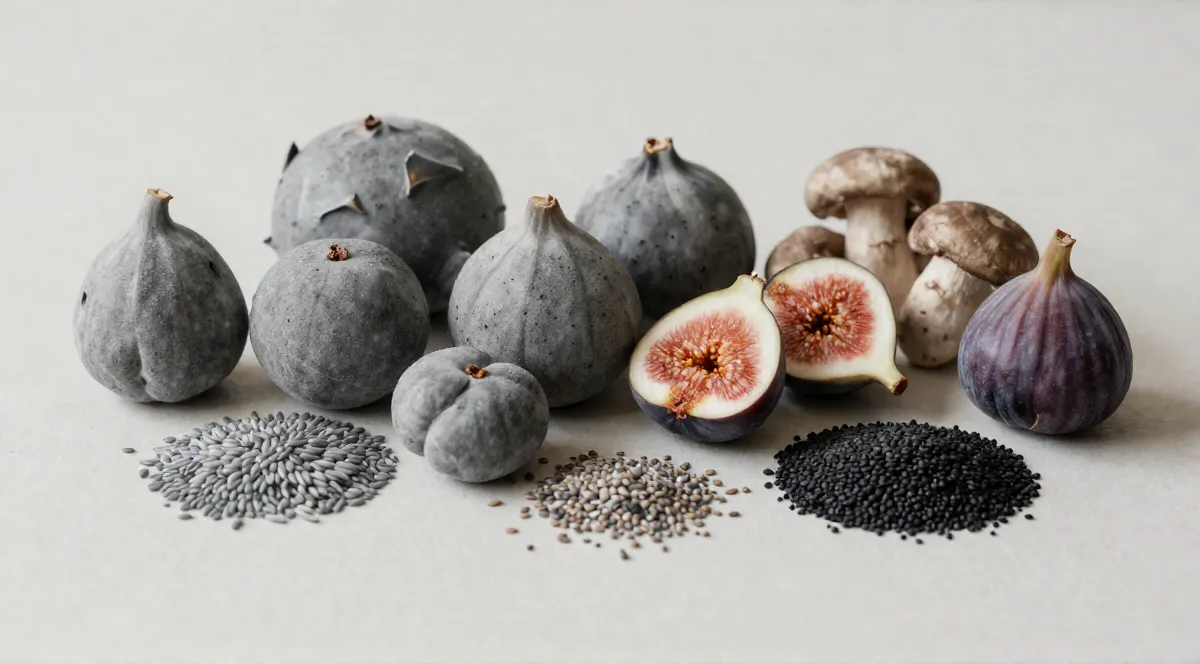
There is no single fruit that is naturally gray all over, but plenty of foods wear a gray skin, a gray rind, or a gray flesh when you slice into them. Gray foods including gray fruits show up across nearly every food group, from fruit bowls and cheese boards to sauté pans and salt cellars.
I pulled this guide together after spending three weeks tasting, photographing, and researching the gray foods that kept popping up in Reddit threads, Quora answers, and specialty food forums. What started as a simple list turned into something bigger, because gray is not just one color. It can mean a dusty bloom on a fresh blueberry, a rough russet patch on a heritage apple, an ash-dusted cheese rind, or the darkening of an eggplant once the flesh meets air.
In 2026, home cooks and curious eaters are finally paying attention to the gray foods that have been hiding in plain sight at farmers’ markets, cheese shops, and specialty grocers. This guide covers gray fruits from around the world, gray vegetables, gray edible mushrooms with their surprising health benefits, gray cheeses and salts, and the science behind why a food turns gray in the first place. You will also learn how to tell the difference between a naturally gray food and one that has simply gone bad.
ContentsTable of Contents
- 1What Are Gray Foods?→
- 2Why Are Some Foods Gray? The Science Behind the Color→
- 3Gray Fruits: The Complete List→
- 4Gray Vegetables Worth Knowing→
- 5Gray Edible Mushrooms and Their Benefits→
- 6Gray Cheeses, Salts, and Specialty Ingredients→
- 7Gray vs Spoiled: How to Tell the Difference→
- 8Nutritional Benefits of Gray Foods→
- 9Frequently Asked Questions→
- 10Are there any naturally grey foods?→
- 11What foods are grey in color?→
- 12Are there any fruits that are grey?→
- 13Which edible mushroom is considered the healthiest?→
- 14What is the healthiest way to eat mushrooms?→
- 15Final Thoughts on Gray Foods→
What Are Gray Foods?
Gray foods are foods whose natural color, whether skin, flesh, rind, or coating, appears gray, grayish-green, silvery-gray, or ash-colored. The gray look can come from natural pigments, a protective wax bloom, surface russeting, ash coatings on cheese, or simple oxidation when the food is cut and exposed to air.
Yes, there are genuinely naturally gray foods. Think of the silvery bloom on a just-picked blueberry, the ash-dusted rind of a Morbier cheese, or the dusty gray skin of a Wood Apple. None of these are spoiled. Each has a story behind its color, and most of those stories come down to one of four mechanisms: bloom, russeting, ash coating, or oxidation.
The word “gray” is broad. In this guide, I treat gray as anything that reads as gray, grayish-green, silvery, ash, slate, or charcoal when you look at the food in natural light. Some foods in this list are not pure gray, but they lean gray enough to confuse shoppers who wonder whether a fruit is fresh or funky.
Why Are Some Foods Gray? The Science Behind the Color
A food appears gray for one of four main reasons, and understanding the difference is the single most useful thing you can learn before you start building a gray foods pantry. I have grouped these into a quick table so you can scan it next time you are staring at a fuzzy plum in the fruit bowl.
| Cause of Gray Color | How It Works | Common Examples |
|---|---|---|
| Bloom coating | Natural waxy powder that protects skin from moisture loss and pests | Blueberries, grapes, plums, damsons |
| Russeting | Rough, corky brownish-gray patches from a natural skin reaction | Gray Pearmain apples, russet pears |
| Ash coating | Edible vegetable ash rubbed on cheese rinds to control moisture and mold | Gray Owl cheese, Morbier, some Alpine styles |
| Oxidation | Enzymatic browning when cut flesh meets oxygen | Baba ganoush (eggplant), cut apples, cut pears |
| Natural pigment | Anthocyanins, tannins, and other pigments that read as slate or charcoal | Black sesame, charcoal-ash vinegar, purple-black jaboticaba |
Bloom is the most common reason a fresh fruit looks gray. That dusty film on blueberries, plums, and grapes is the plant’s own sunscreen, and it is one of the best signs of freshness you can find. If you rinse it off, the fruit underneath is often deeply colored and perfectly ripe.
Russeting happens when the apple or pear skin produces rough patches instead of smooth wax. Heirloom varieties like Gray Pearmain are prized for exactly this texture, and modern shoppers often mistake it for damage.
Ash coating on cheese is intentional. Cheesemakers apply a thin layer of vegetable ash to the rind during aging. The ash raises the surface pH, which encourages the right kind of mold growth and adds a subtle mineral note to the finished cheese.
Oxidation is the gray we usually worry about. When you cut into an eggplant, apple, or avocado, the flesh reacts with oxygen and turns gray or brown. Baba ganoush relies on this reaction, but a sliced apple left on the counter for an hour is usually just oxidation, not spoilage.
Gray Fruits: The Complete List
Are there any fruits that are gray? Yes, several, and they fall into three useful groups: gray-skinned fruits, gray-fleshed fruits, and fruits that appear gray only because of a bloom or a dusty coating. Here is a numbered list of gray fruits from around the world, with origins and notes on why each one looks the way it does.
| Gray Fruit | Origin | Why It Looks Gray |
|---|---|---|
| Wood Apple | Sri Lanka, India, Southeast Asia | Hard gray-brown shell with dark, sticky flesh |
| Baobab Fruit | Africa (sub-Saharan) | Dry, powdery gray-white pulp inside a hard shell |
| Grey Passion Fruit | South America | Greenish-gray rind when ripe, dark aromatic pulp inside |
| Grey Guava | Central and South America | Grayish-green skin, pale cream flesh |
| Kafir Lime | Southeast Asia | Bumpy gray-green rind, aromatic oil in the skin |
| Silverberry | North America, Europe, Asia | Silvery-gray speckled skin with a soft bloom |
| Jaboticaba (Grimal) | Brazil | Deep purple-black skin that reads almost gray when dusty |
| Charleston Gray Melon | United States | Smooth pale gray rind with sweet orange flesh |
| Umeboshi (Salted Plum) | Japan | Cured in brine and shiso leaves, giving a gray-purple dusty finish |
| Dragon Fruit (Pitaya) | Central and South America, Vietnam | Pink skin with white or gray-fleshed varieties dotted with black seeds |
Wood Apple is the fruit that confuses the most people. The shell is hard and gray-brown, and the inside looks almost rotten when you crack it open. The flavor is closer to raisins or tamarind, and the pulp is the basis for a popular Sri Lankan drink called wood apple juice.
Baobab fruit comes from the iconic African baobab tree. Inside the long gray pod is a dry, chalky pulp that tastes like a tangy sherbet. It is one of the most nutrient-dense fruits on earth, with more vitamin C than oranges and more potassium than bananas.
Grey Passion Fruit and Grey Guava are both South American fruits with greenish-gray skin when ripe. They are often overlooked in favor of their purple cousins, but the gray varieties are equally aromatic and slightly less acidic.
Silverberry is a small silvery fruit with a frosted look from its natural speckled skin. It grows on shrubs in cold regions of North America, Europe, and Asia, and the fruit is sweet enough to eat raw once it softens after the first frost.
Dragon fruit deserves a special note, because Reddit users regularly post pictures of a dragon fruit with gray flesh and black seeds and ask if it is safe. The answer is yes. White and gray-fleshed pitaya varieties are normal, and the black seeds are part of the fruit.
Gray Vegetables Worth Knowing
Gray vegetables are less common than gray fruits, but a few standouts show up regularly in farmers’ markets and seed catalogs. Each has a distinctive gray-green or silvery tone that catches the eye long before you slice into it.
Hubbard Squash is one of the largest winter squashes you can grow, with a thick gray-blue shell and dense orange flesh inside. It is sweet, starchy, and ideal for roasting, mashing, or turning into a hearty soup.
Mexican Gray Squash is a pale, dusty-gray summer squash with a delicate flavor. It is popular in Mexican cooking and works well grilled, sautéed, or stuffed.
Eggplant varieties are not exactly gray, but the deep purple-black skin of a ripe eggplant reads as gray to many shoppers, especially once it is roasted. Baba ganoush, the smoky Middle Eastern eggplant dip, depends on the gray-brown color that eggplant flesh turns after cooking.
Black Sesame, while technically a seed, often shows up next to gray vegetables in recipes. The seeds are charcoal-gray and add a nutty, slightly bitter note to desserts, sushi, and savory dishes across East and Southeast Asia.
Gray Edible Mushrooms and Their Benefits
Gray edible mushrooms are some of the most nutritious gray foods you can eat, and they answer several of the most common mushroom questions I see in forums. Oyster mushrooms, gray trich mushrooms, and truffles all wear gray, and each one brings something different to the table.
Oyster mushrooms are one of the healthiest edible mushrooms you can eat. They are high in protein, B vitamins, and selenium, and they are one of the few non-animal sources of vitamin D when grown under UV light. A single serving can deliver close to 25 percent of your daily copper needs.
Gray Trich Mushrooms (Tricholoma) come in many edible varieties across North America and Europe. They have a soft gray cap and a mild, almost sweet flavor that pairs well with cream sauces and egg dishes. Always confirm identification with an expert forager, since some Tricholoma species are not edible.
Truffles are the most famous gray fungi. Black truffles, especially the winter Périgord variety, are deep charcoal-gray with white marbling through the flesh. They are rich in antioxidants and are used sparingly as a finishing ingredient in pasta, eggs, and butter.
What do edible mushrooms do to your body? They feed your gut microbiome with a fiber called beta-glucan, support immune function through compounds like ergothioneine, and provide one of the cleanest plant-based sources of vitamin D on the planet.
Which organ is mushroom good for? Most research points to the immune system and the liver. Regular mushroom eaters tend to have better immune markers, and the antioxidants in gray mushrooms like oyster and shiitake help protect liver cells from everyday oxidative stress.
The healthiest way to eat mushrooms is also the simplest. Cook them on medium heat with a small amount of fat until the water they release has evaporated and they start to brown. This concentrates the flavor and makes their nutrients easier to absorb. Avoid boiling them for long periods, which leaches out the B vitamins.
Gray Cheeses, Salts, and Specialty Ingredients
Gray cheeses and gray salts are where most food lovers first meet the color gray. They show up on cheese boards and at the dinner table, and they are easy to find at any specialty grocer.
Gray Owl Cheese is a soft, surface-ripened goat cheese from Vermont Creamery. The rind is dusted with a thin layer of vegetable ash, which gives it a smooth gray coating and a subtle mineral flavor. The inside is creamy and slightly tangy.
Morbier is a French cheese with a famous horizontal line of vegetable ash running through the middle. The ash was originally used to protect the curd overnight between two milkings, and it now gives the cheese its signature look.
Sel Gris is a gray sea salt hand-harvested from the clay-lined salt pans of Brittany. The clay gives the salt a gray tint and a higher mineral content than standard white sea salt. It is a finishing salt, used sparingly on meats, vegetables, and chocolate desserts.
Earl Grey Tea gets its distinctive flavor from oil of bergamot, but the dry tea leaves themselves often look dusty gray. The black tea base, mixed with the blue-gray rind of the bergamot, gives the blend its muted color.
Gray seafood is also worth mentioning. Oysters have gray shells and a gray-tinged flesh, anchovies turn gray when cured, and some dried fish like Japanese niboshi are a pale silver-gray when dried. They all count toward the broader gray foods list.
Gray vs Spoiled: How to Tell the Difference
This is the question that comes up the most in forums. Shoppers regularly mistake a natural bloom for mold, a russet patch for rot, and an oxidation gray for spoilage. Here is a simple safety guide based on what forum users have asked and what food scientists have answered.
If the gray on your fruit wipes off cleanly with a soft cloth and leaves bright color underneath, it is bloom, not mold. Bloom is a sign of freshness and is completely safe.
If the gray patch is rough, dry, and sits on the surface of an apple or pear, it is russeting. Russeting is harmless. Slice the fruit open and check that the flesh underneath is firm and not discolored.
If the gray is fuzzy, has a musty smell, and grows into the flesh, it is mold. Cut at least an inch around the mold on firm fruits like apples. Soft fruits like peaches and berries should be tossed entirely.
If the gray appears only after you cut into the food, it is oxidation. A sliced eggplant, apple, or avocado that turns gray on the counter is still safe to eat. Browning from oxidation changes color and texture but not safety. If the food also smells sour or feels slimy, that is spoilage.
The one food that genuinely confuses people is the inedible Creeping Fig (Ficus repens), which produces small gray fruit that look edible. Do not eat figs from any plant you cannot identify. The fruits of true edible figs are soft and green or purple when ripe, never hard and gray.
Nutritional Benefits of Gray Foods
Gray foods are surprisingly nutrient-dense. Across fruits, vegetables, mushrooms, cheeses, and salts, gray-toned options tend to deliver more fiber, more antioxidants, and more minerals than their colorful counterparts.
Baobab fruit pulp is one of the most nutrient-dense foods in the world. Six times more vitamin C than oranges, six times more potassium than bananas, and more calcium than milk, all wrapped in a chalky gray-white pulp.
Gray mushrooms like oyster, shiitake, and portobello are the cleanest non-animal source of vitamin D, especially when exposed to sunlight or UV light during growing. They are also high in selenium, copper, and B vitamins like riboflavin and niacin.
Gray-skinned apples and pears are typically higher in fiber than polished commercial varieties. The rough skin holds more of the original nutrients and slows sugar absorption.
Sel Gris (gray sea salt) delivers more trace minerals than standard table salt. Magnesium, calcium, and potassium are all present in meaningful amounts, which makes it a smarter finishing salt for anyone watching their sodium intake.
For balance, umeboshi (Japanese salted plums) are highly acidic and high in sodium, so they are best eaten in small amounts as a condiment. They are an example of a gray food that is nutrient-dense but not meant for daily snacking.
Frequently Asked Questions
Are there any naturally grey foods?
Yes. Naturally gray foods include the dusty bloom on blueberries, grapes, and plums; the russeted skin of Gray Pearmain apples; the ash-dusted rinds of cheeses like Gray Owl and Morbier; the silvery skin of silverberries; and the gray-green rinds of passion fruit and guava varieties. Gray also appears as a flesh color in fruits like dragon fruit and wood apple, and in mushrooms like oyster and gray trich.
What foods are grey in color?
Common gray foods include wood apple, baobab fruit, dragon fruit with gray flesh, silverberry, kafir lime, gray passion fruit, gray guava, Charleston gray melon, oyster mushrooms, gray trich mushrooms, truffles, baba ganoush (roasted eggplant), black sesame, Gray Owl cheese, Morbier cheese, sel gris salt, umeboshi salted plums, and Earl Grey tea leaves.
Are there any fruits that are grey?
Yes. Several fruits have gray skin, gray rind, or gray flesh, including wood apple, baobab, silverberry, kafir lime, gray passion fruit, gray guava, Charleston gray melon, and certain varieties of dragon fruit with grayish-white flesh dotted with black seeds.
Which edible mushroom is considered the healthiest?
Oyster mushrooms are widely considered among the healthiest edible mushrooms. They are high in protein, B vitamins, copper, and selenium, and they are one of the few non-animal sources of vitamin D. Shiitake and maitake mushrooms are also top picks for immune and gut support.
What is the healthiest way to eat mushrooms?
Cook mushrooms on medium heat with a small amount of fat until the water they release evaporates and they begin to brown. This concentrates the flavor and makes nutrients easier to absorb. Avoid boiling mushrooms for long periods, since water-soluble B vitamins leach into the cooking water.
Final Thoughts on Gray Foods
Gray foods including gray fruits are not boring. They are some of the most nutrient-dense, culturally rich, and visually striking options in any kitchen, from the ash-dusted rinds of European cheeses to the dusty blooms of fresh berries, from the silvery skin of a silverberry to the gray-green rind of a passion fruit.
As you explore the gray foods list in 2026, start with one fruit, one mushroom, and one cheese. Try baobab powder in a smoothie, oyster mushrooms in a stir-fry, and Morbier on a cheese board with sel gris. Once you learn the difference between bloom, russeting, ash, and oxidation, you will never confuse a natural gray with a spoiled one again.