Hormones And Weight Loss: The 7 Key Hormones Affecting Your Weight
Disclaimer: betterresultsbook.com contains information about products that are intended for laboratory and research use only, unless otherwise explicitly stated. This information, including any referenced scientific or clinical research, is made available for educational purposes only. Likewise, any published information relative to the dosing and administration of reference materials is made available strictly for reference and shall not be construed to encourage the self-administration or any human use of said reference materials. betterresultsbook.com makes every effort to ensure that any information it shares complies with national and international standards for clinical trial information and is committed to the timely disclosure of the design and results of all interventional clinical studies for innovative treatments publicly available or that may be made available. However, research is not considered conclusive. betterresultsbook.com makes no claims that any products referenced can cure, treat or prevent any conditions, including any conditions referenced on its website or in print materials.
You’ve been doing everything right. Counting calories. Hitting the gym. Getting more steps in. Yet the scale won’t budge – or worse, it’s creeping upward. If this sounds familiar, your hormones may be the missing piece of the puzzle.
Hormones are chemical messengers that control your metabolism, appetite, and fat storage. When these hormones become imbalanced, they can make weight loss extremely difficult – or even impossible – despite your best efforts with diet and exercise.
In my years researching weight management, I’ve seen countless people blame themselves for “failing” at weight loss when the real issue was hormonal. The frustration is real, and it’s valid.
This guide covers the 7 key hormones that affect your weight, how to recognize when they’re out of balance, and evidence-based strategies to optimize them naturally. We’ll also discuss when it’s time to seek professional help.
Medical Disclaimer: This content is for informational purposes only and does not constitute medical advice. Hormone health is complex and individual. Always consult a licensed healthcare provider before making changes to your diet, exercise routine, or considering any treatments.
The 7 Key Hormones That Affect Your Weight
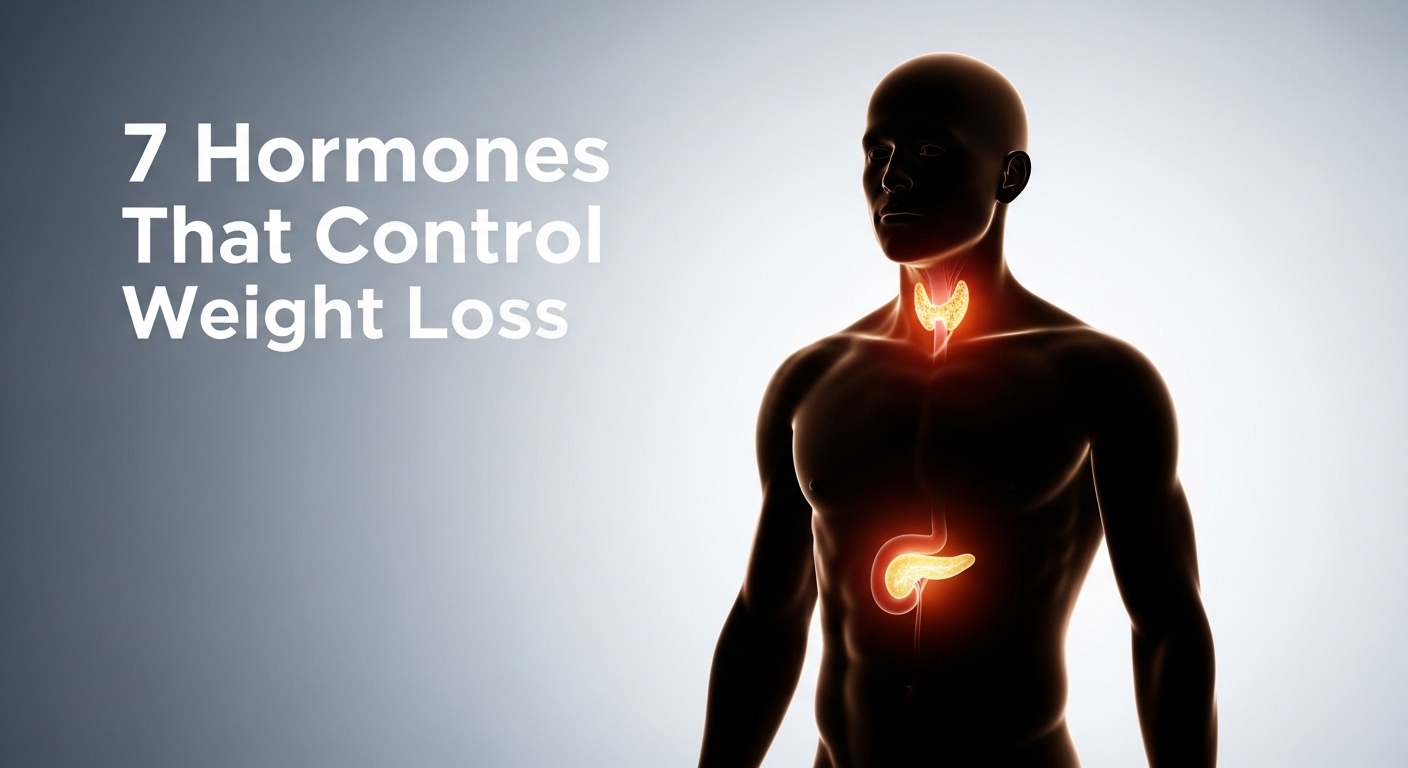
Your body produces dozens of hormones, but seven play the most significant role in weight management. Understanding how each one works can help you identify what might be affecting your progress.
| Hormone | Primary Function | Effect on Weight | Common Issues |
|---|---|---|---|
| Insulin | Regulates blood sugar | Controls fat storage | Insulin resistance |
| Leptin | Signals fullness | Suppresses appetite | Leptin resistance |
| Ghrelin | Triggers hunger | Increases appetite | Elevated after dieting |
| Cortisol | Stress response | Promotes belly fat | Chronic elevation |
| Estrogen | Reproductive function | Affects fat distribution | Menopause decline |
| Thyroid (T3/T4) | Controls metabolism | Sets metabolic rate | Hypothyroidism |
| GLP-1 | Signals fullness | Reduces appetite | Insufficient production |
Let’s explore each hormone in detail and what you can do about it.
Insulin: The Blood Sugar and Fat Storage Hormone
Insulin is the hormone that regulates your blood sugar levels and determines whether your body stores or burns fat. Produced by your pancreas, insulin’s job is to shuttle glucose from your bloodstream into your cells for energy.
Insulin Resistance: A condition where your cells become less responsive to insulin, forcing your pancreas to produce more. This leads to higher blood sugar, increased fat storage, and difficulty losing weight.
When you eat – especially carbohydrates – your blood sugar rises and insulin is released. High insulin levels signal your body to store fat rather than burn it.
The problem develops when insulin levels remain chronically elevated. Over time, your cells become “resistant” to insulin’s signals. Your pancreas compensates by producing even more insulin, creating a cycle that promotes weight gain – particularly around the midsection.
Research suggests that up to 40% of adults may have some degree of insulin resistance, often without knowing it.
Tips to Improve Insulin Sensitivity
- Reduce refined carbohydrates: Choose whole grains over processed options
- Include protein with meals: This helps stabilize blood sugar response
- Exercise regularly: Both cardio and strength training may improve insulin sensitivity
- Consider time-restricted eating: Giving your body breaks from food can help reset insulin response
- Prioritize sleep: Even one night of poor sleep can affect insulin sensitivity
Leptin: The Satiety Hormone
Leptin is known as the “satiety hormone” because it tells your brain when you’ve had enough to eat. Produced by your fat cells, leptin communicates your energy reserves to your hypothalamus.
Here’s the counterintuitive part: people with more body fat actually produce more leptin, not less. So why do they still feel hungry?
The answer is leptin resistance. Similar to insulin resistance, your brain can become less responsive to leptin’s signals over time. Despite having plenty of energy stored as fat, your brain thinks you’re starving – and ramps up hunger accordingly.
This is why many people experience intense cravings and feel out of control around food. It’s not a willpower problem – it’s a hormonal communication breakdown.
Strategies to Support Healthy Leptin Levels
- Avoid very low-calorie diets: Severe restriction can worsen leptin resistance
- Get adequate sleep: Sleep deprivation significantly impacts leptin levels
- Reduce inflammatory foods: Inflammation may interfere with leptin signaling
- Include omega-3 fatty acids: Found in fatty fish, these may support leptin sensitivity
- Exercise moderately: Regular activity appears to help normalize leptin function
Ghrelin: The Hunger Hormone
Ghrelin is your body’s primary hunger hormone, produced mainly in your stomach. When your stomach is empty, ghrelin levels rise, sending urgent “time to eat” signals to your brain.
After you eat, ghrelin levels drop – at least, they should. But here’s where it gets complicated.
When you lose weight, ghrelin levels increase significantly. Your body interprets weight loss as a potential threat to survival and ramps up hunger signals to get you to eat more. This is one major reason why maintaining weight loss can be so challenging.
Studies show that ghrelin levels may remain elevated for a year or more after weight loss, which helps explain why many people regain weight.
How to Manage Ghrelin?
- Prioritize protein: High-protein meals appear to suppress ghrelin more effectively than carbs or fat
- Get 7-9 hours of sleep: Sleep deprivation can increase ghrelin by up to 15%
- Eat regular meals: Skipping meals can cause ghrelin spikes and overeating later
- Lose weight gradually: Slower weight loss may cause less ghrelin rebound
- Include fiber: Fiber-rich foods help keep you feeling full longer
Cortisol: The Stress Hormone and Belly Fat
Cortisol is your body’s primary stress hormone, released by your adrenal glands in response to perceived threats. In short bursts, cortisol is helpful – it provides quick energy and heightened focus.
The problem is chronic stress. When cortisol remains elevated day after day, it can wreak havoc on your weight.
High cortisol promotes fat storage – specifically in the abdominal area, creating what’s often called “cortisol belly.” This visceral fat is particularly concerning because it surrounds your organs and increases risk for metabolic disease.
Chronic cortisol elevation also increases appetite (especially for high-calorie comfort foods), breaks down muscle tissue, disrupts sleep, and can impair thyroid function. It’s a perfect storm for weight gain.
I’ve spoken with many people who discovered that managing stress was more effective for weight loss than any diet they’d tried.
Strategies to Lower Cortisol
- Practice stress reduction: Meditation, deep breathing, and yoga may help lower cortisol
- Limit caffeine: Too much coffee can elevate cortisol levels
- Avoid over-exercising: Excessive high-intensity exercise can raise cortisol
- Prioritize sleep: Poor sleep is one of the biggest cortisol triggers
- Connect with others: Social support appears to buffer stress response
- Spend time in nature: Even 20 minutes outdoors may reduce cortisol levels
Estrogen: Menopause, PCOS, and Weight Distribution
Estrogen is the primary female sex hormone and plays a significant role in where your body stores fat and how efficiently you burn calories. While often associated with women, men also produce estrogen in smaller amounts.
For women, estrogen levels fluctuate throughout life – during menstrual cycles, pregnancy, perimenopause, and menopause. These fluctuations can significantly impact weight.
During perimenopause and menopause, estrogen levels decline dramatically. This shift often causes a redistribution of fat from hips and thighs to the abdominal area. Many women report sudden weight gain during this transition – even without changing their diet or exercise habits.
Low estrogen also affects metabolism, making it harder to burn calories efficiently. Some research suggests metabolic rate may decrease by 200-300 calories per day after menopause.
On the other end of the spectrum, conditions like PCOS (polycystic ovary syndrome) often involve hormonal imbalances including elevated estrogen relative to progesterone, which can also contribute to weight gain and difficulty losing weight.
Supporting Healthy Estrogen Levels
- Strength training: Building muscle may help offset metabolic slowdown
- Eat phytoestrogen-rich foods: Flaxseeds and soy contain plant compounds that may help balance estrogen
- Maintain a healthy weight: Fat tissue produces estrogen, so excess weight can create imbalances
- Limit alcohol: Alcohol consumption can affect estrogen metabolism
- Talk to your doctor about HRT: Hormone replacement therapy may help some women manage menopausal weight gain
Thyroid Hormones: Your Metabolism Controllers
Your thyroid gland produces hormones T3 and T4 that control your metabolic rate – essentially setting the speed at which your body burns calories. When thyroid function is low (hypothyroidism), your metabolism slows down significantly.
Hypothyroidism is surprisingly common, affecting about 5% of the population, with women 5-8 times more likely to develop it than men.
Symptoms of low thyroid function include unexplained weight gain, fatigue, feeling cold, dry skin, constipation, and depression. Many people live with undiagnosed thyroid issues for years.
The good news: thyroid conditions are typically very treatable with medication. If you suspect thyroid issues, it’s worth getting tested.
Supporting Thyroid Health
- Get tested: Ask your doctor for a complete thyroid panel (TSH, T3, T4)
- Ensure adequate iodine: Iodine is essential for thyroid hormone production
- Include selenium: Found in Brazil nuts, selenium supports thyroid function
- Limit goitrogens when raw: Raw cruciferous vegetables may interfere with thyroid in large amounts
- Manage stress: Chronic stress can suppress thyroid function
GLP-1: The Fullness Hormone Behind Modern Weight Loss Medications
GLP-1 (glucagon-like peptide-1) is a hormone released by your gut after eating that signals fullness to your brain and slows stomach emptying. It also stimulates insulin release and helps regulate blood sugar.
Your body naturally produces GLP-1, but some people may not produce enough or may be less sensitive to its effects. This can contribute to overeating and difficulty feeling satisfied after meals.
GLP-1 has gained significant attention because of medications like semaglutide (Ozempic, Wegovy) and tirzepatide (Mounjaro, Zepbound) that mimic this hormone’s effects. These medications have shown remarkable results for weight loss in clinical trials.
FDA Disclaimer: GLP-1 medications are prescription drugs that should only be used under medical supervision. Compounded versions of these medications are not FDA-approved and may not be available in all states. Always consult a healthcare provider to discuss whether these medications are appropriate for you.
Natural Ways to Support GLP-1
- Eat protein-rich foods: Protein appears to stimulate GLP-1 release
- Include fiber: Fiber-rich foods may enhance GLP-1 production
- Eat slowly: Giving your gut time to produce satiety hormones helps you feel full
- Consider probiotics: Gut health may influence GLP-1 production
Signs Your Hormones May Be Affecting Your Weight
How do you know if hormones are behind your weight struggles? While only testing can confirm hormone levels, certain signs may suggest an imbalance worth investigating.
- Weight gain without diet changes: Sudden weight gain despite no changes in eating or exercise habits
- Belly fat accumulation: Gaining weight specifically in the midsection
- Intense food cravings: Uncontrollable urges for sugar, carbs, or fatty foods
- Extreme hunger: Feeling hungry shortly after eating a full meal
- Fatigue and low energy: Feeling exhausted despite adequate sleep
- Difficulty losing weight: Scale won’t budge despite strict calorie counting and exercise
- Mood changes: Unexplained anxiety, depression, or irritability
- Sleep problems: Difficulty falling or staying asleep
- Brain fog: Trouble concentrating or remembering things
- Hair loss or skin changes: Thinning hair, dry skin, or acne
- Irregular periods: Changes in menstrual cycle timing or flow
If you’re experiencing several of these symptoms, hormones may be worth investigating with your healthcare provider.
How to Balance Hormones Naturally for Weight Loss?
While some hormone issues require medical treatment, many people can improve their hormonal balance through lifestyle changes. Here’s a comprehensive approach based on current research.
- Prioritize sleep (7-9 hours): Sleep affects nearly every hormone involved in weight regulation. Even one night of poor sleep can increase ghrelin, decrease leptin, impair insulin sensitivity, and raise cortisol. Make sleep non-negotiable.
- Manage stress actively: Chronic stress keeps cortisol elevated, promoting fat storage and increasing appetite. Find stress-reduction techniques that work for you – whether that’s meditation, yoga, walking, or time with loved ones.
- Exercise regularly – but don’t overdo it: Both cardio and strength training improve insulin sensitivity and help regulate appetite hormones. However, excessive high-intensity exercise can raise cortisol. Aim for balance.
- Eat adequate protein: Protein at each meal helps stabilize blood sugar, increases satiety hormones like GLP-1, and suppresses ghrelin. Aim for 25-30 grams per meal.
- Reduce processed foods and added sugars: These cause blood sugar spikes that disrupt insulin signaling and can worsen leptin resistance. Focus on whole foods instead.
- Include healthy fats: Omega-3 fatty acids from fish, walnuts, and flaxseeds may help reduce inflammation and support hormone balance.
- Don’t restrict calories too severely: Extreme dieting can increase ghrelin, decrease leptin, slow metabolism, and raise cortisol. A moderate deficit (300-500 calories) is more sustainable.
- Support gut health: Your gut microbiome influences hormone production and sensitivity. Include fiber-rich foods, fermented foods, and consider probiotics.
When to See a Doctor About Hormonal Weight Gain?
While lifestyle changes can help, some hormone imbalances require medical evaluation and treatment.
Consider seeing a healthcare provider if:
- You’ve gained significant weight (10+ pounds) without any changes in diet or exercise
- You’re experiencing multiple symptoms of hormone imbalance
- Lifestyle changes haven’t made a difference after 3-6 months
- You have a family history of thyroid disease, diabetes, or PCOS
- You’re going through perimenopause or menopause and struggling with symptoms
Tests to discuss with your doctor:
- Complete thyroid panel (TSH, Free T3, Free T4, thyroid antibodies)
- Fasting insulin and glucose (to assess insulin resistance)
- Hemoglobin A1c
- Sex hormone panel (estrogen, progesterone, testosterone)
- Cortisol testing if chronic stress is suspected
Don’t let anyone dismiss your concerns. Hormones are a legitimate factor in weight management, not an excuse. If your doctor isn’t taking your symptoms seriously, consider seeking a second opinion from an endocrinologist or functional medicine practitioner.
Frequently Asked Questions
How do I balance my hormones to lose weight?
To balance hormones for weight loss, focus on these key strategies: Get 7-9 hours of quality sleep to regulate leptin and ghrelin. Exercise regularly to improve insulin sensitivity. Manage stress to lower cortisol. Eat adequate protein with each meal to stabilize blood sugar. Reduce processed foods and added sugars. Consider hormone testing if symptoms persist despite lifestyle changes.
What are signs your hormones are out of whack?
Common signs of hormonal imbalance include unexplained weight gain (especially around the midsection), intense food cravings, feeling hungry soon after eating, fatigue despite adequate sleep, mood changes, difficulty sleeping, brain fog, hair loss, skin changes, and irregular periods. If you experience multiple symptoms, consider discussing hormone testing with your healthcare provider.
Why am I gaining weight despite eating less?
Weight gain despite eating less often points to hormonal issues. Your body may be experiencing insulin resistance, leptin resistance, low thyroid function, elevated cortisol, or metabolic adaptation from prolonged calorie restriction. Severe calorie restriction can actually slow metabolism and increase hunger hormones, making weight gain more likely. Consider getting hormones tested and avoiding very low-calorie diets.
What hormone makes you lose weight fast?
GLP-1 (glucagon-like peptide-1) is the hormone behind the most effective weight loss medications currently available. Natural GLP-1 signals fullness after meals. Thyroid hormones also significantly impact metabolic rate – if thyroid function is low and corrected with medication, weight loss may follow. However, no single hormone is a magic solution – hormonal balance involves multiple hormones working together.
How long does it take to balance hormones naturally?
Hormone rebalancing through lifestyle changes typically takes 3-6 months to show significant results, though some people notice improvements in sleep and energy within a few weeks. Factors affecting timeline include the severity of imbalance, consistency with lifestyle changes, underlying conditions, and individual metabolism. Medical treatment may work faster for specific conditions like hypothyroidism.
The Bottom Line on Hormones and Weight Loss
Hormones play a significant role in weight management – affecting your appetite, metabolism, fat storage, and energy levels. If you’ve been struggling to lose weight despite doing “everything right,” hormones may be a factor worth investigating.
The good news is that many hormonal imbalances respond well to lifestyle interventions. Prioritizing sleep, managing stress, exercising regularly, and eating a balanced diet with adequate protein can make a meaningful difference for many people.
However, don’t hesitate to seek medical help if needed. Conditions like hypothyroidism, insulin resistance, PCOS, and menopause-related hormone changes may require professional treatment. Your struggles are real – and there are solutions available.
This article is for informational purposes only and does not constitute medical advice. Always consult a licensed healthcare provider before making changes to your diet, exercise routine, or considering any medical treatments for weight management or hormone-related conditions.