Microdosing GLP-1s Trend Doctors Are Discussing 2026
Disclaimer: betterresultsbook.com contains information about products that are intended for laboratory and research use only, unless otherwise explicitly stated. This information, including any referenced scientific or clinical research, is made available for educational purposes only. Likewise, any published information relative to the dosing and administration of reference materials is made available strictly for reference and shall not be construed to encourage the self-administration or any human use of said reference materials. betterresultsbook.com makes every effort to ensure that any information it shares complies with national and international standards for clinical trial information and is committed to the timely disclosure of the design and results of all interventional clinical studies for innovative treatments publicly available or that may be made available. However, research is not considered conclusive. betterresultsbook.com makes no claims that any products referenced can cure, treat or prevent any conditions, including any conditions referenced on its website or in print materials.
When celebrities like Andy Cohen and Rebel Wilson started talking about taking smaller doses of weight loss medications, a new trend emerged: microdosing GLP-1s.
I have been researching this approach for months, digging through clinical studies, Reddit communities, and interviewing healthcare providers about the practice.
Microdosing GLP-1s means taking smaller-than-standard doses of medications like semaglutide (Ozempic, Wegovy) or tirzepatide (Mounjaro, Zepbound) – typically 0.1-0.2mg instead of the standard 0.25mg starting dose.
In this guide, I will break down what the research actually says, who might benefit from this approach, the real risks involved, and where you can access microdosing programs in 2026.
Important: Off-Label Use Disclaimer
Microdosing GLP-1 medications is NOT FDA-approved. The dosing schedules discussed in this article are below manufacturer-recommended amounts and have not been validated in clinical trials for safety or efficacy. Always consult your healthcare provider before starting or modifying any medication regimen.
Key Takeaways
- What it is: Taking GLP-1 doses 50-80% below standard starting amounts
- Common microdoses: Semaglutide 0.05-0.2mg (vs standard 0.25mg); Tirzepatide 1.25-2mg (vs standard 2.5mg)
- Potential benefits: Reduced side effects, lower cost, gentler approach for sensitive individuals
- Key limitation: Limited clinical evidence for effectiveness at microdose levels
- FDA status: Off-label use – not FDA-approved for weight loss at microdose amounts
- Best for: Those with severe side effects at standard doses, weight maintenance, or modest weight loss goals
- Not recommended for: People with significant obesity or those seeking substantial weight loss
What Is Microdosing GLP-1?
Microdosing GLP-1 medications means taking doses below the FDA-recommended starting amounts – often 50-80% lower than standard dosing protocols.
For context, standard GLP-1 titration starts at specific doses designed to minimize side effects while building toward therapeutic levels. Microdosing takes this a step further by staying at even lower amounts, sometimes indefinitely.
According to obesity medicine specialists, the term “microdosing” in the GLP-1 context differs from its use with other substances. Here, it refers to sub-therapeutic doses that may still provide some metabolic benefits without the intensity of full dosing.
GLP-1 Receptor Agonist: A class of medications that mimic the glucagon-like peptide-1 hormone, helping regulate blood sugar, slow gastric emptying, and reduce appetite. Examples include semaglutide (Ozempic, Wegovy) and tirzepatide (Mounjaro, Zepbound).
The practice gained mainstream attention when celebrities began discussing their experiences with lower-dose GLP-1s. Noom launched a dedicated microdosing program in August 2026, enrolling over 10,000 patients within months.
However, medical professionals remain divided. The Cleveland Clinic notes that while microdosing may help some patients, “there is no robust clinical evidence” supporting its effectiveness for weight loss compared to standard dosing protocols.
How Much Is a GLP-1 Microdose?
A microdose of semaglutide typically ranges from 0.05mg to 0.2mg weekly, compared to the standard 0.25mg starting dose that escalates to 2.4mg for weight loss.
For tirzepatide, microdoses generally fall between 1.25mg and 2mg weekly, versus the standard 2.5mg starting dose that can increase to 15mg.
| Medication | Microdose Range | Standard Starting Dose | Full Therapeutic Dose |
|---|---|---|---|
| Semaglutide (Wegovy) | 0.05-0.2mg/week | 0.25mg/week | 2.4mg/week |
| Semaglutide (Ozempic) | 0.05-0.2mg/week | 0.25mg/week | 1.0-2.0mg/week |
| Tirzepatide (Mounjaro/Zepbound) | 1.25-2mg/week | 2.5mg/week | 10-15mg/week |
| Liraglutide (Saxenda) | 0.3-0.6mg/day | 0.6mg/day | 3.0mg/day |
The doses above represent what various providers and patients have explored. These are not FDA-approved dosing schedules and have not been validated in clinical trials.
Some compounding pharmacies offer custom-dosed vials specifically for microdosing, though these compounded medications come with their own regulatory considerations.
Microdosing Semaglutide (Ozempic, Wegovy)
Yes, you can microdose semaglutide, though it is considered off-label use without clinical trial support for this approach.
Semaglutide is the most commonly microdosed GLP-1 medication, partly because it has been available longer and has more real-world user experiences documented in online communities.
How Semaglutide Microdosing Works
The standard FDA-approved titration for Wegovy (semaglutide for weight loss) follows this schedule:
- Weeks 1-4: 0.25mg weekly
- Weeks 5-8: 0.5mg weekly
- Weeks 9-12: 1.0mg weekly
- Weeks 13-16: 1.7mg weekly
- Week 17+: 2.4mg weekly (maintenance dose)
Microdosing protocols may stay at 0.1-0.2mg indefinitely, or use doses like 0.05mg that are not part of standard pen formulations.
Based on user reports from Reddit communities like r/GLP1microdosing, many people report reduced “food noise” even at these lower doses. Food noise refers to the constant thoughts about food that many people experience.
What Users Report
In my research across Reddit threads and patient forums, I found mixed experiences with semaglutide microdosing.
Positive experiences include:
- Fewer gastrointestinal side effects
- Reduced food cravings and “food noise”
- Better tolerance allowing consistent medication use
- Cost savings by stretching medication supply
Challenges reported:
- Slower or minimal weight loss results
- Eventually needing to increase to standard doses
- Difficulty finding medical providers who support microdosing
- Uncertainty about long-term effectiveness
“Users reported fewer side effects at lower doses but uncertain about weight loss effectiveness – it seems like a trade-off between tolerability and results.”
– Summary of Reddit community experiences
Microdosing Tirzepatide (Mounjaro, Zepbound)
Tirzepatide microdosing is an emerging practice with even less research support than semaglutide microdosing.
Tirzepatide works differently from semaglutide because it activates both GLP-1 and GIP receptors (dual agonist). This dual mechanism may produce different effects at lower doses, though research on this specific question is limited.
Tirzepatide Dosing Considerations
The standard tirzepatide titration schedule for Zepbound starts at 2.5mg and can escalate to 15mg weekly:
- Weeks 1-4: 2.5mg weekly
- Weeks 5-8: 5mg weekly
- Weeks 9-12: 7.5mg weekly (optional)
- Weeks 13-16: 10mg weekly
- Week 17+: 12.5-15mg weekly (if needed)
Microdosing tirzepatide might involve staying at 1.25-2mg or splitting the standard 2.5mg dose.
Because tirzepatide is newer than semaglutide, there is less real-world data on microdosing outcomes. The Reddit community r/GLP1microdosing includes tirzepatide discussions, but experiences are more limited.
Important Note: Tirzepatide may have different pharmacokinetics at low doses due to its dual GLP-1/GIP mechanism. Without clinical research, the effects of microdosing tirzepatide remain largely unknown.
Potential Benefits of Microdosing GLP-1s
People explore GLP-1 microdosing for several reasons, though it is important to note that benefits are based largely on user reports rather than clinical trials.
1. Reduced Side Effects
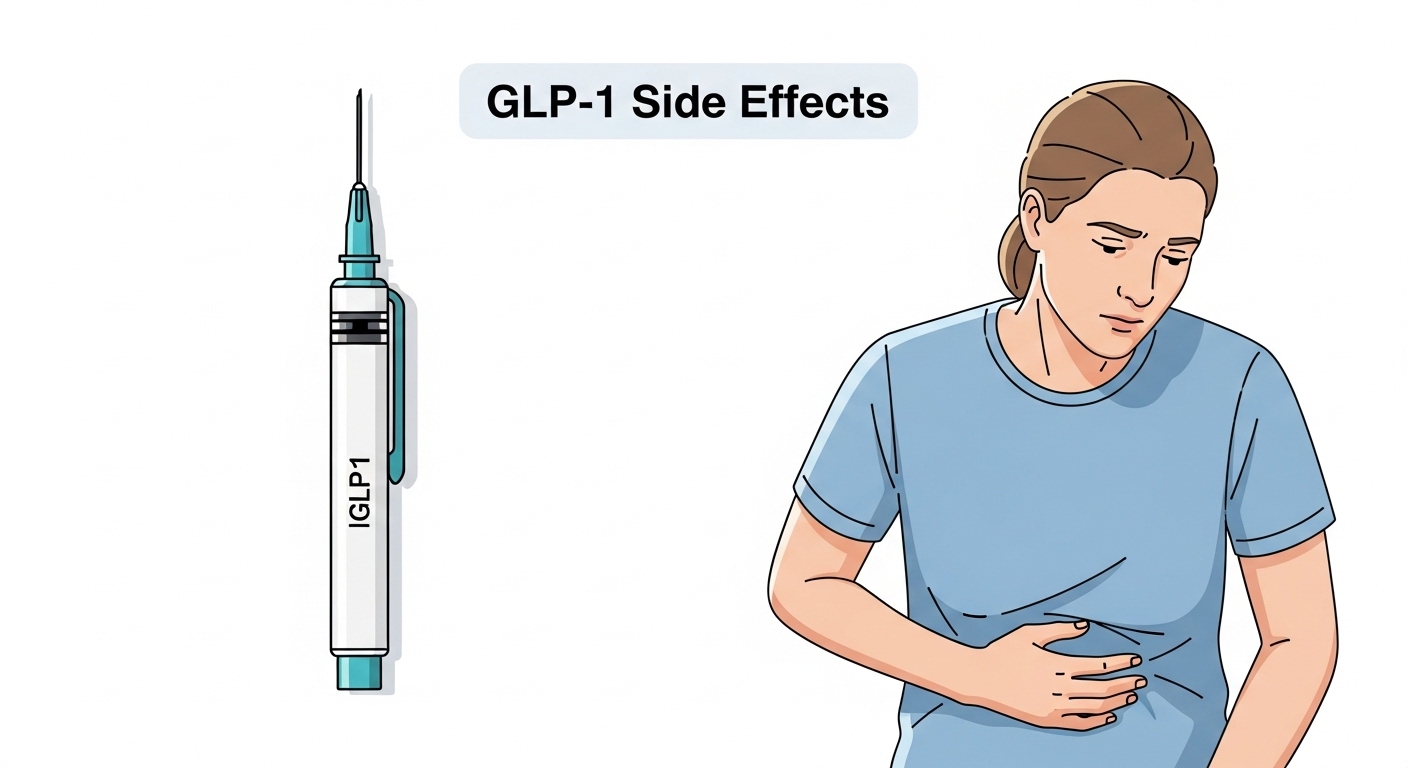
The most commonly cited reason for microdosing is avoiding the gastrointestinal side effects that affect many GLP-1 users at standard doses.
Common side effects at standard doses include:
- Nausea (up to 44% of Wegovy users)
- Vomiting (24% of users)
- Diarrhea (30% of users)
- Constipation (24% of users)
Users report that microdosing may reduce these side effects significantly, allowing them to stay on medication consistently.
2. Lower Medication Costs
GLP-1 medications are expensive – brand-name semaglutide can cost $900-1,300 per month without insurance. Microdosing may stretch medication supply further, reducing monthly costs.
Some compounded semaglutide programs designed for microdosing cost $199-299 per month, significantly less than brand-name options.
3. Gentler Introduction
For people who are sensitive to medications or concerned about starting GLP-1s, microdosing may offer a gentler introduction to the medication class.
This approach has particular appeal to women in perimenopause or menopause, who may be more sensitive to medication side effects due to hormonal changes.
4. Weight Maintenance
After achieving weight loss goals on standard doses, some people explore microdosing for weight maintenance. The theory is that lower doses may help maintain results without the side effects or costs of full therapeutic dosing.
This application may have more promise than using microdosing for initial weight loss, though clinical evidence remains limited.
Risks and Limitations to Consider
Microdosing GLP-1s carries significant risks and limitations that anyone considering this approach should understand.
Limited Clinical Evidence
This is the most significant limitation: there are no clinical trials validating microdosing effectiveness for weight loss.
The FDA-approved doses were determined through extensive clinical trials. Using lower doses means operating outside this evidence base.
As STAT News reported in November 2026, “Physicians and researchers say there is no robust clinical evidence” that microdosing produces meaningful weight loss results.
Reduced Effectiveness
The clinical trials that demonstrated 15-20% body weight loss with semaglutide and tirzepatide used full therapeutic doses. Microdoses may provide significantly less weight loss – or none at all.
Some users report needing to increase to standard doses eventually to see results, raising questions about whether microdosing delays progress.
Compounded Medication Risks
Many microdosing programs use compounded medications rather than brand-name products. This introduces additional considerations:
- Compounded GLP-1s are NOT FDA-approved
- They do not undergo the same safety, efficacy, and quality testing
- Potency and purity may vary between batches
- The FDA has issued warnings about compounded semaglutide products
FDA Warning: Compounded versions of GLP-1 medications are not FDA-approved and do not undergo the same safety, efficacy, and quality testing as brand-name medications. The FDA has issued warnings about adverse events associated with compounded semaglutide products.
Insurance and Coverage Issues
Insurance companies that cover GLP-1s typically require adherence to FDA-approved dosing. Microdosing may not be covered, even if the base medication is on your formulary.
Medical Provider Hesitation
Many healthcare providers are reluctant to prescribe GLP-1s for microdosing because:
- No clinical guidelines support this approach
- Liability concerns with off-label prescribing
- Uncertainty about appropriate monitoring
Users in Reddit forums frequently mention difficulty finding providers willing to support microdosing protocols.
Who May Consider GLP-1 Microdosing?
Based on my research, microdosing may be worth discussing with your doctor if you fall into certain categories.
Potential Candidates
- People with severe GI side effects: If standard doses cause intolerable nausea or vomiting that prevents consistent use
- Weight maintenance patients: Those who have lost weight on GLP-1s and want to maintain results at lower doses
- Modest weight loss goals: People seeking to lose 10-15 pounds rather than significant amounts
- Cost-conscious patients: Those who cannot afford full therapeutic doses and want some benefit
- Sensitive medication responders: People who historically react strongly to medications
- Perimenopause/menopause: Women in midlife who may prefer a gentler approach
Important Requirements
Anyone considering microdosing should:
- Work with a licensed healthcare provider who supports the approach
- Understand this is off-label use without clinical validation
- Have realistic expectations about potential results
- Use reputable sources for medication if using compounded products
- Monitor progress and be willing to adjust approach
Who Should Avoid Microdosing GLP-1s?
Microdosing is not appropriate for everyone. Based on expert guidance, the following groups should likely pursue standard dosing instead.
- People with significant obesity (BMI 35+): Standard doses are needed for meaningful health improvements
- Those seeking substantial weight loss (50+ pounds): Microdoses are unlikely to produce significant results
- People with type 2 diabetes: Blood sugar management typically requires therapeutic doses
- Those with obesity-related health conditions: Heart disease, sleep apnea, or fatty liver may need full treatment
- Anyone without medical supervision: Self-directed microdosing is not recommended
When to See a Doctor: If you are considering microdosing GLP-1s, consult a healthcare provider first. Do not self-adjust doses or use medication without medical supervision. If you experience any adverse effects while microdosing, seek medical attention immediately.
Where to Access GLP-1 Microdosing Programs?
Finding a provider who supports microdosing can be challenging since most telehealth platforms follow standard FDA-approved dosing. Here are some options to consider.
Noom Med – Dedicated Microdosing Program
Weight loss platform offering dedicated GLP-1 microdosing program starting at 0.2mg semaglutide.
Combined with behavioral coaching and habit change support for comprehensive weight management.
Pros
- Dedicated microdosing program|Lower cost than standard GLP-1 programs|Behavioral coaching included|Available to BMI 25+ (lower threshold)
Cons
- Uses compounded medications (not FDA-approved)|Lower doses may have reduced effectiveness|Off-label approach without clinical trial validation
This post contains affiliate links. If you purchase through them, we may earn a commission (at no extra cost to you).
Noom launched their microdosing program in August 2026 and has enrolled over 10,000 patients. They offer compounded semaglutide at doses as low as 0.2mg combined with behavioral coaching.
Midi Health – Menopause-Focused Options
Telehealth platform specializing in menopause care.
Offers flexible GLP-1 dosing including microdosing approaches for midlife women.
Pros
- Specializes in perimenopause and menopause|Flexible dosing including microdosing|Can integrate with hormone therapy|Third-party tested compounded medications
Cons
- Limited to women in perimenopause/menopause|Not available in all states|Compounded options have regulatory uncertainty
This post contains affiliate links. If you purchase through them, we may earn a commission (at no extra cost to you).
Midi Health specializes in women’s health during perimenopause and menopause. They offer flexible GLP-1 dosing approaches including options for those interested in gentler protocols.
Standard GLP-1 Programs (For Comparison)
Full-service telehealth platform offering brand-name GLP-1 medications with comprehensive support.
Note: Ro explicitly states they do NOT offer microdosing protocols.
Pros
- Brand-name FDA-approved medications only|Insurance navigation support|Comprehensive medical oversight|Labs and check-ins included
Cons
- Does not offer microdosing|Medication cost not included in membership|Higher cost than compounded options
This post contains affiliate links. If you purchase through them, we may earn a commission (at no extra cost to you).
Ro explicitly states they do not offer microdosing and focuses on FDA-approved dosing protocols with brand-name medications. This is worth noting if you are specifically looking for microdosing options.
Frequently Asked Questions
Does microdosing GLP-1 work for weight loss?
There is limited clinical evidence supporting microdosing for weight loss. Some users report reduced appetite and modest weight loss, while others see minimal results. The FDA-approved clinical trials that showed 15-20% body weight loss used full therapeutic doses, not microdoses. Results at lower doses may vary significantly and have not been validated in research.
Is microdosing GLP-1 FDA-approved?
No, microdosing GLP-1 medications is NOT FDA-approved. The FDA has approved specific dosing schedules for semaglutide and tirzepatide that are higher than microdosing amounts. Using these medications at lower doses is considered off-label use and should only be done under medical supervision.
How long can you stay on a GLP-1 microdose?
There is no established timeline for GLP-1 microdosing since it is not an FDA-approved approach. Some people use microdoses indefinitely, while others transition to standard doses or stop medication entirely. Work with your healthcare provider to determine the appropriate duration based on your goals and response.
Can you get GLP-1 microdosing covered by insurance?
Insurance coverage for microdosing is unlikely. Insurance companies that cover GLP-1 medications typically require adherence to FDA-approved dosing protocols. Microdosing often uses compounded medications which are generally not covered. Expect to pay out-of-pocket for most microdosing programs.
What is the cheapest way to try GLP-1 microdosing?
Compounded medication programs like Noom Med offer microdosing at $199 per month, significantly less than brand-name GLP-1s which cost $900-1,300 monthly without insurance. However, compounded medications are not FDA-approved and carry additional risks. The cheapest option is not necessarily the safest.
Can you microdose semaglutide and tirzepatide together?
No, you should not combine semaglutide and tirzepatide. These medications work on similar pathways and combining them could increase side effect risks without additional benefits. If you are using one GLP-1 medication, do not add another without explicit guidance from your healthcare provider.
What happens when you stop microdosing GLP-1?
When you stop any GLP-1 medication, including at microdose levels, appetite typically returns to baseline. Many people experience some weight regain after stopping. The extent of regain may depend on lifestyle habits maintained during treatment. Discuss a discontinuation plan with your healthcare provider.
Is microdosing safer than standard GLP-1 doses?
Microdosing may produce fewer side effects like nausea and vomiting, but ‘safer’ is not the right characterization. Lower doses have not been studied for long-term safety. Additionally, microdosing often uses compounded medications which have their own safety considerations not present with FDA-approved products.
The Bottom Line on Microdosing GLP-1s
Microdosing GLP-1 medications is an emerging trend that may offer benefits for specific groups – particularly those who cannot tolerate standard doses or are focused on weight maintenance.
However, this approach comes with significant caveats. There is no clinical evidence supporting microdosing effectiveness for weight loss. The practice is off-label, often relies on compounded medications, and lacks FDA approval.
If you are considering microdosing GLP-1s, work with a qualified healthcare provider who can evaluate whether this approach makes sense for your situation. Do not self-adjust doses or use medication without medical supervision.
For those with significant weight loss goals or obesity-related health conditions, standard FDA-approved dosing protocols are more likely to produce meaningful results.
The bottom line: microdosing may be a reasonable option for the right candidate, but it is not a shortcut to weight loss success.
Medical Disclaimer: This article is for informational purposes only and does not constitute medical advice. Microdosing GLP-1 medications is off-label use and should only be done under the supervision of a qualified healthcare provider. Always consult with your doctor before starting, stopping, or modifying any medication regimen.
FDA Disclaimer: Compounded medications are not FDA-approved and may not be available in all states. The FDA has not evaluated the safety, efficacy, or quality of compounded GLP-1 medications.