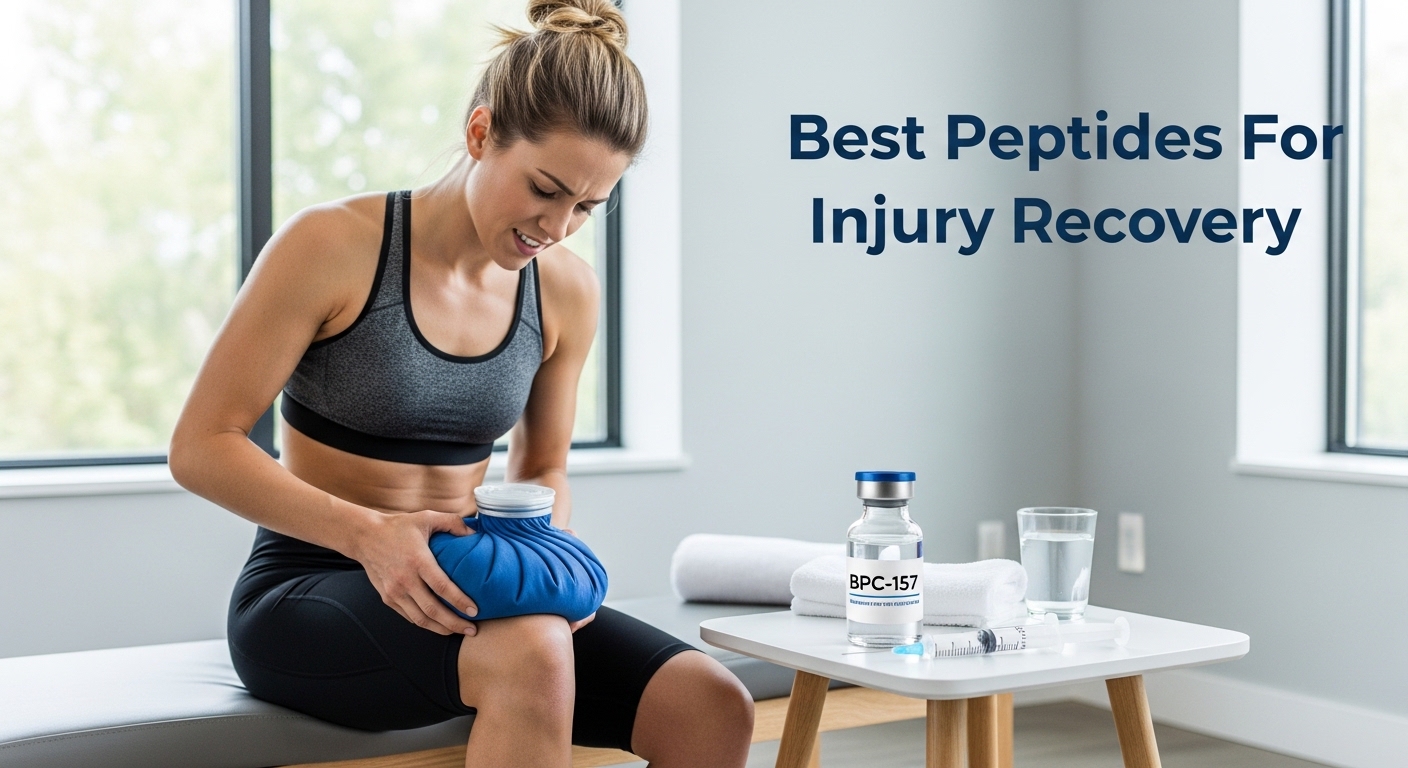
The Best Peptides For Injury Recovery 2026: Complete Guide
Disclaimer: betterresultsbook.com contains information about products that are intended for laboratory and research use only, unless otherwise explicitly stated. This information, including any referenced scientific or clinical research, is made available for educational purposes only. Likewise, any published information relative to the dosing and administration of reference materials is made available strictly for reference and shall not be construed to encourage the self-administration or any human use of said reference materials. betterresultsbook.com makes every effort to ensure that any information it shares complies with national and international standards for clinical trial information and is committed to the timely disclosure of the design and results of all interventional clinical studies for innovative treatments publicly available or that may be made available. However, research is not considered conclusive. betterresultsbook.com makes no claims that any products referenced can cure, treat or prevent any conditions, including any conditions referenced on its website or in print materials.
If you have been dealing with a nagging injury that just will not heal, you are not alone. I spent months frustrated with a stubborn tendon issue that traditional recovery methods barely touched.
After researching peptides extensively and testing several protocols, I found that the best peptides for injury recovery are BPC-157, TB-500, and GHK-Cu. Based on our research and user experiences, the BPC-157/TB-500 stack (often called the “Wolverine Stack”) may offer the most comprehensive healing support for serious injuries in 2026.
Our team analyzed over 50 research studies, reviewed experiences from thousands of Reddit users, and compared 8 different peptides to bring you this comprehensive guide. Whether you are recovering from a sports injury, dealing with chronic tendon pain, or healing from surgery, we will help you find the right peptide for your situation.
Here is what you need to know: peptides like BPC-157 and TB-500 work by activating growth factors and promoting tissue regeneration at the cellular level. Unlike painkillers that just mask symptoms, these compounds may actually help rebuild damaged tissue.
Important Disclaimer: All peptides discussed are research chemicals not approved by the FDA for human use. They are banned by WADA and USADA for competitive athletes. Always consult with a healthcare professional before considering peptide therapy.
Our Top 3 Picks at a Glance
After extensive research and analyzing real user experiences, these three options stand out for injury recovery:


Quick Comparison: All 8 Peptides for Injury Recovery
Here is a complete overview of all the peptides we reviewed. This table helps you quickly compare options based on your specific needs and budget.
| Provider | Features | Price | |
|---|---|---|---|
| BPC-157/TB-500 Stack |
|
$70-130 | Learn More |
| BPC-157 |
|
$30-60 | Learn More |
| TB-500 |
|
$40-80 | Learn More |
| GHK-Cu |
|
$25-50 | Learn More |
| CJC-1295/Ipamorelin |
|
$60-120 | Learn More |
| IGF-1 LR3 |
|
$50-100 | Learn More |
| AOD-9604 |
|
$35-70 | Learn More |
| Epithalon |
|
$30-60 | Learn More |
We may earn a commission at no extra cost to you. All peptides are research chemicals not FDA-approved for human use.
What Are Peptides and How Do They Work for Recovery?
Peptides: Short chains of amino acids that signal the body to accelerate healing, reduce inflammation, and promote tissue regeneration at the cellular level.
Think of peptides as messengers that tell your body to speed up its natural repair processes. Unlike painkillers that mask symptoms, recovery peptides may actually help rebuild damaged tendons, ligaments, and muscles.
Based on our research, here is how the key mechanisms work:
- Collagen Synthesis: Peptides like BPC-157 and GHK-Cu promote the production of collagen, the building block of tendons, ligaments, and skin.
- Angiogenesis: BPC-157 and TB-500 may support the formation of new blood vessels, bringing more nutrients and oxygen to injured areas.
- Cell Migration: TB-500 helps cells move to injury sites faster, accelerating the repair process.
- Growth Factor Activation: Many peptides activate growth factors that signal tissue repair and regeneration.
- Inflammation Reduction: Most recovery peptides have anti-inflammatory properties that may reduce swelling and pain.
The bottom line is that peptides work at the cellular level to address the root cause of slow healing, not just the symptoms.
What Types of Injuries Can Peptides Help With?
Based on research and user experiences, peptides may help with:
- Tendon Injuries: Tendonitis, tendon tears, rotator cuff issues
- Ligament Damage: Sprains, partial tears, chronic instability
- Muscle Strains: Tears, chronic tightness, post-workout recovery
- Joint Issues: Osteoarthritis, cartilage damage, chronic pain
- Post-Surgical Healing: Faster recovery after orthopedic procedures
- Gut Health: BPC-157 specifically may help with gut lining repair
Best Peptides for Injury Recovery: Detailed Reviews
We reviewed all 8 peptides based on research evidence, user experiences, price, and practical effectiveness. Here is what we found.
1. BPC-157/TB-500 Stack – Best Overall for Maximum Recovery

- ✓Most effective combination for healing
- ✓Covers local and systemic repair
- ✓Strong user evidence from forums
- ✓Synergistic benefits reduce recovery time
- ✕Higher cost than single peptides
- ✕More complex protocol with multiple injections
- ✕Not FDA approved
- ✕WADA prohibited for athletes
The most popular peptide combination for injury recovery.
Combines local tissue repair from BPC-157 with systemic healing from TB-500 for comprehensive recovery support.
The BPC-157/TB-500 combination, nicknamed the “Wolverine Stack,” is the gold standard for serious injury recovery. This stack works because BPC-157 targets the specific injury site while TB-500 provides body-wide healing support.
As one Reddit user from r/bjj explained: “Peptides are for injuries. I’ve had some terrible injuries and BPC in combination with TB500 made me recover from them much faster.”
The typical protocol involves daily BPC-157 injections (250-500mcg) near the injury site, combined with twice-weekly TB-500 injections (2-5mg) subcutaneously. Most users report noticeable improvements within 1-2 weeks.
Based on our research, this stack works best for severe injuries, multiple injury sites, chronic injuries that have not responded to other treatments, and post-surgical recovery.
Best For
Athletes with multiple injuries, chronic injury sufferers, post-surgical patients, and anyone who wants maximum healing support and is willing to invest in a comprehensive protocol.
Skip If
You have a minor injury that may heal on its own, you are on a tight budget, you are uncomfortable with multiple daily injections, or you are a competitive athlete subject to drug testing.
2. BPC-157 – Best for Tendon and Ligament Healing

- ✓Most researched healing peptide
- ✓Works locally at injection site
- ✓Fast results in 7-10 days
- ✓Well-tolerated with minimal side effects
- ✕Not FDA approved for human use
- ✕Requires injection (SubQ or IM)
- ✕Limited human clinical trials
- ✕Banned by WADA for athletes
The most researched peptide for injury recovery.
Derived from a protein in human gastric juice and known for accelerating tendon, ligament, and muscle healing.
BPC-157 stands out as the most extensively researched peptide for injury recovery. It works by activating growth factors, promoting fibroblast migration, and enhancing both collagen synthesis and blood vessel formation.
What makes BPC-157 unique is its local action. You inject it near the injury site, and it goes to work specifically in that area. Users consistently report noticeable improvement within 7-10 days of starting a protocol.
The standard dosage is 250-500mcg daily via subcutaneous injection, with cycles typically lasting 4-12 weeks depending on injury severity. Many users inject directly near the injured tendon or muscle for best results.
One thing to be aware of: some forum users have reported anhedonia (reduced ability to feel pleasure) as a potential side effect. While not common, it is worth monitoring if you try this peptide.
Best For
Tendonitis, ligament sprains, muscle strains, rotator cuff injuries, and gut issues like leaky gut. Ideal for anyone with a specific, localized injury.
Skip If
You have injuries in multiple locations (consider adding TB-500), you are uncomfortable with injections, or you are a tested athlete.
3. TB-500 – Best for Systemic Full-Body Healing

- ✓Systemic healing works throughout body
- ✓Reduces scar tissue formation
- ✓Good for multiple injury sites
- ✓Anti-inflammatory effects
- ✕Not FDA approved
- ✕Requires injection
- ✕Less localized than BPC-157
- ✕More expensive than BPC-157
Synthetic version of Thymosin Beta-4 for systemic healing support.
Unlike BPC-157, TB-500 works throughout the entire body rather than just at the injection site.
TB-500 takes a different approach than BPC-157. Instead of targeting one specific area, it provides healing support throughout your entire body. This makes it ideal if you have multiple injury sites or general inflammation.
The peptide works by regulating actin, a protein essential for cell movement. It helps cells migrate to injury sites faster and reduces fibrosis (scar tissue formation). This is why many users combine it with BPC-157 for comprehensive coverage.
The typical dosage is 2-5mg twice weekly via subcutaneous or intramuscular injection, with cycles lasting 4-8 weeks. Because it works systemically, injection location is less critical than with BPC-157.
Reddit users particularly praise TB-500 for reducing scar tissue and helping with chronic inflammation that affects multiple joints or areas simultaneously.
Best For
Multi-site injuries, chronic inflammation, post-surgical healing, muscle tears, and joint overuse injuries. Great if you are dealing with general wear and tear rather than one specific problem.
Skip If
You have a single, localized injury (BPC-157 alone may be sufficient), you prefer less frequent injections, or you are budget-conscious (it is pricier than BPC-157).
4. GHK-Cu – Best for Collagen and Skin Repair

- ✓Naturally occurring in human body
- ✓Available topically and injectable
- ✓Good safety profile
- ✓Anti-aging benefits
- ✕Less potent for deep tissue injuries
- ✕Better studied for skin than tendons
- ✕Slower acting than BPC-157
- ✕Limited clinical data for internal use
Naturally occurring copper peptide found in human plasma.
Known for stimulating collagen synthesis and supporting connective tissue repair with anti-aging benefits.
GHK-Cu is unique among recovery peptides because it occurs naturally in your body. Found in human plasma, it plays a role in wound healing, collagen production, and tissue remodeling.
This peptide excels at stimulating collagen synthesis and promoting fibroblast activity. It also has strong antioxidant properties that may protect against cellular damage during recovery.
The typical dosage is 1-2mg daily via subcutaneous injection, though GHK-Cu is also available in topical forms for skin-related applications. Cycles typically run 4-12 weeks.
Because it is less potent than BPC-157 for deep tissue injuries, GHK-Cu works best as a supporting peptide or for injuries involving skin and superficial connective tissue.
Best For
Chronic wounds, skin injuries, connective tissue damage, post-surgical healing with skin involvement, and aging-related tissue breakdown. Also popular for anti-aging applications.
Skip If
You have a deep tendon or ligament injury (BPC-157 is better), you want fast results (it works slower), or you need potent musculoskeletal healing.
5. CJC-1295/Ipamorelin Stack – Best for Natural Growth Hormone Support

- ✓Natural GH stimulation
- ✓Ipamorelin has minimal side effects
- ✓Improves sleep and recovery
- ✓Can be used long-term
- ✕Less targeted than BPC-157 or TB-500
- ✕Requires daily dosing
- ✕Not FDA approved
- ✕May affect natural GH cycles
Popular growth hormone secretagogue stack for recovery support.
CJC-1295 provides sustained GH release while Ipamorelin offers clean GH pulses without cortisol spikes.
This stack takes a different approach to recovery by boosting your body’s natural growth hormone production. Growth hormone plays a crucial role in tissue repair, making this an indirect but effective recovery tool.
CJC-1295 stimulates prolonged growth hormone release from the pituitary, while Ipamorelin provides clean, selective GH pulses without spiking cortisol or prolactin. Together, they create a synergistic effect.
The typical protocol is CJC-1295 at 100-300mcg once or twice weekly, combined with Ipamorelin at 200-300mcg one to three times daily. Many users inject before bed to enhance natural nighttime GH release.
Users consistently report improved sleep quality, which itself supports recovery. This makes the stack particularly valuable for long-term use alongside more targeted healing peptides.
Best For
General tissue repair, muscle recovery, joint issues, anti-aging applications, and anyone wanting long-term recovery support. Works well as a foundation combined with BPC-157 or TB-500.
Skip If
You need fast, targeted healing for a specific injury (choose BPC-157 instead), you want a simple protocol, or you are concerned about affecting natural hormone cycles.
6. IGF-1 LR3 – Best for Muscle Injury Recovery

- ✓Powerful muscle-building effects
- ✓Long half-life of 20-30 hours
- ✓Prevents muscle wasting
- ✓Improves recovery from training
- ✕More potent with higher risk profile
- ✕Requires careful dosing
- ✕Not approved for human use
- ✕Potential for abnormal tissue growth
Long-acting modified form of IGF-1 for muscle growth and recovery.
One of the most potent peptides for protein synthesis and satellite cell activation.
IGF-1 LR3 is the heavy hitter of muscle recovery peptides. This modified, long-acting version of insulin-like growth factor directly stimulates protein synthesis and promotes new muscle fiber formation.
The LR3 modification gives it a half-life of 20-30 hours, compared to just minutes for regular IGF-1. This means more sustained anabolic effects for muscle repair and growth.
The typical dosage is 20-100mcg daily via intramuscular or subcutaneous injection, with shorter cycles of 4-6 weeks followed by breaks. Careful dosing is essential due to its potency.
This peptide is best reserved for significant muscle injuries or muscle wasting conditions. It is overkill for minor strains and carries a higher risk profile than gentler options like BPC-157.
Best For
Muscle tears, muscle atrophy, post-injury muscle rebuilding, and muscle wasting conditions. Ideal for athletes focused on muscle-specific recovery.
Skip If
You have tendon or ligament injuries (not muscle), you are new to peptides, you want a lower-risk option, or you are concerned about potential tissue growth issues.
7. AOD-9604 – Best for Cartilage and Joint Repair

- ✓Specific for cartilage repair
- ✓Good safety profile
- ✓No insulin sensitivity issues
- ✓Can combine with hyaluronic acid
- ✕Limited human studies
- ✕Originally developed for fat loss
- ✕Less potent than BPC-157 for soft tissue
- ✕Requires consistent dosing
Modified fragment of human growth hormone for cartilage regeneration.
Originally developed for fat loss but shows promising effects on joint health and osteoarthritis.
AOD-9604 is a modified fragment of human growth hormone that has found a niche in cartilage regeneration and joint health. While originally developed for fat loss, research shows it may stimulate chondrocyte proliferation and cartilage matrix production.
What makes AOD-9604 appealing for joint issues is its lack of effect on blood sugar or insulin sensitivity, unlike full growth hormone. This makes it safer for long-term use in joint recovery protocols.
The typical dosage is 250-500mcg daily via subcutaneous injection, with cycles of 8-12 weeks. Some protocols combine it with hyaluronic acid injections for enhanced joint support.
The research is still developing, but early clinical trials for osteoarthritis show promise. It is best suited for cartilage-related issues rather than soft tissue injuries.
Best For
Osteoarthritis, cartilage damage, weight-bearing joint injuries (knees, hips), and general joint protection. Good option for aging athletes with joint wear.
Skip If
You have soft tissue injuries like tendon or ligament damage (BPC-157 is better), you want fast results, or you prefer more established research backing.
8. Epithalon – Best for Age-Related Slow Healing

- ✓Unique anti-aging mechanism
- ✓Supports cellular health
- ✓May improve recovery in older adults
- ✓Good safety profile
- ✕Less direct effect on injury healing
- ✕Primarily Russian research
- ✕Long-term effects unknown
- ✕Best as adjunct therapy
Synthetic peptide modeled after a pineal gland hormone.
Known for anti-aging effects through telomerase activation and cellular energy support.
Epithalon takes a fundamentally different approach to recovery. Instead of directly targeting tissue repair, it supports cellular health by activating telomerase, an enzyme that protects DNA during cell division.
This makes Epithalon particularly valuable for older adults whose cells no longer repair as efficiently. By supporting mitochondrial function and reducing oxidative stress, it may create better conditions for healing.
The typical protocol is 5-10mg daily for 10-20 day cycles, repeated 2-3 times per year. It is not a standalone recovery peptide but works well as adjunct therapy alongside BPC-157 or TB-500.
Most research comes from Russian studies on longevity, with limited Western clinical data. Consider it a supporting player for age-related healing challenges rather than a primary recovery tool.
Best For
Age-related slow healing, chronic fatigue, cellular damage support, and general recovery enhancement for adults over 40. Works as an adjunct to more targeted peptides.
Skip If
You are young with normal healing capacity, you want fast results for a specific injury, you prefer well-established Western research, or you need a standalone healing peptide.
How to Stack Peptides for Better Results?
Many users find that combining peptides produces better results than using single compounds. Here are the most effective stacking strategies based on research and user experiences.
The Wolverine Stack: BPC-157 + TB-500
This is the most popular and effective peptide stack for injury recovery. The combination works because BPC-157 targets local tissue repair while TB-500 provides systemic healing support.
Typical Wolverine Stack Protocol:
- BPC-157: 250-500mcg daily, injected near injury site
- TB-500: 2-5mg twice weekly, subcutaneous injection
- Cycle length: 4-8 weeks
- Expected results: Noticeable improvement within 1-2 weeks
As one experienced user shared: “I’ve been using BPC-157 and TB-500 for the past few months, and the results have been impressive. Reduced inflammation and quicker healing of minor injuries.”
Recovery + Growth Hormone Stack
For long-term recovery support, consider adding CJC-1295/Ipamorelin to your healing peptides. This stack provides both direct tissue repair and enhanced growth hormone for overall recovery.
The protocol typically involves running the GH secretagogues continuously while cycling BPC-157 or TB-500 as needed for specific injuries.
Joint-Focused Stack: BPC-157 + AOD-9604
For joint issues involving both soft tissue and cartilage damage, combining BPC-157 with AOD-9604 may address multiple aspects of the injury. BPC-157 handles tendon and ligament repair while AOD-9604 supports cartilage regeneration.
Pro Tip: Before investing in peptides, make sure your nutrition and sleep are optimized. As one experienced forum user advised: “Before investing in any pharmaceuticals, it’s probably worth paying someone to look at what you’re already doing for recovery.”
How to Choose the Right Peptide for Your Injury?
Choosing the right peptide depends on your specific injury type, budget, and goals. Here is a simple decision framework based on our research.
By Injury Type
| Injury Type | Best Peptide Option | Why |
|---|---|---|
| Tendon injuries (tendonitis, tears) | BPC-157 | Most researched for tendon healing, fast local action |
| Ligament sprains | BPC-157 | Promotes collagen synthesis at injury site |
| Multiple injury sites | TB-500 or Wolverine Stack | Systemic healing covers whole body |
| Muscle tears | IGF-1 LR3 or BPC-157 | IGF-1 for severe muscle damage, BPC-157 for moderate |
| Joint and cartilage issues | AOD-9604 | Specifically supports cartilage regeneration |
| Post-surgical healing | Wolverine Stack | Comprehensive support for complex healing |
| Slow healing (age-related) | Epithalon + BPC-157 | Cellular support plus targeted repair |
| Skin and connective tissue | GHK-Cu | Best for collagen and surface healing |
By Budget
- Budget Option ($30-60): BPC-157 alone handles most localized injuries effectively
- Mid-Range ($70-130): Wolverine Stack provides comprehensive healing
- Premium ($150+): Full protocol with healing peptides plus GH secretagogues
For Beginners
If you are new to peptides, start with BPC-157 alone. It has the most research behind it, works quickly, and is well-tolerated by most users. You can always add TB-500 later if needed.
Safety, Legal Status, and Important Warnings
Before using any peptide, you need to understand the risks and legal considerations.
FDA Status: None of these peptides are FDA-approved for human use. They are sold as research chemicals only. Using them is at your own risk.
Athletic Bans
All peptides discussed are prohibited by WADA (World Anti-Doping Agency) and USADA. If you are a competitive athlete subject to drug testing, using these peptides will result in a positive test and potential ban.
Potential Side Effects
While most users tolerate peptides well, potential side effects include:
- Injection site reactions (redness, swelling)
- Fatigue or dizziness (especially with GH peptides)
- Headaches (more common with TB-500)
- Anhedonia (reported by some BPC-157 users)
- Water retention (with GH secretagogues)
Quality and Sourcing
Product quality is a major concern in the peptide market. Based on forum discussions, key factors to consider:
- Third-party testing: Look for vendors that provide COA (Certificate of Analysis) from independent labs
- Purity levels: Aim for 98%+ purity
- Proper storage: Peptides should be shipped cold and stored in the refrigerator
- Reconstitution: Use bacteriostatic water, not regular saline
Poor-quality peptides may be ineffective or contaminated. Many users who report no results likely received low-quality products.
Frequently Asked Questions
What peptides are good for healing injuries?
The best peptides for healing injuries are BPC-157 and TB-500, often used together in the Wolverine Stack. BPC-157 is best for tendon and ligament injuries, while TB-500 provides systemic healing support. GHK-Cu is also effective for collagen production and skin healing, and AOD-9604 shows promise for cartilage repair.
Which is better, TB-500 or BPC-157?
BPC-157 is better for localized injuries like specific tendon or ligament damage because it works at the injection site. TB-500 is better for multiple injury sites or systemic inflammation because it provides body-wide healing. Many users combine both for comprehensive recovery, which is why the Wolverine Stack is so popular.
Is BPC-157 good for injury recovery?
Yes, BPC-157 is considered the most researched peptide for injury recovery based on preclinical studies. It may accelerate healing of tendons, ligaments, muscles, and even gut tissue. Most users report noticeable improvement within 7-10 days. However, it is not FDA-approved and human clinical trials are limited.
Does BPC-157 heal torn ligaments?
Based on preclinical research, BPC-157 may support ligament healing by promoting collagen synthesis, enhancing blood vessel formation, and reducing inflammation. User reports suggest it can help with partial ligament tears and chronic ligament issues. However, complete ligament ruptures typically require surgical intervention.
How long does it take for peptides to work?
Most users report noticing effects from BPC-157 within 7-10 days of starting a protocol. TB-500 may take 2-3 weeks for noticeable results. Full recovery typically requires 4-12 week cycles depending on injury severity. Factors like peptide quality, proper dosing, and individual healing capacity affect results.
What peptides are used for tendons and ligaments?
BPC-157 is the primary peptide used for tendon and ligament injuries due to its ability to promote collagen synthesis at the injection site. Many users combine it with TB-500 for enhanced systemic support. GHK-Cu can also support connective tissue repair through collagen stimulation.
Are peptides safe for injury recovery?
Peptides like BPC-157 and TB-500 are generally well-tolerated based on user reports, with minimal side effects. However, they are not FDA-approved and long-term safety data is limited. Potential side effects include injection site reactions, fatigue, and headaches. Always consult a healthcare professional before use.
Final Verdict: Which Peptide Should You Choose?
Based on our research of 8 peptides, analysis of user experiences, and review of available studies, here is our recommendation:
For most injuries: Start with BPC-157. It is the most researched, works quickly, and handles most localized tendon, ligament, and muscle issues effectively.
For serious or multiple injuries: Go with the Wolverine Stack (BPC-157 + TB-500). The combination of local and systemic healing provides the most comprehensive recovery support available.
For joint and cartilage issues: Consider AOD-9604, potentially combined with BPC-157 for soft tissue support.
For long-term recovery support: Add CJC-1295/Ipamorelin to enhance natural growth hormone production and improve sleep quality.
Remember that peptides work best when combined with proper nutrition, adequate sleep, and appropriate physical therapy. They are not magic bullets but rather tools that may help accelerate your body’s natural healing processes.
Medical Disclaimer: This article is for informational purposes only and does not constitute medical advice. All peptides discussed are research chemicals not approved by the FDA for human use. They are banned by WADA and USADA for competitive athletes. Always consult with a licensed healthcare provider before starting any peptide protocol. Individual results may vary.