Pregnancy Weight Gain Chart: BMI Guidelines by Trimester 2026
Disclaimer: betterresultsbook.com contains information about products that are intended for laboratory and research use only, unless otherwise explicitly stated. This information, including any referenced scientific or clinical research, is made available for educational purposes only. Likewise, any published information relative to the dosing and administration of reference materials is made available strictly for reference and shall not be construed to encourage the self-administration or any human use of said reference materials. betterresultsbook.com makes every effort to ensure that any information it shares complies with national and international standards for clinical trial information and is committed to the timely disclosure of the design and results of all interventional clinical studies for innovative treatments publicly available or that may be made available. However, research is not considered conclusive. betterresultsbook.com makes no claims that any products referenced can cure, treat or prevent any conditions, including any conditions referenced on its website or in print materials.
Watching the number on the scale climb during pregnancy can bring a mix of emotions. You might wonder if you’re gaining too much, too little, or right on track.
According to the CDC and ACOG, most women with a normal pre-pregnancy BMI should gain 25-35 pounds during pregnancy, but your ideal range depends on your starting weight and whether you’re carrying multiples.
In this guide, you’ll find the official pregnancy weight gain charts, trimester-by-trimester expectations, and practical tips for staying healthy throughout your pregnancy. I’ve included the latest guidelines from the CDC, ACOG, and the Institute of Medicine to give you clear, research-backed answers.
How Much Weight Should You Gain During Pregnancy?
The amount of weight you should gain during pregnancy depends on your pre-pregnancy Body Mass Index (BMI). According to the CDC and the Institute of Medicine (IOM), these recommendations help reduce risks for both you and your baby.
Your BMI is calculated by dividing your weight in kilograms by your height in meters squared. If you don’t know your pre-pregnancy BMI, the CDC offers a free calculator on their website.
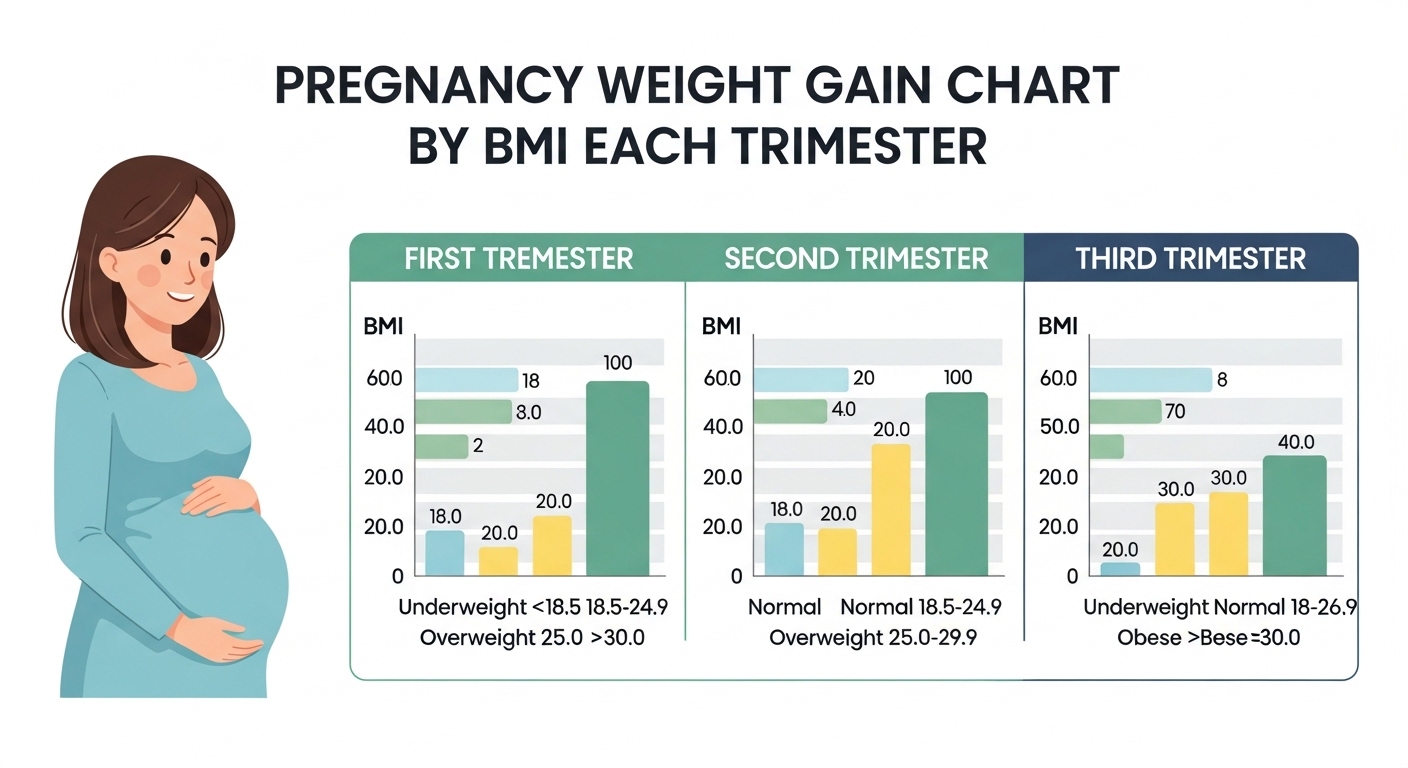
Pregnancy Weight Gain Chart by BMI (Singleton Pregnancy)
| Pre-Pregnancy BMI Category | BMI Range | Recommended Total Weight Gain |
|---|---|---|
| Underweight | Less than 18.5 | 28-40 pounds (12.5-18 kg) |
| Normal Weight | 18.5-24.9 | 25-35 pounds (11.5-16 kg) |
| Overweight | 25.0-29.9 | 15-25 pounds (7-11.5 kg) |
| Obese | 30.0 or higher | 11-20 pounds (5-9 kg) |
Source: Centers for Disease Control and Prevention (CDC) and Institute of Medicine (IOM) Guidelines
Important: These are general guidelines. Your healthcare provider may recommend different targets based on your individual health situation, age, and pregnancy history.
Weight Gain Guidelines for Twin Pregnancy
If you’re expecting twins, your weight gain recommendations are higher than for a singleton pregnancy. Growing two babies requires more energy, nutrients, and physical resources.
The following guidelines come from the IOM and are endorsed by the CDC for twin pregnancies:
Twin Pregnancy Weight Gain Chart by BMI
| Pre-Pregnancy BMI Category | BMI Range | Recommended Total Weight Gain |
|---|---|---|
| Underweight | Less than 18.5 | 50-62 pounds (22.7-28.1 kg) |
| Normal Weight | 18.5-24.9 | 37-54 pounds (16.8-24.5 kg) |
| Overweight | 25.0-29.9 | 31-50 pounds (14.1-22.7 kg) |
| Obese | 30.0 or higher | 25-42 pounds (11.3-19.1 kg) |
Source: Institute of Medicine (IOM) Guidelines for Twin Pregnancy
Twin pregnancies often require more frequent monitoring. Your doctor may adjust these recommendations based on how your pregnancy progresses.
Pregnancy Weight Gain by Trimester
Weight gain during pregnancy doesn’t happen at a steady pace. Understanding what to expect each trimester can help you feel more confident about the changes in your body.
First Trimester (Weeks 1-13)
Most women gain between 0-5 pounds during the first trimester. Some women actually lose weight due to morning sickness or food aversions.
If you experience nausea that limits your eating, don’t panic. According to ACOG, small fluctuations during the first trimester are normal and unlikely to affect your baby’s development.
Your caloric needs don’t increase significantly during this period. Focus on eating nutrient-dense foods when you can tolerate them.
Second Trimester (Weeks 14-27)
The second trimester is when most women notice more consistent weight gain. According to the CDC, you may gain about 0.5-1 pound per week, depending on your BMI category.
This is also when many women feel their best. Morning sickness typically subsides, and appetite often returns.
ACOG recommends adding about 340 extra calories per day during the second trimester. That’s roughly equivalent to a small snack or extra serving at meals.
Third Trimester (Weeks 28-40)
Weight gain often continues at about 0.5-1 pound per week during the third trimester. Some women experience a slowdown in the final weeks before delivery.
Your baby is growing rapidly during this time, along with the placenta, amniotic fluid, and your blood volume. ACOG suggests adding about 450 extra calories per day in the third trimester.
It’s normal for weight gain to fluctuate from week to week. Water retention, especially in the third trimester, can cause temporary increases that don’t reflect actual fat or tissue gain.
Weekly Weight Gain Expectations
The CDC and ACOG provide guidelines for weekly weight gain during the second and third trimesters. These rates vary based on your pre-pregnancy BMI.
Weekly Weight Gain Rate by BMI
| Pre-Pregnancy BMI Category | Weekly Weight Gain (2nd and 3rd Trimester) |
|---|---|
| Underweight (BMI less than 18.5) | 1-1.3 pounds per week |
| Normal Weight (BMI 18.5-24.9) | 0.8-1 pound per week |
| Overweight (BMI 25.0-29.9) | 0.5-0.7 pounds per week |
| Obese (BMI 30.0 or higher) | 0.4-0.6 pounds per week |
Source: CDC and ACOG Guidelines
Pro Tip: Weight gain during pregnancy is rarely linear. You might gain more one week and less the next. What matters most is your overall pattern over time, not week-to-week fluctuations.
Many women in online communities report that their weight gain came in spurts. This is completely normal and shouldn’t cause concern unless your healthcare provider identifies a specific issue.
Where Does Pregnancy Weight Go?
If you’re wondering where all those pregnancy pounds actually go, the answer may surprise you. Only a portion becomes stored body fat.
Here’s a typical breakdown for a 30-pound weight gain during pregnancy:
| Component | Approximate Weight |
|---|---|
| Baby | 7.5 pounds (3.4 kg) |
| Placenta | 1.5 pounds (0.7 kg) |
| Amniotic fluid | 2 pounds (0.9 kg) |
| Uterus growth | 2 pounds (0.9 kg) |
| Breast tissue | 2 pounds (0.9 kg) |
| Increased blood volume | 4 pounds (1.8 kg) |
| Extra body fluid | 4 pounds (1.8 kg) |
| Fat stores (for breastfeeding) | 7 pounds (3.2 kg) |
Source: American College of Obstetricians and Gynecologists (ACOG)
Understanding this breakdown can help ease anxiety about weight gain. Much of the weight serves a specific purpose for pregnancy and breastfeeding, and a significant portion naturally goes away after delivery.
Risks of Gaining Too Much or Too Little Weight
Both excessive and insufficient weight gain during pregnancy may increase certain health risks. Understanding these risks can help you work with your healthcare provider to stay on track.
Risks of Gaining Too Much Weight
According to the CDC and ACOG, gaining more than the recommended amount may increase your risk of:
- Gestational diabetes: Higher weight gain is associated with increased blood sugar levels during pregnancy
- Preeclampsia: A condition involving high blood pressure that can affect both mother and baby
- Cesarean delivery: Studies suggest higher weight gain may increase the likelihood of surgical delivery
- Macrosomia: Having a larger-than-average baby, which can complicate delivery
- Difficulty losing weight postpartum: Excess pregnancy weight may be harder to lose after delivery
Risks of Not Gaining Enough Weight
Gaining less than recommended may also carry risks, including:
- Low birth weight: Babies born under 5.5 pounds may face health challenges
- Preterm birth: Insufficient nutrition may increase risk of early delivery
- Developmental concerns: Inadequate nutrients may affect baby’s growth
Reassurance: Many women gain slightly more or less than guidelines and still have perfectly healthy pregnancies and babies. These are general recommendations, not strict rules. Your healthcare provider will monitor your individual situation.
Tips for Healthy Pregnancy Weight Gain
Staying within recommended weight gain ranges doesn’t require strict dieting. Instead, focus on nourishing your body and your growing baby with balanced nutrition and appropriate activity.
Nutrition Guidelines
- Focus on nutrient-dense foods: Choose whole grains, lean proteins, fruits, vegetables, and healthy fats over processed snacks
- Increase calories gradually: You don’t need extra calories in the first trimester. Add about 340 extra calories in the second trimester and 450 in the third
- Stay hydrated: Aim for 8-12 cups of water daily. Proper hydration supports healthy blood volume and amniotic fluid
- Take prenatal vitamins: These help fill nutritional gaps, especially for folic acid, iron, and calcium
- Eat small, frequent meals: This can help manage nausea and maintain steady energy levels
Physical Activity Recommendations
ACOG recommends at least 150 minutes of moderate-intensity aerobic activity per week during pregnancy, unless your healthcare provider advises otherwise.
Safe activities typically include walking, swimming, prenatal yoga, and stationary cycling. Always consult your doctor before starting or continuing an exercise routine during pregnancy.
Tracking Your Weight
The CDC offers downloadable pregnancy weight gain trackers on their website. These charts let you plot your weight against recommended ranges for your BMI category.
Weigh yourself at consistent times, such as first thing in the morning. Don’t obsess over daily fluctuations, as normal variations occur due to water retention, meals, and other factors.
When to Talk to Your Doctor?
Your healthcare provider will monitor your weight at prenatal appointments, but certain situations warrant a conversation between visits.
Consider reaching out if you experience:
- Sudden rapid weight gain: More than 2 pounds in a week, especially with swelling, may indicate preeclampsia
- No weight gain for several weeks: During the second or third trimester
- Weight loss after the first trimester: Unless specifically advised by your provider
- Difficulty eating due to severe nausea: This may indicate hyperemesis gravidarum
- Anxiety about weight gain: Your provider can offer reassurance and resources
Remember, your prenatal care team is there to support you. If you’re feeling stressed or judged about your weight, communicate openly. A good provider will work with you, not against you.
Frequently Asked Questions
How much weight should I gain during pregnancy?
According to the CDC and IOM guidelines, recommended weight gain depends on your pre-pregnancy BMI. Women with a normal BMI (18.5-24.9) should gain 25-35 pounds, underweight women (BMI under 18.5) should gain 28-40 pounds, overweight women (BMI 25-29.9) should gain 15-25 pounds, and obese women (BMI 30+) should gain 11-20 pounds.
Which week do you start gaining weight in pregnancy?
Most women start noticing consistent weight gain around weeks 12-14, as the first trimester ends. During the first trimester, many women gain 0-5 pounds total, and some even lose weight due to morning sickness. The second and third trimesters are when most pregnancy weight accumulates.
Is it normal to gain 20 lbs by 20 weeks pregnant?
Gaining 20 pounds by 20 weeks is on the higher end but may be normal for some women, especially those who started pregnancy underweight or had minimal first-trimester gain followed by a catch-up period. However, if you’re concerned, discuss your weight gain pattern with your healthcare provider who can evaluate your individual situation.
What is the recommended weight gain for twins?
Twin pregnancy weight gain recommendations are higher than singleton pregnancies. According to IOM guidelines, women with normal BMI should gain 37-54 pounds with twins. Underweight women should gain 50-62 pounds, overweight women 31-50 pounds, and obese women 25-42 pounds.
Where does pregnancy weight go?
Pregnancy weight distributes across multiple areas: baby (7.5 lbs), placenta (1.5 lbs), amniotic fluid (2 lbs), uterus (2 lbs), breast tissue (2 lbs), blood volume (4 lbs), body fluid (4 lbs), and fat stores for breastfeeding (7 lbs). Much of this weight naturally reduces after delivery and during breastfeeding.
In which trimester do you gain the most weight?
Most women gain the most weight during the second and third trimesters, typically 0.5-1 pound per week. The first trimester usually accounts for only 0-5 pounds of total pregnancy weight gain. Weight gain often feels more noticeable in the third trimester as the baby grows rapidly.
What happens if I gain too much weight during pregnancy?
Gaining more than recommended may increase risks of gestational diabetes, preeclampsia, cesarean delivery, and having a larger baby. However, many women exceed guidelines and have healthy pregnancies. Work with your healthcare provider to make gradual adjustments to nutrition and activity if needed.
How do I calculate my pregnancy weight gain?
First, calculate your pre-pregnancy BMI by dividing your weight in kilograms by your height in meters squared, or use the CDC’s BMI calculator. Then, reference the weight gain chart for your BMI category. Track your weight throughout pregnancy and compare it to the recommended range for your gestational week.
The Bottom Line
Healthy pregnancy weight gain varies based on your pre-pregnancy BMI, whether you’re carrying one baby or multiples, and your individual health circumstances. The CDC, ACOG, and IOM provide evidence-based guidelines, but your healthcare provider is your best resource for personalized advice.
Focus on nourishing your body with balanced nutrition, staying reasonably active, and attending regular prenatal appointments. Weight gain during pregnancy serves important purposes for your baby’s development and your own health.
If you’re feeling anxious about the numbers on the scale, remember that many women have healthy pregnancies even when their weight gain doesn’t follow the charts perfectly. What matters most is your overall health and your baby’s wellbeing.
Disclaimer: This content is for informational purposes only and does not constitute medical advice. The information provided is based on guidelines from the CDC, ACOG, and the Institute of Medicine. Always consult a licensed healthcare provider for personalized guidance about your pregnancy weight gain. Individual recommendations may vary based on your health history, age, and specific circumstances.