Semaglutide Diet Plan 2026: 7-Day Meal Plan + Foods to Eat and Avoid
Disclaimer: betterresultsbook.com contains information about products that are intended for laboratory and research use only, unless otherwise explicitly stated. This information, including any referenced scientific or clinical research, is made available for educational purposes only. Likewise, any published information relative to the dosing and administration of reference materials is made available strictly for reference and shall not be construed to encourage the self-administration or any human use of said reference materials. betterresultsbook.com makes every effort to ensure that any information it shares complies with national and international standards for clinical trial information and is committed to the timely disclosure of the design and results of all interventional clinical studies for innovative treatments publicly available or that may be made available. However, research is not considered conclusive. betterresultsbook.com makes no claims that any products referenced can cure, treat or prevent any conditions, including any conditions referenced on its website or in print materials.
Your doctor prescribed semaglutide and told you to “eat less” or “follow a healthy diet.” But what does that actually mean when you are dealing with reduced appetite, potential nausea, and completely different hunger signals?
After researching dozens of clinical studies and analyzing real user experiences, I have put together a complete semaglutide diet plan that may help you maximize your weight loss results while minimizing uncomfortable side effects.
The best diet plan while taking semaglutide focuses on:
- Lean proteins (chicken, fish, eggs, tofu) at every meal to preserve muscle mass
- Fiber-rich vegetables (broccoli, leafy greens, carrots) to support digestion
- Low-glycemic carbs (quinoa, brown rice, oats) for stable blood sugar
- Healthy fats (avocado, nuts, olive oil) in moderate portions
- Plenty of water to stay hydrated and support the medication
This guide includes a complete 7-day meal plan, foods to eat and avoid, and practical tips based on what actually works for people taking semaglutide medications like Ozempic, Wegovy, and Rybelsus.
How Semaglutide Affects Your Appetite and Digestion?
Semaglutide is a GLP-1 receptor agonist that works by mimicking a natural hormone in your body. Understanding how it affects your digestion can help you make smarter food choices.
GLP-1 Receptor Agonist: A medication that mimics the glucagon-like peptide-1 hormone, which regulates blood sugar, slows digestion, and reduces appetite.
The medication slows gastric emptying, meaning food stays in your stomach longer. This is why you feel full faster and stay satisfied longer after eating.
However, this delayed digestion also explains why certain foods can cause problems. Heavy, fatty, or greasy meals may sit in your stomach even longer, leading to nausea, bloating, and discomfort.
Why Diet Matters More on Semaglutide
Research suggests that the foods you choose can significantly impact both your results and how you feel on the medication.
According to clinical studies, patients who followed structured eating plans while on semaglutide experienced better weight loss outcomes and fewer side effects compared to those who did not modify their diets.
The reduced appetite from semaglutide means every bite counts. When you are eating less overall, it becomes crucial to prioritize nutrient-dense foods that provide protein, vitamins, and minerals your body needs.
Many users report that making strategic food choices helped them manage common side effects like nausea, constipation, and fatigue during their weight loss journey.
Best Foods to Eat on Semaglutide
The ideal semaglutide diet focuses on foods that are easy to digest, nutrient-dense, and support your body during weight loss. Here are the key food categories to prioritize.
Lean Proteins
Protein is the most important macronutrient when you are losing weight on semaglutide. It helps preserve muscle mass and keeps you feeling satisfied.
Research suggests aiming for 1.2 to 1.5 grams of protein per kilogram of body weight daily. For a 180-pound person, that translates to roughly 98 to 122 grams of protein per day.
Best protein sources include:
- Chicken breast (31g protein per 4 oz serving)
- Fish and seafood (salmon, cod, shrimp, tilapia)
- Eggs (6g protein each, easy to digest)
- Greek yogurt (15-20g protein per cup)
- Cottage cheese (14g protein per half cup)
- Lean ground turkey or chicken
- Tofu and tempeh (for plant-based options)
- Legumes (lentils, black beans, chickpeas)
Yes, eggs are excellent on semaglutide. They provide high-quality protein, are gentle on the stomach, and can be prepared in many ways without added fats.
Fiber-Rich Foods
Fiber supports healthy digestion and can help manage constipation, a common side effect of semaglutide.
Focus on these fiber sources:
- Non-starchy vegetables (broccoli, spinach, kale, zucchini, bell peppers)
- Legumes (lentils, black beans, chickpeas)
- Berries (strawberries, blueberries, raspberries)
- Whole grains (oats, quinoa, barley)
- Chia seeds and flaxseeds
Start with smaller portions of high-fiber foods and increase gradually. Too much fiber too quickly can worsen digestive discomfort while your body adjusts to the medication.
Low-Glycemic Carbohydrates
Low-glycemic foods help maintain stable blood sugar levels, which is especially important for people using semaglutide for type 2 diabetes.
Best carbohydrate choices:
- Quinoa
- Brown rice
- Steel-cut oats
- Sweet potatoes
- Whole grain bread (in moderation)
- Lentils and beans
Healthy Fats in Moderation
While you should limit high-fat foods, some healthy fats are important for nutrient absorption and satiety.
Good fat sources include:
- Avocado (quarter to half per serving)
- Nuts and seeds (small handful)
- Olive oil (for cooking and dressings)
- Fatty fish (salmon, mackerel)
Keep portions small since fats slow digestion further, which may increase nausea in some people.
Foods to Avoid While Taking Semaglutide
Certain foods can trigger or worsen semaglutide side effects like nausea, bloating, and heartburn. Based on user experiences and clinical recommendations, here are the foods to limit or avoid.
Fried and Greasy Foods
Fried foods are one of the biggest triggers for nausea and digestive discomfort on semaglutide. The high fat content slows digestion even more, leaving food sitting in your stomach.
Foods to skip:
- French fries
- Fried chicken
- Onion rings
- Fried fish
- Fast food items
Spicy Foods
Spicy dishes can irritate an already sensitive digestive system and may worsen heartburn, a common semaglutide side effect.
High-Sugar Foods and Drinks
Sugary foods spike blood sugar and provide empty calories when your reduced appetite means every bite should count.
Limit or avoid:
- Soda and sweetened beverages
- Candy and chocolate
- Pastries and baked goods
- Ice cream
- Fruit juices (eat whole fruit instead)
Alcohol
Alcohol can worsen nausea, increase dehydration, and add empty calories. It may also affect blood sugar levels unpredictably when combined with semaglutide.
If you choose to drink occasionally, limit consumption and never drink on an empty stomach.
Fatty Meats
High-fat cuts of meat take longer to digest and may increase discomfort.
Instead of: ribeye steak, bacon, sausage, lamb chops
Choose: chicken breast, lean ground turkey, fish, pork tenderloin
Carbonated Beverages
Sparkling water, soda, and other carbonated drinks can cause bloating and gas, which may be more pronounced with slowed gastric emptying.
7-Day Semaglutide Diet Plan
This meal plan provides approximately 1,400 to 1,600 calories per day with a focus on protein, fiber, and nutrient-dense foods. Adjust portions based on your individual needs and appetite.
Important: Listen to your body. If you cannot finish a meal, save it for later. Small, frequent meals often work better than three large ones on semaglutide.
Day 1
Breakfast: Greek yogurt parfait with mixed berries and 1 tablespoon chia seeds (approximately 250 calories, 20g protein)
Lunch: Grilled chicken salad with mixed greens, cucumber, tomatoes, and olive oil vinaigrette (approximately 350 calories, 35g protein)
Dinner: Baked salmon (4 oz) with roasted broccoli and quinoa (approximately 450 calories, 32g protein)
Snack: Small handful of almonds and an apple (approximately 200 calories, 5g protein)
Day 2
Breakfast: Two scrambled eggs with sauteed spinach and whole grain toast (approximately 300 calories, 18g protein)
Lunch: Turkey and avocado lettuce wraps with a side of cottage cheese (approximately 350 calories, 28g protein)
Dinner: Lean ground turkey stir-fry with bell peppers, zucchini, and brown rice (approximately 400 calories, 30g protein)
Snack: Greek yogurt with a drizzle of honey (approximately 150 calories, 15g protein)
Day 3
Breakfast: Overnight oats made with almond milk, chia seeds, and sliced banana (approximately 280 calories, 10g protein)
Lunch: Lentil soup with a side salad and lemon dressing (approximately 350 calories, 18g protein)
Dinner: Grilled chicken breast with sweet potato and steamed green beans (approximately 420 calories, 38g protein)
Snack: Celery sticks with 2 tablespoons hummus (approximately 100 calories, 3g protein)
Day 4
Breakfast: Cottage cheese with sliced peaches and a sprinkle of flaxseed (approximately 220 calories, 18g protein)
Lunch: Shrimp and vegetable stir-fry over cauliflower rice (approximately 300 calories, 25g protein)
Dinner: Baked cod with roasted asparagus and wild rice (approximately 380 calories, 30g protein)
Snack: Protein smoothie with spinach, protein powder, and berries (approximately 200 calories, 20g protein)
Day 5
Breakfast: Veggie omelet with mushrooms, peppers, and feta cheese (approximately 280 calories, 20g protein)
Lunch: Quinoa bowl with black beans, corn, avocado, and salsa (approximately 400 calories, 15g protein)
Dinner: Grilled pork tenderloin with roasted Brussels sprouts and mashed cauliflower (approximately 380 calories, 35g protein)
Snack: Hard-boiled egg with cherry tomatoes (approximately 100 calories, 7g protein)
Day 6
Breakfast: Protein pancakes made with oats and egg whites, topped with fresh berries (approximately 300 calories, 22g protein)
Lunch: Grilled chicken Caesar salad with light dressing (hold the croutons) (approximately 350 calories, 35g protein)
Dinner: Turkey meatballs with marinara sauce over zucchini noodles (approximately 380 calories, 32g protein)
Snack: Cucumber slices with tzatziki (approximately 80 calories, 4g protein)
Day 7
Breakfast: Avocado toast on whole grain bread with a poached egg (approximately 320 calories, 14g protein)
Lunch: Tuna salad (made with Greek yogurt instead of mayo) over mixed greens (approximately 300 calories, 30g protein)
Dinner: Herb-roasted chicken thigh (skinless) with roasted root vegetables (approximately 400 calories, 28g protein)
Snack: Small apple with 1 tablespoon almond butter (approximately 150 calories, 4g protein)
Vegetarian Alternatives
If you follow a vegetarian diet, swap animal proteins with these options:
- Tofu or tempeh (20g protein per cup)
- Legumes (lentils, chickpeas, black beans)
- Eggs and dairy (if included in your diet)
- Edamame
- Greek yogurt and cottage cheese
- Seitan (25g protein per 3.5 oz)
Meal Prep Tips for Semaglutide Users
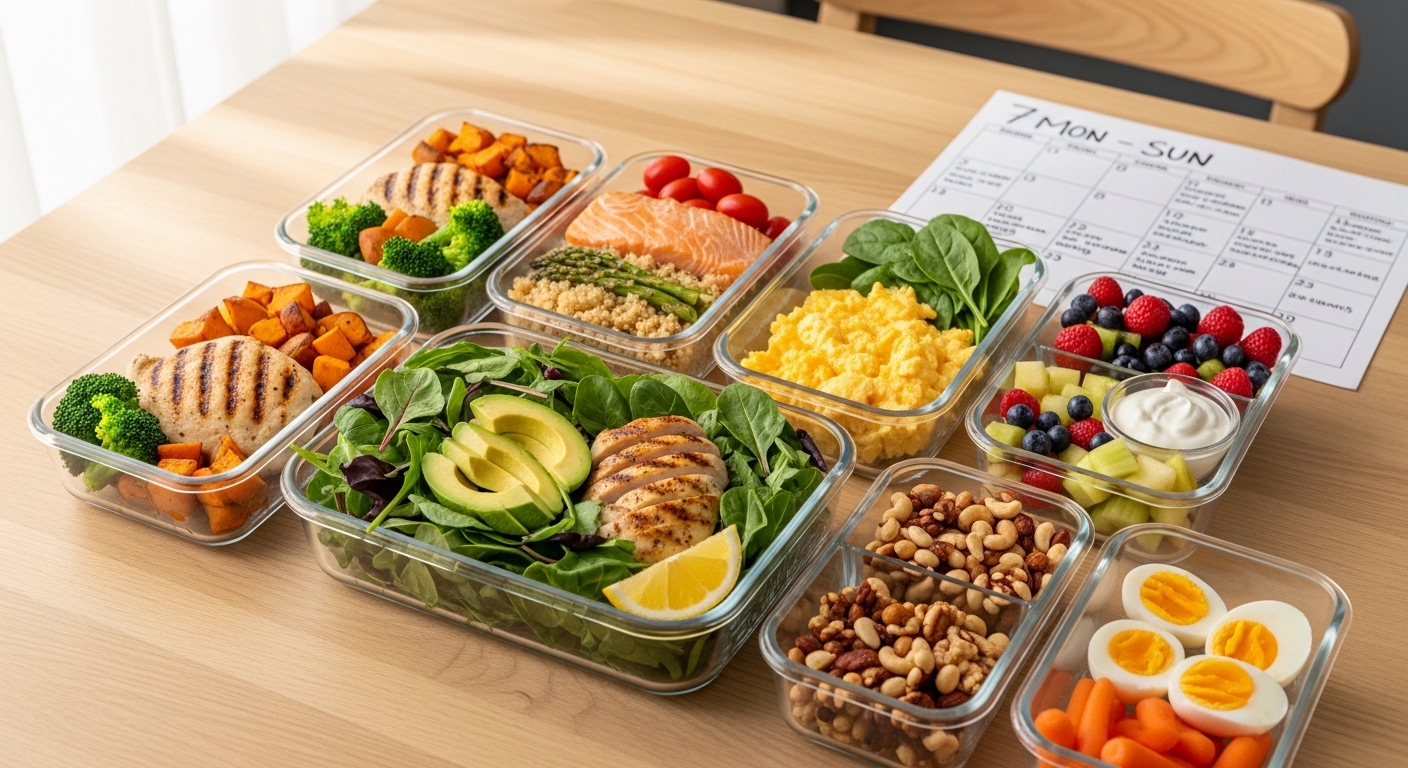
Meal prepping on the weekend can make healthy eating much easier during busy weekdays. Here are practical strategies that work well for people on semaglutide.
Batch Cook Proteins
Grill or bake several chicken breasts, cook a batch of turkey meatballs, or prepare hard-boiled eggs at the start of the week. Store in portioned containers for quick meals.
Prep Vegetables in Advance
Wash, chop, and store vegetables in containers so they are ready to roast, steam, or add to salads. Pre-cut veggies also make great grab-and-go snacks.
Make Grains Ahead
Cook a large batch of quinoa, brown rice, or oats on Sunday. They keep well in the refrigerator for five to six days and can be reheated quickly.
Portion Snacks
Divide nuts, seeds, and other snacks into small containers or bags. This prevents overeating and makes healthy snacking convenient.
Prepare Freezer-Friendly Meals
Soups, stews, and casseroles freeze well and can be lifesavers on days when cooking feels impossible. Make double batches and freeze half for later.
Pro Tip: Keep simple protein options like Greek yogurt, cottage cheese, rotisserie chicken, and canned tuna on hand for days when you do not have time to cook.
Tips to Maximize Weight Loss on Semaglutide
While semaglutide can significantly reduce appetite and support weight loss, these strategies may help you achieve better results and maintain your progress long-term.
1. Prioritize Protein at Every Meal
Aim for at least 25 to 30 grams of protein per meal. This helps preserve muscle mass during weight loss, which is crucial for maintaining your metabolism.
Many semaglutide users report concerns about muscle loss. Adequate protein intake combined with resistance training can help address this issue.
2. Stay Well Hydrated
Drink at least 64 ounces of water daily. Proper hydration supports digestion, may help reduce constipation, and can help you distinguish between hunger and thirst.
3. Eat Smaller, More Frequent Meals
Instead of three large meals, try four to five smaller meals throughout the day. This approach may help reduce nausea and prevent overwhelming your slowed digestive system.
4. Add Regular Physical Activity
Exercise enhances weight loss results and helps preserve muscle mass. Aim for a combination of cardio and resistance training at least three to four times per week.
5. Track Your Food Intake
While you do not need to obsess over calories, keeping a food journal or using an app can help ensure you are getting enough protein and nutrients despite eating less overall.
6. Get Adequate Sleep
Research suggests that poor sleep can interfere with weight loss and increase cravings. Aim for seven to nine hours of quality sleep per night.
7. Be Patient and Consistent
Weight loss on semaglutide typically happens gradually over months. Most clinical studies show significant results at the 12 to 16 week mark, with continued progress through week 68.
Frequently Asked Questions
What is the best diet plan while taking semaglutide?
The best diet plan while taking semaglutide focuses on lean proteins (chicken, fish, eggs), fiber-rich vegetables (broccoli, spinach, legumes), low-glycemic carbohydrates (quinoa, oats, sweet potatoes), and healthy fats in moderation. Avoid fried foods, spicy dishes, and sugary items that can worsen side effects. Eat smaller, more frequent meals throughout the day.
Are eggs ok to eat on semaglutide?
Yes, eggs are an excellent food choice while taking semaglutide. They are a high-quality protein source that helps preserve muscle mass during weight loss. Eggs are also easy to digest and do not typically trigger side effects. Prepare them boiled, poached, or scrambled with minimal added fat for best results.
How many calories should I eat on semaglutide?
Most people on semaglutide benefit from eating 1,200 to 1,600 calories daily for women and 1,500 to 2,000 calories for men, though individual needs vary based on starting weight, activity level, and goals. The medication naturally reduces appetite, making calorie reduction easier. Focus on nutrient-dense foods rather than strict calorie counting, and consult with your healthcare provider for personalized guidance.
What foods should you avoid while taking semaglutide?
Foods to avoid on semaglutide include fried and greasy foods (worsen nausea and bloating), spicy foods (irritate the digestive system), high-sugar foods and drinks, alcohol (increases side effects), fatty cuts of meat, and carbonated beverages. These foods can exacerbate common side effects like nausea, heartburn, and constipation.
How to lose weight faster on semaglutide?
To maximize weight loss on semaglutide: prioritize protein at every meal (1.2-1.5g per kg body weight), eat smaller more frequent meals, add regular exercise including resistance training, stay well-hydrated, track your food intake, get adequate sleep (7-9 hours), and avoid high-calorie trigger foods. Working with a registered dietitian can provide personalized strategies for optimal results.
Final Thoughts
Following a structured semaglutide diet plan can help you get better results from your medication while managing common side effects. Focus on lean proteins, fiber-rich vegetables, and low-glycemic carbohydrates while avoiding foods that trigger digestive discomfort.
Remember that your appetite will naturally decrease on semaglutide, so make every bite count with nutrient-dense choices. The 7-day meal plan above provides a solid starting point that you can customize based on your preferences and needs.
Be patient with your progress and listen to your body as you adjust to the medication.
Disclaimer: Semaglutide (sold under brand names Ozempic, Wegovy, and Rybelsus) is a prescription medication. This article is for informational purposes only and does not constitute medical advice. Always consult your healthcare provider before starting any medication or making significant changes to your diet. Individual results may vary, and what works for one person may not work for another.