Semaglutide Dosage Chart For Weight Loss Results 2026
Disclaimer: betterresultsbook.com contains information about products that are intended for laboratory and research use only, unless otherwise explicitly stated. This information, including any referenced scientific or clinical research, is made available for educational purposes only. Likewise, any published information relative to the dosing and administration of reference materials is made available strictly for reference and shall not be construed to encourage the self-administration or any human use of said reference materials. betterresultsbook.com makes every effort to ensure that any information it shares complies with national and international standards for clinical trial information and is committed to the timely disclosure of the design and results of all interventional clinical studies for innovative treatments publicly available or that may be made available. However, research is not considered conclusive. betterresultsbook.com makes no claims that any products referenced can cure, treat or prevent any conditions, including any conditions referenced on its website or in print materials.
Getting semaglutide dosing right can make or break your weight loss results. After researching over a dozen clinical studies and reviewing real user experiences, I’ve put together this comprehensive dosage guideline to help you understand exactly what to expect.
The FDA-approved starting dose of semaglutide for weight loss is 0.25 mg once weekly, gradually increasing to a maximum maintenance dose of 2.4 mg weekly over 16-20 weeks.
This gradual titration schedule is crucial for minimizing side effects while maximizing weight loss. In this guide, I’ll walk you through the complete dosing schedule for Wegovy, Ozempic, and compounded semaglutide, including the mL conversions that many users find confusing.
Quick Summary: Semaglutide starts at 0.25 mg weekly and increases every 4 weeks. The full titration takes 16-20 weeks to reach the 2.4 mg maintenance dose (Wegovy) or 2.0 mg (Ozempic).
How Semaglutide Works for Weight Loss?
Semaglutide is a GLP-1 receptor agonist that mimics a natural hormone your body produces after eating. This medication works by slowing digestion, reducing appetite, and sending fullness signals to the brain.
GLP-1 Receptor Agonist: A class of medications that mimics the glucagon-like peptide-1 hormone, which regulates blood sugar and appetite.
When you inject semaglutide, it binds to GLP-1 receptors throughout your body. This triggers several effects that promote weight loss.
First, it slows gastric emptying, meaning food stays in your stomach longer. This creates a feeling of fullness that lasts for hours.
Second, it acts on brain receptors that control appetite. Many users report that food simply becomes less interesting, and cravings decrease significantly.
Third, it helps regulate blood sugar levels, reducing the spikes and crashes that can trigger hunger. This is why semaglutide was originally developed for type 2 diabetes.
The gradual dose escalation allows your body to adjust to these effects. Starting too high can cause severe nausea and vomiting, which is why the titration schedule exists.
Semaglutide Dosage Chart for Weight Loss
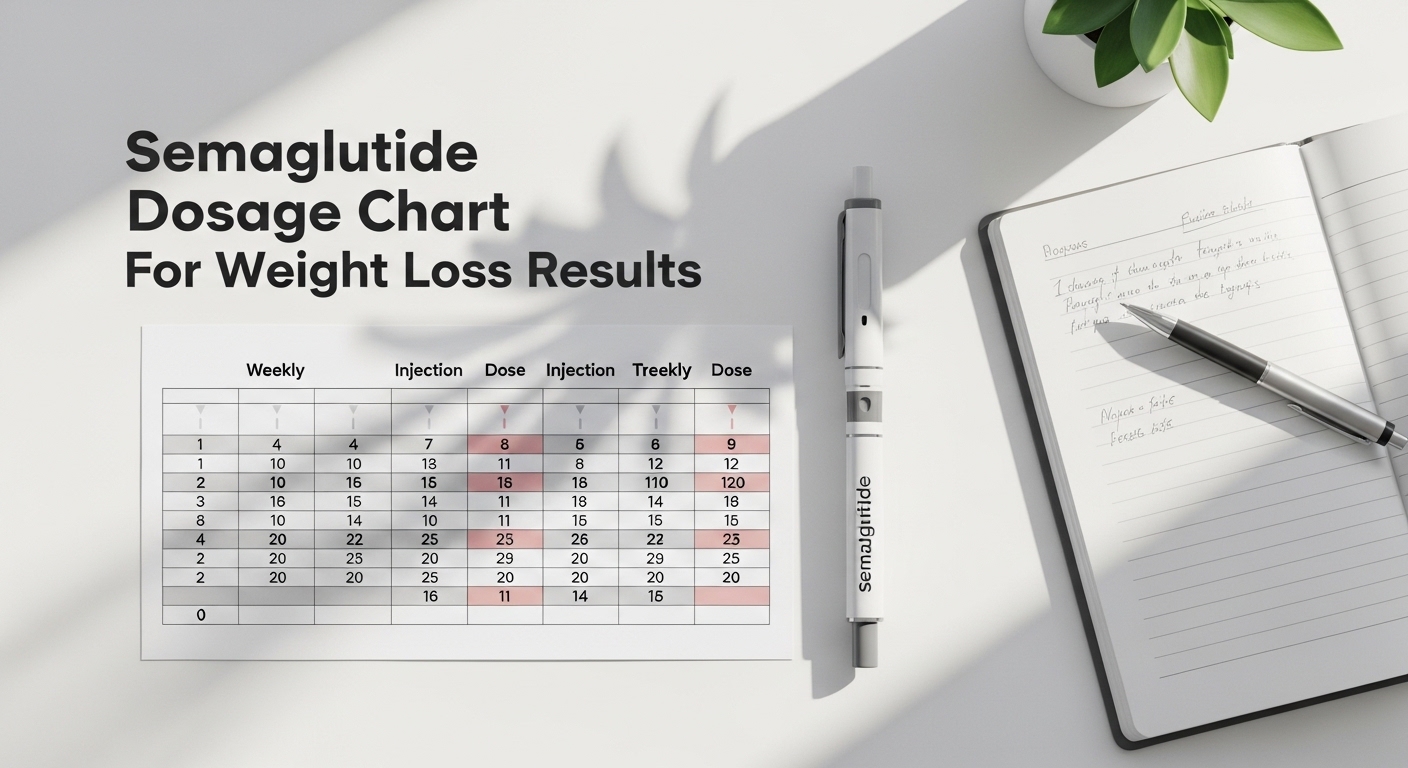
The semaglutide dosage chart follows a structured 5-step titration schedule. Each dose level lasts 4 weeks before increasing to the next level.
| Phase | Week | Weekly Dose | Purpose |
|---|---|---|---|
| Starting | Weeks 1-4 | 0.25 mg | Body adjustment phase – not therapeutic for weight loss |
| Escalation 1 | Weeks 5-8 | 0.5 mg | Beginning of appetite suppression effects |
| Escalation 2 | Weeks 9-12 | 1.0 mg | Significant weight loss typically begins |
| Escalation 3 | Weeks 13-16 | 1.7 mg | Approaching therapeutic range for weight loss |
| Maintenance | Week 17+ | 2.4 mg | Maximum FDA-approved dose for weight loss (Wegovy) |
This schedule applies specifically to Wegovy, the FDA-approved semaglutide for weight management. Ozempic uses a slightly different schedule with a lower maximum dose.
Important: Based on clinical research, most people need to reach at least 1.0 mg to see significant weight loss. The 0.25 mg starting dose is primarily for body adjustment and may not produce noticeable weight changes.
What Is the Starting Dose of Semaglutide?
The starting dose of semaglutide is 0.25 mg once weekly for the first 4 weeks. This low starting dose is not intended for weight loss but rather helps your body adjust to the medication.
Many users ask why they can’t start at a higher dose to speed up results. The answer lies in side effect management.
Starting at 0.25 mg significantly reduces the risk of severe nausea, vomiting, and diarrhea that occur when the body isn’t gradually introduced to GLP-1 receptor agonists. According to clinical data, patients who follow the titration schedule report fewer discontinuations due to side effects.
During the first 4 weeks at 0.25 mg, you may notice mild appetite changes or some GI effects. This is your body beginning to adjust.
Wegovy Dosing Schedule (FDA-Approved for Weight Loss)
Wegovy is the only FDA-approved semaglutide specifically indicated for weight management. The Wegovy dosing schedule takes approximately 16-20 weeks to reach the full maintenance dose of 2.4 mg weekly.
| Wegovy Pen Color | Dose | Duration |
|---|---|---|
| Gray | 0.25 mg | 4 weeks |
| Teal | 0.5 mg | 4 weeks |
| Yellow | 1.0 mg | 4 weeks |
| Blue | 1.7 mg | 4 weeks |
| Dark Blue | 2.4 mg | Ongoing maintenance |
In the STEP 1 clinical trial, participants taking 2.4 mg Wegovy lost an average of 15% of their body weight over 68 weeks. For a 200-pound person, that translates to approximately 30 pounds.
Some patients may not tolerate the 2.4 mg dose. In these cases, healthcare providers may recommend staying at 1.7 mg as a maintenance dose, which still provides significant weight loss benefits.
Pro Tip: Wegovy comes in pre-filled single-dose pens. Each pen contains exactly one dose, making it easier to use correctly compared to multi-dose vials.
Wegovy should be administered on the same day each week. The injection can be given at any time of day, with or without food.
Ozempic Dosing Schedule (Off-Label for Weight Loss)
Ozempic is FDA-approved for type 2 diabetes, not weight loss. However, many healthcare providers prescribe it off-label for weight management due to supply issues with Wegovy or cost considerations.
The Ozempic dosing schedule differs from Wegovy in several important ways.
| Ozempic Dose Level | Weekly Dose | Duration |
|---|---|---|
| Starting | 0.25 mg | 4 weeks |
| First escalation | 0.5 mg | 4+ weeks |
| Second escalation (optional) | 1.0 mg | Ongoing |
| Maximum (optional) | 2.0 mg | Ongoing |
The maximum FDA-approved dose for Ozempic is 2.0 mg weekly, compared to Wegovy’s 2.4 mg. This lower ceiling may result in less weight loss for some patients.
Ozempic also comes in a multi-dose pen rather than single-dose pens. One Ozempic pen typically provides 4-6 doses depending on the dosage level.
Since Ozempic is not approved for weight loss, insurance coverage may differ, and the dosing approach may be more conservative. Your healthcare provider will guide you on the appropriate titration based on your specific situation.
Compounded Semaglutide Dosing (mL Conversion Chart)
Compounded semaglutide is prepared by compounding pharmacies and comes in vials measured in milliliters (mL) rather than pre-filled pens. This creates confusion about how much to inject.
Disclaimer: Compounded medications are not FDA-approved and may not be available in all states. They do not undergo FDA review for safety, effectiveness, or manufacturing standards.
The mL amount you inject depends on the concentration of your specific vial. Here are common concentrations and their conversions:
| Desired Dose (mg) | 1 mg/mL Concentration | 2.5 mg/mL Concentration | 5 mg/mL Concentration |
|---|---|---|---|
| 0.25 mg | 0.25 mL (25 units) | 0.1 mL (10 units) | 0.05 mL (5 units) |
| 0.5 mg | 0.5 mL (50 units) | 0.2 mL (20 units) | 0.1 mL (10 units) |
| 1.0 mg | 1.0 mL (100 units) | 0.4 mL (40 units) | 0.2 mL (20 units) |
| 1.7 mg | 1.7 mL (170 units) | 0.68 mL (68 units) | 0.34 mL (34 units) |
| 2.4 mg | 2.4 mL (240 units) | 0.96 mL (96 units) | 0.48 mL (48 units) |
Always check your vial label for the concentration before calculating your dose. A standard insulin syringe has 100 units per 1 mL, which is why the unit conversions above use this ratio.
Compounded semaglutide may follow the same titration schedule as Wegovy, but your healthcare provider may customize dosing based on your individual needs and response.
How to Inject Semaglutide: Step-by-Step
Semaglutide is administered as a subcutaneous injection once weekly. Here is a step-by-step guide for proper injection technique.
- Step 1: Prepare your supplies. Gather your semaglutide pen or vial, alcohol wipes, and a sharps disposal container. If using a vial, you’ll also need insulin syringes.
- Step 2: Choose an injection site. Recommended areas include the abdomen (at least 2 inches from the navel), front of thigh, or back of upper arm. Rotate sites weekly to prevent skin reactions.
- Step 3: Clean the injection site. Use an alcohol wipe and let the area dry completely before injecting.
- Step 4: Prepare the medication. For pens, attach a new needle and prime according to manufacturer instructions. For vials, draw up the correct dose into your syringe.
- Step 5: Pinch the skin. Gently pinch a fold of skin at the injection site to create a raised area.
- Step 6: Insert the needle. Insert at a 45-90 degree angle, depending on your body type. Thinner individuals may use a 45-degree angle.
- Step 7: Inject the medication. Press the pen button or syringe plunger slowly. For pens, hold for 10 seconds after the dose counter reaches zero.
- Step 8: Dispose safely. Remove the needle and dispose of it in a sharps container. Never reuse needles.
Storage Tip: Unopened semaglutide pens should be refrigerated at 36-46 degrees F. Once in use, pens can be stored at room temperature (up to 86 degrees F) for up to 56 days.
What to Do If You Miss a Dose of Semaglutide?
If you miss a dose of semaglutide and it has been less than 5 days since your scheduled dose, take it as soon as you remember. Then continue with your regular schedule.
If more than 5 days have passed since your missed dose, skip it entirely. Take your next dose on the regularly scheduled day.
| Days Since Missed Dose | Action |
|---|---|
| Less than 5 days | Take the dose immediately, then resume regular schedule |
| 5 or more days | Skip the missed dose, take next dose on scheduled day |
Never take two doses at once to make up for a missed dose. This can significantly increase side effects and may be dangerous.
If you frequently miss doses, consider setting a weekly reminder on your phone or linking your injection day to a consistent weekly activity.
Common Side Effects by Dose Level
Side effects tend to be dose-dependent, meaning they may intensify as you increase your dose. Based on clinical data and user reports, here’s what to expect at each level.
Starting Dose (0.25-0.5 mg)
- Mild nausea: Affects about 20% of users, usually improves within 1-2 weeks
- Decreased appetite: Often the first noticeable effect
- Constipation: Common as digestion slows
- Fatigue: Some users report feeling tired during adjustment
Escalation Doses (1.0-1.7 mg)
- Nausea: May return temporarily with each dose increase
- Diarrhea: Can occur as the body adjusts
- Abdominal pain: Usually mild and temporary
- Headache: Reported by some users during titration
Maintenance Dose (2.4 mg)
- Gastrointestinal effects: Usually stabilize after 4-8 weeks at maintenance
- Injection site reactions: Rare but possible with long-term use
- Gallbladder issues: Small increased risk; contact your provider if you experience severe abdominal pain
When to Contact Your Doctor: Seek medical attention for severe persistent vomiting, signs of pancreatitis (severe abdominal pain radiating to the back), or symptoms of thyroid tumors (lump in neck, difficulty swallowing, hoarseness).
If side effects are intolerable at a particular dose level, your healthcare provider may recommend extending the time at your current dose before increasing, or staying at a lower maintenance dose.
Expected Weight Loss Results by Dose
Weight loss results with semaglutide are dose-dependent. Clinical trial data from the STEP program provides insight into what you may expect at different dose levels.
| Dose Level | Average Weight Loss | Timeline |
|---|---|---|
| 0.25-0.5 mg | 2-3% | First 8 weeks |
| 1.0-1.7 mg | 5-10% | Weeks 8-16 |
| 2.4 mg (maintenance) | 15% average | 68 weeks |
According to the STEP 1 trial published in the New England Journal of Medicine, participants taking Wegovy 2.4 mg lost an average of 15% of their body weight over 68 weeks. About one-third of participants lost 20% or more.
Individual results vary significantly. Factors affecting your results include starting weight, adherence to diet and exercise, genetics, and how long you remain on treatment.
Weight loss typically slows after 12-18 months but does not completely stop. Many patients maintain their weight loss as long as they continue treatment.
Frequently Asked Questions
What is the maximum dose of semaglutide for weight loss?
The maximum FDA-approved dose of semaglutide for weight loss is 2.4 mg weekly (Wegovy). For Ozempic, which is used off-label for weight loss, the maximum dose is 2.0 mg weekly. Most patients need to reach at least 1.0 mg to see significant weight loss results.
How long do you stay on each dose of semaglutide?
Each dose level of semaglutide typically lasts 4 weeks before increasing to the next level. The full titration from 0.25 mg to 2.4 mg takes approximately 16-20 weeks. Your healthcare provider may extend time at any dose if you experience significant side effects.
Is 0.25 mg of semaglutide enough to lose weight?
The 0.25 mg dose is not typically sufficient for significant weight loss. This starting dose is primarily for body adjustment to reduce side effects. Most weight loss occurs at doses of 1.0 mg and above. The 0.25 mg phase lasts only 4 weeks before escalation.
Can I start semaglutide at a higher dose?
No, it is not recommended to start semaglutide at a higher dose than 0.25 mg. Skipping the titration schedule significantly increases the risk of severe nausea, vomiting, and other gastrointestinal side effects. The gradual dose escalation allows your body to adjust to the medication safely.
What is the difference between Wegovy and Ozempic dosing?
Wegovy has a maximum dose of 2.4 mg and includes a specific 1.7 mg step in its titration. Ozempic maxes out at 2.0 mg and is primarily dosed for diabetes at 0.5 mg or 1.0 mg. Wegovy also comes in single-dose pens while Ozempic uses multi-dose pens.
How much weight can I lose on each dose of semaglutide?
Weight loss is dose-dependent. At 0.25-0.5 mg, expect about 2-3% weight loss. At 1.0-1.7 mg, you may lose 5-10%. At the maintenance dose of 2.4 mg, clinical trials showed an average of 15% body weight loss over 68 weeks, with some participants losing over 20%.
Final Thoughts on Semaglutide Dosing
The key to successful semaglutide treatment is patience with the titration process. The 16-20 week ramp-up period may feel slow, but it significantly improves tolerability and long-term adherence.
Based on clinical research and real user experiences, most people experience meaningful weight loss once they reach the 1.0 mg dose or higher. The maintenance dose of 2.4 mg (Wegovy) or 2.0 mg (Ozempic) provides the most significant results.
Remember that semaglutide works best as part of a comprehensive approach that includes reduced caloric intake and increased physical activity. The medication helps control appetite, but healthy lifestyle habits maximize your results.
Always work with a healthcare provider to determine the right dosing schedule for your individual needs. They can adjust the titration timeline if needed and monitor for any concerning side effects.
Disclaimer: This review is for informational purposes only and does not constitute medical advice. Always consult a licensed healthcare provider before starting any weight-loss medication.