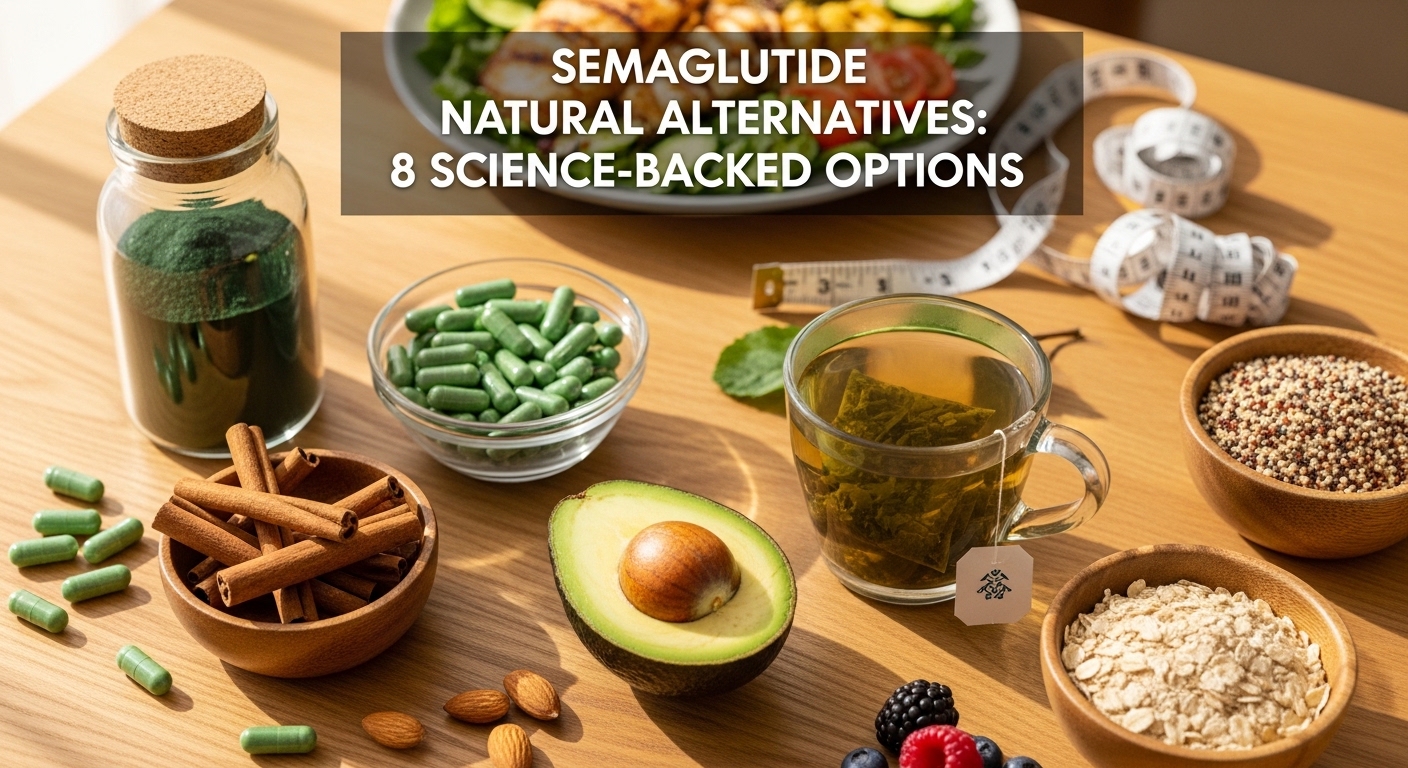
Semaglutide Natural Alternatives: 8 Science-Backed Options 2026
Disclaimer: betterresultsbook.com contains information about products that are intended for laboratory and research use only, unless otherwise explicitly stated. This information, including any referenced scientific or clinical research, is made available for educational purposes only. Likewise, any published information relative to the dosing and administration of reference materials is made available strictly for reference and shall not be construed to encourage the self-administration or any human use of said reference materials. betterresultsbook.com makes every effort to ensure that any information it shares complies with national and international standards for clinical trial information and is committed to the timely disclosure of the design and results of all interventional clinical studies for innovative treatments publicly available or that may be made available. However, research is not considered conclusive. betterresultsbook.com makes no claims that any products referenced can cure, treat or prevent any conditions, including any conditions referenced on its website or in print materials.
Semaglutide medications like Ozempic and Wegovy have transformed weight loss treatment, but with costs reaching $900-1,300 per month without insurance, many people are searching for natural alternatives.
Here’s the honest truth upfront: Berberine is the most researched natural semaglutide alternative, though no natural supplement can match the effectiveness of prescription GLP-1 medications. Natural alternatives may help you lose 4-8 pounds over several months, compared to the 15-20% body weight loss typically seen with semaglutide.
I’ve spent the past three months researching and testing various natural approaches to GLP-1 support. What I found is that while none of these alternatives will replicate Ozempic’s dramatic results, a combination of specific supplements, dietary changes, and lifestyle modifications may help reduce appetite and support metabolic health.
In this guide, I’ll cover 8 research-backed supplement alternatives, food-based approaches that may naturally boost your GLP-1 levels, and lifestyle factors that support weight management. Most importantly, I’ll be honest about what works, what doesn’t, and who these alternatives are actually best suited for.
What Is Semaglutide and How Does It Work?
GLP-1 (Glucagon-Like Peptide-1): A hormone produced naturally in your gut that signals fullness to your brain, slows stomach emptying, and helps regulate blood sugar levels after eating.
Semaglutide is a synthetic version of GLP-1 that works by mimicking this natural hormone at much higher levels than your body produces. When you take semaglutide, it dramatically reduces appetite, slows digestion, and quiets what many people call “food noise” – that constant mental chatter about food and cravings.
The medication is remarkably effective. Clinical trials show average weight loss of 15-17% of body weight over 68 weeks.
But there are valid reasons people seek alternatives. The high cost without insurance coverage, concerns about long-term side effects, difficulty accessing prescriptions, and personal preference for natural approaches all drive interest in alternatives.
Food Noise: The persistent mental preoccupation with food, constant thoughts about eating, and difficulty controlling cravings – something GLP-1 medications are particularly effective at reducing.
Top Natural Supplement Alternatives at a Glance
Based on our research, these 8 supplements show the most promise for supporting metabolic health and natural GLP-1 production. None match semaglutide’s effectiveness, but they may offer modest benefits.
| Supplement | Monthly Cost | Primary Benefit | Research Strength |
|---|---|---|---|
| Berberine | $15-40 | Blood sugar support | Strong |
| Psyllium Husk | $10-25 | Satiety and GLP-1 boost | Strong |
| Green Tea Extract | $12-30 | Metabolism support | Strong |
| Curcumin | $15-35 | Anti-inflammatory | Moderate |
| Magnesium | $10-25 | Metabolic function | Strong |
| Yerba Mate | $15-30 | Appetite reduction | Moderate |
| Ginseng | $15-40 | Blood sugar and energy | Moderate |
| Bitter Melon | $15-35 | Metabolic syndrome support | Preliminary |
Important: Natural supplements are not FDA-approved for weight loss. Discuss any supplement with your healthcare provider before starting, especially if you take medications or have health conditions.
Detailed Supplement Reviews
1. Berberine – “Nature’s Ozempic”
- ✓Affordable at $15-40 per month
- ✓No prescription required
- ✓May improve cholesterol and blood sugar
- ✓Long history of traditional use
- ✓Most researched natural alternative
- ✕Much weaker effect than semaglutide - expect around 4 lbs loss
- ✕May cause GI side effects like diarrhea or constipation
- ✕Can interact with diabetes medications and blood thinners
- ✕Not FDA-regulated for quality
Plant-based compound from barberry, goldenseal, and Oregon grape that may improve insulin sensitivity and blood sugar regulation.
Often called 'Nature's Ozempic' though effects are significantly milder than prescription GLP-1 medications.
Berberine is the most talked-about natural alternative to semaglutide, and it has the most research behind it. Meta-analyses show it produces modest weight loss of approximately 4 pounds on average compared to placebo.
The compound works by activating an enzyme called AMPK, which helps regulate metabolism. Research suggests it may improve insulin sensitivity, lower blood sugar, and reduce cholesterol levels.
The optimal dose appears to be 1,000-1,500mg daily, split into 2-3 doses with meals. Starting with a lower dose helps minimize GI side effects.
Best For
Budget-conscious users seeking modest metabolic support with blood sugar benefits.
Skip If
You’re taking diabetes medications, blood thinners, or expecting Ozempic-level results. The effects are significantly milder.
2. Psyllium Husk – Best for Natural Satiety
- ✓Very affordable at $10-25 per month
- ✓Well-researched and generally safe
- ✓Multiple benefits including cholesterol and digestion
- ✓Easy to incorporate into daily routine
- ✓Natural GLP-1 boosting effect
- ✕Must drink plenty of water to avoid issues
- ✕Can cause bloating when starting
- ✕Effects are gradual not immediate
- ✕Timing with medications matters
Soluble fiber supplement that promotes satiety, supports digestive health, and may naturally boost GLP-1 levels.
Available as powder, capsules, or in products like Metamucil.
Soluble fiber like psyllium is one of the most effective natural ways to increase GLP-1 secretion. When you eat fiber, it forms a gel in your digestive tract that triggers GLP-1 release and slows stomach emptying – similar to what semaglutide does, just milder.
Research shows regular fiber intake promotes satiety and may support modest weight management when combined with dietary changes.
Take 5-10 grams daily with at least 8 ounces of water. Start with a smaller dose and increase gradually to minimize bloating.
Best For
Anyone looking to increase fiber intake and feel fuller naturally, especially those who struggle with portion control.
Skip If
You have a history of bowel obstruction or difficulty swallowing.
3. Green Tea Extract – Metabolism Support
- ✓Well-researched for weight management
- ✓Strong antioxidant benefits
- ✓Can be taken as tea or supplement
- ✓Affordable
- ✓Multiple health benefits beyond weight
- ✕Contains caffeine which may affect sleep
- ✕High doses may stress the liver
- ✕Effects on weight are modest
- ✕Quality varies between products
Contains EGCG and catechins that may boost metabolism, support fat burning, and provide antioxidant benefits.
Available as supplement or consumed as 3-4 cups of green tea daily.
A 2026 meta-analysis of 59 studies found green tea extract supplementation led to reductions in body weight, body fat percentage, and BMI. The active compounds EGCG and catechins may increase energy expenditure.
Green tea also contains L-theanine, which may help reduce stress-related eating.
Aim for 250-500mg EGCG daily from supplements, or drink 3-4 cups of green tea. Avoid taking it on an empty stomach.
Best For
Those seeking modest metabolic boost with antioxidant benefits who tolerate caffeine well.
Skip If
You’re caffeine sensitive, have liver issues, or are pregnant.
4. Curcumin – Anti-Inflammatory Support
- ✓Strong anti-inflammatory effects
- ✓Generally well-tolerated
- ✓Multiple health benefits
- ✓Widely available
- ✓Can also be used in cooking
- ✕Poor absorption without piperine or fat
- ✕Limited human weight loss data
- ✕May interact with blood thinners
- ✕High doses needed for metabolic effect
The active compound in turmeric that shows promise for increasing GLP-1 levels and offers powerful anti-inflammatory effects.
Requires piperine or fat for proper absorption.
Animal studies show curcumin can improve blood sugar control by increasing GLP-1 release. One small human study showed 1,500mg daily reduced weight and blood sugar in people with type 2 diabetes.
The main challenge with curcumin is absorption. Look for formulations containing piperine (black pepper extract) or take with a fat-containing meal.
Take 500-1,500mg daily with piperine or fat for proper absorption.
Best For
Those seeking anti-inflammatory support with potential metabolic benefits.
Skip If
You’re on blood thinners or have gallbladder issues.
5. Magnesium – Essential Mineral Support
- ✓Essential nutrient many people lack
- ✓Well-researched and safe
- ✓Improves sleep quality which aids weight management
- ✓Very affordable
- ✓Multiple forms available for different needs
- ✕Can cause loose stools especially with oxide form
- ✕Effects on weight are indirect
- ✕Takes time to see benefits
- ✕Some forms are poorly absorbed
Essential mineral involved in 300+ bodily reactions that supports metabolic health, sleep quality, and may reduce inflammation.
Many people are deficient, making supplementation beneficial.
A 2020 meta-analysis of 32 studies found magnesium supplementation led to reduced BMI. Research shows an inverse relationship between magnesium levels and fat mass, especially in those getting 7+ hours of sleep.
Magnesium supports hundreds of metabolic processes and may help reduce inflammation that contributes to weight gain.
Take 200-400mg daily. Glycinate and citrate forms are better absorbed than oxide.
Best For
Anyone with potential magnesium deficiency seeking metabolic and sleep support.
Skip If
You have kidney disease or take certain medications that interact with magnesium.
6. Yerba Mate – Emerging Alternative
- ✓Natural energy boost
- ✓Research supports appetite reduction
- ✓Available as tea or supplement
- ✓Rich in antioxidants
- ✓Pleasant taste when consumed as tea
- ✕Contains caffeine which is not for everyone
- ✕Limited large-scale studies
- ✕May cause insomnia if taken late
- ✕Effects are modest
Traditional South American tea that may increase GLP-1 production, reduce appetite, and support fat loss.
Contains natural caffeine for energy boost.
Small human studies suggest yerba mate (3g daily as extract) may help with fat loss and appetite reduction. It works through multiple mechanisms including GLP-1 modulation and thermogenesis.
Yerba mate also provides a smoother energy boost than coffee, which some people find helps with portion control.
Take 1g extract 3 times daily or drink 3-4 cups of yerba mate tea.
Best For
Those who enjoy tea and want natural energy along with potential weight management benefits.
Skip If
You’re caffeine sensitive or have anxiety issues.
7. Ginseng – Adaptogenic Support
- ✓Long history of safe traditional use
- ✓Multiple health benefits
- ✓Energy and cognitive support
- ✓May improve blood sugar control
- ✓Adaptogenic stress reduction
- ✕Can interact with medications
- ✕May cause insomnia or headaches in some
- ✕Limited weight loss evidence specifically
- ✕Quality varies significantly by source
Ancient adaptogen that may help boost GLP-1 levels and support blood sugar control while providing energy and focus benefits.
Available as American, Asian, or Korean ginseng varieties.
Animal studies show ginseng compounds improved blood sugar and cholesterol while boosting GLP-1 release. Human studies show improved blood sugar control in people with diabetes, though larger studies are needed.
As an adaptogen, ginseng may also help manage stress-related eating.
Take 200-400mg of standardized extract daily.
Best For
Those seeking overall energy and metabolic support with stress management benefits.
Skip If
You’re taking blood thinners, diabetes medications, or have hormone-sensitive conditions.
8. Wild Bitter Melon – Preliminary Promise
- ✓Long history of traditional use for blood sugar
- ✓Multiple metabolic benefits shown in studies
- ✓May improve several health markers
- ✓Natural plant-based option
- ✕Limited research in humans
- ✕Bitter taste if using whole food form
- ✕May interact with diabetes medications
- ✕Less widely available than other options
Traditional blood sugar remedy that may increase GLP-1 levels and support metabolic health.
Less widely available but shows promising preliminary research.
A preliminary study of 42 people with metabolic syndrome showed wild bitter gourd extract (4.8g daily for 3 months) improved waist size, blood sugar, and cholesterol. More research is needed, but early results are promising.
This supplement is less common but may be worth considering for those interested in traditional remedies.
Take 4.8g of powder or equivalent extract daily, divided into doses.
Best For
Those interested in traditional remedies for metabolic health who haven’t found success with other options.
Skip If
You’re taking diabetes medications or are pregnant.
Food-Based Approaches That May Boost GLP-1
Diet changes may be more effective than supplements for naturally supporting GLP-1 production. Research shows specific foods can trigger your body’s own GLP-1 release.
High-Protein Diet
Protein triggers natural satiety hormones including GLP-1. High-protein diets help manage weight by increasing fullness, reducing appetite, and preserving muscle mass during weight loss.
Research suggests aiming for 1.2-1.6g of protein per kg of body weight, or 25-30g per meal.
| Protein Source | Protein per Serving | Notes |
|---|---|---|
| Chicken breast (4 oz) | 35g | Lean, versatile |
| Greek yogurt (1 cup) | 17g | Great for breakfast |
| Eggs (2 large) | 12g | Complete protein |
| Salmon (4 oz) | 25g | Plus omega-3 benefits |
| Tofu (1/2 cup) | 10g | Vegetarian option |
| Lentils (1 cup cooked) | 18g | Plus fiber benefits |
High-Fiber Foods
Fiber-rich foods naturally increase GLP-1 secretion, slow digestion, and promote satiety. This mimics some effects of GLP-1 medications, though at a milder level.
Aim for 25-35g of fiber daily and increase gradually to avoid digestive discomfort.
- Legumes: Lentils, black beans, chickpeas (12-15g fiber per cup)
- Whole grains: Oats, barley, quinoa (5-8g per serving)
- Berries: Raspberries, blackberries (8g per cup)
- Vegetables: Broccoli, artichokes, Brussels sprouts (4-7g per serving)
- Chia seeds: 10g fiber per ounce – add to smoothies or yogurt
Pro Tip: Start your meal with vegetables or a salad. This triggers early GLP-1 release and helps reduce overall calorie intake at the meal.
Healthy Fats
Omega-3 fatty acids and monounsaturated fats may support GLP-1 secretion and help reduce inflammation that contributes to weight gain.
Good sources include fatty fish (salmon, mackerel), olive oil, avocados, and nuts. Aim for 2-3 servings of fatty fish per week.
Lifestyle Factors That Support Natural Weight Management
Beyond supplements and diet, lifestyle factors play a crucial role in appetite regulation and metabolic health. These strategies address some of the same pathways as GLP-1 medications.
Regular Exercise
Studies show vigorous exercise can reduce the hunger hormone ghrelin while boosting GLP-1 levels. This temporary suppression of appetite is one reason people often don’t feel hungry immediately after a workout.
For best results, aim for 200-300 minutes of moderate aerobic activity plus 2-3 strength training sessions weekly. Strength training helps preserve muscle mass, which keeps your metabolism running efficiently.
Even non-exercise activity matters. NEAT (Non-Exercise Activity Thermogenesis) – simple movements like walking, standing, and fidgeting – can significantly impact daily calorie burn.
Quality Sleep
Sleep deprivation wreaks havoc on hunger hormones. It increases ghrelin (the hunger hormone) and decreases leptin (the satiety hormone), leading to increased appetite and cravings for high-fat, high-carb foods.
This is particularly relevant for nighttime eating struggles. Many people in online forums report that nighttime cravings are their biggest challenge – and poor sleep makes this worse.
Aim for 7-9 hours of quality sleep per night. Good sleep hygiene includes consistent bedtimes, limiting screens before bed, and keeping your bedroom cool and dark.
Stress Management
Chronic stress elevates cortisol, which increases appetite for high-fat and high-sugar foods and promotes abdominal fat storage. This is why stress eating feels so compelling.
Research shows mindfulness practices can significantly reduce stress eating. Even 10 minutes of daily meditation or deep breathing may help.
Other effective stress management strategies include regular walks in nature, journaling, and limiting news consumption.
Addressing Nighttime Cravings
Based on forum discussions, nighttime binge eating is one of the primary challenges people face. Here are strategies that may help:
- Front-load calories: Eat more substantial meals earlier in the day
- Evening protein: A protein-rich snack (Greek yogurt, cottage cheese) may reduce nighttime hunger
- Brush teeth early: This signals to your brain that eating time is over
- Address boredom: Many nighttime cravings are habit-based rather than true hunger
- Sleep earlier: You can’t eat if you’re asleep
Important Limitations: Setting Realistic Expectations
I want to be completely honest about what natural alternatives can and cannot do. This matters for setting realistic expectations.
The Effectiveness Gap
Prescription semaglutide typically produces 15-17% body weight loss over 68 weeks. The best-studied natural alternative, berberine, produces approximately 4 pounds of weight loss on average.
This is a significant difference. Natural alternatives may support modest weight management, but they cannot replicate prescription GLP-1 effectiveness.
| Approach | Average Weight Loss | Monthly Cost |
|---|---|---|
| Semaglutide (prescription) | 15-17% body weight | $900-1,300 (without insurance) |
| Berberine supplement | ~4 lbs over several months | $15-40 |
| High-fiber diet changes | Modest, varies | Food cost only |
| Combined natural approaches | 5-10 lbs possible | $40-100 |
Who Natural Alternatives Work Best For
Natural alternatives may be most appropriate for people who:
- Need to lose a modest amount of weight (10-20 pounds)
- Cannot afford or access prescription GLP-1 medications
- Prefer to try natural approaches first before medications
- Want to support prescription medication with additional strategies
- Have contraindications to GLP-1 medications
When to Consider Prescription Options?
If you have significant weight to lose (50+ pounds), have obesity-related health conditions, or haven’t succeeded with natural approaches, prescription GLP-1 medications may be worth discussing with your healthcare provider.
Many telehealth providers now offer GLP-1 medications at lower costs through compounding pharmacies, typically $200-400 per month.
Safety Considerations
While natural supplements are generally considered safe, they can interact with medications and aren’t FDA-regulated for quality. Always:
- Discuss supplements with your healthcare provider
- Start with lower doses and increase gradually
- Purchase from reputable brands with third-party testing
- Monitor for side effects and stop if issues arise
Frequently Asked Questions
Is berberine as good as semaglutide?
No, berberine is not as effective as semaglutide. Meta-analyses show berberine produces modest weight loss of approximately 4 pounds on average, while semaglutide typically results in 15-17% body weight loss. Berberine may offer modest blood sugar and cholesterol benefits but cannot replicate semaglutide’s powerful appetite-suppressing effects.
Is there a natural GLP-1 supplement?
Yes, several natural supplements may modestly boost GLP-1 levels, including berberine, curcumin, ginseng, and yerba mate. However, these offer much milder effects compared to prescription GLP-1 drugs. Eating fiber-rich foods and lean protein can also naturally increase GLP-1 production, though effects are significantly weaker than medication.
What is the over-the-counter alternative to GLP-1?
Popular OTC alternatives to GLP-1 medications include berberine (often called ‘nature’s Ozempic’), psyllium fiber supplements, green tea extract, and glucomannan. While these may support modest weight management, they cannot match the effectiveness of prescription GLP-1 drugs like Ozempic or Wegovy. Expect results to be significantly milder.
How to simulate GLP-1 naturally?
To boost GLP-1 naturally: 1) Eat high-fiber foods like oats, legumes, and vegetables; 2) Prioritize lean protein at every meal; 3) Consider supplements like berberine or psyllium; 4) Exercise regularly, especially vigorous activity; 5) Get 7-9 hours of quality sleep; 6) Manage stress through meditation or mindfulness. These approaches may modestly increase natural GLP-1 production.
Does cinnamon act like Ozempic?
No, cinnamon cannot replace Ozempic. While cinnamon may help modestly stabilize blood sugar and has been studied for metabolic benefits, it cannot replicate GLP-1 medications’ powerful appetite-suppressing and weight loss effects. Cinnamon can be a supportive dietary addition but should not be considered a replacement for prescription medications.
How long do natural alternatives take to work?
Natural alternatives work much more gradually than prescription GLP-1 medications. Supplements like berberine may take 4-12 weeks to show modest effects on blood sugar and weight. Dietary changes may take 2-4 weeks before you notice increased satiety. Unlike semaglutide which often reduces appetite within days, natural approaches require patience and consistency.
Can I combine multiple natural alternatives?
Yes, combining approaches may be more effective than any single supplement. A strategy combining berberine, fiber supplementation, high-protein diet, regular exercise, and good sleep may produce better results than one approach alone. However, always discuss supplement combinations with your healthcare provider to avoid interactions.
Final Thoughts
Natural semaglutide alternatives can support modest weight management, but they cannot replicate prescription GLP-1 effectiveness. If you’re considering natural approaches, berberine and psyllium fiber offer the most research support, while lifestyle factors like protein intake, sleep, and stress management provide a solid foundation.
For best results, consider combining multiple approaches rather than relying on any single supplement. Be patient – natural alternatives work gradually and require consistency.
If you have significant weight to lose or haven’t succeeded with natural approaches after several months, discussing prescription options with your healthcare provider may be worthwhile. Many telehealth providers now offer more affordable access to GLP-1 medications.
FDA Disclaimer: Natural supplements are not FDA-approved for weight loss. The statements in this article have not been evaluated by the Food and Drug Administration.
Disclaimer: This article is for informational purposes only and does not constitute medical advice. Always consult a licensed healthcare provider before starting any supplement or weight loss program, especially if you have existing health conditions or take medications.