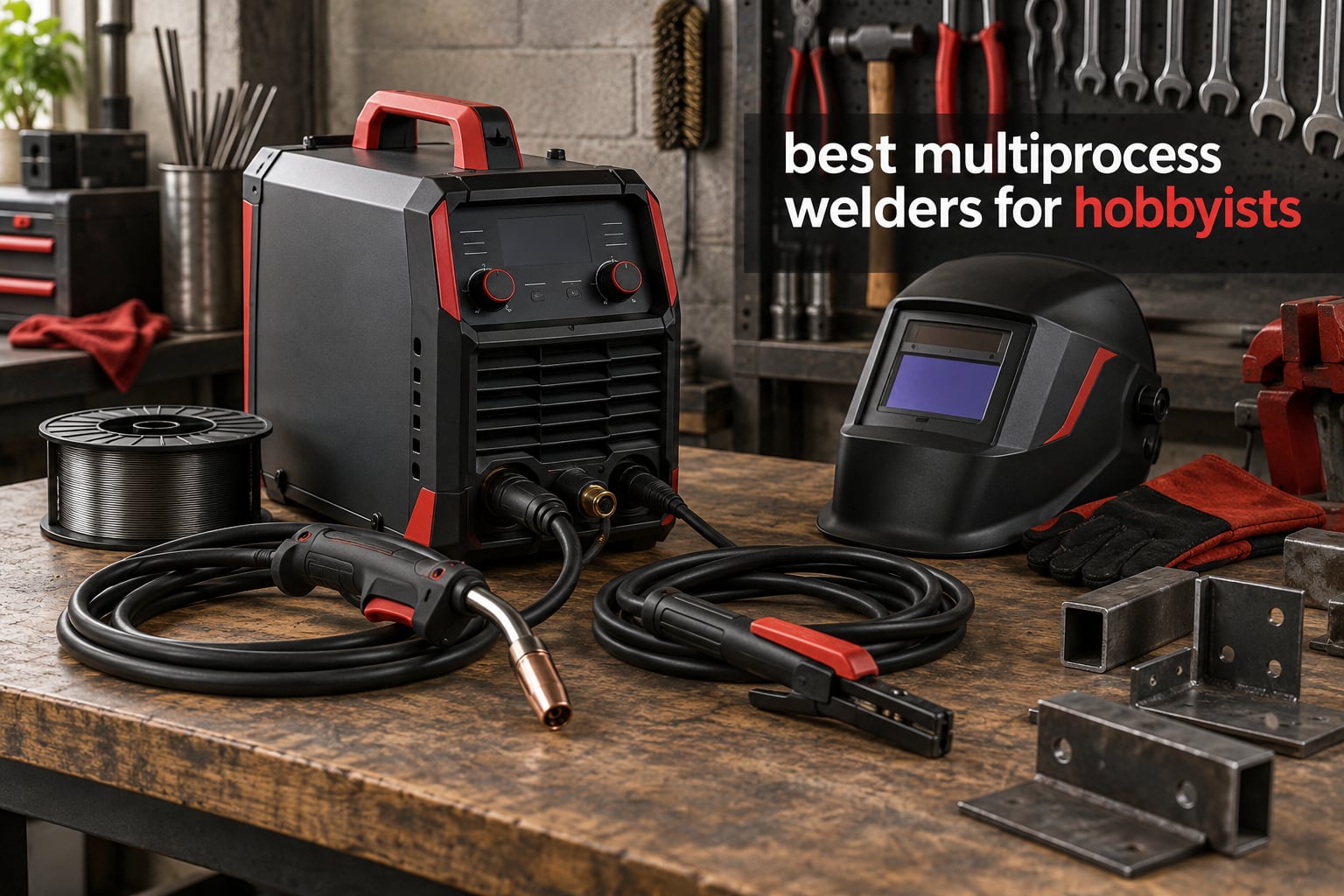
Welding used to mean choosing one machine and learning one process. Today a single box can run MIG, flux-core, stick and TIG, and several of the best multiprocess welders for hobbyists add plasma cutting on top of that. If your projects range from a rusted trailer hinge to a sheet-metal planter box, one inverter can cover all of it instead of a rack of single-process units fighting for the same outlet.
We spent weeks reading owner reviews, digging through welding forums and comparing output ratings, duty cycles and what actually lands in the box. That last point matters more than any spec sheet. A machine that advertises TIG usually ships without a TIG torch, and a machine that says spool gun ready usually needs the spool gun bought separately.
This guide breaks the field down by what hobbyists actually build, then goes through eight machines in detail. If you want the short answer first, the ARCCAPTAIN MIG200 is the one we keep coming back to, and the reasons are in the review below rather than at the top of a listicle.
ContentsTable of Contents
- 1Top 3 Multiprocess Welder Picks for Hobbyist Garages→
- 2ARCCAPTAIN MIG200→
- 3Weldpro 200A AC/DC TIG→
- 4bestarc 145A MIG Welder→
- 5All 8 Multiprocess Welders Compared in 2026→
- 6What Is a Multiprocess Welder?→
- 71. ARCCAPTAIN MIG200 – Best All-Rounder for a Home Garage→
- 8ARCCAPTAIN 200A MIG Welder 110V 220V 6 in 1 Aluminum Welding Machine MIG200→
- 9Pros→
- 10Cons→
- 11What the MIG200 handles without complaint→
- 12Where the MIG200 will frustrate you→
- 132. Weldpro 200A AC/DC TIG Welder – Best for Aluminum and Thin Sheet→
- 14Weldpro 200A AC/DC TIG Welder with Pulse, 110V/220V Dual Voltage Aluminum TIG Welder, AC TIG/DC TIG/AC PULSE TIG/DC PULSE TIG/Stick 5 in 1 Multiprocess Welding Machine with TIG Torch & Foot Pedal→
- 15Pros→
- 16Cons→
- 17Best fits if aluminum is on your list→
- 18Skip it if you just want one machine for everything→
- 193. bestarc 145A MIG Welder – Best Value Dual-Voltage Starter→
- 20Bestarc 145A MIG Welder, Flux Core/Gas MIG Stick Lift TIG Welding, 110/220V→
- 21Pros→
- 22Cons→
- 23Strong fit for a first serious machine→
- 24Where it stops being enough→
- 254. ARCCAPTAIN MIG205MP – Best When You Want Plasma Cutting Too→
- 26ARCCAPTAIN MIG205MP MIG Welder with Plasma Cutter, 9 IN 1 Welding Machine→
- 27Pros→
- 28Cons→
- 29Worth it if you cut as much as you weld→
- 30Overkill for a garage that only repairs things→
- 315. BILT HARD 135A 3-in-1 – Best Kit for a First-Time Buyer→
- 32BILT HARD 135A 3-in-1 IGBT Inverter Welder, 110V Flux Core MIG/Lift TIG/Stick Welding Machine with Synergic Control, LED Display, 2T/4T/SPOT Modes & Full Kit (Solar Helmet)→
- 33Pros→
- 34Cons→
- 35Aimed at the first weekend of ownership→
- 36Where it stops→
- 376. YESWELDER 135A – Most Owner Feedback of Any Machine Here→
- 38YESWELDER 135A MIG Welder, 110V Flux Core Gasless MIG/Lift TIG/Stick 3-in-1→
- 39Pros→
- 40Cons→
- 41Good for your first year of welding→
- 42Not a long-term shop machine→
- 437. ANDELI 135A Pulse Flux Core – Lightweight Dual-Voltage Option→
- 44ANDELI 110V/220V MIG Welder 135A ,PULSE Flux Core/Lift TIG/Stick 4-in-1→
- 45Pros→
- 46Cons→
- 47Strong for thin material and roaming work→
- 48Not for production volume→
- 498. FEMEROL 140A 3-in-1 – Best for Carry-Once Repairs→
- 50FEMEROL 140A 3 in 1 MIG Welder,Flux Core, MIG/Lift TIG/Stick Welding Machine 110V Portable IGBT Inverter Synergic Control, LED Display with Welding Helmets→
- 51Pros→
- 52Cons→
- 53Ideal for occasional repairs→
- 54Poor fit for a growing hobby→
- 55Garage Electrical Reality Check Before You Buy→
- 56Should You Even Buy a Multiprocess Welder?→
- 57Best Multiprocess Welders for Hobbyists: How to Choose→
- 58Frequently Asked Questions→
- 59What is the best multi-process welder for home use?→
- 60What is the best welder for a hobbyist?→
- 61Are multiprocess welders worth it?→
- 62Which is easier, stick or MIG welding?→
- 63How big of a welder do I need for 1/2 inch steel?→
- 64Can a multiprocess welder weld aluminum?→
- 65Can I run a 220V welder on 110V?→
- 66Why do welders drink milk after welding?→
- 67Final Verdict for Hobbyist Shops in 2026→
Top 3 Multiprocess Welder Picks for Hobbyist Garages

ARCCAPTAIN MIG200
- 6-in-1 multiprocess
- Synergic MIG with auto matching
- 10 preset memory groups
- 2-year warranty

Weldpro 200A AC/DC TIG
- True AC/DC TIG output
- Pulse 0.5-200Hz
- Auto 110V/220V
- Torch and foot pedal included

bestarc 145A MIG Welder
- 4-in-1 multiprocess
- Dual 110/220V auto detect
- Synergic with 3V trim
- Top-loading spool
As an Amazon Associate we earn from qualifying purchases. CERTAIN CONTENT THAT APPEARS ON THIS SITE COMES FROM AMAZON. THIS CONTENT IS PROVIDED 'AS IS' AND IS SUBJECT TO CHANGE OR REMOVAL AT ANY TIME.
The three machines above cover three genuinely different needs. The ARCCAPTAIN MIG200 is the generalist that handles the widest range of hobby jobs. The Weldpro is a TIG specialist for aluminum and thin sheet, and it is the only machine here that ships with a TIG torch and foot pedal in the box. The bestarc 145A is the value route into a real dual-voltage inverter with synergic MIG.
All 8 Multiprocess Welders Compared in 2026
| # | Product | Key details | Where to buy |
|---|---|---|---|
| 1 | ARCCAPTAIN MIG200 200A 6-in-1 |
|
Check Latest Price |
| 2 | Weldpro 200A AC/DC TIG 5-in-1 |
|
Check Latest Price |
| 3 | bestarc 145A MIG 4-in-1 |
|
Check Latest Price |
| 4 |  ARCCAPTAIN MIG205MP 9-in-1 with plasma ARCCAPTAIN MIG205MP 9-in-1 with plasma |
|
Check Latest Price |
| 5 |  BILT HARD 135A 3-in-1 with helmet BILT HARD 135A 3-in-1 with helmet |
|
Check Latest Price |
| 6 | 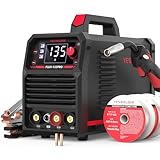 YESWELDER 135A 3-in-1 YESWELDER 135A 3-in-1 |
|
Check Latest Price |
| 7 |  ANDELI 135A pulse flux core 4-in-1 ANDELI 135A pulse flux core 4-in-1 |
|
Check Latest Price |
| 8 |  FEMEROL 140A 3-in-1 FEMEROL 140A 3-in-1 |
|
Check Latest Price |
We earn from qualifying purchases. CERTAIN CONTENT THAT APPEARS ON THIS SITE COMES FROM AMAZON. THIS CONTENT IS PROVIDED 'AS IS' AND IS SUBJECT TO CHANGE OR REMOVAL AT ANY TIME.
Three patterns jump out of that table. Three machines reach the 200A class, and only one of those includes a plasma cutter. Everything below 150A is a thin-gauge and light-repair machine, which is honestly where most hobby projects start.
What Is a Multiprocess Welder?
A multiprocess welder is a single power source that runs MIG, flux-core, stick and often TIG by switching modes instead of buying separate machines. Modern units use IGBT inverter electronics to fine-tune the arc for each process, so you pick a mode, attach the right torch or electrode holder, and for MIG and TIG you also supply shielding gas.
Here is the full process list these machines cover:
- MIG (GMAW) – solid wire with a shielding gas blend. The fastest, easiest process for mild steel and the one most beginners learn first.
- Flux-core (FCAW) – tubular wire that makes its own shielding. No gas bottle needed, which is why it is the go-to for outdoor and rusty work.
- Stick (SMAW) – an electrode holder instead of a gun. Slower but it handles dirty, rust-covered or outdoor material better than anything else in a hobby shop.
- TIG (GTAW) – a tungsten torch and filler rod. The cleanest, most precise process, and the one that welds thin stainless and aluminum properly.
- Lift TIG – a cheap version of TIG where you strike the arc by touching the tungsten. Most budget machines stop here.
- Plasma cutting – a separate air-powered torch that cuts steel and stainless. Only one machine in this roundup includes one.
Two terms come up constantly and are worth defining before the reviews. Synergic control means the machine automatically matches wire feed speed and voltage when you set the amperage and material thickness, which removes the hardest part of setting up a MIG weld. Lift TIG versus HF TIG refers to how the TIG arc starts: lift mode requires you to touch the tungsten and lift, while high frequency start does it for you with no scratch start and no tungsten contamination.
Duty cycle is the third. A machine rated 60% duty cycle at 200A means six minutes of welding followed by four minutes of cooling in every ten. Advertised duty cycle is measured at ambient temperature and often at a lower amperage than the headline number, so treat it as a guide rather than a promise.
1. ARCCAPTAIN MIG200 – Best All-Rounder for a Home Garage
ARCCAPTAIN 200A MIG Welder 110V 220V 6 in 1 Aluminum Welding Machine MIG200
- 200A max output
- 110V and 220V dual input
- Six welding modes
- Synergic MIG auto matching
Pros
- Synergic MIG with manual override
- Spot weld plus 10 setting memory
- On-demand cooling fan keeps it quiet
- LED wire gauge readout in meters per second
- Handles 1/8 and 3/16 inch steel well
Cons
- Drive rolls for 0.035 wire not included
- Thin power cable runs warm
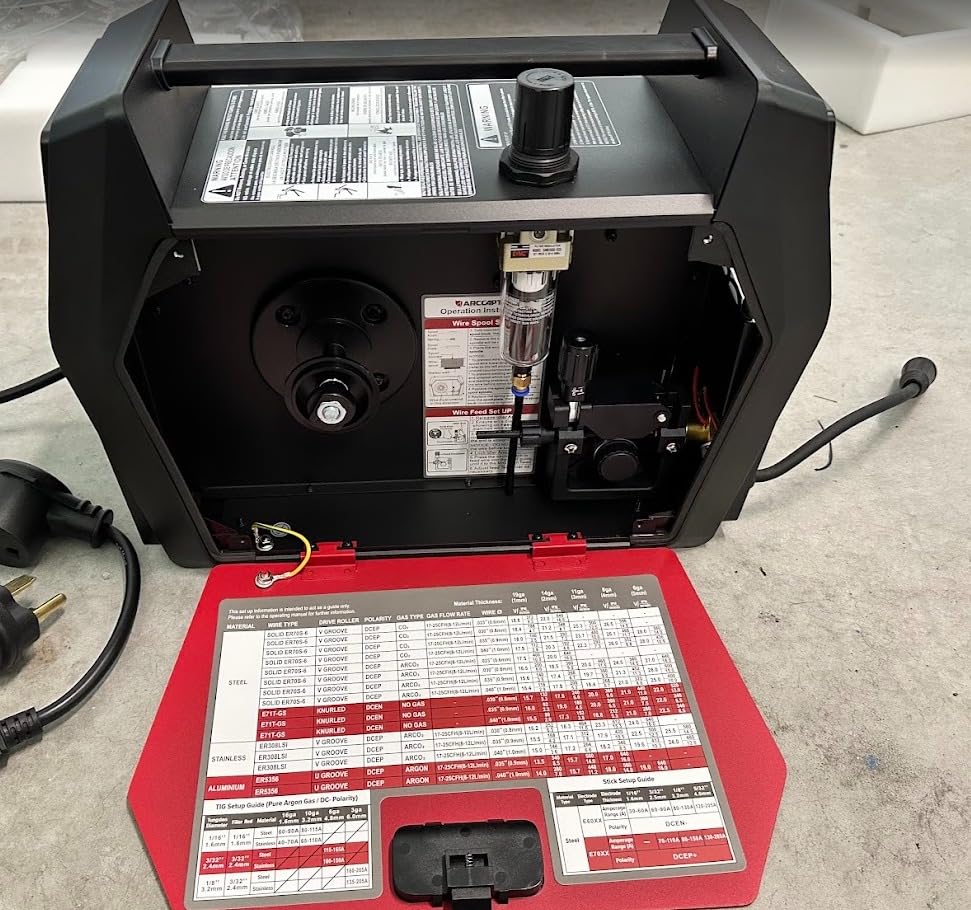
- No MIG setup chart inside the door
We earn a commission, at no additional cost to you. CERTAIN CONTENT THAT APPEARS ON THIS SITE COMES FROM AMAZON. THIS CONTENT IS PROVIDED 'AS IS' AND IS SUBJECT TO CHANGE OR REMOVAL AT ANY TIME.
The MIG200 is the machine I recommend to someone whose projects jump around. It does gas MIG, gasless flux core, stick, spot welding, lift TIG and spool gun aluminum from one chassis, and the synergic mode handles the setup so you are not guessing at voltage while wearing a helmet.
Nearly a thousand owners rate it 4.6 stars, and the recurring theme is that people upgrading from an old transformer machine are surprised by the feature count for the money. The LED panel shows wire feed speed in meters per second rather than an abstract percentage, which makes it easier to dial in the same bead on a second pass.
The spot welding mode and the ten user-programmable parameter groups are the features owners mention most. Setting a recipe into slot three, then recalling it every time you start the same bracket, saves real time on repetitive work. The cooling fan runs on demand rather than continuously, so the machine stays quiet between beads.
The honest weakness is packaging. Drive rolls grooved for 0.035 inch wire are sold separately, and there is no MIG setup chart inside the door cover, which means you are reading charts off a website. Owners also flag the supplied power cable as thin and quick to warm, and the strain relief at the MIG gun as flimsy. None of that stops the machine from welding well.
TIG torch and spool gun are not included, so budget for a torch before you attempt any TIG. The two-year manufacturer warranty is longer than most machines at this level.
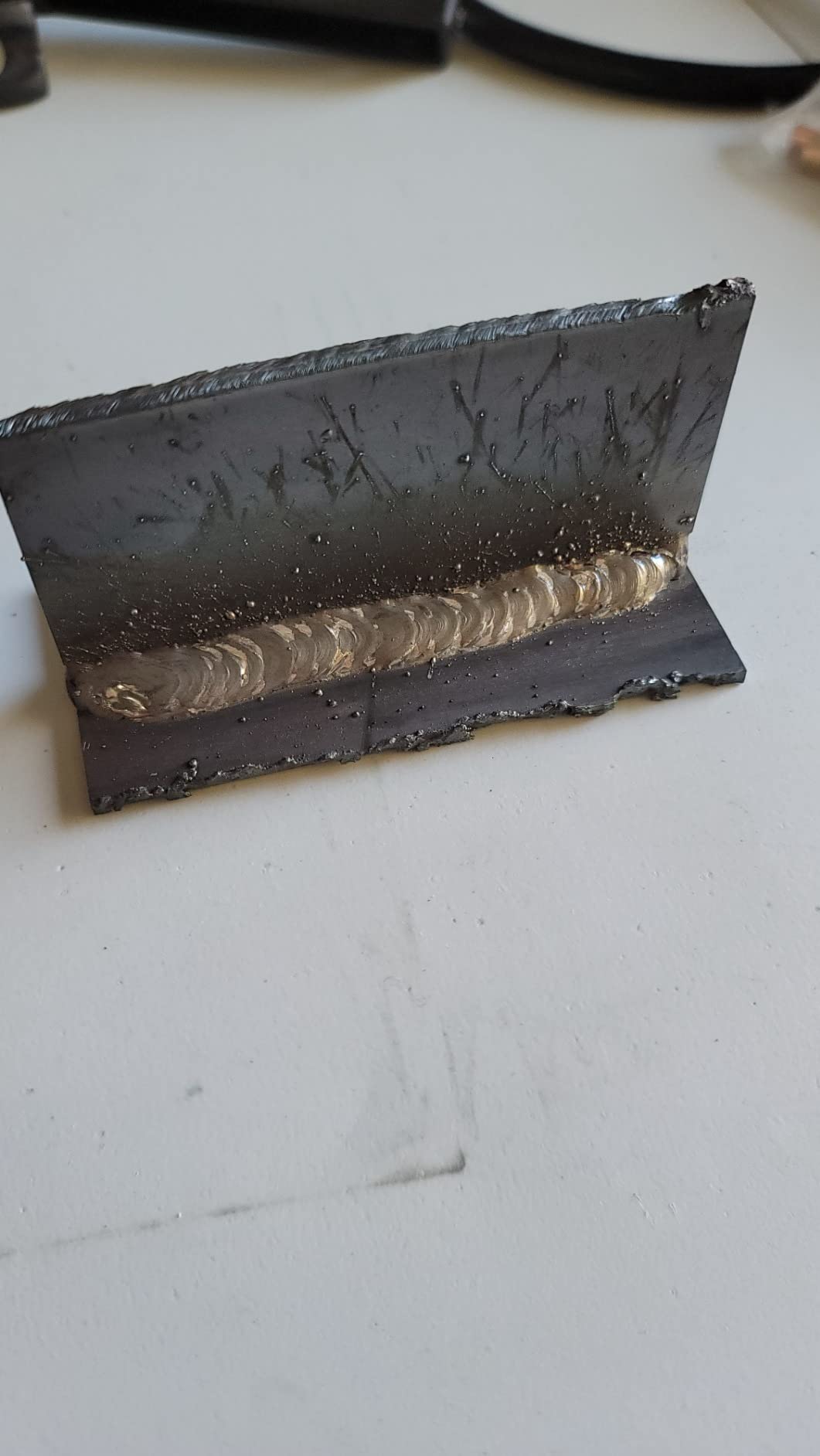
What the MIG200 handles without complaint
Mild steel from 16 gauge up to about a quarter inch in a single pass, which covers trailer frames, gate hinges, shelving brackets and general garage repair. Flux-core mode handles the rusty, unpainted material that shows up on old trailers and truck beds. The 10 stored parameter groups make repeat work consistent.
Where the MIG200 will frustrate you
Aluminum MIG without a spool gun is not an option, and the TIG capability is lift TIG only, so it is not a precision TIG machine. If your projects are mostly thin sheet or non-ferrous metal, the Weldpro further down the list fits far better.
We earn a commission, at no additional cost to you. CERTAIN CONTENT THAT APPEARS ON THIS SITE COMES FROM AMAZON. THIS CONTENT IS PROVIDED 'AS IS' AND IS SUBJECT TO CHANGE OR REMOVAL AT ANY TIME.
2. Weldpro 200A AC/DC TIG Welder – Best for Aluminum and Thin Sheet
Weldpro 200A AC/DC TIG Welder with Pulse, 110V/220V Dual Voltage Aluminum TIG Welder, AC TIG/DC TIG/AC PULSE TIG/DC PULSE TIG/Stick 5 in 1 Multiprocess Welding Machine with TIG Torch & Foot Pedal
- True AC and DC TIG output
- Pulse 0.5-200Hz
- Auto 110V/220V switching
- 40% duty cycle at 200A
Pros
- Genuine AC/DC output with adjustable balance
- Pulse control limits burn-through on thin sheet
- Torch foot pedal clamp and hose in the box
- High-contrast HD display readable in low light
Cons
- 61.8 pounds is heavy to move
- Cannot run MIG or flux core
- Higher spend than MIG-focused hobby machines
We earn a commission, at no additional cost to you. CERTAIN CONTENT THAT APPEARS ON THIS SITE COMES FROM AMAZON. THIS CONTENT IS PROVIDED 'AS IS' AND IS SUBJECT TO CHANGE OR REMOVAL AT ANY TIME.
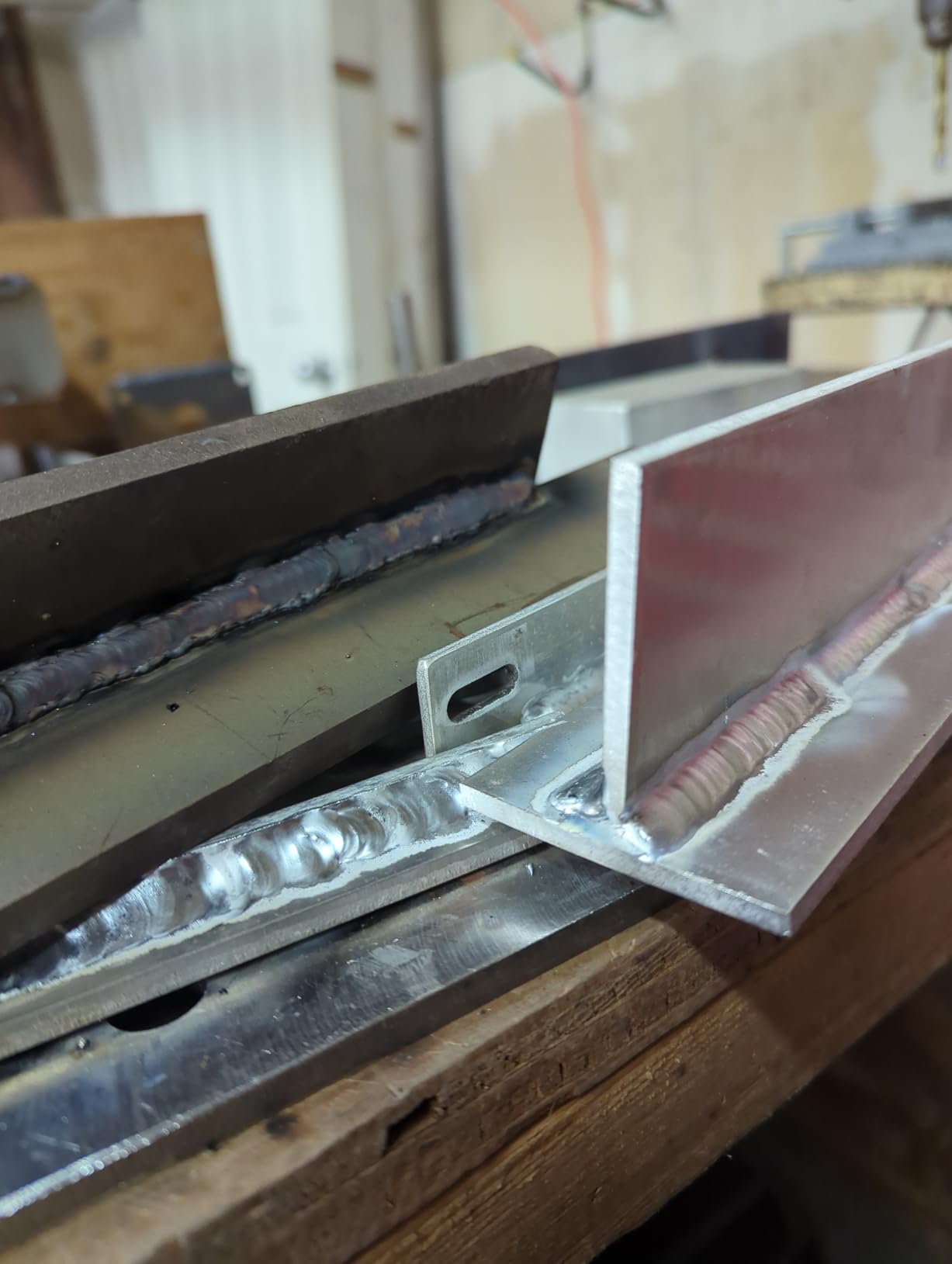
This is the pick for anyone whose hobby involves aluminum, magnesium or very thin sheet. It is the only machine here that produces true AC output, and AC is what makes aluminum weldable with TIG because the polarity reverses to break up the oxide layer that forms on the surface.
The pulse controls run from 0.5 to 200Hz with adjustable peak amperage and upslope and downslope timing. In plain terms, you can average a high amperage into a lower heat input, which is how you weld a coffee can or a thin trailer panel without melting a hole through it.
Unlike most machines in this price range, the box contains the things you would otherwise chase: TIG torch, rocker foot pedal, 300A ground clamp, gas hose and tungsten. That alone changes the true cost of ownership calculation compared with buying a machine and then discovering the torch is sold separately.
The foot pedal matters more than it sounds like it should. Holding your amperage steady by cranking a knob while your hands are occupied is awkward, and the pedal lets you fade the arc out at the end of a seam without breaking your rhythm.
What you give up is process coverage. There is no MIG gun and no flux core, so this machine cannot do the fastest thing a hobbyist does. At 61.8 pounds it stays where you put it rather than moving to the driveway with you. Owners also point out that the TIG feature set is wasted on simple repairs like a broken gate latch.
Best fits if aluminum is on your list
Boat repairs, aluminum trailer panels, mailbox and trim work, thin stainless, and anything where a burn-through ruins the part. The AC balance adjustment lets you shift between cleaning the oxide and driving penetration, which is the control TIG welders on cheaper machines simply do not offer.
Skip it if you just want one machine for everything
If your work is mostly structural steel, a MIG machine will be faster and lighter and will cover more jobs per dollar spent. Buying this one first means you cannot do the two most common hobby processes.
We earn a commission, at no additional cost to you. CERTAIN CONTENT THAT APPEARS ON THIS SITE COMES FROM AMAZON. THIS CONTENT IS PROVIDED 'AS IS' AND IS SUBJECT TO CHANGE OR REMOVAL AT ANY TIME.
3. bestarc 145A MIG Welder – Best Value Dual-Voltage Starter
Bestarc 145A MIG Welder, Flux Core/Gas MIG Stick Lift TIG Welding, 110/220V
- 145A output
- Auto 110V/220V detection
- Four processes
- Synergic with plus or minus 3V trim
Pros
- Clean stable arc for the money
- Synergic plus voltage trim aids learning
- Dual voltage suits RV and shop use
- Top-loading spool changes fast
Cons
- Torch lead is short
- Spool tension spring runs tight
- Thin documentation for the setup knob
We earn a commission, at no additional cost to you. CERTAIN CONTENT THAT APPEARS ON THIS SITE COMES FROM AMAZON. THIS CONTENT IS PROVIDED 'AS IS' AND IS SUBJECT TO CHANGE OR REMOVAL AT ANY TIME.
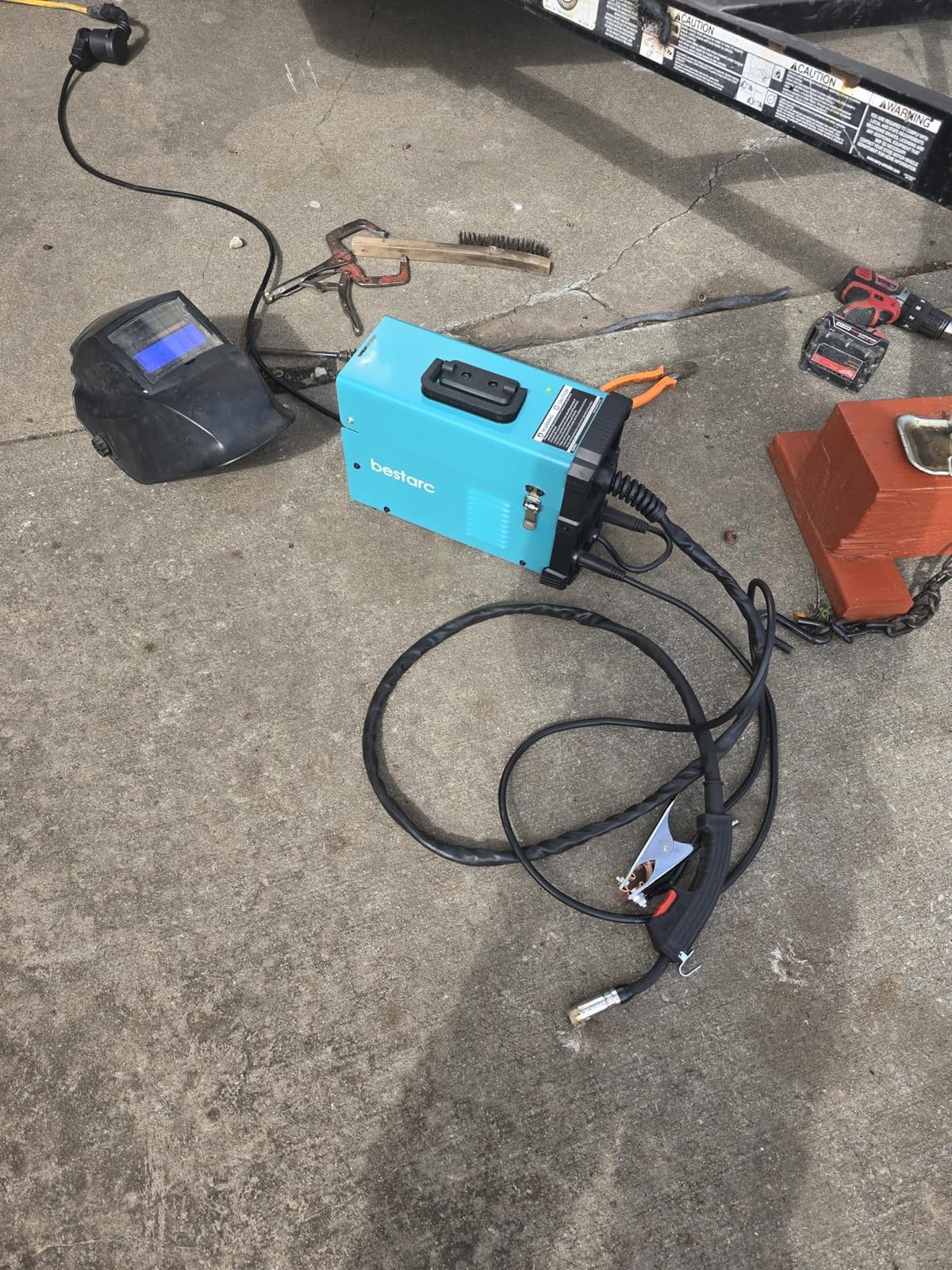
The bestarc 145A is the machine to buy if your garage has only standard outlets but you want the option of 220V later. It detects input voltage automatically and shows what it found on the front panel, so you are never guessing which mode it landed in.
It runs gas MIG, gasless flux core, lift TIG and stick, handles 0.030 and 0.035 solid wire along with 0.030, 0.035 and 0.040 flux core, and the synergic mode matches voltage to feed speed with a plus or minus 3V trim on top. That trim is what turns it from a novelty into a teaching tool.
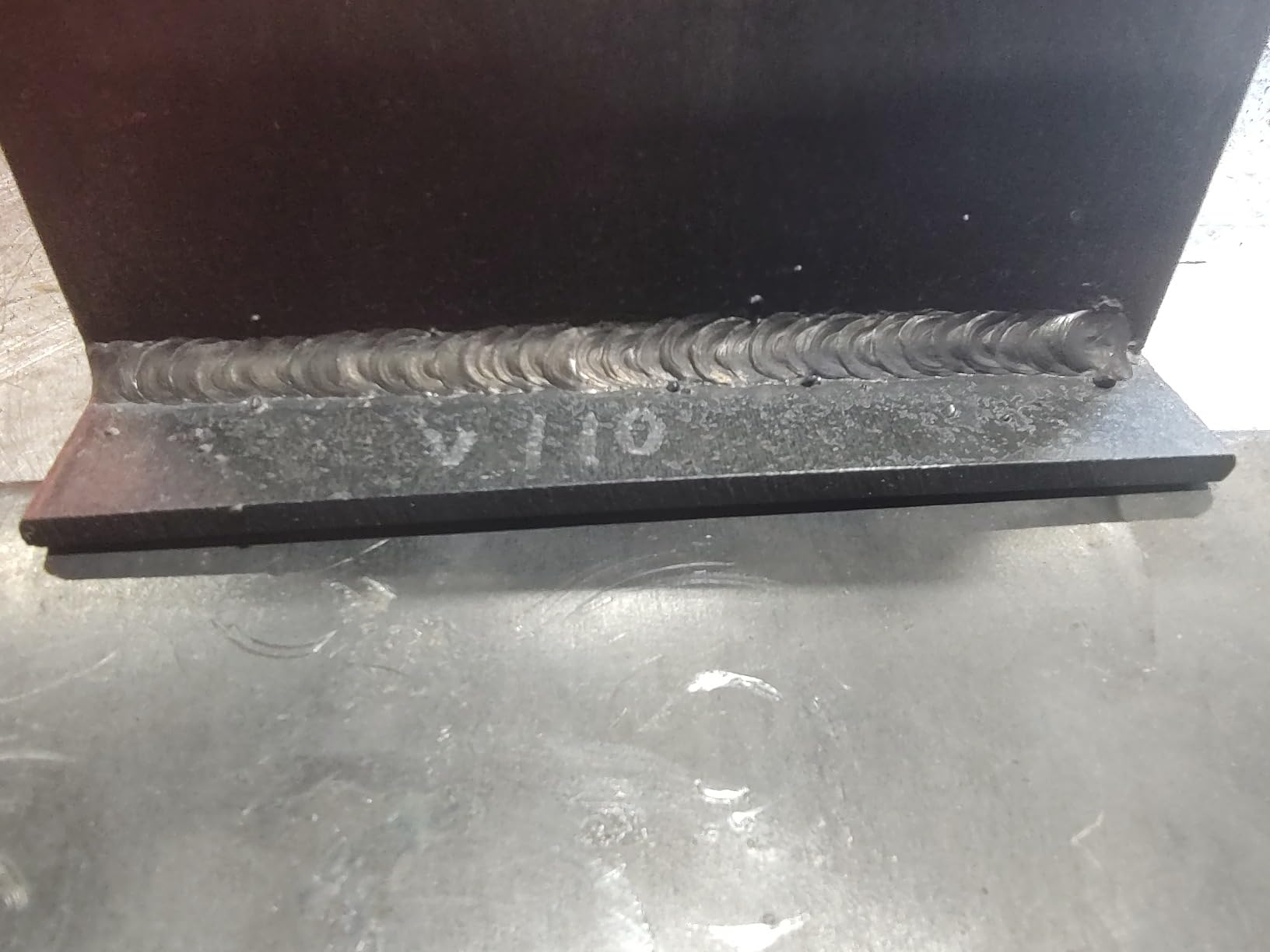
Owners consistently report clean, good-looking welds and a stable arc, and the dual-voltage flexibility gets singled out by people who move between an RV, a shop and a home outlet. The top-loading spool means a wire change takes seconds rather than pulling a cover off.
The recurring complaints are physical rather than electrical. The torch lead is short, so when the machine sits on the floor your reach is limited, and the spool tension spring is not adjustable and tends to run tight. The manual also does a poor job of explaining which control changes wire feed versus the voltage ratio.
Some machines have arrived with V-groove drive rolls rather than knurled rollers for flux core, and the push-on nozzle included is not ideal for gasless work. Budget for a proper nozzle and check your rollers before the first wire spool goes on.
Protection circuitry covers over-current, over-load and over-heat, with voltage fluctuation compensation for older garage wiring.
Strong fit for a first serious machine
A hobbyist who wants to learn MIG properly rather than fight a machine. The voltage trim lets you correct a bead that is too convex or too flat, which is exactly the lesson a beginner needs. At 145A you can handle 16 gauge through 1/8 inch mild steel comfortably.
Where it stops being enough
1/4 inch plate and structural trailer work are beyond it in a single pass, and lift TIG means no clean stainless or aluminum. You will outgrow this machine within a year if you start fabricating.
We earn a commission, at no additional cost to you. CERTAIN CONTENT THAT APPEARS ON THIS SITE COMES FROM AMAZON. THIS CONTENT IS PROVIDED 'AS IS' AND IS SUBJECT TO CHANGE OR REMOVAL AT ANY TIME.
4. ARCCAPTAIN MIG205MP – Best When You Want Plasma Cutting Too
ARCCAPTAIN MIG205MP MIG Welder with Plasma Cutter, 9 IN 1 Welding Machine
- Nine processes including plasma
- 205A MIG output
- 60% duty cycle
- App control within 10 meters
Pros
- Integrated plasma cutter rated to 50A
- App control with unlimited named presets
- Deep parameter access for inductance and burn-back
- Dual cooling fans with fault alarm
Cons
- Spool gun sold separately for aluminum
- 46.2 pounds is heavy
- Switching voltage while powered can glitch
- Higher spend for MIG and stick only
We earn a commission, at no additional cost to you. CERTAIN CONTENT THAT APPEARS ON THIS SITE COMES FROM AMAZON. THIS CONTENT IS PROVIDED 'AS IS' AND IS SUBJECT TO CHANGE OR REMOVAL AT ANY TIME.
The MIG205MP is the only machine here with a real plasma cutter attached, cutting to a rated 10mm quality cut and an 18mm maximum cut. If you build metal art or cut brackets from plate every month, a separate plasma cutter adds weight, noise and another machine to maintain, so bundling it changes the economics.
Output runs 30 to 205A on MIG, 20 to 205A on TIG and stick, and 20 to 50A on the cut, at a 60% rated duty cycle. That duty figure is high for a portable unit and matches what owners report about not constantly pausing mid-project.
The parameter access is unusually deep for this class. MIG inductance and burn-back, DC TIG pulse frequency, and stick hot start and arc force are all adjustable, which means you can tune a bead rather than living with whatever the synergic default gives you.
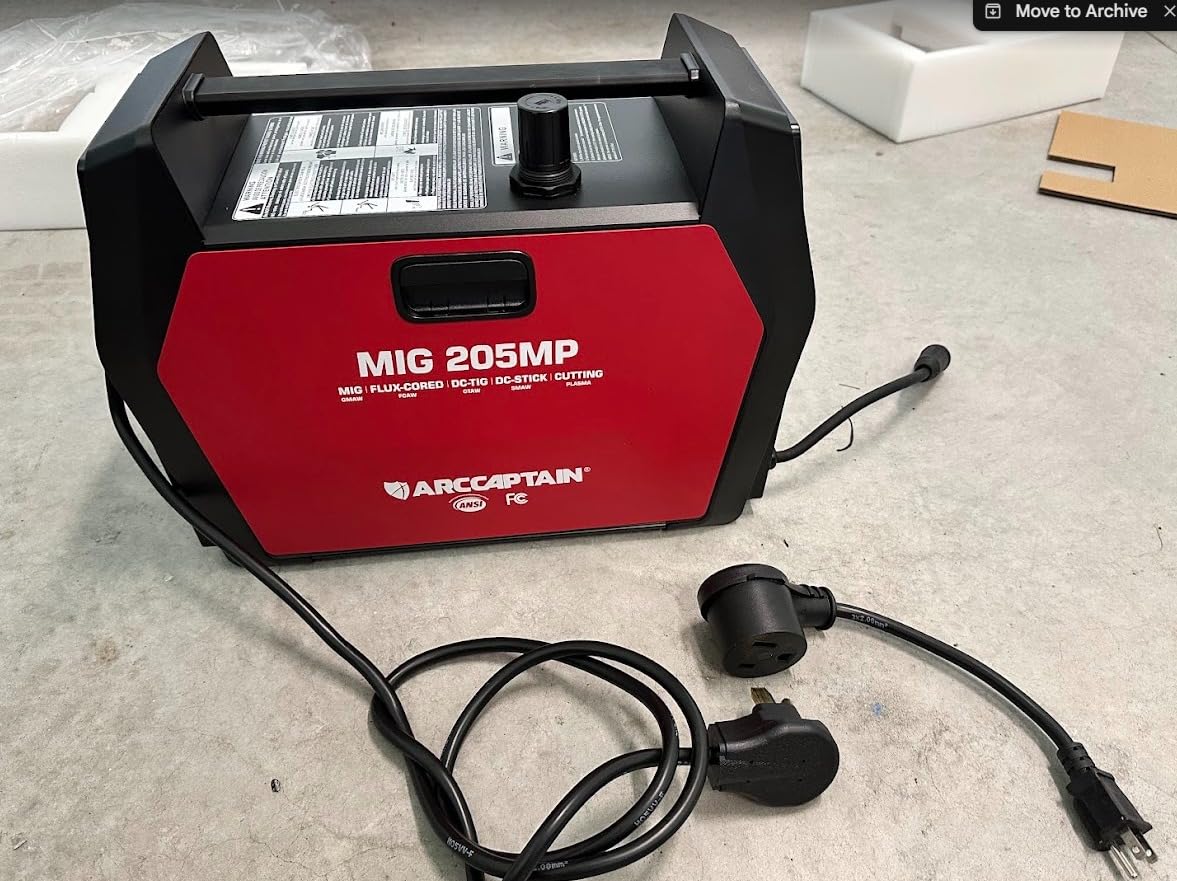
App control within 10 meters is more useful than it sounds in a shared shop. You can dial amperage from where you are standing instead of walking back to the machine, and unlimited named presets beat the ten-slot memory on smaller units when several people share a welder.
The trade-offs are weight and menu complexity. At 46.2 pounds it is one of the heaviest machines here, and owners report that switching input voltage while the screen is powered can cause glitches. Aluminum MIG still needs a spool gun bought separately, which is the main reason this is not our top pick.
Cooling is handled by dual fans with VRD, a fault alarm and full over-current, over-voltage, over-load and over-heat protection, backed by three years of quality service.
Worth it if you cut as much as you weld
Metal art, brackets, table frames, and any project where the cut shapes the part. The 50A plasma capability on a dedicated 120V/240V design also handles stainless and aluminum plate, which a torch alone cannot do.
Overkill for a garage that only repairs things
If you are reattaching a bumper bracket, the added processes and app do not earn their keep, and you are carrying 46 pounds you have to move alone. The MIG200 covers the same jobs at a fraction of the complexity.
We earn a commission, at no additional cost to you. CERTAIN CONTENT THAT APPEARS ON THIS SITE COMES FROM AMAZON. THIS CONTENT IS PROVIDED 'AS IS' AND IS SUBJECT TO CHANGE OR REMOVAL AT ANY TIME.
5. BILT HARD 135A 3-in-1 – Best Kit for a First-Time Buyer
BILT HARD 135A 3-in-1 IGBT Inverter Welder, 110V Flux Core MIG/Lift TIG/Stick Welding Machine with Synergic Control, LED Display, 2T/4T/SPOT Modes & Full Kit (Solar Helmet)
- 135A on standard 110V
- LED voltage current and wire speed
- Two trigger and spot modes
- Helmet and gun in the box
Pros
- LED parameter display at an unusually low tier
- Holds 2 lb spools with simple spindle
- Helmet gun clamp and wire all included
- Compact footprint easy to store
Cons
- TIG torch not included
- Electrode clamp is low quality
- Solar helmet shade knob drifts
- Duty cycle cuts short long sessions
We earn a commission, at no additional cost to you. CERTAIN CONTENT THAT APPEARS ON THIS SITE COMES FROM AMAZON. THIS CONTENT IS PROVIDED 'AS IS' AND IS SUBJECT TO CHANGE OR REMOVAL AT ANY TIME.
The BILT HARD 135A is unusual because it ships with a solar auto-darkening helmet in the box. For someone buying their first welder, that removes the single most important safety purchase from the budget and means you can weld the day it arrives rather than after a separate trip for a helmet.
It does flux core MIG, stick and lift TIG, with the MIG gun, a 0.030 contact tip, a ground clamp, a two-pound flux core spool, brush and chipping hammer in the kit. The LED display shows voltage, current and wire speed in real time, which is a tier feature at this price level.
Owners report using it on exhaust pipe work, rebar brackets and truck body repair, and describe the build quality as better than expected for the money. The 2T, 4T and spot trigger modes cover short fixes, long seams and plug welds on the same machine.
The weaknesses are in the accessories rather than the electronics. The included stick electrode clamp is low quality and worth replacing, and the solar helmet shade knob turns too easily and drifts between welds. TIG torch and consumables are not included, so the third process on the label costs extra to actually use.
The spool spindle and wingnut combination also fits poorly on some machines, and there have been reports of packages arriving without the flux core spool. Duty cycle limits long continuous sessions, so plan on stopping to let it cool on anything bigger than a repair.
Error codes E1 for over-current and E2 for over-heat appear on the display, with a one to two minute fan cooldown before restart.
Aimed at the first weekend of ownership
Repairing a muffler, mounting a hitch bracket, reattaching a bumper piece. At 135A on standard 110V it stays within reach of a household outlet, and the included helmet means no excuse not to start.
Where it stops
Rated for thin to medium gauge material, it is not a fabrication machine. The drifting helmet shade is a real safety annoyance, and the missing TIG torch means the lift TIG mode has no torch to run until you buy one.
We earn a commission, at no additional cost to you. CERTAIN CONTENT THAT APPEARS ON THIS SITE COMES FROM AMAZON. THIS CONTENT IS PROVIDED 'AS IS' AND IS SUBJECT TO CHANGE OR REMOVAL AT ANY TIME.
6. YESWELDER 135A – Most Owner Feedback of Any Machine Here
YESWELDER 135A MIG Welder, 110V Flux Core Gasless MIG/Lift TIG/Stick 3-in-1
- 135A 110V output
- Three processes
- Synergic micro-adjustment
- Ships with flux core wire
Pros
- Bead quality well above its tier
- Lightweight body with carrying handle
- Flux core wire included so it runs out of the box
- Large LED display readable outdoors
Cons
- Synergic only in flux core mode
- Spool holder and tensioner feel cheap
- Basic electrode holder and stinger
- Some arrived with defects
We earn a commission, at no additional cost to you. CERTAIN CONTENT THAT APPEARS ON THIS SITE COMES FROM AMAZON. THIS CONTENT IS PROVIDED 'AS IS' AND IS SUBJECT TO CHANGE OR REMOVAL AT ANY TIME.
The YESWELDER 135A has close to 3,000 owner reviews, the largest body of feedback of any machine in this roundup, and a 4.4 star average. Owners with decades of welding experience report that bead quality and penetration beat machines costing several times more, and that on light work the difference is hard to see.
It runs gasless flux core MIG, stick and lift TIG, with the TIG torch sold separately. Synergic control matches voltage to wire feed speed with a plus or minus 3V micro-adjustment, and the output is rated for mild steel up to 3/32 inch on 110V.
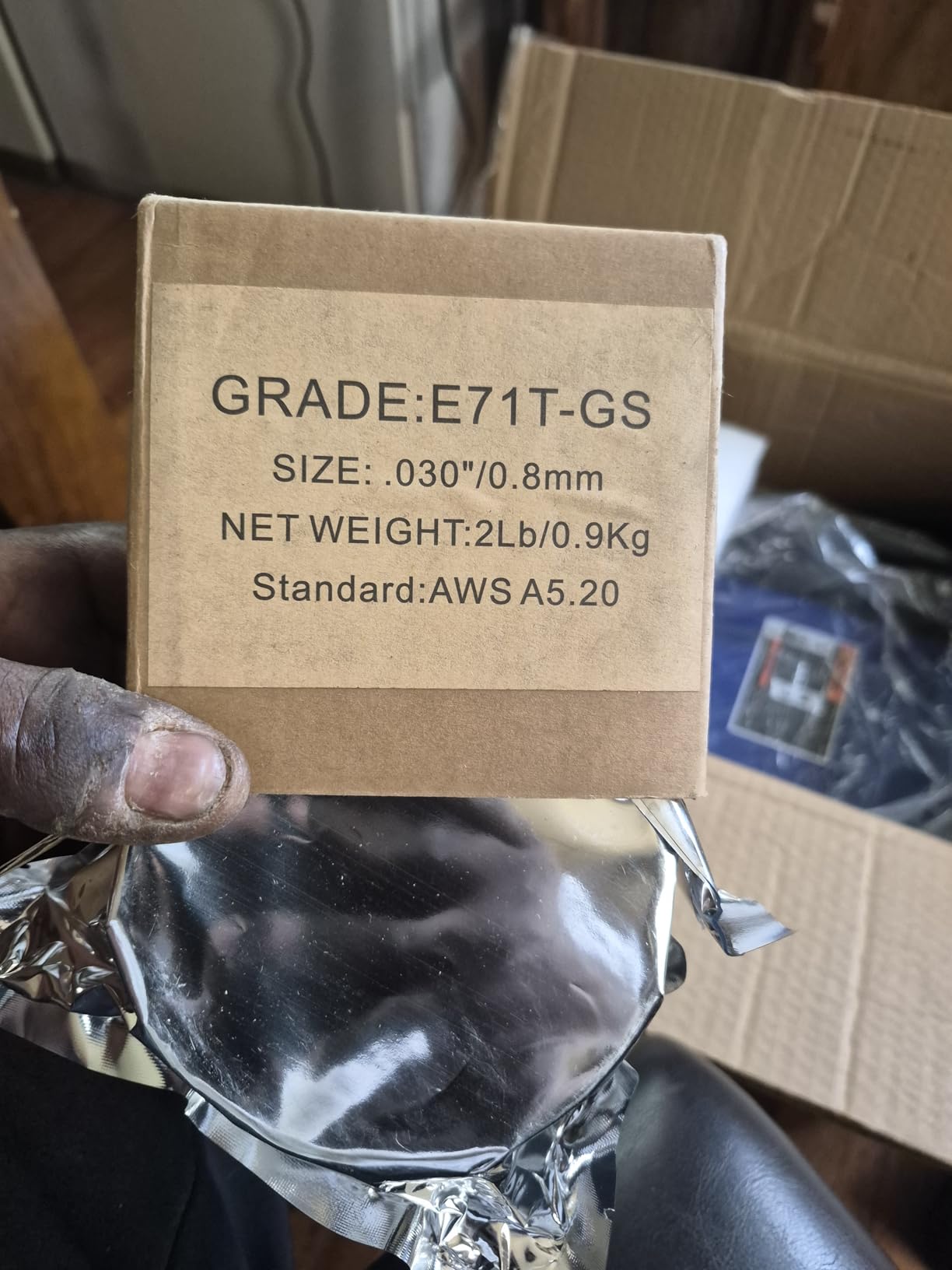
The kit includes E71T-GS flux core wire in 0.030 and 0.035 diameters, plus an electrode holder, ground clamp and MIG torch. Because the wire is in the box, you can make your first weld without a hardware store trip, which matters more than it sounds for a first-time buyer.
The most significant limitation is control. In flux core mode you cannot set voltage directly, so the machine runs synergic only. Once you understand what a bead should look like, that restriction becomes frustrating quickly, and the micro-adjust only nudges the synergic value rather than replacing it.
Other complaints repeat: the spool holder and tensioner are cheap, the electrode holder, stinger and ground clamp are basic accessories, and a few machines arrived with the power switch missing or recessed in the case. Owners also note that the displayed stick amperage reads roughly 10 to 15 amps low. There are a small number of reports of failures after extended use, and no fuse in the box, so keep a spare on hand.
Good for your first year of welding
Anyone learning on a budget, working in 1/8 inch mild steel or less, who wants a machine that can be carried to a neighbor’s driveway without planning around it. The huge review count means failure modes are well documented before you buy.
Not a long-term shop machine
At 135A on 110V it cannot take 1/4 inch plate in one pass, and the synergic-only flux core control will frustrate you once you know what you want. Treat it as a training machine you will replace rather than one you keep for a decade.
We earn a commission, at no additional cost to you. CERTAIN CONTENT THAT APPEARS ON THIS SITE COMES FROM AMAZON. THIS CONTENT IS PROVIDED 'AS IS' AND IS SUBJECT TO CHANGE OR REMOVAL AT ANY TIME.
7. ANDELI 135A Pulse Flux Core – Lightweight Dual-Voltage Option
ANDELI 110V/220V MIG Welder 135A ,PULSE Flux Core/Lift TIG/Stick 4-in-1
- 135A dual voltage
- Pulse flux core mode
- Adjustable inductance
- 4.1 inch LED display
Pros
- Pulse mode gives smoother beads and finer control
- Very light for a dual-voltage machine
- Inductance tuning cuts spatter
- Works on 120V and 240V outlets
Cons
- Included helmet is poor quality
- Lift TIG torch sold separately
- Only holds 2 lb spools
- Some lack the advertised pulse
We earn a commission, at no additional cost to you. CERTAIN CONTENT THAT APPEARS ON THIS SITE COMES FROM AMAZON. THIS CONTENT IS PROVIDED 'AS IS' AND IS SUBJECT TO CHANGE OR REMOVAL AT ANY TIME.
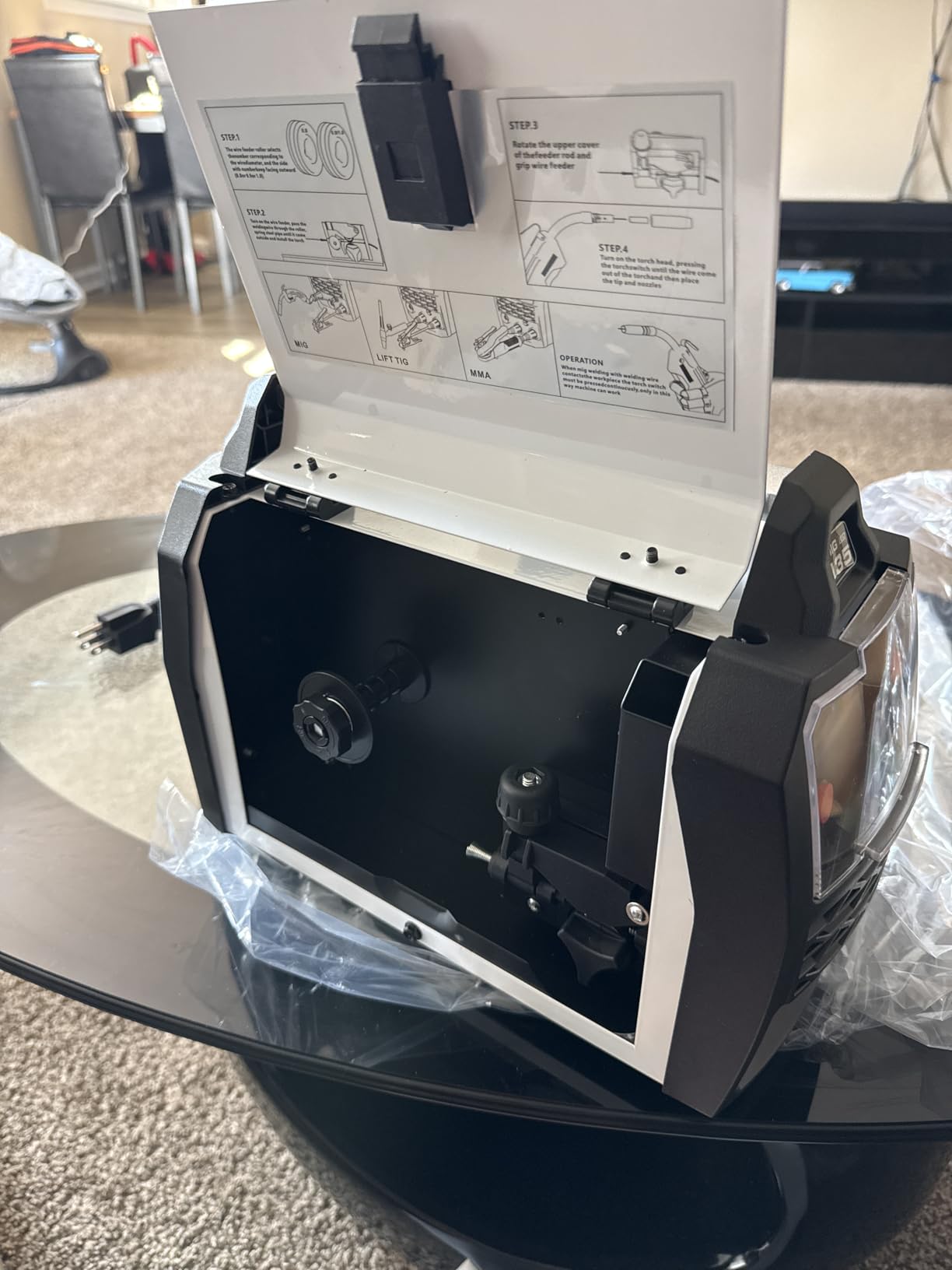
The ANDELI’s distinguishing feature is pulse flux core. Pulsed current alternates between a high peak and a lower background value, which gives a narrower bead, less spatter and better control on thin material than a constant-current flux core arc.
It also has adjustable inductance, which controls how the puddle behaves. Turning inductance up softens the arc and flattens the bead, and turning it down gives more penetration and a more visible, easier-to-read puddle for a beginner. Few machines at this weight include that control.
Dual 110V and 220V support with 0.030, 0.035 and 0.040 flux core wire makes it useful if you split time between a home outlet, a shop outlet and an RV. Long-term hobby welders report comparing it favorably against much larger machines for light to medium work.
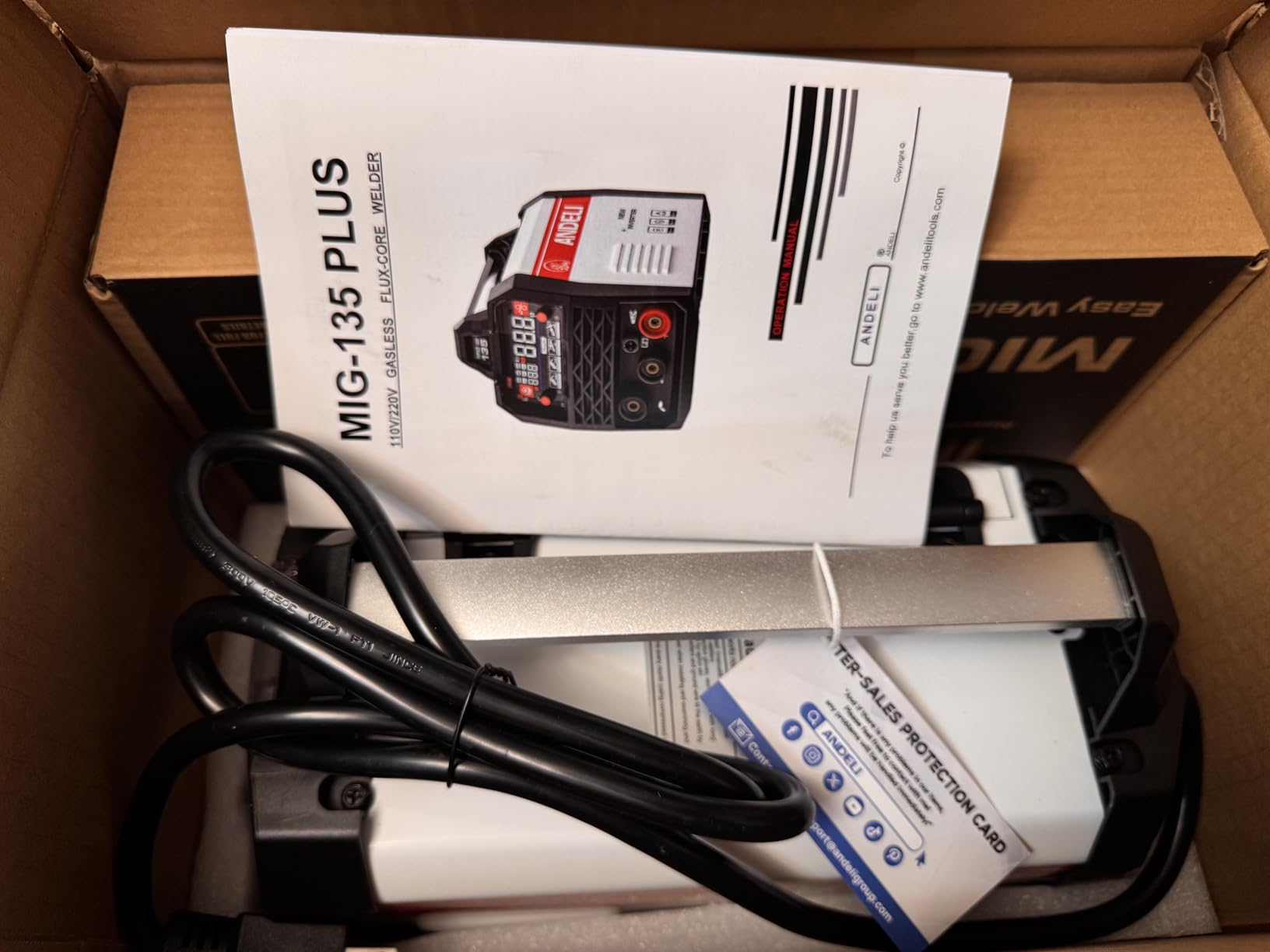
The bundled auto-darkening helmet is the weak link. It is functional but poor enough that owners replace it, and since the TIG torch is sold separately too, plan two accessory purchases before you can use every process on the label. The kit does include gloves, contact tips, a ground clamp, an electrode holder and a 220V to 110V adapter.
Two capacity limits stand out. It holds only two-pound wire spools, so you are refilling more often than with a ten-pound spool, and some machines have arrived without the advertised pulse function despite the label. Wire feed rate is also displayed in amps rather than inches per minute in synergic mode, which is confusing until you learn to read it.
Strong for thin material and roaming work
Sheet metal, thin tubing, decorative steel, and any job where you are carrying the welder out to the work rather than bringing the work to the bench. Pulse genuinely helps on thin gauge.
Not for production volume
The two-pound spool size means constant refilling on a big project, and without pulse on some examples you lose the main reason to pick this one. Confirm pulse works before you commit to it for thin-gauge work.
We earn a commission, at no additional cost to you. CERTAIN CONTENT THAT APPEARS ON THIS SITE COMES FROM AMAZON. THIS CONTENT IS PROVIDED 'AS IS' AND IS SUBJECT TO CHANGE OR REMOVAL AT ANY TIME.
8. FEMEROL 140A 3-in-1 – Best for Carry-Once Repairs
FEMEROL 140A 3 in 1 MIG Welder,Flux Core, MIG/Lift TIG/Stick Welding Machine 110V Portable IGBT Inverter Synergic Control, LED Display with Welding Helmets
- 140A output
- Welds to 1/8 inch
- Synergic with manual override
- 8.9 pounds with strap
Pros
- Very light and easy to carry
- Helmet and full accessory kit included
- Quick to dial in for beginners
- Fan handles heat in light work
Cons
- TIG torch not included
- Included flux core wire is criticized
- Stick mode is hard to start for some
- Rated only to about 1/8 inch
We earn a commission, at no additional cost to you. CERTAIN CONTENT THAT APPEARS ON THIS SITE COMES FROM AMAZON. THIS CONTENT IS PROVIDED 'AS IS' AND IS SUBJECT TO CHANGE OR REMOVAL AT ANY TIME.
The FEMEROL 140A is the machine for the person who welds twice a year. At 8.9 pounds with a handle and shoulder strap it moves between the garage, the driveway and the truck bed without planning, and 140A covers more material than the other sub-150A machines here.
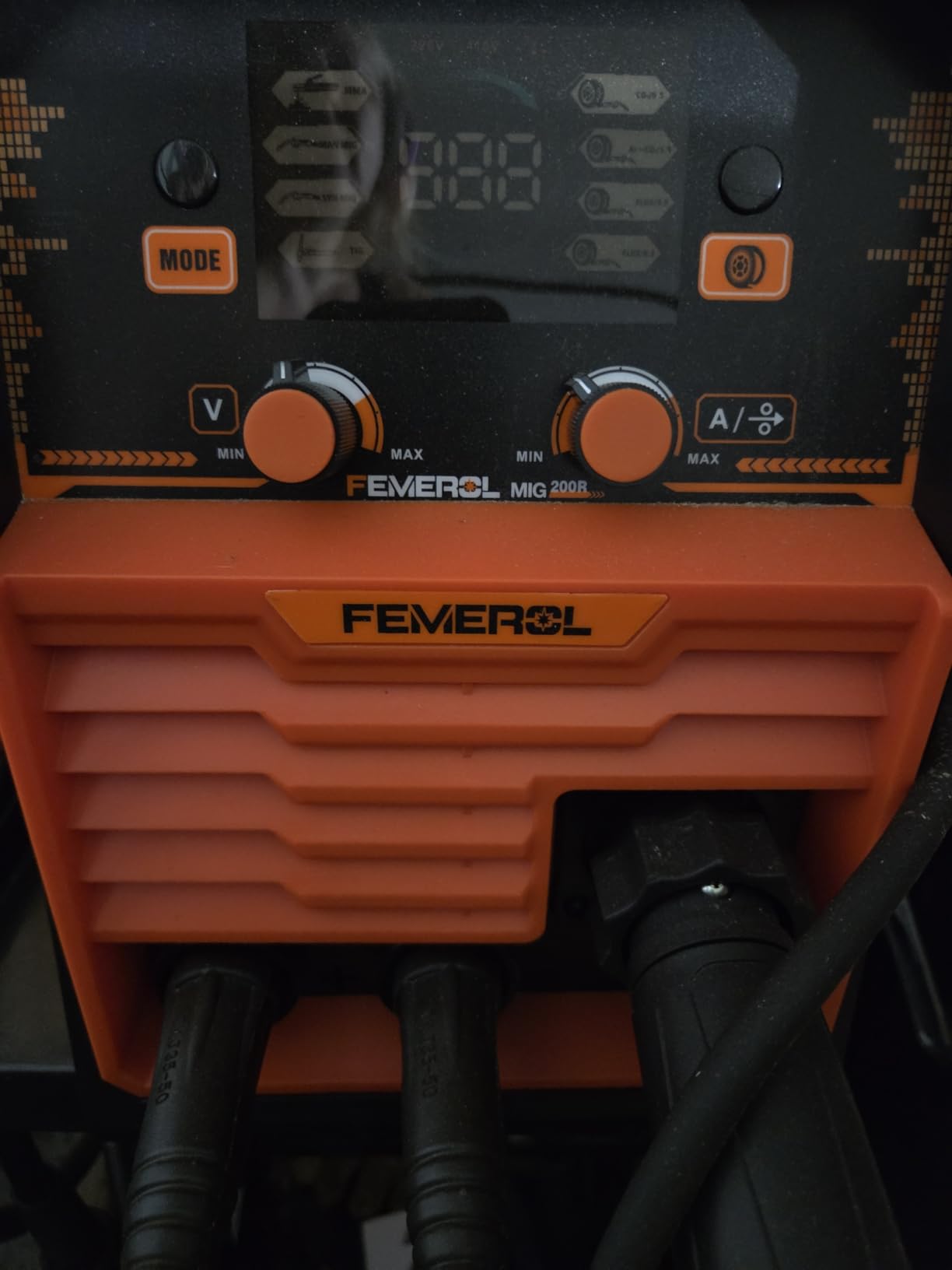
It runs flux core MIG, stick and lift TIG, with synergic auto voltage and wire feed matching plus a manual MIG override for when you know what you want. It handles 0.030 to 0.040 flux core wire and E6011, E6013 and E7018 electrodes, and the LED display shows voltage, current and other parameters.
Owners use it on go-karts, steel profiles and tractor repairs, and the kit includes the ground clamp, electrode holder, torch, a spool of flux core wire, nozzles, contact tips and an auto-darkening helmet. That is a complete setup in one box.
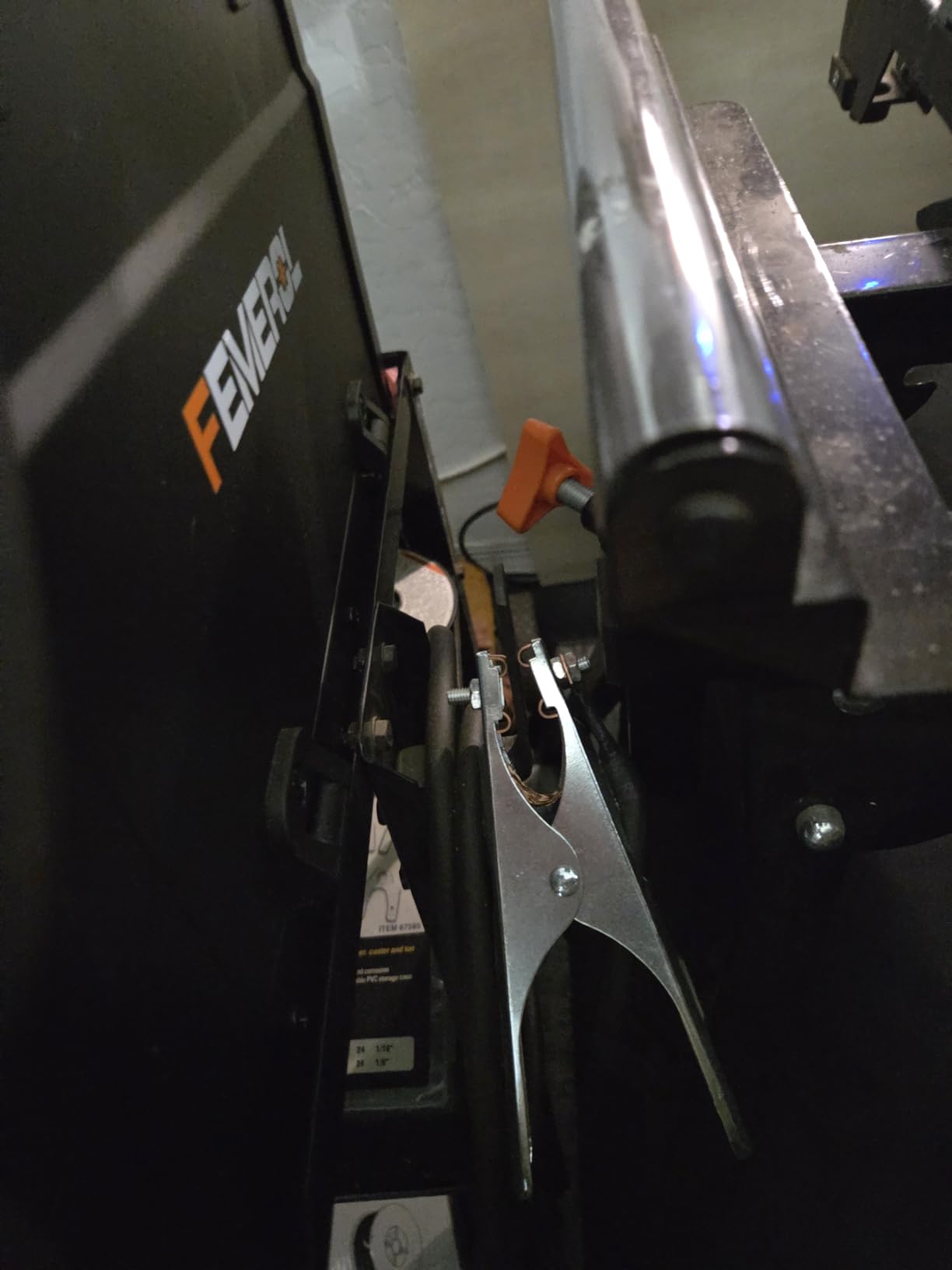
The advice that shows up most often in reviews is to buy better flux core wire. The supplied spool is widely criticized, and swapping it out is the difference between a decent bead and a good one. The TIG torch is also not included, so the lift TIG mode needs a torch before it does anything.
Stick mode is the other weak spot, with owners reporting difficulty getting an arc started on 110V. Rated output tops out at about 1/8 inch, so a thicker repair is out of reach, and there is a report of a machine stopping mid-weld. Protection covers over-current, over-load, over-voltage and over-heat.
Ideal for occasional repairs
Fence posts, gate latches, trailer tongue repairs, brackets on farm equipment. Anything where the machine goes to the work and you are not welding for hours.
Poor fit for a growing hobby
Thin-gauge capacity means you will hit the ceiling fast, and a machine that stops mid-weld is not something you want to depend on for a project you care about. Buy better wire and keep expectations modest.
We earn a commission, at no additional cost to you. CERTAIN CONTENT THAT APPEARS ON THIS SITE COMES FROM AMAZON. THIS CONTENT IS PROVIDED 'AS IS' AND IS SUBJECT TO CHANGE OR REMOVAL AT ANY TIME.
Garage Electrical Reality Check Before You Buy
More hobby welders get returned for electrical reasons than for welding reasons, and none of it shows up in the product photos. A 200A machine at 110V does not make 200A. The same box that produces 205 amps on a 240V circuit may deliver roughly 150 to 160 amps on a 120V outlet, and duty cycle collapses along with it.
Start by identifying what your garage actually has. A standard household receptacle is a NEMA 5-20 on a 20 amp, 120V circuit. That circuit is shared with everything else on the branch, so a welder pulling near 20 amps on 110V will trip the breaker every time you run it alongside a vacuum cleaner or a space heater.
- Check the circuit rating. Look at the breaker in your panel and find out how many amps it is. Most garage subpanels have 20A and 15A circuits; a workshop subpanel is often 20A at 125V.
- Check what is on that circuit. Anything else sharing the circuit reduces what you can safely draw. An outlet with a freezer or a welder’s own air compressor on it is a problem.
- Decide whether you need 220V. If your work includes 1/4 inch steel, structural trailer fabrication, or sustained cutting, a 50A 240V circuit is the right call. A NEMA 6-50 receptacle is what most 200A machines expect.
- Check the extension cord situation. On 110V, a thin or long extension cord causes voltage drop that shows up as an unstable arc and an over-heat trip. Keep the cord short and use a heavy gauge conductor for anything near full current.
- Test before you commit. Load the outlet with a known draw and watch for flicker on the lights. A dimming light under load is your circuit telling you it is not sized for this machine.
Installing a 50A 240V circuit with a 6-50 receptacle is electrician work in most places, and it is the single most common reason hobbyists end up with a machine they cannot fully use. If your work is genuinely light gauge, a 135A to 145A 110V machine is a legitimate choice with no electrical work at all.
Should You Even Buy a Multiprocess Welder?
The most common objection in welding forums is blunt: a multiprocess machine does everything adequately and nothing excellently. That criticism is fair at the budget end of this list, so here is the honest case on both sides.
Buy a single process machine when:
- You weld 90% steel and nothing else. A dedicated flux core machine is simpler, cheaper to maintain, and has consumables you can buy anywhere.
- Space is tight. Two small machines can live on separate circuits; one multiprocess machine forces you to choose an amperage ceiling.
- You already own a stick machine. Most hobbyists buy a stick welder first, so a MIG machine is the only addition that actually expands capability.
- Budget is under a few hundred dollars. At the low end, you get a 135A machine with one real process plus a stick mode you may never use.
Buy a multiprocess machine when:
- You want to learn more than one process without a second machine and a second outlet.
- You need to travel with the welder, or you have one outlet and one budget.
- Your projects genuinely change material: steel one week, thin aluminum the next, rusty trailer steel the week after.
- You want the option without the commitment. A multiprocess machine at 200A handles 80% of what a dedicated 250A MIG machine does.
The compromise is real, and on the sub-150A machines in this roundup the TIG mode is lift TIG rather than a proper HF start. On the 200A machines the compromise mostly disappears, and the MIG200 is the clearest example: six modes, synergic MIG and enough control that the second process feels like a real process rather than a checkbox.
One more consideration is longevity. Owners of established brands report machines lasting a decade or more, while budget imports more often report board or IGBT failures within two to five years of heavy use. That gap is not visible in a spec comparison, and it is the strongest argument for spending more up front.
Best Multiprocess Welders for Hobbyists: How to Choose
Start with process coverage, because it decides what you can build. A 3-in-1 machine gives you flux core MIG, stick and a TIG mode that may not have a torch. A 4-in-1 typically adds gas MIG. A 5-in-1 or better adds a proper HF TIG start, and the 9-in-1 class adds plasma cutting and clean mode. Match that list to your projects rather than to the largest number available.
Next comes amperage against material thickness. Around 135A to 145A covers 16 gauge through 1/8 inch mild steel, which is most garage repair work. Around 200A opens up 3/16 inch and 1/4 inch plate, structural brackets, trailer frames and heavier fabrication. Buying 200A when you only weld thin sheet means carrying a machine twice the weight for capacity you never use, so buy for the thickest material you expect in the first year.
Duty cycle matters more than raw amps for real work. A machine that trips its thermal protection every six minutes cannot finish a long seam. Look for a rated figure at the amperage you plan to use, and remember that advertised duty cycle is measured under ideal conditions at 40C ambient, so a hot summer garage or a dusty shop reduces it.
Then check input voltage. A 110V-only machine keeps you on standard outlets but caps output and spatter increases. A dual-voltage machine with automatic detection, such as the MIG200, the Weldpro, the MIG205MP and the bestarc, gives you the option to grow into a 50A circuit later without buying a new welder.
Weight is the factor hobbyists forget until the machine is in the garage. The eight machines here range from a 140A that carries at 8.9 pounds to a 200A AC/DC TIG unit at 61.8 pounds. If you will move the machine more than a few times, portability is a real feature, not a spec-sheet line.
For aluminum, there is a decision path. A spool gun adds MIG aluminum on a DC machine and is the cheapest route, but DC-only aluminum MIG is not pretty work. True AC/DC TIG, as on the Weldpro, gives cleaner aluminum with more control at the cost of two processes you give up. If you are not sure you will weld aluminum more than a few times, wait and buy it separately later, because a dedicated TIG machine is a reasonable second purchase once you know your machine.
Finally, look at what is not in the box. TIG torches, spool guns, foot pedals, gas regulators and plasma torches are all frequently sold separately. Only the Weldpro ships with a torch and foot pedal in this roundup. The BILT HARD and FEMEROL include helmets, which are the most important safety item on the list. Anything marked lift TIG without a torch included means you are buying a fourth accessory before you can run that process.
Budget for the running costs too: shielding gas, flux core or solid wire, tungsten, contact tips, nozzles, a regulator and a helmet. Those are recurring, and they are the reason a cheaper machine with more accessories in the box is sometimes the cheaper machine to own.
On safety, every process here produces fume and ultraviolet radiation. Weld outdoors or open the garage door and run a fan, wear an auto-darkening helmet rated for the process, and treat arc flash as a reason to wear the right gear every single time, including the tenth weld of the day when you are tired.
Frequently Asked Questions
What is the best multi-process welder for home use?
The ARCCAPTAIN MIG200 is our top pick for a home garage. It runs six processes including gas MIG, flux core, stick, spot weld, lift TIG and spool gun aluminum, with synergic MIG that sets voltage and wire feed speed for you. It also stores ten parameter groups so repeat jobs come out identical. For pure aluminum and thin sheet work, the Weldpro 200A AC/DC TIG is the better choice because it produces true AC output.
What is the best welder for a hobbyist?
It depends on your garage power and your thickest material. If you only have standard outlets, a 135A to 145A 110V machine handles thin and light-gauge steel and gasless flux core repairs. If you can run a 50A 240V circuit, a 200A machine opens up 3/16 inch and 1/4 inch plate and trailer work. Pick TIG capability with true AC output only if aluminum or thin stainless is part of your project list.
Are multiprocess welders worth it?
For a hobbyist with one outlet, one budget and changing project types, yes. One machine replaces three separate units and lets you learn MIG, flux core, stick and TIG on a single investment. The compromise is real at the budget end, where TIG is often lift mode and the secondary processes feel like checkboxes. At the 200A level the compromise largely disappears. If you already own a stick machine and only weld steel, a dedicated MIG machine is the better buy.
Which is easier, stick or MIG welding?
MIG is easier for most beginners. You set amperage, the synergic mode matches wire feed and voltage, and you pull a trigger while walking the bead. Stick requires more hand control for arc length and angle and produces more spatter, but it tolerates dirty, rusty and outdoor material that would foul a MIG gun. Most hobbyists learn MIG first and keep stick for structural and repair work.
How big of a welder do I need for 1/2 inch steel?
Half inch steel needs far more than a hobbyist machine. None of the eight machines here are rated for it, and a 135A unit tops out around 1/8 inch. Thick plate like this wants a 250A to 350A machine or professional help, because the amperage and wire diameter required exceed what a residential circuit can supply. Hobby projects on 1/8 inch or 3/16 inch are well within reach of the 145A and 200A machines here.
Can a multiprocess welder weld aluminum?
Only with the right process. Lift TIG and DC TIG on aluminum produce an oxide-covered bead that most hobbyists consider unacceptable. You need either a spool gun for aluminum MIG, which works but is not the prettiest result, or a true AC/DC TIG machine where the alternating current breaks up the oxide, as on the Weldpro here. A DC-only multiprocess machine cannot TIG aluminum properly no matter how the marketing describes it.
Can I run a 220V welder on 110V?
Most dual-voltage machines will, but output drops and duty cycle falls with it. A 200A machine may deliver roughly 150 to 160 amps on a 120V outlet, and thermal protection may trip after several minutes. A 110V-only machine cannot be run at 220V at all. If you plan to weld 1/4 inch plate or do sustained work, have a 50A 240V circuit with a NEMA 6-50 receptacle installed rather than relying on the 120V fallback.
Why do welders drink milk after welding?
It is a long-standing shop habit rather than a medical remedy. Welding fume contains metal particulates, and the traditional claim is that milk soothes the throat irritation caused by inhaled fume. The real protection is ventilation: weld outdoors or use a fan-mounted extractor and wear the correct respirator for the material. Milk is a comfort, not a safety measure.
Final Verdict for Hobbyist Shops in 2026
After all of this, the ARCCAPTAIN MIG200 stays our choice for the best multiprocess welders for hobbyists. Among the 200A machines it pairs the widest practical process coverage with a two-year warranty, the largest owner review base of anything rated 4.6 stars here, and synergic MIG that makes the common process nearly automatic while leaving full manual control when you need it.
Buy the Weldpro 200A AC/DC TIG if aluminum or thin sheet is central to your work, and pick up the foot pedal and torch that ship with it. Buy the bestarc 145A if you want real dual-voltage capability at the lowest sensible spend. Choose the MIG205MP when cutting plate matters as much as welding it, and step down to a 135A or 140A machine only if your projects genuinely stay in thin-gauge territory.
Before any of them, check your circuit. A 50A 240V install with a NEMA 6-50 receptacle is the one upgrade that makes everything on this list work the way it is advertised.