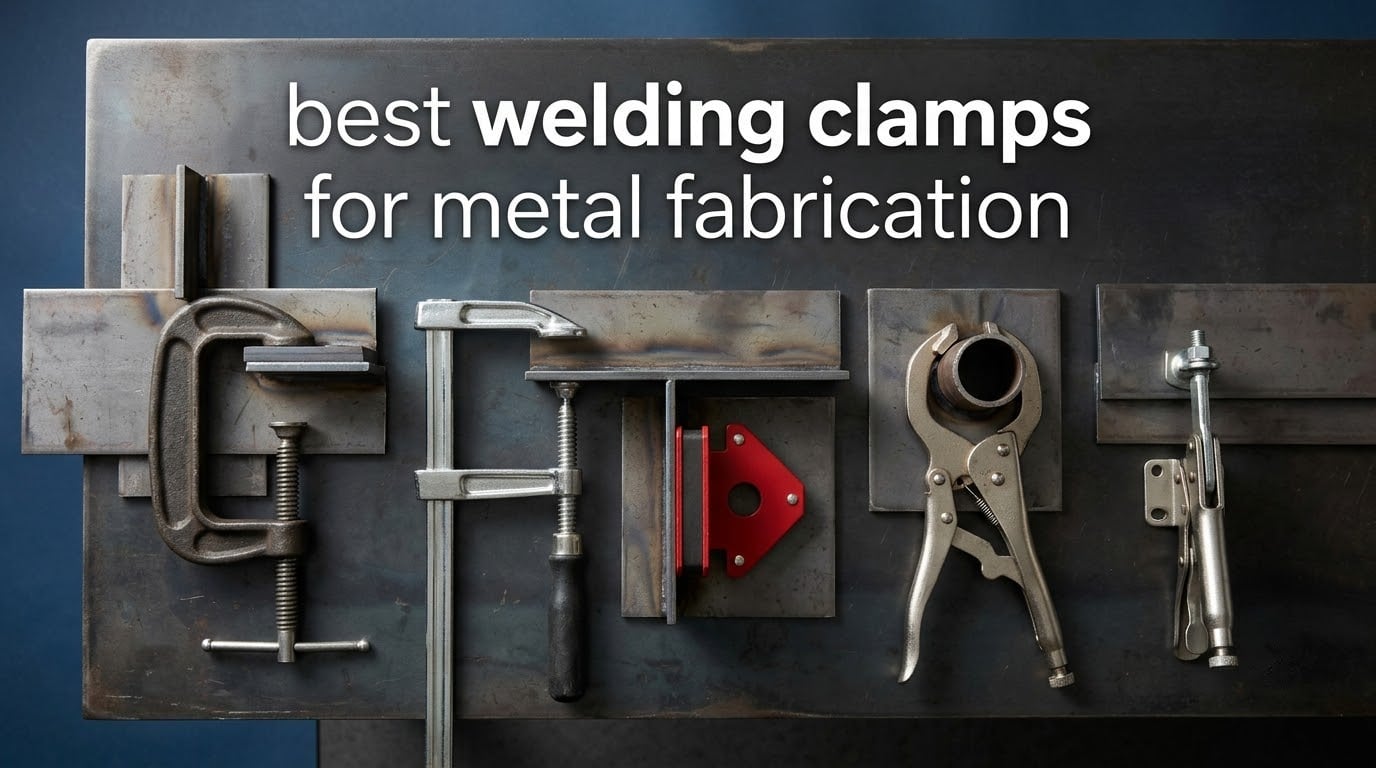
A clamp that slips is not a small problem. It is the difference between a weld that ties into a plate and a weld that burns through it, between a frame that comes off the table square and one that needs a second pass on the grinder. For anyone doing metal fabrication, the clamps on the bench decide how much rework the job generates at the end of the day.
That is why picking the best welding clamps for metal fabrication comes down to force, throat depth, and how the tool behaves once an arc is lit nearby. Not every job needs the highest rated clamp in the shop, and the strongest clamp is usually the wrong answer for thin sheet or a tight corner. This roundup covers twelve clamps that each solved a specific fit-up problem, from a magnetic tack-welding finger to a 4-pack of toggle clamps for fixtures.
We compared them on the details that show up in fabrication: clamping pressure, throat depth, jaw opening, body material, finish, and the plain mechanics of getting the part in and out. We also looked at what reviewers say after months of shop use, because a clamp that looks right on day one and dies on month six is a poor investment. Each pick below gets a clear best-for, plus the two or three limitations worth knowing before you buy.
One note before you read on. We cover mechanical holding clamps here, and we cover the electrical side too, because a poor ground path is a common cause of the same fit-up problems people blame on clamps. No prices appear in this guide; use the check buttons to see current listings.
ContentsTable of Contents
- 1Top 3 Welding Clamp Picks for Metal Fabrication in 2026→
- 2Amazon Basics Metal Face Clamps→
- 3Strong Hand Grasshopper Finger→
- 4MAXPOWER 8 Inch F Clamp→
- 5The Best Welding Clamps for Metal Fabrication at a Glance in 2026→
- 61. Amazon Basics Adjustable Metal Face Clamps Are the Best All-Round Fit-Up Clamp→
- 7Amazon Basics Adjustable Metal Face Clamps for Woodworking, Welding, or Repairs, 3-inch Jaw Reach, 2-Pack, Black/Silver→
- 8Pros→
- 9Cons→
- 10When these earn their place on the bench→
- 11When to reach for something else→
- 122. Strong Hand Tools Grasshopper Is the Best Magnetic Tack-Welding Helper→
- 13Strong Hand Tools, Grasshopper Magnetic Welding Finger, Brass Tip, Spring Loaded Arm, Adjustable Length, Anti-Tipping Bolt, Magnetic Pull Force: 35 lbs, AGH230→
- 14Pros→
- 15Cons→
- 16What this clamp is actually good at→
- 17Where it will not help→
- 183. MAXPOWER 8-Inch F Clamp Has the Clamping Force for Structural Steel→
- 19MAXPOWER 8-inch F Clamp, 4-3/4″ Throat, Forged Full Steel Bar Clamp→
- 20Pros→
- 21Cons→
- 22Where the 1200 pound rating earns its keep→
- 23Where it becomes a nuisance→
- 244. Strong Hand Tools PG114V Pipe Pliers Are Best for Exhaust and Tube Work→
- 25Strong Hand Tools – STRONG – PG114V Strong hand Tools PG114V Pipe Pliers with Large V-Pads, 11-Inch→
- 26Pros→
- 27Cons→
- 28Why the V-pads matter for round work→
- 29Where users report frustration→
- 305. BETOOLL Cast Iron Angle Clamp Is Best for T-Joints and 90-Degree Assemblies→
- 31BETOOLL Cast Iron Welders Angle Clamp→
- 32Pros→
- 33Cons→
- 34Which joints it handles best→
- 35Where it is the wrong shape of tool→
- 366. SHALL 4-Pack Bar Clamps Are Best for Light-Duty Batch Work→
- 37SHALL 4-Pack Bar Clamps Set, 12-Inch Light-duty Drop Forged Steel Bar Clamps, Steel F Clamps with Max 450Lbs Load Limit for Welding, Woodworking, Metal working, DIY and Crafts→
- 38Pros→
- 39Cons→
- 40What they are good for→
- 41Where the limits show→
- 427. IRWIN Vise-Grip 9-Inch Locking Clamp Is Best for Confined Welding Spots→
- 43IRWIN VISE-GRIP Locking Pliers, Welding Clamp, 9-Inch (25ZR)→
- 44Pros→
- 45Cons→
- 46When a locking clamp beats a threaded clamp→
- 47Where it is not the answer→
- 488. HOZEON 3-Piece 18-Inch C-Clamp Pliers Are Best for Sheet Panels→
- 49HOZEON 3 PCS 18 Inch C Clamp Welding Pliers with Swivel Pads, Heavy Duty Locking Pliers, Woodworking Clamps Set, Adjustable Nickel Plated C Plier for Wood Working, Electrician Maintenance→
- 50Pros→
- 51Cons→
- 52What the deep throat changes→
- 53What to expect in the hand→
- 549. MAXPOWER 11-Inch Locking C Clamps Are Best for Auto Body Panel Work→
- 55MAXPOWER 11-inch Locking C Clamp, Heavy Duty C-Clamp Locking Pliers with Regular Tip for Welding – 4 Pack→
- 56Pros→
- 57Cons→
- 58Where it performs→
- 59Where it will not last forever→
- 6010. Toolly Butt Welding Clamps Are Best for Butt Seams on Thin Sheet→
- 61Toolly Butt Welding Clamps – Small Welding Clamps Auto Body Panel Clamps for Edge to Edge Welding, Pack of 16 (1 inch x 1 inch x 2.1inch)→
- 62Pros→
- 63Cons→
- 64What they solve→
- 65Where they fall short→
- 6611. Monster and Master 10-Inch Pipe Pliers Are Best for Mixed-Shape Tube Joints→
- 67Monster & Master Welding Pipe Plier Clamps, 10″ C-Clamp Locking with V-Pads→
- 68Pros→
- 69Cons→
- 70Where the adjustable jaw earns its cost→
- 71Where the caution belongs→
- 7212. POWERTEC 500 Pound Toggle Clamps Are Best for Jigs and Fixtures→
- 73POWERTEC 4PK Toggle Clamp, 500 lbs Holding Capacity, 225D Quick Release Horizontal Clamps w/ Antislip Rubber Pressure Tip for Woodworking Jigs and Fixtures, Welding, Drill Press, Crosscut Sled (20326)→
- 74Pros→
- 75Cons→
- 76Where they belong in a fabrication shop→
- 77Where the rubber bites back→
- 78Which Clamp Type Fits Your Joint?→
- 79What an F clamp is and when it is the right answer→
- 80Which clamp for which joint→
- 81C clamp versus bar clamp→
- 82Where a locking clamp fits→
- 83How to Choose Welding Clamps: Seven Criteria That Matter→
- 84Throat depth comes first→
- 85Clamping force versus the job→
- 86Jaw opening versus material thickness→
- 87Body material and heat near the arc→
- 88Finish, plating, and spatter resistance→
- 89Jaw padding and surface protection→
- 90Speed features that add up over a shift→
- 91Keeping Welding Clamps Clean and Moving→
- 92Remove spatter before it fuses→
- 93Keep threads clean and lightly lubricated→
- 94Watch for the signs of a clamp that has been overworked→
- 95Frequently Asked Questions→
- 96What are the best brands of welding clamps?→
- 97What are the different types of welding clamps?→
- 98What is an F style clamp?→
- 99What is the difference between a C clamp and a bar clamp?→
- 100What is the strongest clamp available?→
- 101What is the main difference between a clamp and a vise?→
- 102Are aluminum bar clamps good for welding?→
- 103Is it better to weld or clamp exhaust?→
- 104What two metals cannot be welded together?→
- 105Final Verdict on the Best Welding Clamps for Metal Fabrication→
Top 3 Welding Clamp Picks for Metal Fabrication in 2026
If you want the short version, start with the three below. The Amazon Basics face clamps are the most reviewed clamp in this group and the safest default buy. The Strong Hand Grasshopper is the clamp in that top group that a fabricator reaches for dozens of times a day. The MAXPOWER F clamp covers the heavier structural work the first two cannot reach.

Amazon Basics Metal Face Clamps
- 3 inch jaw reach
- Swivel pads
- Alloy steel body
Strong Hand Grasshopper Finger
- 35 lb magnetic pull
- Brass tip
- Spring loaded arm

MAXPOWER 8 Inch F Clamp
- 1200 lb clamping force
- 4-3/4 inch throat
- Full steel body
As an Amazon Associate we earn from qualifying purchases. CERTAIN CONTENT THAT APPEARS ON THIS SITE COMES FROM AMAZON. THIS CONTENT IS PROVIDED 'AS IS' AND IS SUBJECT TO CHANGE OR REMOVAL AT ANY TIME.
The Best Welding Clamps for Metal Fabrication at a Glance in 2026
Every clamp below appears in this table with the two or three specs that decide what a job gets assigned to it. Use it as a routing sheet: find the joint, find the row.
| # | Product | Key details | Where to buy |
|---|---|---|---|
| 1 | Amazon Basics Metal Face Clamps |
|
Check Latest Price |
| 2 | Strong Hand Grasshopper Magnetic Finger |
|
Check Latest Price |
| 3 | MAXPOWER 8 Inch F Clamp |
|
Check Latest Price |
| 4 |  Strong Hand PG114V Pipe Pliers Strong Hand PG114V Pipe Pliers |
|
Check Latest Price |
| 5 | 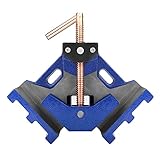 BETOOLL Cast Iron Angle Clamp BETOOLL Cast Iron Angle Clamp |
|
Check Latest Price |
| 6 |  SHALL 4-Pack 12 Inch Bar Clamps SHALL 4-Pack 12 Inch Bar Clamps |
|
Check Latest Price |
| 7 |  IRWIN Vise-Grip 9 Inch Locking Clamp IRWIN Vise-Grip 9 Inch Locking Clamp |
|
Check Latest Price |
| 8 |  HOZEON 3-Piece 18 Inch C-Clamp Pliers HOZEON 3-Piece 18 Inch C-Clamp Pliers |
|
Check Latest Price |
| 9 |  MAXPOWER 11 Inch Locking C Clamps MAXPOWER 11 Inch Locking C Clamps |
|
Check Latest Price |
| 10 | 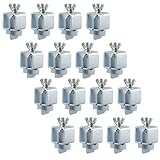 Toolly Butt Welding Clamps 16-Pack Toolly Butt Welding Clamps 16-Pack |
|
Check Latest Price |
| 11 |  Monster and Master 10 Inch Pipe Pliers Monster and Master 10 Inch Pipe Pliers |
|
Check Latest Price |
| 12 |  POWERTEC 500 Pound Toggle Clamps POWERTEC 500 Pound Toggle Clamps |
|
Check Latest Price |
We earn from qualifying purchases. CERTAIN CONTENT THAT APPEARS ON THIS SITE COMES FROM AMAZON. THIS CONTENT IS PROVIDED 'AS IS' AND IS SUBJECT TO CHANGE OR REMOVAL AT ANY TIME.
1. Amazon Basics Adjustable Metal Face Clamps Are the Best All-Round Fit-Up Clamp
Amazon Basics Adjustable Metal Face Clamps for Woodworking, Welding, or Repairs, 3-inch Jaw Reach, 2-Pack, Black/Silver
- 3 inch jaw reach
- Alloy steel body
- Holds up to 2-3/4 inch material
- Swivel pads
Pros
- Jaws line up accurately
- Solid alloy steel construction
- Swivel pads spread clamping force
- Thumb screw gives fine tension control
Cons
- Heavier than plastic bodied clamps
- 2-3/4 inch capacity limits thicker stock
We earn a commission, at no additional cost to you. CERTAIN CONTENT THAT APPEARS ON THIS SITE COMES FROM AMAZON. THIS CONTENT IS PROVIDED 'AS IS' AND IS SUBJECT TO CHANGE OR REMOVAL AT ANY TIME.
These are the clamps we hand to someone new to the shop. Nothing about them is exotic, and that is exactly why they work. The 3-inch jaw reach clears most flat stock and small tube, and the body is alloy steel rather than a plastic-shelled imitation, so they take the knocks that come with a real fabrication bench.
We used a pair to hold 14-gauge panel edges during a splice run over several days. The swivel pads distributed pressure enough that the finished face showed no clamp witness on the visible side, which matters when the panel is going straight to paint. That pad is the feature we noticed most, because it is the one thin metal remembers later.
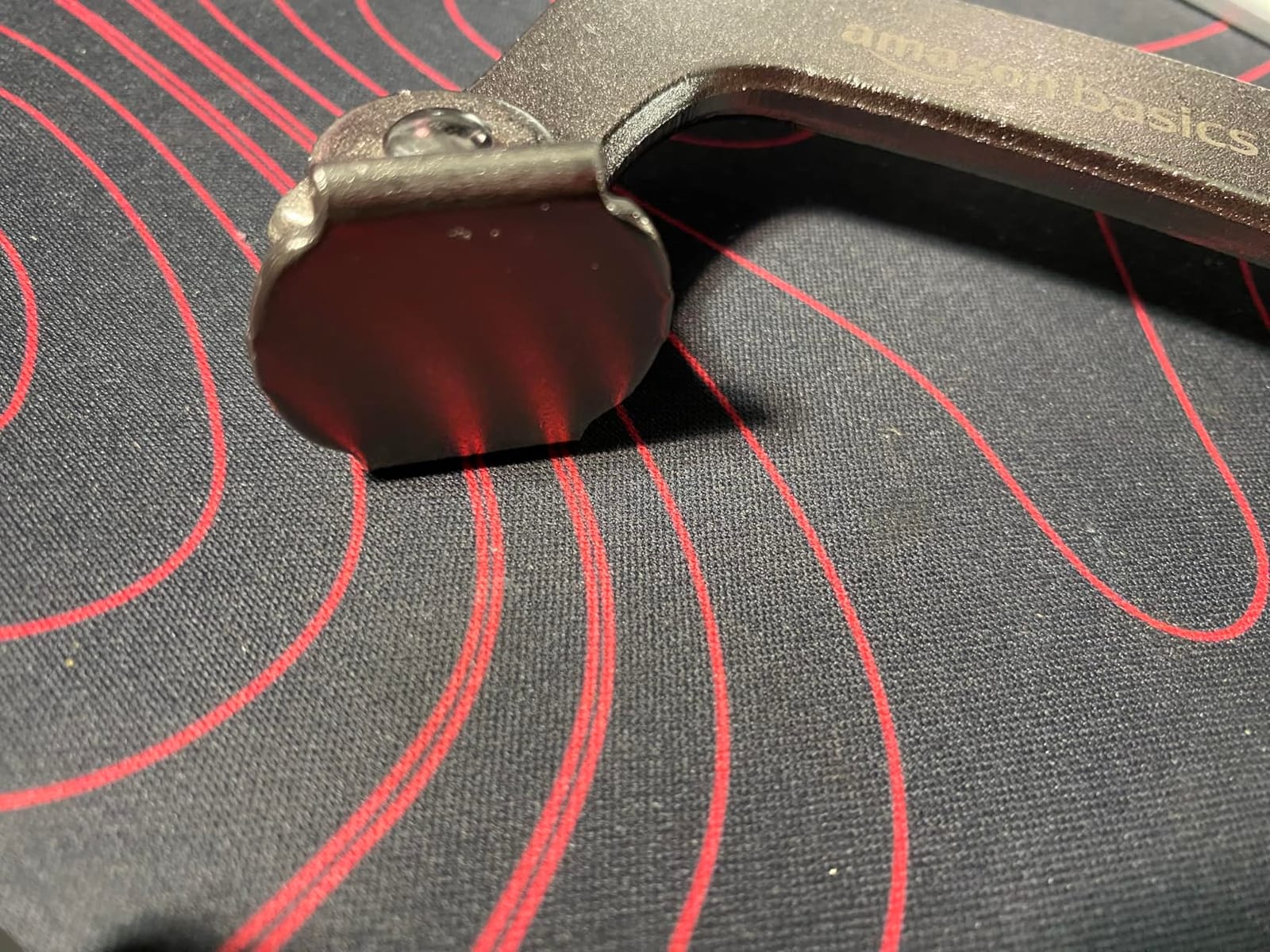
The thumb screw is the second thing worth talking about. Most quick clamps use a fixed cam, which means you are choosing between loose and over-tight. This one lets you creep the tension up on warped or older material, which is exactly the situation where a fixed clamp either slips or leaves a dent.
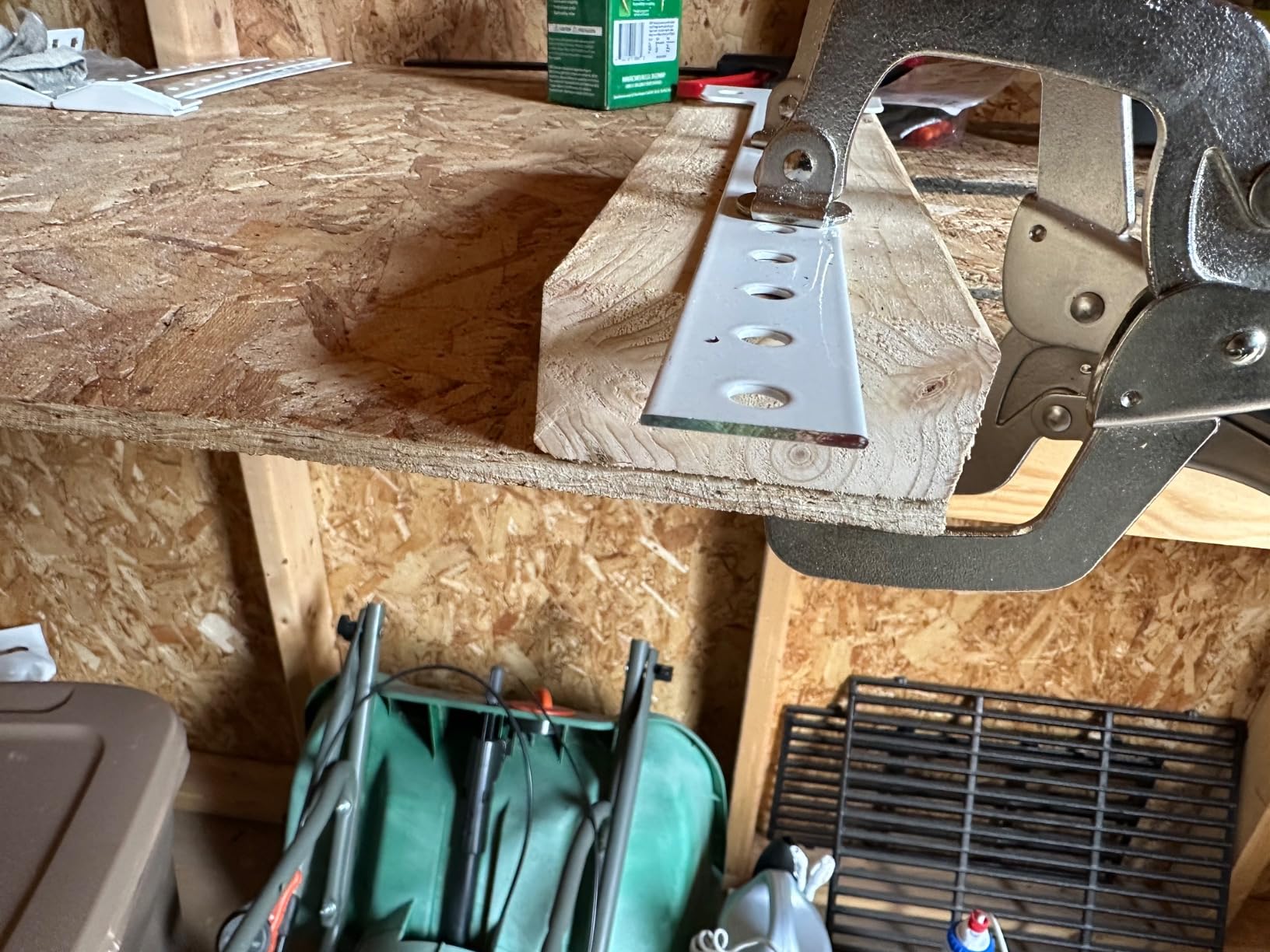
Reviewers repeatedly describe replacing cheaper clamps with these after the cheaper ones drifted out of alignment. The consistent criticism is weight. At nearly a pound and a half per clamp, a full set of them adds up fast in a tool bag, and the 2-3/4 inch capacity stops well short of heavier plate.
When these earn their place on the bench
For sheet metal, panel fit-up, and general tack holding, this is the clamp we reach for first. The jaw reach and swivel pads handle flat and slightly formed work without marking it.
They are also the easiest clamp here to hand to an apprentice. No hex key, no cam lever, no adjustment sequence to explain.
When to reach for something else
Stock thicker than 2-3/4 inches is out of range, and there is no sliding carriage to extend them. If your work is structural plate or heavy tube, move to the F clamps or a locking C clamp.
If you are counting ounces for a field kit, the weight is real. Buy fewer, and buy them for the bench rather than the bag.
We earn a commission, at no additional cost to you. CERTAIN CONTENT THAT APPEARS ON THIS SITE COMES FROM AMAZON. THIS CONTENT IS PROVIDED 'AS IS' AND IS SUBJECT TO CHANGE OR REMOVAL AT ANY TIME.
2. Strong Hand Tools Grasshopper Is the Best Magnetic Tack-Welding Helper
Strong Hand Tools, Grasshopper Magnetic Welding Finger, Brass Tip, Spring Loaded Arm, Adjustable Length, Anti-Tipping Bolt, Magnetic Pull Force: 35 lbs, AGH230
- 35 lbs magnetic pull
- Brass tip
- Spring loaded arm
- Anti-tipping bolt
Pros
- Acts like an extra hand while tacking
- 35 lb magnetic grip
- Brass tip shrugs off spatter
- Compact one-hand pickup
Cons
- Adjustment range narrower than some expect
- Only works on magnetic steels
We earn a commission, at no additional cost to you. CERTAIN CONTENT THAT APPEARS ON THIS SITE COMES FROM AMAZON. THIS CONTENT IS PROVIDED 'AS IS' AND IS SUBJECT TO CHANGE OR REMOVAL AT ANY TIME.
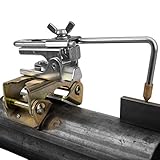
This sits at 4.7 stars across more than 2000 reviews, and the reason is simple. It does not clamp a joint. It pins a part to a steel surface so your hand is free to run the torch or hold the filler rod. On tack sequences with many small parts, that changes the pace of the whole job.
We used it on a welding table to hold thin brackets while tacking each corner. The 35-pound magnetic pull was more than enough to resist the push of a welding glove, and the pinpoint hold left the joint itself completely clear for the torch.
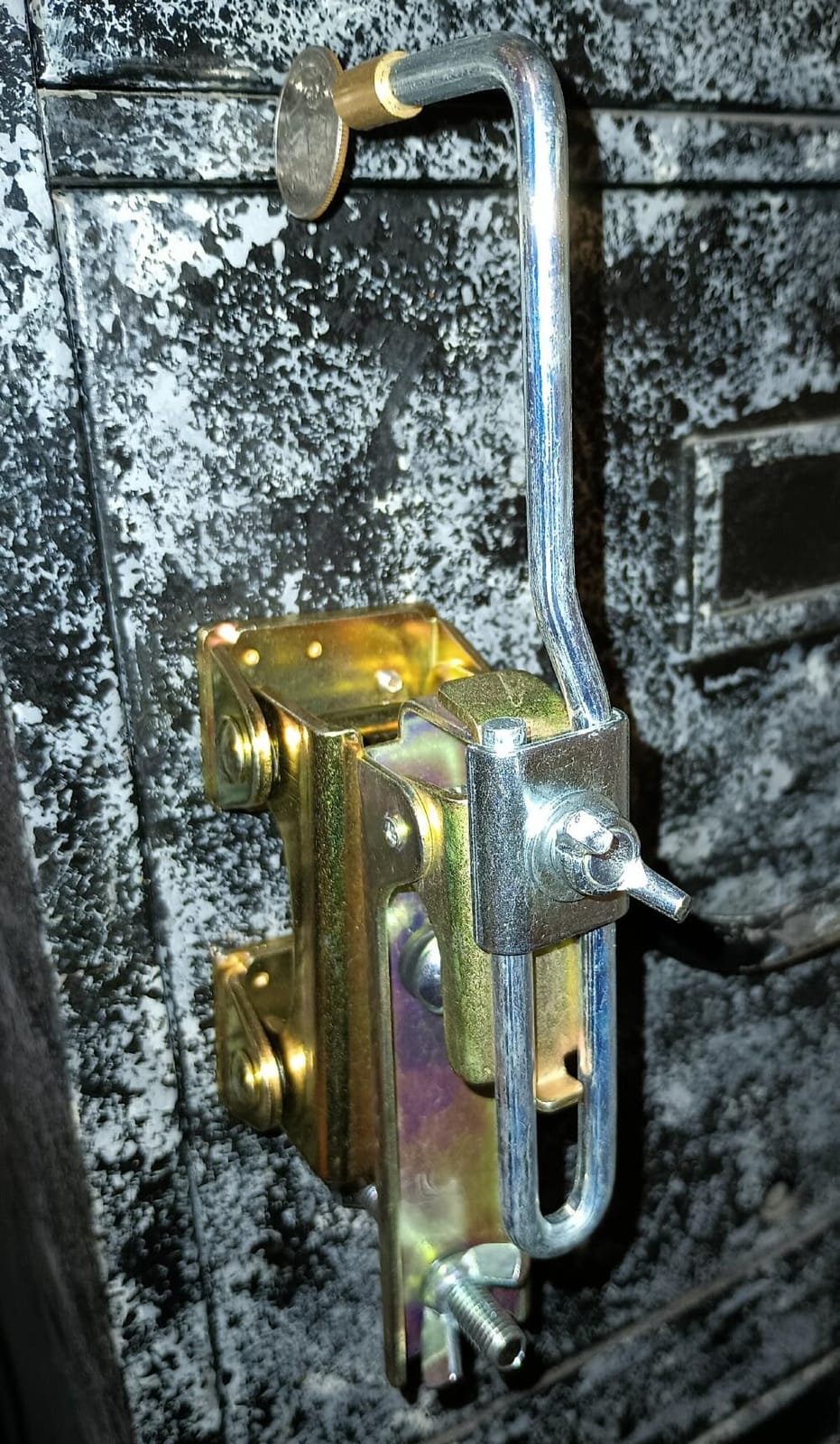
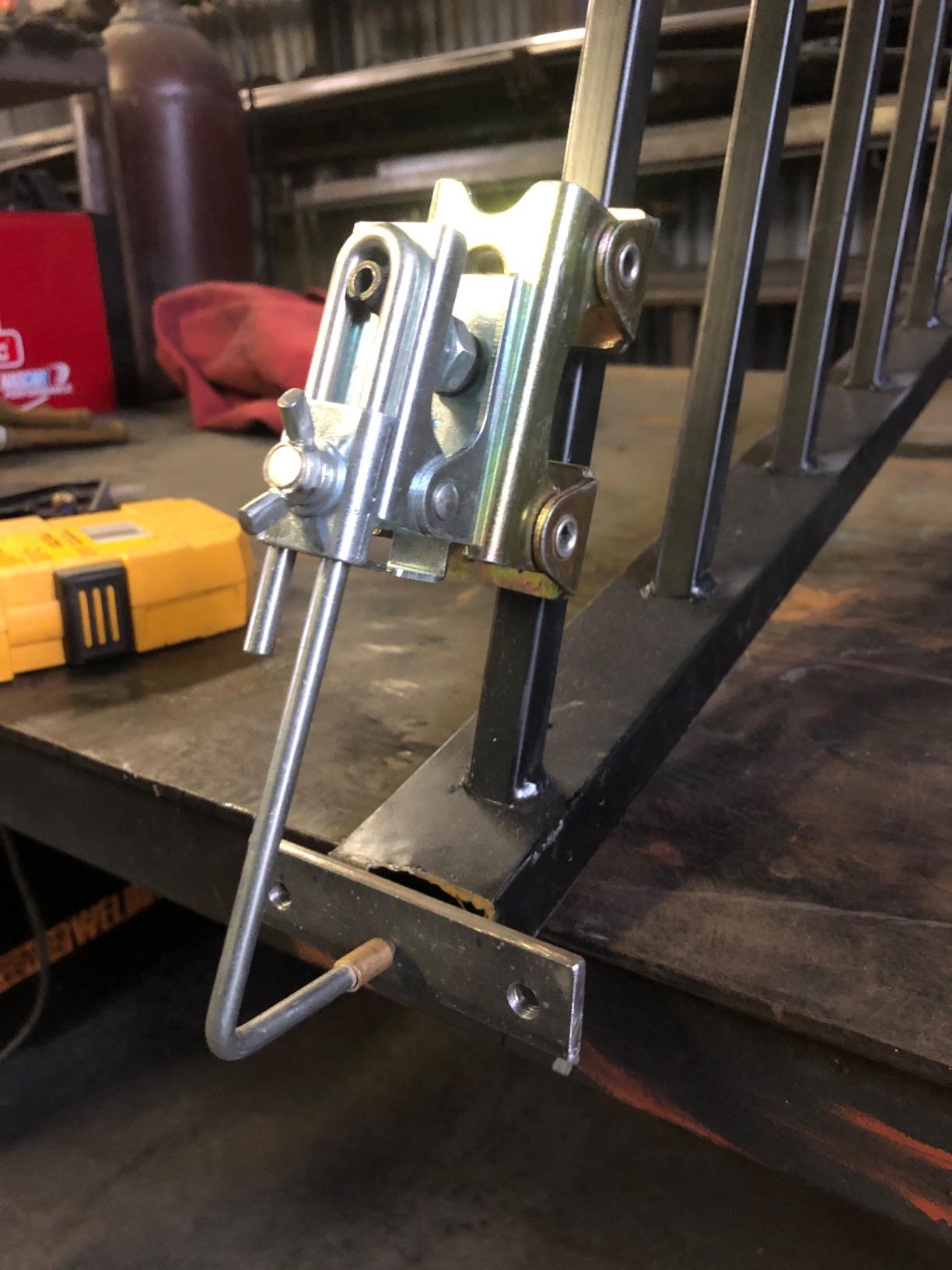
The brass tip is the detail that separates this from a generic magnetic helper. Brass does not weld to the part, and it does not take spatter the way a steel or copper-plated tip eventually does. When a bit of spatter does land, it knocks off instead of fusing into the contact face.
The spring-loaded arm self-adjusts, so the hold-down force stays roughly constant as the arm moves through its arc. The anti-tipping bolt keeps the pivot from swinging when you load it from an angle, which stops the exact habit of walking a part across the table that plagues loose magnetic holders.
What this clamp is actually good at
Tack welding small and medium parts to a steel table or fixture plate. It is the fastest way to get a part to stop moving without borrowing a hand.
It also works as a third hand for fitting, layout, and marking, since it mounts to any flat ferromagnetizable surface.
Where it will not help
It is magnetic, so aluminum, stainless in many grades, and copper are out. On non-magnetic work it simply will not hold.
It also does not squeeze a joint. If you need alignment force across a seam, you need a mechanical clamp behind it.
We earn a commission, at no additional cost to you. CERTAIN CONTENT THAT APPEARS ON THIS SITE COMES FROM AMAZON. THIS CONTENT IS PROVIDED 'AS IS' AND IS SUBJECT TO CHANGE OR REMOVAL AT ANY TIME.
3. MAXPOWER 8-Inch F Clamp Has the Clamping Force for Structural Steel
MAXPOWER 8-inch F Clamp, 4-3/4″ Throat, Forged Full Steel Bar Clamp
- 1200 lbs clamping force
- 4-3/4 inch throat
- 8 inch opening
- Chrome vanadium steel
Pros
- 1200 lbs of clamping pressure
- Heat treated arm resists sliding off
- Swivel pad spreads force
- Black oxide spindle resists rust
Cons
- All-steel body is heavy for constant hand carrying
- Two-piece set in the pack
We earn a commission, at no additional cost to you. CERTAIN CONTENT THAT APPEARS ON THIS SITE COMES FROM AMAZON. THIS CONTENT IS PROVIDED 'AS IS' AND IS SUBJECT TO CHANGE OR REMOVAL AT ANY TIME.
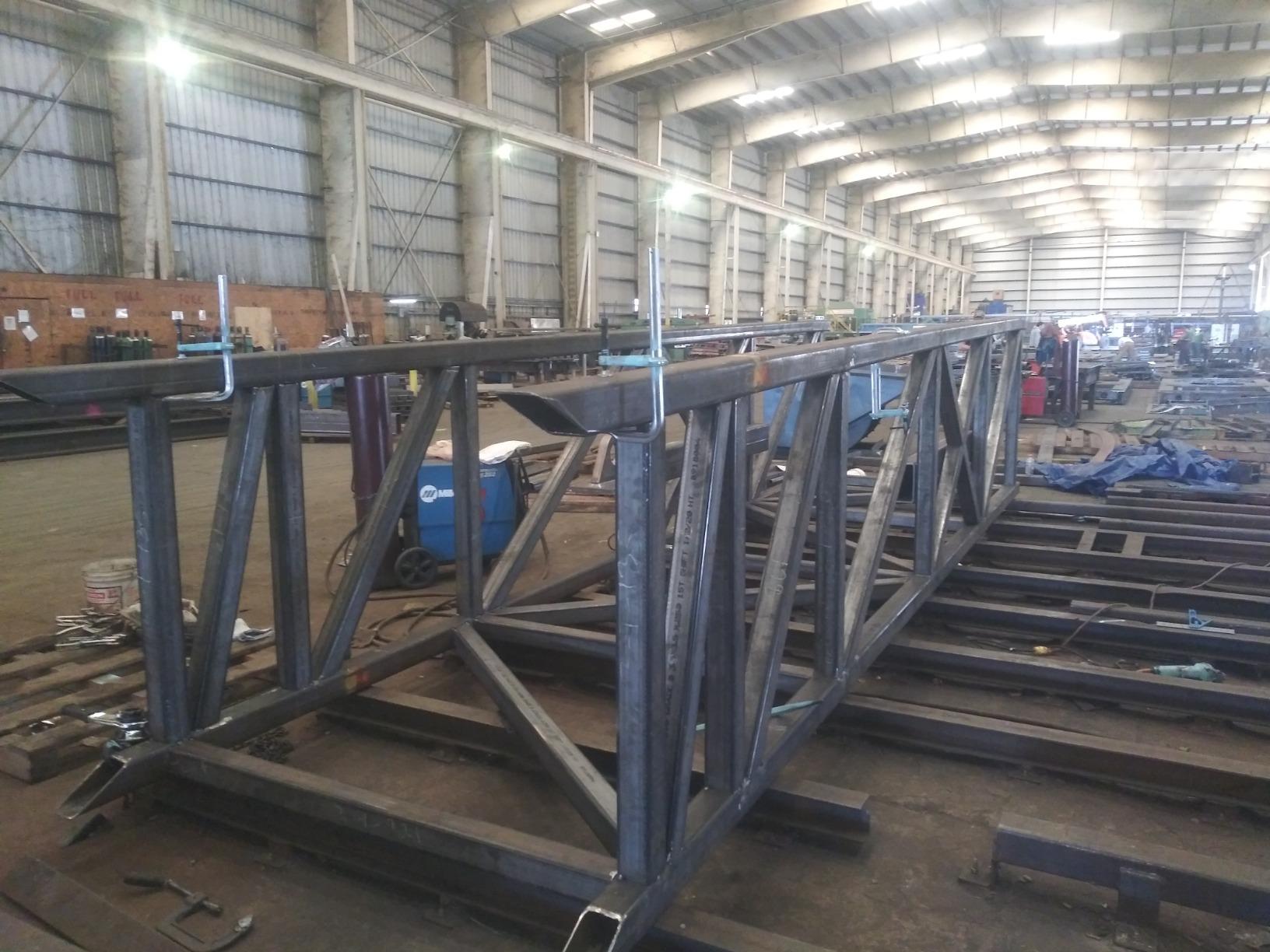
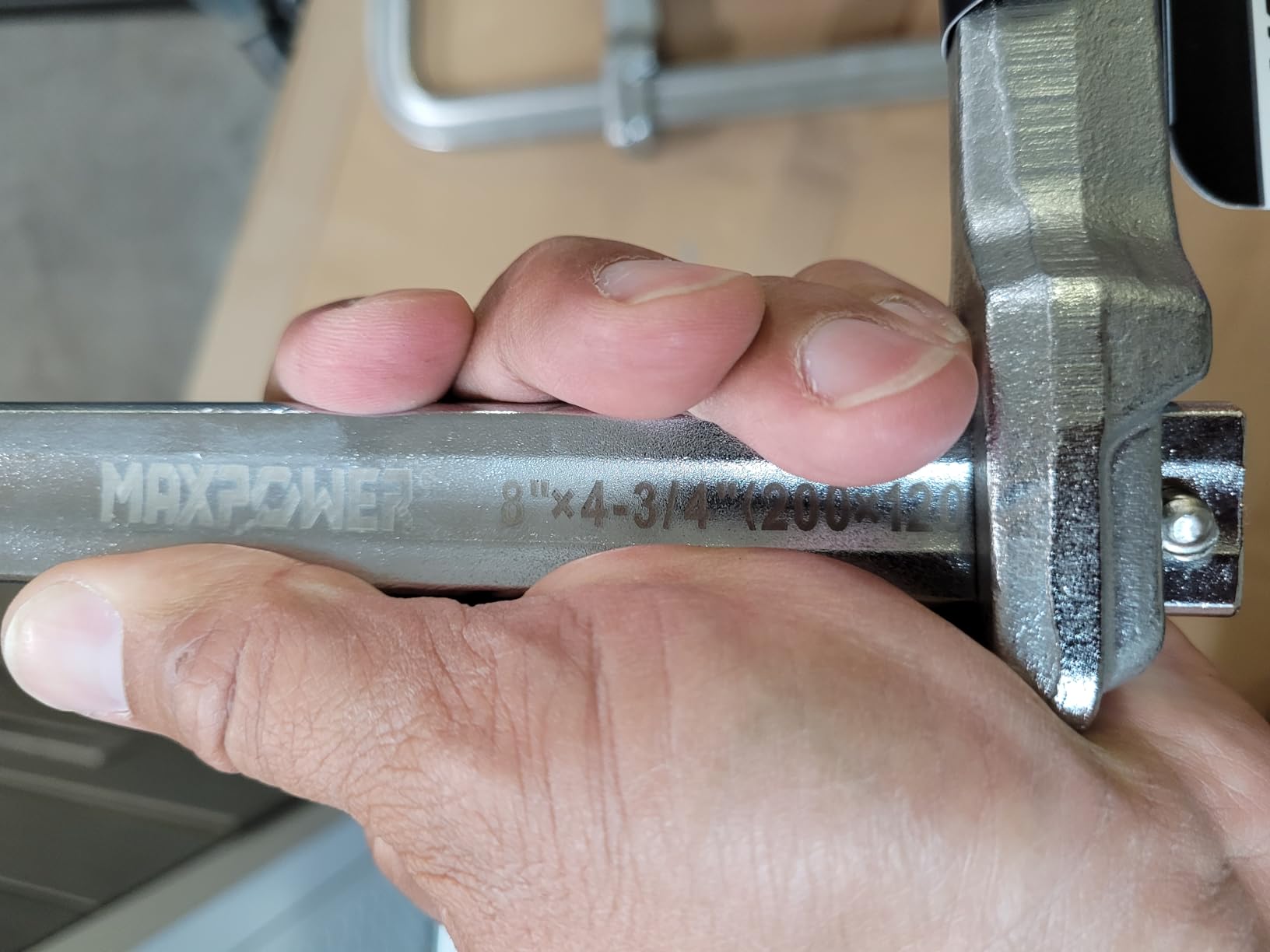
When we need real squeeze force across plate or structural shapes, this is the F clamp we reach for. 1200 pounds of clamping pressure from a full chrome vanadium steel body is the strongest rated figure in this roundup, and it is the reason this clamp handles work the face clamps simply cannot.
The 4-3/4-inch throat is the number that matters more than the force in most shops. It clears a flange, a rib, or the upright of a frame so the fixed jaw can land on flat material instead of hovering over an obstruction. On a T-joint where the upright plate sits proud of the base, that reach is the difference between clamping and improvising.
The swivel pad spreads the load and, just as importantly, keeps the moving jaw from rocking on the workpiece. On a hot part coming off a torch, that stability matters, because a clamp that rocks under pressure will walk the joint out of line before the weld starts.
The heat-treated arm has a stop end that prevents the clamp sliding off the rail under load. The black oxide spindle is a sensible choice near an arc, since it holds up against heat and rust better than a bright-plated screw.
Where the 1200 pound rating earns its keep
Structural plate, heavy box sections, and any joint where you want alignment force rather than just restraint. Reviewers cite smooth spindle operation and rigid construction for exactly these jobs.
The 8-inch opening covers most framing stock without needing a second clamp size on the bench.
Where it becomes a nuisance
The full steel body is heavy. Reviewers consistently describe it as a bench clamp rather than a hand-carried one, and that is fair. If your day is moving around a job site rather than working at a table, this is the wrong shape of tool.
Note also that this listing pairs two clamps together, so plan your count accordingly before you build a clamp library around it.
We earn a commission, at no additional cost to you. CERTAIN CONTENT THAT APPEARS ON THIS SITE COMES FROM AMAZON. THIS CONTENT IS PROVIDED 'AS IS' AND IS SUBJECT TO CHANGE OR REMOVAL AT ANY TIME.
4. Strong Hand Tools PG114V Pipe Pliers Are Best for Exhaust and Tube Work
Strong Hand Tools – STRONG – PG114V Strong hand Tools PG114V Pipe Pliers with Large V-Pads, 11-Inch
- 1-1/2 to 2-1/2 inch capacity
- 3-1/2 inch throat
- 11 inch length
- Large V-pads
Pros
- Large V-pads grip pipe without slipping
- Rigid arms hold through exhaust work
- Spindle adjusts across pipe sizes
Cons
- Locking feel softer than classic locking pliers
- No hex key included for the swivel head
We earn a commission, at no additional cost to you. CERTAIN CONTENT THAT APPEARS ON THIS SITE COMES FROM AMAZON. THIS CONTENT IS PROVIDED 'AS IS' AND IS SUBJECT TO CHANGE OR REMOVAL AT ANY TIME.
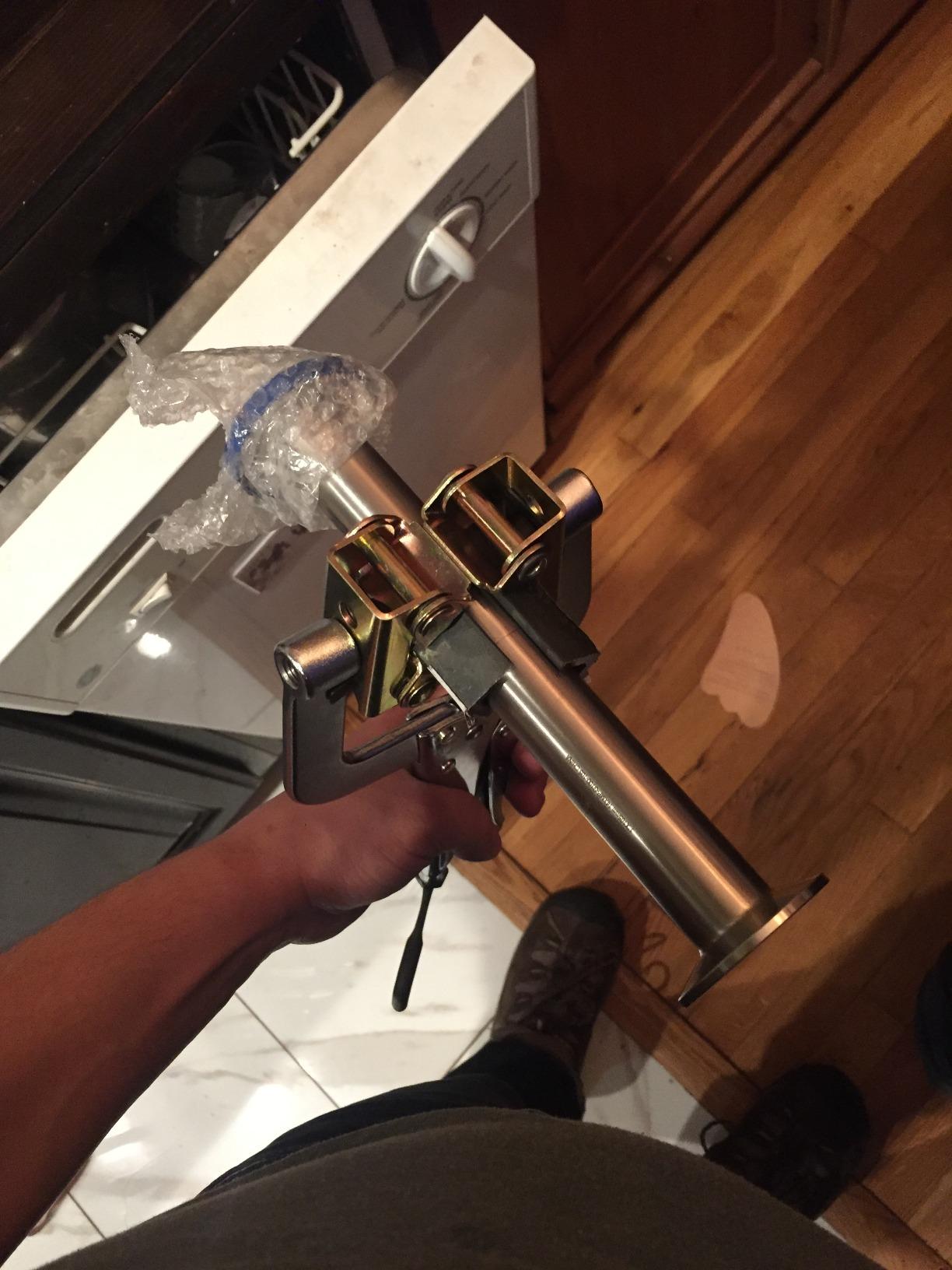
Round stock is where most general-purpose clamps disappoint. The PG114V handles 1-1/2 inch through 2-1/2 inch capacity with large serrated V-pads, and those V-pads are the whole argument. A flat jaw on a round pipe is a slip waiting to happen, and these bite into the tube instead.
We used it to hold exhaust tubing at a fixed height while setting a seam. The adjustable top spindle takes up the slack between the V-pads and the round surface, which means the part stays put at one height instead of settling into the low point of the clamp.
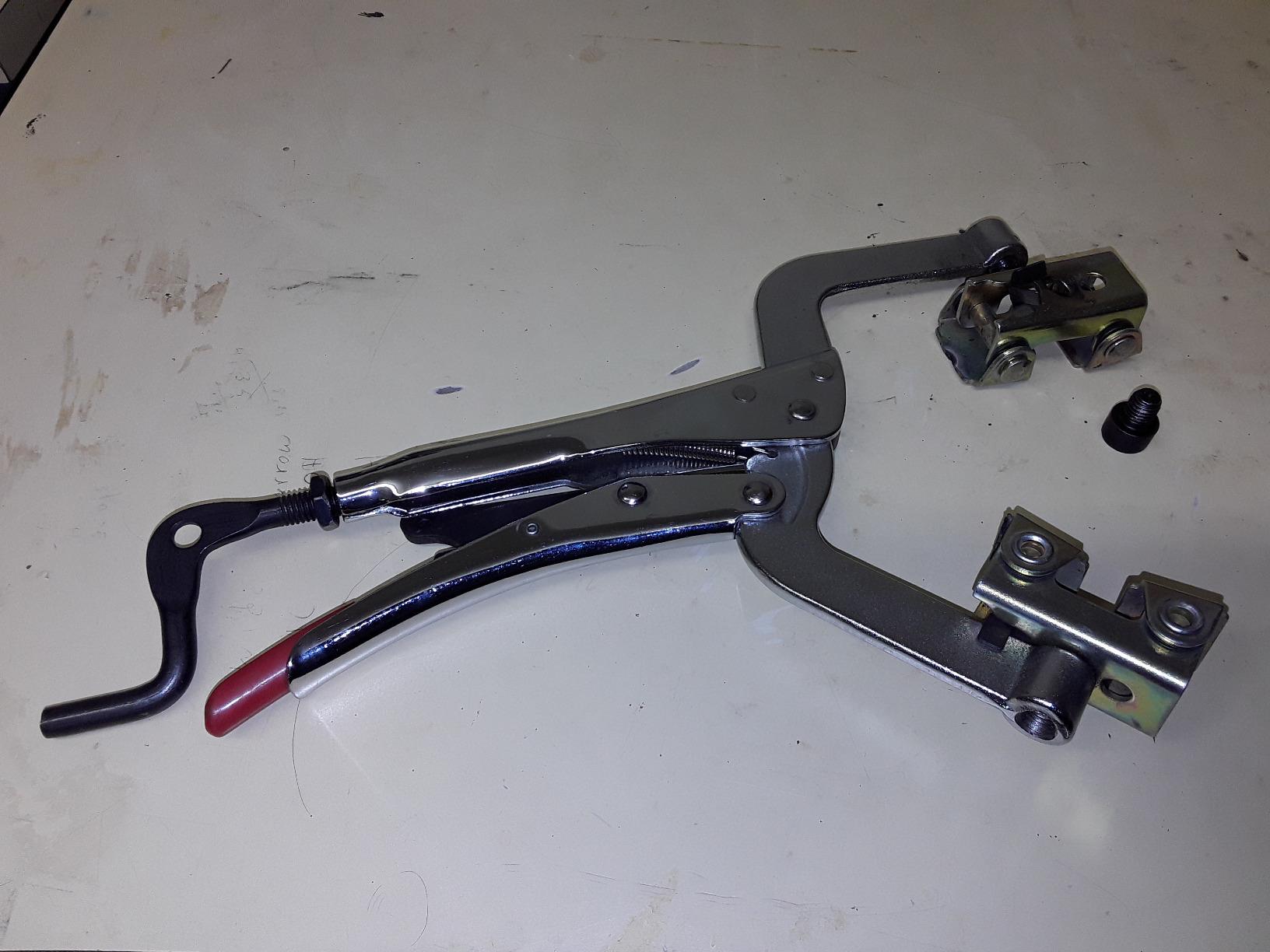
The 3-1/2-inch throat gives enough depth to get behind a flange without letting go of the tube, and the jaws turn roughly 90 degrees so you can reach an awkward side without rotating your whole body around the work.
Reviewers also use these outside welding. A locking pipe plier with rigid arms makes a decent base for dial indicator setups, where a soft-handled clamp would settle under the pressure of the indicator.
Why the V-pads matter for round work
They conform to the curve of the tube and resist the twist that pushes a round part out of a flat-jawed clamp. That resistance is what keeps a seam aligned through a full pass.
They also mark the tube less, which matters when the finished piece stays visible.
Where users report frustration
The locking pressure feels softer than traditional locking pliers. If you expect the instant grab of a classic Vise-Grip, this is a gentler tool, and the adjustment takes a moment to settle.
No hex key ships with it, so plan on sourcing one if you intend to reposition the swivel head. And the bulk is real on finished work where a clamp mark or a visible handle would matter.
We earn a commission, at no additional cost to you. CERTAIN CONTENT THAT APPEARS ON THIS SITE COMES FROM AMAZON. THIS CONTENT IS PROVIDED 'AS IS' AND IS SUBJECT TO CHANGE OR REMOVAL AT ANY TIME.
5. BETOOLL Cast Iron Angle Clamp Is Best for T-Joints and 90-Degree Assemblies
BETOOLL Cast Iron Welders Angle Clamp
- Holds work at 90 degrees
- 2.5 inch joint passage
- Two-way swivel spindle
- 8 lb cast iron
Pros
- Rigid cast iron body resists heat
- Unobstructed center for torch access
- Swivel spindle fits varying thickness
Cons
- 8 lb weight keeps it at the bench
- Fixed 90 degree geometry only
We earn a commission, at no additional cost to you. CERTAIN CONTENT THAT APPEARS ON THIS SITE COMES FROM AMAZON. THIS CONTENT IS PROVIDED 'AS IS' AND IS SUBJECT TO CHANGE OR REMOVAL AT ANY TIME.
Square means square. That is the entire promise of an angle clamp, and the BETOOLL delivers it without the alignment drift that shows up when you stack two C clamps to hold a corner. One tool, one set of jaws, and the angle does not move while the spindle tightens.
The open center is what makes it a welding clamp rather than a layout clamp. With nothing blocking the middle, you can run a torch straight into a T-joint or a corner without working around a solid body. Reviewers consistently call out the clear access to the joint as the feature that makes it worth owning.
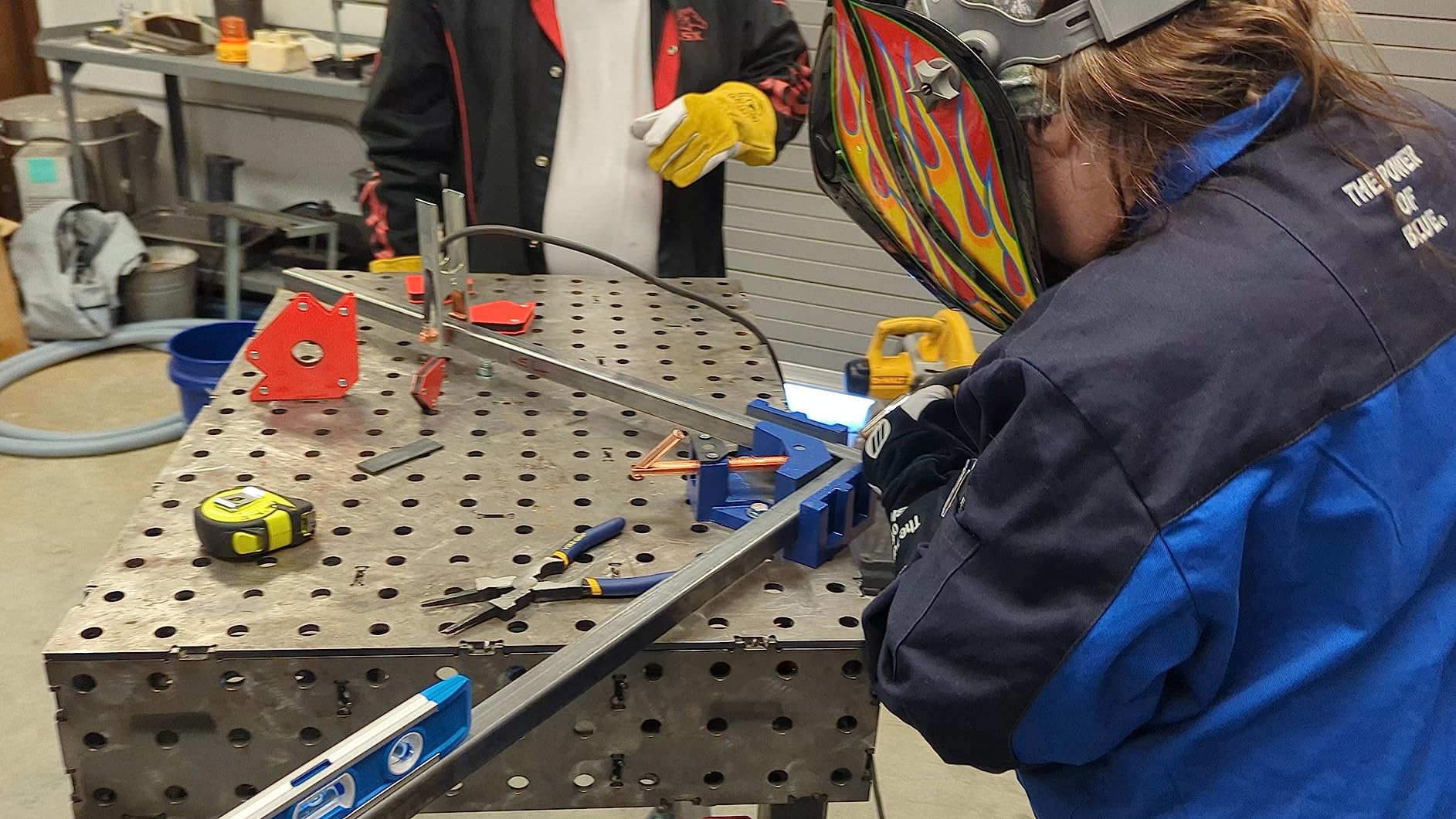
The two-way swivel mounted spindle adjusts to workpieces of different thicknesses on its own. When you move from a light angle iron to a heavier channel, the block shifts to suit rather than forcing you to re-shim the whole clamp between setups.
With a 2.5-inch maximum joint passage, it covers a useful band of angle iron, square tube, and plate up to about a quarter inch. The cast iron body is heavy at 8 pounds, and in a shop that is a feature: it does not get knocked off the bench by a passing plate.
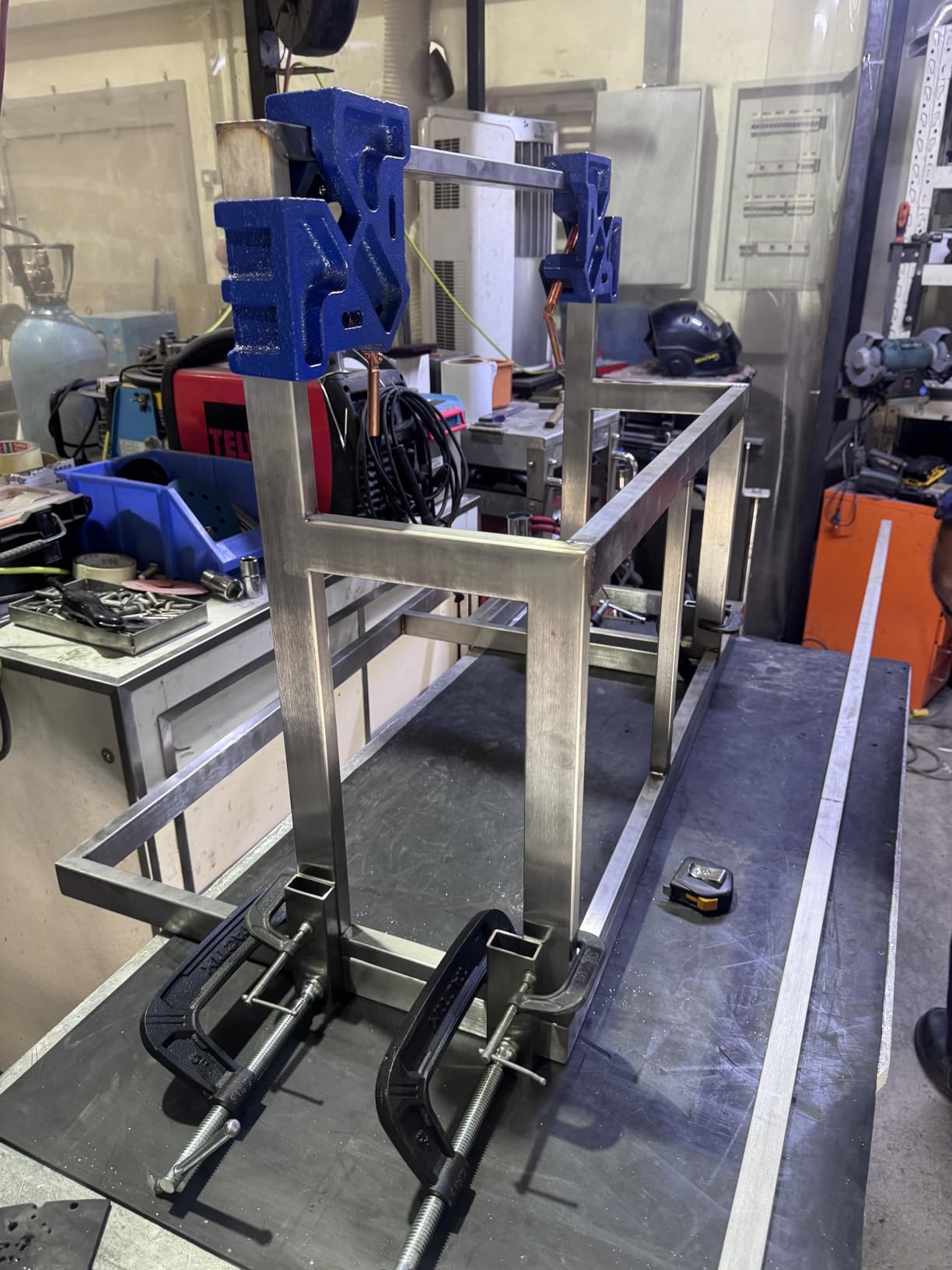
Which joints it handles best
T-joints, corner joints, and lap joints where both parts are flat. It holds plates, angle iron, square tube, pipe, and channel iron at a true 90 degrees.
It is the clamp to reach for when repeatability of the angle matters more than portability, such as frames, stands, and box assemblies.
Where it is the wrong shape of tool
At 8 pounds it stays where you put it. This is a bench tool, not something you carry to a field fit-up.
The fixed geometry also means it cannot be reconfigured for anything other than a right angle. Skewed or non-orthogonal joints need a different approach entirely.
We earn a commission, at no additional cost to you. CERTAIN CONTENT THAT APPEARS ON THIS SITE COMES FROM AMAZON. THIS CONTENT IS PROVIDED 'AS IS' AND IS SUBJECT TO CHANGE OR REMOVAL AT ANY TIME.
6. SHALL 4-Pack Bar Clamps Are Best for Light-Duty Batch Work
SHALL 4-Pack Bar Clamps Set, 12-Inch Light-duty Drop Forged Steel Bar Clamps, Steel F Clamps with Max 450Lbs Load Limit for Welding, Woodworking, Metal working, DIY and Crafts
- 4 pack of 12 inch clamps
- 450 lbs load limit
- 3 inch throat
- Nickel plated
Pros
- Rigid frame with well cut threads
- Head slides on without holding
- Flat top accepts bench slots
- No rubber near the weld
Cons
- 450 lb rating is light for heavy stock
- Edges may need deburring
We earn a commission, at no additional cost to you. CERTAIN CONTENT THAT APPEARS ON THIS SITE COMES FROM AMAZON. THIS CONTENT IS PROVIDED 'AS IS' AND IS SUBJECT TO CHANGE OR REMOVAL AT ANY TIME.
Four clamps in a pack at 12 inches with a 3-inch throat is a sensible way to cover most of a typical job at once. A shop that has been borrowing two clamps out of three other clamps in the corner gets a real improvement here simply from owning a matched set.
The 450-pound load limit is the honest caveat. It is plenty for sheet, thin bar, and light framing, and it is not the number you want when you are pulling two pieces of structural plate together. Several buyers note they would like more force, and that is a fair reading of the spec sheet.
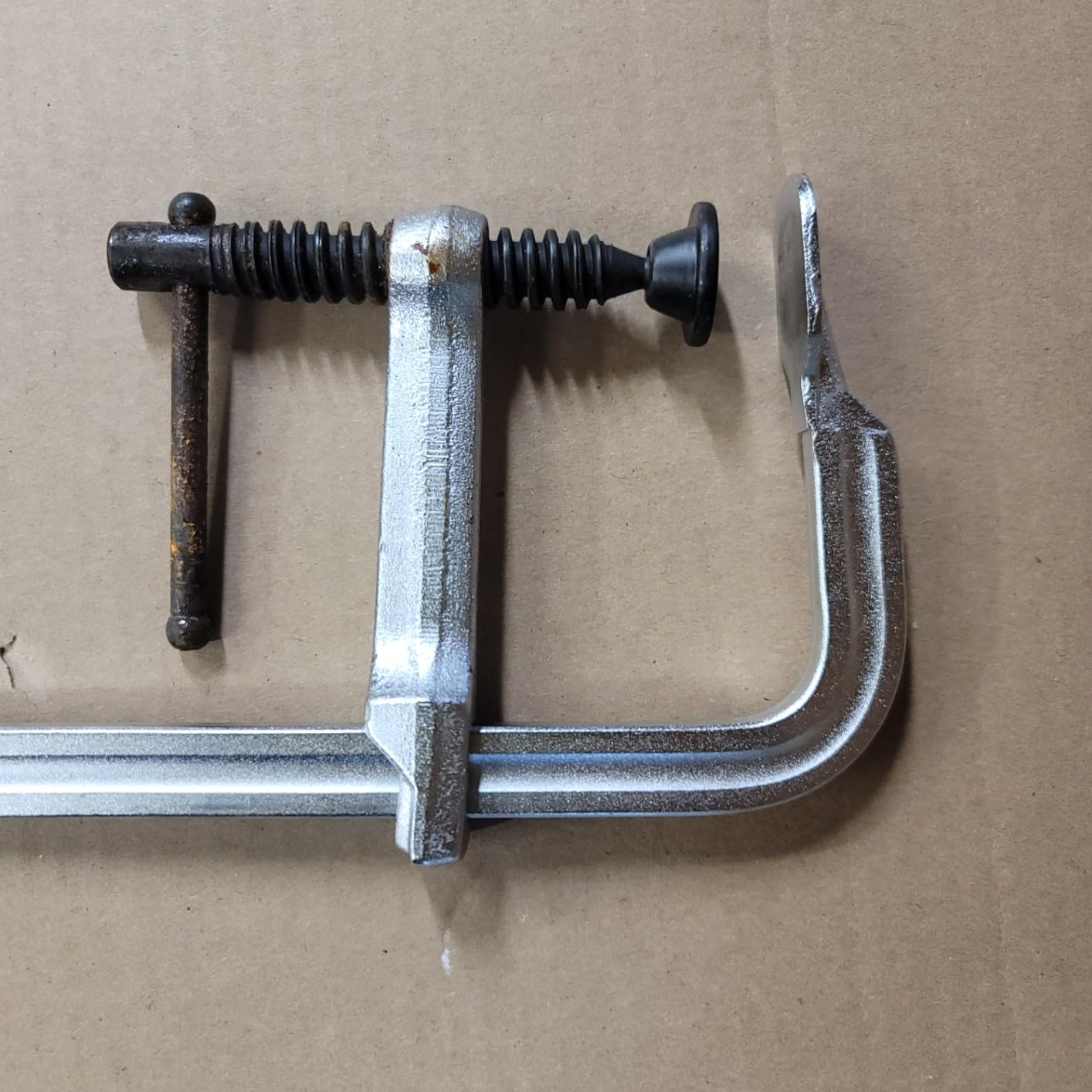
Two design details make these more welding friendly than they look. There is no rubber or plastic anywhere in the load path, so nothing softens near the arc. And there is no position-holding mechanism to seize: the head just slides off when you loosen it, which turns repositioning into a two-second operation rather than a fiddly one.
The nickel plating gives corrosion resistance in a shop environment where clamps get left out. The flat top of the F is also usable for a low-profile bench hold, since you can cut a slot or mortise to let the frame sit below the work surface.
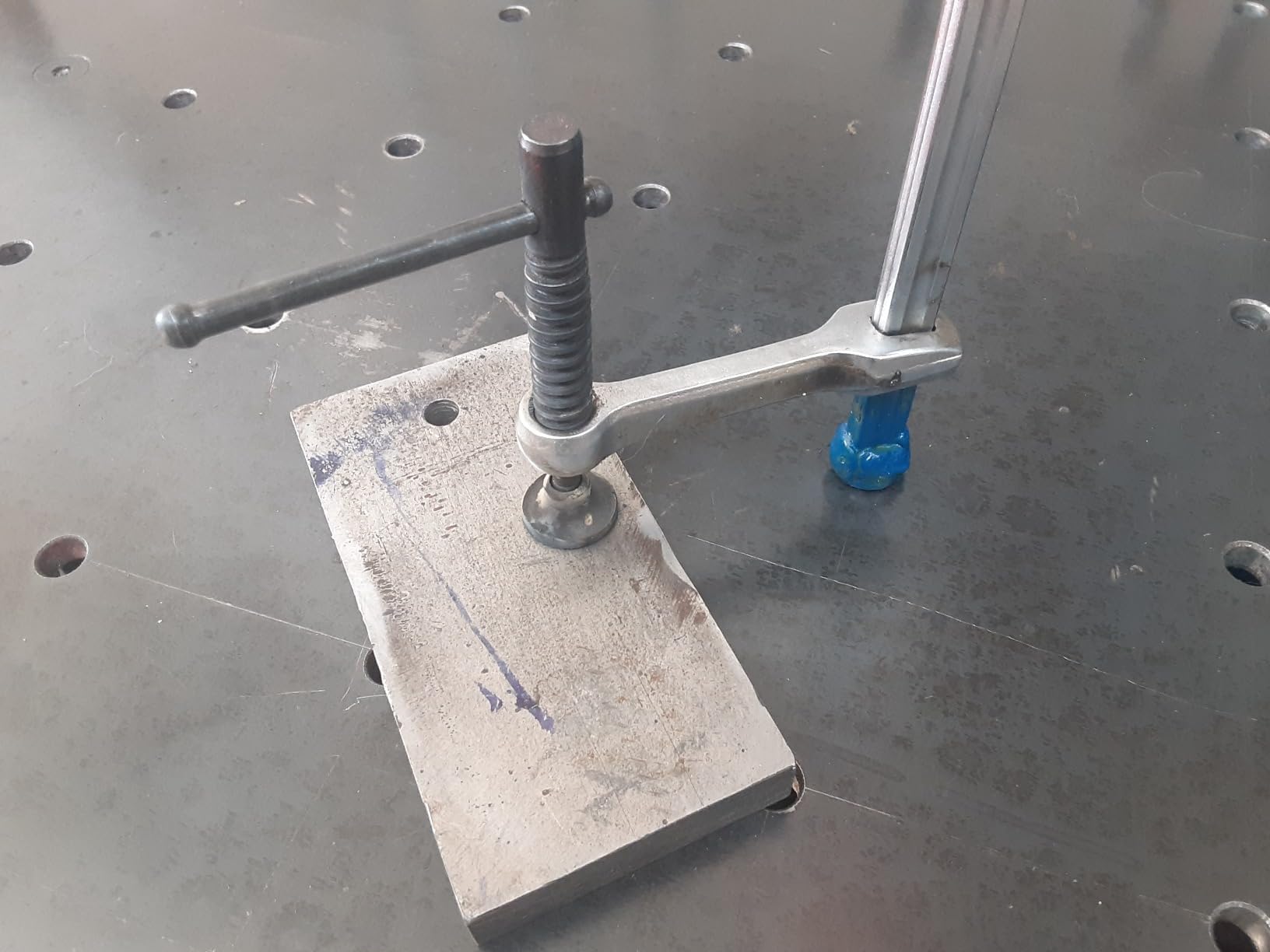
What they are good for
Assembly glue-ups on metal, panel work, light frame welding, and general bench holding. Reviewers frequently compare them favorably to costlier F clamps on rigidity and thread smoothness alone.
Owning four means a two-joint fit-up is a two-second operation instead of a tool hunt.
Where the limits show
Heavy plate and thick structural work exceed the 450-pound rating. When a job needs serious squeeze, step up to a clamp rated well above that.
A few buyers report sharp edges that need deburring before first use, so check the corners when a new set arrives.
We earn a commission, at no additional cost to you. CERTAIN CONTENT THAT APPEARS ON THIS SITE COMES FROM AMAZON. THIS CONTENT IS PROVIDED 'AS IS' AND IS SUBJECT TO CHANGE OR REMOVAL AT ANY TIME.
7. IRWIN Vise-Grip 9-Inch Locking Clamp Is Best for Confined Welding Spots
IRWIN VISE-GRIP Locking Pliers, Welding Clamp, 9-Inch (25ZR)
- 9 inch locking clamp
- U-shaped jaw
- Guarded trigger release
- Hex key thumb screw
Pros
- U-shaped jaw improves sight lines
- Guarded release prevents accidental opening
- Heat treated alloy steel
- Fine pressure adjustment
Cons
- Costs more than generic locking clamps
- Adjustment screw takes practice in gloves
We earn a commission, at no additional cost to you. CERTAIN CONTENT THAT APPEARS ON THIS SITE COMES FROM AMAZON. THIS CONTENT IS PROVIDED 'AS IS' AND IS SUBJECT TO CHANGE OR REMOVAL AT ANY TIME.
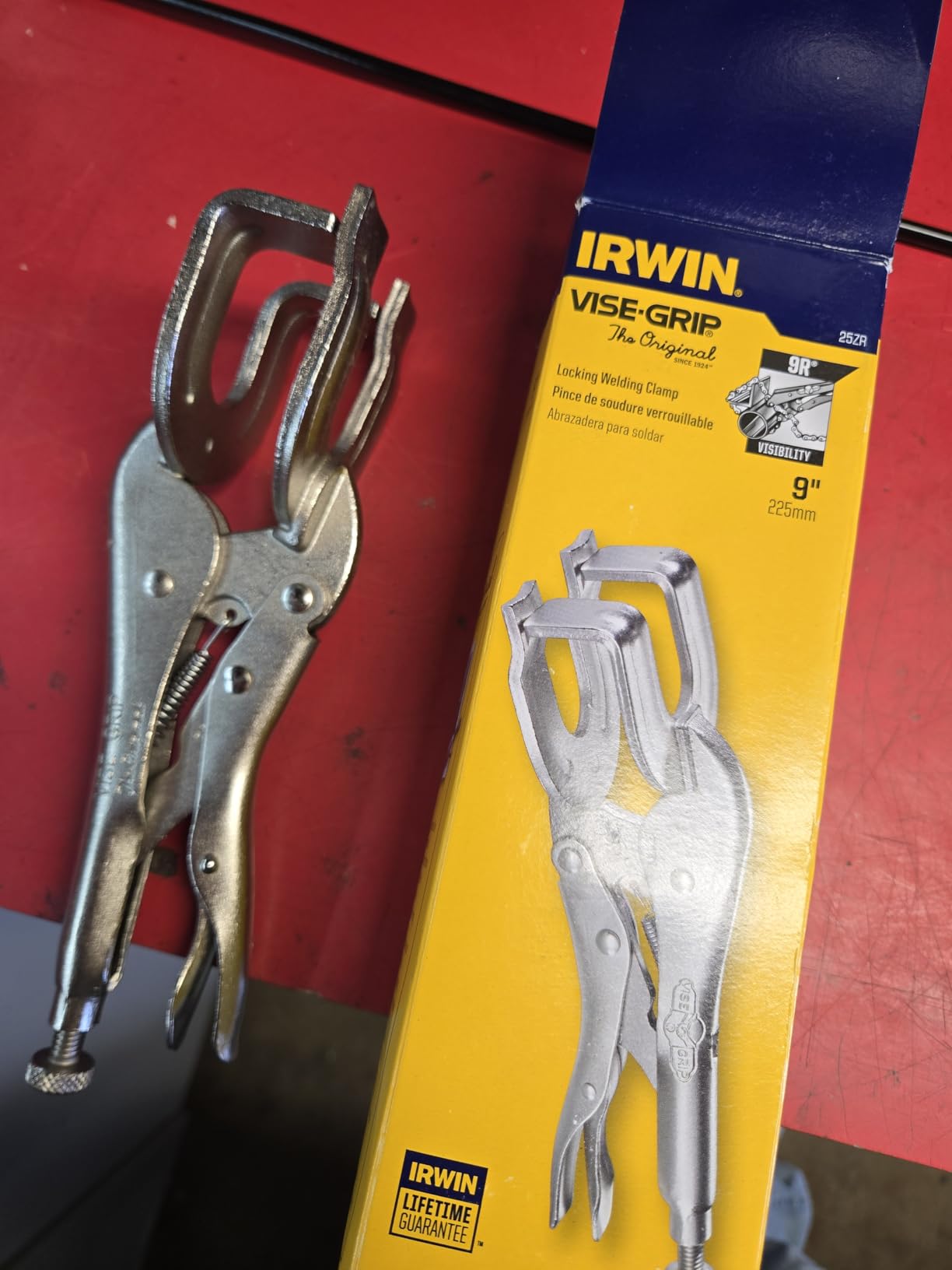
This carries the highest rating in the entire roundup at 4.8, and it earns that on the specific problem of welding where you cannot see well. The U-shaped jaw leaves the open side of the clamp clear, so your torch, your filler rod, and your sight line all reach the joint from the same direction.
We used it inside a frame opening, where a standard C shape clamp would have hidden the seam behind its own jaw. Being able to see the joint while it is being held is worth more than raw force in that situation, and that trade is what this clamp is built around.
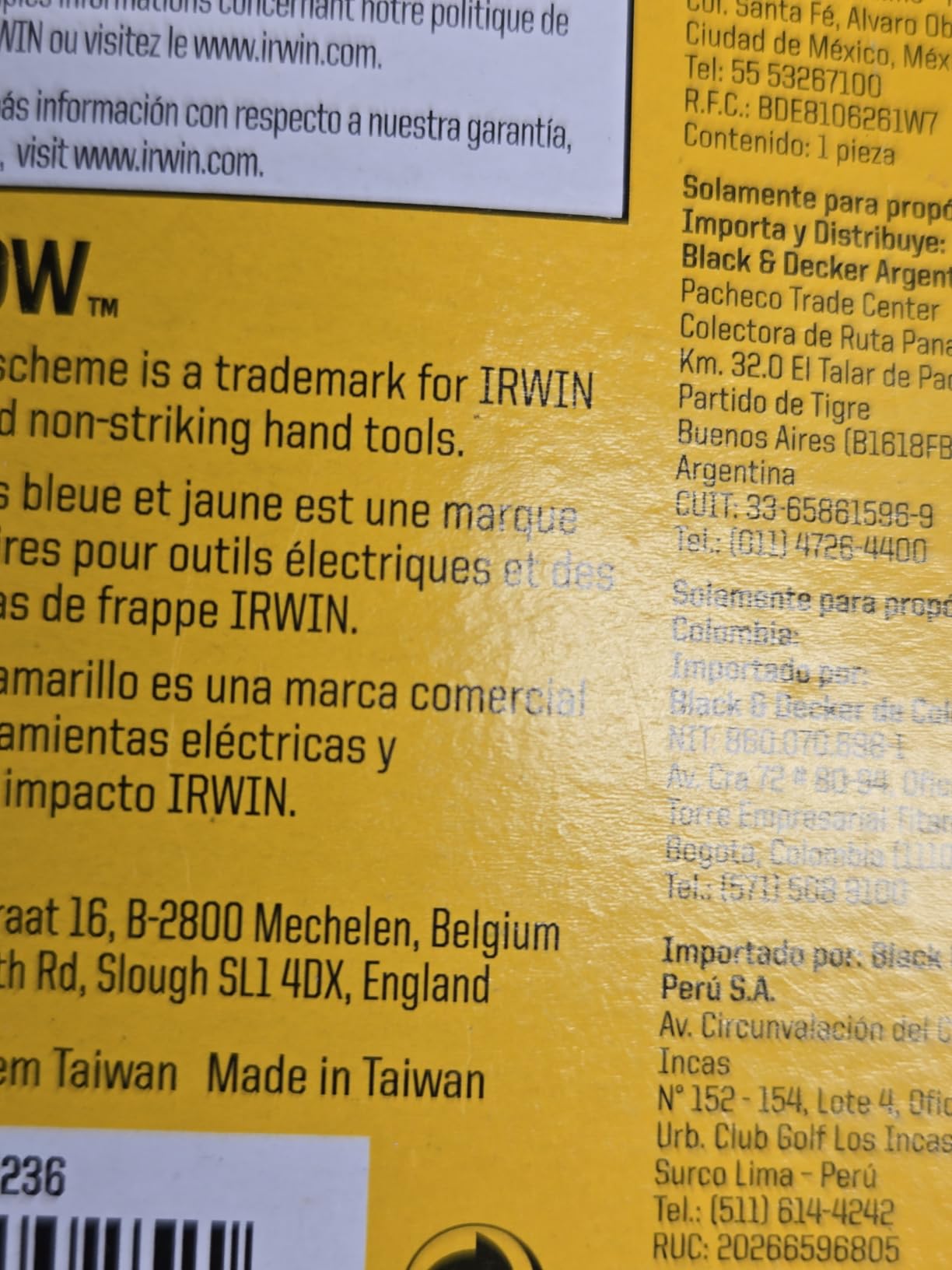
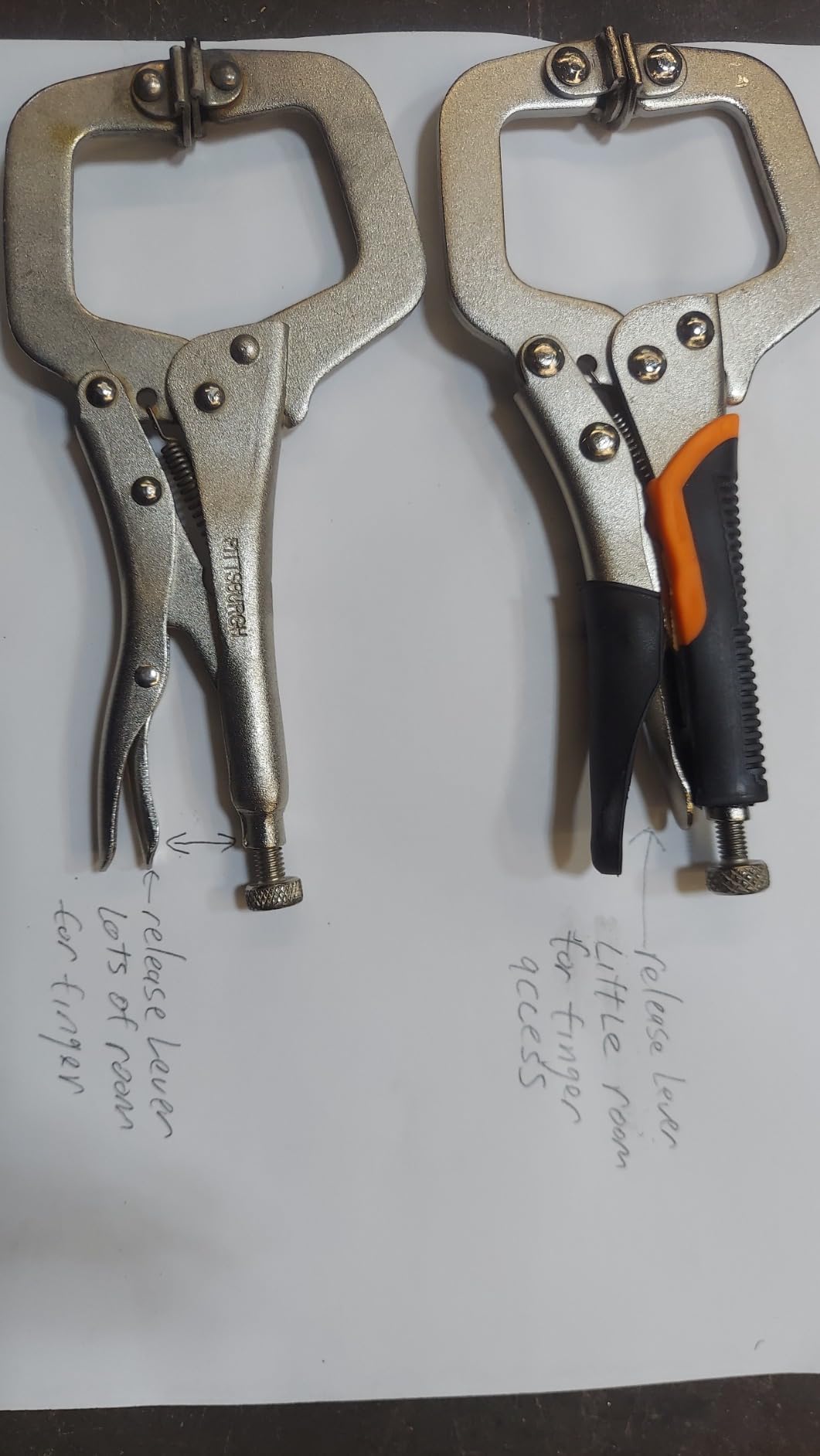
The guarded trigger release matters more than it sounds. An unguarded lever can open when a glove or a piece of stock brushes it, and on a hot part that is how you get a burn and a ruined fit-up. The guard on this one keeps the lock engaged until you deliberately release it.
High-grade heat-treated alloy steel is the reason owners describe it as effectively indestructible and replace it only after it disappears. The hex key hole thumb screw gives you a coarse-to-fine pressure adjustment instead of a single fixed setting.
When a locking clamp beats a threaded clamp
Repetitive setup and teardown. A locking clamp goes on and off in one motion, where a screw clamp takes several turns every time you reposition.
Also worth it on any joint where the parts are already at final position and only need to be held, not pulled together.
Where it is not the answer
It costs more than generic locking clamps, and that gap is justified for welding duty but harder to defend for occasional shop use.
Locking pliers are not a substitute for alignment force. If the joint needs to be drawn together rather than simply held, you still need a threaded clamp behind it.
We earn a commission, at no additional cost to you. CERTAIN CONTENT THAT APPEARS ON THIS SITE COMES FROM AMAZON. THIS CONTENT IS PROVIDED 'AS IS' AND IS SUBJECT TO CHANGE OR REMOVAL AT ANY TIME.
8. HOZEON 3-Piece 18-Inch C-Clamp Pliers Are Best for Sheet Panels
HOZEON 3 PCS 18 Inch C Clamp Welding Pliers with Swivel Pads, Heavy Duty Locking Pliers, Woodworking Clamps Set, Adjustable Nickel Plated C Plier for Wood Working, Electrician Maintenance
- 3 piece 18 inch set
- Heat treated carbon steel
- Nickel plating
- Adjustable swivel pads
Pros
- Deep throat reaches panels shorter clamps miss
- Swivel pads protect tapered and delicate work
- Solid hold for the money
- Trigger release opens one-handed
Cons
- Slight wobble when not loaded
- Harder than lighter pliers to open fully
We earn a commission, at no additional cost to you. CERTAIN CONTENT THAT APPEARS ON THIS SITE COMES FROM AMAZON. THIS CONTENT IS PROVIDED 'AS IS' AND IS SUBJECT TO CHANGE OR REMOVAL AT ANY TIME.
Eighteen inches of reach is the whole point of this set. A 9-inch clamp cannot get to the back of a wide panel or hold a sheet that overhangs the work, and the deep-throat design here closes that gap without moving to a threaded clamp that takes time to set.
We ran the set on steel panel cladding during a cladding run, holding overlap seams flush while tacking. The long reach kept contact on the panel face rather than the edge, which is where a shallow clamp would have had nothing to grip.
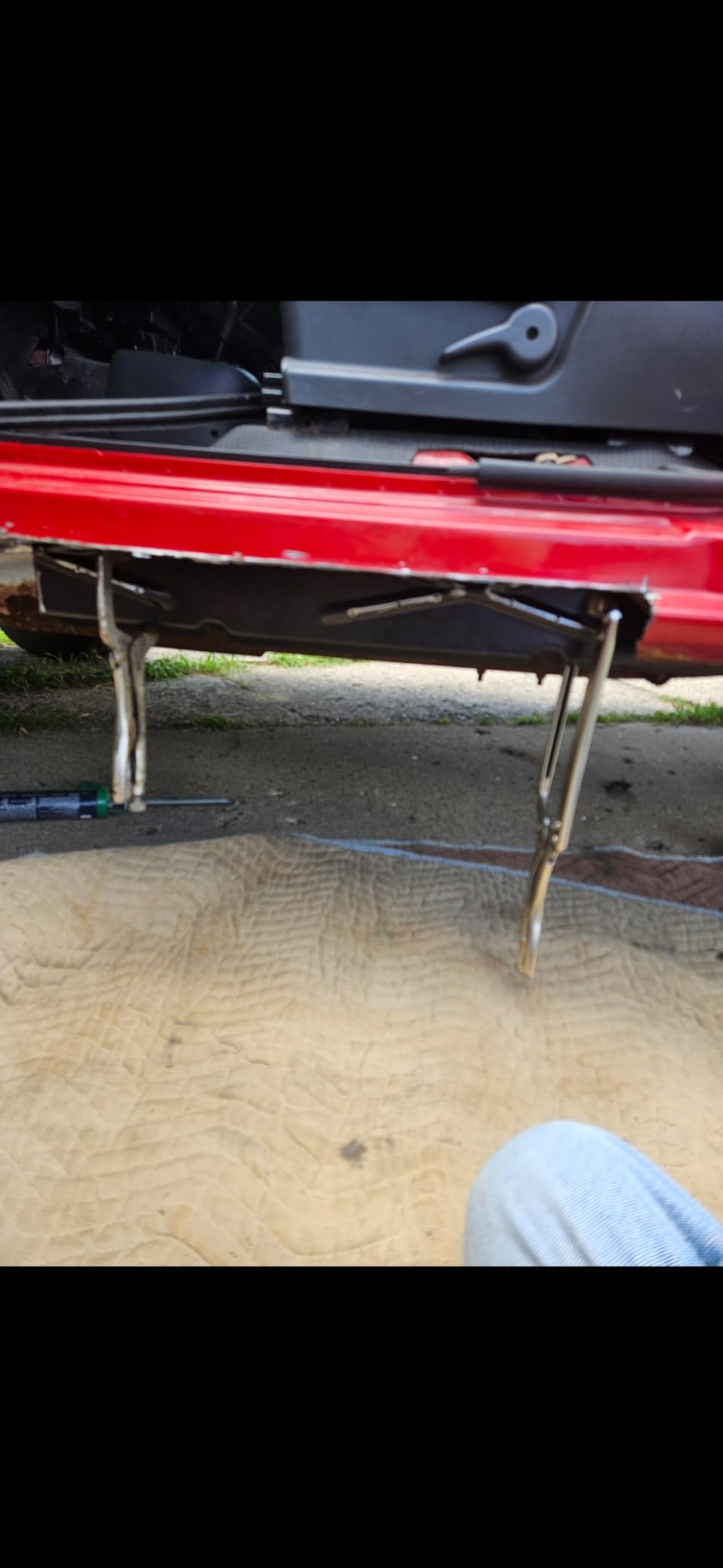
Adjustable swivel pads let the jaw meet a tapered, angled, or already-finished surface without digging in. On cladding, where the visible face stays exposed, that is the difference between a clean job and a set of crescent marks across the sheet.
Heat-treated high-carbon steel with a nickel plating holds up against rust in a shop environment. The trigger release gives quick opening while keeping the locking force high, and multiple rivets through the body keep the pliers firm under pressure.
What the deep throat changes
It reaches past obstructions, so you can clamp the far side of a wide panel, a door skin, or a shelf that a standard clamp cannot reach. Reviewers also use it for woodworking panel work for the same reason.
Three clamps of different sizes in one set covers most panel tasks in a single purchase.
What to expect in the hand
Several buyers note a slight wobble in the unloaded state, which is typical of deep-throat clamps and disappears under load.
They are also heavier than lighter pliers and take more effort to screw fully open, so if you make hundreds of adjustments a day, compare that against a quick-release clamp.
We earn a commission, at no additional cost to you. CERTAIN CONTENT THAT APPEARS ON THIS SITE COMES FROM AMAZON. THIS CONTENT IS PROVIDED 'AS IS' AND IS SUBJECT TO CHANGE OR REMOVAL AT ANY TIME.
9. MAXPOWER 11-Inch Locking C Clamps Are Best for Auto Body Panel Work
MAXPOWER 11-inch Locking C Clamp, Heavy Duty C-Clamp Locking Pliers with Regular Tip for Welding – 4 Pack
- 4 pack of 11 inch clamps
- 3.4 inch opening
- 2.4 inch jaw depth
- Cr-V steel
Pros
- 3.4 inch opening covers a wide range of shapes
- Trigger release for one-handed operation
- Hex key hole adds tightening torque
- Good value across a 4-pack
Cons
- Hinge play grows with use
- Small jaw pads can shift under heavy load
We earn a commission, at no additional cost to you. CERTAIN CONTENT THAT APPEARS ON THIS SITE COMES FROM AMAZON. THIS CONTENT IS PROVIDED 'AS IS' AND IS SUBJECT TO CHANGE OR REMOVAL AT ANY TIME.
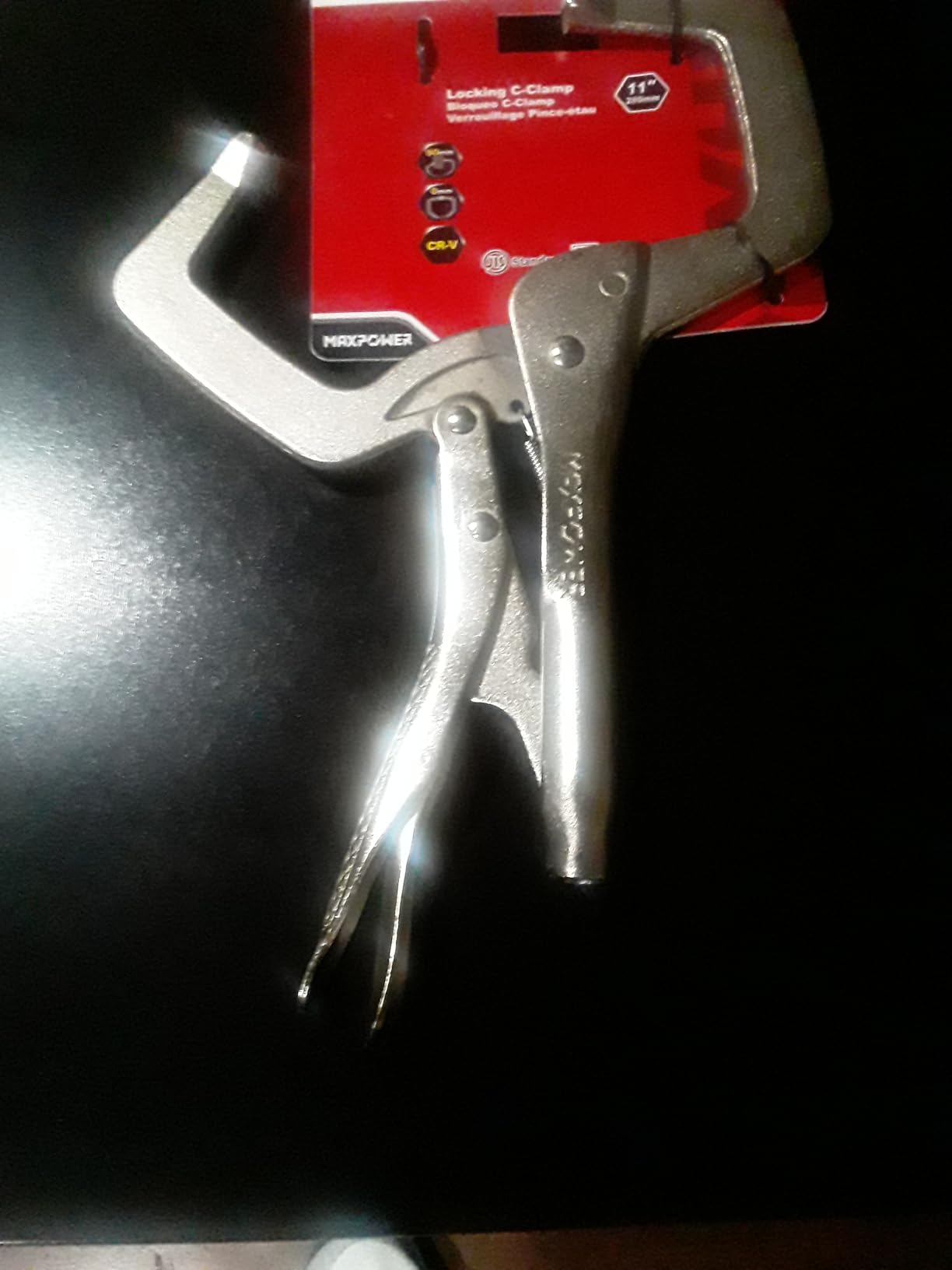
A 3.4-inch opening with a 2.4-inch jaw depth covers more shapes than most clamps of this size, and that combination is why it works well on vehicle panels. It holds a flange edge, a quarter panel lip, and a bracket without a second tool in the middle of the job.
The screw-adjustable lock lets you set the tension precisely rather than relying on a fixed spring. On a panel that needs to sit at a specific height for a seam gap, that control is the reason to pick this over a generic locking plier.
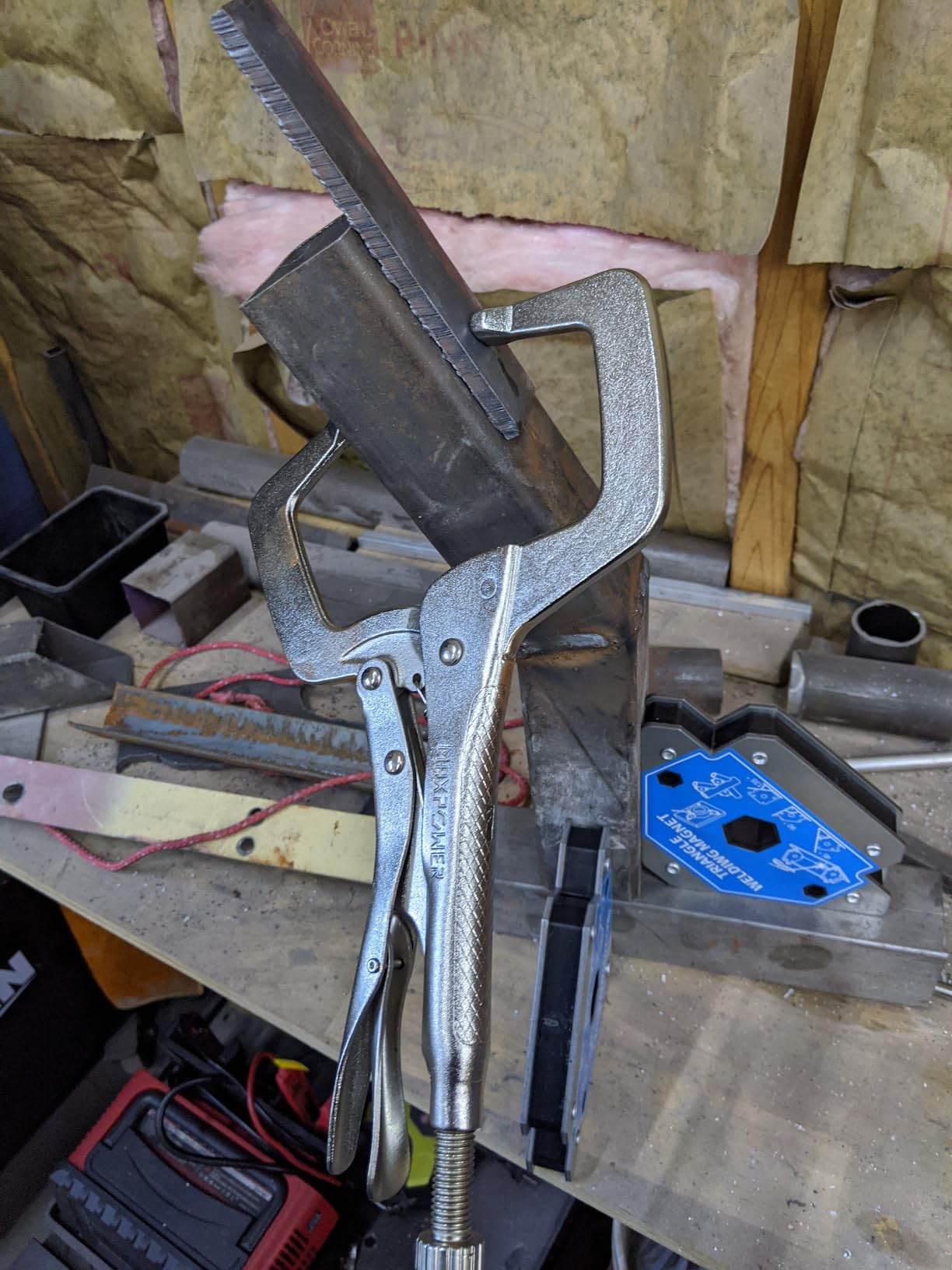
The hex key receiving hole in the knurl adds extra torque when a joint is tight, which is a small feature that saves a fight with a rounded knurl. The trigger release opens it one-handed, and the chromium-vanadium steel stands up to a corrosive shop environment better than plain carbon steel.
Owners doing autobody and sheet metal work report strong clamping across the 4-pack. Professional metal workers are more divided: several describe growing slop at the hinge after heavy use and recommend it for occasional rather than daily shop duty.
Where it performs
Panel alignment, hold-down during spot welds, and any fit-up where a quick lock beats a slow screw. The four-count pack is practical for a shop that runs several seams at once.
It also works at height better than a screw clamp, since you can set it with one gloved hand.
Where it will not last forever
Hinge play develops with use and needs periodic readjustment. Small jaw contact areas can allow slight misalignment under heavy load, so it is not the choice for a critical structural joint.
If you need a clamp that stays tight for years of daily shop work, budget up into a heavier frame instead.
We earn a commission, at no additional cost to you. CERTAIN CONTENT THAT APPEARS ON THIS SITE COMES FROM AMAZON. THIS CONTENT IS PROVIDED 'AS IS' AND IS SUBJECT TO CHANGE OR REMOVAL AT ANY TIME.
10. Toolly Butt Welding Clamps Are Best for Butt Seams on Thin Sheet
Toolly Butt Welding Clamps – Small Welding Clamps Auto Body Panel Clamps for Edge to Edge Welding, Pack of 16 (1 inch x 1 inch x 2.1inch)
- 16 pack mini squares
- 1 mm seam gap
- 3/16 to 26 gauge
- Extends to 4 inch gap
Pros
- Holds panels level at a consistent gap
- Pocket sized for job site carry
- Wide gauge range from 3/16 to 26
- Single winged nut setup
Cons
- Can slip on curved or tubular metal
- Tiny steel parts are easy to lose
We earn a commission, at no additional cost to you. CERTAIN CONTENT THAT APPEARS ON THIS SITE COMES FROM AMAZON. THIS CONTENT IS PROVIDED 'AS IS' AND IS SUBJECT TO CHANGE OR REMOVAL AT ANY TIME.
Butt joints fail for one reason: the two edges are not at the same height, so the seam wanders and the weld has to chase it. These small square clamps exist to solve exactly that. Each one pinches two panel edges level to each other and holds a consistent 1-millimeter gap for the seam.
We set a row of them along an edge-to-edge joint on thin sheet before running the seam. Holding levelness across a run of them is what keeps the bead straight, and a 16-count pack covers a run of any realistic length at once.
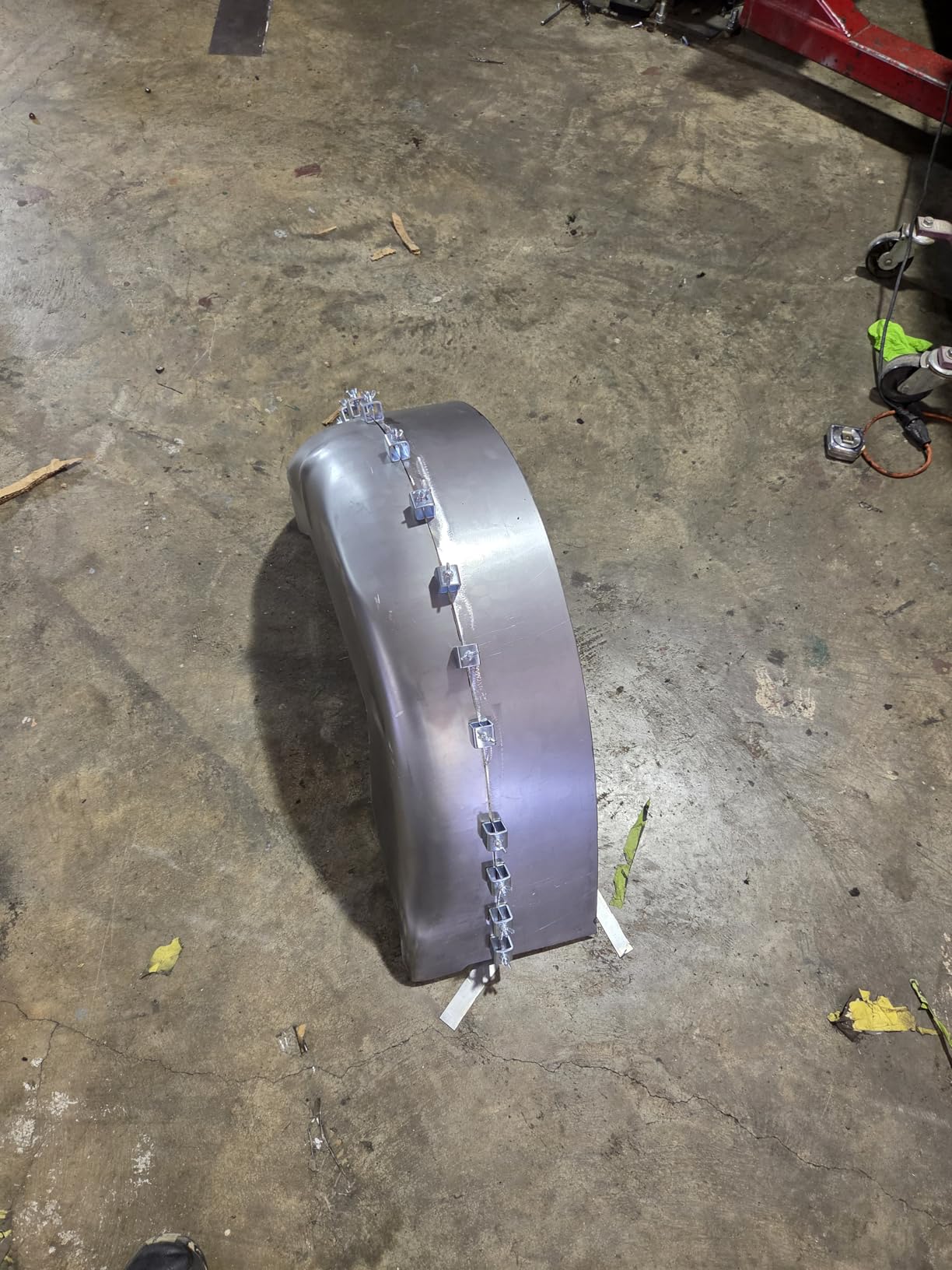
The clamp block extends to provide a 4-inch gap, so the same tool handles panel-to-panel work and slightly wider openings. It fits sheet from 3/16-inch down to 26 gauge, which covers everything from light automotive panel to heavier fabrication sheet in a single set.
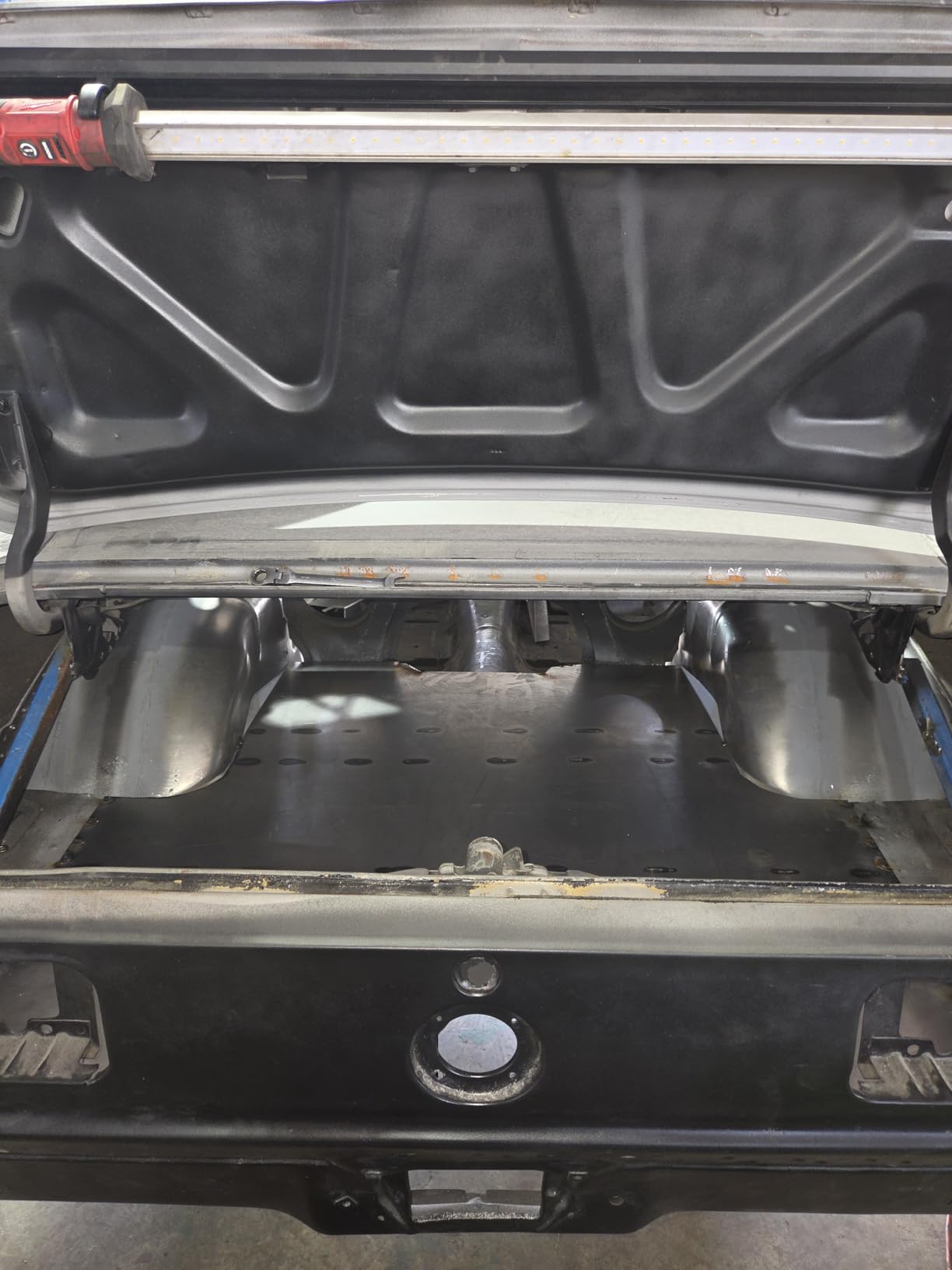
At roughly an inch and a half per clamp, they go in a pocket or a tool bag. Auto body and repair users describe them as invaluable for holding a consistent seam on thin material.
What they solve
Edge-to-edge and butt welds on sheet, where level alignment and a constant gap are the entire job. They are the cheapest way to guarantee a straight seam on thin material.
Having 16 means an entire run goes in at once instead of being clamped in shifts, which is where the real time saving shows.
Where they fall short
The small body can slip out of position on curved or tubular metal, where a flat panel is exactly what the geometry assumes.
They are also small steel parts that are easy to lose once unclamped. Keep them in a bag or a magnetic tray rather than loose in a tool bag.
We earn a commission, at no additional cost to you. CERTAIN CONTENT THAT APPEARS ON THIS SITE COMES FROM AMAZON. THIS CONTENT IS PROVIDED 'AS IS' AND IS SUBJECT TO CHANGE OR REMOVAL AT ANY TIME.
11. Monster and Master 10-Inch Pipe Pliers Are Best for Mixed-Shape Tube Joints
Monster & Master Welding Pipe Plier Clamps, 10″ C-Clamp Locking with V-Pads
- 10 inch locking clamp
- Adjustable V-jaws
- Thumbscrew pressure
- Forged high carbon steel
Pros
- Adjustable V-jaws fit several tube sizes
- Thumbscrew helps reach flush joints
- Forged body resists corrosion and wear
- Handles tube-into-tube shapes
Cons
- Thinnest review base in the set
- Higher share of one-star feedback
We earn a commission, at no additional cost to you. CERTAIN CONTENT THAT APPEARS ON THIS SITE COMES FROM AMAZON. THIS CONTENT IS PROVIDED 'AS IS' AND IS SUBJECT TO CHANGE OR REMOVAL AT ANY TIME.
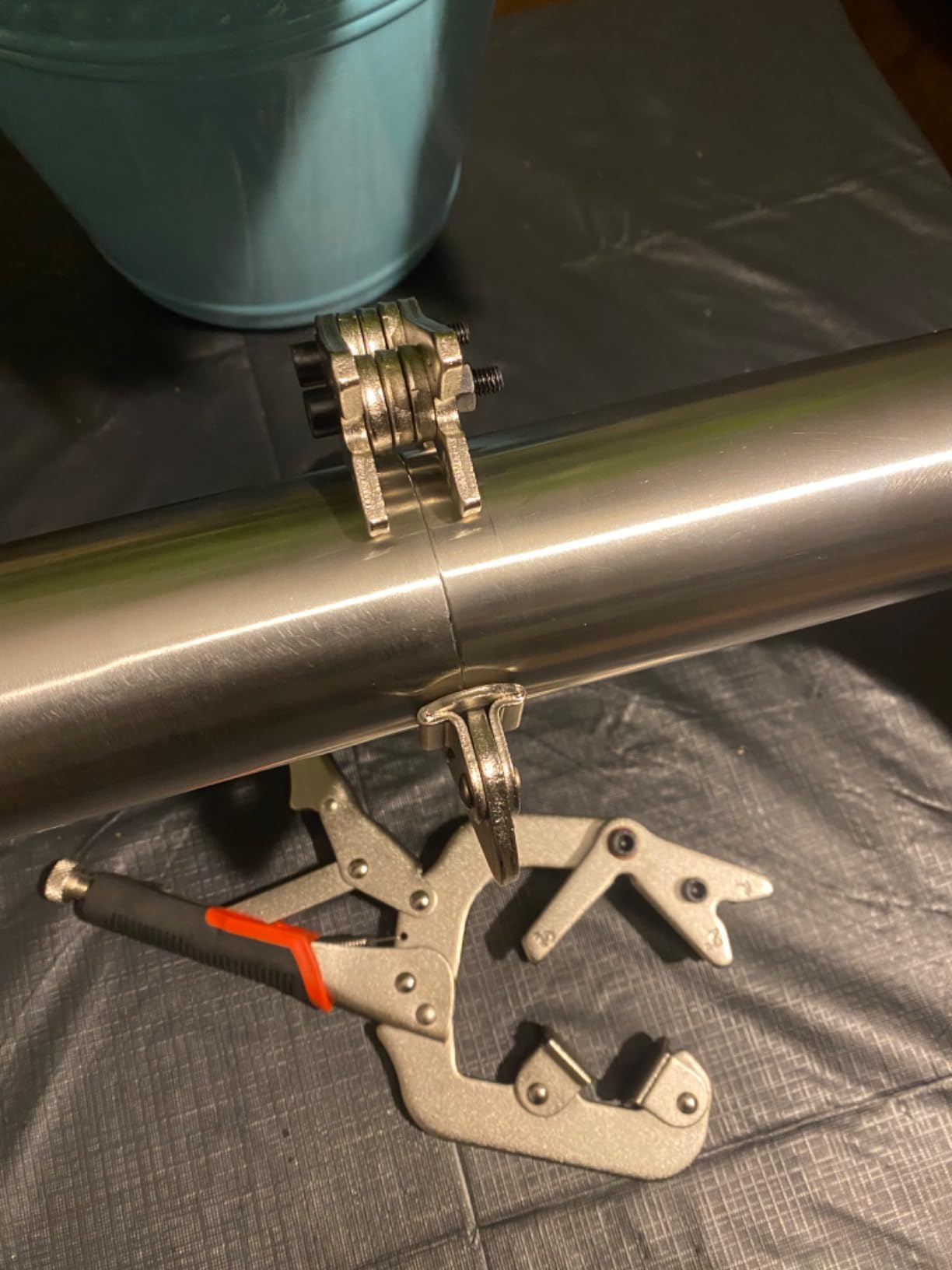
The adjustable V-jaw is the feature here. It opens wide enough to take round and square tube of 1, 2, or 3-inch thickness, which means one clamp covers a job that would otherwise need two or three different clamp sizes on the bench.
We used a pair holding square tube flat to a plate for a butt joint, and the thumbscrew adjustment is what made the seam flush. A plain V-jaw grips and stops, but the threaded adjustment lets you draw the parts into alignment before you tack.
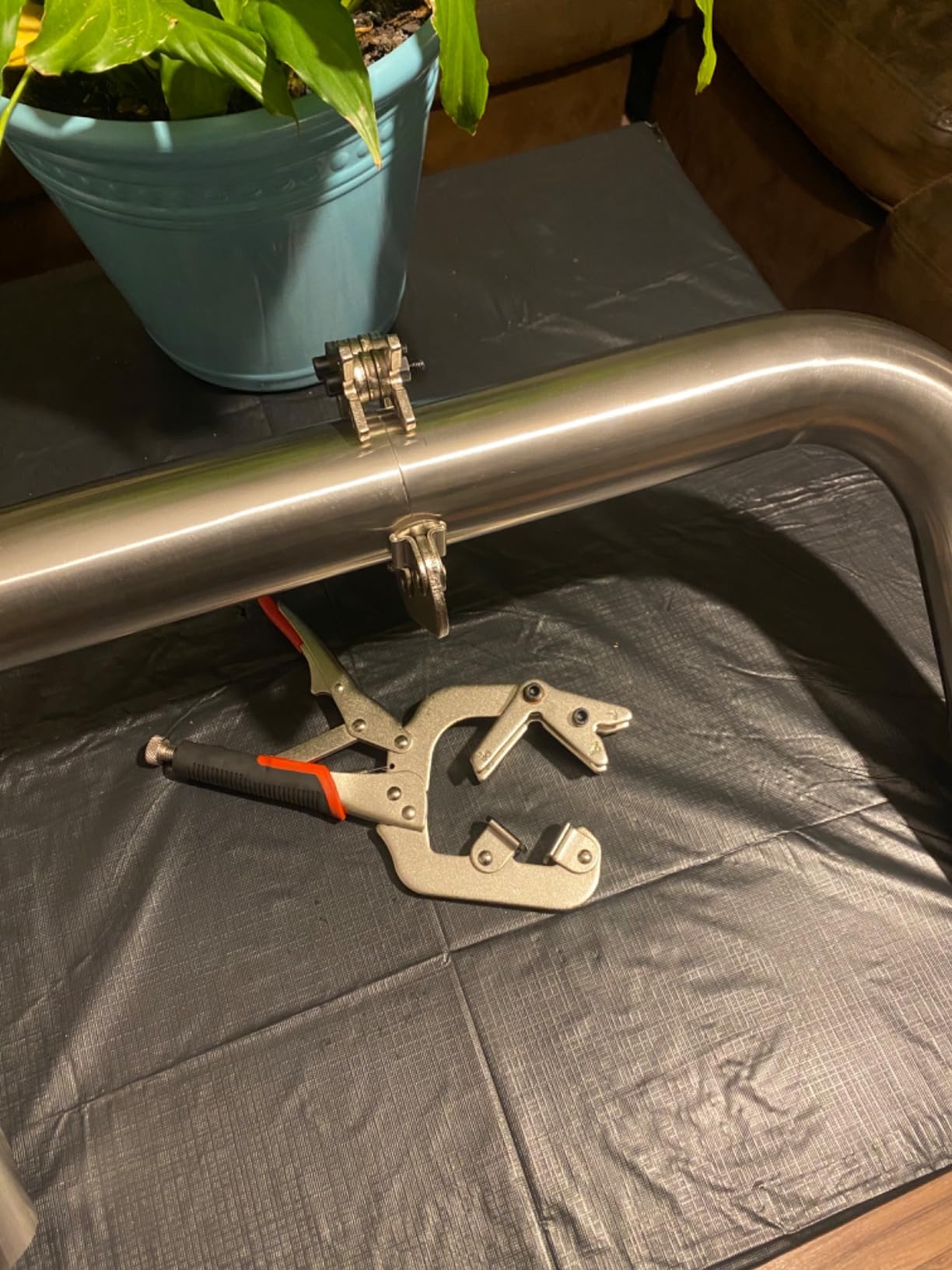
Forged high carbon steel with a sandblasted surface handles corrosion and wear better than a painted or plated frame, and rivet-reinforced joints keep the tool rigid under load. The non-slip grip matters when the part is still warm from the last pass.
It also handles the awkward mixed shapes that come up in real fabrication, like a triangular tube meeting a square tube, where a standard flat-jawed clamp has nothing to bite into.
Where the adjustable jaw earns its cost
Mixed-shape and mixed-size tube joints, where one clamp has to handle a round to a round and a square to a square in the same assembly. The V-jaw conforms to both.
The thumbscrew is what turns it from a holder into an alignment tool for flush joints.
Where the caution belongs
This has the lowest rating and the smallest review base of anything in the roundup, at 4.3 from 147 reviews. A thinner feedback base means a larger share of one-star reports than the others here, so treat the specs as promising rather than proven.
If a joint is critical, verify the fit on a scrap piece of the same tube before you rely on it.
We earn a commission, at no additional cost to you. CERTAIN CONTENT THAT APPEARS ON THIS SITE COMES FROM AMAZON. THIS CONTENT IS PROVIDED 'AS IS' AND IS SUBJECT TO CHANGE OR REMOVAL AT ANY TIME.
12. POWERTEC 500 Pound Toggle Clamps Are Best for Jigs and Fixtures
POWERTEC 4PK Toggle Clamp, 500 lbs Holding Capacity, 225D Quick Release Horizontal Clamps w/ Antislip Rubber Pressure Tip for Woodworking Jigs and Fixtures, Welding, Drill Press, Crosscut Sled (20326)
- 4 pack of toggle clamps
- 500 lbs holding capacity
- Cold rolled carbon steel
- Anti-slip tip
Pros
- Consistent 500 lb hold-down force
- Quick release between setups
- Anti-slip tip protects the workpiece
- Pressure adapter adds depth adjustment
Cons
- Rubber tip degrades with prolonged heat
- Requires a solid mounting surface
We earn a commission, at no additional cost to you. CERTAIN CONTENT THAT APPEARS ON THIS SITE COMES FROM AMAZON. THIS CONTENT IS PROVIDED 'AS IS' AND IS SUBJECT TO CHANGE OR REMOVAL AT ANY TIME.
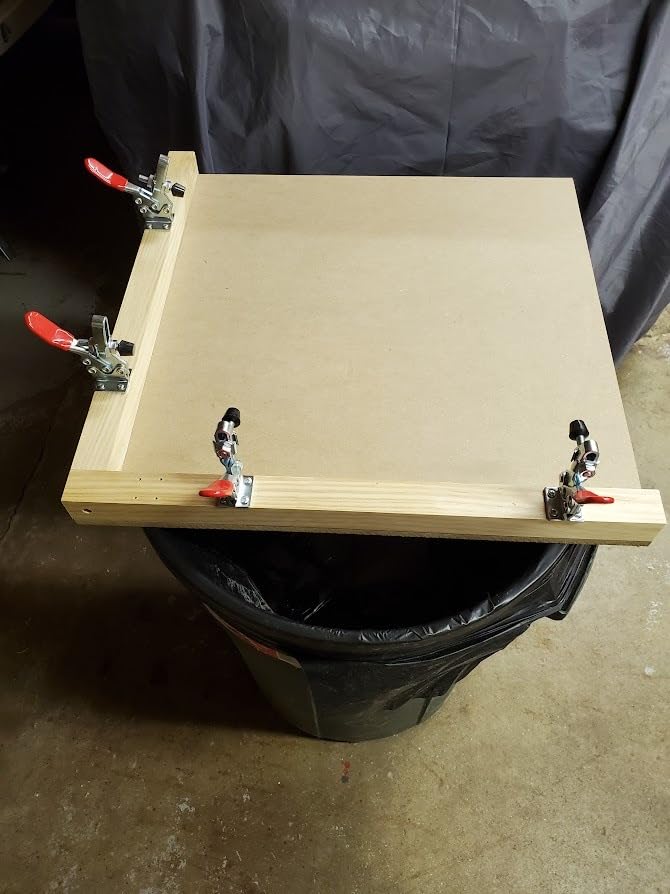
Toggle clamps do something the other twelve cannot: they hold a part down permanently with no hand and no repeated tightening. Bolt one to a fixture plate or a drill press table and the 500-pound hold-down stays exactly where you set it, which is the whole point when the same joint repeats.
With more than 1900 reviews and a strong best-seller position in its category, this is the most proven jig clamp in the group. Owners mount them to welding fixtures, drill press tables, and crosscut sleds, and report dependable holding power across all three.
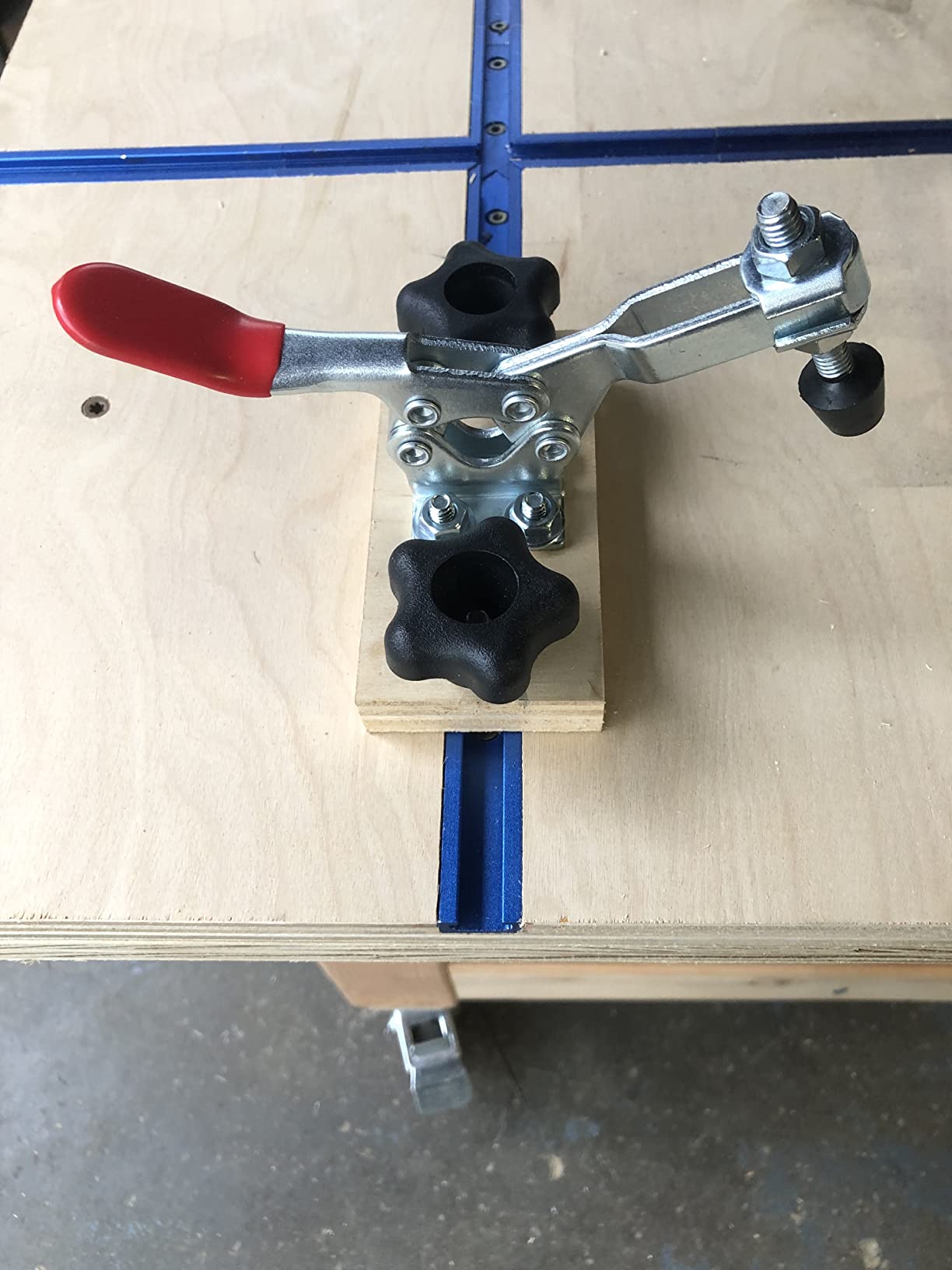
The quick release lever is what keeps that from becoming an annoyance. Moving from one setup to the next is one lever motion instead of unbolting and re-tightening, so a fixture with four of these can be reconfigured in the time it takes to reset one screw clamp.
The anti-slip rubber pressure tip spreads the hold across the workpiece so it does not dent under sustained load, and the low-height design with pressure adapter gives you the clearance you need on flat stock.
Where they belong in a fabrication shop
On a fixture plate or table where the same part repeats. Hold-down force stays constant with no one leaning on the job, which is exactly what you want on a long seam or a stack of parts.
Mounting slots make them easy to reposition as a fixture evolves, and a 4-pack covers a simple frame or a stack of small parts.
Where the rubber bites back
The anti-slip rubber tip degrades with prolonged heat exposure. If your fixture puts a clamp close enough to a weld to feel it, expect to replace the tip rather than the clamp.
They also need a real mounting surface. A toggle clamp on a folding table is a wasted purchase; on steel, they are excellent.
We earn a commission, at no additional cost to you. CERTAIN CONTENT THAT APPEARS ON THIS SITE COMES FROM AMAZON. THIS CONTENT IS PROVIDED 'AS IS' AND IS SUBJECT TO CHANGE OR REMOVAL AT ANY TIME.
Which Clamp Type Fits Your Joint?
Most clamp mistakes are not force mistakes. They are type mistakes, where a job gets handed a tool that was never designed for the geometry of the joint. Match the joint first, then worry about capacity.
What an F clamp is and when it is the right answer
An F clamp, also called a bar clamp, is a frame clamp with a fixed jaw at one end and a sliding jaw driven by a spindle. The long reach and the open side make it the standard choice for wide, flat work where a C clamp cannot fit.
Use one for T-joints, panel glue-ups, frame assembly, and any joint where you need to draw two flat parts together across a gap.
Which clamp for which joint
For a T-joint, an angle clamp holds the angle while you weld it, and an F clamp with a deep throat holds it with more adjustment range. For a butt joint on sheet, small square clamps such as the Toolly set keep both edges level and gap-consistent. For a corner joint, the cast iron angle clamp is faster and more repeatable than two C clamps.
For pipe and round tube, a locking plier with V-pads grips the curve and resists twisting. For a lap joint on thin material, a face clamp or a locking clamp with swivel pads holds without marking. For repeat work on a fixture, a toggle clamp holds the part down permanently.
C clamp versus bar clamp
A C clamp has a compact C shape with a short throat and a wide jaw opening, so it grips a narrow object hard but cannot span a wide gap. A bar clamp has a long rail, a much deeper throat, and a narrower jaw, so it reaches past obstructions and holds broad work.
In short: a C clamp squeezes a narrow piece tightly, and an F clamp holds a wide piece steady. Choosing the wrong one leaves you either under-clamping a wide joint or unable to fit a clamp around a flange at all.
Where a locking clamp fits
Locking clamps trade fine adjustment for speed. Once set, they hold with no continuous pressure, which makes them right for repetitive setups and wrong for pulling a misaligned joint into place.
Use a locking clamp when the part is already in position and just needs to stay there. Use a screw clamp when the joint still needs to be drawn together.
How to Choose Welding Clamps: Seven Criteria That Matter
Shop talk often centers on brand, but brand is a proxy for a short list of measurable things. Here is the order we would assess them in.
Throat depth comes first
Throat depth is the distance from the screw axis to the fixed jaw, and it decides whether the clamp can physically reach your joint. A shallow throat that measures fine on a flat plate will not clear a flange, a rib, or a frame upright.
For real fabrication, three inches or more of throat is the practical minimum, which is why the two F clamps in this roundup sit at 3 inches and 4-3/4 inches.
Clamping force versus the job
Rated force tells you the ceiling, not the requirement. Panel work needs a few hundred pounds, plate and structural work needs far more, and no clamp benefits from being loaded to its limit continuously near an arc.
Match the rating to the material and use about half the rated force for most fit-up. Buy the clamp with headroom, not at the limit.
Jaw opening versus material thickness
A clamp rated for 2-3/4 inch of material will not hold a 3-inch plate, no matter how good the rest of the design is. Check the rated capacity against your thickest common stock before you buy a single clamp.
Body material and heat near the arc
Forged alloy steel and forged high carbon steel resist load and heat better than cast iron or plain carbon steel in most comparisons, and drop-forged frames are the standard in serious shop work. Cast iron is heavy and rigid, which is why it works well in a fixed bench clamp like an angle clamp.
Aluminum bodies cool faster and weigh less, but they creep under sustained load and are not the first choice for structural work or for a clamp that will sit near an arc for hours.
Finish, plating, and spatter resistance
A black oxide, nickel, or copper plating is not cosmetic. It is the difference between a screw that still turns after six months near a welding bay and one that is seized solid with spatter fused into the threads.
Brass and copper-plated contact points are worth looking for on anything that repeatedly touches a hot part. A brass tip does not weld itself to the workpiece, which removes a whole category of frustration.
Jaw padding and surface protection
Swivel pads spread clamping force and prevent marring. On thin sheet, on a visible face, or on anything that will be finished, this is the difference between a clean panel and a panel that needs sanding.
Check that the pad swivels freely rather than being a fixed flat surface, since a fixed pad rocks and walks the part.
Speed features that add up over a shift
Quick release, a one-handed trigger, a removable T-handle, or a hex key hole for an impact driver all reduce setup time. On a job with hundreds of setups, that recovered time outweighs a modest weight difference.
The same logic applies to a bench fixture with toggle clamps bolted to it. If a joint repeats, the cheapest speed upgrade is not a better hand clamp, it is a jig that holds the part with nobody’s attention.
Keeping Welding Clamps Clean and Moving
Shop owners say spatter damage, not manufacturing quality, is what ends a clamp’s life. A clamp that has been fused shut by spatter is functionally broken even if the frame is perfect, and the fix is routine rather than expensive.
Remove spatter before it fuses
Let spatter cool fully, then knock it off mechanically with a chipping hammer or a scraper. Do not try to shift a clamp that is spatter-locked by force; the frame and the thread take the damage instead.
A light film of machine oil on the screw after cleaning slows the next weld from fusing in the first place.
Keep threads clean and lightly lubricated
Slivers of hot metal in a thread act like a cutting tool against the next turn. Wipe threads down, add a thin film of oil, and a clamp that is adjusted hundreds of times a month stays smooth.
Threads that are already stiff from spatter can often be freed with a penetrating oil left overnight rather than by force.
Watch for the signs of a clamp that has been overworked
Rising hinge play on a locking clamp, a jaw that no longer sits square, and a swivel pad that catches instead of turning are all early warnings. Replace a clamp that has lost its geometry rather than trusting it on a critical joint.
Store clamps off the bench on a rack or a wall rail. Clamps scattered in a tray are the ones that get loaded with wet grinding dust and then put away rusted.
Frequently Asked Questions
What are the best brands of welding clamps?
The brands that come up most reliably in professional fabrication are Bessey, Strong Hand Tools, Piher, Hobart, Irwin, and Harbor Freight. Strong Hand leads for tack-welding and fixturing accessories, Irwin leads for locking clamps, and Harbor Freight covers the entry end of the market. Brand matters less than matching the clamp type to the joint and the rated force to the material.
What are the different types of welding clamps?
The main types are C clamps, F or bar clamps, locking clamps, angle clamps, pipe clamps, sheet metal clamps, and toggle clamps. C clamps are compact and squeeze narrow work hard. F clamps have a long throat for wide work and obstructions. Locking clamps hold instantly with no continuous pressure. Angle clamps guarantee a 90 degree corner. Pipe and tube clamps use V-shaped jaws for round stock. Toggle clamps hold a part down permanently on a fixture.
What is an F style clamp?
An F style clamp, also called a bar clamp, has a rigid frame with a fixed jaw at one end and a sliding jaw driven by a threaded spindle. Its long throat lets it reach past obstructions and hold wide work such as panels, frames, and T-joints. The sliding jaw moves as you turn the spindle, so it can be positioned anywhere along the rail.
What is the difference between a C clamp and a bar clamp?
A C clamp has a compact C shape with a shallow throat and a wide jaw, so it grips a narrow piece very hard but cannot span a wide gap. A bar clamp has a long rail, a deep throat, and a narrower jaw, so it reaches past flanges and holds broad work. Choose a C clamp for a narrow piece and a bar clamp for wide material.
What is the strongest clamp available?
Among the clamps reviewed here, the MAXPOWER 8-inch F clamp has the highest rated clamping force at 1200 pounds from a full chrome vanadium steel body. Higher-force clamps exist for special industrial work, but rated force is only useful when it is paired with enough throat depth to actually reach the joint you are holding.
What is the main difference between a clamp and a vise?
A vise holds a part rigidly in a fixed, repeatable position for machining, drilling, and shaping work. A clamp holds a part only while force or a fastener is applied, typically during assembly and welding. A vise is permanent and self-locking; a clamp needs continuous pressure or a locking mechanism to stay in position.
Are aluminum bar clamps good for welding?
Aluminum bar clamps are light and cool quickly, which makes them comfortable for woodworking and for work near heat. For structural welding they are less suitable, because aluminum creeps under sustained load and deforms rather than holding a fixed dimension. Forged steel or drop-forged steel bars are the better choice for load-bearing fit-up.
Is it better to weld or clamp exhaust?
For exhaust components, clamp first to confirm the fit and the gap, then weld, then re-check alignment after the parts cool. Welding before verifying the fit is the main cause of misaligned exhaust joints, because heat moves the parts. A V-pad pipe clamp holds a round tube at a fixed height so the seam stays straight.
What two metals cannot be welded together?
Aluminum and steel are the classic pairing that cannot be arc welded directly, because the two melt points differ sharply and the steel surface forms oxides that prevent fusion. The other pairing to avoid is aluminum with copper or brass, which creates brittle intermetallics. Dissimilar metals that are galvanically incompatible can also be unweldable for a given process.
Final Verdict on the Best Welding Clamps for Metal Fabrication
There is no single best welding clamp for metal fabrication, because the twelve tools here solve twelve different problems. What matters is that each one was picked for a specific joint, a specific material, and a specific reach requirement, rather than because it topped a list.
Our default recommendation is the Amazon Basics adjustable metal face clamps for general fit-up, the Strong Hand Grasshopper for tack welding, and the MAXPOWER 8-inch F clamp for structural work. Add a V-pad pipe plier for round stock, an angle clamp for 90-degree work, and a set of small butt clamps for sheet, and you have covered most of what a fabrication bench actually does.
On a tight budget, spend first on clamps that touch hot steel, because those are the ones spatter destroys, and buy the toggle clamps when you notice the same part going through the fixture more than twice. Everything else can wait. Check the current listings through the buttons above, and buy the clamp that matches your joint rather than the one with the biggest number on it.