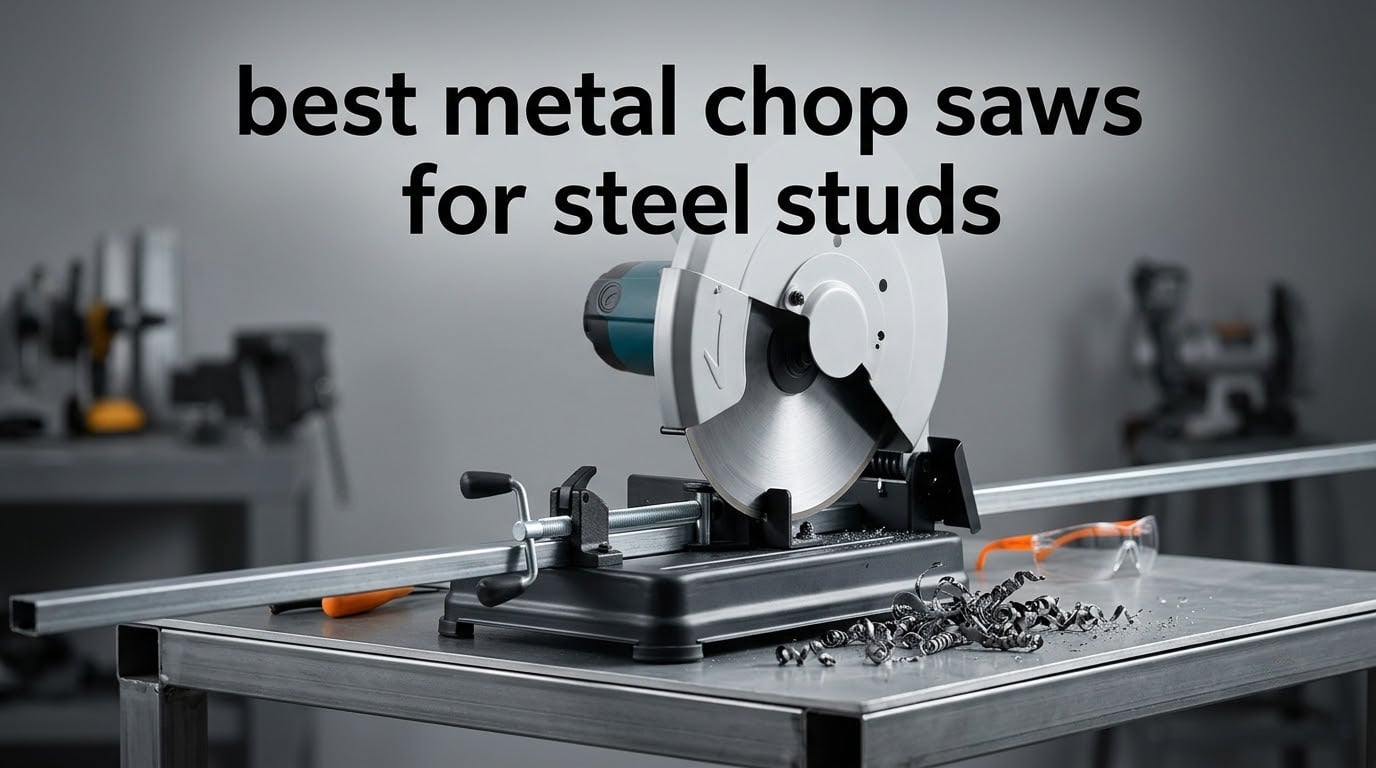
Steel studs change the cutting problem. Wood shoves, and a framing saw handles it fine, but 20 to 25 gauge steel needs a saw that can shear thin-gauge metal quickly, repeatedly, and square enough that drywall goes on without a second pass. That is exactly where a dedicated metal chop saw earns its floor space.
The best metal chop saws for steel studs are cold-cut machines fitted with a tungsten carbide tipped (TCT) or cermet carbide blade. They spin slowly, they shear rather than grind, and the cut edge comes out cool, square and free of burrs, which means no filing, no sparks on your jeans, and no second cut to fit the drywall. Abrasive-wheel saws still work, but they throw sparks, leave a rougher edge, and burn through a wheel far faster on thin steel.
We broke down ten of the strongest metal chop saws on the market, from a 15 Amp Makita cut-off saw to a 2800 watt VEVOR cold cut machine and a cordless Milwaukee M18 FUEL option. The differences that matter for steel framing are motor power, blade type, cut capacity, miter range, vise grip and how the saw handles chip and spark debris. Those are the criteria used throughout this guide.
One note before we start: gauge matters more than brand. 25 gauge studs are a different job from 16 gauge, and a saw rated for 5 inch round tube may still wander on a 1/8 inch square tube if the fence is not square. We flag where each saw is strong and where it is not.
ContentsTable of Contents
- 1Top 3 Metal Chop Saws for Steel Studs→
- 2Evolution S355CPSL→
- 3Makita LW1401→
- 4Evolution R355CPS→
- 5All 10 Metal Chop Saws Compared in 2026→
- 61. Evolution S355CPSL 14 Inch TCT Chop Saw→
- 7Evolution S355CPSL – Heavy Duty 14 Inch Metal Cutting Chop Saw W/ 14 Inch Carbide-Tipped Blade | Dry Cut | Miter 45° | Chop Saw For Cutting Metal – Accurate. Powerful. Reliable→
- 8Pros→
- 9Cons→
- 10Where the S355CPSL earns its keep on steel studs→
- 11Where the S355CPSL will disappoint you→
- 122. Makita LW1401 14 Inch Cut-Off Saw→
- 13Makita LW1401 Cut-Off Saw, 14″→
- 14Pros→
- 15Cons→
- 16Where the Makita LW1401 is the right call→
- 17Where the Makita LW1401 is the wrong call→
- 183. Evolution R355CPS Multi-Material Chop Saw→
- 19Evolution Power Tools R355CPS 14-Inch Chop Saw Multi Purpose, Multi-Material Cutting Cuts Metal, Plastic, Wood & More Miter Cut up to 45˚ Degrees TCT Blade Included→
- 20Pros→
- 21Cons→
- 22Where the R355CPS is the right call→
- 23Where the R355CPS is the wrong call→
- 244. VEVOR 355G-3L 2800W Cold Cut Chop Saw→
- 25VEVOR Chop Saw 14-inch Cold Cut Blade 2800 W Powerful Motor Cut Off Saw→
- 26Pros→
- 27Cons→
- 28Where the VEVOR 355G-3L is the right call→
- 29Where the VEVOR 355G-3L is the wrong call→
- 305. VEVOR 2800W 1200 RPM Cold Cut Saw→
- 31VEVOR Chop Saw, 14”/355mm Blade Diameter Cut Off Saw, 2800W 1200RPM Steel Cutting Machine, 0-45° Adjustable Dry Cut Chop Saw, Miter Saw for Cold Cut Saw for Steel/Iron/Aluminum, Black→
- 32Pros→
- 33Cons→
- 34Where this VEVOR is the right call→
- 35Where this VEVOR is the wrong call→
- 366. WEN CM1446 Multi-Material Cut-Off Saw→
- 37WEN CM1446 15-Amp 14-Inch Multi-Material Cut-Off Chop Saw with Carbide-Tipped Metal-Cutting Saw Blade→
- 38Pros→
- 39Cons→
- 40Where the WEN CM1446 is the right call→
- 41Where the WEN CM1446 is the wrong call→
- 427. Evolution S14MCS EVOMAX Cold Cut Saw→
- 43Evolution S14MCS 14″ Mitering Chop Saw | Cold Cut Steel Saw | EVOMAX Intelligent Motor & Blade | 3500+ Blade Life | Burr-Free Finish | Shadow Guide | +/-46° Miter | Soft Start | Reinforced Base→
- 44Pros→
- 45Cons→
- 46Where the S14MCS is the right call→
- 47Where the S14MCS is the wrong call→
- 488. Milwaukee M18 FUEL 14 Inch Cut-Off Saw→
- 49Milwaukee M18 FUEL 18-Volt Lithium-Ion Brushless Cordless 14 in. Abrasive Cut-Off Saw (Tool-Only)→
- 50Pros→
- 51Cons→
- 52Where the Milwaukee M18 is the right call→
- 53Where the Milwaukee M18 is the wrong call→
- 549. Yumark 933C 2200W Abrasive Chop Saw→
- 55Yumark Abrasive Chop Saw, 2200W 3800RPM Steel Cutting Machine, Metal Cutting Saw with 14in Blade for Rebar, Angle Steel, Hollow Pipe Cutting→
- 56Pros→
- 57Cons→
- 58Where the Yumark 933C is the right call→
- 59Where the Yumark 933C is the wrong call→
- 6010. Bosch GCO15-14 14 Inch Cut-Off Machine→
- 61BOSCH GCO15-14 14 In. Abrasive Cut-Off Machine: Powerful 15 Amp Motor, Large Cutting Capacity, and Adjustable Fence for Quick and Accurate Cuts→
- 62Pros→
- 63Cons→
- 64Where the Bosch GCO15-14 is the right call→
- 65Where the Bosch GCO15-14 is the wrong call→
- 66How to Choose a Metal Chop Saw for Steel Studs→
- 671. Blade type comes first→
- 682. Motor power in watts and amps→
- 693. Cutting capacity against your heaviest section→
- 704. Miter range and direction→
- 715. Vise grip and fence rigidity→
- 726. Spark and chip control→
- 737. Warranty and parts availability→
- 74Cold Cut vs Abrasive: Which Blade for Steel Studs→
- 75Chop Saw vs Miter Saw vs Circular Saw for Steel Studs→
- 76How to Cut Steel Studs with a Chop Saw→
- 77Safety Gear and Spark Control for Steel Cutting→
- 78Frequently Asked Questions→
- 79Can you put a metal blade on a chop saw?→
- 80What is the best saw to cut metal?→
- 81What is the best miter saw blade for cutting metal?→
- 82Can I cut steel studs with a miter saw?→
- 83What do you cut steel studs with?→
- 84Is a chop saw the same as a miter saw for cutting metal?→
- 85Which type of saw is best for cutting metal?→
- 86How to cut steel with a chop saw?→
- 87Conclusion→
Top 3 Metal Chop Saws for Steel Studs
Three saws stood out once we lined up the ratings, review counts and blade technology. The Evolution S355CPSL takes the top slot on the strength of its cold-cut TCT blade and the most owner feedback in the group. The Makita LW1401 is the proven abrasive-wheel workhorse, and the Evolution R355CPS wins for anyone who needs one blade to handle wood and metal on the same day.

Evolution S355CPSL
- Cold-cut TCT blade
- 15 Amp 1800W motor
- 0-45 degree miter
- Chip deflector and quick-release vise

Makita LW1401
- 15 Amp motor at 3800 RPM
- 14 inch abrasive wheel
- Three-point fence to 45 degrees
- Tool-less vise adjustment
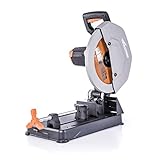
Evolution R355CPS
- 32 tooth TCT blade for wood and metal
- 15 Amp 1500W motor
- 120mm square capacity
- V-block included
As an Amazon Associate we earn from qualifying purchases. CERTAIN CONTENT THAT APPEARS ON THIS SITE COMES FROM AMAZON. THIS CONTENT IS PROVIDED 'AS IS' AND IS SUBJECT TO CHANGE OR REMOVAL AT ANY TIME.
All 10 Metal Chop Saws Compared in 2026
The table below covers every saw in the guide with the specs that change the decision. Note how far apart the cutting speeds sit. The Evolution S14MCS runs its blade at 1100 rpm while the Bosch GCO15-14 spins at 4100 rpm, and that gap is the whole cold cut versus abrasive cut story in a single number.
| # | Product | Key details | Where to buy |
|---|---|---|---|
| 1 | Evolution S355CPSL 14 Inch TCT Chop Saw |
|
Check Latest Price |
| 2 | Makita LW1401 14 Inch Cut-Off Saw |
|
Check Latest Price |
| 3 | Evolution R355CPS Multi-Material Chop Saw |
|
Check Latest Price |
| 4 |  VEVOR 355G-3L 2800W Cold Cut Chop Saw VEVOR 355G-3L 2800W Cold Cut Chop Saw |
|
Check Latest Price |
| 5 |  VEVOR 2800W 1200 RPM Cold Cut Saw VEVOR 2800W 1200 RPM Cold Cut Saw |
|
Check Latest Price |
| 6 | 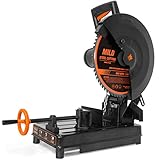 WEN CM1446 Multi-Material Cut-Off Saw WEN CM1446 Multi-Material Cut-Off Saw |
|
Check Latest Price |
| 7 |  Evolution S14MCS EVOMAX Cold Cut Saw Evolution S14MCS EVOMAX Cold Cut Saw |
|
Check Latest Price |
| 8 |  Milwaukee M18 FUEL 14 Inch Cut-Off Saw Milwaukee M18 FUEL 14 Inch Cut-Off Saw |
|
Check Latest Price |
| 9 |  Yumark 933C 2200W Abrasive Chop Saw Yumark 933C 2200W Abrasive Chop Saw |
|
Check Latest Price |
| 10 |  Bosch GCO15-14 14 Inch Cut-Off Machine Bosch GCO15-14 14 Inch Cut-Off Machine |
|
Check Latest Price |
We earn from qualifying purchases. CERTAIN CONTENT THAT APPEARS ON THIS SITE COMES FROM AMAZON. THIS CONTENT IS PROVIDED 'AS IS' AND IS SUBJECT TO CHANGE OR REMOVAL AT ANY TIME.
A few patterns jump out. Only four saws here use a carbide or cermet blade out of the box, and only two of those miter in both directions. Two machines run at 4100 and 4000 rpm, which is abrasive territory where the edge will be hot and the wheel short-lived. If your workload is steel studs rather than demolition scrap, blade type matters more than wattage.
1. Evolution S355CPSL 14 Inch TCT Chop Saw
Evolution S355CPSL – Heavy Duty 14 Inch Metal Cutting Chop Saw W/ 14 Inch Carbide-Tipped Blade | Dry Cut | Miter 45° | Chop Saw For Cutting Metal – Accurate. Powerful. Reliable
- 14 inch cold-cut TCT blade
- 15 Amp motor at 1450 rpm
- 0-45 degree miter
- Chip deflector
Pros
- Cool burr-free cuts in mild steel
- Integrated chip deflector
- Quick-release cast steel vise
- Lightweight pressed steel base
- 841 owner reviews at 4.7 stars
Cons
- Fixed 0-45 degree miter range
- Needs care with thin material to avoid kickback
We earn a commission, at no additional cost to you. CERTAIN CONTENT THAT APPEARS ON THIS SITE COMES FROM AMAZON. THIS CONTENT IS PROVIDED 'AS IS' AND IS SUBJECT TO CHANGE OR REMOVAL AT ANY TIME.
This is the saw we come back to for steel framing. The 14 inch tungsten carbide tipped blade turns at 1450 rpm, which is slow enough that the teeth shear the steel instead of burning through it. Owners consistently describe the edge it leaves on mild steel as close to a finished surface, with almost no heat and no sparks to speak of.
At 841 reviews and a 4.7 star average, it also has the deepest owner feedback of any saw in this guide, and that feedback is unusually specific. Fabricators and home-shop metalworkers talk about the cut finish first, then the low heat, then the fact that the saw is light enough to move to a different bench. The rating distribution is heavily skewed positive, with 84 percent of ratings at five stars.
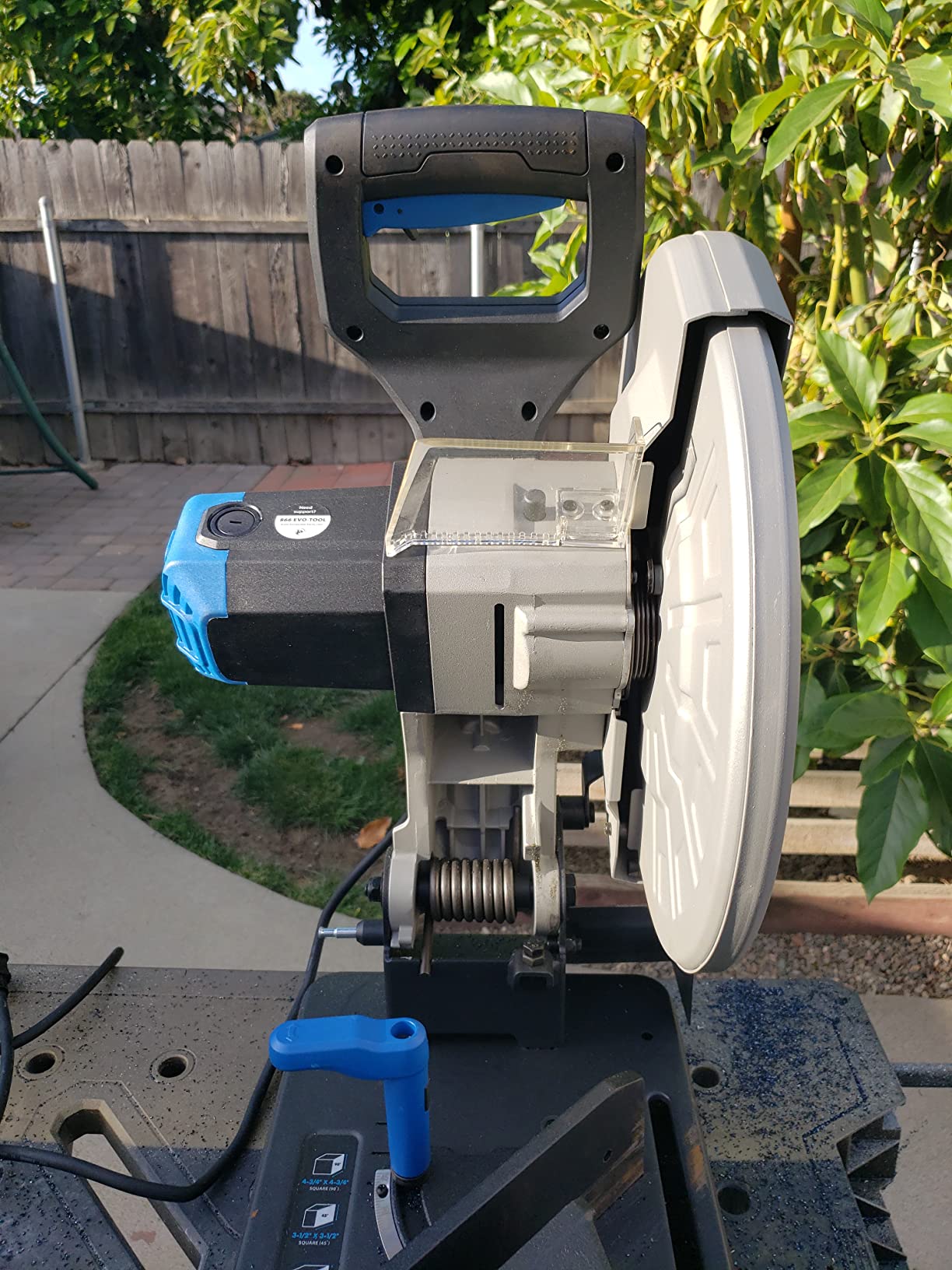
The build details are what separate it from cheaper cold cut machines. The cast steel vise and fence use a quick-release mechanism, so you can swap pieces quickly during a long framing run, and the integrated chip deflector sends debris away from the operator rather than across the bench. The pressed steel base keeps the whole package at 20.8 by 12.2 by 16.2 inches, so it fits on a small bench or a tailgate.
There is a real limitation. The miter range is fixed at 0 to 45 degrees in a single direction, so compound miters and true 45 degree corner cuts on both legs of a stud are not available without repositioning the workpiece. For straight cuts and single-direction angles on 20 to 25 gauge material, that is rarely an issue.
Where the S355CPSL earns its keep on steel studs
This is the pick if you are cutting many studs in a single session. The burr-free edge means the cut end butts tight against a track or header without a second pass, and the cool cut keeps your hands off a hot workpiece. The chip deflector also matters indoors, where shavings across a garage floor are the difference between a five minute cleanup and a twenty minute one.
Owners report the blade lasting months of stud work before needing attention, which is the opposite of abrasive-wheel economics. If you want the number behind that claim, the S14MCS in this guide publishes a cut count instead.
Where the S355CPSL will disappoint you
If your work involves 16 gauge or heavier structural steel, or a lot of 45 degree compound corners, the miter range and the 14 inch blade diameter will feel short. Heavy plate also puts more load on the motor than a framing stud ever will. For that kind of work, look at a cold cut saw with a bidirectional miter instead.
Owners also flag the need to handle the chip guard and blade carefully on thin material. A cold cut blade can bind and kick back if the material is not fully supported in the vise, and thin-wall studs are exactly the material where this happens when a cut is rushed.
We earn a commission, at no additional cost to you. CERTAIN CONTENT THAT APPEARS ON THIS SITE COMES FROM AMAZON. THIS CONTENT IS PROVIDED 'AS IS' AND IS SUBJECT TO CHANGE OR REMOVAL AT ANY TIME.
2. Makita LW1401 14 Inch Cut-Off Saw
Makita LW1401 Cut-Off Saw, 14″
- 15 Amp motor at 3800 rpm
- 14 inch abrasive wheel
- Three-point fence to 45 degrees
Pros
- 15 Amp motor with proven durability
- Adjustable spark guard redirects debris
- Tool-less vise adjustment
- Two-stage lock-off power button
- Fence adjusts at three locations
Cons
- Abrasive wheel leaves more heat and burr
- Cut edge is rarely immediately weld ready
We earn a commission, at no additional cost to you. CERTAIN CONTENT THAT APPEARS ON THIS SITE COMES FROM AMAZON. THIS CONTENT IS PROVIDED 'AS IS' AND IS SUBJECT TO CHANGE OR REMOVAL AT ANY TIME.
The Makita LW1401 is the abrasive-wheel option that most people actually want, because it is boringly dependable. A 15 Amp motor spinning the included 14 inch cut-off wheel at 3800 rpm handles steel channel, plate and structural material without complaint, and at 37 pounds it stays planted on the bench.
Owners rate it 4.6 stars across 399 reviews with 79 percent at five stars. The recurring theme is that it outperforms lighter aftermarket cut-off saws on steel plate and structural material, and that the spark guard genuinely controls where the stream goes. The two-stage lock-off power button is a small thing that shows up constantly in reviews, because you can shut the saw down without repositioning your grip.
The fence is the quiet strength here. It adjusts at three separate mounting locations and cuts to 45 degrees, which means it can hold different workpiece sizes square against the blade without the crowding you get from a single-position fence. Tool-less vise adjustment speeds up clamping changes during repetitive work.
What you give up is cut quality. A wheel spinning at 3800 rpm grinds rather than shears, so the finished edge carries more heat, more dust and a visible burr. If you plan to weld the cut studs or leave them visible, expect to grind or file. For framing that gets covered in drywall, that trade is often worth making.
Where the Makita LW1401 is the right call
Pick this saw when you are cutting a mixed load of steel studs, angle iron and pipe, or when demolition scrap and light structural work share a bench. The 45 degree fence and adjustable spark guard make it the safer choice for indoor work where a spark stream is a genuine hazard.
Buyers on owner forums describe it favorably against lighter saws on plate and structural material, and the abrasive wheel is replaceable with any standard 14 inch cut-off wheel. That flexibility is part of why it stays useful year after year.
Where the Makita LW1401 is the wrong call
It is the wrong tool if the cut edge needs to be clean enough to weld, deburr by hand, or leave visible. It is also the wrong tool for a garage where dust control matters, since an abrasive wheel on steel produces a fine dark dust that settles on everything. The 1 year limited warranty is shorter than the three years offered on several carbide saws in this list.
We earn a commission, at no additional cost to you. CERTAIN CONTENT THAT APPEARS ON THIS SITE COMES FROM AMAZON. THIS CONTENT IS PROVIDED 'AS IS' AND IS SUBJECT TO CHANGE OR REMOVAL AT ANY TIME.
3. Evolution R355CPS Multi-Material Chop Saw
Evolution Power Tools R355CPS 14-Inch Chop Saw Multi Purpose, Multi-Material Cutting Cuts Metal, Plastic, Wood & More Miter Cut up to 45˚ Degrees TCT Blade Included
- 14 inch 32 tooth TCT blade
- 15 Amp motor at 1550 rpm
- 120mm square capacity
Pros
- One blade cuts wood
- nail-bearing lumber
- mild steel
- plastic and aluminum
- Cuts mild steel with virtually no heat
- burrs or sparks
- Motor rated for a minimum 160 hour life
- V-block and wrench included
Cons
- Fence can twist under clamping pressure
- Angles made by repositioning the clamp
- Only one direction of miter
We earn a commission, at no additional cost to you. CERTAIN CONTENT THAT APPEARS ON THIS SITE COMES FROM AMAZON. THIS CONTENT IS PROVIDED 'AS IS' AND IS SUBJECT TO CHANGE OR REMOVAL AT ANY TIME.
If your shop still handles wood framing, this is the one to look at. The 32 tooth TCT blade cuts wood, composite decking, nail-bearing lumber, plastic, aluminum and mild steel, which removes the argument for owning two saws. Metalworkers and DIYers report switching to it specifically for quieter, cooler, more precise cuts with far less shop dust.
The capacity figures are genuinely useful for steel work. Maximum rectangle is 95 by 180mm, maximum square is 120 by 120mm, and maximum round is 130mm, so square tube and solid round bar both fit without a workaround. At 352 reviews and 4.6 stars, the feedback volume is healthy and the praise centers on the near-mirror edge finish.
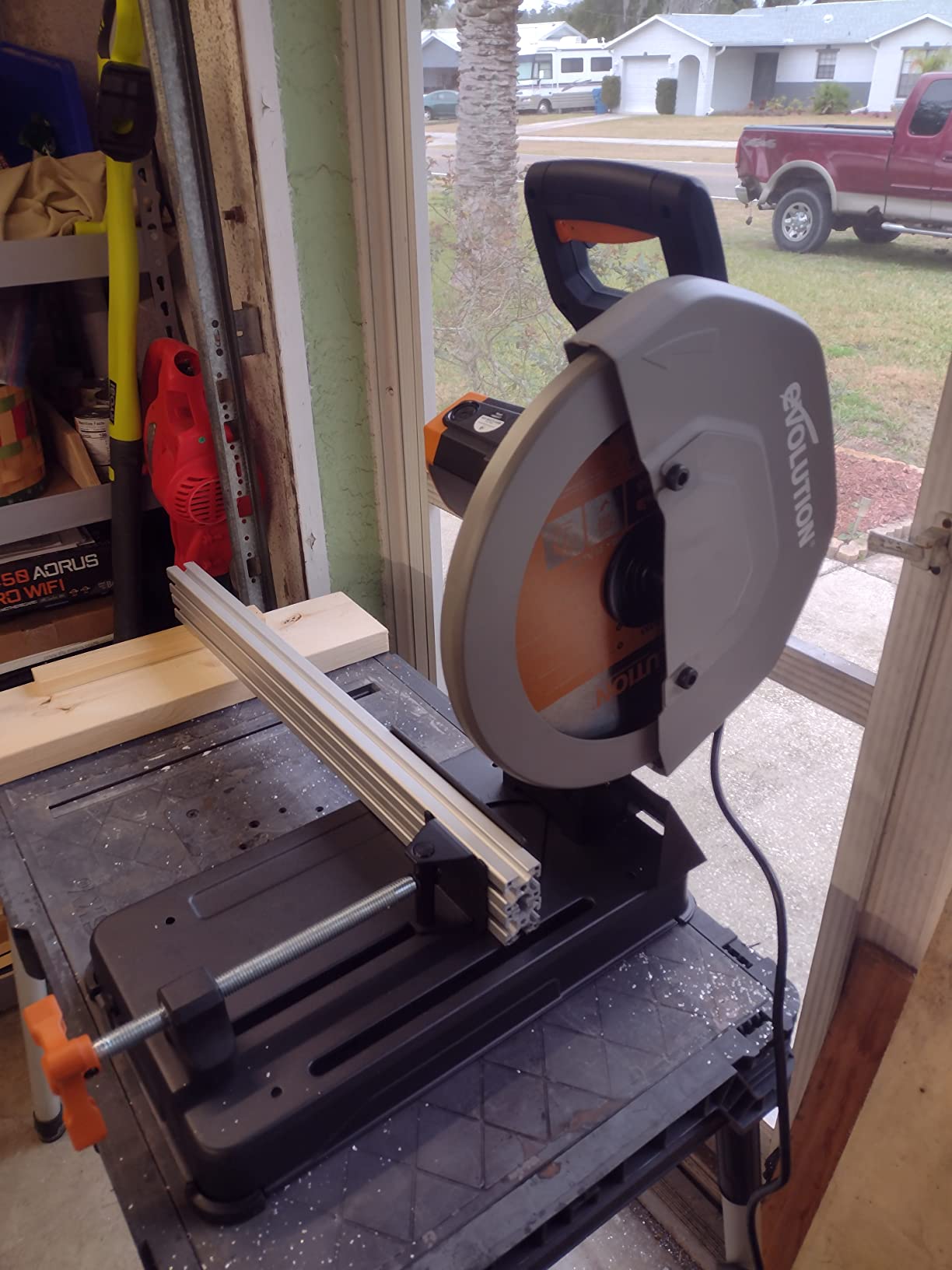
The 15 Amp motor is rated for a minimum 160 hour motor life, which is a durability claim rather than a speed claim. At 1550 rpm it sits in the same cold cut range as the S355CPSL, and reviewers report no vibration and a smooth finish on mild steel.
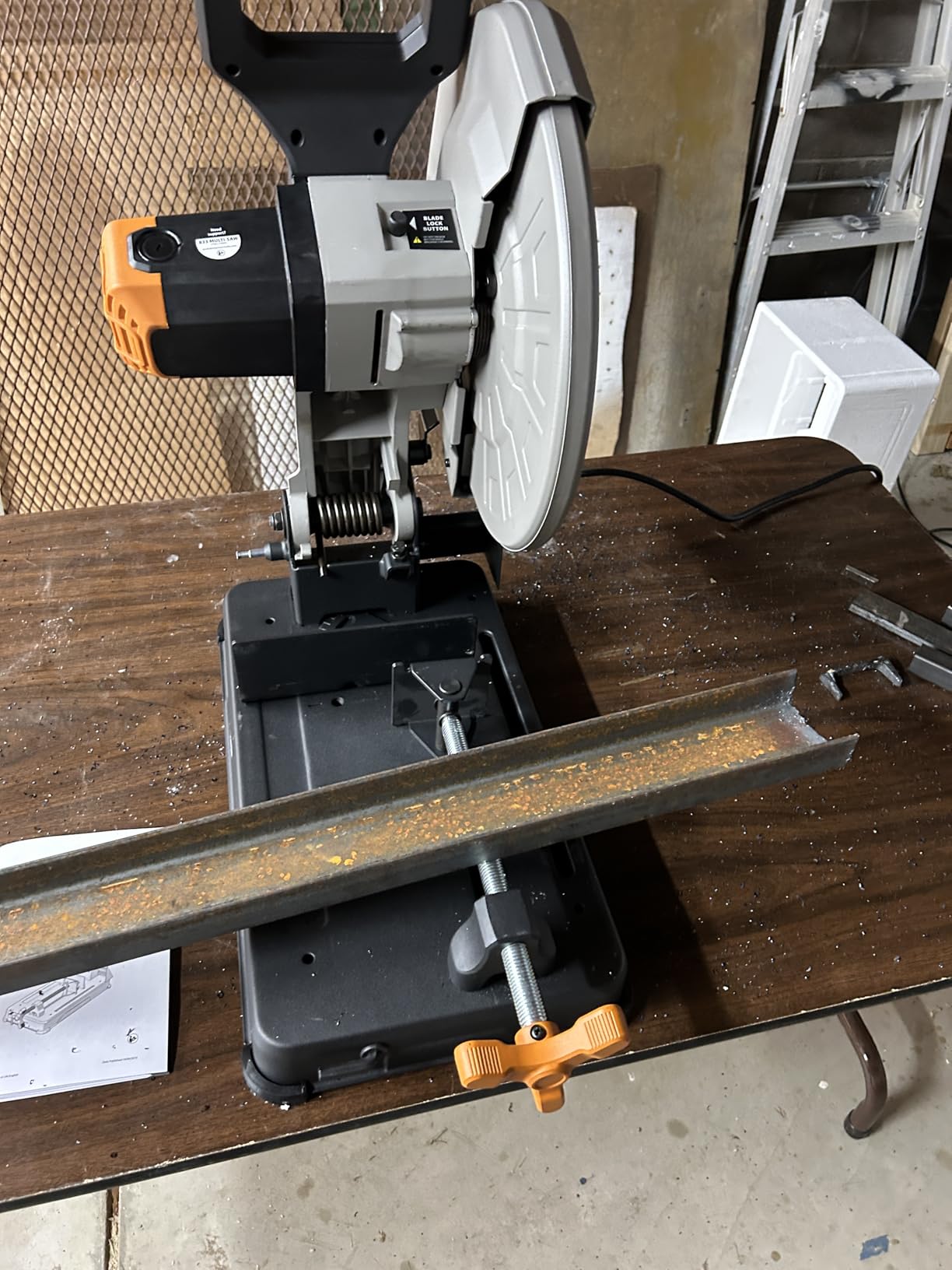
Be clear-eyed about the trade. Angled cuts are made by repositioning the clamp rather than swinging the head, and only in one direction. Reviewers also note the fence can twist under clamping pressure, introducing roughly a degree of angular error on angled work, and that this is a more bare-bones saw than the S355CPSL in terms of clamping and mitering hardware.
Where the R355CPS is the right call
Multi-trade contractors and shop owners get the most from it. One saw covers framing lumber and steel studs, which removes blade changes entirely and, according to owners, preserves the multi-material blade rather than degrading it with steel work. Aluminum users even run a specialty blade and keep the original one stored.
It is also a strong pick for anyone who wants cold cut performance without giving up wood cutting. The near-mirror finish and quiet operation come through clearly in the reviews.
Where the R355CPS is the wrong call
Precision angled work is where it falls short. A fence that can twist under clamping pressure is a problem when you are cutting stud webs at a specific angle for a header, and the single-direction clamp repositioning is slower than a proper miter head. If angles are routine, spend the money on a saw with a swinging head and detents.
We earn a commission, at no additional cost to you. CERTAIN CONTENT THAT APPEARS ON THIS SITE COMES FROM AMAZON. THIS CONTENT IS PROVIDED 'AS IS' AND IS SUBJECT TO CHANGE OR REMOVAL AT ANY TIME.
4. VEVOR 355G-3L 2800W Cold Cut Chop Saw
VEVOR Chop Saw 14-inch Cold Cut Blade 2800 W Powerful Motor Cut Off Saw
- 2800W motor at 1100 rpm
- 66 tooth cermet blade
- Bidirectional -45 to 45 degree miter
Pros
- 2800W motor with a 66 tooth cermet blade
- Bidirectional miter in both directions
- Chip collector keeps the bench tidy
- Soft start reduces brush wear
Cons
- Fence reported as not square
- Brush failures on some units
- Sheet metal base can arrive bent
We earn a commission, at no additional cost to you. CERTAIN CONTENT THAT APPEARS ON THIS SITE COMES FROM AMAZON. THIS CONTENT IS PROVIDED 'AS IS' AND IS SUBJECT TO CHANGE OR REMOVAL AT ANY TIME.
This is the highest wattage number in the guide, and on paper it looks like the strongest cold cut machine here. The 2800W motor drives a 66 tooth cermet-tipped blade cut from 75Cr1 alloy steel at 1100 rpm, and it is the only saw in this lineup that miter swings from -45 to 45 degrees, cutting in both directions rather than one.
The miter range is genuinely useful for framing. When a stud needs a 45 degree plumb cut on one end and a square cut on the other, being able to swing both ways without re-clamping and re-squaring the fence saves real time. The chip collector box is a detail most machines at this level skip, and it keeps steel chips off the floor.
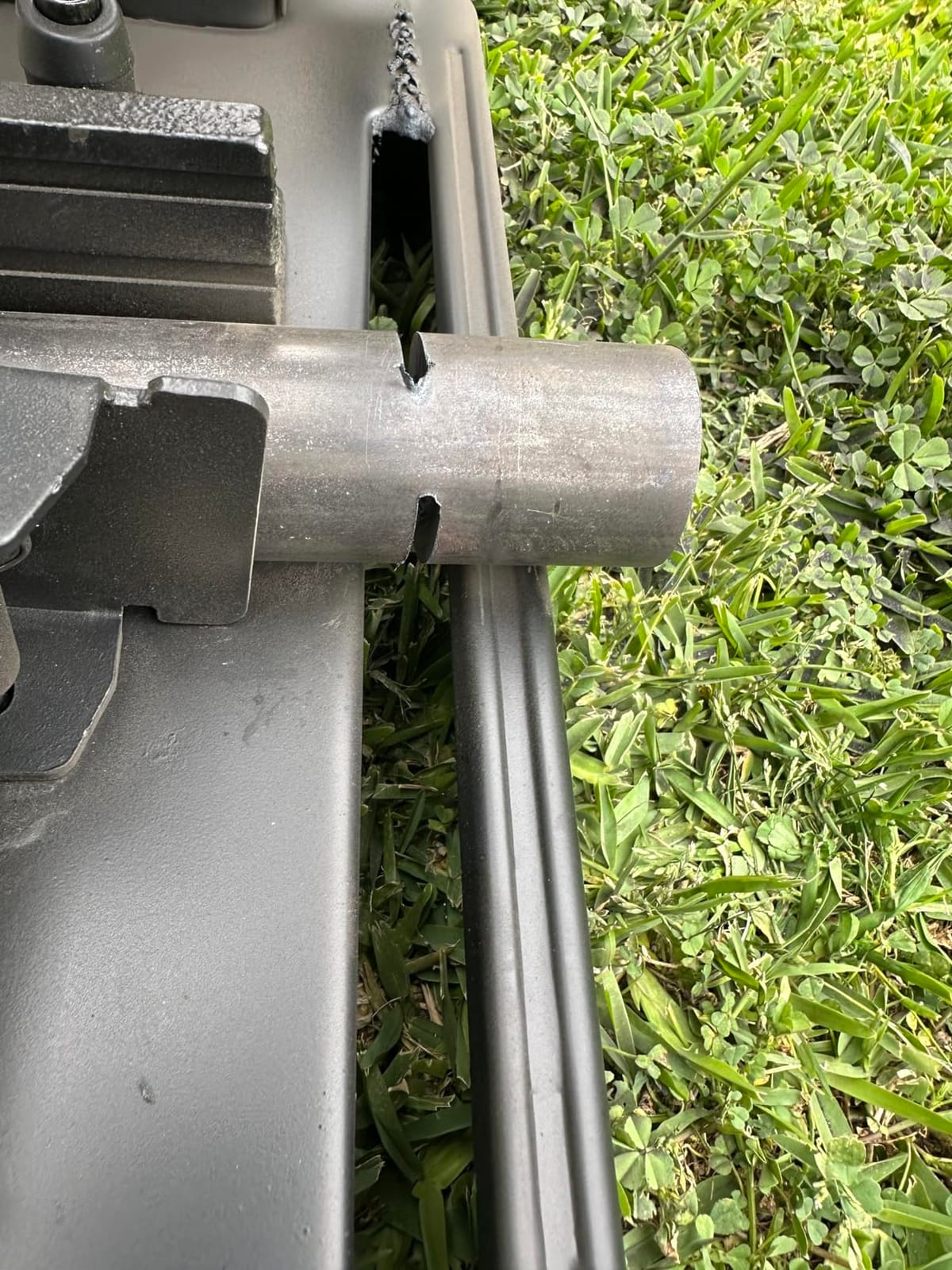
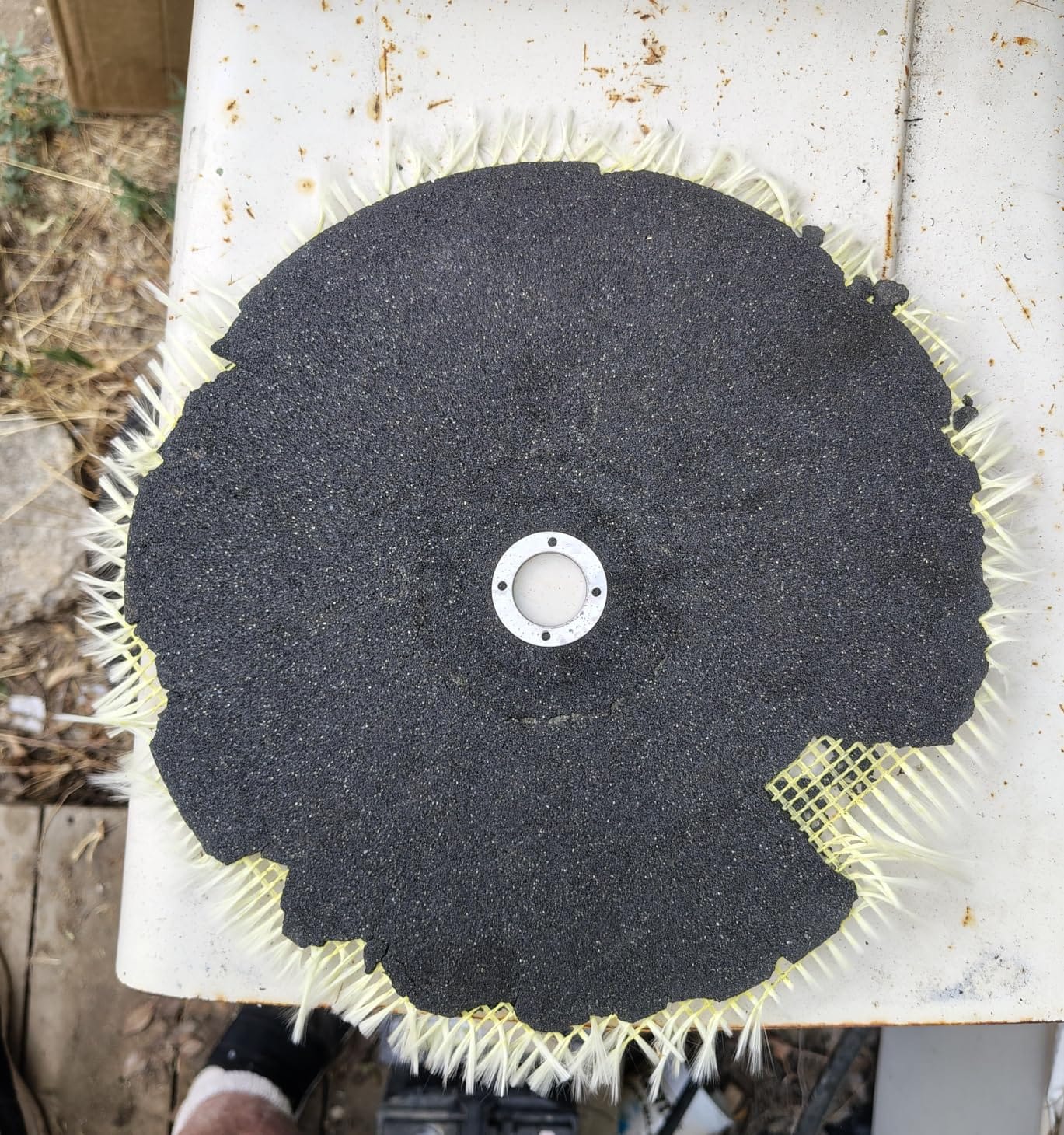
Buyer feedback is sharply split, and that is worth reading carefully. At 4.1 stars across 246 reviews, roughly 10 percent of ratings sit at one star. Those reviews concentrate on motor brush failures after extended cutting, and on bases that arrived bent or out of square, which then makes the fence read out of true.
Some reviews do report a blade rated for up to 4000 cuts through Q235 reinforcing bar, though treat that as a component claim rather than a measured result. Reviewers report it is loud under load and slow on heavy-gauge square tubing, which are trade-offs of the 1100 rpm cold cut approach on thick material.
Where the VEVOR 355G-3L is the right call
Bidirectional mitering and a chip collector are the deciding features for anyone cutting a lot of angles and working indoors. The reinforced blade guard, carbon steel base and vibration-damping feet are sensible for a machine of this size, and the 1 to 2 second soft start limits inrush current, which matters on a shared circuit.
It cuts angle iron, round bar, square tubing, I-beams, channel steel and aluminum profiles, so it handles more than framing. Check the fence with a machinist square before your first cut and re-check it after the first hour, and most of the accuracy complaints disappear.
Where the VEVOR 355G-3L is the wrong call
Warranty coverage is listed as none, so a brush failure or a bent base is on you. Reviews also report the back stop losing alignment under vibration and the miter lever travel being short, both of which frustrate repeat work. If you are cutting daily rather than occasionally, the variance between units described in reviews argues for a brand with service behind it.
We earn a commission, at no additional cost to you. CERTAIN CONTENT THAT APPEARS ON THIS SITE COMES FROM AMAZON. THIS CONTENT IS PROVIDED 'AS IS' AND IS SUBJECT TO CHANGE OR REMOVAL AT ANY TIME.
5. VEVOR 2800W 1200 RPM Cold Cut Saw
VEVOR Chop Saw, 14”/355mm Blade Diameter Cut Off Saw, 2800W 1200RPM Steel Cutting Machine, 0-45° Adjustable Dry Cut Chop Saw, Miter Saw for Cold Cut Saw for Steel/Iron/Aluminum, Black
- 2800W motor at 1200 rpm
- Ceramic alloy dry cut blade
- Tool-less 0-45 degree fence
Pros
- Cool to the touch cuts with minimal sparks
- Tool-less angle adjustment
- Thicker wave pattern vise reduces wobble
- Soft start limits motor heat
Cons
- Ceramic blade not suitable for stainless steel
- Listed at 230 volts for North American circuits
- Single direction 0-45 degree miter
We earn a commission, at no additional cost to you. CERTAIN CONTENT THAT APPEARS ON THIS SITE COMES FROM AMAZON. THIS CONTENT IS PROVIDED 'AS IS' AND IS SUBJECT TO CHANGE OR REMOVAL AT ANY TIME.
The second VEVOR cold cut machine is a simpler take on the same idea. A 2800W motor at 1200 rpm turns a ceramic alloy dry cut blade that leaves material cool to the touch with virtually no sparks, and the tool-less 0 to 45 degree fence adjustment means angle changes do not require reaching for a wrench.
Where it improves on the budget abrasive approach is clamping. The thicker wave pattern vise adds friction against round and square material, which reduces wobble on tube, and the multi-process blade clamping is designed to keep the blade from shifting under load. That is the detail that decides whether a cut in square tubing comes out square.
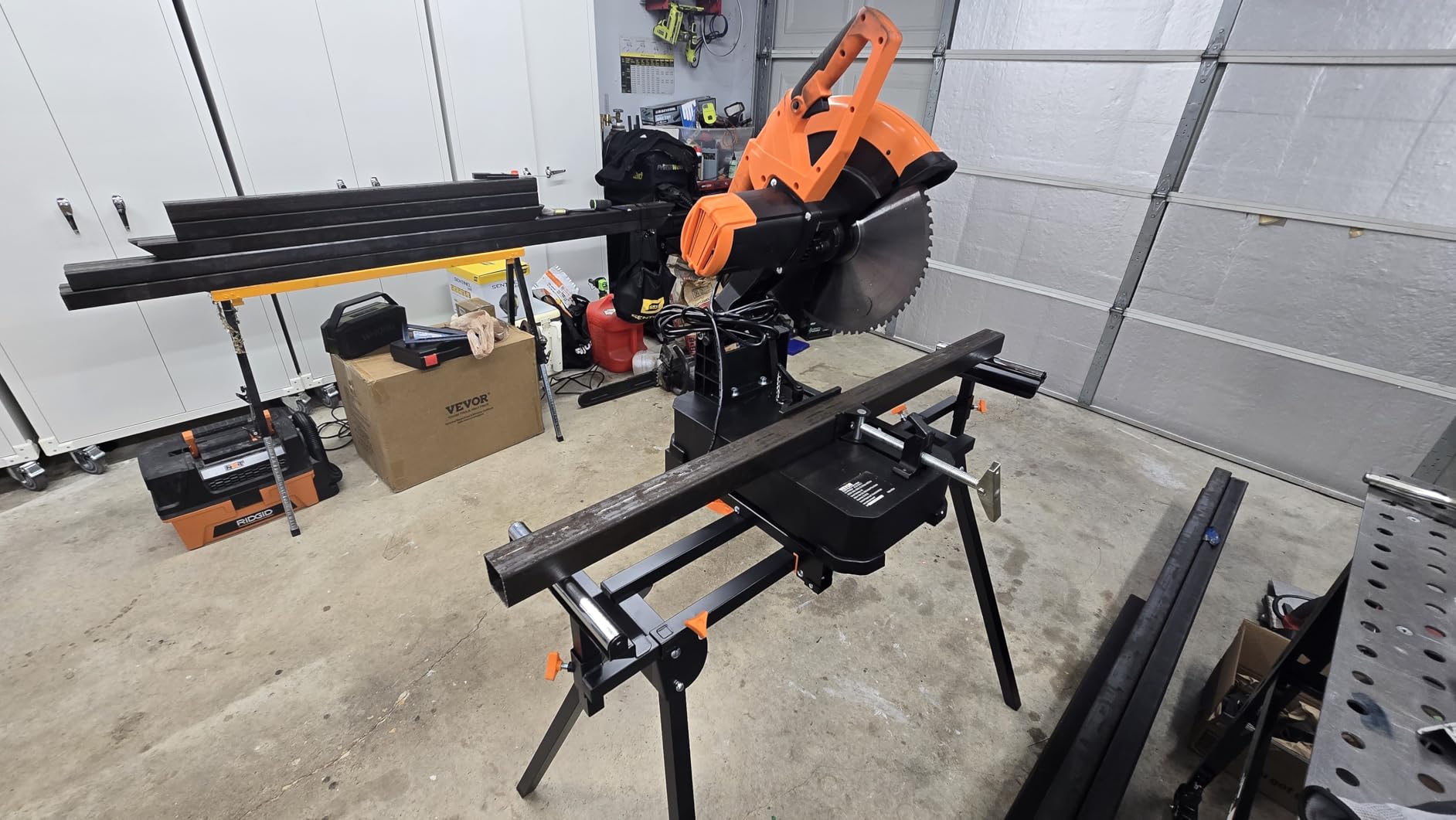
Owners report clean, flat, cool cuts on rebar, angle iron and aluminum with straightforward setup, and 64 percent of ratings sit at five stars. A persistent 9 to 10 percent group of low reviews ties back to build consistency and to the blade material limits rather than to cut quality.
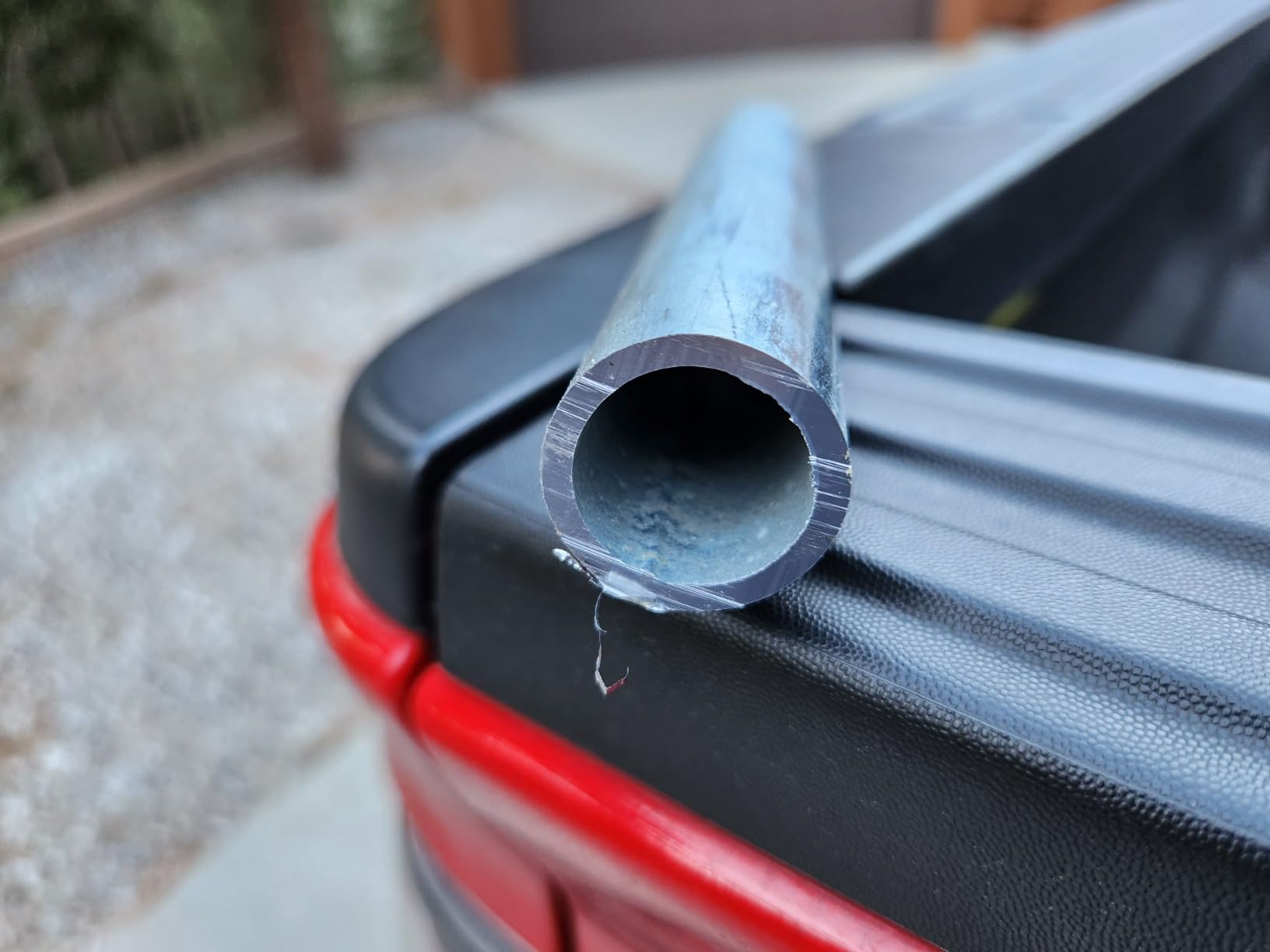
There is one limitation that rules this saw out for some shops entirely. The manufacturer states that ceramic saw blades are not recommended for cutting stainless steel, so stainless framing or trim is out of scope. It is also listed at 230 volts, which in a North American 120 volt circuit means a step-down transformer is needed before the saw will run.
Where this VEVOR is the right call
It suits contractors who cut rebar, angle iron and aluminum profiles more often than anything else. The wrapped spark guard protects the blade against chipping and splashing debris during lifting, and soft start limits both motor heat and burn-up during repeated starts.
For anyone who wants cold cut performance with the simplest possible angle adjustments, the tool-less fence is a real advantage over hex-key machines. At 51 pounds, it is a two-person carry, so plan where it will live before it arrives.
Where this VEVOR is the wrong call
Stainless steel, and any workflow in North America that does not already have a step-down transformer, put it out. The single direction 0-45 degree miter also means angle work is one-way only. If you cut stainless conduit, pick a cermet or TCT saw with a manufacturer rating for it.
We earn a commission, at no additional cost to you. CERTAIN CONTENT THAT APPEARS ON THIS SITE COMES FROM AMAZON. THIS CONTENT IS PROVIDED 'AS IS' AND IS SUBJECT TO CHANGE OR REMOVAL AT ANY TIME.
6. WEN CM1446 Multi-Material Cut-Off Saw
WEN CM1446 15-Amp 14-Inch Multi-Material Cut-Off Chop Saw with Carbide-Tipped Metal-Cutting Saw Blade
- 15 Amp motor at 1450 rpm
- 66 tooth carbide blade
- 3.75 x 7.25 inch capacity
Pros
- Carbide-tipped multi-material blade ships installed
- Handles ferrous and non-ferrous metals
- Generous capacity for its size
- Two year warranty with spare parts
Cons
- Chip guard and hold-down chain add setup time
- Fixed rectangle capacity limits large tube
We earn a commission, at no additional cost to you. CERTAIN CONTENT THAT APPEARS ON THIS SITE COMES FROM AMAZON. THIS CONTENT IS PROVIDED 'AS IS' AND IS SUBJECT TO CHANGE OR REMOVAL AT ANY TIME.
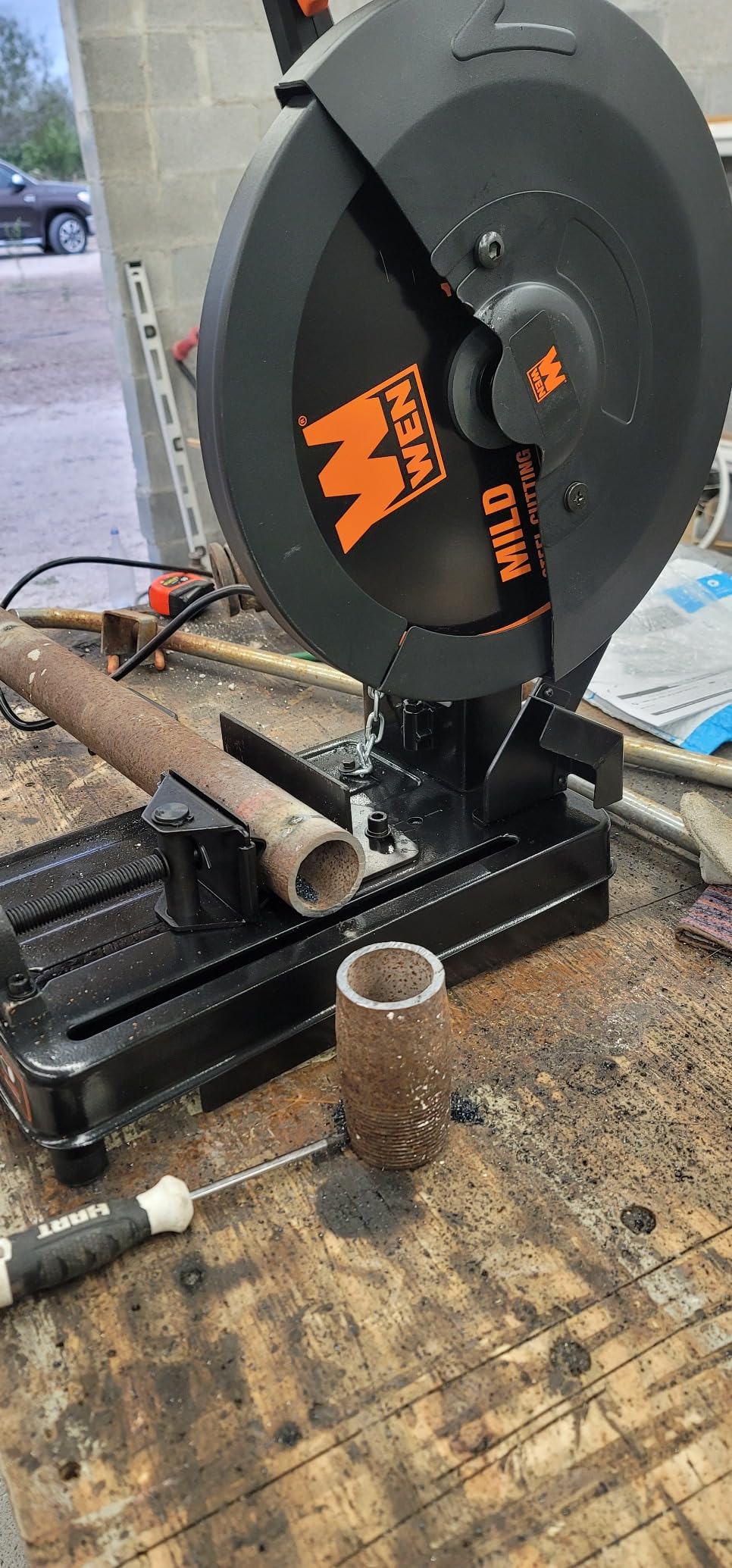
The WEN CM1446 answers a simple question well: can a first-time buyer get a carbide blade in the box and start cutting steel studs that day. Yes. The 66 tooth carbide-tipped mild steel blade, model BL1466, comes pre-installed, and the 15 Amp 1800W motor turns it at up to 1450 rpm, which is squarely in cold cut territory.
Capacity is better than the spec sheet suggests. The rated figures are a 3.75 by 7.25 inch rectangle, a 5.125 inch round tube and steel plate up to 0.5 inch thick. For framing studs and light structural tube, that covers the work without moving the workpiece to a second setup.
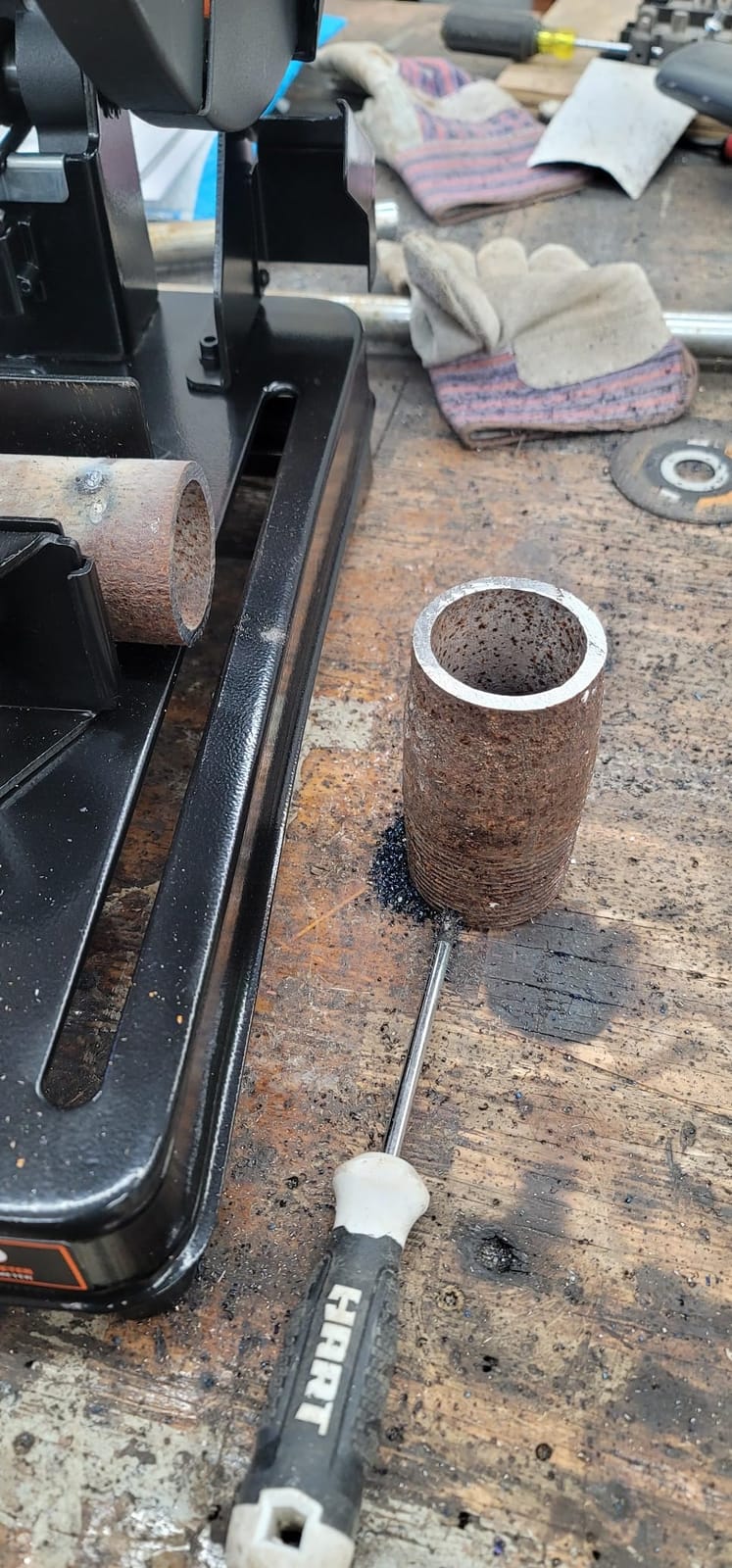
At 4.4 stars across 95 reviews with 68 percent at five stars, the feedback is mostly positive: clean, cool cuts on steel plate and tubing out of the box. Buyers also note it performs best on light-gauge material, and that repeat work benefits from a dedicated mild steel blade rather than the supplied multi-material one.
The hold-down chain and 45 degree adjustable fence keep material square, which is the right design for thin-wall studs where a blade can catch the edge. The cost is friction. Reviewers note the guard and chain add setup time on repeat cuts, and the fixed rectangle geometry means large square tube and channel need careful positioning rather than a simple lay-down.
Where the WEN CM1446 is the right call
It is the shortest path to a clean steel cut for a new shop. No blade purchase, no adapter, no learning curve on wheel dressing. The two year limited warranty and two years of EU spare part availability are better than the one year offered on several machines in this list.
It also handles non-ferrous metals, plastics and wood, so a single saw can cover a mixed hobby workload. The chain hold-down is a genuine asset for 20 to 25 gauge studs, where the cut edge is easy to distort.
Where the WEN CM1446 is the wrong call
High volume work exposes the setup time. The chain and guard combination is reassuring on a single stud and annoying on the fortieth. Heavy plate and thick structural steel push past what the 1450 rpm cold cut approach enjoys, and there is no bidirectional miter for angled framing.
We earn a commission, at no additional cost to you. CERTAIN CONTENT THAT APPEARS ON THIS SITE COMES FROM AMAZON. THIS CONTENT IS PROVIDED 'AS IS' AND IS SUBJECT TO CHANGE OR REMOVAL AT ANY TIME.
7. Evolution S14MCS EVOMAX Cold Cut Saw
Evolution S14MCS 14″ Mitering Chop Saw | Cold Cut Steel Saw | EVOMAX Intelligent Motor & Blade | 3500+ Blade Life | Burr-Free Finish | Shadow Guide | +/-46° Miter | Soft Start | Reinforced Base
- 80 tooth cermet EVOMAX blade
- 15 Amp motor at 1100 rpm
- Plus or minus 46 degree miter
Pros
- Rated 3500+ cuts in 4 inch mild steel
- Plus or minus 46 degree miter with detents
- Soft start and electronic blade brake
- Dual sliding clamps hold alignment
Cons
- 72 pound base is impractical to move between job sites
We earn a commission, at no additional cost to you. CERTAIN CONTENT THAT APPEARS ON THIS SITE COMES FROM AMAZON. THIS CONTENT IS PROVIDED 'AS IS' AND IS SUBJECT TO CHANGE OR REMOVAL AT ANY TIME.
This is the shop-floor machine, and the only saw here that publishes blade life as a cut count. The 80 tooth EVOMAX cermet carbide blade, handcrafted in Japan, is rated at more than 3500 cuts in 4 inch mild steel, and the EVOMAX motor adds active speed optimization that the manufacturer claims extends blade life by a further 30 percent.
That number is the whole argument. It converts blade wear into a cost you can plan for, and it is why this saw appeals to fabricators doing production work rather than one-off repairs. Owners rate it 4.7 stars across 73 reviews with 89 percent at five stars, and the complaints are about weight and delivery rather than cut quality.
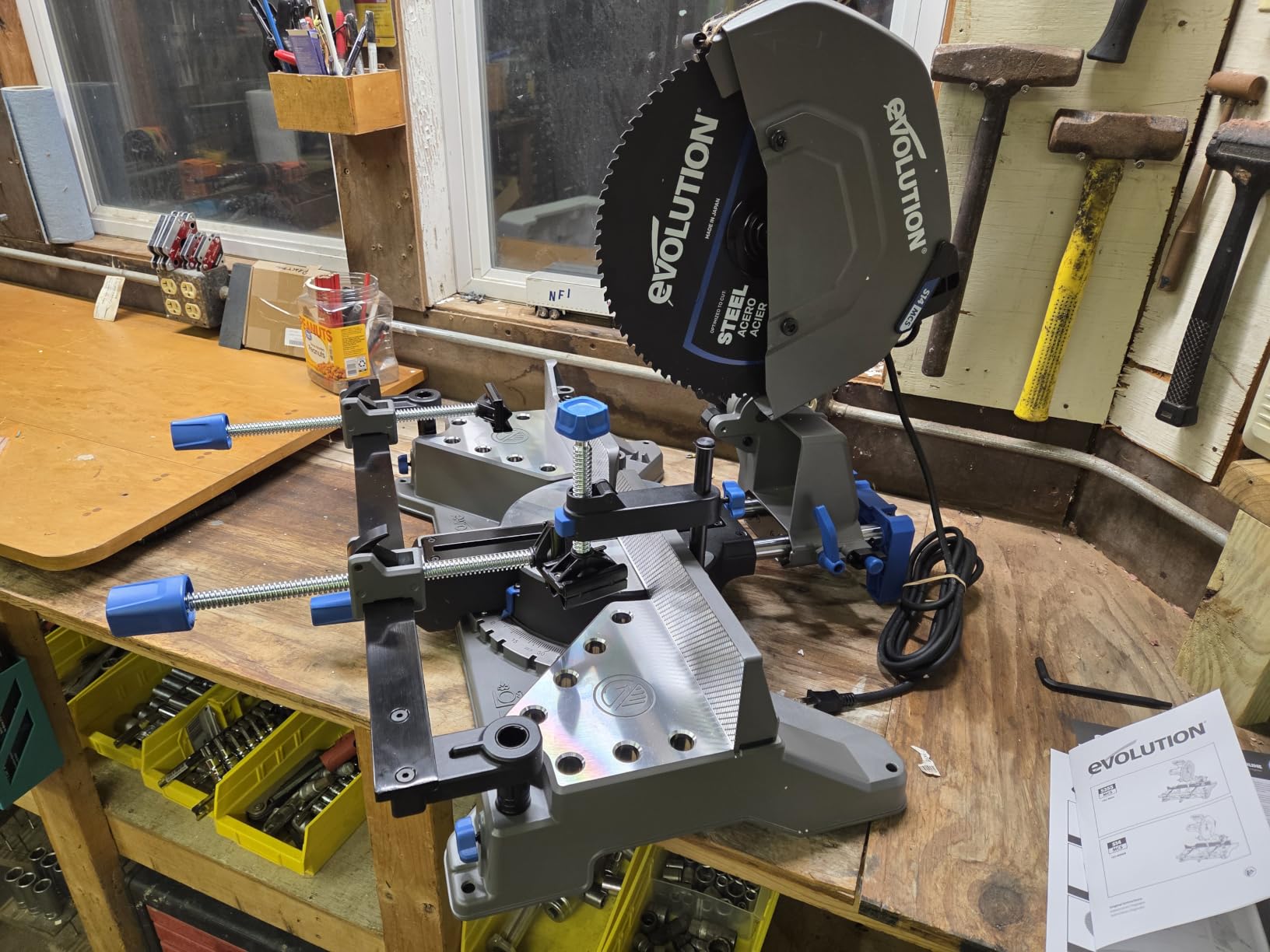
The mitering is the best in this guide. Detents plus a stainless-steel shadow guide support repeatable cuts to plus or minus 46 degrees, which covers a full compound corner cut. The reinforced fence, ribbed alloy base and dual sliding clamps are built to hold alignment under load, and the soft start prevents breaker trips while the electronic blade brake stops the blade in seconds.
Owners also report zero airborne dust, which is the deciding factor for anyone working indoors. At 72.4 pounds and 17.5 by 27.75 by 21.6 inches, it is a machine you place once and leave, not one you carry to a job.
Where the S14MCS is the right call
Fabrication shops, HVAC contractors running large volumes of duct and angle, and anyone who has priced abrasive wheels against carbide blades will recover the difference quickly. The 46 degree bidirectional miter with detents handles stud corner cuts without re-clamping, and the shadow guide keeps the repeatability tight over a long run.
The dust-free cut is what makes it usable in a finished space. Reviews describe shop floors staying visibly cleaner than with abrasive saws of similar capacity, and the cut edge arrives weld ready.
Where the S14MCS is the wrong call
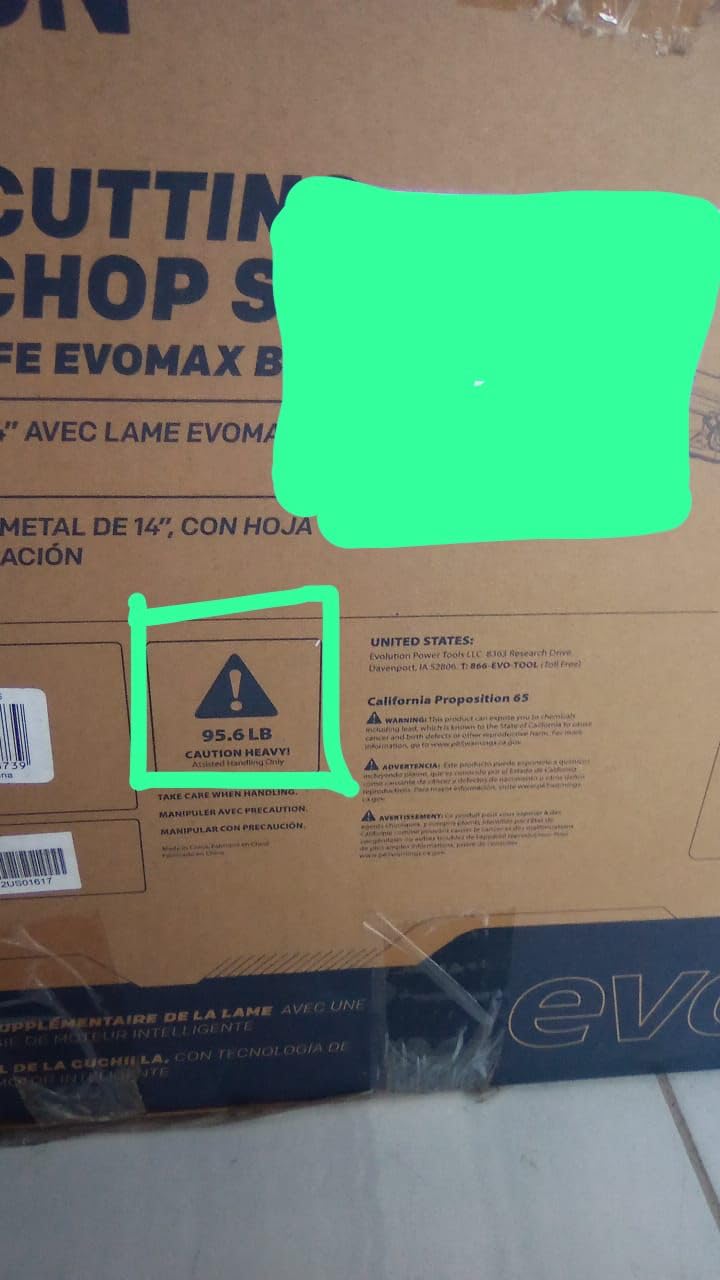
Weight. At 72.4 pounds, moving this saw between rooms or onto a job requires two people and a plan. If your work happens at a customer site rather than a fixed bench, this is the wrong tool no matter how good the cut. Job site framing is what the S355CPSL and the Milwaukee M18 are built for.
We earn a commission, at no additional cost to you. CERTAIN CONTENT THAT APPEARS ON THIS SITE COMES FROM AMAZON. THIS CONTENT IS PROVIDED 'AS IS' AND IS SUBJECT TO CHANGE OR REMOVAL AT ANY TIME.
8. Milwaukee M18 FUEL 14 Inch Cut-Off Saw
Milwaukee M18 FUEL 18-Volt Lithium-Ion Brushless Cordless 14 in. Abrasive Cut-Off Saw (Tool-Only)
- 18V brushless M18 FUEL motor
- 4000 RPM abrasive cut
- 41.8 pounds
- Tool-free changes
Pros
- Brushless motor delivers corded class 15 Amp performance
- Rapid stop braking in under 3 seconds
- Tool-free fence and blade changes
- No cord to cut or trip over
Cons
- Tool-only package needs a separate battery and charger
- High speed wears abrasive wheels faster
- Less suited to high volume steel framing
We earn a commission, at no additional cost to you. CERTAIN CONTENT THAT APPEARS ON THIS SITE COMES FROM AMAZON. THIS CONTENT IS PROVIDED 'AS IS' AND IS SUBJECT TO CHANGE OR REMOVAL AT ANY TIME.
The Milwaukee M18 FUEL 14 inch cut-off saw is the only cordless machine in this lineup, and for a framing contractor working through a building without power on every floor, that is worth more than a carbide blade. The brushless M18 FUEL motor delivers 15 Amp corded class performance from an 18 volt battery, with no cord to cut through or trip over.
The convenience features are genuinely useful in the field. Tool-free fence adjustment and tool-free blade changes mean you are not hunting for hex keys on a ladder, and rapid stop braking halts the accessory in under 3 seconds, which matters when the saw is in your hand rather than on a bench.
Owners rate it 4.4 stars across 42 reviews with 74 percent at five stars, and the feedback centers on usability for one-off job site cuts rather than high volume or ultra-precise work. At 41.8 pounds, it is a substantial tool to carry but still far more portable than a 72 pound shop saw.
The compromises are real. It uses an abrasive wheel rather than a cold cut blade, so it produces more heat, dust and edge burr, and a cut stud will need deburring before it butts tight. The roughly 4000 rpm cutting speed also wears abrasive wheels faster than a carbide cold cut blade would. Note that this is a tool-only package, so the battery and charger are separate purchases.
Where the Milwaukee M18 is the right call
Field work, punch lists, and remodel jobs where power is not available or is a long extension away. Owners describe it as convenient and fast on isolated steel cuts, and the rapid brake means you can set the saw down the moment the cut is done.
It suits a contractor who already owns M18 batteries, since the platform is the deciding factor. One saw that shares a battery with the rest of the kit is easier to justify than a second battery ecosystem.
Where the Milwaukee M18 is the wrong call
High volume steel framing is not its strength, and neither is cut quality. Abrasive wheels at 4000 rpm generate the dust and burr that a cold cut saw avoids entirely, and the review pattern shows it being used for one-off cuts rather than production. Buying the batteries and charger separately also raises the true entry cost of the setup.
We earn a commission, at no additional cost to you. CERTAIN CONTENT THAT APPEARS ON THIS SITE COMES FROM AMAZON. THIS CONTENT IS PROVIDED 'AS IS' AND IS SUBJECT TO CHANGE OR REMOVAL AT ANY TIME.
9. Yumark 933C 2200W Abrasive Chop Saw
Yumark Abrasive Chop Saw, 2200W 3800RPM Steel Cutting Machine, Metal Cutting Saw with 14in Blade for Rebar, Angle Steel, Hollow Pipe Cutting
- 2200W motor at 3800 rpm
- Abrasive wheel for steel and rebar
- 120V corded power
Pros
- Cuts rebar
- angle steel and hollow tube without bogging down
- Lightweight and easy to carry
- Clamp and non-slip base hold work steady
- Ergonomic handle reduces fatigue
Cons
- Supplied abrasive wheel is thin and wears quickly
- Base sheet metal can twist out of square
- Wrench may not be included
We earn a commission, at no additional cost to you. CERTAIN CONTENT THAT APPEARS ON THIS SITE COMES FROM AMAZON. THIS CONTENT IS PROVIDED 'AS IS' AND IS SUBJECT TO CHANGE OR REMOVAL AT ANY TIME.
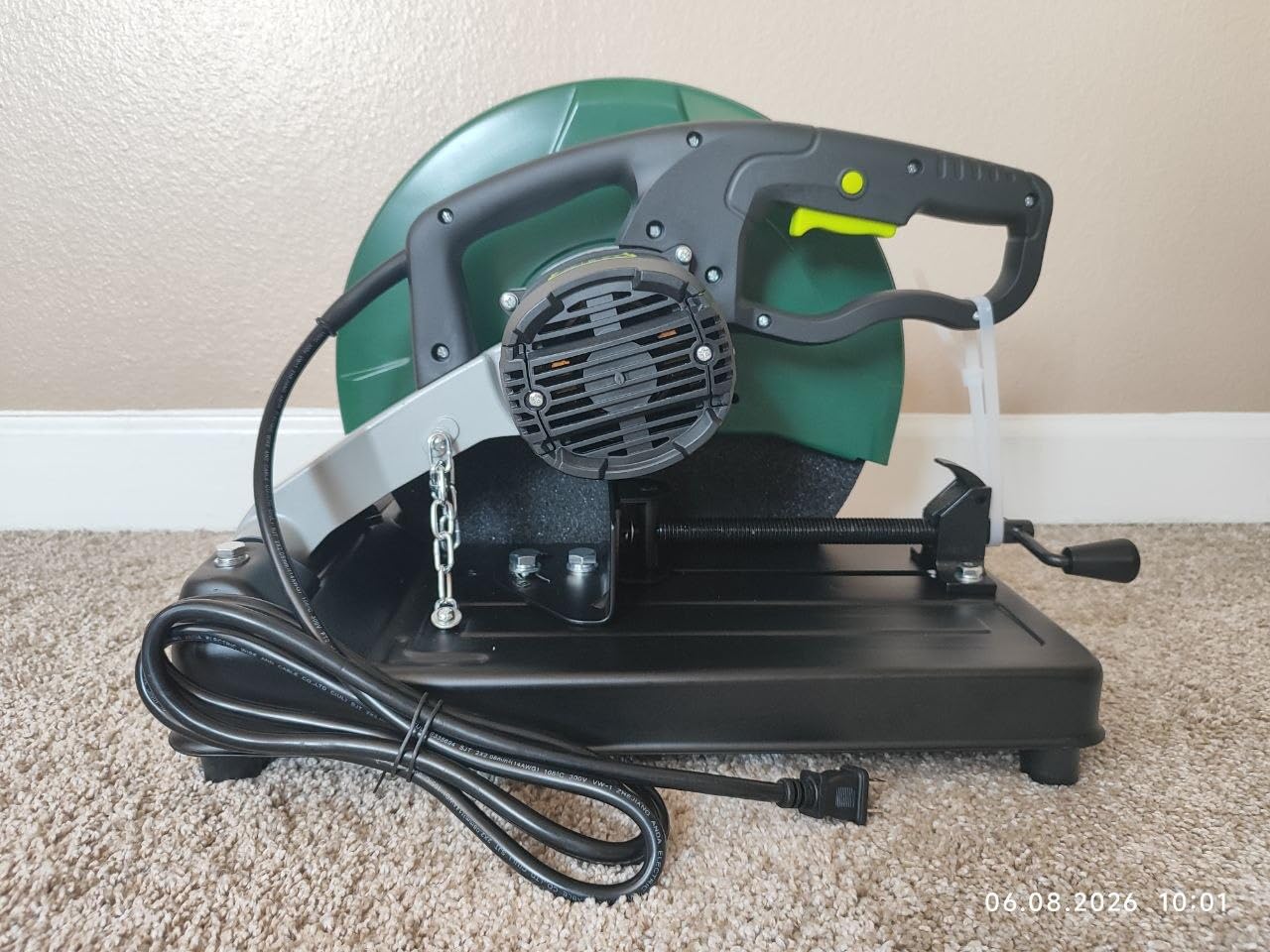
The Yumark 933C is the lightweight abrasive saw in this group, and the 2200W motor has been upgraded from 2000W with directional air exhaust for better heat dissipation. It cuts steel bars, rebar, solid round bar, angle steel, hollow tube and iron, which makes it a general shop saw rather than a framing specialist.
What owners like most is that it is easy to move. Reviewers point to carrying it between jobs without thinking about it, and to the non-slip base and material clamp holding work steady enough for accurate cuts. The ergonomic handle shows up as a positive on longer sessions, which is not a small thing on a 2200W machine.
At 4.4 stars across 44 reviews, the low ratings cluster around two things rather than the motor. The supplied abrasive wheel is thin and wears quickly on steel, so many owners swap in a better aftermarket wheel. The base sheet metal is also described as flimsy and prone to twisting under load, which sends cuts off square.
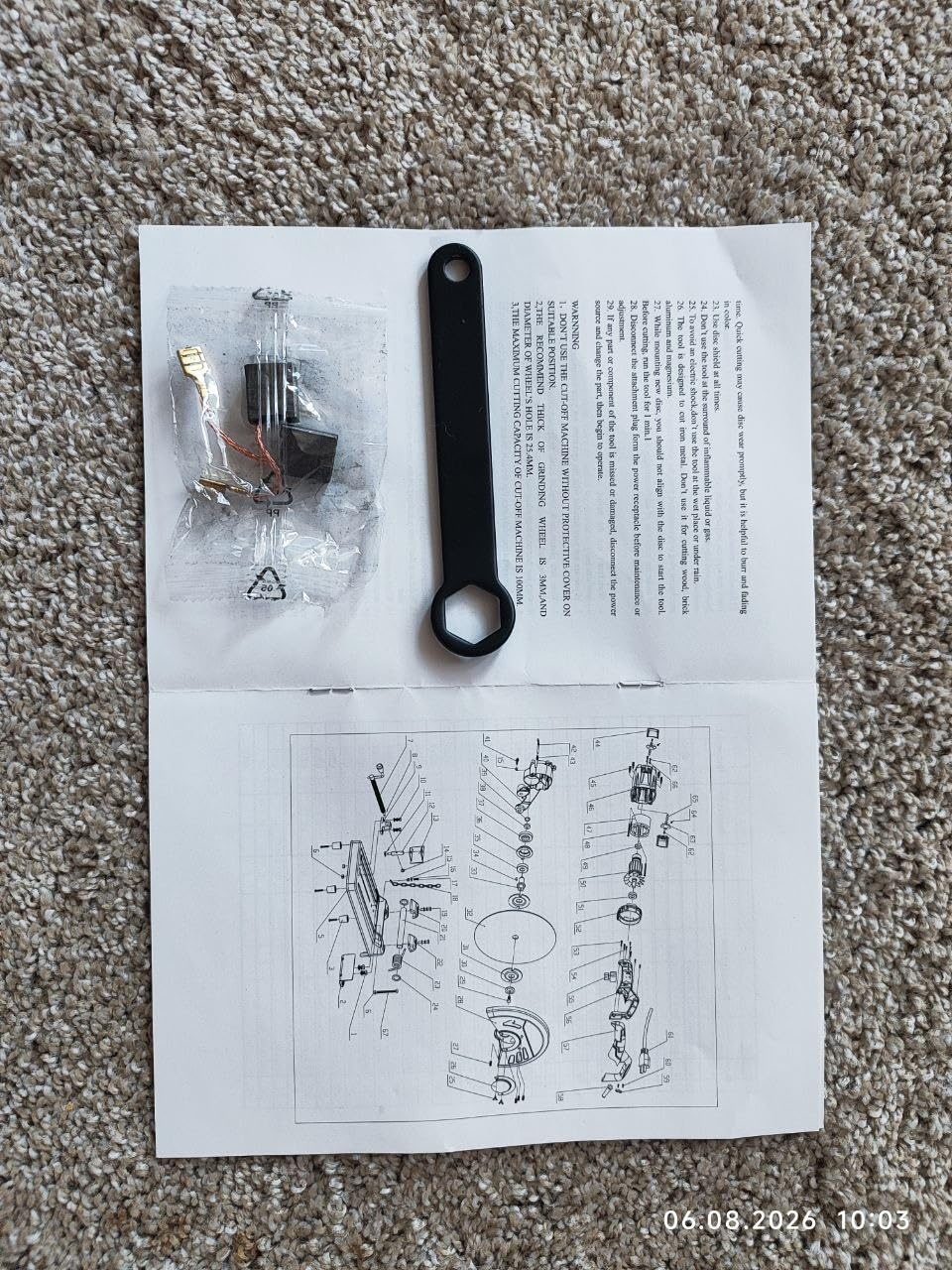
One practical note: some buyers report accessories such as the wrench may not be in the box. Check the contents on arrival, because a blade change without a wrench is an annoying first afternoon.
Where the Yumark 933C is the right call
Occasional repairs, weekend fabrication, and cutting rebar or angle steel in a small garage where a full size cold cut saw is more machine than the job needs. Home welders in the reviews find it powerful and easy to move, and the dual insulation structure is a sensible design choice for a tool that gets handled frequently.
If you buy it, budget for a better abrasive wheel straight away. That single change addresses the complaint buyers raise most.
Where the Yumark 933C is the wrong call
Precision. A base that twists under load will not hold a square cut on thin wall material, and steel studs are thin wall material. The thin supplied wheel also means a shorter interval between blade changes, which is exactly the cost an abrasive design is supposed to minimize.
We earn a commission, at no additional cost to you. CERTAIN CONTENT THAT APPEARS ON THIS SITE COMES FROM AMAZON. THIS CONTENT IS PROVIDED 'AS IS' AND IS SUBJECT TO CHANGE OR REMOVAL AT ANY TIME.
10. Bosch GCO15-14 14 Inch Cut-Off Machine
BOSCH GCO15-14 14 In. Abrasive Cut-Off Machine: Powerful 15 Amp Motor, Large Cutting Capacity, and Adjustable Fence for Quick and Accurate Cuts
- 15 Amp motor at 4100 rpm
- 5 inch ferrous capacity
- Adjustable fence to 45 degrees
Pros
- High overload capacity in ferrous metals
- Compact footprint for a 14 inch saw
- Quick-release vise with included wrench
- Adjustable spark guard controls the stream
Cons
- Abrasive wheel leaves a rougher hotter edge
- Runs around 107 dB
- Brushes can be awkward to service
We earn a commission, at no additional cost to you. CERTAIN CONTENT THAT APPEARS ON THIS SITE COMES FROM AMAZON. THIS CONTENT IS PROVIDED 'AS IS' AND IS SUBJECT TO CHANGE OR REMOVAL AT ANY TIME.
The Bosch GCO15-14 punches above its size class. The 15 Amp motor is built with higher overload capacity than most, the no-load speed is 4100 rpm, and the rated cutting capacity reaches 5 inches through ferrous metal, which is the joint-largest figure among the abrasive saws here.
Owners call out the compact footprint for a 14 inch machine, quick blade changes, and strong performance on aluminum balusters and small castings. At 4.5 stars across 24 reviews with 83 percent at five stars, the small review pool is worth keeping in mind, but the sentiment is consistent.
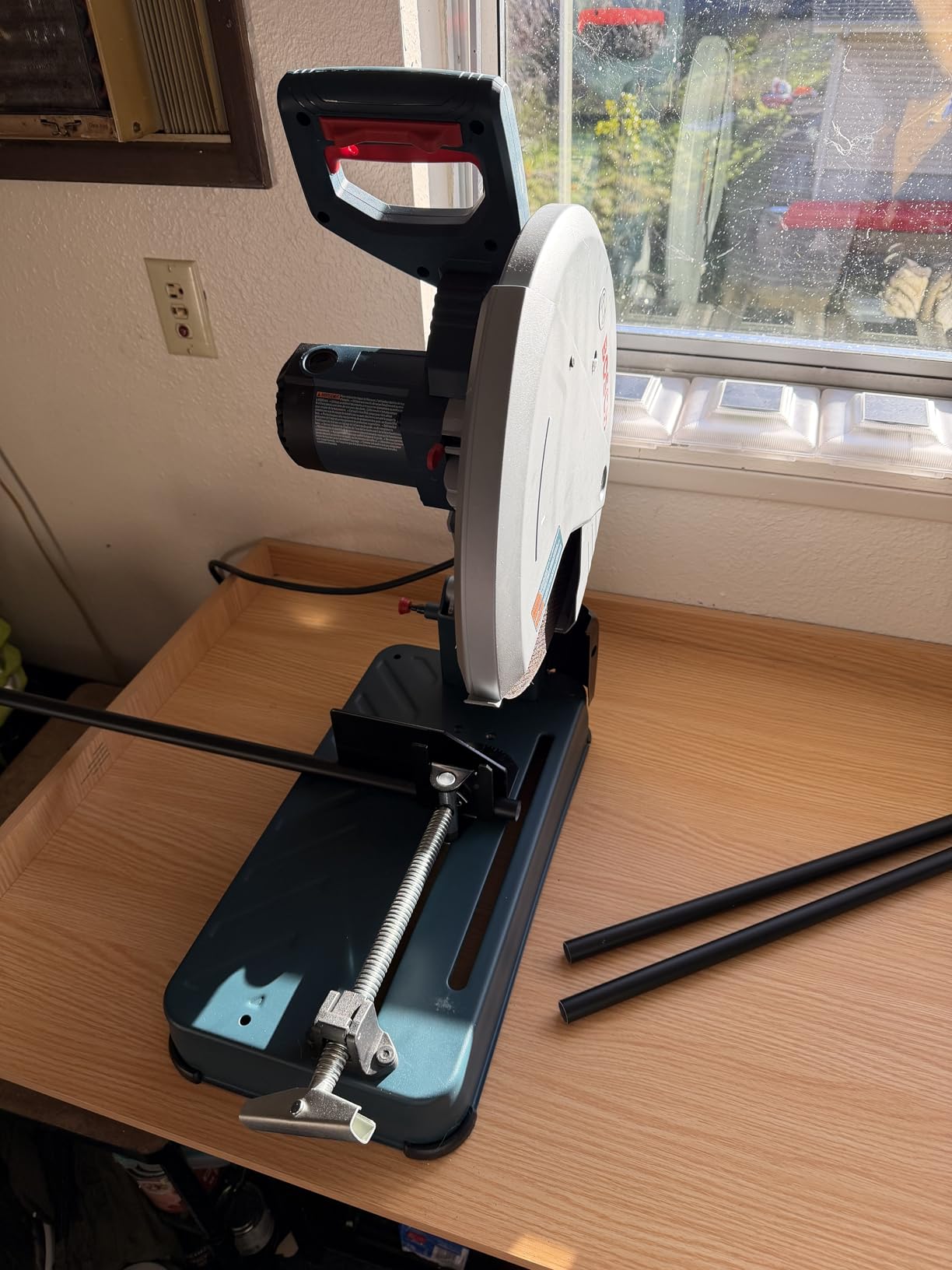
The fence adjusts at three mounting locations and cuts from 0 to 45 degrees, and the adjustable spark guard is described as genuinely controlling and directing the spark stream rather than just deflecting it. At 31 pounds it is the lightest machine in this guide, which matters if the saw lives on a rolling cart.
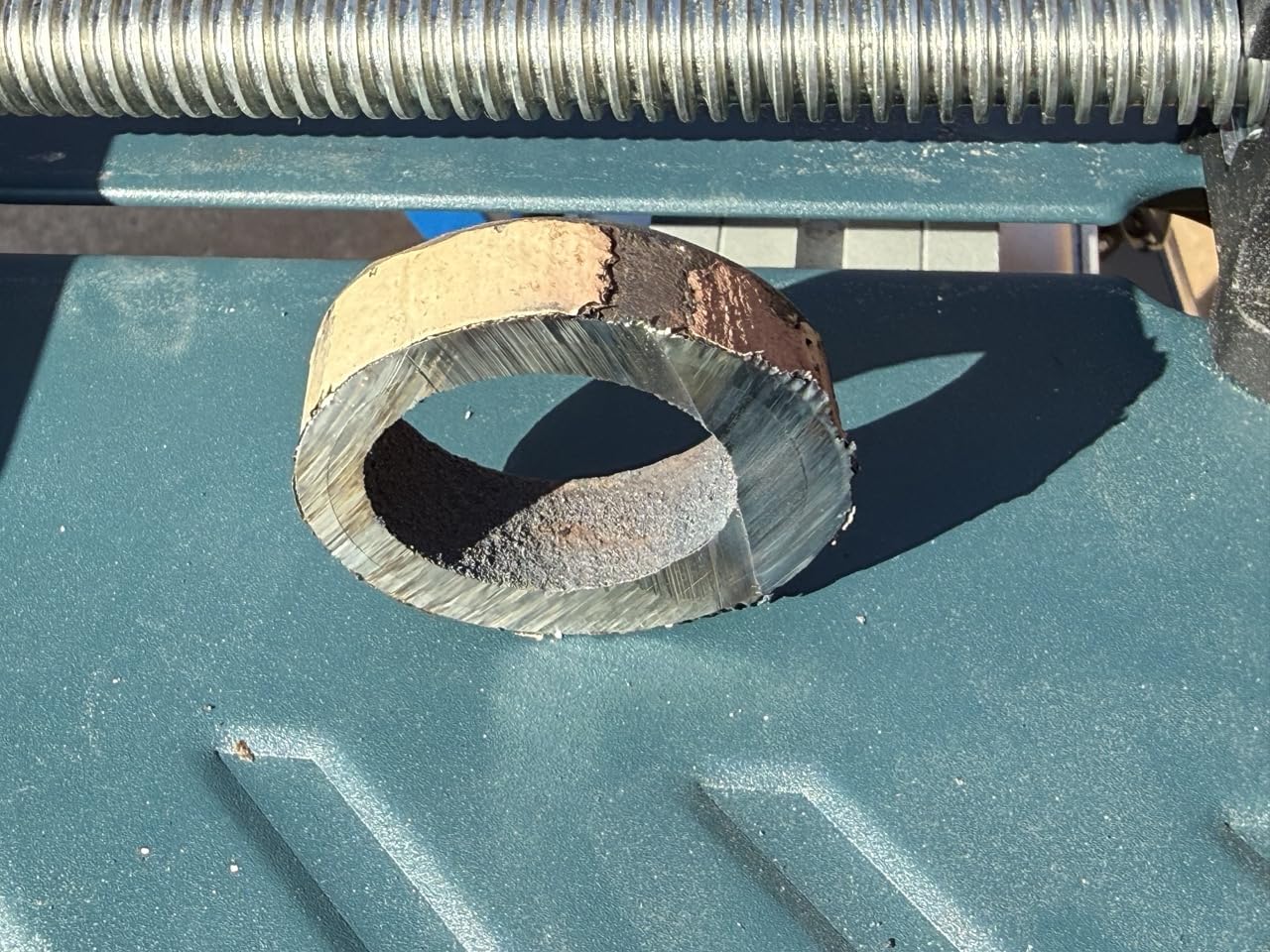
Two cautions. The abrasive wheel leaves a rougher, hotter edge than a cold cut carbide blade, so expect the same deburring step as with the Makita. And owners report running noise around 107 dB, which is loud enough that hearing protection is advisable for extended cutting, particularly in a residential garage.
Where the Bosch GCO15-14 is the right call
A shop that alternates between aluminum balusters, handrail sections, small steel castings and light structural work will find the 4100 rpm abrasive approach fast and controllable. The 5 inch capacity handles larger channel and structural sections than most machines of this size.
Spark control and compact size are the practical wins. If the saw is moving around a shop rather than sitting on one bench, 31 pounds and a quick-release vise are genuine advantages.
Where the Bosch GCO15-14 is the wrong call
It is the wrong tool for cut edge quality and for indoor finishing work. The heat, dust and burr from an abrasive wheel at 4100 rpm are exactly what a cold cut saw is built to avoid, and the reported noise level makes it a poor fit for a residential garage where neighbours are close.
We earn a commission, at no additional cost to you. CERTAIN CONTENT THAT APPEARS ON THIS SITE COMES FROM AMAZON. THIS CONTENT IS PROVIDED 'AS IS' AND IS SUBJECT TO CHANGE OR REMOVAL AT ANY TIME.
How to Choose a Metal Chop Saw for Steel Studs
Seven features decide whether a metal chop saw works for steel framing. Spend time on these before you spend money, because the differences between machines are rarely visible in a product photo.
1. Blade type comes first
A TCT or cermet carbide blade shears. An abrasive wheel grinds. That single choice determines cut speed, edge quality, dust, spark behaviour and how often you change consumables. For 20 to 25 gauge steel studs, choose carbide every time. Only consider an abrasive wheel if you are cutting a mixed load of demolition scrap and your cut edge will be hidden behind drywall.
2. Motor power in watts and amps
Cold cut saws run their blades slowly, often 1100 to 1550 rpm, so the relevant figure is amps rather than raw watts. A 15 Amp motor with a 1800W rating is the standard for framing work. The 2800W machines in this guide run higher on paper, which matters for thick structural material rather than for a 25 gauge stud.
3. Cutting capacity against your heaviest section
Check the rated rectangle and round figures against the thickest wall and tube you expect to cut. Studs are easy. A 3.75 by 7.25 inch rectangle or a 120mm square will cover framing. Structural tube and plate will not. The Bosch GCO15-14 with a 5 inch capacity and the Evolution S14MCS are the two with the deepest reach.
4. Miter range and direction
For plumb cuts on stud ends, 45 degrees in one direction is enough. For compound corners or headers, you need a head that swings both ways. The VEVOR 355G-3L miters from -45 to 45 degrees and the S14MCS reaches plus or minus 46 degrees, and those are the two machines to shortlist for angle-heavy framing.
5. Vise grip and fence rigidity
Thin-wall tubing is the material that exposes a weak vise. Look for a quick-release vise, a hold-down chain, or a wave-pattern clamping face, and check whether the fence is cast steel or pressed sheet. A base that flexes sends the cut out of square no matter how good the blade is, and the Yumark and budget VEVOR reviews both describe exactly this failure.
6. Spark and chip control
For indoor or garage work, this matters more than most buyers expect. An integrated chip deflector, a chip collector box, or a wrapping spark guard keeps debris off the operator and off the floor. The S355CPSL deflects, the VEVOR 355G-3L collects into a box, and the Bosch saw has an adjustable guard that owners say actually steers the stream.
7. Warranty and parts availability
Three year limited warranties appear on both Evolution machines here, two years on the WEN, and one year on the Makita and Bosch. The VEVOR 355G-3L is listed with no warranty at all. On a machine with a motor, brushes and a moving fence, that difference matters over a five year ownership cycle, particularly for parts availability after a model year changes.
Cold Cut vs Abrasive: Which Blade for Steel Studs
Cold cut means the blade teeth shear the metal at a low speed. Abrasive means a wheel fragments the metal at high speed. Everything downstream follows from that.
Cold cut carbide. Slow blade speed, minimal heat, minimal spark, and an edge that is burr free and immediately workable. You let the blade reach full speed, apply firm and consistent pressure, and let it pull itself down through the work. The cost is consumable blades that cost more each, offset by far longer life. The S14MCS publishes more than 3500 cuts in 4 inch mild steel as a benchmark.
Abrasive wheel. High blade speed, fast removal on thick material, but sparks, a hot edge, a burr and a wheel that wears quickly. The Makita, Milwaukee, Bosch and Yumark saws in this guide all sit here. It is a perfectly good approach for scrap and structural work, and a poor one when the cut edge needs to be clean.
Diamond blades. Best suited to tile, masonry and non-metallic material. They are not the answer for steel studs, and several of the saws here warn against running a ceramic or diamond blade on stainless or ferrous material. Check the blade marking before you fit anything.
Two practical rules for extending blade life on galvanized steel. First, let the blade reach full speed before touching the work, since a slow start is the fastest way to dull carbide teeth. Second, do not force the cut. Firm, steady pressure with the blade doing the work is what the EVOMAX recommendations amount to, and it is also why a weak vise leads to a wandering cut and a dead blade.
Chop Saw vs Miter Saw vs Circular Saw for Steel Studs
A wood miter saw can technically accept a metal-cutting blade, but the speeds are wrong. A miter saw spins a blade at 6000 to 7000 rpm for cutting wood, and a carbide blade at that speed will throw teeth. Metal cut-off saws run between 1100 and 4100 rpm for the opposite reason. Fitting a metal blade to a high speed miter saw is the single most common way people damage an expensive blade, and it is a safety risk as well.
A circular saw with a metal-cutting blade is a legitimate option. It is light, it cuts a line of studs quickly, and the blade direction means the cut edge is on the waste side. It is also far less repeatable, since you are freehanding the cut rather than working against a fence, and it produces no clamped, supported cut. For a handful of studs, a circular saw plus carbide blade is genuinely fine.
A chop saw with a vise is the right answer for repeat work. The workpiece is held, the cut angle is fixed, and every stud comes out the same length. Tin snips remain the cheapest option and produce no noise, sparks or dust at all, but they are slow and they leave a web that has to be ground or filed off the stud edge.
So the decision runs like this. A handful of studs and no noise tolerance means snips or a circular saw. Dozens of studs with a repeatable length and a clean edge means a cold cut chop saw. Thick structural sections, angles and a fixed shop mean a cold cut saw with a bidirectional miter head. Scrap and demolition work means an abrasive wheel cut-off saw, and nothing else.
How to Cut Steel Studs with a Chop Saw
Eight steps separate a square, burr free stud from a crooked one that needs a second pass. The setup matters more than the saw.
- Measure and mark every stud first. Transfer the layout from the plans onto the stud itself with a marker, and mark the waste side of the line.
- Check the fence with a square before the first cut. Set a machinist square or carpenter’s square against the fence and the blade plate. If it is out, correct it now rather than after forty cuts.
- Set the miter to zero. Most saws are not zeroed accurately out of the box. Dial it in and confirm the cut is square before you rely on it.
- Support the workpiece on both sides. Long studs need support so the offcut does not drop and pinch the blade. A pair of sawhorses or a roller stand solves this.
- Clamp firmly, then clamp again. Thin-wall material moves. The vise should hold the stud with no rotation when you push on it by hand.
- Let the blade reach full speed. For a cold cut saw this takes a few seconds. Starting the cut before the blade is at speed is the main cause of blade wear and kickback.
- Hold the trigger and let the blade pull down. Apply firm, consistent pressure. Do not push the head down; the saw is built to do the work.
- Release the trigger and let the blade stop before lifting. Then unclamp and check the length against your mark before moving on.
For angled cuts, set the miter before you clamp, and re-check the angle on the first piece. For compound work, make the miter cut first, then reposition the stud for the square cut. If a cut starts to wander, stop and check the vise and the fence rather than forcing the blade through, since a wandering cut on thin steel usually means the material shifted mid-cut.
Safety Gear and Spark Control for Steel Cutting
Eye protection is not optional on any saw in this guide. Sparks from an abrasive wheel on steel reach well past the guard, and cold cut blades can still throw chips from a thin wall when they break through. Add a face shield if you are cutting heavier structural material.
Hearing protection matters, and the numbers give a sense of scale. Owners of the Bosch GCO15-14 report running noise around 107 dB, which is the abrasive end of the range. Cold cut saws running at 1100 to 1550 rpm are quieter in practice, but ear defenders are still sensible for extended sessions in a residential garage.
On fire risk, treat any spark-producing saw the same way you would a welding grinder. Keep a fire extinguisher within reach, clear combustibles and solvents out of the cutting area, and never cut on a surface you cannot inspect afterwards. Sparks travel further than people expect, landing in floor voids and on shop towels.
For dust, a vacuum with a metal rated hose is worth owning even with a cold cut saw. Owners of the S14MCS report zero airborne dust from the cut itself, but grinding and deburring steps still produce particles. A P100 or P95 respirator covers the cleanup work.
Finally, check the blade guard actually moves freely before every session, and never operate the saw with the guard blocked or removed. On a vise mounted saw the workpiece is clamped and stable, which is the reason the chip guard and the vise are the two safety features you should test first when the saw is new.
Frequently Asked Questions
Can you put a metal blade on a chop saw?
Only on a saw rated for metal. A wood miter or chop saw spins its blade at 6000 to 7000 rpm, and a carbide or cermet blade at that speed can throw teeth. Metal cut-off saws run their blades slowly, between 1100 and 4100 rpm, so the arbor and the guard are matched to a low speed cutting metal. Fitting a metal blade to a high speed saw is both a blade safety risk and a way to ruin an expensive blade.
What is the best saw to cut metal?
For sheet, plate, tube and framing steel, the best tool is a cut-off saw with a TCT or cermet carbide blade that runs slowly enough to shear the metal. That gives you a cool, burr free edge with almost no dust. Abrasive cut-off saws are faster on thick scrap and structural steel, while a cold cut saw is faster on repeated cuts through thin gauge material because the blade stays sharp.
What is the best miter saw blade for cutting metal?
The best option is a TCT blade with a high tooth count for thin material, such as the 32 tooth blade on the Evolution R355CPS, or an 80 tooth cermet blade for heavier work. Abrasive cut-off wheels are not blades in the miter saw sense. The critical rule is speed: metal cutting blades belong on low speed cut-off saws, not on a 6000 to 7000 rpm wood miter saw.
Can I cut steel studs with a miter saw?
Not with a wood miter saw running at standard speed, because the blade speed will destroy a metal cutting blade and create a hazard. If you want repeatable, supported cuts through steel studs, buy a metal cut-off saw. A circular saw with a carbide blade is a workable alternative for a small number of studs, and tin snips avoid noise, sparks and dust entirely at the cost of speed.
What do you cut steel studs with?
The four practical options are tin snips, a circular saw with a carbide blade, a cold cut chop saw and an abrasive cut-off saw. Snips are quiet and spark free but slow. A circular saw is fast but freehand. A cold cut chop saw with a carbide blade gives clamped, repeatable, burr free cuts and is the right choice for more than a dozen studs. Abrasive cut-off saws suit scrap and thick structural work.
Is a chop saw the same as a miter saw for cutting metal?
No. A miter saw is built for high speed wood cutting with a thin blade that makes crosscuts and miters. A metal chop saw is a cut-off saw with a thicker blade, a slower motor and a heavy vise designed to shear ferrous metal. The practical difference shows up in the workpiece: a metal saw clamps and supports the stock, while a miter saw relies on a smooth feed against a fence.
Which type of saw is best for cutting metal?
Match the saw to the material and the volume. Thin gauge sheet and framing steel suit a cold cut saw with a carbide blade. Thick plate, pipe and structural sections suit a higher horsepower abrasive cut-off saw. Very thin material and small parts suit a cut-off saw with a fine tooth blade. High volume production work suits a cold cut saw with a bidirectional miter head and a published blade life figure.
How to cut steel with a chop saw?
Measure and mark first, then confirm the fence is square with a machinist square and the miter is at zero. Support the offcut so the material cannot pinch the blade, clamp the workpiece so it cannot rotate, and let the blade reach full speed before starting the cut. Hold the trigger and apply firm downward pressure rather than pushing the head down, then let the blade stop before you unclamp.
Conclusion
If steel studs are your regular work, start with the Evolution S355CPSL. Its cold cut TCT blade leaves a clean, burr free edge, the chip deflector keeps the bench tidy, and 841 owner reviews at 4.7 stars make it the most proven machine in this guide. The Makita LW1401 covers the abrasive side of the market for mixed structural and scrap work, and the Evolution R355CPS handles shops that still cut wood on the same day.
Match the saw to the job rather than to the wattage. Fixed shop with heavy production means the Evolution S14MCS with its published blade life and 46 degree bidirectional miter. Field work without reliable power means the Milwaukee M18 FUEL. Angled framing indoors means a bidirectional cold cut saw with chip collection. Whichever one you land on in 2026, set the fence square before the first cut and you will not be measuring twice.