Can I Use My HSA or FSA for GLP-1 Prescription? Complete 2026 Guide
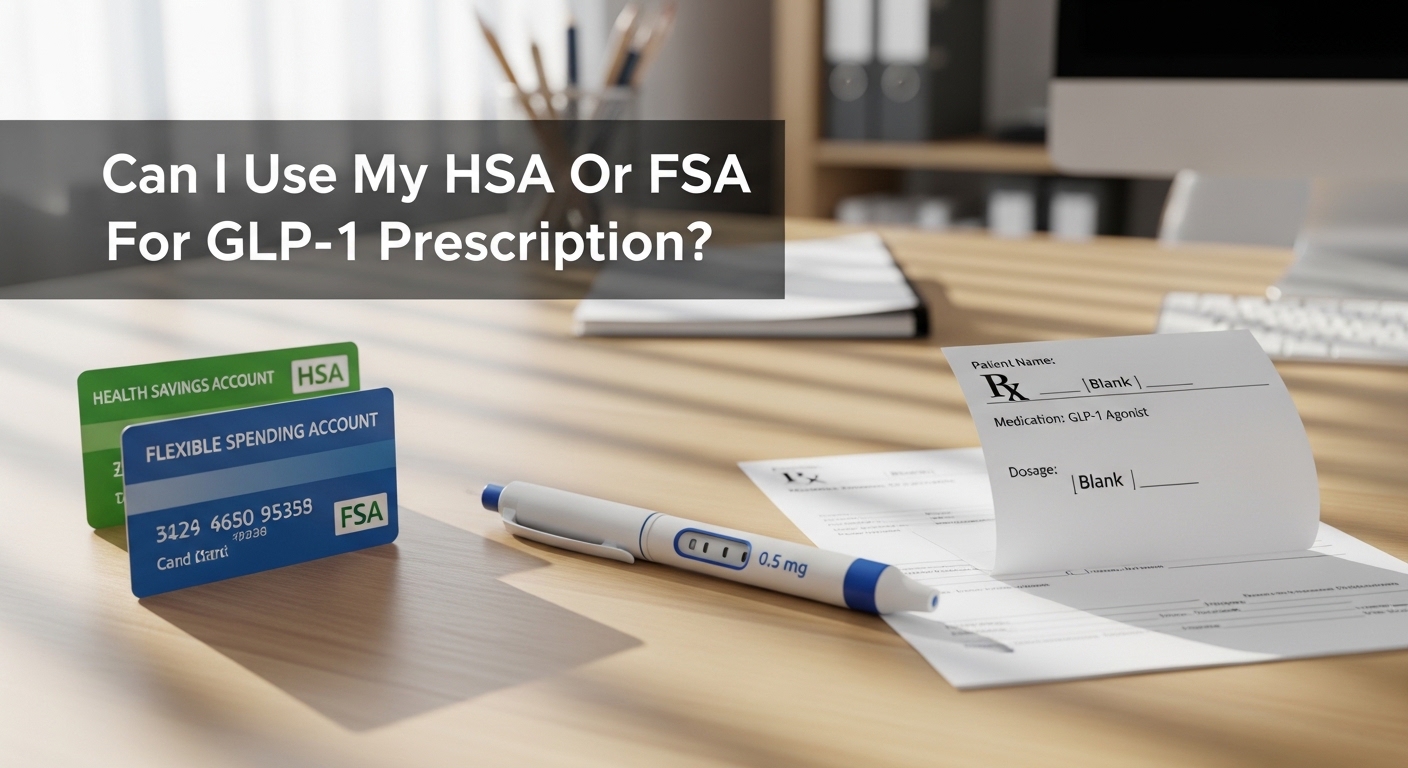
GLP-1 medications can cost over $1,000 per month without insurance. If you’re paying out-of-pocket for semaglutide or tirzepatide, you’re probably wondering if there’s a way to ease that financial burden.
Yes, GLP-1 medications are generally HSA and FSA eligible when prescribed by a healthcare provider to treat a diagnosed medical condition like obesity or type 2 diabetes. According to IRS Publication 502, prescription medications that treat a specific disease qualify as eligible medical expenses.
I’ve spent weeks researching IRS guidelines, talking to HSA administrators, and reading through hundreds of Reddit threads about real experiences with HSA/FSA claims for GLP-1 medications. The short answer is yes, but there are specific requirements you need to meet.
In this guide, I’ll walk you through exactly how to use your HSA or FSA for GLP-1 prescriptions, which medications qualify, what documentation you need, and how to avoid claim denials.
Understanding HSA and FSA Accounts
Before diving into GLP-1 eligibility, let’s clarify what these tax-advantaged accounts actually are and how they differ.
Health Savings Account (HSA): A tax-advantaged savings account available to individuals enrolled in a high-deductible health plan (HDHP). HSA funds roll over year to year and remain yours even if you change employers.
HSAs offer a triple tax advantage. Your contributions are tax-deductible, the money grows tax-free, and withdrawals for qualified medical expenses are also tax-free.
For 2026, the HSA contribution limits are $4,150 for individual coverage and $8,300 for family coverage. If you’re 55 or older, you can contribute an additional $1,000.
Flexible Spending Account (FSA): An employer-sponsored account that allows you to set aside pre-tax dollars for qualified medical expenses. Unlike HSAs, most FSA funds must be used within the plan year or you lose them.
FSAs have a “use it or lose it” rule, though some employers offer a grace period of up to 2.5 months or allow you to carry over up to $640 into the next year.
How Much Can You Save?
Using pre-tax dollars through an HSA or FSA typically saves you 20-35% on medical expenses, depending on your tax bracket.
Here’s a real example: If you’re paying $299/month for GLP-1 medications ($3,588 annually) and you’re in the 24% federal tax bracket with 6% state taxes, you’d save approximately $1,076 per year by using your HSA or FSA.
Pro Tip: Many people overlook HSA/FSA as a way to reduce their effective GLP-1 costs by 30% or more. It’s one of the simplest ways to make these medications more affordable.
IRS Eligibility Requirements for GLP-1 Medications
GLP-1 medications qualify as HSA/FSA eligible expenses when they meet the IRS definition of a qualified medical expense. According to IRS Publication 502, prescription drugs that treat a diagnosed medical condition are eligible.
Here are the key requirements you must meet:
- Valid Prescription: The medication must be prescribed by a licensed healthcare provider. Over-the-counter supplements or wellness products don’t qualify.
- Diagnosed Medical Condition: The prescription must be written to treat a specific medical condition such as obesity, type 2 diabetes, or related comorbidities.
- Medical Necessity: The treatment must be medically necessary. Cosmetic weight loss without an underlying diagnosis typically doesn’t qualify.
- Proper Documentation: You need itemized receipts showing the patient name, provider name, date, medication name, and amount paid.
Important: The IRS doesn’t require you to submit documentation upfront for HSA purchases. However, you should keep all receipts and prescription records for at least three years in case of an audit.
Letter of Medical Necessity (LMN)
FSA administrators often require a Letter of Medical Necessity before approving GLP-1 claims. An LMN is a document from your healthcare provider that confirms your diagnosis and explains why the medication is medically necessary.
HSAs are generally more flexible. You can typically use your HSA debit card without upfront documentation, though you should maintain records for potential audits.
Medical Conditions That Qualify for HSA/FSA Coverage
Your GLP-1 prescription qualifies for HSA/FSA coverage when prescribed to treat any of these diagnosed medical conditions:
- Obesity (BMI 30 or higher): The most common qualifying condition for GLP-1 weight loss medications
- Overweight with Comorbidity (BMI 27-29.9): Qualifies when combined with conditions like hypertension, high cholesterol, or sleep apnea
- Type 2 Diabetes: GLP-1 medications were originally developed for diabetes management
- Prediabetes: Some providers prescribe GLP-1s to prevent progression to type 2 diabetes
- PCOS (Polycystic Ovary Syndrome): GLP-1s may help manage weight and insulin resistance in PCOS patients
- Metabolic Syndrome: A cluster of conditions including high blood pressure, high blood sugar, and excess body fat
- Heart Disease Risk: GLP-1s have shown cardiovascular benefits in clinical trials
- Sleep Apnea: Weight loss from GLP-1s can help reduce sleep apnea severity
Note: Your diagnosis should be documented in your medical records. If your prescriber only notes “weight loss” without a medical diagnosis, your FSA claim may be denied.
Which GLP-1 Medications Are HSA/FSA Eligible?
All FDA-approved GLP-1 medications are eligible for HSA/FSA payment when prescribed for a qualifying medical condition.
Brand-Name GLP-1 Medications
These FDA-approved medications are clearly eligible:
- Semaglutide Brands: Ozempic (diabetes), Wegovy (weight loss), Rybelsus (oral)
- Tirzepatide Brands: Mounjaro (diabetes), Zepbound (weight loss)
- Liraglutide Brands: Victoza (diabetes), Saxenda (weight loss)
- Other GLP-1s: Trulicity, Byetta, Bydureon
Compounded Semaglutide and Tirzepatide
Compounded GLP-1 medications are generally HSA/FSA eligible when prescribed for a diagnosed medical condition, even though they are not FDA-approved.
The IRS looks at whether the medication is prescribed to treat a medical condition, not whether the specific formulation is FDA-approved. Compounded medications that require a valid prescription and treat a diagnosed illness qualify as eligible medical expenses.
FDA Disclaimer: Compounded medications are not FDA-approved and may not be available in all states. They are prepared by compounding pharmacies rather than the original manufacturer.
Based on forum research, some users have reported initial pushback from FSA administrators on compounded medication claims. The solution is usually to provide:
- Valid prescription from licensed provider
- Letter of Medical Necessity documenting your diagnosis
- Itemized receipt from the pharmacy or telehealth provider
How to Use HSA or FSA for GLP-1: Step-by-Step
Here’s exactly how to use your HSA or FSA to pay for GLP-1 medications:
Option 1: Pay with HSA/FSA Debit Card
- Confirm Eligibility: Ensure you have a valid prescription for a diagnosed medical condition
- Check Provider Acceptance: Verify your GLP-1 provider accepts HSA/FSA cards at checkout
- Get an LMN if Required: Some FSA administrators require upfront documentation
- Complete Purchase: Use your HSA or FSA debit card to pay for your medication
- Save Documentation: Keep receipts, prescription records, and any LMN for your records
Option 2: Pay Out-of-Pocket and Request Reimbursement
Many telehealth GLP-1 providers recommend this approach, as it often encounters fewer issues:
- Pay for Medication: Use your personal credit or debit card to complete the purchase
- Download Itemized Receipt: Most providers offer receipt downloads from your account dashboard
- Gather Documentation: Collect your prescription, diagnosis documentation, and LMN if required
- Submit Reimbursement Claim: File a claim with your HSA or FSA administrator
- Receive Funds: The eligible amount is deposited back to your checking account or HSA
Pro Tip from Reddit: If your claim is initially denied, try resubmitting it categorized as “weight loss medical treatment program” rather than just “prescription expense.” Users report higher success rates with this approach.
HSA vs FSA: Key Differences for GLP-1 Coverage
Both HSA and FSA can cover GLP-1 medications, but they work differently. Here’s how they compare:
| Feature | HSA (Health Savings Account) | FSA (Flexible Spending Account) |
|---|---|---|
| Account Ownership | You own it; portable between jobs | Employer-sponsored; may lose if you leave |
| Rollover | Funds roll over indefinitely | Use it or lose it (with limited exceptions) |
| Contribution Limit 2026 | $4,150 individual / $8,300 family | $3,200 per employee |
| Eligibility Requirement | Must have HDHP | Any employer-offered plan |
| Upfront Documentation | Usually not required | LMN often required for GLP-1 |
| Flexibility for GLP-1 | Generally more flexible | May face more scrutiny |
| Investment Option | Yes, can invest for growth | No investment options |
Which Should You Use for GLP-1?
If you have both an HSA and FSA, consider using your HSA first. HSA funds roll over indefinitely and offer more flexibility for GLP-1 purchases.
However, if your FSA has a “use it or lose it” deadline approaching, prioritize spending those funds on your GLP-1 medications before they expire.
Letter of Medical Necessity (LMN): Complete Guide
A Letter of Medical Necessity is a document from your healthcare provider that confirms your diagnosis and explains why a specific treatment is medically necessary.
When Is an LMN Required?
FSA administrators commonly require an LMN for GLP-1 weight loss medications. HSA purchases typically don’t require upfront documentation, but having an LMN can protect you in case of an audit.
How to Get a Letter of Medical Necessity?
- Request from Your Prescriber: Ask the provider who prescribed your GLP-1 to write the letter
- Provide Specific Information: Share what diagnosis and treatment information your FSA requires
- Review Before Submitting: Ensure the letter includes all required elements
- Submit with Your Claim: Include the LMN when filing for reimbursement
What Should an LMN Include?
An effective Letter of Medical Necessity typically contains:
- Patient name and date of birth
- Provider name, credentials, and contact information
- Specific diagnosis (e.g., obesity, type 2 diabetes, BMI of 32)
- Explanation of why medication is medically necessary
- Name of prescribed medication and dosage
- Duration of treatment
- Provider signature and date
Important: If your telehealth provider doesn’t offer LMN services, you can request one from your primary care physician. Just provide them with your prescription details and diagnosis.
GLP-1 Providers That Accept HSA/FSA
Several telehealth GLP-1 providers support HSA/FSA payment or provide easy reimbursement documentation. Based on our research, here are three providers with clear HSA/FSA support:
| # | Provider | Highlights | Price | |
|---|---|---|---|---|
| 01 | Hims Weight Loss |
|
$199-299/mo | Visit Provider → |
| 02 | Hers Weight Loss |
|
$199-299/mo | Visit Provider → |
| 03 | Calibrate |
|
$199/mo + meds | Visit Provider → |
We may earn a commission at no extra cost to you.
Hims Weight Loss – Best for Simple Reimbursement
Hims offers compounded GLP-1 injections with easy HSA/FSA reimbursement.
Download itemized receipts directly from your orders tab for claim submission.
Pros
- Easy receipt download for reimbursement
- Full treatment cost eligible
- No insurance required
- Multiple medication options
Cons
- Direct HSA/FSA card not recommended
- Compounded medications only
- May require LMN for FSA
This post contains affiliate links. If you purchase through them, we may earn a commission (at no extra cost to you).
Hims recommends the reimbursement method over using your HSA/FSA card directly at checkout. You pay with a regular card, then download your itemized receipt and submit it to your HSA/FSA administrator.
Their average savings example shows $1,076 saved on a 12-month plan when using pre-tax HSA/FSA funds.
Best For
Users wanting affordable compounded GLP-1 with straightforward HSA/FSA reimbursement documentation.
Skip If
You prefer paying directly with your HSA/FSA card without the reimbursement step.
Hers Weight Loss – Best for Women
Hers provides women-focused GLP-1 weight loss treatment with HSA/FSA support.
Same reimbursement process as Hims with easy receipt downloads.
Pros
- HSA/FSA eligible for full treatment
- Easy receipt download
- Women-specific health platform
- 30% average tax savings
Cons
- HSA/FSA card may require extra steps
- Compounded medications only
- Women-focused platform
This post contains affiliate links. If you purchase through them, we may earn a commission (at no extra cost to you).
Hers operates similarly to Hims, offering compounded semaglutide with HSA/FSA reimbursement support. Their women-focused platform provides the same receipt download functionality for claims.
Like Hims, they recommend the reimbursement method for smoother processing.
Best For
Women wanting a female-focused telehealth platform with HSA/FSA-friendly GLP-1 treatment.
Skip If
You’re male or prefer a gender-neutral platform.
Calibrate – Best for Insurance + HSA/FSA
Calibrate offers a 12-month metabolic reset program with brand-name GLP-1s and coaching.
HSA/FSA can cover both the membership fee and any medication copays.
Pros
- Can use HSA/FSA for membership AND medication
- Works with insurance for brand-name GLP-1s
- 10% weight loss guarantee
- Comprehensive coaching program
Cons
- Membership fee separate from medication
- Requires insurance for best pricing
- 12-month minimum commitment
This post contains affiliate links. If you purchase through them, we may earn a commission (at no extra cost to you).
Calibrate differs from Hims and Hers by working with your insurance to get FDA-approved, brand-name GLP-1 medications like Wegovy or Zepbound. Your HSA/FSA can cover:
- The $199/month membership fee
- Any GLP-1 copay not covered by your insurance
They accept HSA/FSA cards directly at checkout.
Best For
Users with insurance who want brand-name GLP-1s plus comprehensive coaching and can pay the membership with HSA/FSA.
Skip If
You don’t have insurance or want the lowest possible monthly cost.
Documentation Tips for Audit Protection
Proper documentation protects you from IRS audits and claim denials. Here’s what to keep on file:
Essential Records Checklist
- Prescription Records: Copy of your GLP-1 prescription with prescriber information
- Itemized Receipts: Must include patient name, provider/pharmacy name, date, medication name, and amount
- Diagnosis Documentation: Medical records showing your qualifying condition
- Letter of Medical Necessity: Keep on file even if not required upfront
- Payment Records: Credit card statements or HSA/FSA transaction records
How Long to Keep Records?
The IRS can audit HSA/FSA expenses for up to three years after filing your tax return. Keep all documentation for at least four years to be safe.
Digital copies stored in cloud storage are acceptable. Just ensure they’re legible and complete.
What Is NOT Eligible for HSA/FSA?
To avoid claim denials, understand what doesn’t qualify for HSA/FSA payment:
- Cosmetic Weight Loss: Treatments purely for appearance without a medical diagnosis
- Over-the-Counter Supplements: Weight loss supplements, vitamins, or dietary aids without a prescription
- Gym Memberships: General fitness expenses don’t qualify (even if for weight loss)
- Healthy Food or Diet Programs: Groceries or general nutrition counseling
- Shipping Fees: Delivery charges for medication typically aren’t covered
- Late Fees or Penalties: Administrative charges from providers
- Wellness Apps: Fitness tracking or general health apps without prescription
Exception: Weight loss programs like Weight Watchers, Noom, or Jenny Craig CAN be eligible if prescribed by a doctor to treat a specific medical condition like obesity or diabetes. You’ll need an LMN.
Frequently Asked Questions
Can I pay for GLP-1 with FSA?
Yes, you can pay for GLP-1 medications with your FSA when they are prescribed to treat a diagnosed medical condition like obesity or type 2 diabetes. You’ll need a valid prescription and may need a Letter of Medical Necessity (LMN) from your provider documenting your diagnosis. Keep itemized receipts for reimbursement.
Can you use your HSA to pay for GLP-1?
Yes, you can use your HSA to pay for GLP-1 medications like semaglutide (Ozempic, Wegovy) or tirzepatide (Mounjaro, Zepbound) when prescribed for a medical condition. HSAs are more flexible than FSAs and typically don’t require upfront documentation, though you should keep receipts and prescription records for potential audits.
Is semaglutide FSA eligible?
Yes, semaglutide (including Ozempic, Wegovy, and compounded versions) is FSA eligible when prescribed to treat a diagnosed medical condition such as obesity, type 2 diabetes, or related conditions. An FSA typically requires a Letter of Medical Necessity documenting your diagnosis.
Is compounded semaglutide HSA/FSA eligible?
Yes, compounded semaglutide is generally HSA/FSA eligible when prescribed for a diagnosed medical condition. The IRS focuses on whether the medication treats a medical condition, not whether the specific formulation is FDA-approved. You may need to provide additional documentation like an LMN if your administrator questions the claim.
Do I need a Letter of Medical Necessity for GLP-1?
For FSA claims, you often need a Letter of Medical Necessity (LMN) documenting your diagnosis and explaining why GLP-1 treatment is medically necessary. For HSA purchases, an LMN usually isn’t required upfront, but having one protects you in case of an audit. Get an LMN from your prescribing provider.
What if my HSA/FSA claim for GLP-1 is denied?
If your claim is denied, gather additional documentation including your prescription, diagnosis records, and a Letter of Medical Necessity. Try resubmitting the claim categorized as a ‘weight loss medical treatment program’ rather than just a prescription expense. Users report higher success rates with this approach.
Final Thoughts
GLP-1 medications are HSA and FSA eligible when prescribed for a diagnosed medical condition. Using pre-tax dollars can save you 20-35% on your medication costs, potentially over $1,000 per year.
The key requirements are straightforward: get a valid prescription, have a documented medical diagnosis, maintain proper records, and obtain a Letter of Medical Necessity if your FSA administrator requires one.
Based on my research, HSAs tend to be more flexible for GLP-1 purchases, while FSAs may require more upfront documentation. Whichever you have, the savings are significant and worth the effort.
If you’re facing a year-end FSA deadline, GLP-1 medications are an excellent way to use funds that would otherwise expire. Just ensure you have your documentation in order before making the purchase.
Disclaimer: Compounded medications are not FDA-approved and may not be available in all states.
This article is for informational purposes only and does not constitute medical, legal, or tax advice. Always consult a healthcare provider before starting any weight-loss medication and a tax professional for guidance on HSA/FSA eligibility in your specific situation.
Disclaimer: betterresultsbook.com contains information about products that are intended for laboratory and research use only, unless otherwise explicitly stated. This information, including any referenced scientific or clinical research, is made available for educational purposes only. Likewise, any published information relative to the dosing and administration of reference materials is made available strictly for reference and shall not be construed to encourage the self-administration or any human use of said reference materials. betterresultsbook.com makes every effort to ensure that any information it shares complies with national and international standards for clinical trial information and is committed to the timely disclosure of the design and results of all interventional clinical studies for innovative treatments publicly available or that may be made available. However, research is not considered conclusive. betterresultsbook.com makes no claims that any products referenced can cure, treat or prevent any conditions, including any conditions referenced on its website or in print materials.