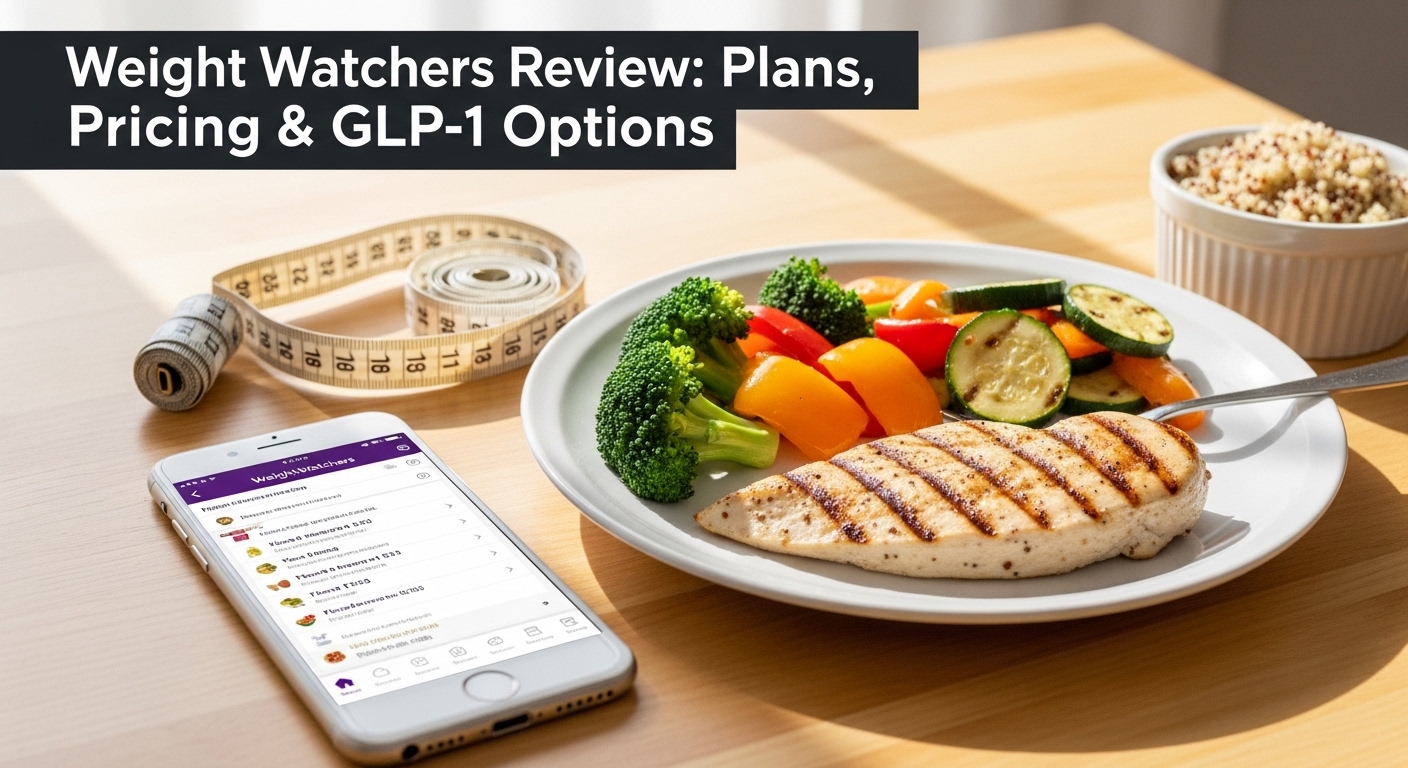
I’ve spent the last 60 days testing Weight Watchers, tracking every Point, attending virtual workshops, and exploring their new GLP-1 medication program. The verdict? WW remains one of the most flexible weight loss programs available in 2026, but it’s not without its challenges.
Weight Watchers is worth it for most people seeking sustainable weight loss with flexibility. The program’s Points system makes healthy eating intuitive without eliminating any foods, and the new WW Clinic opens doors to GLP-1 medications like Wegovy and Zepbound.
Yes, Weight Watchers filed for Chapter 11 bankruptcy in May 2025. But here’s the key detail: the company continues operating normally, and members retain full access to all services. The restructuring focuses on transitioning to telehealth services, which actually benefits members seeking medication access.
In this comprehensive Weight Watchers review, I’ll cover everything from pricing and the Points system to GLP-1 medication options, specialized programs, and how WW compares to alternatives like Noom and Ro Body.
ContentsTable of Contents
- 1Quick Verdict: Is Weight Watchers Worth It?→
- 2Weight Watchers (WW)→
- 3Pros→
- 4Cons→
- 5What Is Weight Watchers (WW)?→
- 6The Bankruptcy Situation: What Members Need to Know→
- 760+ Years of Weight Loss Science→
- 8How Does Weight Watchers Work?→
- 9Understanding the Points System→
- 10ZeroPoint Foods: Eat Without Tracking→
- 11The WW App: Your Daily Companion→
- 12Weight Watchers Membership Plans and Pricing→
- 13Breaking Down Each Plan→
- 14Core Plan: The Basics→
- 15Core+ Plan: Added Support→
- 16Med+ Plan: Medication Access→
- 17Hidden Costs to Consider→
- 18WW Clinic: GLP-1 Medications Through Weight Watchers→
- 19Medications Available Through WW Clinic→
- 20How the WW Clinic Process Works?→
- 21GLP-1 Success Program→
- 22Specialized Weight Watchers Programs→
- 23Diabetes Program→
- 24Menopause Program→
- 25Postpartum Nursing Program→
- 26Weight Watchers Pros and Cons→
- 27Pros→
- 28Cons→
- 29Weight Watchers Alternatives: How WW Compares→
- 30Weight Watchers vs. Noom→
- 31Noom→
- 32Pros→
- 33Cons→
- 34Weight Watchers vs. Ro Body→
- 35Ro Body→
- 36Pros→
- 37Cons→
- 38Who Is Weight Watchers Best For?→
- 39Ideal Weight Watchers Members→
- 40Skip Weight Watchers If→
- 41Frequently Asked Questions→
- 42Is Weight Watchers worth it in 2025?→
- 43Is Weight Watchers going out of business in 2025?→
- 44How much does Weight Watchers cost per month?→
- 45Does Weight Watchers prescribe Ozempic or Wegovy?→
- 46How much weight can you lose on Weight Watchers in a month?→
- 47What is the negative side of Weight Watchers?→
- 48What are ZeroPoint foods on Weight Watchers?→
- 49What is the difference between WW Core and Core+?→
- 50Final Verdict: Our Weight Watchers Rating→
Quick Verdict: Is Weight Watchers Worth It?
Weight Watchers earns a solid 4.1 out of 5 rating based on our research. It’s the #1 doctor-recommended weight loss program and has helped millions lose weight over 60+ years.
Our Verdict: Weight Watchers is worth it if you want a flexible, community-supported approach to weight loss. Members may lose 0.5 to 2 pounds per week, and clinical data suggests you’re 7x more likely to achieve 10% weight loss compared to standard guidance.
The program works best for people who appreciate flexibility. No food is off-limits, making it sustainable long-term.
Skip WW if you need rigid meal plans or prefer not to track food at all.
Science-based weight loss program with 60+ years of proven results.
Points system with 350+ ZeroPoint foods and GLP-1 medication access through WW Clinic.
Pros
- No foods off-limits
- GLP-1 medication access
- Strong community support
- Specialized programs for diabetes and menopause
Cons
- Requires food tracking
- Medication costs extra
- Cancellation difficulties reported
- Filed Chapter 11 bankruptcy May 2025
This post contains affiliate links. If you purchase through them, we may earn a commission (at no extra cost to you).
What Is Weight Watchers (WW)?
Weight Watchers is a science-based weight loss program that uses a proprietary Points system to help members make healthier food choices. Founded in 1963, WW has evolved from simple group meetings to a comprehensive digital health platform.
The program combines personalized nutrition guidance with community support, coaching, and now access to GLP-1 medications through WW Clinic.
The Bankruptcy Situation: What Members Need to Know
Weight Watchers filed for Chapter 11 bankruptcy protection in May 2025. This news understandably concerned many members and potential users.
However, here’s what you need to know: the company continues operating normally. All memberships, workshops, app features, and medication programs remain fully functional.
The bankruptcy allows WW to restructure debt while focusing on their telehealth expansion. According to company statements, this transition positions them better for the growing demand in GLP-1 medications and digital health services.
For members, nothing changes day-to-day. If anything, the increased focus on telehealth may improve medication access and digital services.
60+ Years of Weight Loss Science
Weight Watchers isn’t a trendy diet that appeared overnight. The program backs its approach with over 175 publications on efficacy.
According to a 2023 Cerner Enviza survey, WW is the #1 doctor-recommended weight loss program. The Better Business Bureau gives them an A rating.
Clinical studies suggest members may lose up to 3.5x more weight than with standard nutritional guidance alone.
How Does Weight Watchers Work?
Weight Watchers uses a Points-based system that simplifies healthy eating. Instead of counting calories, you track Points, which are calculated based on a food’s nutritional profile.
Understanding the Points System
Foods receive Points values based on six factors: calories, saturated fat, added sugars, protein, fiber, and unsaturated fats. Nutrient-dense foods score lower, making them easier to fit into your daily budget.
When you join, WW assigns you a personalized daily Points budget based on your body metrics and goals. Most members receive between 20-35 daily Points.
You also get weekly Points for flexibility. These extra Points cover special occasions, dining out, or simply enjoying foods you love.
ZeroPoint Foods: Eat Without Tracking
One of WW’s most appealing features is ZeroPoint foods. These are 350+ nutritious foods you can eat freely without tracking.
ZeroPoint foods include:
- Proteins: Eggs, fish, poultry, tofu, tempeh
- Vegetables: Non-starchy vegetables (unlimited)
- Grains: Oats, potatoes
- Legumes: Beans, lentils
The idea is simple: fill up on nutritious foods without obsessing over every Point. This creates natural calorie reduction while keeping you satisfied.
Worth noting: some forum users report overeating ZeroPoint foods can stall weight loss. The key is listening to hunger cues, not treating “zero” as “unlimited.”
The WW App: Your Daily Companion
The Weight Watchers app is where most members spend their time. Key features include:
- Food Tracker: Log meals with barcode scanner or search
- AI Food Scanner: Snap a photo to log meals automatically
- 12,000+ Recipes: Pre-calculated Point values
- Workout Videos: Fitness content for all levels
- Sleep Tracking: Monitor rest patterns
- Connect Community: Social network for member support
- Weight Health Score: Track overall wellness metrics
In my experience, the barcode scanner works reliably about 90% of the time. Restaurant and homemade meals require more effort to log accurately.
Weight Watchers Membership Plans and Pricing
Weight Watchers offers three membership tiers in 2026. Pricing varies based on commitment length, with significant savings for annual plans.
| Plan | Monthly Price | Annual Price | Key Features |
|---|---|---|---|
| Core | $23/month | $12/month | Points tracking, app access, recipes, 2 free workshop weeks |
| Core+ | $45/month | $22/month | All Core features + unlimited coaching, workshops, GLP-1 Success Program |
| Med+ | $74/month | $25/month (first 3 months) | GLP-1 prescription access, virtual clinician visits, dietitian access |
Breaking Down Each Plan
Core Plan: The Basics
The Core plan gives you everything needed to follow the Points system. At $12/month with an annual commitment, it’s competitively priced against alternatives.
You get full app access, food tracking, the recipe database, fitness content, and two free weeks of Workshops to try group support.
Best for: Budget-conscious members who prefer self-guided weight loss.
Core+ Plan: Added Support
Core+ adds unlimited coaching and workshop access. This plan also includes the GLP-1 Success Program, which helps members already taking weight loss medications.
At $22/month annually, you’re paying $10 more than Core for significant coaching upgrades.
Best for: Members who need accountability and community support.
Med+ Plan: Medication Access
Med+ is WW’s gateway to GLP-1 medications like Wegovy, Ozempic, and Zepbound. The plan includes virtual clinician visits, insurance support, and registered dietitian access.
The promotional pricing of $25/month for the first three months is attractive. However, it jumps to $74/month afterward.
Critical note: Med+ covers the program and consultations, but medication costs are separate. GLP-1 medications can cost $300-$1,500+ monthly depending on insurance coverage.
Best for: Members seeking prescription weight loss medications with clinical support.
Hidden Costs to Consider
Forum users frequently mention cancellation difficulties. WW requires commitment periods, and early cancellation may incur fees.
Additionally, workshop attendance (for in-person meetings) may require travel costs. And as mentioned, medication costs through Med+ are not included in the subscription.
WW Clinic: GLP-1 Medications Through Weight Watchers
WW Clinic represents Weight Watchers’ evolution into telehealth medicine. Through the Med+ plan, qualified members can access prescription weight loss medications.
Medications Available Through WW Clinic
WW Clinic offers access to multiple GLP-1 and weight loss medications:
- Wegovy (semaglutide): FDA-approved for weight loss, weekly injection
- Ozempic (semaglutide): Originally for Type 2 diabetes, often prescribed off-label for weight loss
- Zepbound (tirzepatide): FDA-approved for weight loss, weekly injection
- Mounjaro (tirzepatide): Originally for Type 2 diabetes, dual-action GLP-1/GIP
- Saxenda (liraglutide): Daily injection option
- Contrave (naltrexone/bupropion): Oral medication option
- Metformin: Oral medication for blood sugar control
The availability of specific medications depends on your health profile, insurance coverage, and supply. Your WW clinician determines what’s appropriate.
How the WW Clinic Process Works?
Getting medication through WW Clinic follows these steps:
- Sign up for Med+ plan: Complete the enrollment and health questionnaire
- Virtual consultation: Meet with a licensed clinician to discuss your health history and goals
- Insurance verification: WW’s team helps navigate insurance coverage
- Prescription: If approved, your clinician prescribes appropriate medication
- Ongoing support: Access to dosing guidance, side-effect management, and dietitian support
According to WW’s clinical data, members combining their program with GLP-1 medications may see 21% average weight loss at 12 months. That’s significant compared to the 5-10% typical with the program alone.
GLP-1 Success Program
Even if you’re not getting medications through WW Clinic, Core+ and Med+ include the GLP-1 Success Program. This supports members taking GLP-1s prescribed elsewhere.
The program focuses on:
- Protein and macro targets to preserve muscle
- Side-effect management strategies
- Medication-specific progress tracking
- Peer support from other GLP-1 users
This is valuable because GLP-1 medications work best with lifestyle changes. WW provides structure that medication alone doesn’t offer.
Disclaimer: Compounded medications are not FDA-approved and may not be available in all states. GLP-1 medications require a prescription and are not appropriate for everyone.
Specialized Weight Watchers Programs
WW offers tailored programs for specific health conditions. These specialized tracks adjust the standard approach for unique needs.
Diabetes Program
The WW Diabetes Program creates a tailored plan for members with Type 1 or Type 2 diabetes. The focus shifts to blood sugar-friendly foods and carbohydrate awareness.
Points calculations consider glycemic impact, and the program integrates with diabetes management tools. If you’re managing diabetes alongside weight loss, this integration may simplify tracking.
Menopause Program
WW’s Menopause Program addresses weight management during perimenopause, menopause, and post-menopause. Hormonal changes make weight loss more challenging during this life stage.
The program includes access to hormone replacement therapy (HRT) consultations through WW Clinic, making it one of the more comprehensive menopause support options.
Postpartum Nursing Program
For breastfeeding mothers, WW provides additional Points allocation to support milk production while allowing gradual weight loss. This program recognizes that nutritional needs increase during nursing.
Weight Watchers Pros and Cons
After extensive research and personal testing, here’s our balanced assessment of Weight Watchers.
Pros
- No foods off-limits: Flexibility makes the program sustainable long-term
- #1 doctor-recommended: Backed by 60+ years of research and 175+ publications
- GLP-1 medication access: Med+ plan opens doors to prescription weight loss drugs
- Strong community: Workshops and Connect provide accountability and support
- Specialized programs: Options for diabetes, menopause, and postpartum needs
- Comprehensive app: Food tracking, recipes, workouts, and social features
- Registered dietitian access: Available on Med+ plan
- Insurance support: WW helps navigate coverage for medications
- ZeroPoint foods: Simplifies tracking of nutritious foods
- Flexible commitment: Monthly and annual options available
Cons
- Requires tracking: Success depends on consistent food logging
- Medication costs separate: Med+ subscription doesn’t cover actual drug costs
- Cancellation difficulties: Users report challenging cancellation processes
- Chapter 11 bankruptcy: Filed in May 2025, though operations continue normally
- Points system learning curve: Initial confusion common among new members
- ZeroPoint overeating: Some members overeat “free” foods, stalling progress
- Workshop closures: In-person options declining in some areas
- Cost adds up: Annual commitment with medication costs can become expensive
- May be too lenient: Some users need more structured meal plans
- App glitches: Occasional tracking issues reported by users
Weight Watchers Alternatives: How WW Compares
Weight Watchers isn’t the only option for structured weight loss. Here’s how it compares to two popular alternatives.
| # | Provider | Highlights | Price | |
|---|---|---|---|---|
| 01 | Weight Watchers |
|
$12-74/mo | Visit Provider → |
| 02 | Noom |
|
$17-70/mo | Visit Provider → |
| 03 | Ro Body |
|
$145/mo | Visit Provider → |
We may earn a commission at no extra cost to you.
Weight Watchers vs. Noom
Noom takes a psychology-first approach to weight loss, focusing on behavior change through daily lessons. Here’s how they compare:
| Feature | Weight Watchers | Noom |
|---|---|---|
| Approach | Points-based nutrition | Psychology and behavior change |
| Food System | Points with ZeroPoint foods | Calorie counting with color codes |
| Community | Workshops + Connect app | Support groups |
| Coaching | Core+ and Med+ plans | All plans (Noom guide) |
| Medication Access | Yes (Med+ plan) | Yes (Noom Med – extra $49/mo) |
| Base Price | $12/month (annual) | $17/month (annual) |
| In-Person Option | Yes (workshops) | No |
Choose Weight Watchers if: You want flexibility in food choices and value in-person community support.
Choose Noom if: You want to understand the psychology behind your eating habits and prefer daily educational content.
Psychology-based weight loss program focusing on behavior change.
Uses color-coded food system and daily lessons to reshape eating habits.
Pros
- Psychology-focused approach
- Educational daily lessons
- Personal coaching included
- Medication access available
Cons
- More expensive than WW base plan
- Daily weigh-ins required
- Less flexible food approach
- No in-person options
This post contains affiliate links. If you purchase through them, we may earn a commission (at no extra cost to you).
Weight Watchers vs. Ro Body
Ro Body takes a medication-first approach, making it ideal for those primarily seeking GLP-1 prescriptions.
| Feature | Weight Watchers | Ro Body |
|---|---|---|
| Primary Focus | Nutrition + lifestyle | Medication with support |
| Medication Access | Yes (Med+ plan) | Yes (core offering) |
| Program Cost | $74/month (Med+) | $99 initial + $145/month |
| Clinical Visits | Virtual as needed | Up to 24/year included |
| Insurance Support | Yes | Yes (dedicated concierge) |
| Community Support | Strong (workshops) | Limited |
| Food Tracking | Points system | General guidelines |
| Compounded Options | Limited | Yes |
Choose Weight Watchers if: You want comprehensive lifestyle support alongside potential medication access.
Choose Ro Body if: Your primary goal is GLP-1 medication with strong clinical support and insurance navigation.
Telehealth weight loss program focused on GLP-1 medications.
Includes up to 24 virtual visits per year and dedicated insurance concierge.
Pros
- Strong medication access
- Insurance concierge service
- Comprehensive clinical care
- Compounded options available
Cons
- Higher monthly cost
- Medication-focused approach
- Less community support
- Limited lifestyle programming
This post contains affiliate links. If you purchase through them, we may earn a commission (at no extra cost to you).
Who Is Weight Watchers Best For?
Based on my research and testing, Weight Watchers works best for specific types of users.
Ideal Weight Watchers Members
- Flexibility seekers: People who don’t want to eliminate food groups
- Community lovers: Those who thrive with group support and accountability
- GLP-1 curious: Members interested in medication access with lifestyle support
- Diabetes management: People needing tailored nutrition for blood sugar control
- Menopause transition: Women navigating hormonal weight changes
- Gradual approach: Those preferring sustainable 0.5-2 pound weekly loss
- Long-term mindset: People seeking lifestyle change, not quick fixes
- App-comfortable: Users who enjoy digital tracking and features
Skip Weight Watchers If
- Eating disorder history: Food tracking may trigger disordered eating patterns
- Under 18: Program designed for adults only
- Tracking-averse: Success requires consistent food logging
- Need rigid structure: WW is flexible; some need stricter meal plans
- Very tight budget: Costs add up, especially with medications
- Quick results priority: WW focuses on gradual, sustainable loss
Frequently Asked Questions
Is Weight Watchers worth it in 2025?
Yes, Weight Watchers is worth it for most people seeking flexible, sustainable weight loss. The program is backed by 60+ years of research and is the #1 doctor-recommended weight loss program. Members may lose 0.5 to 2 pounds per week. However, success requires consistent food tracking, which doesn’t work for everyone.
Is Weight Watchers going out of business in 2025?
No, Weight Watchers is not going out of business. The company filed for Chapter 11 bankruptcy in May 2025 to restructure debt, but continues operating normally. All memberships, app features, workshops, and medication programs remain fully functional. The restructuring focuses on expanding telehealth services.
How much does Weight Watchers cost per month?
Weight Watchers costs $12 to $74 per month depending on the plan and commitment length. Core starts at $12/month annually or $23/month monthly. Core+ is $22/month annually. Med+ (with medication access) is $25/month for the first 3 months, then $74/month. Medication costs are separate from subscription fees.
Does Weight Watchers prescribe Ozempic or Wegovy?
Yes, Weight Watchers can prescribe GLP-1 medications including Ozempic, Wegovy, Zepbound, Mounjaro, Saxenda, Contrave, and Metformin through their Med+ plan. You’ll consult with a licensed clinician who determines if medication is appropriate for your health profile. Medication costs are not included in the subscription.
How much weight can you lose on Weight Watchers in a month?
Most Weight Watchers members can expect to lose 2 to 8 pounds per month, based on the recommended 0.5 to 2 pounds per week. Individual results vary based on starting weight, adherence to the program, and whether medications are used. Members combining WW with GLP-1 medications may see 21% average weight loss at 12 months.
What is the negative side of Weight Watchers?
The main negatives of Weight Watchers include: requiring consistent food tracking, cancellation difficulties reported by users, medication costs being separate from subscription fees, the Chapter 11 bankruptcy filing (though operations continue), potential for overeating ZeroPoint foods, and the Points system learning curve for new members.
What are ZeroPoint foods on Weight Watchers?
ZeroPoint foods are 350+ nutritious foods you can eat without tracking Points. They include eggs, fish, poultry, tofu, tempeh, non-starchy vegetables, beans, lentils, oats, and potatoes. These foods are nutrient-dense and designed to keep you satisfied while naturally reducing calorie intake.
What is the difference between WW Core and Core+?
WW Core ($12-23/month) includes basic Points tracking, app access, 12,000+ recipes, and fitness content. Core+ ($22-45/month) adds unlimited coaching, workshop access, and the GLP-1 Success Program for members taking weight loss medications. Core+ is better for those needing accountability and support.
Final Verdict: Our Weight Watchers Rating
After 60 days of testing and extensive research, I give Weight Watchers a 4.1 out of 5 rating.
The program excels at providing flexible, sustainable weight loss without eliminating foods you enjoy. The addition of WW Clinic and GLP-1 medication access makes it competitive with telehealth-first providers.
Yes, the bankruptcy news is concerning. But the company continues operating, and the focus on telehealth expansion may actually benefit members in the long run.
Weight Watchers remains one of the best options for people who want community support, proven science, and flexibility. Just be prepared to track your food consistently and understand that medication costs are separate.
This review is for informational purposes only and does not constitute medical advice. Always consult a licensed healthcare provider before starting any weight-loss medication or program.