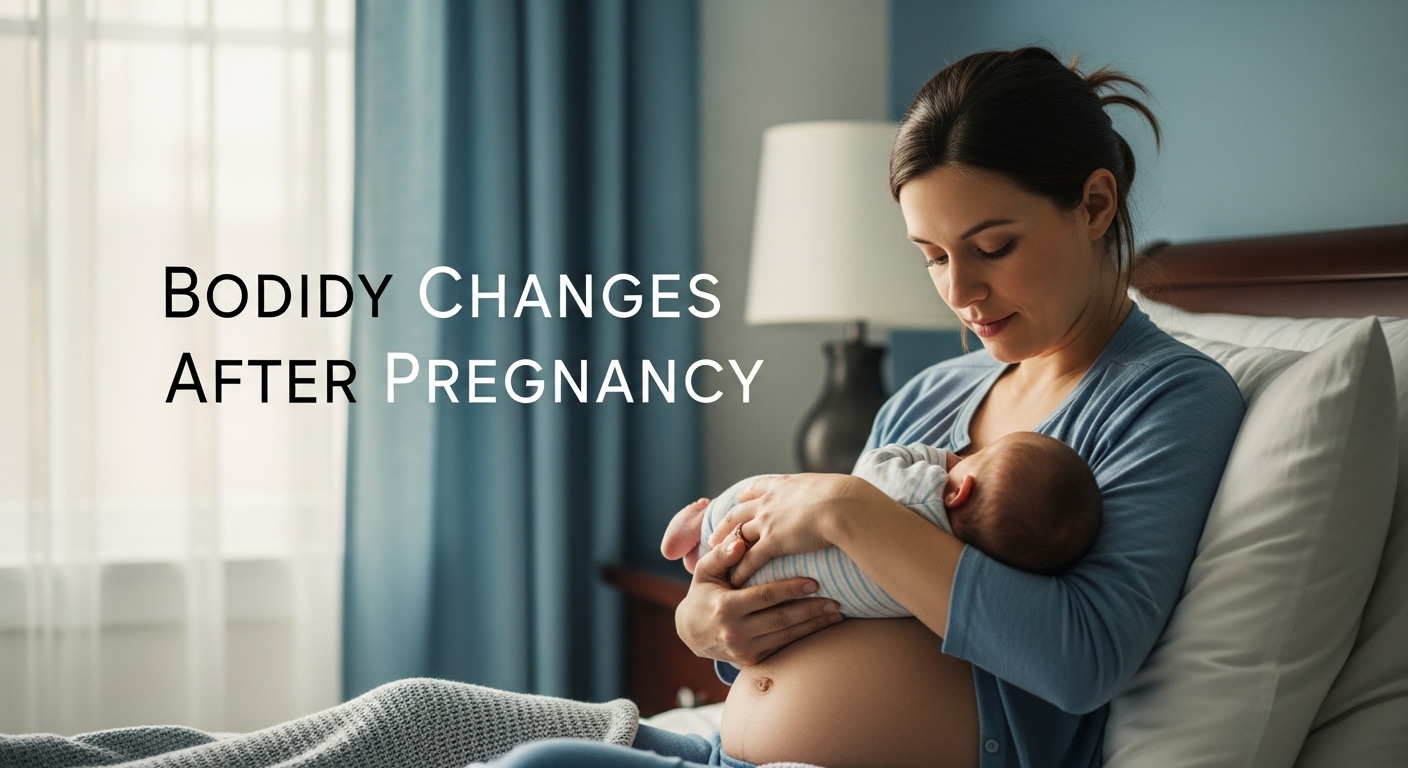
After nine months of pregnancy and the marathon of childbirth, your body has been through something extraordinary. If you’re looking in the mirror wondering “is this normal?” you’re not alone.
Bodily changes after pregnancy include vaginal discharge (lochia), breast changes, hair loss, wider hips, larger feet, skin changes, urinary incontinence, and abdominal muscle separation. Most changes are temporary and resolve within 6-12 months, though some like hip width and stretch marks may be permanent.
I’ve spent months researching this topic, reading through hundreds of real experiences from new mothers, and consulting medical resources from Cleveland Clinic, Johns Hopkins, and March of Dimes.
What I found is that competitors cover an average of 8 body changes. This guide covers 15+ changes, includes a week-by-week recovery timeline, and addresses the emotional aspects that so many articles ignore. Everything your body is experiencing right now has a reason, and most of it will improve with time.
ContentsTable of Contents
- 1Postpartum Recovery Timeline: Week by Week→
- 2Permanent vs Temporary Body Changes After Pregnancy→
- 315+ Body Changes After Pregnancy: What’s Normal→
- 41. Vaginal Discharge (Lochia)→
- 52. Breast Changes→
- 63. Hair Loss (Telogen Effluvium)→
- 74. Urinary Incontinence→
- 85. Stretch Marks and Skin Changes→
- 96. Wider Hips→
- 107. Larger Feet→
- 118. Abdominal Changes (Diastasis Recti)→
- 129. Uterine Contractions (Afterpains)→
- 1310. Constipation and Bowel Changes→
- 1411. Sex Drive Changes→
- 1512. Mood Changes and Baby Blues→
- 1613. Varicose Veins→
- 1714. Vision Changes→
- 1815. Joint and Finger Changes→
- 1916. Sweating and Temperature Changes→
- 2017. Menstrual Changes→
- 21Your Emotional Journey: Body Image After Baby→
- 22When to See Your Doctor?→
- 23Frequently Asked Questions→
- 24Does the body permanently change after pregnancy?→
- 25How long does it take for your body to go back to normal after birth?→
- 26What are the long term bowel problems after pregnancy?→
- 27Why do hips get wider after pregnancy?→
- 28Is it normal to pee when I laugh after having a baby?→
- 29How long does postpartum hair loss last?→
- 30The Bottom Line→
Postpartum Recovery Timeline: Week by Week
Your body begins healing immediately after delivery, but full recovery takes time. Here’s what to expect in the weeks and months ahead.
| Timeframe | What’s Happening | What to Expect |
|---|---|---|
| Week 1 | Uterus begins shrinking, heavy bleeding (lochia), breast milk comes in | Afterpains, engorgement, fatigue, perineal soreness |
| Weeks 2-3 | Bleeding decreases, hormone levels dropping, milk supply establishing | Night sweats, mood swings, possible baby blues |
| Weeks 4-6 | Uterus nearly back to size, perineum healing, lochia ending | Energy slowly returning, postpartum checkup due |
| Months 2-3 | Hair shedding may peak, periods may return (if not breastfeeding) | Noticeable hair loss, possible continued incontinence |
| Months 4-6 | Hormone levels stabilizing, pelvic floor strengthening | Hair regrowth beginning, improved bladder control |
| Months 6-12 | Body approaching new normal, weight may still be adjusting | Most temporary changes resolved, permanent changes evident |
Important: This timeline is general. Every woman’s recovery is different based on factors like delivery type, overall health, breastfeeding status, and whether this is your first baby.
Permanent vs Temporary Body Changes After Pregnancy
One of the most common questions I see from new mothers is “which changes will go away?” Here’s a clear breakdown of what’s typically temporary versus what may be permanent.
| Temporary Changes (Usually Resolve) | Permanent or Long-Lasting Changes |
|---|---|
| Hair loss (regrows by 12 months) | Wider hips (skeletal change) |
| Vaginal discharge (ends by 6 weeks) | Larger feet (ligament relaxation) |
| Breast engorgement (resolves as nursing establishes) | Stretch marks (fade but don’t disappear) |
| Urinary incontinence (improves with Kegels) | Breast shape changes (after breastfeeding ends) |
| Baby blues (typically 2 weeks) | Abdominal skin laxity (may improve but not fully) |
| Night sweats (weeks to months) | Linea nigra (fades significantly but may remain) |
| Constipation (improves with diet/hydration) | Varicose veins (may fade but not disappear completely) |
| Weight retention (typically resolves by 12 months) | C-section scar (permanent but fades) |
Understanding what’s temporary can help ease anxiety. Your body created and sustained life. Some evidence of that journey is completely normal.
15+ Body Changes After Pregnancy: What’s Normal
Let’s explore each postpartum body change in detail. For each one, I’ll explain why it happens, what to expect, and what may help.
1. Vaginal Discharge (Lochia)
Lochia: The vaginal discharge that occurs after delivery, consisting of blood, mucus, and uterine tissue as your body heals.
Lochia is one of the first postpartum changes you’ll notice. It typically lasts 4-6 weeks and changes color from bright red to pink to yellowish-white as healing progresses.
Heavy bleeding in the first few days is normal. However, soaking more than one pad per hour or passing clots larger than a golf ball warrants a call to your healthcare provider.
2. Breast Changes
Your breasts will change significantly in the days after delivery. When your milk comes in (typically days 2-5), you may experience engorgement with swelling, firmness, and tenderness.
Breast size fluctuates based on feeding patterns and milk production. After you stop breastfeeding, your breasts may settle at a different size and shape than pre-pregnancy. This is due to changes in breast tissue, not just fat distribution.
According to research, breast ptosis (sagging) is more related to pregnancy itself than breastfeeding, so don’t let this concern affect your feeding decisions.
3. Hair Loss (Telogen Effluvium)
Postpartum hair loss typically begins 2-4 months after delivery and may feel alarming. You might notice clumps of hair in your brush or shower drain.
During pregnancy, elevated estrogen keeps hair in its growth phase longer. After delivery, hormone levels drop and all that extra hair enters the shedding phase at once. This is temporary.
Hair loss usually peaks around 4 months postpartum and resolves by 12 months. Your hair will grow back, though some women notice a different texture temporarily.
4. Urinary Incontinence
Leaking urine when you laugh, sneeze, or exercise is common after vaginal delivery. This is called stress incontinence, and it results from weakened pelvic floor muscles.
According to Cleveland Clinic, pelvic floor exercises (Kegels) can significantly improve bladder control. Here’s how to do them:
- Identify the muscles: Try stopping your urine midstream to locate your pelvic floor muscles
- Contract and hold: Squeeze these muscles for 3-5 seconds
- Relax: Rest for 3-5 seconds between contractions
- Repeat: Do 10-15 repetitions, 3 times daily
Most women see improvement within 4-6 weeks of consistent practice. If incontinence persists beyond 6 months, consider seeing a pelvic floor physical therapist.
5. Stretch Marks and Skin Changes
Stretch marks (striae) occur when skin stretches rapidly during pregnancy. They typically appear on the abdomen, breasts, hips, and thighs.
Fresh stretch marks are often red or purple. Over time, they fade to silvery-white and become less noticeable, though they don’t disappear completely. Research suggests that topical treatments have limited effectiveness.
Linea nigra is the dark line that may have appeared down your belly during pregnancy. It typically fades within a few months postpartum, though it may remain faintly visible.
Melasma (pregnancy mask) may also fade gradually, but sun protection helps prevent darkening. Some skin pigmentation changes may be permanent.
6. Wider Hips
Many women are surprised to find their hips are permanently wider after pregnancy, even when they return to their pre-pregnancy weight.
This happens because the hormone relaxin loosens your pelvic joints during pregnancy to allow for childbirth. In some cases, these joints don’t fully return to their original position.
This is a skeletal change, not weight gain. Even very fit women report needing larger pants sizes despite reaching their pre-pregnancy weight. If your jeans don’t fit the same way, it’s not a failure, it’s biology.
7. Larger Feet
About 60-70% of women experience an increase in foot size during pregnancy, and this change is often permanent. The same hormone (relaxin) that loosens your pelvis also relaxes the ligaments in your feet.
Combined with pregnancy weight gain flattening your arches, you may find yourself going up half a shoe size or more.
Many women report needing to replace their entire shoe collection. While unexpected, this is a normal part of postpartum life for many mothers.
8. Abdominal Changes (Diastasis Recti)
Diastasis Recti: The separation of the abdominal muscles (rectus abdominis) that occurs during pregnancy to accommodate your growing uterus.
This separation happens in most pregnancies. For some women, the muscles come back together naturally within 6-12 months. For others, a gap remains.
You can check for diastasis recti by lying on your back and lifting your head. Feel for a gap between your abdominal muscles above and below your navel.
Specific core exercises can help close the gap, but avoid traditional crunches which may worsen separation. A physical therapist specializing in postpartum recovery can provide appropriate exercises.
9. Uterine Contractions (Afterpains)
Your uterus contracts after delivery to return to its pre-pregnancy size. These contractions, called afterpains, feel like menstrual cramps.
Afterpains are typically stronger during breastfeeding (oxytocin triggers contractions) and in women who have had previous pregnancies.
They usually subside within a week but can be managed with over-the-counter pain relievers approved by your healthcare provider.
10. Constipation and Bowel Changes
Constipation is common in the early postpartum period. Contributing factors include dehydration, pain medications, iron supplements, and fear of straining after delivery.
Long-term bowel problems after pregnancy can include ongoing constipation, hemorrhoids, and in some cases, fecal incontinence (particularly after significant perineal tearing or episiotomy).
Most bowel issues improve with adequate hydration, fiber intake, and time. Persistent problems should be discussed with your healthcare provider.
11. Sex Drive Changes
Decreased libido is extremely common postpartum. Multiple factors contribute, including hormonal shifts (especially if breastfeeding), fatigue, body image concerns, and adjustment to new motherhood.
Physical recovery takes at least 6 weeks, and many healthcare providers recommend waiting until your postpartum checkup before resuming intercourse.
For many couples, libido gradually returns over several months. Open communication with your partner about this normal phase is important.
12. Mood Changes and Baby Blues
Up to 80% of new mothers experience baby blues in the first two weeks after delivery. Symptoms include mood swings, crying spells, anxiety, and difficulty sleeping.
Baby blues typically resolve within two weeks as hormones stabilize. However, if symptoms persist longer, intensify, or include thoughts of harming yourself or your baby, this may indicate postpartum depression (PPD) or postpartum anxiety.
Important: Postpartum depression affects about 1 in 7 new mothers. It’s a medical condition, not a personal failing. If you experience persistent sadness, hopelessness, or inability to care for yourself or your baby, please reach out to your healthcare provider immediately.
13. Varicose Veins
Pregnancy increases blood volume and puts pressure on leg veins, which can cause varicose veins to develop or worsen.
Varicose veins typically improve after delivery but may not disappear completely. Compression stockings, regular exercise, and elevating your legs can help with discomfort.
14. Vision Changes
Some women experience vision changes during pregnancy that may persist postpartum. Fluid retention can temporarily change the shape of your cornea, affecting your prescription.
These changes usually resolve within a few months. Eye doctors often recommend waiting until several months postpartum to update prescriptions.
15. Joint and Finger Changes
Joint looseness from relaxin may persist for several months postpartum, especially if breastfeeding. Some women notice increased flexibility or joint instability.
Swelling in fingers and hands typically resolves within a few weeks as fluid retention decreases. If rings still don’t fit after a few months, it may be due to permanent changes.
16. Sweating and Temperature Changes
Night sweats and increased perspiration are common in the weeks following delivery. Your body is releasing the extra fluid accumulated during pregnancy.
Hormonal fluctuations also affect your internal thermostat. These symptoms typically resolve within a few weeks to months.
17. Menstrual Changes
The return of your period depends largely on breastfeeding status. Non-breastfeeding mothers typically see their period return within 6-8 weeks. Breastfeeding mothers may not menstruate for months or even the duration of breastfeeding.
When your period returns, it may be different than before pregnancy. Some women report heavier or lighter periods, more or less cramping, and different cycle lengths.
Your Emotional Journey: Body Image After Baby
The physical changes are only part of the postpartum experience. In my research, I found that body image struggles are one of the most discussed topics among new mothers.
Women describe feeling like their confidence is “destroyed,” experiencing something like body dysmorphia, and struggling to recognize themselves. These feelings are incredibly common and valid.
Here’s what may help:
- Give yourself time: Your body took 9 months to change, it won’t return overnight
- Reframe your thinking: Your body created and sustained life, that’s remarkable
- Avoid comparisons: Social media “snapback” posts rarely show reality
- Focus on function: What your body can do matters more than how it looks
- Seek support: Talk to other mothers, a therapist, or your healthcare provider
If prior fitness was important to your identity, adjusting to your postpartum body can be especially difficult. Be patient with yourself. You’re not the same person you were before, and that’s okay.
When to See Your Doctor?
While most postpartum changes are normal, some symptoms require medical attention. Contact your healthcare provider if you experience any of the following.
Seek immediate medical care if you experience:
- Fever over 100.4F (38C)
- Heavy bleeding (soaking more than one pad per hour)
- Large blood clots (bigger than a golf ball)
- Foul-smelling discharge
- Severe headaches that don’t improve with medication
- Vision changes or seeing spots
- Pain, redness, or swelling in your legs
- Difficulty breathing or chest pain
- Thoughts of harming yourself or your baby
- Inability to care for yourself or your baby
Don’t hesitate to call even if your symptoms seem minor. Your healthcare team would rather you reach out than wait and worry.
Frequently Asked Questions
Does the body permanently change after pregnancy?
Yes, some body changes are permanent after pregnancy including wider hips, larger feet, stretch marks, and potential breast shape changes. However, many changes like hair loss, weight gain, and urinary incontinence typically resolve within 6-12 months with proper care and recovery.
How long does it take for your body to go back to normal after birth?
Your body begins recovering immediately after birth, with major changes resolving in 6-8 weeks. Full recovery, including pelvic floor strength, hormone balance, and hair regrowth, typically takes 6-12 months. Some changes, particularly to hips, feet, and stretch marks, may be permanent.
What are the long term bowel problems after pregnancy?
Long-term bowel problems after pregnancy can include fecal incontinence, chronic constipation, hemorrhoids, and urgency. These result from pelvic floor strain during delivery and hormonal changes. Most improve with Kegel exercises and dietary changes, but persistent issues should be discussed with a healthcare provider.
Why do hips get wider after pregnancy?
Hips get wider during pregnancy due to the hormone relaxin, which loosens pelvic joints to allow for childbirth. In many women, these joints don’t fully return to their original position, resulting in permanently wider hips. This is a skeletal change, not related to weight.
Is it normal to pee when I laugh after having a baby?
Yes, stress urinary incontinence (leaking urine when laughing, sneezing, or exercising) is very common after vaginal delivery. It results from weakened pelvic floor muscles. Regular Kegel exercises can significantly improve bladder control within 4-6 weeks. If it persists beyond 6 months, see a pelvic floor specialist.
How long does postpartum hair loss last?
Postpartum hair loss typically begins 2-4 months after delivery, peaks around 4 months, and resolves by 12 months postpartum. The hair loss is temporary and occurs because pregnancy hormones kept extra hair in the growth phase, which then sheds once hormone levels drop.
The Bottom Line
Your body has done something remarkable. The changes you’re experiencing, whether temporary or permanent, are evidence of the incredible journey of pregnancy and childbirth.
Most postpartum changes improve significantly within the first year. For those that don’t, know that they’re completely normal and shared by millions of mothers.
Be patient with yourself. Reach out for help when you need it. And remember that healing takes time.
Disclaimer: This content is for informational purposes only and does not constitute medical advice. Always consult a licensed healthcare provider for personalized guidance regarding your postpartum recovery.