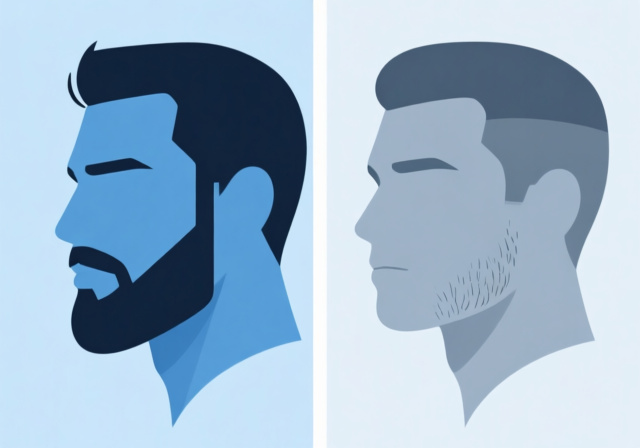
If you’ve noticed your jawline looks softer, your cheeks seem puffier, or your facial hair isn’t growing like it used to, you might be wondering if low testosterone is the cause.
Based on our research, yes, low testosterone can affect your face. It may lead to a less defined jawline, reduced cheekbone prominence, thinner facial hair, and changes in skin quality.
However, here’s what many men don’t realize: you can’t diagnose low testosterone just by looking in the mirror. I’ve seen countless forum discussions where men assumed they were fine because they “looked normal,” only to discover severely low levels through blood work.
In this guide, we’ll cover exactly how low T may change your facial appearance, what distinguishes low testosterone features from high testosterone features, and your treatment options including online TRT clinics with current pricing.
ContentsTable of Contents
- 1What Is a Low Testosterone Face?→
- 2Signs You May Have a Low Testosterone Face→
- 3How Low Testosterone May Affect Your Facial Structure?→
- 4Jawline and Cheekbone Changes→
- 5Fat Distribution Changes→
- 6Muscle Atrophy→
- 7Skin and Facial Hair Changes From Low Testosterone→
- 8Skin Quality Changes→
- 9Facial Hair Reduction→
- 10High Testosterone Face vs Low Testosterone Face→
- 11What Causes Low Testosterone?→
- 12Age-Related Decline→
- 13Lifestyle Factors→
- 14Medical Conditions→
- 15Can TRT Improve Your Facial Appearance?→
- 16Online TRT Providers Comparison→
- 17TRT Nation – Best for Straightforward Pricing→
- 18TRT Nation→
- 19Pros→
- 20Cons→
- 21Best For→
- 22Skip If→
- 23Hone Health – Best for Comprehensive Care→
- 24Hone Health→
- 25Pros→
- 26Cons→
- 27Best For→
- 28Skip If→
- 29TRT Timeline: When to Expect Facial Changes→
- 30Frequently Asked Questions→
- 31Can low testosterone change your face?→
- 32How does someone with low testosterone look?→
- 33How long does it take for testosterone to change your face?→
- 34Does testosterone actually change your face?→
- 35Can you tell if someone has low testosterone by looking at their face?→
- 36Will TRT make my face look more masculine?→
- 37Final Thoughts→
What Is a Low Testosterone Face?
A low testosterone face refers to the collection of facial changes that may occur when testosterone levels drop below normal ranges (typically under 300 ng/dL).
These changes happen gradually, often over months or years, making them easy to dismiss as “just getting older.”
Low Testosterone (Hypogonadism): A medical condition where the body doesn’t produce enough testosterone, the primary male sex hormone responsible for muscle mass, bone density, facial hair, and other masculine characteristics.
Signs You May Have a Low Testosterone Face
Research suggests these facial changes may indicate low T levels:
- Softer jawline: Less angular, more rounded jaw appearance
- Reduced cheekbone definition: Flatter, less prominent cheekbones
- Increased facial fat: Puffier cheeks, potential double chin
- Thinner or patchier facial hair: Slower beard growth, bald spots
- Dry, thinning skin: Less elasticity, more fine lines
- Shorter chin appearance: Less prominent lower face
Important: Physical appearance alone cannot determine your testosterone levels. Many men with low T maintain masculine features while experiencing severe symptoms like fatigue, low libido, and mood changes. Blood testing is the only reliable diagnostic method.
How Low Testosterone May Affect Your Facial Structure?
Testosterone plays a crucial role in developing and maintaining masculine facial features. When levels decline, several structural changes may occur.
Jawline and Cheekbone Changes
Testosterone helps maintain bone density throughout the body, including facial bones. Research suggests that declining levels may contribute to:
- Reduced bone mass in the jaw and cheekbones
- A less angular, more rounded jawline
- Flatter cheekbone appearance
- Overall softer facial contours
Additionally, testosterone supports facial muscle mass. Lower levels may lead to decreased muscle tone around the jaw, contributing to a less defined appearance.
Fat Distribution Changes
Low testosterone often leads to increased body fat and altered fat distribution patterns. On the face, this may manifest as:
- Puffier cheeks and jowls
- Increased fat under the chin (double chin)
- Less visible facial bone structure
- Overall fuller, rounder face shape
This happens because testosterone helps regulate where the body stores fat. When levels drop, fat may accumulate in areas where it previously didn’t.
Muscle Atrophy
The muscles that give your face definition, particularly around the jaw and cheeks, may weaken with low testosterone. This muscle loss compounds the effects of increased fat and reduced bone density.
Skin and Facial Hair Changes From Low Testosterone
Beyond structural changes, low testosterone may affect your skin quality and facial hair growth in noticeable ways.
Skin Quality Changes
Testosterone influences two key factors in skin health: collagen production and sebum (oil) production.
Collagen effects: Testosterone supports collagen synthesis, which maintains skin thickness and elasticity. Lower levels may contribute to:
- Thinner, more fragile skin
- Increased fine lines and wrinkles
- Reduced skin elasticity
- Sagging, particularly around the lower face
Sebum effects: Testosterone stimulates sebaceous glands. When levels drop, you may notice:
- Drier skin overall
- Flaky or dull complexion
- Less natural skin moisture
- Compromised skin barrier function
Facial Hair Reduction
One of the most noticeable signs of low testosterone can be changes in facial hair growth. Testosterone directly stimulates hair follicles, so declining levels may cause:
- Slower beard growth rate
- Patchier facial hair coverage
- Thinner individual hair strands
- Reduced mustache density
- Difficulty growing or maintaining a full beard
High Testosterone Face vs Low Testosterone Face
Understanding the differences between high and low testosterone facial features can help you recognize potential hormone imbalances.
| Facial Feature | High Testosterone | Low Testosterone |
|---|---|---|
| Jawline | Angular, well-defined, prominent | Softer, rounder, less defined |
| Cheekbones | High, prominent, visible structure | Flatter, less visible definition |
| Chin | Strong, forward-projecting | Shorter, less prominent |
| Facial Hair | Dense, full growth potential | Patchy, thin, slow-growing |
| Skin | Thicker, oilier | Thinner, drier |
| Face Shape | More angular, leaner | Rounder, puffier |
| Brow Ridge | More pronounced | Less prominent |
Pro Tip: These are general patterns, not absolute rules. Genetics play a significant role in facial structure regardless of hormone levels. Some men with optimal testosterone have naturally softer features, while others with low T maintain angular appearances.
What Causes Low Testosterone?
Understanding the causes of low testosterone can help you identify whether your facial changes might be hormone-related.
Age-Related Decline
Testosterone naturally decreases about 1-2% per year after age 30. By age 45, many men experience noticeable symptoms. This gradual decline differs from hypogonadism, where levels drop more significantly.
Lifestyle Factors
Several modifiable factors can contribute to low testosterone:
- Poor sleep: Most testosterone is produced during deep sleep
- Chronic stress: Elevated cortisol suppresses testosterone production
- Obesity: Excess fat converts testosterone to estrogen
- Sedentary lifestyle: Regular exercise supports hormone production
- Poor diet: Nutrient deficiencies affect hormone synthesis
- Excessive alcohol: Regular heavy drinking suppresses testosterone
Medical Conditions
Certain health conditions can cause low testosterone:
- Pituitary disorders
- Type 2 diabetes
- Thyroid problems
- Testicular injuries or conditions
- Certain medications (opioids, steroids, some antidepressants)
Can TRT Improve Your Facial Appearance?
Testosterone replacement therapy (TRT) may help reverse some facial changes associated with low T, though results vary between individuals.
Based on clinical reports and user experiences, TRT may contribute to:
- Reduced facial fat and improved definition
- Increased facial muscle tone
- Improved skin thickness and quality
- Enhanced facial hair growth
- More angular appearance over time
However, expectations should be realistic. Forum discussions consistently show that facial changes from TRT are typically subtle and gradual, not dramatic transformations.
Online TRT Providers Comparison
If you’re considering TRT, several online clinics offer convenient access to treatment. Here’s how two popular options compare:
| # | Provider | Highlights | Price | |
|---|---|---|---|---|
| 01 | TRT Nation |
|
$99/month | Visit Provider → |
| 02 | Hone Health |
|
$53-$209/month | Visit Provider → |
We may earn a commission at no extra cost to you.
TRT Nation – Best for Straightforward Pricing
America's leading online TRT clinic offering affordable testosterone replacement therapy with transparent pricing and free shipping.
The flat-rate pricing includes medication, consultations, and ongoing support.
Pros
- Simple $99/month all-inclusive pricing
- Accepts outside lab work (saves money)
- Free FedEx shipping included
- 4.9 star rating with 1800+ reviews
Cons
- Not available in AL AK AR MO HI
- Age restriction: 24+ only
- Support hours M-F 10AM-5PM EST
This post contains affiliate links. If you purchase through them, we may earn a commission (at no extra cost to you).
TRT Nation stands out for men who want simple, predictable pricing without membership fees. The $99/month rate covers everything, and you can bring your own lab work if you’ve been tested recently.
Their process is straightforward: submit lab work, consult with a licensed provider, and have medication shipped to your door with tracking.
Best For
Men wanting straightforward, affordable TRT with transparent pricing and the option to use existing lab work.
Skip If
You live in Alabama, Alaska, Arkansas, Missouri, or Hawaii, or you’re under 24.
Hone Health – Best for Comprehensive Care
Comprehensive longevity platform offering personalized testosterone replacement therapy with physician guidance.
Includes extensive 50-biomarker testing and multiple delivery method options.
Pros
- Multiple delivery options (injections cream troches)
- Comprehensive 50-biomarker testing
- Flexible membership tiers
- Licensed physicians review all cases
Cons
- Membership required ($25-$149/mo) on top of medication
- Initial lab test costs $65 separately
- More complex pricing structure
This post contains affiliate links. If you purchase through them, we may earn a commission (at no extra cost to you).
Hone Health offers a more comprehensive approach with 50-biomarker testing that goes beyond just testosterone. This appeals to men who want to optimize overall health, not just address low T.
They offer multiple delivery methods including injections ($28/mo), cream ($60/mo), and troches ($60/mo), giving you flexibility based on your preferences.
Best For
Men wanting comprehensive hormone optimization with multiple treatment options and thorough ongoing monitoring.
Skip If
You’re looking for simple, all-inclusive pricing without separate membership fees.
TRT Timeline: When to Expect Facial Changes
If you start TRT, here’s a realistic timeline for potential facial improvements based on clinical data and user reports:
| Timeframe | What You May Notice |
|---|---|
| 30 Days | Subtle improvements in energy and mood. Skin may start to feel less dry. Facial changes not typically visible yet. |
| 60 Days | Possible improvement in skin quality and hydration. May notice slightly faster facial hair growth. Fat distribution may begin shifting. |
| 90 Days | More noticeable changes in body composition that may reflect in face. Improved muscle tone. Facial hair may be fuller. |
| 6+ Months | Cumulative effects become more apparent. Reduced facial fat, improved definition, better skin quality. Results vary significantly by individual. |
Reality Check: Based on forum discussions, many men report that TRT facial changes are subtle improvements rather than dramatic transformations. The biggest benefits often come from improved energy, mood, and overall body composition rather than specific facial changes.
Frequently Asked Questions
Can low testosterone change your face?
Yes, low testosterone may change your face over time. Research suggests it can lead to a softer jawline, reduced cheekbone definition, increased facial fat, thinner skin, and reduced facial hair growth. However, these changes are usually gradual and vary significantly between individuals.
How does someone with low testosterone look?
Someone with low testosterone may have a rounder, softer face with less angular features. Common signs include a less defined jawline, puffier cheeks, patchy or thin facial hair, and dry or dull skin. However, physical appearance alone cannot diagnose low T – many men with low levels maintain masculine features while having severe symptoms.
How long does it take for testosterone to change your face?
Facial changes from testosterone replacement therapy typically take 3-6 months to become noticeable. Users often report subtle improvements in skin quality around 60 days, with more significant changes in facial fat distribution and muscle tone appearing after 90 days or longer.
Does testosterone actually change your face?
Yes, testosterone can affect facial appearance. It influences bone density, muscle mass, fat distribution, collagen production, sebum production, and facial hair growth. Both naturally high testosterone and TRT can contribute to more angular, defined facial features, while low levels may lead to softer, rounder appearances.
Can you tell if someone has low testosterone by looking at their face?
No, you cannot reliably diagnose low testosterone by looking at someone’s face. While certain facial characteristics may be associated with low T, genetics play a major role in facial structure. Blood testing is the only accurate way to determine testosterone levels.
Will TRT make my face look more masculine?
TRT may contribute to a more masculine facial appearance over time by reducing facial fat, improving muscle tone, enhancing skin quality, and potentially improving facial hair growth. However, results are typically subtle and gradual, and vary significantly between individuals.
Final Thoughts
Low testosterone can affect your facial appearance through changes in bone density, muscle mass, fat distribution, skin quality, and facial hair growth. The result may be a softer, rounder face with less defined features.
However, the most important takeaway is this: you cannot diagnose low testosterone just by looking in the mirror. Blood testing is essential for accurate diagnosis.
If you’re experiencing facial changes along with other symptoms like fatigue, low libido, mood changes, or difficulty building muscle, it may be worth getting your levels checked. Online TRT clinics like TRT Nation ($99/month) and Hone Health ($53-$209/month) make testing and treatment more accessible than ever.
The facial changes from TRT are typically subtle and gradual, but combined with improvements in energy, mood, and overall well-being, many men find treatment worthwhile.
Disclaimer: Compounded medications are not FDA-approved and may not be available in all states. TRT requires a prescription from a licensed healthcare provider.
This article is for informational purposes only and does not constitute medical advice. Always consult a licensed healthcare provider before starting any hormone therapy or treatment for low testosterone.