Nothing you buy for the nursery will protect your baby from SIDS. No consumer baby breathing monitor is cleared by the FDA as a medical device, and none has ever been shown to prevent sudden infant death syndrome. What a baby breathing monitor actually does is watch for a pause in movement, usually about 15 to 20 seconds, then vibrate to rouse your baby and finally sound an alarm at your bedside.
That distinction matters more than any spec sheet. A pause in movement is not the same as a pause in breathing, newborns pause in movement constantly during normal sleep, and on most nights the alarm you hear at 3am is the monitor being wrong rather than the baby. Parents on WhatToExpect and BabyCentre describe the same pattern over and over: sprinting to the nursery, finding a peacefully sleeping baby, and starting to dread the next alert.
So why does this list exist? Because a good breathing monitor still does something useful. It gives you an objective signal during the pauses that would otherwise send you in to check a dozen times a night, and for a preterm baby, a baby discharged after NICU monitoring, or a family with a family history of SIDS, it produces a record you can actually show a pediatrician. Our 2026 roundup of the ten best baby breathing monitors for newborns covers what each device senses, how it attaches, how often it cries wolf, and who should skip it entirely.
ContentsTable of Contents
- 1Top 3 Baby Breathing Monitors for Newborns in 2026→
- 2Babysense True Sleep HD→
- 3Snuza Hero→
- 4Babysense 7→
- 5Baby Breathing Monitors at a Glance in 2026→
- 6What Is a Baby Breathing Monitor?→
- 7What Pediatricians Say About Consumer Breathing Monitors→
- 81. Babysense True Sleep HD Bundle: Our Best Baby Breathing Monitor for Newborns→
- 9Babysense True Sleep HD Baby Monitor with Camera and Audio + Baby Sleep Movement Monitor, No WiFi, 2 Non-Contact Under Mattress Sensors, Non-Wearable Monitor, Full Crib Coverage→
- 10Pros→
- 11Cons→
- 12Who this bundle suits→
- 13Who should look elsewhere→
- 142. Snuza Hero: Best Wearable With the Fewest False Alarms→
- 15Snuza Hero Baby Movement Monitor with Patented Sensor Technology for Reliable Movement Monitoring and Alerts. No WiFi, Cords, or Sensor Pads, Portable and Easy to Set Up and Use.→
- 16Pros→
- 17Cons→
- 18When to pick the Snuza Hero→
- 19When to pick something else→
- 203. Babysense 7: The Standalone Non-Wearable Monitor→
- 21Babysense 7 Baby Movement Monitor, 2 Sensor Pads, Non-Wearable, No WiFi→
- 22Pros→
- 23Cons→
- 24What to check before you buy→
- 25How to keep the alerts meaningful→
- 264. Owlet Dream Sock Smart: Best for Heart Rate and Oxygen Data→
- 27Owlet Dream Sock Smart Baby Monitor, Includes 3 Months of Owlet 360→
- 28Pros→
- 29Cons→
- 30Where it earns its place→
- 31Where it falls short→
- 325. Levana Oma Sense: Best for Travel and Grandparents→
- 33Levana Oma Sense Portable Baby Breathing Movement Monitor with Vibrations and Audible Alerts Designed to Stimulate Baby and Alert Parents→
- 34Pros→
- 35Cons→
- 36Where it makes sense→
- 37Where it makes less sense→
- 386. Sense-U 2.5K PTZ Camera: Best With No Monthly Fee→
- 39Sense-U AI 2.5K PTZ Baby Camera Monitor with Sensor-Free Sleep Movement Detection, Smart Security Indoor Video Camera with Background Audio, Cry Detection, No Monthly Fee, for Peace of Mind→
- 40Pros→
- 41Cons→
- 42Who should buy this one→
- 43Who should skip it→
- 447. BEMPU BellyButton: Best Lightest Clip-On Design→
- 45BEMPU Baby Movement Monitor – Sleep Monitor with Gentle Vibration Alerts→
- 46Pros→
- 47Cons→
- 48Why the low weight matters→
- 49Who should wait for more evidence→
- 508. Lollipop Smart Camera: Best Breathing Insights From a Camera→
- 51Lollipop Baby Monitor (Turquoise) – Full-Featured Smart Wi-Fi Camera of True Crying Detection with Extra in-App Plan of Breathing Monitoring/Sleep Tracking-Accessories Free/7 Days Trial Period→
- 52Pros→
- 53Cons→
- 54Where the camera approach wins→
- 55Where the camera approach struggles→
- 569. BabySmile Movement Monitor: Budget Pick for a Second Layer→
- 57BabySmile Baby Movement Monitor for Newborn Sleep, Diaper Clip→
- 58Pros→
- 59Cons→
- 60Where it makes sense→
- 61Where it does not make sense→
- 6210. Snuza Pico 2: Most Data, Least Reliable in Our Roundup→
- 63Snuza Pico 2 Wearable Child-Care Aid | App Connected or Standalone | Detects & Reports Movement Activity | Body Position, Sleep & Skin Surface Temperature Information | Real-Time Notifications→
- 64Pros→
- 65Cons→
- 66Who should still consider it→
- 67Who should skip it→
- 68When You Do Not Need a Baby Breathing Monitor→
- 69How to Reduce False Alarms→
- 70How to Choose a Baby Breathing Monitor for a Newborn→
- 71Frequently Asked Questions→
- 72What is the best baby monitor for a newborn?→
- 73Do pediatricians recommend the Owlet?→
- 74Why are pediatricians against Owlet?→
- 75What is the FDA-approved baby oxygen monitor?→
- 76Is the Snuza Hero or Owlet better?→
- 77Is there anything better than the Owlet sock?→
- 78Which baby monitor camera tracks breathing?→
- 79How accurate are baby breathing monitors?→
- 80Conclusion→
Top 3 Baby Breathing Monitors for Newborns in 2026

Babysense True Sleep HD
- Two under-mattress sensor pads
- Full crib coverage
- 5-inch HD video monitor

Snuza Hero
- Direct-touch diaper sensor
- Vibration then audible alarm
- No WiFi or app

Babysense 7
- Non-contact sensor pads
- 20-second alert
- Nothing on the baby
We earn from qualifying purchases. CERTAIN CONTENT THAT APPEARS ON THIS SITE COMES FROM AMAZON. THIS CONTENT IS PROVIDED 'AS IS' AND IS SUBJECT TO CHANGE OR REMOVAL AT ANY TIME.
Our pick for most newborns is the Babysense True Sleep HD bundle because it pairs two non-contact under-mattress pads with a camera, which means nothing is strapped to your baby and you still get to see them. The Snuza Hero takes the top spot among wearable options for its direct-touch diaper sensor, which reviewers consistently rate as quieter than a clip-on design.
The Babysense 7 stands out on review satisfaction, with roughly 77 percent of its 508 reviews at five stars. If you already own a video monitor, it is the cleaner buy.
Baby Breathing Monitors at a Glance in 2026
| # | Product | Key details | Where to buy |
|---|---|---|---|
| 1 | Babysense True Sleep HD |
|
Check Latest Price |
| 2 | Snuza Hero |
|
Check Latest Price |
| 3 | Babysense 7 |
|
Check Latest Price |
| 4 |  Owlet Dream Sock Smart Owlet Dream Sock Smart |
|
Check Latest Price |
| 5 |  Levana Oma Sense Levana Oma Sense |
|
Check Latest Price |
| 6 |  Sense-U 2.5K PTZ Camera Sense-U 2.5K PTZ Camera |
|
Check Latest Price |
| 7 |  BEMPU BellyButton BEMPU BellyButton |
|
Check Latest Price |
| 8 |  Lollipop Smart Camera Lollipop Smart Camera |
|
Check Latest Price |
| 9 |  BabySmile Movement Monitor BabySmile Movement Monitor |
|
Check Latest Price |
| 10 |  Snuza Pico 2 Snuza Pico 2 |
|
Check Latest Price |
We earn from qualifying purchases. CERTAIN CONTENT THAT APPEARS ON THIS SITE COMES FROM AMAZON. THIS CONTENT IS PROVIDED 'AS IS' AND IS SUBJECT TO CHANGE OR REMOVAL AT ANY TIME.
Two columns in that table matter more than the rest. The sensor type decides what the device can physically detect, and the alert delay decides how long you wait before the alarm goes off. Everything else is convenience.
What Is a Baby Breathing Monitor?
A baby breathing monitor is a wearable or under-mattress device that senses an infant’s movement, or in smart socks also heart rate and blood oxygen, then alerts a caregiver when nothing registers for roughly 15 to 20 seconds. It vibrates first to rouse the baby and then sounds an alarm. It is an observation and reassurance tool, not a medical device.
There are five sensor families on the market today, and they differ more in accuracy than the marketing suggests.
1. Under-mattress sensor pads. Two pads sit beneath the mattress and read the micro-movements transmitted through the surface. Nothing touches the baby, which is why several owners report the lowest false alarm rates of any category. The tradeoff is that they only work on one sleeping surface, and they cannot see a baby sleeping in a bouncer or on a parent’s chest.
2. Diaper clip monitors. A small unit clips to the waistband of the diaper and senses abdominal movement through direct contact. These are portable and work anywhere, but fit is the whole ballgame. A baby who stretches or bears down can shift the unit a couple of centimetres and trigger a false alert.
3. Smart socks and bands. These measure heart rate and blood oxygen with pulse oximetry and stream the numbers to a base station. They give the richest data of any consumer category and also the most anxiety, because a real pause in oxygen saturation is normal and common in healthy newborns.
4. Camera-based motion tracking. A camera mounted above the crib uses computer vision to follow the rise and fall of the chest. Nothing goes on the baby, but the accuracy depends entirely on lighting, camera angle and a clear line of sight to the mattress.
5. Plain audio and video monitors. These do not detect breathing at all. They are still the right tool for most families, because hearing regular breathing is often all the reassurance required.
None of these devices measure airflow. Every one of them infers breathing from movement, which is exactly where the false alarms come from.
What Pediatricians Say About Consumer Breathing Monitors
The short version: most pediatric organizations do not recommend a consumer breathing monitor for a healthy full-term newborn, and the objection is aimed at the marketing rather than the hardware.
When parents ask whether doctors recommend the Owlet, the honest answer is that many are lukewarm. The published concern is not the sock itself but the implication that buying one reduces risk. Safe sleep practices are what reduce risk: baby on the back, on a firm flat surface, alone in the crib, room-shared for the first six months. A monitor does not change any of that.
This is the frustration that shows up repeatedly in parent forums. One WhatToExpect thread describes a parent whose pediatrician said he does not recommend consumer monitors while declining to prescribe a hospital-grade apnea monitor despite a family history of SIDS. The marketing and the clinic are saying different things, and nobody is translating between them.
If you have a family history of SIDS, a preterm baby, or a baby discharged from the NICU, ask your pediatrician specifically what monitoring plan they want and whether they will write a prescription. If the answer is yes, you want a prescribed medical-grade monitor, not a consumer one. Consumer units are built for reassurance, not for clinical documentation.
One more safety point that belongs in every review on this page. Keep cords, wires and loose straps out of the crib. A wearable with a trailing cable is a strangulation hazard, which is why the clip-on and pad options below either use no cable in the crib or route everything to a single control unit mounted outside it.
1. Babysense True Sleep HD Bundle: Our Best Baby Breathing Monitor for Newborns
Babysense True Sleep HD Baby Monitor with Camera and Audio + Baby Sleep Movement Monitor, No WiFi, 2 Non-Contact Under Mattress Sensors, Non-Wearable Monitor, Full Crib Coverage
- Two non-contact under-mattress sensor pads plus 5-inch HD video monitor
- Alerts if movement stops or slows
- No WiFi needed for sensing
Pros
- Nothing worn by the baby
- Two pads cover the whole crib as your baby moves
- Movement sensing works without WiFi
- Night vision two-way audio and lullabies included
- Largest review base of any product here
Cons
- Sensitive pads can trigger on air movement from a fan
- Very deep sleepers occasionally set it off
- Sensor and camera need separate setup
We earn a commission, at no additional cost to you. CERTAIN CONTENT THAT APPEARS ON THIS SITE COMES FROM AMAZON. THIS CONTENT IS PROVIDED 'AS IS' AND IS SUBJECT TO CHANGE OR REMOVAL AT ANY TIME.
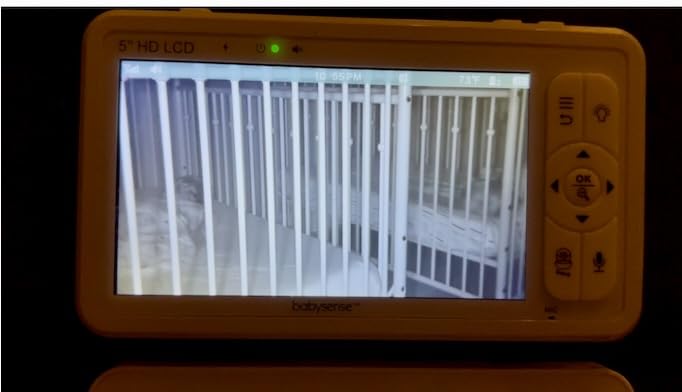
The Babysense True Sleep HD is the only bundle here that gives you both halves of a newborn setup in one purchase: two non-contact sensor pads that read movement through the mattress, and a 5-inch HD video monitor with a remotely controlled pan-tilt-zoom camera and infrared night vision. Nothing goes on your baby’s body at all.
What convinced me on this one is the review count. At 7402 reviews with a 4.4 average, it is the most thoroughly tested product in this roundup by a wide margin, and roughly 73 percent of those reviews are five star. Owners describe near-zero false alarms with the current sensitivity, which is not something I can say for any wearable here.
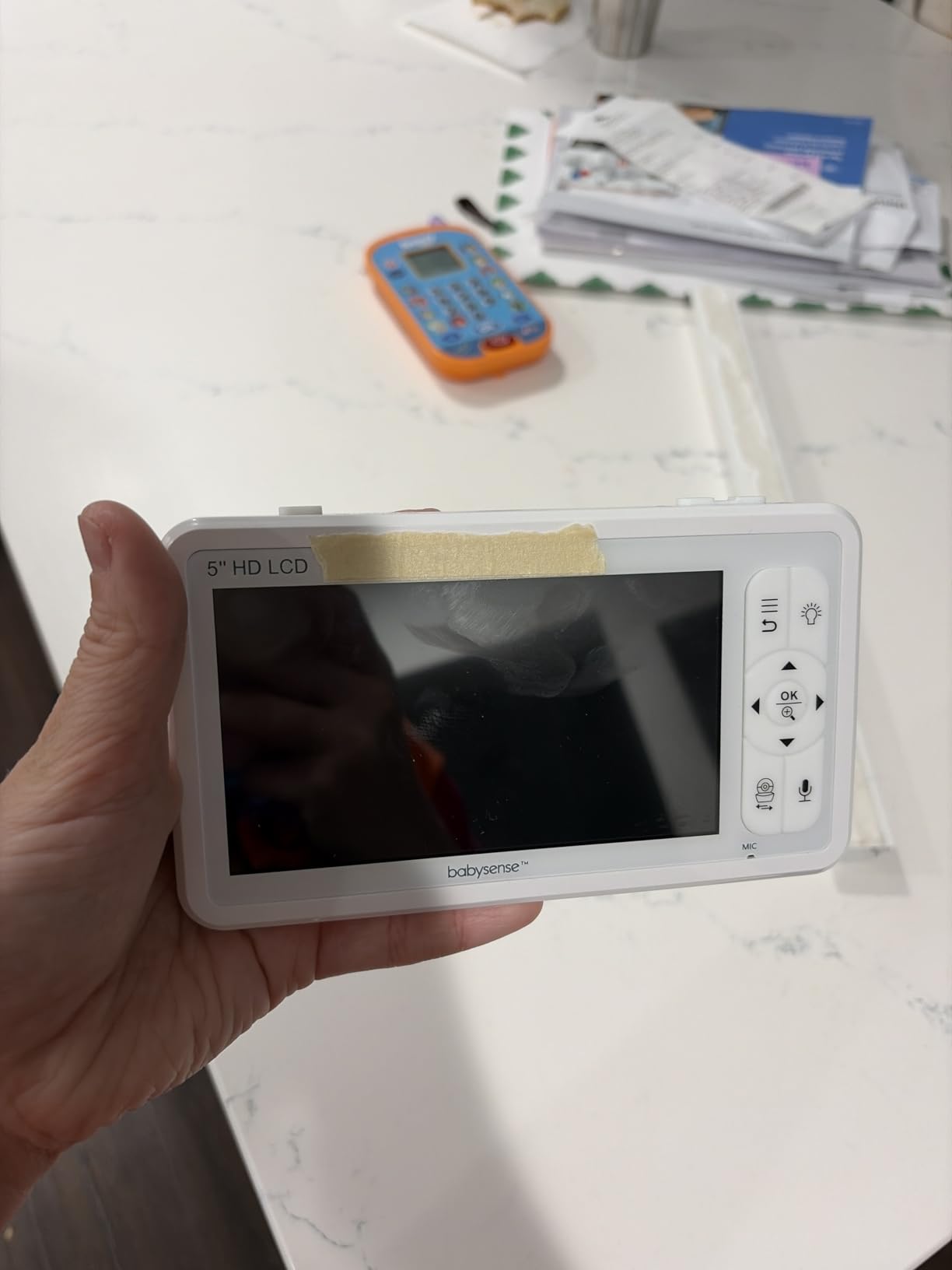
The mechanical reality is straightforward. Micro-movement travels down through the mattress and is picked up by the pads, so anything that interrupts that signal is a false alarm waiting to happen. Reviewers mention two triggers repeatedly: a ceiling fan or floor fan blowing toward the crib, and the alarm firing when the baby is lifted out and the mattress goes flat.
The second one is a habit rather than a fault. Once you understand that the pads read the mattress, not the baby, you switch the unit off when you pick your baby up. I would still make sure the setup process is on your list before the first night.
Two pads give coverage of the entire crib, which matters more than it sounds. Newborns scoot, and a single pad near the head of the crib will start missing a baby who has migrated toward the foot.
Who this bundle suits
It suits first-time parents who want one purchase instead of two. If you have not chosen a video monitor yet, this covers both jobs, and the movement sensing does not depend on your WiFi at all.
It also suits anyone who objects to putting a sock or a clip on a newborn. Nothing on the skin means no sock to slip, no strap to loosen and nothing for your baby to kick off at 2am.
Who should look elsewhere
Buy something portable if your baby sleeps somewhere other than the crib some days, such as a bassinet during the day. Pads wired to a single control unit stay put, so this is a one-surface solution.
Turn the sensitivity down or move the fan if you run air conditioning with a strong ceiling unit. Memory foam mattresses are also a known blind spot for this sensor type. Check your mattress type before you commit.
We earn a commission, at no additional cost to you. CERTAIN CONTENT THAT APPEARS ON THIS SITE COMES FROM AMAZON. THIS CONTENT IS PROVIDED 'AS IS' AND IS SUBJECT TO CHANGE OR REMOVAL AT ANY TIME.
2. Snuza Hero: Best Wearable With the Fewest False Alarms
Snuza Hero Baby Movement Monitor with Patented Sensor Technology for Reliable Movement Monitoring and Alerts. No WiFi, Cords, or Sensor Pads, Portable and Easy to Set Up and Use.
- Patented direct-touch diaper sensor
- Vibration at 15 seconds then audible alarm at 20
- Replaceable battery no charging
Pros
- Direct-touch sensor reads breath better than clip designs
- Vibration first gives you a few seconds to respond
- No WiFi app cords or sensor pads
- Replaceable battery runs about six months
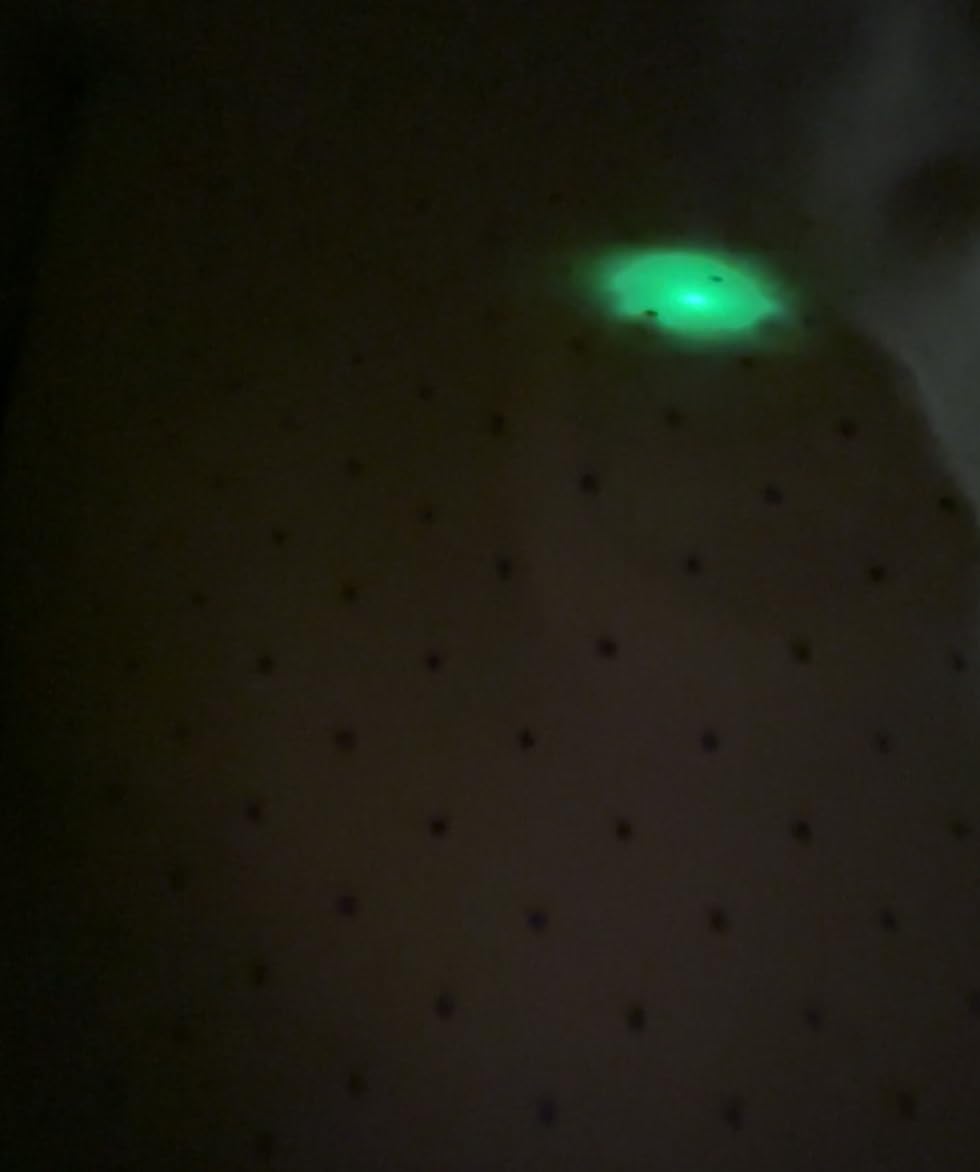
- Green light and ticking sound confirm each breath
Cons
- Diaper attachment can loosen when baby stretches
- Direct contact may bother sensitive skin
- Battery needs replacing about twice a year
We earn a commission, at no additional cost to you. CERTAIN CONTENT THAT APPEARS ON THIS SITE COMES FROM AMAZON. THIS CONTENT IS PROVIDED 'AS IS' AND IS SUBJECT TO CHANGE OR REMOVAL AT ANY TIME.
The Snuza Hero is the forum consensus pick for good reason. Across years of WhatToExpect and BabyCentre threads it is repeatedly described as the consistently favoured option, partly because it needs no subscription, no app and no wires, and partly because the alert logic is built like a ladder rather than a single trigger.
That ladder is the thing to understand. The patented sensor reads abdominal movement through direct contact with the diaper. After 15 seconds of nothing, the unit vibrates against your baby, which is often enough to restart breathing without waking anyone. If movement does not resume, it sounds an audible alarm 5 seconds later.
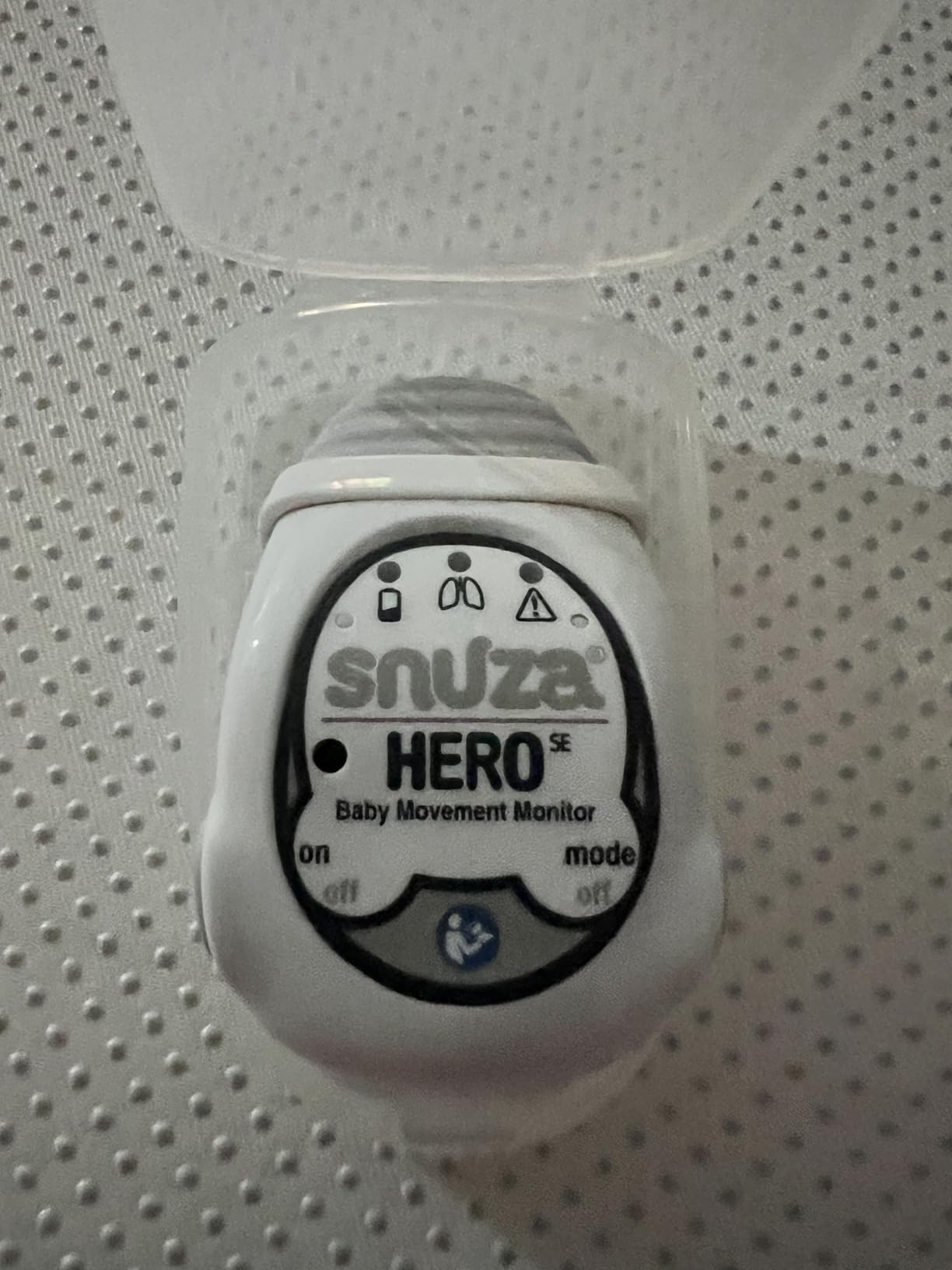
Parents trust the escalation because it does something rather than simply screaming. The green indicator light and optional ticking sound give continuous confirmation that detection is live, which is genuinely useful in a dark room at 4am.
It weighs 1.38 ounces and measures 2.76 by 1.57 by 0.79 inches, which is why it works in a crib, a bassinet, a travel cot or on a grandparent’s sofa. The replaceable battery is rated at about six months, so there is no charging routine to forget.
The one recurring complaint is fit. Owners report alerts when a baby stretches or bears down and shifts the unit. The mitigation most people land on is folding the diaper waistband over the sensor or adding a onesie so the clip is trapped underneath.
When to pick the Snuza Hero
Pick it when your baby sleeps in more than one place, or when you travel and hand your baby over to someone else overnight. Nothing about it is tied to a room or a home network.
Pick it when you want the alarm to try to fix the problem before it wakes the household. The vibration stage is the reason so many parents describe it as the least frantic option.
When to pick something else
Skip it if your baby has sensitive skin and reacts to any contact at the waistband. Some owners report marks, so test it on a supervised wake for a day or two first.
It is also not usable for bed-sharing, and the manufacturer states plainly that it is not a medical device. If you co-sleep, a non-contact pad or camera is the only honest choice.
We earn a commission, at no additional cost to you. CERTAIN CONTENT THAT APPEARS ON THIS SITE COMES FROM AMAZON. THIS CONTENT IS PROVIDED 'AS IS' AND IS SUBJECT TO CHANGE OR REMOVAL AT ANY TIME.
3. Babysense 7: The Standalone Non-Wearable Monitor
Babysense 7 Baby Movement Monitor, 2 Sensor Pads, Non-Wearable, No WiFi
- Two non-contact under-mattress sensor pads
- Alerts within 20 seconds or when movement slows
- Battery powered control unit outside the crib
Pros
- Largest share of five star reviews among dedicated monitors
- Nothing on the baby to shift or slip
- Owners report no false alarms across months of use
- Two pads cover the entire crib
- Batteries reported to last months
Cons
- Airflow from a fan can trigger the pads
- Alarms if you forget to switch it off when lifting baby
- Wired pads limit you to one sleeping surface
We earn a commission, at no additional cost to you. CERTAIN CONTENT THAT APPEARS ON THIS SITE COMES FROM AMAZON. THIS CONTENT IS PROVIDED 'AS IS' AND IS SUBJECT TO CHANGE OR REMOVAL AT ANY TIME.
The Babysense 7 is the movement monitor half of our winning bundle, sold on its own. At 4.5 stars with roughly 77 percent five-star reviews across 508 reviews, it has the strongest satisfaction profile of any dedicated movement monitor here, and the reason is straightforward: the sensor does not touch the baby, so it cannot be kicked off, shifted or knocked loose mid-sleep.
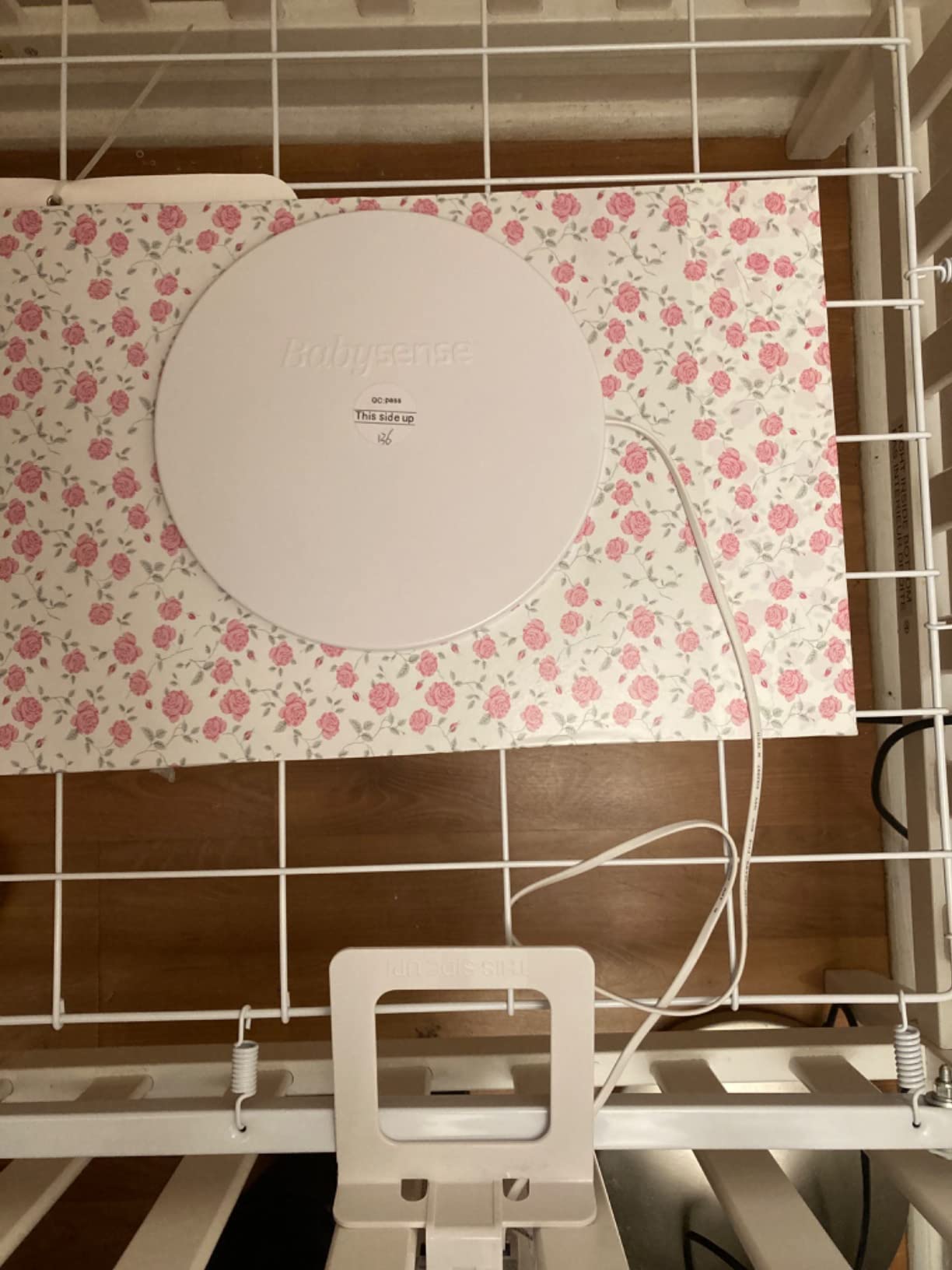
Two pads sit under the mattress and read passive micro-movements. The control unit, which runs on alkaline batteries rated at 24 hours of battery life, mounts outside the crib with the cables routed away from the sleeping space. The unit alerts if no movement registers within 20 seconds, or if movement simply slows.
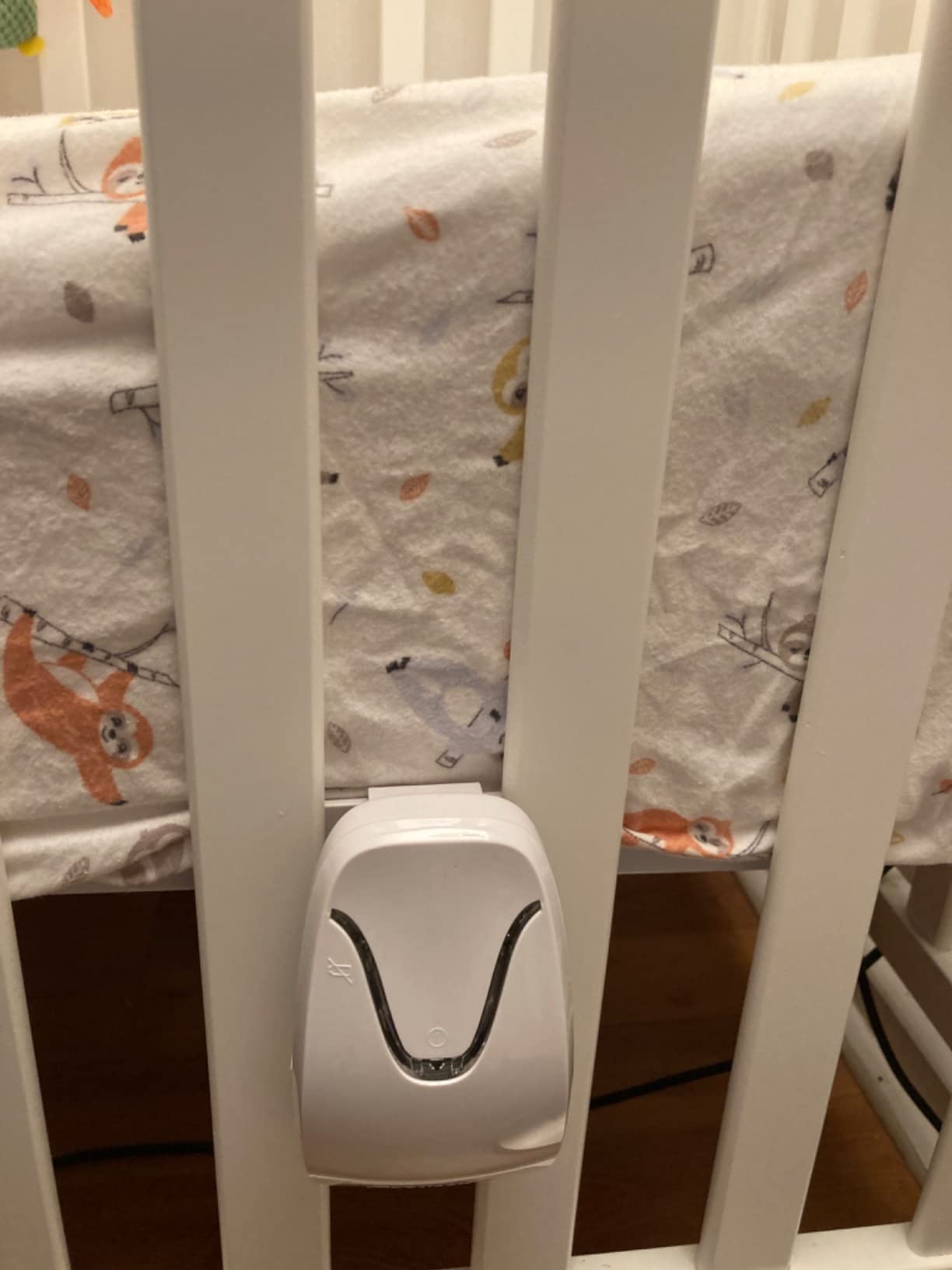
What makes this the low-false-alarm pick is that nothing in the design depends on a strap staying in place. A blinking green light shows every detected breath and flinch, and owners report months of nightly use without a false trip even with air conditioning running.
Several reviews describe the alarm firing during a genuine apnoea. That is the case the device exists for, and it is worth weighing against the far larger number of reviews where the baby was fine.
The caveats are physical and predictable. It is not portable, and you cannot monitor a baby in a bouncer or swing. Memory foam mattresses are not supported, so check what your crib is built on.
What to check before you buy
Confirm your mattress is not memory foam. The manufacturer names hard bases and standard mattresses as the supported setup, and that is the single most common reason for a poor result.
On some cribs the pads need a little wooden shimming to sit flat and level. That is a two-minute fix but it is worth doing before the first night rather than after the third alarm.
How to keep the alerts meaningful
Point your fans away from the crib. Air movement across the mattress is the most cited false alarm trigger in the reviews, and it is entirely avoidable by repositioning.
Make switching the unit off part of lifting your baby out. A flat, empty mattress looks exactly like a baby who has stopped moving, and the alert will sound every single time.
We earn a commission, at no additional cost to you. CERTAIN CONTENT THAT APPEARS ON THIS SITE COMES FROM AMAZON. THIS CONTENT IS PROVIDED 'AS IS' AND IS SUBJECT TO CHANGE OR REMOVAL AT ANY TIME.
4. Owlet Dream Sock Smart: Best for Heart Rate and Oxygen Data
Owlet Dream Sock Smart Baby Monitor, Includes 3 Months of Owlet 360
- Tracks pulse rate and oxygen level in real time
- Base Station and phone alerts outside preset zones
- Intended for infants 6 to 30 lbs
Pros
- Only device here streaming heart rate and oxygen levels
- Base Station alerts work when your phone is out of the room
- Soft washable sock in two sizes
- App adds sleep stage and temperature data
Cons
- App can be slow to sync and lag behind
- Needs 2.4 GHz WiFi and not compatible with 5 GHz
- Sock can work loose and set off sock-off alerts
- Some reports of marks on sensitive skin
We earn a commission, at no additional cost to you. CERTAIN CONTENT THAT APPEARS ON THIS SITE COMES FROM AMAZON. THIS CONTENT IS PROVIDED 'AS IS' AND IS SUBJECT TO CHANGE OR REMOVAL AT ANY TIME.
The Owlet Dream Sock Smart is the only device in this roundup that uses pulse oximetry. It streams your baby’s pulse rate and blood oxygen to a Base Station in the same room and to your phone, alerting when readings leave the preset zones. If your question is about numbers rather than movement, this is the only consumer option that answers it.
it is also the product with the widest spread of opinion on this page, and the reason is visible in the rating distribution. With over 5200 reviews and an average of 4, roughly 15 percent of reviewers gave it one star, a noticeably higher share than any rival here.
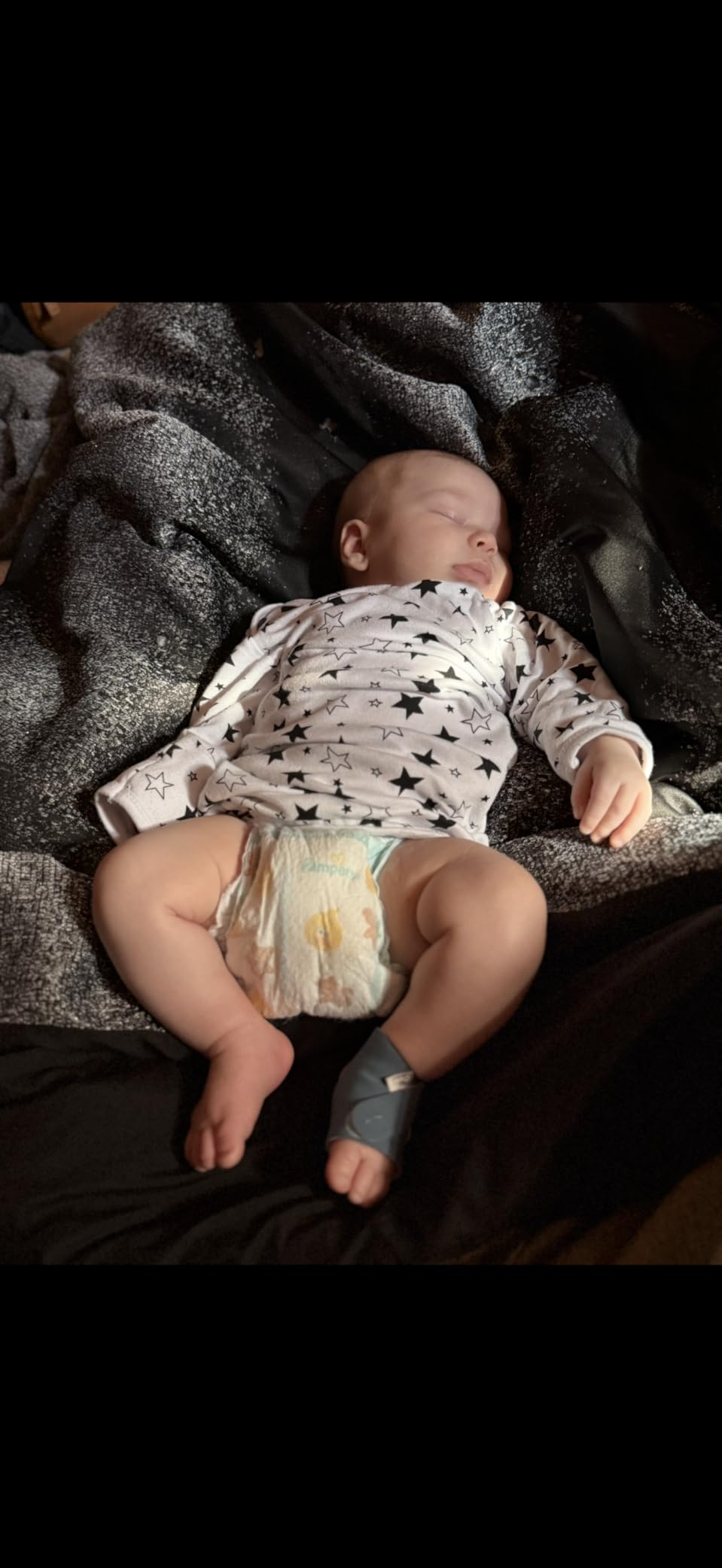
The complaints cluster around software rather than sensor hardware. Owners describe an app that is confusing, slow to sync and lags on data updates, plus Bluetooth disconnections appearing after months of nightly use. The sock itself is repeatedly praised as soft, washable and comfortable, in two sizes as the baby grows.
There are real hardware caveats too. The unit needs a consistent 2.4 GHz connection, and the US version is not compatible with 5 GHz networks. The sock can work loose during sleep and trigger a yellow sock-off alert, and some owners report burning or marks on sensitive skin.
It is intended for healthy infants aged 1 to 18 months, in the 6 to 30 pound range, so a small premature infant falls outside it. Data handling uses 256-bit encryption with elliptic curve authentication, and a Predictive Sleep feature maps wake windows.
Where it earns its place
If your baby was born early, or your pediatrician has asked for documented overnight readings, this is the one. Parents of premature and medically concerning infants write the most positive reviews of anything in this roundup, precisely because the data means something to a clinician.
The Base Station matters more than the app in practice. It alerts in the room without depending on your phone, which solves the problem of a phone that dies overnight.
Where it falls short
Desaturation is normal in healthy newborns, and streaming it to an anxious parent at 4am produces alerts that mean nothing clinically. If you are buying for reassurance rather than documentation, it is a poor trade if what you want is reassurance rather than documentation.
Budget for the premium tier too. The package includes three months of the Owlet 360 features, covering morning reports and long-term health trends, and the underlying subscription cost is worth calculating against how long you expect to use it.
We earn a commission, at no additional cost to you. CERTAIN CONTENT THAT APPEARS ON THIS SITE COMES FROM AMAZON. THIS CONTENT IS PROVIDED 'AS IS' AND IS SUBJECT TO CHANGE OR REMOVAL AT ANY TIME.
5. Levana Oma Sense: Best for Travel and Grandparents
Levana Oma Sense Portable Baby Breathing Movement Monitor with Vibrations and Audible Alerts Designed to Stimulate Baby and Alert Parents
- Patented Wakeup Technology watches abdominal movement
- Vibration at 15 seconds then audible alarm 5 seconds later
- Clips to diaper or clothing with no skin contact
Pros
- Zero skin contact clips to diaper or onesie
- No WiFi radio or Bluetooth at all
- Small and portable for travel or grandparents
- Flashing blue light shows monitoring status
- Two-stage alert tries to rouse baby first
Cons
- Clip can shift on small or very active babies
- Less reliable if baby sleeps on side or tummy
- Ages out of usefulness past 0 to 6 months
We earn a commission, at no additional cost to you. CERTAIN CONTENT THAT APPEARS ON THIS SITE COMES FROM AMAZON. THIS CONTENT IS PROVIDED 'AS IS' AND IS SUBJECT TO CHANGE OR REMOVAL AT ANY TIME.
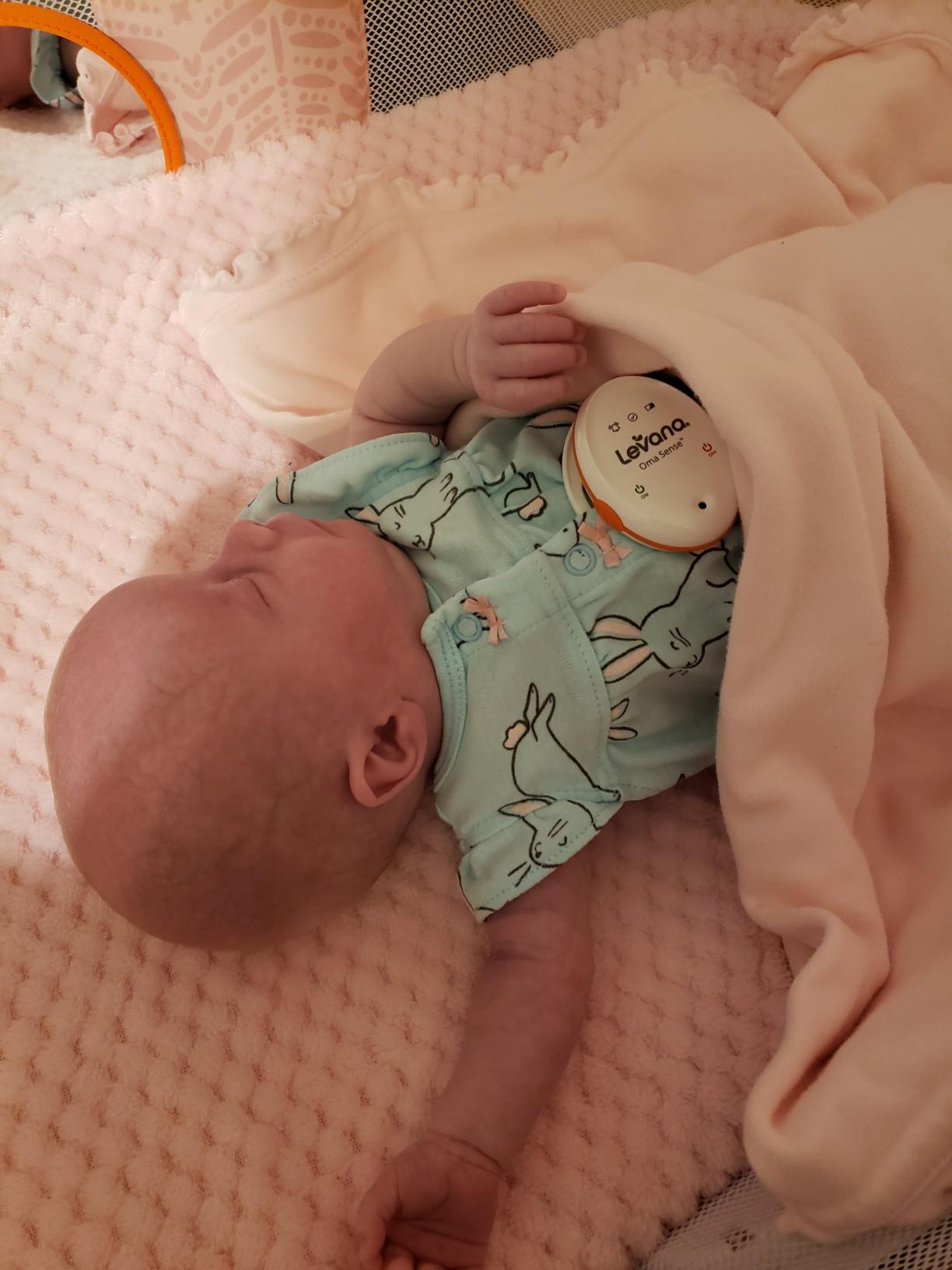
The Levana Oma Sense is the simplest device here and the easiest to hand to someone else. It clips over the diaper, a pair of pants or a buttoned-up onesie, with zero skin contact, and it uses no WiFi, no radio and no Bluetooth. There is nothing to pair and nothing that can fail because the internet dropped.
Its Wakeup Technology monitors abdominal movement and escalates in two stages. A vibration fires after 15 seconds of no detected movement, then an audible emergency alarm sounds 5 seconds later if nothing has changed. The flashing blue indicator light confirms at a glance that it is still monitoring.
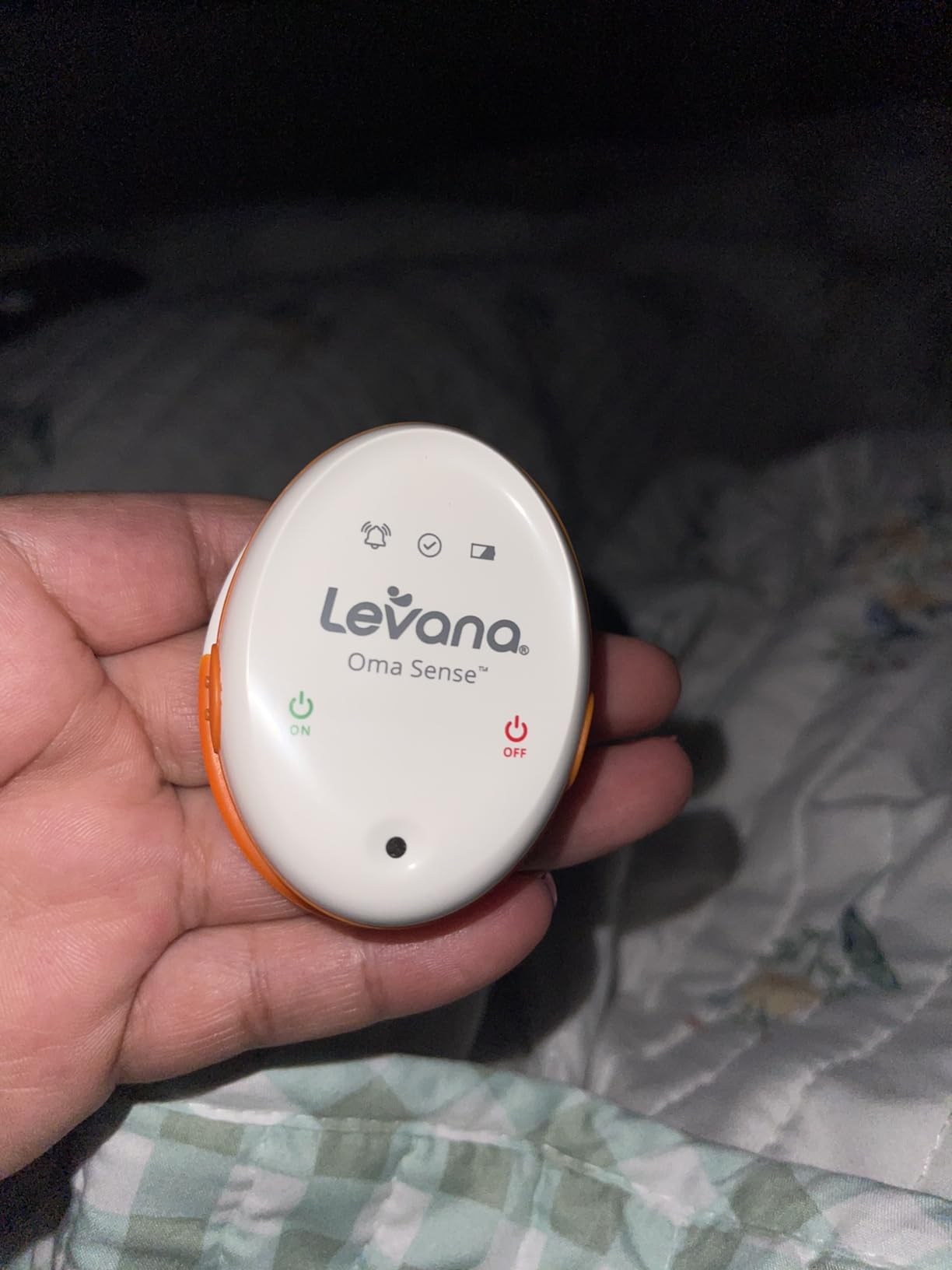
Parents who travel, or who hand the baby to grandparents overnight, mention this device by name for that reason. It is small, it needs no charging cable in the equation, and it cannot be defeated by a weak router in an unfamiliar house.
The designed age range is 0 to 6 months, and that is genuinely useful information. Owners note a decline in usefulness once the baby is older and sleeping longer stretches, because a monitor for a six-month-old who sleeps eleven hours has very little left to tell you.
The clip is the weak point. It can shift on very small babies, and it is described as less reliable when the baby sleeps on their side or tummy, because there is less consistent abdominal movement to read.
Where it makes sense
Choose it when your baby is not dressed in a footed sleeper or a sleep sack. A onesie and a diaper are all it needs, which is the normal state of a newborn in the first few weeks.
Choose it when the setup has to survive being packed into a bag and handed to someone who does not read manuals. There is no app to log into.
Where it makes less sense
If your baby is a very small premature infant, the clip is easier to dislodge. Ask your pediatrician about monitoring for a preterm discharge rather than guessing with a consumer unit.
If your baby already rolls onto their side regularly, a non-contact option is a better fit, because a side-sleeper’s movement is exactly what a waist clip misreads.
We earn a commission, at no additional cost to you. CERTAIN CONTENT THAT APPEARS ON THIS SITE COMES FROM AMAZON. THIS CONTENT IS PROVIDED 'AS IS' AND IS SUBJECT TO CHANGE OR REMOVAL AT ANY TIME.
6. Sense-U 2.5K PTZ Camera: Best With No Monthly Fee
Sense-U AI 2.5K PTZ Baby Camera Monitor with Sensor-Free Sleep Movement Detection, Smart Security Indoor Video Camera with Background Audio, Cry Detection, No Monthly Fee, for Peace of Mind
- 2.5K pan-tilt-zoom camera with background audio
- Works with the Sense-U Movement Badge
- No monthly fee with local SD recording
Pros
- 2.5K picture holds up at night and in low light
- Background audio continues with the app closed
- No subscription required for local recording
- Encryption plus optional two-factor authentication
- Several owners also use it for pets
Cons
- Movement detection needs the separate Sense-U badge
- SD card not included and cloud is paid
- One report of a unit failing after about three weeks
We earn a commission, at no additional cost to you. CERTAIN CONTENT THAT APPEARS ON THIS SITE COMES FROM AMAZON. THIS CONTENT IS PROVIDED 'AS IS' AND IS SUBJECT TO CHANGE OR REMOVAL AT ANY TIME.
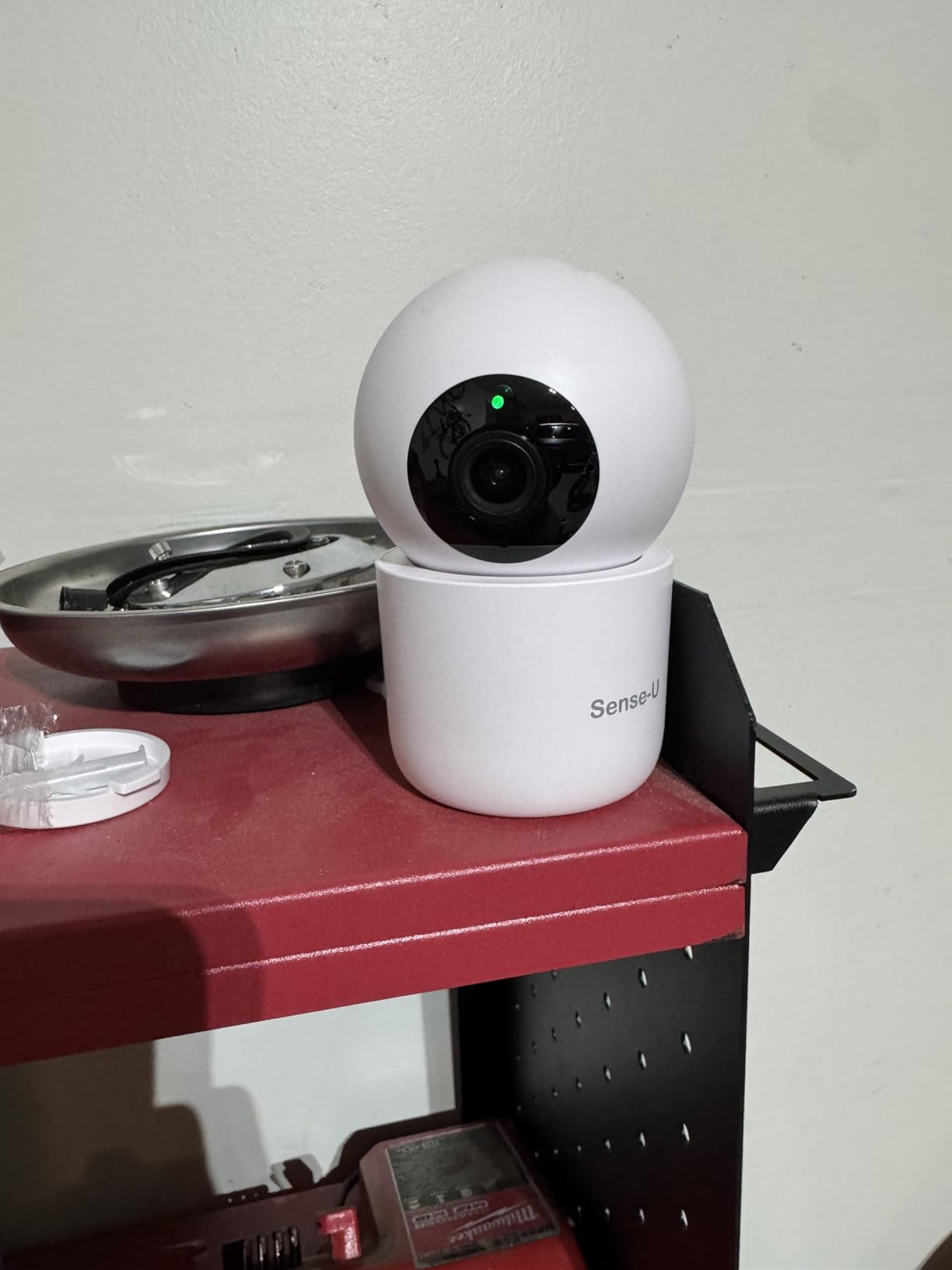
The Sense-U camera is a good general nursery camera that becomes a breathing monitor when you add the Sense-U Movement Badge. The badge is a separate accessory, and the movement detection depends on it, so read that as a two-part purchase rather than a single box.
The camera itself is strong. It streams 2.5K HD with a 345-degree pan and 50-degree tilt, and the background audio mode keeps running with your phone locked, which is the feature most parents undervalue until they have had a night without it.
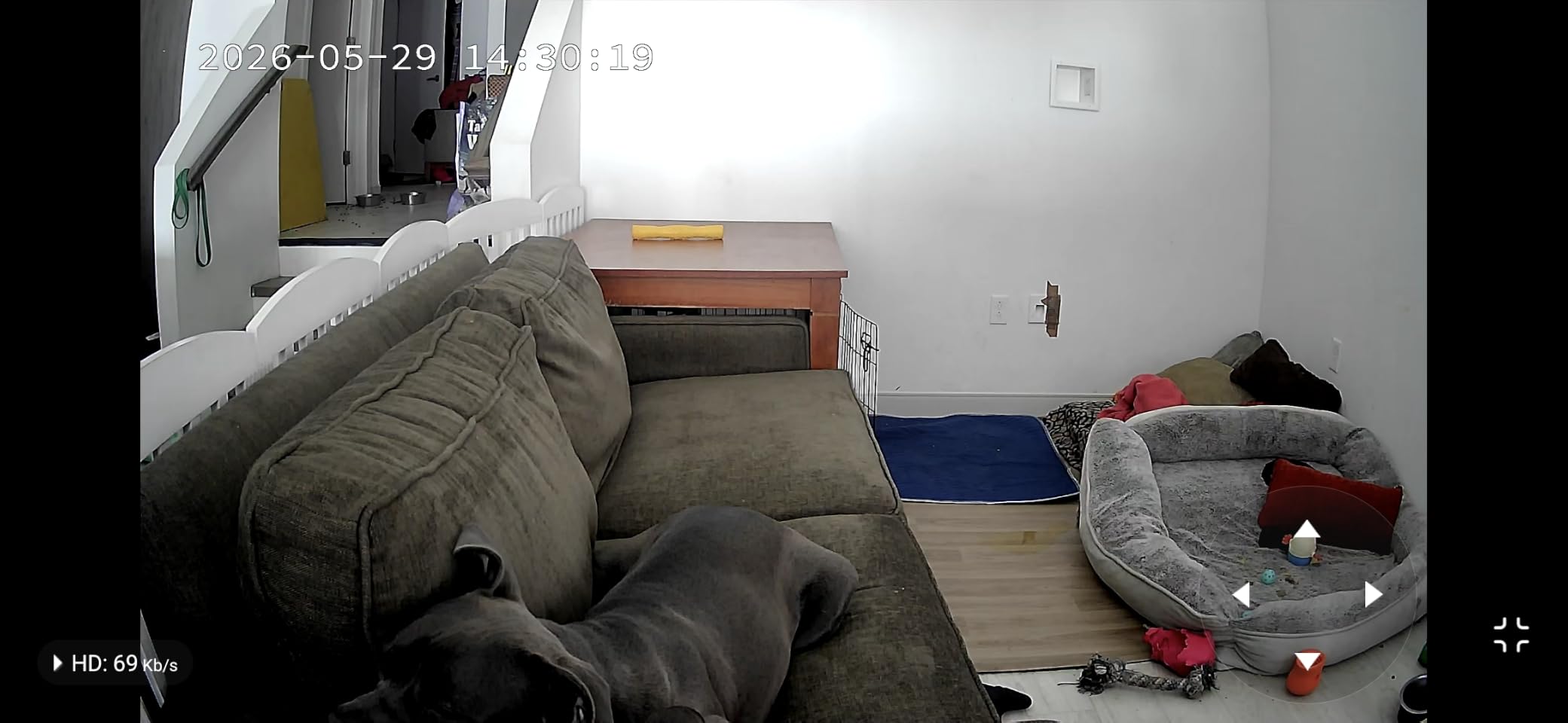
Privacy gets real attention here, which is unusual in this category. There is enterprise-level encryption, optional two-factor authentication and a Private Mode, and the video records to a local SD card with no monthly fee attached. Cloud storage is offered as a paid option, not a requirement.
AI detection covers sound, human presence, motion and crying, and you can view multiple rooms or multiple children on one screen. That makes it useful for twins without needing a second account.
Reviewers are positive on night performance and setup simplicity. The main negatives are practical: the SD card is not included, cloud is an extra, and one owner reported a unit failing after about three weeks with slow refund handling.
Who should buy this one
Buy it if your priority is seeing your baby rather than reading a number. A 2.5K feed in the dark tells you a great deal about how a newborn is breathing simply by watching chest rise.
Buy it if you refuse to pay a subscription for a camera in your own house. Local recording keeps the ongoing cost at zero.
Who should skip it
Skip it if you want the monitor to be the only thing in the crib area, since the badge is an additional contact device. If you want zero wearable parts at all, an under-mattress pad is a cleaner match.
Treat it as a camera with breathing features rather than a dedicated breathing monitor. Several reviewers describe it primarily as a home security camera, and that is a fair characterisation.
We earn a commission, at no additional cost to you. CERTAIN CONTENT THAT APPEARS ON THIS SITE COMES FROM AMAZON. THIS CONTENT IS PROVIDED 'AS IS' AND IS SUBJECT TO CHANGE OR REMOVAL AT ANY TIME.
7. BEMPU BellyButton: Best Lightest Clip-On Design
BEMPU Baby Movement Monitor – Sleep Monitor with Gentle Vibration Alerts
- Monitors abdominal movement with a two-step alert
- App alerts on Android and iOS without WiFi
- Rechargeable battery up to 7 days with 1 hour recharge
Pros
- Lightest clip-on option here at 13 g
- Soft vibration first then audible alarm
- App alerts on both Android and iOS
- FCC certified Bluetooth LE with no WiFi needed
- Portable across crib bassinet or bedside
Cons
- Small review base so long-term data is thin
- Fit changes with stretching or rolling can alert
We earn a commission, at no additional cost to you. CERTAIN CONTENT THAT APPEARS ON THIS SITE COMES FROM AMAZON. THIS CONTENT IS PROVIDED 'AS IS' AND IS SUBJECT TO CHANGE OR REMOVAL AT ANY TIME.
The BEMPU BellyButton is worth knowing about because of its weight. At 13 g it is the lightest device on this page, and on a small newborn that difference is visible: a clip that light is less likely to drag the diaper out of position and less likely to be felt as a lump under a onesie.
The alert sequence starts gently. A soft vibration fires first, and the audible alarm follows if monitoring continues to detect nothing. App alerts work on both Android and iOS, and the FCC-certified Bluetooth Low Energy module means it works without any WiFi at all.
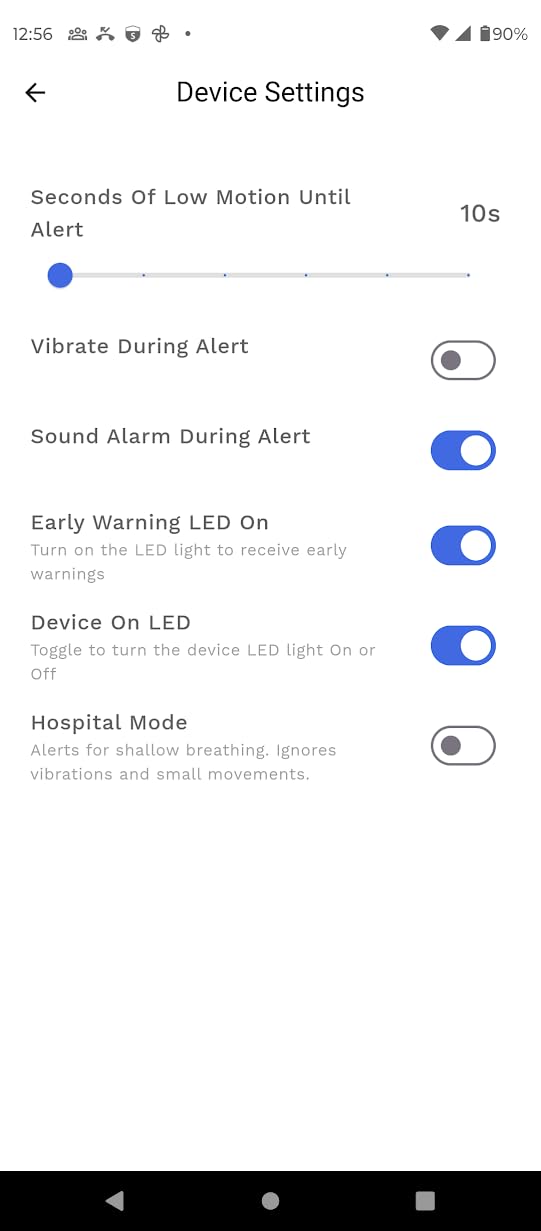
Battery life is around 7 days of typical daily monitoring with roughly an hour of recharge, which is a better balance than the six-month disposable batteries in the clip-on category, if you remember to plug it in.
The honest caveat is the review count. Fewer than 100 reviews at a 4.5 average is a small sample, so the evidence base on long-term reliability is thin rather than negative.
As with all diaper clips, fit changes when a baby stretches or rolls can trigger an alert. That is the category’s shared flaw, not a fault specific to this model.

Why the low weight matters
For a small baby, a heavy clip is a clip that shifts. The 13 g figure is the main reason to prefer this over a bulkier unit, and it is a reason that only matters in the first couple of months.
It is also comfortable enough that parents report it does not change the baby’s sleep position, which is worth more than it sounds when your baby is fussy about being disturbed.
Who should wait for more evidence
If you want a device you will still trust in a year, this sample size is thin. Check the current review count before you commit rather than relying on the star average alone.
If your baby sleeps on their side regularly, consider a non-contact option instead. A clip reads abdominal movement most reliably when a baby is flat on their back.
We earn a commission, at no additional cost to you. CERTAIN CONTENT THAT APPEARS ON THIS SITE COMES FROM AMAZON. THIS CONTENT IS PROVIDED 'AS IS' AND IS SUBJECT TO CHANGE OR REMOVAL AT ANY TIME.
8. Lollipop Smart Camera: Best Breathing Insights From a Camera
Lollipop Baby Monitor (Turquoise) – Full-Featured Smart Wi-Fi Camera of True Crying Detection with Extra in-App Plan of Breathing Monitoring/Sleep Tracking-Accessories Free/7 Days Trial Period
- AI contactless breathing monitoring with respiratory history
- True crying detection filters ambient noise
- One-time purchase no receiver unit
Pros
- No receiver unit to charge or lose
- 1080p wide-angle video with strong night vision
- Wraps around a crib rail in minutes
- True crying detection filters wind noise
- Triggered 30-second clips saved for two days
Cons
- Breathing monitoring and sleep tracking sit behind a Care plan
- Audio can cut out when WiFi is weak
- Settings sometimes lost after reconnecting
- Firmware updates can break the stream
We earn a commission, at no additional cost to you. CERTAIN CONTENT THAT APPEARS ON THIS SITE COMES FROM AMAZON. THIS CONTENT IS PROVIDED 'AS IS' AND IS SUBJECT TO CHANGE OR REMOVAL AT ANY TIME.
The Lollipop is a 1080p smart camera with no receiver unit at all. Everything runs through a phone or tablet app, and the bendable arm wraps around a crib rail in minutes or mounts to a wall if you prefer. It is the least hardware-heavy option here.
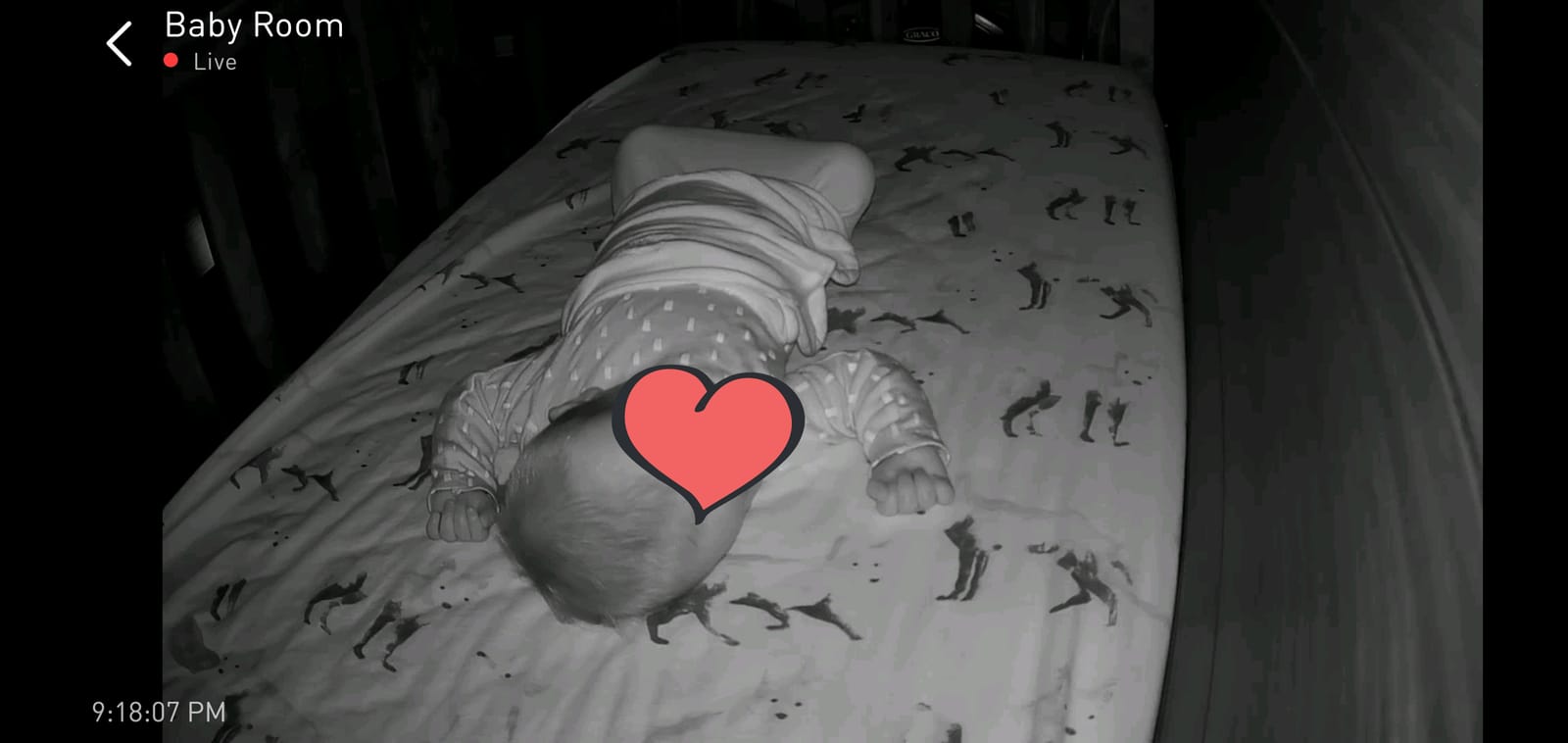
What makes it interesting for breathing specifically is the AI-based contactless monitoring, which tracks respiratory rate and sleeping position history and stores it as a Care plan inside the app. That history is the part you cannot get from a clip-on unit.
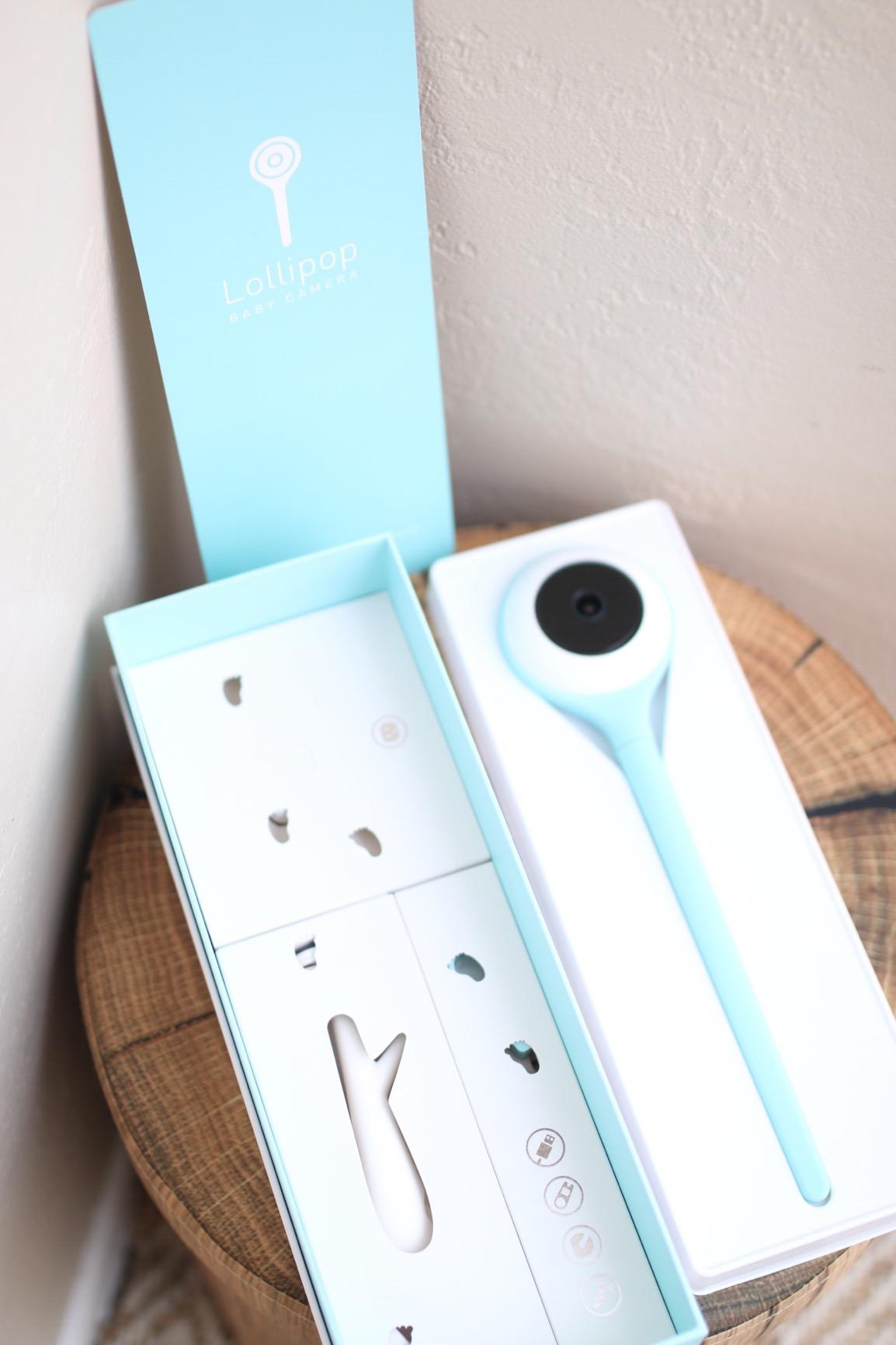
Cry detection is the more polished feature. It filters ambient noise such as wind, and there is a crossing or border detection mode that alerts when movement leaves a defined area of the frame, which some parents use as a loose safe-sleep position reminder.
The recurring negatives are all WiFi-related. Owners report audio cutting out or lagging on a weak signal, settings not retained after a reconnection, and firmware or app updates causing connectivity drops. Background audio mode and twelve nature sounds round out a well-featured package.
The core purchase is one time. Breathing analytics and sleep tracking sit behind an optional in-app Care plan, so factor that into your running cost if respiratory history is what you are buying.
Where the camera approach wins
It wins when you want data over time rather than a single alarm. A respiratory rate history shows you your baby’s normal pattern, which is genuinely useful context to bring to a pediatrician.
It also wins for travel and grandparents’ houses, because there is no base station, no pairing and nothing to lose between locations.
Where the camera approach struggles
Accuracy depends on lighting and camera angle. A night vision feed with a clear line of sight to the mattress is a different measurement than a wide shot across the room, and the mounting angle matters more than the sensor spec.
If your WiFi is unreliable, this is the wrong pick. Every weakness in the reviews traces back to the network, not the camera.
We earn a commission, at no additional cost to you. CERTAIN CONTENT THAT APPEARS ON THIS SITE COMES FROM AMAZON. THIS CONTENT IS PROVIDED 'AS IS' AND IS SUBJECT TO CHANGE OR REMOVAL AT ANY TIME.
9. BabySmile Movement Monitor: Budget Pick for a Second Layer
BabySmile Baby Movement Monitor for Newborn Sleep, Diaper Clip
- Detects subtle abdominal movement during sleep
- Audible alert after about 20 seconds of nothing
- Cordless and app-free with no radio frequencies
Pros
- Very light at 25 g on the diaper
- Nothing to connect or pair
- Battery stated at about six months of nightly use
- Clip attaches to clothing or a sleep sack
- Useful as an extra layer after a breathing scare
Cons
- Reliability reported as inconsistent between units
- Alerts when wriggled off or on the side
- Some units failed after a few months
- Fitted battery is not user-replaceable
We earn a commission, at no additional cost to you. CERTAIN CONTENT THAT APPEARS ON THIS SITE COMES FROM AMAZON. THIS CONTENT IS PROVIDED 'AS IS' AND IS SUBJECT TO CHANGE OR REMOVAL AT ANY TIME.
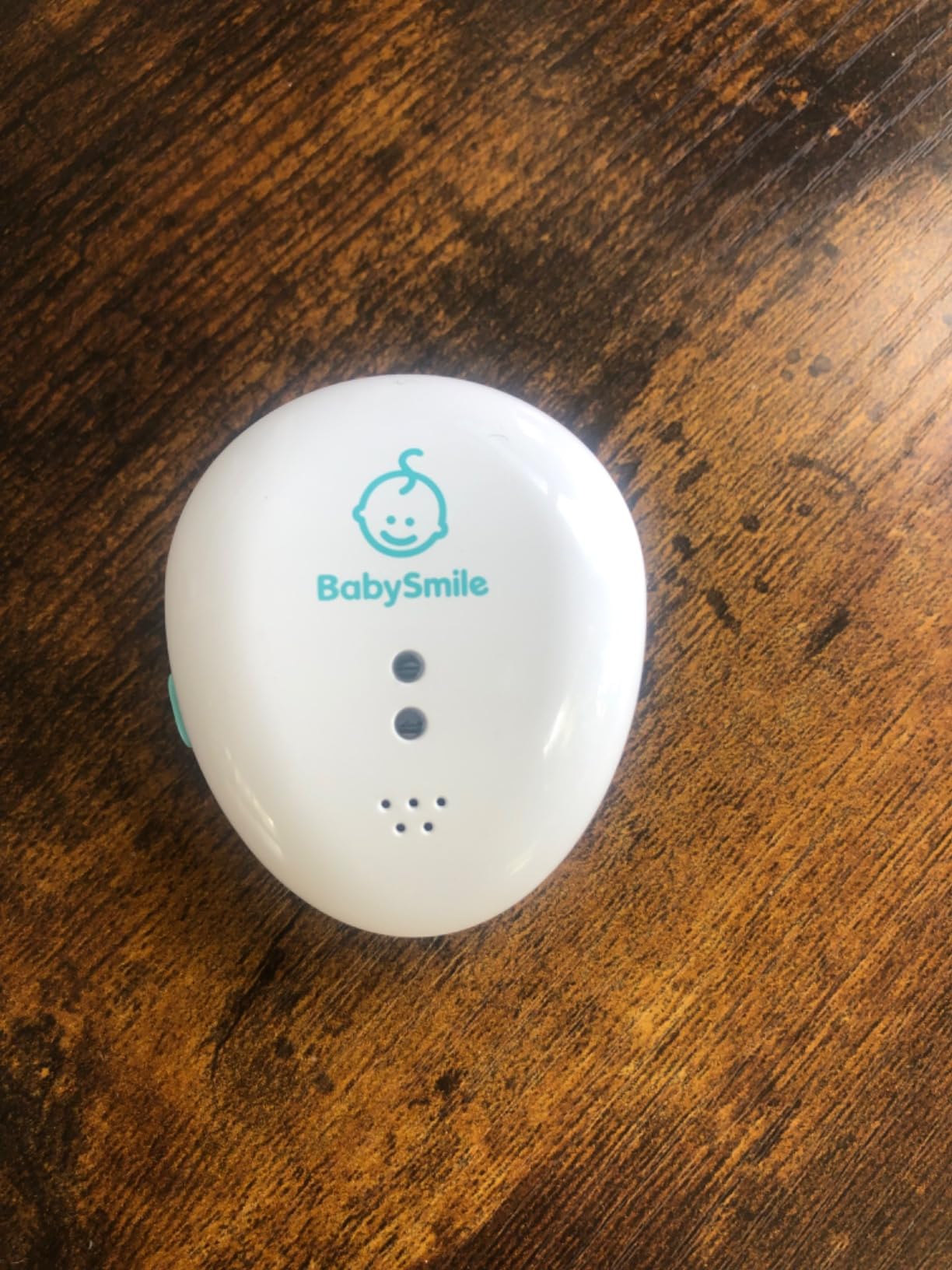
The BabySmile is one of the least expensive dedicated movement sensors here and among the simplest things on this page: 25 g, clipped to the diaper, with a local audible alert after approximately 20 seconds of no movement. No app, no account, no radio frequencies at all.
Owners who get a working unit praise the simplicity and the battery, stated at roughly 2200 hours or about six months at 12 hours of use. Several parents describe buying it as an extra layer of reassurance after a breathing scare, rather than as a primary monitor.
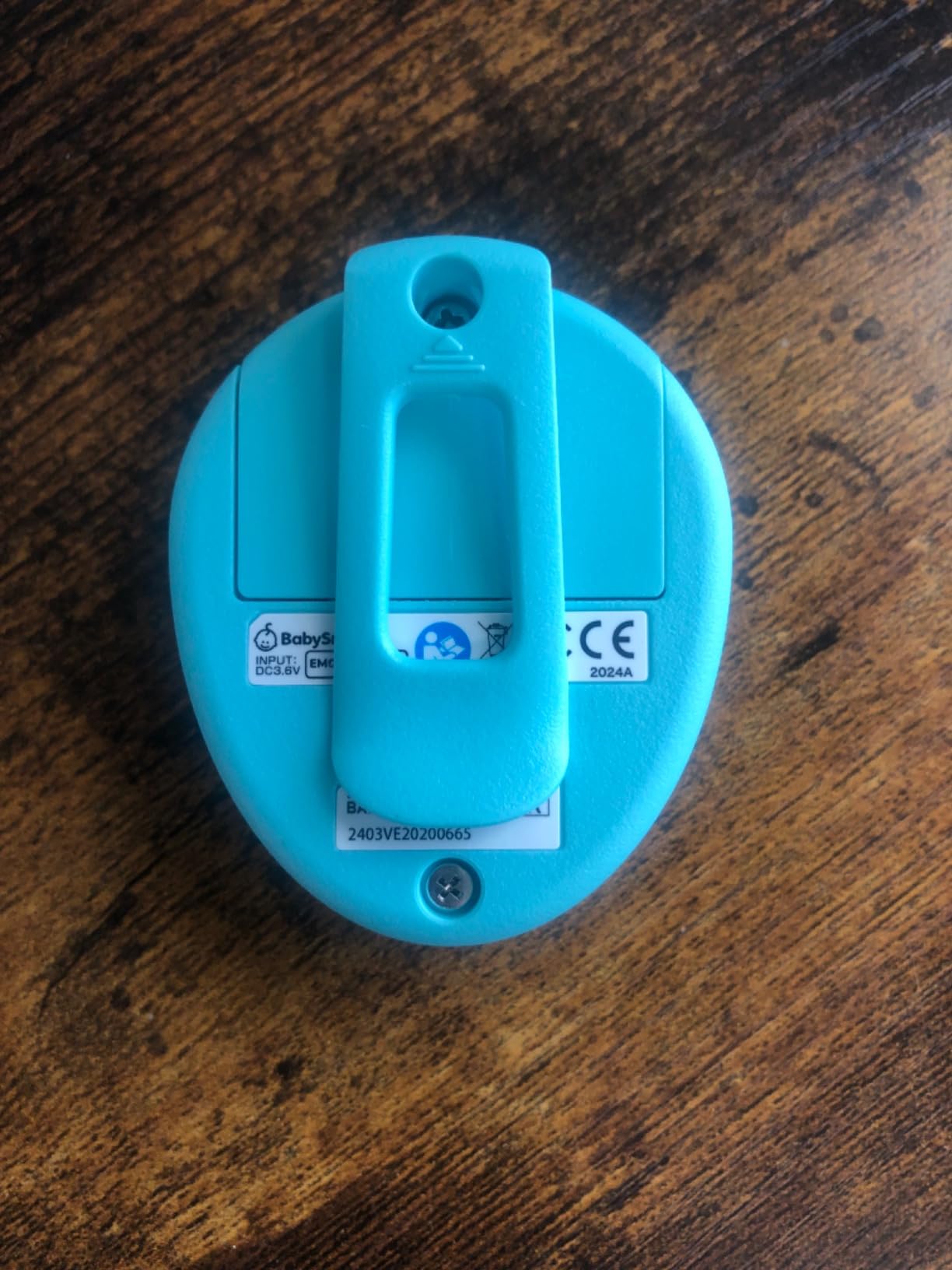
The critical reviews are not about features, they are about reliability being inconsistent between units. Reports include units that did not work or worked intermittently, a timer test that took over two minutes to alarm in one owner’s check, and failures after a few months with a battery the user cannot replace.
Fit is the same issue as every other diaper clip. It alerts when the baby wriggles it loose or sleeps on their side.
At 4.1 stars from 91 reviews, the rating is honest about that split. Buy it as a backup for a grandparents’ house, not as the monitor you rely on through a difficult winter.
Where it makes sense
It makes sense as a travel or secondary-location device. Something that small and that simple can live in a suitcase or a nanny’s bag without discussion.
It also suits anyone who wants a monitor with no app, no account and nothing wireless. There is a real comfort in a device with no software to fail.
Where it does not make sense
Do not build your newborn monitoring plan around it. Unit-to-unit variation and a non-replaceable battery are the two flaws most likely to leave you unprotected at 3am.
If you want readings you can review later or share with a pediatrician, there is nothing here to show them. This is an alarm, not a record.
We earn a commission, at no additional cost to you. CERTAIN CONTENT THAT APPEARS ON THIS SITE COMES FROM AMAZON. THIS CONTENT IS PROVIDED 'AS IS' AND IS SUBJECT TO CHANGE OR REMOVAL AT ANY TIME.
10. Snuza Pico 2: Most Data, Least Reliable in Our Roundup
Snuza Pico 2 Wearable Child-Care Aid | App Connected or Standalone | Detects & Reports Movement Activity | Body Position, Sleep & Skin Surface Temperature Information | Real-Time Notifications
- Tracks movement body position and skin temperature
- App tracking with Bluetooth or standalone use
- Vibration pre-alert at 15 seconds then alarm at 20
Pros
- Tracks body position including rolled to tummy
- Works as a standalone breathing alarm without the app
- Charging cradle doubles as a carry case
- Green light and ticking confirm movement
- Several owners credit it with catching real pauses
Cons
- Flat sensor lifts from skin and causes frequent false alarms
- App described as clunky and drains phone battery
- Temperature readings need manual calibration
- Bluetooth only so data needs the same room
We earn a commission, at no additional cost to you. CERTAIN CONTENT THAT APPEARS ON THIS SITE COMES FROM AMAZON. THIS CONTENT IS PROVIDED 'AS IS' AND IS SUBJECT TO CHANGE OR REMOVAL AT ANY TIME.
The Snuza Pico 2 is the only device here that tracks body position and skin temperature alongside movement, and that is a real distinction. It will tell you when your baby has rolled onto their tummy, which is information no other consumer unit in this roundup provides.
The alert ladder is the familiar Snuza design. A vibration pre-alert fires at 15 seconds of no movement, and the audible alarm follows 5 seconds later at 20 seconds total. The green light and optional ticking sound confirm detection continuously.
At 3.8 stars from 35 reviews it is the lowest-rated product here, and the reason is consistent. The flat sensor design lifts away from the skin when a baby stretches or bears down, which owners describe as causing near-nightly false alerts. That single mechanical flaw drives most of the negative reviews.
The app draws criticism too. Reviewers call it clunky and limited to short rolling data windows with no export, and it drains phone battery. Temperature readings also run a few degrees below core body temperature and need manual threshold calibration before they mean anything.
There are genuine positives. Several owners describe it alerting during a genuine stopped-breathing episode, and the charging cradle doubling as a protective carry case is a thoughtful touch for travel.
Who should still consider it
Consider it if position alerts are the feature you actually want. For a baby old enough to roll and a household that worries about that specifically, no other unit here does it.
Consider it if you plan to use it standalone. It works as a plain breathing alarm without the app, which sidesteps the app problems entirely.
Who should skip it
Skip it if false alarms will wear you down. With the lowest rating and the flattest sensor in the roundup, this is the device most likely to have you muting alerts within a month.
Skip it if you want the temperature reading to be trustworthy out of the box. It needs calibration before it is worth reading.
We earn a commission, at no additional cost to you. CERTAIN CONTENT THAT APPEARS ON THIS SITE COMES FROM AMAZON. THIS CONTENT IS PROVIDED 'AS IS' AND IS SUBJECT TO CHANGE OR REMOVAL AT ANY TIME.
When You Do Not Need a Baby Breathing Monitor
The top-ranking organic result on this topic is a parent forum thread, and the prevailing view there is blunt: breathing monitors are not necessary as long as the baby is being put on their back to sleep. That view is not a minority position and it deserves a straight answer rather than a dismissal.
For a healthy full-term newborn with no family history of SIDS and no respiratory diagnosis, most pediatric organizations do not recommend a consumer breathing monitor. The evidence-based protections require no equipment at all: baby alone, on the back, on a firm flat surface, in a room you share for the first six months.
You are in a different position if your baby was born premature, spent time in the NICU, has a diagnosed respiratory or cardiac condition, or if there is a family history of SIDS or an apparent life-threatening event. In those cases, follow your pediatrician’s instructions, which may mean a prescribed medical-grade monitor rather than a consumer one.
There is also an argument that rarely gets made on these forums. Alarm fatigue is real, and a device that cries wolf several times a week teaches you to stop responding to it. A parent who becomes conditioned to ignore the alert has gained nothing over owning no monitor at all.
What we would buy instead, for most families, is a good audio or video monitor with solid battery backup. It lets you hear regular breathing, which is usually all the reassurance required, without generating data that prompts you to check the screen every four minutes.
How to Reduce False Alarms
False alarms are the number one reason parents abandon a breathing monitor, and almost all of them are placement problems rather than hardware faults. Six steps fix the majority.
1. Move your air flow. A ceiling fan or floor fan blowing toward the crib is the most cited false alarm trigger in the reviews for under-mattress pads. Redirect it and a large share of your alerts disappear.
2. Switch the unit off when you lift your baby. An empty mattress looks exactly like a motionless baby to a sensor pad. Make this a reflex from night one and it will stop a large fraction of your 3am trips.
3. Seat the wearable properly. Fold the diaper waistband over a clip-on sensor, or add a onesie so the clip is trapped underneath. For a sock, check the fit mark before the baby is asleep, not after.
4. Level the pads. On some cribs the sensor pads need a thin wooden shim to sit flat. A pad that tilts against a slatted base produces gaps in the signal.
5. Check the mattress type. Memory foam is not supported by the sensor pad category. If that is what your crib has, a wearable or camera option fits better.
6. Use the escalation ladder rather than overriding it. The vibration stage on the Snuza units, the Levana Oma Sense and the BEMPU exists because a gentle stimulus often restarts breathing before anything needs to escalate. Habituate yourself to the first stage before the second one ever sounds.
When an alert does fire for real, go to your baby rather than to the app. Check breathing by watching chest movement for a full count of ten seconds. If your baby is unresponsive or breathing badly, that is a medical emergency, and the monitor was never the diagnostic tool.
How to Choose a Baby Breathing Monitor for a Newborn
Start with the sensor type, because it decides what the device can physically detect. A pad under the mattress is the least likely to be kicked off. A clip-on diaper monitor is the only option that travels between sleeping surfaces. A camera is the only one that also shows you the room.
Next, decide whether you want an alarm or a record. Alarms are simpler and quieter. Records, which means smart socks or camera analytics with a history, are what a pediatrician can actually read after a difficult week.
Check the weight and size limits against your baby. The Owlet Dream Sock Smart is intended for infants from 6 to 30 pounds, and the Levana Oma Sense is designed for 0 to 6 months. A very small premature infant sits outside both of those ranges.
Look hard at the alert ladder. Vibration first and audible alarm second gives you a few seconds and a chance for your baby to self-correct without waking the house. A single-stage alarm simply startles everyone.
Decide on privacy before you buy. Every device here transmits something. Clip-on and pad options with no WiFi, no radio and no Bluetooth broadcast nothing at all, which is the strongest privacy position available. Camera options that record locally to an SD card avoid a subscription and avoid a cloud feed of your nursery.
Read the recurring complaint, not the average rating. A 4.5 from 90 reviews is a much weaker signal than a 4.4 from 7400. The Babysense True Sleep HD bundle has both the highest volume and a high share of five-star ratings, which is why it is our pick.
Budget for the subscription where one exists. Owlet bundles three months of premium features, and camera breathing analytics sit behind an optional plan. If a device is useful to you only through its analytics, a one-time purchase is the better deal.
For preterm discharge specifically, ask the hospital what monitor they used in the NICU and whether your pediatrician will prescribe one. Hospitals frequently use their own wired monitors, and a prescribed home unit is a different product category from everything on this page.
Finally, plan the safe sleep setup alongside the device. Whatever you choose, the monitor goes in a crib with nothing loose in it, no cords across the sleeping space, and your baby on their back on a firm flat surface.
Frequently Asked Questions
What is the best baby monitor for a newborn?
For most newborns the best option is a non-contact under-mattress sensor pad such as the Babysense 7, or the Babysense True Sleep HD bundle if you also want a camera. Nothing is worn by the baby, so nothing can shift or be kicked off mid-sleep. If your baby is preterm or has a diagnosed condition, ask your pediatrician first, since they may want a prescribed medical-grade monitor instead.
Do pediatricians recommend the Owlet?
Many are lukewarm about it. The published concern is the implication that buying one reduces SIDS risk, not the sock hardware itself. For a healthy full-term newborn, most pediatric organizations do not recommend a consumer monitor at all. Safe sleep practices, not a wearable, are the evidence-based protection.
Why are pediatricians against Owlet?
The objection centers on marketing that implies risk reduction, plus the anxiety generated by streaming oxygen saturation, which naturally fluctuates in healthy newborns. Clinicians also note that a consumer device cannot substitute for prescribed medical monitoring in a preterm baby or one with a family history of SIDS.
What is the FDA-approved baby oxygen monitor?
There is no consumer option. The smart socks in this category use pulse oximetry, but they are not cleared by the FDA as medical devices and are not proven to prevent SIDS. Hospital-grade monitors used in a NICU or prescribed for home use are a different category of product entirely, and they require a physician’s prescription.
Is the Snuza Hero or Owlet better?
They answer different questions. The Snuza Hero is a standalone alarm with a direct-touch diaper sensor, no subscription and a vibration-first alert, which suits families wanting reassurance. The Owlet Dream Sock Smart streams heart rate and oxygen levels and produces records a pediatrician can read, at a much higher cost and with more alerts. For a preterm baby or one with a medical indication, the data is the point.
Is there anything better than the Owlet sock?
For most families, yes. The Babysense 7 and Babysense True Sleep HD use non-contact under-mattress pads that cannot be kicked off, and they carry the largest review bases in this roundup. The Snuza Hero is the strongest wearable option with far fewer false alerts. None of them measure oxygen, so if you need that data, the Owlet is still the only consumer choice.
Which baby monitor camera tracks breathing?
The Lollipop uses AI-based contactless analysis to estimate respiratory rate and build a position history in its app. The Sense-U camera also supports sleep movement detection through a separate Movement Badge. Both infer breathing from chest movement in the video, so accuracy depends on lighting and camera angle rather than on a dedicated sensor.
How accurate are baby breathing monitors?
They detect movement, not airflow. That distinction drives most false alarms, because a newborn that shifts position can look identical to a baby that has stopped moving. Non-contact pads are the most reliable category, wearable clips next, and camera analytics the most variable because accuracy depends on lighting and angle. None is a substitute for a pediatrician’s assessment.
Conclusion
For a healthy full-term newborn in 2026, the Babysense True Sleep HD bundle is the best baby breathing monitor in this roundup. Two non-contact under-mattress pads mean nothing is strapped to your baby, the largest review base of any product here gives you the best evidence, and the camera is included rather than being a second purchase.
If your baby travels, sleeps in a bassinet or spends nights at a grandparent’s house, take the Snuza Hero instead. Its direct-touch diaper sensor is rated higher by owners than generic clip-on designs, and the vibration-first alert gives you a chance to respond before the audible alarm sounds.
And if your baby was preterm, has a diagnosed respiratory condition, or your family has a history of SIDS, stop here and talk to your pediatrician before you buy anything on this page. What you need in that case is a prescribed medical-grade monitor, not a consumer device, and only your clinician can make that call.