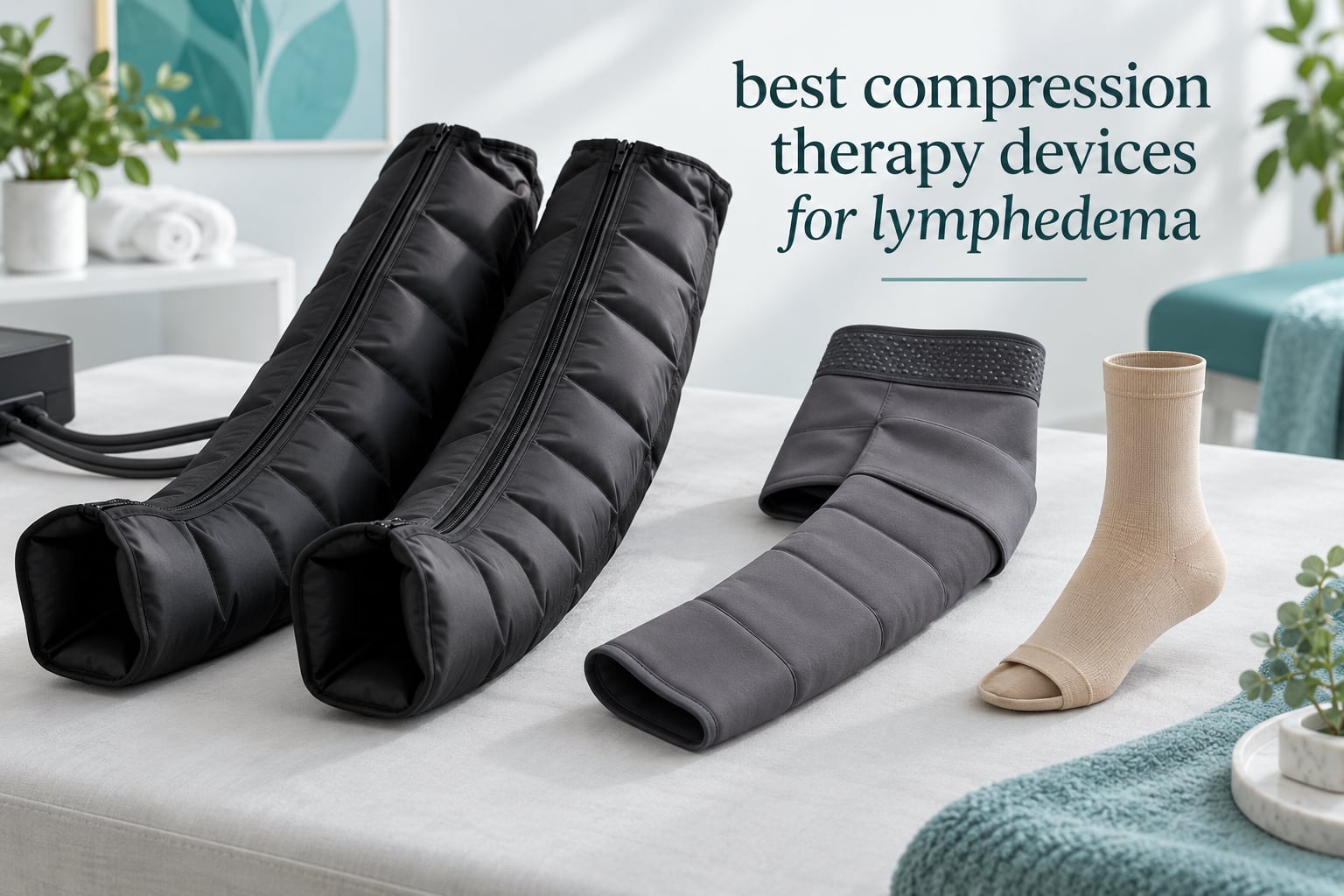
When we started putting this list together, the first thing we found was that almost nothing credible ranked the best compression therapy devices for lymphedema. The results were a scattering of Reddit threads, Instagram clips and vendor pages, with no side-by-side comparison anywhere. That is a gap worth filling, but it is also a gap that needs an honest frame, because the devices people buy online and the devices a lymphedema therapist actually prescribes are not the same category of thing.
So before we get into the list: none of the ten products below is a substitute for a clinician-prescribed sequential gradient pump with a multi-chamber sleeve. A prescribed pneumatic compression device is a medical-grade machine with peristaltic or advanced gradient programming, a trunk piece, and pressure settings titrated to the individual. Everything here is a consumer or retail-tier device: air boots, leg massagers, and medical compression sleeves. For confirmed, established lymphedema, your first move is an assessment by a certified lymphedema therapist, not an order form.
What we can do is help you separate the tiers honestly. We compared ten of the highest-reviewed compression devices in the category, looked at what each one actually does, and flagged where the real-world drawbacks show up. Our medical disclaimer: this article is educational and does not replace medical advice from your physician or therapist, and pressure levels should always be set by someone who has examined you.
ContentsTable of Contents
- 1Top 3 Picks for Lymphedema Compression Devices in 2026→
- 2QUINEAR Leg Recovery System→
- 3FIT KING Full Leg Boots→
- 4Air Relax AR-2 Boots→
- 5Quick Comparison of Every Device in 2026→
- 6How Compression Therapy Works for Lymphedema→
- 71. QUINEAR Leg Recovery System – Best Overall Air Boot for Home Use→
- 8QUINEAR Leg Recovery Compression System for Athlete Post Workout, Professional Sequential Device for Massage Therapy, Foot and Leg Recovery Boots, Improve Circulation Reduce Muscle Soreness (Medium)→
- 9Pros→
- 10Cons→
- 11Suits Users Who Want Wide Pressure Control at Home→
- 12Falls Short for Anyone Who Needs to Stay Mobile→
- 132. FIT KING Air Compression Full Leg Boots – Best Value Four-Channel System→
- 14FIT KING Air Compression Recovery System, Full Leg Massager Boots (Large)→
- 15Pros→
- 16Cons→
- 17Best for Daily Leg Sessions on a Middle Budget→
- 18Poor Choice for Long-Term Daily Dependence→
- 193. CINCOM Leg Massager – Best Low-Cost Calf Compression→
- 20CINCOM Leg Massager for Circulation and Pain Relief FSA – HSA→
- 21Pros→
- 22Cons→
- 23Best for Calf Comfort After Long Days of Standing→
- 24Unsuitable for True Lymphedema Management→
- 254. Air Relax AR-2 Compression Boots – Most Medical Clearance→
- 26Air Relax AR-2 Professional Compression Boots, FDA Cleared Leg Recovery System, Medical Grade Recovery Boots and Pump, 3 Therapy Modes 4 Chambers, for Circulation in Legs and Muscle Relief→
- 27Pros→
- 28Cons→
- 29Best for Buyers Who Want Clearance and Multiple Modes→
- 30Not Ideal for Small Living Spaces or Long-Term Dependence→
- 315. Hyperice Normatec 3 Legs – Best App-Controlled Recovery Boots→
- 32Hyperice Normatec 3 Legs Compression Boots Full Leg Recovery Size Standard→
- 33Pros→
- 34Cons→
- 35Best for Users Who Want Fine Control and Progress Tracking→
- 36Unsuitable for Small Homes or Non-Standard Legs→
- 376. FIT KING Cordless Leg System – Best Cordless Treatment→
- 38FIT KING Air Compression Leg Massager Recovery System Cordless M→
- 39Pros→
- 40Cons→
- 41Best for People Who Cannot Sit Near an Outlet→
- 42Not the Choice for Very Large Limbs or Minimal Handling→
- 437. KEMFORD 15-20 mmHg Arm Sleeves – Best Everyday Arm Sleeve→
- 44KEMFORD Lymphedema Compression Arm Sleeves for Women – 15-20 mmHg, Silicone Grip, 1 Pair, Beige, S/M – Arm Support for Swelling & Edema→
- 45Pros→
- 46Cons→
- 47Best for the Daily Maintenance Phase of Arm Lymphedema→
- 48Not Right for Higher Pressure or Very Sensitive Skin→
- 498. Hiball 20-30 mmHg Sleeve with Gauntlet – Best Full-Arm Coverage→
- 50Hiball Lymphedema Medical Compression Arm Sleeve with Gauntlet, 20-30 mmHg→
- 51Pros→
- 52Cons→
- 53Best for Swelling That Extends Into the Hand→
- 54Unsuitable for Bilateral Use on a Single Purchase or Mild Cases→
- 559. MGANG 15-20 mmHg Arm Sleeve – Best for Sensitive Skin→
- 56MGANG Medical Compression Arm Sleeve 15-20 mmHg, Lymphedema & Post-Surgery→
- 57Pros→
- 58Cons→
- 59Best for Reactive Skin or Latex Sensitivity→
- 60Not Suitable for Hand Swelling or Bilateral Arms→
- 6110. EdemaWear Open Toe – Best for Circulator Inspection→
- 62EdemaWear Open Toe 22” SM→
- 63Pros→
- 64Cons→
- 65Best for Mild Swelling and Daily Circulation Checks→
- 66Not a Substitute for Prescribed-Strength Compression→
- 67Buying Guide: Compression Classes, Garment Types and Getting the Fit Right→
- 68Safety, Contraindications and When to Stop→
- 69Prescription, Insurance and At-Home Setup→
- 70Frequently Asked Questions→
- 71What is the gold standard treatment for lymphedema?→
- 72What level of compression is best for lymphedema?→
- 73Is pneumatic compression good for lymphedema?→
- 74Do you need a prescription for a lymphedema pump?→
- 75How many hours a day should you wear a lymphedema sleeve?→
- 76When should you not wear compression sleeves?→
- 77Conclusion: Our Top Lymphedema Compression Picks→
Top 3 Picks for Lymphedema Compression Devices in 2026

QUINEAR Leg Recovery System
- 4 chambers
- 8 intensities from 50-120 mmHg
- smart pressure sensor
- 24-month warranty

FIT KING Full Leg Boots
- 4 independent air channels
- 8 intensities
- 3 modes
- quiet operation

Air Relax AR-2 Boots
- FDA and CE cleared
- 3 therapy modes
- 4 chambers
- peristaltic option
As an Amazon Associate we earn from qualifying purchases. CERTAIN CONTENT THAT APPEARS ON THIS SITE COMES FROM AMAZON. THIS CONTENT IS PROVIDED 'AS IS' AND IS SUBJECT TO CHANGE OR REMOVAL AT ANY TIME.
The QUINEAR system takes the top slot because it combines the widest documented pressure range in this group with the second-largest review base we found. The FIT KING full-length boots earn the value badge on four independent air channels and a quieter motor at a lower tier. The Air Relax AR-2 takes the clearance badge: it is the only unit here with both FDA and CE clearance and a dedicated peristaltic mode, which is the closest any retail device comes to how a prescribed pump sequences pressure.
Quick Comparison of Every Device in 2026
| # | Product | Key details | Where to buy |
|---|---|---|---|
| 1 | QUINEAR Leg Recovery System |
|
Check Latest Price |
| 2 | FIT KING Full Leg Boots |
|
Check Latest Price |
| 3 | Air Relax AR-2 Compression Boots |
|
Check Latest Price |
| 4 |  Hyperice Normatec 3 Legs Hyperice Normatec 3 Legs |
|
Check Latest Price |
| 5 |  FIT KING Cordless Leg System FIT KING Cordless Leg System |
|
Check Latest Price |
| 6 |  KEMFORD Arm Sleeves 15-20 mmHg KEMFORD Arm Sleeves 15-20 mmHg |
|
Check Latest Price |
| 7 |  Hiball Arm Sleeve with Gauntlet Hiball Arm Sleeve with Gauntlet |
|
Check Latest Price |
| 8 |  MGANG Arm Sleeve 15-20 mmHg MGANG Arm Sleeve 15-20 mmHg |
|
Check Latest Price |
| 9 |  EdemaWear Open Toe EdemaWear Open Toe |
|
Check Latest Price |
| 10 |  CINCOM Leg Massager CINCOM Leg Massager |
|
Check Latest Price |
We earn from qualifying purchases. CERTAIN CONTENT THAT APPEARS ON THIS SITE COMES FROM AMAZON. THIS CONTENT IS PROVIDED 'AS IS' AND IS SUBJECT TO CHANGE OR REMOVAL AT ANY TIME.
Six of these ten are powered air devices that inflate a sleeve or cuff; four are wearable garments that apply constant graded pressure. The powered group is the one people assume is for lymphedema, and the garments are the ones most people actually wear every day. Both belong in the conversation.
How Compression Therapy Works for Lymphedema
Compression therapy works by substituting mechanical pressure for the muscle pumping that a swollen limb can no longer generate on its own. The calf and arm muscles normally squeeze fluid forward when you move. When lymph channels are damaged or blocked, that mechanism fails and fluid collects in the tissue, which is the swelling you can see and measure.
The two delivery modes you will meet are intermittent and gradient. Intermittent compression inflates and deflates a chamber repeatedly, producing a pumping sensation. Gradient compression applies more pressure at the limb root than at the extremity and is what the International Society of Lymphology treats as the physiological standard for lymphedema. Sequential gradient devices add a third idea: multiple chambers inflate in sequence from the trunk outward, so a wave of pressure travels proximal-to-distal, mimicking the natural movement of fluid.
Order matters more than people expect. Trunk decongestion comes first in complete decongestive therapy, because moving fluid out of a swollen limb only helps if there is somewhere for it to go. A sleeve that pumps the arm while the trunk is congested just relocates the problem. That is why therapists start with manual lymphatic drainage on the trunk, then work outward.
Maintenance is the other half. Once swelling is reduced in the reduction phase, the volume has to be held with daily compression garments or wraps. Patients tell us, and the support communities agree, that gains fade quickly if the garment phase is skipped. A pump or a boot is a tool inside a protocol, not a substitute for one.
1. QUINEAR Leg Recovery System – Best Overall Air Boot for Home Use
QUINEAR Leg Recovery Compression System for Athlete Post Workout, Professional Sequential Device for Massage Therapy, Foot and Leg Recovery Boots, Improve Circulation Reduce Muscle Soreness (Medium)
- 4 air chambers
- 8 intensities 50-120 mmHg
- 3 modes
- Built-in pressure sensor
- 24-month warranty
Pros
- Widest documented pressure range in this group
- 8 intensity levels from 50 to 120 mmHg
- Smart sensor adjusts pressure to leg size
- Three timer modes from 20 to 30 minutes
- 24-month warranty and responsive support
- Light at 6.61 lb with carry bag
Cons
- No heat function
- You cannot walk during a session
- Thigh measurement must be accurate or fit fails
- Some reports of pressure loss after about a year
We earn a commission, at no additional cost to you. CERTAIN CONTENT THAT APPEARS ON THIS SITE COMES FROM AMAZON. THIS CONTENT IS PROVIDED 'AS IS' AND IS SUBJECT TO CHANGE OR REMOVAL AT ANY TIME.
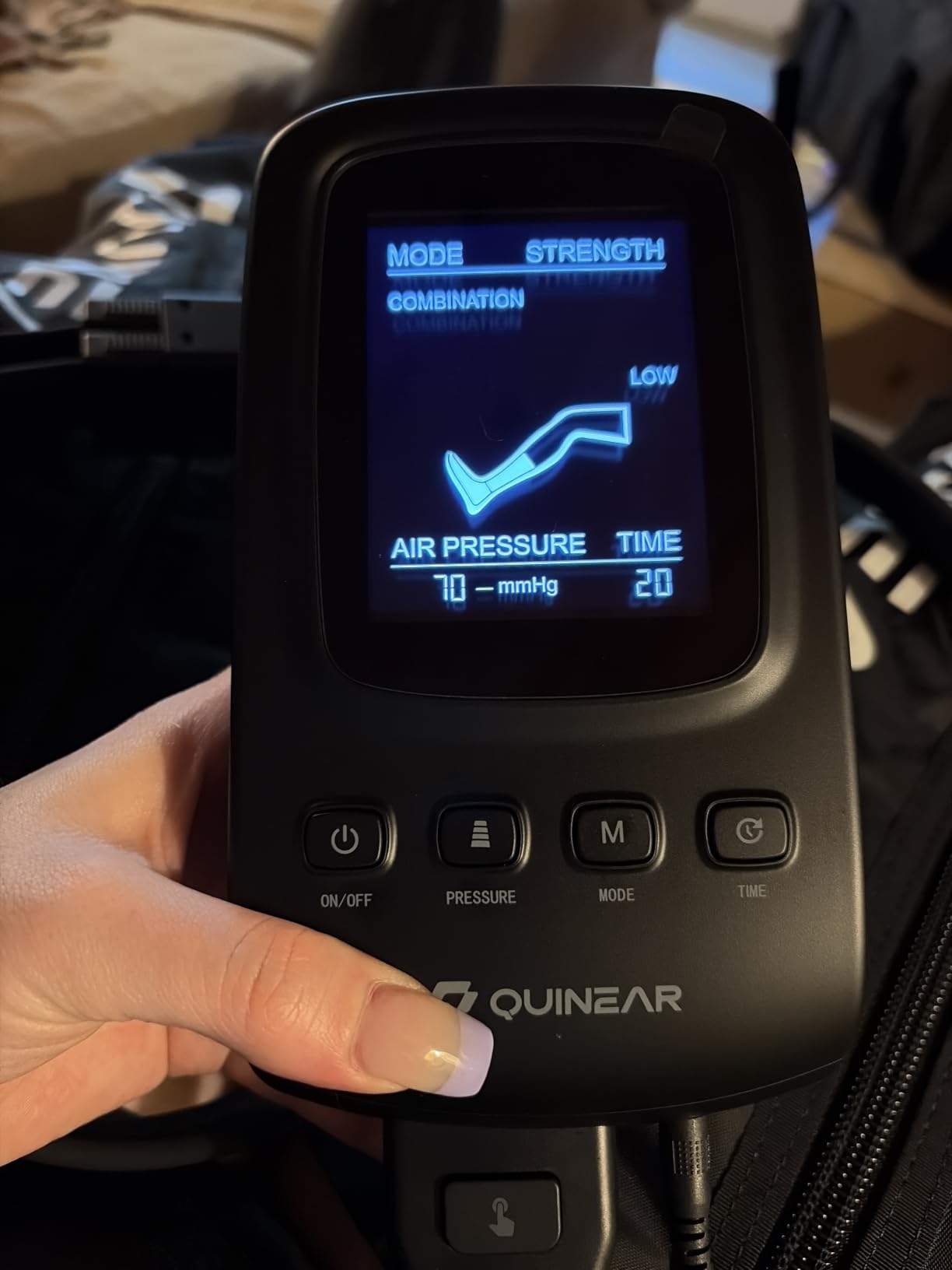
We spent the most time on this one because it kept coming up. The system runs four air chambers with sequential inflation and deflation, and the documented pressure band runs from 50 to 120 mmHg across eight intensities. That upper end is worth noting: it sits well above what a 15-20 mmHg garment delivers, which is why this class of device is closer to a prescribed pump than a sleeve is.
The practical standouts are the built-in pressure sensor and the 24-month warranty. The sensor adjusts output to leg size, which reduces the guesswork that makes sizing the biggest failure point in this category. The warranty is double what the Air Relax AR-2 offers.
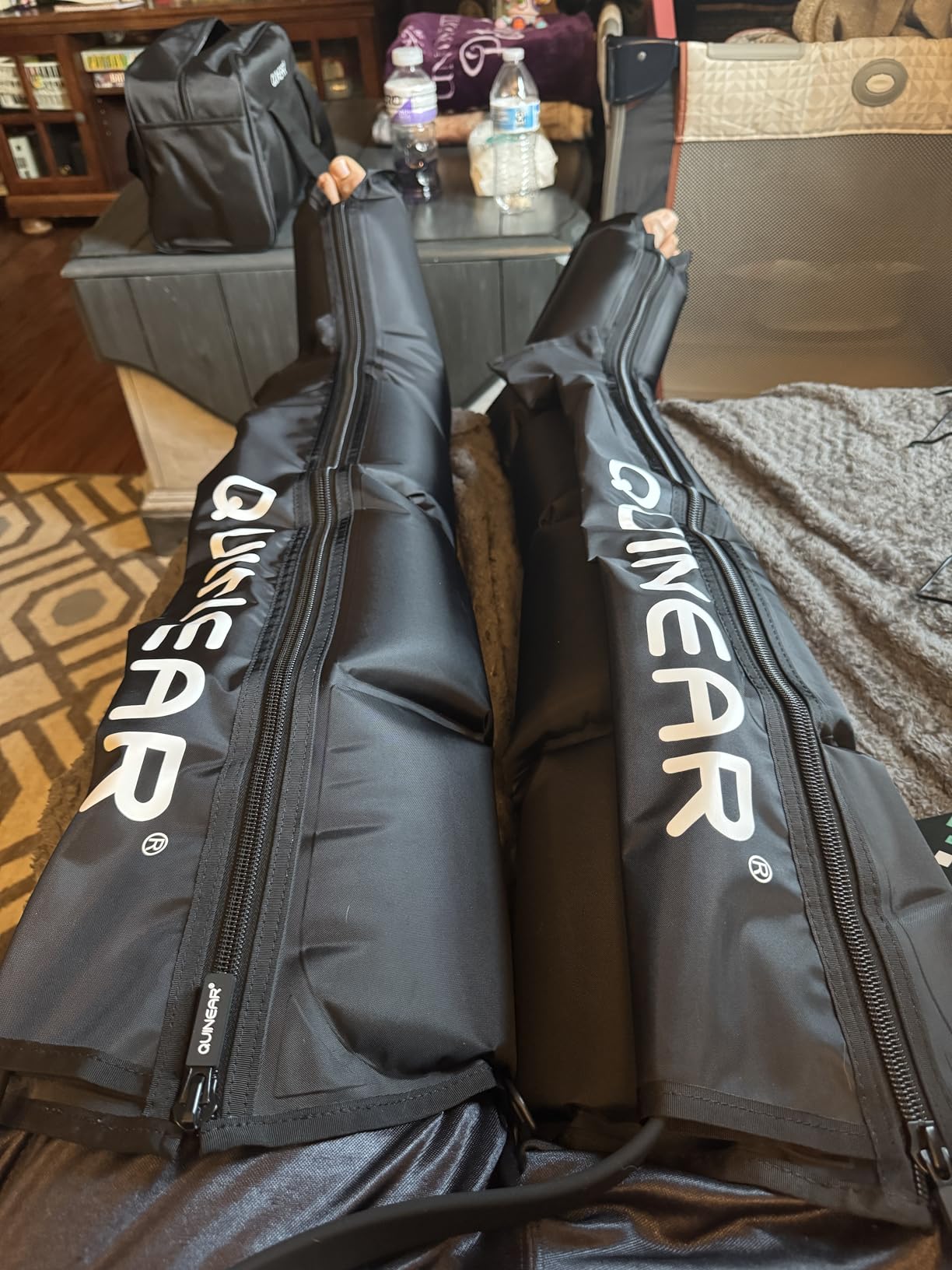
There are four real drawbacks, and none of them are hidden. There is no heat function, so if you rely on warm compression for comfort this is not it. You cannot walk or move around during a session, which matters if you work from home or want to watch something while you recover. Sizing depends on accurate thigh measurement and there is no forgiving second option. A small number of owners report reduced pressure output after roughly a year of daily use, so treat the pump as a consumable-adjacent purchase rather than a forever device.
Suits Users Who Want Wide Pressure Control at Home
This is the pick for someone with established lower-limb edema who has already been cleared by a clinician and wants meaningful pressure range they can dial in. It suits people who can sit still for 20 to 30 minutes twice a day and who will measure their thighs properly before ordering.
It also works well as a second device in a household, because the medium sizing and carry bag make it easier to move between rooms than bulkier units. Verified buyers rate it 4.5 stars across 1844 reviews, which is the largest well-established review base among the powered leg systems in this list.
Falls Short for Anyone Who Needs to Stay Mobile
If your lymphedema is severe enough that you are trying to keep working, walking or driving while treating, this is the wrong shape of device. There is no cordless option and no wearable mode, so a session means stopping what you are doing for half an hour.
It is also the wrong choice for trunk or pelvic lymphedema, since there is no abdominal or garment component of any kind. And if your clinician has prescribed a specific protocol with timed pressure changes, this unit does not run it.
We earn a commission, at no additional cost to you. CERTAIN CONTENT THAT APPEARS ON THIS SITE COMES FROM AMAZON. THIS CONTENT IS PROVIDED 'AS IS' AND IS SUBJECT TO CHANGE OR REMOVAL AT ANY TIME.
2. FIT KING Air Compression Full Leg Boots – Best Value Four-Channel System
FIT KING Air Compression Recovery System, Full Leg Massager Boots (Large)
- 4 independent air channels
- 8 intensities
- 3 modes
- Large-capacity pump
- 24-month warranty
Pros
- Four independent air channels cover the full leg
- Faster inflation from a large-capacity pump
- Quieter motor than most systems in this range
- Three modes with eight intensity levels
- 24-month warranty
Cons
- Durability concerns reported by some owners
- Sizing runs specific and the Large variant is narrow
- You cannot walk during treatment
We earn a commission, at no additional cost to you. CERTAIN CONTENT THAT APPEARS ON THIS SITE COMES FROM AMAZON. THIS CONTENT IS PROVIDED 'AS IS' AND IS SUBJECT TO CHANGE OR REMOVAL AT ANY TIME.
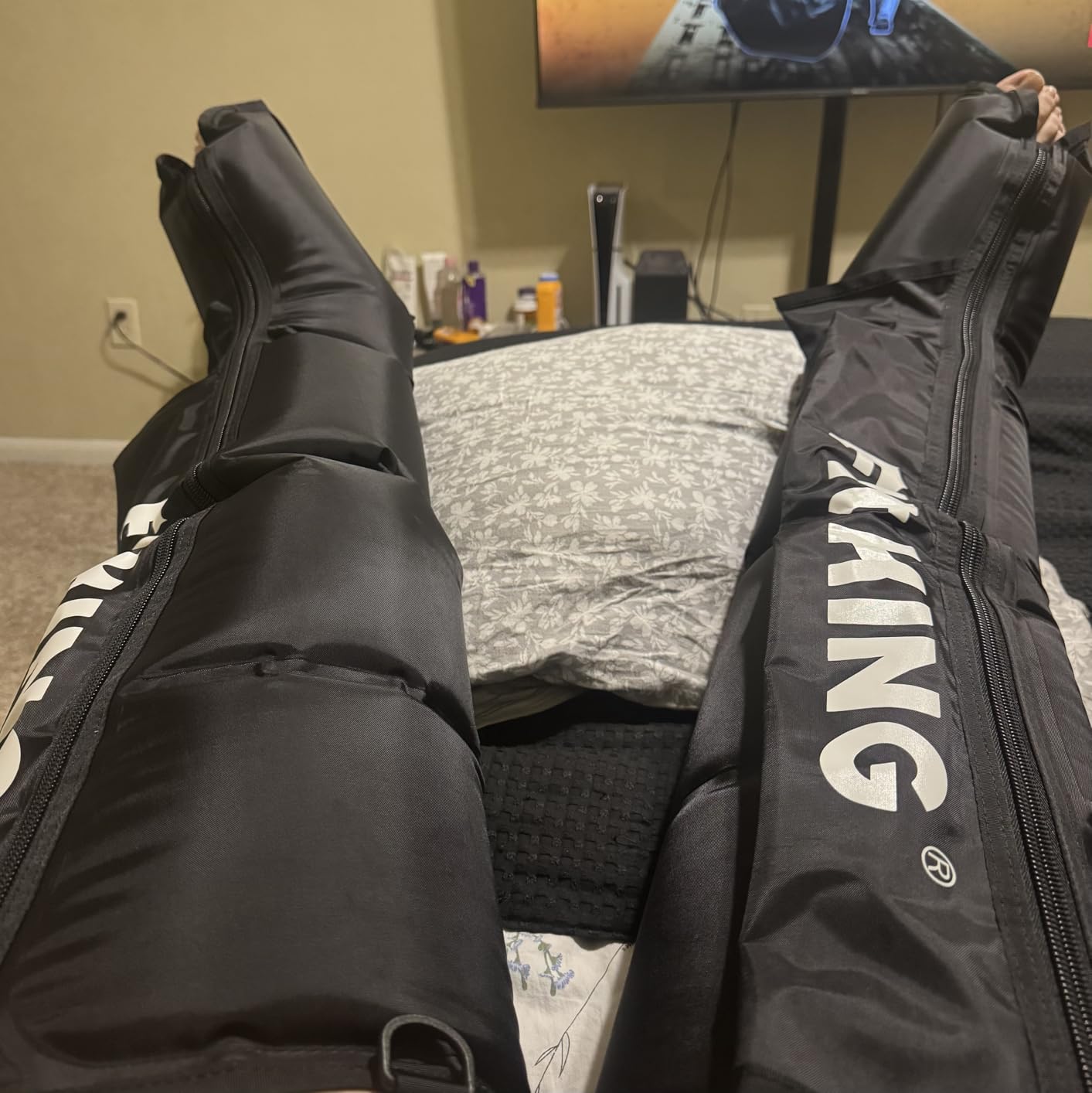
This is the unit we would put in a spare room for a family member who needs leg compression but does not want a premium spend. Four independent air channels run from foot to upper leg, and the large-capacity pump inflates and deflates faster than smaller units, which shortens the awkward waiting time between zones.
Two details stood out when we compared spec sheets. The motor is described as lower-noise, and that matters if you are treating in a bedroom or a shared space at night. The zipper design on the boot itself is straightforward, which matters more than it sounds for anyone with limited shoulder mobility pulling a boot up a full leg.
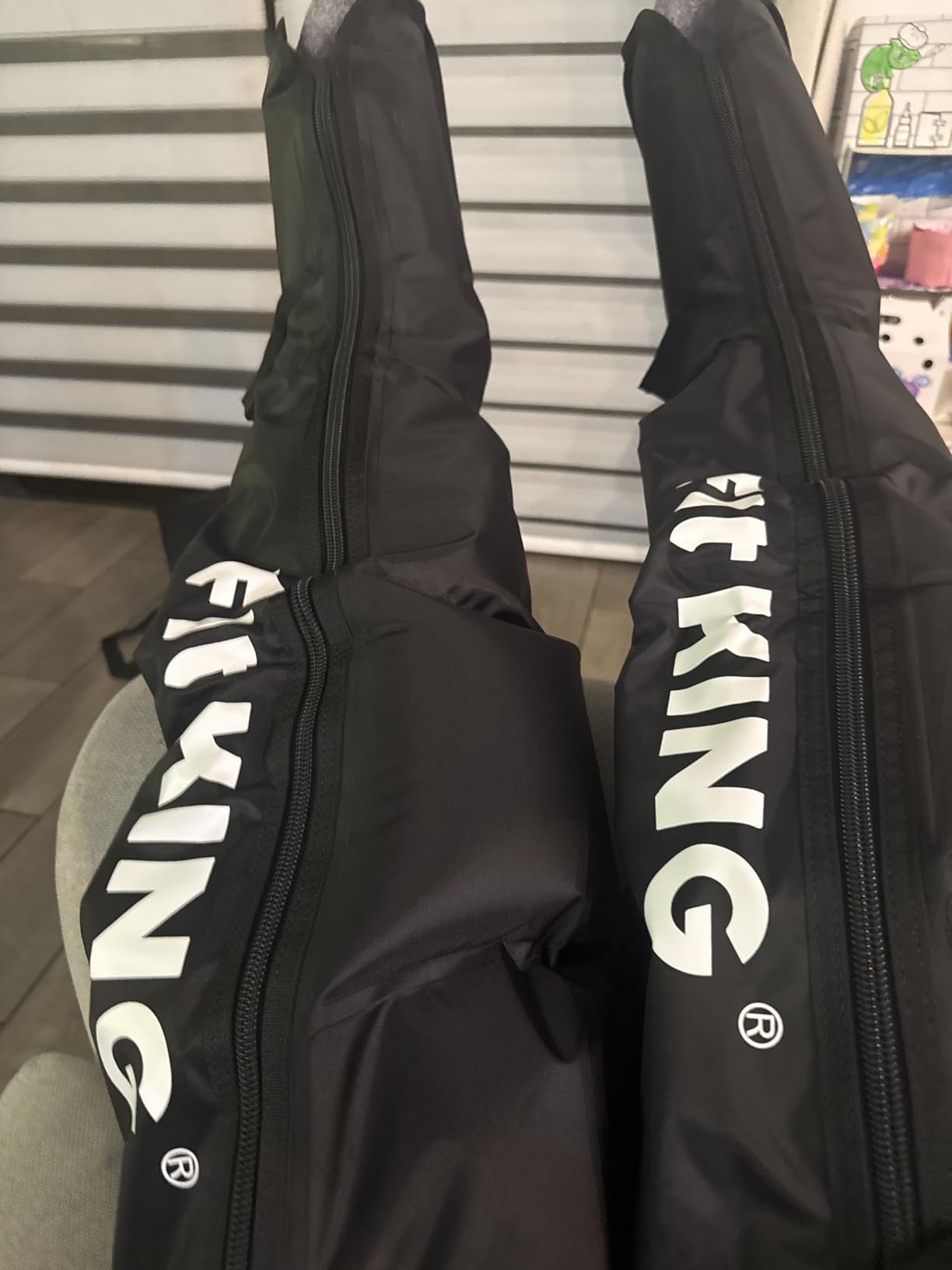
The honest limitations are durability and fit. Some owners report build quality concerns after extended daily use, so if you plan to run this twice a day for years, factor in replacement. The Large variant runs specific, and the system does not adjust well to very different calf and thigh dimensions. And like its competitors, it is a seated device: no walking, no working, no travelling with it.
Best for Daily Leg Sessions on a Middle Budget
This suits a user who wants genuine full-leg coverage with four channels rather than a calf-only wrap, and who values speed of inflation over software. The three modes and eight intensities give enough range for a maintenance routine at home.
Verified buyers give it 4.5 stars across 1019 reviews, so the feedback base is large enough to trust. The 24-month warranty is one of the better ones in the consumer tier.
Poor Choice for Long-Term Daily Dependence
If your clinician has told you that compression is a permanent daily commitment, the durability reports are the thing to weigh. This is also the wrong pick for anyone whose thigh measurement falls between standard ranges, because the sizing is specific rather than adjustable.
It has no battery and no app, so it cannot be programmed remotely or used while you are moving. If mobility during treatment is your priority, look at a cordless unit instead.
We earn a commission, at no additional cost to you. CERTAIN CONTENT THAT APPEARS ON THIS SITE COMES FROM AMAZON. THIS CONTENT IS PROVIDED 'AS IS' AND IS SUBJECT TO CHANGE OR REMOVAL AT ANY TIME.
3. CINCOM Leg Massager – Best Low-Cost Calf Compression
CINCOM Leg Massager for Circulation and Pain Relief FSA – HSA
- 2 plus 2 airbags
- Velcro wraps to 21 inch calf
- Handheld controller
- 20-minute auto shutoff
Pros
- Largest review base we found at 12k+ ratings
- Four airbags simulate kneading and stroking
- Velcro wraps adjust to a 21 inch calf
- Accepts FSA and HSA spending
- Quiet operation with a 20-minute auto shutoff
Cons
- Calf coverage only with no foot or thigh chambers
- Only two massage modes
- Wall outlet power so it is not portable
- Some buyers reported open-box items
We earn a commission, at no additional cost to you. CERTAIN CONTENT THAT APPEARS ON THIS SITE COMES FROM AMAZON. THIS CONTENT IS PROVIDED 'AS IS' AND IS SUBJECT TO CHANGE OR REMOVAL AT ANY TIME.
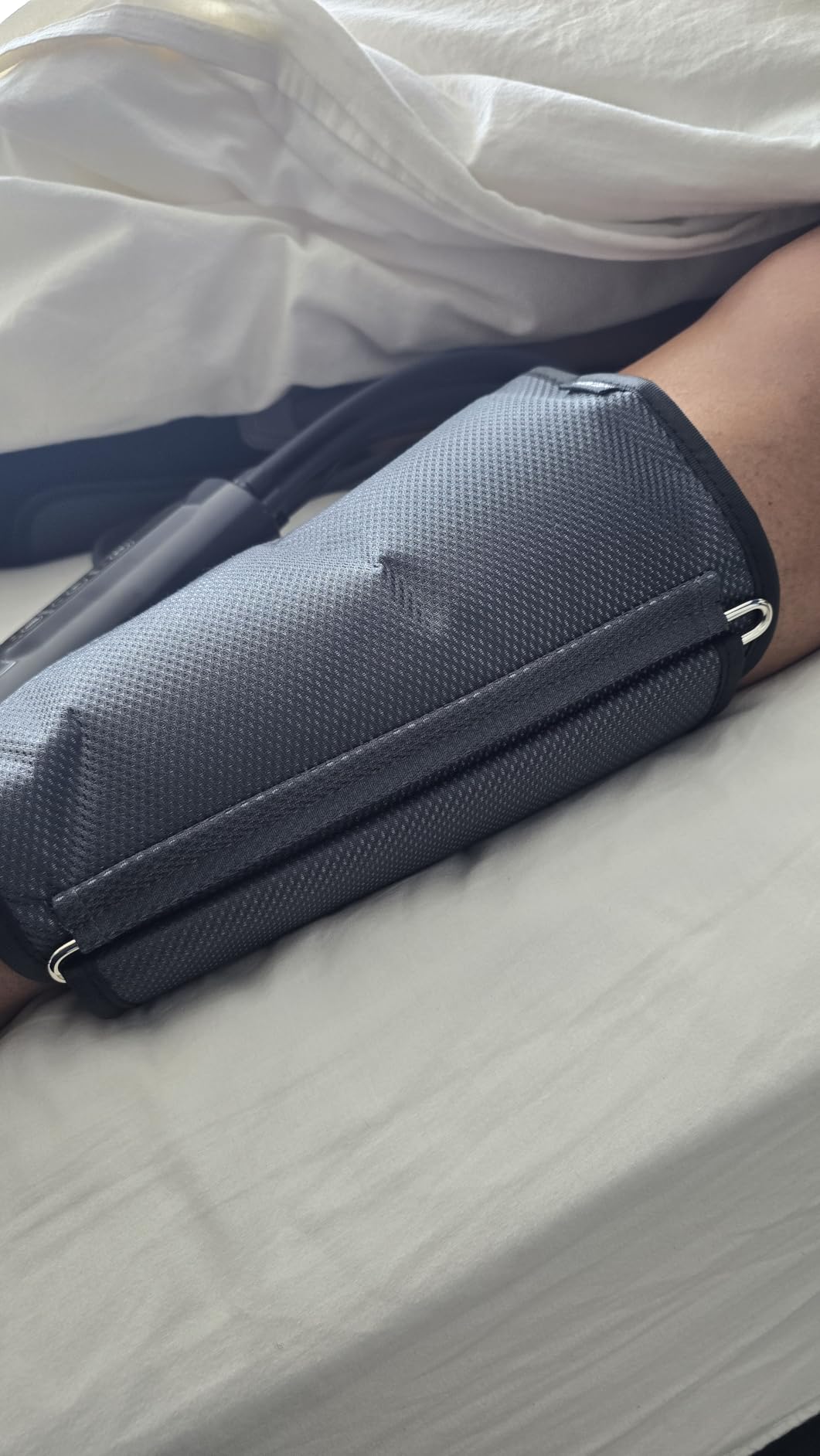
With 12k+ verified ratings this is, by a wide margin, the most widely used device we looked at, and the feedback is overwhelmingly about resting stiffness, mild swelling and circulation comfort at the end of a long day. Four airbags inflate in a kneading and stroking pattern through adjustable Velcro wraps.
Two things stand out for a health purchase. It is listed as FSA and HSA eligible, which lets you use pre-tax health spending on it. And the 20-minute auto shutoff is a genuine safety feature for anyone who might fall asleep during a session, which happens more often than manufacturers assume.
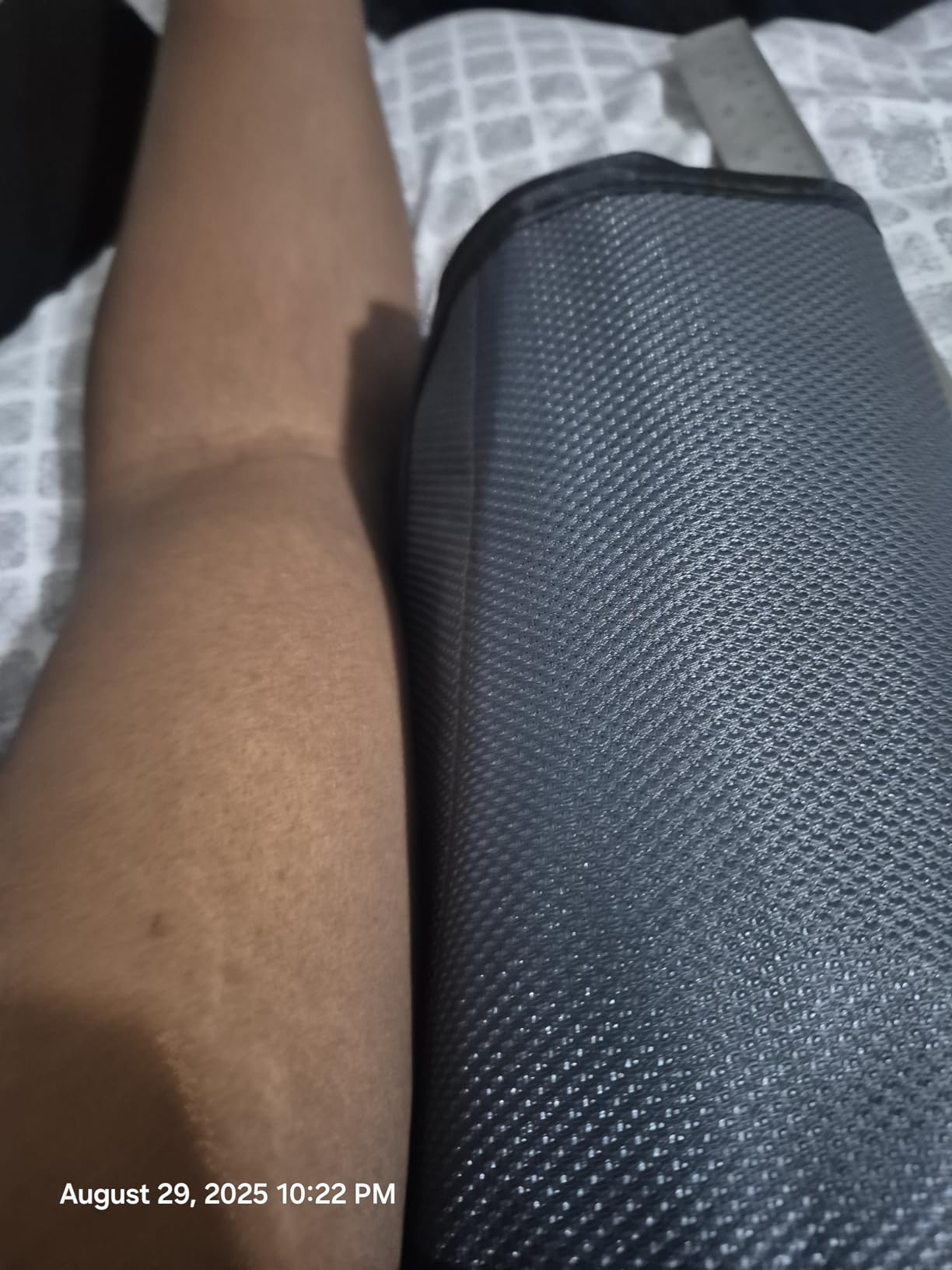
The limits are structural. This is a calf device: there is no foot chamber and no thigh coverage, so it cannot deliver graded full-leg compression. It has two massage modes rather than a programmable pressure range, and it runs on a wall adapter, so it stays where the outlet is. Some buyers reported receiving open-box items, which is a seller issue worth watching.
Best for Calf Comfort After Long Days of Standing
This suits someone whose main complaint is heavy, tired calves at the end of a workday, or mild ankle swelling after travel. It also works as a low-stakes first device, since the cost of getting the fit wrong is small.
The wrap adjusts to a 21 inch calf via Velcro, which is more forgiving than a fixed-size boot. At 4.3 stars across 12152 reviews, the volume of real-world feedback on this one is unmatched in the list.
Unsuitable for True Lymphedema Management
Be clear-eyed about what this is. There is no sequential gradient programming, no chamber sequence from trunk outward, and no pressure specification in mmHg. If you have diagnosed lymphedema, this belongs alongside your treatment, not inside it.
It will not help with arm or pelvic lymphedema at all. It is also the wrong tool if you need treatment you can wear while moving, since it must stay plugged in and the wraps must stay fastened around both calves.
We earn a commission, at no additional cost to you. CERTAIN CONTENT THAT APPEARS ON THIS SITE COMES FROM AMAZON. THIS CONTENT IS PROVIDED 'AS IS' AND IS SUBJECT TO CHANGE OR REMOVAL AT ANY TIME.
4. Air Relax AR-2 Compression Boots – Most Medical Clearance
Air Relax AR-2 Professional Compression Boots, FDA Cleared Leg Recovery System, Medical Grade Recovery Boots and Pump, 3 Therapy Modes 4 Chambers, for Circulation in Legs and Muscle Relief
- FDA and CE cleared
- 4 chambers
- Peristaltic mode
- 3 therapy modes
- 1-year warranty
Pros
- Only device here with both FDA and CE clearance
- Peristaltic mode inflates chambers in sequence
- Three distinct therapy modes including continuous
- Non-toxic biocompatible garment materials
- One-year warranty with lifetime support
Cons
- Bulky and needs dedicated storage space
- Heaviest pump in this group at 8 lb
- Only a one-year warranty against a two-year rival
- Peristaltic mode is not a true gradient
We earn a commission, at no additional cost to you. CERTAIN CONTENT THAT APPEARS ON THIS SITE COMES FROM AMAZON. THIS CONTENT IS PROVIDED 'AS IS' AND IS SUBJECT TO CHANGE OR REMOVAL AT ANY TIME.
The AR-2 is the only unit in this roundup with both FDA and CE clearance, and it holds the highest star rating we recorded at 4.7 across 438 reviews. That combination of regulatory marks and peristaltic mode is what separates it from recovery boots built purely for athletes.
The three modes are the interesting part. Mode A is peristaltic, inflating chambers one after another to create a travelling pressure wave, which is closer in principle to sequential gradient compression. Mode B is cyclical uniform inflation across all chambers, and Mode C is continuous. Having all three available means you can experiment within a range rather than being locked into one pattern.
The tradeoffs are size and warranty. The system is bulky and takes up real storage space, and at 8 lb it is the heaviest pump here. The one-year warranty is half what FIT KING and QUINEAR offer, though the manufacturer does list lifetime support. And peristaltic is not the same as gradient: it does not grade pressure by mmHg from the limb root outward the way a prescribed sequential gradient pump does.

Best for Buyers Who Want Clearance and Multiple Modes
This suits anyone who is uneasy about clearance status and wants documented FDA and CE marks rather than marketing language. It is also the best of the consumer group for experimenting with different inflation patterns before settling on a routine.
The biocompatible, non-toxic garment materials matter for people with sensitive skin or a history of contact reactions, which is common in lymphedema populations.
Not Ideal for Small Living Spaces or Long-Term Dependence
Storage is the real objection. This is not a device you tuck away between uses; it needs a place. If you live in a small flat and intend to run it twice daily, that footprint is a genuine cost.
The one-year warranty also matters if you plan to use this as a long-term maintenance tool. And it remains leg-only, so it does nothing for arm, pelvic or trunk lymphedema, which together account for a large share of cases.
We earn a commission, at no additional cost to you. CERTAIN CONTENT THAT APPEARS ON THIS SITE COMES FROM AMAZON. THIS CONTENT IS PROVIDED 'AS IS' AND IS SUBJECT TO CHANGE OR REMOVAL AT ANY TIME.
5. Hyperice Normatec 3 Legs – Best App-Controlled Recovery Boots
Hyperice Normatec 3 Legs Compression Boots Full Leg Recovery Size Standard
- 7 compression levels
- 5 overlapping zones
- ZoneBoost
- Bluetooth app
- 13.45 lb
Pros
- Seven compression levels with targeted ZoneBoost
- Bluetooth app for per-zone customisation
- Five overlapping zones cover the whole leg
- Pulse technology modelled on natural muscle pumping
- Also produced for hips and arms
Cons
- Heaviest device here at 13.45 lb
- Deflation is reported as difficult to work through
- Only four preset timer options
- Single standard size may not fit all legs
We earn a commission, at no additional cost to you. CERTAIN CONTENT THAT APPEARS ON THIS SITE COMES FROM AMAZON. THIS CONTENT IS PROVIDED 'AS IS' AND IS SUBJECT TO CHANGE OR REMOVAL AT ANY TIME.
This is the only device on the list with real software behind it. The Bluetooth app connects to the boots and lets you activate or adjust individual zones, so you can concentrate compression on the calf, the thigh, or both without changing hardware. Seven compression levels sit behind that control.
The engineering detail worth noting is ZoneBoost across five overlapping zones. Overlap matters because gaps between chambers are where pressure drops to nothing and fluid stalls. The stated sizing for the standard version is a 31-35 inch inseam with a maximum 30 inch thigh circumference.
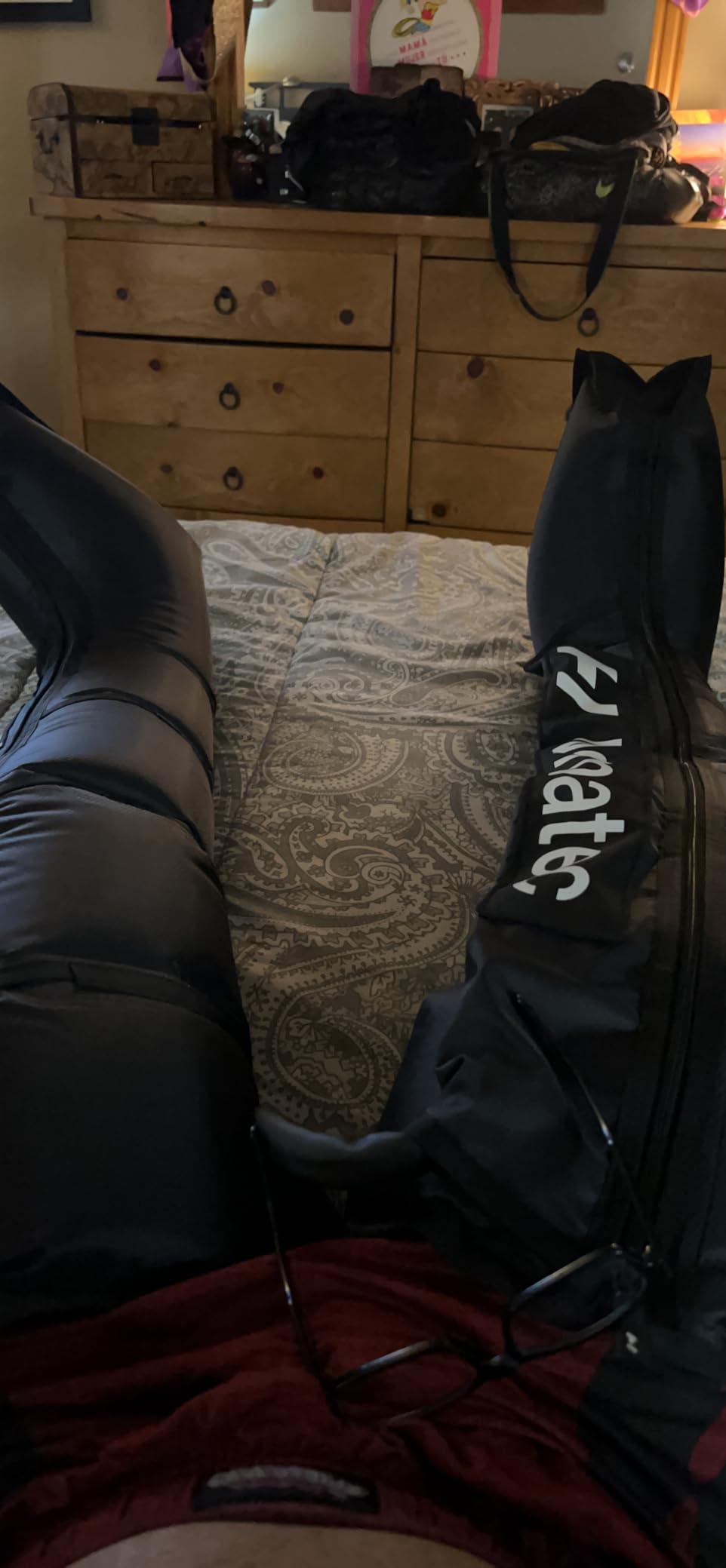
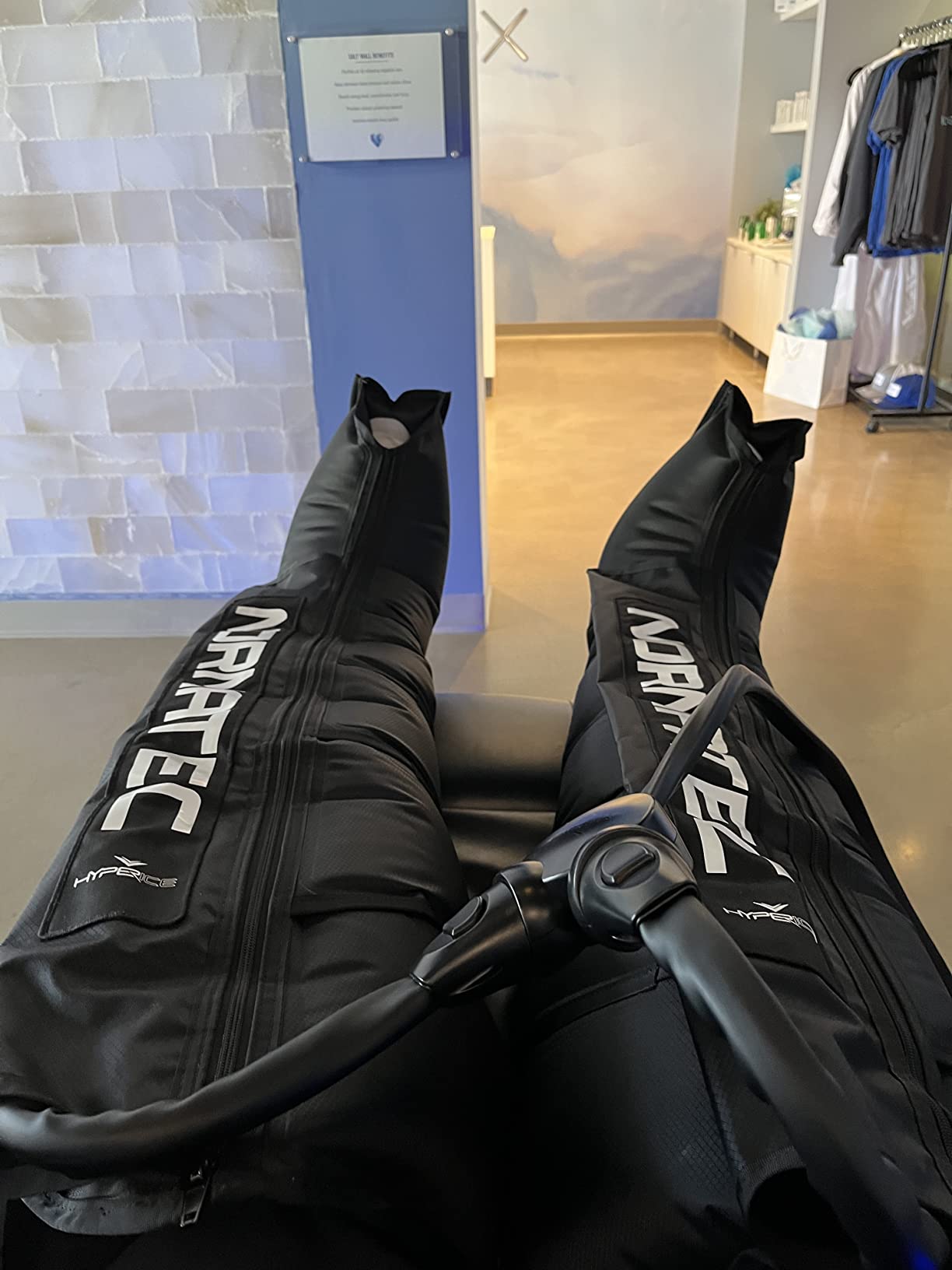
Downsides are physical. At 13.45 lb this is the heaviest unit we reviewed, and it is bulky to store and to transport. Deflation is the step owners complain about most, since working pressure out of the chambers is slow. The four preset timers of 15, 30, 45 and 60 minutes are restrictive if your therapist prescribed a different duration, and a single standard size means many legs will not fit.
Best for Users Who Want Fine Control and Progress Tracking
This suits anyone who likes to log and adjust. The app makes it easy to record what settings worked on a given day, which is genuinely useful during a reduction phase when your limb volume is changing week to week.
It is also the only powered device here with matching arm and hip versions from the same maker, so if your lymphedema is not leg-based, the same control scheme exists in another format.
Unsuitable for Small Homes or Non-Standard Legs
Storage and weight are the two hard limits. A device that takes this much room and this much effort to move is hard to use twice a day in a normal-sized home, and adherence is where most treatment plans are won or lost.
The sizing ceiling matters most. If your inseam falls outside the standard range or your thigh circumference exceeds the maximum, this is simply the wrong boot, no matter how good the software is. Preset timers also cannot be extended beyond 60 minutes.
We earn a commission, at no additional cost to you. CERTAIN CONTENT THAT APPEARS ON THIS SITE COMES FROM AMAZON. THIS CONTENT IS PROVIDED 'AS IS' AND IS SUBJECT TO CHANGE OR REMOVAL AT ANY TIME.
6. FIT KING Cordless Leg System – Best Cordless Treatment
FIT KING Air Compression Leg Massager Recovery System Cordless M
- 2500mAh rechargeable battery
- 3-4 hours of use
- 12 pressure settings 40-150 mmHg
- 4 zone controls
Pros
- Only cordless unit in this roundup with a 2500mAh battery
- Three to four hours of use per charge
- Twelve pressure settings from 40 to 150 mmHg
- Four zone controls across foot and calf and thigh
- Fast inflation at 40 percent above earlier models
Cons
- Heavier than corded rivals at 9.81 lb
- Higher tier price than the corded version
- One report of zipper alignment at high pressure
We earn a commission, at no additional cost to you. CERTAIN CONTENT THAT APPEARS ON THIS SITE COMES FROM AMAZON. THIS CONTENT IS PROVIDED 'AS IS' AND IS SUBJECT TO CHANGE OR REMOVAL AT ANY TIME.
Cordless is the feature everyone asks about and almost nobody in this category delivers. This unit runs on a 2500mAh rechargeable lithium battery that gives three to four hours of use, which covers two full sessions with charge left over. You can carry it between rooms or take it to a relative’s house without hunting for an outlet.
The control range is the widest we recorded. Twelve pressure settings span 40 to 150 mmHg, and four zone controls let you treat the foot, lower calf, upper calf and thigh separately or all at once through an all-in-one controller. Ten timer intervals between 15 and 60 minutes add real scheduling flexibility.
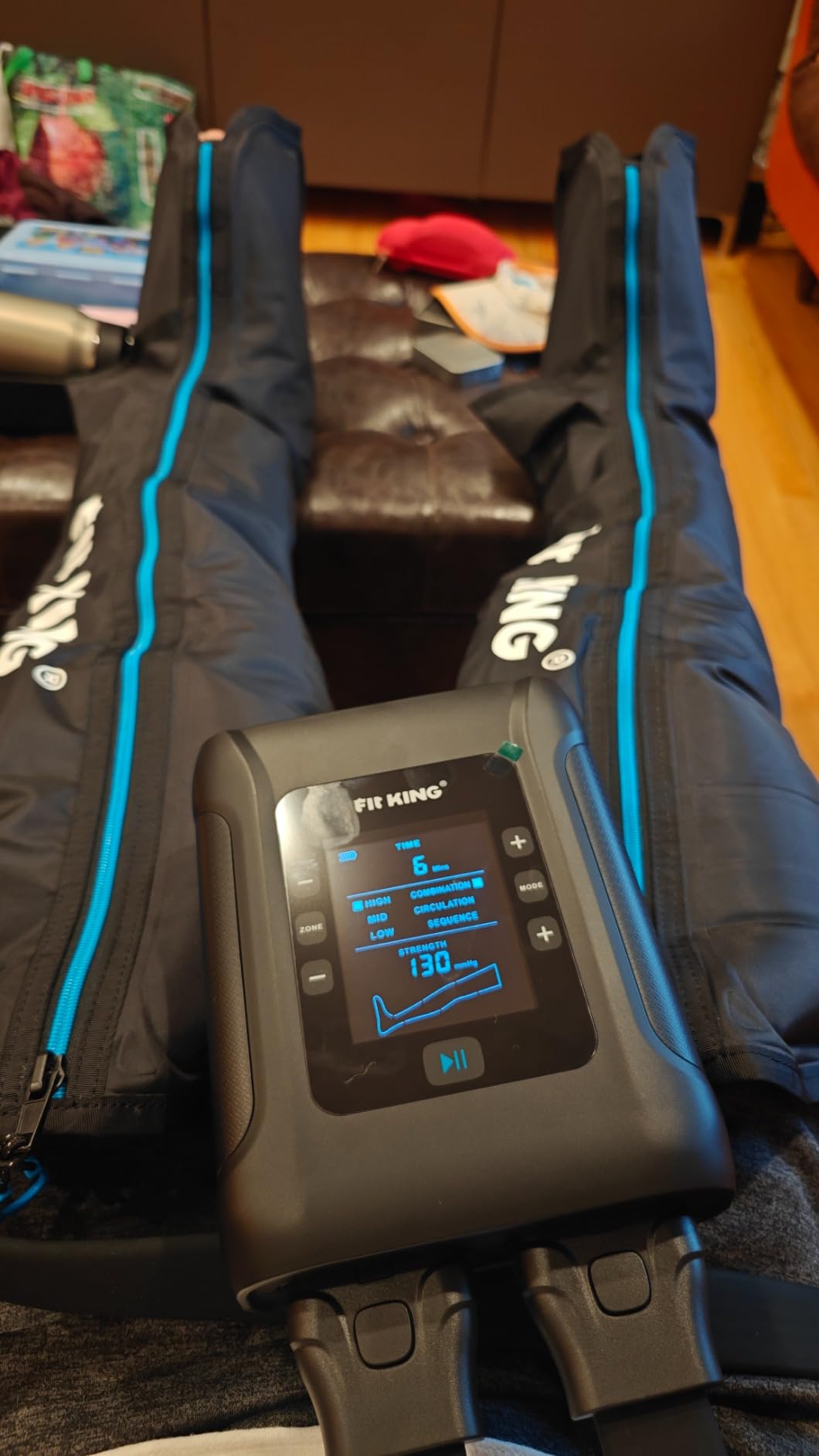
Being cordless has costs. At 9.81 lb it is heavy to move around a house, so cordless trades tethering for carrying. It also sits in a higher price tier than its corded sibling. One report described zipper alignment becoming an issue at high pressure, which is a small sample but worth checking early if you plan to work near the top of the range.
Best for People Who Cannot Sit Near an Outlet
This suits anyone whose schedule or living situation makes a wired pump impractical, and it is the only choice here that lets you relocate mid-session. The three to four hour battery also means one charge covers a full day of twice-daily treatment.
Customer service on sizing was singled out repeatedly in reviews, including exchanges, which matters a lot given how often leg systems go wrong on fit. Verified rating is 4.5 stars across 295 reviews.
Not the Choice for Very Large Limbs or Minimal Handling
If you have limited arm or hand strength, a 9.81 lb system that has to be lifted into position and carried between rooms is a poor match. This is the classic problem the lymphedema community raises about heavy hoses and boots, and cordless does not solve it.
It is also a mid-size unit rather than an adjustable one, so very large thigh circumferences are not well served. And while it can be moved around a home, treating away from a bed or chair that supports your legs will not feel the same as treating on a proper treatment table.
We earn a commission, at no additional cost to you. CERTAIN CONTENT THAT APPEARS ON THIS SITE COMES FROM AMAZON. THIS CONTENT IS PROVIDED 'AS IS' AND IS SUBJECT TO CHANGE OR REMOVAL AT ANY TIME.
7. KEMFORD 15-20 mmHg Arm Sleeves – Best Everyday Arm Sleeve
KEMFORD Lymphedema Compression Arm Sleeves for Women – 15-20 mmHg, Silicone Grip, 1 Pair, Beige, S/M – Arm Support for Swelling & Edema
- 15-20 mmHg Class 1
- Silicone grip band
- UPF 50+
- Oeko-Tex certified fabric
- Sold as a pair
Pros
- 15-20 mmHg graduated medical-grade compression
- Silicone grip band keeps the sleeve from slipping down
- UPF 50 plus sun protection for outdoor wear
- Breathable Oeko-Tex certified fabric
- Two sleeves so both arms are covered
Cons
- Sizing runs small and needs careful measuring
- Silicone grip can irritate very sensitive skin
- Firm compression needs an adjustment period
We earn a commission, at no additional cost to you. CERTAIN CONTENT THAT APPEARS ON THIS SITE COMES FROM AMAZON. THIS CONTENT IS PROVIDED 'AS IS' AND IS SUBJECT TO CHANGE OR REMOVAL AT ANY TIME.
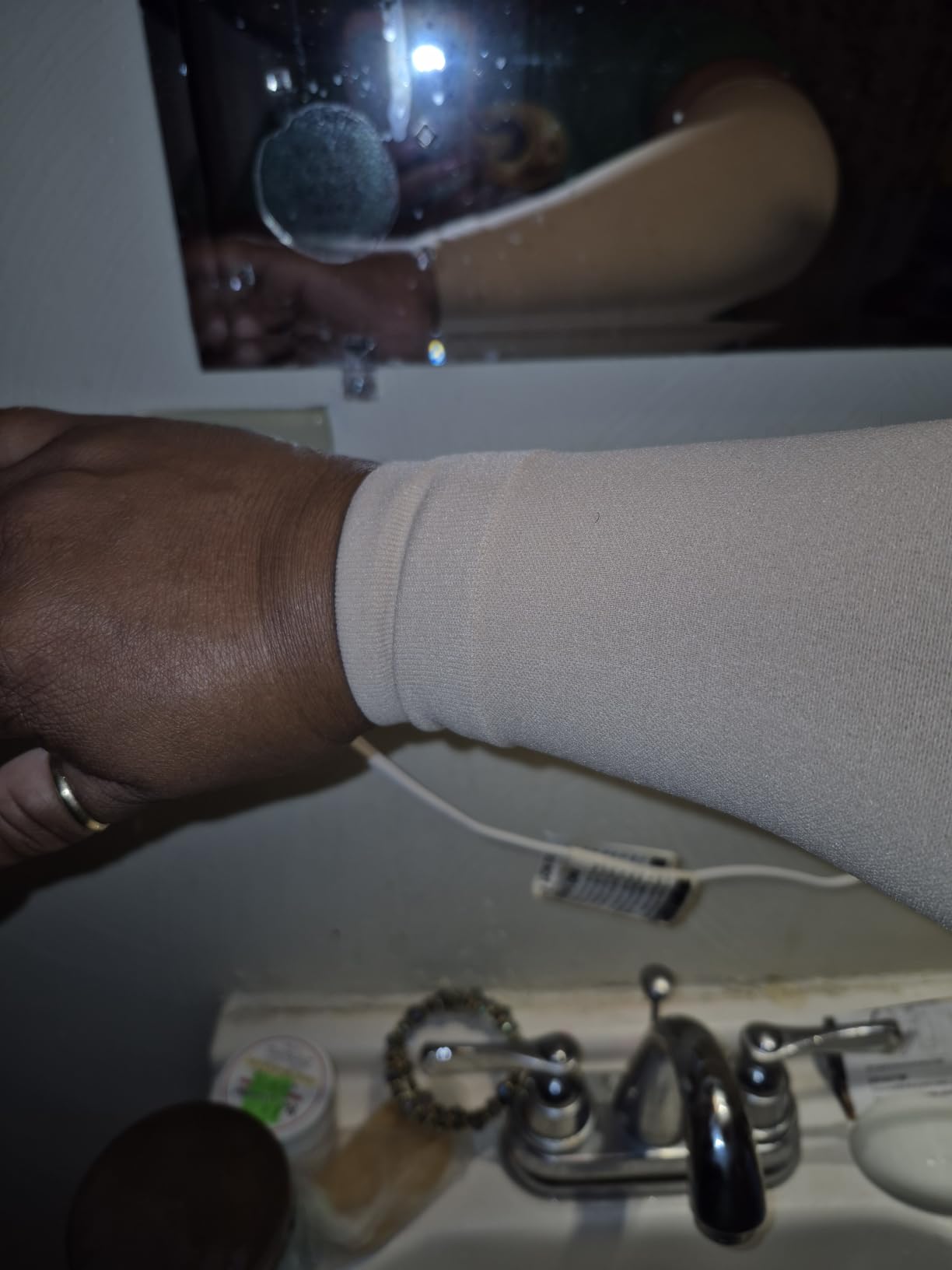
Garments are the part of the protocol people actually wear every day, so we weighted the sleeve entries heavily. This one holds 4.4 stars across 4034 reviews, the largest review base of any arm sleeve we examined, and it delivers a Class 1 graduated pressure of 15-20 mmHg.
For post-mastectomy arm lymphedema, Class 1 is usually the starting prescription, which makes a correctly fitted 15-20 mmHg sleeve the foundation of the maintenance phase. The silicone grip band at the top is what keeps it in place through a working day, and the UPF 50 plus rating means it is not obviously medical in public.
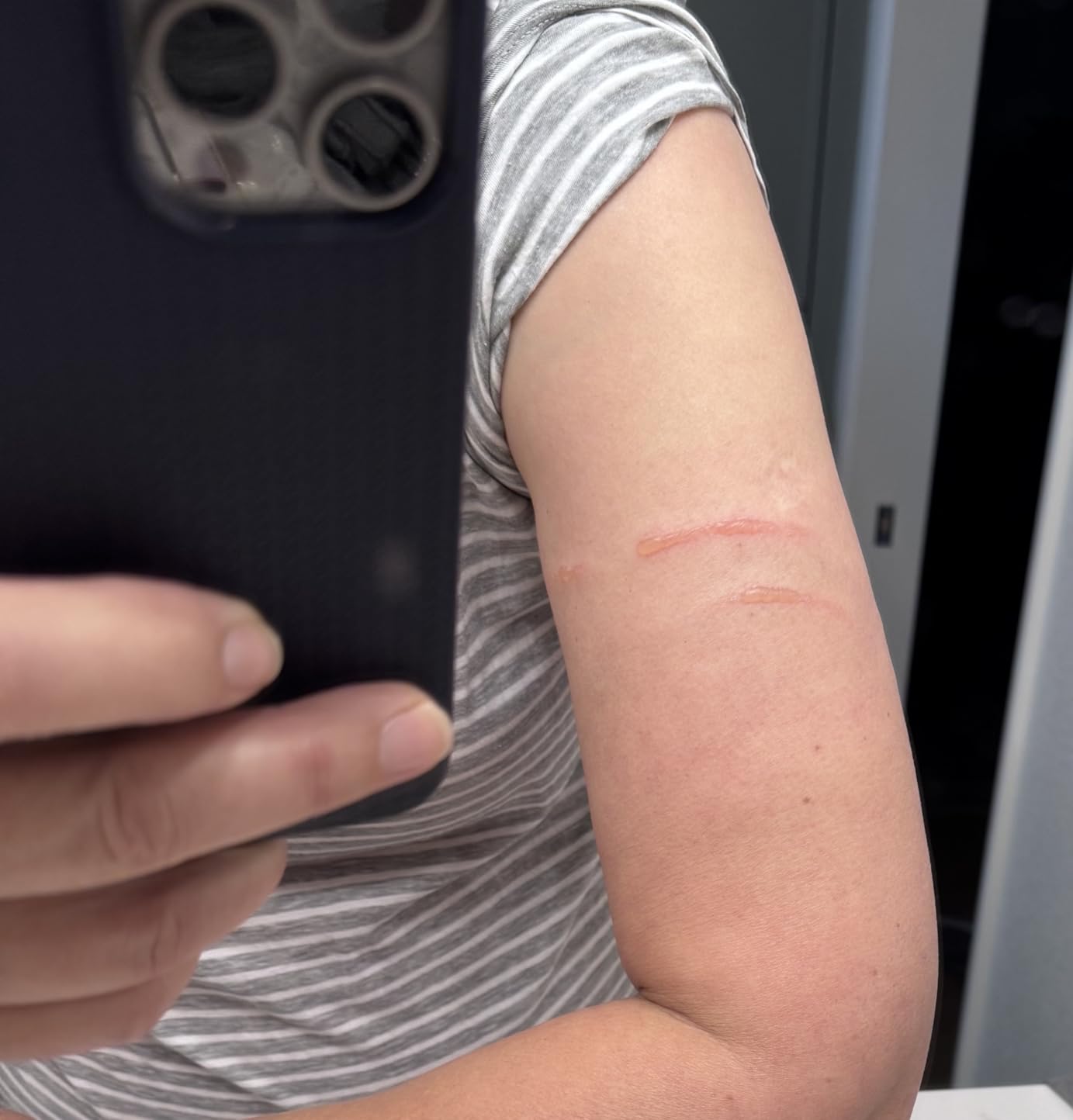
The catch is fit. These run small, so measuring upper arm circumference before ordering is not optional. Owners also report that the silicone band can irritate skin that is already sensitive or compromised, which happens in fibrotic lymphedema. Finally, firm graduated compression takes a few days of wear to get used to, and people who bail out in the first week are the most common reason this sleeve ends up unused.
Best for the Daily Maintenance Phase of Arm Lymphedema
This suits someone at the maintenance stage whose therapist has specified Class 1 compression and who wants a sleeve that can go to work or to the shops without looking clinical. The pair format is a practical advantage over single-sleeve options.
The review volume of 4034 gives unusual confidence for a garment, because sizing feedback across that many buyers makes the fit pattern predictable. The Oeko-Tex certified, breathable fabric also suits warmer climates.
Not Right for Higher Pressure or Very Sensitive Skin
If your prescription is Class 2 or above, this is under-pressured by design. Higher-pressure sleeves have a firmer, thicker fabric that many people cannot wear for a full day, which is exactly why Class 1 is often chosen for daily wear.
Those with an active skin condition, recent surgery on the arm, or silicone sensitivity should look for a silicone-free option before ordering. And if you cannot manage donning and doffing it independently, this is the wrong choice regardless of how good the fabric is.
We earn a commission, at no additional cost to you. CERTAIN CONTENT THAT APPEARS ON THIS SITE COMES FROM AMAZON. THIS CONTENT IS PROVIDED 'AS IS' AND IS SUBJECT TO CHANGE OR REMOVAL AT ANY TIME.
8. Hiball 20-30 mmHg Sleeve with Gauntlet – Best Full-Arm Coverage
Hiball Lymphedema Medical Compression Arm Sleeve with Gauntlet, 20-30 mmHg
- 20-30 mmHg Class 2
- Gauntlet covers palm to bicep
- Dotted silicone anti-slip bands
- 1.45 oz
Pros
- Class 2 pressure at 20-30 mmHg for firmer control
- Full coverage from the hand through wrist and elbow to upper arm
- Graduated pressure is greatest at the bicep
- Flip-over silicone band option for sensitive skin
- Lightweight breathable medical-grade fabric
Cons
- Sold as a single sleeve rather than a pair
- Gauntlet section runs loose on some hands
- Sizing runs small
- Some durability complaints about the fabric
We earn a commission, at no additional cost to you. CERTAIN CONTENT THAT APPEARS ON THIS SITE COMES FROM AMAZON. THIS CONTENT IS PROVIDED 'AS IS' AND IS SUBJECT TO CHANGE OR REMOVAL AT ANY TIME.
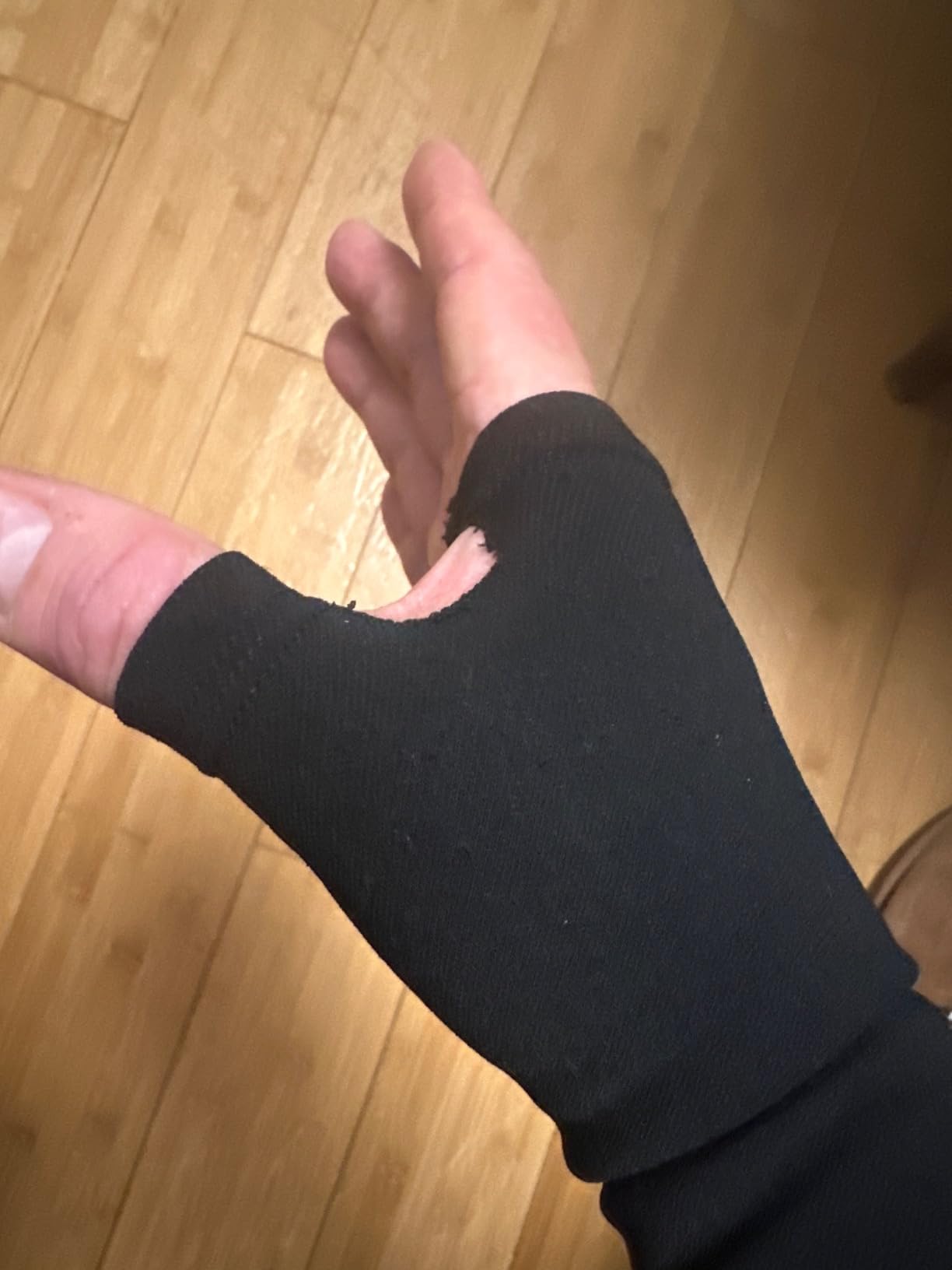
The distinction that matters here is the gauntlet. Where most arm sleeves stop at the upper arm, this one extends into the palm and thumb, covering the entire arm in one piece. For anyone whose swelling extends into the hand, that continuity matters because a gap at the wrist breaks the pressure gradient.
Pressure is Class 2 at 20-30 mmHg, firmer than the Class 1 sleeve and appropriate for moderate lymphedema or a stage two presentation. Compression is greatest at the bicep and decreases toward the thumb, which is the correct gradient direction. The flip-over silicone band option is a thoughtful touch for people whose skin reacts to the dotted band.
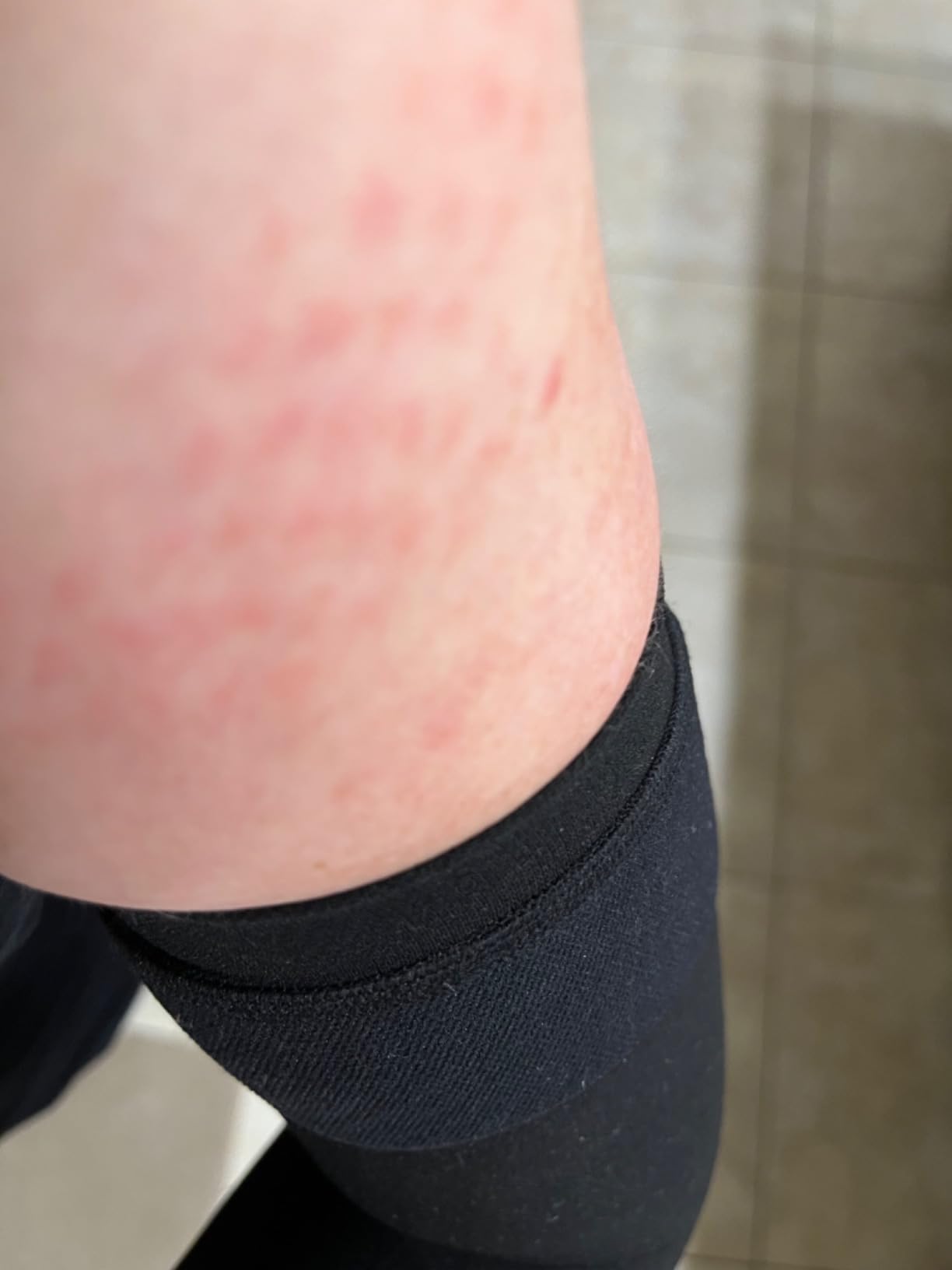
The complaints are consistent. It is sold as a single sleeve, not a pair, so bilateral users buy two. The gauntlet section itself runs loose on some hands, which is a strange outcome for the part of the design meant to be the most complete. Sizing runs small, and some owners have reported fabric durability concerns after repeated washing.
Best for Swelling That Extends Into the Hand
This suits anyone whose lymphedema is not confined to the upper arm, and anyone who has been told that hand coverage is important in their protocol. The Class 2 pressure also suits a moderate rather than early-stage presentation.
At 1.45 oz it is among the lightest garments here, which makes it easier to keep on for a full day. Verified rating is 4.2 stars across 1118 reviews, so there is plenty of feedback on real arms.
Unsuitable for Bilateral Use on a Single Purchase or Mild Cases
If you need both arms covered, plan on two orders. That is a meaningful ongoing cost for bilateral lymphedema, where two limbs need replacing on the same schedule.
Mild early-stage swelling may not need Class 2 pressure at all, and over-compression causes exactly the rebound swelling people complain about in support groups. If you have not been measured and fitted, do not self-prescribe this pressure level.
We earn a commission, at no additional cost to you. CERTAIN CONTENT THAT APPEARS ON THIS SITE COMES FROM AMAZON. THIS CONTENT IS PROVIDED 'AS IS' AND IS SUBJECT TO CHANGE OR REMOVAL AT ANY TIME.
9. MGANG 15-20 mmHg Arm Sleeve – Best for Sensitive Skin
MGANG Medical Compression Arm Sleeve 15-20 mmHg, Lymphedema & Post-Surgery
- 15-20 mmHg graduated pressure
- Silicone or silicone-free fit
- Latex and neoprene free
- 5 sizes
Pros
- Silicone-free friction-fit option avoids band reactions
- Latex and neoprene free for reactive skin
- Five sizes with a four-point measurement chart
- Moisture-wicking fabric that dries fast
- Wrist to upper arm coverage in a light 0.71 oz sleeve
Cons
- Single sleeve rather than a pair
- No hand or gauntlet coverage
- Many size and length combinations can be confusing to order
We earn a commission, at no additional cost to you. CERTAIN CONTENT THAT APPEARS ON THIS SITE COMES FROM AMAZON. THIS CONTENT IS PROVIDED 'AS IS' AND IS SUBJECT TO CHANGE OR REMOVAL AT ANY TIME.
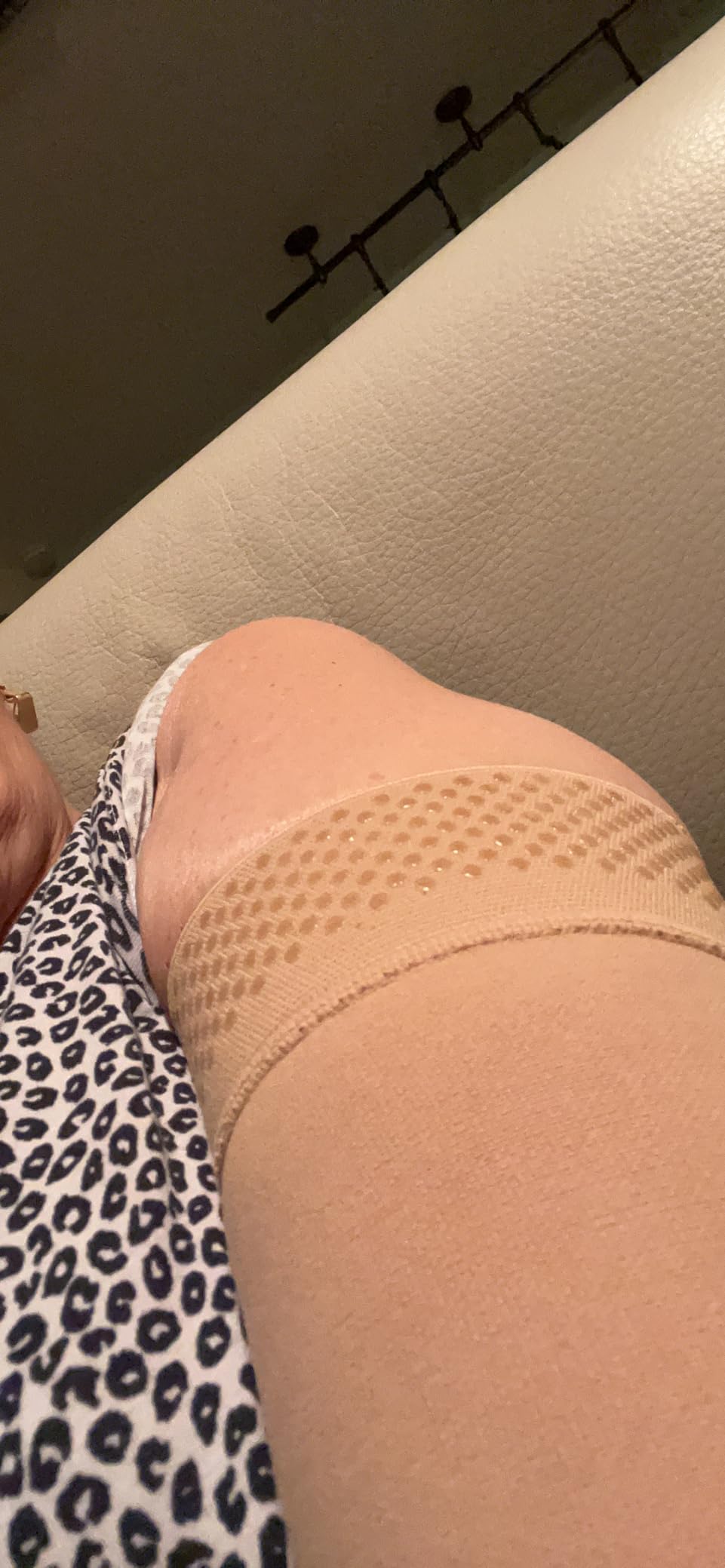
This is the sleeve to consider when silicone bands cause a reaction. It offers two stay-put mechanisms: a silicone dot band, or a friction-fit cuff that holds position without any silicone touching the skin at all. That second option is not common in this category and it matters for people whose skin has been damaged by months of low-grade irritation.
The fabric is 72 percent nylon and 28 percent spandex, engineered for graduated compression, and it is both latex and neoprene free. Sizing runs across five bands with a four-point measurement chart, which is more guidance than most competitors supply. At 0.71 oz it is the lightest sleeve here.
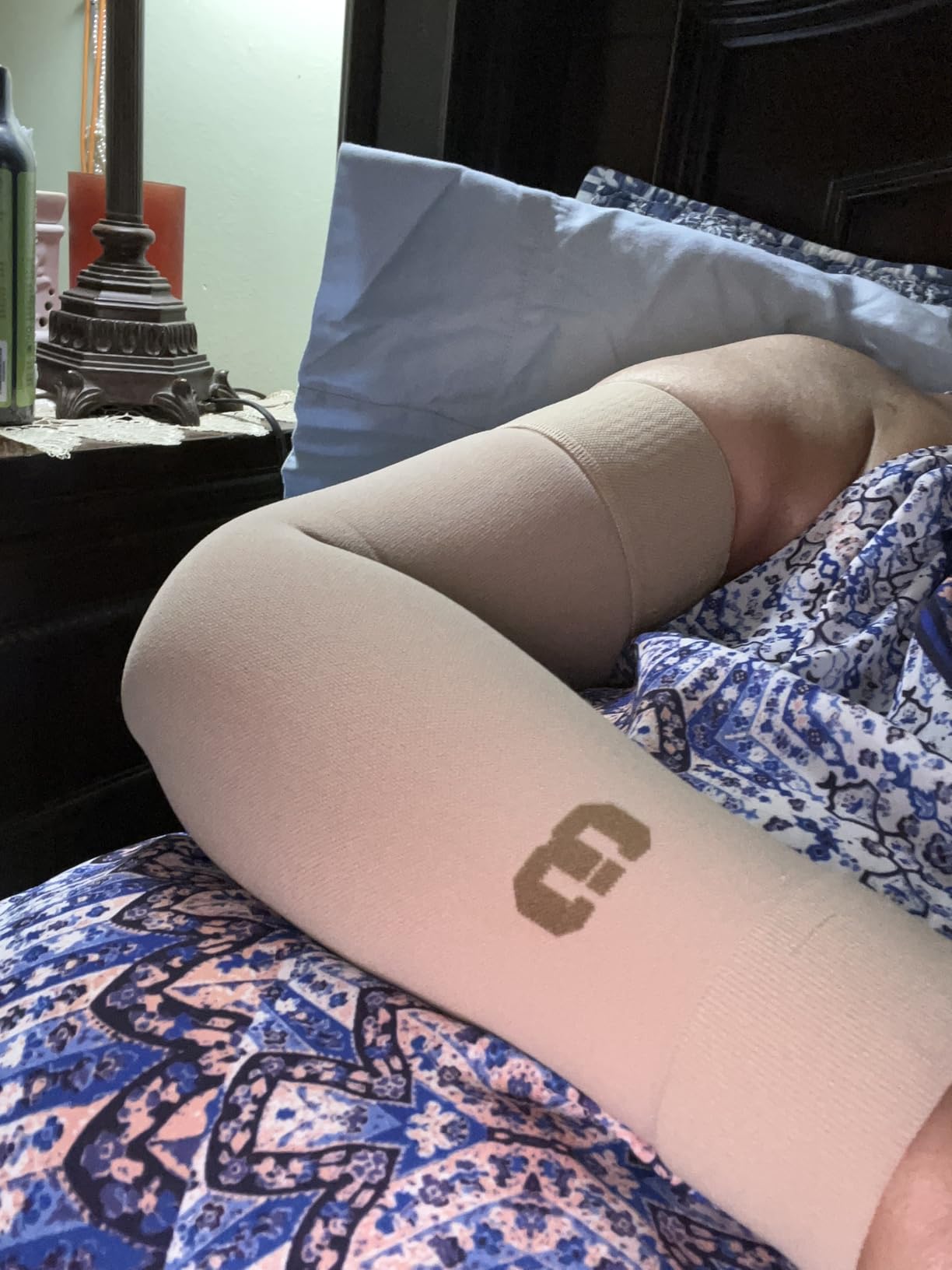
It stops at the wrist, so there is no hand coverage and no gauntlet, which rules it out for anyone with distal swelling. It is a single sleeve, not a pair. And the number of variant combinations is genuinely confusing at the point of ordering, so read the measurement chart before you click rather than guessing from your usual size.
Best for Reactive Skin or Latex Sensitivity
This suits people who have already tried a sleeved garment and developed a red, itchy band where the silicone sits. The friction-fit option removes the usual suspect entirely while still keeping the sleeve up.
It also suits anyone who wants a genuinely light sleeve for long daily wear, since 0.71 oz will not feel like a medical device. Verified rating is 4.3 stars across 541 reviews.
Not Suitable for Hand Swelling or Bilateral Arms
Wrist-to-upper-arm coverage is the hard limit. If your therapist has asked for hand compression, this does not deliver it and you will need a gauntlet style instead.
Bilateral users need to buy two. And because the ordering table is dense, this is a poor choice for anyone who cannot comfortably measure four points on their own arm or who tends to pick sizes by eye.
We earn a commission, at no additional cost to you. CERTAIN CONTENT THAT APPEARS ON THIS SITE COMES FROM AMAZON. THIS CONTENT IS PROVIDED 'AS IS' AND IS SUBJECT TO CHANGE OR REMOVAL AT ANY TIME.
10. EdemaWear Open Toe – Best for Circulator Inspection
EdemaWear Open Toe 22” SM
- Open toe design
- Gentle stretch knit compression
- Foot to knee coverage
- Multiple sizes available
Pros
- Open toe lets you check circulation daily
- Gentle consistent compression for mild swelling
- Foot to knee coverage in a simple stockinet
- Made in multiple sizes including bulk packs
- Low commitment option for trying compression
Cons
- Sizing is critical and runs narrow and short
- Compression level is gentle rather than prescribed-strength
- One size per listing limits choice
We earn a commission, at no additional cost to you. CERTAIN CONTENT THAT APPEARS ON THIS SITE COMES FROM AMAZON. THIS CONTENT IS PROVIDED 'AS IS' AND IS SUBJECT TO CHANGE OR REMOVAL AT ANY TIME.
The open toe is the entire point of this design. With toes exposed, you can look at your foot colour and check that circulation is intact, which matters for anyone who has lost sensation in the foot or has poor peripheral circulation alongside their edema. Most stockings and sleeves hide exactly what you need to inspect.
The compression itself is gentle rather than prescribed-strength, making this an entry point for mild swelling or a trial garment. It runs foot to knee, and the small size covers an 18 inch circumference and 22 inch length. Multiple size options and bulk pack variants exist for people managing a long-term condition.
Reviewers are blunt about the fit. Sizing is critical, and the knit runs narrow and short for many legs, so a wrong guess means a garment you cannot use. The compression level is the limitation that matters most clinically: gentle support is not a substitute for a prescribed strength when the swelling is significant.
Best for Mild Swelling and Daily Circulation Checks
This suits anyone who needs to see their toes regularly, including people with diabetic foot risk or reduced sensation, and anyone starting out with compression who wants a low-commitment trial.
It is also a sensible maintenance companion for warm weather, when a heavier sleeve becomes uncomfortable. Verified rating is 4.4 stars across 149 reviews.
Not a Substitute for Prescribed-Strength Compression
Do not use this as your primary garment if your therapist has prescribed Class 2 or above pressure. Gentle support will not hold a larger limb volume down.
Because the fit runs narrow and short, and each listing carries one size, this is a frustrating first purchase if you fall between sizes. Measure carefully, and expect to return it if you are near a boundary.
We earn a commission, at no additional cost to you. CERTAIN CONTENT THAT APPEARS ON THIS SITE COMES FROM AMAZON. THIS CONTENT IS PROVIDED 'AS IS' AND IS SUBJECT TO CHANGE OR REMOVAL AT ANY TIME.
Buying Guide: Compression Classes, Garment Types and Getting the Fit Right
The single most useful thing you can learn before buying anything is what pressure level you actually need. Compression is measured in millimetres of mercury and grouped into four classes. Choosing above your prescribed level is the fastest route to the numb fingers, pinched skin and rebound swelling that people describe in support groups.
Class 1 sits at 20-30 mmHg and is the standard maintenance choice for mild to moderate arm lymphedema, especially post-mastectomy. Class 2 runs 30-40 mmHg and suits more substantial swelling or a firmer stage two presentation. Class 3 reaches 40-50 mmHg and is usually reserved for severe, chronic or fibrotic lymphedema under specialist supervision. Anything above Class 3 is medical-supervision territory only.
Garment construction matters as much as the number. Flat-knit garments are knitted on a flat machine with a seam for each section, which makes them stretch more in the circumferential direction and tolerate larger swelling changes, at the cost of visible seams. Circular-knit garments are seamless tubes, smoother and often easier to pull on, but stiffer and less accommodating of fluctuating volume.
The three wearable options differ in purpose. A sleeve covers a single limb from wrist or hand to upper arm and is worn daily. A wrap system uses short-stretch or long-stretch bandaging applied in figure-eight patterns and is generally used for higher-pressure or fibrotic management under therapist instruction, because self-application is difficult and learning curve is steep. Hosiery covers foot to thigh or foot to calf for leg lymphedema.
Fit is where most purchases fail. Measure the limb at its widest point at the time of day you normally order, because swelling fluctuates. If a garment feels like it is cutting off circulation, if fingers or toes go numb or cold, or if swelling rebounds above the garment within hours, take it off and contact your therapist. Those are not signs to push through.
One more practical point on ordering: many of these products come as a single sleeve rather than a pair, and powered boots need accurate thigh measurement. Both mistakes are easy to make and expensive in time.
Safety, Contraindications and When to Stop
Compression is generally safe when prescribed and monitored, but it is not universally appropriate. If any of the following apply to you, do not start a device on your own and speak to your physician first.
Compensated heart failure and significant kidney disease are the classic concerns, because moving extra fluid back toward the heart increases the workload on a system that may already be impaired. A history of deep vein thrombosis or active clot is an absolute reason to hold off. Acute infection in the limb, an open wound, an untreated skin condition, and active untreated cancer are also reasons to wait for medical direction.
Stop a session and contact your clinician if you develop numbness, tingling, sharp pain, discolouration that does not resolve, a headache with chest tightness, or new shortness of breath. Those last two can signal that fluid load has shifted in a way that needs attention, particularly in cardiac or renal patients.
Check your skin after every session in early stages. Lymphoedematous limbs are already more prone to infection, and a small break in the skin barrier is the most common route to cellulitis. If you see redness, warmth, or a rash, pause and call.
Prescription, Insurance and At-Home Setup
Yes, you can absolutely use a compression device at home. That is exactly where prescribed pneumatic compression therapy is designed to be used, with sessions typically lasting 45 to 60 minutes, twice a day. The prescription matters because the pressure, duration and chamber sequence need to be set against your limb volume and your overall health.
In the United States, a physician’s documentation supports coverage of a prescribed pneumatic compression device, and Medicare has a durable medical equipment benefit for it. Coverage varies widely by plan, and denials usually trace back to documentation gaps rather than the device itself. People in the community also describe payment plans and supplier arrangements that make the higher tier of prescribed devices workable when coverage is confirmed in advance.
Verify coverage and the pressure prescription with your clinician and your supplier before you buy anything. Practitioner networks warn about over-prescribing and mis-selling in the durable medical equipment supply chain, which is a good reason to insist on a named, accountable supplier rather than an anonymous marketplace listing.
Frequently Asked Questions
What is the gold standard treatment for lymphedema?
Complete decongestive therapy is the gold standard. It has two phases: an intensive reduction phase combining manual lymphatic drainage, skin care, compression bandaging and exercise, followed by a maintenance phase built around daily compression garments and, where indicated, a pneumatic compression device.
What level of compression is best for lymphedema?
Most arm lymphedema starts at Class 1, which is 20-30 mmHg, for daily maintenance wear. Class 2 at 30-40 mmHg suits more substantial swelling, and Class 3 at 40-50 mmHg is reserved for severe or fibrotic cases under specialist supervision. The right level should be set by your therapist, not chosen by you.
Is pneumatic compression good for lymphedema?
Pneumatic compression uses a multi-chamber sleeve that inflates sequentially to push fluid proximally. It is recommended as part of complete decongestive therapy, though guideline bodies such as the American Venous Forum rate the evidence for pump-assisted compression as low to moderate. It works best alongside garments and manual drainage, not instead of them.
Do you need a prescription for a lymphedema pump?
Yes. A prescribed pneumatic compression device requires physician documentation specifying the diagnosis, and in the United States a Medicare or insurance durable medical equipment benefit depends on that documentation. Compression garments such as sleeves and stockings are usually prescription items as well when they are part of a treatment plan.
How many hours a day should you wear a lymphedema sleeve?
Most maintenance-phase guidance calls for a compression sleeve or stocking during all waking hours, removing it for sleep and for skin checks. Early on, some therapists recommend a trial period of a few hours with gradual increases. Long-stretch wraps or bandaging are different, and are usually worn for shorter, scheduled periods.
When should you not wear compression sleeves?
Avoid compression and seek medical advice first if you have compensated heart failure, significant kidney disease, a history of deep vein thrombosis or active clot, an acute infection in the limb, an open wound, or an untreated skin condition. Stop and call your clinician if you develop numbness, sharp pain, persistent discolouration, or shortness of breath.
Conclusion: Our Top Lymphedema Compression Picks
If you want one powered device for home leg treatment in 2026, the QUINEAR system is our pick: the widest pressure range we found, the largest well-established review base among the powered systems, and a 24-month warranty. For daily arm maintenance, the KEMFORD Class 1 pair is the one we would measure for first, because fit is everything and it is sold as two sleeves.
Whatever you choose, get measured and get a pressure prescription before you order. The best device in this roundup is the one a therapist has confirmed suits your limb, your skin and your heart and kidneys.