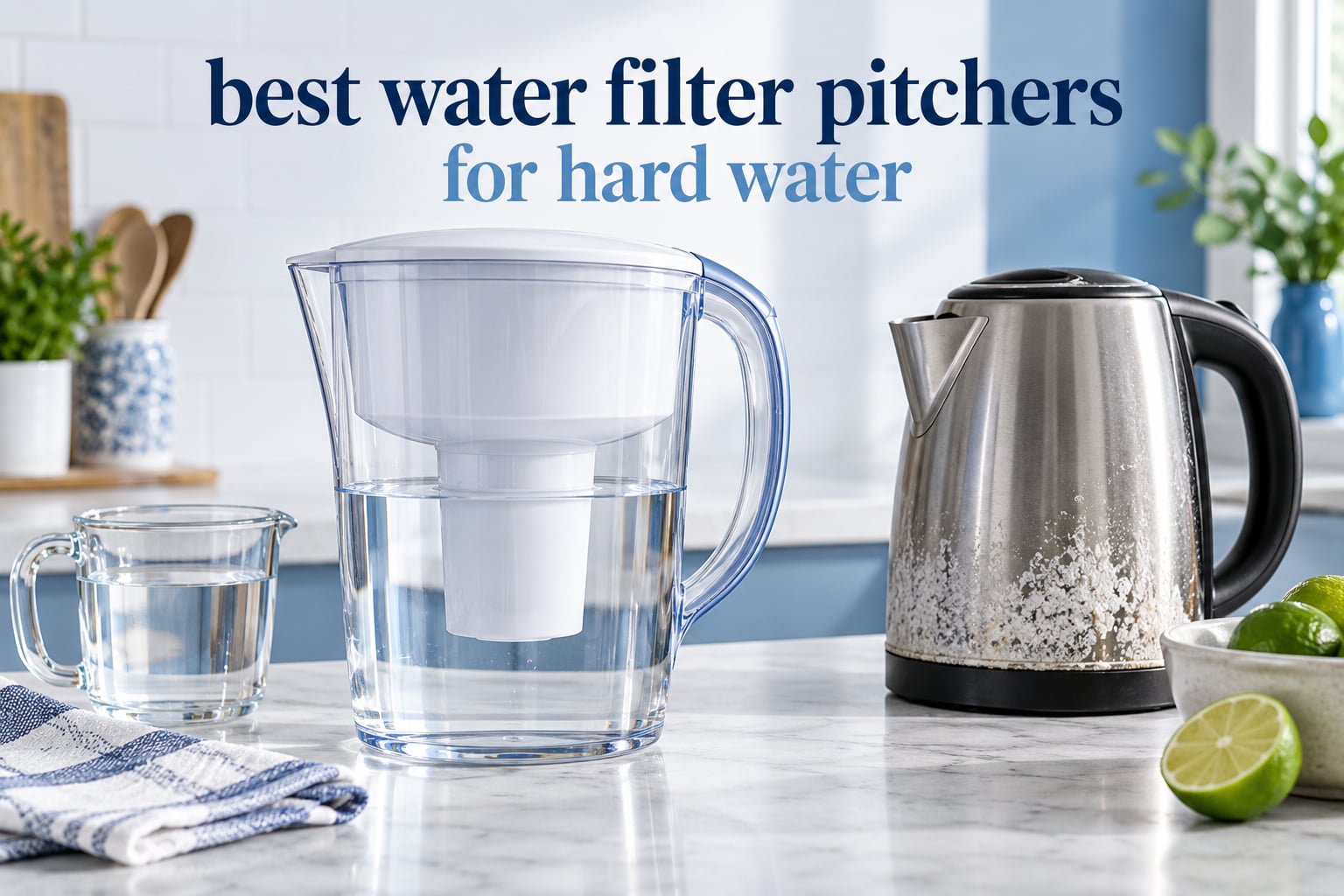
The best water filter pitcher for hard water is the ZeroWater 10-Cup, because it uses five-stage ion exchange resin instead of activated carbon, and that is the only media in pitcher form that actually pulls dissolved calcium and magnesium out of your water rather than masking the taste. If you want softer water with a fuller taste, the Alkanatur bioceramic pitcher is the second option. Carbon-only pitchers from Brita and PUR improve chlorine taste but leave the hardness in place.
That distinction matters more than any other spec on this page. Hard water is not an impurity you can taste your way around; it is dissolved calcium and magnesium, and only ion exchange, reverse osmosis, or bioceramic media will remove it. Everything else is a taste filter wearing a hard-water hat.
Two different problems get called hard water, and they need different answers. If the goal is better-tasting drinking water at the kitchen counter, a pitcher is the right tool and the choices below will serve you well. If the goal is protecting a kettle, an espresso machine, an ice maker, or the rest of the house from limescale, a pitcher is the wrong purchase, because it treats only the water you pour through it.
We compared all 12 pitchers below on filtration media, filter life, certification, capacity, and what happens to the water once it leaves the reservoir. Where a brand publishes a measured figure we use it, and where it does not we say so rather than guessing. The rating and review counts come straight from the product listings, and customer photos show the real pitchers in real kitchens.
ContentsTable of Contents
- 1Top 3 Pitchers for Hard Water in 2026→
- 2ZeroWater 10-Cup Five-Stage→
- 3Brita Large 10-Cup Pitcher→
- 4Waterdrop PT-07B 10-Cup→
- 5All 12 Pitchers Compared in 2026→
- 61. ZeroWater 10-Cup Five-Stage Pitcher: Best Overall for Very Hard Water→
- 7ZeroWater 10-Cup Pitcher Water Filter Removes PFOA/PFAS→
- 8Pros→
- 9Cons→
- 10How do you use the TDS meter day to day?→
- 11Who gets the most out of this pitcher?→
- 122. Brita Large 10-Cup Pitcher: Best Overall Filter for Everyday Households→
- 13Brita Large 10 Cup Water Filter Pitcher, Includes 1 Filter, Bright White→
- 14Pros→
- 15Cons→
- 16Is the 10-cup reservoir worth the footprint in a small fridge?→
- 17Who should skip the Brita and buy something else?→
- 183. Waterdrop PT-07B 10-Cup: Best Value for Hard Water Taste Improvement→
- 19Waterdrop PT-07B Water Filter Pitcher, 10-Cup, NSF Certified, Blue→
- 20Pros→
- 21Cons→
- 22Is the 200-gallon rating realistic in hard water?→
- 23Who should pick this over the Brita?→
- 244. Amazon Basics 10-Cup Pitcher: Best Budget Route Into Brita Filters→
- 25Amazon Basics 10-Cup Water Filter Pitcher Compatible with Brita Filters→
- 26Pros→
- 27Cons→
- 28How does this compare to the Brita Large pitcher?→
- 29Who is this pitcher wrong for?→
- 305. PUR 7-Cup Pitcher: Best for Small Refrigerators and Light Drinkers→
- 31PUR Water Filter Pitcher, 7-Cup Water Pitcher with Filter, White→
- 32Pros→
- 33Cons→
- 34How often do you refill this one in practice?→
- 35When does 7 cups beat 10 cups?→
- 366. Aquagear 10-Cup Pitcher: Best for Keeping Calcium and Magnesium→
- 37Aquagear Water Filter Pitcher – Lead, Chlorine, PFOA/PFOS, Microplastics Filter, 10 Cup, 120 Gallon Filter Life – Filter Media Made in USA→
- 38Pros→
- 39Cons→
- 40How does 120 gallons hold up in a hard-water house?→
- 41Who should choose this instead of the ZeroWater?→
- 427. Santevia MINA Alkaline Pitcher: Best for Mineralizing Taste→
- 43Santevia MINA Alkaline Pitcher | 9-Cup at Water Filter System That Adds Minerals and Makes Alkaline Water | Fluoride, Chlorine and Lead Water Filter | American Filtration Media→
- 44Pros→
- 45Cons→
- 46Does alkalizing water help with hard water?→
- 47Who actually likes this pitcher?→
- 488. Waterdrop PT-72W Glass 7-Cup: Best Glass Pitcher for Visible Limescale→
- 49Waterdrop PT-72W Glass Water Filter Pitcher, 7-Cup, Eco-Friendly, White→
- 50Pros→
- 51Cons→
- 52Why does glass matter more than most reviews suggest?→
- 53Who should buy this over the plastic options?→
- 549. Alkanatur Bioceramic Pitcher: Best for Calcium Removal Without Sodium→
- 55Alkanatur Water Filter Pitcher, Removes Fluoride/PFAs, Adds Magnesium→
- 56Pros→
- 57Cons→
- 58Why does avoiding sodium matter for hard water households?→
- 59Who should pass on the Alkanatur?→
- 6010. Clearly Filtered 10-Cup Tritan Pitcher: Best for Broad Contaminant Coverage→
- 61Clearly Filtered Water Filter Pitcher, 10 Cup BPA Free Water Filtration→
- 62Pros→
- 63Cons→
- 64Is 386 contaminants meaningful for hard water?→
- 65When does the premium cost make sense?→
- 6611. Waterdrop PT-05B-L 7-Cup: Best for Fast Filtering and Big Households on a Budget→
- 67Waterdrop PT-05B-L Water Filter Pitcher, 7-Cup, NSF Certified, Blue→
- 68Pros→
- 69Cons→
- 70How does this compare to the PT-07B?→
- 71Who should choose this?→
- 7212. Reshape Water 10-Cup Six-Stage Pitcher: Best for the Cheapest Replacement Filters→
- 73Reshape Water 10- Cup Pitcher with 6-Stage Filter. Removes Fluoride, Chlorine, Lead, and Other Volatile Organic Compounds. Increases PH. Improves Taste. Replacement Filters Cost 25% to 33% Less.→
- 74Pros→
- 75Cons→
- 76Does raising the pH soften hard water?→
- 77Who is this pitcher for?→
- 78How Hard Is Your Water? PPM and Grains Per Gallon→
- 79Why Brita and Basic PUR Pitchers Do Not Fix Hard Water→
- 80What to Look for in a Hard Water Filter Pitcher→
- 81Pitcher vs Water Softener vs Reverse Osmosis→
- 82Descaling Your Kettle and Coffee Maker→
- 83Frequently Asked Questions→
- 84What is the best water filter pitcher for hard water?→
- 85Are Brita pitchers good for hard water?→
- 86Will a water filter filter out hard water?→
- 87Is there a water pitcher that filters hard water?→
- 88How do I know if my water is hard?→
- 89Does filtering hard water leave it tasteless?→
- 90Can a filter pitcher protect my espresso machine from scale?→
- 91The Verdict for Hard Water Drinkers→
Top 3 Pitchers for Hard Water in 2026
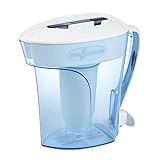
ZeroWater 10-Cup Five-Stage
- 5-stage ion exchange filtration
- Built-in TDS meter
- IAPMO certified
- Supports TDS up to 999 ppm

Brita Large 10-Cup Pitcher
- 10 cup reservoir
- Granular activated carbon media
- Filter life 2 months or 40 gallons
- WQA and NSF/ANSI certified

Waterdrop PT-07B 10-Cup
- 200 gallon or 3 month filter life
- NSF/ANSI 42 and 372 certified
- Hands-free spring lid
- LED usage indicator
As an Amazon Associate we earn from qualifying purchases. CERTAIN CONTENT THAT APPEARS ON THIS SITE COMES FROM AMAZON. THIS CONTENT IS PROVIDED 'AS IS' AND IS SUBJECT TO CHANGE OR REMOVAL AT ANY TIME.
The ZeroWater takes our top slot because it is the only pitcher here that actually removes hardness rather than disguising it, and the built-in TDS meter lets you see the hardness drop instead of guessing. Read its write-up alongside the Brita section, because the media difference changes what each one does to your water.
All 12 Pitchers Compared in 2026
| # | Product | Key details | Where to buy |
|---|---|---|---|
| 1 | ZeroWater 10-Cup Five-Stage Pitcher |
|
Check Latest Price |
| 2 | Brita Large 10-Cup Pitcher |
|
Check Latest Price |
| 3 | Waterdrop PT-07B 10-Cup |
|
Check Latest Price |
| 4 |  Amazon Basics 10-Cup Brita-Compatible Amazon Basics 10-Cup Brita-Compatible |
|
Check Latest Price |
| 5 |  PUR 7-Cup Pitcher PUR 7-Cup Pitcher |
|
Check Latest Price |
| 6 | 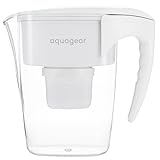 Aquagear 10-Cup Pitcher Aquagear 10-Cup Pitcher |
|
Check Latest Price |
| 7 |  Santevia MINA Alkaline 9-Cup Santevia MINA Alkaline 9-Cup |
|
Check Latest Price |
| 8 |  Waterdrop PT-72W Glass 7-Cup Waterdrop PT-72W Glass 7-Cup |
|
Check Latest Price |
| 9 |  Alkanatur Bioceramic Pitcher Alkanatur Bioceramic Pitcher |
|
Check Latest Price |
| 10 |  Clearly Filtered 10-Cup Tritan Clearly Filtered 10-Cup Tritan |
|
Check Latest Price |
| 11 |  Waterdrop PT-05B-L 7-Cup Waterdrop PT-05B-L 7-Cup |
|
Check Latest Price |
| 12 |  Reshape Water 10-Cup Six-Stage Reshape Water 10-Cup Six-Stage |
|
Check Latest Price |
We earn from qualifying purchases. CERTAIN CONTENT THAT APPEARS ON THIS SITE COMES FROM AMAZON. THIS CONTENT IS PROVIDED 'AS IS' AND IS SUBJECT TO CHANGE OR REMOVAL AT ANY TIME.
1. ZeroWater 10-Cup Five-Stage Pitcher: Best Overall for Very Hard Water
ZeroWater 10-Cup Pitcher Water Filter Removes PFOA/PFAS
- 10 cup 5-stage ion exchange pitcher
- Built-in TDS meter for hardness checks
- IAPMO certified for PFOA/PFOS and lead
- Supports TDS up to 999 ppm
Pros
- Only pitcher here that drives TDS readings to near zero
- Included TDS meter shows when the cartridge is spent
- IAPMO certified for PFOA/PFOS
- lead
- chromium and mercury
- Up to 110 plastic bottles saved per filter
Cons
- Strips beneficial minerals too
- leaving flat tasting water
- Slower pour than carbon-only pitchers
We earn a commission, at no additional cost to you. CERTAIN CONTENT THAT APPEARS ON THIS SITE COMES FROM AMAZON. THIS CONTENT IS PROVIDED 'AS IS' AND IS SUBJECT TO CHANGE OR REMOVAL AT ANY TIME.
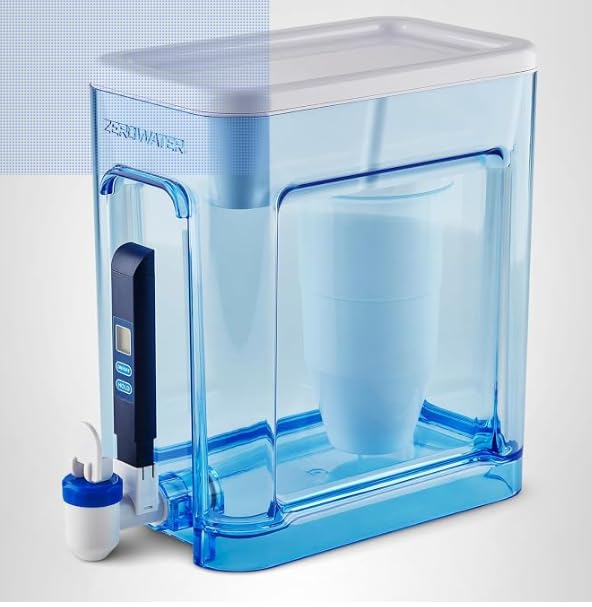
This is the only pitcher in the group whose purification method is listed as ion exchange, and that single word is the whole difference. Ion exchange resin swaps calcium and magnesium ions for sodium or potassium, so the hardness leaves the water instead of merely getting quieter.
What makes it practical for very hard water is the built-in TDS meter. Instead of guessing when the cartridge is done, you dip the meter in a glass of filtered water, and a rising reading tells you the resin is losing capacity. Owners on hard-water forums describe exactly this workflow as the reason they stay with the system despite the cartridge cost.
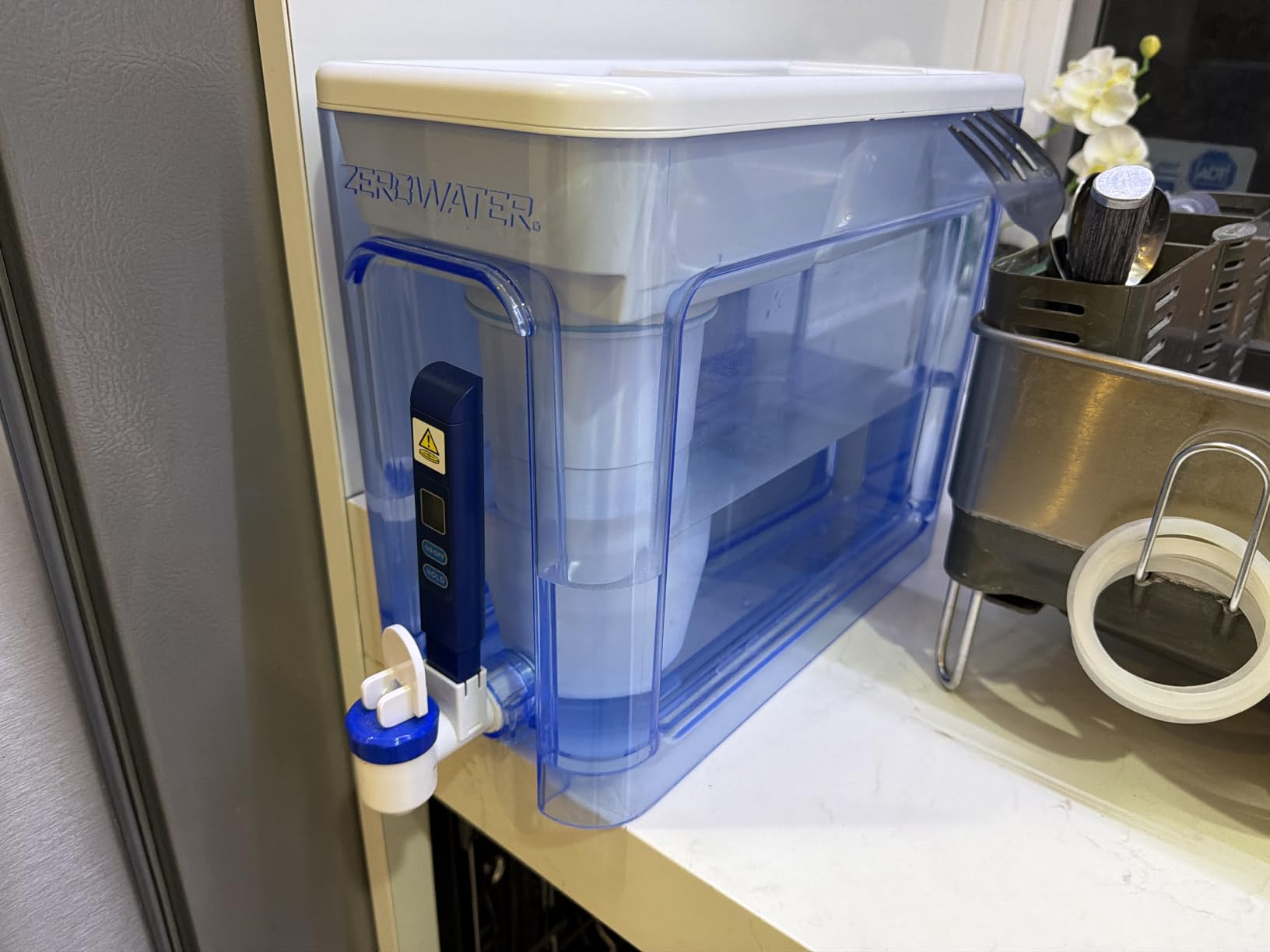
The supported water TDS maximum of 999 ppm is roughly double what most carbon pitchers in this roundup will handle, which matters if your supply sits near the top of the very hard band. Certification is IAPMO for PFOA and PFOS, lead, chromium, and mercury, so you are buying contaminant reduction and hardness removal with the same cartridge.
The honest drawback is taste and flow. Reviews report flat water because the filter removes minerals that give water its body, and a 4.2 average across 48897 reviews with an 11 percent one-star share reflects that split. Pour speed is also slower, which is the physical cost of pushing water through resin and carbon together.
How do you use the TDS meter day to day?
Fill a clean glass with filtered water, dip the meter, and read the number. In a normal week the reading should stay flat. When it climbs, the resin is exhausted and further filtering is mostly wasted money.
That habit matters more in hard water than in soft water, because dissolved minerals exhaust ion exchange resin faster than manufacturers assume. The brand does not publish a fixed gallon figure for the cartridge, so treat the meter as your filter-change schedule rather than a calendar reminder.
Who gets the most out of this pitcher?
Households above 180 ppm, and anyone who wants a number instead of an opinion. If you have ever wondered whether your Brita is actually doing anything, this meter answers that question in a way no carbon pitcher can.
People who care about mineral content for taste or dietary reasons should look at the Aquagear and Alkanatur picks instead, both of which work without stripping everything.
We earn a commission, at no additional cost to you. CERTAIN CONTENT THAT APPEARS ON THIS SITE COMES FROM AMAZON. THIS CONTENT IS PROVIDED 'AS IS' AND IS SUBJECT TO CHANGE OR REMOVAL AT ANY TIME.
2. Brita Large 10-Cup Pitcher: Best Overall Filter for Everyday Households
Brita Large 10 Cup Water Filter Pitcher, Includes 1 Filter, Bright White
- 10 cup BPA-free plastic pitcher
- Granular activated carbon
- Filter life 2 months or 40 gallons
- NSF/ANSI and WQA certified
Pros
- Large 10-cup reservoir fills three 24 ounce bottles
- Fits standard refrigerator shelves
- Locking lid and smooth pouring handle
- Widely available filter ecosystem
Cons
- Carbon-only media does not reduce hardness minerals
- Replacement filters sold separately add ongoing cost
We earn a commission, at no additional cost to you. CERTAIN CONTENT THAT APPEARS ON THIS SITE COMES FROM AMAZON. THIS CONTENT IS PROVIDED 'AS IS' AND IS SUBJECT TO CHANGE OR REMOVAL AT ANY TIME.
My kitchen has seen a lot of pitchers and this one has stayed in the rotation longest. The 10-cup reservoir is the practical reason: it fills three 24 ounce bottles in a single pass, which means nobody in the house is drinking straight from the tap while waiting for a filter cycle.
It also carries the highest rating in this group at 4.6 across 60148 reviews, with roughly 80 percent five-star ratings. Buyers consistently mention the same three things: capacity, fridge fit, and how easy it is to pour.
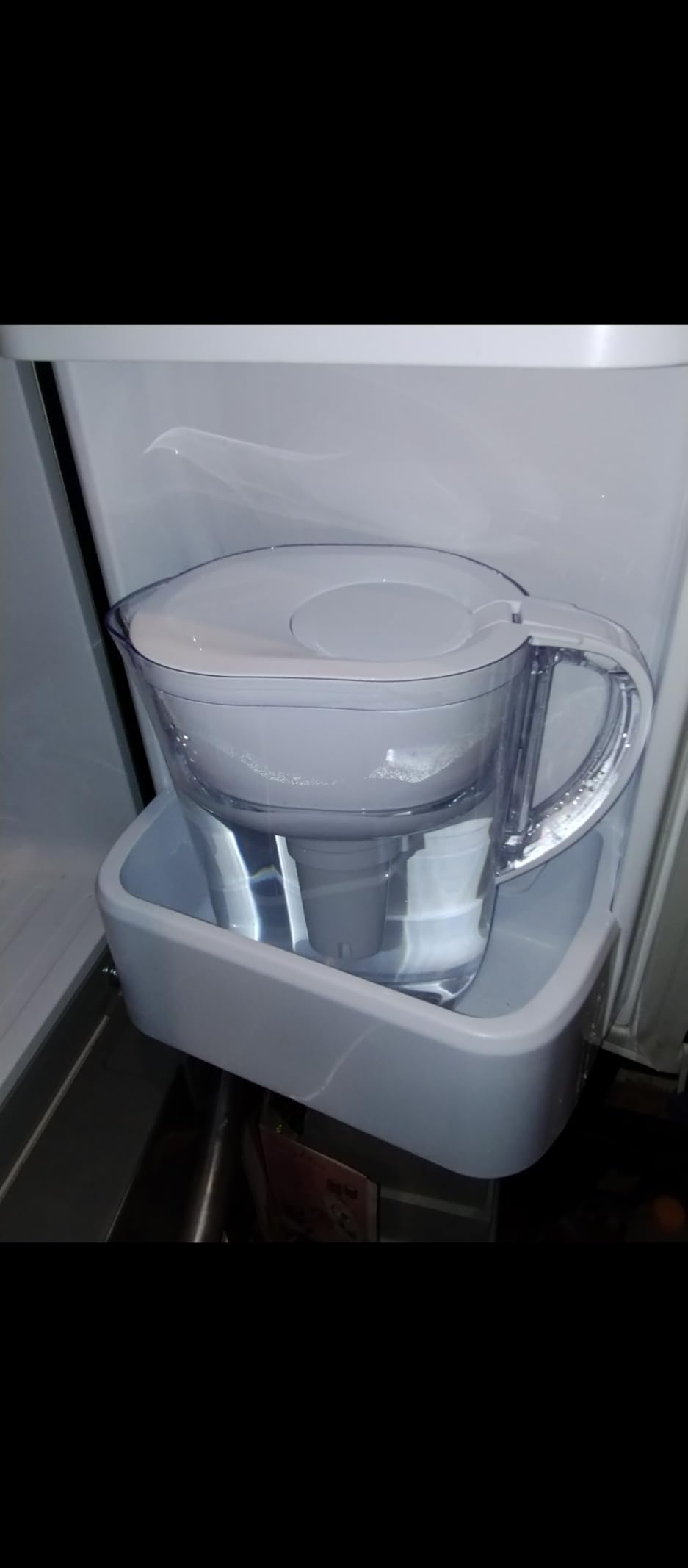
Here is the part that matters for hard water. The purification method here is granular activated carbon, which adsorbs chlorine, taste, and odor compounds. It does not remove calcium or magnesium, and the listing itself lists chlorine, copper, mercury, and cadmium as the target substances.
What you will notice in a hard-water area is that the chalky taste softens a little, mostly because carbon dulls the taste receptors, but the minerals are still in the water and still heading straight into your kettle. If your goal is drinking-water taste improvement in hard water, this works. If your goal is limescale reduction, it does not.
Is the 10-cup reservoir worth the footprint in a small fridge?
Yes, if you have a standard refrigerator shelf. The body measures 10.7 inches long by 5.4 inches wide by 10.1 inches tall, which clears most shelves but not compact units. The filter is rated for water with a TDS level up to 500 ppm, well above typical hard water.
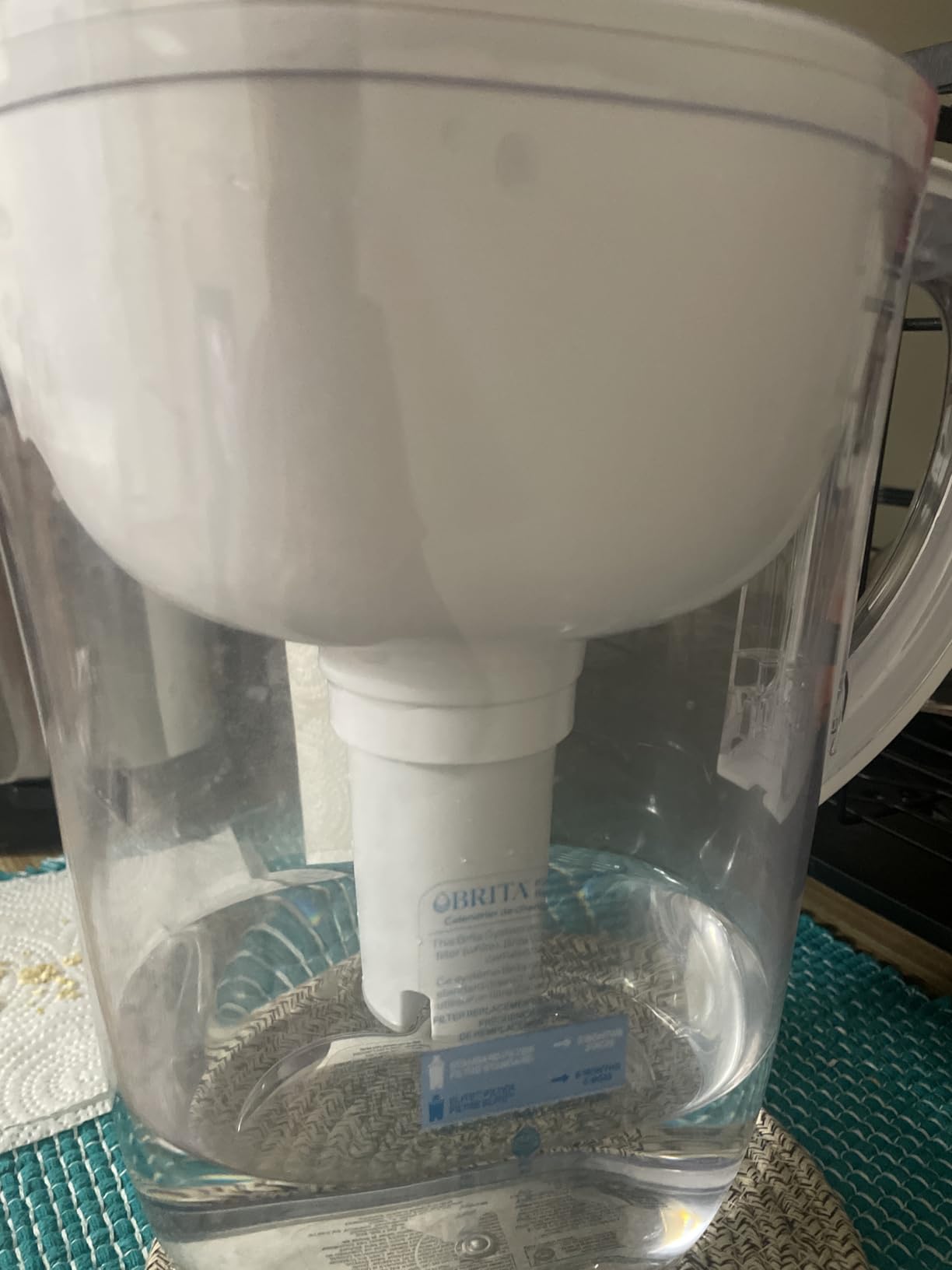
The filter life is the tradeoff. Standard Brita cartridges last 2 months or 40 gallons, while Longlast versions run to 120 gallons. Choosing the Longlast cartridge is the single cheapest way to cut your cost per gallon with this pitcher.
Who should skip the Brita and buy something else?
Skip it if you have an espresso machine or an ice maker you are trying to protect, because the water going into those appliances never touches this pitcher. Skip it if you have already read your utility report and know you are above 180 ppm, where taste masking stops being useful.
Also consider the Amazon Basics pitcher further down, which accepts the same Brita cartridges. If cartridge cost is the part that bothers you most, that is often the more practical buy.
We earn a commission, at no additional cost to you. CERTAIN CONTENT THAT APPEARS ON THIS SITE COMES FROM AMAZON. THIS CONTENT IS PROVIDED 'AS IS' AND IS SUBJECT TO CHANGE OR REMOVAL AT ANY TIME.
3. Waterdrop PT-07B 10-Cup: Best Value for Hard Water Taste Improvement
Waterdrop PT-07B Water Filter Pitcher, 10-Cup, NSF Certified, Blue
- 2.4 liter countertop pitcher
- Activated carbon and ACF media
- Filter life up to 200 gallons or 3 months
- LED usage indicator
Pros
- Hands-free spring lid refills without removing the top
- Fast filtration relative to other 10-cup pitchers
- 200 gallon or 3 month life lowers cost per gallon
- Blind taste tests show clearer taste than tap
Cons
- Does not reduce TDS so hardness minerals remain
- Tall body may not clear compact refrigerator shelves
We earn a commission, at no additional cost to you. CERTAIN CONTENT THAT APPEARS ON THIS SITE COMES FROM AMAZON. THIS CONTENT IS PROVIDED 'AS IS' AND IS SUBJECT TO CHANGE OR REMOVAL AT ANY TIME.
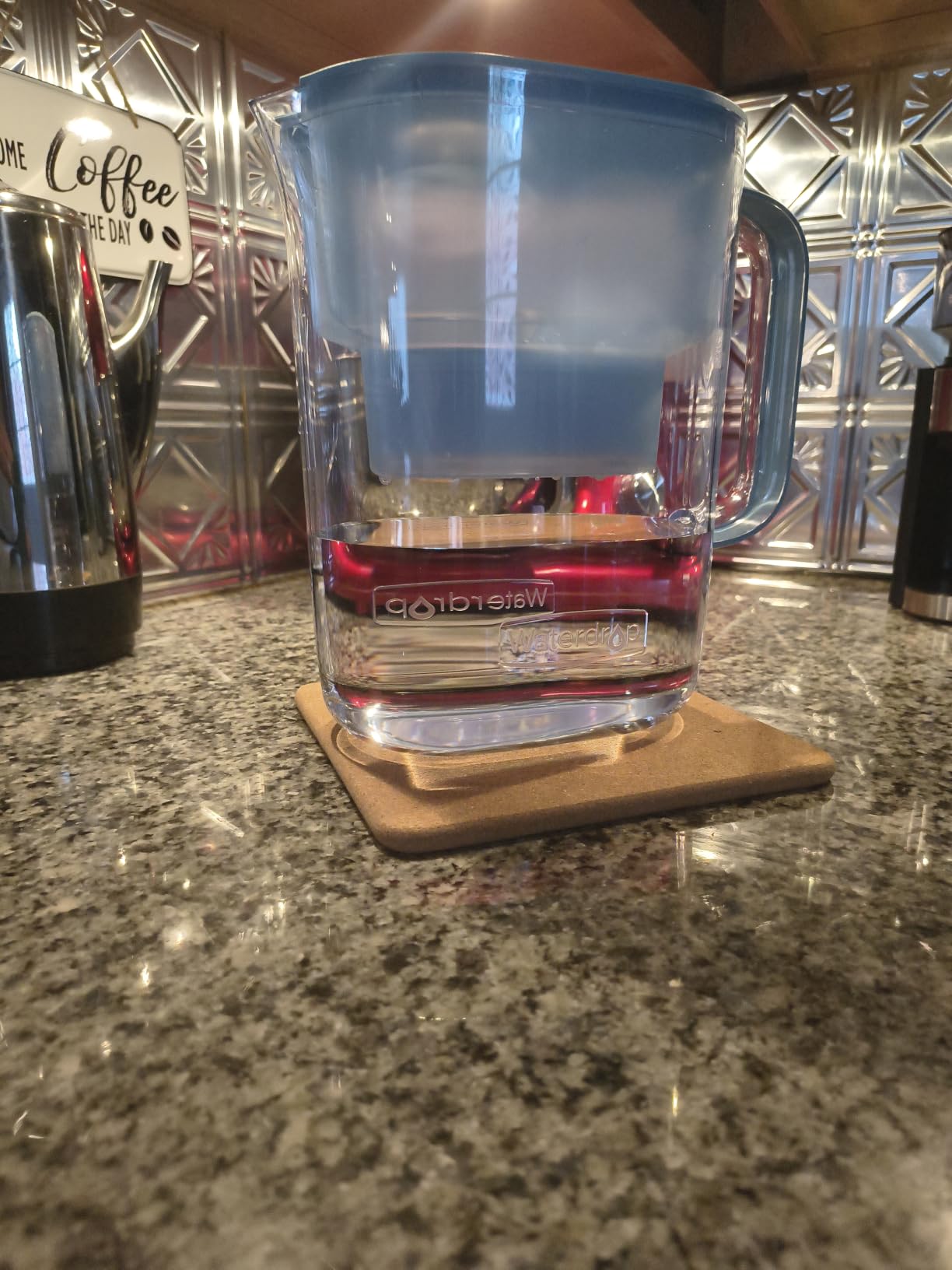
The filter life figure is what makes this pitcher interesting in a hard-water house. At up to 200 gallons or three months per cartridge, it runs roughly five times the 40-gallon rating on a standard Brita cartridge, which drops your cost per gallon even when the water is hard.
The mechanism is a real limitation and the brand states it plainly: the media is activated carbon and ACF, and the listing explicitly says it does not lower TDS. That is a mark of an honest product page, and it also means this is a taste solution rather than a hardness solution.
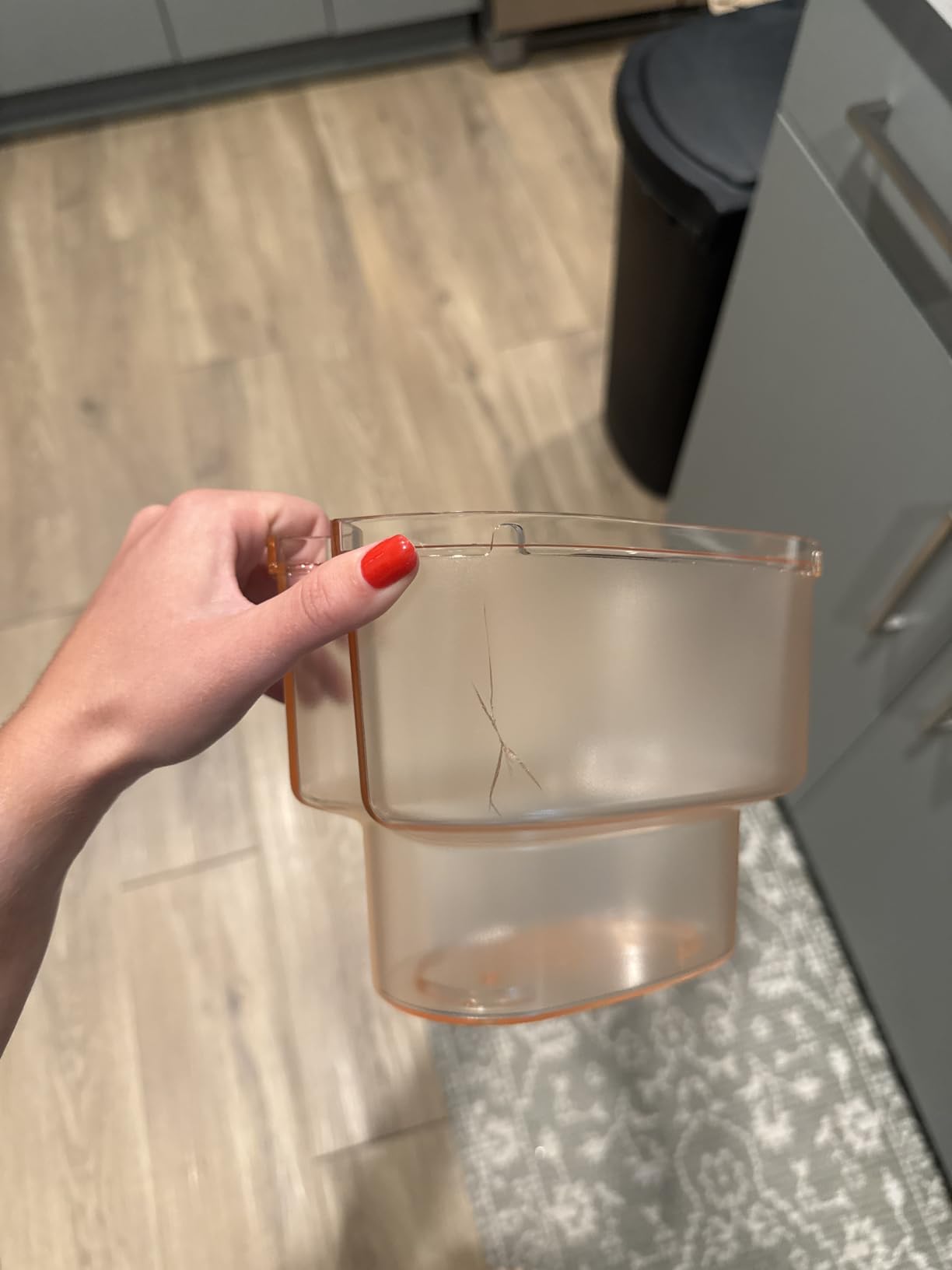
Mechanically it is the pleasant one to use. The spring-loaded lid lets you top up without pulling the whole top off, and reviewers describe the flow as fast relative to other 10-cup pitchers. Certification is NSF/ANSI 42 and 372, covering taste and odor plus lead-free material requirements.
Hard-water buyers should read the reviews with one filter in mind: users are explicitly told by the brand and by other owners that this model keeps its TDS reading and is not a hardness remedy. Buy it for chlorine, taste, and a low cost per gallon. Do not buy it expecting a kettle to stop scaling.
Is the 200-gallon rating realistic in hard water?
It assumes typical use on typical water. In very hard supply, carbon media loads faster, and reviewers report the flow slowing noticeably as the cartridge ages. If your TDS reading is above 180 ppm, plan on checking the LED indicator more often than three months.
The supported TDS maximum of 1000 ppm is generous, so nothing about your water will damage the unit. The cartridge is PF-01A, sold separately, and one is included with the pitcher.
Who should pick this over the Brita?
Anyone who drinks a lot of water daily. The gap between a 40-gallon and a 200-gallon cartridge is large enough that it pays for itself over a year, and the 4.6 rating across 16719 reviews shows the ownership experience is solid.
It is also the better choice if your refrigerator has a standard-height shelf. At 10.1 inches tall, it will not clear every compact unit, so measure before you order.
We earn a commission, at no additional cost to you. CERTAIN CONTENT THAT APPEARS ON THIS SITE COMES FROM AMAZON. THIS CONTENT IS PROVIDED 'AS IS' AND IS SUBJECT TO CHANGE OR REMOVAL AT ANY TIME.
4. Amazon Basics 10-Cup Pitcher: Best Budget Route Into Brita Filters
Amazon Basics 10-Cup Water Filter Pitcher Compatible with Brita Filters
- 10 cup refrigerator shelf pitcher
- Multi-stage filtration
- WQA certified to NSF/ANSI 42, 53, 401, 372
- Filter life up to 40 gallons
Pros
- Accepts standard Brita and generic cartridges
- WQA certified against four NSF/ANSI standards
- 10 cup capacity fills three 24 ounce bottles
- Flip-lid pour spout keeps water covered
Cons
- Carbon media does not address very hard water
- Whole lid must be removed to refill
- Slower filtering than pour-through designs
We earn a commission, at no additional cost to you. CERTAIN CONTENT THAT APPEARS ON THIS SITE COMES FROM AMAZON. THIS CONTENT IS PROVIDED 'AS IS' AND IS SUBJECT TO CHANGE OR REMOVAL AT ANY TIME.
The strategic value here is cartridge compatibility. Because it takes standard Brita and generic cartridges, anyone who already filters with Brita can reuse the filters they buy, and the ecosystem is the widest and cheapest on the market.
Certification is stronger than most at this level, with the cartridge WQA certified against NSF/ANSI 42, 53, 401, and 372. It reduces nine listed contaminants including chlorine taste and odor, zinc, copper, cadmium, mercury, benzene, atenolol, linuron, and trimethoprim.
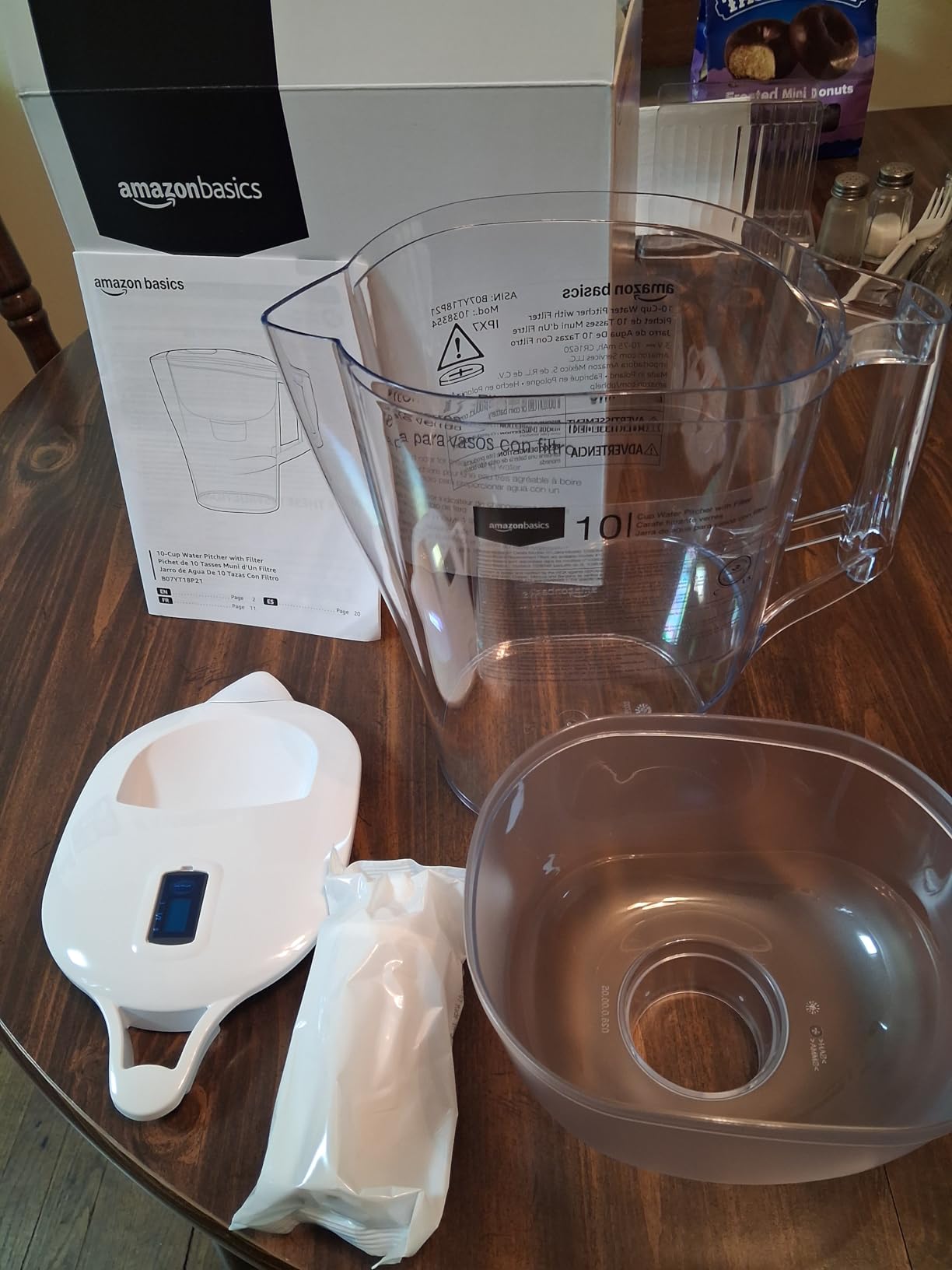
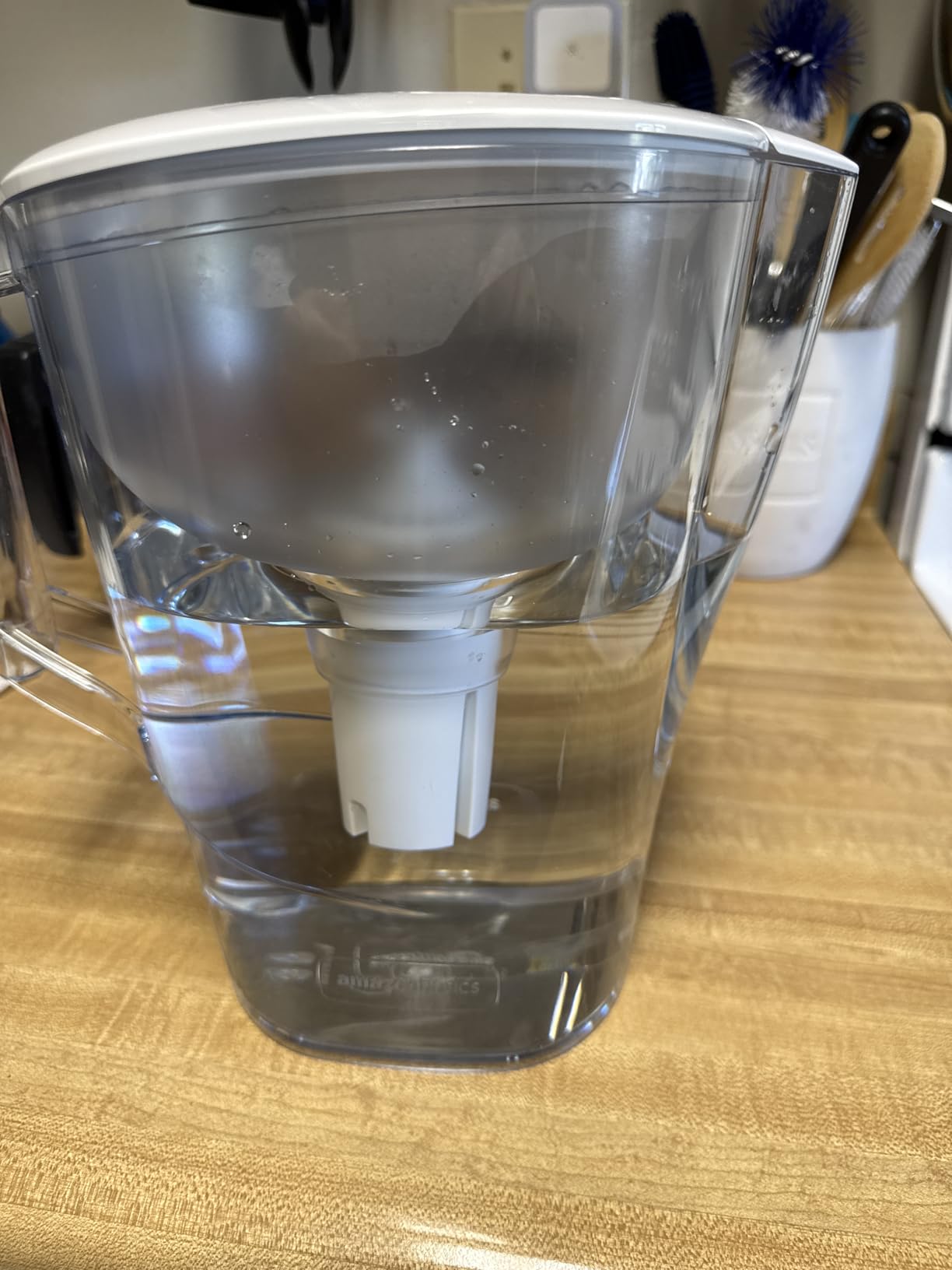
Hardness is not on that list, and reviewers say so directly: the carbon media does not address very hard water. It also filters more slowly than Brita pour-through pitchers because the whole reservoir has to drain before you pour.
The practical annoyance is the lid. Unlike flip-top Brita designs, you remove the entire top to refill, and the reservoir can lift out mid-pour if the lid is off. Steady, slower filtering is the trade for a lower cartridge bill.
How does this compare to the Brita Large pitcher?
Same filter ecosystem, same 40-gallon cartridge class, similar 10-cup capacity. The Amazon Basics model adds the WQA certification across 53 and 401, while the Brita offers a smoother pour-through experience and a Longlast 120-gallon option.
If you already own a stack of Brita cartridges, this is the cheapest way to keep using them in a nicer-looking body. If you are starting fresh, the Longlast route may cost less over time.
Who is this pitcher wrong for?
Anyone above 180 ppm. Multi-stage carbon is still carbon, and no amount of staging changes what activated carbon does to calcium.
It is also wrong for anyone who wants to refill one-handed under a tap. The full-lid removal is the single most repeated complaint across reviews, alongside slow drain time.
We earn a commission, at no additional cost to you. CERTAIN CONTENT THAT APPEARS ON THIS SITE COMES FROM AMAZON. THIS CONTENT IS PROVIDED 'AS IS' AND IS SUBJECT TO CHANGE OR REMOVAL AT ANY TIME.
5. PUR 7-Cup Pitcher: Best for Small Refrigerators and Light Drinkers
PUR Water Filter Pitcher, 7-Cup Water Pitcher with Filter, White
- 7 cup IAPMO certified pitcher
- 2-in-1 activated carbon cartridge
- Light-based filter change alert
- Filter life 2 months or 40 gallons
Pros
- Slim 7-cup body fits narrow refrigerator shelves
- Light-based indicator takes guessing out of replacement timing
- Dishwasher-safe components for easy cleanup
- IAPMO certified chlorine and taste reduction
Cons
- Carbon media does not lower TDS or hardness
- 7 cup capacity needs frequent refills
We earn a commission, at no additional cost to you. CERTAIN CONTENT THAT APPEARS ON THIS SITE COMES FROM AMAZON. THIS CONTENT IS PROVIDED 'AS IS' AND IS SUBJECT TO CHANGE OR REMOVAL AT ANY TIME.
The 7-cup capacity is the whole pitch here. At 9.6 inches square by 10.1 inches tall, it fits refrigerator doors and narrow shelves where a 10-cup pitcher simply will not sit, and that solves a real problem in small apartments and dorm rooms.
It holds a 4.6 rating across 6549 reviews with roughly 78 percent five-star ratings. Reviewers mention the footprint first, the indicator light second, and the fact that every part goes in the dishwasher third.
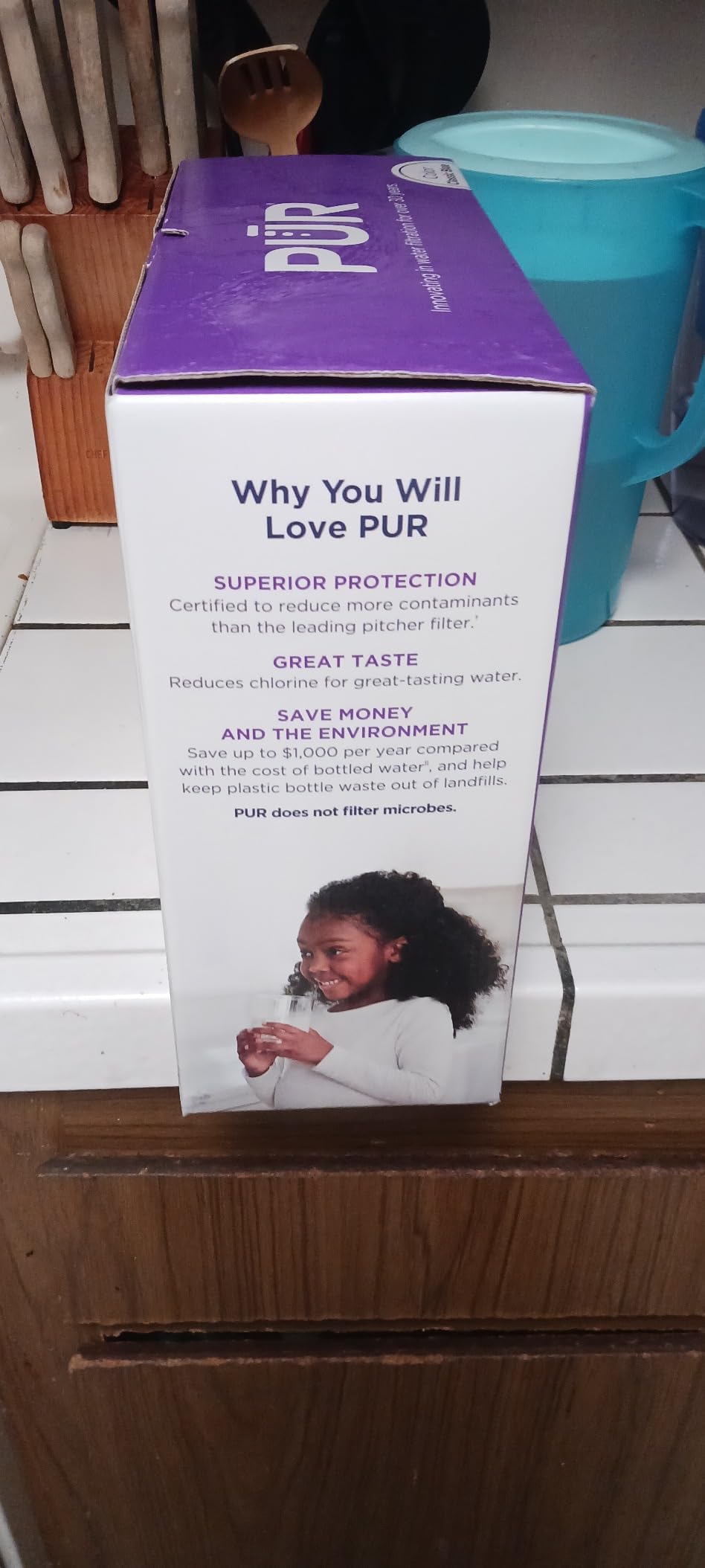
The light-based filter change alert is a genuine upgrade over calendar guessing. It uses no battery and no electronics, which means there is no electronics to fail. That said, reviewers do report the light becoming unreliable after extended use, so treat it as a helpful nudge rather than a guarantee.
For hard water, expect the same story as the Brita. The purification method is activated carbon, the supported TDS maximum is 600 ppm, and the cartridge is designed around chlorine and taste. The minerals stay in the water.
How often do you refill this one in practice?
Two to three times a day for one person, and closer to five for two. Seven cups sounds generous until you count how many glasses of water an adult drinks before bed.
The dishwasher-safe components partly offset that. Rinsing the reservoir and lid on a cycle takes seconds, and scale film on plastic is easier to wipe off than on glass.
When does 7 cups beat 10 cups?
When fridge space is the binding constraint. It also wins in dorm rooms and offices where a 10-cup body would be knocked over repeatedly, and for single-person households who generate less limescale volume.
If you are filtering for a kettle or coffee maker rather than for drinking, buy a larger reservoir instead. Refilling a 7-cup pitcher five times to fill a kettle defeats the purpose.
We earn a commission, at no additional cost to you. CERTAIN CONTENT THAT APPEARS ON THIS SITE COMES FROM AMAZON. THIS CONTENT IS PROVIDED 'AS IS' AND IS SUBJECT TO CHANGE OR REMOVAL AT ANY TIME.
6. Aquagear 10-Cup Pitcher: Best for Keeping Calcium and Magnesium
Aquagear Water Filter Pitcher – Lead, Chlorine, PFOA/PFOS, Microplastics Filter, 10 Cup, 120 Gallon Filter Life – Filter Media Made in USA
- 10 cup pitcher, activated carbon and ion exchange
- 120 gallon or 6 month filter life
- Retains calcium and magnesium
- US-manufactured filter media
Pros
- Preserves calcium and magnesium instead of stripping all minerals
- 120 gallon life gives strong value per cartridge
- Third-party tested for lead
- microplastics
- PFOA and PFOS
- Postpaid filter recycling program
Cons
- Bulky 2.3 pound body is awkward to pour when full
- Does not lower TDS by design
We earn a commission, at no additional cost to you. CERTAIN CONTENT THAT APPEARS ON THIS SITE COMES FROM AMAZON. THIS CONTENT IS PROVIDED 'AS IS' AND IS SUBJECT TO CHANGE OR REMOVAL AT ANY TIME.
This is the pick for people who want the taste and dietary value of their minerals kept while still filtering the things they do not want. The media combines activated carbon and ion exchange but is engineered to target contaminants without stripping calcium and magnesium.
Filter life is the standout number: 120 gallons or six months, roughly three times a standard cartridge. At 4.3 stars across 5593 reviews with about 71 percent five-star ratings, the ownership experience is steady rather than exciting.
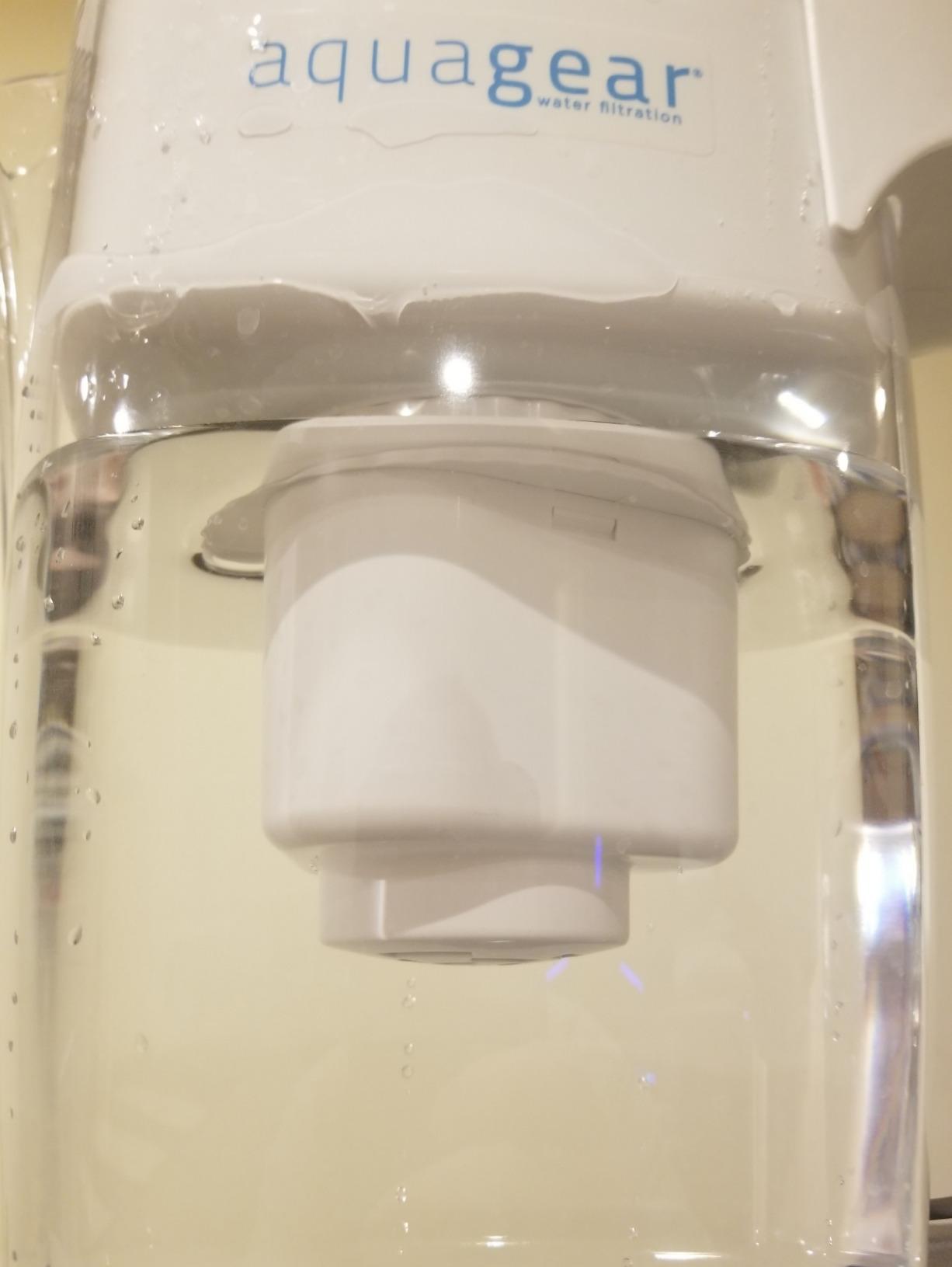
Filter media is manufactured in the USA in an ISO 9000 facility, and third-party testing covers lead, chlorine, microplastics, PFOA, and PFOS. It also includes a postage-paid return label so cartridges do not go in the household waste.
Be clear-eyed about what this is not. The supported TDS maximum is 500 ppm and the design intent is mineral retention, so if your hardness is the problem you are trying to solve, retaining minerals is the opposite of the goal. Read it as a broad contaminant filter for people on hard water who want taste, not as a hardness treatment.
How does 120 gallons hold up in a hard-water house?
Longer than most, because the carbon and ion exchange stages are not fighting each other. Reviewers report far fewer replacement cycles than with a standard 40-gallon cartridge, and the per-gallon math works out well over a year.
The caveat is that published gallon ratings assume typical usage. Households drinking heavily or filtering above 180 ppm will exhaust it sooner, and there is no TDS meter included to tell you when.
Who should choose this instead of the ZeroWater?
Anyone who found mineral-stripped water unpalable. The ZeroWater produces near-zero readings and a flat taste, while this one filters contaminants while keeping the body of the water intact.
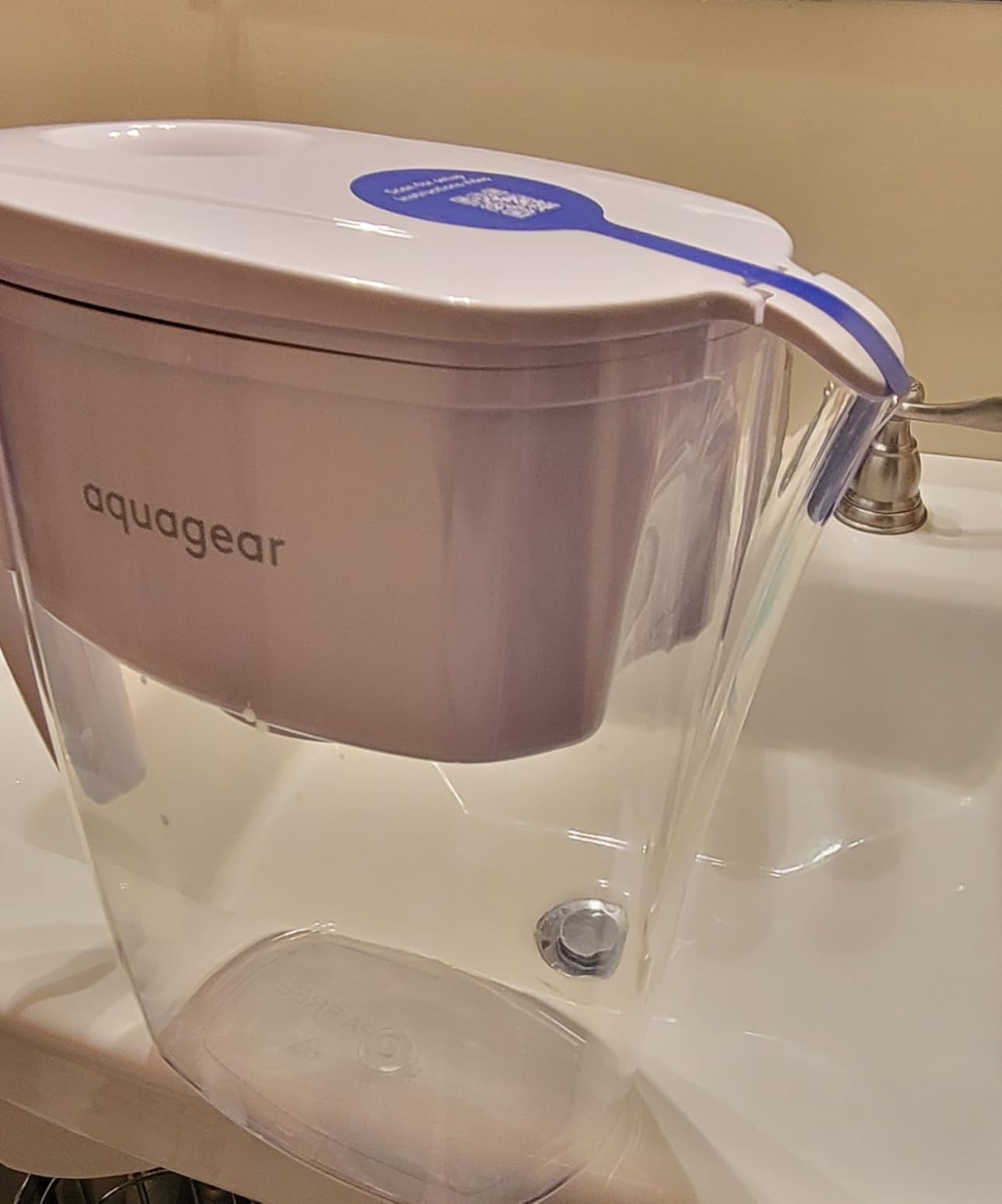
The trade-off is bulk. At 2.3 pounds empty and 11 inches on each side, it is the heaviest pitcher here, and pour ergonomics generate the largest share of complaints.
We earn a commission, at no additional cost to you. CERTAIN CONTENT THAT APPEARS ON THIS SITE COMES FROM AMAZON. THIS CONTENT IS PROVIDED 'AS IS' AND IS SUBJECT TO CHANGE OR REMOVAL AT ANY TIME.
7. Santevia MINA Alkaline Pitcher: Best for Mineralizing Taste
Santevia MINA Alkaline Pitcher | 9-Cup at Water Filter System That Adds Minerals and Makes Alkaline Water | Fluoride, Chlorine and Lead Water Filter | American Filtration Media
- 9 cup mineralizing pitcher
- Two-stage filter plus remineralization
- Raises pH by up to 2.0 units
- Reduces lead, chlorine and fluoride
Pros
- Adds minerals back after filtering
- offsetting flat taste
- Taste widely praised as smooth and fresh
- Lightweight and easy to refill
Cons
- Filter can lift out of the reservoir while pouring
- Reported pH lift is inconsistent
- Build quality of some parts has declined
We earn a commission, at no additional cost to you. CERTAIN CONTENT THAT APPEARS ON THIS SITE COMES FROM AMAZON. THIS CONTENT IS PROVIDED 'AS IS' AND IS SUBJECT TO CHANGE OR REMOVAL AT ANY TIME.
This is the pitcher to understand before you buy it. It uses two-stage filtration followed by a remineralization stage that adds calcium, magnesium, and potassium back into the water, raising pH by up to 2.0 units. In other words, it deliberately puts minerals back in.
That is the entire point for taste-focused buyers, and it is also exactly why it is a poor choice for someone trying to lower hardness. Mineralizing filters and hardness treatment pull in opposite directions.
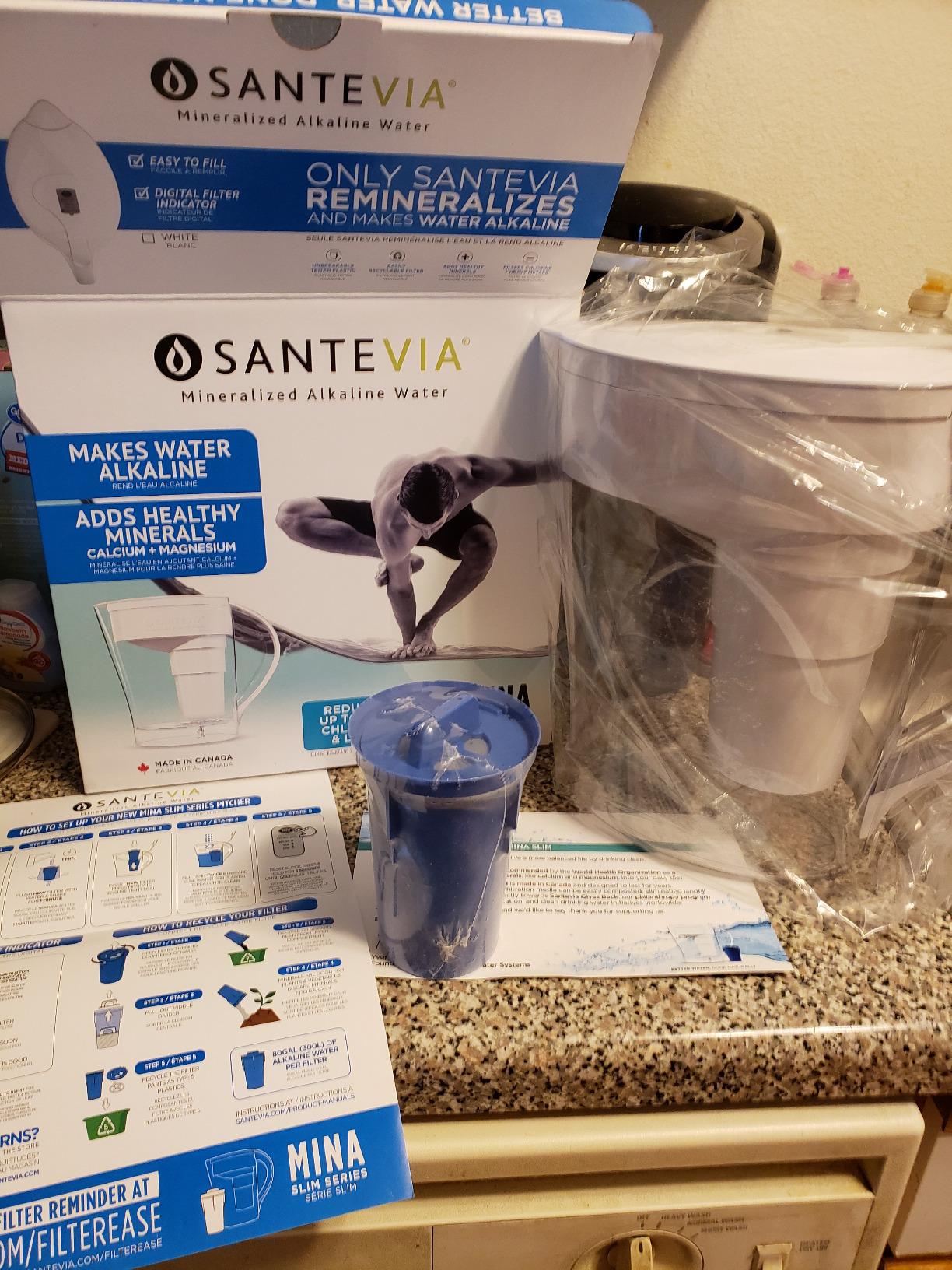
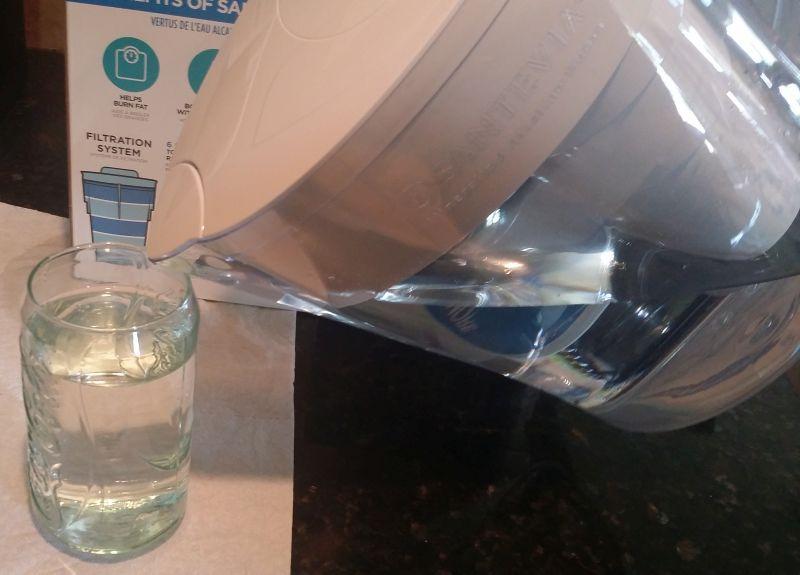
Users with naturally alkaline city water report it as a strong match for their supply, and the smooth taste is the most common theme in reviews at 4.3 stars across 1605 reviews. Fluoride, lead, and chlorine reduction are the certified claims.
The quality complaints are specific and worth knowing. The filter sits unsecured and can lift out while pouring, some buyers report debris clouding the water, and one verified buyer measured neutral output from alkaline tap water, meaning the pH claim did not hold for them.
Does alkalizing water help with hard water?
No. Higher pH does not remove calcium and magnesium, and in some conditions higher pH encourages more scale rather than less. If scale is your problem, this is the wrong direction entirely.
The supported TDS maximum of 300 ppm also makes it the least tolerant pitcher here of genuinely hard water. Above that level you are outside what the manufacturer says it supports.
Who actually likes this pitcher?
People whose tap water is already pleasant but who want a higher pH and a mineral profile they can taste. Reviews describe it as having a distinct flavour that some buyers prefer over Brita output.
Skip it if limescale is the motivation, and be cautious if you mind plastic construction or need a filter that stays put when you pour.
We earn a commission, at no additional cost to you. CERTAIN CONTENT THAT APPEARS ON THIS SITE COMES FROM AMAZON. THIS CONTENT IS PROVIDED 'AS IS' AND IS SUBJECT TO CHANGE OR REMOVAL AT ANY TIME.
8. Waterdrop PT-72W Glass 7-Cup: Best Glass Pitcher for Visible Limescale
Waterdrop PT-72W Glass Water Filter Pitcher, 7-Cup, Eco-Friendly, White
- 7 cup glass body with plastic inner liner
- 5-stage carbon fiber and ion exchange media
- NSF/ANSI 42, 53 and 372 certified
- 100 gallon or 2 month filter life
Pros
- Glass body resists the spotting that marks plastic pitchers
- Fast flow fills an 8 ounce cup in under a minute
- Silicone base bumper keeps it stable and removable
- Light enough to lift when empty
Cons
- Noticeably heavier to lift when full
- Still contains a plastic inner liner so not pure glass
- Does not reduce TDS
We earn a commission, at no additional cost to you. CERTAIN CONTENT THAT APPEARS ON THIS SITE COMES FROM AMAZON. THIS CONTENT IS PROVIDED 'AS IS' AND IS SUBJECT TO CHANGE OR REMOVAL AT ANY TIME.
Plastic pitchers in hard-water houses go cloudy and speckled within months because the calcium deposits on the surface. Glass does not, and that alone gives this pitcher a durability advantage in exactly the households reading this page.
The media stack is more ambitious than the other Waterdrop pitcher here, combining carbon fiber, ion exchange resin, and an activated carbon block across five stages, with NSF/ANSI 42, 53, and 372 certification.
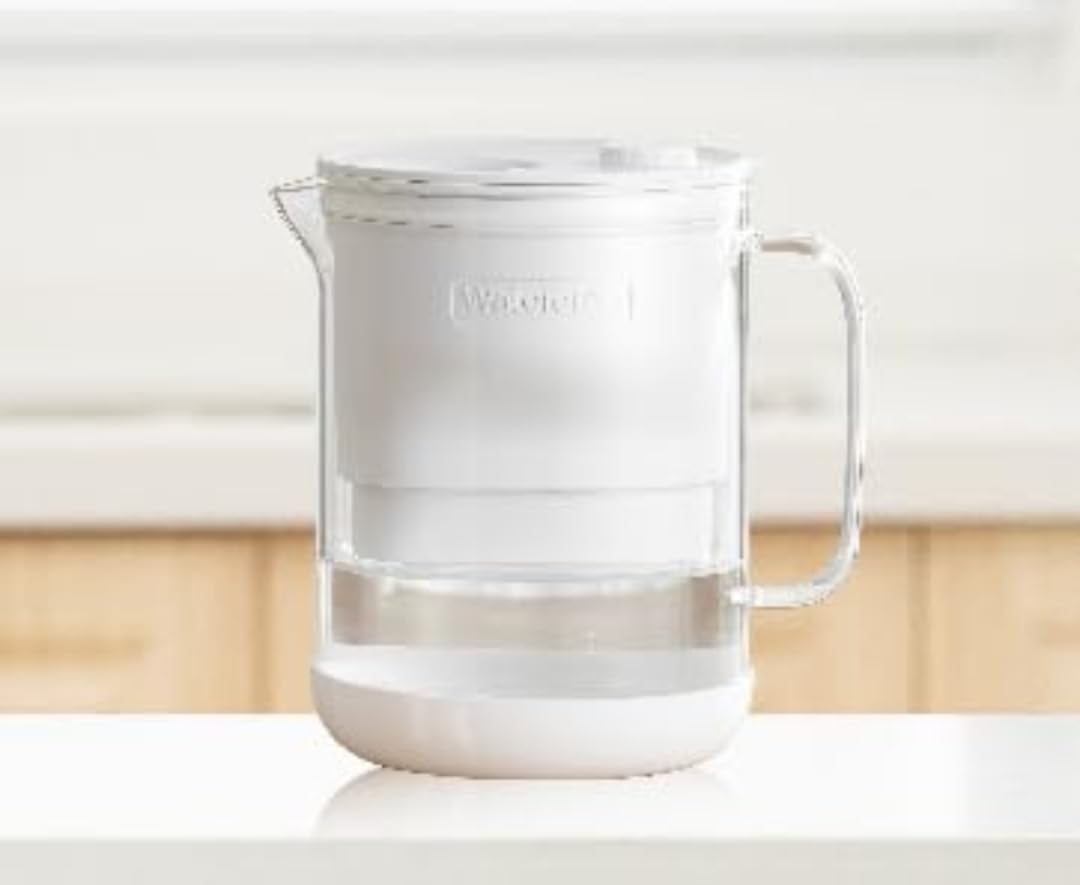
As with most carbon-led designs, the listing states it does not lower TDS, so hardness minerals still pass through. Filter life is up to 100 gallons or two months, and the flow rate of 8.5 ounces per minute fills a cup in under a minute.
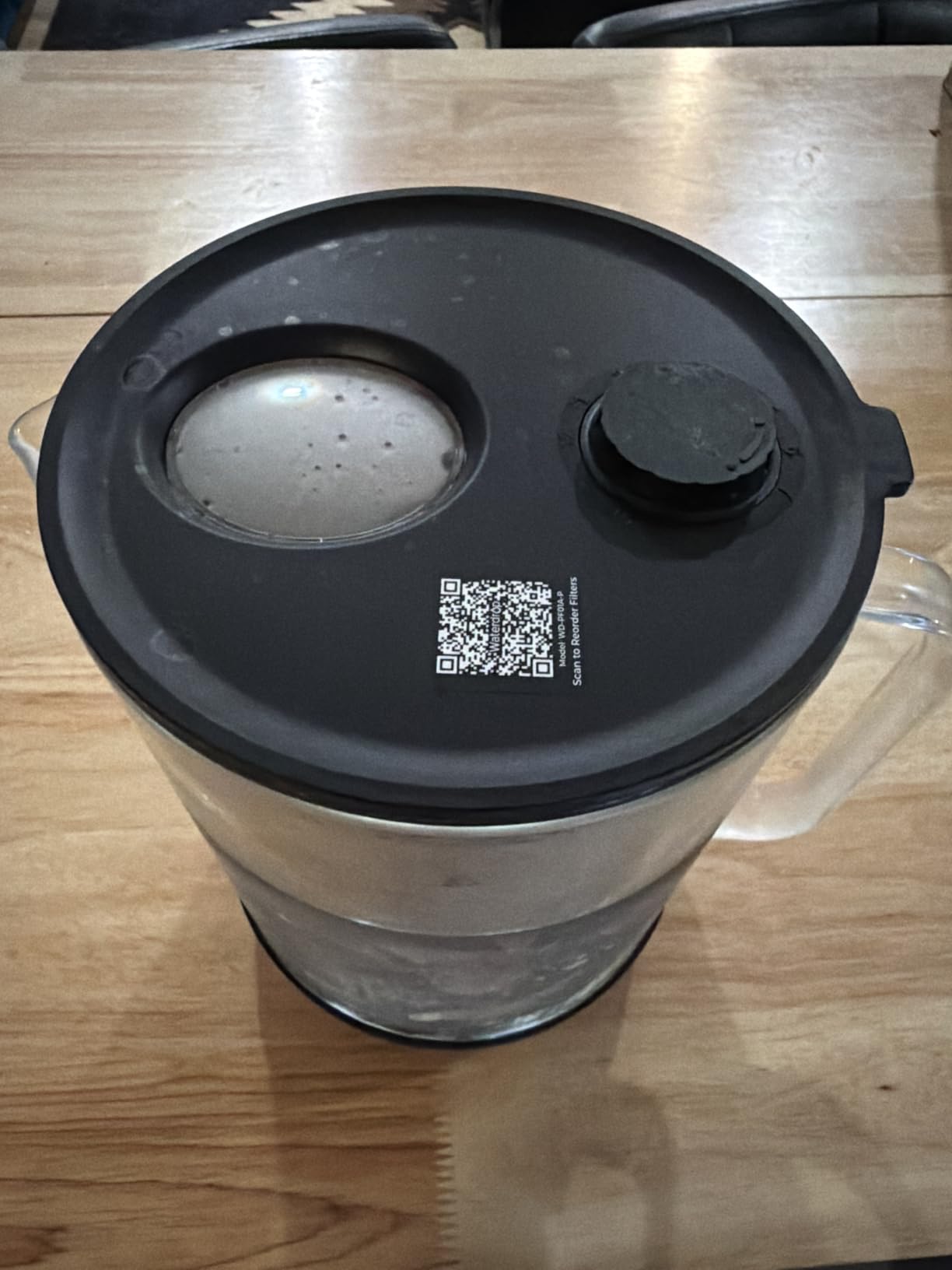
At 4.4 stars across 1378 reviews, satisfaction is solid but not universal. Weight when full and the presence of a plastic inner liner are the two most common complaints, along with a fill door that can fail to open under a weak faucet stream.
Why does glass matter more than most reviews suggest?
Because the reservoir is where you look most often. A cloudy plastic jug tells you every day that your water is hard, and plastic absorbs odors in a way glass does not. Glass also rinses clean without retaining a chalky film.
The trade-off is honest and physical: at 1.62 kg empty, a full pitcher is heavy, and users with limited hand strength should test it before committing.
Who should buy this over the plastic options?
Anyone who has already seen limescale speckling on a plastic pitcher and has decided the replacement cost of another plastic jug every year or two is the real cost. Glass outlives several plastic bodies.
It is also hand wash only, so skip it if you rely on the dishwasher. And remember that none of the five stages is reverse osmosis, so the TDS claim still stands.
We earn a commission, at no additional cost to you. CERTAIN CONTENT THAT APPEARS ON THIS SITE COMES FROM AMAZON. THIS CONTENT IS PROVIDED 'AS IS' AND IS SUBJECT TO CHANGE OR REMOVAL AT ANY TIME.
9. Alkanatur Bioceramic Pitcher: Best for Calcium Removal Without Sodium
Alkanatur Water Filter Pitcher, Removes Fluoride/PFAs, Adds Magnesium
- Bioceramic and coconut carbon media
- No ion exchange resin, so no sodium added
- Alkalizes to pH 8.5 to 9.5
- Filter life 105 gallons or 400 liters
Pros
- Certified for removal of excess calcium
- a direct hardness target
- Low Emission filter variant made specifically for very hard tap water
- Adds magnesium rather than stripping every mineral
- Slim profile fits most refrigerator doors
Cons
- Filters roughly 1 liter every 4 minutes
- Relies on European UNE 149101 rather than NSF certification
We earn a commission, at no additional cost to you. CERTAIN CONTENT THAT APPEARS ON THIS SITE COMES FROM AMAZON. THIS CONTENT IS PROVIDED 'AS IS' AND IS SUBJECT TO CHANGE OR REMOVAL AT ANY TIME.
Of everything reviewed here, this is the only pitcher besides the ZeroWater that names hardness removal as its target. It is certified to UNE 149101:2025 for up to 99 percent or greater removal of PFAS, fluoride, chlorine, heavy metals, microplastics, and excess calcium.
What separates it from ion exchange is what it does not do. There is no ion exchange resin in the media, so no sodium is introduced, and it adds up to 18 mg/L of magnesium while alkalizing to a pH of 8.5 to 9.5.
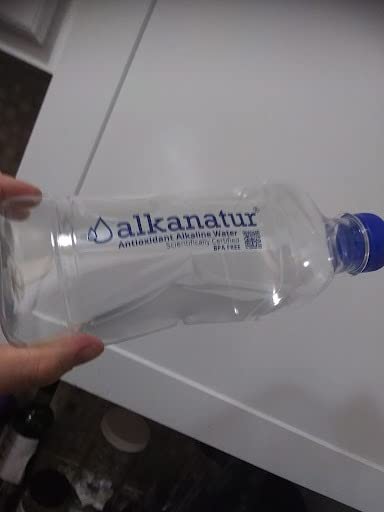
There is even a dedicated filter option for your situation: a Low Emission variant is designed specifically for very hard tap water, alongside the original formula and an added zeolite version. Filter life is 105 gallons or 400 liters.
Two caveats deserve equal billing. Filtration runs at roughly 1 liter every 4 minutes, which is slow if you are filling several bottles at once. And the certification is a European standard rather than NSF, which is the most common reason buyers at 4.4 stars across 945 reviews give it only a middling score.
Why does avoiding sodium matter for hard water households?
Because ion exchange works by trading calcium and magnesium for sodium, and if your concern extends beyond scale to dietary sodium, a sodium-based exchange media works against you. This filter removes calcium through bioceramic adsorption instead.
That makes it the most interesting option here for people who want hardness reduction and mineral retention at the same time, which is otherwise a difficult combination.
Who should pass on the Alkanatur?
Anyone who filters on demand rather than in batches. At one liter every four minutes, filling a large bottle while you wait for your coffee is not going to happen.
If you want US certification specifically for contaminant claims, the NSF-listed options further down are the safer documentary ground.
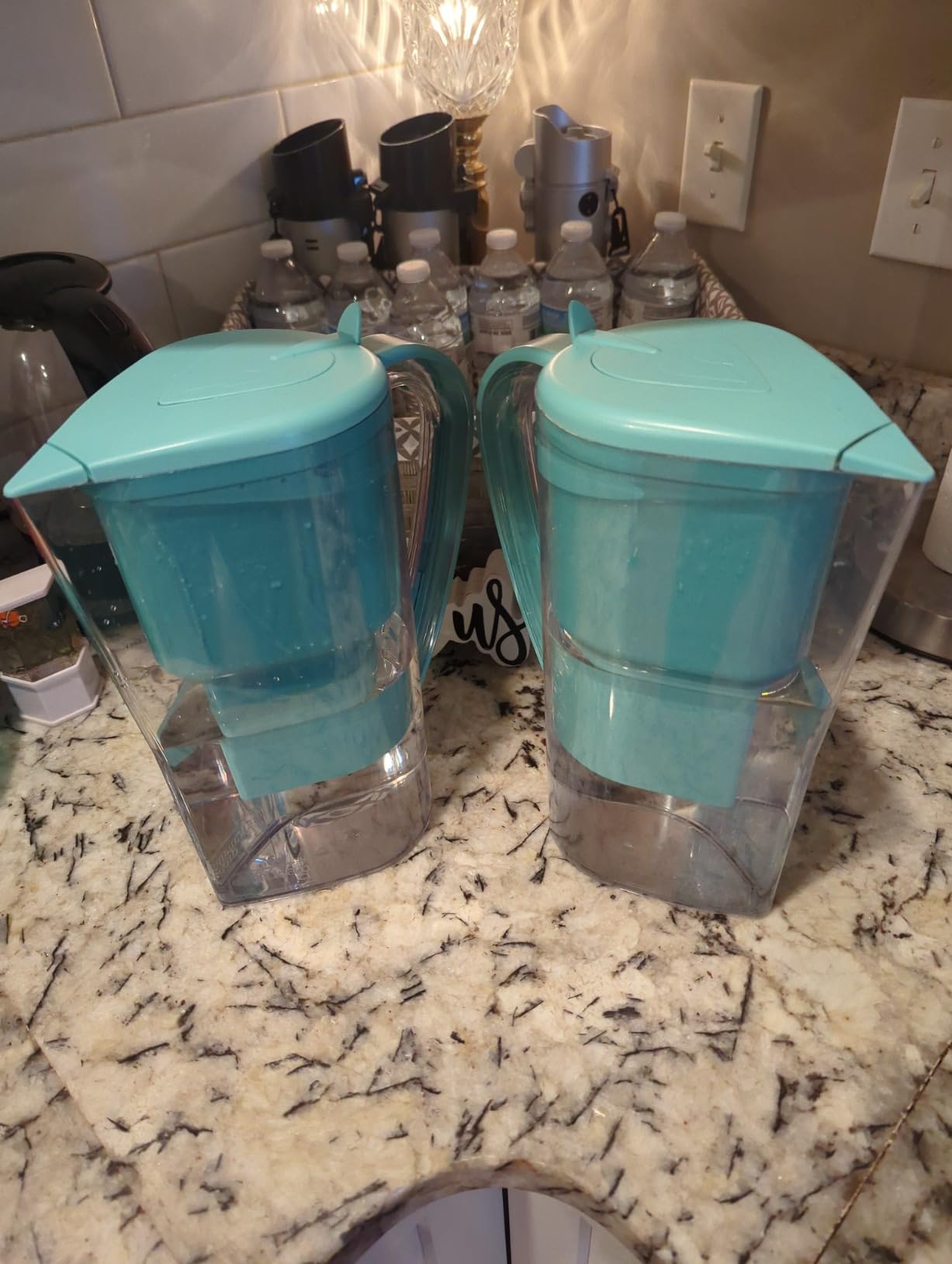
We earn a commission, at no additional cost to you. CERTAIN CONTENT THAT APPEARS ON THIS SITE COMES FROM AMAZON. THIS CONTENT IS PROVIDED 'AS IS' AND IS SUBJECT TO CHANGE OR REMOVAL AT ANY TIME.
10. Clearly Filtered 10-Cup Tritan Pitcher: Best for Broad Contaminant Coverage
Clearly Filtered Water Filter Pitcher, 10 Cup BPA Free Water Filtration
- 80 fluid ounce Tritan pitcher
- Affinity filtration using ionic binding
- 100 gallon or 4 month filter life
- NSF certified to 42 and 372
Pros
- Broadest contaminant target list in the group
- including fluoride
- arsenic and perchlorate
- Ionic binding preserves beneficial minerals
- Filter available on a recurring subscription
- Spill-resistant water dam and hinge fill lid
Cons
- Highest cost of ownership in the group
- Slow initial priming step
We earn a commission, at no additional cost to you. CERTAIN CONTENT THAT APPEARS ON THIS SITE COMES FROM AMAZON. THIS CONTENT IS PROVIDED 'AS IS' AND IS SUBJECT TO CHANGE OR REMOVAL AT ANY TIME.
The filter technology here is affinity filtration using ionic binding, which targets 386 or more contaminants at up to 99.99 percent removal. It is NSF certified to 42 and 372 and independently tested to 53 and 401, with published removal rates.
Like the Aquagear, it is designed to preserve beneficial minerals while binding contaminants. That makes it a good fit for hard-water households whose real worry is a specific contaminant rather than scale.
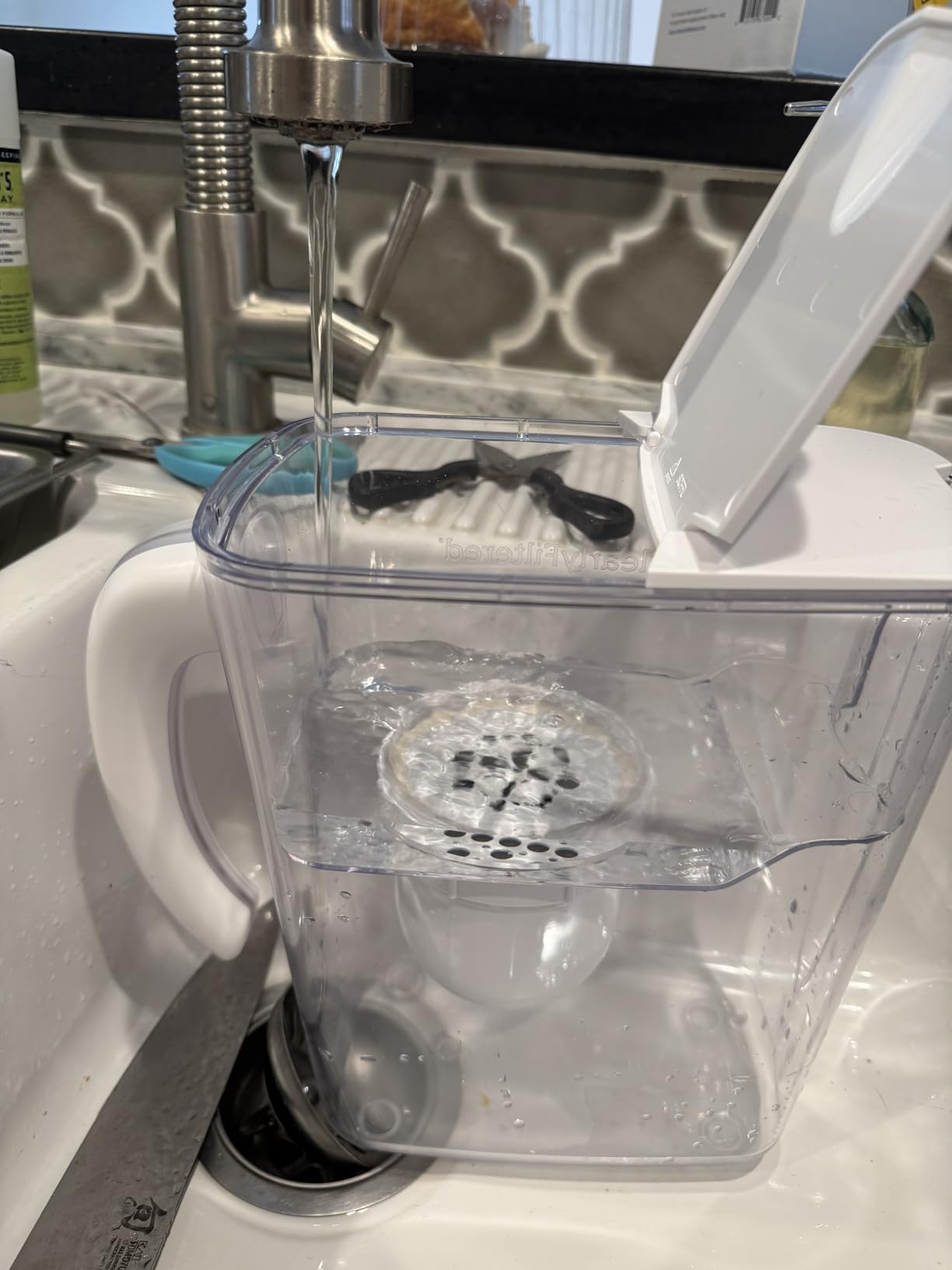
It has the lowest average rating here at 4.1 stars across 1072 reviews, and the pattern is clear from the reviews: buyers who complete priming rate the removal performance highly, while startup time and ongoing filter cost account for most of the complaints.
There is a priming bag step before your first filtered glass, so budget a few extra minutes at the start. After that, the filter life of 100 gallons or roughly four months of daily use is solid.
Is 386 contaminants meaningful for hard water?
It is meaningful if you have a specific concern such as fluoride, arsenic, or perchlorate in your supply. It is not a hardness solution, because the supported TDS maximum is 500 ppm and mineral retention is part of the design.
If your only concern is chalky water and kettle scale, this solves a problem you do not have and leaves the one you do have untouched.
When does the premium cost make sense?
When you want the broadest independently published contaminant claims available in pitcher form and you value the recurring subscription convenience. Buyers who did their research tend to be happy with it long term.
Skip it for hardness. Skip it if the priming step will frustrate you, because the low rating here tracks that friction more than anything else.
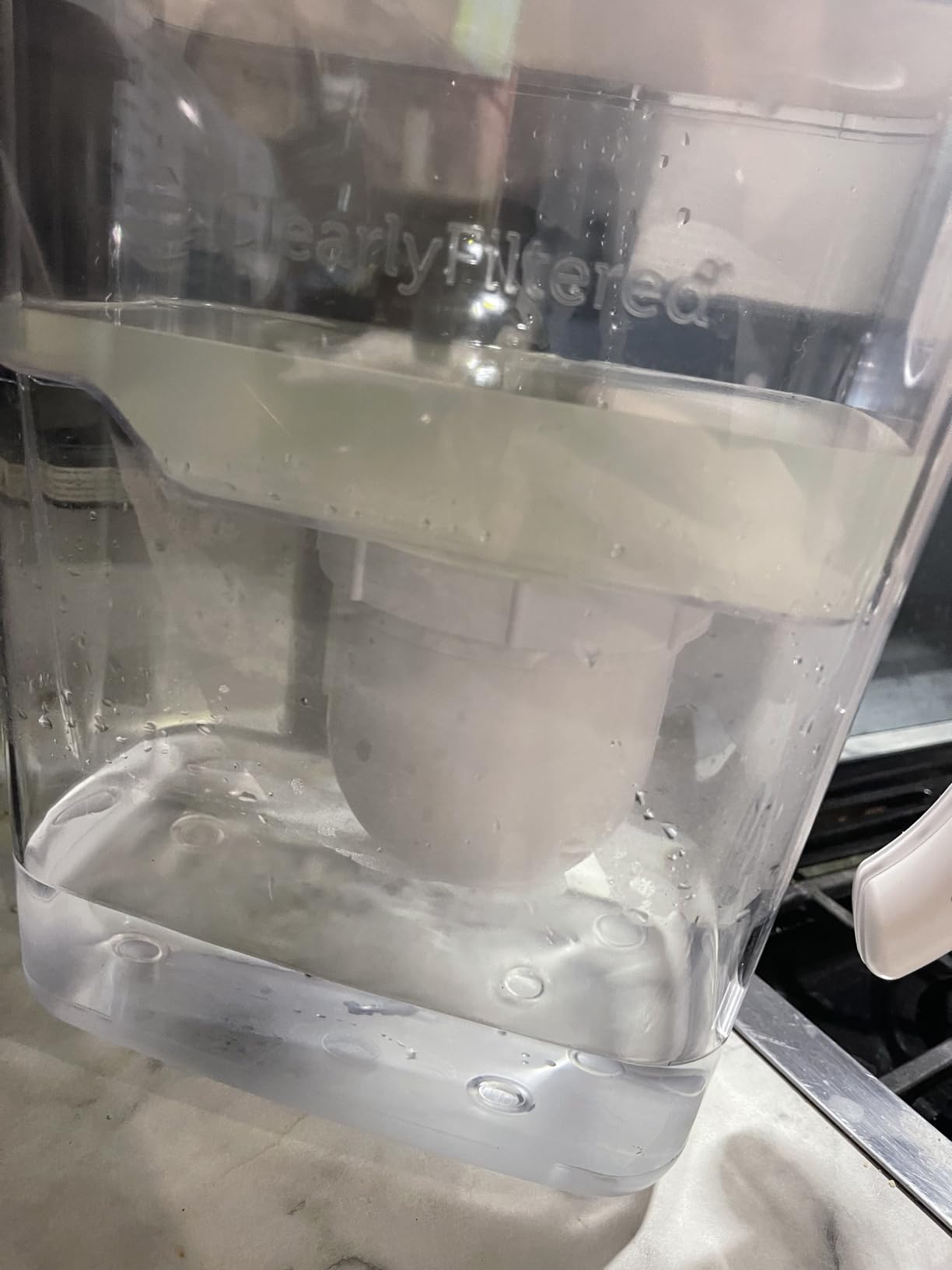
We earn a commission, at no additional cost to you. CERTAIN CONTENT THAT APPEARS ON THIS SITE COMES FROM AMAZON. THIS CONTENT IS PROVIDED 'AS IS' AND IS SUBJECT TO CHANGE OR REMOVAL AT ANY TIME.
11. Waterdrop PT-05B-L 7-Cup: Best for Fast Filtering and Big Households on a Budget
Waterdrop PT-05B-L Water Filter Pitcher, 7-Cup, NSF Certified, Blue
- 7 cup BPA-free and lead-free plastic
- Activated carbon fiber media
- 200 gallon or 3 month filter life
- Mechanical filter life recorder
Pros
- Lists calcium and magnesium among the substances reduced
- Very fast filtration at a gallon in under four minutes
- Mechanical recorder has no electronics to fail
- NSF/ANSI 42 and 372 certified
Cons
- Does not lower TDS so it is not a true hardness fix
- Replacement filters cost nearly as much as the pitcher
- 7 cup capacity fills quickly in a two-person home
We earn a commission, at no additional cost to you. CERTAIN CONTENT THAT APPEARS ON THIS SITE COMES FROM AMAZON. THIS CONTENT IS PROVIDED 'AS IS' AND IS SUBJECT TO CHANGE OR REMOVAL AT ANY TIME.
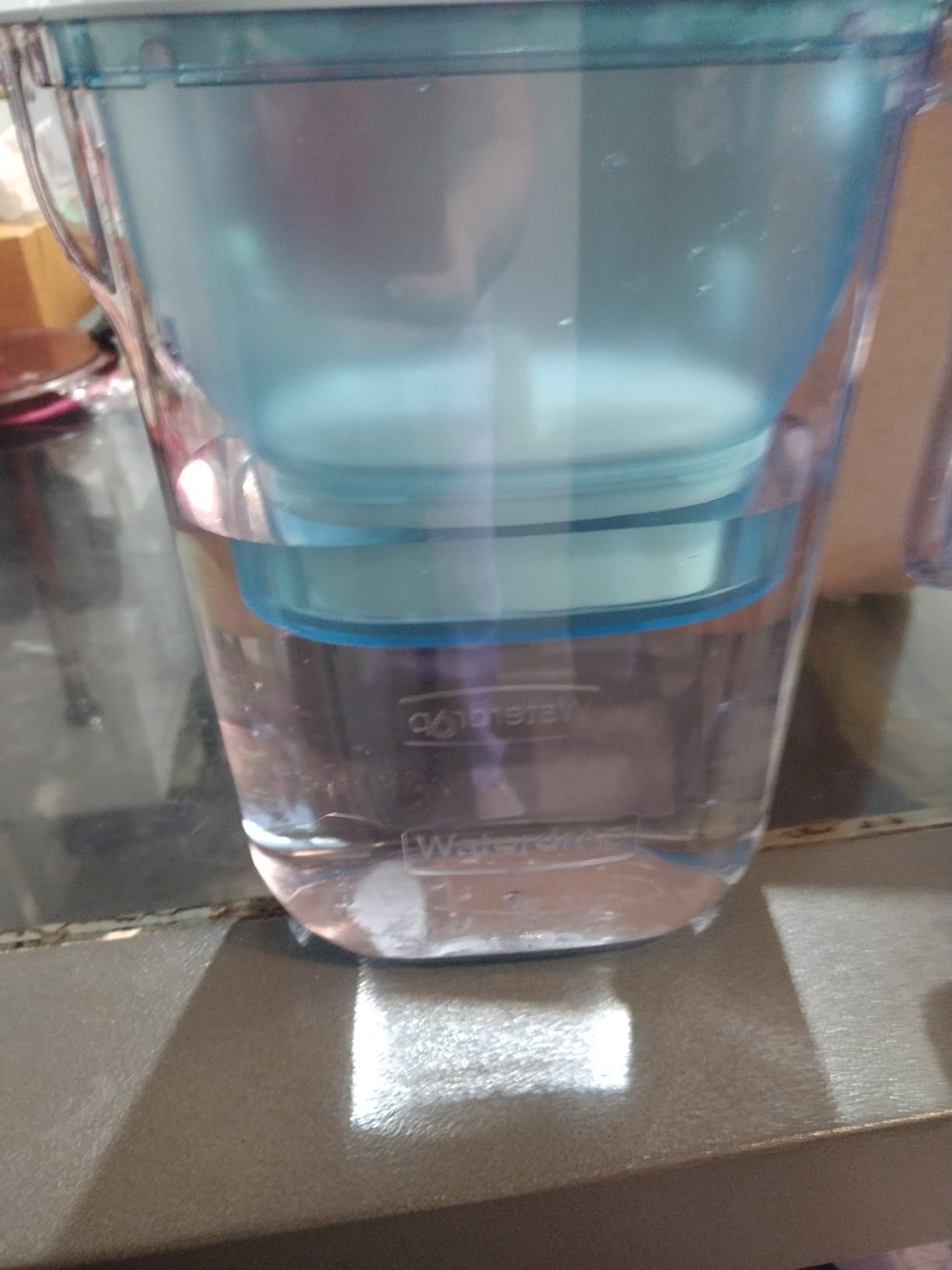
Two details make this the most interesting budget pick. First, its listed reduction substances include calcium and magnesium, which is unusual on a carbon-fiber pitcher. Second, the filter life recorder is mechanical rather than electronic, so there is no LED to fail after a year of daily use.
It holds a 4.5 rating across 3515 reviews with about 77 percent five-star ratings, and it carries NSF/ANSI 42 and 372 certification at the lower end of the price range.
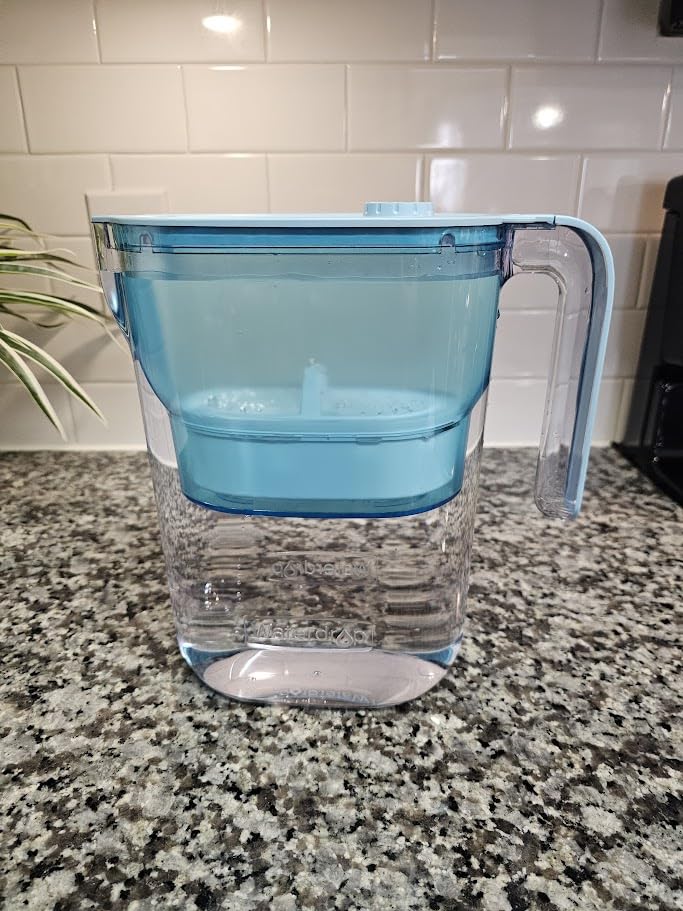
The tension is between the claim list and the TDS statement. The listing says it does not lower TDS, and one verified reviewer reports that iron and hard water clog the cartridge quickly, shortening filter life. Treat the calcium and magnesium line as partial reduction, not removal.
Speed is the real strength. A gallon filters in under four minutes, and the square-sided body packs into a refrigerator more efficiently than a round jug.
How does this compare to the PT-07B?
Same 200-gallon or three-month cartridge class and the same PF-01A replacement filter, but the 7-cup body filters much faster and uses a mechanical indicator instead of an LED. The 10-cup PT-07B holds more water between refills.
If you have a wide refrigerator shelf, the 10-cup is more convenient. If your fridge is cramped or you refill often, this one wins on flow.
Who should choose this?
Large daily drinkers on a budget who filter in batches and can wait four minutes per gallon. The 200-gallon cartridge keeps the cost per gallon low even in hard water.
Not the right choice for anyone whose main complaint is limescale in a kettle. Carbon fiber media is a taste and metal filter, and the product page says as much.
We earn a commission, at no additional cost to you. CERTAIN CONTENT THAT APPEARS ON THIS SITE COMES FROM AMAZON. THIS CONTENT IS PROVIDED 'AS IS' AND IS SUBJECT TO CHANGE OR REMOVAL AT ANY TIME.
12. Reshape Water 10-Cup Six-Stage Pitcher: Best for the Cheapest Replacement Filters
Reshape Water 10- Cup Pitcher with 6-Stage Filter. Removes Fluoride, Chlorine, Lead, and Other Volatile Organic Compounds. Increases PH. Improves Taste. Replacement Filters Cost 25% to 33% Less.
- 3.5 liter six-stage pitcher
- FIR balls, ion exchange resin and minerals
- Raises pH and adds magnesium
- Filter life 75 days or 79 gallons
Pros
- Replacement filters priced 25 to 33 percent below comparable pitchers
- Large 3.5 liter capacity for the money
- Distinct flavour profile that some buyers prefer
- Six-stage media raises pH and adds magnesium
Cons
- New filters drain slowly until air bubbles are shaken out
- Filter intake sits above the reservoir floor
- Usage counter stops resetting after a few changes
We earn a commission, at no additional cost to you. CERTAIN CONTENT THAT APPEARS ON THIS SITE COMES FROM AMAZON. THIS CONTENT IS PROVIDED 'AS IS' AND IS SUBJECT TO CHANGE OR REMOVAL AT ANY TIME.
The pitch here is arithmetic. Replacement filters are priced 25 to 33 percent below comparable pitchers, and in a hard-water household where cartridges burn through faster than the packaging suggests, refill cost is usually the biggest line item in pitcher ownership.
The 3.5 liter reservoir is also the largest here, and six stages including FIR balls, ion exchange resins, activated carbon, negative potential particles, and minerals give it a flavour profile some reviewers genuinely prefer.
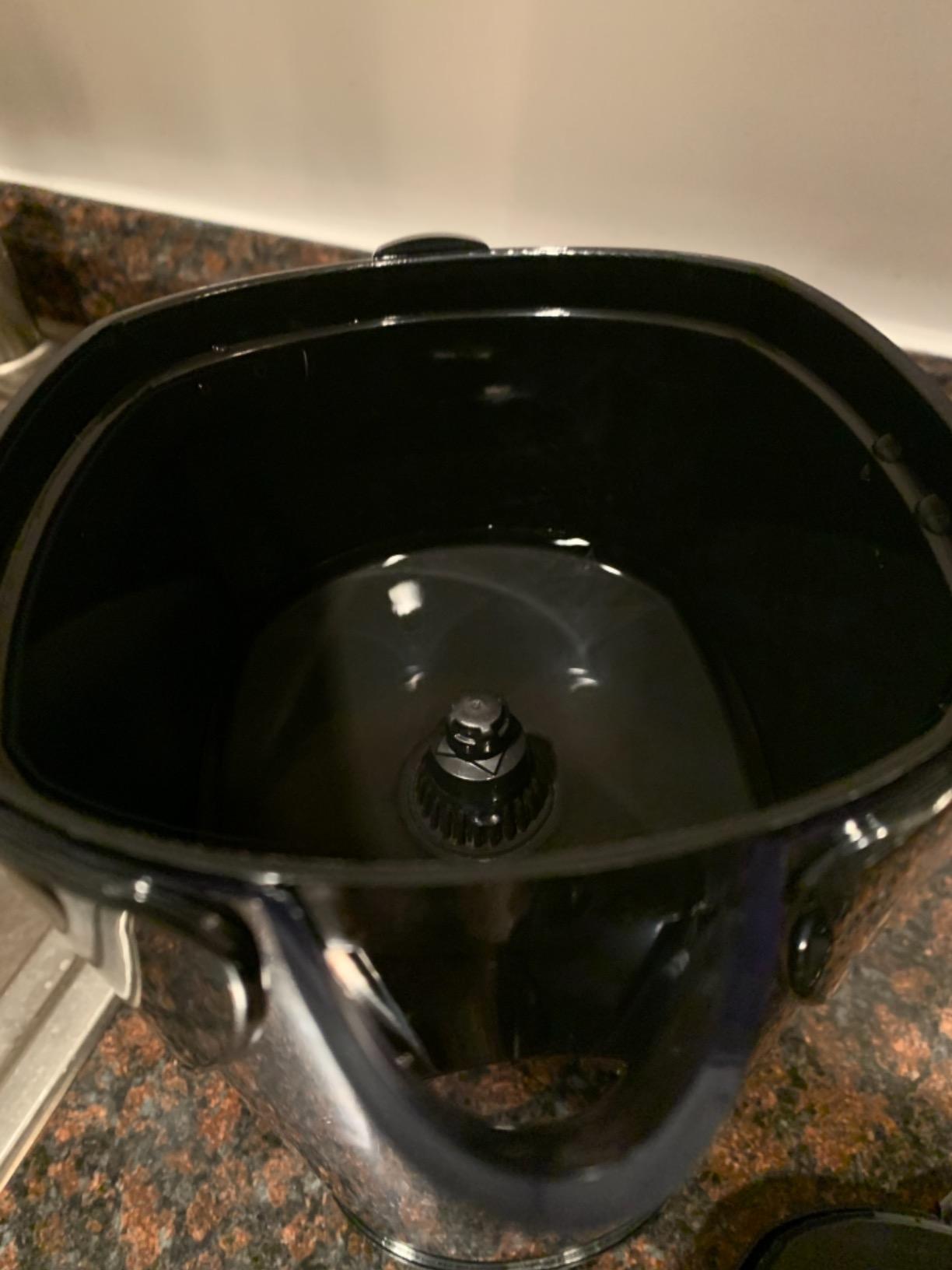
The design flaws are real and they are documented. New filters often drain very slowly until you shake out air bubbles, and the filter intake sits above the reservoir floor so unfiltered water remains pooled at the bottom.
Reviews show the widest spread of experiences of any pitcher here, with 64 percent five-star ratings. One verified buyer reported chlorine taste remaining after filtering and questioned whether filtration was occurring at all, and several note the usage counter stops resetting after a couple of changes.
Does raising the pH soften hard water?
It changes the taste and adds magnesium, potassium, calcium, and sodium back into the water. Raising pH does not reduce hardness, and adding calcium works against the goal. The supported TDS maximum of 300 ppm is the lowest ceiling in this group.
Treat this as a flavour and pH product with inexpensive refills, not as limescale control.
Who is this pitcher for?
Buyers in hard-water areas who are primarily chasing taste and pH lift, and who are disciplined about following the filter exchange schedule. Owners who reported the best results describe a distinct flavour they prefer over standard Brita output.
Be cautious if you have small children or anyone sensitive to taste consistency, because contaminant reduction reports from actual users are inconsistent here. Filters are independently lab tested and SGS certified, but personal results vary widely.
We earn a commission, at no additional cost to you. CERTAIN CONTENT THAT APPEARS ON THIS SITE COMES FROM AMAZON. THIS CONTENT IS PROVIDED 'AS IS' AND IS SUBJECT TO CHANGE OR REMOVAL AT ANY TIME.
How Hard Is Your Water? PPM and Grains Per Gallon
Hardness is reported as milligrams per liter of calcium carbonate, or in grains per gallon. One grain per gallon equals about 17.1 mg/L, which is the conversion to memorize before anything else.
Soft water sits below 60 mg/L, roughly 3.5 gpg. Moderately hard runs from 60 to 120 mg/L, hard from 120 to 180 mg/L, and very hard starts at 180 mg/L, which is 10.5 gpg or more.
There are three practical ways to find your number. Your municipal water utility publishes an annual Consumer Confidence Report that lists hardness for your source water, and it is free. A home test strip for hardness gives a rough range within minutes for a few dollars. A TDS meter tells you total dissolved solids, which includes hardness but is not the same measurement, so treat it as a directional check.
Below 60 mg/L any pitcher on this page will work. Between 120 and 180 mg/L, you want ion exchange, bioceramic, or reverse osmosis media. Above 180 mg/L, only true mineral removal is worth the money, and a pitcher of any size will become a cartridge bill faster than you expect.
Why Brita and Basic PUR Pitchers Do Not Fix Hard Water
Direct answer: no, a standard Brita cartridge does not reduce hard water. The purification method is granular activated carbon, and carbon adsorbs chlorine, taste, and odor molecules. Calcium and magnesium are dissolved ions that carbon has no mechanism to capture.
This is the single most common source of disappointment in hard-water households, and it is not a brand problem. The Brita Large 10-Cup pitcher, the PUR 7-cup model, and the Amazon Basics pitcher all work exactly as designed; the design simply targets a different problem.
What you taste is the difference. Carbon dulls the taste receptors that pick up mineral sharpness, so the water seems cleaner while the calcium and magnesium stay in solution and keep precipitating as scale in your kettle.
If you want to know whether your current pitcher is doing anything for hardness, buy a 10 to 20 dollar TDS meter and check a glass of filtered water. If the reading barely moves from your tap water, you have a taste filter, not a hardness filter.
What to Look for in a Hard Water Filter Pitcher
Media type is the whole decision. Ion exchange resin swaps calcium and magnesium for sodium, reverse osmosis membranes force minerals through a semi-permeable membrane, and bioceramic adsorption removes calcium without adding sodium. Activated carbon alone will not do it.
Filter life under load matters as much as the sticker figure. A 200-gallon cartridge sounds generous until you filter a household above 180 ppm, where ion exchange resin exhausts faster than a calendar suggests. A TDS meter is the most useful diagnostic a hard-water house can own.
Certification tells you what a brand is allowed to claim. NSF/ANSI 42 covers taste, odor, and aesthetic reduction. NSF/ANSI 53 covers health contaminant reduction. NSF/ANSI 401 covers emerging contaminants and inorganic compounds. NSF/ANSI 372 covers lead-free plumbing material. None of them certify hardness reduction, which is why carbon pitchers can carry multiple certifications and still be wrong for your water.
Finally, think about where the water goes. A pitcher treats drinking water only. It does not touch the hose to your coffee maker, your ice maker, your dishwasher, or your water heater.
Pitcher vs Water Softener vs Reverse Osmosis
A pitcher is a point-of-use device for a few liters a day at the kitchen counter. It suits renters without plumbing access, single people, and anyone who wants an immediate fix with no installation.
A water softener is a whole-home ion exchange system installed at the inlet. It is the only option on this list that protects every fixture, the water heater, and the appliance plumbing downstream.
Reverse osmosis under the sink produces near-pure water and removes the most contaminants per gallon of anything you can install yourself, at the cost of a faucet hole and a larger reject-water waste stream.
If your hard water is ruining kettles and espresso machines, any of the three beats a pitcher, because a pitcher never touches that water.
Descaling Your Kettle and Coffee Maker
Switching to filtered water does not retroactively remove the scale already in your appliances. Descale them once, and you will see the difference immediately.
Fill the kettle with a one-to-one mix of white vinegar and water, bring it to a boil, let it sit for an hour, and boil it again. Empty it, rinse twice, and boil once more with clean water before you drink from it.
For a coffee maker, run two full cycles of that same vinegar solution through the brew basket and carafe, then run two cycles of plain water. Repeat every few months in hard-water areas.
On the pitcher itself, a monthly soak in diluted vinegar keeps the reservoir clear. Never put a carbon or ion exchange cartridge into the soak, since the acid strips the media.
Frequently Asked Questions
What is the best water filter pitcher for hard water?
The ZeroWater 10-Cup is the best pitcher for hard water because it uses five-stage ion exchange resin instead of activated carbon, which is the only media in pitcher form that removes dissolved calcium and magnesium rather than just masking the taste.
Are Brita pitchers good for hard water?
Brita pitchers are excellent for chlorine taste and odor and they are the most popular pitcher for drinking-water quality, but the standard cartridge is granular activated carbon and does not remove calcium or magnesium. A Brita will improve the taste of hard water without lowering its hardness.
Will a water filter filter out hard water?
Only some will. Hardness minerals are removed by ion exchange resin, reverse osmosis membranes, or bioceramic media. Activated carbon cartridges, which power most budget pitchers including basic Brita and PUR models, adsorb chlorine and taste compounds but leave calcium and magnesium in the water.
Is there a water pitcher that filters hard water?
Yes. The ZeroWater 10-Cup uses five-stage ion exchange and includes a built-in TDS meter so you can watch hardness drop. The Alkanatur bioceramic pitcher also targets excess calcium and offers a filter variant built for very hard tap water, and it adds magnesium rather than sodium.
How do I know if my water is hard?
Check your utility annual Consumer Confidence Report for a hardness figure, or use a home hardness test strip for a quick range. Below 60 mg/L is soft, 60 to 120 is moderately hard, 120 to 180 is hard, and 180 mg/L or above is very hard. Multiply mg/L by 0.058 to get grains per gallon.
Does filtering hard water leave it tasteless?
Ion exchange pitchers can. Filters that drive TDS to near zero also remove the minerals that give water body, which reviewers describe as flat or mineral-free. If you want hardness reduction with better taste, look at a bioceramic filter that removes calcium while adding magnesium, or a filter designed to retain calcium and magnesium.
Can a filter pitcher protect my espresso machine from scale?
No. A pitcher only treats water you pour through it, so coffee brewing water, ice maker water, dishwasher water, and hot water are unaffected. Those appliances need a point-of-use system fed by treated water, such as an under-sink reverse osmosis filter, or a whole-home water softener.
The Verdict for Hard Water Drinkers
If your tap water leaves white crust in a kettle and you want it gone from the glass in front of you, buy the ZeroWater 10-Cup. Ion exchange is the only media in pitcher form that removes hardness outright, and the built-in TDS meter tells you when the resin is spent instead of leaving you to guess.
If flat, mineral-free water is not for you, the Alkanatur pitcher removes excess calcium while adding magnesium and introduces no sodium. If scale in a kettle or an espresso machine is the real problem, no pitcher will fix it, and you need an under-sink reverse osmosis system or a whole-home softener instead.
Pick the pitcher that matches your hardness number, track your cartridge life, and descale the appliances once so you can see what the filtered water actually changed.