Bodybuilding: The Complete Beginner’s Guide 2026
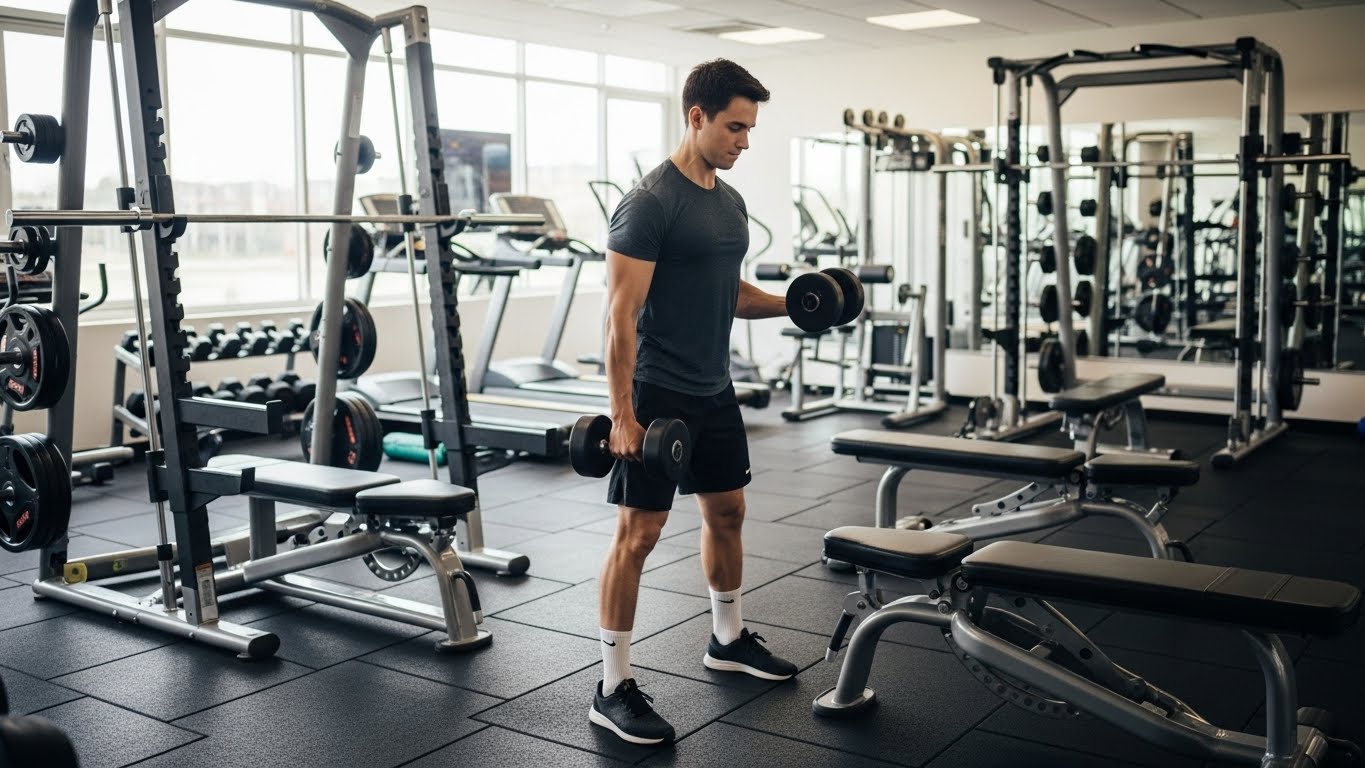
I spent my first six months in the gym completely lost. I jumped between programs, wasted money on unnecessary supplements, and wondered why I wasn’t seeing results. After years of trial and error, I’ve learned what actually works for building muscle.
Bodybuilding is the practice of progressive resistance training combined with proper nutrition to build muscle and improve physical appearance. Whether you want to compete on stage or simply look better at the beach, the fundamentals remain the same.
This guide covers everything you need to know about bodybuilding in 2026, from training principles and workout routines to nutrition strategies and evidence-based supplements. I’ll share what the science says and what actually works in practice.
What Is Bodybuilding?
Bodybuilding is the practice of progressive resistance exercise to build, control, and develop muscles through a process called hypertrophy. It combines structured weight training with specific nutrition and recovery protocols to achieve aesthetic physical development.
The sport originated in England during the late 19th century. Eugene Sandow, often called the “Father of Modern Bodybuilding,” popularized muscular display in the 1890s.
Today, bodybuilding exists on a spectrum. Competitive bodybuilders train for stage competitions judged on muscle size, symmetry, and definition. Recreational bodybuilders focus on improving their physique without competing.
Hypertrophy: The increase in muscle cell size that occurs when muscles are subjected to progressive overload through resistance training. This is the primary goal of bodybuilding training.
The International Federation of BodyBuilding and Fitness (IFBB) serves as the sport’s highest governing body. Major competitions include Mr. Olympia, Arnold Classic, and numerous national and regional shows.
Benefits of Bodybuilding
Bodybuilding offers benefits that extend far beyond aesthetics. Research suggests regular resistance training may improve nearly every aspect of physical and mental health.
Physical Benefits
- Increased Muscle Mass: Progressive resistance training stimulates muscle protein synthesis, leading to measurable gains in lean body mass
- Improved Strength: Larger muscles can generate more force, making daily activities easier
- Better Body Composition: Building muscle while managing diet can help reduce body fat percentage
- Enhanced Bone Density: Weight-bearing exercise may help prevent age-related bone loss
- Improved Metabolic Health: More muscle mass may increase resting metabolic rate
Mental Health Benefits
- Increased Confidence: Achieving physical goals often translates to improved self-image
- Reduced Anxiety and Depression: Studies suggest resistance training may help reduce symptoms of both conditions
- Better Sleep Quality: Regular exercise is associated with improved sleep patterns
- Discipline and Goal-Setting: The structured nature of bodybuilding builds transferable life skills
Long-Term Health Benefits
Research indicates resistance training may help combat sarcopenia (age-related muscle loss), improve insulin sensitivity, and support cardiovascular health when combined with proper nutrition.
How to Get Started with Bodybuilding?
Starting bodybuilding doesn’t require expensive equipment or a fancy gym membership. Here’s how to begin:
- Choose Your Training Environment: Decide between a commercial gym, home gym, or bodyweight training. A commercial gym offers the most equipment variety, while a home gym provides convenience
- Learn Proper Form: Before adding weight, master the movement patterns of basic exercises. Poor form limits results and increases injury risk
- Select a Beginner Program: Choose a structured program designed for beginners (I’ll provide options below). Avoid the temptation to create your own routine
- Track Your Workouts: Record exercises, sets, reps, and weights. This data helps ensure progressive overload
- Dial in Your Nutrition: Eating enough protein and calories supports muscle growth. Don’t overthink this initially; focus on consistent protein intake
Pro Tip: Start with weights you can control for 12-15 reps with perfect form. It’s better to start too light than too heavy. You can always add weight next week.
Training Fundamentals
Understanding these core principles separates those who make consistent progress from those who spin their wheels for years.
Progressive Overload: The Key to Growth
Progressive overload means gradually increasing the demands placed on your muscles over time. Without it, your body has no reason to adapt and grow.
You can achieve progressive overload through:
- Adding weight to the bar
- Performing more reps with the same weight
- Completing more sets
- Reducing rest periods
- Improving range of motion
The most practical approach for beginners is adding weight when you can complete all prescribed reps with good form. Even adding 2.5-5 pounds per workout adds up over months.
Sets, Reps, and Rep Ranges
A rep (repetition) is one complete movement of an exercise. A set is a group of consecutive reps.
Research suggests different rep ranges produce different adaptations:
| Rep Range | Primary Adaptation | Best For |
|---|---|---|
| 1-5 reps | Strength | Powerlifters, building base strength |
| 6-12 reps | Hypertrophy (muscle growth) | Bodybuilding, general fitness |
| 12-20+ reps | Muscular endurance | Conditioning, metabolic training |
For bodybuilding, the 6-12 rep range is often called the “hypertrophy zone.” However, research shows muscle can be built across all rep ranges if training is taken close to failure.
Training Volume and Frequency
Training volume refers to the total amount of work performed, often calculated as sets x reps x weight.
Research suggests 10-20 sets per muscle group per week may be optimal for hypertrophy. Beginners can start on the lower end and increase over time as they adapt.
Training frequency refers to how often you train each muscle group weekly. Studies indicate training each muscle 2-3 times per week may produce better results than once weekly, primarily because it allows you to spread volume across multiple sessions.
Compound vs Isolation Exercises
Compound exercises work multiple muscle groups simultaneously. Examples include squats, deadlifts, bench press, and rows.
Isolation exercises target a single muscle group. Examples include bicep curls, tricep pushdowns, and leg extensions.
Important: Beginners should prioritize compound movements. They build the most muscle in the least time and develop real-world strength. Add isolation exercises as accessories once you’ve established a foundation.
What Is the 80/20 Rule in Bodybuilding?
The 80/20 rule in bodybuilding states that roughly 80% of your results come from 20% of your efforts. In practical terms, this means:
- 80% of your muscle growth comes from compound exercises like squats, deadlifts, bench press, and rows
- 80% of your results come from nutrition, sleep, and consistency rather than the perfect program
- 80% of your effort should go toward fundamentals, with only 20% on advanced techniques
The 80/20 rule reminds us to focus on what matters most: progressive overload on big lifts, adequate protein, sufficient sleep, and showing up consistently.
What Is the 6-12-25 Rule?
The 6-12-25 rule is an advanced training technique involving three exercises performed back-to-back for the same muscle group with different rep ranges:
- First Exercise (6 reps): Heavy compound movement targeting strength
- Second Exercise (12 reps): Moderate weight targeting hypertrophy
- Third Exercise (25 reps): Light weight targeting muscular endurance and metabolic stress
Example for chest: Bench Press (6 reps), Incline Dumbbell Press (12 reps), Cable Flyes (25 reps).
This technique is demanding and best reserved for intermediate to advanced lifters. Beginners should focus on standard straight sets before incorporating advanced methods.
Training Splits Explained
A training split determines how you organize your workouts throughout the week. Here’s how the most popular options compare:
| Split | Days/Week | Best For | Pros | Cons |
|---|---|---|---|---|
| Full Body | 3 | Beginners, busy schedules | High frequency, time-efficient | Longer individual workouts |
| Upper/Lower | 4 | Intermediate lifters | Good balance of frequency and volume | Requires 4 gym days minimum |
| Push/Pull/Legs | 6 | Intermediate to advanced | High volume per muscle | Time commitment, recovery demands |
| Bro Split | 5-6 | Advanced, high volume | Maximum volume per session | Low frequency per muscle, not ideal for naturals |
Push/Pull/Legs (PPL) divides workouts by movement pattern: push muscles (chest, shoulders, triceps), pull muscles (back, biceps), and legs.
Upper/Lower alternates between upper body and lower body days, allowing 4 quality sessions per week.
Full Body trains all major muscle groups each session, typically 3 days per week with rest days between.
Bro Split dedicates each day to one muscle group (chest day, back day, etc.). While popular, research suggests this may be suboptimal for natural lifters due to low training frequency per muscle.
Beginner Workout Routines
Here are three proven programs for beginners. Choose based on how many days you can commit to training.
Full Body Workout (3 Days/Week)
This routine is ideal for complete beginners or those with limited time. Train Monday, Wednesday, and Friday, or any three non-consecutive days.
Workout A:
| Exercise | Sets | Reps | Rest |
|---|---|---|---|
| Barbell Squat | 3 | 8-10 | 2-3 min |
| Bench Press | 3 | 8-10 | 2-3 min |
| Barbell Row | 3 | 8-10 | 2-3 min |
| Overhead Press | 2 | 10-12 | 2 min |
| Romanian Deadlift | 2 | 10-12 | 2 min |
| Lat Pulldown | 2 | 10-12 | 90 sec |
Workout B:
| Exercise | Sets | Reps | Rest |
|---|---|---|---|
| Deadlift | 3 | 6-8 | 3 min |
| Incline Dumbbell Press | 3 | 8-10 | 2 min |
| Leg Press | 3 | 10-12 | 2 min |
| Dumbbell Row | 2 | 10-12 | 90 sec |
| Dumbbell Shoulder Press | 2 | 10-12 | 90 sec |
| Face Pulls | 2 | 15-20 | 60 sec |
Alternate between Workout A and Workout B each session. Week 1: A-B-A. Week 2: B-A-B.
Upper/Lower Split (4 Days/Week)
This split offers a good balance of training frequency and recovery. Train Monday, Tuesday, Thursday, Friday (or similar).
Upper Body A:
| Exercise | Sets | Reps | Rest |
|---|---|---|---|
| Bench Press | 4 | 6-8 | 3 min |
| Barbell Row | 4 | 6-8 | 3 min |
| Overhead Press | 3 | 8-10 | 2 min |
| Lat Pulldown | 3 | 10-12 | 2 min |
| Incline Dumbbell Press | 2 | 10-12 | 90 sec |
| Face Pulls | 2 | 15-20 | 60 sec |
| Bicep Curls | 2 | 12-15 | 60 sec |
Lower Body A:
| Exercise | Sets | Reps | Rest |
|---|---|---|---|
| Barbell Squat | 4 | 6-8 | 3 min |
| Romanian Deadlift | 3 | 8-10 | 2-3 min |
| Leg Press | 3 | 10-12 | 2 min |
| Leg Curl | 3 | 10-12 | 90 sec |
| Calf Raises | 4 | 12-15 | 60 sec |
Upper Body B:
| Exercise | Sets | Reps | Rest |
|---|---|---|---|
| Overhead Press | 4 | 6-8 | 3 min |
| Pull-ups or Lat Pulldown | 4 | 6-10 | 2-3 min |
| Incline Bench Press | 3 | 8-10 | 2 min |
| Cable Row | 3 | 10-12 | 2 min |
| Lateral Raises | 3 | 12-15 | 60 sec |
| Tricep Pushdowns | 2 | 12-15 | 60 sec |
| Hammer Curls | 2 | 12-15 | 60 sec |
Lower Body B:
| Exercise | Sets | Reps | Rest |
|---|---|---|---|
| Deadlift | 4 | 5-6 | 3-4 min |
| Bulgarian Split Squat | 3 | 8-10 each | 2 min |
| Leg Extension | 3 | 12-15 | 90 sec |
| Leg Curl | 3 | 10-12 | 90 sec |
| Calf Raises | 4 | 12-15 | 60 sec |
Push/Pull/Legs Split (6 Days/Week)
The PPL split is highly effective but requires significant time commitment. Run the cycle twice per week: Push-Pull-Legs-Push-Pull-Legs-Rest.
Push Day:
| Exercise | Sets | Reps |
|---|---|---|
| Bench Press | 4 | 6-8 |
| Overhead Press | 3 | 8-10 |
| Incline Dumbbell Press | 3 | 10-12 |
| Lateral Raises | 3 | 12-15 |
| Tricep Pushdowns | 3 | 10-12 |
| Overhead Tricep Extension | 2 | 12-15 |
Pull Day:
| Exercise | Sets | Reps |
|---|---|---|
| Barbell Row | 4 | 6-8 |
| Pull-ups or Lat Pulldown | 4 | 8-10 |
| Cable Row | 3 | 10-12 |
| Face Pulls | 3 | 15-20 |
| Barbell Curls | 3 | 10-12 |
| Hammer Curls | 2 | 12-15 |
Legs Day:
| Exercise | Sets | Reps |
|---|---|---|
| Barbell Squat | 4 | 6-8 |
| Romanian Deadlift | 3 | 8-10 |
| Leg Press | 3 | 10-12 |
| Leg Curl | 3 | 10-12 |
| Leg Extension | 2 | 12-15 |
| Calf Raises | 4 | 12-15 |
Time Saver: If you’re short on time, the full body routine delivers excellent results in just 3 hours per week. Don’t let a busy schedule derail your progress.
Nutrition for Bodybuilding
Training creates the stimulus for muscle growth, but nutrition provides the raw materials. Many lifters underestimate how important diet is for results.
Calories: Bulking vs Cutting
Your caloric intake determines whether you gain or lose weight:
- Bulking (Caloric Surplus): Eating more calories than you burn, creating an environment for muscle growth. A surplus of 200-500 calories above maintenance is typically recommended
- Cutting (Caloric Deficit): Eating fewer calories than you burn to lose body fat while preserving muscle. A deficit of 300-500 calories below maintenance works for most people
- Maintenance: Eating roughly the same calories you burn, useful for body recomposition (building muscle while losing fat, most effective for beginners)
To estimate your maintenance calories, multiply your body weight in pounds by 14-16 (lower for sedentary individuals, higher for active). This provides a starting point to adjust based on your results.
Protein Requirements
Protein is the building block of muscle tissue. Research consistently shows adequate protein intake is essential for maximizing muscle growth.
How much protein do you need for bodybuilding? Most research suggests consuming 1.6-2.2 grams of protein per kilogram of body weight daily (0.7-1 gram per pound) is optimal for muscle building.
For practical purposes:
| Body Weight | Daily Protein Target |
|---|---|
| 150 lbs (68 kg) | 105-150 grams |
| 175 lbs (79 kg) | 125-175 grams |
| 200 lbs (91 kg) | 140-200 grams |
| 225 lbs (102 kg) | 160-225 grams |
High-protein foods include chicken breast, lean beef, fish, eggs, Greek yogurt, cottage cheese, and protein supplements.
Carbohydrates and Fats
After protein, fill remaining calories with carbohydrates and fats based on preference:
Carbohydrates provide energy for intense training. Good sources include rice, oats, potatoes, fruits, and whole grains. Most bodybuilders benefit from consuming carbs around workouts.
Fats support hormone production (including testosterone) and overall health. Include sources like olive oil, avocados, nuts, and fatty fish. Keep fat intake at minimum 0.3-0.4 grams per pound of body weight.
A common macronutrient split for bodybuilding is approximately 40% carbohydrates, 30% protein, and 30% fat, though individual needs vary.
Meal Timing and Frequency
Meal timing is less important than total daily intake. However, research suggests some strategies may provide small benefits:
- Distribute protein intake across 3-5 meals daily for optimal muscle protein synthesis
- Consume protein within a few hours before and after training (the “anabolic window” is wider than once believed)
- Include carbohydrates pre- and post-workout to fuel performance and recovery
Don’t stress about eating every 2-3 hours. Find a meal frequency that fits your lifestyle and lets you hit your daily targets consistently.
Sample Meal Ideas
High-Protein Breakfast: 3 eggs, 2 slices whole grain toast, Greek yogurt with berries (approximately 40g protein)
Post-Workout Meal: Grilled chicken breast (6 oz), white rice (1 cup), steamed vegetables (approximately 45g protein)
Quick Protein Snack: Cottage cheese with fruit, protein shake with banana, or Greek yogurt with nuts
Bodybuilding Supplements: What Actually Works
The supplement industry is filled with overhyped products. Based on research, only a few supplements have strong evidence supporting their use.
Evidence-Based Supplements
Creatine Monohydrate: The most researched supplement in sports nutrition. Studies consistently show creatine may improve strength, power output, and muscle gains. Take 3-5 grams daily; timing doesn’t matter. Creatine monohydrate is the most studied and cost-effective form.
Protein Powder: Not magic, just a convenient protein source. Whey protein is quickly absorbed and ideal post-workout. Casein is slower-digesting and good before bed. Use protein powder to help meet your daily protein target when whole foods aren’t convenient.
Caffeine: May improve workout performance, focus, and endurance. 3-6 mg per kilogram of body weight 30-60 minutes before training is the commonly studied dose. Be mindful of tolerance and avoid late-day consumption that could affect sleep.
Pro Tip: Get your diet in order before spending money on supplements. Creatine and protein powder combined cost roughly $30-50/month and cover the essentials. Everything else is optional.
Supplements You Can Skip
Many popular supplements lack strong evidence:
- BCAAs: Unnecessary if protein intake is adequate. Whole protein sources already contain BCAAs
- Testosterone Boosters: Most have little to no effect on actual testosterone levels
- Fat Burners: May provide minor metabolic boost but are no substitute for proper diet
- Most Pre-Workouts: Often overpriced caffeine with unproven ingredients. Plain caffeine tablets are far cheaper
Save your money for quality food. Supplements should supplement an already solid diet, not replace it.
Recovery and Rest
Muscles don’t grow in the gym; they grow during recovery. Many beginners sabotage their progress by neglecting this crucial component.
Sleep: The Ultimate Anabolic
Sleep is when your body releases growth hormone and repairs muscle tissue. Research suggests poor sleep may impair muscle recovery, reduce testosterone, and increase cortisol.
Aim for 7-9 hours of quality sleep per night. Tips for better sleep:
- Maintain consistent sleep and wake times
- Avoid screens 1-2 hours before bed
- Keep your bedroom cool and dark
- Limit caffeine after early afternoon
Rest Days
Rest days allow muscles to recover and adapt to training stress. Most beginners do well with 3-4 training days and 3-4 rest days per week.
Active recovery on rest days (walking, light stretching, yoga) can promote blood flow without adding stress. Complete rest is also perfectly fine.
Signs You Need More Recovery
- Persistent fatigue despite adequate sleep
- Declining performance in the gym
- Increased irritability or mood changes
- Frequent illness or injuries
- Loss of motivation to train
If you notice these signs, consider taking a deload week (reducing volume/intensity by 40-50%) or adding extra rest days.
Tips for Bodybuilding Success
After training consistently since my early twenties, here’s what I wish I’d known from the start:
- Consistency Beats Perfection: An imperfect workout done consistently beats a “perfect” program you don’t follow. Show up regularly, even when motivation is low
- Master Form Before Adding Weight: Ego lifting with poor form leads to injuries and suboptimal results. Check your ego at the door and prioritize technique
- Track Everything: What gets measured gets managed. Log your workouts, track your food, and take progress photos monthly. Data reveals what’s working
- Be Patient: Natural muscle building is slow. Expect 1-2 pounds of muscle per month as a beginner, less as you advance. Trust the process
- Avoid Program Hopping: Stick with a program for at least 8-12 weeks before changing. Jumping between routines prevents you from seeing what works
- Prioritize Compound Lifts: Squat, deadlift, bench press, overhead press, and rows should form the foundation of your training. Build strength on these movements first
- Don’t Compare to Enhanced Athletes: Social media is filled with steroid-using lifters who don’t disclose their drug use. Set realistic expectations for natural progress
- Find Your “Why”: Those who sustain bodybuilding long-term have deeper motivations than just aesthetics. Connect training to something meaningful
Common Beginner Mistakes
- Overtraining: More isn’t always better. Beginners often do too much volume before their bodies adapt
- Neglecting Legs: Leg training is hard but essential. Don’t be the person with a developed upper body and skinny legs
- Ignoring Nutrition: You can’t out-train a bad diet. Many people train hard but never eat enough protein or calories to grow
- Chasing the Pump: The pump feels good but isn’t an indicator of growth. Focus on progressive overload, not just feeling “pumped”
- Expecting Instant Results: Building a notable physique takes years, not months. Manage expectations and enjoy the journey
Frequently Asked Questions
How long does it take to see results from bodybuilding?
Most beginners notice visible changes within 8-12 weeks of consistent training and proper nutrition. Initial ‘newbie gains’ can be significant, with some gaining 10-15 pounds of muscle in their first year. After the first year, expect progress to slow to 5-10 pounds of muscle per year. Significant transformation typically takes 2-3 years of dedicated effort.
How many days a week should you train for bodybuilding?
Most research suggests training each muscle group 2-3 times per week is optimal for hypertrophy. This can be achieved with 3-6 training days depending on your split. Beginners do well with 3-4 days per week (full body or upper/lower split). More advanced lifters may benefit from 5-6 days. Rest and recovery are equally important as training frequency.
Do you need supplements for bodybuilding?
No, supplements are not required for building muscle. A well-structured diet can provide everything you need. However, creatine monohydrate and protein powder are evidence-based supplements that may provide small benefits. Creatine has the strongest research support for improving strength and muscle gains. Focus on diet first; supplements are optional additions.
Can you build muscle at home without equipment?
Yes, you can build muscle at home using bodyweight exercises, especially as a beginner. Push-ups, pull-ups, dips, squats, and lunges can build significant muscle. However, progressive overload becomes challenging without weights. For long-term progress, investing in basic equipment (dumbbells, pull-up bar, resistance bands) or a gym membership is recommended.
What is the best age to start bodybuilding?
You can start bodybuilding at almost any age. Teenagers can safely begin resistance training with proper supervision and technique focus. Adults in their 20s-30s often see optimal results due to hormonal factors. Research shows people over 40, 50, and even 60+ can build significant muscle and strength. The best age to start is now, regardless of where you are.
Is bodybuilding good for your health?
Research suggests bodybuilding and resistance training offer numerous health benefits including improved bone density, better metabolic health, reduced risk of chronic disease, improved mental health, and better quality of life as you age. However, extreme competition dieting and certain practices can pose health risks. Recreational bodybuilding with balanced nutrition is generally very beneficial.
Final Thoughts
Bodybuilding is a journey that rewards patience, consistency, and dedication. The fundamentals haven’t changed: lift progressively heavier weights, eat enough protein, sleep well, and repeat for years.
Start with a proven beginner program, focus on mastering the basics, and trust the process. The results will come.
Disclaimer: This article is for informational purposes only and does not constitute medical advice. Always consult a healthcare provider before starting any new exercise program, especially if you have existing health conditions. Individual results may vary based on genetics, consistency, and adherence to training and nutrition protocols.
Disclaimer: betterresultsbook.com contains information about products that are intended for laboratory and research use only, unless otherwise explicitly stated. This information, including any referenced scientific or clinical research, is made available for educational purposes only. Likewise, any published information relative to the dosing and administration of reference materials is made available strictly for reference and shall not be construed to encourage the self-administration or any human use of said reference materials. betterresultsbook.com makes every effort to ensure that any information it shares complies with national and international standards for clinical trial information and is committed to the timely disclosure of the design and results of all interventional clinical studies for innovative treatments publicly available or that may be made available. However, research is not considered conclusive. betterresultsbook.com makes no claims that any products referenced can cure, treat or prevent any conditions, including any conditions referenced on its website or in print materials.