If you’ve been researching weight loss medications, you’ve probably heard about semaglutide and wondered what makes it so effective.
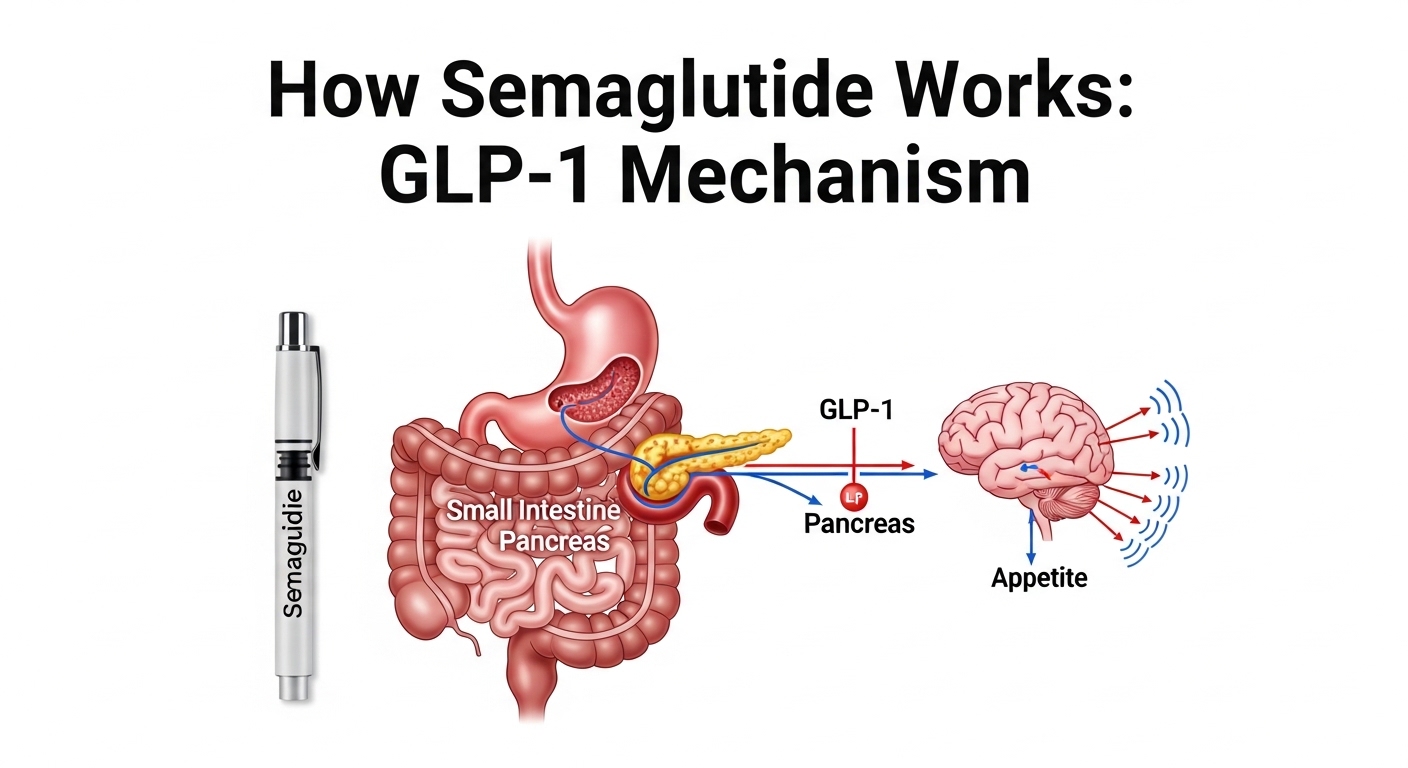
Based on our research, semaglutide works by mimicking a natural hormone called GLP-1 that regulates your appetite, blood sugar, and digestion. It targets receptors in your brain, pancreas, and stomach to help you eat less and feel satisfied with smaller portions.
I’ve spent months reviewing clinical studies and listening to real user experiences to understand exactly what happens in your body when you take this medication.
In this guide, I’ll break down the five key mechanisms that make semaglutide work, explain when you can expect to see results, and cover what the research shows about its effectiveness.
ContentsTable of Contents
- 1What Is Semaglutide?→
- 2How Semaglutide Works: 5 Key Mechanisms→
- 3How Semaglutide Works in Your Brain?→
- 4What Happens When Semaglutide Reaches Your Brain→
- 5Understanding “Food Noise”→
- 6How Semaglutide Affects Blood Sugar?→
- 7The Insulin Response→
- 8Glucagon Suppression→
- 9Why This Matters for Non-Diabetics?→
- 10How Semaglutide Slows Digestion?→
- 11What This Feels Like?→
- 12The Connection to Side Effects→
- 13How Quickly Does Semaglutide Work?→
- 14Why Results Vary?→
- 15What Are the Side Effects of Semaglutide?→
- 16Common Side Effects→
- 17Managing Side Effects→
- 18Serious Risks to Know→
- 19Frequently Asked Questions→
- 20How does semaglutide work to lose weight?→
- 21How fast can I lose 20 lbs on semaglutide?→
- 22What happens if you eat sugar while taking semaglutide?→
- 23What are the cons of semaglutide?→
- 24How quickly does semaglutide start working?→
- 25Does semaglutide work for non-diabetics?→
- 26The Bottom Line→
What Is Semaglutide?
Semaglutide is a GLP-1 receptor agonist medication that mimics a naturally occurring hormone in your body called glucagon-like peptide-1.
Your body produces natural GLP-1 in your gut after you eat. This hormone tells your brain you’re full, signals your pancreas to release insulin, and slows down digestion.
The problem? Natural GLP-1 breaks down in your bloodstream within minutes.
GLP-1 Receptor Agonist: A medication that binds to and activates the same receptors as the natural GLP-1 hormone, but lasts much longer in your body.
Semaglutide is engineered to resist breakdown, so it stays active in your body for about a week. That’s why you only need one injection per week instead of taking something multiple times daily.
You may know semaglutide by its brand names:
- Ozempic: FDA-approved for Type 2 diabetes management
- Wegovy: FDA-approved for chronic weight management
- Rybelsus: Oral tablet form for Type 2 diabetes
While the active ingredient is the same, these medications have different approved uses and dosing schedules.
How Semaglutide Works: 5 Key Mechanisms
Semaglutide promotes weight loss and improves metabolic health through five interconnected mechanisms. Understanding each one helps explain why this medication can be so effective.
- Appetite Suppression: Semaglutide activates GLP-1 receptors in your brain’s hypothalamus, reducing hunger signals and decreasing your desire to eat.
- Increased Satiety: The medication enhances feelings of fullness, helping you feel satisfied with smaller portions and reducing the urge to overeat.
- Delayed Gastric Emptying: Semaglutide slows how quickly food leaves your stomach, extending the sensation of fullness after meals.
- Enhanced Insulin Secretion: When blood sugar rises, semaglutide stimulates your pancreas to release more insulin, improving glucose control.
- Glucagon Suppression: The medication reduces glucagon release, which decreases the amount of sugar your liver releases into your bloodstream.
These mechanisms work together synergistically. You eat less because you’re not as hungry, feel full faster, stay satisfied longer, and your body handles blood sugar more efficiently.
Let me break down each mechanism in more detail so you understand exactly what’s happening in your body.
How Semaglutide Works in Your Brain?
Semaglutide targets GLP-1 receptors in the hypothalamus, your brain’s appetite control center, to reduce hunger signals and quiet what many users call “food noise.”
The hypothalamus is a small region in your brain that regulates hunger, thirst, body temperature, and many other essential functions. It contains neurons that respond to hormones telling you whether you’re hungry or full.
What Happens When Semaglutide Reaches Your Brain
When semaglutide binds to GLP-1 receptors in the hypothalamus, several things happen:
- POMC neurons activate: These neurons release signals that suppress appetite
- AgRP neurons decrease activity: These are the neurons that typically stimulate hunger
- Reward pathway modulation: The medication may reduce the pleasure-seeking drive for high-calorie foods
The result? You simply don’t feel as hungry, and food doesn’t occupy your thoughts the way it used to.
Understanding “Food Noise”
One of the most common experiences users report is the disappearance of “food noise.” This is the constant mental chatter about food that many people experience throughout the day.
“It’s like someone turned off the food chatter in my brain. I used to think about my next meal constantly. Now I sometimes forget to eat.”
– Common user experience reported across weight loss communities
For many people struggling with their weight, this mental relief may be just as significant as the physical weight loss. The constant preoccupation with food diminishes, making it easier to focus on other aspects of life.
Studies suggest semaglutide may also reduce cravings for specific types of foods, particularly high-fat and high-sugar options. Users frequently report that sweets and junk food simply don’t appeal to them the way they once did.
How Semaglutide Affects Blood Sugar?
Semaglutide stimulates insulin release and suppresses glucagon in a glucose-dependent manner, meaning these effects only occur when your blood sugar is elevated.
This glucose-dependent mechanism is important for safety. Unlike some older diabetes medications, semaglutide has a lower risk of causing dangerously low blood sugar because it only triggers insulin release when glucose levels are high.
The Insulin Response
When you eat and your blood sugar rises, semaglutide enhances your pancreas’s natural response. Your beta cells release more insulin, which helps shuttle glucose from your bloodstream into your cells for energy.
For people with Type 2 diabetes, this improved insulin response can significantly improve blood sugar control. Clinical trials show semaglutide may reduce A1C levels by 1-2 percentage points.
Glucagon Suppression
Your liver stores glucose and releases it when needed. Glucagon is the hormone that signals your liver to release stored glucose.
Semaglutide suppresses glucagon release when it’s not needed, reducing the amount of sugar entering your bloodstream between meals and overnight.
Why This Matters for Non-Diabetics?
Even if you don’t have diabetes, semaglutide’s effects on blood sugar may benefit you. Many people with obesity have some degree of insulin resistance, even if their blood sugar levels appear normal on standard tests.
Research suggests improving insulin sensitivity can make weight loss easier and may reduce the risk of developing Type 2 diabetes in the future.
Important: Semaglutide is FDA-approved for weight management in non-diabetic individuals who meet BMI criteria (30+ or 27+ with weight-related health conditions). The blood sugar benefits are an additional advantage, not the primary indication.
How Semaglutide Slows Digestion?
Semaglutide delays gastric emptying, keeping food in your stomach longer so you feel satisfied with smaller portions for extended periods.
Under normal circumstances, your stomach empties its contents into your small intestine within 2-4 hours after a meal. Semaglutide slows this process, sometimes significantly.
What This Feels Like?
Many users describe eating just a few bites of a meal and feeling completely satisfied. What used to be a normal portion now feels like too much food.
This effect is part of why the medication is so effective for weight loss. You naturally consume fewer calories because your body signals fullness much sooner.
The Connection to Side Effects
Delayed gastric emptying also explains some of semaglutide’s common side effects. Nausea, bloating, and digestive discomfort often occur because food sits in your stomach longer than your body expects.
These effects typically improve as your body adjusts to the medication, usually within the first few weeks. Eating smaller meals and avoiding greasy or heavy foods may help during this adjustment period.
How Quickly Does Semaglutide Work?
Semaglutide starts working immediately after your first injection, but noticeable changes typically appear within the first week, with significant weight loss visible by weeks 4-8.
Understanding the timeline helps set realistic expectations. Here’s what research and user experiences suggest you may experience:
| Timeframe | What to Expect | Typical Experience |
|---|---|---|
| First 1-3 Days | Medication begins working | May notice mild appetite changes; some experience nausea |
| Week 1 | Appetite suppression kicks in | Reduced hunger, feeling full faster, possible GI side effects |
| Weeks 2-4 | First weight loss visible | 1-4 lbs lost; side effects typically improving |
| Months 1-3 | Significant progress | 5-10% body weight loss common; dose may increase |
| Months 3-6 | Optimal results phase | 10-15% body weight loss; approaching maintenance |
Why Results Vary?
Not everyone responds to semaglutide the same way. Factors that influence your results include:
- Starting weight: People with more weight to lose often see larger absolute losses
- Dosage: Higher doses generally produce greater weight loss
- Diet and exercise: Lifestyle changes enhance medication effects
- Individual metabolism: Genetic factors affect response
- Consistency: Taking the medication as prescribed matters
Clinical trials show average weight loss of about 15% of body weight over 68 weeks with the 2.4mg weekly dose. Some people lose more, others less.
Pro Tip: Most healthcare providers start you on a low dose and gradually increase it over several months. This “start low, go slow” approach helps minimize side effects while your body adjusts.
What Are the Side Effects of Semaglutide?
Common semaglutide side effects include nausea, vomiting, diarrhea, and constipation, especially during the first weeks of treatment. Serious but rare risks include pancreatitis and gallbladder problems.
Common Side Effects
Most side effects relate to the digestive system and typically improve over time:
- Nausea: The most common side effect, affecting 40-50% of users initially
- Vomiting: Less common than nausea, usually related to eating too much
- Diarrhea: May occur especially in the first few weeks
- Constipation: Some users experience the opposite effect
- Abdominal pain: Cramping or discomfort after meals
- Fatigue: May occur as your body adjusts to eating less
Managing Side Effects
Based on user experiences and clinical guidance, these strategies may help:
- Eat smaller portions: Your stomach can’t handle large meals anymore
- Avoid greasy foods: High-fat meals worsen nausea
- Stay hydrated: Drink water throughout the day
- Eat slowly: Give your brain time to register fullness
- Time your meals: Some users find certain times of day work better
Serious Risks to Know
While rare, some serious side effects require immediate medical attention:
- Pancreatitis: Severe abdominal pain that radiates to your back
- Gallbladder problems: Upper right abdominal pain, especially after fatty meals
- Kidney issues: Changes in urination, swelling in legs
- Thyroid tumors: Semaglutide carries a boxed warning about thyroid C-cell tumors in rodent studies
Warning: Semaglutide is contraindicated for people with a personal or family history of medullary thyroid carcinoma or Multiple Endocrine Neoplasia syndrome type 2. Always discuss your complete medical history with your healthcare provider.
Frequently Asked Questions
How does semaglutide work to lose weight?
Semaglutide promotes weight loss through five key mechanisms: suppressing appetite signals in the brain, increasing feelings of fullness, slowing gastric emptying so food stays in your stomach longer, improving insulin response, and reducing glucagon release. These combined effects help you naturally eat less and lose weight without constant hunger.
How fast can I lose 20 lbs on semaglutide?
Most patients lose 1-2 pounds per week on semaglutide, meaning a 20-pound loss typically takes 10-16 weeks. Results vary based on starting weight, dosage, diet, and exercise habits. Clinical trials show average weight loss of about 15% of body weight over 68 weeks with the full maintenance dose.
What happens if you eat sugar while taking semaglutide?
Eating sugar while on semaglutide may cause blood sugar spikes and can worsen side effects like nausea, bloating, and diarrhea. While occasional small amounts are generally fine, sugary foods work against the medication’s weight loss benefits. Many users report naturally losing interest in sweets while on the medication.
What are the cons of semaglutide?
The main drawbacks of semaglutide include gastrointestinal side effects like nausea and diarrhea, especially when starting; high cost without insurance coverage; requiring weekly injections; potential serious risks including pancreatitis and gallbladder issues; weight regain if you stop without lifestyle changes; and contraindications for people with certain thyroid conditions.
How quickly does semaglutide start working?
Semaglutide starts working immediately after your first injection. Appetite suppression often begins within the first week. Noticeable weight loss typically appears within 4-8 weeks. Most people see significant results by 3 months, with continued progress as the dosage increases to maintenance levels over 4-5 months.
Does semaglutide work for non-diabetics?
Yes, semaglutide works for weight loss in non-diabetics. Wegovy is FDA-approved specifically for chronic weight management in adults with a BMI of 30 or higher, or 27 or higher with at least one weight-related health condition. The appetite-suppressing and metabolic effects work regardless of diabetes status.
The Bottom Line
Semaglutide works through multiple mechanisms that target your brain, pancreas, and digestive system to reduce appetite, improve blood sugar control, and help you feel satisfied with less food.
The science behind GLP-1 receptor agonists represents a significant advancement in understanding obesity as a metabolic condition, not simply a matter of willpower. By mimicking a natural hormone your body already produces, semaglutide helps restore balance to the systems that regulate hunger and satiety.
While the medication can be highly effective, it works best as part of a comprehensive approach that includes healthy eating habits, regular physical activity, and ongoing medical supervision.
Disclaimer: This content is for informational purposes only and does not constitute medical advice. Always consult a licensed healthcare provider before starting any weight-loss medication. Semaglutide requires a prescription and medical supervision. Individual results vary, and not everyone is a candidate for GLP-1 therapy.