How Models Get Back In Shape After Pregnancy 2026
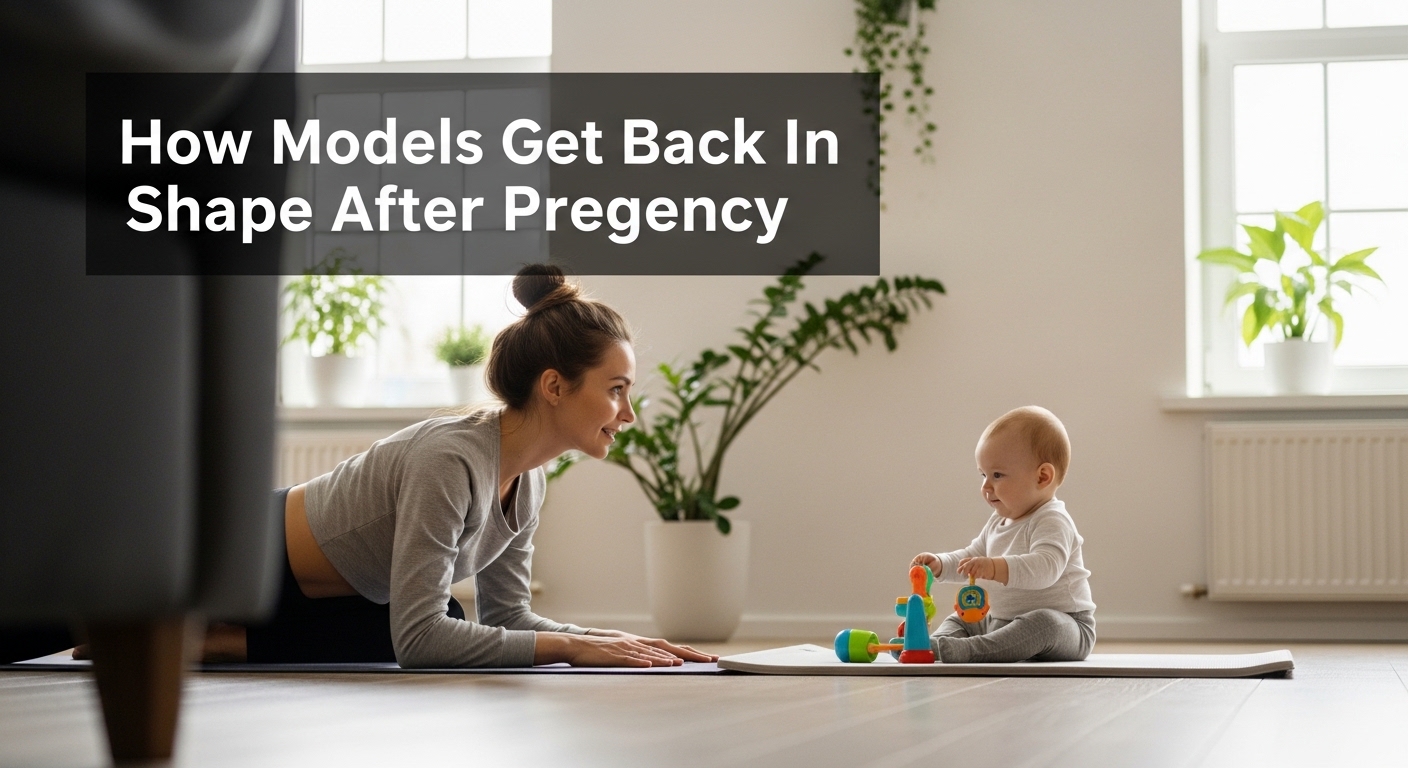
When Adriana Lima walked the Victoria’s Secret runway just eight weeks after giving birth, the world collectively gasped. How do models get back in shape after pregnancy so quickly?
After researching celebrity postpartum routines and interviewing fitness experts, I can tell you the answer: Models use a combination of sleep optimization, strategic nutrition, progressive exercise, stress management, hydration, and proper breathing techniques. They also have resources most of us don’t, including night nurses, personal trainers, and private chefs.
But here’s what matters: the same fundamental principles work for everyone. You just need to adapt them to your budget and lifestyle.
In this guide, I’ll break down exactly what models and celebrity moms do to bounce back after pregnancy, share specific routines from real celebrity moms, and give you budget-friendly alternatives for each expensive celebrity resource. You’ll also find a month-by-month timeline that no other guide provides.
Important: Always consult your healthcare provider before starting any postpartum exercise program. Every body heals differently, and C-section recovery may require additional time.
Understanding Your Post-Pregnancy Body
Your body just did something remarkable. Before jumping into fitness strategies, understanding what changed helps set realistic expectations.
During pregnancy, your abdominal muscles stretched to accommodate your growing baby. This often results in diastasis recti, a separation of the rectus abdominis muscles that affects up to 60% of women postpartum.
Your pelvic floor muscles, which supported your baby for nine months, may need rehabilitation. Hormonal shifts affect everything from your metabolism to your mood. And your body stored fat reserves specifically to support breastfeeding.
These changes are normal. They’re also temporary with proper recovery strategies.
The 5-5-5 Rule: A postpartum recovery guideline suggesting 5 days in bed, 5 days on the bed, and 5 days around the bed. This 15-day approach prioritizes rest, healing, and bonding before any exercise.
The 6 Fundamentals Models Use to Get Back in Shape
Dr. Charles Passler, nutritionist to supermodels like Bella Hadid and Adriana Lima, developed a framework that celebrity clients follow. These six fundamentals form the foundation of postpartum recovery for models.
- Sleep optimization for hormonal balance and metabolism
- Strategic nutrition focused on protein and whole foods
- Progressive exercise starting gentle and building intensity
- Stress management to control cortisol and belly fat
- Proper hydration especially while breastfeeding
- Breathing techniques for core reconnection and weight management
Let me break down each one, including what celebrities spend versus what you can do on a budget.
1. Sleep: The Secret Weapon
Sleep may be the most underrated factor in postpartum weight loss. When you’re sleep-deprived, your body produces more cortisol, the stress hormone directly linked to belly fat storage.
Lack of sleep also increases ghrelin (the hunger hormone) while decreasing leptin (the satiety hormone). This creates a biological perfect storm for weight gain.
Celebrity moms often hire night nurses, costing $200-400 per night, to ensure they get adequate rest. Heidi Klum reportedly had help around the clock after each of her four pregnancies.
Budget Alternative: Ask family members to take night shifts. Trade off with your partner. Sleep when baby sleeps, even if it means the house stays messy. Prioritize naps over non-essential tasks.
2. Nutrition: What Models Actually Eat
Models don’t starve themselves postpartum. That would tank their energy and, if breastfeeding, their milk supply.
Instead, they focus on nutrient-dense foods with adequate protein. Dr. Passler recommends his model clients eat protein at every meal to support muscle maintenance and recovery.
Private chefs, costing $300-1,000 per day, prepare perfectly balanced meals. Kim Kardashian followed the Atkins 40 diet with prepared meals after her pregnancies, focusing on lean proteins, vegetables, and healthy fats.
Breastfeeding burns approximately 300-500 extra calories daily, so severe calorie restriction isn’t necessary or advisable.
Budget Alternative: Meal prep on weekends when you have help. Stock your freezer before baby arrives. Focus on simple protein sources: rotisserie chicken, eggs, Greek yogurt, canned fish. Use free apps to track nutrition if helpful.
3. Exercise: Progressive Return to Fitness
Personal trainers charge celebrity clients $200-500 per session, sometimes with daily visits. But the approach matters more than the price tag.
Models don’t jump into intense workouts immediately. They follow a progressive approach:
- First 6 weeks: Rest, healing, gentle walking only (with doctor clearance)
- 6-8 weeks: Pelvic floor exercises, core reconnection, light activity
- 8-12 weeks: Low-impact cardio, Pilates, yoga
- 3+ months: Gradually increase intensity, add strength training
Core strengthening is crucial, but doing standard crunches with diastasis recti can make the separation worse. Models work with specialists who understand postpartum bodies.
Adriana Lima famously did boxing workouts with trainer Michael Olajide Jr, but only after her body had healed. Miranda Kerr swears by Pilates with trainer Justin Gelband.
Budget Alternative: YouTube has excellent free postpartum workout channels. The Every Mother app specifically targets diastasis recti. Many local gyms offer postpartum fitness classes. Walking with baby in a stroller is free and effective.
4. Stress Management: Why It Matters for Weight Loss
Stress doesn’t just feel bad. It physically affects your ability to lose weight.
When cortisol stays elevated, your body holds onto fat, especially around the midsection. Celebrity moms often have teams handling logistics, childcare, and household tasks, dramatically reducing their stress load.
Nannies cost $15-30 per hour. Housekeepers, meal delivery, personal assistants, all these services reduce the mental load that regular moms carry alone.
Budget Alternative: Accept help when offered. Lower your standards for housework temporarily. Practice 5-minute meditation using free apps like Insight Timer. Take brief walks alone when possible. Remember that this season is temporary.
5. Hydration: More Than Just Water
Proper hydration affects everything from your metabolism to your milk supply. Breastfeeding mothers need approximately 128 ounces of fluid daily.
Models often drink alkaline water, add electrolytes, and avoid dehydrating beverages. Dr. Dana Cohen, hydration expert, recommends eating water-rich foods alongside drinking fluids for better cellular absorption.
Dehydration can masquerade as hunger, leading to overeating.
Budget Alternative: Keep a large water bottle within reach at all times. Set phone reminders to drink. Add cucumber, lemon, or berries for flavor. Eat water-rich fruits and vegetables like watermelon, cucumber, and oranges.
6. Breathing Techniques: The Overlooked Factor
This is the strategy most people don’t know about. Proper breathing, specifically nasal breathing, affects everything from oxygen delivery to nitric oxide production.
Nitric oxide, produced when breathing through the nose, helps regulate metabolism and supports cardiovascular function. Mouth breathing, common when stressed or exhausted, may contribute to weight retention.
Beyond metabolic effects, diaphragmatic breathing helps reconnect the core muscles after pregnancy. The diaphragm works in coordination with the pelvic floor, making breathing exercises a form of core rehabilitation.
Practical Technique: Practice 5 minutes of diaphragmatic breathing daily. Inhale slowly through your nose for 4 counts, letting your belly expand. Exhale through your nose for 6 counts. This activates the parasympathetic nervous system, reducing cortisol.
How Real Celebrity Moms Got Their Bodies Back?
Let’s look at specific examples of celebrity moms and their actual postpartum routines. I’ll include budget alternatives for each.
Adriana Lima: The Boxing Approach
The Victoria’s Secret Angel returned to the runway just 8 weeks after giving birth to her daughter Valentina in 2026. Her secret was boxing workouts with trainer Michael Olajide Jr at Aerospace High Performance Center.
Lima’s routine included jumping rope, shadow boxing, and heavy bag work, burning up to 1,000 calories per session. But she started this intensive training only after initial healing, not immediately postpartum.
Budget Alternative: Boxing fitness apps like FightCamp or free YouTube boxing workouts. Many gyms offer affordable kickboxing classes. Start with shadow boxing at home, no equipment needed.
Heidi Klum: Consistency Over Intensity
Heidi Klum walked the Victoria’s Secret runway just 5 weeks after giving birth to her fourth child. Her approach was surprisingly simple: daily walks, gradually increasing in intensity.
Klum worked with trainer David Kirsch, doing circuit training combining strength and cardio. She focused on compound movements that work multiple muscle groups efficiently.
Budget Alternative: Walking is free. Start with 10-minute walks and gradually increase. Free circuit training videos on YouTube replicate gym sessions. Bodyweight exercises require no equipment.
Gisele Bundchen: The Holistic Approach
Gisele takes a mind-body approach, practicing yoga and following a strict organic diet prepared by a private chef. She avoids processed foods, sugar, and white flour.
Her trainer emphasized that Gisele never rushed her recovery. She prioritized sleep and stress reduction alongside physical activity.
Budget Alternative: YouTube yoga channels like Yoga with Adriene offer excellent free content. Meal prepping whole foods on weekends replicates the “private chef” effect. Focus on simple, unprocessed ingredients.
Kim Kardashian: The Structured Diet Approach
After her pregnancies, Kim followed the Atkins 40 diet, limiting carbohydrates to 40 grams daily while eating adequate protein and healthy fats. She worked with trainer Melissa Alcantara, doing twice-daily workouts when preparing for events.
Kim has been open about her struggles with pregnancy weight, gaining over 50 pounds with her first pregnancy and dealing with preeclampsia.
Budget Alternative: The Atkins app provides free meal plans and tracking. Low-carb eating doesn’t require expensive foods. Home workouts using Instagram trainers like Melissa Alcantara can replicate gym sessions.
Miranda Kerr: Pilates and Targeted Training
Miranda credits Pilates trainer Justin Gelband for her post-baby body. She combined Pilates with a blood-type diet and regular yoga practice.
Miranda focused heavily on core strengthening and maintaining lean muscle mass rather than just losing weight.
Budget Alternative: Pilates studios often offer first-class deals or monthly unlimited packages. YouTube Pilates workouts are excellent and free. The Pilates Anytime app offers affordable monthly subscriptions.
Alia Bhatt: The Patient Approach
Bollywood star Alia Bhatt took a refreshingly patient approach after welcoming her daughter Raha. Working with trainer Sohrab Khushrushahi, she emphasized consistency over speed.
Her trainer noted she returned to exercise gradually, starting with walks and gentle yoga before progressing to strength training. The focus was sustainable habits, not crash programs.
Budget Alternative: Patience costs nothing. Consistency with free home workouts beats expensive sporadic gym sessions. The lesson here is that even celebrities don’t always rush their recovery.
Month-by-Month Recovery Timeline: What to Expect
One thing I couldn’t find in any competitor’s content was a clear, month-by-month timeline for postpartum recovery. Here’s what realistic progress looks like.
| Timeframe | Physical Focus | Exercise Level | What to Expect |
|---|---|---|---|
| 0-6 Weeks | Rest and healing | Walking only (if cleared) | Uterus shrinking, hormones shifting, sleep deprivation peak. Focus on recovery, not fitness. |
| 2-3 Months | Core reconnection | Gentle pelvic floor exercises, light yoga, walking | Energy may start improving. Start reconnecting with your core muscles through breathing exercises. |
| 4-6 Months | Building foundation | Low-impact cardio, Pilates, swimming, strength training begins | Visible changes may start appearing. Most celebrities are in full training mode by now. |
| 6-9 Months | Progressive overload | Full workouts, increasing intensity, varied training | Significant progress for most women. Body approaching pre-pregnancy fitness. |
| 9-12 Months | Reaching goals | High-intensity if desired, maintenance routines | Most women can reach or exceed pre-pregnancy fitness. Some body changes may be permanent. |
C-Section Recovery: If you had a cesarean delivery, add 2-4 weeks to each phase. Your abdominal muscles were surgically cut and need additional healing time. Always follow your surgeon’s specific guidelines.
Realistic Expectations for Regular Moms
Here’s the truth that many fitness articles avoid: celebrities have enormous advantages that regular moms don’t.
The real cost of celebrity resources:
- Night nurse: $200-400 per night ($6,000-12,000/month)
- Personal trainer: $200-500 per session (3x/week = $2,400-6,000/month)
- Private chef: $300-1,000 per day ($9,000-30,000/month)
- Nanny: $15-30/hour full-time ($3,600-7,200/month)
That’s potentially $20,000-55,000 monthly that celebrities spend on postpartum support. They also have careers that depend on their appearance, creating powerful motivation.
What regular moms can realistically expect:
- Most women can return to their pre-pregnancy weight within 6-12 months
- Your body may distribute weight differently than before
- Some changes, like slightly wider hips, may be permanent
- Genetics and pre-pregnancy fitness significantly affect recovery speed
- Women who were fit before pregnancy typically recover faster
The goal isn’t to look like a Victoria’s Secret model six weeks postpartum. The goal is to feel strong, healthy, and comfortable in your body, whatever that looks like for you.
Mental Health and Body Positivity After Baby
We can’t talk about postpartum fitness without addressing mental health. Up to 20% of new mothers experience postpartum depression or anxiety.
Comparing yourself to celebrity “bounce-back” photos can trigger feelings of inadequacy. Remember that those images are often professionally lit, filtered, and timed to show celebrities at their best.
Many celebrities who don’t bounce back quickly simply don’t show their bodies publicly during that time. You’re seeing survivorship bias, not reality.
Signs you may need support:
- Persistent sadness or hopelessness lasting more than two weeks
- Excessive worry about your body or weight
- Difficulty bonding with your baby
- Loss of interest in activities you used to enjoy
- Thoughts of harming yourself or your baby
If you’re experiencing any of these symptoms, please reach out to your healthcare provider. Your mental health matters more than any fitness goal.
“Your body created life. Give it the grace it deserves.”
Frequently Asked Questions
How do celebrities get their body back so fast after pregnancy?
Celebrities typically use a combination of night nurses for sleep, personal trainers for daily workouts, private chefs for perfect nutrition, and nannies to reduce stress. They may spend $20,000-50,000 monthly on postpartum support. They also often had excellent pre-pregnancy fitness, didn’t gain excessive weight during pregnancy, and have careers motivating quick recovery. Some also pursue cosmetic procedures like tummy tucks.
How long does it take a model to get back in shape after having a baby?
Most models take 3-6 months to visibly regain their pre-pregnancy figures, with full recovery often taking 6-12 months. However, runway appearances as early as 5-8 weeks postpartum (like Heidi Klum and Adriana Lima) represent exceptional cases with extensive professional support. For regular moms without celebrity resources, 6-12 months is a realistic timeline for significant progress.
What do models eat after pregnancy?
Models typically focus on protein-rich, nutrient-dense whole foods rather than restrictive dieting. Common approaches include the Atkins 40 diet (Kim Kardashian), organic whole-food diets (Gisele Bundchen), and high-protein meals prepared by private chefs. They generally avoid processed foods, excessive sugar, and empty calories while eating enough to support breastfeeding if applicable. The emphasis is on quality nutrition, not starvation.
How do models stay so thin during pregnancy?
Models often work closely with nutritionists to gain only the recommended 25-35 pounds during pregnancy. They typically maintain exercise routines (modified for pregnancy) throughout their term, stay hydrated, and continue eating nutritious whole foods. Some models are also genetically predisposed to carry pregnancy differently, particularly those with longer torsos. However, healthy pregnancy weight gain is individual, and restricting too much can harm the baby.
How do models get flat belly after pregnancy?
Models achieve flat bellies through targeted core exercises (starting with pelvic floor work and breathing exercises before progressing to Pilates and planks), combined with overall fat loss through cardio and proper nutrition. They work with specialists who understand diastasis recti and don’t do exercises that worsen abdominal separation. Some celebrities also pursue cosmetic procedures like tummy tucks or abdominoplasty, though many achieve results through exercise alone.
Is it possible to get back in shape after pregnancy?
Yes, absolutely. Most women can safely begin gentle exercise 6-8 weeks postpartum and see significant results within 6-12 months of consistent effort. While some body changes may be permanent (like slightly wider hips), the majority of pregnancy-related changes can be addressed through proper nutrition, progressive exercise, and adequate rest. Your genetics and pre-pregnancy fitness level affect how quickly you recover, but improvement is possible for everyone.
What is the 5-5-5 rule after birth?
The 5-5-5 rule is a postpartum recovery guideline: 5 days in bed, 5 days on the bed, and 5 days around the bed. This 15-day approach prioritizes rest, healing, and bonding while limiting strenuous activity. The rule helps new mothers focus on recovery rather than rushing back to normal activities, reducing the risk of complications and supporting the body’s natural healing process.
Will I ever get my waist back after pregnancy?
Your waist can get close to its pre-pregnancy size, but some changes may be permanent. Your rib cage may have expanded slightly during pregnancy, and hormonal changes can affect fat distribution. With consistent core strengthening, proper nutrition, and overall fitness, most women see significant improvement in their waist measurement within 6-12 months. Focus on building core strength and overall health rather than a specific measurement.
The Bottom Line
Models get back in shape after pregnancy through six fundamentals: optimized sleep, strategic nutrition, progressive exercise, stress management, proper hydration, and breathing techniques. They also have resources worth tens of thousands monthly that most of us don’t have.
The good news is that the principles work regardless of your budget. Prioritize sleep when you can. Eat whole, nutrient-dense foods. Start gentle exercise when your doctor clears you and progress slowly. Manage stress through whatever means work for you. Stay hydrated. And give yourself grace.
Your body did something incredible. Give it the time it needs to recover. Progress over perfection, always.
Disclaimer: This content is for informational purposes only and does not constitute medical advice. Always consult your healthcare provider before starting any postpartum exercise program or making significant dietary changes. Every body heals differently, and your doctor knows your specific situation best.
Disclaimer: betterresultsbook.com contains information about products that are intended for laboratory and research use only, unless otherwise explicitly stated. This information, including any referenced scientific or clinical research, is made available for educational purposes only. Likewise, any published information relative to the dosing and administration of reference materials is made available strictly for reference and shall not be construed to encourage the self-administration or any human use of said reference materials. betterresultsbook.com makes every effort to ensure that any information it shares complies with national and international standards for clinical trial information and is committed to the timely disclosure of the design and results of all interventional clinical studies for innovative treatments publicly available or that may be made available. However, research is not considered conclusive. betterresultsbook.com makes no claims that any products referenced can cure, treat or prevent any conditions, including any conditions referenced on its website or in print materials.

![Mitolyn Review 2026: Does This Supplement Work? [cm]](https://betterresultsbook.com/wp-content/uploads/2026/01/Mitolyn-Review.jpeg)