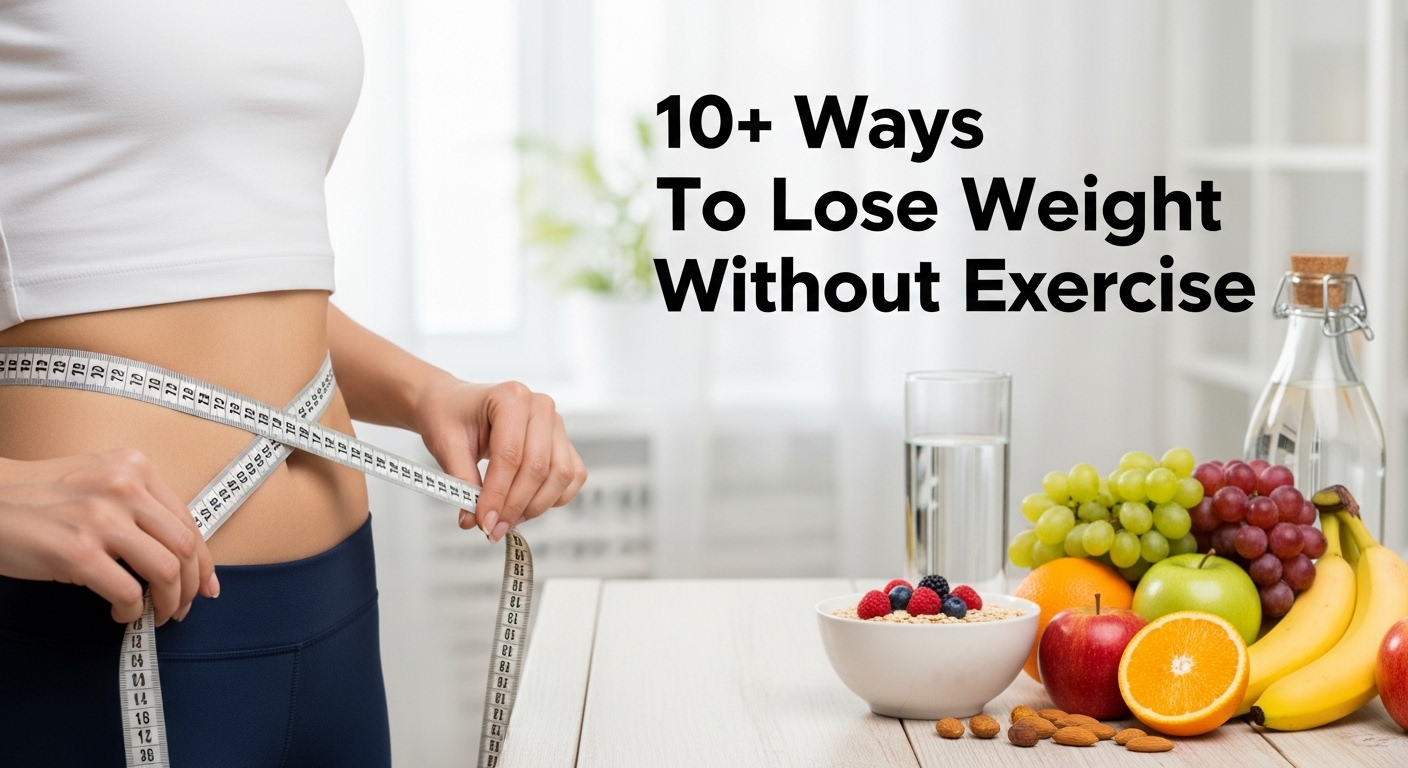
I used to think losing weight without exercise was impossible. After struggling with a knee injury that kept me off my feet for three months, I learned something surprising: diet is responsible for roughly 80% of weight loss results.
The key to losing weight without exercise is creating a calorie deficit through dietary changes, better sleep, stress management, and lifestyle modifications. You can lose 4-8 pounds per month by eating fewer calories than your body burns.
Whether you’re dealing with an injury, hate the gym, or simply don’t have time to work out, there are proven strategies that can help you shed pounds. I’ve spent months researching the science and testing different approaches.
In this guide, I’ll share 14 evidence-based ways to lose weight without breaking a sweat, plus medical options that may help if lifestyle changes aren’t enough.
ContentsTable of Contents
- 1Key Takeaways→
- 214 Ways to Lose Weight Fast Without Exercise→
- 31. Create a Calorie Deficit→
- 42. Eat More Protein→
- 53. Load Up on Fiber→
- 64. Drink More Water→
- 75. Get Quality Sleep→
- 86. Manage Your Stress→
- 97. Practice Portion Control→
- 108. Cut Liquid Calories→
- 119. Try Mindful Eating→
- 1210. Cook More Meals at Home→
- 1311. Increase Your NEAT→
- 1412. Try Intermittent Fasting→
- 1513. Track What You Eat→
- 1614. Consider Medical Weight Loss Options→
- 17Medical Weight Loss Options Without Exercise→
- 18Top GLP-1 Telehealth Providers→
- 19Ro Body Program – Best for Insurance Support→
- 20Ro Body Program→
- 21Pros→
- 22Cons→
- 23Best For→
- 24Skip If→
- 25Hims Weight Loss – Best for Simple Pricing→
- 26Hims Weight Loss→
- 27Pros→
- 28Cons→
- 29Best For→
- 30Skip If→
- 31Calibrate – Best for Comprehensive Coaching→
- 32Calibrate→
- 33Pros→
- 34Cons→
- 35Best For→
- 36Skip If→
- 37How Much Weight Can You Realistically Lose?→
- 38When to See a Doctor?→
- 39Frequently Asked Questions→
- 40Can I lose weight quickly without exercise?→
- 41How much weight can you lose in a month without exercise?→
- 42What is the 3-3-3 rule for weight loss?→
- 43Will I lose muscle if I lose weight without exercising?→
- 44Is diet more important than exercise for weight loss?→
- 45The Bottom Line→
Key Takeaways
- Calorie deficit is essential: Weight loss happens when you consume fewer calories than you burn
- Protein and fiber help: Both nutrients increase satiety and may reduce overall calorie intake
- Sleep matters: Poor sleep can disrupt hunger hormones and increase cravings
- NEAT adds up: Daily movement like walking and fidgeting can burn 100-800 extra calories
- Medical options exist: GLP-1 medications may help suppress appetite for those who qualify
- Safe rate: Most experts recommend losing 1-2 pounds per week for sustainable results
14 Ways to Lose Weight Fast Without Exercise
These strategies focus on what you eat, how you eat, and lifestyle factors that influence your metabolism. Based on our research, combining multiple approaches tends to work better than relying on just one.
1. Create a Calorie Deficit
Weight loss fundamentally comes down to calories in versus calories out. When you consume fewer calories than your body burns, you lose weight. It’s that simple.
Research suggests a 500-calorie daily deficit can lead to about 1 pound of weight loss per week. You can achieve this through smaller portions, lower-calorie food choices, or both.
Start by calculating your maintenance calories using an online calculator. Then reduce your intake by 300-500 calories daily. This creates a sustainable deficit without feeling deprived.
I found tracking my calories for just two weeks was eye-opening. I had no idea my morning coffee drink contained 400 calories.
2. Eat More Protein
Protein is your best friend when losing weight without exercise. It increases satiety, reduces hunger, and may help preserve muscle mass during weight loss.
Studies suggest protein can boost metabolism by 80-100 calories per day through the thermic effect of food. Your body burns more calories digesting protein than carbs or fat.
Aim for 25-30 grams of protein per meal. Good sources include eggs, Greek yogurt, lean meats, fish, legumes, and tofu.
When I increased my breakfast protein from 10 to 30 grams, I noticed I wasn’t hungry until well past noon.
3. Load Up on Fiber
Fiber-rich foods expand in your stomach, helping you feel full on fewer calories. Soluble fiber in particular may help reduce belly fat over time.
The recommended daily intake is 25-30 grams, but most Americans get only 15 grams. Increasing fiber gradually can make a significant difference.
Great fiber sources include vegetables, fruits, whole grains, beans, and legumes. Start slowly to avoid digestive discomfort.
Adding a cup of beans to my lunch salad kept me satisfied for hours longer than my old lunch routine.
4. Drink More Water
Drinking water before meals may help you eat less. One study found that drinking 500ml of water 30 minutes before meals led to 44% more weight loss over 12 weeks.
Water also helps your body metabolize stored fat. When you’re dehydrated, your metabolism may slow down.
Aim for 8 glasses (64 ounces) daily as a baseline. You may need more if you’re larger or live in a hot climate.
I started keeping a water bottle at my desk. Just having it visible reminded me to drink throughout the day.
5. Get Quality Sleep
Poor sleep is one of the biggest risk factors for weight gain. When you’re sleep-deprived, your hunger hormones go haywire.
Lack of sleep increases ghrelin (the hunger hormone) and decreases leptin (the satiety hormone). This combination makes you hungrier and more likely to overeat.
Research suggests people who sleep less than 7 hours per night are more likely to be overweight. Aim for 7-9 hours of quality sleep.
After prioritizing sleep for a month, my late-night snacking urges practically disappeared.
6. Manage Your Stress
Chronic stress triggers cortisol release, which can increase appetite and promote fat storage, especially around the belly.
Stress eating is real. When cortisol levels spike, you’re more likely to crave high-calorie comfort foods.
Try stress-reduction techniques like deep breathing, meditation, or walking in nature. Even 10 minutes daily can help.
I started a 5-minute morning meditation routine. It sounds small, but it helped me make better food choices all day.
7. Practice Portion Control
You don’t have to change what you eat, just how much. Using smaller plates can trick your brain into feeling satisfied with less food.
Research shows people eat up to 30% more when served larger portions. The opposite is also true: smaller portions lead to eating less.
Use 9-inch plates instead of 12-inch plates. Serve vegetables first and fill half your plate with them.
When I switched to smaller bowls for my morning cereal, I naturally ate 25% less without feeling deprived.
8. Cut Liquid Calories
Sugary drinks are one of the biggest sources of hidden calories. Sodas, juices, and specialty coffee drinks can add 300-500 calories daily.
Your brain doesn’t register liquid calories the same way as solid food. You won’t feel fuller after drinking a 400-calorie latte.
Switch to water, unsweetened tea, or black coffee. If you need flavor, try sparkling water with a splash of citrus.
Cutting my daily soda habit alone saved me nearly 1,000 calories per week. That’s almost a pound of weight loss per month from one change.
9. Try Mindful Eating
Eating while distracted leads to overconsumption. When you’re watching TV or scrolling your phone, you’re more likely to miss fullness cues.
Mindful eating means paying attention to what you’re eating, chewing slowly, and savoring each bite. It helps you recognize when you’re satisfied.
Try eating without screens for at least one meal daily. Chew each bite 20-30 times before swallowing.
I used to inhale my lunch at my desk in 5 minutes. Now I take 20 minutes and actually enjoy my food while eating less.
10. Cook More Meals at Home
Restaurant portions are typically 2-3 times larger than recommended serving sizes. Home cooking gives you control over ingredients and portions.
Studies show people who cook at home eat fewer calories overall and have healthier body weights.
Start with 2-3 home-cooked meals per week and gradually increase. Meal prepping on Sundays can make weeknight cooking easier.
After I started batch-cooking lunches, I stopped grabbing fast food on busy days. That alone made a noticeable difference.
11. Increase Your NEAT
NEAT stands for Non-Exercise Activity Thermogenesis. It’s the calories you burn through daily activities that aren’t formal exercise.
This includes walking, standing, fidgeting, taking stairs, and housework. NEAT can account for 100-800 extra calories burned daily.
Simple ways to boost NEAT: take calls while walking, use a standing desk, park farther away, take the stairs, and do household chores.
I started taking walking meetings and aiming for 7,000 steps daily. It doesn’t feel like exercise, but it adds up.
12. Try Intermittent Fasting
Intermittent fasting restricts when you eat rather than what you eat. The most common approach is 16:8, eating within an 8-hour window daily.
Research suggests intermittent fasting may help reduce calorie intake naturally by limiting eating opportunities. Some studies show it may also improve insulin sensitivity.
Common methods include skipping breakfast or stopping eating by 7 PM. Choose a pattern that fits your lifestyle.
I tried 16:8 fasting by skipping breakfast. It simplified my mornings and naturally cut out late-night snacking.
13. Track What You Eat
Food journaling increases awareness of what you’re actually consuming. Many people underestimate their calorie intake by 40-50%.
Apps like MyFitnessPal or Lose It! make tracking easy. Even tracking for a few weeks can reveal patterns and problem areas.
You don’t have to track forever. Just 2-4 weeks of tracking can teach you enough to make informed choices.
When I tracked my food for two weeks, I discovered my “healthy” granola had more calories than a candy bar.
14. Consider Medical Weight Loss Options
If lifestyle changes aren’t enough, medical weight loss may help. GLP-1 medications have shown significant results for people who qualify.
These medications work by reducing appetite and helping you feel full faster. They’re prescribed by doctors and require ongoing monitoring.
Medical options are especially worth considering if you have a BMI over 30, or over 27 with weight-related health conditions.
I’ll cover specific telehealth options below for those interested in exploring this route.
Medical Weight Loss Options Without Exercise
For some people, diet and lifestyle changes alone aren’t enough. GLP-1 medications like semaglutide and tirzepatide have changed the weight loss landscape in 2026.
These medications may help suppress appetite and reduce food intake, making it easier to maintain a calorie deficit without exercise. They’re available through telehealth programs.
Disclaimer: Compounded medications are not FDA-approved and may not be available in all states. Always consult a licensed healthcare provider before starting any weight-loss medication.
Top GLP-1 Telehealth Providers
| # | Provider | Highlights | Price | |
|---|---|---|---|---|
| 01 | Ro Body |
|
$145/mo + meds | Visit Provider → |
| 02 | Hims |
|
From $199/mo | Visit Provider → |
| 03 | Calibrate |
|
$1,199/yr + meds | Visit Provider → |
We may earn a commission at no extra cost to you.
Ro Body Program – Best for Insurance Support
Full-service telehealth weight loss program with GLP-1 medications and insurance navigation support.
Includes labs, weekly coaching, and metabolic health tracking.
Pros
- Insurance concierge support
- Labs included in membership
- Brand-name medication options
- No long-term commitment
Cons
- Medication cost additional
- Only injectable options
- Compounded meds not FDA-approved
This post contains affiliate links. If you purchase through them, we may earn a commission (at no extra cost to you).
Ro Body Program offers comprehensive weight loss support with a focus on helping you navigate insurance coverage for brand-name medications like Wegovy.
The $145 monthly membership includes labs, coaching, and provider consultations. Medication costs are separate but may be covered by insurance with their concierge support.
Best For
People wanting insurance support and comprehensive weight loss coaching without exercise requirements.
Skip If
You’re looking for all-inclusive pricing or prefer oral medication options.
Hims Weight Loss – Best for Simple Pricing
Streamlined telehealth weight loss with compounded GLP-1 medications and all-inclusive pricing.
Doctor consultations and medication included in monthly cost.
Pros
- All-inclusive pricing
- Fast online consultation
- Discreet home delivery
- Established telehealth brand
Cons
- Only compounded medications
- No insurance coverage option
- Primarily designed for men
This post contains affiliate links. If you purchase through them, we may earn a commission (at no extra cost to you).
Hims offers a straightforward approach to medical weight loss with simple all-inclusive pricing. Your monthly cost covers consultations and medication.
The program uses compounded semaglutide and tirzepatide. While not FDA-approved, compounded medications may offer a more affordable option for those without insurance coverage.
Best For
Men seeking straightforward GLP-1 access with simple all-inclusive pricing.
Skip If
You want brand-name FDA-approved medications or need insurance coverage.
Calibrate – Best for Comprehensive Coaching
Comprehensive metabolic health program with 1-on-1 coaching and GLP-1 medication options.
Focuses on sustainable lifestyle change alongside medication support.
Pros
- Comprehensive metabolic approach
- Brand-name medication options
- Dedicated health coach
- Focus on sustainable change
Cons
- Higher upfront cost
- Annual commitment required
- Medication costs additional
This post contains affiliate links. If you purchase through them, we may earn a commission (at no extra cost to you).
Calibrate takes a holistic approach to weight loss, combining GLP-1 medications with intensive 1-on-1 coaching and behavior change support.
The program focuses on metabolic health rather than just weight loss. While the upfront cost is higher, the comprehensive support may lead to more sustainable results.
Best For
People seeking comprehensive metabolic health transformation with ongoing coaching support.
Skip If
You’re looking for quick, low-cost medication access without coaching commitment.
How Much Weight Can You Realistically Lose?
Most experts recommend losing 1-2 pounds per week for sustainable results. This means you can safely lose 4-8 pounds per month without exercise.
Faster weight loss is possible initially, especially if you have more weight to lose. However, crash diets often lead to muscle loss and rebound weight gain.
With medical weight loss options like GLP-1 medications, some people report losing 15-20% of their body weight over 12-18 months. Results vary based on individual factors.
Weight loss typically slows after the first few weeks. This is normal as your body adjusts. Plateaus are common and don’t mean you’re doing something wrong.
When to See a Doctor?
Consider consulting a healthcare provider about weight loss if:
- Your BMI is 30 or higher (obesity range)
- Your BMI is 27+ with weight-related health conditions like diabetes or high blood pressure
- You’ve tried lifestyle changes without success for 6+ months
- You’re experiencing unexplained weight gain
- You have a history of disordered eating
A doctor can rule out underlying medical conditions affecting your weight and discuss whether medical weight loss options might be appropriate for you.
Frequently Asked Questions
Can I lose weight quickly without exercise?
Yes, you can lose weight without exercise by creating a calorie deficit through diet. Most people can safely lose 4-8 pounds per month by eating fewer calories, increasing protein and fiber intake, and making lifestyle changes like improving sleep quality and managing stress.
How much weight can you lose in a month without exercise?
A safe and sustainable rate is 4-8 pounds per month without exercise. This requires a daily calorie deficit of 500-1000 calories. Losing weight faster than this may result in muscle loss and is harder to maintain long-term.
What is the 3-3-3 rule for weight loss?
The 3-3-3 rule is a simple weight loss framework: eat 3 balanced meals daily with no snacking, drink 3 liters of water by 3 PM, and aim for 3 hours of physical activity per week. It emphasizes consistent eating patterns and hydration for weight management.
Will I lose muscle if I lose weight without exercising?
You may lose some muscle when losing weight without exercise. To minimize muscle loss, eat adequate protein (0.7-1 gram per pound of body weight), avoid extreme calorie restriction, and consider light activities like walking that don’t require formal exercise.
Is diet more important than exercise for weight loss?
Yes, diet is generally considered more important for weight loss than exercise. Research suggests diet accounts for roughly 80% of weight loss results. While exercise has many health benefits and helps maintain weight loss, you cannot out-exercise a poor diet.
The Bottom Line
Losing weight without exercise is absolutely possible. Focus on creating a calorie deficit through portion control, eating more protein and fiber, staying hydrated, and getting quality sleep.
If lifestyle changes aren’t enough, medical weight loss options with GLP-1 medications may help. Talk to your doctor about whether you might be a candidate.
Start with one or two changes and build from there. Sustainable weight loss comes from habits you can maintain long-term, not quick fixes.
This review is for informational purposes only and does not constitute medical advice. Always consult a licensed healthcare provider before starting any weight-loss medication or making significant dietary changes.