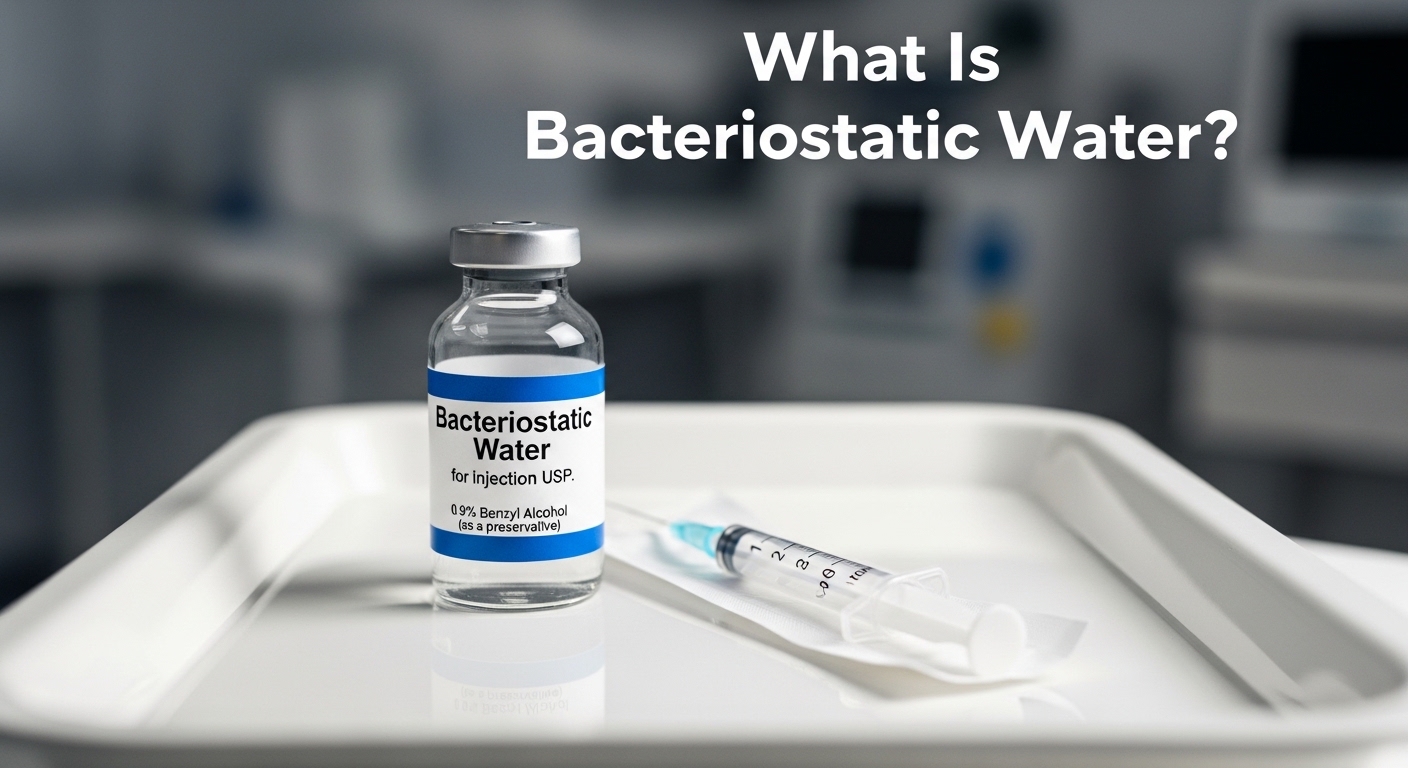
If you are reconstituting peptides, preparing injectable medications, or starting a GLP-1 weight loss program, you have probably encountered the term “bacteriostatic water.”
Bacteriostatic water is a sterile, non-pyrogenic solution containing 0.9% benzyl alcohol that prevents bacterial growth and allows for multi-dose use up to 28 days after opening.
After researching dozens of suppliers and testing various products for our peptide reconstitution needs, I have put together this comprehensive guide covering everything you need to know.
In this guide, you will learn what bacteriostatic water is, how it differs from sterile water, proper storage guidelines, and where to buy pharmaceutical-grade products at the best prices in 2026.
ContentsTable of Contents
- 1What Is Bacteriostatic Water?→
- 2What Is Bacteriostatic Water Made Of?→
- 3Sterile Water Base→
- 4Benzyl Alcohol Preservative→
- 5Quality Standards→
- 6What Is Bacteriostatic Water Used For?→
- 7Peptide Reconstitution→
- 8Medication Dilution→
- 9Injection Routes→
- 10Research Applications→
- 11Bacteriostatic Water vs Sterile Water→
- 12When to Use Bacteriostatic Water?→
- 13When to Use Sterile Water?→
- 14Is Bacteriostatic Water the Same as Saline?→
- 15How to Store Bacteriostatic Water?→
- 16Before Opening→
- 17After Opening→
- 18Storage Best Practices→
- 19When Not to Use Bacteriostatic Water?→
- 20Contraindications→
- 21Potential Side Effects→
- 22Special Populations→
- 23Where to Buy Bacteriostatic Water?→
- 24Farris Laboratories (Hospira Brand) – Best for Quality Assurance→
- 25Farris Laboratories→
- 26Pros→
- 27Cons→
- 28Best For→
- 29Skip If→
- 30BacteriostaticWater.com – Best Value→
- 31BacteriostaticWater.com→
- 32Pros→
- 33Cons→
- 34Best For→
- 35Skip If→
- 36Major Pharmacies (CVS, Walgreens, Walmart)→
- 37Best For→
- 38Skip If→
- 39Frequently Asked Questions→
- 40Can I purchase bacteriostatic water over the counter?→
- 41What can I use instead of bacteriostatic water?→
- 42Is bacteriostatic water normal saline?→
- 43What are the side effects of bacteriostatic water for injection?→
- 44Are you supposed to refrigerate bacteriostatic water?→
- 45Will a pharmacy sell bacteriostatic water?→
- 46How long does bacteriostatic water last after opening?→
- 47The Bottom Line→
What Is Bacteriostatic Water?
Bacteriostatic water is sterile water for injection that contains 0.9% benzyl alcohol as a bacteriostatic preservative.
Bacteriostatic: A substance that inhibits the growth and reproduction of bacteria without killing them, keeping the solution safe for repeated use.
The key difference from regular sterile water is the preservative. This small addition makes bacteriostatic water suitable for multiple withdrawals from the same vial.
Standard bacteriostatic water has a pH between 4.5 and 7.0. It is labeled as non-pyrogenic, meaning it will not cause fever when injected properly.
Healthcare professionals and patients use bacteriostatic water as a diluent to dissolve or dilute medications before injection. Common applications include reconstituting peptides, hormones, and other freeze-dried injectable medications.
When you purchase bacteriostatic water, look for USP (United States Pharmacopeia) grade products from reputable manufacturers like Hospira, which is now part of Pfizer.
What Is Bacteriostatic Water Made Of?
Bacteriostatic water contains just two ingredients: sterile water for injection and 0.9% benzyl alcohol.
Sterile Water Base
The base is highly purified water that has been sterilized to remove all microorganisms. This water meets strict pharmaceutical standards for parenteral (injectable) use.
Benzyl Alcohol Preservative
The 0.9% benzyl alcohol concentration (9 mg/mL) is the critical component. This aromatic alcohol works as a bacteriostat by disrupting bacterial cell membranes.
Unlike bactericidal agents that kill bacteria, benzyl alcohol simply prevents bacteria from reproducing. This keeps the solution safe for the 28-day multi-use window.
Quality Standards
Pharmaceutical-grade bacteriostatic water meets USP standards for:
- Sterility: No living microorganisms present at packaging
- Non-pyrogenic: Free from fever-causing substances
- pH range: Between 4.5 and 7.0
- Benzyl alcohol concentration: Precisely 0.9%
When I purchase bacteriostatic water, I always verify the USP grade designation and check expiration dates. Quality matters significantly for injectable preparations.
What Is Bacteriostatic Water Used For?
Bacteriostatic water serves as a diluent for reconstituting and diluting injectable medications. Here are the primary applications.
Peptide Reconstitution
This is one of the most common uses in 2026. Peptides like semaglutide, tirzepatide, BPC-157, and growth hormone-releasing peptides come as freeze-dried powders that require reconstitution.
Bacteriostatic water is ideal for peptides because you can make multiple withdrawals over several weeks. This is essential since peptide vials typically contain multiple doses.
Pro Tip: When reconstituting peptides, inject the bacteriostatic water slowly down the side of the vial. Do not shake. Swirl gently if needed.
Medication Dilution
Healthcare professionals use bacteriostatic water to dilute concentrated medications before injection. This includes certain antibiotics, hormones, and therapeutic proteins.
Injection Routes
Bacteriostatic water preparations can be administered via:
- Subcutaneous (SC): Just under the skin, common for peptides
- Intramuscular (IM): Into muscle tissue
- Intravenous (IV): Directly into a vein (with volume limits)
- Intradermal (ID): Into the skin layer
For home peptide use, subcutaneous injection is the most common route. The injection sites are typically the abdomen, thigh, or upper arm.
Research Applications
Research laboratories use bacteriostatic water for preparing solutions and reconstituting research compounds. The multi-dose capability reduces waste and improves efficiency.
Bacteriostatic Water vs Sterile Water
Understanding the difference between bacteriostatic water and sterile water is critical for safe injection practices.
| Feature | Bacteriostatic Water | Sterile Water |
|---|---|---|
| Preservative | 0.9% benzyl alcohol | None |
| Multi-dose use | Yes (up to 28 days) | No (single-use only) |
| Container type | Multi-dose vial | Single-dose vial or ampule |
| Safe for neonates | No | Yes |
| Shelf life after opening | 28 days | Use immediately, discard remainder |
| Best for peptides | Yes | Only if using entire vial at once |
| Typical vial size | 30mL | 5mL, 10mL, 20mL |
When to Use Bacteriostatic Water?
Choose bacteriostatic water when you need to make multiple withdrawals from the same reconstituted medication over days or weeks. This is the standard choice for peptide users.
When to Use Sterile Water?
Use sterile water for injection when the medication will be used immediately in a single dose, or when the patient cannot tolerate benzyl alcohol.
Important: Never use bacteriostatic water for neonates (newborns). The benzyl alcohol can cause serious adverse reactions in infants.
Is Bacteriostatic Water the Same as Saline?
No, bacteriostatic water is not normal saline. Normal saline (0.9% sodium chloride) contains salt but no preservative. Bacteriostatic saline exists separately and contains both sodium chloride and benzyl alcohol.
For most peptide reconstitution, bacteriostatic water works better than saline because it does not add sodium to the solution.
How to Store Bacteriostatic Water?
Proper storage extends shelf life and maintains sterility. Here is what you need to know.
Before Opening
Store unopened vials at room temperature, typically between 68-77 degrees Fahrenheit (20-25 degrees Celsius). Keep away from direct sunlight and extreme temperatures.
Check expiration dates before purchase. Quality suppliers like Farris Labs currently stock vials with expiration dates extending to 2027.
After Opening
Once you puncture the rubber stopper, the 28-day countdown begins. Mark the date on the vial with a permanent marker.
Manufacturers typically recommend room temperature storage even after opening. However, many peptide users prefer refrigeration for their reconstituted peptides, which is acceptable.
Storage Best Practices
- Label opened vials with the date of first use
- Use aseptic technique every time you withdraw solution
- Clean the stopper with an alcohol swab before each puncture
- Never reuse needles on multi-dose vials
- Discard after 28 days regardless of remaining volume
I keep a simple log of when I open each vial. This prevents accidentally using expired solution.
When Not to Use Bacteriostatic Water?
Despite its versatility, bacteriostatic water has specific contraindications you should understand.
Contraindications
Do not use bacteriostatic water in these situations:
- Neonates and infants: Benzyl alcohol can cause serious toxicity in newborns, including a condition called “gasping syndrome”
- Benzyl alcohol allergy: Individuals with known hypersensitivity should avoid this product
- Large volume IV administration: Large amounts of benzyl alcohol may cause hemolysis (destruction of red blood cells)
- Epidural or intrathecal injection: Never use for spinal injections
Potential Side Effects
When used correctly, bacteriostatic water rarely causes problems. However, possible reactions include:
- Injection site irritation
- Mild redness or swelling
- Allergic reactions in sensitive individuals
If you experience severe reactions or signs of infection, discontinue use and consult a healthcare provider immediately.
Special Populations
Pregnant women, nursing mothers, and individuals with liver impairment should consult their healthcare provider before using products containing benzyl alcohol.
Where to Buy Bacteriostatic Water?
Finding reliable, pharmaceutical-grade bacteriostatic water requires knowing where to look. Based on our research, here are the top options in 2026.
| # | Provider | Highlights | Price | |
|---|---|---|---|---|
| 01 | Farris Laboratories |
|
$17.95/30mL | Visit Supplier → |
| 02 | BacteriostaticWater.com |
|
$16.95/30mL | Visit Supplier → |
We may earn a commission at no extra cost to you.
Farris Laboratories (Hospira Brand) – Best for Quality Assurance
Farris Laboratories is a trusted medical supplies distributor offering Hospira brand bacteriostatic water.
They specialize in injection supplies with excellent customer service ratings.
Pros
- Hospira pharmaceutical brand
- 5.0/5 customer rating
- Same-day shipping
- Long expiration dates (2027)
Cons
- Slightly higher price than generics
- Ships without temperature control
This post contains affiliate links. If you purchase through them, we may earn a commission (at no extra cost to you).
Farris Labs carries the Hospira brand, which is now part of Pfizer. This is the gold standard for pharmaceutical-grade bacteriostatic water.
With 116 customer reviews averaging 5.0 out of 5 stars, they have an excellent reputation. Bulk pricing is available for 5, 10, or 25 vial packs at the same per-vial price.
Best For
Users wanting pharmaceutical-grade quality with reliable service and brand-name assurance.
Skip If
On a tight budget and comfortable with generic brands.
BacteriostaticWater.com – Best Value
BacteriostaticWater.com is a specialty supplier focused specifically on bacteriostatic water and injection supplies.
They offer competitive pricing, especially for bulk orders.
Pros
- Lowest per-vial price at volume
- Complete injection kits available
- 4.7/5 customer rating
- Expiration dates to 2027
Cons
- Ships without temperature control
- Slightly lower rating than Farris
This post contains affiliate links. If you purchase through them, we may earn a commission (at no extra cost to you).
This specialty supplier offers the best bulk pricing I have found. A 25-pack drops the per-vial cost to $12.95, and 100-packs go down to $12.00 per vial.
They also sell complete injection kits that include syringes, alcohol prep pads, and sterile empty vials for reconstitution.
Best For
Budget-conscious buyers and those needing bulk quantities for ongoing peptide use.
Skip If
You prefer established pharmaceutical distributors with brand-name products.
Major Pharmacies (CVS, Walgreens, Walmart)
Local pharmacies can order bacteriostatic water, though availability varies. Expect to pay $15-25 per vial, and you may need to special order it.
Some states require a prescription for bacteriostatic water, so check with your local pharmacy. The advantage is consulting with a pharmacist and potential insurance coverage.
Best For
Those who prefer local pickup or need pharmacist guidance.
Skip If
You want the best prices or need immediate availability.
Frequently Asked Questions
Can I purchase bacteriostatic water over the counter?
Yes, bacteriostatic water is available over the counter in most states without a prescription. You can buy it from online medical supply stores like Farris Labs and BacteriostaticWater.com, or order through your local pharmacy. Some states may have restrictions, so check local regulations.
What can I use instead of bacteriostatic water?
Alternatives include sterile water for injection (single-use only), bacteriostatic sodium chloride (contains saline plus preservative), or normal saline. However, for multi-dose peptide reconstitution, bacteriostatic water remains the best choice because it allows 28 days of use.
Is bacteriostatic water normal saline?
No, bacteriostatic water is not the same as normal saline. Normal saline contains 0.9% sodium chloride but no preservative. Bacteriostatic water contains 0.9% benzyl alcohol as a preservative but no salt. Bacteriostatic saline, which contains both, is a separate product.
What are the side effects of bacteriostatic water for injection?
When used correctly, bacteriostatic water rarely causes side effects. Possible reactions include mild injection site irritation, redness, or swelling. Allergic reactions can occur in individuals sensitive to benzyl alcohol. It should never be used in newborns due to toxicity risks.
Are you supposed to refrigerate bacteriostatic water?
Manufacturers recommend room temperature storage (68-77 degrees F) for unopened and opened vials. Refrigeration is not required but is acceptable. Many peptide users refrigerate their reconstituted peptides, which is fine. Avoid freezing.
Will a pharmacy sell bacteriostatic water?
Yes, most pharmacies can order bacteriostatic water for you. CVS, Walgreens, and Walmart pharmacies carry it or can special order it. Prices typically range from $15-25 per 30mL vial. Some locations may require a prescription depending on state regulations.
How long does bacteriostatic water last after opening?
Bacteriostatic water remains safe for 28 days after the first puncture of the vial. After 28 days, discard any remaining solution even if it appears unused. Mark the date on your vial when you first open it to track this window accurately.
The Bottom Line
Bacteriostatic water is an essential supply for anyone reconstituting peptides or preparing injectable medications. The 0.9% benzyl alcohol preservative allows safe multi-dose use for up to 28 days.
For most peptide users in 2026, I recommend purchasing from either Farris Labs for Hospira brand quality or BacteriostaticWater.com for the best bulk pricing. Both suppliers offer USP-grade products with same-day shipping.
Remember to store properly, use aseptic technique, and discard any vial 28 days after opening. With quality bacteriostatic water and proper handling, you can safely reconstitute your peptides at home.
Disclaimer: This content is for informational purposes only and does not constitute medical advice. Always consult a licensed healthcare provider before using injectable medications. Follow all manufacturer instructions and local regulations regarding bacteriostatic water and injection supplies.