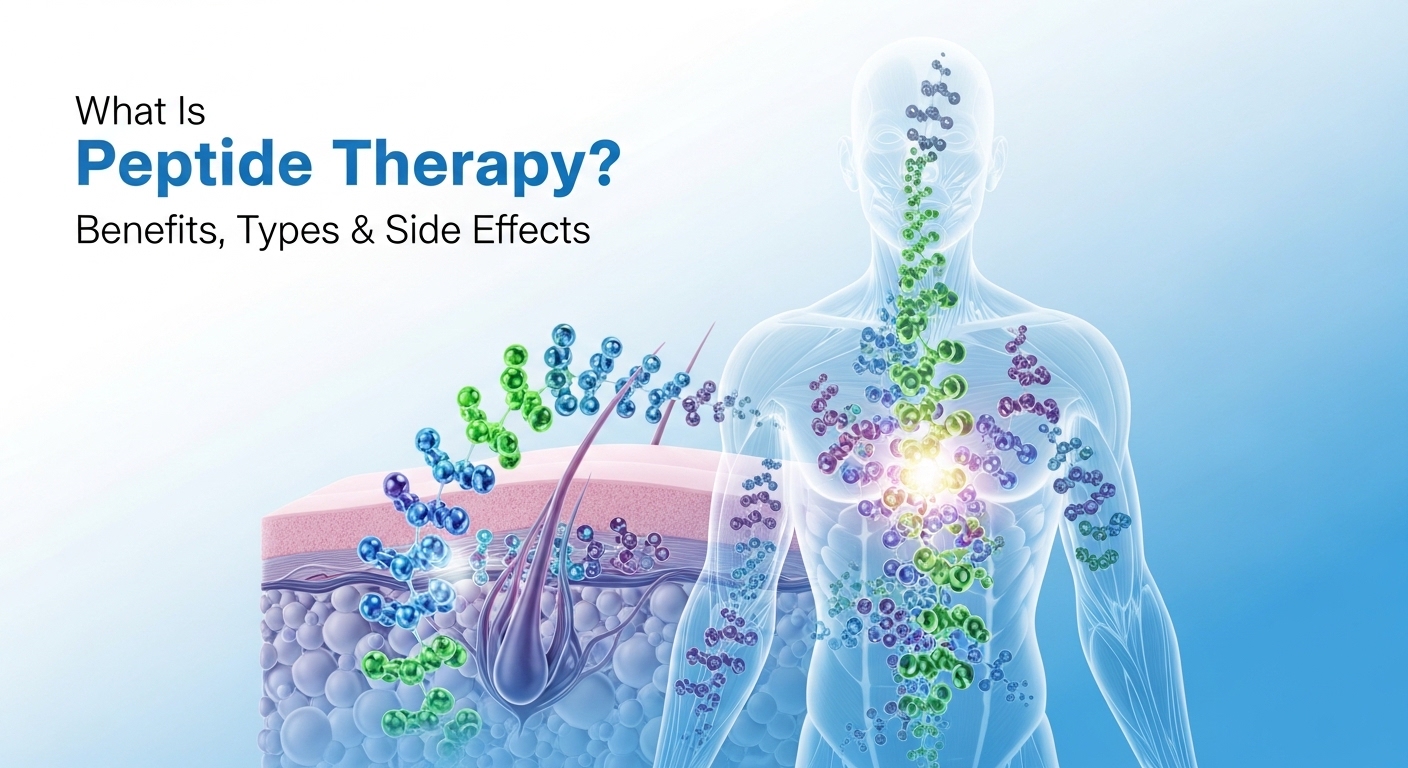
What Is Peptide Therapy? Benefits, Types & Side Effects 2026
Disclaimer: betterresultsbook.com contains information about products that are intended for laboratory and research use only, unless otherwise explicitly stated. This information, including any referenced scientific or clinical research, is made available for educational purposes only. Likewise, any published information relative to the dosing and administration of reference materials is made available strictly for reference and shall not be construed to encourage the self-administration or any human use of said reference materials. betterresultsbook.com makes every effort to ensure that any information it shares complies with national and international standards for clinical trial information and is committed to the timely disclosure of the design and results of all interventional clinical studies for innovative treatments publicly available or that may be made available. However, research is not considered conclusive. betterresultsbook.com makes no claims that any products referenced can cure, treat or prevent any conditions, including any conditions referenced on its website or in print materials.
If you have been researching anti-aging treatments, weight loss options, or athletic recovery solutions, you have likely come across the term peptide therapy. It seems to be everywhere in 2026, from wellness clinics to celebrity podcasts.
Peptide therapy is a medical treatment that uses short chains of amino acids called peptides to restore and enhance specific bodily functions, including muscle growth, fat loss, injury healing, and hormone regulation.
I have spent considerable time researching peptide therapy, reviewing clinical studies, and examining what users report across medical forums and wellness communities. In this guide, I will break down exactly what peptide therapy is, how it works, the different types of peptides used, and what you should know before considering this treatment.
What Is Peptide Therapy?
Peptide Therapy: A medical treatment using short chains of amino acids (peptides) to signal the body to perform specific functions like building muscle, burning fat, repairing tissues, or regulating hormones by mimicking natural biological processes.
Peptides are naturally occurring molecules in your body. They consist of 2 to 50 amino acids linked together in a chain. Think of them as smaller versions of proteins, which typically contain 50 or more amino acids.
Your body produces thousands of different peptides. Each one acts as a signaling molecule, telling your cells to perform specific actions. Some peptides trigger muscle growth. Others regulate metabolism. Some control inflammation and healing.
The problem is that natural peptide production declines with age. By the time you reach your 40s and 50s, your body may produce significantly less of certain peptides. This decline may contribute to symptoms like slower recovery, reduced muscle mass, weight gain, and decreased energy.
Peptide therapy works by supplementing your body with specific peptides to restore or enhance these natural processes. Unlike synthetic hormones, peptides work with your body’s existing systems rather than replacing them entirely.
How Peptide Therapy Works?
Peptides work by binding to specific receptors on cell surfaces. This binding triggers a cascade of signals that instruct cells to perform certain actions.
Here is how the process typically works:
- Administration: Peptides enter your bloodstream through injection, oral capsule, nasal spray, or topical application
- Receptor Binding: The peptide molecules find and attach to specific cell receptors
- Signal Cascade: This binding triggers a chain reaction of cellular signals
- Cellular Response: Cells respond by producing hormones, repairing tissue, or performing other targeted functions
- Systemic Effects: These cellular changes produce the desired therapeutic effects throughout your body
Different peptides target different receptors. Growth hormone releasing peptides like Sermorelin bind to receptors in the pituitary gland, signaling increased growth hormone production. Healing peptides like BPC-157 may work by promoting blood vessel formation and reducing inflammation at injury sites.
The specificity of peptides is what makes them attractive for therapeutic use. Rather than flooding your system with hormones, peptides may encourage your body to produce and regulate its own natural compounds more effectively.
Types of Peptides Used in Therapy
There are many peptides used therapeutically in 2026. Based on my research, here are the most common peptides you will encounter:
| Peptide | Primary Use | Administration | FDA Status |
|---|---|---|---|
| BPC-157 | Healing and tissue repair | Injection, oral | Not FDA approved |
| Sermorelin | Growth hormone stimulation | Subcutaneous injection | FDA approved for diagnostic use |
| CJC-1295 | Sustained growth hormone release | Subcutaneous injection | Not FDA approved |
| Ipamorelin | Growth hormone release | Subcutaneous injection | Not FDA approved |
| GHK-Cu | Skin health and anti-aging | Topical, injection | Not FDA approved |
| TB-500 | Tissue repair and recovery | Injection | Not FDA approved |
| Semaglutide | Weight loss, diabetes | Injection, oral | FDA approved |
| Tirzepatide | Weight loss, diabetes | Injection | FDA approved |
BPC-157 (Body Protection Compound-157)
BPC-157 is perhaps the most discussed peptide in wellness communities. It is derived from a protein found in gastric juice and has gained attention for its potential healing properties.
Based on animal studies, BPC-157 may help with tendon and muscle healing, gut health, and reducing inflammation. However, there are limited human clinical trials, so much of the evidence remains preliminary. This peptide is notably mentioned by podcasters like Joe Rogan for injury recovery.
Sermorelin
Sermorelin is a growth hormone releasing hormone (GHRH) analog. It stimulates the pituitary gland to produce and release growth hormone naturally.
Users report benefits including improved sleep quality, increased muscle mass, reduced body fat, and enhanced recovery. Sermorelin is FDA approved for diagnostic purposes in assessing growth hormone function, making it one of the more established peptides available.
CJC-1295 and Ipamorelin
These peptides are often combined because they work synergistically. CJC-1295 provides sustained growth hormone release while Ipamorelin triggers growth hormone pulses.
The combination may support muscle growth, fat loss, improved sleep, and anti-aging effects. Neither peptide is FDA approved, so they are typically obtained through compounding pharmacies.
GHK-Cu (Copper Peptide)
GHK-Cu is a copper-binding peptide naturally present in human plasma. It is popular in skincare due to research suggesting it may stimulate collagen production and improve skin elasticity.
Beyond topical applications, some practitioners use injectable GHK-Cu for systemic anti-aging effects. Studies suggest it may help with wound healing and hair growth.
TB-500 (Thymosin Beta-4)
TB-500 is a synthetic version of Thymosin Beta-4, a protein involved in tissue repair. It has been studied for its potential to promote healing of muscles, tendons, and ligaments.
Athletes and fitness enthusiasts often explore TB-500 for injury recovery. However, like BPC-157, human research is limited.
Semaglutide and Tirzepatide
These are the only FDA-approved peptides on this list for their primary therapeutic uses. Semaglutide (brand names Wegovy, Ozempic) and Tirzepatide (Mounjaro, Zepbound) are GLP-1 receptor agonists used for weight loss and diabetes management.
Clinical trials have demonstrated significant weight loss results, with semaglutide showing average weight loss of 15% of body weight and tirzepatide showing up to 20% or more in some studies.
Benefits of Peptide Therapy
Peptide therapy may offer a range of potential benefits depending on the specific peptides used. Based on available research and user reports, here are the main benefit categories:
Anti-Aging and Skin Health
- Collagen production: Peptides like GHK-Cu may stimulate collagen synthesis
- Skin elasticity: Users report improved skin texture and firmness
- Reduced wrinkles: Some peptides may help minimize fine lines
- Hair growth: Certain peptides have shown potential for hair restoration
Muscle Growth and Athletic Performance
- Increased muscle mass: Growth hormone peptides may support lean muscle development
- Enhanced recovery: Faster healing between workouts
- Improved strength: Users report strength gains over time
- Better endurance: Some peptides may support cardiovascular function
Weight Management
- Fat loss: Growth hormone peptides may help reduce body fat percentage
- Appetite regulation: GLP-1 peptides like semaglutide reduce hunger signals
- Metabolic boost: Some peptides may increase metabolic rate
Healing and Recovery
- Injury repair: BPC-157 and TB-500 are studied for tissue healing
- Reduced inflammation: Certain peptides may have anti-inflammatory effects
- Gut health: Some peptides may support digestive tract healing
Important: Many of these benefits are based on animal studies or user reports rather than large-scale human clinical trials. Results may vary, and not all claimed benefits have strong scientific evidence.
How Peptides Are Administered?
Peptides can be administered through several methods depending on the specific peptide and treatment goals:
Subcutaneous Injection
This is the most common method for peptide therapy. A small needle delivers the peptide just under the skin, typically in the abdomen or thigh. Most growth hormone peptides and healing peptides use this method.
Based on forum discussions, many people initially feel nervous about self-injection. However, most users report it becomes routine within a few weeks. The needles are very small, similar to those used for insulin.
Oral Administration
Some peptides are available in oral form, including certain formulations of BPC-157 and semaglutide (Rybelsus). Oral peptides may have lower bioavailability since digestive enzymes can break them down before absorption.
Topical Application
Peptides like GHK-Cu are often applied topically in skincare products. This method targets local effects on the skin without systemic absorption.
Nasal Spray
Some peptides are available as nasal sprays, which may offer better absorption than oral forms while avoiding injection.
Side Effects and Potential Risks
Like any medical treatment, peptide therapy carries potential side effects and risks. Transparency about these risks is essential for informed decision-making.
Common Side Effects
- Injection site reactions: Redness, swelling, or irritation at injection sites
- Water retention: Some growth hormone peptides may cause temporary fluid retention
- Headaches: Reported by some users, especially initially
- Fatigue: May occur during the adjustment period
- Nausea: Common with GLP-1 peptides like semaglutide
Serious Risks and Considerations
- Unregulated products: Peptides from unreliable sources may be contaminated or underdosed
- Limited long-term data: Many peptides lack long-term safety studies
- Drug interactions: Peptides may interact with other medications
- Hormone imbalance: Improper use could disrupt natural hormone production
- Cancer concerns: Growth hormone peptides have theoretical cancer risk concerns, though evidence is limited
Warning: Always obtain peptides from reputable sources with proper medical supervision. Products from unverified overseas suppliers may pose significant health risks.
FDA Approval and Regulation
Understanding the regulatory landscape is crucial when considering peptide therapy. Not all peptides are created equal from a regulatory standpoint.
FDA-Approved Peptides
Several peptides have received FDA approval for specific medical uses:
- Semaglutide: Approved for type 2 diabetes (Ozempic) and weight management (Wegovy)
- Tirzepatide: Approved for type 2 diabetes (Mounjaro) and weight management (Zepbound)
- Sermorelin: Approved for diagnostic testing of growth hormone function
- Insulin and other peptide hormones: Long-established FDA-approved treatments
Non-Approved Peptides
Many popular peptides like BPC-157, CJC-1295, Ipamorelin, and TB-500 are not FDA approved. These are typically obtained through compounding pharmacies, which can legally prepare custom medications under certain conditions.
The lack of FDA approval does not necessarily mean a peptide is ineffective or dangerous. It means the peptide has not undergone the rigorous clinical trial process required for FDA approval.
Note: Compounded medications are not FDA-approved and may not be available in all states. Always work with a licensed healthcare provider when considering peptide therapy.
Frequently Asked Questions
Are peptides like steroids?
No, peptides are not steroids. Steroids are synthetic versions of hormones that directly replace natural hormone production, while peptides signal your body to produce its own hormones naturally. Peptides work with your body’s existing systems rather than overriding them. However, both may have overlapping uses in athletic performance and muscle building.
How much does peptide therapy cost?
Peptide therapy costs vary widely depending on the specific peptide and provider. Growth hormone peptides like Sermorelin or CJC-1295/Ipamorelin typically cost $200-500 per month. FDA-approved peptides like semaglutide may cost $900-1,300 per month without insurance, or $0-50 with coverage. Compounded versions may cost $150-400 per month.
Is peptide therapy FDA approved?
Some peptides are FDA approved while many are not. Semaglutide, tirzepatide, and insulin are FDA-approved peptide medications. However, popular peptides like BPC-157, CJC-1295, and TB-500 are not FDA approved for therapeutic use. Non-approved peptides are typically obtained through compounding pharmacies under medical supervision.
How quickly do you see results from peptides?
Results timeline varies by peptide type. GLP-1 peptides like semaglutide may show weight loss results within 4-8 weeks. Growth hormone peptides typically require 3-6 months for noticeable changes in body composition. Healing peptides like BPC-157 may show improvement in injury recovery within 2-4 weeks, according to user reports.
What peptide does Joe Rogan take?
Joe Rogan has publicly discussed using BPC-157 for injury recovery and healing. He has mentioned using it for shoulder and other injuries on his podcast. BPC-157 is popular in the wellness community for its potential tissue repair benefits, though human clinical research remains limited.
What are the risks of peptide therapy?
Risks include injection site reactions, water retention, headaches, and nausea. More serious concerns include contaminated products from unreliable sources, drug interactions, potential hormone imbalances, and limited long-term safety data for many peptides. Always work with a licensed healthcare provider and obtain peptides from reputable sources.
The Bottom Line on Peptide Therapy
Peptide therapy represents an evolving area of medicine with genuine potential for anti-aging, healing, weight management, and performance optimization. Some peptides like semaglutide and tirzepatide have strong clinical evidence and FDA approval. Others like BPC-157 and growth hormone peptides show promise but lack extensive human research.
If you are considering peptide therapy, the key is working with a qualified healthcare provider who can assess your individual needs, recommend appropriate peptides, and monitor your progress. Avoid unverified sources and be realistic about expected results.
Disclaimer: This article is for informational purposes only and does not constitute medical advice. Peptide therapy should only be pursued under the guidance of a licensed healthcare provider. Always consult with a qualified medical professional before starting any new treatment. Compounded medications are not FDA-approved and availability may vary by state.