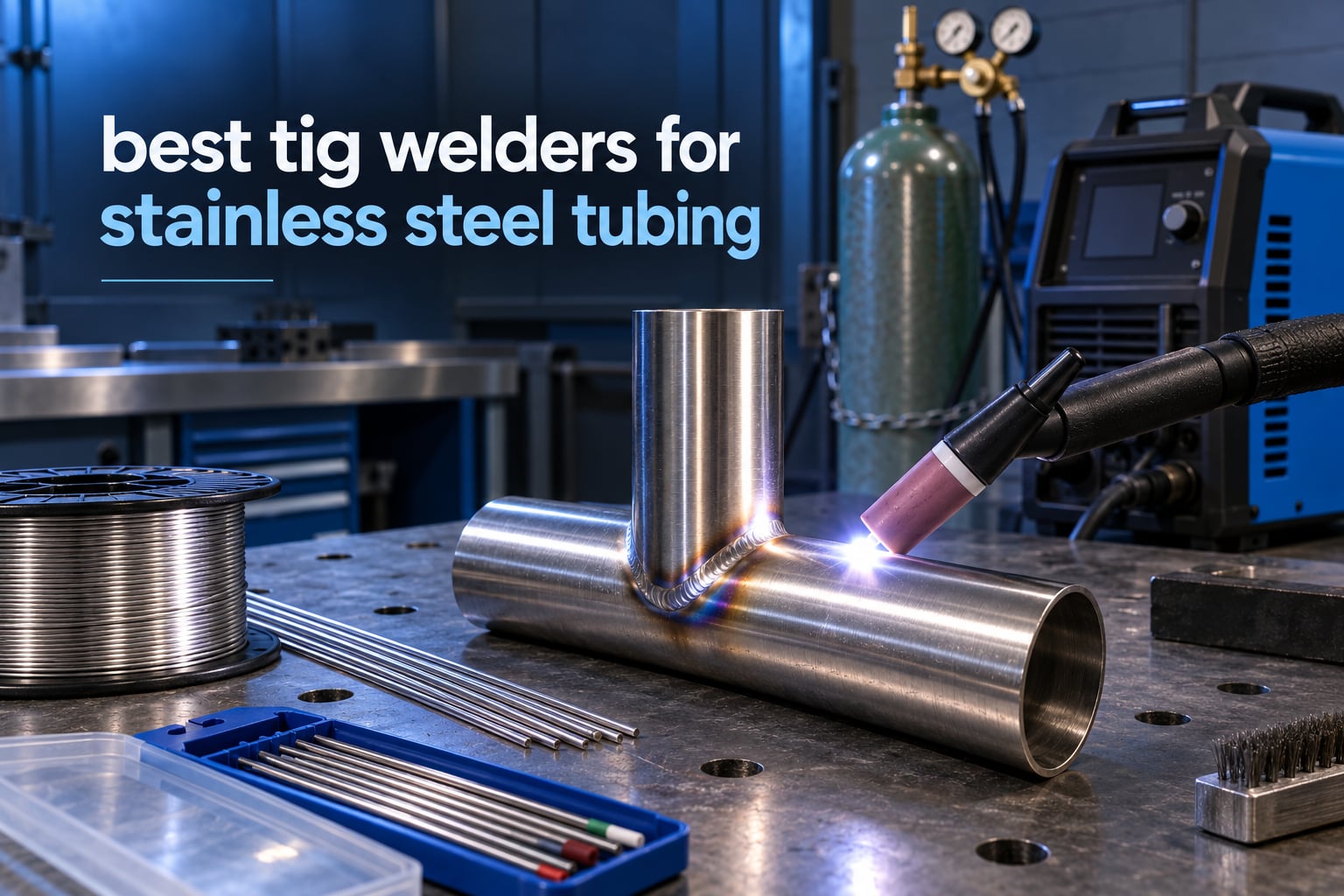
A good TIG welder for stainless steel tubing is an AC/DC inverter power source that delivers clean, controllable direct current (DCEN, or straight polarity), starts the arc without touching the tungsten, and lets you hold a stable arc from roughly 5 amps up to full output. For tube work, the four specs that actually decide the outcome are minimum controllable DC amps, a foot pedal you can feather, an adjustable post-flow timer of at least 8 seconds, and dual 110V/220V input. Pulse is a bonus, not a requirement.
That is the short answer to what is a good TIG welder for stainless steel. Stainless tube is welded on DC because you want two-thirds of the arc heat in the work and one-third in the tungsten. AC exists to break up the oxide film on aluminium and magnesium, and on stainless it just makes the puddle wander.
Below is our roundup of the best tig welders for stainless steel tubing, ten machines we looked at closely against the criteria tube work actually demands. We weighted minimum amps and post-flow control far above headline amperage, because nobody has ever burned through 304 tube because their machine was 25 amps short. They have burned through it because the arc would not hold below 15 amps, or because the gas stopped before the bead stopped glowing.
Stainless tubing is also the least forgiving material in the shop. It conducts heat along the length of the tube, has almost no mass to soak that heat up, and glows visibly the instant you are moving too fast. The skill curve is real but it is not the machine’s fault, and a good power source simply gives you the control surface to manage it.
ContentsTable of Contents
- 1Top 3 Picks for Stainless Steel Tubing→
- 2PRIMEWELD TIG225X→
- 3Weldpro 200A AC/DC→
- 4AHP AlphaTIG 203Xi→
- 5All 10 Machines Side by Side in 2026→
- 61. PRIMEWELD TIG225X: Best Overall for Stainless Tube→
- 7PRIMEWELD TIG225X 225 Amp IGBT AC DC Tig/Stick Welder with Pulse CK17 Flex Torch and Cable→
- 8Pros→
- 9Cons→
- 10What you get at low amperage→
- 11When to pick something else→
- 122. Weldpro 200A AC/DC: Best All-Round Value→
- 13Weldpro 200A AC/DC TIG Welder with Pulse, 110V/220V Dual Voltage Aluminum TIG Welder, AC TIG/DC TIG/AC PULSE TIG/DC PULSE TIG/Stick 5 in 1 Multiprocess Welding Machine with TIG Torch & Foot Pedal→
- 14Pros→
- 15Cons→
- 16Why the pulse controls matter on tube→
- 17Where it falls short→
- 183. AHP AlphaTIG 203Xi: Top Rated Shop Machine→
- 19NEW 2024 AHP AlphaTIG 203Xi Amp IGBT AC DC Tig/Stick Welder with PULSE 110/220v 3 YEARS WARRANTY→
- 20Pros→
- 21Cons→
- 22Support and parts as a real buying factor→
- 23When 10 amps is too low→
- 244. Everlast PowerTIG 200DV: Best Low-Amp Start for Thin Tube→
- 25New Everlast PowerTIG 200DV 110/220 Dual Voltage 200amp Pulse ACDC Welder→
- 26Pros→
- 27Cons→
- 28Why the low-amp floor changes your tube work→
- 29When a bigger machine makes more sense→
- 305. LOTOS TIG200ACDC: Most Versatile with Real AC Output→
- 31LOTOS TIG200ACDC 200A AC/DC Aluminum Tig Welder with DC Stick/Arc Welder, Square Wave Inverter with Foot Pedal and Argon Regulator 110/220V Dual Voltage Brown→
- 32Pros→
- 33Cons→
- 34Where the money is really saved→
- 35When to look elsewhere→
- 366. YESWELDER TIG-205P: Best Portable DC-Only Machine→
- 37YESWELDER 205A Tig Welder Pulse STICK/DC TIG/PULSE TIG 3 in 1 TIG-205P→
- 38Pros→
- 39Cons→
- 40What DC-only really costs you→
- 41Plan the consumables→
- 427. ARCCAPTAIN TIG200: Lightest Tube Machine Here→
- 43ARCCAPTAIN 200A TIG Welder, 110V/220V TIG/Stick 2 IN 1 Welding Machine→
- 44Pros→
- 45Cons→
- 46Stainless work is what it is built for→
- 47Where you will want to upgrade→
- 488. Sunstac 250A: Most Modes in One Chassis→
- 49Sunstac 250A Aluminum TIG Welder with Pulse ACDC Foot Pedal Control→
- 50Pros→
- 51Cons→
- 52Read the AC measurement caveat→
- 53Early reviews are mixed→
- 549. ARCCAPTAIN TIG 205P Pro: Best App-Controlled Setup→
- 55ARCCAPTAIN TIG 205P Pro Pulse Welder, 5 In 1 Welding Machine, 120V/240V→
- 56Pros→
- 57Cons→
- 58What the app does and does not do→
- 59Known gaps→
- 6010. Everlast PowerTIG 255EXT: Best for Production Tube Runs→
- 61Everlast PowerTIG 255EXT Digital AC/DC TIG Stick Pulse Inverter Welder 110v/220v Dual Voltage→
- 62Pros→
- 63Cons→
- 64Where the specification earns its cost→
- 65When it is the wrong purchase→
- 66How to Match a Welder to Your Tubing→
- 67AC vs DC for Stainless Tubing: Why DCEN and When AC Matters→
- 68Low-Amp Reality Check: Why Thin Tube Burns Through→
- 69Back Purging Stainless Tube Without Guesswork→
- 70Essential Gear Beyond the Welder→
- 71Frequently Asked Questions→
- 72Do you use AC or DC to TIG weld stainless steel?→
- 73What type of welder is best for welding stainless steel?→
- 74What gas should I use for TIG welding stainless steel?→
- 75Do I need to back purge when TIG welding stainless steel tubing?→
- 76How much amperage for 18 gauge stainless tubing?→
- 77Can you TIG weld stainless tubing without filler rod?→
- 78What filler rod should I use for stainless tubing?→
- 79Why does my TIG weld burn through thin stainless tubing?→
- 80What size tungsten for stainless TIG?→
- 81Is TIG the hardest form of welding?→
- 82Final Verdict: Our Picks for Stainless Steel Tubing in 2026→
Top 3 Picks for Stainless Steel Tubing

PRIMEWELD TIG225X
- 225A AC/DC TIG with pulse
- CK17 Superflex torch included
- 200Hz pulse and AC frequency
- HF start plus foot pedal
- 90 lbs IGBT inverter

Weldpro 200A AC/DC
- 5-in-1 multiprocess
- 110/220V auto-detect
- 0.5-200Hz pulse control
- Adjustable AC balance
- 61.8 lbs
AHP AlphaTIG 203Xi
- 203A AC/DC TIG with pulse
- 110/220V dual voltage
- HV start plus foot pedal
- High visibility LCD
- 3-year warranty
As an Amazon Associate we earn from qualifying purchases. CERTAIN CONTENT THAT APPEARS ON THIS SITE COMES FROM AMAZON. THIS CONTENT IS PROVIDED 'AS IS' AND IS SUBJECT TO CHANGE OR REMOVAL AT ANY TIME.
All 10 Machines Side by Side in 2026
The table below is the short version. Every machine listed runs DC TIG, and every one of them can start an arc without touching the tungsten. What separates them is how low the amperage goes, whether post-flow is adjustable, and how heavy the box is when you have to carry it to the job.
| # | Product | Key details | Where to buy |
|---|---|---|---|
| 1 | PRIMEWELD TIG225X |
|
Check Latest Price |
| 2 | Weldpro 200A AC/DC TIG |
|
Check Latest Price |
| 3 | AHP AlphaTIG 203Xi |
|
Check Latest Price |
| 4 |  Everlast PowerTIG 200DV Everlast PowerTIG 200DV |
|
Check Latest Price |
| 5 |  LOTOS TIG200ACDC LOTOS TIG200ACDC |
|
Check Latest Price |
| 6 |  YESWELDER TIG-205P YESWELDER TIG-205P |
|
Check Latest Price |
| 7 |  ARCCAPTAIN TIG200 ARCCAPTAIN TIG200 |
|
Check Latest Price |
| 8 |  Sunstac 250A ACDC Sunstac 250A ACDC |
|
Check Latest Price |
| 9 |  ARCCAPTAIN TIG 205P Pro ARCCAPTAIN TIG 205P Pro |
|
Check Latest Price |
| 10 |  Everlast PowerTIG 255EXT Everlast PowerTIG 255EXT |
|
Check Latest Price |
We earn from qualifying purchases. CERTAIN CONTENT THAT APPEARS ON THIS SITE COMES FROM AMAZON. THIS CONTENT IS PROVIDED 'AS IS' AND IS SUBJECT TO CHANGE OR REMOVAL AT ANY TIME.
1. PRIMEWELD TIG225X: Best Overall for Stainless Tube
PRIMEWELD TIG225X 225 Amp IGBT AC DC Tig/Stick Welder with Pulse CK17 Flex Torch and Cable
- 225A AC/DC TIG and stick
- 200Hz pulse and AC frequency
- CK17 Superflex torch included
- 90 lbs
Pros
- CK Worldwide 17 Series Superflex torch ships in the box
- 200Hz pulse frequency for fine heat control
- HF start and foot pedal control both standard
- Handles stainless
- aluminium and thinner metals
- 4.8 stars across 1426 reviews
Cons
- Heavy at 90 lbs
- Not the lightest option for field work
- Foot pedal feel is the usual budget-inverter compromise
We earn a commission, at no additional cost to you. CERTAIN CONTENT THAT APPEARS ON THIS SITE COMES FROM AMAZON. THIS CONTENT IS PROVIDED 'AS IS' AND IS SUBJECT TO CHANGE OR REMOVAL AT ANY TIME.
Best for: 304 and 316 tube up to 14 gauge, plus handrails and general shop fabrication where one machine has to cover stainless, aluminium and stick.
The TIG225X is the machine we keep coming back to for tube, and the reason is the torch. A CK Worldwide 17 Series Superflex with a flex head is included, which means the consumable ecosystem is the most common one in the industry. A collet, a cup, or a cap costs a few dollars and arrives in a day rather than becoming a six-week wait for a proprietary part.
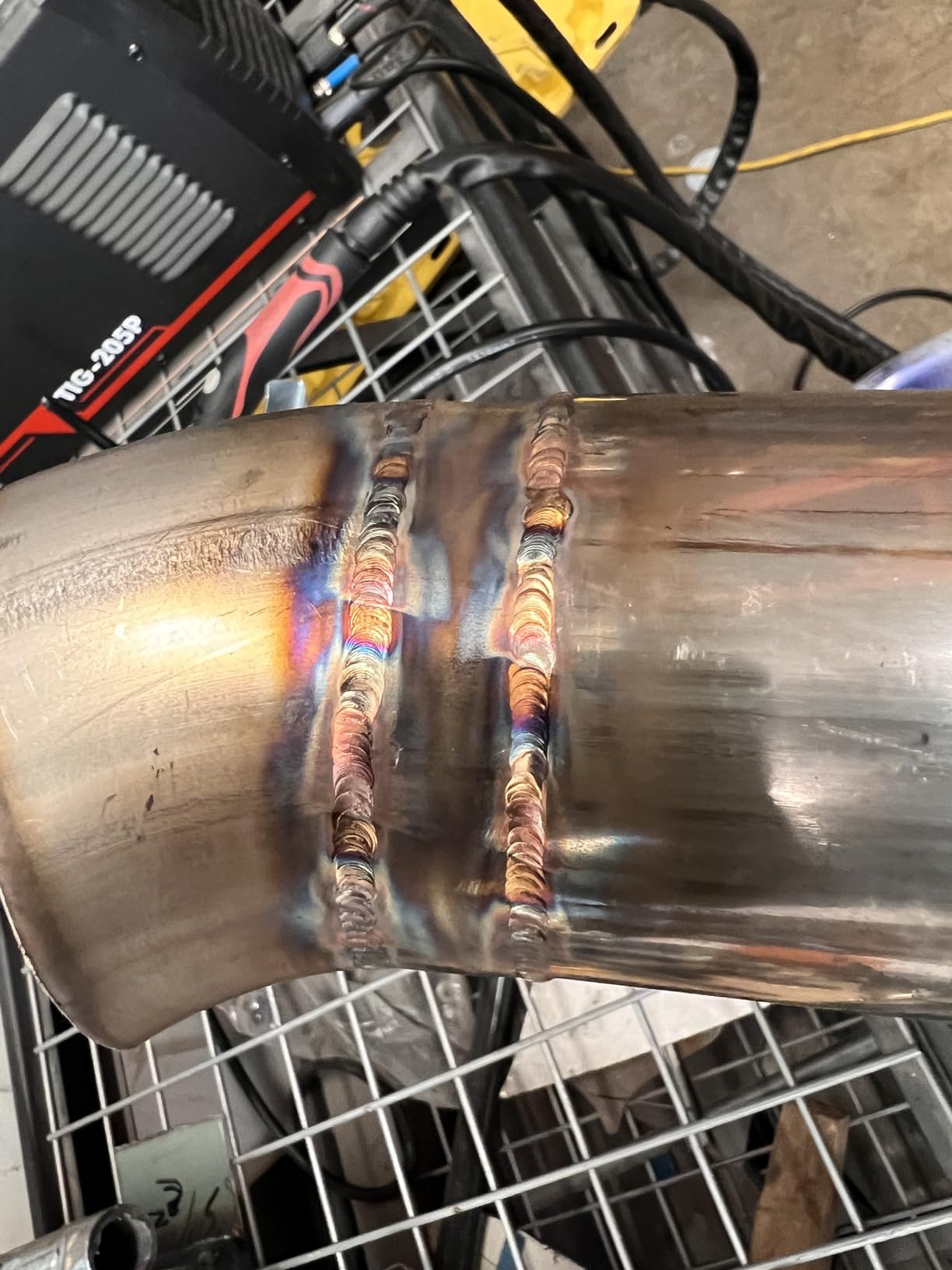
For stainless tube specifically, the 200Hz pulse frequency and adjustable AC frequency give you more control than most machines at this level. On DC you are really using that pulse range to thin the heat input on 18 and 20 gauge, where the puddle needs to be walked rather than flooded.
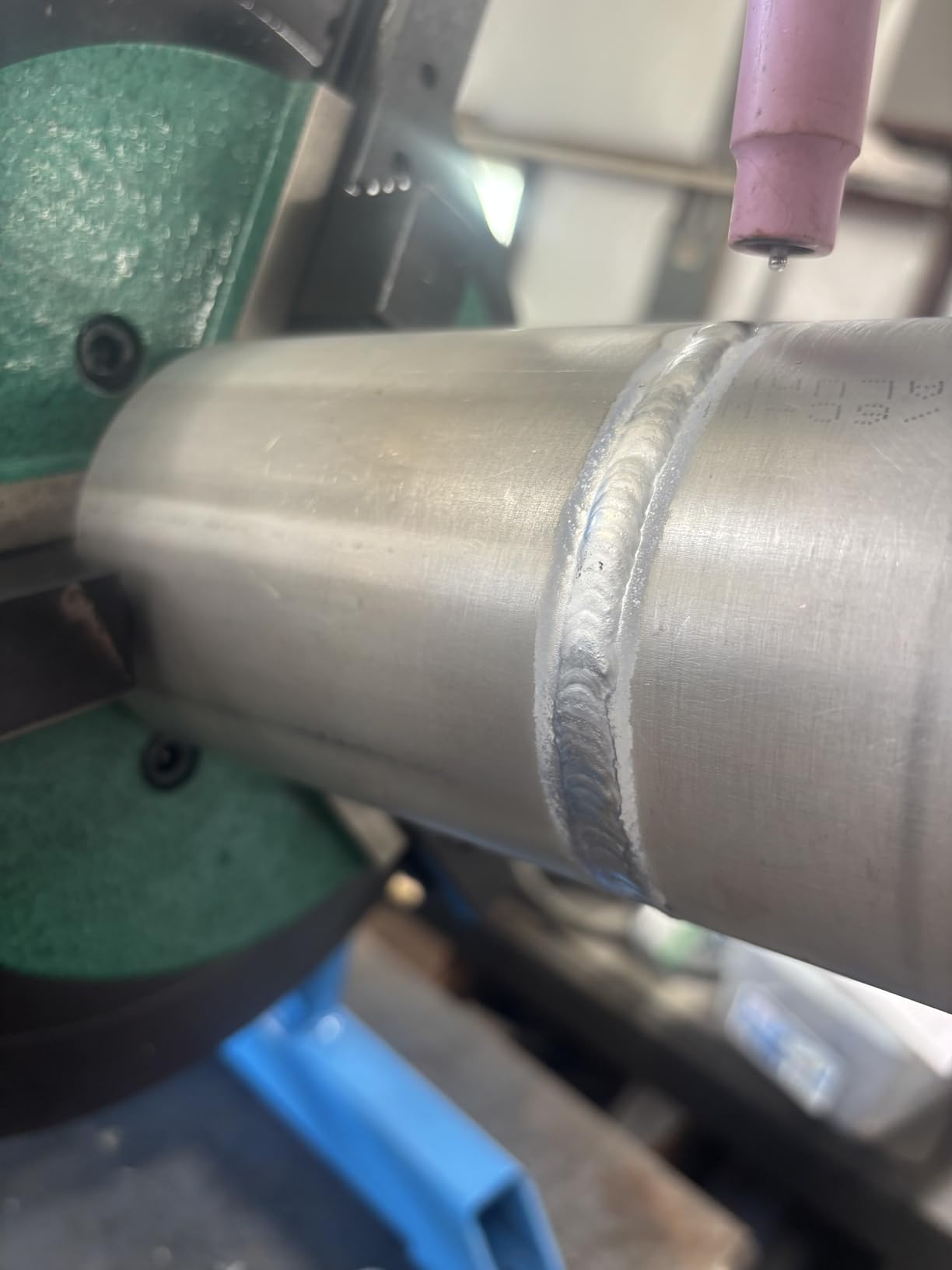
HF start and foot pedal control are both standard, which is the pairing that tube work demands. HF start gets the arc without a scratch, and the foot pedal is your throttle. With 90 percent of the reviews landing at five stars across more than 1400 write-ups, the arc consistency at mid-range amperage is clearly doing what it should on 304 and 316.
The 90-pound weight is the honest drawback. It is a shop machine, not a field machine, and anyone lifting it onto a truck bed for a one-off repair will feel every pound of it.
What you get at low amperage
The test that matters on tube is the puddle at 10 to 25 amps, not the bead at 200. This machine holds a narrow, controllable arc in that range, which is exactly what lets you creep along 18 gauge without punching through the far wall.
Adjustable post-flow keeps argon on the cooling bead, and on stainless that delay is what stops the last inch of a hot bead from going grey and fuzzy. Run a documented starting point of about 46 amps on 14 gauge with 1/16 inch lanthanated tungsten and 1/16 inch filler, two seconds of pre-flow and eight seconds of post-flow, and adjust from there.
When to pick something else
If you are doing production tube runs all day and need a water-cooled torch, the Everlast PowerTIG 255EXT further down is the better tool. It is a much bigger machine for a much bigger job.
If you are working far from a wall outlet and the machine has to travel, 90 pounds is real. The lighter DC-only units on this list handle the same stainless with far less strain on your back.
We earn a commission, at no additional cost to you. CERTAIN CONTENT THAT APPEARS ON THIS SITE COMES FROM AMAZON. THIS CONTENT IS PROVIDED 'AS IS' AND IS SUBJECT TO CHANGE OR REMOVAL AT ANY TIME.
2. Weldpro 200A AC/DC: Best All-Round Value
Weldpro 200A AC/DC TIG Welder with Pulse, 110V/220V Dual Voltage Aluminum TIG Welder, AC TIG/DC TIG/AC PULSE TIG/DC PULSE TIG/Stick 5 in 1 Multiprocess Welding Machine with TIG Torch & Foot Pedal
- 200A 5-in-1 multiprocess
- 0.5-200Hz pulse control
- 110/220V auto-detect
- 61.8 lbs
Pros
- Five processes in one chassis including AC and DC pulse TIG
- Full pulse control from 0.5 to 200Hz with peak amperage
- upslope and downslope
- Adjustable AC balance and frequency for aluminium work
- Foot pedal and accessory kit included
- 2T/4T trigger modes
- 61.8 lbs is manageable for a shop machine
Cons
- 40 percent duty cycle at full 200A output
- Learning curve for beginners on the parameter setup
- 61.8 lbs still needs two hands to move
We earn a commission, at no additional cost to you. CERTAIN CONTENT THAT APPEARS ON THIS SITE COMES FROM AMAZON. THIS CONTENT IS PROVIDED 'AS IS' AND IS SUBJECT TO CHANGE OR REMOVAL AT ANY TIME.
Best for: fabricators who weld stainless tube today and aluminium tomorrow, and who want one box instead of two.
The Weldpro 200A is the most complete machine in this roundup on paper. Five processes, full 0.5 to 200Hz pulse with independent peak and background current, adjustable AC balance, adjustable frequency, upslope and downslope control. For stainless tubing, the upslope and downslope settings are quietly the most useful part, because they soften the arc start and let the puddle taper instead of crashing into the wall.
It auto-detects 110V and 220V, which removes the single most common frustration for anyone running a machine in a garage one day and a proper shop circuit the next. The foot pedal and a full accessory kit are in the box.
The 40 percent duty cycle at 200A is the spec to watch, and it matters more on tube than people expect. Thin tube work runs at a fraction of full output, so you will rarely approach the thermal limit. Thicker stainless or aluminium work at high amperage for long stretches is where the duty cycle becomes the limiting factor.
At 61.8 pounds it is roughly a third lighter than the PRIMEWELD, which matters if the machine lives in a van rather than a corner of a shop.
Why the pulse controls matter on tube
Pulse TIG on stainless tubing is not a spec-sheet decoration. On 20 and 22 gauge material, setting a peak current and a lower background current gives you a pulsing puddle that stays small and moves forward on its own instead of sagging into the tube.
That is what turns a frustrating root pass into a repeatable one, particularly on autogenous work where there is no filler to slow the puddle down. Uphill beads on vertical tube benefit from the same trick.
Where it falls short
Beginners report a real learning curve on the parameter setup, and the menu-driven controls take an afternoon to feel natural. If you want a box you can learn in an hour, the simpler knob layouts here are friendlier.
For continuous heavy work, the duty cycle is the honest limit. Plan on cooling breaks rather than long production runs at full output.
We earn a commission, at no additional cost to you. CERTAIN CONTENT THAT APPEARS ON THIS SITE COMES FROM AMAZON. THIS CONTENT IS PROVIDED 'AS IS' AND IS SUBJECT TO CHANGE OR REMOVAL AT ANY TIME.
3. AHP AlphaTIG 203Xi: Top Rated Shop Machine
NEW 2024 AHP AlphaTIG 203Xi Amp IGBT AC DC Tig/Stick Welder with PULSE 110/220v 3 YEARS WARRANTY
- 203A AC/DC TIG and stick
- 110/220V dual voltage
- HF and HV start
- 3-year warranty
Pros
- Three-year warranty with US-based support
- Strong stick performance in addition to TIG
- Pulse function for thinner gauge work
- Simple knob-based controls that are easy to learn
- High visibility LCD screen
- 69 lbs
Cons
- Minimum TIG output of 10A limits very thin material
- Digital readout can disagree with the knob on 120V
- Ground clamp quality is a known weak spot
We earn a commission, at no additional cost to you. CERTAIN CONTENT THAT APPEARS ON THIS SITE COMES FROM AMAZON. THIS CONTENT IS PROVIDED 'AS IS' AND IS SUBJECT TO CHANGE OR REMOVAL AT ANY TIME.
Best for: shop owners who want a supported, warranty-backed machine that handles stainless tube and still has a usable stick mode for everything else.
The AlphaTIG 203Xi has been around long enough that its owner base has moved past the early teething problems. Reviews consistently praise the stick side, which is unusual for a machine sold as a TIG unit. That dual capability is genuinely useful in a fabrication shop, since most tube jobs involve some mild steel work on the jig or the frame.
The current model generation added an HV start option alongside the conventional high-frequency start, and the 110/220V dual voltage plus included foot pedal and torch make it a complete package out of the box. A three-year warranty is the longest in this roundup, and the brand is US-based with parts readily available.
The 10-amp minimum TIG output is the detail that deserves attention if you are welding 20 gauge or thinner. It is a floor, not a ceiling, so your usable range for delicate tube work starts higher than on machines that reach 5 amps or 3 amps. For 18 gauge and heavier, it makes no practical difference.
Two other quirks come up repeatedly: the digital readout does not always match the knob position on 120V, and the included ground clamp is the weak link in the box. Both are cheap to fix and neither affects weld quality.
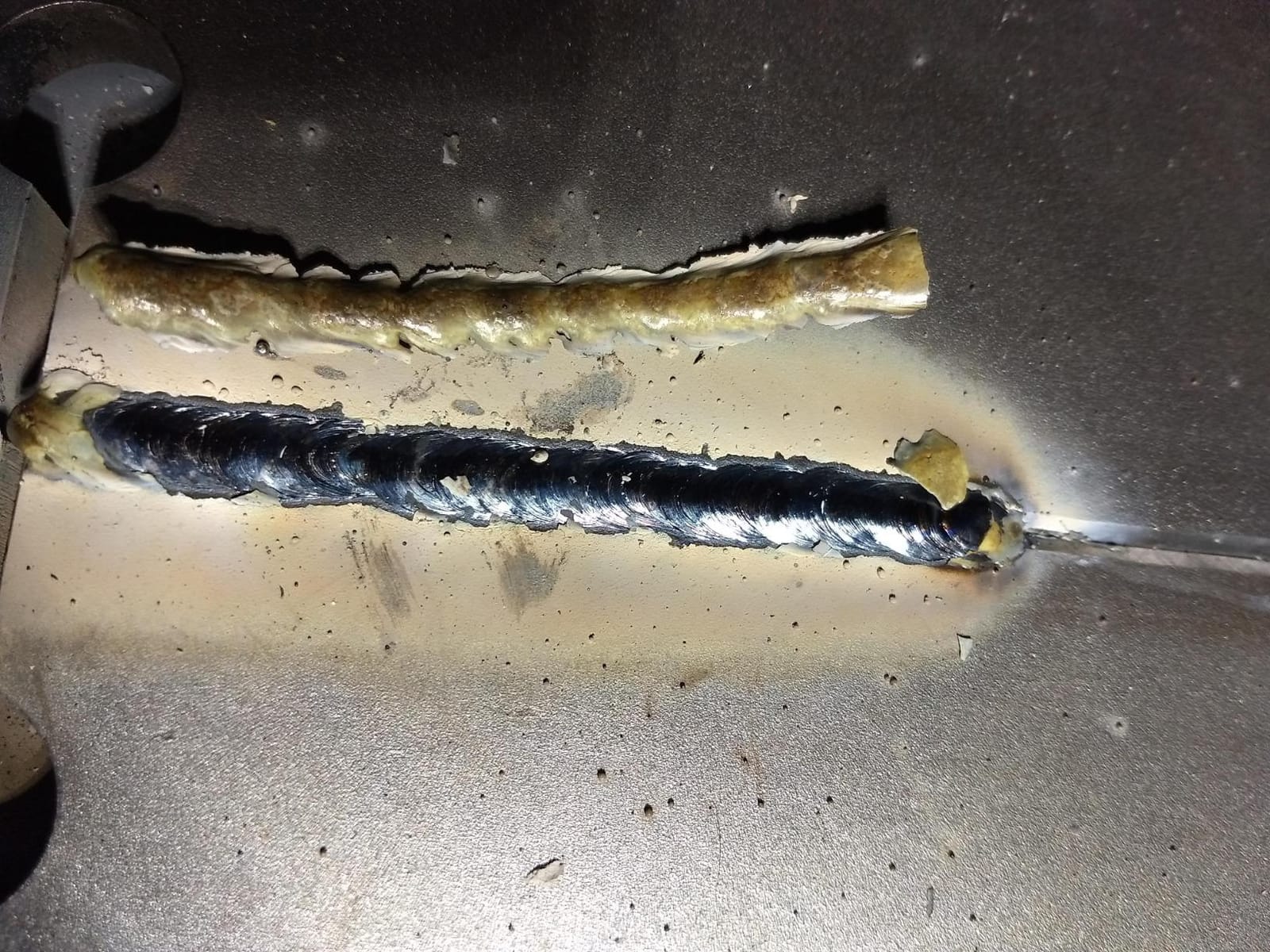
Support and parts as a real buying factor
Welding machine forums are consistent about one thing: a brand with responsive US-based support and an available parts pipeline costs far less in frustration than its sticker price suggests it should. AHP ships from the US, carries a three-year warranty, and its consumables are common enough to source quickly.
Reviewers do note that customer support can be slow during peak periods. If you are running a deadline, confirm the warranty terms and parts availability before you commit rather than after.
When 10 amps is too low
For autogenous root passes on very thin wall, or 20 and 22 gauge decorative tube, a 10-amp floor limits your finest work. The Everlast machines below reach 5 amps and 3 amps respectively, and that difference is visible on the thinnest material.
There is also no amperage cap on 120V, so on a residential circuit you should keep an eye on the load and use a dedicated branch circuit rather than a shared one.
We earn a commission, at no additional cost to you. CERTAIN CONTENT THAT APPEARS ON THIS SITE COMES FROM AMAZON. THIS CONTENT IS PROVIDED 'AS IS' AND IS SUBJECT TO CHANGE OR REMOVAL AT ANY TIME.
4. Everlast PowerTIG 200DV: Best Low-Amp Start for Thin Tube
New Everlast PowerTIG 200DV 110/220 Dual Voltage 200amp Pulse ACDC Welder
- 200A AC/DC TIG with pulse
- 5A DC low start amperage
- 120/240V dual voltage
- Lift start function
Pros
- 5A DC and 20A AC low start amperage for very thin material
- Pre-flow and post-flow gas control with Arc Force
- 120V and 240V dual voltage
- Digital display with pulse
- 60 lbs is lighter than most 200A machines
Cons
- Fewer reviews than the budget-tier competitors
- Some listing specifications are inconsistent
- 60 lbs is still a two-hand carry
We earn a commission, at no additional cost to you. CERTAIN CONTENT THAT APPEARS ON THIS SITE COMES FROM AMAZON. THIS CONTENT IS PROVIDED 'AS IS' AND IS SUBJECT TO CHANGE OR REMOVAL AT ANY TIME.
Best for: 20 and 22 gauge stainless tube, autogenous root passes, and anyone who needs a genuinely low starting amperage.
The 5-amp DC low start amperage is the number that makes this machine interesting for tubing. Most 200A class inverters bottom out around 10 amps, which is workable but not delicate. At 5 amps you have room to establish a puddle on thin wall without immediately melting through, and that is the difference between a controlled autogenous root pass and a hole.
Pre-flow and post-flow gas control with Arc Force gives you full command of the shielding cycle. On stainless that matters more than on mild steel, because the bead is still glowing and still picking up oxygen when you release the pedal.
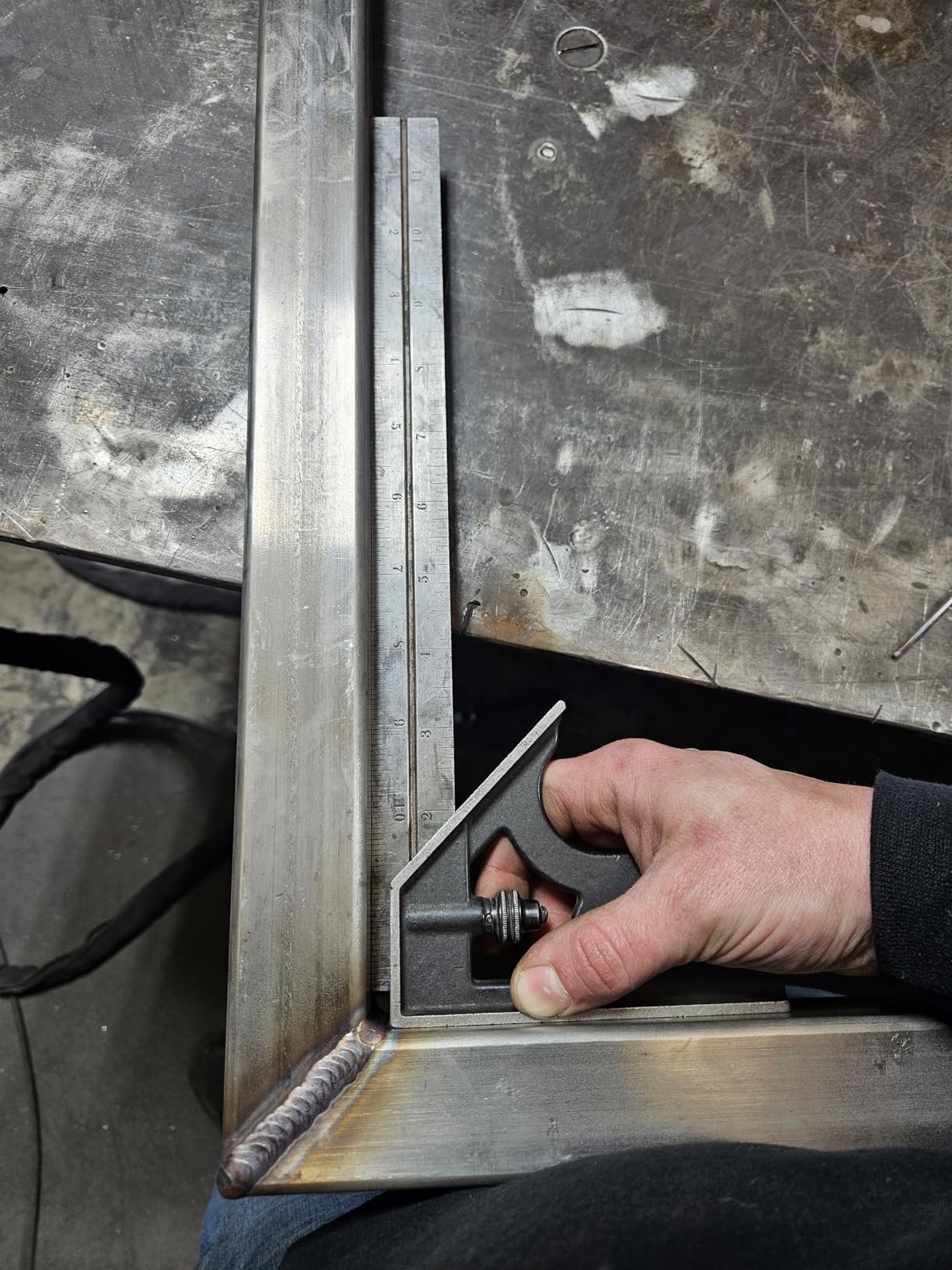
The lift start function is worth understanding rather than ignoring. It initiates the arc by touching the tungsten, which some fabricators actually prefer on very thin material because it gives a softer arc strike than a high-frequency start. It is also the fallback if you ever work near electronics that a high-frequency start disrupts.
At 60 pounds it is lighter than most machines in its class, and the dual 120V/240V input means it works in a home shop and a real shop without modification.
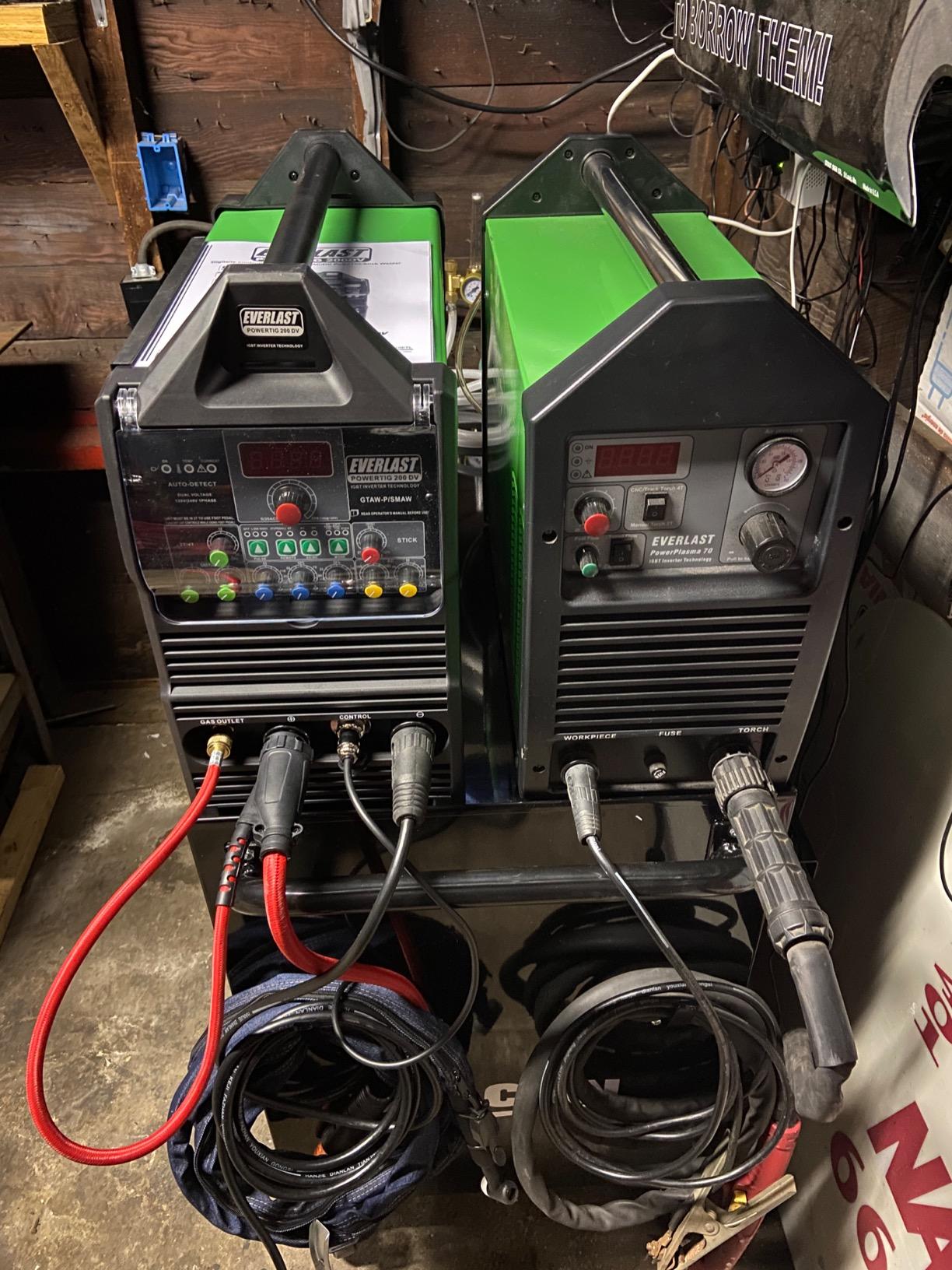
Why the low-amp floor changes your tube work
Thin wall tube is a heat problem, not an amperage problem. The metal has no mass to absorb energy, and the conductive length of the tube carries heat straight to the far side. Lowering the floor to 5 amps does not fix that, but it gives you the control to manage it.
In practice, lower available amperage means slower travel, more dwell time per inch at a lower heat setting, and far less tendency to blow out. On 20 gauge decorative and handrail tube, that is exactly the range you need.
When a bigger machine makes more sense
With 116 reviews behind it, this machine has a much thinner ownership history than the top of this list. It is also a single-chassis unit without water-cooled torch support, so long production runs at high duty are not its design point.
If you need 3-amp capability, 500Hz pulse, and a water-cooled torch, the PowerTIG 255EXT is the version of this machine built for that.
We earn a commission, at no additional cost to you. CERTAIN CONTENT THAT APPEARS ON THIS SITE COMES FROM AMAZON. THIS CONTENT IS PROVIDED 'AS IS' AND IS SUBJECT TO CHANGE OR REMOVAL AT ANY TIME.
5. LOTOS TIG200ACDC: Most Versatile with Real AC Output
LOTOS TIG200ACDC 200A AC/DC Aluminum Tig Welder with DC Stick/Arc Welder, Square Wave Inverter with Foot Pedal and Argon Regulator 110/220V Dual Voltage Brown
- 200A AC/DC square wave
- 110/220V dual voltage
- 37 lbs
- HF start and foot pedal
Pros
- True AC/DC output with a square wave for aluminium
- Only 37 lbs
- HF start and foot pedal control
- Argon regulator included in the box
- Three-year limited warranty with USA-based support
- Dual voltage 110/220V
Cons
- Design is old and the feature set reflects it
- Square wave only with no advanced waveform options
- Lowest 5-star share of the AC/DC machines here
We earn a commission, at no additional cost to you. CERTAIN CONTENT THAT APPEARS ON THIS SITE COMES FROM AMAZON. THIS CONTENT IS PROVIDED 'AS IS' AND IS SUBJECT TO CHANGE OR REMOVAL AT ANY TIME.
Best for: getting a real AC/DC machine into a home shop for stainless and occasional aluminium without a large commitment.
There is a reason this machine has stayed in the market for over a decade. It does one thing simply: it produces 10 to 200 amps of AC and DC TIG output, with a square wave for aluminium, and it weighs 37 pounds. The argon regulator and foot pedal are included, which removes two of the immediate add-on costs.
For stainless tube, the square wave AC capability is simply irrelevant, which is not a criticism. It matters only if you later pick up aluminium work, and at that point having real AC is better than discovering your machine cannot do it.
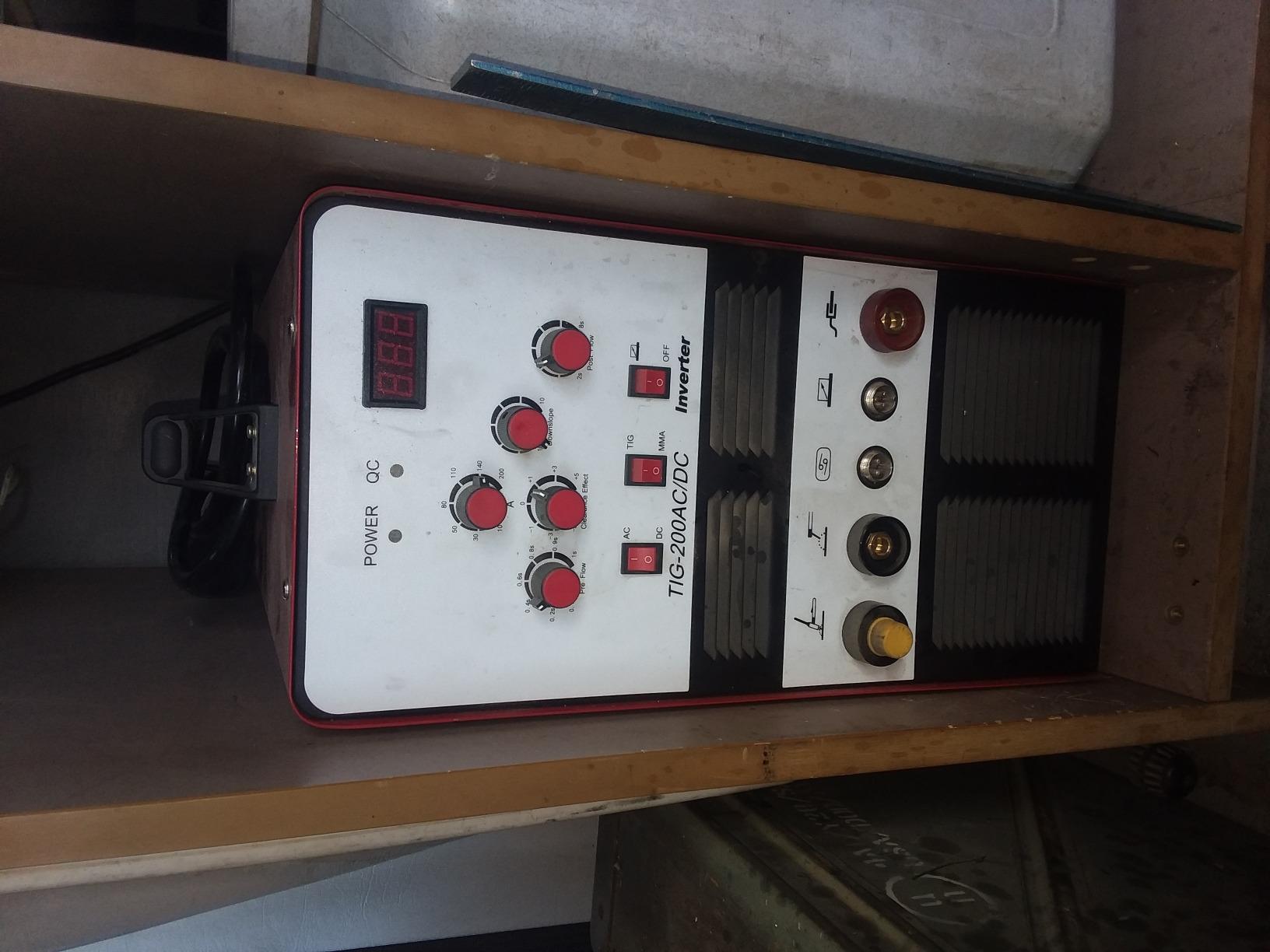
The dual voltage is automatic across 110/120V and 220/240V at 50/60Hz, so the same unit works in a garage and a proper shop circuit. The advanced cooling system and 80 percent power efficiency are the kind of spec that does not show up in a review but shows up in how the machine behaves after an afternoon of tube work.
Three-year limited warranty with USA-based customer service and a 30-day return window make this a lower-risk entry than the price suggests.
Where the money is really saved
The included regulator and foot pedal mean the first day you own this machine you can weld, which is not true of several cheaper units on this list. That is the actual value proposition here, not the headline amperage.
Plan to spend a little more later on a gas lens and a 2 percent lanthanated tungsten in a proper grind. Those consumables affect the weld more than the machine does, and they cost a fraction of what a new power source would.
When to look elsewhere
The original chassis means no pulse controls, no memory settings, and no parameter recall. If you weld stainless tube in a pattern and want to dial in a recipe once, this machine will not remember it for you.
Used units of this model do turn up, and given the simple design and the included regulator and pedal, a tested example is a reasonable way into AC/DC TIG ownership. Check the unit before you commit and confirm the torch connector is a standard type.
Reviews also show a lower share of five-star ratings than the newer AC/DC machines here, which generally reflects arc refinement at low amperage rather than a functional problem.
We earn a commission, at no additional cost to you. CERTAIN CONTENT THAT APPEARS ON THIS SITE COMES FROM AMAZON. THIS CONTENT IS PROVIDED 'AS IS' AND IS SUBJECT TO CHANGE OR REMOVAL AT ANY TIME.
6. YESWELDER TIG-205P: Best Portable DC-Only Machine
YESWELDER 205A Tig Welder Pulse STICK/DC TIG/PULSE TIG 3 in 1 TIG-205P
- 205A DC TIG with pulse
- 110/220V auto-sensing
- 23.7 lbs
- HF non-touch start
Pros
- Light and genuinely portable at 23.7 lbs
- Pulse TIG with independent frequency
- duty cycle and current control
- 2T/4T and spot modes for tube work
- Large LED display with auto memory
- Five-pin foot pedal interface
Cons
- DC only with no aluminium capability
- Foot pedal is sold separately
- Included torch is rigid rather than flex-head
We earn a commission, at no additional cost to you. CERTAIN CONTENT THAT APPEARS ON THIS SITE COMES FROM AMAZON. THIS CONTENT IS PROVIDED 'AS IS' AND IS SUBJECT TO CHANGE OR REMOVAL AT ANY TIME.
Best for: DC stainless work only, on a budget, where carrying the machine to the job matters more than aluminium capability.
Stainless steel is a DC metal. If aluminium is genuinely not on your list of projects, paying for AC capability is money you do not need to spend, and that logic is what makes the TIG-205P interesting. It does DC TIG, pulse TIG, and stick, and it does them at 23.7 pounds.
The pulse controls are independent, with separate frequency, duty cycle, and current settings. On thin tube that is the useful part, since it lets you set a pulsing puddle that travels on its own rather than sagging.
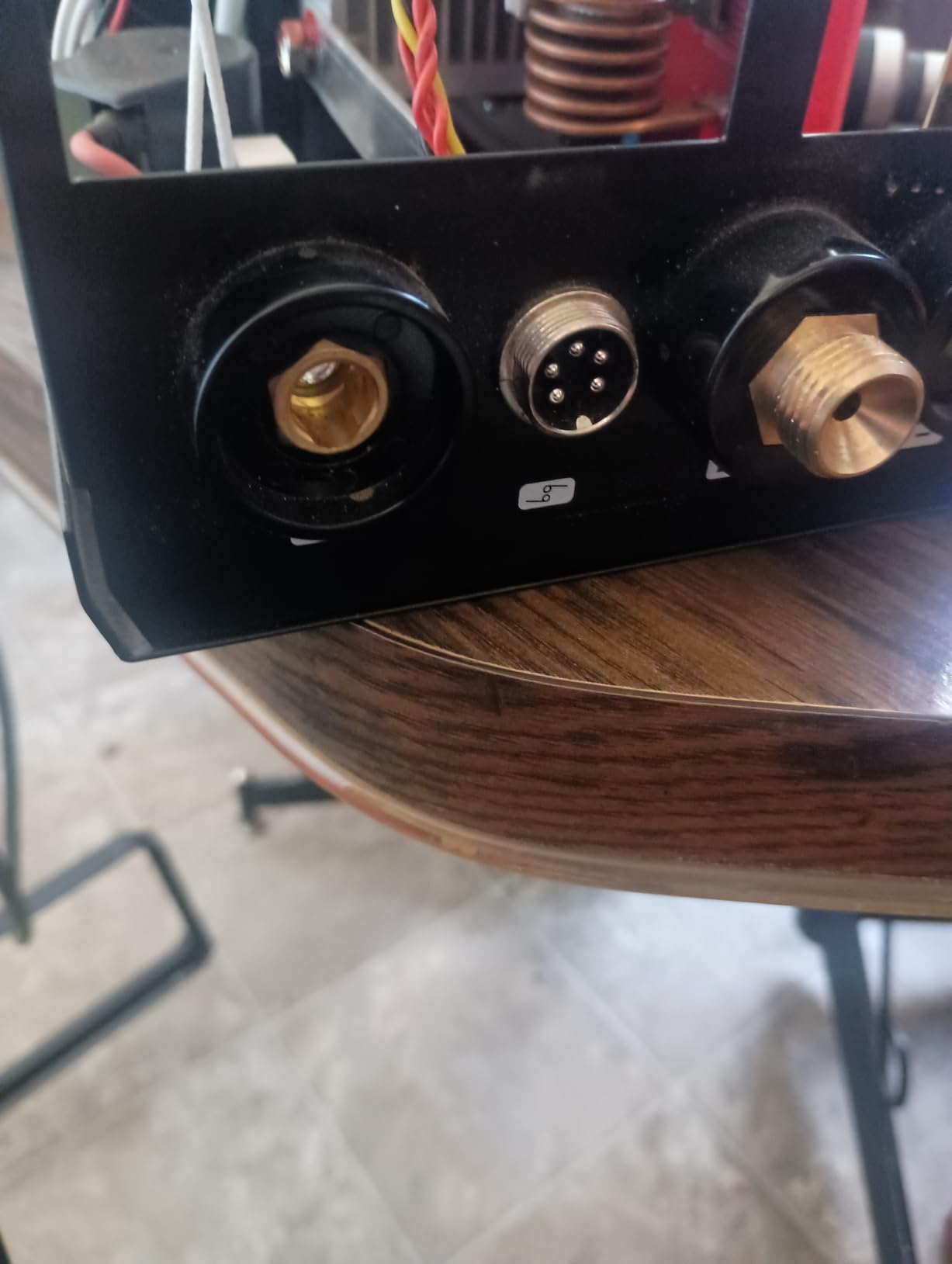
HF non-touch start, 2T/4T and spot modes, and auto-sensing dual voltage round out a feature set that is unusually complete at this level. The auto memory function recalls your last settings, which is a small convenience that matters more in practice than the spec sheet implies.
Ranking near the top of the bestseller list in TIG welding equipment tells you something useful: this is a machine a lot of people bought, used, and kept.
What DC-only really costs you
The compromise is aluminium, full stop. There is no AC output, so no amount of adjustment will let you weld 6061. If your work is stainless and mild steel only, that limitation never appears in your day.
The foot pedal is an interface, not an inclusion. Budget for a decent one separately, because the pedal is your primary heat control on tube and the cheapest one you can find is the wrong place to economise.
Plan the consumables
The included torch is rigid rather than a flex-head design, which on tube work means fighting the cable rather than the puddle. Replacing it with a standard 17 or 26 series torch with a flex head is an easy upgrade and the single best improvement you can make to this machine.
Auto-sensing dual voltage means the same unit works in a home shop and a proper circuit, which removes one of the most common reasons a portable machine gets returned.
We earn a commission, at no additional cost to you. CERTAIN CONTENT THAT APPEARS ON THIS SITE COMES FROM AMAZON. THIS CONTENT IS PROVIDED 'AS IS' AND IS SUBJECT TO CHANGE OR REMOVAL AT ANY TIME.
7. ARCCAPTAIN TIG200: Lightest Tube Machine Here
ARCCAPTAIN 200A TIG Welder, 110V/220V TIG/Stick 2 IN 1 Welding Machine
- 200A DC TIG and stick
- About 12 lbs with strap
- Post gas and down-slope control
- 110/220V dual voltage
Pros
- Roughly 12 lbs makes it the lightest true TIG machine here
- Shoulder strap included for field work
- Post gas 1-10s and down-slope 0-10s for heat control
- 2T/4T trigger modes and a large LED display
- Cooling fan runs only when needed
- VRD and full thermal protections
Cons
- DC only with no AC and no pulse on this model
- 110V performance is weak above roughly 95 amps
- Included torch and ground cable are weak points
We earn a commission, at no additional cost to you. CERTAIN CONTENT THAT APPEARS ON THIS SITE COMES FROM AMAZON. THIS CONTENT IS PROVIDED 'AS IS' AND IS SUBJECT TO CHANGE OR REMOVAL AT ANY TIME.
Best for: field repair and one-off stainless tube jobs where the machine has to go where the work is.
At roughly 12 pounds with the strap, this is the machine we would put in a truck for a callout. It is a DC TIG and stick machine with high-frequency arc starting, 2T/4T trigger modes, and a post gas timer running from 1 to 10 seconds with down-slope from 0 to 10.
That post gas and down-slope control is the feature that makes it more than a bare minimum for tube. Down-slope tapers the current as you release the pedal, which softens the crater and reduces the risk of a pinhole at the end of a bead on thin wall.
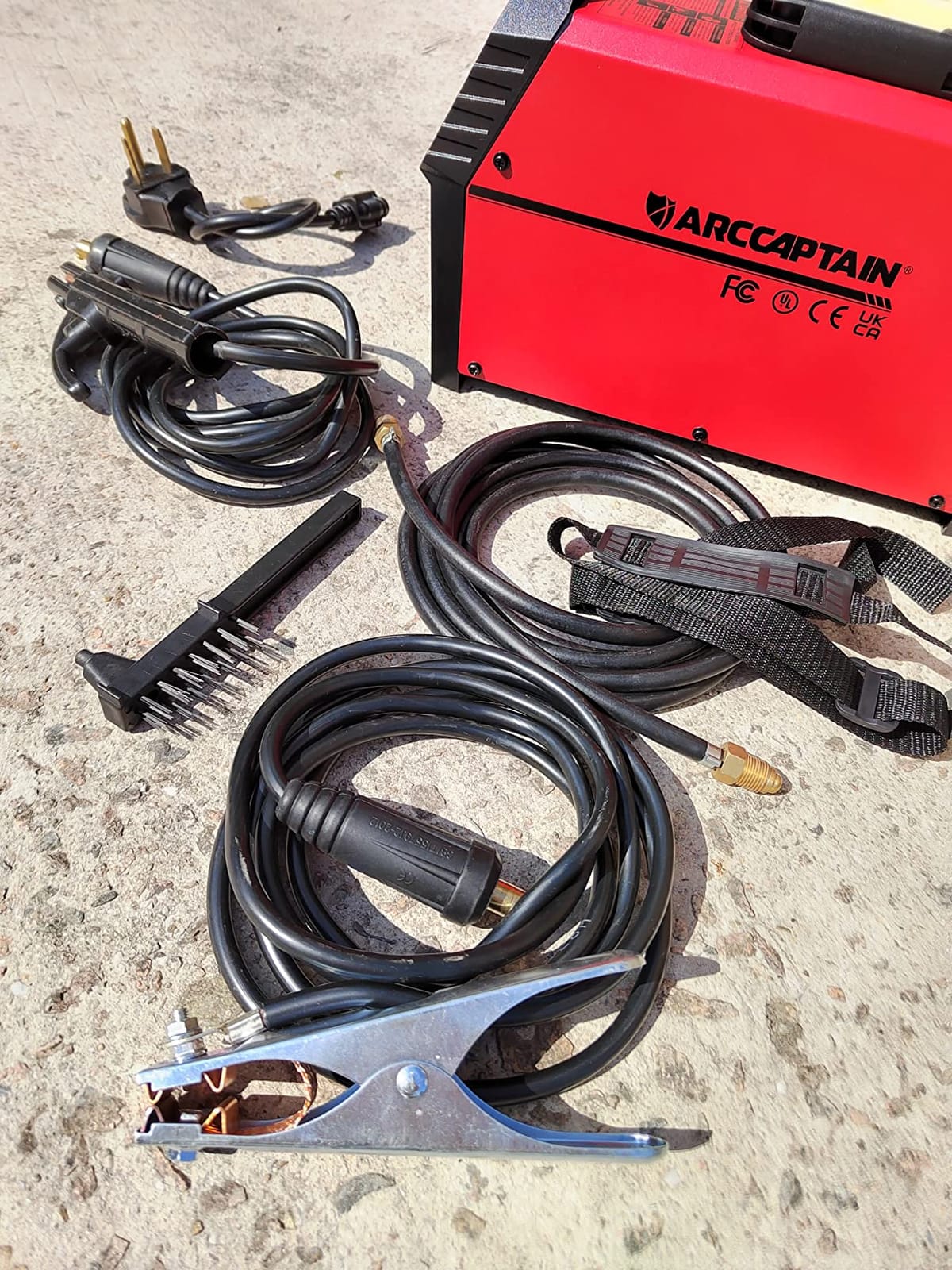
The thermal protection suite, including VRD and over-current, over-voltage, overload, and overheat protection, is more complete than we expect at this level. The cooling fan that runs only when needed is a small design decision that keeps the machine quiet on light tube work.
Customer service is reported as responsive, which matters for a brand without a long ownership history.
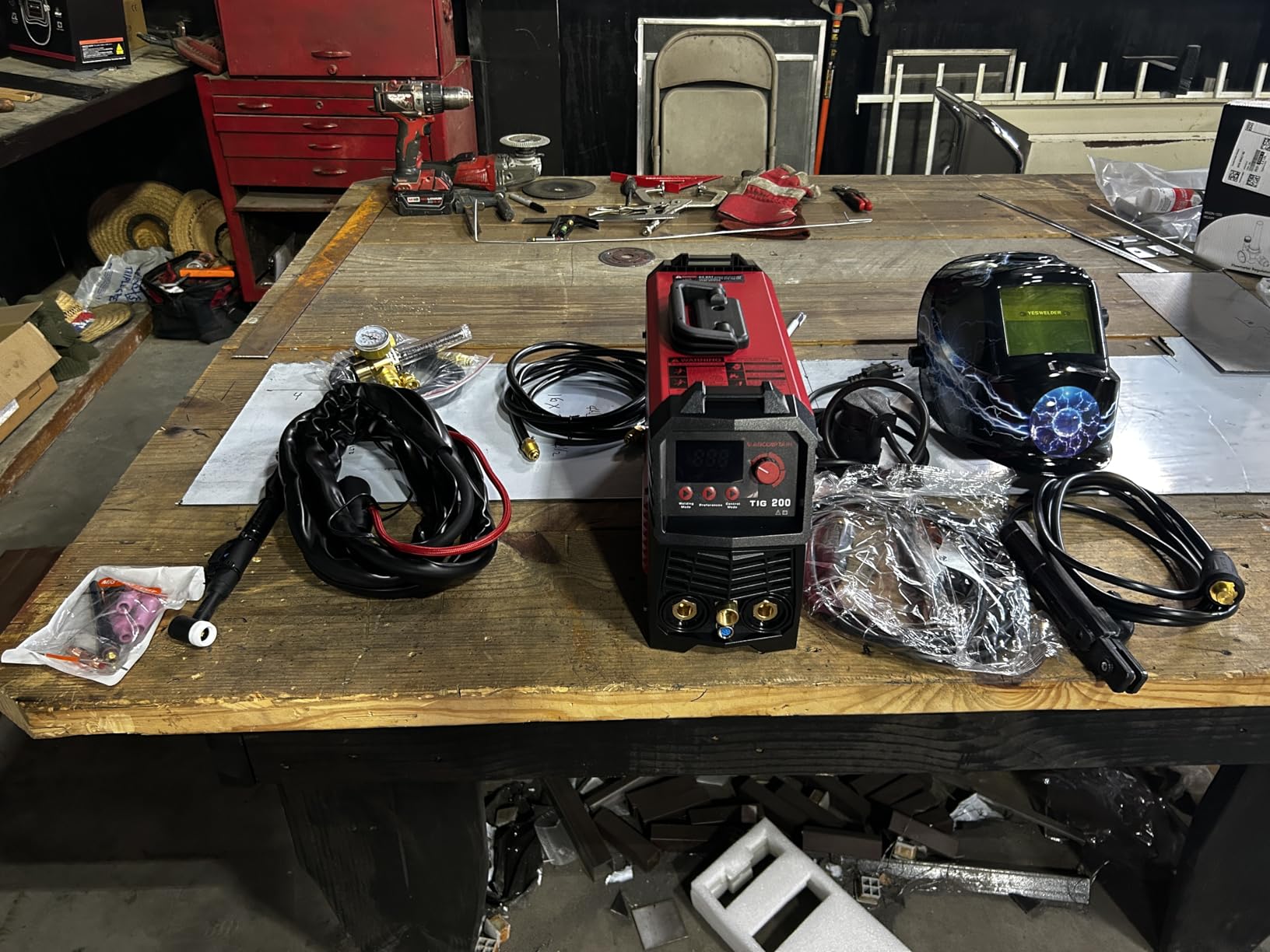
Stainless work is what it is built for
This is a DC-only machine with no AC and no pulse on the base model, so it is a stainless and mild steel tool. On 304 and 316 tube between 16 and 14 gauge it has more than enough capability, and the HF start plus foot pedal interface give you the control surface you need.
For very thin material the lack of pulse means you are managing heat with foot pressure and travel speed alone. That is entirely workable, it is just manual.
Where you will want to upgrade
On 110V, output above roughly 95 amps is where users report trouble tripping breakers. Plan to run this on a 220V circuit for anything beyond light tube work.
The included torch and ground cable are the two components reviewers most often replace. A standard flex-head torch costs little and transforms the handling on tube work, and a heavier ground clamp solves the cable melting complaint under extended use.
We earn a commission, at no additional cost to you. CERTAIN CONTENT THAT APPEARS ON THIS SITE COMES FROM AMAZON. THIS CONTENT IS PROVIDED 'AS IS' AND IS SUBJECT TO CHANGE OR REMOVAL AT ANY TIME.
8. Sunstac 250A: Most Modes in One Chassis
Sunstac 250A Aluminum TIG Welder with Pulse ACDC Foot Pedal Control
- 250A AC/DC pulsed TIG
- LCD digital screen
- 110/220V dual voltage
- 29.8 lbs
Pros
- Seven modes including HF AC
- HF DC
- pulsed AC
- pulsed DC and both spot modes
- 250A output with pulse at a mid-range price point
- LCD screen is readable through a welding helmet
- Smart parameter memory recalls saved settings
- Aluminium up to 6mm on 220V
- 29.8 lbs
Cons
- AC current measurement is reported as inaccurate
- Lowest average rating in this roundup
- Foot pedal not included
- Brand has a shorter track record
We earn a commission, at no additional cost to you. CERTAIN CONTENT THAT APPEARS ON THIS SITE COMES FROM AMAZON. THIS CONTENT IS PROVIDED 'AS IS' AND IS SUBJECT TO CHANGE OR REMOVAL AT ANY TIME.
Best for: aluminium-capable work alongside stainless tube, on a machine that is lighter and cheaper than most 250A units.
Mode count is this machine’s argument. HF AC, HF DC, pulsed AC, pulsed DC, AC spot, DC spot, and stick, all in a 29.8-pound chassis with dual 110/220V voltage. For a fabricator moving between stainless tube and aluminium, having every mode on one dial is genuinely useful.
The LCD screen is a real upgrade over the LED displays common at this price, particularly because you are reading it through a welding helmet. Smart parameter memory saves settings so you do not rebuild them each session, and the machine auto-switches to pedal mode when a foot control is plugged in.
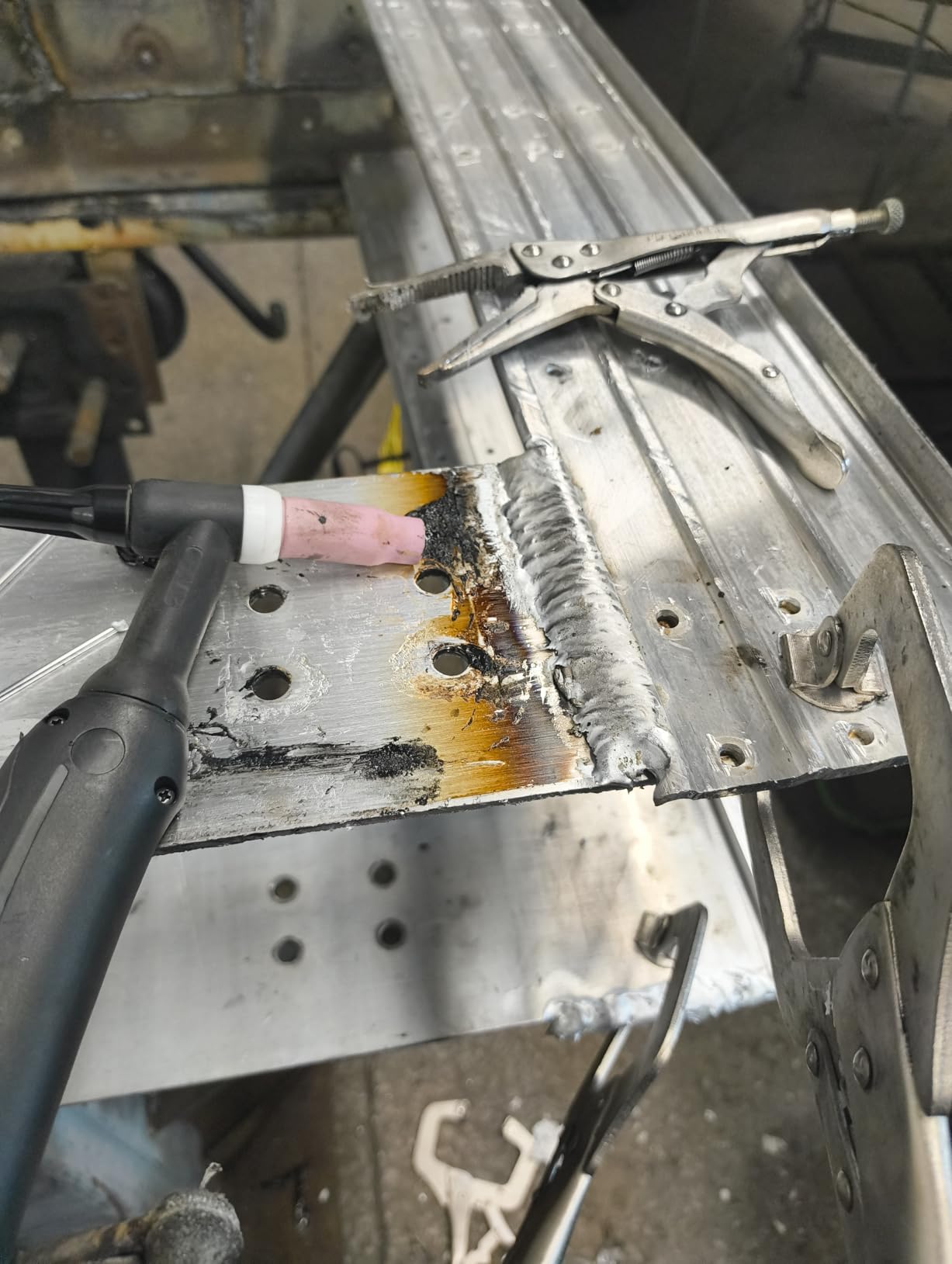
On stainless, the pulsed DC mode is the part you will actually use. Aluminium capability up to 5/32 inch at 110V and 6mm at 220V is a reasonable ceiling for a machine in this class.
Aluminium thickness of 6mm on 220V is a sensible target for this machine, and most users find that adequate for tube and light structural work rather than heavy plate.
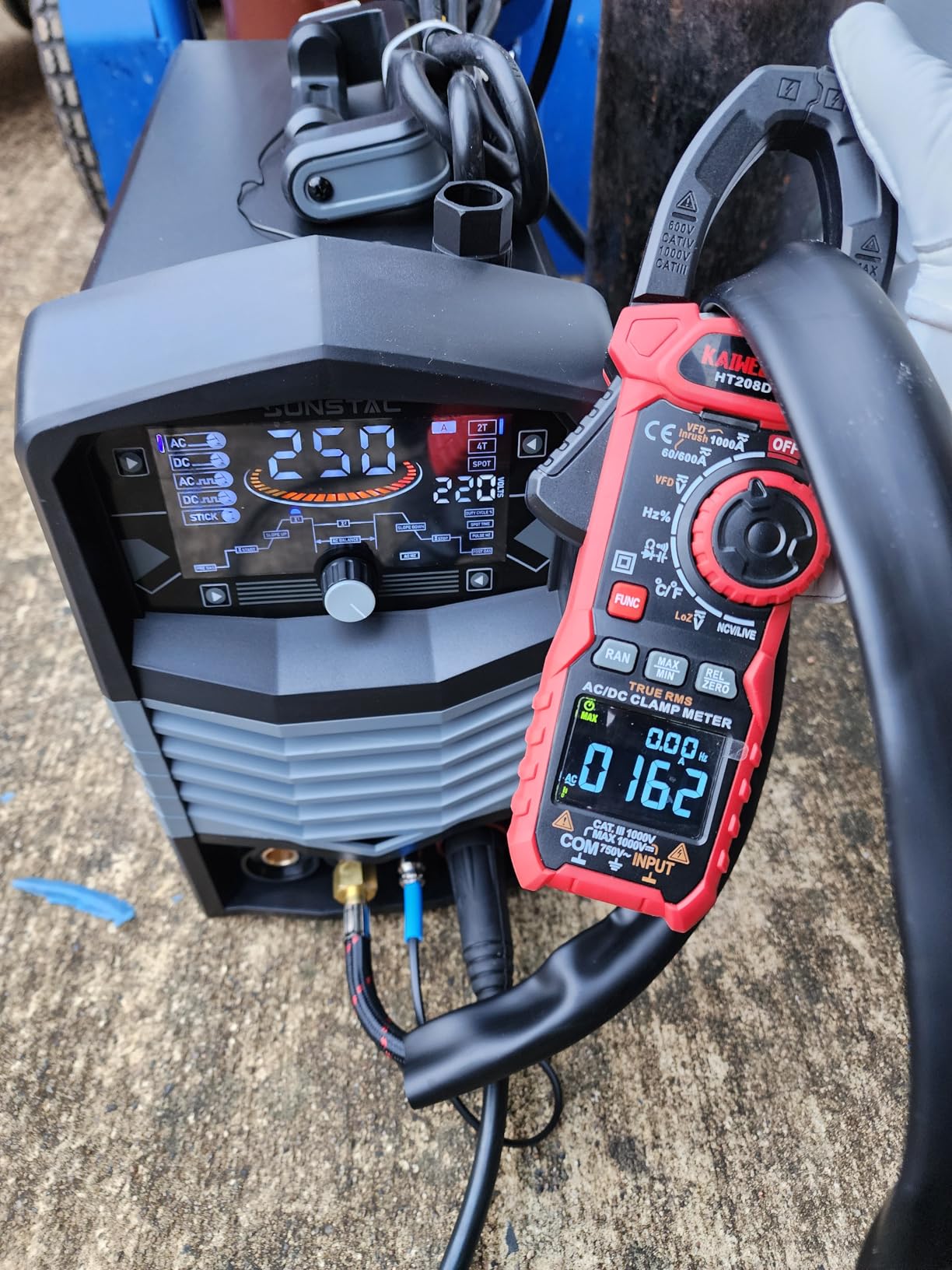
Read the AC measurement caveat
The listing itself notes that AC current measurement is inaccurate because of inconsistent AC balance. In practice that means the displayed amperage on AC is a rough indicator rather than a precise one, so treat it as a reference and confirm your settings on a test coupon.
For DC TIG on stainless, the current readout is the one you care about, and that is where the machine behaves more predictably.
Early reviews are mixed
A modest average with a meaningful share of one-star reviews is the honest picture. The most common early complaints concern accuracy and the included accessories, which are basic. The most common praise concerns the mode range and the LCD for the money spent.
Because the brand is newer with a shorter service history, this is the machine on the list we would want to see a longer ownership record on before recommending it as a first machine.
We earn a commission, at no additional cost to you. CERTAIN CONTENT THAT APPEARS ON THIS SITE COMES FROM AMAZON. THIS CONTENT IS PROVIDED 'AS IS' AND IS SUBJECT TO CHANGE OR REMOVAL AT ANY TIME.
9. ARCCAPTAIN TIG 205P Pro: Best App-Controlled Setup
ARCCAPTAIN TIG 205P Pro Pulse Welder, 5 In 1 Welding Machine, 120V/240V
- App controlled welding
- 5-in-1 DC TIG modes
- 22.8 lbs
- 120/240V dual voltage
Pros
- App control with real-time monitoring
- mode selection
- presets and error codes
- Five DC modes including TIG
- Pulse
- Lift
- Spot and stick
- Full post-flow
- down-slope
- spot time and pulse control
- Three-year warranty and ANSI/FCC certification
- 22.8 lbs
Cons
- DC only with no aluminium capability
- Only 49 reviews as a very new model
- Included torch is bulky and many users upgrade
- No pre-flow setting
We earn a commission, at no additional cost to you. CERTAIN CONTENT THAT APPEARS ON THIS SITE COMES FROM AMAZON. THIS CONTENT IS PROVIDED 'AS IS' AND IS SUBJECT TO CHANGE OR REMOVAL AT ANY TIME.
Best for: fabricators who want to dial in a tube recipe on a phone and load it at the machine, and who work in stainless only.
The distinguishing feature is the app. Scan the barcode and you get real-time monitoring, mode selection, parameter adjustment, presets, and error code lookup. For tube work, the ability to save a proven setting and recall it at the next job removes one of the most tedious parts of setting up a machine.
Underneath, it is a five-in-one DC machine: TIG, pulse TIG, lift TIG, spot TIG, and stick. The pulse and spot controls are thorough, with adjustable post-flow, down-slope, spot time, interval, pulse frequency, duty, and peak and base current.
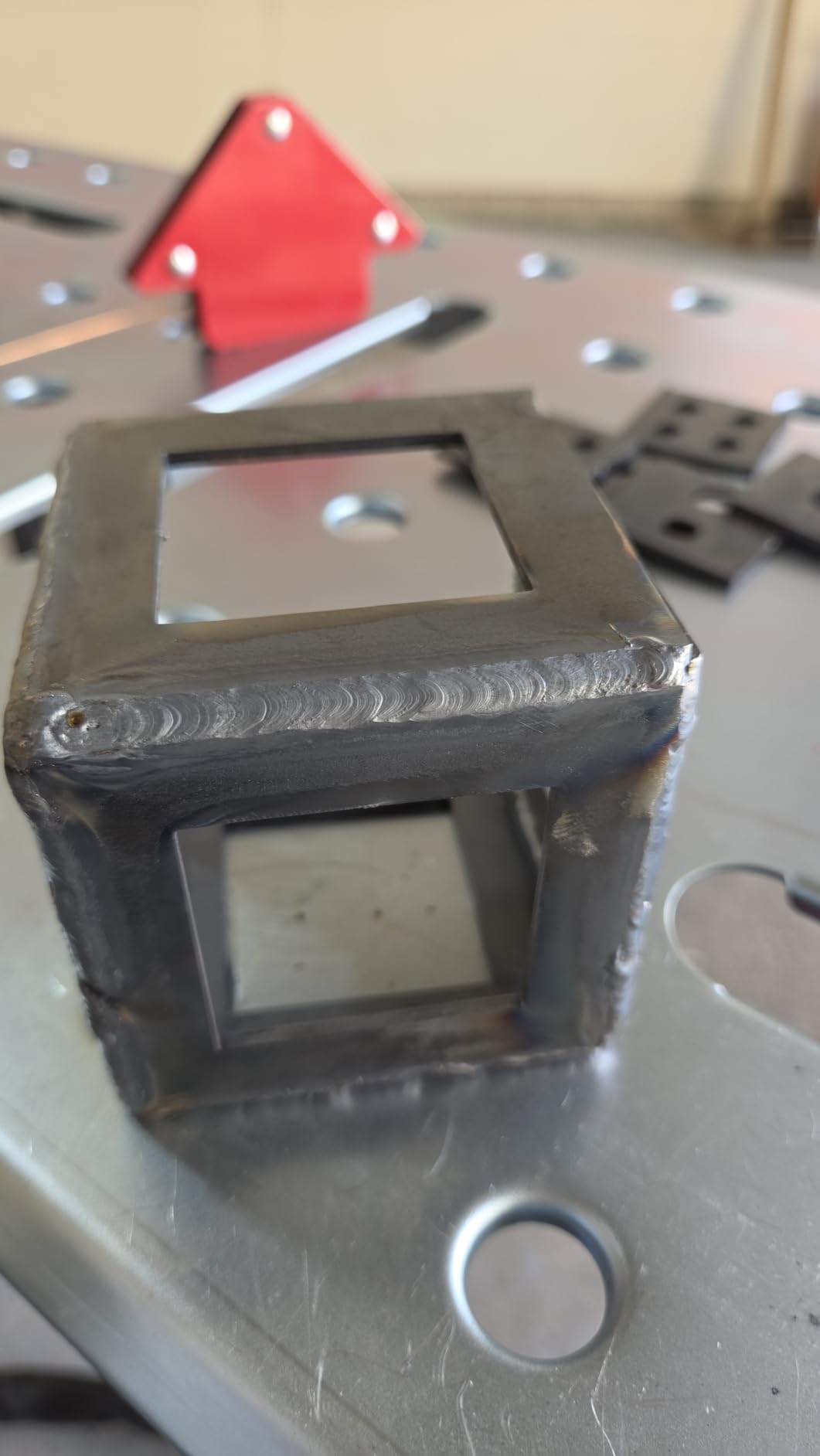
The stick mode auto-optimises hot start, arc force, and anti-stick rather than making you set them. The MCU-based control claims near-instant arc start success and faster response than typical budget hardware, and at 22.8 pounds this is another genuinely portable option.
ANSI and FCC certification with a three-year warranty is a better-documented package than most machines at this level.
What the app does and does not do
The app is genuinely useful for saving and recalling parameters, and for reading error codes without a manual. It is not a substitute for understanding your settings, and it introduces a proprietary ecosystem that ties your machine to a phone.
If you would rather set parameters on physical controls in a dusty shop with gloves on, this is a downgrade compared to a knob-based machine. If you build the same tube joints repeatedly, the saved presets pay for themselves quickly.
Known gaps
There is no pre-flow setting, which on stainless is the one gas control you would most want to adjust. You get post-flow control, but you set pre-flow at the torch or the flowmeter instead.
It performs better on 220V than 110V, and the included 13-foot torch is bulky enough that many users replace it with a standard flex-head model.
We earn a commission, at no additional cost to you. CERTAIN CONTENT THAT APPEARS ON THIS SITE COMES FROM AMAZON. THIS CONTENT IS PROVIDED 'AS IS' AND IS SUBJECT TO CHANGE OR REMOVAL AT ANY TIME.
10. Everlast PowerTIG 255EXT: Best for Production Tube Runs
Everlast PowerTIG 255EXT Digital AC/DC TIG Stick Pulse Inverter Welder 110v/220v Dual Voltage
- 255A professional AC/DC
- 3A DC minimum output
- 500Hz DC pulse
- Air and water torches included
Pros
- 3A DC and 5A AC minimum output for the thinnest wall work
- 500Hz DC pulse and 250Hz AC pulse
- Four AC waveforms including triangular and advanced square wave
- Air-cooled and water-cooled torches plus a full accessory kit in the box
- Water cooler outlet and nine programmable memory slots
- Continuous fan supports sustained duty
Cons
- Heaviest machine in the roundup at 85 lbs
- Highest commitment of the group
- Continuous fan is loud
- One reported dead-on-arrival unit
We earn a commission, at no additional cost to you. CERTAIN CONTENT THAT APPEARS ON THIS SITE COMES FROM AMAZON. THIS CONTENT IS PROVIDED 'AS IS' AND IS SUBJECT TO CHANGE OR REMOVAL AT ANY TIME.
Best for: dedicated fabricators running stainless tube all day, including 304 and 316 work that has to be back-purged to a code.
This is the machine for the person who welds tube for a living. Three amps on DC is the lowest floor of any machine here, and combined with 500Hz DC pulse it gives a level of control on thin wall that nothing else on this list matches. The 10Hz pulse mode specifically targets penetration and warping reduction on larger stainless sections.
Both an air-cooled 9-series torch and a 20-series water-cooled torch are included in the box, along with a 400A ground clamp, stinger, regulator, hose, adapter, and foot pedal. The water cooler outlet on the back means long production runs do not cook the torch.
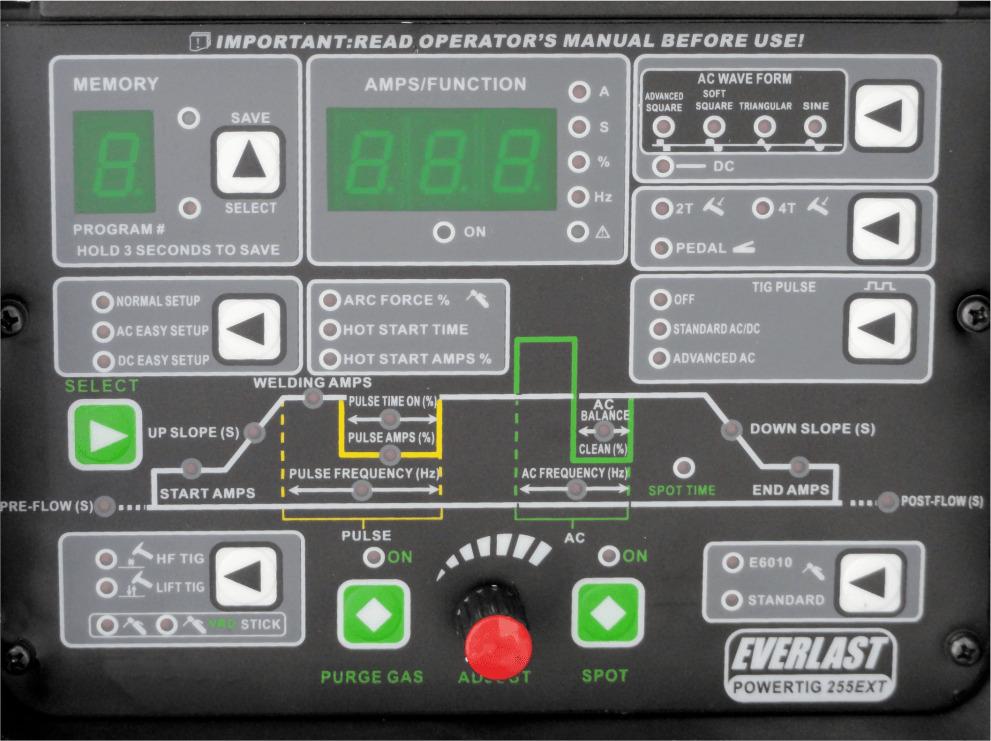
Four AC waveforms, 2T/4T/pedal modes, Amptrol torch amperage control, and nine programmable memory slots are the features that matter on a production machine. You set the tube recipe once and call it back for the next hundred pieces.
The 6010 and cellulose stick capability is a genuine bonus for anyone who still does structural work on mild steel, and the VRD function reduces shock on the stick side.
Where the specification earns its cost
For a shop running back-purged sanitary tube, a water-cooled torch and 3-amp capability are not luxury features. They are what allow you to hold a bead on 16 gauge without stopping to change consumables, and to lay a clean root pass that passes a weld colour check on the inside of the tube.
The accessory kit alone would represent a meaningful part of a smaller machine’s cost, and it is all included here.
When it is the wrong purchase
At 85 pounds with a continuous fan, this is a shop machine that stays on a bench. It is loud, it is the biggest financial commitment in the roundup, and 59 reviews is a thinner ownership history than we would like for the price.
If you are building handrails in a residential garage a few times a year, a mid-range machine with a foot pedal and a CK torch will serve you better. This one is for volume.
We earn a commission, at no additional cost to you. CERTAIN CONTENT THAT APPEARS ON THIS SITE COMES FROM AMAZON. THIS CONTENT IS PROVIDED 'AS IS' AND IS SUBJECT TO CHANGE OR REMOVAL AT ANY TIME.
How to Match a Welder to Your Tubing
Match the machine to the wall thickness, not the headline amperage. A 200A welder welding 18 gauge tube is only ever working in the bottom 15 percent of its range, which is exactly why minimum amps matters more than maximum.
Here is how we would work through it. First, identify the alloy: 304 and 304L take ER308L filler, 316 and 316L take ER316L, and joining stainless to mild steel takes ER309. Second, measure the wall thickness, because that sets your amperage window. Third, confirm the machine’s minimum DC output sits below your lower bound. Fourth, confirm the post-flow timer is adjustable and reaches at least 8 seconds.
The amperage figures below are the practical working range for stainless tube, not a substitute for testing on scrap of the same alloy and wall thickness. Start at the low end and walk up.
As a working rule for stainless, roughly 1 amp per thousandth of an inch of wall thickness is a common starting point for material in the thinner range, and a documented working baseline for 14 gauge stainless is about 46 amps with 1/16 inch filler and a number 8 gas lens cup at 25 cubic feet per hour. That is a reproducible starting point, not a rule to weld by without testing.
18 gauge is the standard practical entry point for shop tube work, and it is where most people learn. 20 gauge and thinner is autogenous territory with tight fit-up. 11 gauge and heavier is where pulse or a strong 200A machine starts to pay for itself.
Back purging becomes mandatory when the tube is a closed section, the joint is food-grade or sanitary, the work is marine or chemical service, or the weld has to be pressure-tight. An open butt joint on a flat 304 plate does not need it.
AC vs DC for Stainless Tubing: Why DCEN and When AC Matters
Stainless steel is TIG welded on DC, using DCEN, also called straight polarity. With the electrode negative, roughly two-thirds of the arc heat goes into the work and one-third into the tungsten. That is the heat distribution you want on stainless, because you want the puddle, not the electrode, to be the hot thing.
AC is required for aluminium and magnesium because those metals form an oxide layer that a DC arc cannot break. The alternating current alternates the polarity, so the electrode-positive half-cycle scrubs the oxide clean. On stainless there is no such oxide problem, so AC only reduces the amount of heat in the work and makes the puddle harder to control.
DCEP, or reverse polarity, is not what you want for stainless tube. It puts the majority of the heat into the tungsten, which dulls the electrode quickly and gives you a narrow, cold, poorly controlled arc on the work.
Square wave and triangular wave AC output is worth paying for only if you weld aluminium. Several experienced fabricators running tube work exclusively on DC report that they would rather spend the money on a better foot pedal and a proper water-cooled torch than on waveform selection they never adjust.
Low-Amp Reality Check: Why Thin Tube Burns Through
No machine prevents burn-through on thin stainless tube. Forum reports going back years describe welding .060 square tube on a Lincoln TIG 200 where, in one user’s words, even at 10 amps it blows a hole the size of a dime. That is a heat and technique problem, not a power source problem.
The physics is simple. Stainless conducts heat along the length of the tube far better than mild steel, and thin wall has almost no mass to absorb it. Heat travels down the bore to the far side before you can react, and the far side becomes the failure point. This is the heat sink effect, and it is why a wall you are holding steady can blow out on the opposite side of the tube from the arc.
What actually reduces burn-through is work position, not machine selection. Support the tube so the heat has somewhere to go: back the joint with a copper or steel chill bar, use a V-block or tube rest at the correct height, and keep the workpiece clamped so it cannot flex when the puddle forms. A torch angle of about 70 degrees with a slight push toward the leading edge keeps the heat in the puddle rather than under the far wall.
Fill the tube with copper or brass rod if you have the diameter to spare. It acts as a heat sink along the whole length, it is the single most effective trick on thin wall, and it costs a few dollars.
Back purge pressure is another factor people miss. A tube purged at the wrong flow rate can hold enough pressure to move the puddle, and a small leak in your purge setup will blow the arc away from the joint entirely. Set the flow low enough that you can hold a fingertip over the vent opening and feel pressure without it whistling.
Finally, use a small amperage with slow travel rather than a high amperage with fast travel. A puddle that moves at walking pace gives the far wall time to conduct heat away rather than concentrate it.
Back Purging Stainless Tube Without Guesswork
You need to back purge stainless tube whenever the section is closed, the joint is sanitary or food-grade, the assembly is marine or chemical service, or the weld is pressure-tight. The inside of the tube is just as hot and just as exposed to oxygen as the outside, and if it oxidises the bore will corrode from within.
Purge plugs are the simple way to do it. Insert a plug in each end of the tube, leave one end vented rather than sealed, and flow argon from the supply end so the gas sweeps the entire internal volume and exits at the far vent. Inert gas displaces air, and once the air is gone the inside of the bead is protected the same way the outside is.
Purge for several volume times before you strike an arc. On a short tube that takes seconds; on a long run it takes noticeably longer, and starting the arc early is the most common purge mistake. Open the torch argon at low flow as well so a blanket covers the outside of the joint.
A simple check requires no equipment: look at the inside bead after it cools. A straw or gold colour inside means the purge worked. A blue, brown, or grey bead means air was still present and the weld is oxidised.
For work where the inside finish matters, an inexpensive oxygen analyser is the difference between guessing and knowing. The widely used target is getting the internal atmosphere down toward or below 50 parts per million oxygen before you start.
Never use a halogenated or chlorinated solvent such as brake cleaner near an arc. Under the intense ultraviolet of a TIG arc, those fumes can combine to form phosgene, and that applies in an enclosed shop as much as outdoors.
Essential Gear Beyond the Welder
The machine is a fraction of what a stainless tube setup costs, and the consumables change the weld more than the machine does. Budget for all of the following before you start.
Pure argon at 99.995 percent purity, in cylinders sized to your usage. Welding mix or any blend containing oxygen will oxidise the bead, and reactive gases are a waste of money for stainless.
A regulator with a flowmeter. A plain CGA regulator gives you pressure but not a readable flow rate, and controlling flow is how you control the blanket over a small tube joint. A number 6 to number 8 cup with a gas lens is worth the extra few dollars because it narrows the gas pattern for thin wall.
Filler rod matched to the alloy: ER308L for 304 and 304L, ER316L for 316 and 316L, and ER309 for stainless-to-mild-steel joints. The low-carbon L grades matter because they resist carbide precipitation in the heat-affected zone, which is what causes intergranular corrosion later.
Tungsten: 2 percent lanthanated, marked with a gold band, is the standard DC electrode for stainless and works in AC as well. Ceriated is an alternative on DC. Grind to a 15 to 30 degree included angle and keep the tip pointed, and never grind a tungsten that has been contaminated with mild steel against the same wheel you use for stainless.
A purge kit, and a foot pedal upgrade. The pedal included with a budget machine is the first thing most fabricators replace, and it is the primary heat control interface on tube work. An SSC Controls pedal is the common upgrade.
Finally, a helmet with a lens shade of 11 to 13 for TIG on stainless, and local extraction. Welding stainless releases hexavalent chromium fume, and US exposure limits for that compound are set at 5 micrograms per cubic metre, so extraction matters in a small shop far more than most people expect.
Frequently Asked Questions
Do you use AC or DC to TIG weld stainless steel?
Stainless steel is welded on DC using DCEN, also called straight polarity. With the electrode negative, roughly two-thirds of the arc heat goes into the work and one-third into the tungsten. AC is only required for aluminium and magnesium, where the alternating polarity is needed to break up the oxide layer.
What type of welder is best for welding stainless steel?
An AC/DC inverter TIG welder with high-frequency start, an adjustable post-flow timer of at least 8 seconds, a responsive foot pedal, and a minimum controllable DC output around 5 amps. For thin tube, minimum amperage and low-amp arc stability matter far more than headline output.
What gas should I use for TIG welding stainless steel?
Pure argon at 99.995 percent purity. Do not use welding mix or any blend containing oxygen, which will oxidise the bead and promote corrosion. Flow 8 to 15 litres per minute as a starting range, and lower that when using a larger gas lens on thin wall.
Do I need to back purge when TIG welding stainless steel tubing?
Yes, whenever the section is closed, the joint is food-grade or sanitary, the work is marine or chemical service, or the weld must be pressure-tight. The inside of the tube oxidises just as readily as the outside. Use purge plugs, leave one end vented, and purge for several volume times before striking the arc.
How much amperage for 18 gauge stainless tubing?
A common working range is 20 to 35 amps for 18 gauge stainless tube, tested on scrap first. As a documented baseline, 14 gauge stainless runs about 46 amps with 1/16 inch filler and a number 8 gas lens cup at 25 cubic feet per hour of argon. Always test on the same alloy and wall thickness you are welding.
Can you TIG weld stainless tubing without filler rod?
Yes, autogenous welding is legitimate on thin wall with tight fit-up, particularly for 20 gauge and thinner tubing. It requires a consistent root gap, since the arc must bridge the joint on its own. It is not appropriate for joints that will see bending or fatigue loading, where a filler pass is needed for ductility.
What filler rod should I use for stainless tubing?
Use ER308L for 304 and 304L tube, and ER316L for 316 and 316L. The low-carbon L grades resist carbide precipitation in the heat-affected zone, which is what causes intergranular corrosion. For stainless-to-mild-steel joints, use ER309. Match rod diameter to wall thickness, typically 1/16 inch rod for 18 to 20 gauge.
Why does my TIG weld burn through thin stainless tubing?
Thin wall has almost no mass to absorb heat, and stainless conducts heat along the length of the tube to the far side faster than you can react. No machine prevents this. Back the tube with a copper or brass chill bar, fill the bore with copper rod, use a V-block to support the work, keep a 70 degree torch angle, and drop to low amperage with slow travel.
What size tungsten for stainless TIG?
Use 2 percent lanthanated tungsten, marked with a gold band, which is the standard DC electrode for stainless. A 1/16 inch electrode suits thin tube up to about 60 amps, and 3/32 inch covers heavier work. Grind to a 15 to 30 degree angle and keep a dedicated grinding wheel for stainless to avoid cross-contamination.
Is TIG the hardest form of welding?
TIG is demanding but it is mostly manual skill rather than machine complexity. On stainless the harder part is heat control on thin wall, since the material burns through before the puddle feels controllable. Practice on scrap of the same alloy and wall thickness, and most fabricators reach a usable tube weld within a dozen hours of torch time.
Final Verdict: Our Picks for Stainless Steel Tubing in 2026
The PRIMEWELD TIG225X is the best tig welder for stainless steel tubing overall, because the included CK Worldwide torch removes the single most common failure point in this category, which is consumable availability. Consistently strong star ratings across more than 1400 reviews on 304 and 316 give it the deepest ownership record in the group.
The Weldpro 200A is the value pick if you also weld aluminium, with the most complete parameter control in the roundup. The Everlast PowerTIG 200DV is the thin-wall specialist at 5 amps minimum, and the PowerTIG 255EXT is the production machine with water-cooled torch capability and a 3-amp floor.
On a tight budget, the LOTOS TIG200ACDC gives you genuine AC/DC output and an included regulator at the lightest weight in the class. The ARCCAPTAIN TIG200 is the one to take to a callout. Whichever you pick, buy a proper foot pedal, a gas lens, and 2 percent lanthanated tungsten before your first tube, because those three consumables affect the weld more than the machine does.