Short answer first: yes, you can weld aluminum with a TIG welder, but only if that machine has true AC output. Aluminum oxide melts at a far higher temperature than the metal underneath it, so a DC-only TIG welder either will not strike an arc on aluminum or leaves a contaminated, porous bead. Our pick for the best TIG welder for aluminum overall in 2026 is the PRIMEWELD TIG225X, a 225 amp AC/DC pulse machine that the r/Welding community has been recommending for years.
That single requirement filters out most machines sold as “TIG welders” online. A DC-only inverter, a basic stick machine with a TIG mode, or an old transformer that cannot hold a stable arc on thin gauge will not get you a clean aluminum bead no matter what the listing claims. Everything else — amps, duty cycle, pulse, voltage, torch quality — is a matter of degree once AC is on board.
We assembled ten AC/DC TIG welders, read every spec sheet and owner review set we could find, and cross-checked our shortlist against what welders say on r/Welding, the Home Shop Machinist forum, and the Miller forum threads. The range runs from a low-cost entry machine up to a 250 amp production unit with a water-cooled torch. This roundup covers what makes a machine good on aluminum, who each unit suits, and where each one falls short. Last updated for 2026.
ContentsTable of Contents
- 1Top 3 Picks: Best TIG Welders for Aluminum in 2026→
- 2PRIMEWELD TIG225X→
- 3Weldpro 200A AC/DC→
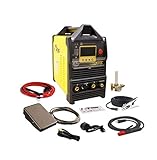
- 4AHP AlphaTIG 203Xi→
- 5All 10 TIG Welders for Aluminum Compared in 2026→
- 61. PRIMEWELD TIG225X: Best Overall TIG Welder for Aluminum→
- 7PRIMEWELD TIG225X 225 Amp IGBT AC DC Tig/Stick Welder with Pulse CK17 Flex Torch and Cable→
- 8Pros→
- 9Cons→
- 10What we liked most→
- 11Where it falls short→
- 122. Weldpro 200A AC/DC: Best TIG Welder for Fine Aluminum Control→
- 13Weldpro 200A AC/DC TIG Welder with Pulse, 110V/220V Dual Voltage Aluminum TIG Welder, AC TIG/DC TIG/AC PULSE TIG/DC PULSE TIG/Stick 5 in 1 Multiprocess Welding Machine with TIG Torch & Foot Pedal→
- 14Pros→
- 15Cons→
- 16Who this suits→
- 17Who should skip it→
- 183. AHP AlphaTIG 203Xi: Best for Shops That Weld Stick Too→
- 19NEW 2024 AHP AlphaTIG 203Xi Amp IGBT AC DC Tig/Stick Welder with PULSE 110/220v 3 YEARS WARRANTY→
- 20Pros→
- 21Cons→
- 22What we liked most→
- 23Where it falls short→
- 244. LOTOS TIG200ACDC: Best Budget TIG Welder for Aluminum→
- 25LOTOS TIG200ACDC 200A AC/DC Aluminum Tig Welder with DC Stick/Arc Welder, Square Wave Inverter with Foot Pedal and Argon Regulator 110/220V Dual Voltage Brown→
- 26Pros→
- 27Cons→
- 28Who this suits→
- 29Who should skip it→
- 305. ARCCAPTAIN TIG200P ACDC: Best for Square and Triangle Wave Control→
- 31ARCCAPTAIN TIG Welder AC/DC 200A with Pulse 7 in 1 Aluminum Welding Machine→
- 32Pros→
- 33Cons→
- 34Who this suits→
- 35Who should skip it→
- 366. Sunstac 250A AC/DC Pulsed TIG: Best for Spot TIG and Repairs→
- 37Sunstac 250A Aluminum TIG Welder with Pulse ACDC Foot Pedal Control→
- 38Pros→
- 39Cons→
- 40Who this suits→
- 41Who should skip it→
- 427. Everlast PowerTIG 200DV: Best Low Start Amps for Thin Aluminum→
- 43New Everlast PowerTIG 200DV 110/220 Dual Voltage 200amp Pulse ACDC Welder→
- 44Pros→
- 45Cons→
- 46Who this suits→
- 47Who should skip it→
- 488. YESWELDER TIG-200P ACDC: Lightest Machine That Still Does AC Aluminum→
- 49YESWELDER 200A AC/DC Aluminum Tig Welder TIG-200P ACDC TIG Welding Machine→
- 50Pros→
- 51Cons→
- 52Who this suits→
- 53Who should skip it→
- 549. Everlast PowerTIG 185DV: Best for Mobile and Shop Work→
- 552021 Everlast PowerTIG 185DV AC/DC TIG Stick Welder 110/220 Volt Inverter-Based Dual Voltage 185Amp with Pedal Package→
- 56Pros→
- 57Cons→
- 58Who this suits→
- 59Who should skip it→
- 6010. Everlast PowerTIG 250EX: Best for All-Day Production Welding→
- 61PowerTIG 250EX AC/DC Pulse TIG Stick Welder, IGBT, 1 or 3 Phase 220v→
- 62Pros→
- 63Cons→
- 64Who this suits→
- 65Who should skip it→
- 66Can you weld aluminum with a normal TIG welder? AC is the requirement→
- 67AC vs DC TIG on aluminum: the beginner trap→
- 68Square wave vs sine wave AC output: what actually changes→
- 69110V vs 220V: check your circuit before you buy→
- 70How we picked these machines and what we did not test→
- 71How to choose a TIG welder for aluminum: 7 buying criteria→
- 72Beyond the machine: torch, tungsten, and gas→
- 73Common aluminum welding mistakes to avoid→
- 74Frequently Asked Questions→
- 75Can you weld aluminum with a normal TIG welder?→
- 76Will a DC TIG welder weld aluminum?→
- 77What is the best TIG welder for aluminum overall?→
- 78What is the best TIG welder for thin aluminum?→
- 79Which AC waveform is good for aluminum TIG?→
- 80What is the best portable TIG welder for beginners?→
- 81What are common aluminum welding mistakes?→
- 82Is TIG the hardest form of welding?→
- 83The best TIG welder for aluminum: our final verdict→
Top 3 Picks: Best TIG Welders for Aluminum in 2026
Three machines stood out in our research. Here is the short version, and the full ten-machine list follows below.
- PRIMEWELD TIG225X — the best overall pick. 225 amps, 200 Hz pulse, adjustable AC frequency, dual voltage, and the CK 17 Superflex torch in the box. It is also the highest-rated machine here with 4.8 stars across more than 1400 reviews.
- Weldpro 200A AC/DC — the best for fine aluminum control. Adjustable AC balance, frequency, peak amperage, upslope and downslope, plus 2T/4T modes, in a package that includes torch, pedal, flow meter and clamps.
- AHP AlphaTIG 203Xi — the best for home shops that weld stick too. A 100 percent duty cycle at 155 amps, three-year warranty, and simple knobs instead of a menu-driven panel.

PRIMEWELD TIG225X
- 225 amp AC/DC TIG and stick with pulse
- 200Hz pulse and adjustable AC frequency
- Handles 1/4 inch aluminum and 3/8 inch mild steel
- CK 17 Superflex torch and foot pedal included
- 110V and 220V dual voltage operation

Weldpro 200A AC/DC
- 5-in-1 multiprocess including AC and DC pulse TIG
- Adjustable AC balance frequency and upslope downslope
- 0.5-200Hz pulse with adjustable peak amperage
- Automatic 110V and 220V switching
AHP AlphaTIG 203Xi
- 203 amp AC/DC TIG and stick with pulse
- 100 percent duty cycle at 155 amps
- Handles 1/4 inch aluminum at 110V and 220V
- Three-year warranty with included foot pedal
We earn from qualifying purchases. CERTAIN CONTENT THAT APPEARS ON THIS SITE COMES FROM AMAZON. THIS CONTENT IS PROVIDED 'AS IS' AND IS SUBJECT TO CHANGE OR REMOVAL AT ANY TIME.
All 10 TIG Welders for Aluminum Compared in 2026
The table below lists every machine in this roundup with the specs that actually decide whether it suits aluminum work. The key features column is the short version; the full review for each machine follows.
| # | Product | Key details | Where to buy |
|---|---|---|---|
| 1 | PRIMEWELD TIG225X |
|
Check Latest Price |
| 2 | Weldpro 200A AC/DC |
|
Check Latest Price |
| 3 | AHP AlphaTIG 203Xi |
|
Check Latest Price |
| 4 |  LOTOS TIG200ACDC LOTOS TIG200ACDC |
|
Check Latest Price |
| 5 |  ARCCAPTAIN TIG200P ACDC ARCCAPTAIN TIG200P ACDC |
|
Check Latest Price |
| 6 |  Sunstac 250A AC/DC Pulsed TIG Sunstac 250A AC/DC Pulsed TIG |
|
Check Latest Price |
| 7 |  Everlast PowerTIG 200DV Everlast PowerTIG 200DV |
|
Check Latest Price |
| 8 |  YESWELDER TIG-200P ACDC YESWELDER TIG-200P ACDC |
|
Check Latest Price |
| 9 | 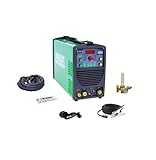 Everlast PowerTIG 185DV Everlast PowerTIG 185DV |
|
Check Latest Price |
| 10 | 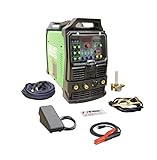 Everlast PowerTIG 250EX Everlast PowerTIG 250EX |
|
Check Latest Price |
We earn from qualifying purchases. CERTAIN CONTENT THAT APPEARS ON THIS SITE COMES FROM AMAZON. THIS CONTENT IS PROVIDED 'AS IS' AND IS SUBJECT TO CHANGE OR REMOVAL AT ANY TIME.
1. PRIMEWELD TIG225X: Best Overall TIG Welder for Aluminum
PRIMEWELD TIG225X 225 Amp IGBT AC DC Tig/Stick Welder with Pulse CK17 Flex Torch and Cable
- 225 amp AC/DC TIG and stick
- 200Hz pulse, adjustable AC frequency
- 1/4 inch aluminum
- CK 17 Superflex torch included
Pros
- Highest rated machine in this roundup at 4.8 stars across 1426 reviews
- 200Hz pulse and adjustable AC frequency give real control on aluminum
- CK Worldwide 17 Series Superflex torch with flex head and USA-made DINSE connector
- Foot pedal and HF hand torch control both included
- Dual 110V and 220V so it works in a garage or a shop
Cons
- Cannot start low enough for razor-blade thin material
- Heavy chassis is awkward to move around a shop alone
We earn a commission, at no additional cost to you. CERTAIN CONTENT THAT APPEARS ON THIS SITE COMES FROM AMAZON. THIS CONTENT IS PROVIDED 'AS IS' AND IS SUBJECT TO CHANGE OR REMOVAL AT ANY TIME.
The TIG225X is the machine that comes up most often in owner feedback and forum threads. It is a 225 amp AC/DC TIG and stick welder built on IGBT inverter technology with pulse width modulation, and the AC side is fully adjustable rather than fixed. Pulse frequency runs up to 200 Hz, and AC frequency is separately adjustable, which is the pair of controls that actually matter when you are trying to shape a bead on aluminum rather than just melt it.
Owner ratings tell the same story. It holds a 4.8-star average across 1,426 reviews with about 90 percent five-star ratings, and the recurring theme in the reviews is dependable arc behavior on aluminum, stainless, and mild steel. On r/Welding, owners describe buying it because the package arrives complete and the HF start works reliably — one long-running thread calls it the value pick for a home shop.
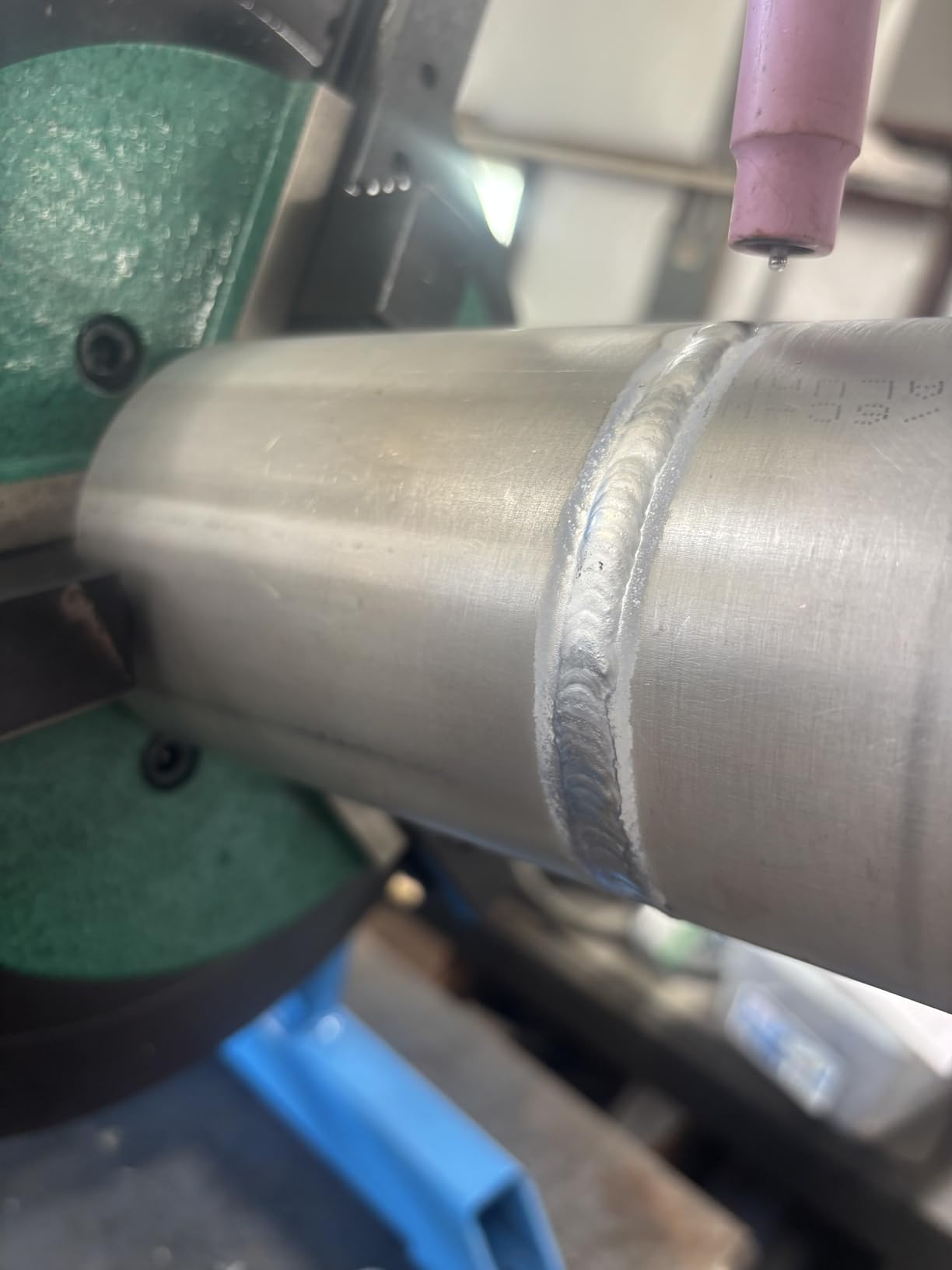
Capacity is the other reason it tops the list. The manufacturer rates it for 1/4 inch aluminum and 3/8 inch mild steel, which covers nearly every home shop project and most of what a fabricator tackles outside a production shop. It welds 7018 and 6013 electrodes in stick mode, and the 110/220V dual voltage means the same box works in a residential garage and a dedicated shop circuit.
What comes in the box matters as much as the spec sheet. You get a CK Worldwide 17 Series Superflex TIG torch with a flex head and CK Superflex hose, a USA-made CK DINSE connector, a foot pedal for heat control, and HF start hand torch control. The Home Shop Machinist forum specifically calls the CK 17 flex torch a step up over what most competitors include, and the gooseneck holds position without fighting you.
What we liked most
Control resolution. AC balance and AC frequency are separate knobs, so you can widen the arc for penetration on plate and tighten it for thin sheet without rebuilding your setup. Pulse up to 200 Hz covers everything from 0.02 inch material upward.
The included torch and pedal mean nothing extra to buy before your first weld. That matters for beginners more than it does for anyone who already owns a shop full of gear.
Where it falls short
The low end of the amperage range does not go as low as machines built specifically for delicate work. Experienced fabricators point out it cannot reliably strike an arc on very thin material, so if your project list is mostly razor-blade-thin sheet, look at the Everlast 200DV below. The unit is also heavy enough that moving it between circuits takes two hands.
We earn a commission, at no additional cost to you. CERTAIN CONTENT THAT APPEARS ON THIS SITE COMES FROM AMAZON. THIS CONTENT IS PROVIDED 'AS IS' AND IS SUBJECT TO CHANGE OR REMOVAL AT ANY TIME.
2. Weldpro 200A AC/DC: Best TIG Welder for Fine Aluminum Control
Weldpro 200A AC/DC TIG Welder with Pulse, 110V/220V Dual Voltage Aluminum TIG Welder, AC TIG/DC TIG/AC PULSE TIG/DC PULSE TIG/Stick 5 in 1 Multiprocess Welding Machine with TIG Torch & Foot Pedal
- 200 amp 5-in-1 multiprocess
- 0.5-200Hz pulse with adjustable peak amps
- Automatic 110V and 220V
- 61.8 lb unit
Pros
- AC balance frequency peak amps upslope and downslope all adjustable
- Two trigger modes for long continuous welds
- Automatic dual voltage removes any guesswork at the outlet
- Full accessory kit including torch pedal flow meter and tungsten
- 40 percent duty cycle at full 200A output
Cons
- 61.8 pound weight makes it one of the heaviest units here
- Large high-contrast display needs a clear look to read
We earn a commission, at no additional cost to you. CERTAIN CONTENT THAT APPEARS ON THIS SITE COMES FROM AMAZON. THIS CONTENT IS PROVIDED 'AS IS' AND IS SUBJECT TO CHANGE OR REMOVAL AT ANY TIME.
The Weldpro packs five welding processes into one box: HF AC TIG, DC TIG, AC pulse TIG, DC pulse TIG, and stick. What separates it from the other 200 amp machines here is not the process list but the parameter depth. AC balance, AC frequency, pulse frequency, peak amperage, upslope, downslope, and trigger mode are all independently adjustable.
That combination is what you want on aluminum. AC balance sets the ratio of electrode-positive cleaning time to electrode-negative penetration time, and AC frequency changes arc width. Being able to set those alongside a 0.5-200 Hz pulse range means you can dial in a fishmouth bead on 0.02 inch sheet and then widen the same machine for a 1/4 inch plate without changing anything except the numbers.
It runs at a 4.6-star average across 836 reviews, and owners frequently single out the high-contrast LED display as the reason setup got faster. High-frequency non-contact arc start reduces tungsten wear compared with older machines, and 2T/4T trigger modes let you lock in amperage for long continuous beads on a trailer or a boat hull.
Automatic 110V/220V switching removes the single most common beginner mistake, which is plugging a 220V machine into a 110V circuit. The 40 percent duty cycle at full rated output is honest for a 200A unit in this class, and thermal and electrical protection circuits cover overheat, over-current, over-voltage, and under-voltage conditions.
Who this suits
Someone doing mixed shop work who will alternate between 0.02 inch aluminum, 1/8 inch aluminum, stainless, and mild steel, and who wants the settings to be adjustable rather than preset. The included kit — torch, rocker foot pedal, 300A ground clamp, gas hose, flow meter, tungsten, and nozzles — means you can start the same afternoon it arrives.
Who should skip it
Anyone who has to carry the machine regularly. At 61.8 pounds it is one of the heavier units we tested, and the 17.6 by 7.9 by 16.2 inch body will not sit on a small cart comfortably. If portability matters more than parameter depth, the Everlast PowerTIG 185DV covers a lot of the same ground at 40 pounds.
We earn a commission, at no additional cost to you. CERTAIN CONTENT THAT APPEARS ON THIS SITE COMES FROM AMAZON. THIS CONTENT IS PROVIDED 'AS IS' AND IS SUBJECT TO CHANGE OR REMOVAL AT ANY TIME.
3. AHP AlphaTIG 203Xi: Best for Shops That Weld Stick Too
NEW 2024 AHP AlphaTIG 203Xi Amp IGBT AC DC Tig/Stick Welder with PULSE 110/220v 3 YEARS WARRANTY
- 203 amp AC/DC TIG and stick
- 100 percent duty cycle at 155 amps
- 1/4 inch aluminum at 110V and 220V
- Three-year warranty
Pros
- 100 percent duty cycle at 155 amps is outstanding for this tier
- Knob-based controls are easier to adjust than menu-driven panels
- Smooth stick mode handles 6011 6013 7018 and 308L rods
- Works on 120V through the included adapter without noticeable power loss
- Three-year warranty with responsive support
Cons
- Minimum output of 10 amps makes very thin-gauge work harder
- Digital readout and knob markings do not match on 120V
- Included ground clamp is cheaply built
We earn a commission, at no additional cost to you. CERTAIN CONTENT THAT APPEARS ON THIS SITE COMES FROM AMAZON. THIS CONTENT IS PROVIDED 'AS IS' AND IS SUBJECT TO CHANGE OR REMOVAL AT ANY TIME.
The AlphaTIG 203Xi is the machine the forums recommend when someone asks what will let them grow into a welder rather than outgrow it. On r/Welding the recurring line is that owners have zero regrets: it tops out at 200 amps on 220V, does both AC and DC, and has HF start. The review data backs that up with a 4.6-star average across 603 reviews and 80 percent five-star ratings.
The headline spec is the duty cycle. Running 100 percent at 155 amps means you can put a full day of plate work on it without worrying about thermal cutback, and long-term owners rate it as outperforming Harbor Freight units and comparable machines in the same tier. Several reviewers call the TIG arc comparable to a Lincoln Square Wave, which is a strong comparison for a home-shop machine.
Controls are physical knobs with a high-visibility LCD screen, and that is a real advantage for beginners. Menu-driven machines put everything three levels deep, and when you are trying to learn what AC balance does, a physical knob you can turn is easier to experiment with. Stick mode is unusually smooth, handling 6011, 6013, 7018, and 308L rods reliably.
The current revision added HV start, an electronic solid-state simulated high-frequency ignition with no point gap to maintain. The box includes a floating ball type billet brass argon regulator, a Nova foot pedal with 25 foot cord, a Nova Rotaflex 9/17 TIG torch at 12.5 feet, a 240V to 120V plug adapter, a 250A stick holder, and a work clamp. AHP backs it with a three-year warranty.
What we liked most
Duty cycle and control simplicity. Two things that matter more than raw wattage on a machine you will use for years. AHP is a lesser-known brand, but owners report responsive support, including one reply inside four hours.
Where it falls short
Minimum output is 10 amps, so very thin-gauge aluminum is harder to run than on a machine with a lower floor. The 120V digital readout and the knob markings do not align, which is confusing until you learn the machine. And because 120V operation is not capped at a lower amperage, thick rods on 120V can trip a breaker.
We earn a commission, at no additional cost to you. CERTAIN CONTENT THAT APPEARS ON THIS SITE COMES FROM AMAZON. THIS CONTENT IS PROVIDED 'AS IS' AND IS SUBJECT TO CHANGE OR REMOVAL AT ANY TIME.
4. LOTOS TIG200ACDC: Best Budget TIG Welder for Aluminum
LOTOS TIG200ACDC 200A AC/DC Aluminum Tig Welder with DC Stick/Arc Welder, Square Wave Inverter with Foot Pedal and Argon Regulator 110/220V Dual Voltage Brown
- 200A AC square wave inverter
- 10-200A AC/DC TIG output
- Automatic 110V and 220V dual voltage
- 37 lb unit
Pros
- Least expensive unit here that still delivers true AC square wave output
- Complete package with torch foot pedal argon regulator and consumables
- Automatic 110V and 220V dual voltage and dual frequency
- Hands-on striking current adjustment for easier arc starts
- 30-day money-back guarantee plus three-year limited warranty
Cons
- Smaller brand with less field history than established manufacturers
- Older 2012 design generation
We earn a commission, at no additional cost to you. CERTAIN CONTENT THAT APPEARS ON THIS SITE COMES FROM AMAZON. THIS CONTENT IS PROVIDED 'AS IS' AND IS SUBJECT TO CHANGE OR REMOVAL AT ANY TIME.
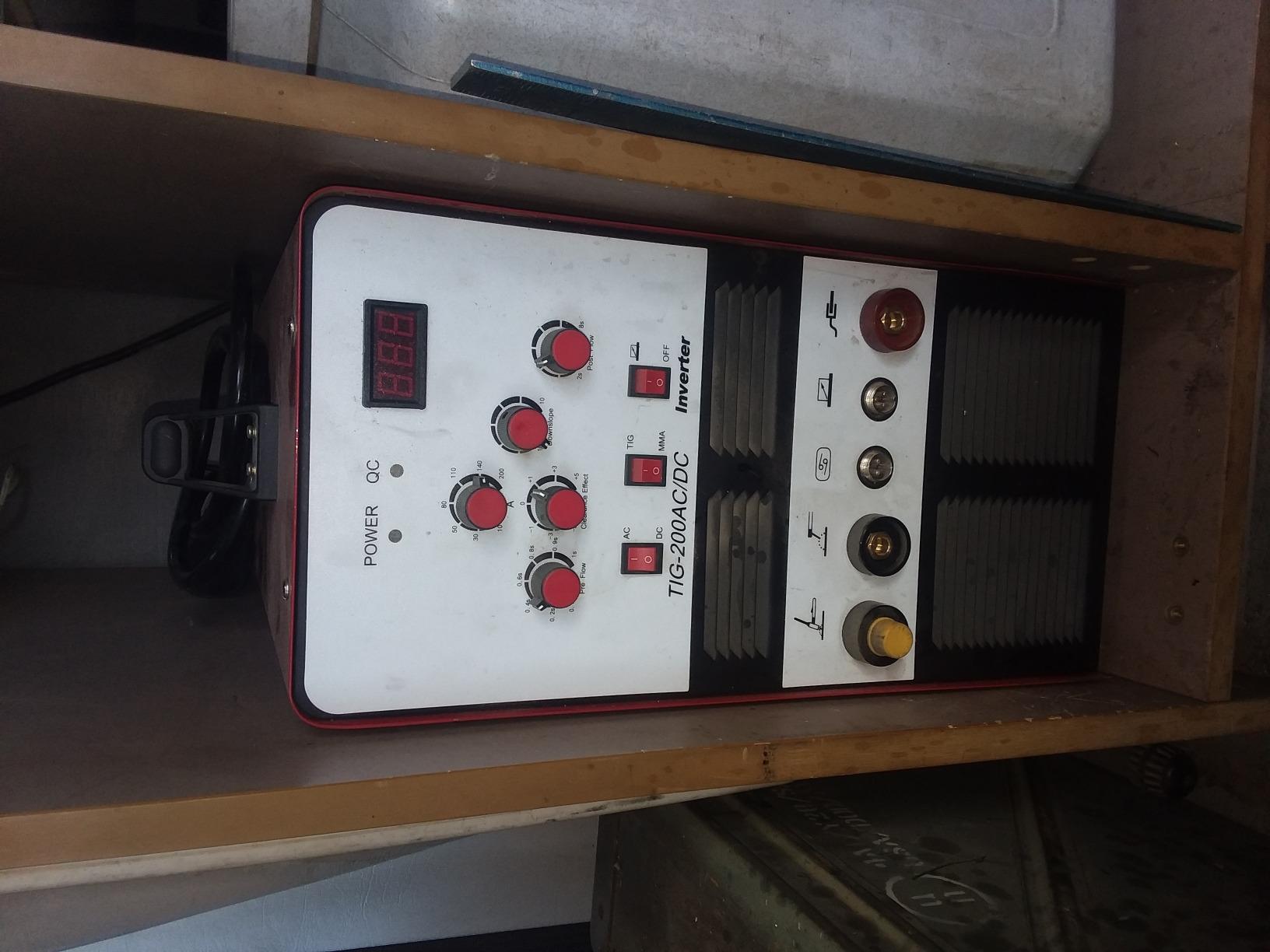
Most entry-level machines advertise TIG and then deliver DC only. The LOTOS TIG200ACDC is the least expensive unit in this roundup that genuinely produces AC square-wave output, 10 to 200 amps, with 15 to 200 amp DC output for stick. That distinction is the whole reason it is on this list.
It weighs 37 pounds and measures 28 by 13 by 17 inches, and it runs on automatic dual voltage and dual frequency — 110/120V and 220/240V at 50/60 Hz. Power efficiency is rated at 80 percent. HF start hand torch control and foot pedal heat control are both present, and the striking arc current is adjustable, which makes starting on thin aluminum easier than on machines that hard-set it.
Owners rate it 4.4 stars across 278 reviews with roughly 70 percent five-star ratings, and the review summary is consistent: this is a capable entry point that delivers credible AC aluminum work, with satisfaction driven by the included foot pedal and regulator. Reservations tend to center on build expectations for the tier rather than welding performance.
What you get in the box is unusually complete: AC/DC power supply, TIG torch, MMA stick clamp, foot pedal, argon regulator, a 220V/110V converter pigtail, ground clamp, a consumable set, and a manual. Support is a 30-day money-back guarantee, a one-year replacement warranty, and a three-year limited warranty.
Who this suits
A first-time aluminum welder working out of a residential outlet who wants a complete AC/DC package without a second purchase. The included regulator and foot pedal remove the two most common add-on costs at this level. It is also a reasonable second machine for someone who needs a portable unit separate from a main shop welder.
Who should skip it
Anyone who plans to grow into heavy plate work or who needs brand-name support behind the warranty. LOTOS is a small manufacturer with a shorter field history than Everlast or AHP, and the design dates from an older generation. If your project list includes stainless at thickness or repeated production schedules, step up a tier.
We earn a commission, at no additional cost to you. CERTAIN CONTENT THAT APPEARS ON THIS SITE COMES FROM AMAZON. THIS CONTENT IS PROVIDED 'AS IS' AND IS SUBJECT TO CHANGE OR REMOVAL AT ANY TIME.
5. ARCCAPTAIN TIG200P ACDC: Best for Square and Triangle Wave Control
ARCCAPTAIN TIG Welder AC/DC 200A with Pulse 7 in 1 Aluminum Welding Machine
- 7-in-1 with square and triangular AC wave
- 0.02-0.20 inch aluminum
- MCU digital control with full parameters
- 26.5 lb chassis
Pros
- Both square wave for cleaning and triangular wave for low heat input
- Full MCU parameter control including pre-flow post-flow ramps and crater current
- Light 26.5 lb chassis with on-demand cooling fan
- Large LED display readable at a glance
- Two trigger modes plus spot TIG
Cons
- Foot pedal not included and the proprietary connector limits third-party pedal choices
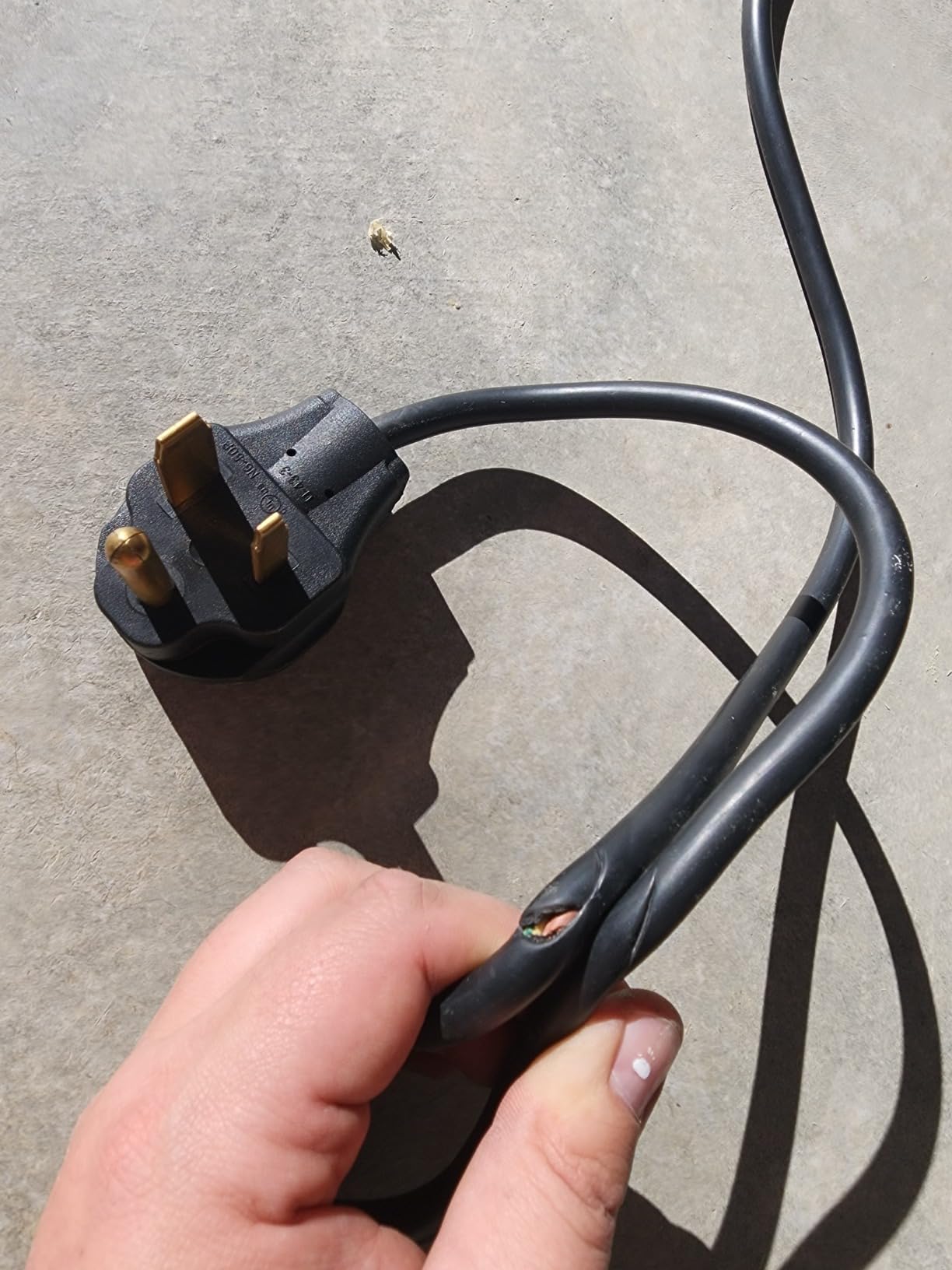
- Some units arrive with a damaged power cord or cracked gas connection
- Warranty and after-sales support reported as unresponsive
We earn a commission, at no additional cost to you. CERTAIN CONTENT THAT APPEARS ON THIS SITE COMES FROM AMAZON. THIS CONTENT IS PROVIDED 'AS IS' AND IS SUBJECT TO CHANGE OR REMOVAL AT ANY TIME.
The ARCCAPTAIN pairs square and triangular AC waveforms on one panel, and for aluminum that matters more than raw amperage. It runs seven modes: DC TIG, DC pulse TIG, AC TIG, AC pulse TIG, AC pulse square wave, AC pulse triangular wave, stick, and spot TIG.
Square wave drives stronger oxide cleaning for stable puddle behavior, while triangular wave reduces heat input and is the setting you want when the material is thinner than the arc can justify. Having both on one panel means you can move from 0.02 inch sheet to the 0.20 inch ceiling without swapping machines. One professional welder in the reviews reportedly called it the best budget-friendly machine he had used.
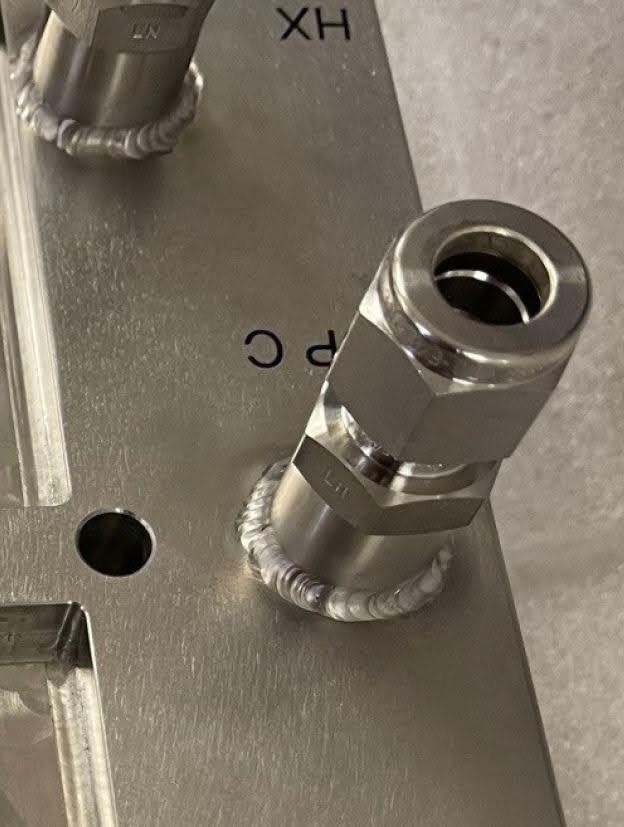
The MCU digital control system is unusually deep for the tier. Pre-flow, initial current, upslope, peak current, base current, downslope, crater current, post-flow, pulse duty, AC frequency, AC balance, and pulse frequency are all adjustable. Aluminum range is 0.5 to 5 mm (0.02 to 0.20 inch), with other metals handled up to 0.39 inch. The chassis is 26.5 lb with an on-demand cooling fan that stays quiet when idle.
Owners rate it 4.3 stars across 242 reviews. Beginners and hobbyists consistently describe it as far more capable than expected, with the AC balance, frequency, and pulse controls credited for clean aluminum work. The package includes a power adapter cord, TIG torch, wire brush, ground clamp, a TIG gun accessory set, and a flow meter.
Who this suits
Someone working a wide range of aluminum gauges who wants the triangle wave for thin material and square wave for plate, and who does not mind setting parameters manually. The 26.5 lb weight and 2T/4T/spot trigger modes make it a good fit for a shop bench rather than a mobile job.
Who should skip it
Buyers who want a turnkey package. The foot pedal is not included, and the proprietary XS12 aviation connector limits which third-party pedals will work. Several buyers also report warranty and after-sales support being unresponsive, so the three-year service window is worth confirming for yourself. Many owners also replace the bulky included WP-26 torch with a stubby gas lens kit.
We earn a commission, at no additional cost to you. CERTAIN CONTENT THAT APPEARS ON THIS SITE COMES FROM AMAZON. THIS CONTENT IS PROVIDED 'AS IS' AND IS SUBJECT TO CHANGE OR REMOVAL AT ANY TIME.
6. Sunstac 250A AC/DC Pulsed TIG: Best for Spot TIG and Repairs
Sunstac 250A Aluminum TIG Welder with Pulse ACDC Foot Pedal Control
- 250 amp AC/DC with AC and DC spot modes
- 4mm aluminum at 110V and 6mm at 220V
- Parameter memory function
- 29.8 lb chassis
Pros
- AC spot and DC spot modes for weld reinforcement
- Parameter save function restores previous setups instantly
- New LCD readable through a welding helmet
- Light 29.8 lb chassis with dual voltage
- Welds aluminum copper alloy steel stainless carbon steel and iron
Cons
- Manufacturer states AC mode current readings are inaccurate
- Foot pedal not included despite foot pedal control being marketed
- 4.1 star average with 15 percent one-star ratings
We earn a commission, at no additional cost to you. CERTAIN CONTENT THAT APPEARS ON THIS SITE COMES FROM AMAZON. THIS CONTENT IS PROVIDED 'AS IS' AND IS SUBJECT TO CHANGE OR REMOVAL AT ANY TIME.
The Sunstac 250A is one of the few here offering both AC spot and DC spot modes alongside standard TIG and pulse TIG. Modes cover HF AC, HF DC, pulsed AC, pulsed DC, AC spot, DC spot, and stick, with 2T, 4T, and spot trigger options plus foot pedal remote control. Spot TIG is genuinely useful for tacking and reinforcing thin aluminum where a full penetration bead would distort the part.
Output reaches 250 amps on 110/220V dual voltage, with maximum aluminum thickness of 4 mm at 110V and 6 mm at 220V. The material list is broad: aluminum, alloy steel, copper, stainless steel, carbon steel, and iron. Cables are generous, with a 118 inch work clamp and electrode holder rated to 300A.
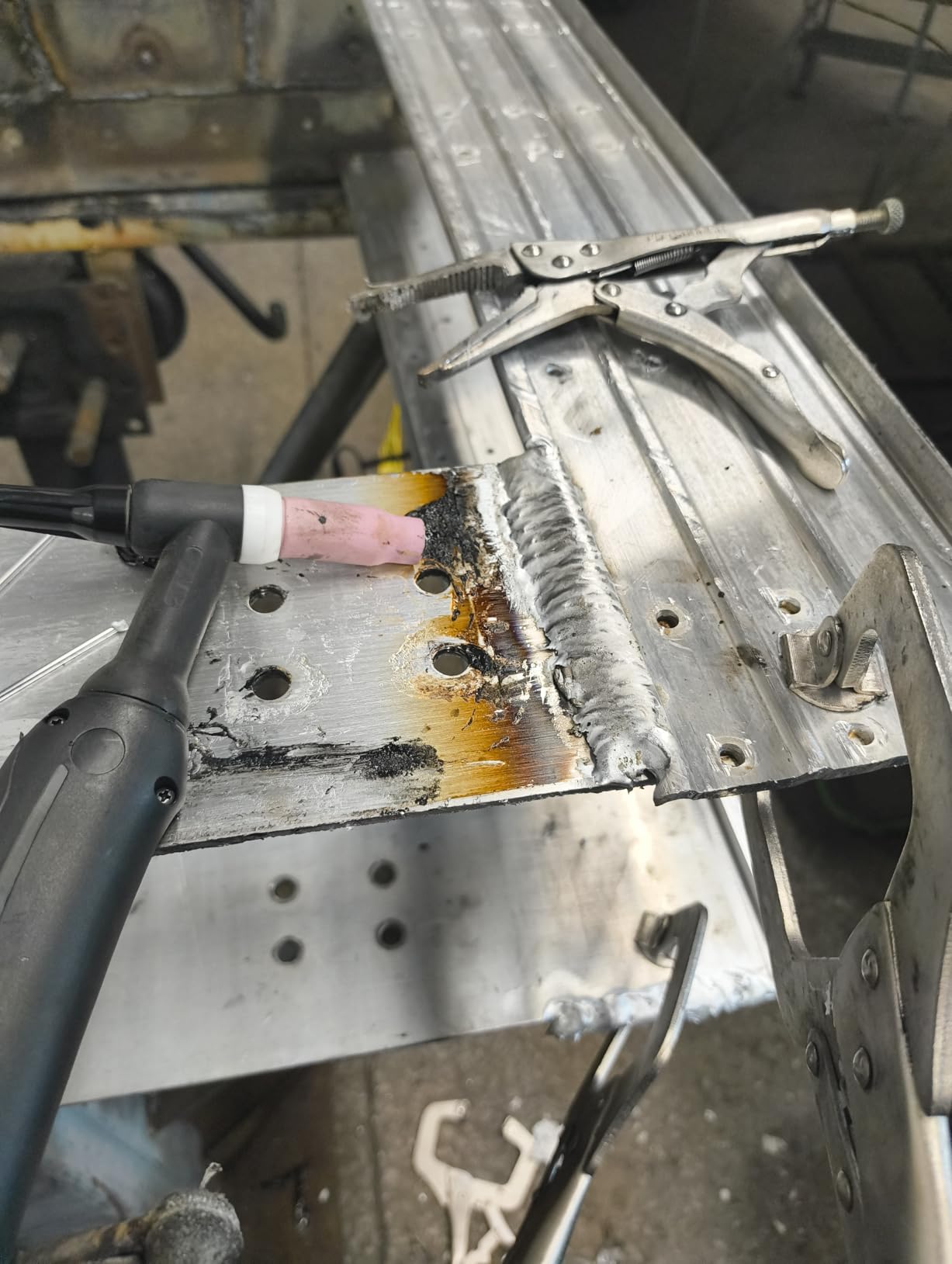
The parameter memory is a small feature that earns its keep. Settings are stored and restored after a power cycle, so a repeat job does not start from factory defaults. The new LCD is readable through a welding helmet, which sounds trivial until you are trying to set amperage with the helmet down and the arc already striking. The machine also auto-detects a plugged-in foot pedal after restart.
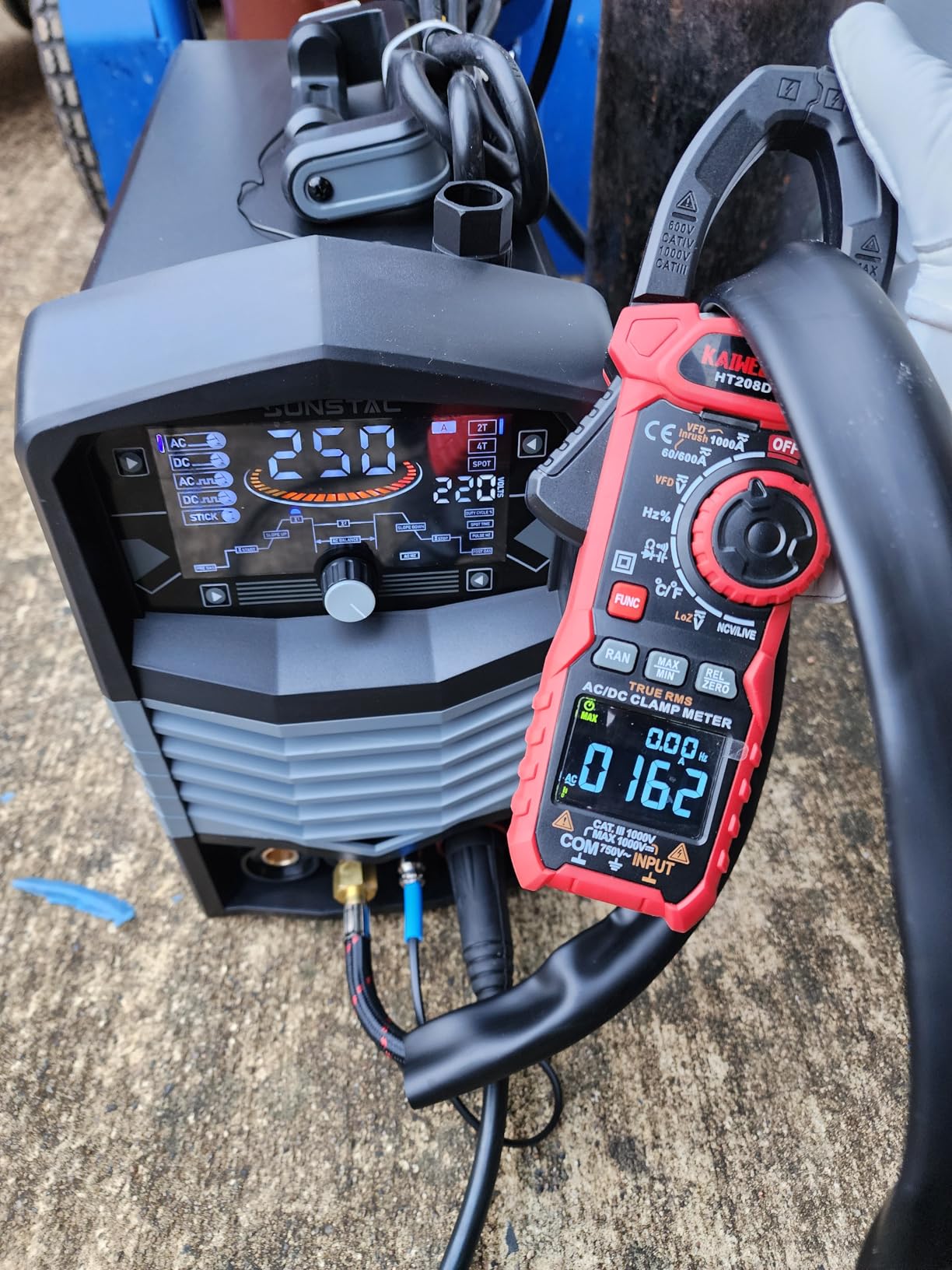
Rating is 4.1 stars across 145 reviews, with 15 percent one-star ratings. The manufacturer’s own documentation notes that AC mode current measurement is inaccurate and that readings can vary with AC balance, which is worth knowing before you trust the numbers on the display while dialing in aluminum.
Who this suits
Repair work — auto body panels, trailer hatches, small aluminum fabrication — where spot TIG for tacking and reinforcement is the feature you will actually use. The 29.8 lb weight and 19 by 15.5 by 12.3 inch footprint make it manageable, and dual voltage means one machine covers a garage and a shop circuit.
Who should skip it
Anyone who wants reliable amperage readouts on AC, because the manufacturer itself flags the measurement as inaccurate. The foot pedal is not included even though foot pedal control is a headline feature, so budget for that separately. With the lowest average rating in the roundup and a newer brand name, it is a value choice with acknowledged rough edges rather than a machine you build a business on.
We earn a commission, at no additional cost to you. CERTAIN CONTENT THAT APPEARS ON THIS SITE COMES FROM AMAZON. THIS CONTENT IS PROVIDED 'AS IS' AND IS SUBJECT TO CHANGE OR REMOVAL AT ANY TIME.
7. Everlast PowerTIG 200DV: Best Low Start Amps for Thin Aluminum
New Everlast PowerTIG 200DV 110/220 Dual Voltage 200amp Pulse ACDC Welder
- 200 amp AC/DC TIG
- Start as low as 5A DC and 20A AC
- Lift start function
- Pre and post flow gas control
Pros
- Start down to 5A DC and 20A AC for delicate work
- Lift start function for work where high-frequency start is undesirable
- Pre and post flow gas plus arc force control reduce spatter
- Everlast brand with an established TIG reputation
- 4.6 stars with 83 percent five-star ratings across 116 reviews
Cons
- Higher price point than the mid-tier alternatives
- 60 pound chassis is heavy for frequent transport
We earn a commission, at no additional cost to you. CERTAIN CONTENT THAT APPEARS ON THIS SITE COMES FROM AMAZON. THIS CONTENT IS PROVIDED 'AS IS' AND IS SUBJECT TO CHANGE OR REMOVAL AT ANY TIME.
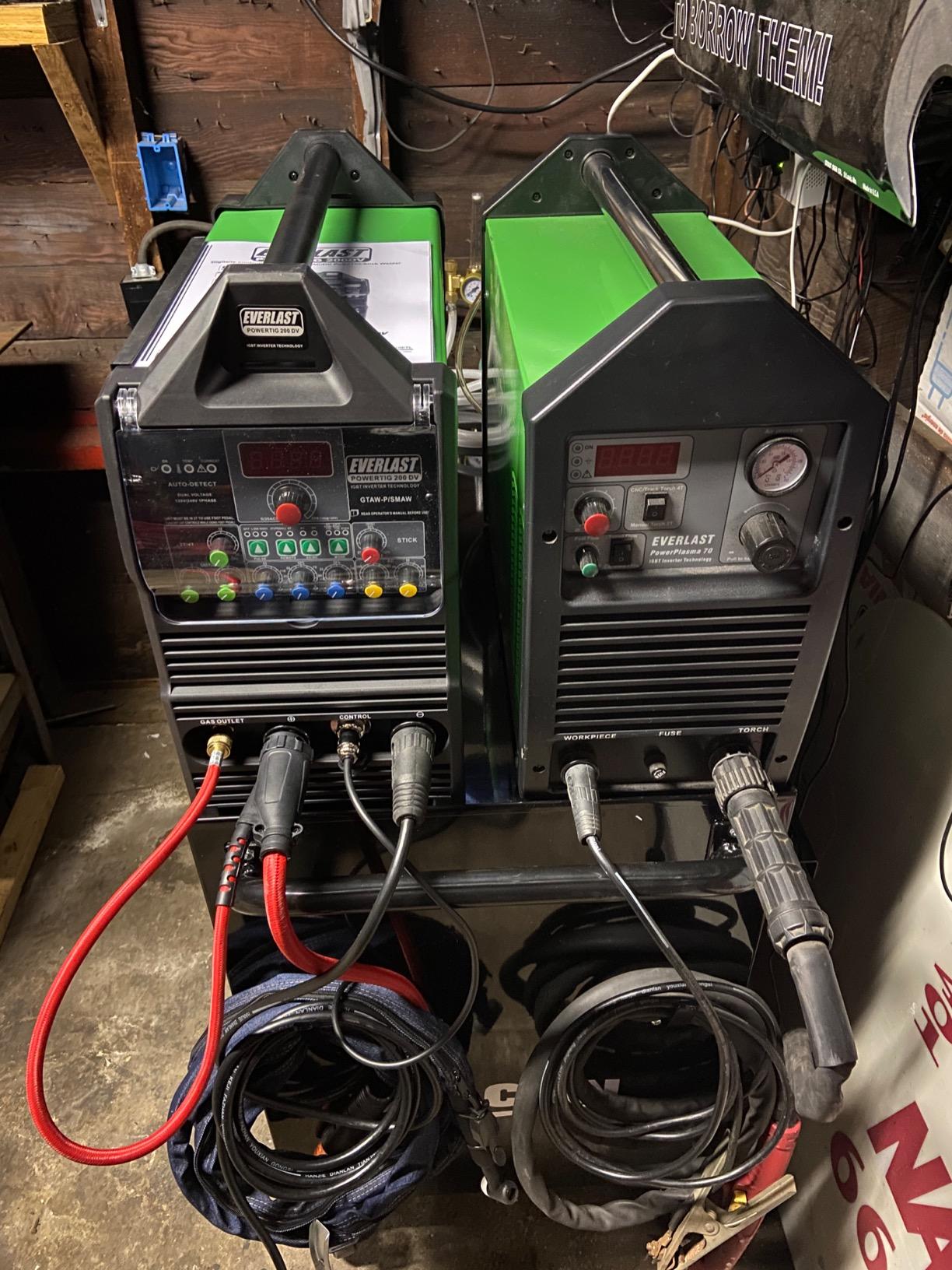
For thin aluminum, the number that decides the purchase is the lowest amperage the machine can start at. The PowerTIG 200DV goes down to 5 amps in DC TIG and 20 amps in AC TIG, an unusually low start capability that very few machines in this class reach. That is the difference between an arc you can hold on delicate material and one that wanders off the edge.
Buyers moving up from DC-only or budget machines single out exactly this feature, along with the lift start function. Lift start touches the workpiece instead of striking a high-frequency arc across the gap, which matters in some shops where high-frequency ignition is unwelcome or where the workpiece cannot tolerate a stray arc.
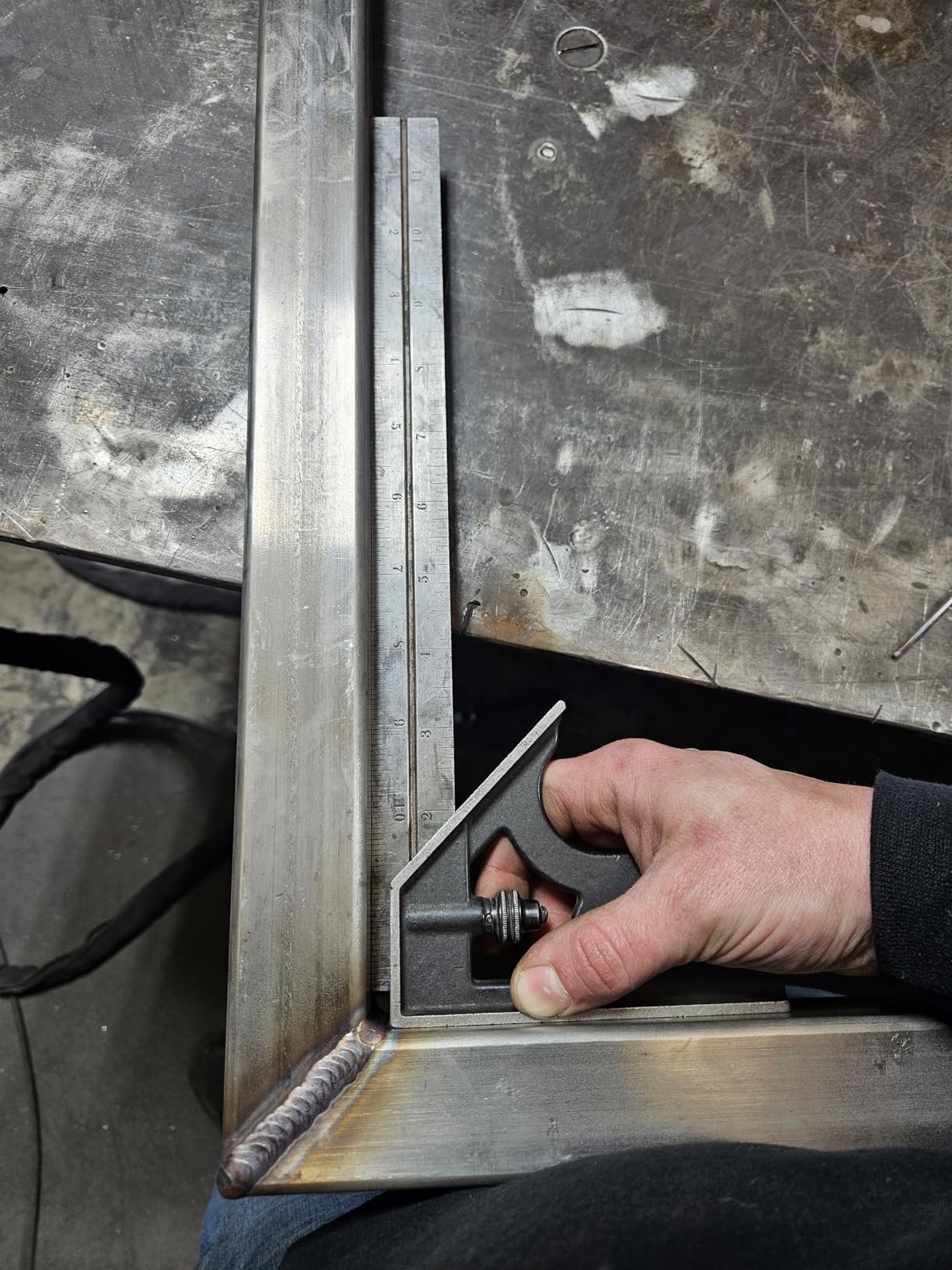
Arc control is the other strength. Pre-flow and post-flow gas control protect the puddle from oxidation during the critical moments at start and finish, and arc force (DIG) reduces spatter on thin material. IGBT modules give stable inverter performance, and the digital display shows an adjustable pulse rate. Operation is 120V or 240V dual voltage.
Rating is 4.6 stars across 116 reviews with 83 percent five-star ratings. The consensus view is that this is a durable step-up unit that justifies a higher price for users welding thinner aluminum regularly. It comes in at 60 pounds and 9 by 24 by 17 inches, so plan your cart accordingly.
Who this suits
Anyone whose work is genuinely thin — 0.02 to 0.04 inch aluminum, can bodies, heat exchanger work, small sheet fabrication — and who has already hit the floor of what budget machines can start. The low start amps and lift start solve the problem directly rather than asking you to work around it.
Who should skip it
Buyers on a tight budget. It sits above the mid-tier machines in this roundup and carries a 60 lb frame, which is a lot of machine to move for occasional work. If your aluminum is mostly 1/8 inch and thicker, the TIG225X gives you comparable arc control without stepping up a tier.
We earn a commission, at no additional cost to you. CERTAIN CONTENT THAT APPEARS ON THIS SITE COMES FROM AMAZON. THIS CONTENT IS PROVIDED 'AS IS' AND IS SUBJECT TO CHANGE OR REMOVAL AT ANY TIME.
8. YESWELDER TIG-200P ACDC: Lightest Machine That Still Does AC Aluminum
YESWELDER 200A AC/DC Aluminum Tig Welder TIG-200P ACDC TIG Welding Machine
- 200 amp AC/DC
- 7-in-1 with square triangle and sine wave
- Aluminum up to 1/8 inch
- 16.47 lb chassis
Pros
- Lightest machine here at 16.47 lb
- Square triangle and sine wave AC options in one unit
- Auto-sensing 110V and 220V input with no manual switching
- Reserved 5-pin foot pedal interface accepts third-party pedals
- Experienced fabricators report results comparable to a Miller Maxstar
Cons
- Lowest rating here at 3.9 stars with 18 percent one-star ratings
- Included WP-26 torch is oversized and most owners replace it
- No gas regulator or tungsten in the box
We earn a commission, at no additional cost to you. CERTAIN CONTENT THAT APPEARS ON THIS SITE COMES FROM AMAZON. THIS CONTENT IS PROVIDED 'AS IS' AND IS SUBJECT TO CHANGE OR REMOVAL AT ANY TIME.
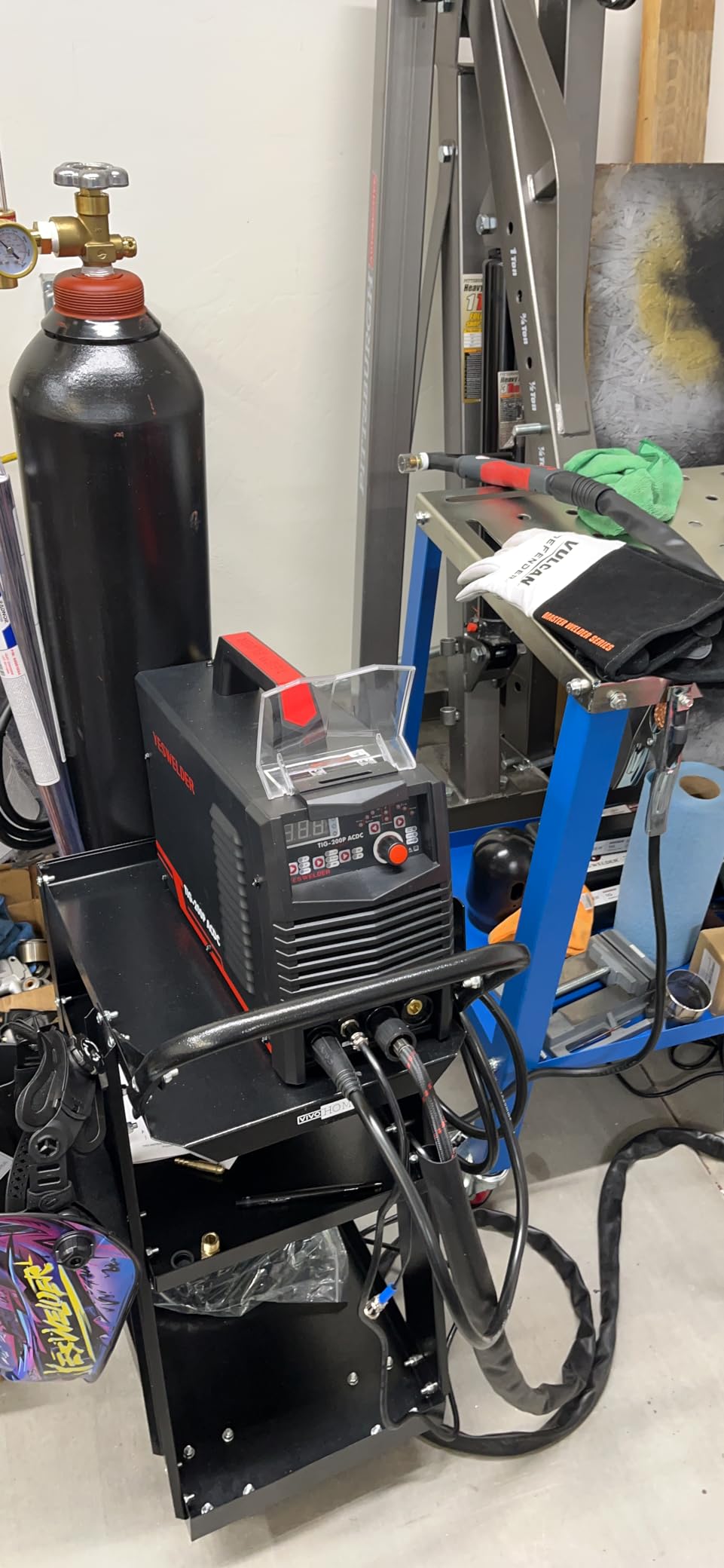
At 16.47 lb — 7.47 kg — the TIG-200P is by a wide margin the lightest machine here, and light enough to carry in one hand to a job site. The feature set is otherwise generous: seven-in-one covering MIX TIG, stick, AC TIG, DC TIG, AC pulse TIG, DC pulse TIG, and spot welding, with software-controlled square, triangle, and sine wave AC/DC output.
Aluminum capability is rated up to 1/8 inch, and experienced fabricators in the reviews report using it on 1/8 inch and 1/4 inch aluminum. One pro fabricator describes welding 12×2 aluminum railing with results comparable to a Miller Maxstar. Input is auto-sensing 110V/220V with no manual switching, and hot start plus auto memory help stabilize ignition and retain settings.
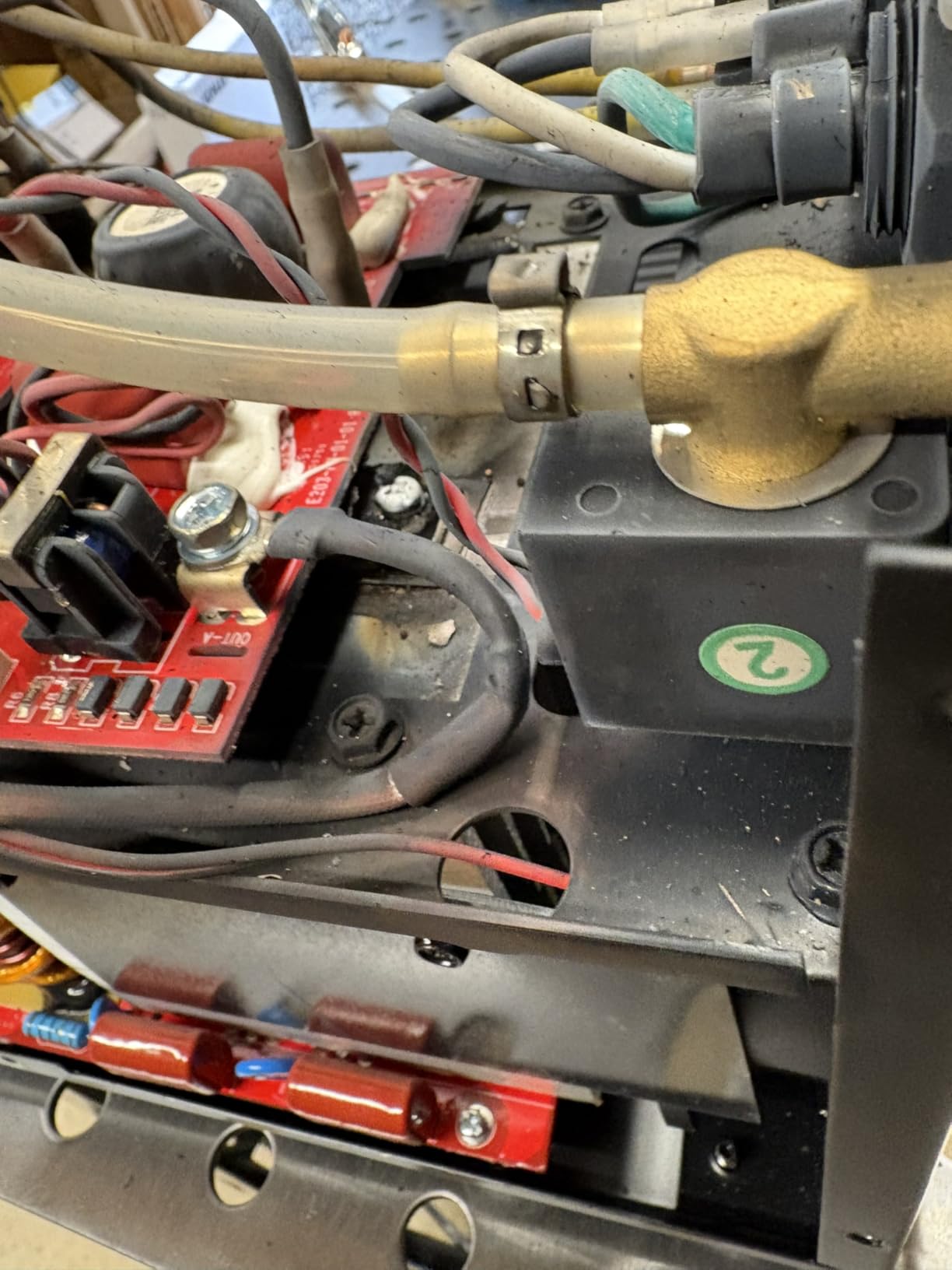
The 3.9 star average across 113 reviews is the lowest here, with 18 percent one-star ratings, and the reason is visible in the data: a meaningful share of buyers report out-of-box argon leaks that prevented aluminum welding entirely. That is a quality control problem on arrival rather than a design flaw, but it is worth planning for.
Nearly everyone also replaces the included 13 foot WP-26 torch. It is MIG-gun sized, all-in-one with no separate gas line, and the manual is thin with no settings guide beyond titanium. No gas regulator or tungsten is included, so those are immediate add-on costs. One other quirk worth noting: low-amperage AC TIG can trigger even premium auto-darkening helmets.
Who this suits
Field work, boat and trailer repair away from a shop, or anyone who moves machines regularly. The 5-pin foot pedal interface accepts standard third-party pedals, which the ARCCAPTAIN’s proprietary connector does not. Beginners who prioritize weight and simple auto-sensing dual voltage will find it approachable.
Who should skip it
Production work or anyone who needs the warranty to be dependable. The 18 percent one-star share is a real quality variance signal, and a machine that arrives with an argon leak cannot weld aluminum at all until it is fixed. Budget for a regulator, tungsten, and a replacement torch before your first weld.
We earn a commission, at no additional cost to you. CERTAIN CONTENT THAT APPEARS ON THIS SITE COMES FROM AMAZON. THIS CONTENT IS PROVIDED 'AS IS' AND IS SUBJECT TO CHANGE OR REMOVAL AT ANY TIME.
9. Everlast PowerTIG 185DV: Best for Mobile and Shop Work
2021 Everlast PowerTIG 185DV AC/DC TIG Stick Welder 110/220 Volt Inverter-Based Dual Voltage 185Amp with Pedal Package
- 185 amp AC/DC TIG and stick
- Two pre-programmed pulse settings
- 110V and 220V dual voltage
- 40 lb chassis
Pros
- Duty cycle rated above similar Miller and Lincoln models
- Simple analog-style controls with LED display
- 40 pound chassis is easy to move
- Foot pedal package included so no extra purchase
- Two pre-programmed pulse settings simplify repeat work
Cons
- 185 amp ceiling is below the 200-250A machines here
- Only two fixed pulse frequency presets instead of full adjustment
We earn a commission, at no additional cost to you. CERTAIN CONTENT THAT APPEARS ON THIS SITE COMES FROM AMAZON. THIS CONTENT IS PROVIDED 'AS IS' AND IS SUBJECT TO CHANGE OR REMOVAL AT ANY TIME.
The PowerTIG 185DV is the middle of the Everlast range and, for a lot of shops, the most sensible one. It is a 185 amp AC/DC TIG and stick welder on a digitally controlled IGBT inverter, and owners consistently rate its duty cycle as outperforming similarly priced Miller and Lincoln models. The controls are analog-style with an LED display, which means no deep menu navigation to change a setting mid-job.
Pulse is handled with two pre-programmed settings, one or 50 pulses per second. That is a real limitation compared with the adjustable pulse on the TIG225X, Weldpro, or ARCCAPTAIN, but for repeat work on a known material it removes a decision rather than adding one. Reviewers rate it 4.5 stars across 77 reviews.
What tips it for mobile work is the 40 pound weight, roughly a third lighter than the Weldpro and the PowerTIG 200DV, combined with 110V and 220V dual voltage operation. It works in a garage and a shop circuit with the same machine, and the included foot pedal package means amperage control is available from the first weld.
For a fabricator doing mixed aluminum and stainless work at a moderate pace, that combination of duty cycle, straightforward controls, and manageable weight is the deciding factor. On forums, the general view of the legacy premium brands is that the machines weld well but cost considerably more than the value tier for comparable results — this Everlast sits in the middle ground between those two positions.
Who this suits
Shop and mobile fabricators who weld aluminum and stainless at a moderate pace and want a machine that moves easily between a truck and a bench. The analog controls are also easier to hand to an apprentice than a menu-driven panel.
Who should skip it
Anyone who needs more than 200 amps of headroom or fully adjustable pulse frequency. The 185 amp ceiling limits thick aluminum plate work, and the two fixed pulse presets will frustrate anyone who works across a wide range of gauges. For that, the PowerTIG 250EX is the direct step up.
We earn a commission, at no additional cost to you. CERTAIN CONTENT THAT APPEARS ON THIS SITE COMES FROM AMAZON. THIS CONTENT IS PROVIDED 'AS IS' AND IS SUBJECT TO CHANGE OR REMOVAL AT ANY TIME.
10. Everlast PowerTIG 250EX: Best for All-Day Production Welding
PowerTIG 250EX AC/DC Pulse TIG Stick Welder, IGBT, 1 or 3 Phase 220v
- 250 amp AC/DC pulse TIG
- Start as low as 5A in AC and DC
- 12 ft water-cooled torch included
- Pulse up to 500Hz
Pros
- Expanded AC cleaning range for fine aluminum oxide control
- Low 5 amp start in both AC and DC modes plus 2 amps tolerance
- Pulse up to 500Hz for thin-gauge control
- 12 ft water-cooled torch included for long production runs
- Operates on single or three phase 220V power
Cons
- Most expensive dedicated TIG unit here
- Smallest review base at 39 reviews
- 65 pound machine plus water-cooled torch adds bulk
We earn a commission, at no additional cost to you. CERTAIN CONTENT THAT APPEARS ON THIS SITE COMES FROM AMAZON. THIS CONTENT IS PROVIDED 'AS IS' AND IS SUBJECT TO CHANGE OR REMOVAL AT ANY TIME.
The PowerTIG 250EX is the machine for someone who welds aluminum all day. It is a 250 amp AC/DC pulse TIG and stick welder built around IGBT power modules, and the specs are aimed at production rather than home projects: a low 5 amp start in both AC and DC modes with plus or minus 2 amps, pulse up to 500 Hz, and an expanded AC cleaning range for fine control over aluminum oxide removal.
The included torch is the standout. A 12 foot Everlast 18 Series water-cooled TIG torch with 35-series DINSE connectors and a 2T/4T torch switch lets you weld for extended stretches without the torch overheating, which is the failure mode that ends a long aluminum session on an air-cooled torch. It runs on single or three phase 220V, so a shop with three-phase power can use it directly.
Other production details include pre-flow and post-flow control for maximum shielding gas protection, an improved HF start circuit designed to reduce maintenance issues, a lift start function for when high-frequency start is not wanted, arc force control for stick to cut spatter in short-arc conditions, and color-coded panel controls. Air-cooled and water-cooled torch variants are both available.
The honest caveat is the review base. At 39 reviews and a 4.2 star average, buyers appear to be responding to the specification set and Everlast’s build reputation rather than a long history of owner feedback. At 65 pounds plus a water-cooled torch, it is also a bulky unit and carries the highest price tag of any dedicated TIG machine we tested.
Who this suits
Production shops, fabricators, and anyone who spends full days on aluminum and needs a water-cooled torch plus 500 Hz pulse to hold thin-gauge work. The low AC start amps and wide cleaning range also make it the strongest option here for specialized very thin material.
Who should skip it
Home shops and occasional hobbyists. This is a professional machine with professional bulk and a small owner base, so the money is better spent on a mid-tier unit unless you are welding aluminum as paid work every day. For most people, the TIG225X covers 1/4 inch aluminum in a lighter, less costly package.
We earn a commission, at no additional cost to you. CERTAIN CONTENT THAT APPEARS ON THIS SITE COMES FROM AMAZON. THIS CONTENT IS PROVIDED 'AS IS' AND IS SUBJECT TO CHANGE OR REMOVAL AT ANY TIME.
Can you weld aluminum with a normal TIG welder? AC is the requirement
Only if the machine has true AC output. Aluminum forms an oxide layer instantly on the molten surface, and that oxide melts at a much higher temperature than the aluminum itself, which is around 1200 degrees Fahrenheit. Alternating current solves this because each cycle reverses polarity: the electrode-positive half breaks up the oxide, and the electrode-negative half drives heat and penetration into the metal. A DC-only TIG welder has no cleaning half-cycle, so on aluminum it either will not strike a stable arc or leaves a contaminated, porous bead. This is also why machines sold as TIG welders but limited to DC output are common in the entry tier and why we left them out of this roundup entirely.
AC vs DC TIG on aluminum: the beginner trap
DC TIG is not better than AC TIG — it is a different process with a different purpose. DCEN is the standard for welding thin stainless, mild steel, and copper, and it delivers a tighter, more concentrated arc. AC is what aluminum requires because of the oxide problem. Most machines here are AC/DC, which means you use AC for aluminum and DC for steel and stainless, and the same box handles both.
The controls that follow from having AC are AC balance and AC frequency. Balance sets the proportion of electrode-positive cleaning time to electrode-negative penetration time — more cleaning for stubborn oxide, more penetration for thick plate. Frequency changes the arc width, with lower frequencies giving a wider, more forgiving arc and higher frequencies a tighter one. A machine with a fixed AC waveform and no balance control will weld aluminum, but you have no way to tune it for the gauge in front of you.
For steel and stainless on the same machine, DC TIG is the right choice. Any of the ten welders here handles that too, which is why a single AC/DC machine is the practical answer for most mixed shops.
Square wave vs sine wave AC output: what actually changes
Square wave AC concentrates its cleaning and penetration energy at the extremes of the cycle, which gives a faster, more aggressive oxide clean and a more focused puddle. It is the waveform you want for thicker aluminum and for material with heavier oxide or mill scale. Most modern inverter machines in this roundup default to or offer square wave, including the ARCCAPTAIN and YESWELDER explicitly.
Sine wave is the older, gentler shape. It spreads the energy more evenly through the cycle, which produces a softer, wider arc and a cooler weld. The YESWELDER is one of the few machines here offering all three shapes, and the ARCCAPTAIN pairs square wave with triangular wave for thin material. Triangular wave is worth understanding because it reduces heat input, which is the practical answer to warping on very thin aluminum.
The bottom line: square wave for plate, sine or triangle for thin sheet, and buy a machine that lets you choose. Marketing that calls square wave an upgrade without explaining it is doing you no favors, which is the single most common gap in competitor coverage of this topic.
110V vs 220V: check your circuit before you buy
A 110V-only machine roughly halves your usable output, and that is a dealbreaker the shopping listings rarely surface. Most of the welders here are dual voltage, and four of them — the Weldpro, LOTOS, YESWELDER, and Everlast 200DV — switch automatically, which removes a common beginner error. The TIG225X and AHP AlphaTIG 203Xi handle 110/220V with the AHP including a NEMA 6-50R to 15-5P adapter.
Two practical notes. The Everlast PowerTIG 250EX runs on 220V only, single or three phase, so it needs a dedicated circuit. And the AHP’s 120V operation is not capped at a lower amperage, so thick electrodes on 120V can trip a breaker — keep 120V for lighter work or install a 220V outlet.
How we picked these machines and what we did not test
Every machine here produces real AC output, is sold as a dedicated AC/DC TIG or TIG and stick unit, and has enough owner feedback for us to evaluate. We weighted four things: whether AC balance and AC frequency are adjustable, the low end of the amperage range, duty cycle, and what comes in the box.
We did not bench-test these machines, and we make no dyno claims. What we can say is that these ten are the welders the specifications, the owner review data, and the forum consensus all point to, and that every limitation we list comes from owner reports or manufacturer documentation rather than from assumptions. We also did not include Harbor Freight units. They are a legitimate budget path for AC aluminum, and the Vulcan Protig 200 comes up often on hobbyist forums, but none was in our data set, so we are not going to rank one. The AC output, balance, frequency, and low start amp criteria in this guide apply to them directly.
How to choose a TIG welder for aluminum: 7 buying criteria
1. True AC output, and we mean AC. This is the filter. Anything labeled TIG but limited to DC output is a stick machine with a TIG mode, and it will not weld aluminum to a standard anyone should accept.
2. Adjustable AC balance and AC frequency. Balance controls cleaning versus penetration, frequency controls arc width. Fixed settings mean the same machine cannot be adapted to a different gauge without buying a different machine.
3. Low start amperage. For material under 0.04 inch, the floor of the amperage range decides whether you can hold an arc at all. The Everlast 200DV at 5 amps DC and 20 amps AC, and the 250EX at 5 amps in both modes, lead this roundup. The AHP’s 10 amp minimum is the common starting point most machines fall short of.
4. Duty cycle. The AHP’s 100 percent rating at 155 amps is unusually good for the tier. A 40 percent duty cycle at 200A, like the Weldpro’s, is fine for shop work but means cooling breaks on long plate jobs.
5. Pulse TIG. Pulse controls heat input, which controls warping and burn-through on thin aluminum. A 200 Hz ceiling covers most needs; the 500 Hz on the 250EX is for the thinnest material and the highest control.
6. Voltage and duty you can live with. Dual voltage is close to essential in a home shop. 110V-only roughly halves output, and a 220V-only machine needs a dedicated circuit.
7. What is in the box. A CK 17 Superflex torch and a foot pedal can add meaningfully to the real cost of a bare machine. The TIG225X, Weldpro, AHP, and LOTOS all include a foot pedal. The ARCCAPTAIN, Sunstac, and YESWELDER do not, and YESWELDER also leaves out a gas regulator and tungsten.
Two things that are worth budgeting beyond the machine: gas and consumables. Argon for most work, or an argon mix for heavier aluminum, plus thoriated or lanthanated tungsten, gas lenses, and torch cables. On a TIG machine, the torch cable and liner are consumables that get replaced, and cheaper machines often come with a torch you will replace within a year anyway.
Beyond the machine: torch, tungsten, and gas
The torch matters as much as the power source. A flexible gooseneck head lets you hold the tungsten at a consistent angle, and that consistency is what produces a repeatable bead. The CK 17 Series Superflex included with the TIG225X is widely considered a step up in this class, and the Everlast 18 Series water-cooled torch on the 250EX is the answer to long production runs.
For tungsten on aluminum, lanthanated is the practical choice for AC work. Thoriated performs well and is easier to strike, but it carries a mild handling consideration, and many shops have moved to lanthanated for that reason. Whichever you use, a dedicated electrode grinder matters — forum consensus is strong on this, because with an inverter and square wave output the electrode does not ball up the way it did on older transformers, and a contaminated tungsten ruins an aluminum bead faster than anything else.
On gas, pure argon is the standard for aluminum up to about 1/8 inch. Beyond that, a small percentage of helium mixed in gives a hotter, more fluid puddle that improves penetration on thicker material, at higher cost. Set your flowmeter around 20 cubic feet per hour for argon on most gauges, and use pre-flow and post-flow to protect the puddle at start and finish.
Cleaning is not optional. Aluminum must be degreased and brushed to bright metal immediately before welding, because the oxide layer reforms in seconds. A dedicated stainless brush kept exclusively for aluminum, plus a grinder or dedicated oxide-removal tool for thicker material, makes a measurable difference to porosity.
Common aluminum welding mistakes to avoid
1. Welding dirty or unbrushed aluminum. This is the first and most common failure. The oxide reforms almost instantly, so clean and brush to bright metal immediately before the arc strikes, and keep a dedicated stainless brush for aluminum only.
2. Too much amperage for the gauge. The instinct to turn the machine up to make a faster weld causes burn-through on thin material and distortion on anything flat. Thin sheet needs a stable arc at low amperage, which is why start capability matters as much as peak output.
3. Wrong tungsten, wrong grind. Contaminated tungsten deposits tungsten in the puddle and ruins the bead. A sharp, clean tungsten ground for AC use is the cheapest quality improvement available.
4. Not using argon, or running the wrong mix. TIG on aluminum needs proper shielding gas. A heavy argon flow is better than a weak one, and helium mixes help on thick sections.
5. Ignoring gas flow and torch angle. An excessive flow can disturb the shielding on thin work, and a torch angle that is not roughly 10 to 15 degrees off vertical will push the arc and the puddle around. Adjustable upslope and downslope, found on the Weldpro and ARCCAPTAIN, smooth the start and end that beginners tend to rush.
Hot cracking is the failure mode to watch for on repairs. It comes from contamination, from wrong filler metal for the alloy, and from restraint on a thin part — 6061 and 5052 behave very differently under the torch, and mixing them is a common mistake in body panel work.
Frequently Asked Questions
Can you weld aluminum with a normal TIG welder?
Yes, but only if the machine has true AC output. Aluminum forms an oxide layer that melts at a much higher temperature than the metal, and the electrode-positive half of an AC cycle is what breaks it up. A DC-only TIG welder either will not strike a stable arc on aluminum or leaves a contaminated, porous bead. Look for AC/DC output with adjustable AC balance and frequency.
Will a DC TIG welder weld aluminum?
Not acceptably. DC TIG is excellent for thin stainless, mild steel, and copper, but without the electrode-positive cleaning half-cycle there is nothing to remove the aluminum oxide. You can strike an arc on DC aluminum, but the bead will be dirty, porous, and prone to cracking. For aluminum, AC output is the requirement, not a preference.
What is the best TIG welder for aluminum overall?
The PRIMEWELD TIG225X is our pick for best overall. It is a 225 amp AC/DC TIG and stick machine with pulse up to 200 Hz, adjustable AC frequency, 110V and 220V dual voltage, capacity for 1/4 inch aluminum, and a CK 17 Superflex torch plus foot pedal included. It holds a 4.8 star average across 1,426 reviews.
What is the best TIG welder for thin aluminum?
Look at the machine’s lowest start amperage first, not its maximum output. The Everlast PowerTIG 200DV starts as low as 5 amps DC and 20 amps AC, and the PowerTIG 250EX starts at 5 amps in both modes, making them the best options here for very thin material. The AHP AlphaTIG 203XI has a 10 amp minimum, which is workable but firmer.
Which AC waveform is good for aluminum TIG?
Square wave is the best general choice for aluminum. It concentrates cleaning and penetration energy at the extremes of the cycle, giving faster oxide cleaning and a more focused puddle on thicker material. Sine wave is gentler and produces a wider, cooler arc. Triangular wave reduces heat input, which is the setting you want on very thin sheet to limit burn-through and warping.
What is the best portable TIG welder for beginners?
The YESWELDER TIG-200P is the lightest machine in this roundup at 16.47 lb, with auto-sensing 110V and 220V input and no manual switching. The Everlast PowerTIG 185DV at 40 lb is the better pick if you want a foot pedal and stronger build quality. For beginners generally, the AHP AlphaTIG 203XI has the simplest knob-based controls and a three-year warranty.
What are common aluminum welding mistakes?
The most common are welding dirty or unbrushed aluminum, running too much amperage for the gauge, using a contaminated tungsten, using dirty air or the wrong gas flow, and holding too steep a torch angle. Clean to bright metal immediately before welding, grind the tungsten for AC use, and use argon at roughly 20 cubic feet per hour.
Is TIG the hardest form of welding?
TIG is generally considered the most demanding of the common processes because you control the filler rod by hand, manage heat manually, and manage the puddle by hand as well. There is no automatic feeding to hide behind. It is also the most versatile and the one that produces the cleanest results on thin material and stainless, so the skill is worth building.
The best TIG welder for aluminum: our final verdict
For most people buying one machine, the PRIMEWELD TIG225X is the best TIG welder for aluminum in 2026. It has real AC output with adjustable balance and frequency, pulse to 200 Hz, 1/4 inch aluminum capability, dual voltage, and a torch and pedal in the box, all backed by the highest owner rating in this roundup. If your work is very thin, step up to the Everlast PowerTIG 200DV for its 5 amp DC start. If you need the deepest parameter control, the Weldpro 200A AC/DC takes it further. Whatever you choose, confirm it has AC output before you buy anything else.