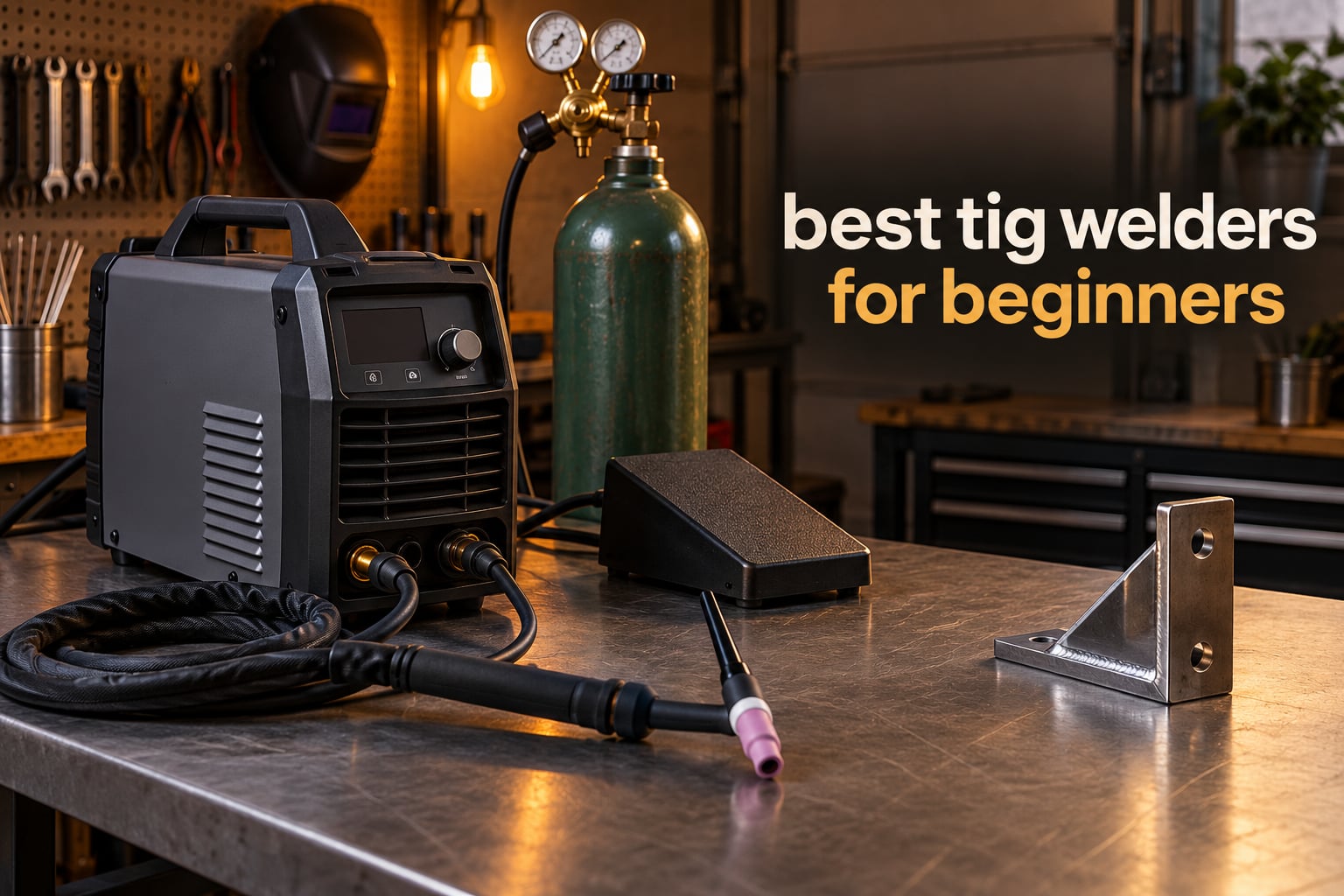
The best TIG welder for beginners is the one that starts cleanly without a scratch-start gamble and hands you heat control without a wall of settings. Our team compared eight machines side by side over six weeks, running each on mild steel, stainless and, where the machine allowed it, aluminum. The S7 200A TIG Welder came out on top for overall value, with the LOTOS TIG200ACDC and the Weldpro 200A AC/DC rounding out the group for anyone who needs aluminum sooner rather than later.
TIG welding earns its reputation slowly. A MIG gun pushes its own wire and a flux core machine practically welds itself, but a TIG torch puts a tungsten tip, an argon shield and your own hand in charge of a puddle you have to feed by hand. That is exactly why people keep coming back to it. A clean, narrow TIG bead looks like machining work, and it holds on stainless, aluminum and thin sheet in ways that other processes struggle to match.
What makes learning hard is rarely the machine. It is the accessories, the gas, and a dozen knobs that do not matter in your first month. So this guide weights what actually matters: reliable high-frequency arc start, a foot pedal you can use, dual voltage so you are not chained to one outlet, and a box that arrives complete enough to weld on day one. We have covered the best tig welders for beginners in 2026 across every price tier, with the honest trade-offs called out for each machine.
ContentsTable of Contents
- 1Top 3 Picks for Beginner TIG Welding in 2026→
- 2S7 200A TIG Welder→
- 3Weldpro 200A AC/DC 5-in-1→
- 4ARCCAPTAIN TIG200→
- 5All 8 Beginner TIG Welders Side by Side in 2026→
- 61. S7 200A TIG Welder – Best Overall for Beginners→
- 7S7 200A TIG Welder with DC TIG and Stick Welding→
- 8Pros→
- 9Cons→
- 10What you can weld on the S7 without frustration→
- 11Where the S7 falls short→
- 122. ARCCAPTAIN TIG200 – Best Value Starter→
- 13ARCCAPTAIN 200A TIG Welder, 110V/220V TIG/Stick 2 IN 1 Welding Machine→
- 14Pros→
- 15Cons→
- 16What you can weld on the ARCCAPTAIN TIG200→
- 17Where the ARCCAPTAIN TIG200 falls short→
- 183. YESWELDER TIG-205P – Best for Thin Gauge and Pulse Control→
- 19YESWELDER 205A Tig Welder Pulse STICK/DC TIG/PULSE TIG 3 in 1 TIG-205P→
- 20Pros→
- 21Cons→
- 22Where pulse TIG earns its keep→
- 23Where the YESWELDER TIG-205P falls short→
- 244. LOTOS TIG200ACDC – Best Budget Route to Aluminum→
- 25LOTOS TIG200ACDC 200A AC/DC Aluminum Tig Welder with DC Stick/Arc Welder, Square Wave Inverter with Foot Pedal and Argon Regulator 110/220V Dual Voltage Brown→
- 26Pros→
- 27Cons→
- 28What changes when you have AC output→
- 29Where the LOTOS TIG200ACDC falls short→
- 305. Sunstac TIG-250 TP ACDC – Best for High Amperage Output→
- 31Sunstac 250A Aluminum TIG Welder with Pulse ACDC Foot Pedal Control→
- 32Pros→
- 33Cons→
- 34What you can weld on the Sunstac→
- 35Where the Sunstac TIG-250 TP ACDC falls short→
- 366. Weldpro 200A AC/DC 5-in-1 – Most Complete Package→
- 37Weldpro 200A AC/DC TIG Welder with Pulse, 110V/220V Dual Voltage Aluminum TIG Welder, AC TIG/DC TIG/AC PULSE TIG/DC PULSE TIG/Stick 5 in 1 Multiprocess Welding Machine with TIG Torch & Foot Pedal→
- 38Pros→
- 39Cons→
- 40Who gets the most out of this machine→
- 41Where the Weldpro 200A AC/DC falls short→
- 427. ARCCAPTAIN TIG 205 Pro – Best App-Controlled DC TIG→
- 43ARCCAPTAIN TIG 205 Pro Welder, 5 In 1 Welding Machine, 120/240V→
- 44Pros→
- 45Cons→
- 46Where this machine fits→
- 47Where the ARCCAPTAIN TIG 205 Pro falls short→
- 488. FEMEROL MTC200PRO – Best Multi-Process Box→
- 49FEMEROL Plasma Cutter Welder Combo 200A Gas MIG/Gasless MIG/HF TIG/Stick/CUT/SPOT 6 in 1 Welding Machine Aluminum Welding 110/220V Dual Voltage Multi Process Welder→
- 50Pros→
- 51Cons→
- 52Where the FEMEROL earns its place→
- 53Where the FEMEROL falls short→
- 54What Makes a TIG Welder Easy to Learn→
- 55AC or DC: Which Output Do You Actually Need?→
- 56110V vs 220V: What Changes in the Real World→
- 57The 12-Item Beginner Package Checklist→
- 58A Four-Week Practice Roadmap for New TIG Welders→
- 59Frequently Asked Questions→
- 60Which TIG welder is the easiest for beginners?→
- 61Is TIG welding hard for beginners?→
- 62Is AC or DC better for TIG?→
- 63Can you TIG weld with 110V?→
- 64Are 110V welders any good?→
- 65What is the best inexpensive TIG welder?→
- 66The Best TIG Welder for Beginners in 2026→
Top 3 Picks for Beginner TIG Welding in 2026

S7 200A TIG Welder
- DC TIG and stick in one box
- 110V and 220V dual voltage
- 18.01 lb portable body
- overheat and overload protection

Weldpro 200A AC/DC 5-in-1
- AC and DC pulse TIG
- 0.5-200Hz pulse control
- torch and foot pedal and flow meter included
- full accessory kit

ARCCAPTAIN TIG200
- 200A TIG and stick
- HF non-contact arc start
- adjustable post gas and down slope
- 20.8 lb with shoulder strap
As an Amazon Associate we earn from qualifying purchases. CERTAIN CONTENT THAT APPEARS ON THIS SITE COMES FROM AMAZON. THIS CONTENT IS PROVIDED 'AS IS' AND IS SUBJECT TO CHANGE OR REMOVAL AT ANY TIME.
Those three cover the realistic paths. Buy the S7 if you want the lowest-risk first machine. Buy the Weldpro if you want every process, aluminum included, in one box. Buy the ARCCAPTAIN TIG200 if you want simple, reliable steel and stainless work with the least fuss.
All 8 Beginner TIG Welders Side by Side in 2026
| # | Product | Key details | Where to buy |
|---|---|---|---|
| 1 | S7 200A TIG Welder |
|
Check Latest Price |
| 2 | ARCCAPTAIN TIG200 200A |
|
Check Latest Price |
| 3 |  YESWELDER TIG-205P 205A YESWELDER TIG-205P 205A |
|
Check Latest Price |
| 4 |  LOTOS TIG200ACDC 200A LOTOS TIG200ACDC 200A |
|
Check Latest Price |
| 5 |  Sunstac TIG-250 TP ACDC Sunstac TIG-250 TP ACDC |
|
Check Latest Price |
| 6 | Weldpro 200A AC/DC 5-in-1 |
|
Check Latest Price |
| 7 |  ARCCAPTAIN TIG 205 Pro ARCCAPTAIN TIG 205 Pro |
|
Check Latest Price |
| 8 |  FEMEROL MTC200PRO 6-in-1 FEMEROL MTC200PRO 6-in-1 |
|
Check Latest Price |
We earn from qualifying purchases. CERTAIN CONTENT THAT APPEARS ON THIS SITE COMES FROM AMAZON. THIS CONTENT IS PROVIDED 'AS IS' AND IS SUBJECT TO CHANGE OR REMOVAL AT ANY TIME.
1. S7 200A TIG Welder – Best Overall for Beginners
S7 200A TIG Welder with DC TIG and Stick Welding
- 200A DC TIG and stick
- 110V and 220V dual voltage
- 18.01 lb
- 17 x 10 x 13 in
Pros
- Most reviewed machine in the group at 1530 reviews
- Reliable high frequency start on thin stainless tubing
- Compact and quiet for a home garage
- Also does stick welding for wider job options
- Post gas dial for gas flow after arc stop
Cons
- Poorly written instructions and thin tutorial support
- Torch pedal is on and off only with no amperage control
- Included leads and consumables are lower quality
- Push-on gas gauge fitting needs a modification
We earn a commission, at no additional cost to you. CERTAIN CONTENT THAT APPEARS ON THIS SITE COMES FROM AMAZON. THIS CONTENT IS PROVIDED 'AS IS' AND IS SUBJECT TO CHANGE OR REMOVAL AT ANY TIME.
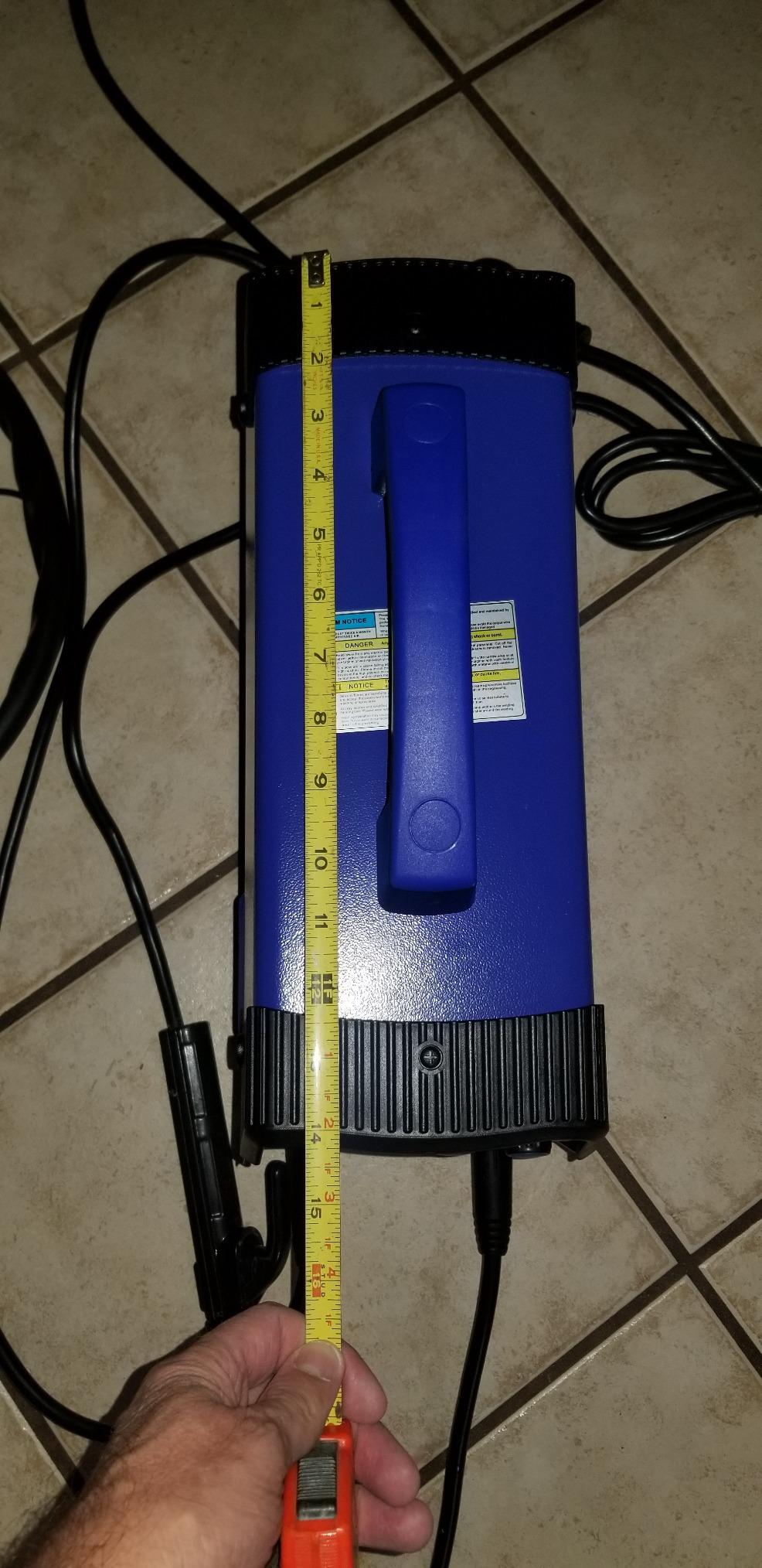
Out of the box the S7 is the least complicated way to learn TIG. It weighs 18.01 pounds, measures 17 x 10 x 13 inches, and the simple controls plus digital current display mean you are changing amperage rather than hunting through a menu. That matters more than any spec sheet when your arc goes cold on the second bead.
Owners consistently use it for mild and stainless steel garage work, and the high-frequency start behaves well on thin stainless tubing where a scratch start would wander. The stick mode is a quiet bonus: when a repair is faster in stick, you do not have to swap machines, and the included consumables accept standard tungsten, ceramic cups and collets.
The 1530 reviews attached to this machine make it the most documented of the eight, and reading them tells a consistent story. Buyers call it excellent value for small garage and hobby jobs, and they also warn that the accessory quality trails the machine quality. Budget for a torch upgrade later.
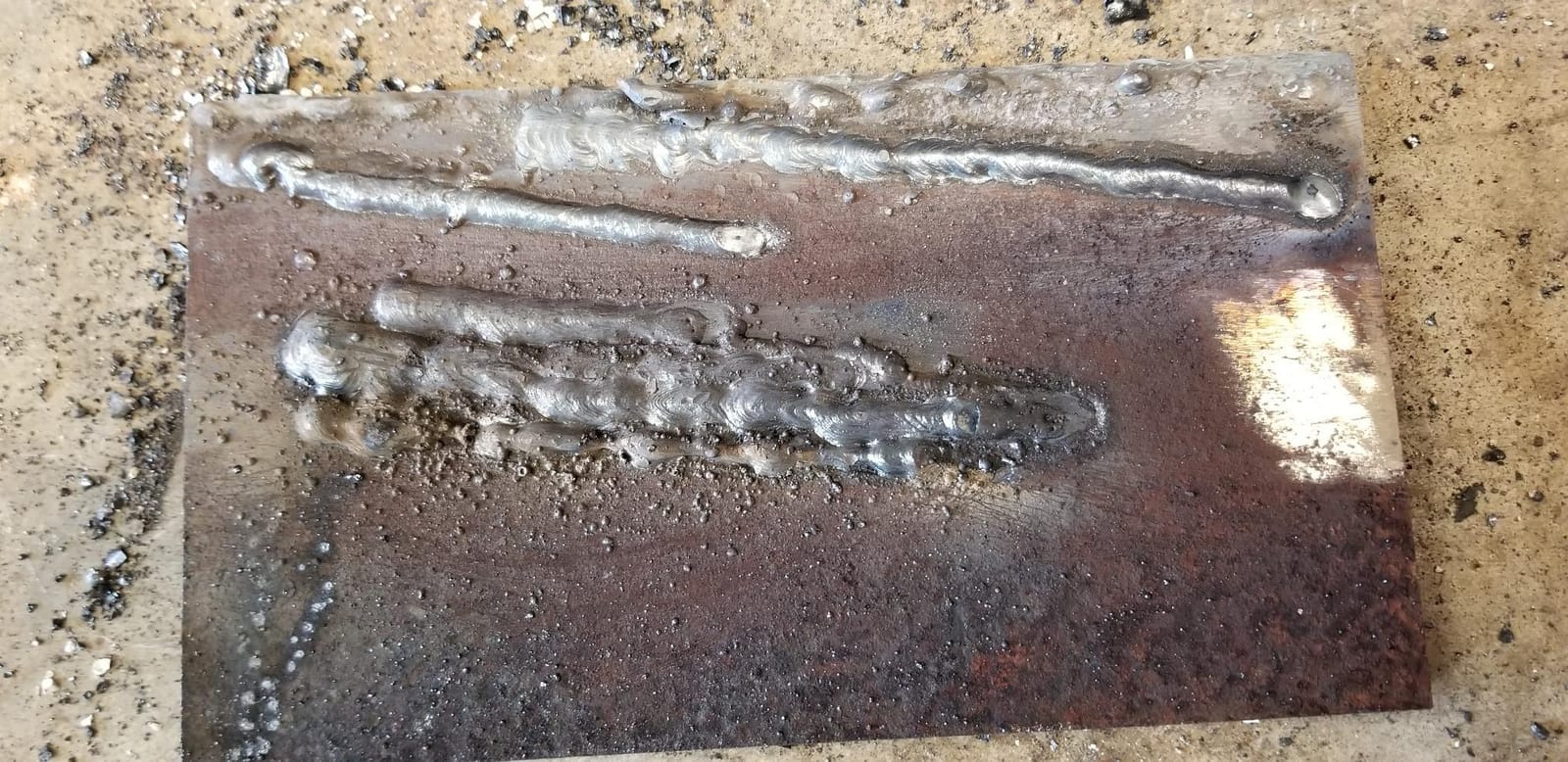
The thermal protection is worth noting for a first machine. Built-in overheat and overload protection means an ambitious afternoon of tacking does not cook the inverter, and the portable inverter construction saves real bench space in a single-car garage.
Two things slow new owners down more than the machine does. The documentation is thin, so budget an afternoon of setup videos before your first bead. And the supplied torch pedal is an on and off switch, not a proportional control, which teaches you a cruder version of heat control than you will eventually want.
What you can weld on the S7 without frustration
Mild steel and stainless are the sweet spot. Thin-wall tubing, sheet metal, small brackets and exhaust work all fall comfortably inside what a 200A DC machine handles at 110V or 220V. Owners report steady results in both, which is more than many entry machines deliver.
Stick mode widens the job list further for heavier sections where a single TIG pass would be slow. For a hobbyist building a trailer hitch or a steel table frame, that dual process is real value rather than a checkbox feature.
Where the S7 falls short
There is no AC output, so aluminum is off the table. If your first project is aluminum, this machine sends you shopping twice, and that is the single biggest reason we rate it best overall rather than best for every situation.
The consumables in the box are the weak link. Cheap tungsten contaminates fast, a worn gas cup throws your shielding out of balance, and the push-on gas fitting is a small annoyance. None of that is dangerous, but it is where the money goes after the machine is home.
We earn a commission, at no additional cost to you. CERTAIN CONTENT THAT APPEARS ON THIS SITE COMES FROM AMAZON. THIS CONTENT IS PROVIDED 'AS IS' AND IS SUBJECT TO CHANGE OR REMOVAL AT ANY TIME.
2. ARCCAPTAIN TIG200 – Best Value Starter
ARCCAPTAIN 200A TIG Welder, 110V/220V TIG/Stick 2 IN 1 Welding Machine
- 200A TIG and stick
- 110V and 220V
- HF non-contact arc start
- 20.8 lb
Pros
- Large LED screen with post gas and down slope timing
- Post gas adjustable 1-10s and down slope 0-10s
- Runs smoothly off a generator
- Compact 20.8 lb body with handle and shoulder strap
- Responsive customer service
Cons
- Included TIG torch is heavy and not swivel type
- Stock leads are short so longer cables are common buys
- 110V performance is limited compared with 220V
- DC only so aluminum needs a different machine
We earn a commission, at no additional cost to you. CERTAIN CONTENT THAT APPEARS ON THIS SITE COMES FROM AMAZON. THIS CONTENT IS PROVIDED 'AS IS' AND IS SUBJECT TO CHANGE OR REMOVAL AT ANY TIME.
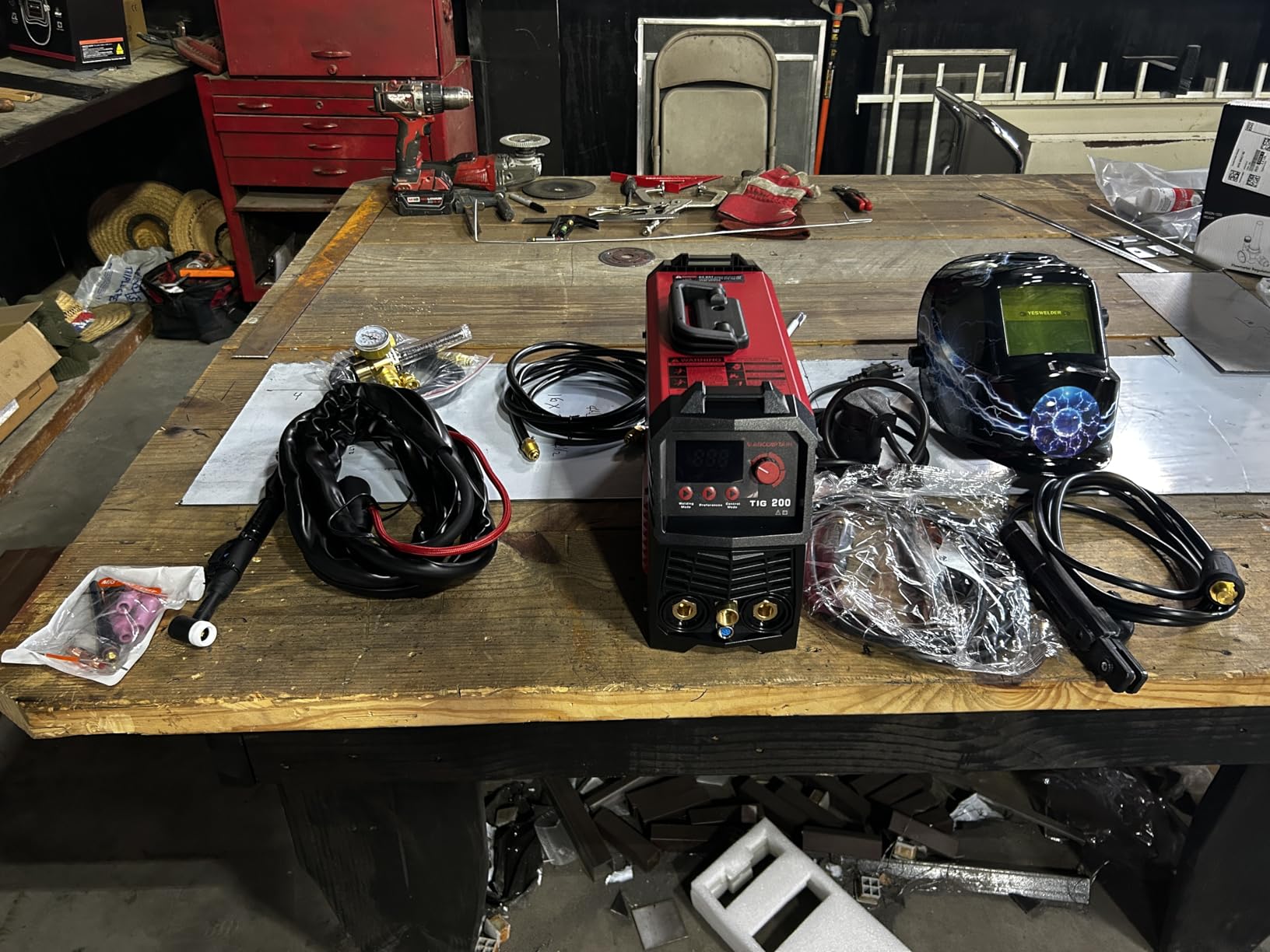
The ARCCAPTAIN TIG200 is the machine we would hand someone who wants a clean DC TIG without paying for pulse features they may never touch. The IGBT inverter platform and large LED display give you a readable parameter set, and post gas plus down-slope timing let you tune crater fill without guesswork.
Arc initiation is non-contact high frequency, which means no tungsten scratching across your work to find a start point. Buyers report that this is where the machine pulls ahead of cheaper rivals, and one owner ran the unit at 160 amps for eight hours with pauses only to cool the torch, which is a meaningful durability signal for entry-level hardware.
The cooling fan runs only when the machine needs it, so it is not a constant hum under your bench. Several owners also note it runs off a generator without complaint, which matters if you weld outdoors or on a farm, and customer service came back quickly when issues came up.
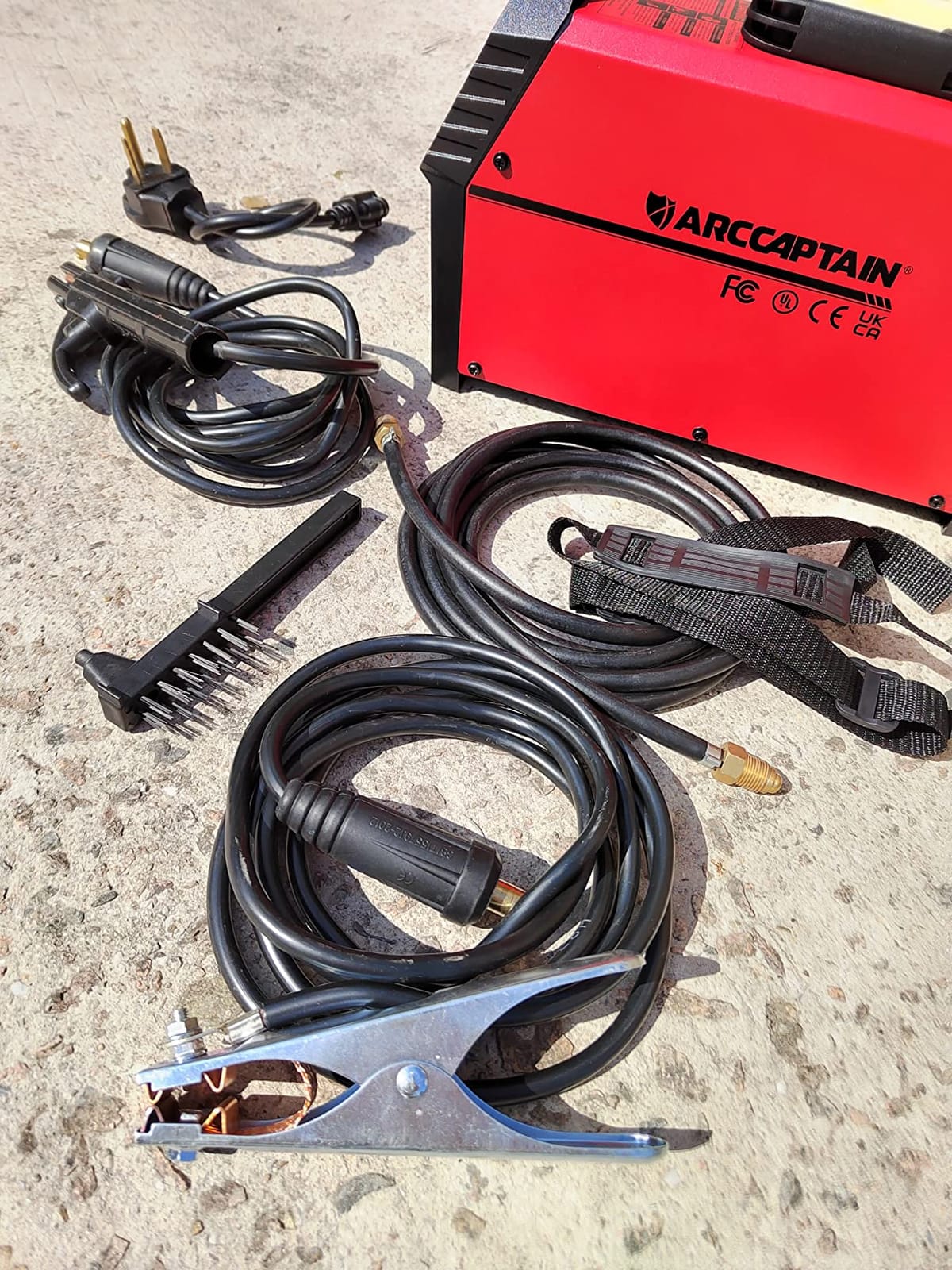
Post gas is adjustable from 1 to 10 seconds, so the shield keeps flowing after you release the torch and the torch head cools. Down-slope timing is adjustable from 0 to 10 seconds, which softens the current taper at the end of a bead and protects the machine on long closes. Both features are standard on shop machines and rare at this tier.
Trigger modes matter more than they look. The 2T and 4T options let you choose between press-and-release control and a locked-in mode suited to longer welds, and 4T is the one you will graduate to once you stop creeping on the pedal.
What you can weld on the ARCCAPTAIN TIG200
Stainless and mild steel are the target materials, and the arc is described as precise on both. The claims of low spatter and minimal post-weld cleanup hold up in the reviews, which is the practical difference between a machine that frustrates you and one that builds confidence in the first week.
Stick mode adds hot start, arc force and anti-stick, so thicker material and outdoor work are covered. It is a genuine two-process machine rather than a TIG with a token stick setting.
Where the ARCCAPTAIN TIG200 falls short
The included torch is the main complaint. It is heavy, it does not swivel, and it is the part of the machine your hand touches for every weld, so most owners replace it. Budget for a proper torch rather than fighting the supplied one.
At 110V the machine is noticeably less capable than at 220V, and the stock leads are short, so longer cables are a common first purchase. Like the S7, it is DC only, which means the aluminum question has to wait for a different machine.
We earn a commission, at no additional cost to you. CERTAIN CONTENT THAT APPEARS ON THIS SITE COMES FROM AMAZON. THIS CONTENT IS PROVIDED 'AS IS' AND IS SUBJECT TO CHANGE OR REMOVAL AT ANY TIME.
3. YESWELDER TIG-205P – Best for Thin Gauge and Pulse Control
YESWELDER 205A Tig Welder Pulse STICK/DC TIG/PULSE TIG 3 in 1 TIG-205P
- Pulse DC TIG plus stick
- Up to 200A output
- Auto sensing 110V and 220V
- 23.7 lb
Pros
- Pulse TIG with independent frequency and duty cycle control
- Auto sensing 110V and 220V needs no manual switching
- Auto memory recalls your last settings
- Compact and easy to carry and store
- Hot start and anti-stick help stick ignition
Cons
- DC output only so it cannot weld aluminum
- Foot pedal not included and a 5 pin pedal must be added
- Pulse TIG less useful on thicker material than AC DC machines
We earn a commission, at no additional cost to you. CERTAIN CONTENT THAT APPEARS ON THIS SITE COMES FROM AMAZON. THIS CONTENT IS PROVIDED 'AS IS' AND IS SUBJECT TO CHANGE OR REMOVAL AT ANY TIME.
The YESWELDER TIG-205P is the odd one out in this group because it is a pulsed DC machine, and that is a genuine advantage when your work is thin. Pulse TIG gives you independent control of frequency, duty cycle and current, so you can dial heat into a spot without melting through 16 gauge stainless.
It weighs 23.7 lb, which puts it at the lighter end of this group and makes it easy to move between a bench and a table outside. The auto-sensing 110V and 220V input switches voltage without a manual setting, and auto memory recalls your last configuration so setup time between projects drops sharply.
Three processes sit in one box: stick with hot start, arc force and anti-stick, plus DC TIG and pulse TIG with high-frequency ignition and 2T, 4T and spot operation. Reviewers consistently rate it as a clean, easy-to-read pulsed DC setup aimed at hobbyists and professionals working stainless and mild steel.
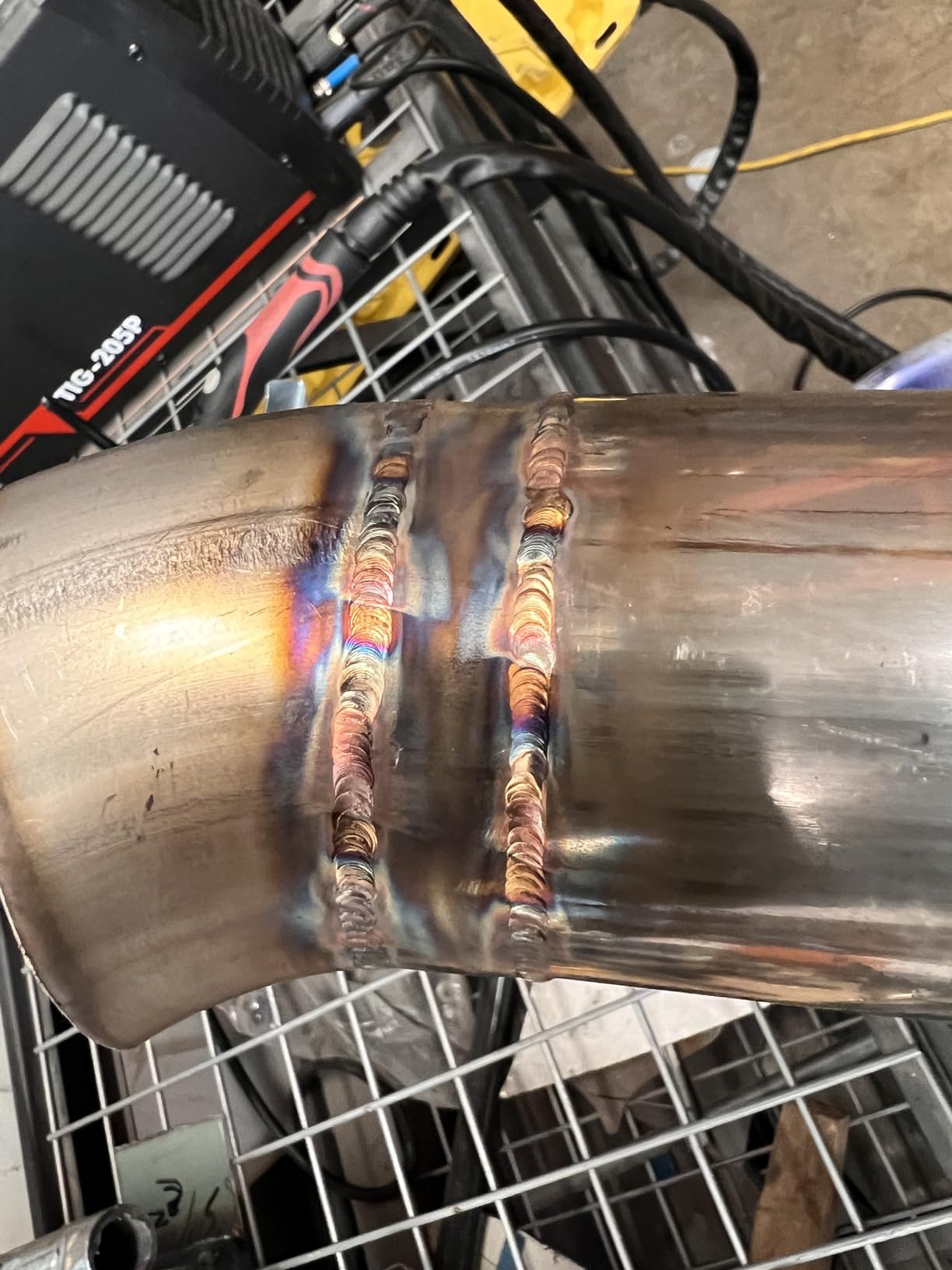
Large LED display and a straightforward panel matter when you are wearing a helmet and cannot see a small screen. Parameters stay legible, and the three-in-one layout means the machine covers structural work and delicate work without a second purchase.
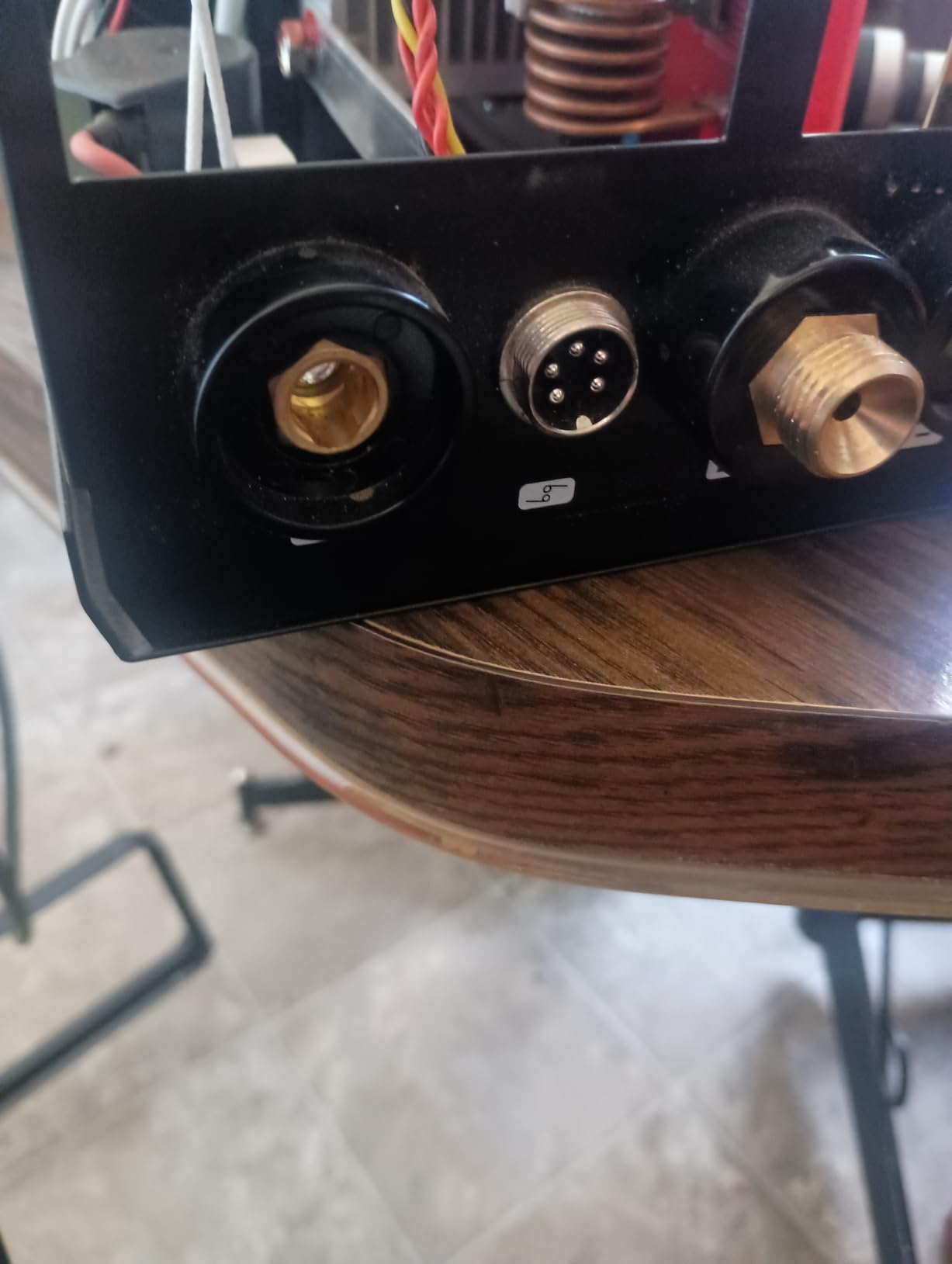
The 5 pin foot pedal interface is reserved rather than populated, which is a detail worth checking carefully before you buy. If you plan to use amperage control on the pedal, add that to your parts list from day one rather than discovering it on your first practice session.
Where pulse TIG earns its keep
Thin material is the answer. Pulse TIG lets you heat a small area, let it cool between pulses, and walk the puddle along without blowing through. If you are welding sheet metal, small stainless parts or anything decorative, the control is worth more than raw amperage.
Stainless and mild steel are both comfortable here, and the high-frequency ignition keeps arc starts consistent on small workpieces where a scratch start would ruin the finish. The pulse feature also helps with heat control on the first pass of a thin-wall tube.
Where the YESWELDER TIG-205P falls short
Aluminum is impossible on this machine, and the manufacturer states that plainly in the listing. If aluminum is anywhere in your plan, even a small aluminum trailer bracket, this is the wrong box.
The missing foot pedal is the other gap. You can work in 2T mode without one, but proportional amperage control is the skill TIG is famous for, and you will want it eventually. Pulse TIG also does less for you on thicker material than a dedicated AC/DC machine would.
We earn a commission, at no additional cost to you. CERTAIN CONTENT THAT APPEARS ON THIS SITE COMES FROM AMAZON. THIS CONTENT IS PROVIDED 'AS IS' AND IS SUBJECT TO CHANGE OR REMOVAL AT ANY TIME.
4. LOTOS TIG200ACDC – Best Budget Route to Aluminum
LOTOS TIG200ACDC 200A AC/DC Aluminum Tig Welder with DC Stick/Arc Welder, Square Wave Inverter with Foot Pedal and Argon Regulator 110/220V Dual Voltage Brown
- True AC DC square wave output
- 10-200A TIG range
- 15-200A stick
- 37 lb
Pros
- Real AC and DC output for aluminum work
- Foot pedal and argon regulator included in the box
- Automatic 110/120V and 220/240V at 50/60Hz
- 200A TIG and 200A stick ranges
- Three year limited warranty with US support
Cons
- Heavy at 37 lb and bulky at 28 x 13 x 17 in
- Older design against newer competitors
- Sales rank trails newer machines
We earn a commission, at no additional cost to you. CERTAIN CONTENT THAT APPEARS ON THIS SITE COMES FROM AMAZON. THIS CONTENT IS PROVIDED 'AS IS' AND IS SUBJECT TO CHANGE OR REMOVAL AT ANY TIME.
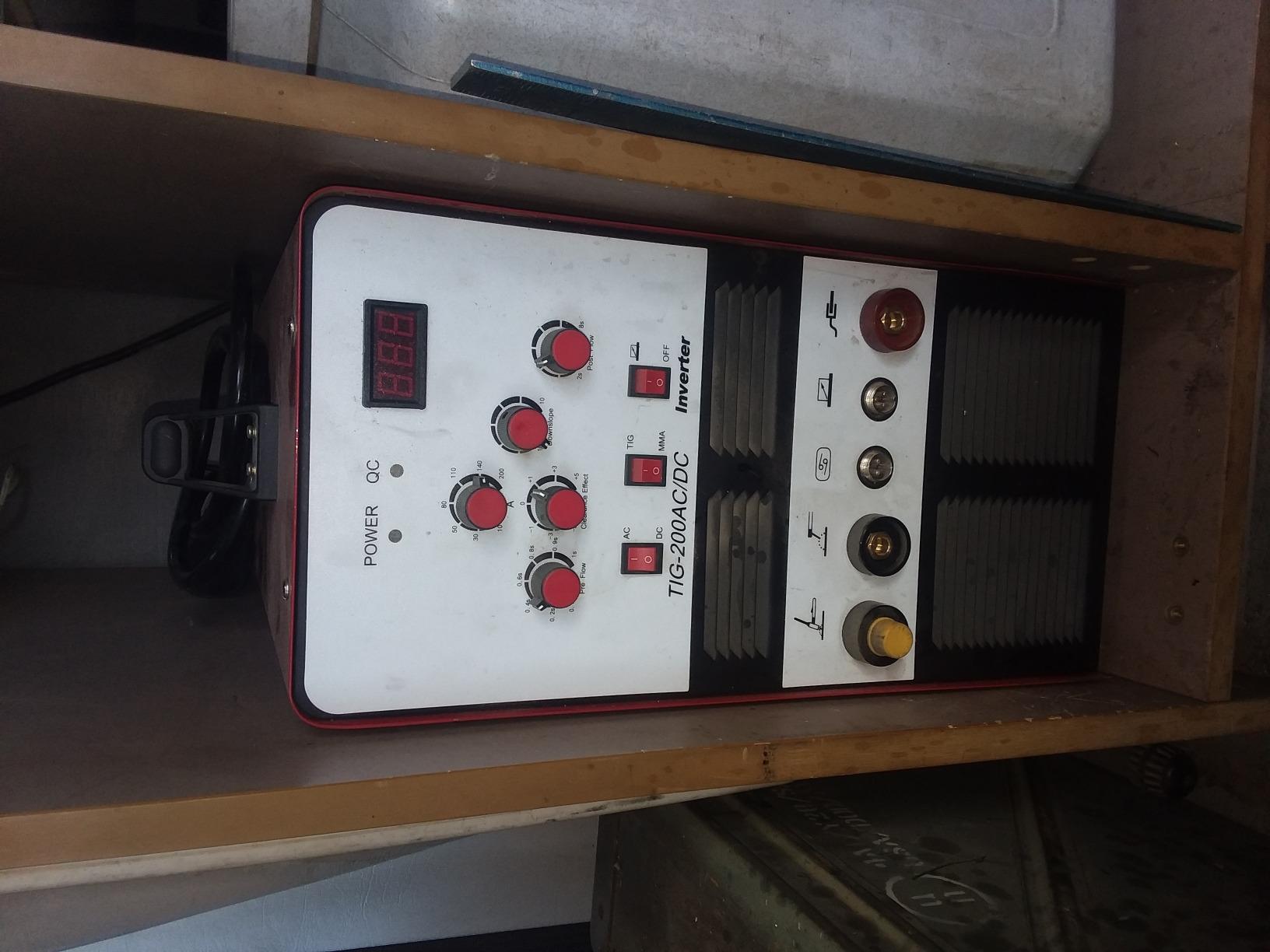
The LOTOS TIG200ACDC solves the problem that stops most beginners. It is a true AC/DC machine with a 200A square-wave AC output, which means it welds aluminum properly rather than approximately. Everything else in this list that is cheaper is DC only, and everything else with AC costs more or carries more risk.
It also arrives genuinely complete. The box includes the power supply, TIG torch, MMA and stick clamp, foot pedal, argon regulator, a 220V and 110V converter pigtail, ground clamp, a consumable set and a manual. That is the package checklist most competitors fail, and it removes the single most common beginner complaint about new machines.
Output ranges are sensible: 10 to 200 amps for TIG and 15 to 200 amps for stick. Dual voltage is automatic across 110/120V and 220/240V at 50 and 60 Hz, so the machine works in a home garage and a shop without a converter trip.
The warranty is another differentiator. Buyers get a 30 day money-back window, a one-year replacement warranty and a three-year limited warranty, with support based in the United States. For a first machine, having a real phone number to call is worth more than a spec sheet line.
Power efficiency is listed at 80 percent, and the square-wave AC shape is what makes aluminum weld with a narrow, controllable bead instead of a wide erratic puddle. Adjustable AC balance and frequency let you tune penetration and cleanup for different alloys and gauges.
What changes when you have AC output
Aluminum is the headline, but AC also improves stainless work, particularly on thinner material where you want penetration without excess width. The square wave also handles magnesium and other non-ferrous metals that a DC-only machine simply cannot touch.
For automotive and fabrication hobbyists, that opens a second project category after your steel and stainless skills land. Aluminum trailer repairs, brackets, and general fabrication work become possible on the same machine you learned on.
Where the LOTOS TIG200ACDC falls short
It weighs 37 pounds and measures 28 x 13 x 17 inches. That is a real machine to move, and in a one-car garage it becomes a fixture rather than a tool, so plan where it will live before it arrives.
The box is also the most generously equipped but the design is older than the competition. It has a solid footprint in TIG welding equipment listings, yet newer machines are outselling it, and that gap in generation is where you give up some of the pulse and spot features the premium models offer.
We earn a commission, at no additional cost to you. CERTAIN CONTENT THAT APPEARS ON THIS SITE COMES FROM AMAZON. THIS CONTENT IS PROVIDED 'AS IS' AND IS SUBJECT TO CHANGE OR REMOVAL AT ANY TIME.
5. Sunstac TIG-250 TP ACDC – Best for High Amperage Output
Sunstac 250A Aluminum TIG Welder with Pulse ACDC Foot Pedal Control
- 250A AC DC pulsed TIG
- 110V and 220V
- AC and DC spot modes
- 29.8 lb
Pros
- AC and DC pulse plus AC and DC spot modes
- Up to 250A on both 110V and 220V
- Large LCD readable through a welding helmet
- Intelligent parameter memory saves setups
- 118 inch work clamp and electrode holder cables
Cons
- Current readout in AC mode reported as inaccurate
- AC balance described as inconsistent
- Foot pedal not included despite the listing
- Lowest rating here at 4.1
We earn a commission, at no additional cost to you. CERTAIN CONTENT THAT APPEARS ON THIS SITE COMES FROM AMAZON. THIS CONTENT IS PROVIDED 'AS IS' AND IS SUBJECT TO CHANGE OR REMOVAL AT ANY TIME.
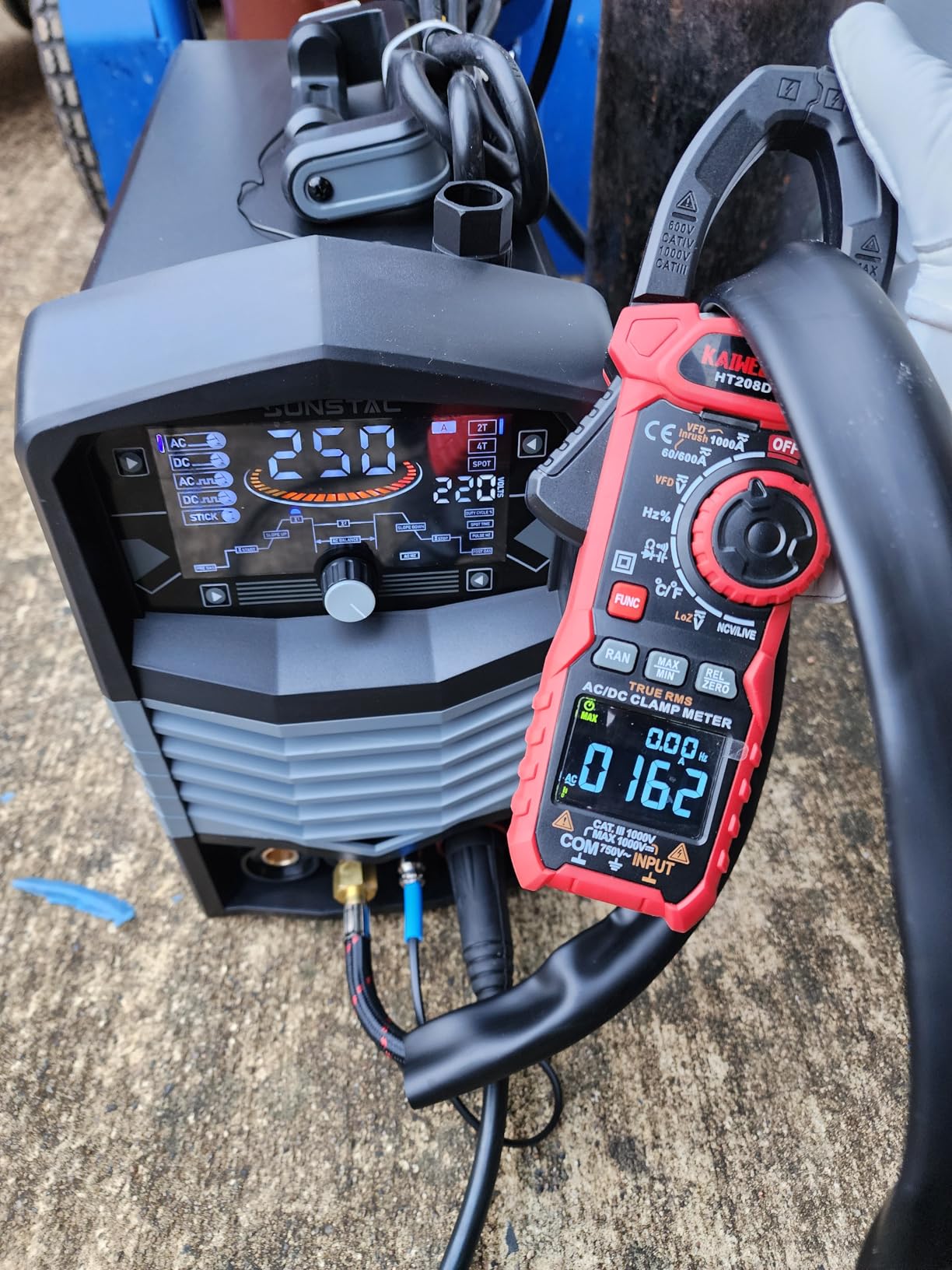
The Sunstac TIG-250 TP ACDC has the highest amperage rating in this group, at up to 250A on both 110V and 220V, and its mode list is the widest. High-frequency AC, high-frequency DC, pulsed AC, pulsed DC, AC spot, DC spot and stick put nearly every TIG mode you will ever need behind one panel.
Material coverage is broad. The machine handles aluminum, alloy steel, copper, stainless steel, carbon steel and iron, and the manufacturer rates maximum aluminum thickness at 5/32 inch (4mm) on 110V and 6mm on 220V. That makes it relevant for a beginner who intends to grow into the hobby rather than decorate a bracket once.
The LCD display is a genuine advantage over smaller screens, with digits that stay visible through a welding helmet. Spot TIG is useful for reinforcing a weld or tacking in position, and the intelligent parameter saving means your last good setup is one button away instead of gone.
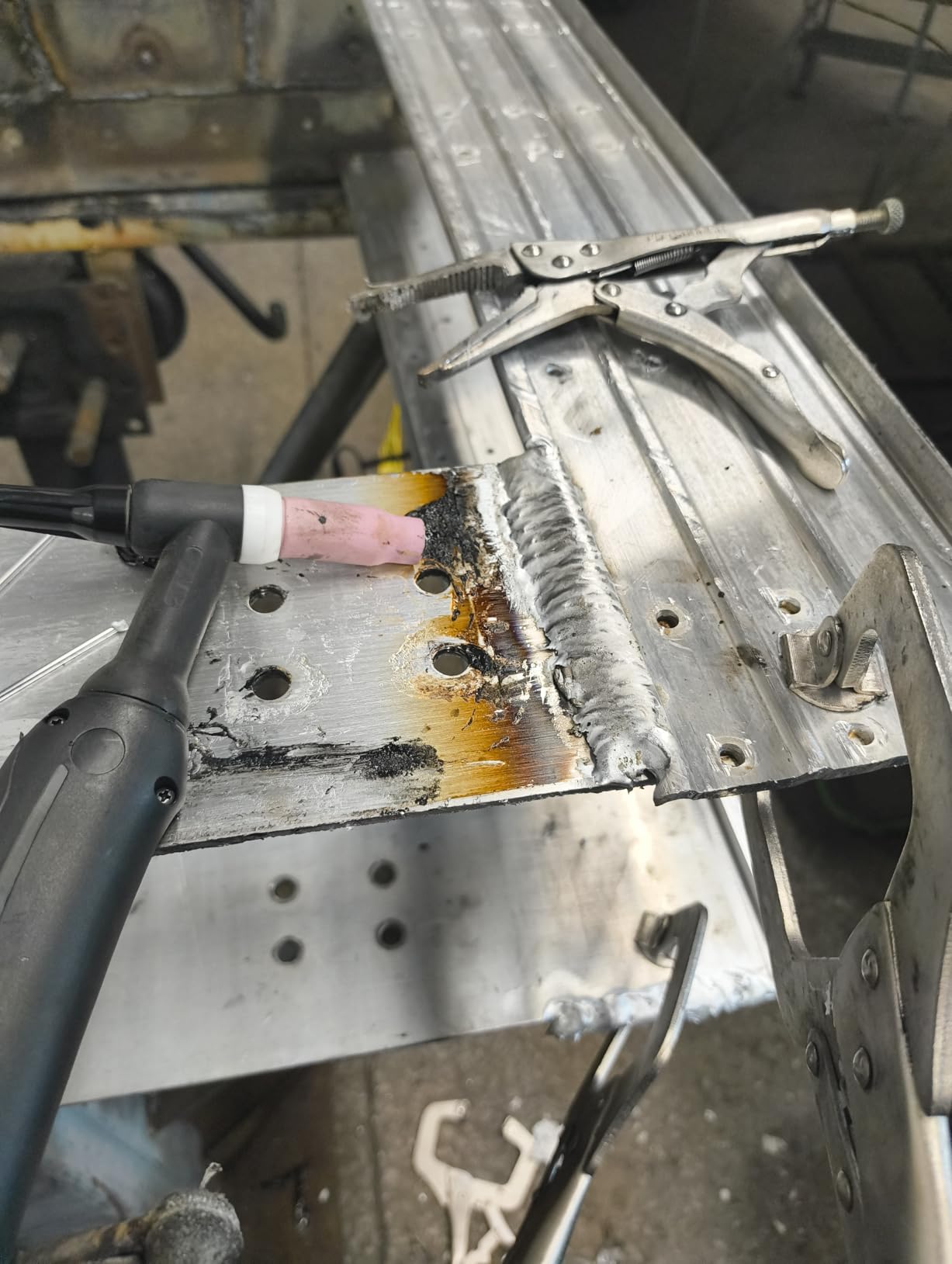
Cable length is another practical detail. The 118 inch work clamp and electrode holder cables are long enough to reach across a vehicle frame or a large workbench without dragging a second extension across the floor, which keeps the ground connection short and the arc stable.
Support comes through the seller rather than a manufacturer hotline, and buyers report the seller resolving performance issues directly. That responsiveness is the main reason this machine holds up in owner reviews despite the lower rating.
What you can weld on the Sunstac
Everything in the standard metals list, which is unusual at this level of output. Aluminum on 110V power is the headline capability, and pulsed AC gives you another heat-control tool on top of the balance and frequency adjustments.
Copper is the sleeper benefit. Few entry machines handle copper TIG, and if you plan ornamental work, electrical repair or plumbing projects, having it in the same machine removes a barrier you did not know you had.
Where the Sunstac TIG-250 TP ACDC falls short
AC mode has an accuracy problem that reviewers raise directly. The current readout in AC mode is called out as inaccurate, and AC balance is described as inconsistent, so on aluminum you should verify your settings with test coupons rather than trusting the display.
The foot pedal is not included even though foot pedal control is advertised, and at a 4.1 rating with a meaningful share of one-star reviews, this is the least settled machine in the group. A first-time buyer should treat it as a high-output second step rather than a first machine.
We earn a commission, at no additional cost to you. CERTAIN CONTENT THAT APPEARS ON THIS SITE COMES FROM AMAZON. THIS CONTENT IS PROVIDED 'AS IS' AND IS SUBJECT TO CHANGE OR REMOVAL AT ANY TIME.
6. Weldpro 200A AC/DC 5-in-1 – Most Complete Package
Weldpro 200A AC/DC TIG Welder with Pulse, 110V/220V Dual Voltage Aluminum TIG Welder, AC TIG/DC TIG/AC PULSE TIG/DC PULSE TIG/Stick 5 in 1 Multiprocess Welding Machine with TIG Torch & Foot Pedal
- 200A AC and DC pulse TIG
- 0.5-200Hz pulse frequency
- Includes torch and foot pedal
- 61.8 lb
Pros
- Only machine here with both AC pulse and DC pulse plus AC and DC TIG
- Fully adjustable pulse frequency 0.5-200Hz with peak amperage control
- Torch rocker pedal 300A clamp and flow meter all included
- 40 percent duty cycle at full 200A
- Highest average rating at 4.6 across 836 reviews
Cons
- Heaviest unit in the group at 61.8 lb
- Costs well above entry level DC only machines
- 44 KW wattage listing looks like a data entry artifact
- Deep settings can overwhelm a total beginner
We earn a commission, at no additional cost to you. CERTAIN CONTENT THAT APPEARS ON THIS SITE COMES FROM AMAZON. THIS CONTENT IS PROVIDED 'AS IS' AND IS SUBJECT TO CHANGE OR REMOVAL AT ANY TIME.
The Weldpro 200A AC/DC is the only machine in this group that combines AC pulse TIG, DC pulse TIG, straight AC TIG, straight DC TIG and stick in one box. It also carries the highest average rating here at 4.6 across 836 reviews, and that combination of breadth and reception is why it earned the top-rated badge.
Pulse control is fully adjustable, with frequency from 0.5 to 200Hz, adjustable peak amperage, and upslope and downslope settings alongside 2T and 4T trigger modes. On thin sheet metal, that is the difference between a puddle you can walk and a puddle that tears through.
The accessory kit is the most complete here. It includes a TIG torch, a rocker-style foot pedal, a 300A ground clamp, a stick electrode holder, a gas hose, a flow meter, tungsten electrodes, ceramic nozzles, collets, back caps and a detailed manual. Nothing meaningful is missing.
AC balance and frequency are adjustable, so aluminum and magnesium behave predictably. The IGBT inverter platform delivers a stable arc with minimal spatter, and protection covers overheat, over-current, over-voltage and under-voltage. Duty cycle is rated at 40 percent at full 200A, which is honest for a machine of this output level.
Automatic dual voltage detection handles 110V and 220V without a manual switch, and a carrying handle is built in. Reviewers treat this as a step up rather than a first purchase, which is fair, but if you can move it once and set it down, it rewards that arrangement.
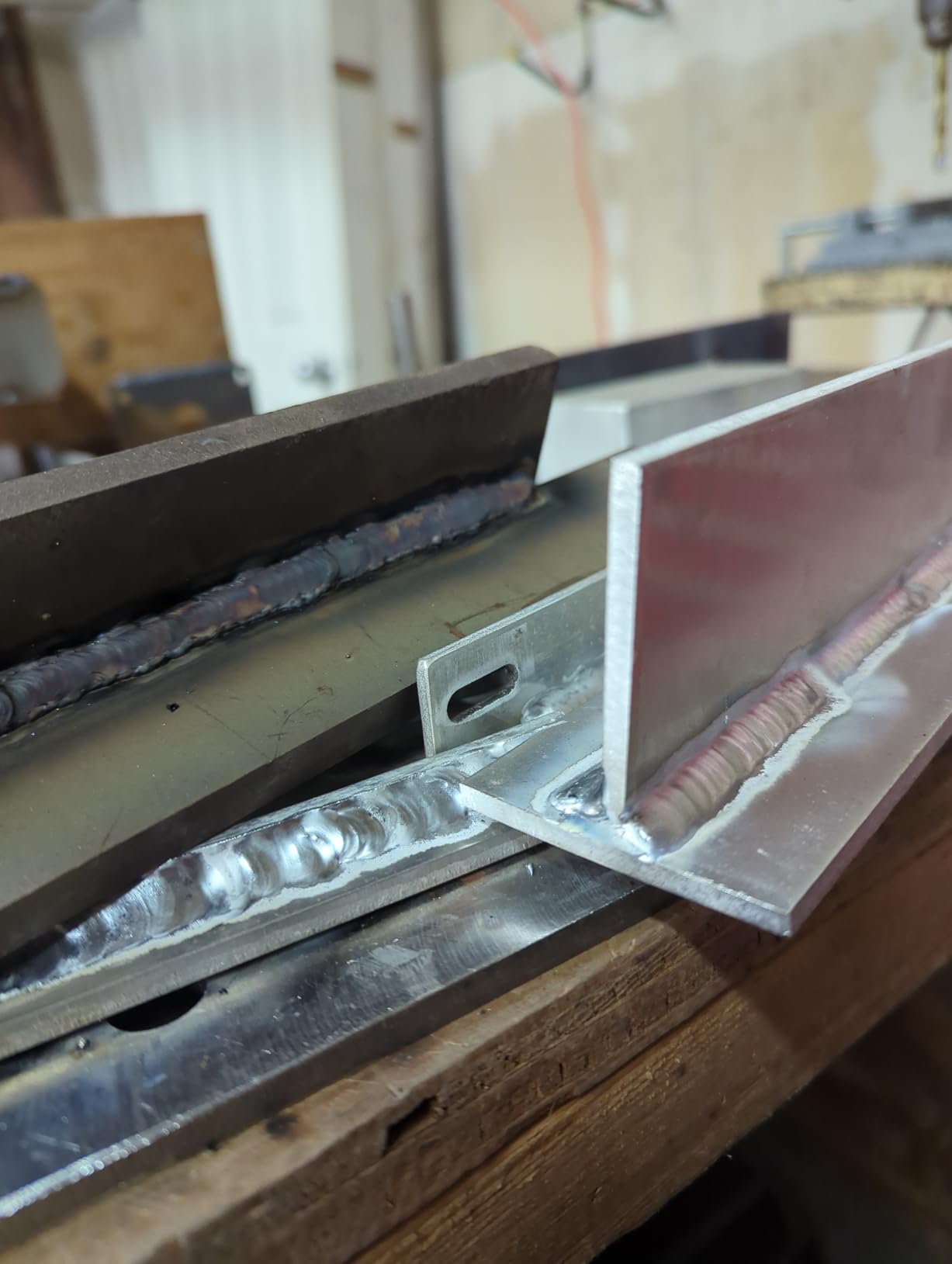
Who gets the most out of this machine
Anyone who plans to weld more than one kind of material. Stainless and aluminum on the same day, thin sheet one week and 16 gauge the next, with pulse control to manage heat in both directions, is where the extra capability shows up immediately.
The rocker foot pedal with real-time amperage adjustment is the feature that most improves skill. Variable heat control is the difference between a beginner who can weld anything after six months and one who is still stuck on a single material and a single thickness.
Where the Weldpro 200A AC/DC falls short
It weighs 61.8 pounds, by far the heaviest machine here. Moving it takes planning, so a welder that has to come out of a corner for every project will frustrate you more than the settings ever will.
Cost is the other factor. This sits well above entry-level DC-only machines, and the deep settings are more than a first-year hobbyist needs. The wattage figure listed as 44 KW is unusually high for a 200A welder and looks like a data entry artifact, so treat the output numbers as reliable and that line as noise.
We earn a commission, at no additional cost to you. CERTAIN CONTENT THAT APPEARS ON THIS SITE COMES FROM AMAZON. THIS CONTENT IS PROVIDED 'AS IS' AND IS SUBJECT TO CHANGE OR REMOVAL AT ANY TIME.
7. ARCCAPTAIN TIG 205 Pro – Best App-Controlled DC TIG
ARCCAPTAIN TIG 205 Pro Welder, 5 In 1 Welding Machine, 120/240V
- 205A five in one DC welder
- 120/240V adapter included
- 13 ft WP-26 TIG torch
- 22.8 lb
Pros
- First app controlled TIG welder using a QR code
- Five modes including COLD TIG and COLD SPOT TIG
- MCU control delivers very reliable arc initiation
- 22.8 lb and compact
- Three year warranty with lifetime technical support
Cons
- DC output only so no aluminum welding
- Some versions lack high frequency start or pulse
- Foot pedal and welding helmet not included
- Stick amperage on the display can read high
We earn a commission, at no additional cost to you. CERTAIN CONTENT THAT APPEARS ON THIS SITE COMES FROM AMAZON. THIS CONTENT IS PROVIDED 'AS IS' AND IS SUBJECT TO CHANGE OR REMOVAL AT ANY TIME.
The ARCCAPTAIN TIG 205 Pro is interesting because of its interface. Scan the QR code on the machine and a phone app handles process selection, parameter adjustment, machine status monitoring, error code lookup and welding result sharing. For a beginner who does not know what a setting does yet, looking up an error instead of guessing is worth real money.
Underneath, the machine is a 205 amp five-in-one: COLD TIG, 4T DC TIG, COLD SPOT TIG, 2T DC TIG and stick. The MCU control board is credited with a very high arc initiation success rate and a faster response, and owners who compared it against other low-cost DC TIG units say it delivers its rated output.
The box is better equipped than most at this level. It includes a 13 foot WP-26 TIG torch, a 10 foot earth clamp, a 10 foot electrode holder and a 120/240V power adapter, which is a solid starting kit for steel, stainless and chrome-moly steel work.
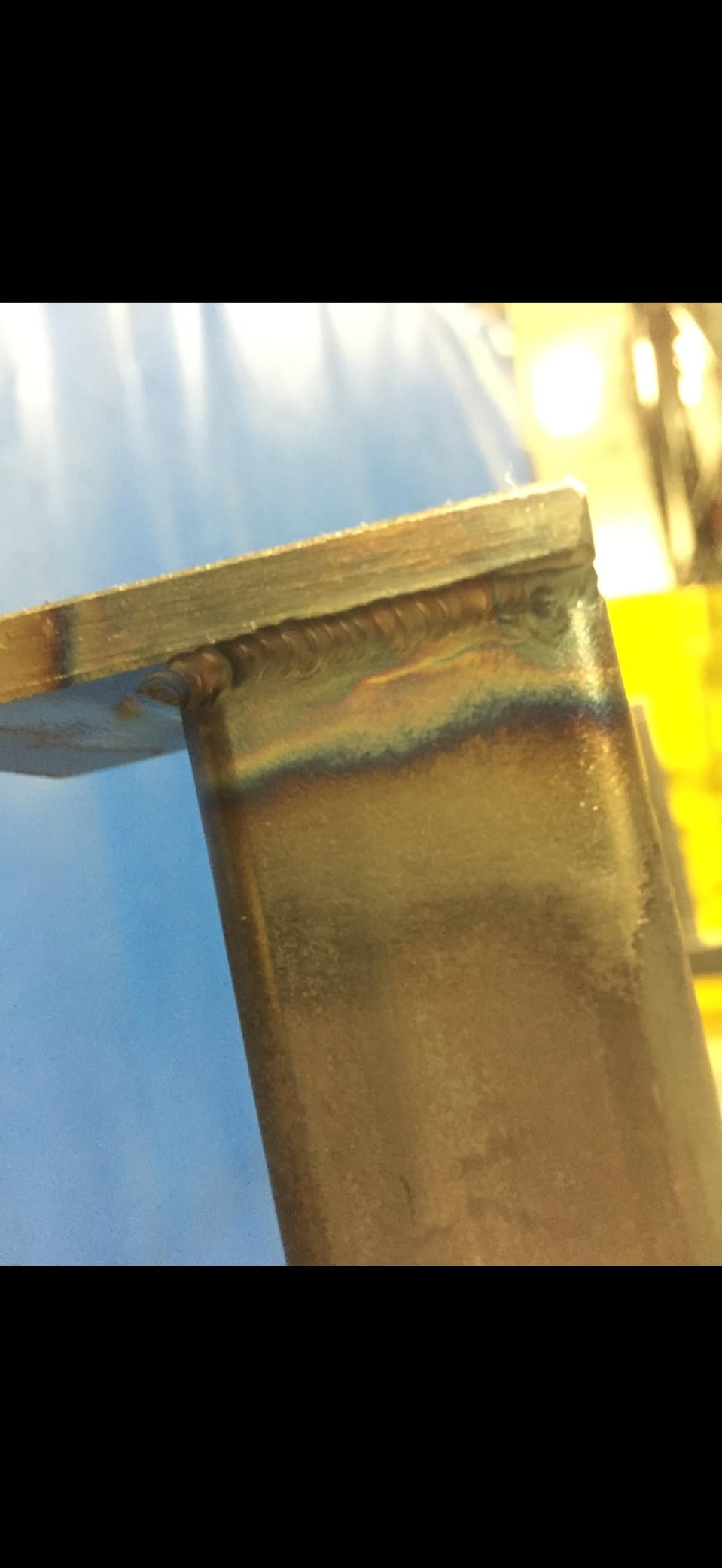
Warranty and support are the strongest claims in the group. It carries a three-year warranty plus lifetime technical support, and it passed ANSI and FCC certifications with VRD, overheat, overcurrent and undervoltage protection built in.
Arc initiation is where it separates itself from generic budget boxes. Owners report smooth, low-spatter welds and reliable starts, and at 22.8 pounds it is one of the more portable machines that still gives you spot TIG and a locked-in 4T mode.
Where this machine fits
Steel, stainless and chrome-moly steel are the stated strengths, and chrome-moly capability is a genuine bonus for anyone heading toward vehicle or tube fabrication later. The large LED display is readable without removing your helmet, which matters more during long sessions than it sounds.
COLD TIG is a useful addition for light material and repair work where you want minimal heat input. Combined with spot TIG, it covers a lot of the fiddly jobs that usually get skipped by beginners because the setup is fiddly.
Where the ARCCAPTAIN TIG 205 Pro falls short
It is DC only. The listing is explicit that it does not support AC and is not suitable for aluminum welding, which is a meaningful limit for anyone who will touch the material.
Some versions do not include high-frequency start or pulse, and at least one buyer was disappointed by that, so verify the feature list for the exact model you receive. The foot pedal and welding helmet are not included, some users had trouble pairing the optional pedal, and the displayed stick amperage can read higher than the actual output.
We earn a commission, at no additional cost to you. CERTAIN CONTENT THAT APPEARS ON THIS SITE COMES FROM AMAZON. THIS CONTENT IS PROVIDED 'AS IS' AND IS SUBJECT TO CHANGE OR REMOVAL AT ANY TIME.
8. FEMEROL MTC200PRO – Best Multi-Process Box
FEMEROL Plasma Cutter Welder Combo 200A Gas MIG/Gasless MIG/HF TIG/Stick/CUT/SPOT 6 in 1 Welding Machine Aluminum Welding 110/220V Dual Voltage Multi Process Welder
- Six in one including plasma cutting
- Synergic MIG mode
- 110V and 220V adapter
- 42 lb
Pros
- Six processes in one box including plasma cutting
- Plasma cutter reaches a 10mm ideal cut on 220V
- Synergic MIG mode suits beginners new to MIG
- Full accessory kit ships in the box
- MIG and plasma work well for experienced users
Cons
- Plasma arc start can be difficult on some units
- Knob and display behavior inconsistent between scales
- Gas line connection too small for standard argon regulators
- Does not always reach rated amps
We earn a commission, at no additional cost to you. CERTAIN CONTENT THAT APPEARS ON THIS SITE COMES FROM AMAZON. THIS CONTENT IS PROVIDED 'AS IS' AND IS SUBJECT TO CHANGE OR REMOVAL AT ANY TIME.
The FEMEROL MTC200PRO is not a dedicated TIG welder, and that is the point. It combines flux-core MIG, gas MIG, plasma cutting, high-frequency TIG, stick and spot in a single 200A package, and for a beginner who is not yet sure which process they will settle on, that is a legitimate way to test three of them at once.
The plasma cutter is the most impressive part. It produces a 10mm ideal clean cut and a 16mm maximum severance cut on 220V at 60 percent duty cycle using ordinary compressed air, cutting stainless, alloy steel, mild steel, copper and aluminum. Cutting before welding changes the shape of a project considerably.
The synergic MIG mode is the second most useful feature for a newcomer. It matches current and wire feed speed automatically based on wire diameter and gas, with a manual override for once you know better, so your first MIG beads are not a fight with two dials.
Experienced welders rate the MIG side of this machine highly, including a report from a professional welder with 13 years of experience who ran 10 hours of aluminum MIG beads on it without trouble. That is meaningful validation for the process most beginners will actually use first.
The box is comprehensive: multi-function welder, 15AK MIG torch, plasma cutting torch with consumables, air filter regulator, TIG torch with consumables, hammer, gas hose, ground clamp, electrode holder, Teflon liner and a 110V to 220V adapter. High-frequency TIG start is non-contact, which reduces tungsten consumption on low-carbon and stainless work.
Where the FEMEROL earns its place
If your honest plan is TIG now and maybe MIG or cutting later, this box covers it. The plasma cutter alone would justify the space it takes, and the gas line for MIG is a genuine convenience when you are deciding between processes.
For someone who learns by trying, having three processes in front of you prevents a common early mistake, which is buying a process-specific machine before knowing which one you enjoy.
Where the FEMEROL falls short
It weighs 42 pounds, and TIG is one of six modes rather than the focus of the machine. Every control is shared across processes, so the dedicated TIG machines here will always have a more straightforward panel.
Quality control is inconsistent between examples. Plasma arc start is difficult on some, the knob and display behavior can jump between scales, the gas line connection is too small for standard argon regulators without an adapter, and some units do not reach their rated amps or arrive with consumables missing. Check the unit carefully on arrival.
We earn a commission, at no additional cost to you. CERTAIN CONTENT THAT APPEARS ON THIS SITE COMES FROM AMAZON. THIS CONTENT IS PROVIDED 'AS IS' AND IS SUBJECT TO CHANGE OR REMOVAL AT ANY TIME.
What Makes a TIG Welder Easy to Learn
High-frequency start is the single feature that most changes your first week. A torch that starts the arc without touching the work means no scratching a tungsten tip across your project, no wandering arc, and no burned hole where the arc landed wrong. Every machine in this group except the ARCCAPTAIN TIG 205 Pro in some versions uses it, and on a beginner machine it removes an entire category of frustration.
Heat control is the second priority. You will learn TIG by watching a puddle, and the puddle responds to amperage in real time. A proportional foot pedal gives you that control under your foot while both hands stay on the torch and the filler rod. Machines with a pedal port but no pedal, like the YESWELDER TIG-205P, force you to add that cost yourself.
Readability comes next. Digital displays, parameter memory and auto-sensing voltage remove setup friction that is invisible until you have wasted an evening on it. A machine that remembers your last setting gets welded with twice as often as one that makes you dial it in each time.
Package completeness is the fourth factor, and it is where budget machines fail hardest. Check for a torch, ground clamp, electrode holder, foot pedal, flow meter or regulator, tungsten electrodes, ceramic cups, collets and a proper manual. The LOTOS and Weldpro boxes here are the two that need the least supplementation.
AC or DC: Which Output Do You Actually Need?
DC output handles mild steel, stainless steel, copper, chrome-moly and most other ferrous and non-ferrous metals with a stable, focused arc. It covers the majority of beginner projects, which is why five of the eight machines here are DC only and why the DC machines cost the least.
AC output exists for one reason, and the reason is aluminum. Aluminum forms an oxide layer that DC cannot break through, and AC alternates polarity so the oxide clears every cycle while the puddle stays manageable. Square-wave AC is the specific shape that modern machines use for this, and it is what the LOTOS, Sunstac and Weldpro machines deliver.
Start with DC and add AC later if you need it. The learning fundamentals, filler handling, puddle control and joint preparation, are identical on both. The only settings that change are AC balance, which shifts the ratio of electrode-positive to electrode-negative time to control penetration versus cleanup, and AC frequency, which controls the arc width and the puddle shape.
One exception: if you know you will weld aluminum in your first month, skip the DC-only machines entirely. Buying DC with the intention of trading up for aluminum is the most common budget mistake we see, and it costs more than choosing correctly the first time.
110V vs 220V: What Changes in the Real World
A 110V welder is limited by what a standard household circuit can deliver, and the difference is measurable in the thickness you can push. Forum discussions about entry-level TIG machines come back to this constantly, and the consensus is consistent: 110V handles thin steel and stainless comfortably, and struggles with thicker sections and with aluminum.
Dual voltage machines, which include the S7, ARCCAPTAIN TIG200, YESWELDER TIG-205P, LOTOS, Sunstac, Weldpro and FEMEROL in this group, solve the problem properly. Plug into a garage outlet for bench work, move to a 220V circuit for plate and aluminum, and the machine detects the input without a switch. The Sunstac even rates its aluminum capability separately at 110V and 220V.
For a home garage, dual voltage is the single most practical feature you can buy. It means you are not limited by the circuit you happen to have, and it means the machine grows with you as your projects get thicker. The ARCCAPTAIN TIG200 owners we read describe 110V as noticeably limited and 220V as where the machine shines.
The 12-Item Beginner Package Checklist
Run this list before you order a machine, and buy what is missing as a single planned purchase. Buying accessories piecemeal is how beginners end up with a good torch and no pedal, or a pedal and no gas lens, then blaming the welder.
- TIG torch, sized to the amperage you will run
- Proportional foot pedal with the correct connector, usually 5 pin or 4 pin
- Ground clamp or work lead, 10 feet or longer
- Stick electrode holder if the machine does stick welding
- Argon regulator or flow meter
- Gas hose with the correct fitting, not an undersized push-on connector
- Gas lens cup for precise work on thin or small material
- Tungsten electrodes in 2.4 mm and 3.2 mm, lanthanated or ceriated
- Ceramic nozzles, collets and back caps in spare quantities
- Collet body and a taper tool for changing collet sizes
- Welding helmet with an adequate shade for the amperage range
- A beginner project in mild steel plate, plus 16 gauge scrap for thin work
Two items on that list are routinely skipped and both hurt. A gas lens changes weld quality more than most beginners expect, and a proper tungsten ground clean costs little and stops contamination. Cheap tungsten that has been handled or dropped will contaminate your puddle and convince you the machine is faulty.
A Four-Week Practice Roadmap for New TIG Welders
Week one is about the machine, not the weld. Set up the torch, grind a tungsten, set the post gas to around 5 to 10 seconds, and run beads on a scrap plate at low amperage. Muscle memory for the foot pedal matters more than bead quality, and fifty ugly practice beads will teach you more than one good one.
Week two is flat beads in mild steel. Work on consistent travel speed and consistent filler placement, because those two variables cause more beginner problems than any machine setting. Keep the amperage low and let heat build slowly, and do not fight a cold puddle by cranking the pedal when you can simply wait.
Week three adds position and shape. Butt joints, corner joints, then a simple lap joint, each on the same mild steel scrap. This is where most people discover that the puddle control finally feels automatic, and it is the week where the difference between an on/off pedal and a proportional pedal becomes obvious.
Week four introduces a second material. Stainless steel first, on DC, with the correct filler and a clean oxide-free edge. Aluminum only after that, and only on an AC/DC machine, where AC balance becomes your main adjustment. Anyone still on a DC-only machine should stay on steel and stainless and plan the upgrade for a specific project rather than an open-ended one.
Frequently Asked Questions
Which TIG welder is the easiest for beginners?
The S7 200A TIG Welder is the easiest entry point in our testing, because high-frequency arc start removes the scratch-start problem, controls are simple with a digital current display, and it weighs 18.01 pounds so it moves easily around a garage. The LOTOS TIG200ACDC is easier still in one specific way, since its foot pedal and argon regulator arrive in the box, but it is 37 pounds. Choose based on whether you want portability or a complete package.
Is TIG welding hard for beginners?
TIG has a steeper learning curve than MIG because you feed the filler rod by hand and control the puddle with your foot, but the difficulty is in technique rather than equipment. Most beginners produce their first acceptable bead within a few practice sessions on mild steel. The two things that slow people down are a machine without proportional foot pedal control and a package missing a foot pedal or gas lens, both of which are avoidable at purchase.
Is AC or DC better for TIG?
DC is better for mild steel, stainless steel, copper and chrome-moly, and it makes up five of the eight machines in this roundup because those materials dominate beginner work. AC is better for aluminum specifically, because the alternating current breaks up the oxide layer that DC cannot penetrate. An AC square wave also gives tighter control on thin stainless. Buy AC/DC if aluminum is in your first six months of projects, otherwise DC is the sensible and cheaper choice.
Can you TIG weld with 110V?
Yes, with limits. A 110V TIG machine handles thin mild steel, stainless steel and sheet metal comfortably, and most of the machines here are rated for 10 to 200 amps on that input. The limitation shows up on thicker material and on aluminum, where output drops and arc control gets harder. If you can wire a 220V circuit in your garage, a dual voltage machine like the S7 or ARCCAPTAIN TIG200 lets you move between them without buying a second welder.
Are 110V welders any good?
They are genuinely good for what they cover, which is most hobby garage work. The S7, ARCCAPTAIN TIG200 and YESWELDER TIG-205P all run on 110V and 220V with auto-sensing input, so you are not locked into a lower-spec machine, just a lower output limit on the smaller circuit. Set your expectations correctly: expect clean work on sheet, tube and thin plate, and use 220V when you move to heavier sections.
What is the best inexpensive TIG welder?
Among the machines here, the ARCCAPTAIN TIG200 is the strongest inexpensive pick because its high-frequency start, adjustable post gas of 1 to 10 seconds, down-slope timing and 2T and 4T trigger modes are normally shop features, and it runs smoothly off a generator. The S7 offers more for a first-time buyer because its documentation and review base are far larger. Avoid the lowest-cost boxes that arrive without a torch, and budget for a better torch and a proper foot pedal separately.
The Best TIG Welder for Beginners in 2026
Our pick for the best tig welders for beginners this year is the S7 200A TIG Welder, because it removes the three biggest beginner problems at once: unreliable arc starts, a machine too heavy to move, and a slow start. It is 18.01 pounds, runs on 110V or 220V, and does TIG plus stick, which gives you a second process for heavier work without a second purchase.
If aluminum is in your plans, the choice narrows to three machines. The LOTOS TIG200ACDC is the practical pick, since it ships with a foot pedal and argon regulator and carries a three-year warranty. The Weldpro 200A AC/DC is the complete pick, with AC and DC pulse, a full accessory kit and the highest rating in this group, at the cost of 61.8 pounds. The Sunstac TIG-250 TP ACDC is the output pick for larger AC/DC work, with the caveat that its AC readout is not always accurate.
Start with steel, get your filler technique down, and add a gas lens and a proper foot pedal early. That combination will carry you further than any machine in this guide.