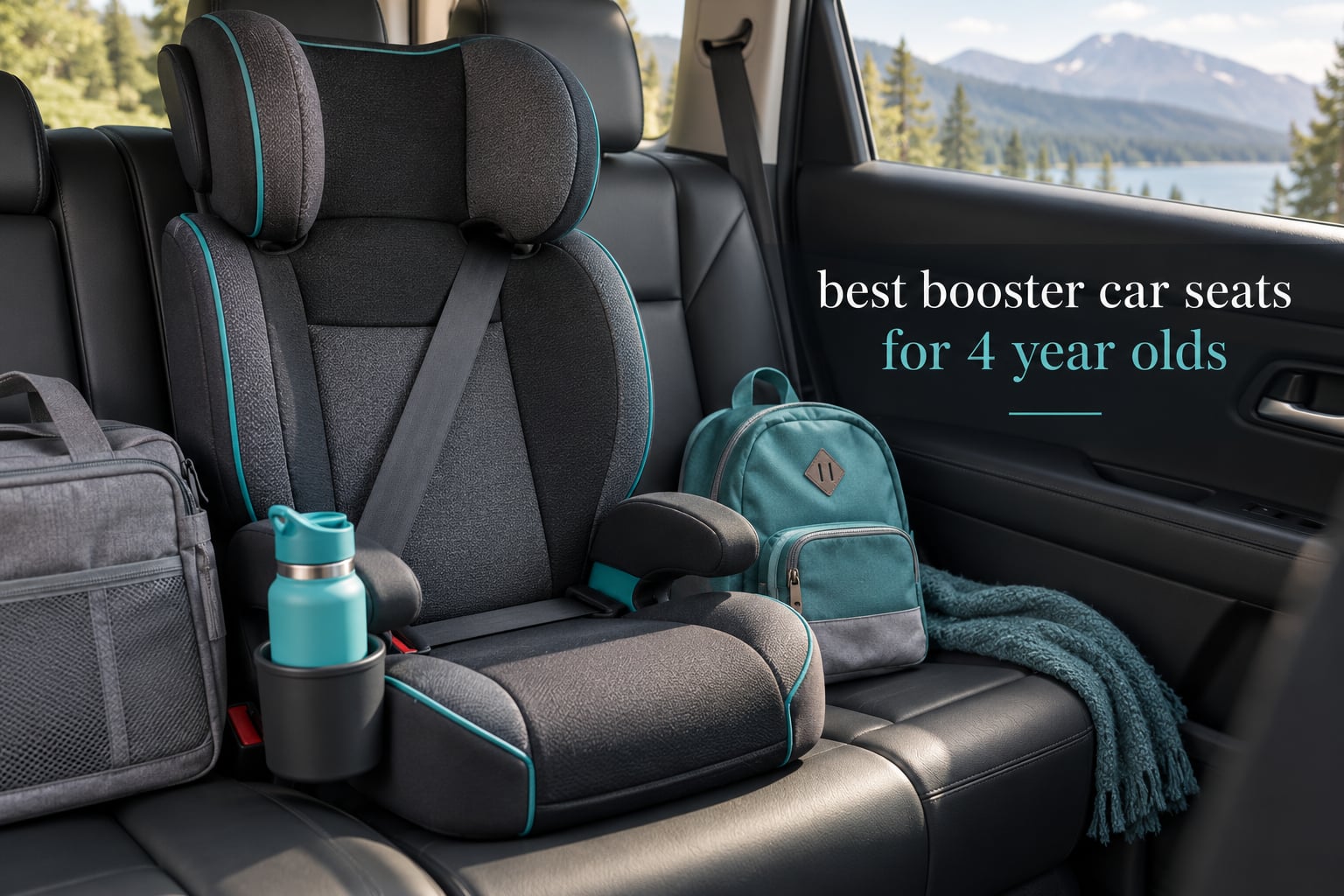
Quick answer: the best booster car seats for 4 year olds are the Chicco MyFit Harness + Booster if you want one seat that starts as a 5-point harness and converts later, the Graco TurboBooster 2.0 LX if you want the most-reviewed option with a backless mode, and the Chicco KidFit ClearTex Plus if you want a slim three-across seat with quick-release LATCH. The important caveat: if your 4-year-old still fits their forward-facing 5-point harness within its weight and height limits, NHTSA and the American Academy of Pediatrics recommend staying in that seat rather than moving to a booster.
I have spent the last few months going through every booster seat on the market with a 4-year-old’s measurements in mind, and the thing that surprised me most is how often the answer is not a booster at all. A 4-year-old who still fits a harness seat has protection the seat belt simply cannot give them, and no amount of seat engineering changes that. This roundup exists for the families who have already made the harness-to-booster decision, and for the families who want to know whether they are close.
Below I break down eight boosters, the two that convert from a harness so you can buy ahead of the transition, the four that are pure belt-positioning seats, the readiness signals that tell you when a booster is appropriate, and the belt fit checks that matter more than any single feature on the seat. I have kept weight, height and mode limits front and center for every pick so you can match a seat to your child in seconds rather than digging through spec pages.
ContentsTable of Contents
- 1Top 3 Booster Car Seats for 4-Year-Olds→
- 2Chicco MyFit Harness + Booster→
- 3Graco TurboBooster 2.0 LX→
- 4Chicco KidFit ClearTex Plus→
- 5Quick Comparison: All 8 Booster Seats Side by Side→
- 6Is a Booster Even Right for a 4-Year-Old?→
- 71. Chicco MyFit Harness + Booster Car Seat Review for 4-Year-Olds→
- 8Chicco MyFit 2-in-1 Harness + High Back Booster Car Seat→
- 9Pros→
- 10Cons→
- 11Is Your Child in the Right Range for This Seat?→
- 12What Parents Check Before Buying This One→
- 132. Graco TurboBooster 2.0 LX Review for 4-Year-Olds→
- 14Graco TurboBooster 2.0 LX Highback & Backless Booster Car Seat, Gannon→
- 15Pros→
- 16Cons→
- 17Is Your Child in the Right Range for This Seat?→
- 18What Parents Check Before Buying This One→
- 193. Chicco KidFit ClearTex Plus Review for 4-Year-Olds→
- 20Chicco KidFit ClearTex Plus 2-in-1 Belt-Positioning Booster Car Seat→
- 21Pros→
- 22Cons→
- 23Is Your Child in the Right Range for This Seat?→
- 24What Parents Check Before Buying This One→
- 254. Britax Skyline Review for 4-Year-Olds→
- 26Britax Skyline 2-Stage Belt-Positioning Booster Car Seat, Dusk – Highback and Backless Seat→
- 27Pros→
- 28Cons→
- 29Is Your Child in the Right Range for This Seat?→
- 30What Parents Check Before Buying This One→
- 315. Evenflo Maestro Sport Review for 4-Year-Olds→
- 32Evenflo High-Back Booster Car Seat with Harness, 22 to 110lbs, Maestro Sport, Granite Gray→
- 33Pros→
- 34Cons→
- 35Is Your Child in the Right Range for This Seat?→
- 36What Parents Check Before Buying This One→
- 376. Diono Cambria 2 XL Review for 4-Year-Olds→
- 38Diono Cambria 2 XL, Dual Latch Connectors, 2-in-1 Belt Positioning Booster Seat, High-Back to Backless Booster, Space and Room to Grow, 7 Headrest Positions, 8 Years 1 Booster Seat, Black→
- 39Pros→
- 40Cons→
- 41Is Your Child in the Right Range for This Seat?→
- 42What Parents Check Before Buying This One→
- 437. Safety 1st Grand 2-in-1 Review for 4-Year-Olds→
- 44Safety 1st Grand 2-in-1 Booster Car Seat, Converts from High Back to Belt-Positioning Booster, High Back Seat for Kids 40-65, and Belt-Positioning 40-100 Pounds, Old Soul→
- 45Pros→
- 46Cons→
- 47Is Your Child in the Right Range for This Seat?→
- 48What Parents Check Before Buying This One→
- 498. Graco Tranzitions 3-in-1 Review for 4-Year-Olds→
- 50Graco Tranzitions 3-in-1 Harness Booster Car Seat, Proof→
- 51Pros→
- 52Cons→
- 53Is Your Child in the Right Range for This Seat?→
- 54What Parents Check Before Buying This One→
- 55How to Choose a Booster Car Seat for a 4-Year-Old→
- 56High-back or backless, and does it matter at 4→
- 57Reading weight and height limits correctly→
- 58Seat width and fitting two boosters across→
- 59Checking seat belt fit in three steps→
- 60Expiration dates, recalls and secondhand seats→
- 61Two seats for two cars→
- 62Frequently Asked Questions→
- 63Should a 4 year old be in a booster car seat?→
- 64Can a 4 year old go in a backless booster seat?→
- 65Can a 40 lb 4 year old sit in a booster seat?→
- 66When should I switch my child from a 5-point harness to a booster seat?→
- 67Is a 5-point harness safer than a booster seat?→
- 68How tall must a child be to stop using a booster seat?→
- 69The Best Booster Car Seats for 4-Year-Olds→
Top 3 Booster Car Seats for 4-Year-Olds

Chicco MyFit Harness + Booster
- Harness then booster
- ASIP side impact
- 9-position headrest
Graco TurboBooster 2.0 LX
- Highback to backless
- ProtectPlus system
- Recline for naps

Chicco KidFit ClearTex Plus
- DuoGuard protection
- SuperCinch LATCH
- Removable backrest
As an Amazon Associate we earn from qualifying purchases. CERTAIN CONTENT THAT APPEARS ON THIS SITE COMES FROM AMAZON. THIS CONTENT IS PROVIDED 'AS IS' AND IS SUBJECT TO CHANGE OR REMOVAL AT ANY TIME.
These three cover the most common situations. The Chicco MyFit is the one to buy if your child is anywhere near the end of their harness range, because it delays the booster decision by a year or more. The Graco TurboBooster 2.0 LX is the safest default purchase for a child already in booster territory, with the largest review base in the group and a recline that handles the nap problem. The KidFit ClearTex Plus is the pick when your back seat is crowded or your child sleeps in the car and needs head support.
Quick Comparison: All 8 Booster Seats Side by Side
| # | Product | Key details | Where to buy |
|---|---|---|---|
| 1 | Chicco MyFit Harness + Booster |
|
Check Latest Price |
| 2 | Graco TurboBooster 2.0 LX |
|
Check Latest Price |
| 3 | Chicco KidFit ClearTex Plus |
|
Check Latest Price |
| 4 |  Britax Skyline Britax Skyline |
|
Check Latest Price |
| 5 |  Evenflo Maestro Sport Evenflo Maestro Sport |
|
Check Latest Price |
| 6 |  Diono Cambria 2 XL Diono Cambria 2 XL |
|
Check Latest Price |
| 7 |  Safety 1st Grand 2-in-1 Safety 1st Grand 2-in-1 |
|
Check Latest Price |
| 8 |  Graco Tranzitions 3-in-1 Graco Tranzitions 3-in-1 |
|
Check Latest Price |
We earn from qualifying purchases. CERTAIN CONTENT THAT APPEARS ON THIS SITE COMES FROM AMAZON. THIS CONTENT IS PROVIDED 'AS IS' AND IS SUBJECT TO CHANGE OR REMOVAL AT ANY TIME.
One column worth reading twice is the mode range. Four of these eight still include a 5-point harness mode, which matters enormously for a 4-year-old who is close to the weight ceiling of their current seat. Only the Britax Skyline and the Diono Cambria 2 XL are pure belt-positioning boosters with no harness option at all.
Is a Booster Even Right for a 4-Year-Old?
This is the question that decides the purchase, and the honest answer is that most 4-year-olds should not be in a booster yet. The AAP and NHTSA both recommend keeping a child in a forward-facing 5-point harness until they hit the maximum weight or height for that mode, and a booster is only appropriate once the harness no longer fits. Researchers cited by the Children’s Hospital of Philadelphia put the injury reduction from booster use in the 4-to-8 age band at roughly 45 percent compared with a seat belt alone, and high-back boosters have been associated with around 70 percent lower adjusted odds of injury than a seat belt, while backless boosters did not show a statistically significant difference in the same studies. Those numbers are real, but they only apply once the child is genuinely ready.
Think of the sequence as a staircase where each step gives less protection than the one before it. A rear-facing seat is the most protective, a forward-facing harness is next, a high-back booster is next after that, and a seat belt alone is the least protective of all. Moving up early to look like a big kid is a downgrade, not an upgrade.
Here is the readiness checklist I use, and the one certified child passenger safety technicians describe in similar terms:
- Weight. Your child meets the booster’s minimum weight, which is 40 pounds on every seat in this roundup.
- Height. Your child meets the seat’s minimum height, and you can see enough forward-facing seat ahead of their ears to be comfortable.
- Stillness. They can sit upright for the length of a school run without slumping, sliding down, or folding forward onto the buckle.
- Belt tolerance. They accept the shoulder belt crossing their chest and collarbone without shrugging it off or moving the strap to the armrest.
- Independent buckling. They can get themselves into position and hold still while you fasten the seat belt.
If your child fails items three through five, the problem is not the booster. It is a harness seat, and a 2-in-1 model like the Chicco MyFit, the Graco Tranzitions or the Safety 1st Grand is the cheapest way to buy the time you need.
Two situations come up constantly. The first is a child who falls asleep in the car. Slouching moves the lap belt off the thighs and toward the stomach, which is exactly what a booster is meant to prevent, so a seat with a usable recline such as the Graco TurboBooster 2.0 LX or the KidFit ClearTex Plus handles this far better than a fixed upright shell. The second is a child with sensory processing differences or limited postural control who may unbuckle or climb out unsupervised. For that child, a harness seat is the correct answer, and a certified technician or occupational therapist should be involved in the decision rather than a product page.
1. Chicco MyFit Harness + Booster Car Seat Review for 4-Year-Olds
Chicco MyFit 2-in-1 Harness + High Back Booster Car Seat
- Harness 25-65 lbs
- Booster to 100 lbs and 54 inches
- 25 lb seat
- 20 x 17.5 x 26 inches
Pros
- Converts from 5-point harness to belt-positioning booster
- Advanced Side Impact Protection to FMVSS 213a
- Nine-position headrest and four-position recline
- ErgoBoost seat with dual-density foam
- Two dishwasher-safe CupFolders
Cons
- Heaviest seat here at 25 pounds so it is awkward to move between cars
- Highest price point in this roundup
- Forward-facing harness starts at 25 pounds so it is a toddler seat first
We earn a commission, at no additional cost to you. CERTAIN CONTENT THAT APPEARS ON THIS SITE COMES FROM AMAZON. THIS CONTENT IS PROVIDED 'AS IS' AND IS SUBJECT TO CHANGE OR REMOVAL AT ANY TIME.
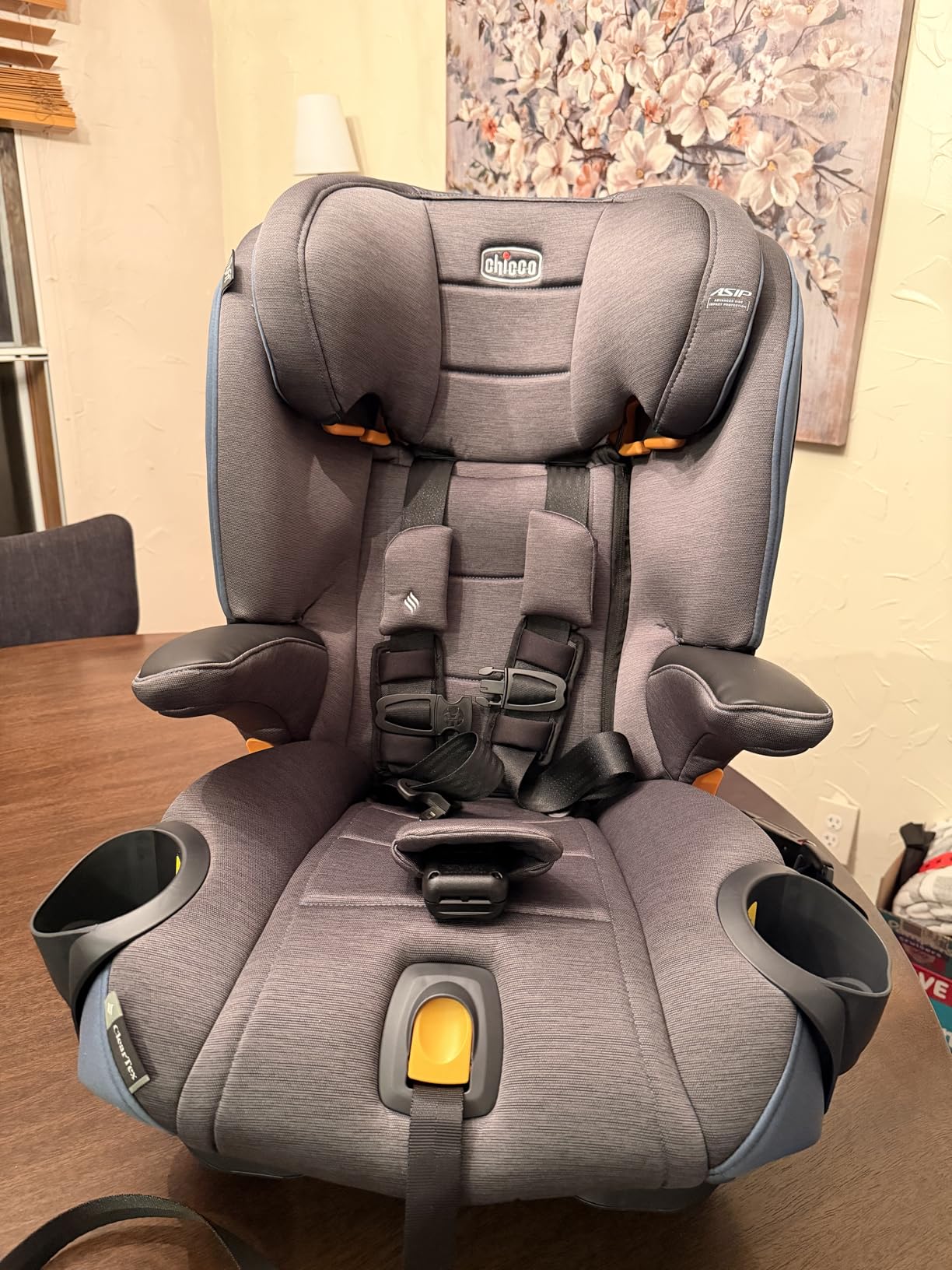
This is the seat I keep coming back to for a 4-year-old specifically, because the decision the family is making is rarely “booster or no booster” and more often “now or in a year.” The MyFit runs forward-facing harness mode from 25 to 65 pounds, then converts to a belt-positioning booster rated to 100 pounds and 54 inches. A child who is 45 pounds today can stay harnessed for another two years and still have booster years behind them, which removes the pressure to make the call early.
It is also the highest-rated seat in this roundup at 4.8 across 5,080 reviews, and the engineering behind that rating is real rather than marketing. The Advanced Side Impact Protection is built to meet FMVSS 213a, the side-impact standard, and the shell rides on RideRight bubble levels with a ReclineSure leveling system so you can get the recline angle right before the child is in it. The headrest has nine positions and the backrest has four recline positions, which is more adjustment range than most dedicated boosters offer.
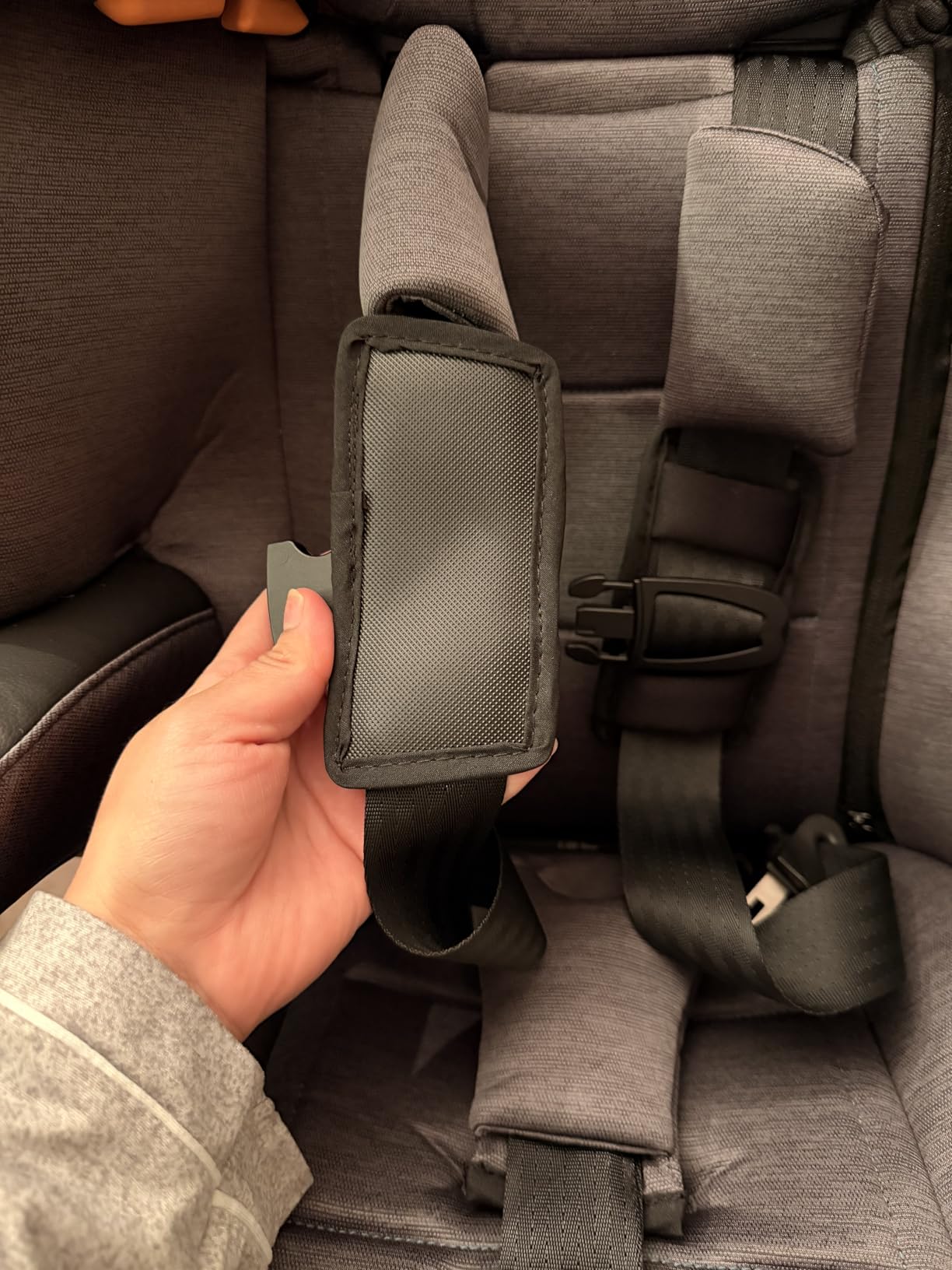
The practical side is where the MyFit earns its place in a family with two kids. It is slim enough that owners regularly report fitting three across a back seat, and the LATCH connectors are the premium locking style paired with a LockSure belt-tightening system. The cup holders are push-button removable and dishwasher-safe, and the ErgoBoost seat uses dual-density foam, which matters on a 40-minute drive with a child who will complain about comfort by mile 30.
The cost is weight. At 25 pounds this is by far the heaviest seat in the group, and if your family moves a seat between two cars several times a week, that is a genuine daily friction. The dimensions are 20 inches deep, 17.5 inches wide and 26 inches high, so plan the back seat layout before you commit.
Is Your Child in the Right Range for This Seat?
Check two numbers. The harness mode covers 25 to 65 pounds and starts at 38 inches tall, so a 4-year-old at 30 or 40 pounds sits comfortably in the middle of that band. The booster mode runs to 100 pounds and 54 inches, which is enough for most children to graduate into a seat belt around age 7 to 9 rather than 6.
If your child is already above 65 pounds, you are buying the booster half of the seat only, and you should weigh that against a dedicated booster that will be lighter to move. If your child is under 38 inches tall, this is not their seat yet.
What Parents Check Before Buying This One
Parents consistently check three things. The recline angle in their own car, because the four positions are meant to be dialled in with the child in the seat. Whether their back seat fits it alongside a sibling’s seat, since three-across is the usual constraint in a sedan. And whether they can live with lifting 25 pounds in and out, especially in a parking lot with a sleeping toddler in one arm.
If all three check out, this is the strongest single-seat purchase for a 4-year-old in the roundup. The nine headrest positions and the harness-to-booster range mean you are very unlikely to outgrow it early.
We earn a commission, at no additional cost to you. CERTAIN CONTENT THAT APPEARS ON THIS SITE COMES FROM AMAZON. THIS CONTENT IS PROVIDED 'AS IS' AND IS SUBJECT TO CHANGE OR REMOVAL AT ANY TIME.
2. Graco TurboBooster 2.0 LX Review for 4-Year-Olds
Graco TurboBooster 2.0 LX Highback & Backless Booster Car Seat, Gannon
- Ages 4-10
- 40-100 lbs
- Up to 57 inches
- Highback and backless
Pros
- Converts from highback to backless
- ProtectPlus frontal rear and rollover protection
- One-hand front-adjust LATCH
- Recline helps sleeping children
- Retractable dual cup holders hold bottles
Cons
- Unanchored seat can shift when empty
- Padding is thin for larger children
- Children may need help reaching a recessed vehicle buckle
We earn a commission, at no additional cost to you. CERTAIN CONTENT THAT APPEARS ON THIS SITE COMES FROM AMAZON. THIS CONTENT IS PROVIDED 'AS IS' AND IS SUBJECT TO CHANGE OR REMOVAL AT ANY TIME.
If your child is already past the harness stage, this is the seat most families end up with, and the reason is the review volume. At 5,193 reviews and a 4.7 rating, you are looking at the best-documented booster in this roundup, which matters when you are trusting a product with no harness to hold your child correctly. It is rated for ages 4 to 10, 40 to 100 pounds and up to 57 inches.
The headline feature is conversion. It runs as a highback booster and then strips down to a backless booster, so you get years of use out of one seat rather than buying again at 57 inches. The Graco ProtectPlus system is marketed around frontal, rear and rollover protection, and the headrest adjusts through its full range. Installation uses a one-hand front-adjust LATCH system, which is the fastest setup in this group and the reason it moves between vehicles so easily.
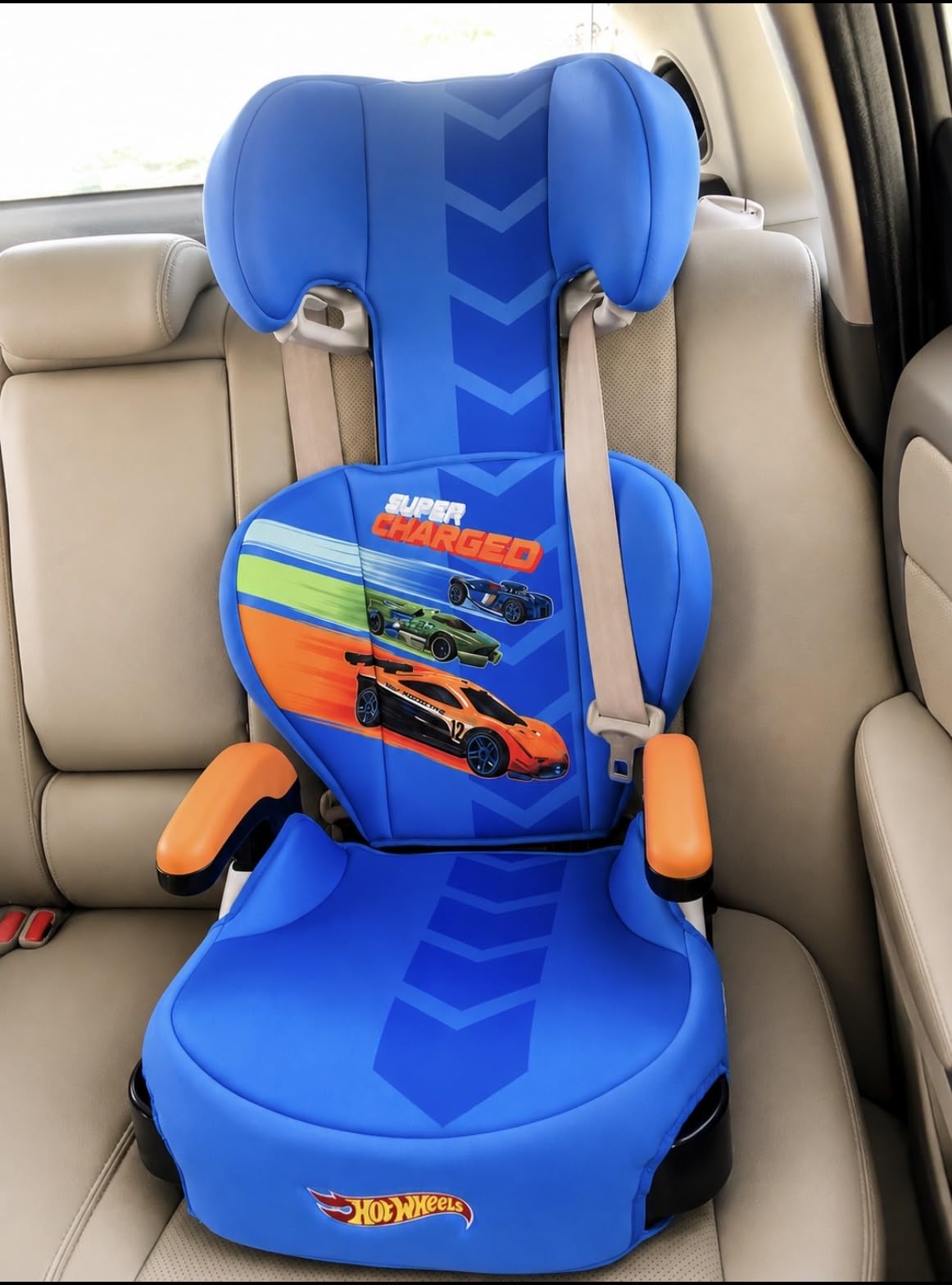
The recline is the sleeper feature, and it is the answer to the most common 4-year-old problem. When a child falls asleep and slumps forward, the lap belt rides up toward the stomach and the shoulder belt loses its position. This seat reclines enough that a sleeping child stays in a belt position that still works. Owners also point to the retractable dual cup holders, which are deep enough to hold a water bottle upright rather than letting it tip in every corner.
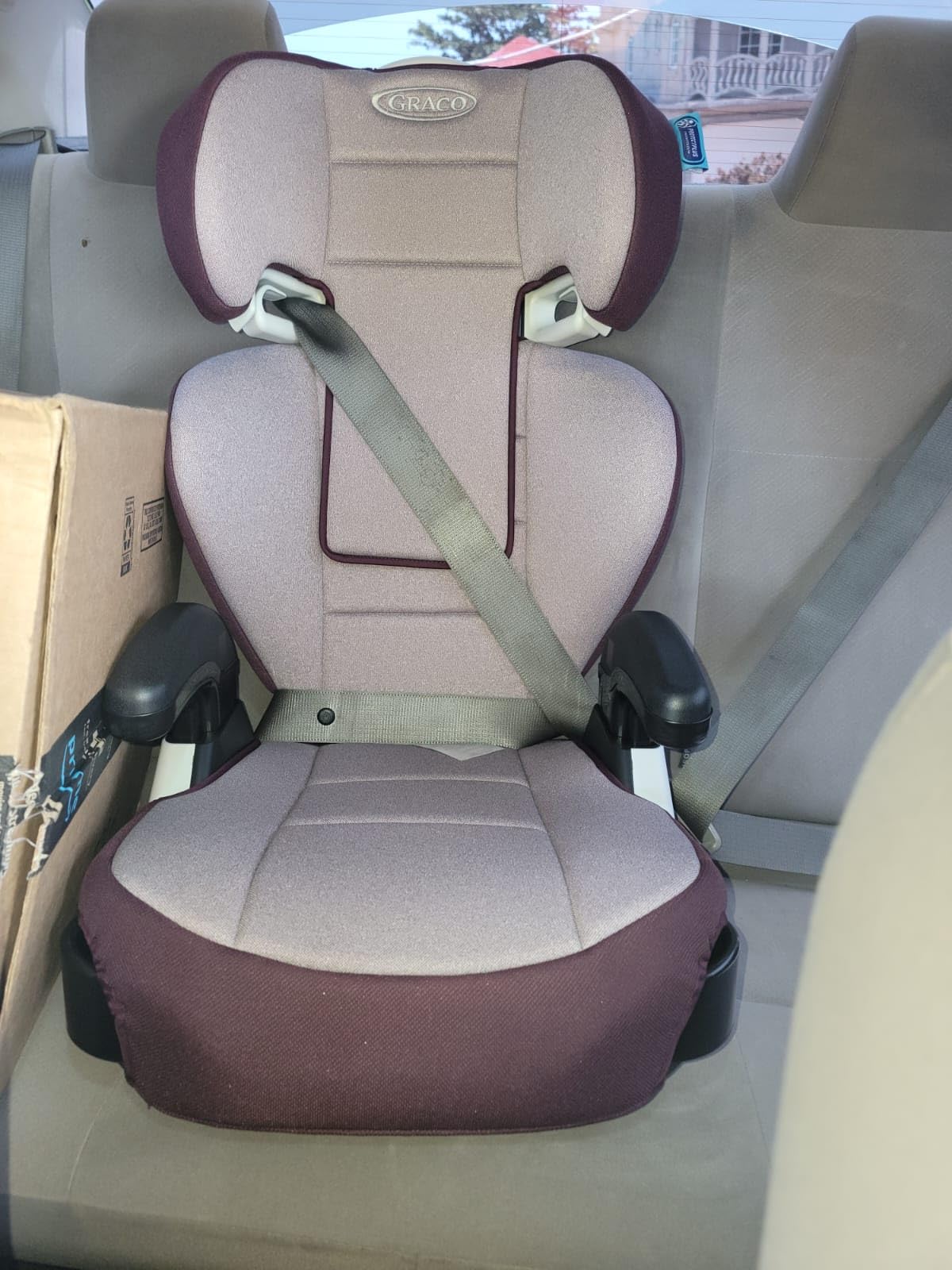
Two criticisms come up often and both are fair. The seat is not firmly anchored when empty, so in a hard stop it can move around, which is a nuisance rather than a safety problem for a belted child. The padding is thinner than some parents would like once a child is at the taller end of the range.
Is Your Child in the Right Range for This Seat?
The 40-pound minimum is the gate here. A 4-year-old under 40 pounds cannot legally or safely use this seat in any mode, and that is a real possibility worth checking before you buy. Once above 40 pounds, the 100-pound and 57-inch ceilings give most children through age 8 or 9.
Because there is no harness mode, this is a seat for a child who has genuinely graduated. A 4-year-old who is borderline belongs in one of the 2-in-1 seats in this roundup instead.
What Parents Check Before Buying This One
The most useful check is the recline in your specific vehicle, because a booster that reclines poorly in one car can sit awkwardly in another. Parents also check that the backless mode genuinely fits their child’s shoulders, and that the LATCH anchors in their car are usable, since LATCH positions are limited in some vehicles.
Owners who use this for carpooling rate it highly for exactly that reason. The seat is light, converts flat, and the one-hand adjuster means you are not re-routing straps every time you move it.
We earn a commission, at no additional cost to you. CERTAIN CONTENT THAT APPEARS ON THIS SITE COMES FROM AMAZON. THIS CONTENT IS PROVIDED 'AS IS' AND IS SUBJECT TO CHANGE OR REMOVAL AT ANY TIME.
3. Chicco KidFit ClearTex Plus Review for 4-Year-Olds
Chicco KidFit ClearTex Plus 2-in-1 Belt-Positioning Booster Car Seat
- Highback to backless
- DuoGuard head and torso protection
- 10-position headrest
- 2-position recline
Pros
- Quick-release LATCH with SuperCinch one-pull tightener
- Slim profile for middle seats and three across
- Head support for children who fall asleep
- Removable backrest converts to backless booster
- Machine-washable ClearTex fabrics
Cons
- Belt positioning is not a restraint for a child who unbuckles himself
- Some buyers expected a harness with this listing
- Backless mode loses the head and torso support
We earn a commission, at no additional cost to you. CERTAIN CONTENT THAT APPEARS ON THIS SITE COMES FROM AMAZON. THIS CONTENT IS PROVIDED 'AS IS' AND IS SUBJECT TO CHANGE OR REMOVAL AT ANY TIME.
This is the seat to look at when your back seat is tight or your child sleeps in the car. The KidFit ClearTex Plus runs 4.7 across 3,501 reviews and pairs DuoGuard head and torso protection with a 10-position headrest that adjusts from the waist, so the shoulder guides rise with the child rather than needing to be repositioned independently. The backrest reclines through two positions, and the whole backrest unbolts for backless use.
Installation is the reason it moves around so easily. It uses premium LATCH connectors with a SuperCinch one-pull tightener and a one-hand quick release, which means pulling the strap out rather than squeezing both sides apart. That is a genuine advantage in a carpark or outside a grandparent’s house in the rain, and owners mention the slim profile fitting the middle seat, where LATCH is sometimes unavailable, thanks to the belt guides and low base.
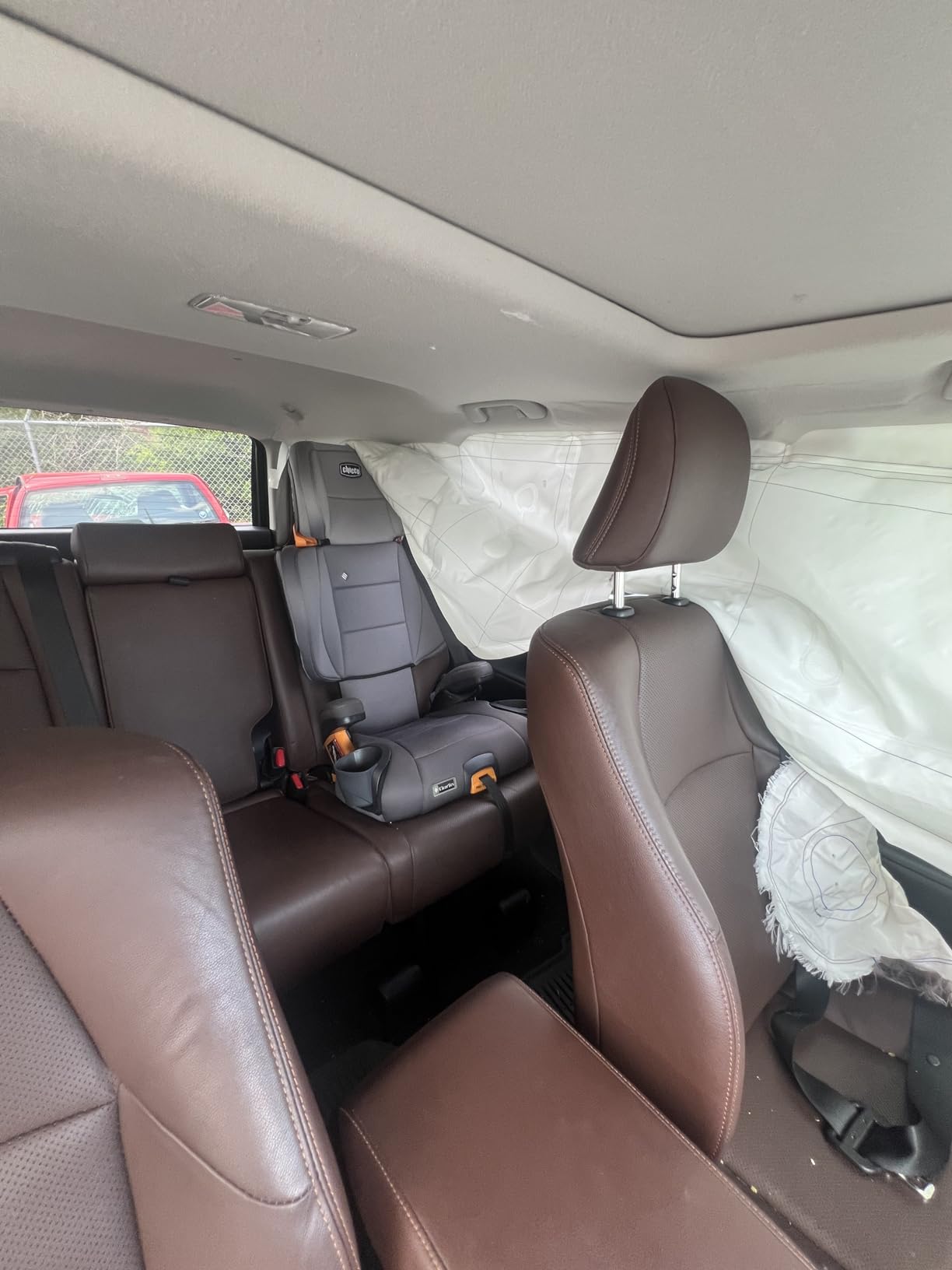
There is a caution that belongs in every review of this seat. Belt positioning is not a restraint. One parent of an autistic child reported that their child could climb out of the seat unsupervised, which is a real limitation of every booster in this roundup but is worth taking seriously if your child has that tendency. If it applies to you, buy a harness seat instead and treat the booster question as a later one.
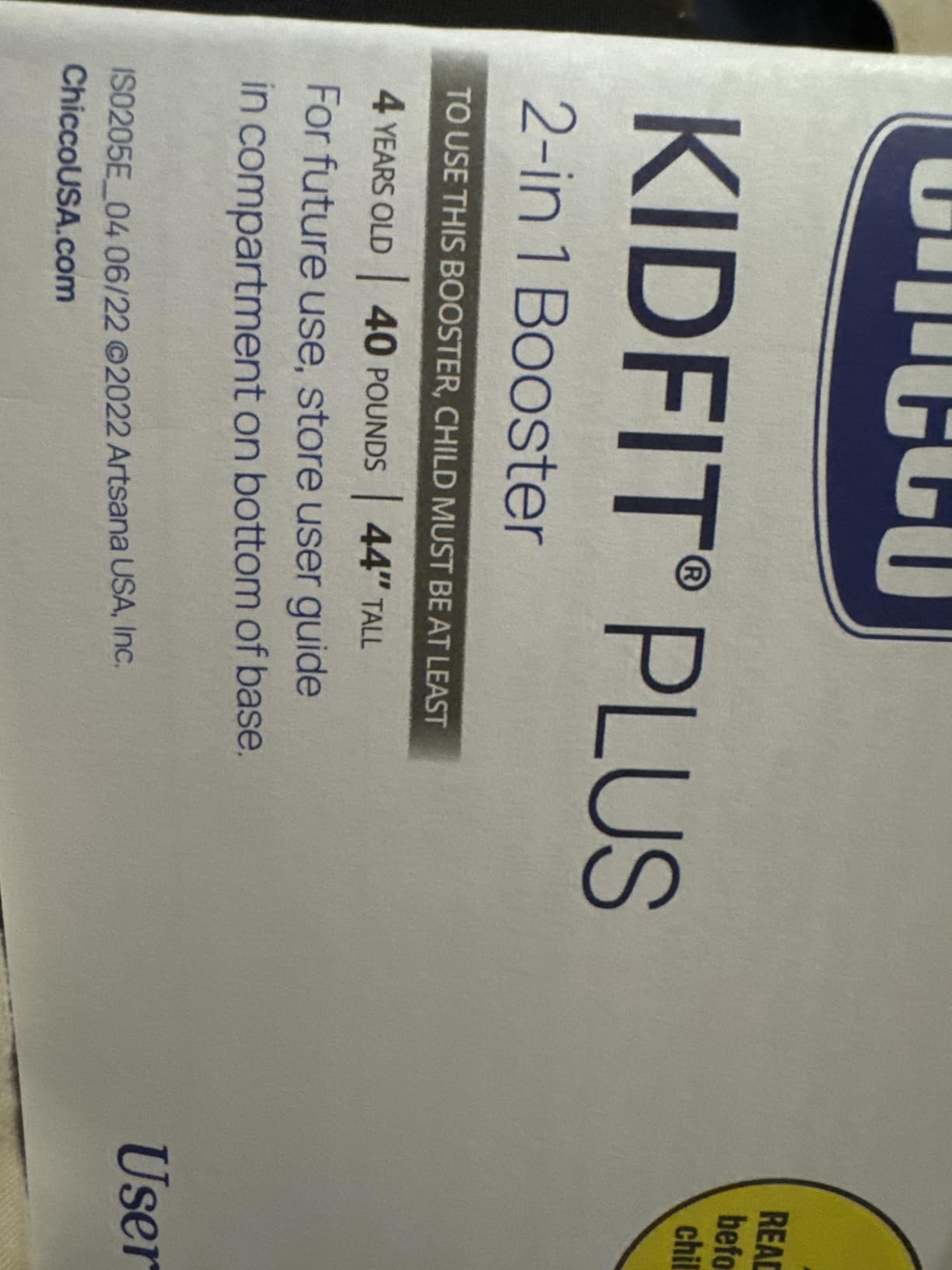
A second, smaller complaint: some buyers ordered this expecting a harness because of the way the listing reads, and it is a belt-positioning booster. Check that your child is genuinely ready before you buy it for that reason.
Is Your Child in the Right Range for This Seat?
It is a 40-pound minimum seat, so the same gate applies as with the Graco TurboBooster. What differs is the fit above that. Because the seat is narrow, a smaller 4-year-old at the low end of the range often sits better here than in a wide-frame booster, and the head support is what keeps a sleeping child in position.
The highback mode runs to 100 pounds, and once you remove the backrest for backless use you are relying on the vehicle belt alone, so keep the highback on for as long as your child’s shoulders are below the top of the guides.
What Parents Check Before Buying This One
Owners consistently check three things: whether the headrest reaches high enough to guide the shoulder belt correctly, whether their child can tolerate the shoulder belt position, and whether the quick-release LATCH fits their car’s anchor spacing. Some vehicles have anchor loops that are too close together for this connector style.
The ClearTex fabrics are also worth knowing about if your child has a documented chemical sensitivity. They are flame-retardant-free and every cover is removable and machine washable, which is a real advantage over seats with fixed upholstery.
We earn a commission, at no additional cost to you. CERTAIN CONTENT THAT APPEARS ON THIS SITE COMES FROM AMAZON. THIS CONTENT IS PROVIDED 'AS IS' AND IS SUBJECT TO CHANGE OR REMOVAL AT ANY TIME.
4. Britax Skyline Review for 4-Year-Olds
Britax Skyline 2-Stage Belt-Positioning Booster Car Seat, Dusk – Highback and Backless Seat
- 40-120 lbs
- Up to 63 inches
- Highback and backless
- Vehicle belt install
Pros
- Tallest and heaviest limits in this roundout
- Two-stage highback and backless design
- Color-coded belt guides make routing obvious
- One-hand 10-position headrest
- Easy to move between vehicles
Cons
- Thin seat cushion on long trips
- Cup holders less capable than premium rivals
- No lower anchors so belt install only
We earn a commission, at no additional cost to you. CERTAIN CONTENT THAT APPEARS ON THIS SITE COMES FROM AMAZON. THIS CONTENT IS PROVIDED 'AS IS' AND IS SUBJECT TO CHANGE OR REMOVAL AT ANY TIME.
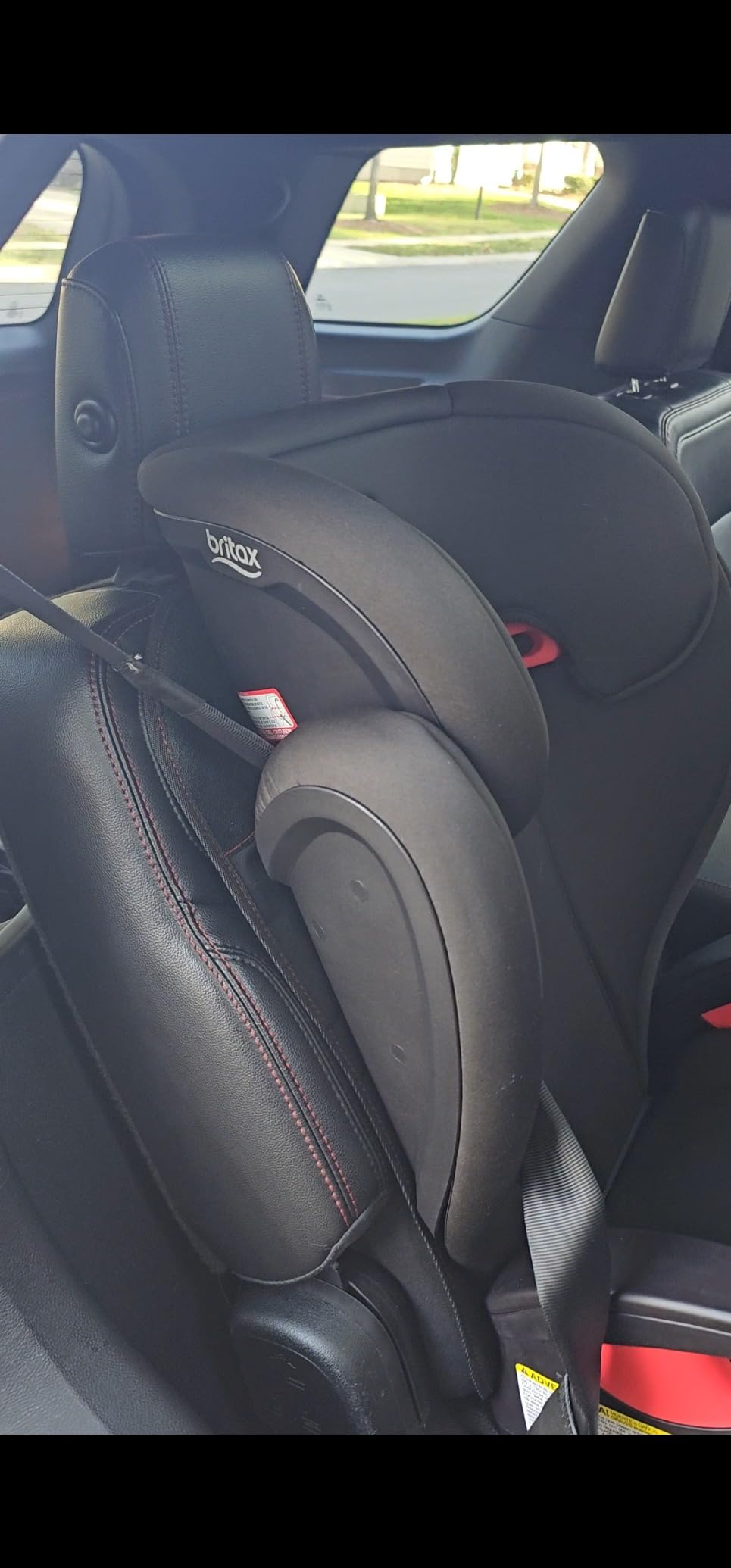
Choose this one if you suspect you are about to buy twice. The Skyline is rated from 40 to 120 pounds and up to 63 inches, which makes it the only seat in this roundup with that kind of headroom, and the only one that a tall 4-year-old can grow into without an early replacement. It is a two-stage seat, highback then backless, and reviewers frequently note that it delivers the feature set of premium boosters without the premium-level price.
The details that make it usable day to day are the color-coded belt guides. Instead of guessing which loop the shoulder belt goes through, the guides are color matched to the corresponding belt path, which removes the most common installation error. The headrest adjusts one-handed through 10 positions, and the shell plus foam-lined headrest is what reviewers cite as the impact energy management layer. It installs with the vehicle seat belt only, with no lower anchors.

For a 4-year-old the honest drawback is padding. The seat cushion is thin, and children notice on a long drive, so if your family does frequent highway runs you may want a seat with more foam. The cup holders are removable and dishwasher-safe but are shallower than those on the Chicco and Graco seats in this group. The seat cover is removable and washable and wipes clean easily, which partly compensates.
Because there is no LATCH, the seat can shift more than an anchored booster in a hard stop. That is fine once your child is belted in, but if the seat lives in a vehicle where it is often empty, it will move around.
Is Your Child in the Right Range for This Seat?
The 63-inch ceiling is the number to hold on to. The AAP’s guidance is to keep a child in a booster until they are at least 4 feet 9 inches tall and can pass the seat belt fit test, so the Skyline comfortably carries a child past that milestone without you needing to look for a bigger seat.
For a 4-year-old today, the 40-pound minimum is the only real constraint, and the generous range means the seat you install will still fit at 8 or 9 years old.
What Parents Check Before Buying This One
With a belt-only install, the check that matters is your vehicle belt itself. You want a lap belt that locks, a shoulder belt that does not retract back into the door, and belt guides that sit above the child’s shoulders. Parents also check that the thin cushion will be tolerable for the length of their typical trip.
If you have two children and plan to hand this seat down, the 120-pound limit is the argument. It is the seat in this roundup most likely to be reused by a sibling without a second purchase.
We earn a commission, at no additional cost to you. CERTAIN CONTENT THAT APPEARS ON THIS SITE COMES FROM AMAZON. THIS CONTENT IS PROVIDED 'AS IS' AND IS SUBJECT TO CHANGE OR REMOVAL AT ANY TIME.
5. Evenflo Maestro Sport Review for 4-Year-Olds
Evenflo High-Back Booster Car Seat with Harness, 22 to 110lbs, Maestro Sport, Granite Gray
- Harness 30-50 lbs
- Booster to 100 lbs
- Up-front harness adjuster
- Shoulder belt guide
Pros
- Low seat height lets small children climb in unassisted
- Up-front central harness adjuster
- Quick to install and secure
- Light enough to carry through an airport
- Two built-in cup holders included
Cons
- Thin padding compared with heavier convertible seats
- Cup holders can pop out of their sockets
- Rigid shell with no flex for the child
We earn a commission, at no additional cost to you. CERTAIN CONTENT THAT APPEARS ON THIS SITE COMES FROM AMAZON. THIS CONTENT IS PROVIDED 'AS IS' AND IS SUBJECT TO CHANGE OR REMOVAL AT ANY TIME.
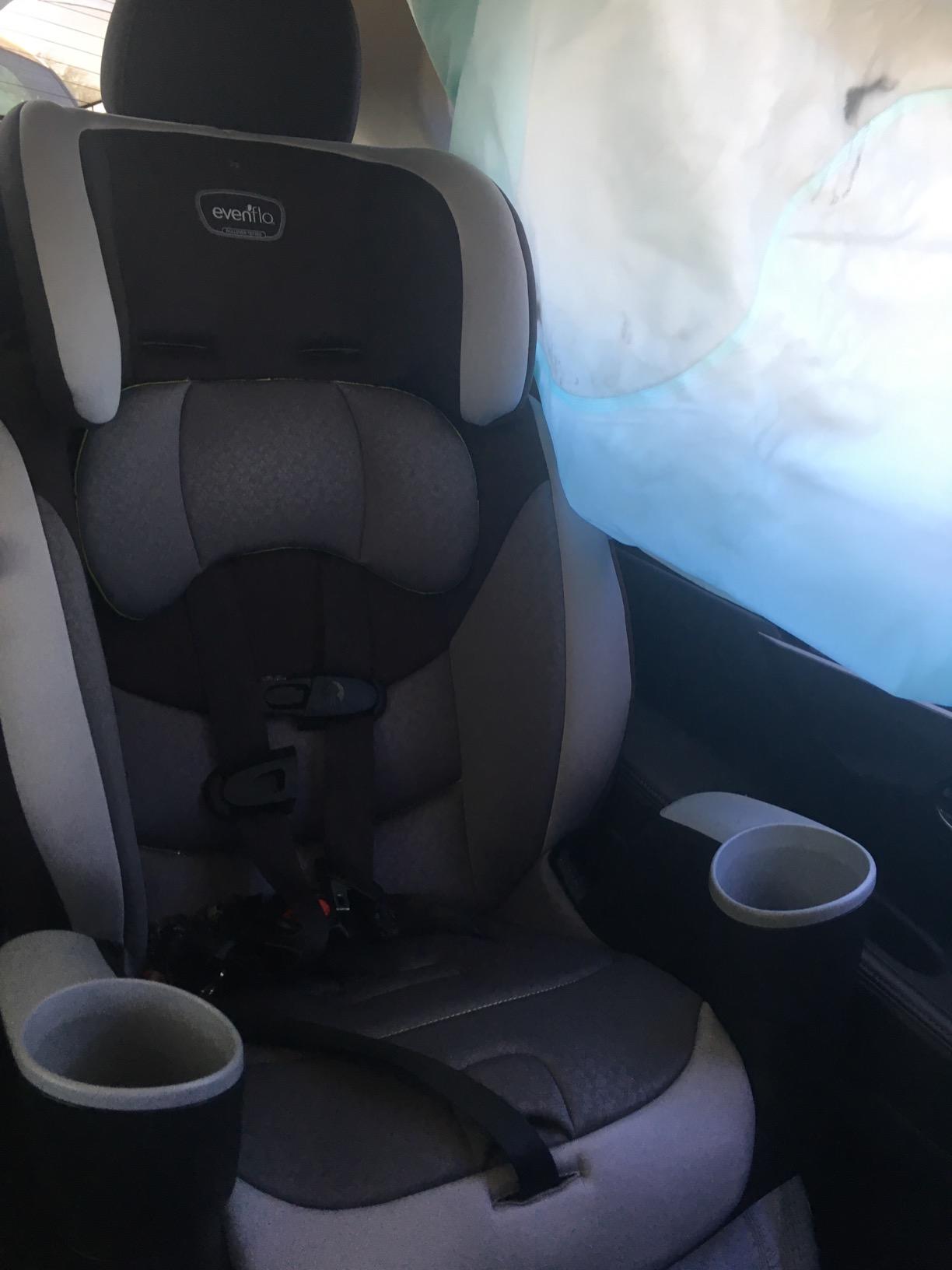
The Maestro is the pick when your 4-year-old is small, which is the situation it was quietly designed for. Its forward-facing harness mode runs from 30 to 50 pounds, lower than most of the harness-equipped seats here, and the belt-positioning booster mode goes up to 100 pounds. The low seat height is the feature families notice first, because a smaller child can climb in and sit down without an adult lifting them.
There is an up-front central harness adjuster, which means the tightening strap is at the front of the seat rather than routed through the back. That saves a genuine amount of time and frustration when the harness needs a snug fit, and it is the reason owners rate the daily adjustment so highly. There is also an automatic shoulder belt guide that auto-positions the vehicle belt, so the shoulder belt lands where it should without you threading it by hand.

Honest limitations here. The padding is thin compared with the heavier convertible seats, the rigid shell has no flex for the child, and some parents have had the cup holders pop out of their sockets on rough roads. Reviewers also note that some families read the very light construction and were unsure about crash performance, though the seat carries the usual federal certification. The seat pad is wipe-clean and machine washable.
One structural limitation to plan around: this is a high-back only design with no backless mode. When your child outgrows the high-back at 100 pounds, you will be shopping again.
Is Your Child in the Right Range for This Seat?
The harness band is 30 to 50 pounds, so this is a good fit for a 4-year-old who is smaller than average, and a poor one for a 4-year-old who is already 55 pounds and outgrowing the harness within a year. That lower ceiling is the trade for the low, easy-to-enter seat height.
Once in booster mode, the limit is 100 pounds, which is a comfortable ceiling for most of the 4-to-8 age band.
What Parents Check Before Buying This One
Two things. First, whether 50 pounds is enough harness runway for your child, or whether you are buying a seat they will outgrow soon. Second, whether the shoulder belt guide in your car works with the automatic guide on the seat, because a misaligned guide puts the belt exactly where a booster is supposed to prevent it.
Families who travel by air also rate it highly for portability, since the whole seat is light enough to carry through an airport. Boosters cannot be used in airplane seats, so this is for car travel and carpooling rather than flights.
We earn a commission, at no additional cost to you. CERTAIN CONTENT THAT APPEARS ON THIS SITE COMES FROM AMAZON. THIS CONTENT IS PROVIDED 'AS IS' AND IS SUBJECT TO CHANGE OR REMOVAL AT ANY TIME.
6. Diono Cambria 2 XL Review for 4-Year-Olds
Diono Cambria 2 XL, Dual Latch Connectors, 2-in-1 Belt Positioning Booster Seat, High-Back to Backless Booster, Space and Room to Grow, 7 Headrest Positions, 8 Years 1 Booster Seat, Black
- 40-120 lbs
- XL wide design
- Highback to backless
- Dual LATCH connectors
Pros
- XL footprint gives more shoulder and hip room
- Dual LATCH connectors add stability over belt-only boosters
- Two layers of side impact protection
- Retractable cup holder and snack tray
- Machine-washable fabrics with layered foam
Cons
- Wider footprint makes three across difficult
- No harness mode
- Heavier to move between vehicles than slim boosters
We earn a commission, at no additional cost to you. CERTAIN CONTENT THAT APPEARS ON THIS SITE COMES FROM AMAZON. THIS CONTENT IS PROVIDED 'AS IS' AND IS SUBJECT TO CHANGE OR REMOVAL AT ANY TIME.
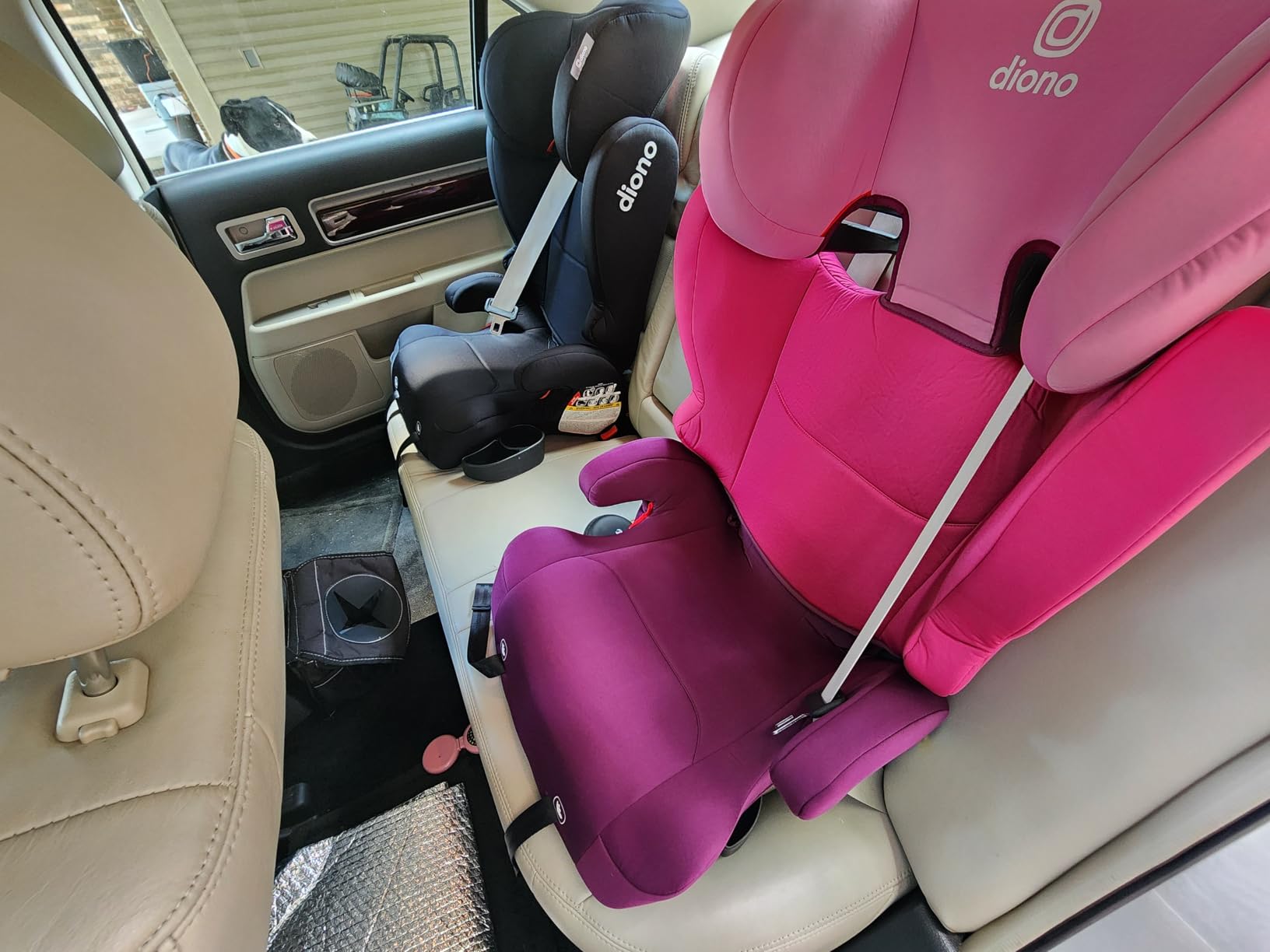
Some 4-year-olds are simply bigger than the frame of a narrow booster, and for them a seat that outgrows them in months is a false economy. The Cambria 2 XL is built for that child. The XL footprint gives more shoulder and hip room than the slim seats here, with deep cushioning, layered foam padding and built-in padded armrests, and it stays usable to 120 pounds.
It is a 2-in-1 that converts from high-back to backless, so the head support goes away but the seat does not. Side impact protection comes in two layers, and the headrest adjusts through six positions as your child grows. Installation uses dual LATCH connectors, which give it more stability than a belt-only booster, and the built-in retractable 2-in-1 cup holder and snack tray keeps a small bottle and a snack within reach without taking up the width.
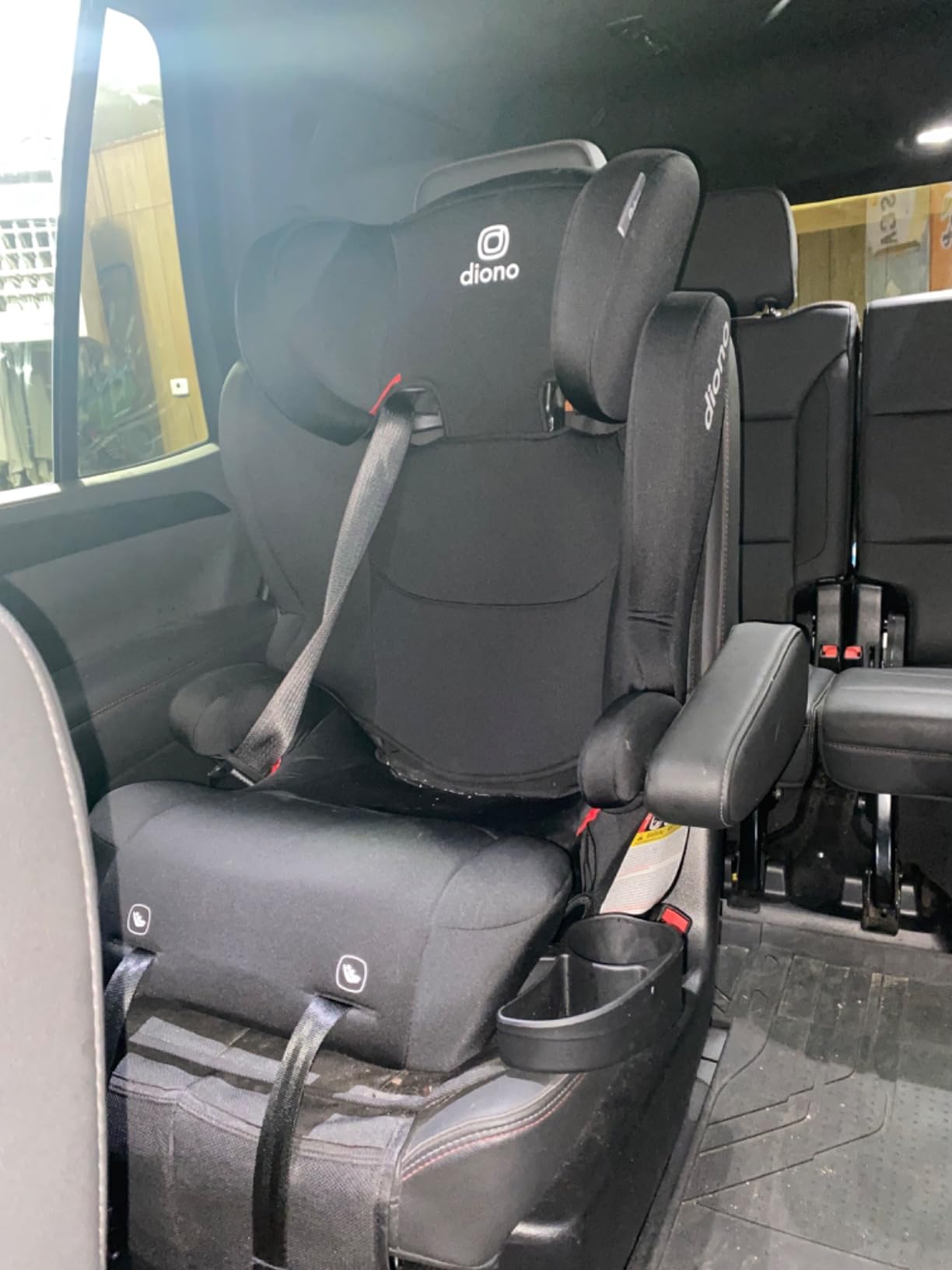
The compromise is width, and it is not a small one. Parents of larger 4-year-olds gravitate here specifically, and the same reviews note the wide dimensions make it a poorer fit for a crowded back seat. If you need to fit three across, this is not the seat, and if you need two boosters plus an adult in a sedan, measure first.
The second limitation is that there is no harness mode. It cannot be used before a child is ready for the vehicle seat belt, so if you are still deciding between harness and booster, look at the Chicco MyFit, the Graco Tranzitions or the Safety 1st Grand instead.
Is Your Child in the Right Range for This Seat?
The 40-pound minimum applies, and the 120-pound ceiling is among the most generous here. What matters more than the numbers is proportion. A child who is filling the width of a narrow booster, or who complains of their hips and shoulders being cramped, is the child this seat is built for.
Measure the back seat before you commit. The width of a wide booster is the number that decides whether two children can sit side by side, and it is the most common reason a family returns a seat.
What Parents Check Before Buying This One
Owners check the LATCH anchor availability in the seat position they intend to use, since dual connectors need usable lower anchors. They also check that the retractable cup holder and snack tray is something their child will actually use rather than bang on for an hour.
The machine-washable contoured fabrics with layered foam padding are a genuine plus for a 4-year-old who eats in the car, and the padded armrests are more comfortable on long drives than the plastic armrests on slimmer seats.
We earn a commission, at no additional cost to you. CERTAIN CONTENT THAT APPEARS ON THIS SITE COMES FROM AMAZON. THIS CONTENT IS PROVIDED 'AS IS' AND IS SUBJECT TO CHANGE OR REMOVAL AT ANY TIME.
7. Safety 1st Grand 2-in-1 Review for 4-Year-Olds
Safety 1st Grand 2-in-1 Booster Car Seat, Converts from High Back to Belt-Positioning Booster, High Back Seat for Kids 40-65, and Belt-Positioning 40-100 Pounds, Old Soul
- Harness 40-65 lbs
- Booster 40-100 lbs to 52 inches
- Slim three-across design
Pros
- Slim profile fits three across in most back seats
- Converts from 5-point harness to belt-positioning booster
- Lightweight and portable between vehicles
- Machine-washable dryer-safe pad
- Dishwasher-safe removable cup holders
Cons
- Harness mode tops out at 65 lbs leaving little growth runway
- Fewer customer reviews than comparable booster seats
- Booster height limit of 52 inches is lower than rivals
We earn a commission, at no additional cost to you. CERTAIN CONTENT THAT APPEARS ON THIS SITE COMES FROM AMAZON. THIS CONTENT IS PROVIDED 'AS IS' AND IS SUBJECT TO CHANGE OR REMOVAL AT ANY TIME.
The Grand exists to solve one specific problem: fitting three children across a back seat. It is a slim three-across design, and in a family with a 4-year-old and a 6-year-old already in narrow boosters, that footprint is the whole point. It is also light and portable, which makes it the practical second seat for carpools, grandparents’ houses and a second vehicle.
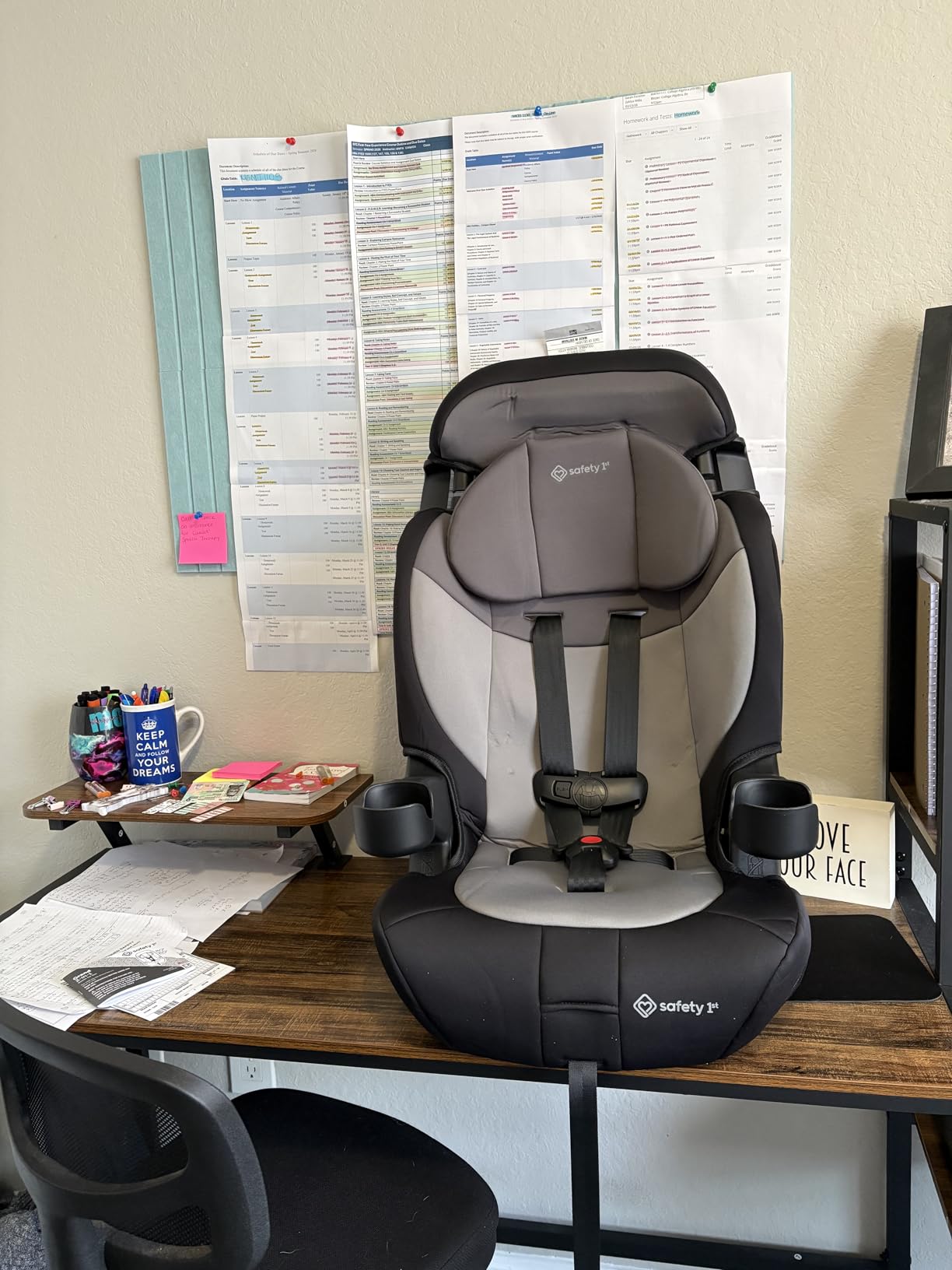
It is genuinely a 2-in-1. The forward-facing 5-point harness booster mode covers 40 to 65 pounds and 43.4 to 49 inches, and the belt-positioning high-back mode then runs 40 to 100 pounds and 43.4 to 52 inches. That 40-pound harness minimum is narrower than some seats here, so a 4-year-old who is at 38 pounds is not yet in range for the harness mode, though the booster mode shares the same floor.
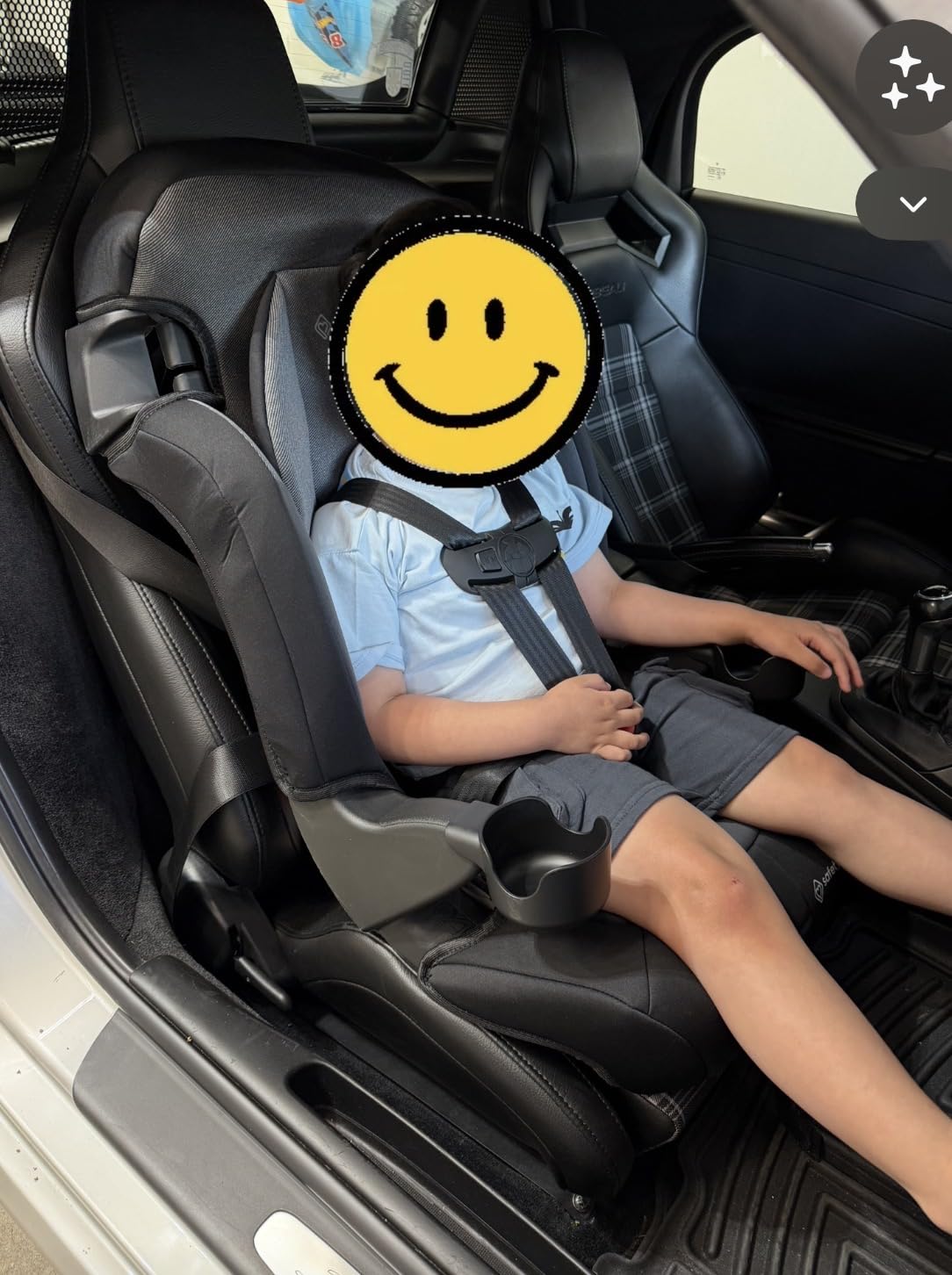
The everyday details are the selling point. The seat pad is machine washable and dryer safe, the two cup holders are removable and dishwasher safe, and the headrest adjusts as your child grows. Buyers consistently report that the narrow base is what makes getting a child in and out easy, and that the simple harness-to-booster conversion takes no tools.
Two drawbacks. The 65-pound harness ceiling means many 4-year-olds are already close to the limit of that mode, so the growth runway is short. And the 52-inch booster height limit is lower than the Britax Skyline and the Graco TurboBooster, so a tall child will outgrow the back support sooner and be sitting too low for correct belt fit.
Is Your Child in the Right Range for This Seat?
Two thresholds to hold in your head: 43.4 inches minimum height and 40 pounds minimum weight. Above those, the harness mode runs to 65 pounds and 49 inches, and the booster mode to 100 pounds and 52 inches. A child above 49 inches goes straight to booster mode in this seat.
If your child is already over 45 inches, compare the 52-inch ceiling against the 57 inches on the Graco TurboBooster 2.0 LX before you buy, because that two-and-a-half inch difference decides whether the seat lasts a year or four.
What Parents Check Before Buying This One
Measure your back seat at the narrowest point and compare it against the width of the seats already in the car. That single number decides the three-across question, and it is the reason this seat has a following among families with three children.
Parents also check the weight of the seat, because this is the one in this roundup most likely to live in two vehicles. Light weight and a washable pad matter more when a seat spends half its life in a carpool.
We earn a commission, at no additional cost to you. CERTAIN CONTENT THAT APPEARS ON THIS SITE COMES FROM AMAZON. THIS CONTENT IS PROVIDED 'AS IS' AND IS SUBJECT TO CHANGE OR REMOVAL AT ANY TIME.
8. Graco Tranzitions 3-in-1 Review for 4-Year-Olds
Graco Tranzitions 3-in-1 Harness Booster Car Seat, Proof
- Harness 26.5-65 lbs
- Highback 40-100 lbs
- Backless 40-100 lbs
- Lightweight
Pros
- Three stages from toddler harness to backless booster
- Harness and headrest adjust together in one motion
- One-hand 9-position headrest adjustment
- Lightweight and portable for multi-car families
- Covers younger siblings from 26.5 lbs
Cons
- Booster modes start at 40 lbs not the earlier 30 lb minimum
- Smaller review base than the Graco TurboBooster
- No recline listed for sleeping children
We earn a commission, at no additional cost to you. CERTAIN CONTENT THAT APPEARS ON THIS SITE COMES FROM AMAZON. THIS CONTENT IS PROVIDED 'AS IS' AND IS SUBJECT TO CHANGE OR REMOVAL AT ANY TIME.
The Tranzitions is the seat to buy when you have a younger sibling coming or already in the back seat. It is a genuine 3-in-1: a forward-facing harness from 26.5 to 65 pounds, a highback booster from 40 to 100 pounds, and a backless booster from 40 to 100 pounds. In a family with a 2-year-old and a 4-year-old, the same seat covers the younger child now and the older child later, which is the argument that makes it good value across a whole household.
The engineering detail that stands out is the no-rethread Simply Safe Adjust harness system. The headrest and the harness move together in a single motion, so there is no rethreading the straps through the seat back every time your child grows. Add a one-hand 9-position headrest adjustment and you have a seat that takes seconds to fit rather than minutes, which is the difference between doing it and skipping it.
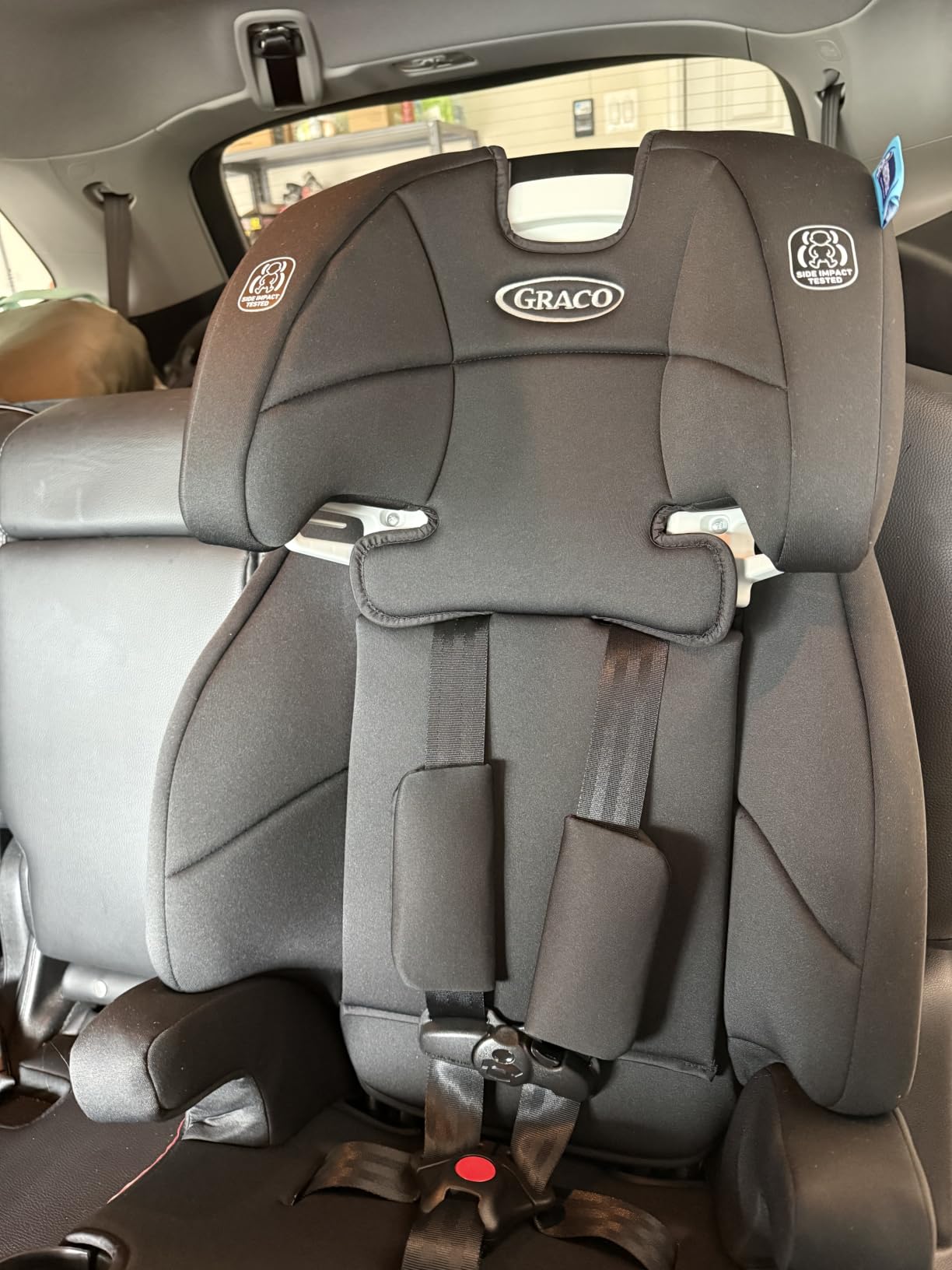
It is also light and portable, which suits a family running two cars. Installation uses the vehicle belt with a LATCH connection, so you can pick the method that suits the seat position. Both booster modes run 40 to 100 pounds, so this is not the seat for a 4-year-old who still has a year of harness growth ahead and a weight under 40 pounds, since the booster modes start at 40.
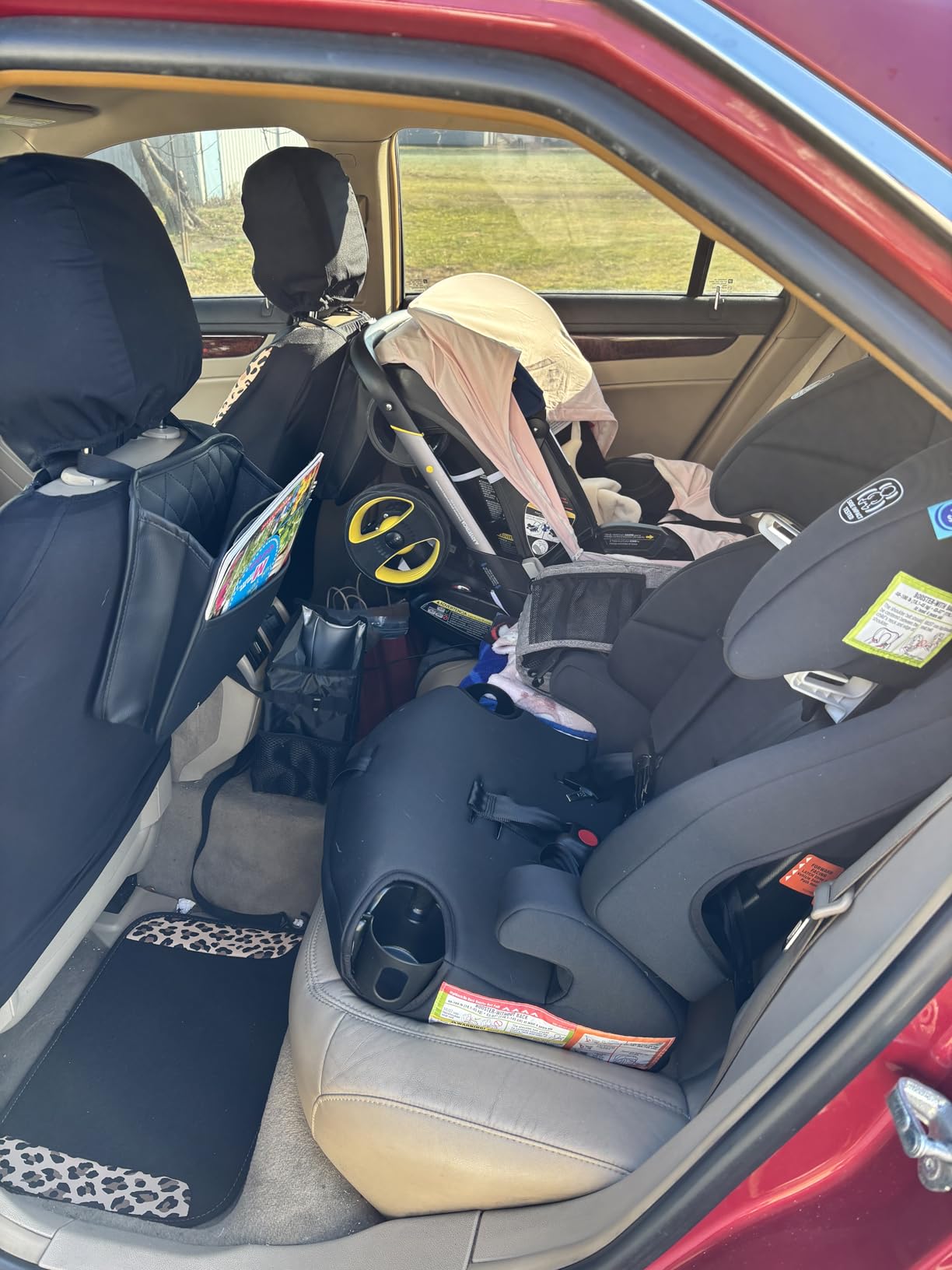
Two limitations to weigh. The raised 40-pound floor in booster mode means a smaller 4-year-old cannot use the booster configuration early the way some older models allowed, and there is no listed recline, so this is a weaker choice for a child who regularly falls asleep in the car.
Is Your Child in the Right Range for This Seat?
For the harness stage, 26.5 to 65 pounds covers most 4-year-olds comfortably, and the single-motion adjustment makes it easy to keep the harness snug as they grow. For the booster stage, both modes run 40 to 100 pounds with no separate height limit listed.
Think of this as a family seat rather than a single-child seat. If you have a 2-year-old coming behind your 4-year-old, the three-stage design is what you are paying for, and the answer is hard to argue with.
What Parents Check Before Buying This One
Parents mostly check two things. The first is whether the harness actually adjusts smoothly with the headrest, since that system is the reason to buy this seat over a fixed harness design. The second is whether their child sleeps in the car, because without a recline the slumping problem is not solved here.
Reviewers also compare it directly to the Graco TurboBooster and see it as the quieter, more flexible option rather than the one with the cup holders and the recline. If you want one seat to cover two children, that is the trade you are making and it is worth it.
We earn a commission, at no additional cost to you. CERTAIN CONTENT THAT APPEARS ON THIS SITE COMES FROM AMAZON. THIS CONTENT IS PROVIDED 'AS IS' AND IS SUBJECT TO CHANGE OR REMOVAL AT ANY TIME.
How to Choose a Booster Car Seat for a 4-Year-Old
High-back or backless, and does it matter at 4
It matters a great deal at this age. A high-back booster guides the shoulder belt into position around your child’s shoulders and keeps their head supported, which is exactly what a 4-year-old needs. A backless booster only lifts the child up to where a seat belt would already almost fit, so it is really a seat for a 5-to-7-year-old or an older child in a car where the seat belt geometry is poor. Every backless seat in this roundup still starts at 40 pounds and requires the child to be tall enough for the belt to sit correctly without it, so backless is never a way around the height problem.
Reading weight and height limits correctly
Weight and height are both limits, and a child has to satisfy both. The 40-pound minimum is the near-universal floor for booster use in this roundup, and it is a real gate: a 4-year-old at 38 pounds cannot use any of these seats regardless of height. On the upper end, a seat that tops out at 52 inches will stop guiding the shoulder belt correctly long before one that reaches 57 or 63 inches, and correct belt position is the entire function of the seat.
Seat width and fitting two boosters across
Measure before you buy, because this is the most common reason a seat gets returned. Add the widths of the seats already in your back seat plus a few inches of clearance for buckle access, and check that you can still reach the buckle stalk beside each child. Slim designs such as the KidFit ClearTex Plus and the Safety 1st Grand are built for three across, while a wide frame such as the Diono Cambria 2 XL will not manage it.
Checking seat belt fit in three steps
Once your child is buckled, check three things. The lap belt should lie flat across the upper thighs and the hip bones, never across the stomach or the groin. The shoulder belt should cross the centre of the chest and the collarbone, never the neck and never behind the back. And the belt should not have a chance to twist into the guide. If any of the three fails, the seat is the wrong height or the child is not ready, and moving up a step is the correct fix rather than adjusting the belt twice a week.
Expiration dates, recalls and secondhand seats
Every seat has a manufacture date stamped on the label, and booster seats typically have a service life of around six to ten years depending on the manufacturer. Do not use a seat past its expiration, and do not use one with a date you cannot read. Register every new seat with the manufacturer so recall notices reach you, and check the recall list for your specific model before a secondhand purchase. For an unfamiliar history, the safest advice is to buy the seat new.
Two seats for two cars
The pattern most families settle on is one high-back seat that lives in the primary car and one lighter backless or narrow seat that travels. Keep the travelling seat in the bag, and expect to reinstall it every time. In cars where LATCH anchors are unavailable in the position you need, a backless booster with a seat belt install is often simpler than fighting anchor spacing.
One last point on airplanes: booster seats cannot be used in aircraft seats, and car seats with a built-in harness have their own airline rules. If you fly regularly, check the airline’s policy for your specific seat before you travel rather than at the gate.
Frequently Asked Questions
Should a 4 year old be in a booster car seat?
Usually not yet. If your child still fits their forward-facing 5-point harness within its weight and height limits, NHTSA and the American Academy of Pediatrics recommend staying in that seat. A booster is appropriate once the harness is outgrown, the child is at least 40 pounds, and they can sit upright without slouching and tolerate the shoulder belt across their chest.
Can a 4 year old go in a backless booster seat?
Legally only above the seat’s minimum weight, which is 40 pounds on every backless seat in this roundup. Practically, a 4-year-old is usually too small for the geometry of a backless booster, which does not guide the shoulder belt. A high-back booster is the better choice at this age because it positions the belt and supports the head.
Can a 40 lb 4 year old sit in a booster seat?
Yes, 40 pounds is the standard minimum for booster use across this roundup. Weight is only half the test, though. Your child also needs to meet the seat’s minimum height, sit upright for the whole trip without slumping, accept the shoulder belt across their chest, and buckle in without constant help.
When should I switch my child from a 5-point harness to a booster seat?
Switch when your child hits the maximum weight or height for the harness mode, not before. Check the label on your current seat, and treat that number as a hard floor. If your child is outgrowing the harness but not yet ready behaviorally, a 2-in-1 or 3-in-1 seat such as the Chicco MyFit, the Graco Tranzitions or the Safety 1st Grand buys you the extra time.
Is a 5-point harness safer than a booster seat?
Yes, when your child still fits it. A harness restrains the whole body and distributes crash forces across the pelvis and shoulders, whereas a booster only positions the vehicle belt. That is why guidance is to keep a child harnessed as long as the seat allows. A booster only becomes the safer option once the harness is outgrown.
How tall must a child be to stop using a booster seat?
The AAP benchmark is at least 4 feet 9 inches tall, usually somewhere between ages 8 and 12, plus passing the seat belt fit test. Keep the booster until the lap belt lies flat on the thighs, the shoulder belt crosses the chest and collarbone, and your child can stay buckled for the whole trip. Seats with taller limits last longer.
The Best Booster Car Seats for 4-Year-Olds
The best booster car seats for 4 year olds in 2026 come down to one question: when is your child actually ready. If they still fit a 5-point harness, buy a 2-in-1 like the Chicco MyFit, the Graco Tranzitions or the Safety 1st Grand and buy yourself another year or two of the better protection. If they are genuinely past it, the Chicco MyFit is still the pick for side-impact engineering and a 4.8 rating across 5,080 reviews, and the Graco TurboBooster 2.0 LX is the dependable choice for a child who naps in the car.
For families with a crowded back seat, the Chicco KidFit ClearTex Plus and the Safety 1st Grand are the two to measure against your back seat before anything else. For a tall or large 4-year-old, the Britax Skyline and the Diono Cambria 2 XL stop the seat from being outgrown in three months. Whatever you choose, check the manufacture date on arrival, register the seat, and re-check the belt fit on the first drive of the week rather than the first drive of the day.