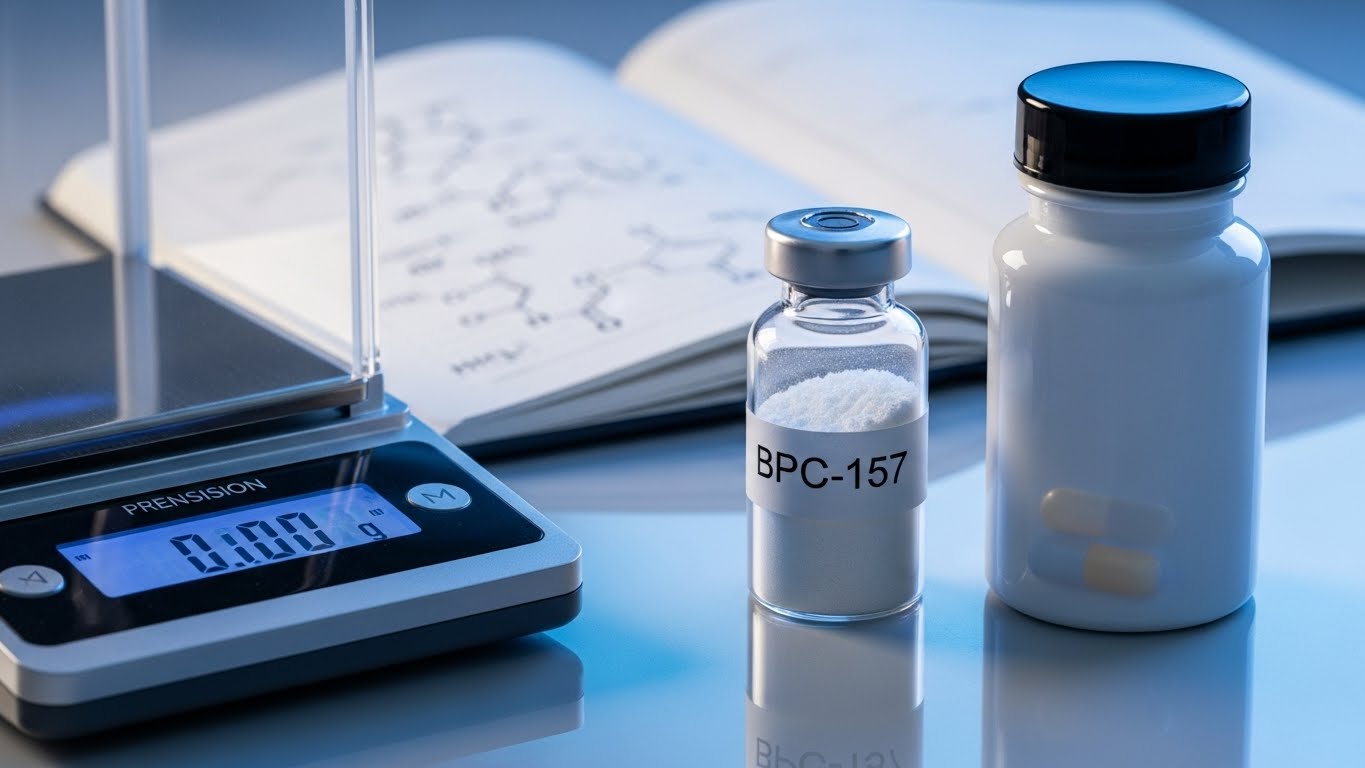
Figuring out the right BPC-157 dosage can feel overwhelming when you are sifting through conflicting information online. I have spent months researching peptide protocols and talking with practitioners who use BPC-157 regularly with their patients.
The standard BPC-157 dosage is 250-500 mcg per day, administered once or twice daily via subcutaneous injection. This dosage range is based on research protocols and practitioner experience, with most users reporting optimal results at 500 mcg daily for 4-6 weeks.
In this comprehensive guide, I will break down exactly how much BPC-157 to take based on your administration method, body weight, specific use case, and goals. You will also learn how to properly reconstitute your peptide, calculate doses in mL, and understand cycle timing.
Important Disclaimer: BPC-157 is not FDA-approved for human use. It is classified as a research peptide. This information is for educational purposes only. Always consult a licensed healthcare provider before using any peptide.
ContentsTable of Contents
- 1Quick BPC-157 Dosage Reference Chart→
- 2What Is BPC-157?→
- 3Key Properties of BPC-157→
- 4Regulatory Status→
- 5How BPC-157 Works in Your Body?→
- 6Angiogenesis Activation→
- 7Fibroblast and Collagen Production→
- 8Nitric Oxide System Modulation→
- 9Nerve Regeneration Support→
- 10Standard BPC-157 Dosage Ranges by Administration Route→
- 11Subcutaneous (SubQ) Injection Dosage→
- 12Intramuscular (IM) Injection Dosage→
- 13Oral Capsule Dosage→
- 14Sublingual Dosage→
- 15Nasal Spray Dosage→
- 16BPC-157 Dosage by Use Case→
- 17Tendon and Ligament Injuries→
- 18Gut Healing (IBS, Ulcers, Leaky Gut)→
- 19Muscle Injuries and Recovery→
- 20Nerve Damage and Neuroprotection→
- 21Post-Surgery Recovery→
- 22Weight-Based BPC-157 Dosing Chart→
- 23How Long Should You Take BPC-157?→
- 24Standard Cycle Guidelines→
- 25Cycle Duration by Condition→
- 26Signs It May Be Time to Stop or Adjust→
- 27How to Inject BPC-157: Step-by-Step Protocol→
- 28Supplies You Will Need→
- 29Subcutaneous Injection Steps→
- 30Common Injection Sites→
- 31How to Reconstitute BPC-157?→
- 32Reconstitution Supplies→
- 33Step-by-Step Reconstitution→
- 34BPC-157 Dosage Calculator: mL Conversion→
- 35Storage and Shelf Life→
- 36Stacking BPC-157 with Other Peptides→
- 37BPC-157 + TB-500 Stack (Wolverine Protocol)→
- 38BPC-157 + CJC-1295/Ipamorelin→
- 39Important Stacking Considerations→
- 40Safety, Side Effects, and Regulatory Status→
- 41Reported Side Effects→
- 42Can You Take Too Much BPC-157?→
- 43Contraindications and Precautions→
- 44Regulatory Status Summary→
- 45Frequently Asked Questions→
- 46How much BPC-157 should I take?→
- 47How often should I inject BPC-157?→
- 48Can I take BPC-157 orally?→
- 49How long should I take BPC-157?→
- 50What is the best time to take BPC-157?→
- 51Can I take too much BPC-157?→
- 52How do I calculate BPC-157 dosage by weight?→
- 53Can I stack BPC-157 with TB-500?→
- 54How do I reconstitute BPC-157?→
- 55Bottom Line on BPC-157 Dosage→
Quick BPC-157 Dosage Reference Chart
Here is the complete BPC-157 dosage reference covering all administration routes. This table is designed for quick reference when determining your protocol.
| Administration Route | Typical Daily Dose | Frequency | Duration | Best For |
|---|---|---|---|---|
| Subcutaneous (SubQ) | 250-500 mcg | 1-2x daily | 4-6 weeks | Tendon, ligament, localized injury |
| Intramuscular (IM) | 250-500 mcg | 1-2x daily | 4-6 weeks | Muscle injuries, deep tissue |
| Oral Capsules | 250-500 mcg | 1-2x daily | 4-8 weeks | Gut healing, systemic inflammation |
| Sublingual | 250-500 mcg | 1-2x daily | 4-6 weeks | Systemic effects, no injection |
| Nasal Spray | 200-400 mcg | 1-2x daily | 4-6 weeks | Neuroprotection, brain-related research |
Most researchers and practitioners recommend starting at the lower end of the dosage range (250 mcg once daily) and gradually increasing based on response.
What Is BPC-157?
BPC-157 (Body Protection Compound-157) is a synthetic peptide consisting of 15 amino acids derived from a naturally occurring protein found in human gastric juice.
This pentadecapeptide was first isolated and studied in the early 1990s. Researchers discovered it in the protective lining of the stomach, where it plays a role in protecting and healing gastrointestinal tissue.
The synthetic version used in research replicates the exact amino acid sequence of the natural compound. Unlike many peptides, BPC-157 demonstrates remarkable stability in both acidic conditions and high temperatures, which is why oral administration remains an option.
Key Properties of BPC-157
- Chemical Name: Pentadecapeptide BPC 157
- Amino Acid Sequence: 15 amino acids (Gly-Glu-Pro-Pro-Pro-Gly-Lys-Pro-Ala-Asp-Asp-Ala-Gly-Leu-Val)
- Molecular Weight: 1,419.53 g/mol
- Origin: Synthetic version of human gastric juice protein
- Stability: Stable in acidic environments, resistant to degradation
Regulatory Status
BPC-157 is not FDA-approved for human use. The FDA classifies it as a research chemical, meaning it cannot be sold for human consumption.
The World Anti-Doping Agency (WADA) added BPC-157 to its prohibited substances list in January 2022. Athletes subject to WADA testing should be aware that use of BPC-157 may result in violations.
How BPC-157 Works in Your Body?
BPC-157 works by activating multiple healing pathways simultaneously. Understanding these mechanisms helps explain why dosage timing and administration route matter for different use cases.
Angiogenesis Activation
BPC-157 upregulates vascular endothelial growth factor (VEGF) and its receptor VEGFR2. This promotes the formation of new blood vessels, which is essential for delivering nutrients and oxygen to injured tissues.
Research suggests this angiogenic effect is one of the primary mechanisms behind BPC-157’s tissue healing properties. Increased blood flow to damaged areas accelerates the repair process.
Fibroblast and Collagen Production
Fibroblasts are the cells responsible for producing collagen, the protein that forms the structural framework of tendons, ligaments, and connective tissue.
BPC-157 activates fibroblasts and increases their migration to injury sites. Studies indicate it also promotes the expression of EGR-1 (early growth response protein 1), which regulates collagen synthesis.
Nitric Oxide System Modulation
BPC-157 interacts with the nitric oxide (NO) system through endothelial nitric oxide synthase (eNOS). Nitric oxide plays a crucial role in vasodilation, inflammation regulation, and wound healing.
This interaction with the NO pathway may explain BPC-157’s reported effects on blood pressure, gut motility, and systemic inflammation.
Nerve Regeneration Support
Research in animal models suggests BPC-157 may promote nerve regeneration and protect against nerve damage. Studies have shown positive effects on peripheral nerve injuries and potential neuroprotective properties.
This is why some researchers are exploring BPC-157 for conditions involving nerve damage or neurodegenerative processes.
Standard BPC-157 Dosage Ranges by Administration Route
The optimal BPC-157 dosage varies based on how you administer it. Each route has different bioavailability and absorption characteristics that affect dosing.
Subcutaneous (SubQ) Injection Dosage
Subcutaneous injection is the most common administration method for BPC-157. This involves injecting into the fatty tissue just beneath the skin.
Standard Range: 250-500 mcg per day
Frequency: Once or twice daily (split dose)
Location: Near the injury site or in abdominal fat pad
Many practitioners recommend injecting near the injury site when treating localized conditions like tendon or ligament injuries. The theory is that local administration delivers higher concentrations directly where healing is needed.
For systemic effects, the abdominal area provides consistent absorption and is the easiest site for self-administration.
Intramuscular (IM) Injection Dosage
Intramuscular injections deliver BPC-157 directly into muscle tissue. This method may be preferred for deep muscle injuries.
Standard Range: 250-500 mcg per day
Frequency: Once or twice daily
Location: Directly into injured muscle or deltoid/thigh
IM injections typically result in slower, more sustained absorption compared to SubQ. Some researchers prefer this method for muscle-specific injuries.
Oral Capsule Dosage
Oral BPC-157 is primarily used for gut-related conditions. The peptide’s stability in gastric acid makes oral administration viable, though bioavailability is lower than injection.
Standard Range: 250-500 mcg per day
Frequency: Once or twice daily (with or without food)
Duration: Often 4-8 weeks for gut healing
For gut healing applications, oral BPC-157 delivers the peptide directly to the gastrointestinal tract where it can work locally on intestinal tissue.
Some users report benefits from oral administration even for systemic effects, though research on oral bioavailability for non-gut applications is limited.
Sublingual Dosage
Sublingual administration involves placing the peptide under the tongue for absorption through the oral mucosa.
Standard Range: 250-500 mcg per day
Frequency: Once or twice daily
Hold Time: 60-90 seconds under tongue
This method may offer better systemic bioavailability than swallowing capsules while avoiding injections. However, less research exists specifically on sublingual BPC-157 absorption rates.
Nasal Spray Dosage
Nasal spray BPC-157 is used in some research focusing on neuroprotective effects. The nasal mucosa allows peptides to potentially reach the central nervous system more directly.
Standard Range: 200-400 mcg per day
Frequency: 1-2 sprays per nostril, once or twice daily
This method is less commonly used than injection or oral routes. Research on intranasal BPC-157 is more limited.
BPC-157 Dosage by Use Case
Different conditions may require adjusted dosing protocols. Here is how practitioners commonly tailor BPC-157 dosage based on the specific use case.
Tendon and Ligament Injuries
Tendon and ligament injuries are among the most common reasons people research BPC-157. These tissues have limited blood supply, which is why BPC-157’s angiogenic properties are particularly relevant.
Recommended Dosage: 250-500 mcg daily
Administration: SubQ injection near injury site
Duration: 4-6 weeks for acute injuries, up to 8 weeks for chronic conditions
Frequency: Twice daily (split dose) often preferred
Pro Tip: Users on forums report better results when injecting as close to the injury site as possible. For example, inject near the patellar tendon for knee issues, or near the shoulder for rotator cuff problems.
Gut Healing (IBS, Ulcers, Leaky Gut)
BPC-157 originated from gastric juice, so its application for gut health has strong rationale. Oral administration targets the GI tract directly.
Recommended Dosage: 250-500 mcg daily
Administration: Oral capsules or sublingual
Duration: 6-8 weeks for significant gut issues
Timing: Empty stomach may improve local effects
Some practitioners recommend combining oral and injectable BPC-157 for severe gut issues, using oral for local GI effects and SubQ for systemic healing support.
Muscle Injuries and Recovery
Muscle strains, tears, and exercise-induced damage are another common application for BPC-157 research.
Recommended Dosage: 300-500 mcg daily
Administration: IM injection into affected muscle or SubQ nearby
Duration: 4-6 weeks
Frequency: Once or twice daily
For athletes looking at recovery optimization, the twice-daily split dose protocol is commonly reported. This maintains more consistent peptide levels throughout the day.
Nerve Damage and Neuroprotection
Research suggests BPC-157 may support nerve regeneration, making it of interest for peripheral nerve injuries.
Recommended Dosage: 250-500 mcg daily
Administration: SubQ or nasal spray
Duration: 6-8 weeks (nerve healing is typically slower)
Nerve regeneration takes longer than other tissue healing. Extended protocols may be appropriate under practitioner guidance.
Post-Surgery Recovery
Some practitioners explore BPC-157 for accelerating recovery following surgical procedures.
Recommended Dosage: 250-500 mcg daily
Administration: SubQ near surgical site
Duration: 4-6 weeks post-surgery
Start Time: Some begin immediately post-surgery, others wait 1-2 weeks
Always discuss any post-surgical supplements or peptides with your surgeon before starting a protocol.
Weight-Based BPC-157 Dosing Chart
While fixed doses (250-500 mcg) are most common, some practitioners use weight-based dosing to individualize protocols. This approach may be particularly relevant for those significantly above or below average body weight.
The commonly referenced weight-based range is 1-10 mcg per kilogram of body weight per day, with 2-5 mcg/kg being most typical.
| Body Weight (lbs) | Body Weight (kg) | Conservative Dose (2 mcg/kg) | Standard Dose (3.5 mcg/kg) | Higher Dose (5 mcg/kg) |
|---|---|---|---|---|
| 120 lbs | 54 kg | 108 mcg | 189 mcg | 270 mcg |
| 140 lbs | 64 kg | 128 mcg | 224 mcg | 320 mcg |
| 160 lbs | 73 kg | 146 mcg | 256 mcg | 365 mcg |
| 180 lbs | 82 kg | 164 mcg | 287 mcg | 410 mcg |
| 200 lbs | 91 kg | 182 mcg | 319 mcg | 455 mcg |
| 220 lbs | 100 kg | 200 mcg | 350 mcg | 500 mcg |
| 240 lbs | 109 kg | 218 mcg | 382 mcg | 545 mcg |
Most users find the standard 250-500 mcg fixed dose sufficient regardless of body weight. Weight-based calculations are more commonly used in research settings.
For practical purposes, starting at 250 mcg and adjusting based on response is a reasonable approach for most individuals.
How Long Should You Take BPC-157?
BPC-157 is typically used in cycles rather than continuously. Cycle length depends on the condition being addressed and individual response.
Standard Cycle Guidelines
- Acute Injuries: 4-6 weeks
- Chronic Conditions: 6-8 weeks
- Maintenance/Optimization: 2-4 weeks
- Rest Period: 2-4 weeks between cycles
Cycle Duration by Condition
| Condition Type | Recommended Cycle | Rest Period | May Repeat? |
|---|---|---|---|
| Acute tendon injury | 4-6 weeks | 2-4 weeks | Yes, if needed |
| Chronic tendinopathy | 6-8 weeks | 4 weeks | Yes |
| Gut healing (IBS, ulcer) | 6-8 weeks | 4 weeks | Yes |
| Post-surgery | 4-6 weeks | N/A | As needed |
| Muscle strain | 2-4 weeks | 2 weeks | If not healed |
| Nerve injury | 8-12 weeks | 4 weeks | Under supervision |
Signs It May Be Time to Stop or Adjust
- Symptoms have resolved and function is restored
- No improvement after 4 weeks (reassess protocol)
- Unexpected side effects develop
- Maximum cycle duration reached
Many users report noticeable improvement within 7-14 days, though complete healing may take the full cycle duration or longer.
How to Inject BPC-157: Step-by-Step Protocol
Proper injection technique is essential for safety and effectiveness. Here is a complete guide to subcutaneous BPC-157 injection.
Supplies You Will Need
- Reconstituted BPC-157 vial
- Insulin syringes (29-31 gauge, 0.5mL or 1mL)
- Alcohol swabs
- Sharps disposal container
- Clean, flat work surface
Subcutaneous Injection Steps
- Wash hands thoroughly with soap and water for at least 20 seconds
- Clean the vial stopper with an alcohol swab and let dry
- Draw the correct dose into the syringe (see mL calculation below)
- Choose injection site: Abdominal fat (2 inches from navel) or near injury site
- Clean injection site with alcohol swab and let dry
- Pinch a fold of skin between thumb and forefinger
- Insert needle at 45-90 degree angle (depending on fat pad thickness)
- Inject slowly and steadily over 5-10 seconds
- Remove needle and apply light pressure (no rubbing)
- Dispose of syringe in sharps container immediately
Common Injection Sites
- Abdominal fat pad: 2 inches from navel, rotate sides
- Near injury site: As close as possible to affected tendon/muscle
- Thigh fat pad: Outer thigh area
- Upper arm: Fatty area of outer arm
Time Saver: Many users inject BPC-157 first thing in the morning and again before bed when using twice-daily protocols. This provides convenient timing and consistent spacing.
How to Reconstitute BPC-157?
BPC-157 typically comes as a lyophilized (freeze-dried) powder that must be reconstituted with bacteriostatic water before use.
Reconstitution Supplies
- BPC-157 lyophilized powder vial (5mg or 10mg)
- Bacteriostatic water (BAC water)
- Sterile syringe (1-3mL)
- Alcohol swabs
Step-by-Step Reconstitution
- Determine BAC water amount: Standard is 1-2mL per 5mg vial
- Clean both vial stoppers with alcohol swabs
- Draw bacteriostatic water into syringe
- Insert needle into BPC-157 vial at an angle
- Inject water slowly down the side of vial (do not spray directly on powder)
- Gently swirl vial until powder dissolves (do not shake)
- Label vial with date and concentration
- Store in refrigerator at 2-8 degrees Celsius (36-46 degrees Fahrenheit)
BPC-157 Dosage Calculator: mL Conversion
Understanding how to convert your desired mcg dose to mL is essential. Here is the formula and examples.
Formula: Dose (mcg) / Concentration (mcg/mL) = Volume to inject (mL)
Example with 5mg vial reconstituted with 2mL BAC water:
- Total BPC-157: 5mg = 5,000 mcg
- BAC water added: 2mL
- Concentration: 5,000 mcg / 2mL = 2,500 mcg/mL
- For 250 mcg dose: 250 / 2,500 = 0.1 mL (10 units on insulin syringe)
- For 500 mcg dose: 500 / 2,500 = 0.2 mL (20 units on insulin syringe)
| Vial Size | BAC Water Added | Concentration | 250 mcg = | 500 mcg = |
|---|---|---|---|---|
| 5mg | 1mL | 5,000 mcg/mL | 0.05 mL (5 units) | 0.1 mL (10 units) |
| 5mg | 2mL | 2,500 mcg/mL | 0.1 mL (10 units) | 0.2 mL (20 units) |
| 10mg | 2mL | 5,000 mcg/mL | 0.05 mL (5 units) | 0.1 mL (10 units) |
| 10mg | 4mL | 2,500 mcg/mL | 0.1 mL (10 units) | 0.2 mL (20 units) |
Storage and Shelf Life
- Unreconstituted powder: Store at room temperature or refrigerated, good for 2+ years
- Reconstituted solution: Refrigerate immediately, use within 2-4 weeks
- Never freeze reconstituted peptides
- Protect from light and excessive heat
Stacking BPC-157 with Other Peptides
Many researchers and practitioners combine BPC-157 with complementary peptides for enhanced effects. The most popular combination is BPC-157 with TB-500, often called the “Wolverine Stack.”
BPC-157 + TB-500 Stack (Wolverine Protocol)
TB-500 (Thymosin Beta-4) works synergistically with BPC-157 by promoting cell migration and systemic healing effects.
| Peptide | Dosage | Frequency | Primary Effects |
|---|---|---|---|
| BPC-157 | 250-500 mcg | Daily (1-2x) | Local healing, angiogenesis |
| TB-500 | 2-5 mg | 2x per week | Systemic healing, flexibility |
This combination is popular among athletes and individuals with more severe or chronic injuries. The two peptides work through different pathways, potentially providing complementary benefits.
BPC-157 + CJC-1295/Ipamorelin
Some protocols combine BPC-157 with growth hormone secretagogues for enhanced recovery and regeneration support.
| Peptide | Dosage | Frequency | Primary Effects |
|---|---|---|---|
| BPC-157 | 250-500 mcg | Daily | Tissue healing |
| CJC-1295 | 100-200 mcg | 1-2x daily | GH release, recovery |
| Ipamorelin | 100-200 mcg | 1-2x daily | GH release, sleep quality |
These stacks are more complex and typically used by experienced users or under practitioner supervision.
Important Stacking Considerations
- BPC-157 and TB-500 can be mixed in the same syringe
- Some pre-made blends are available (typically 1:1 to 1:5 BPC:TB-500 ratio)
- When stacking, some users reduce individual dosages slightly
- Always start with single peptides before combining
Safety, Side Effects, and Regulatory Status
BPC-157 has shown a favorable safety profile in research studies, but important limitations exist in our understanding.
Reported Side Effects
Most users report minimal to no side effects. When side effects occur, they are typically mild:
- Injection site reactions: Redness, swelling, itching (usually resolves quickly)
- Nausea: Occasionally reported with oral administration
- Dizziness: Rare, typically mild
- Headache: Occasional, usually transient
- Fatigue: Some users report initial tiredness
Serious adverse events are rarely reported in user communities or research literature. However, long-term safety data in humans is limited.
Can You Take Too Much BPC-157?
Research studies have used doses ranging from micrograms to milligrams without significant toxicity. However, exceeding recommended doses is not advisable given the limited human safety data.
Stick to the established 250-500 mcg daily range unless under direct medical supervision.
Contraindications and Precautions
- Cancer history: BPC-157’s pro-angiogenic effects raise theoretical concerns about tumor vascularization
- Pregnancy/breastfeeding: No safety data exists, avoid use
- Competitive athletes: WADA-prohibited substance
- Active infections: Use caution, as immune modulation is not fully understood
Regulatory Status Summary
- FDA: Not approved for human use, classified as research chemical
- WADA: Prohibited in competition and out-of-competition since January 2022
- Legality: Legal to purchase for research purposes in most countries, not legal to sell for human consumption
Frequently Asked Questions
How much BPC-157 should I take?
The standard BPC-157 dosage is 250-500 mcg per day. Most users and practitioners recommend starting with 250 mcg once daily and increasing to 500 mcg if needed. The dose can be taken once daily or split into two administrations.
How often should I inject BPC-157?
BPC-157 is typically injected once or twice daily. For twice-daily protocols, users commonly split their total daily dose into morning and evening injections, spaced approximately 12 hours apart.
Can I take BPC-157 orally?
Yes, BPC-157 can be taken orally. The peptide is stable in gastric acid, making oral administration viable. Oral BPC-157 is best suited for gut healing applications. For tendon or muscle injuries, injection near the site is generally preferred for higher local concentrations.
How long should I take BPC-157?
Standard BPC-157 cycles last 4-6 weeks for acute injuries and 6-8 weeks for chronic conditions. Most practitioners recommend taking a 2-4 week break between cycles. Extended use beyond 8 weeks should be discussed with a healthcare provider.
What is the best time to take BPC-157?
BPC-157 can be taken at any time of day. Many users inject in the morning and evening for split-dose protocols. Some prefer dosing on an empty stomach, though this is not strictly necessary. Consistency in timing is more important than specific timing.
Can I take too much BPC-157?
Research studies have used wide-ranging doses without significant toxicity. However, exceeding 500 mcg daily is not generally recommended as higher doses have not shown additional benefits in most cases. Stick to established dose ranges for safety.
How do I calculate BPC-157 dosage by weight?
Weight-based BPC-157 dosing typically ranges from 2-5 mcg per kilogram of body weight per day. For a 180-pound (82 kg) person, this equals 164-410 mcg daily. However, most users find the standard 250-500 mcg fixed dose works well regardless of weight.
Can I stack BPC-157 with TB-500?
Yes, BPC-157 and TB-500 are commonly stacked together in what is called the Wolverine Protocol. A typical stack uses BPC-157 at 250-500 mcg daily plus TB-500 at 2-5 mg twice weekly. The peptides can be mixed in the same syringe for convenience.
How do I reconstitute BPC-157?
To reconstitute BPC-157, add 1-2 mL of bacteriostatic water to a 5mg vial. Insert the needle at an angle and slowly inject water down the vial wall. Gently swirl (do not shake) until dissolved. Store refrigerated and use within 2-4 weeks.
Bottom Line on BPC-157 Dosage
The standard BPC-157 dosage of 250-500 mcg per day remains the most commonly recommended protocol. For most use cases, subcutaneous injection once or twice daily for 4-6 weeks provides the foundation for effective dosing.
Key points to remember:
- Start with 250 mcg daily and adjust based on response
- Inject near the injury site for localized issues
- Use oral administration for gut healing applications
- Cycle for 4-6 weeks with rest periods between
- Consider TB-500 stacking for enhanced healing protocols
Work with a knowledgeable healthcare provider whenever possible to personalize your protocol and monitor your response.
Medical Disclaimer: This article is for informational purposes only and does not constitute medical advice. BPC-157 is not FDA-approved for human use. Always consult a licensed healthcare provider before using any peptide or supplement. Individual results may vary.