Clinical trials show retatrutide may produce up to 24.2% body weight reduction at the highest dose levels, making it one of the most promising weight loss medications in development. But getting the dosing right is critical for both results and tolerability.
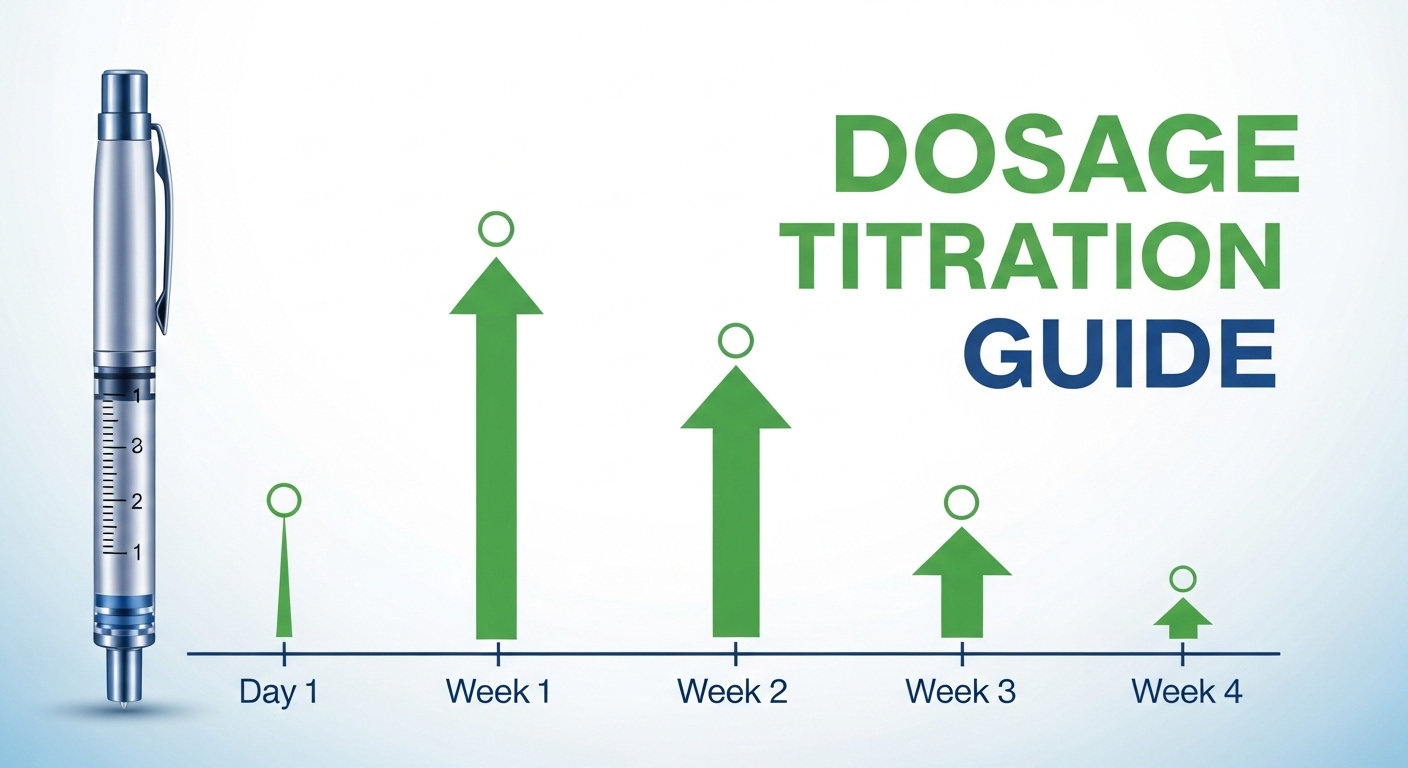
The standard retatrutide dosage starts at 1 mg once weekly and gradually increases to a maintenance dose of 8-12 mg over approximately 16-20 weeks.
I’ve spent months analyzing the published Phase 2 data from the New England Journal of Medicine and tracking real-world discussions in the r/Retatrutide community. This guide breaks down exactly how dosing works, including the titration schedule, mL calculations, and what to expect at each stage.
Important Notice: Retatrutide is NOT FDA-approved. It is currently an investigational drug in Phase 3 clinical trials, manufactured by Eli Lilly. The earliest possible approval is 2027. This guide is for educational purposes only.
ContentsTable of Contents
- 1What Is Retatrutide?→
- 2Standard Retatrutide Titration Schedule→
- 3Why Gradual Titration Matters?→
- 4Retatrutide Dosage in mL: How to Calculate→
- 5Week-by-Week: What to Expect at Each Dose→
- 6Weeks 1-4: Starting at 1 mg→
- 7Weeks 5-8: Escalating to 2 mg→
- 8Weeks 9-12: Reaching 4 mg→
- 9Weeks 13-16: Moving to 8 mg→
- 10Weeks 17+: Maintenance Phase→
- 11Weight Loss Results by Dose Level→
- 12How Retatrutide Compares to Semaglutide and Tirzepatide?→
- 13Managing Side Effects During Titration→
- 14Common Side Effects by Dose Phase→
- 15Practical Management Tips→
- 16Dose Splitting Strategy→
- 17Frequently Asked Questions→
- 18What is the starting dose of retatrutide?→
- 19How fast can I escalate to 8 mg?→
- 20What is the maintenance dose of retatrutide?→
- 21What if I miss a dose of retatrutide?→
- 22Is retatrutide FDA-approved?→
- 23How much weight can you lose on retatrutide?→
- 24The Bottom Line on Retatrutide Dosing→
What Is Retatrutide?
Retatrutide is a triple-agonist peptide medication that simultaneously targets three hormone receptors: GLP-1, GIP, and glucagon. This makes it fundamentally different from existing weight loss medications.
Triple Agonist: A medication that activates three different hormone receptors at once. Retatrutide targets GLP-1 (appetite control), GIP (insulin response), and glucagon (fat metabolism) simultaneously.
To understand why this matters, consider the evolution of incretin-based medications:
- First Generation (Semaglutide): Targets GLP-1 only, producing approximately 15% weight loss
- Second Generation (Tirzepatide): Targets GLP-1 and GIP, achieving approximately 21% weight loss
- Third Generation (Retatrutide): Targets GLP-1, GIP, and glucagon, showing 22-24% weight loss in Phase 2 trials
The addition of glucagon receptor activation appears to enhance fat burning and energy expenditure beyond what dual-agonists can achieve. According to the TRIUMPH-1 Phase 2 study published in the New England Journal of Medicine in 2023, this triple mechanism produced the highest weight loss percentages ever seen in an obesity medication trial.
Retatrutide is administered as a once-weekly subcutaneous injection, similar to semaglutide and tirzepatide.
Standard Retatrutide Titration Schedule
The standard titration schedule follows a gradual dose escalation pattern over 16-20 weeks. This approach minimizes gastrointestinal side effects while allowing the body to adapt to each dose level.
| Phase | Weeks | Dose | Purpose | What to Expect |
|---|---|---|---|---|
| Starting Dose | 1-4 | 1 mg weekly | Initial adjustment | Mild nausea common, decreased appetite begins |
| Early Escalation | 5-8 | 2 mg weekly | Stronger appetite control | Early weight changes for some, improved satiety |
| Middle Escalation | 9-12 | 4 mg weekly | Entering therapeutic range | More consistent satiety, reduced cravings |
| Late Escalation | 13-16 | 8 mg weekly | Approaching maintenance | Noticeable weight-loss momentum |
| Maintenance | 17+ | 8-12 mg weekly | Optimal therapeutic dose | Continued steady weight loss |
Pro Tip: The “start low, go slow” approach is essential. Based on our research, users who escalate too quickly often experience severe nausea and vomiting that may require pausing treatment entirely.
Why Gradual Titration Matters?
Each dose level triggers hormonal changes that affect your digestive system. The GLP-1 component slows gastric emptying, which can cause significant nausea if increased too rapidly.
Forum discussions in r/Retatrutide consistently show that users who follow the standard 4-week escalation pattern report better tolerability than those who try to accelerate the schedule. The most common mistake is rushing to higher doses before the body has adapted.
Some users report success with “dose splitting,” where they divide their weekly dose into two smaller injections. While not part of official protocols, community reports suggest this may help manage side effects while maintaining efficacy.
Retatrutide Dosage in mL: How to Calculate
One of the most common questions involves converting milligram doses to milliliters for injection. This depends entirely on the concentration of the solution you’re working with.
The basic formula is straightforward:
Volume (mL) = Desired Dose (mg) / Concentration (mg/mL)
Here’s a reference table for common concentrations:
| Desired Dose | 5 mg/mL Solution | 10 mg/mL Solution | 20 mg/mL Solution |
|---|---|---|---|
| 1 mg | 0.20 mL | 0.10 mL | 0.05 mL |
| 2 mg | 0.40 mL | 0.20 mL | 0.10 mL |
| 4 mg | 0.80 mL | 0.40 mL | 0.20 mL |
| 8 mg | 1.60 mL | 0.80 mL | 0.40 mL |
| 12 mg | 2.40 mL | 1.20 mL | 0.60 mL |
Example Calculation: If you have a 10 mg/mL solution and need a 4 mg dose, divide 4 by 10 to get 0.40 mL.
Caution: Always verify the concentration of any solution before calculating doses. Errors in concentration can lead to significant under- or over-dosing.
Week-by-Week: What to Expect at Each Dose
Understanding the typical progression helps set realistic expectations. Based on clinical trial data and community reports, here’s what you may experience at each phase.
Weeks 1-4: Starting at 1 mg
Most people notice decreased appetite within the first 1-2 weeks. The reduction is usually subtle at this stage.
Common experiences include mild nausea, particularly after eating large meals. Some report feeling full faster than usual. Weight loss during this phase is typically minimal, averaging 1-2% of body weight.
Weeks 5-8: Escalating to 2 mg
Appetite suppression becomes more noticeable. Many users report that food simply becomes less interesting, and portion sizes naturally decrease.
GI side effects may temporarily increase after the dose change, then stabilize within 1-2 weeks. Early weight loss often becomes measurable during this phase, typically in the 3-5% range by week 8.
Weeks 9-12: Reaching 4 mg
This is often described as the “therapeutic threshold” where results become consistent. Cravings for high-calorie foods typically diminish significantly.
By week 12, clinical trial data shows average weight loss of 10-13% depending on the target dose group. Many users report this as the point where the medication “really starts working.”
Weeks 13-16: Moving to 8 mg
Weight loss momentum typically accelerates. Most users are well-adapted to the medication by this point, with manageable or minimal side effects.
Phase 2 data showed approximately 16-18% weight loss by 24 weeks for participants in the 8 mg and higher dose groups.
Weeks 17+: Maintenance Phase
The maintenance dose of 8-12 mg produces continued weight loss that typically plateaus around 48 weeks. Not everyone requires the maximum 12 mg dose. Your optimal maintenance dose depends on your individual response and tolerability.
Weight Loss Results by Dose Level
The TRIUMPH-1 Phase 2 trial provides the most comprehensive data on retatrutide’s weight loss effects. Published in the New England Journal of Medicine in 2023, this study followed 338 participants over 48 weeks.
| Dose Group | 24-Week Weight Loss | 48-Week Weight Loss | Achieving 15%+ Loss |
|---|---|---|---|
| 1 mg (no escalation) | -7.2% | -8.7% | 13% |
| 4 mg (titrated) | -13.1% | -17.3% | 60% |
| 8 mg (titrated) | -15.9% | -22.8% | 77% |
| 12 mg (titrated) | -17.5% | -24.2% | 83% |
These results show a clear dose-response relationship. Higher doses produced greater weight loss, though the difference between 8 mg and 12 mg was relatively modest compared to the jump from 4 mg to 8 mg.
Worth noting: Over 80% of participants on the highest dose lost at least 15% of their starting body weight. This exceeds the results seen with any currently approved obesity medication.
How Retatrutide Compares to Semaglutide and Tirzepatide?
Understanding where retatrutide fits among existing GLP-1 medications helps contextualize its dosing and results.
| Feature | Semaglutide (Wegovy) | Tirzepatide (Zepbound) | Retatrutide |
|---|---|---|---|
| Mechanism | GLP-1 only | GLP-1 + GIP | GLP-1 + GIP + Glucagon |
| Starting Dose | 0.25 mg | 2.5 mg | 1 mg |
| Maintenance Dose | 2.4 mg | 10-15 mg | 8-12 mg |
| 1-Year Weight Loss | ~15% | ~21% | 22-24% (Phase 2) |
| FDA Status | Approved 2021 | Approved 2023 | Investigational – Phase 3 |
The key difference is the glucagon receptor activation in retatrutide. While GLP-1 and GIP primarily reduce appetite, glucagon appears to increase energy expenditure and enhance fat oxidation. This triple mechanism may explain the superior weight loss results in early trials.
Dosing patterns are similar across all three medications, with gradual titration over several months to reach maintenance doses.
Managing Side Effects During Titration
Gastrointestinal side effects are the most common challenge with retatrutide, particularly during dose escalations. Based on clinical trial data and community reports, here’s how to manage them effectively.
Common Side Effects by Dose Phase
- Starting dose (1-2 mg): Mild nausea, decreased appetite, occasional headaches
- Middle doses (4 mg): Increased nausea risk, constipation or diarrhea, early satiety
- Higher doses (8-12 mg): Generally stable if properly titrated, occasional GI discomfort
Most side effects are dose-dependent and temporary. They typically peak in the first 1-2 weeks after each dose increase, then diminish as the body adapts.
Practical Management Tips
- Eat smaller portions: Your stomach empties more slowly on GLP-1 medications. Large meals increase nausea risk.
- Avoid high-fat foods: Fat slows digestion further and can worsen GI symptoms.
- Stay hydrated: Dehydration worsens nausea and constipation.
- Consider timing: Some users report better tolerance when injecting at night versus morning.
- Slow down if needed: If side effects are severe, extend the current dose phase by 2-4 weeks before escalating.
When to Pause Titration: If you experience persistent vomiting, inability to eat, or severe abdominal pain, do not increase your dose. Consult a healthcare provider before continuing.
Dose Splitting Strategy
Some users in the r/Retatrutide community report success with splitting their weekly dose into two smaller injections. For example, instead of 8 mg once weekly, they take 4 mg twice weekly.
This approach is not part of official clinical trial protocols, but community reports suggest it may smooth out side effects by avoiding the peak-and-trough pattern of once-weekly dosing. If considering this approach, discuss it with a healthcare provider.
Frequently Asked Questions
What is the starting dose of retatrutide?
The starting dose of retatrutide is 1 mg once weekly. This low initial dose is maintained for 2-4 weeks to allow your body to adjust and minimize gastrointestinal side effects before increasing to higher doses.
How fast can I escalate to 8 mg?
Following the standard titration schedule, you can reach 8 mg retatrutide in about 13-16 weeks. The protocol increases doses every 4 weeks: 1 mg to 2 mg to 4 mg to 8 mg. Never escalate faster without medical supervision, as this significantly increases side effect risk.
What is the maintenance dose of retatrutide?
The maintenance dose of retatrutide is typically 8-12 mg once weekly. Your optimal dose depends on your individual response, tolerability, and weight loss goals. Not everyone requires the maximum 12 mg dose to achieve significant results.
What if I miss a dose of retatrutide?
If you miss a retatrutide dose, take it as soon as you remember if within 4 days of your scheduled injection. If more than 4 days have passed, skip the missed dose and resume your regular weekly schedule. Never double up on doses to make up for a missed injection.
Is retatrutide FDA-approved?
No, retatrutide is not FDA-approved yet. It is currently in Phase 3 clinical trials, with completion expected in early 2026 and potential FDA approval in 2027 at the earliest. It is only available through clinical trial enrollment.
How much weight can you lose on retatrutide?
In Phase 2 trials, participants on the highest retatrutide dose (12 mg) lost an average of 24.2% of their body weight over 48 weeks. At 8 mg, the average was 22.8%. Over 80% of participants on the highest dose lost at least 15% of their starting weight.
The Bottom Line on Retatrutide Dosing
Retatrutide represents the next generation of weight loss medications, with Phase 2 data suggesting it may outperform currently available options. The key points to remember:
- Start at 1 mg weekly and titrate gradually over 16-20 weeks
- Maintenance dose is 8-12 mg, but not everyone needs the maximum
- Gradual escalation minimizes side effects and improves tolerability
- 24% weight loss is possible at higher doses based on Phase 2 data
- FDA approval is not expected until 2027 at the earliest
Safety Warning: Retatrutide is only available through clinical trials. Gray-market peptide products sold online are unregulated, potentially counterfeit, and may be dangerous. The FDA has flagged counterfeit retatrutide products being sold online. Never purchase from unverified sources.
Disclaimer: This content is for informational purposes only and does not constitute medical advice. Retatrutide is an investigational medication not approved by the FDA. Always consult a licensed healthcare provider before considering any weight loss medication. The dosing information presented here is based on published clinical trial data and should not be used for self-treatment.